O que é Model Serving? Implantando Modelos de IA que Funcionam em Escala
Turn this article into takeaways for your work.


Each assistant summarizes the article only for you and suggests best practices for your work.
Treinar um modelo de IA é um problema de pesquisa. Fazê-lo responder de forma confiável a milhares de solicitações por segundo, com latência consistente, alta disponibilidade e custos previsíveis, é um problema de engenharia de outra ordem. O model serving é a camada de infraestrutura que preenche a lacuna entre um modelo treinado e um sistema de produção em que as empresas podem confiar.
Para líderes de tecnologia e operações, o model serving é onde a maioria das implantações de IA do mundo real têm sucesso ou fracassam. O modelo pode ser excelente. Mas se a infraestrutura de serving não conseguir lidar com a carga, manter o tempo de atividade ou controlar os custos, o valor empresarial nunca se materializa.
O que é Model Serving
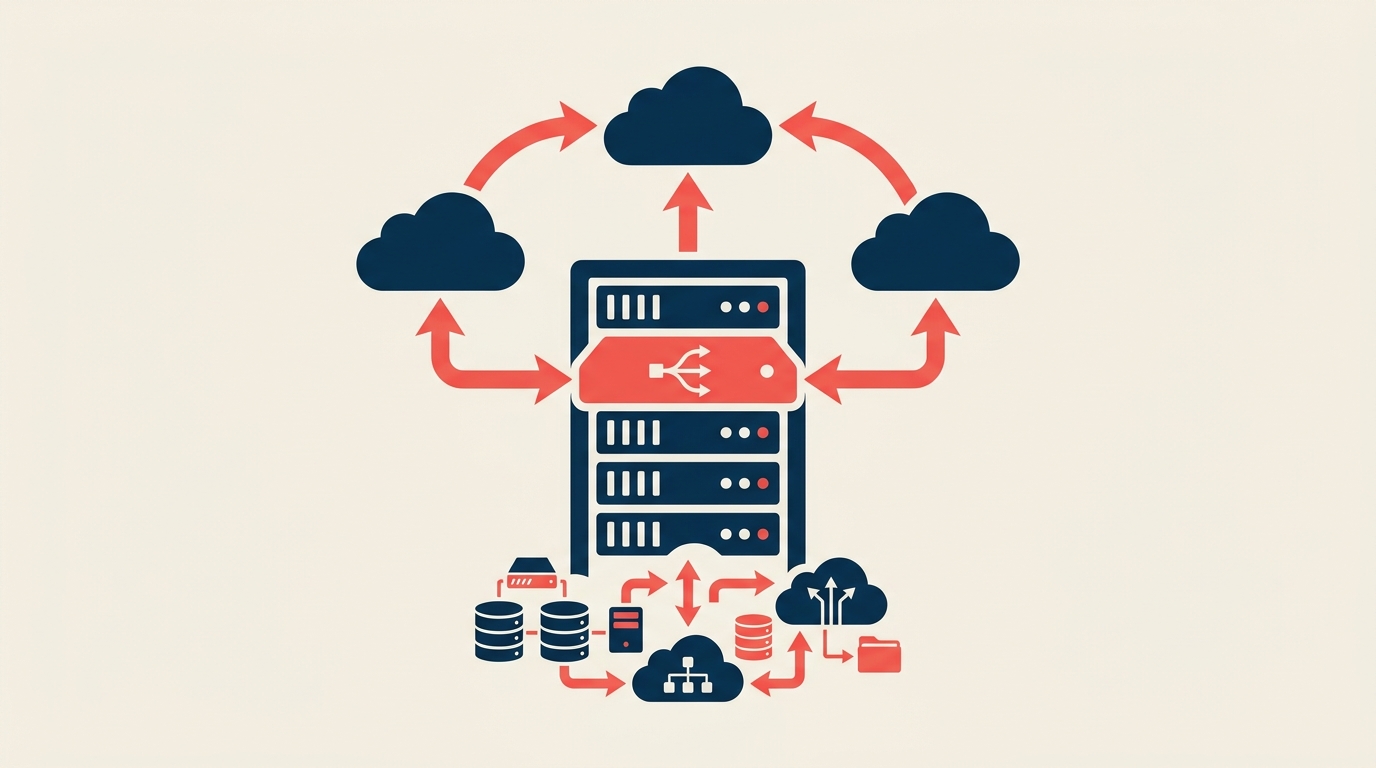
Model serving é o conjunto de software e infraestrutura que expõe um modelo de machine learning treinado como um serviço invocável. Quando sua aplicação envia uma consulta do usuário para um assistente de IA, o model serving é a camada que recebe a solicitação, a roteia para uma instância do modelo em execução, executa o modelo e retorna o resultado.
Na sua forma mais simples, o model serving envolve:
- Uma instância em execução do modelo (carregada na memória GPU ou CPU)
- Um endpoint de API que aceita solicitações
- Lógica para gerenciar a concorrência (tratamento de múltiplas solicitações simultâneas)
- Um mecanismo para retornar resultados ao chamador
Na prática, o model serving em produção é consideravelmente mais complexo. Inclui autoscaling (lançar mais instâncias do modelo sob carga e escalar para baixo para economizar custos), load balancing (distribuir solicitações entre instâncias), health checks (detectar e substituir instâncias com falha), versionamento (executar múltiplas versões do modelo simultaneamente durante um rollout) e monitoring (rastrear latência, taxas de erro e utilização de recursos).
Como o Model Serving Difere de Termos Relacionados
Esses termos são frequentemente usados de forma imprecisa, e as distinções importam para a tomada de decisões.
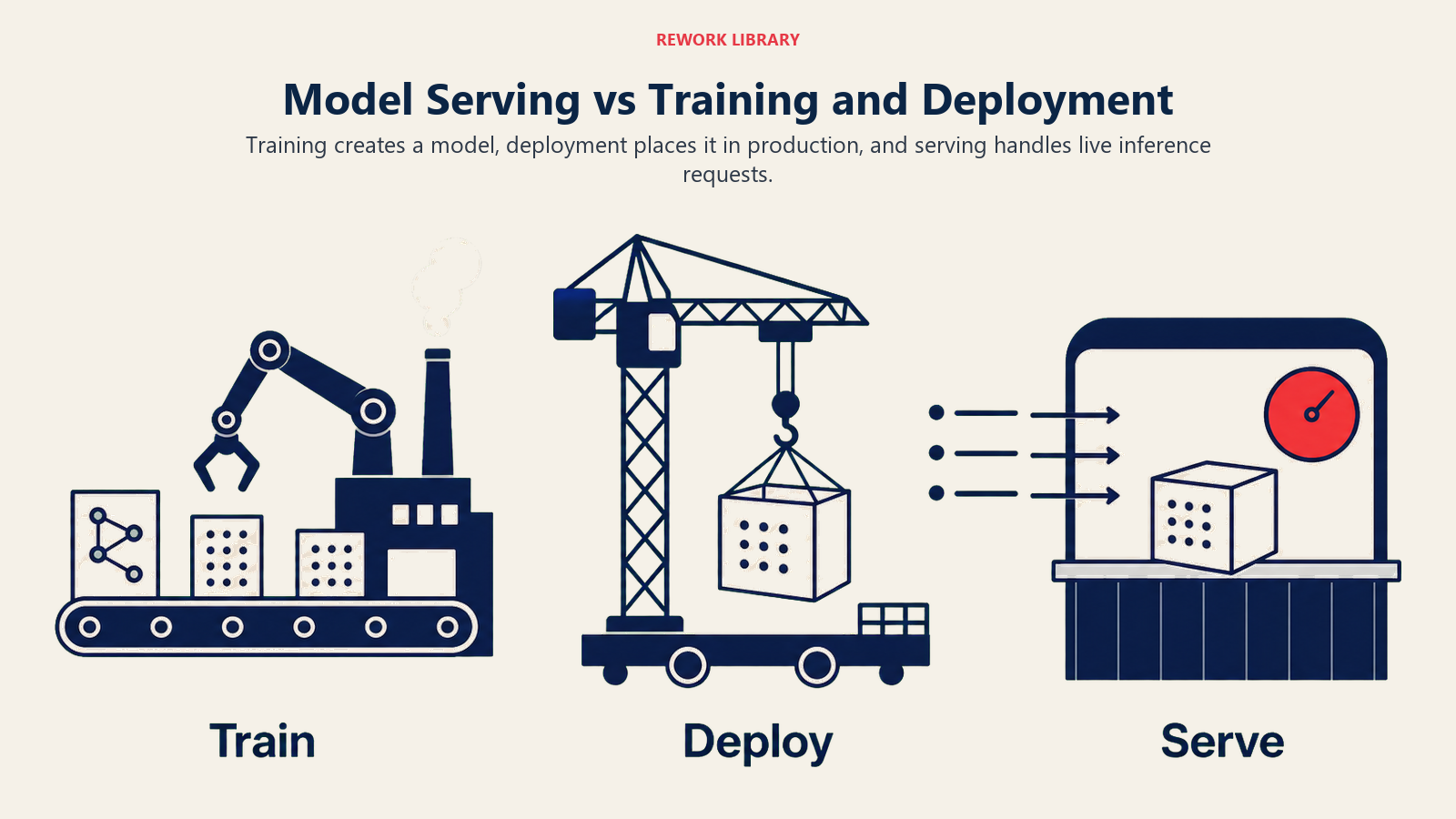
Inference é o ato de executar um modelo em uma entrada para produzir uma saída. É uma operação computacional. O model serving é a infraestrutura que torna a inference disponível como um serviço confiável.
Otimização de inference refere-se a técnicas que tornam a inference mais rápida ou mais barata: quantização, batching, cache, otimização de kernel. A otimização é uma propriedade do modelo e do runtime. O serving é o sistema que hospeda e expõe o modelo otimizado.
MLOps é a prática mais ampla de operacionalizar o machine learning, incluindo pipelines de treinamento, rastreamento de experimentos, registro de modelos, automação de implantação e monitoring. O model serving é um componente dentro do ciclo de vida de MLOps, especificamente a camada de implantação e runtime.
Model deployment às vezes é usado como sinônimo de model serving, mas deployment se refere mais precisamente ao ato de disponibilizar um modelo (o evento de transição), enquanto serving se refere ao estado operacional contínuo dessa disponibilidade.
A Arquitetura de um Sistema de Serving em Produção
Um sistema de model serving em produção tipicamente tem várias camadas:
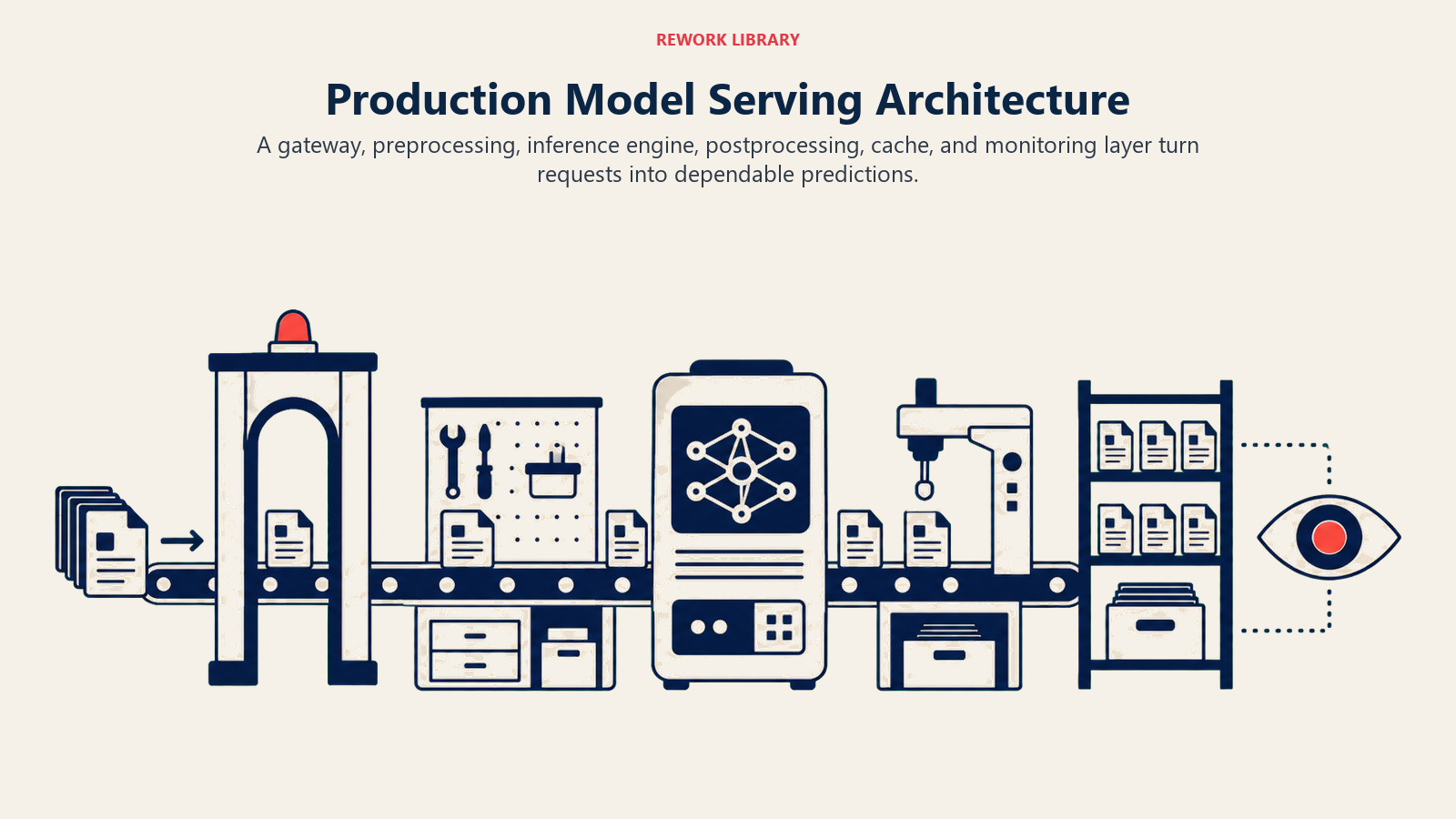
Model registry. Um armazenamento versionado de artefatos de modelos treinados. Antes que um modelo possa ser servido, ele deve ser registrado (juntamente com metadados: data de treinamento, benchmarks de desempenho, dependências).
Serving runtime. O software que carrega o modelo e executa a inference. As opções comuns incluem TensorFlow Serving, TorchServe, NVIDIA Triton Inference Server e runtimes gerenciados por provedores como AWS SageMaker ou endpoints do Azure ML. Para large language models especificamente, frameworks como vLLM, TGI (Text Generation Inference) e Ollama são amplamente usados.
API gateway. Roteia as solicitações de entrada, aplica autenticação e limites de taxa, e fornece um endereço de endpoint estável que não muda quando a infraestrutura de serving subjacente escala ou é atualizada.
Autoscaler. Monitora o volume de solicitações e a utilização de recursos, então adiciona ou remove instâncias do modelo para corresponder à carga. Este é o mecanismo que permite a um sistema lidar com picos de tráfego de 10x sem pré-provisionar para a capacidade de pico o tempo todo.
Model monitoring. Rastreia latência, taxas de erro e qualidade de saída em produção. Alerta quando o comportamento do modelo se desvia da linha de base.
As Decisões Empresariais no Model Serving
O model serving é onde os tradeoffs de custo e confiabilidade do seu investimento em IA se tornam concretos. Os líderes empresariais tipicamente influenciam várias decisões importantes.
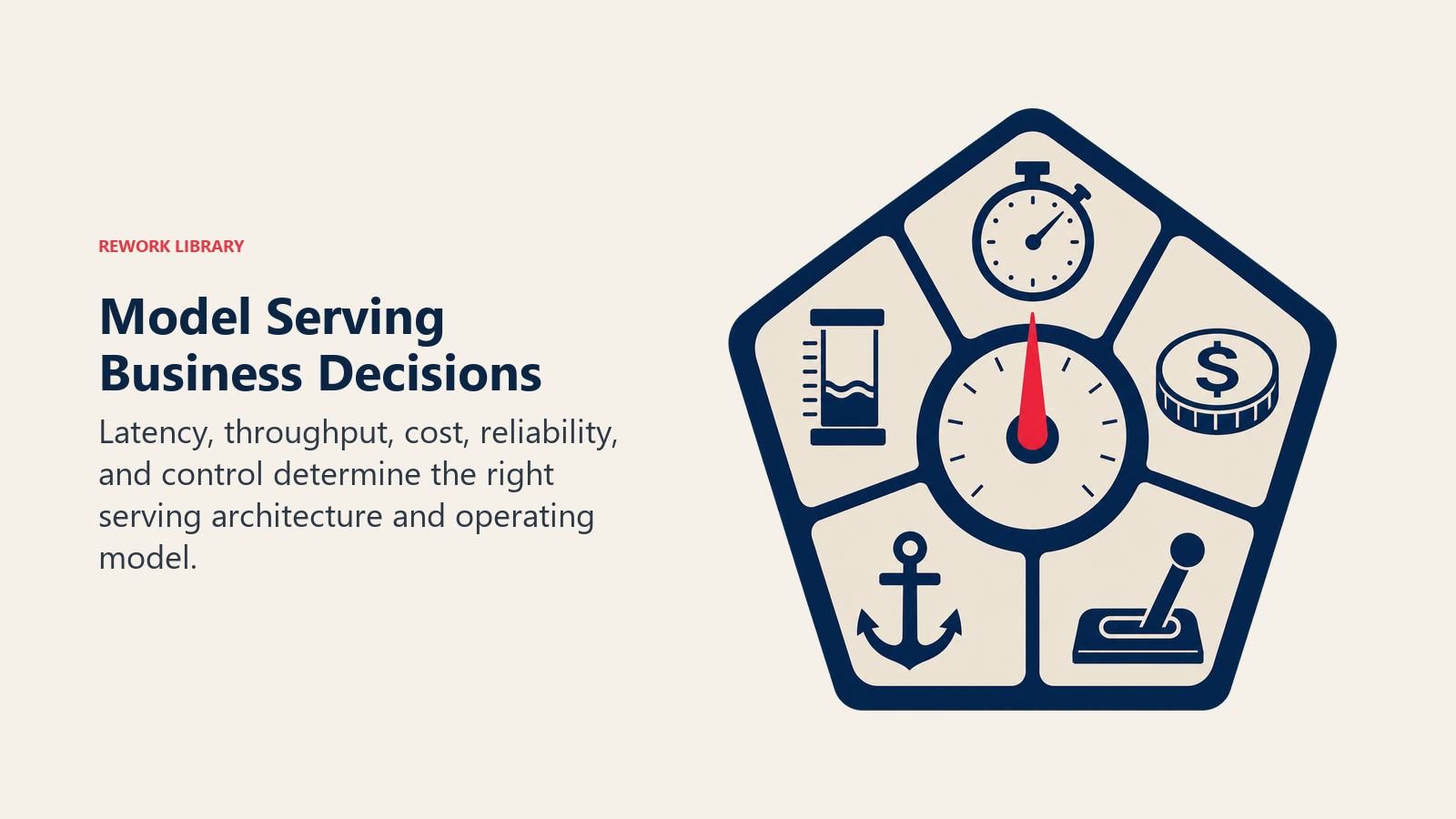
Gerenciado versus auto-hospedado. Os provedores de nuvem (AWS, Azure, Google Cloud) oferecem plataformas de model serving gerenciadas onde o provedor cuida do escalonamento, hardware e gerenciamento de runtime. O serving auto-hospedado (na sua própria infraestrutura de nuvem ou on-premises) oferece mais controle e potencialmente menor custo em escala, mas requer investimento em engenharia para operar.
A maioria das empresas do mercado médio começa com serving gerenciado de um grande provedor e muda para auto-hospedado em maior escala ou quando a economia de custos justifica a sobrecarga de engenharia.
Endpoints compartilhados versus dedicados. A maioria das APIs de IA é executada em infraestrutura compartilhada onde suas solicitações ficam na fila ao lado das solicitações de outros clientes. Endpoints dedicados reservam capacidade para você, garantindo latência e disponibilidade, mas a um custo mais alto. Para aplicações de produção sensíveis à latência, o custo de um endpoint dedicado frequentemente é justificado.
Tradeoffs de latência versus custo. Hardware mais rápido e de nível superior custa mais. Agrupar solicitações juntas (esperar que várias se acumulem antes de processá-las juntas) melhora a utilização do hardware e reduz o custo, mas adiciona latência. O tradeoff certo depende da sensibilidade do seu caso de uso ao tempo de resposta.
Configuração de escalonamento. Qual é o número mínimo de instâncias do modelo a manter em execução (zero significa atrasos de cold start quando o tráfego recomeça; diferente de zero significa sempre pagar pela capacidade ociosa)? Qual é o máximo? Com qual agressividade o autoscaler deve adicionar capacidade?
Essas decisões têm implicações de custo diretas. Uma implantação de serving super-provisionada pode desperdiçar dezenas de milhares de dólares por mês. Uma sub-provisionada degrada a experiência do usuário durante os picos.
Model Serving para Large Language Models
Os large language models introduzem desafios de serving que modelos menores não têm, principalmente devido ao seu tamanho.
Um modelo da classe GPT-4 requer dezenas ou centenas de gigabytes de memória GPU apenas para carregar. A maioria das implantações de LLM em produção requer serving multi-GPU, onde o modelo é dividido entre múltiplas GPUs. Isso é chamado de paralelismo de tensor ou paralelismo de pipeline, e o framework de serving deve orquestrar isso.
O gerenciamento de cache key-value (KV) é uma preocupação operacional importante para o LLM serving. Ao gerar uma resposta token por token, o modelo armazena em cache os cálculos intermediários dos tokens anteriores (o cache KV) para evitar recalculá-los. Esse cache vive na memória GPU e cresce com o comprimento do contexto. Um sistema de serving deve gerenciar essa memória cuidadosamente entre solicitações concorrentes.
O continuous batching é uma otimização específica de LLM onde o sistema de serving agrupa novas solicitações de entrada com solicitações que já estão no meio da geração, mantendo a utilização da GPU alta em vez de esperar que os lotes sejam concluídos antes de iniciar novos. Sistemas como o vLLM foram pioneiros nessa abordagem.
Para implantações de Edge AI, o model serving em hardware restrito (laptops, telefones, dispositivos embarcados) requer otimização adicional: tamanhos de modelo menores, inference de menor precisão e frameworks de serving projetados para ambientes de CPU ou GPU móvel em vez de GPUs de data center.
Sinais de que um Problema de Serving Está Impactando o Valor Empresarial
Os problemas de model serving nem sempre se anunciam como falhas de infraestrutura. Com mais frequência, aparecem como:
- Usuários relatando que a IA "parece lenta" sem um alerta técnico claro
- A adoção caindo após um pico inicial de lançamento, sem problemas óbvios de qualidade
- Os custos crescendo de forma desproporcional ao uso
- Tempos de resposta inconsistentes (rápidos às vezes, lentos outras vezes) que fazem o recurso parecer pouco confiável
- As taxas de erro aumentando sob carga mesmo que o modelo funcione bem em condições normais
Se você estiver vendo esses sintomas, o problema geralmente não é o modelo em si. É a camada de serving.
Dados Importantes
- O model serving é a infraestrutura que torna um modelo de IA treinado disponível como um serviço de produção, distinto da inference (o cálculo) e do MLOps (a prática operacional mais ampla).
- Os sistemas de serving em produção incluem model registry, serving runtime, API gateway, autoscaler e monitoring.
- Decisões empresariais importantes: gerenciado versus auto-hospedado, endpoints compartilhados versus dedicados, tradeoff de latência versus custo, configuração de escalonamento.
- Os large language models introduzem desafios de serving específicos: gerenciamento de memória multi-GPU, cache KV e continuous batching.
- A maioria dos problemas de serving se manifesta como degradação da experiência do usuário (lentidão, inconsistência) em vez de falhas graves.

Co-Founder, Rework.com