O que é Compressão de Modelos? Concentrando o Potencial de IA em uma Caixa Menor
Turn this article into takeaways for your work.


Each assistant summarizes the article only for you and suggests best practices for your work.
Um hospital quer executar um modelo de IA de diagnóstico diretamente em um tablet à beira do leito. O modelo é preciso, mas requer um servidor de R$ 150.000. A compressão de modelos pode encolher esse modelo em 10 vezes, fazendo-o caber em um dispositivo de R$ 2.500 com apenas 3% de perda de precisão. Isso não é apenas uma vitória técnica. É a diferença entre um projeto piloto e uma implementação real.
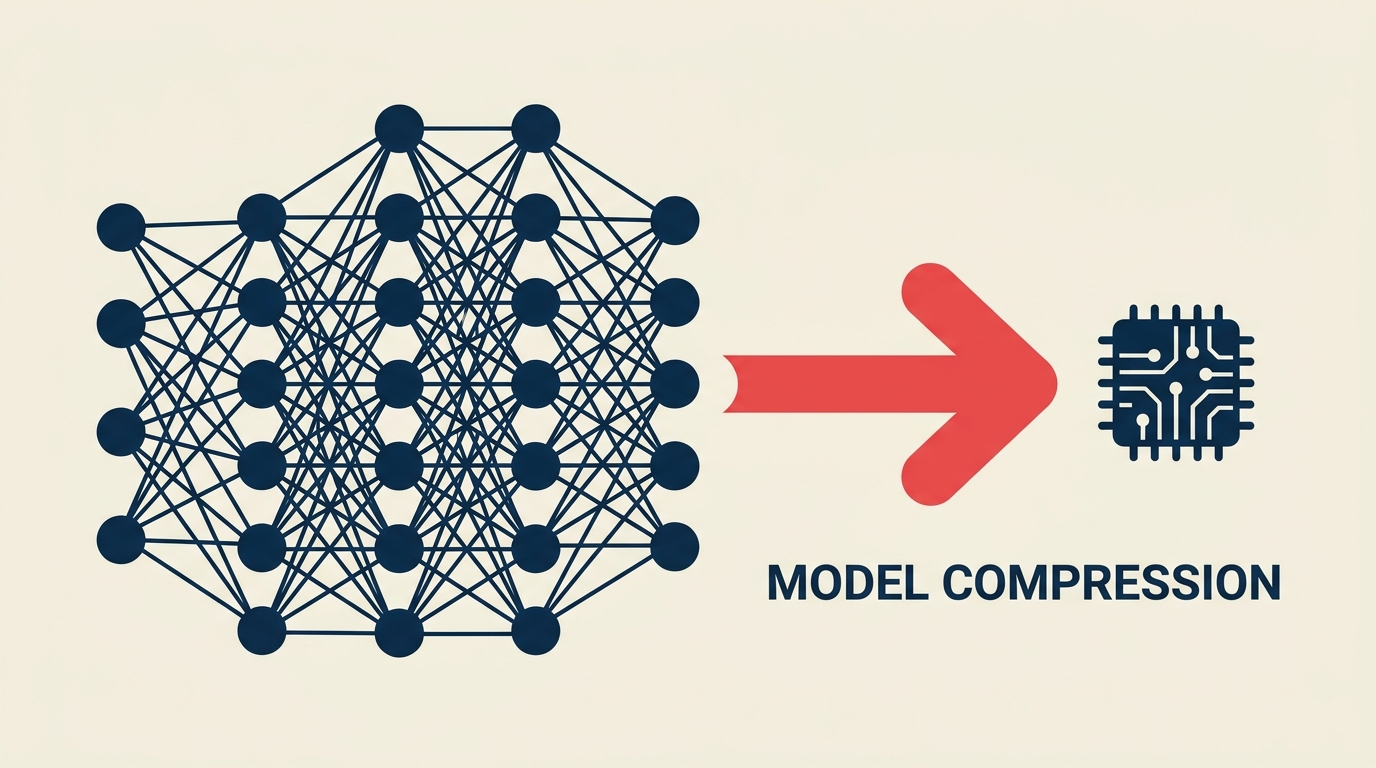
A compressão de modelos é o conjunto de técnicas que tornam os modelos de IA menores, mais rápidos e mais econômicos para executar, sem destruir sua utilidade.
O que a Compressão de Modelos Realmente Significa
A compressão de modelos é o processo de reduzir o tamanho e os requisitos computacionais de um modelo de IA treinado, preservando o máximo possível de seu desempenho original. Ela fica entre o treinamento do modelo e a implementação em produção como o passo que torna as capacidades teóricas de IA práticas em contextos empresariais reais.
A necessidade ficou clara quando as organizações descobriram a lacuna entre "impressionante em uma demo" e "acessível em escala". Um modelo de linguagem da classe GPT tem centenas de bilhões de parâmetros, cada um exigindo memória e computação durante a inferência. Executá-lo em produção para milhares de usuários diários pode custar dezenas de milhares de reais mensalmente. Versões comprimidas do mesmo modelo podem reduzir esse custo em 60-90% com mínima degradação de qualidade.
Para líderes empresariais, a compressão de modelos significa: o modelo de IA que sua equipe avaliou em uma demo realmente pode rodar na sua infraestrutura a um custo que faz o ROI funcionar.
As Quatro Técnicas Principais
A compressão de modelos não é uma técnica única. É um kit de ferramentas com quatro abordagens principais, frequentemente usadas em conjunto:
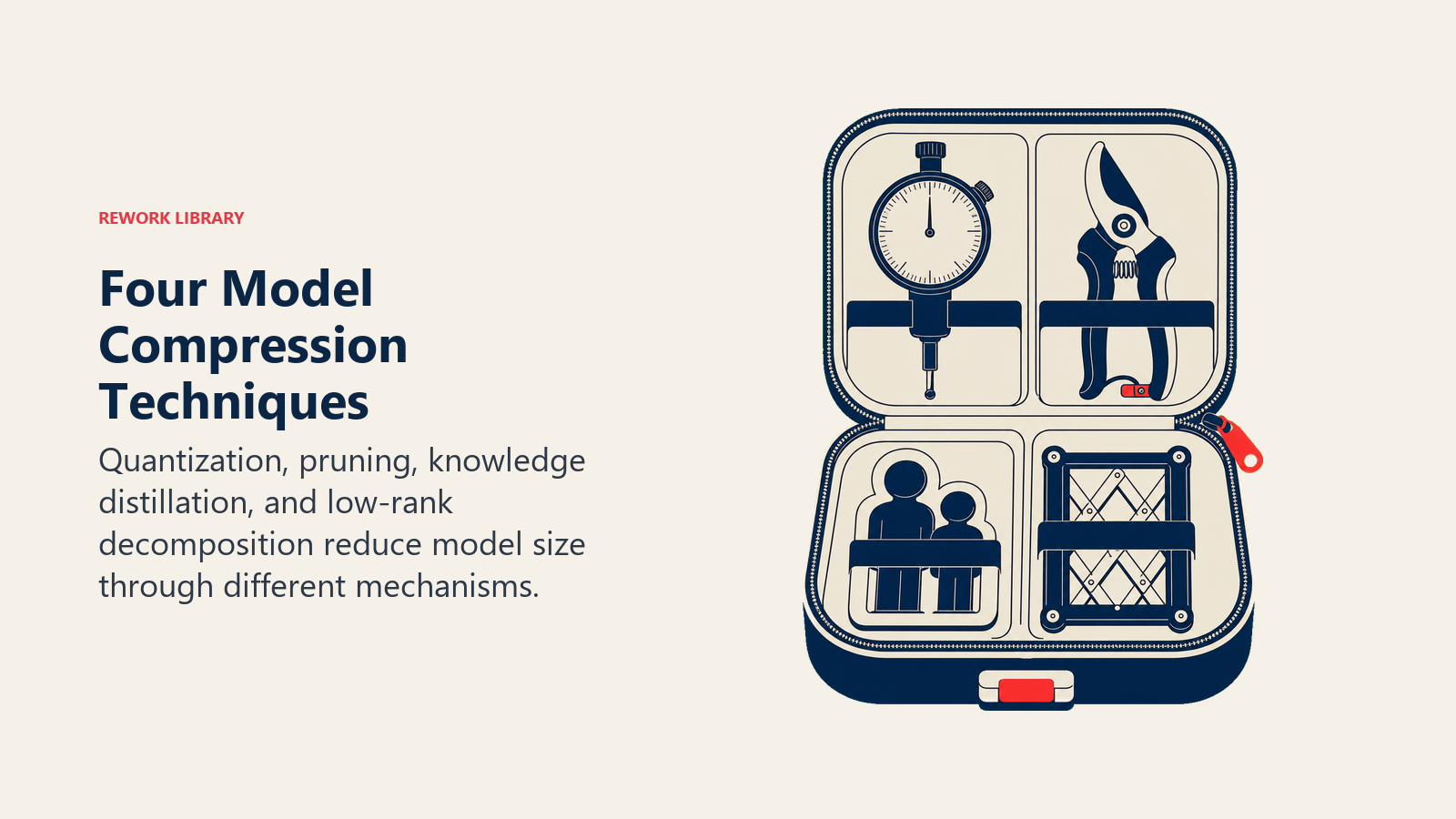
A quantização converte os números de alta precisão que representam os pesos do modelo de ponto flutuante de 32 bits para inteiros de 8 bits ou até valores de 4 bits. Pense nisso como arredondar números para menos casas decimais. O modelo fica 4-8 vezes menor e roda mais rápido, tipicamente com menos de 2% de perda de precisão. Esta é a técnica mais amplamente implantada porque não requer retreinamento. Veja quantização para um tratamento mais aprofundado.
O pruning remove pesos individuais ou neurônios inteiros que contribuem pouco para o output do modelo. Como podar uma árvore de decisão, o pruning identifica os componentes do modelo que fazem menos trabalho e os remove. O pruning não estruturado pode remover 50-90% dos pesos com custo de precisão modesto; o pruning estruturado (remoção de camadas inteiras ou cabeças de atenção) é mais fácil de acelerar na prática. A Knowledge Distillation frequentemente segue o pruning para recuperar a precisão perdida.
A Knowledge Distillation treina um modelo "estudante" menor para imitar o comportamento de um modelo "professor" maior. O estudante não apenas aprende com os dados de treinamento; aprende a reproduzir os padrões de output do professor. Isso cria modelos compactos que superam seu peso porque são ensinados por um professor mais inteligente. A destilação requer tempo de treinamento, mas produz os modelos comprimidos de maior qualidade.
A decomposição de baixo rank quebra grandes matrizes de pesos em matrizes menores que capturam a mesma informação de forma mais eficiente, semelhante a comprimir uma imagem com JPEG representando-a como combinações de padrões mais simples. Isso é particularmente eficaz em modelos de arquitetura transformer onde as multiplicações de matrizes dominam o custo computacional.
Onde os Trade-offs Se Situam
A compressão de modelos sempre envolve um triângulo de trade-offs: tamanho do modelo, velocidade de inferência e precisão. A pergunta prática é quanto de degradação de precisão é aceitável para o seu caso de uso.
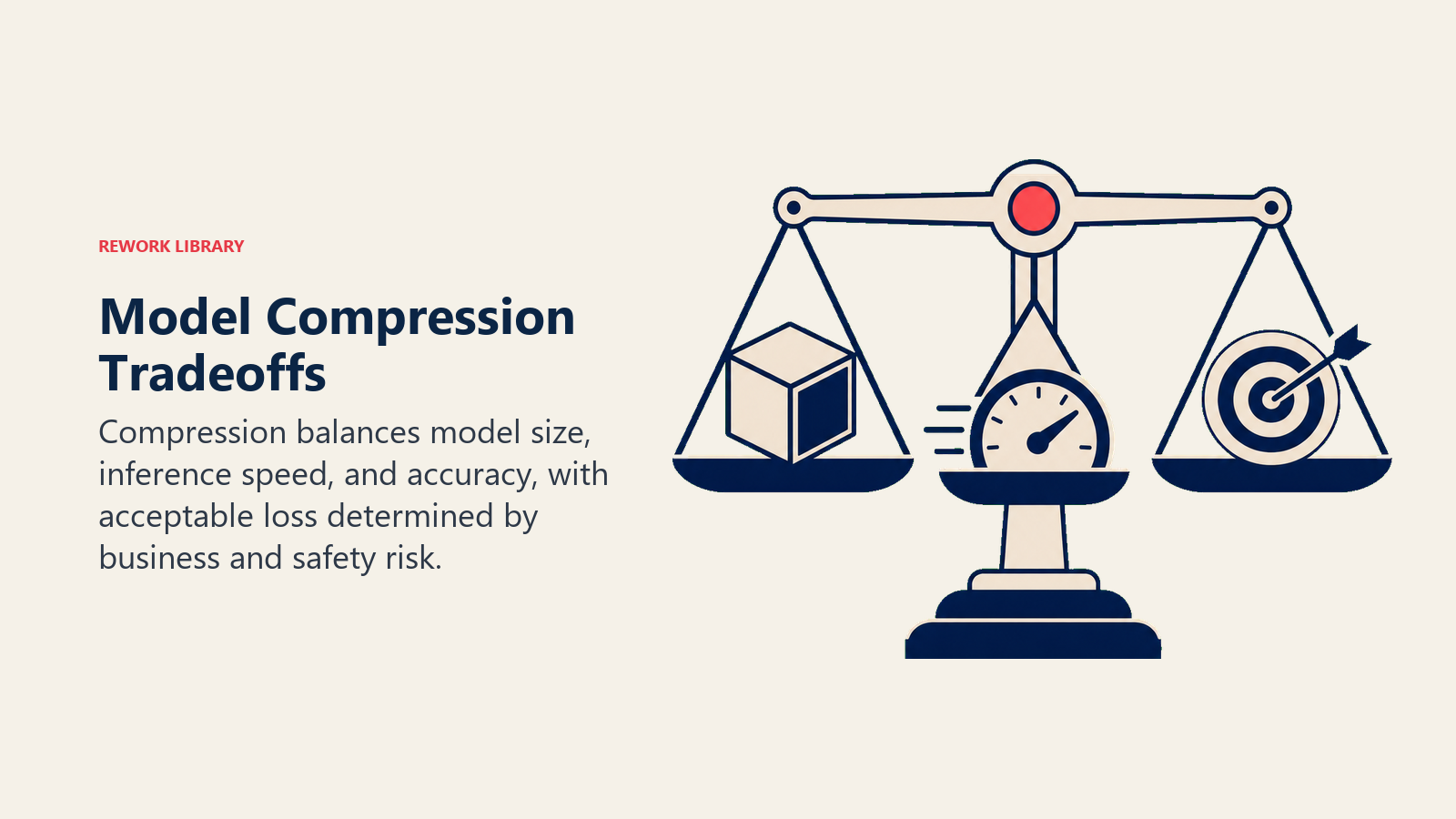
Para muitas aplicações empresariais, a resposta é: mais do que você esperaria. Um chatbot de atendimento ao cliente que é 1% menos preciso, mas responde em 100ms em vez de 800ms e custa 80% menos para executar, é um produto muito melhor. A melhora na experiência do usuário supera a diferença marginal de precisão.
Para aplicações críticas de segurança, diagnóstico médico, pontuação de risco financeiro ou sistemas autônomos, mesmo pequenas perdas de precisão requerem validação cuidadosa. Modelos comprimidos para esses casos de uso precisam de testes rigorosos em relação ao original antes da implantação.
A boa notícia: as técnicas modernas de compressão melhoraram drasticamente. Os modelos LLaMA da Meta mostraram que a quantização de 4 bits retém 95%+ do desempenho de precisão total. O DistilBERT do Google alcança 97% do desempenho do BERT com 40% do seu tamanho.
Por que Isso Importa para a Implantação de IA
O argumento empresarial para a compressão de modelos se desenvolve em três dimensões:
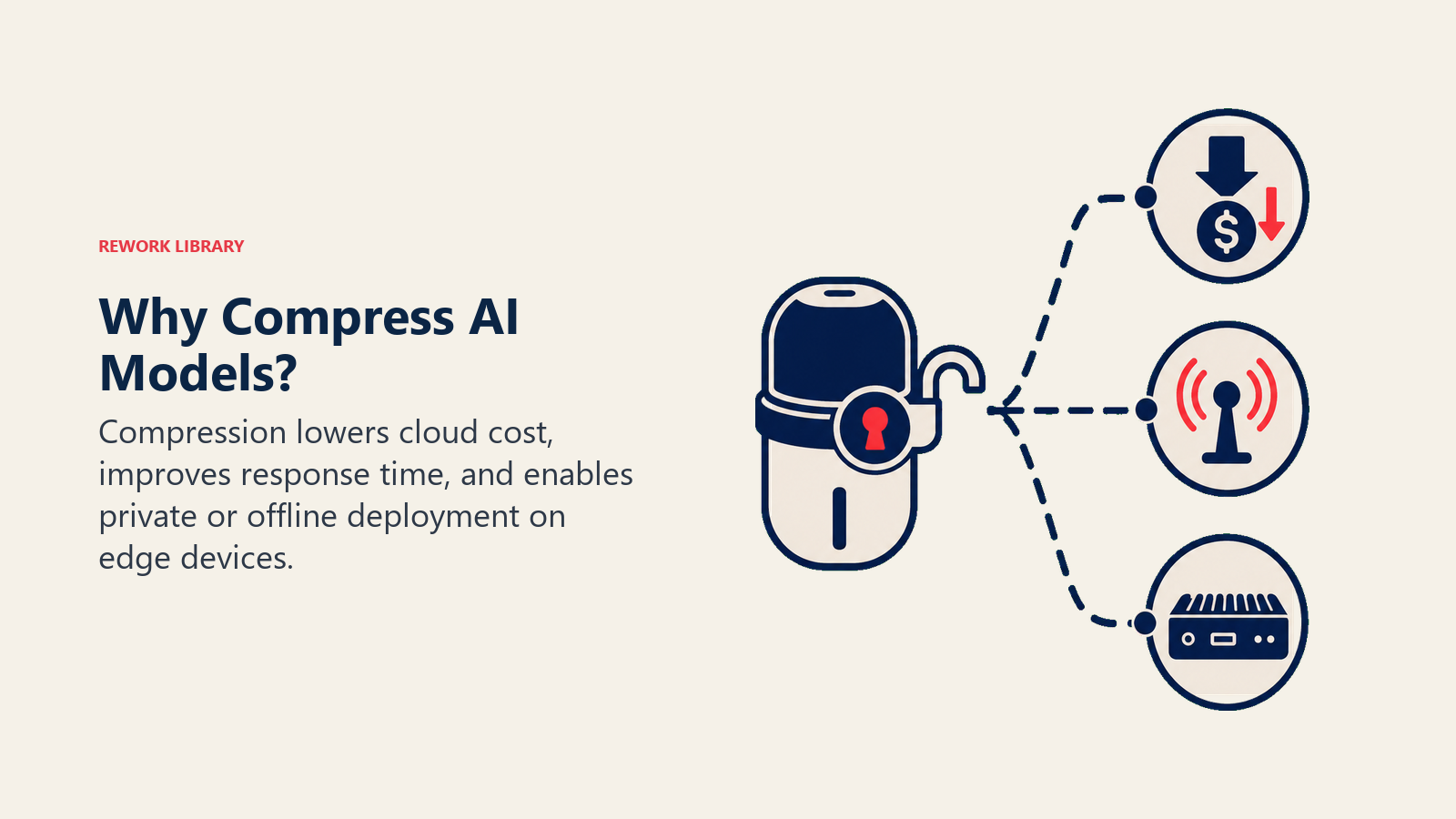
Redução de custos. Os custos de inferência em nuvem escalam com a computação. Uma compressão de 4x tipicamente se traduz em custo de inferência 3-4x menor. Em escala, isso é significativo. Uma empresa executando 10 milhões de chamadas de API de IA por dia pode reduzir seu orçamento de infraestrutura de IA em R$ 2,5 milhões anuais com compressão agressiva.
Melhora de latência. Modelos menores respondem mais rápido. Para aplicações voltadas ao usuário onde o tempo de resposta afeta as taxas de conversão e a satisfação, a diferença entre 200ms e 50ms pode melhorar mensuravelmente as métricas do negócio.
Implantação na borda. Alguns casos de uso de IA exigem a execução de modelos onde a conectividade em nuvem é limitada ou onde preocupações de privacidade proíbem o envio de dados para fora das instalações. Inspeção de qualidade em manufatura, aplicações móveis e dispositivos médicos se beneficiam de modelos que cabem em hardware local. O Edge AI como padrão de implantação depende inteiramente da eficácia da compressão de modelos.
O Pipeline de Compressão na Prática
Organizações que implantam IA em escala tipicamente aplicam a compressão como um passo sistemático do pipeline após o treinamento:
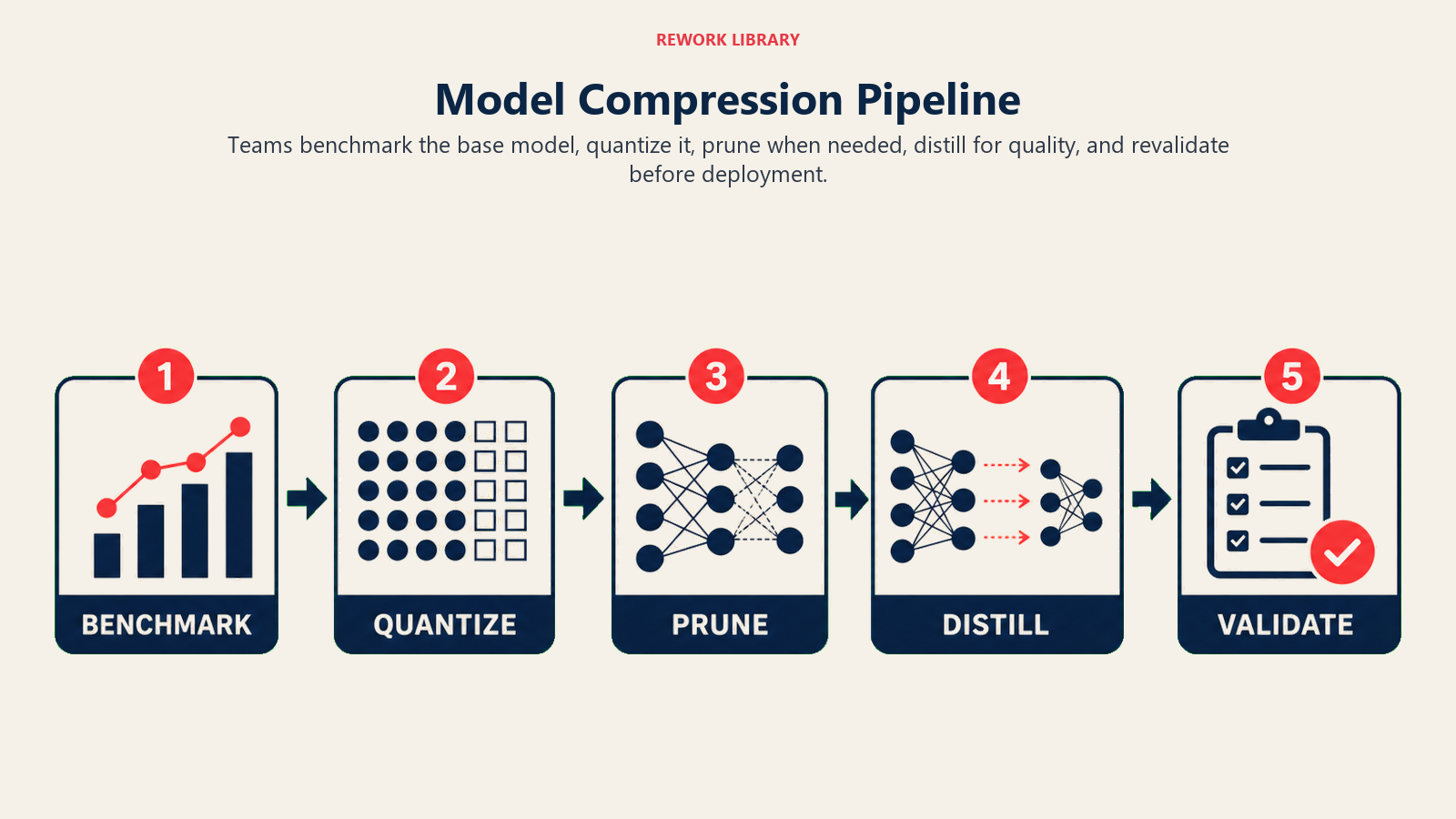
Primeiro, a equipe avalia o modelo base em benchmarks de precisão para a tarefa específica. Isso estabelece uma baseline para medir a qualidade da compressão.
Segundo, a quantização é aplicada, geralmente primeiro de 8 bits para ver se atende aos requisitos, depois de 4 bits se mais compressão for necessária. Este é o passo mais rápido e frequentemente suficiente.
Terceiro, se os requisitos de latência ou tamanho ainda não forem atendidos, o pruning é aplicado, tipicamente começando com a remoção dos pesos de menor magnitude até 50% de esparsidade, e depois reavaliando.
Quarto, se o caso de uso justificar o investimento em treinamento, a destilação cria uma arquitetura menor treinada nos outputs do modelo comprimido ou original. Esta é a abordagem de maior qualidade, mas mais cara.
Os pipelines de MLOps estão cada vez mais automatizando esse processo, executando compressão e benchmarking como parte do fluxo de trabalho de implantação do modelo, e não como um exercício único.
O que a Compressão Não Pode Fazer
A compressão de modelos otimiza um modelo existente. Ela não corrige um modelo que foi mal treinado, usou dados ruins, ou é fundamentalmente inadequado para a tarefa. Comprimir um modelo tendencioso produz um modelo tendencioso menor. Comprimir um modelo de linguagem que alucina produz um modelo mais barato que alucina.
A fase de compressão também é onde a degradação sutil de precisão pode se tornar visível de maneiras que não apareceram nos testes de benchmark. Um modelo comprimido pode funcionar de forma idêntica nos dados de teste retidos, mas falhar em casos extremos do mundo real que seu conjunto de teste não cobriu. O monitoramento de modelos após implantar um modelo comprimido é tão importante quanto monitorar o original.
Conceitos de IA Relacionados
- Quantização - A técnica de compressão mais amplamente implantada
- Knowledge Distillation - Treinar modelos pequenos para imitar os grandes
- Otimização de inferência - O conjunto mais amplo de técnicas para inferência de IA mais rápida e barata
- Edge AI - Por que a compressão permite a implantação fora da nuvem
- MLOps - Como a compressão se encaixa nos fluxos de trabalho de IA em produção
- Monitoramento de modelos - Acompanhamento do desempenho de modelos comprimidos em produção
Recursos Externos
- Hugging Face Optimum - Toolkit de código aberto para compressão e otimização de modelos
- NVIDIA TensorRT - Otimização de inferência em produção com compressão integrada
- Google ML Practicum - Guias práticos sobre eficiência de modelos
Perguntas Frequentes sobre Compressão de Modelos
O que é compressão de modelos?
A compressão de modelos é um conjunto de técnicas que reduz o tamanho, os requisitos de memória e o custo de inferência de um modelo de IA, enquanto retém o máximo de precisão possível. Os métodos principais são quantização (reduzir a precisão numérica), pruning (remover pesos de baixo impacto), Knowledge Distillation (treinar um modelo menor para imitar um maior) e decomposição de baixo rank.
Quanta precisão se perde ao comprimir um modelo?
Para a maioria das aplicações empresariais, as técnicas modernas de compressão causam menos de 2-5% de perda de precisão. A quantização de 8 bits tipicamente perde menos de 1%. O trade-off aceitável depende do caso de uso: aplicações de atendimento ao cliente e conteúdo toleram bem pequenas perdas; aplicações críticas de segurança requerem testes cuidadosos.
Quando uma empresa deve investir em compressão de modelos?
Quando os custos de inferência são uma linha de orçamento significativa, quando a latência de resposta afeta a experiência do usuário, ou quando você precisa implantar IA em dispositivos de borda ou em ambientes sem acesso confiável à nuvem. Se você está executando milhões de chamadas de inferência por mês, mesmo a quantização básica provavelmente se paga em semanas.
A compressão de modelos é o mesmo que usar um modelo menor?
Não exatamente. A compressão começa com um modelo grande e bem treinado e o torna menor. Usar um modelo menor significa treinar uma arquitetura compacta do zero. A compressão geralmente produz resultados melhores para o mesmo tamanho alvo porque o modelo estudante se beneficia do conhecimento já presente no modelo maior.

Co-Founder, Rework.com