More in
Productivity Tech News
Half of U.S. Workers Now Use AI on the Job: The Operating Model COOs Need for the Post-Pilot Era
Apr 17, 2026
Notion Now Searches Your Salesforce Data: What Cross-Tool AI Means for How Operations Teams Work
Mar 20, 2026
You Can Now Give Notion a 20-Minute Task and Walk Away: What That Means for How You Lead
Mar 17, 2026
Notion Custom Agents Are Free Until May 3: How COOs Should Run a 3-Week Evaluation
Mar 13, 2026
Atlassian Cut 900 R&D Roles: What Operations Leaders Need to Assess Before Renewal
Mar 10, 2026
You Can Now Hire AI Agents for Your Monday.com Workspace: What That Means for How COOs Evaluate Work Management Platforms
Feb 6, 2026 · Currently reading
ClickUp Wants to Replace Your PM Tool, Your Slack, and Your Zoom: Is the Everything App Bet Worth It?
Jan 30, 2026
Monday.com Lost 19% in One Day Over AI Agents: What That Signals About SaaS Pricing and Your Next Renewal
Jan 29, 2026
Monday.com vs. Asana in 2026: The AI Architecture Decision That Should Drive Your Platform Choice
Jan 16, 2026
AI Meeting Context vs. Your Notion Workspace: Do Teams Actually Need Both in 2026?
Jan 13, 2026
You Can Now Hire AI Agents for Your Monday.com Workspace: What That Means for How COOs Evaluate Work Management Platforms
Turn this article into takeaways for your work.


Each assistant summarizes the article only for you and suggests best practices for your work.
The last time the work management software category had a genuine evaluation reset was when cloud-native tools displaced on-premise project trackers. That took about a decade. The shift happening now will move faster, and COOs who keep scoring platforms on the old criteria will end up with the wrong tool for a fundamentally different environment.
According to Monday.com's investor relations announcement in March 2026, the company launched infrastructure that lets AI agents authenticate directly into the Monday.com platform and act on behalf of human users: organizing projects, triggering automations, updating workflows, generating reports, and coordinating across teams. Shortly after, the company launched Agentalent.ai, an AI agent marketplace developed by Monday Agent Labs, where enterprises can browse and deploy agents assigned to specific business roles. The agents aren't just answering questions. They're doing work inside the platform. If you're still uncertain where AI agents end and AI copilots begin, the distinction matters more than it sounds: the two categories require different governance structures and carry different operational risks.
According to ITBrief's coverage of the Agentalent launch, compatible frameworks include Claude from Anthropic, ChatGPT from OpenAI, Microsoft Copilot, Google Gemini, Perplexity, Cursor, and Grok from xAI. That means Monday.com isn't building agents in-house and asking you to trust their proprietary AI. It's making the platform the connective tissue between your workflows and whichever agent model you prefer. For COOs, that changes the question from "does this platform have AI?" to "does this platform work with the AI ecosystem we've already committed to?"
The Old Evaluation Rubric Doesn't Hold Anymore
Before March 2026, evaluating a work management platform meant scoring it on four familiar axes: how well does it handle task and project structure, how good is the reporting layer, how clean are the integrations, and what's the per-seat cost against usage. Those criteria still matter. But they're no longer sufficient.
The addition of AI agents as first-class participants changes what the platform actually is. You're not just selecting a place for teams to track work. You're selecting an operating environment where AI agents will authenticate, take actions, and produce outputs that humans then review or act on. If the platform doesn't have the right agent compatibility, action scope, access controls, or audit infrastructure, you've picked a tool that will create governance problems as soon as your organization starts scaling agent use.
ClickUp's response illustrates the competitive terrain. The company's ClickUp 4.0 release introduced Super Agents, personalized AI teammates embedded into the ClickUp workspace, with a Planner feature that manages scheduling, blocks time, and coordinates tasks and documents. ClickUp's bet is vertical integration: the AI is built in, opinionated, and deeply tied to the native workflow layer. Monday's bet is horizontal: the platform becomes an agent substrate, and you bring whatever model or agent framework suits the use case. Neither approach is wrong. But they require different things from your IT and operations teams.
Five Criteria to Add to Your Next Platform Review
Here's what should now appear in any work management RFP or evaluation scorecard, alongside the traditional criteria:
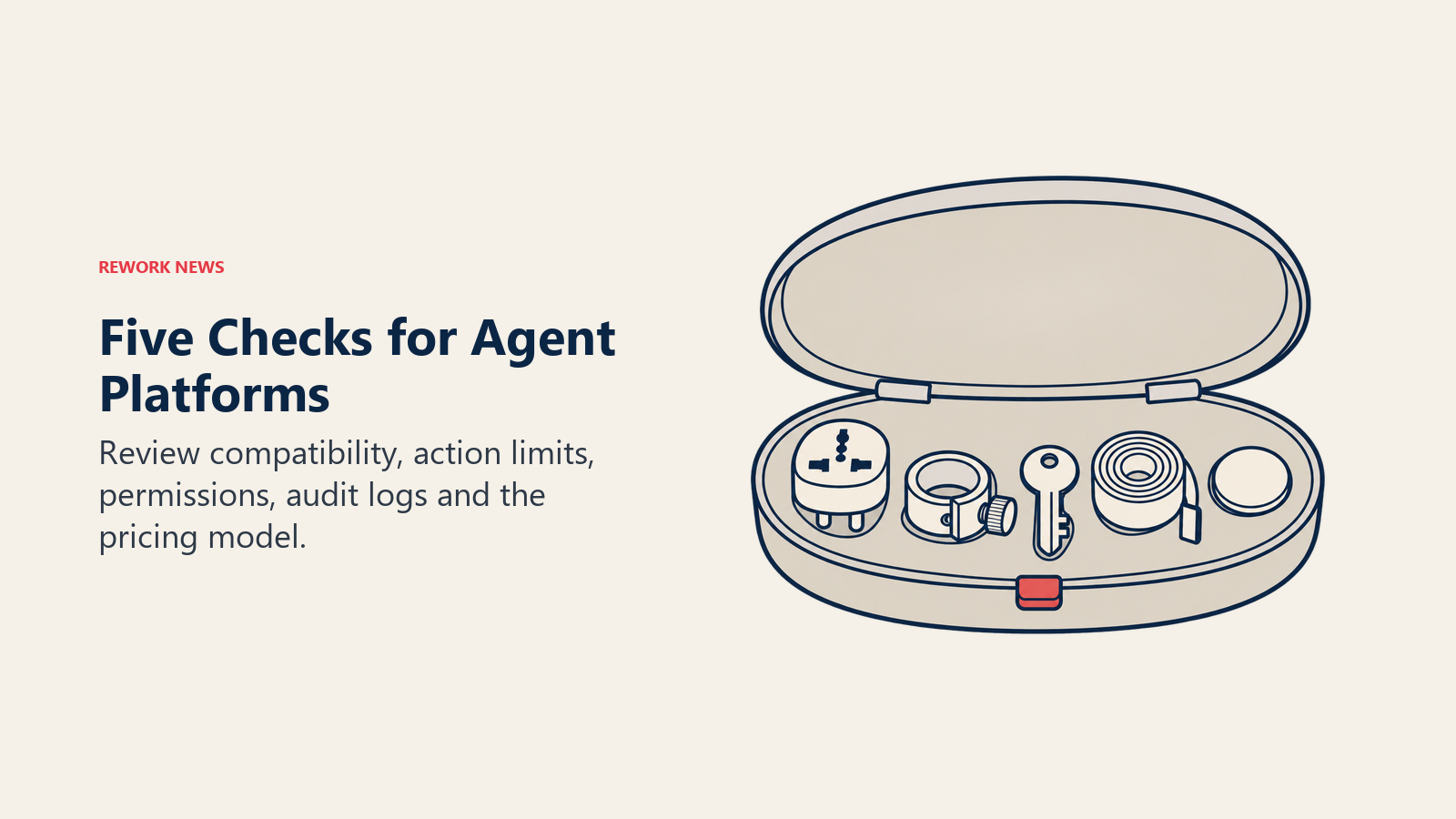
1. Agent compatibility scope. Which AI frameworks can authenticate into the platform? Is it limited to the vendor's own AI, or does it support open agent standards? The more locked the compatibility, the more you're betting on a single vendor's AI roadmap rather than building on open infrastructure.
2. Action scope and guardrails. What can an agent actually do once authenticated? Can it only read data, or can it write, delete, reassign, and trigger automations? More capability is not automatically better. You need to understand the full action surface and be able to restrict it to what's appropriate for each agent role.
3. Access control and permissioning. Human users have roles and permission levels in these platforms. AI agents should too. Can you assign an agent a scoped role that limits what data it can see and what actions it can take? Platforms that haven't built agent-specific permissioning will either block agent use entirely or let agents run with over-broad access. The governance gap most organizations underestimate isn't a policy problem. It's an infrastructure problem that shows up here first.
4. Audit trail and observability. When an AI agent modifies a project, updates a status, or triggers an automation, that action should be logged with the same fidelity as a human action. Platforms without agent-level audit logs will create accountability gaps as soon as anything goes wrong.
5. Pricing model implications. This is the most consequential criterion that most COOs won't ask about until renewal. Traditional per-seat pricing assumes one license per human. AI agents don't consume seats the same way (or don't today). Ask explicitly: how does the vendor plan to price agent participation? Monthly platform fees? Per-action pricing? Agent-specific tiers? The answer will tell you whether the vendor has thought through the business model, and it will determine your cost structure as agent usage scales. The shift away from seat-based models is already underway across the SaaS category, and the work management vendors launching agent infrastructure are exactly where that transition gets messy first.
The Stock Signal COOs Should Pay Attention To
Monday.com's share price dropped roughly 19% shortly after the Agentalent announcement, according to TechBuzz reporting on the market reaction. The investor concern, as the analysis framed it, is structural: if AI agents can do the tasks that per-seat users were doing, the seat count doesn't grow with the organization the way it used to. Headcount growth and license growth decouple. We looked at what that stock signal means specifically for SaaS renewal negotiations, and it's worth reading alongside this piece if you're within 12 months of a work management contract renewal.
For COOs, that stock move is useful information. It means the vendor has a financial incentive to figure out how to monetize agent participation, and they haven't answered that question publicly yet. When a vendor's pricing model is under pressure, the SaaS renewal negotiation landscape shifts. Vendors may introduce agent-specific add-ons, move to consumption pricing, or restructure tiers to capture more value from AI-enabled workflows. If you're within 12 months of a major renewal with any work management vendor that has launched agent infrastructure, the pricing conversation just got more complex.
What to Add to Your Next Platform Review
When you schedule the next work management evaluation (whether that's a full RFP, a contract renewal review, or a build-vs-buy assessment for a new function), add these five items to the agenda:
Ask the vendor to walk you through their agent compatibility roadmap, not just today's integrations. What frameworks do they plan to support? How do they handle agent versioning when an underlying model changes?
Request a live demonstration of agent permissioning, not just a feature sheet. Have them show you how you'd restrict an agent to read-only access on a specific project, then escalate to write access with an approval step.
Get the audit log format in writing. Ask for a sample export of agent actions from a production environment. If they can't produce one, the logging infrastructure isn't there yet.
Ask explicitly about the pricing roadmap for agent participation. Any vendor that says "we haven't figured that out yet" is being honest, and you should plan for a renegotiation within 18 months. Any vendor that gives you a confident answer deserves scrutiny on the specifics.
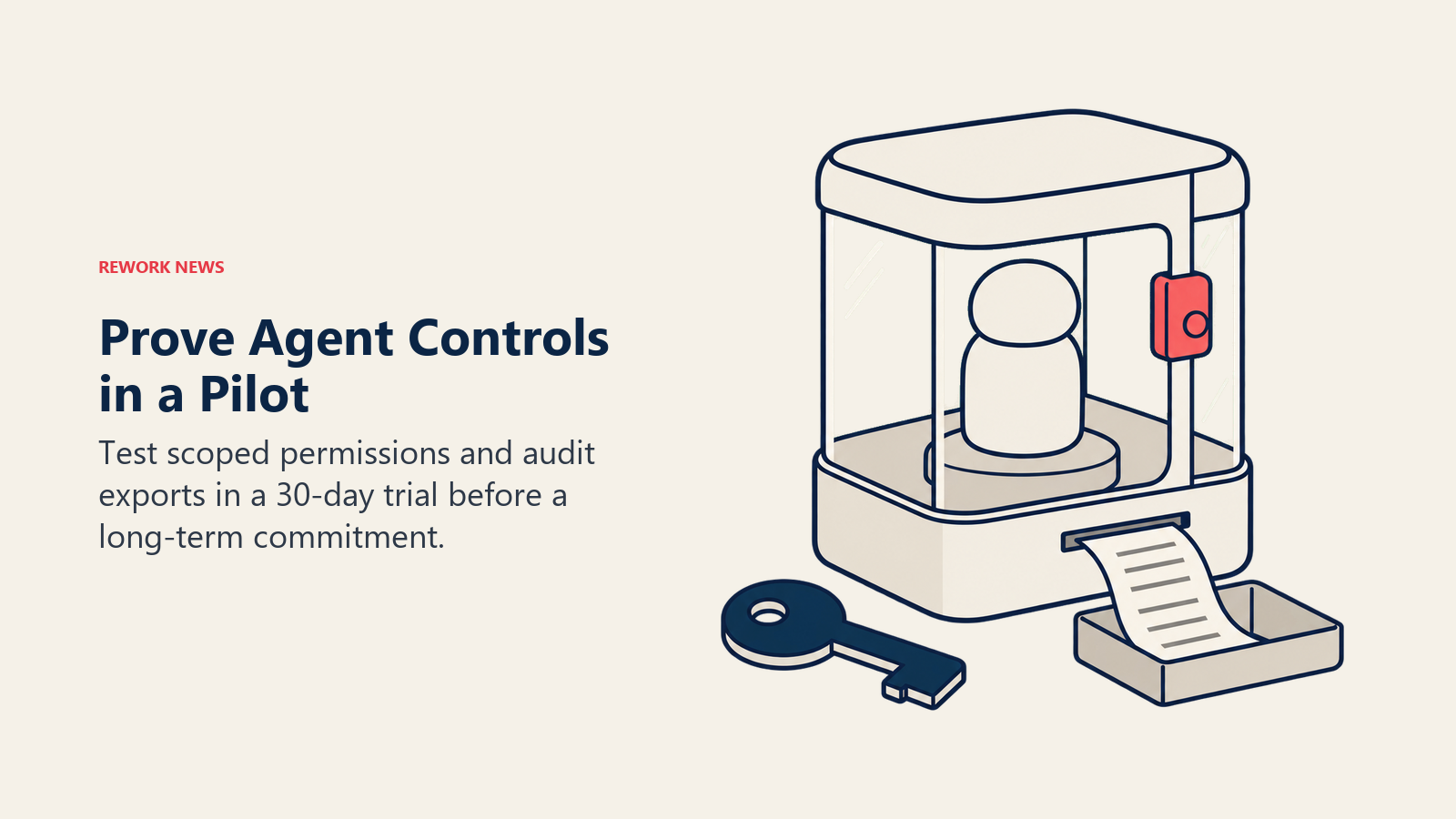
Run a 30-day pilot with one agent use case before signing a multi-year deal. The evaluation criteria above look good on paper. Real compatibility, real access control behavior, and real audit log quality only show up in production.
The work management category is changing faster than most enterprise software categories. COOs who evaluate today's platforms against last year's criteria will make decisions they'll regret when renewal season arrives.
Learn More
- Monday.com Lost 19% Over AI Agents: SaaS Pricing Signal: The investor reaction that explains why Monday's agent pricing model carries business model risk
- ClickUp Wants to Replace Your PM Tool, Your Slack, and Your Zoom: The alternative consolidation bet and how it compares to the marketplace model
- AI Governance Policy for Departments: Defining what agents can do before the marketplace makes it frictionless to add more
- Coordination Cost in Operations: Why reducing tool count matters less than reducing the handoffs that create coordination overhead
Source: Monday.com Investor Relations: Monday.com Welcomes AI Agents to Its Platform
