Metodologi Agile: Prinsip, Rangka Kerja, dan Contoh Sebenar
Turn this article into takeaways for your work.


Each assistant summarizes the article only for you and suggests best practices for your work.
Menjelang tahun 2001, pasukan perisian sudah hampir lemas. Projek dilancarkan 18 bulan selepas keperluan ditulis, dan menjelang produk dihantar, keperluan pelanggan sudah berubah. Metodologi Agile adalah jawapan yang ditulis oleh 17 pengamal di papan tulis sebuah pusat peranginan ski di Snowbird, Utah, dan ia mengubah cara dunia membina sesuatu.
Panduan ini merangkumi Agile Manifesto, 4 nilai dan 12 prinsipnya, empat rangka kerja utama yang menghidupkan agile dalam praktik, serta contoh sebenar daripada perisian, pemasaran, dan operasi.
Apakah metodologi Agile?
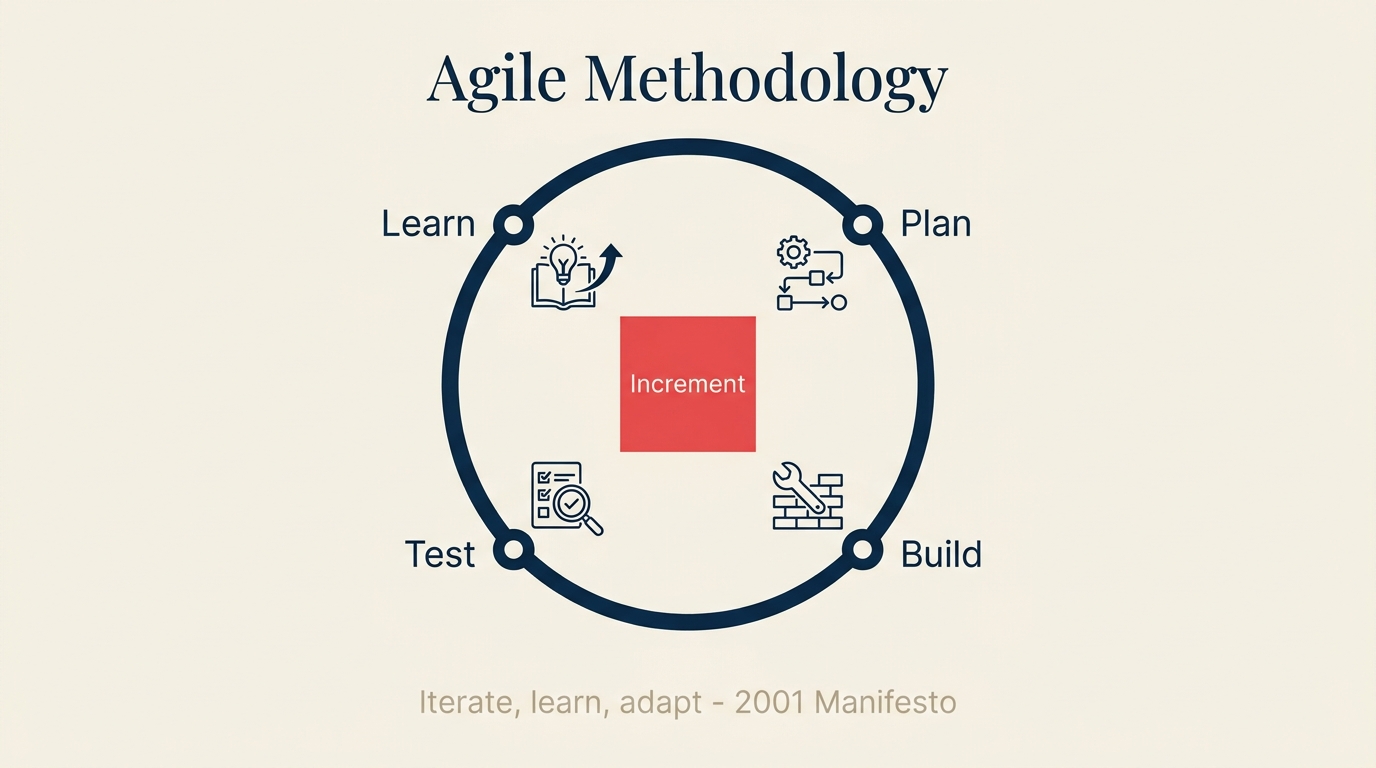
Metodologi Agile ialah istilah umum bagi pendekatan berulang dan tambahan dalam menyampaikan kerja yang mengutamakan maklum balas pelanggan, produk yang berfungsi, serta penyesuaian berbanding pelan rigid di awal projek. Daripada mereka bentuk keseluruhan penyelesaian sebelum menulis sebaris kod pun, pasukan agile menyampaikan tambahan kecil yang boleh dihantar, belajar daripada reaksi pengguna sebenar, dan menyesuaikan tambahan seterusnya mengikut keperluan.
Istilah ini dikodifikasikan dalam Agile Manifesto 2001, yang ditulis oleh 17 pengamal perisian di pusat peranginan ski Snowbird di Utah. Antara penandatangan ialah Kent Beck (pencipta Extreme Programming), Mike Beedle, Martin Fowler, Jim Highsmith, Ken Schwaber, dan Jeff Sutherland (pencipta bersama Scrum). Rasa kecewa mereka adalah sama: proses perisian berpelan berat secara konsisten menghasilkan sistem yang lewat, melebihi bajet, dan tidak sesuai dengan keperluan pengguna sebenar.
Manifesto itu tidak menetapkan satu proses tunggal. Ia menetapkan satu pemikiran: utamakan hasil berbanding output, pelanggan berbanding kontrak, dan pembelajaran berbanding jangkaan.
Agile berhubung terus dengan alat penjadualan dan perancangan yang sudah digunakan pasukan. Carta Gantt boleh memetakan jadual Sprint, manakala struktur pecahan kerja membantu pasukan menguraikan Product Backlog kepada kepingan yang boleh dihantar sebelum Sprint bermula.
Fakta Utama
Fakta Utama
- Agile Manifesto (2001), diterbitkan di agilemanifesto.org, kekal sebagai dokumen asas. Ia masih tepat 68 patah perkataan merentasi 4 nilainya, tidak berubah sejak penerbitan pertamanya.
- Laporan Tahunan State of Agile ke-17 (Digital.ai, 2023) mendapati bahawa 71% organisasi menggunakan pendekatan agile, meningkat daripada 37% pada 2011.
- Laporan CHAOS Standish Group secara konsisten mendapati projek agile berjaya pada kadar yang jauh lebih tinggi berbanding projek Waterfall; edisi 2020 melaporkan kejayaan projek agile sebanyak 42% berbanding 13% untuk Waterfall apabila mengawal saiz projek.
4 nilai dan 12 prinsip agile
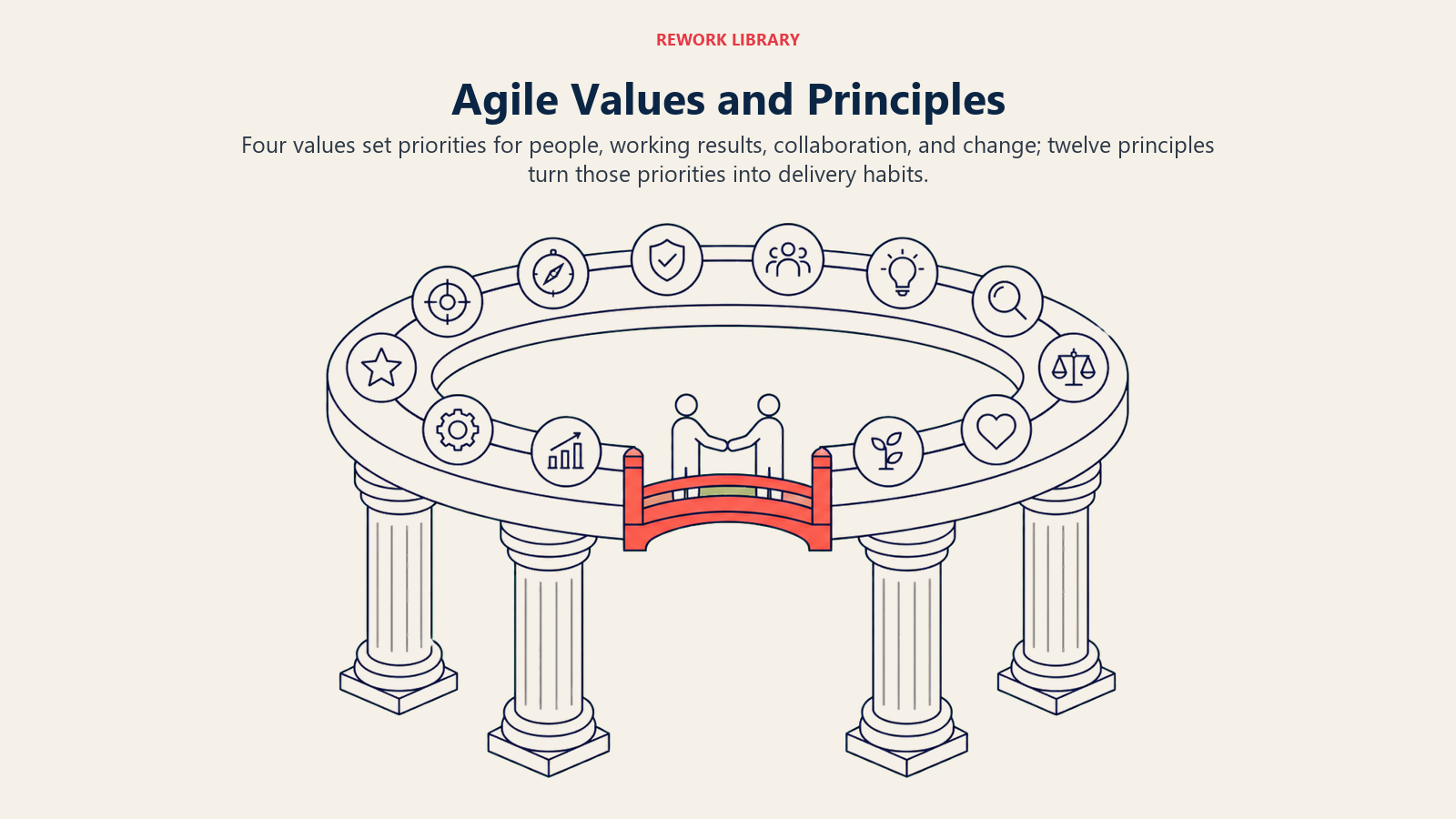
Manifesto ini dibina atas dua lapisan: 4 nilai teras dan 12 prinsip sokongan. Kedua-duanya penting. Nilai adalah destinasi; prinsip adalah jalannya.
4 nilai
Manifesto mengutamakan perkara tertentu berbanding perkara lain. Ia tidak mengatakan bahagian kanan tidak bernilai. Ia mengatakan bahagian kiri lebih penting.
- Individu dan interaksi berbanding proses dan alat
- Perisian yang berfungsi berbanding dokumentasi yang komprehensif
- Kerjasama pelanggan berbanding rundingan kontrak
- Bertindak balas terhadap perubahan berbanding mengikut pelan
12 prinsip
12 prinsip mengembangkan setiap nilai kepada panduan yang boleh dilaksanakan:
- Puaskan pelanggan melalui penghantaran awal dan berterusan perisian yang bernilai.
- Sambut perubahan keperluan, walaupun pada peringkat akhir pembangunan.
- Hantar perisian yang berfungsi dengan kerap, daripada beberapa minggu hingga beberapa bulan.
- Orang perniagaan dan pembangun mesti bekerja bersama setiap hari sepanjang projek.
- Bina projek di sekeliling individu yang bermotivasi dan berikan mereka persekitaran serta sokongan yang diperlukan.
- Kaedah paling cekap dan berkesan untuk menyampaikan maklumat ialah perbualan bersemuka.
- Perisian yang berfungsi ialah ukuran kemajuan yang utama.
- Proses Agile menggalakkan pembangunan yang mampan pada kadar yang berterusan tanpa had masa.
- Perhatian berterusan kepada kecemerlangan teknikal dan reka bentuk yang baik meningkatkan ketangkasan.
- Kesederhanaan, seni memaksimumkan jumlah kerja yang tidak perlu dilakukan, adalah penting.
- Seni bina, keperluan, dan reka bentuk terbaik muncul daripada pasukan yang mengatur diri sendiri.
- Pada selang masa yang tetap, pasukan merenungkan cara untuk menjadi lebih berkesan dan menyesuaikan diri mengikutnya.
Tiga prinsip menonjol bagi pasukan bukan perisian yang menggunakan agile: #2 (sambut perubahan lewat), #10 (maksimumkan kerja yang tidak perlu dilakukan), dan #12 (retrospektif berkala). Ini sama-sama terpakai kepada kempen pemasaran, proses HR, dan aliran kerja operasi.
Rangka kerja Agile utama
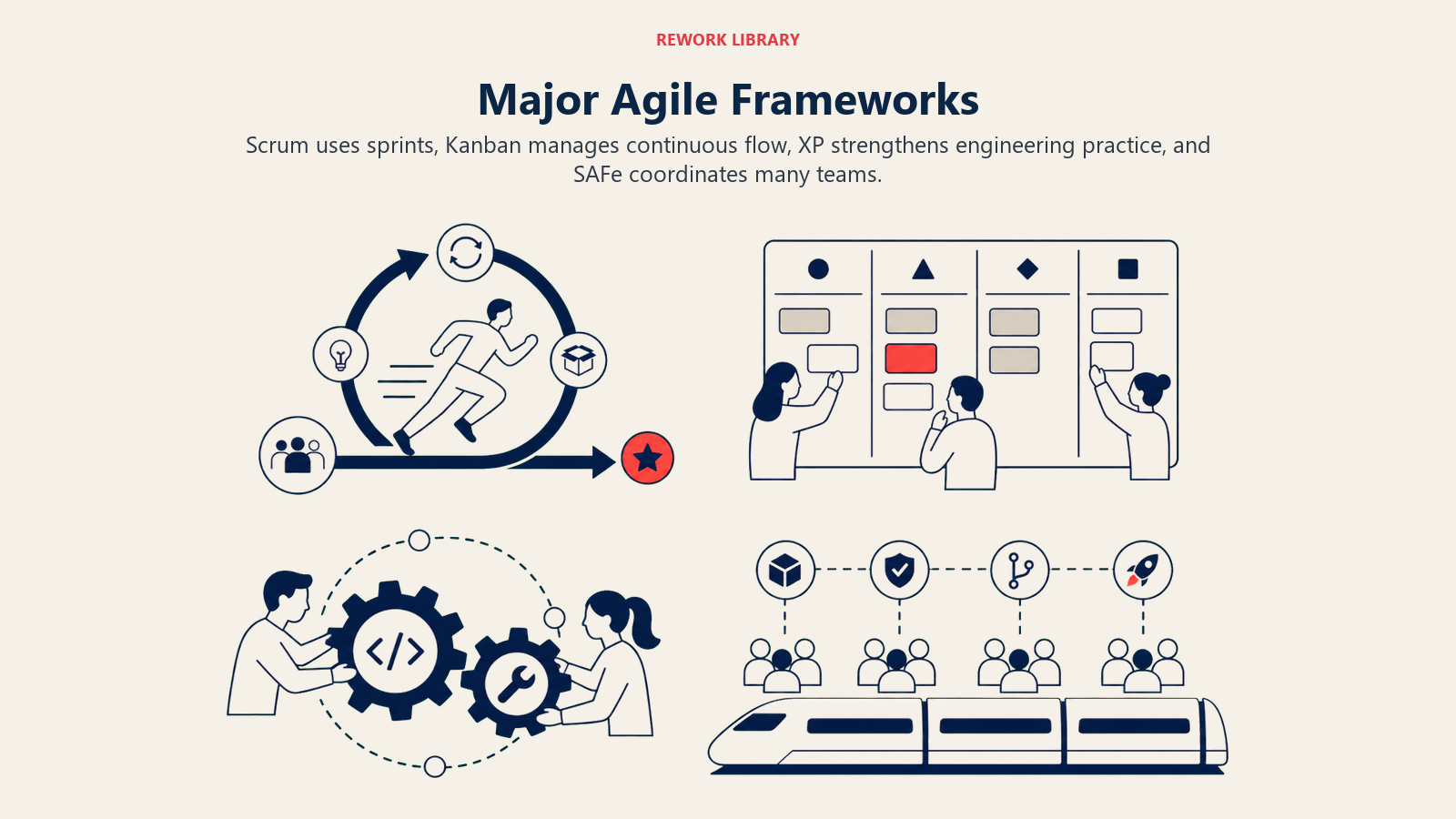
Manifesto menerangkan apa. Rangka kerja menerangkan bagaimana. Empat rangka kerja mendominasi dalam praktik.
Scrum
Scrum ialah rangka kerja agile yang paling banyak digunakan. Ia mengatur kerja kepada lelaran panjang tetap yang dipanggil Sprint (biasanya 1-4 minggu) dan mentakrifkan tiga peranan teras: Product Owner (mengutamakan Backlog), Scrum Master (menghapus halangan, memudahkan upacara), dan Pasukan Pembangunan (melakukan kerja).
Setiap Sprint bermula dengan perancangan Sprint dan berakhir dengan semakan Sprint (demo kepada pihak berkepentingan) dan retrospektif (refleksi pasukan). Stand-up harian memastikan pasukan sentiasa selaras. Output setiap Sprint ialah tambahan produk yang berpotensi untuk dihantar.
Gunakan Scrum apabila pasukan anda mempunyai 5-9 orang, kerja boleh dipecahkan kepada kepingan bersaiz Sprint, dan pihak berkepentingan boleh hadir untuk semakan berkala. Ia adalah pilihan lalai bagi pasukan pembangunan produk.
Kanban
Kanban ialah sistem berasaskan aliran yang menjadikan kerja kelihatan dan mengehadkan kerja dalam proses (WIP). Papan Kanban mempunyai lajur yang mewakili peringkat aliran kerja (Perlu Dilakukan, Dalam Proses, Selesai). Kad bergerak dari kiri ke kanan. Had WIP menghadkan bilangan item yang boleh berada dalam setiap lajur pada satu masa, memaksa pasukan untuk menyiapkan kerja sebelum memulakan item baharu.
Tidak seperti Scrum, Kanban tidak mempunyai kadens Sprint yang tetap. Kerja mengalir secara berterusan. Ini menjadikannya sesuai untuk pasukan operasi, sokongan, dan penyelenggaraan di mana kerja masuk tidak dapat diramalkan dan tidak boleh menunggu permulaan Sprint seterusnya.
Panduan Kanban merangkumi reka bentuk papan, penetapan had WIP, dan metrik masa kitaran secara terperinci.
XP (Pengaturcaraan Ekstrem)
Extreme Programming (XP) ialah rangka kerja agile yang memfokuskan pada amalan kejuruteraan untuk pasukan perisian. Amalan terasnya termasuk pengaturcaraan berpasangan (dua pembangun berkongsi satu stesen kerja), pembangunan dipacu ujian (TDD, tulis ujian sebelum kod), integrasi berterusan, keluaran kecil yang kerap, dan pengubahsuaian semula yang agresif.
XP dicipta oleh Kent Beck pada 1996 dan paling berkesan pada pasukan di mana kualiti kod dan hutang teknikal adalah risiko utama. Keluarga Crystal milik Alistair Cockburn berkembang dalam tempoh yang sama dan mengambil pertaruhan yang bertentangan: daripada menetapkan amalan, ia menyesuaikan proses itu sendiri dengan saiz pasukan dan kos sesuatu kecacatan. Ia sering digabungkan dengan Scrum: Scrum untuk perancangan dan kadens, XP untuk disiplin kejuruteraan.
SAFe (Rangka Kerja Agile Berskala)
Scaled Agile Framework (SAFe) melanjutkan agile kepada perusahaan besar dengan berbilang pasukan yang bekerja pada produk atau platform yang dikongsi. SAFe memperkenalkan Agile Release Train (ART): sekumpulan 50-125 orang yang merancang dan menyampaikan bersama dalam Program Increments (PI), biasanya 8-12 minggu.
PI Planning ialah upacara tanda tangan SAFe: acara dua hari di mana semua pasukan menyelaraskan pelan Sprint mereka dengan Roadmap yang dikongsi dan memaparkan kebergantungan antara pasukan. SAFe menambah tadbir urus peringkat portfolio supaya kepimpinan perusahaan dapat melihat kerja yang sedang berjalan tanpa mengurus secara mikro pasukan individu.
Gunakan SAFe apabila anda mempunyai lebih daripada tiga pasukan yang perlu berkoordinasi dan berkongsi kadens penghantaran.
Perbandingan rangka kerja Agile
Rangka kerja agile utama lebih berbeza dari segi kadens, bentuk pasukan, dan jenis kerja yang dibantu untuk dikawal berbanding falsafah.
| Rangka Kerja | Kadens | Saiz pasukan | Terbaik untuk | Bahagian paling sukar |
|---|---|---|---|---|
| Scrum | Sprint tetap (1-4 minggu) | 5-9 orang | Pembangunan produk dengan pasukan stabil | Semakan Sprint yang konsisten dan grooming Backlog |
| Kanban | Aliran berterusan | Sebarang saiz | Kerja ops, sokongan, penyelenggaraan | Menetapkan dan mempertahankan had WIP |
| XP | Kitaran pendek (1-2 minggu) | 2-12 jurutera | Kualiti kejuruteraan dan pengurangan hutang teknikal | Disiplin untuk mengekalkan TDD dan pengaturcaraan berpasangan |
| SAFe | PI (8-12 minggu) | 50-125+ orang | Penghantaran perusahaan berbilang pasukan | Logistik PI Planning dan pengurusan kebergantungan antara pasukan |
Agile vs Waterfall: perbezaan bentuk penghantaran
Perbezaan asas antara agile dan Waterfall bukan pada langkah proses atau tahap dokumentasi. Ia adalah pada bentuk penghantaran.
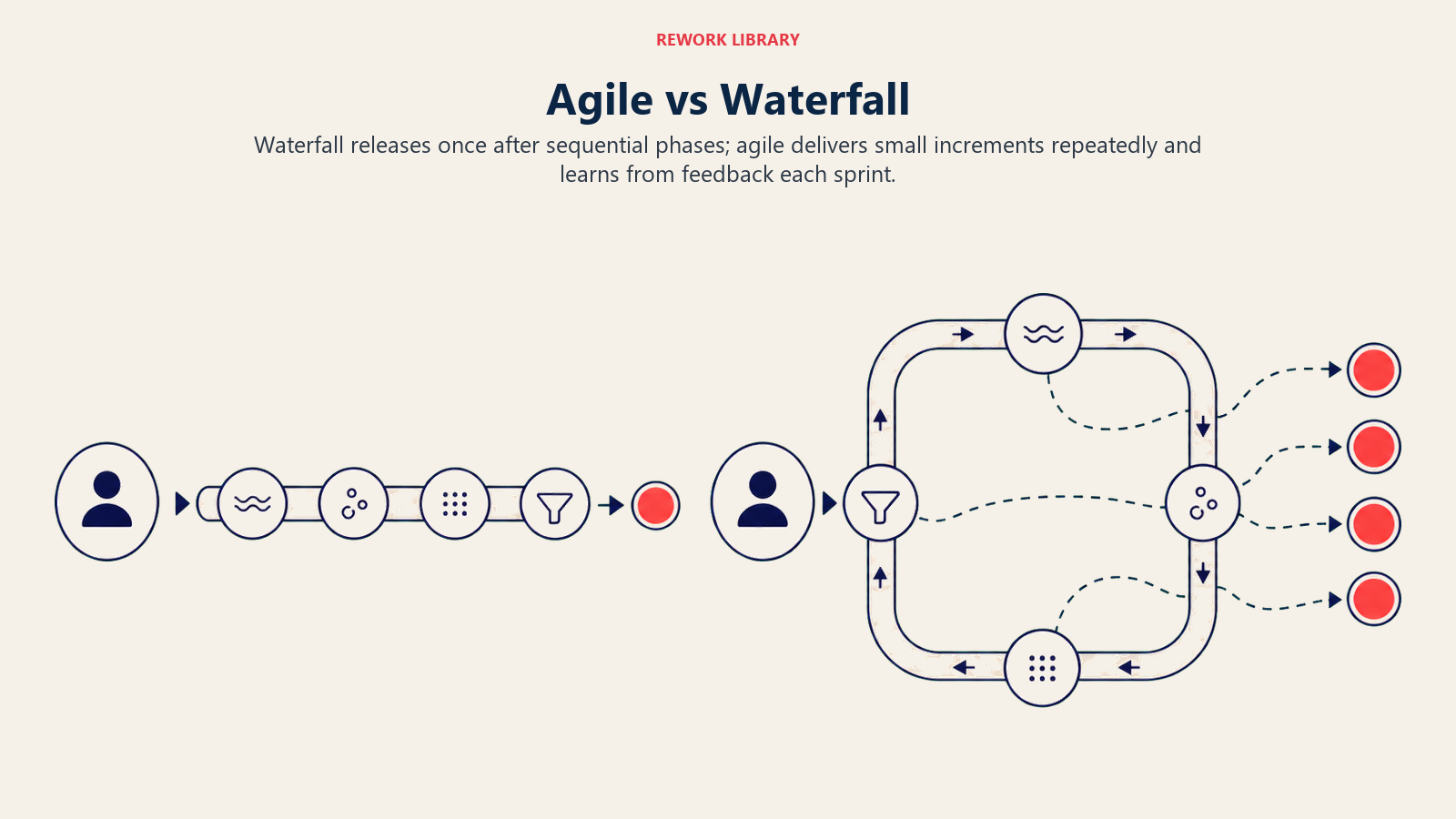
Waterfall bergerak melalui fasa berurutan: Keperluan, Reka Bentuk, Pembangunan, Pengujian, Pengeluaran. Setiap fasa mesti selesai sebelum yang seterusnya bermula. Pelanggan hanya melihat produk yang berfungsi pada penghujungnya sahaja. Jika keperluan tersalah, atau pasaran berubah, anda mengetahuinya terlalu lewat untuk berbuat banyak.
Agile menyampaikan tambahan yang berfungsi setiap Sprint. Pelanggan melihat perisian sebenar lebih awal dan lebih kerap. Gelung maklum balas diukur dalam minggu, bukan bulan. Kesilapan murah kerana ia ditemui ketika hanya satu Sprint kerja berisiko, bukan keseluruhan projek.
Anda boleh membaca lebih lanjut tentang pendekatan Waterfall dalam panduan metodologi Waterfall.
| Aspek | Waterfall | Agile |
|---|---|---|
| Bentuk penghantaran | Satu keluaran besar di penghujung | Banyak tambahan kecil sepanjang masa |
| Masa maklum balas | Selepas penghantaran penuh | Selepas setiap Sprint |
| Toleransi perubahan | Rendah (perintah perubahan mahal) | Tinggi (Backlog boleh disusun semula mana-mana Sprint) |
| Terbaik apabila keperluan | Tetap dan diketahui sepenuhnya di awal | Berkembang atau sebahagiannya difahami |
| Profil risiko | Risiko terkumpul dan muncul lewat | Risiko diedarkan dan muncul awal |
| Penekanan dokumentasi | Spesifikasi awal yang berat | Ringan, dokumen secukupnya sahaja |
| Penglibatan pelanggan | Pada permulaan dan penerimaan akhir | Berterusan sepanjang masa |
Tiada model yang lebih baik secara universal. Waterfall masih sesuai untuk pembinaan, pembuatan terkawal, dan projek di mana keperluan benar-benar tidak berubah (pelan jambatan tidak menggunakan agile). Agile menang apabila masalah adalah kompleks, keutamaan pelanggan masih membentuk, atau kelajuan belajar lebih penting daripada kelajuan menghantar.
Agile di luar perisian: 3 contoh sebenar
Agile lahir dalam perisian, tetapi nilai-nilainya merentas kepada mana-mana pasukan yang perlu menyampaikan dalam persekitaran yang berubah.
Pemasaran Agile. HubSpot dan beberapa firma yang diprofilkan dalam laporan McKinsey tentang ketangkasan pemasaran beralih daripada perancangan kempen tahunan kepada Sprint pemasaran dua minggu. Pasukan menjalankan stand-up harian, mengutamakan Backlog kandungan dan kempen setiap Sprint, dan menyemak apa yang menggerakkan pipeline. Hasilnya: tindak balas lebih pantas kepada isyarat pasaran, kurang kerja kreatif yang terbuang, dan akauntabiliti yang lebih jelas untuk impak hasil. Kaedah laluan kritikal masih terpakai untuk pelancaran dengan tarikh akhir yang tegas, tetapi kadens Sprint menangani kerja kempen sekeliling.
Agile HR / People Ops. Pasukan People Operations yang berfikiran ke hadapan kini menjalankan Sprint OKR suku tahunan sebagai ganti ulasan prestasi tahunan. Backlog HR merangkumi kemas kini polisi, kempen pengambilan, dan inisiatif budaya. Pasukan menyemak kemajuan setiap dua minggu, memotong apa yang tidak berfungsi, dan menggandakan apa yang berjaya. Model RACI kekal berguna untuk projek HR antara jabatan; lihat panduan matriks RACI untuk cara menetapkan pemilikan merentasi kerja berulang.
Agile dalam operasi. Pasukan operasi yang menguruskan kemudahan, logistik, atau perkhidmatan pelanggan menggunakan papan Kanban untuk menjejak permintaan masuk bersama kerja projek. Had WIP menghalang pasukan daripada lemas dalam kerja reaktif sementara penambahbaikan jangka panjang terhenti. Disiplin perancangan projek dalam menetapkan objektif dan Milestone juga terpakai dalam operasi agile. Sprint hanyalah menjadi unit pelaksanaan.
Anti-corak agile yang lazim
Kebanyakan kegagalan agile bukan kerana agile itu salah. Ia gagal kerana pasukan mengamalkan upacara tanpa pemikiran yang sebenar.
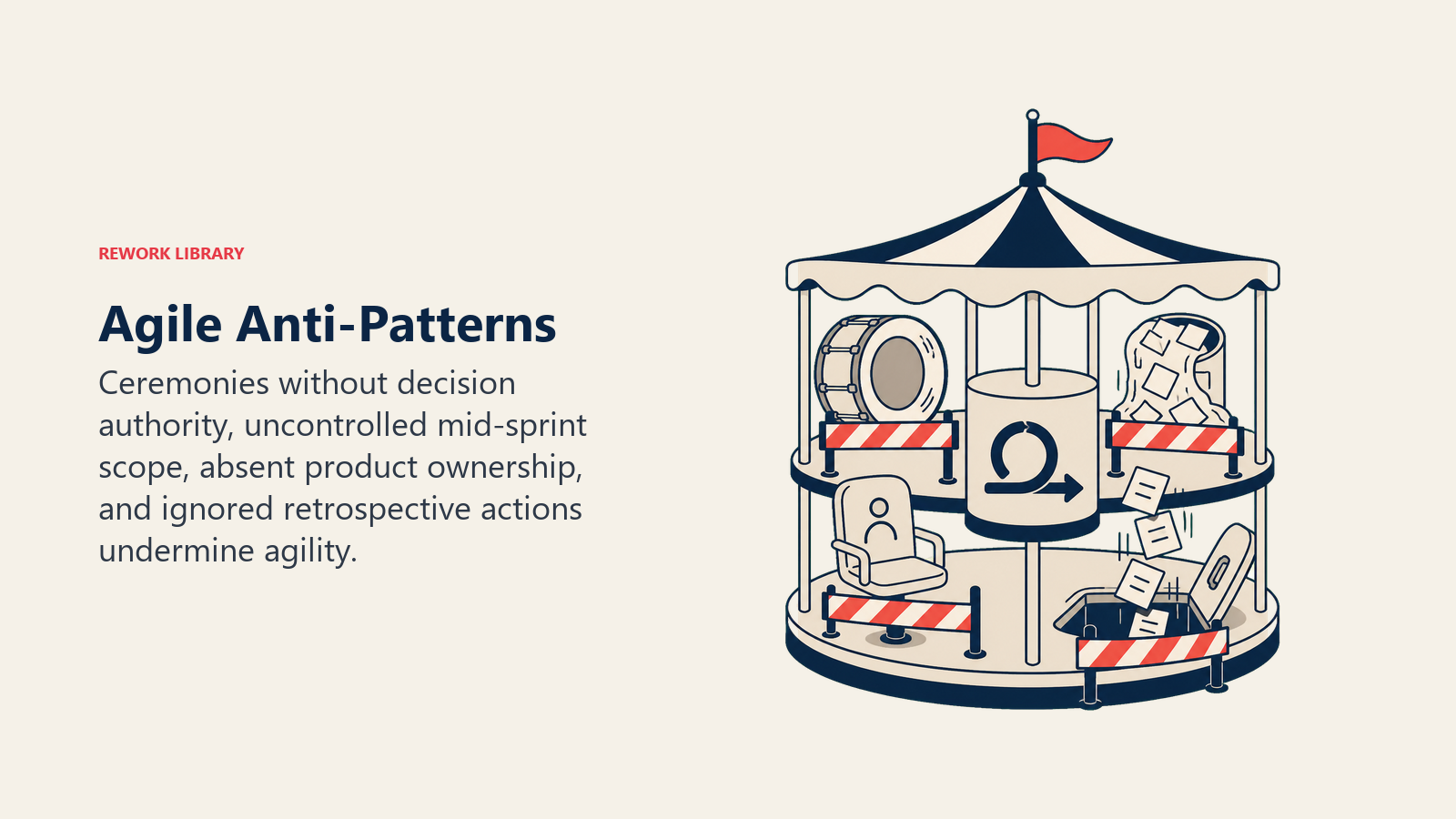
- Agile cangkerang. Menjalankan stand-up, Sprint, dan retrospektif sambil sebenarnya melakukan Waterfall di bawahnya. Kalendar kelihatan agile. Pembuatan keputusan tidak.
- Hibrid agile-Waterfall (paling buruk daripada kedua-dua). Fasa reka bentuk awal yang berlangsung tiga bulan, kemudian "Sprint" yang tidak mempunyai kuasa untuk mengubah skop. Pasukan mendapat kekerasan Waterfall tanpa kejelasan dokumentasinya, dan kadens agile tanpa fleksibilitinya.
- Tiada Product Owner yang sebenar. Product Owner yang tidak dapat mengutamakan atau mengatakan tidak kepada pihak berkepentingan mengubah Backlog menjadi senarai hajat. Setiap Sprint menjadi hujah tentang apa yang dijanjikan kepada siapa.
- Perluasan skop yang disamarkan sebagai perubahan. Agile menyambut perubahan; ia tidak bermaksud semua perkara sentiasa dalam skop. Menambah kerja pada pertengahan Sprint tanpa mengeluarkan sesuatu yang lain tetap merupakan perluasan skop, hanya dengan label yang lebih mesra.
- Retrospektif tanpa tindakan. Pasukan menjalani gerakan retrospektif, menulis masalah pada nota pelekat, dan tidak pernah menyelesaikan satu pun daripada mereka. Selepas tiga Sprint, pasukan berhenti mempercayai upacara itu.
- Velocity sebagai metrik prestasi. Menggunakan velocity Sprint untuk menilai prestasi pasukan bukannya sebagai alat perancangan. Pasukan bertindak balas dengan menggembungkan anggaran untuk melindungi nombor mereka, yang memusnahkan ketepatan yang dimaksudkan oleh velocity.
Soalan Lazim tentang Metodologi Agile
Apakah perbezaan antara agile dan Scrum?
Agile ialah pemikiran dan set nilai serta prinsip, yang pertama kali diterbitkan dalam Agile Manifesto 2001. Scrum adalah satu rangka kerja khusus untuk melaksanakan agile. Anggap agile sebagai falsafah dan Scrum sebagai satu resipi. Anda boleh menggunakan agile tanpa Scrum (Kanban dan XP juga agile). Tetapi jika anda menjalankan Scrum, anda mengamalkan agile.
Adakah agile hanya untuk pasukan perisian?
Tidak. Agile bermula dalam pembangunan perisian, tetapi nilai terasnya terpakai di mana-mana apabila kerja adalah kompleks, keperluan berkembang, dan maklum balas cepat mengatasi kesempurnaan yang perlahan. Pasukan pemasaran, HR, reka bentuk produk, operasi, dan juga kewangan menjalankan Sprint agile hari ini. Upacara dan alat mungkin kelihatan berbeza, tetapi logik asasnya sama: hantar sesuatu yang nyata, dapatkan maklum balas, sesuaikan, ulang.
Apakah perbezaan antara agile dan Waterfall?
Waterfall ialah pendekatan berurutan: keperluan ditakrifkan sepenuhnya sebelum reka bentuk bermula, reka bentuk sebelum pembangunan, pembangunan sebelum pengujian, dan pengujian sebelum pengeluaran. Pelanggan melihat produk akhir sekali sahaja, di penghujung. Agile adalah berulang: pasukan menyampaikan tambahan yang berfungsi setiap Sprint dan memasukkan maklum balas pelanggan sebelum merancang yang seterusnya. Waterfall sesuai untuk projek dengan keperluan tetap yang diketahui sepenuhnya. Agile sesuai untuk projek di mana keperluan akan berkembang.
Adakah Agile Manifesto masih relevan pada 2026?
Ya, dan boleh dikatakan lebih daripada sebelumnya. Empat nilai ditulis terhadap latar belakang proses perisian yang berat dan terdokumentasi berlebihan. Pada 2026, kuasa yang sama muncul semula dalam pembangunan berbantuan AI, transformasi digital perusahaan berskala besar, dan pasukan yang diedarkan yang cuba berkoordinasi merentasi zon waktu. Manifesto tidak menetapkan alat; ia menetapkan keutamaan. Dan keutamaan tersebut, yang mengutamakan orang berbanding proses, hasil yang berfungsi berbanding dokumentasi, dan pembelajaran berbanding jangkaan, adalah berguna pada 2026 seperti ketika Kent Beck bermain ski di Utah. Metodologi Agile bukan peluru perak. Ia adalah pertaruhan: bahawa kos belajar dengan cepat melebihi kos merancang dengan sempurna. Bagi kebanyakan pasukan yang bekerja pada masalah kompleks dengan keperluan yang berubah, pertaruhan itu telah membuahkan hasil selama 25 tahun.

Senior Operations & Growth Strategist
On this page
- Apakah metodologi Agile?
- Fakta Utama
- 4 nilai dan 12 prinsip agile
- 4 nilai
- 12 prinsip
- Rangka kerja Agile utama
- Scrum
- Kanban
- XP (Pengaturcaraan Ekstrem)
- SAFe (Rangka Kerja Agile Berskala)
- Perbandingan rangka kerja Agile
- Agile vs Waterfall: perbezaan bentuk penghantaran
- Agile di luar perisian: 3 contoh sebenar
- Anti-corak agile yang lazim