Bahasa Indonesia
Go-to-Market Strategy: Kerangka, Langkah, dan Contoh
Turn this article into takeaways for your work.


Each assistant summarizes the article only for you and suggests best practices for your work.
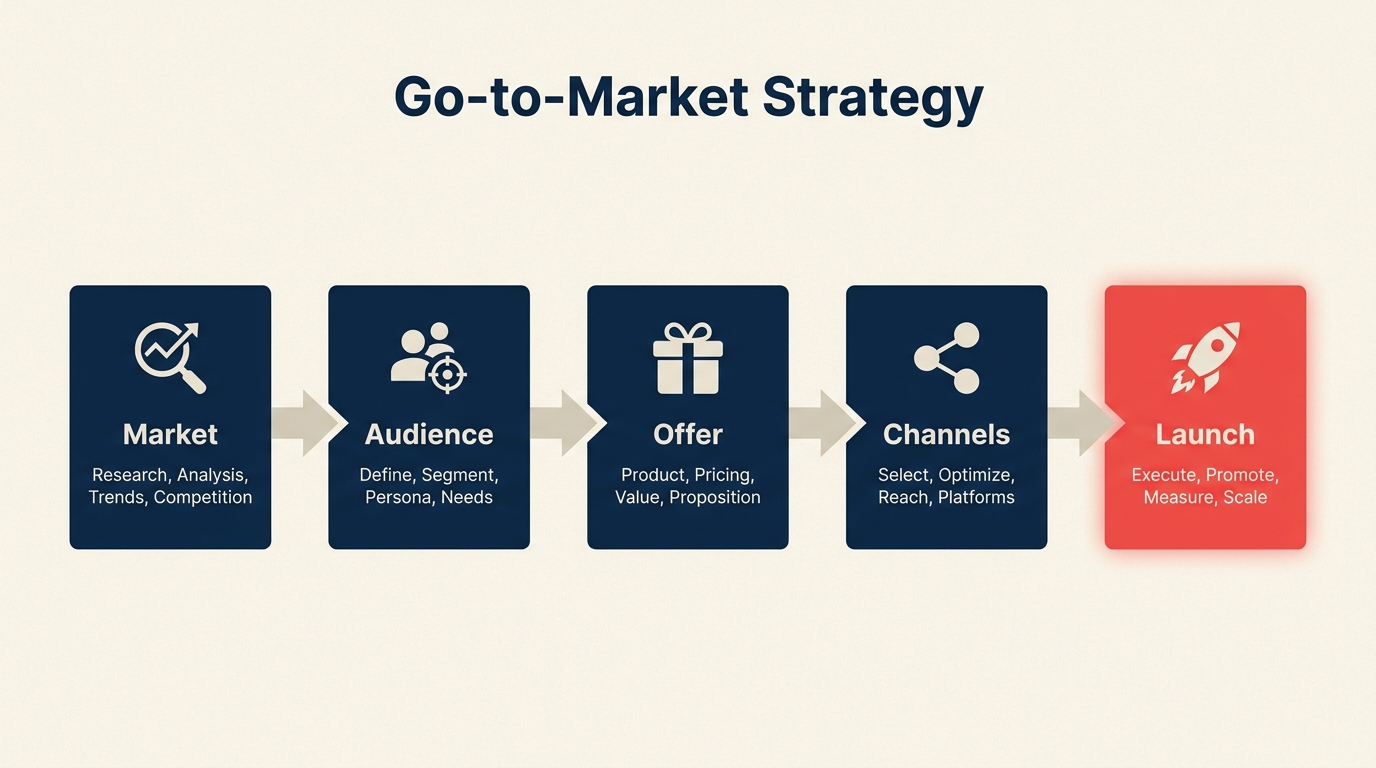
Go-to-market (GTM) strategy adalah rencana Anda untuk membawa produk atau layanan ke pelanggan. Rencana ini menjawab kepada siapa Anda menjual, apa yang Anda tawarkan, bagaimana Anda menjangkau pembeli, dan bagaimana Anda mengubah minat menjadi pendapatan. Lakukan dengan benar dan Anda mempersingkat waktu antara peluncuran dan traksi. Lakukan dengan salah dan bahkan produk yang hebat bisa macet sebelum menemukan audiensnya.
Kebanyakan peluncuran gagal bukan karena produknya buruk melainkan karena jalur menuju pelanggan tidak jelas. GTM strategy menghilangkan ambiguitas itu. Ini memberi setiap tim, dari produk hingga penjualan hingga pemasaran, satu panduan bersama sehingga semua orang menarik ke arah yang sama.
Apa Itu Go-to-Market Strategy?
Go-to-market strategy adalah rencana yang terkoordinasi yang mendefinisikan bagaimana sebuah perusahaan membawa produk atau layanan ke pasar, menetapkan target pelanggan, nilai yang ditawarkan, saluran yang digunakan, dan pendekatan penjualan yang mendorong pendapatan.
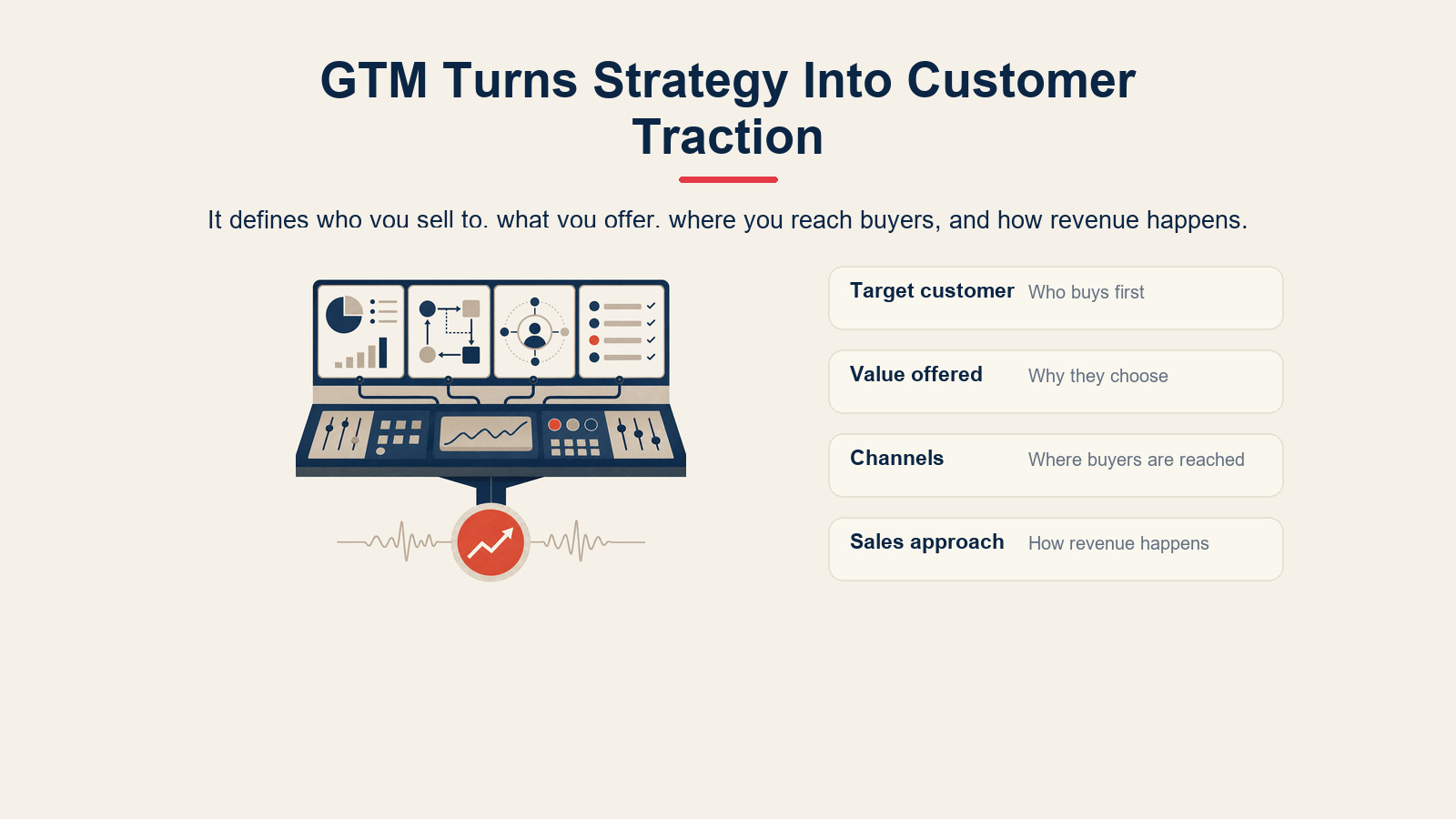
Ini bukan hal yang sama dengan rencana pemasaran. Rencana pemasaran mengatur aktivitas merek dan permintaan yang berkelanjutan di seluruh portofolio yang sudah ada. GTM strategy bersifat spesifik untuk peluncuran: ini dibangun untuk satu produk, ekspansi ke segmen baru, atau masuk ke geografi baru. Ini juga lebih sempit dari rencana bisnis, yang mencakup model operasi penuh, keuangan, dan visi perusahaan. GTM berada tepat di lapisan eksekusi: menerjemahkan strategi menjadi gerakan konkret yang mendapatkan pelanggan pertama.
Fakta Penting
- Sekitar 95% peluncuran produk baru gagal memenuhi target pendapatan mereka di tahun pertama, menurut riset dari Harvard Business School (2021).
- Sebuah studi oleh Simon-Kucher menemukan bahwa 72% produk dan layanan baru yang diluncurkan secara global tidak memenuhi target pendapatan atau keuntungan mereka.
- Perusahaan B2B yang menyelaraskan penjualan dan pemasaran di sekitar GTM motion bersama mengalami pertumbuhan pendapatan 24% lebih cepat dan pertumbuhan keuntungan 27% lebih cepat selama tiga tahun (SiriusDecisions / Forrester, 2019).
Komponen Inti GTM Strategy
Setiap GTM strategy memiliki blok pembangun yang sama, terlepas dari ukuran perusahaan atau industri. Spesifikasinya bervariasi menurut produk dan pasar, tetapi komponen di bawah ini bersifat universal.
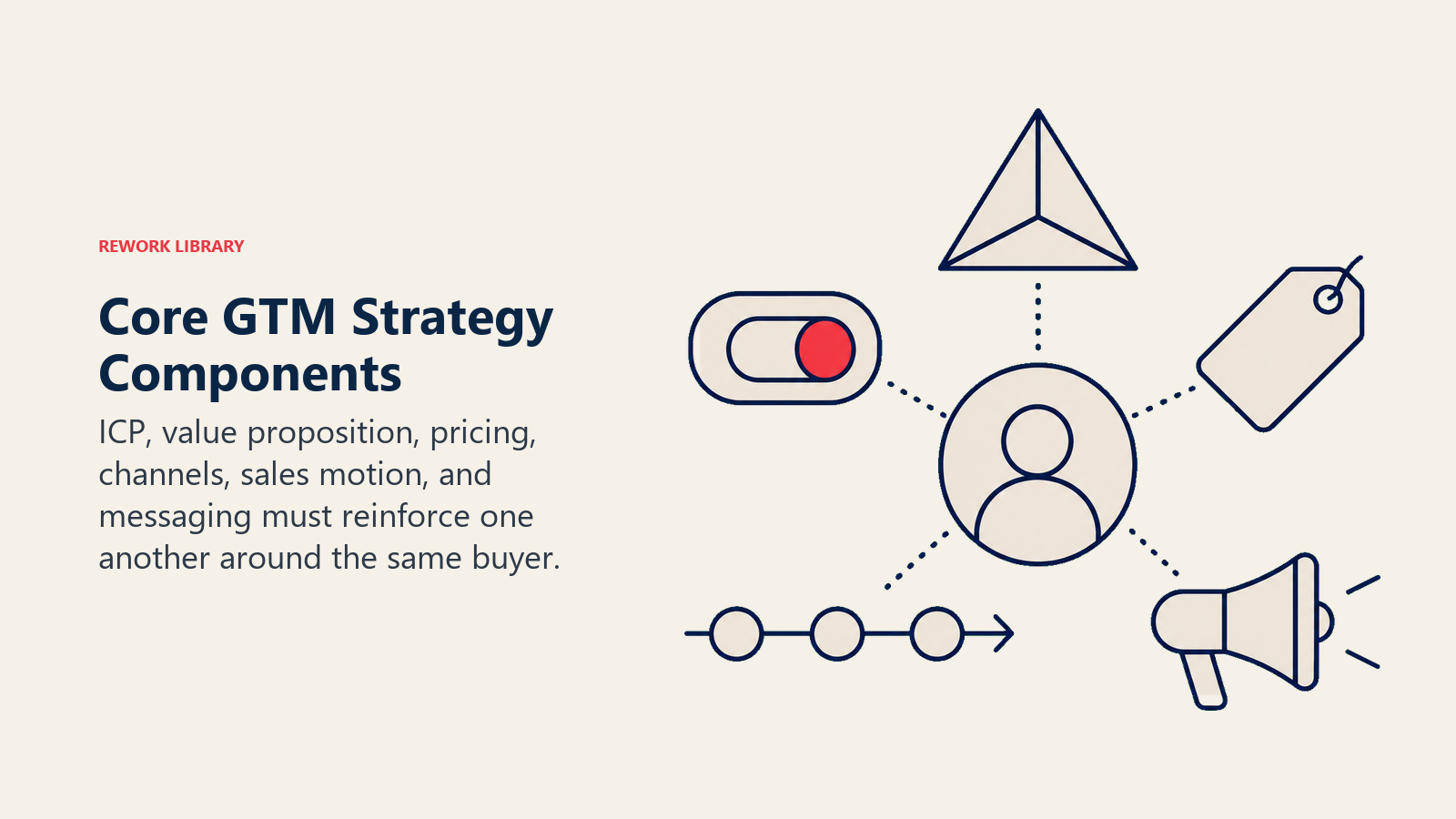
| Komponen | Pertanyaan yang dijawab | Contoh |
|---|---|---|
| Target pasar dan ICP | Siapa pelanggan ideal, dan segmen mana yang kami fokuskan dulu? | Perusahaan SaaS B2B kelas menengah dengan 50-200 karyawan dan VP of Revenue |
| Proposisi nilai | Mengapa pelanggan harus memilih kami daripada alternatif? | Memotong waktu siklus kesepakatan 30% tanpa memerlukan migrasi CRM |
| Model penetapan harga | Berapa yang kami kenakan, dan bagaimana pendapatan distrukturisasi? | Langganan per kursi seharga $49/bulan, ditagih tahunan |
| Saluran | Di mana dan bagaimana kami menjangkau pembeli? | SDR outbound, ulasan G2, konten LinkedIn, referral mitra |
| Sales motion | Bagaimana Lead berkembang dari kesadaran hingga kesepakatan ditutup? | Trial berbasis produk, kemudian ekspansi berbantuan penjualan untuk akun di atas 20 kursi |
| Pesan | Bahasa apa yang beresonansi dengan rasa sakit dan tujuan pembeli? | "Tutup kesepakatan lebih cepat tanpa membangun ulang tumpukan Anda" |
Value proposition canvas dan business model canvas adalah alat yang berguna untuk mengembangkan komponen proposisi nilai dan model pendapatan sebelum Anda menyelesaikan rencana GTM.
GTM Motion: Product-Led vs Sales-Led vs Marketing-Led
GTM motion mendefinisikan bagaimana perusahaan Anda menghasilkan permintaan dan mengonversinya. Tiga model dominan ada dalam perangkat lunak B2B saat ini, meskipun sebagian besar perusahaan yang matang memadukan elemen dari ketiganya.
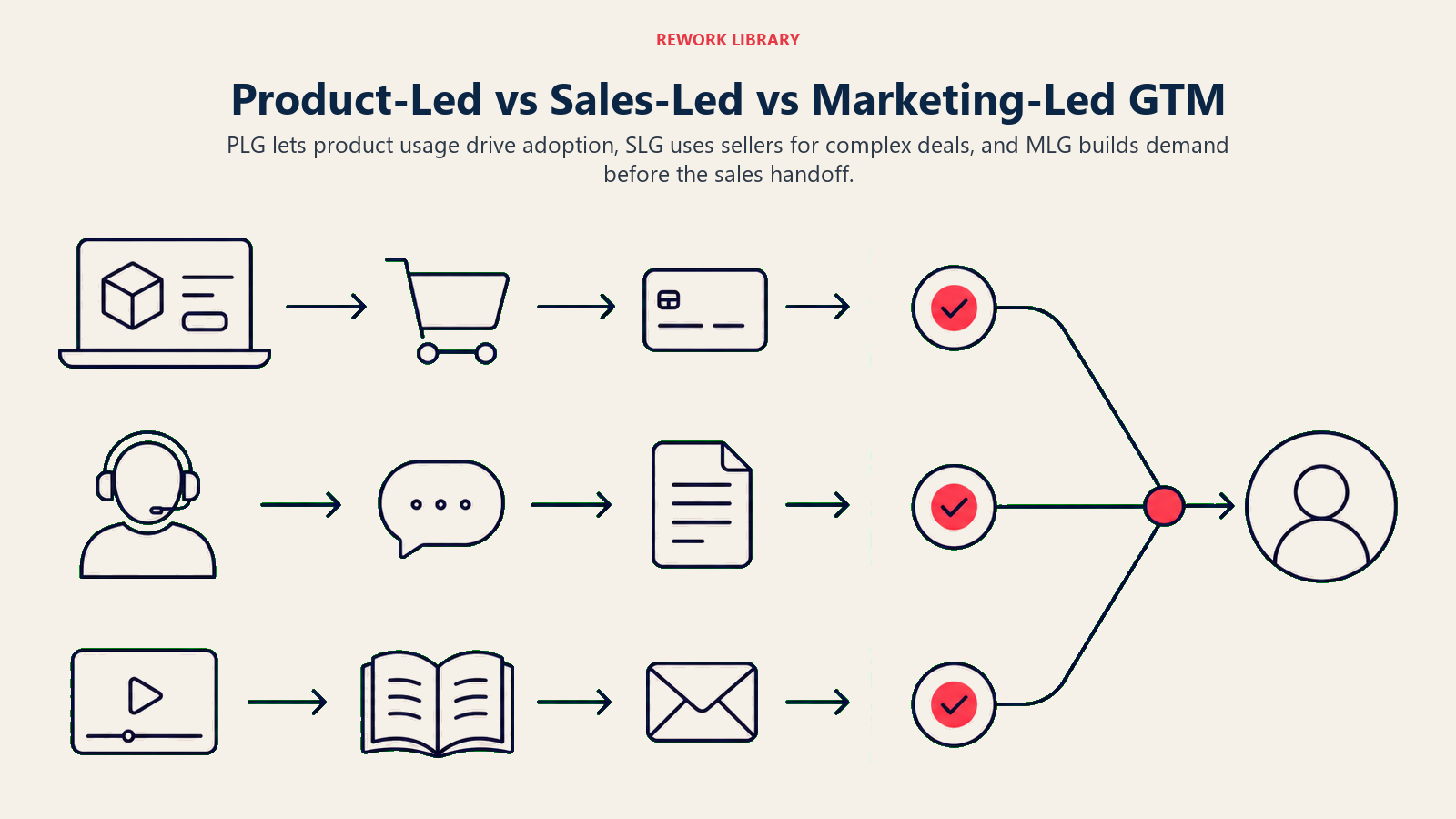
| Motion | Cara kerjanya | Paling cocok untuk |
|---|---|---|
| Product-led growth (PLG) | Produk itu sendiri adalah pengungkit akuisisi dan ekspansi utama. Pengguna mendaftar, mendapatkan nilai, dan kemudian meningkatkan atau mengundang rekan tim. | Alat horizontal dengan loop viral: Slack, Figma, Notion |
| Sales-led growth (SLG) | Tim penjualan mendorong prospeksi outbound dan tindak lanjut inbound. Demo dan proposal mengonversi Lead yang memenuhi syarat. | Perangkat lunak enterprise yang kompleks, industri yang diregulasi, kesepakatan ACV tinggi |
| Marketing-led growth (MLG) | Konten, SEO, iklan berbayar, dan komunitas membangun Pipeline yang diserahkan pemasaran ke penjualan. | Produk kelas menengah di mana pembeli meneliti sebelum menghubungi penjualan |
PLG mempersingkat biaya akuisisi dan mempercepat time-to-value, tetapi hanya bekerja ketika produk memberikan momen "wow" tanpa bimbingan. SLG mahal tetapi efektif ketika keputusan pembelian melibatkan banyak pemangku kepentingan dan siklus evaluasi yang panjang. Sebagian besar perusahaan SaaS B2B akhirnya menjalankan hybrid: PLG untuk adopsi swalayan dan SLG untuk ekspansi enterprise.
Motion yang tepat tergantung pada tahap siklus hidup produk Anda. Perusahaan tahap awal biasanya membutuhkan motion sales-led untuk belajar dari percakapan pelanggan langsung sebelum mengoptimalkan efisiensi berbasis produk.
Cara Membangun Go-to-Market Strategy
Langkah 1: Definisikan target pasar dan ICP
Mulai dengan segmentasi pasar untuk mengidentifikasi kelompok pelanggan mana yang dapat Anda layani paling baik. Kemudian persempit ke Ideal Customer Profile (ICP): atribut firmografi, teknografi, dan perilaku akun yang paling mungkin membeli dan berhasil dengan produk Anda. Jadilah spesifik. "Perusahaan SaaS kelas menengah" terlalu luas. "Perusahaan SaaS B2B dengan 50-200 karyawan, fungsi RevOps khusus, dan CRM yang sudah ada" memberi tim Anda profil yang dapat mereka tindaki.
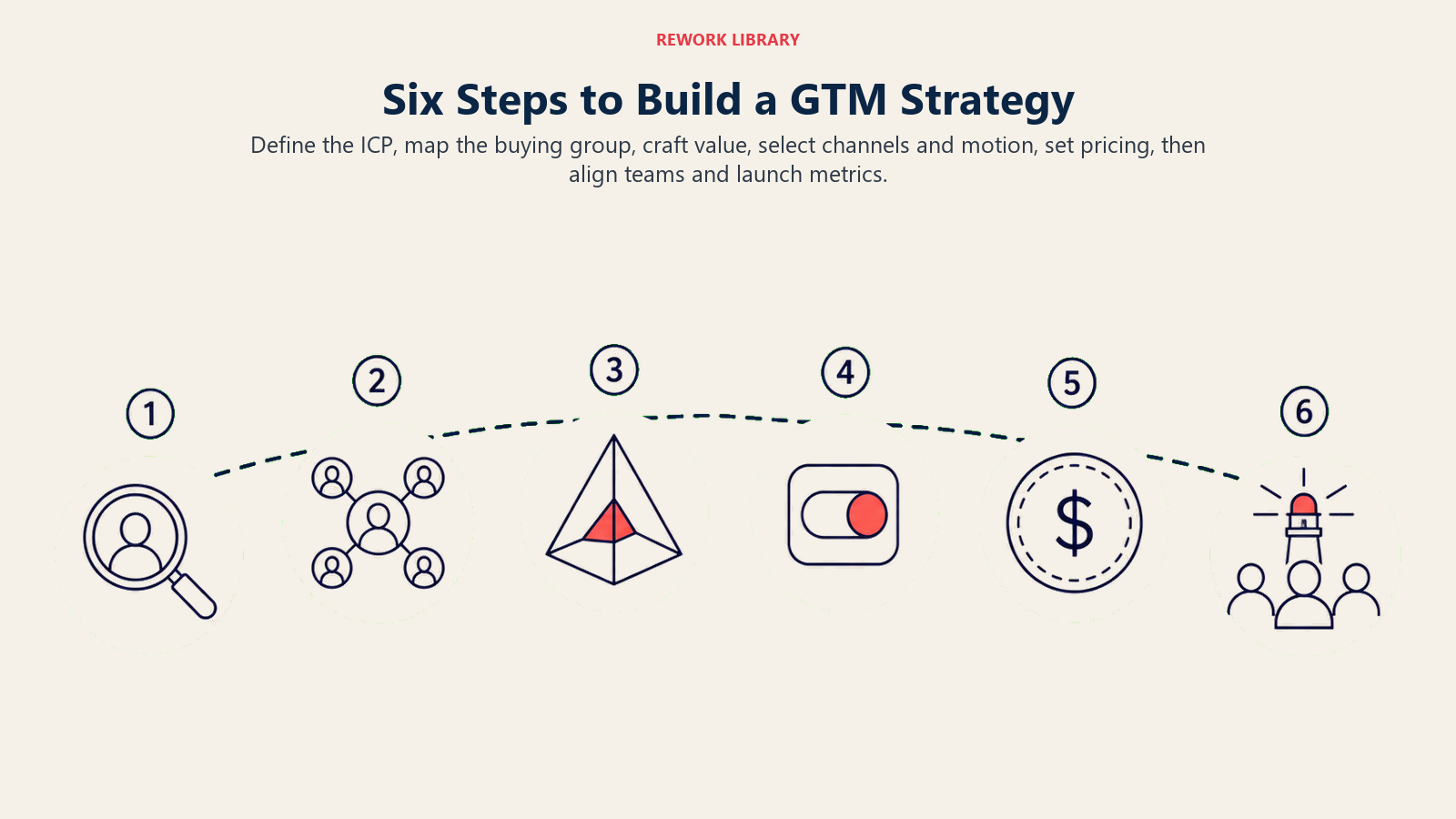
Langkah 2: Petakan perjalanan pembeli dan unit pengambilan keputusan
Pembelian B2B jarang melibatkan satu orang. Petakan siapa yang mempengaruhi keputusan, siapa yang memiliki anggaran, siapa yang memblokir atau mendukung kesepakatan, dan siapa yang menggunakan produk sehari-hari. Setiap peran memiliki kekhawatiran yang berbeda: pembeli ekonomis peduli pada ROI, evaluator teknis peduli pada integrasi, dan pengguna akhir peduli pada gesekan harian. Strategi pesan dan saluran Anda harus menjawab masing-masing pada tahap yang tepat.
Langkah 3: Bangun proposisi nilai
Definisikan hasil yang dihasilkan produk Anda untuk ICP, dikuantifikasi jika memungkinkan. Hindari daftar fitur. Dahulukan hasil bisnis: pendapatan yang meningkat, biaya yang dihilangkan, risiko yang berkurang, atau waktu yang dihemat. Proposisi nilai yang baik lulus uji "jadi apa?": jika CFO yang skeptis membacanya dan langsung bertanya "jadi apa?", tulis ulang. Alat seperti value proposition canvas membantu Anda memetakan pekerjaan, hambatan, dan keuntungan pelanggan ke kemampuan produk Anda dengan cara yang terstruktur.
Langkah 4: Pilih saluran dan sales motion
Cocokkan saluran dengan tempat ICP Anda benar-benar mempelajari tentang solusi. Untuk pembeli teknis, komunitas developer, G2, dan Hacker News penting. Untuk eksekutif, kepemimpinan pemikiran LinkedIn, laporan analis, dan referral rekan membawa bobot lebih besar. Tumpangkan sales motion: apakah perwakilan akan melakukan outbound, merespons inbound, atau membiarkan produk mengkualifikasi pengguna sebelum manusia menyentuh akun? Dokumentasikan tahapan sales funnel sehingga setiap perwakilan memahami apa yang menggerakkan kesepakatan maju di setiap langkah.
Langkah 5: Tetapkan harga dan paket
Penetapan harga adalah pengungkit GTM, bukan hanya keputusan keuangan. Harga terlalu rendah dan Anda memberi sinyal nilai yang rendah; harga terlalu tinggi dan Anda memperpanjang siklus evaluasi. Paket (fitur apa yang ada di tingkat mana) membentuk pelanggan mana yang membeli paket mana dan bagaimana mereka berkembang. Pertimbangkan apakah harga selaras dengan metrik nilai yang paling dipedulikan pembeli Anda: kursi, penggunaan, hasil, atau langganan tetap.
Langkah 6: Selaraskan tim dan definisikan metrik peluncuran
GTM strategy hanya bekerja jika penjualan, pemasaran, produk, dan customer success beroperasi dari rencana yang sama. Sepakati definisi: apa yang dihitung sebagai marketing-qualified lead (MQL), sales-qualified lead (SQL), kesepakatan closed-won. Kemudian tetapkan metrik peluncuran: jumlah pilot di minggu pertama, kesepakatan dalam sales funnel, pendapatan pada bulan ketiga. Lacak aktual terhadap rencana setiap minggu dan sesuaikan motion, saluran, atau pesan berdasarkan apa yang Anda pelajari. Kerangka analisis kompetitif dan Ansoff matrix membantu Anda memvalidasi pemosisian pasar dan arah pertumbuhan seiring data awal masuk.
Contoh Go-to-Market Strategy
Startup SaaS B2B memasuki pasar kelas menengah
Startup otomasi alur kerja menargetkan tim RevOps di perusahaan SaaS B2B. ICP mereka adalah perusahaan dengan 100-500 karyawan, CRM yang sudah ada, dan pendapatan antara $10 juta hingga $100 juta. Proposisi nilai: ganti alur kerja manual antara pemasaran dan penjualan dengan routing otomatis yang memotong waktu respons Lead dari jam menjadi menit. GTM motion berbasis outbound: SDR mengidentifikasi akun target melalui Apollo, mengirim urutan yang dipersonalisasi, dan menyerahkan akun yang memenuhi syarat ke AE untuk demo. Salurannya adalah LinkedIn outreach, konten seputar revenue operations, dan kemitraan dengan vendor CRM. Harga adalah $1.500/bulan untuk hingga 10 kursi, bulanan atau tahunan.
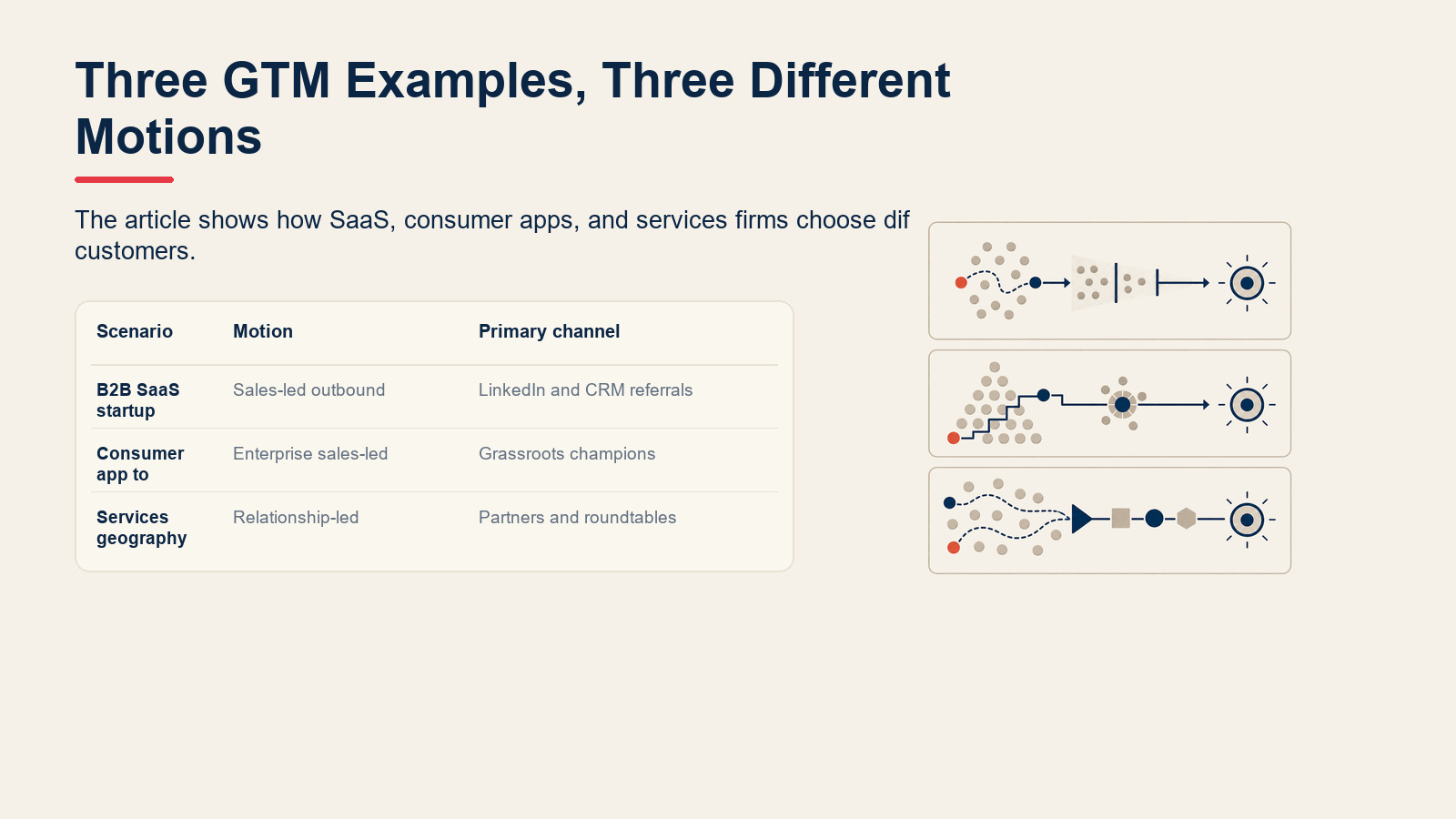
| Elemen GTM | Pilihan |
|---|---|
| ICP | Tim RevOps, SaaS B2B, 100-500 karyawan |
| Proposisi nilai | Potong waktu respons Lead dari jam menjadi menit |
| Motion | Sales-led, SDR outbound |
| Saluran utama | LinkedIn + referral mitra CRM |
| Harga | $1.500/bulan, per tim |
Aplikasi konsumen berkembang ke enterprise
Aplikasi produktivitas mobile dengan basis konsumen yang kuat menargetkan tim enterprise. Produk sudah memiliki pengguna individu di perusahaan Fortune 500. GTM motion berubah dari PLG konsumen ke SLG enterprise: identifikasi perusahaan dengan adopsi akar rumput yang ada, libatkan pendukung, dan jalankan motion penjualan top-down untuk mengonversi penggunaan departemen menjadi kontrak seluruh organisasi. Proposisi nilai bergeser dari "hemat waktu Anda sendiri" menjadi "standardisasi alur kerja tim Anda dan dapatkan kontrol kepatuhan."
Firma jasa profesional memasuki geografi baru
Firma konsultan manajemen berkembang dari Australia ke Asia Tenggara. GTM strategy berpusat pada satu pasar jangkar (Singapura), jaringan mitra lokal untuk referral, dan program konten yang ditargetkan dalam bahasa Inggris dan Bahasa. Sales motion bersifat relationship-led: mitra senior menghadiri konferensi regional dan menyelenggarakan executive roundtable. Harga mencerminkan tarif Australia yang disesuaikan dengan tolok ukur daya beli lokal. Pertumbuhan organik di tahun pertama, kemudian dipercepat oleh rekrutmen lokal di tahun kedua.
Kesalahan Go-to-Market yang Umum
Penargetan yang terlalu luas. Tim yang mendefinisikan ICP mereka sebagai "semua perusahaan" atau "bisnis apa pun yang membutuhkan X" menyebarkan upaya terlalu tipis. Yang sempit yang menang. 50 pelanggan pertama harus terlihat hampir identik.
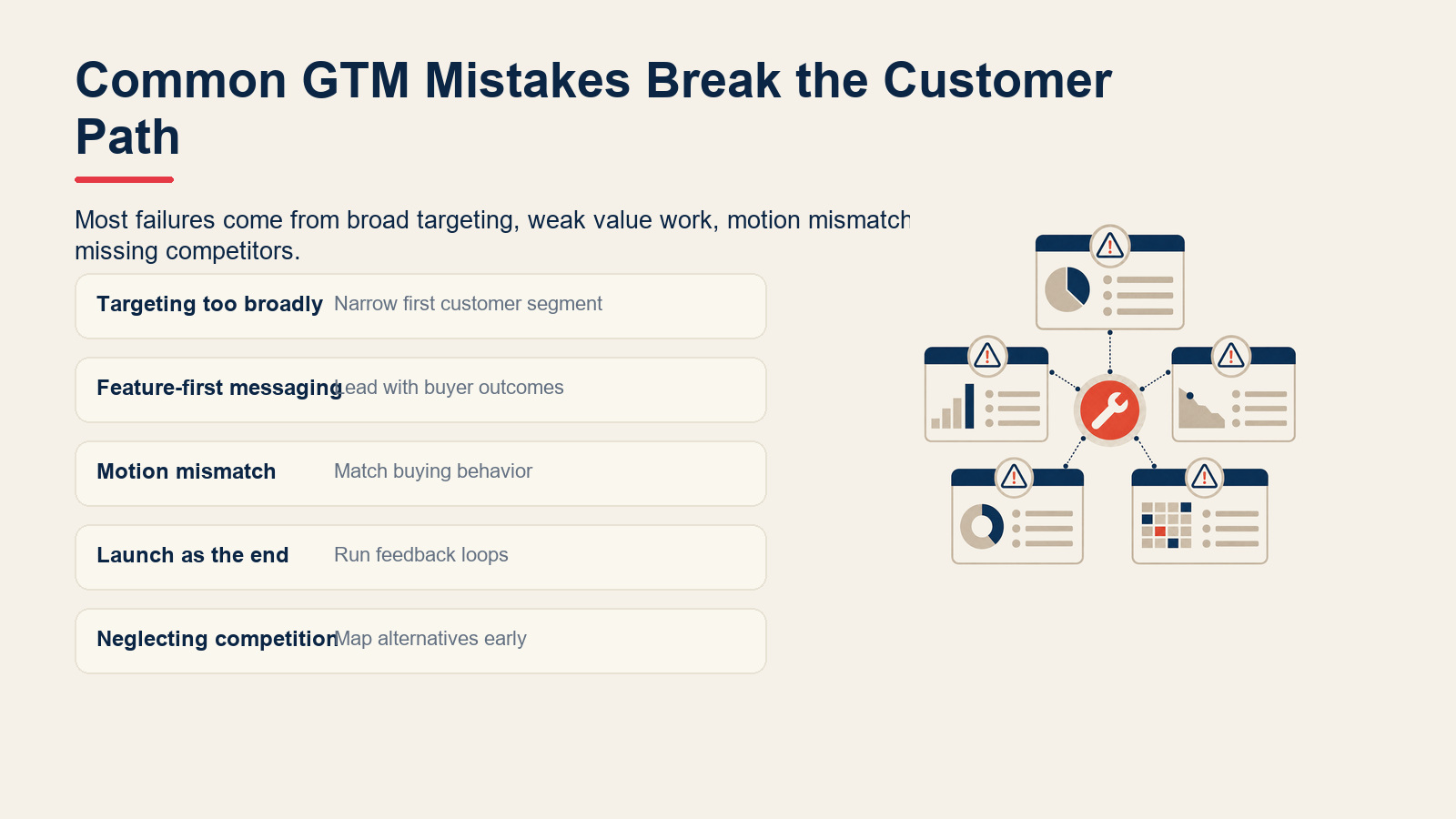
Melewatkan pekerjaan proposisi nilai. Meluncurkan dengan pesan yang mengutamakan fitur daripada hasil memperlambat setiap bagian dari Funnel. Pembeli tidak peduli apa yang dilakukan produk; mereka peduli apa yang dilakukan produk untuk mereka.
Ketidakcocokan motion dengan pasar. PLG di pasar di mana pembeli ekonomis berada dua tingkat di atas pengguna menciptakan jalan buntu. Pengguna menyukai produk tetapi tidak bisa membelinya. SLG di pasar di mana pembeli menginginkan swalayan menciptakan gesekan. Petakan perilaku pembelian sebelum memilih motion.
Memperlakukan peluncuran sebagai akhir. GTM strategy adalah dokumen yang hidup. Versi pertama adalah hipotesis. Yang Anda pelajari di minggu satu hingga enam harus mengubah pesan, saluran, dan terkadang ICP. Bangun feedback loop dari awal.
Mengabaikan persaingan. Pembeli membandingkan. Jika Anda belum memetakan alternatif kompetitif dan membangun cerita diferensiasi yang jelas, tim penjualan Anda akan kalah dalam kesepakatan akibat keberatan yang tidak mereka siapkan. Analisis kompetitif yang menyeluruh memunculkan kesenjangan tersebut sebelum merugikan pendapatan Anda.

Co-Founder & COO
On this page
- Apa Itu Go-to-Market Strategy?
- Komponen Inti GTM Strategy
- GTM Motion: Product-Led vs Sales-Led vs Marketing-Led
- Cara Membangun Go-to-Market Strategy
- Langkah 1: Definisikan target pasar dan ICP
- Langkah 2: Petakan perjalanan pembeli dan unit pengambilan keputusan
- Langkah 3: Bangun proposisi nilai
- Langkah 4: Pilih saluran dan sales motion
- Langkah 5: Tetapkan harga dan paket
- Langkah 6: Selaraskan tim dan definisikan metrik peluncuran
- Contoh Go-to-Market Strategy
- Startup SaaS B2B memasuki pasar kelas menengah
- Aplikasi konsumen berkembang ke enterprise
- Firma jasa profesional memasuki geografi baru
- Kesalahan Go-to-Market yang Umum