Bahasa Indonesia
Tahap-Tahap Sales Funnel: Panduan Lengkap
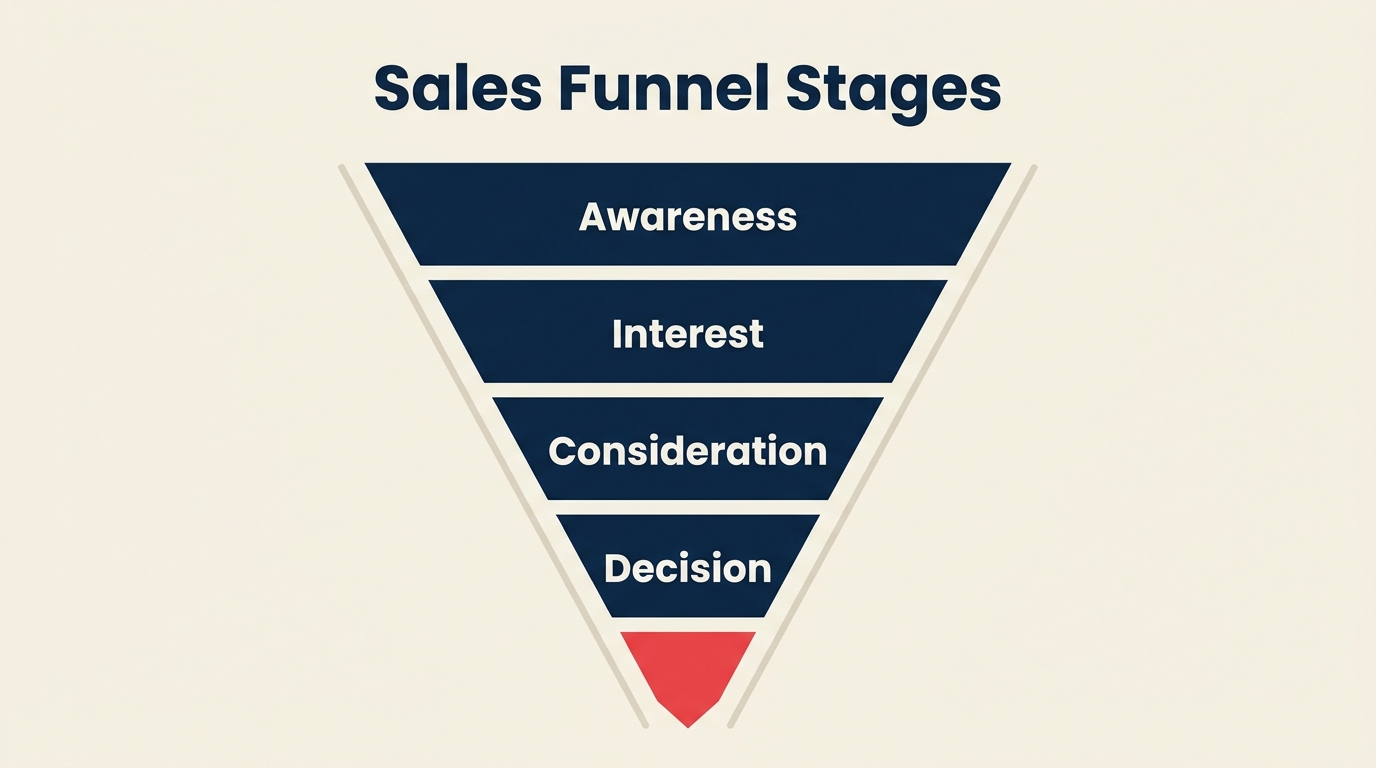
Turn this article into takeaways for your work.


Each assistant summarizes the article only for you and suggests best practices for your work.
Memahami tahap-tahap sales funnel memberi tahu Anda di mana posisi mental pembeli, bukan hanya di mana mereka berada dalam CRM Anda. Setiap tahap mewakili pergeseran niat pembeli, dan mengetahui apa yang memicu pergeseran tersebut adalah yang membedakan tim yang mengonversi secara konsisten dari mereka yang mengandalkan keberuntungan.
Sebagian besar perusahaan B2B kehilangan prospek bukan karena produk mereka salah, tetapi karena pesan yang disampaikan tidak sesuai dengan posisi pembeli yang sebenarnya. Anda tidak bisa mengirimkan halaman harga kepada seseorang yang bahkan belum menyadari bahwa mereka memiliki masalah. Memahami tahap-tahap dengan benar mengatasi kesalahan penyelarasan tersebut.
Apa Itu Tahap-Tahap Sales Funnel?
Tahap-tahap sales funnel adalah fase-fase berurutan yang dilalui calon pelanggan, mulai dari pertama kali menyadari suatu masalah hingga menyelesaikan pembelian dan menjadi pembeli berulang. Metafora "funnel" mencerminkan kenyataan bahwa banyak orang masuk dari atas dan jauh lebih sedikit yang keluar sebagai pelanggan di bawah.
Tahap-tahap ini berpusat pada psikologi pembeli, bukan tindakan penjual. Setiap tahap menggambarkan pola pikir pembeli dan pertanyaan yang mereka ajukan. Tugas Anda di setiap tahap adalah menjawab pertanyaan-pertanyaan tersebut dengan cukup baik sehingga mereka bergerak ke tahap berikutnya.
Fakta Utama
- 79% lead tidak pernah dikonversi menjadi penjualan, menurut penelitian yang dikutip oleh beberapa penyedia analitik penjualan. Sebagian besar keluar pada tahap awareness dan interest, sebelum seorang sales pernah terlibat.
- Perusahaan dengan performa terbaik mengonversi lead menjadi pelanggan dengan tingkat di atas 5%, dibandingkan rata-rata industri sebesar 2,35% (sumber: First Page Sage, benchmark 2026).
- 68% perusahaan belum mengidentifikasi atau berupaya mengukur sales funnel mereka sendiri, yang berarti sebagian besar tim melakukan optimasi tanpa informasi yang memadai (sumber: electroiq.com, 2025).
Tahap-Tahap Sales Funnel
Model standar menggunakan enam tahap. Beberapa framework meringkasnya menjadi tiga (top, middle, bottom of funnel), tetapi versi enam tahap memberi Anda resolusi yang cukup untuk mengambil tindakan di setiap titik transisi.
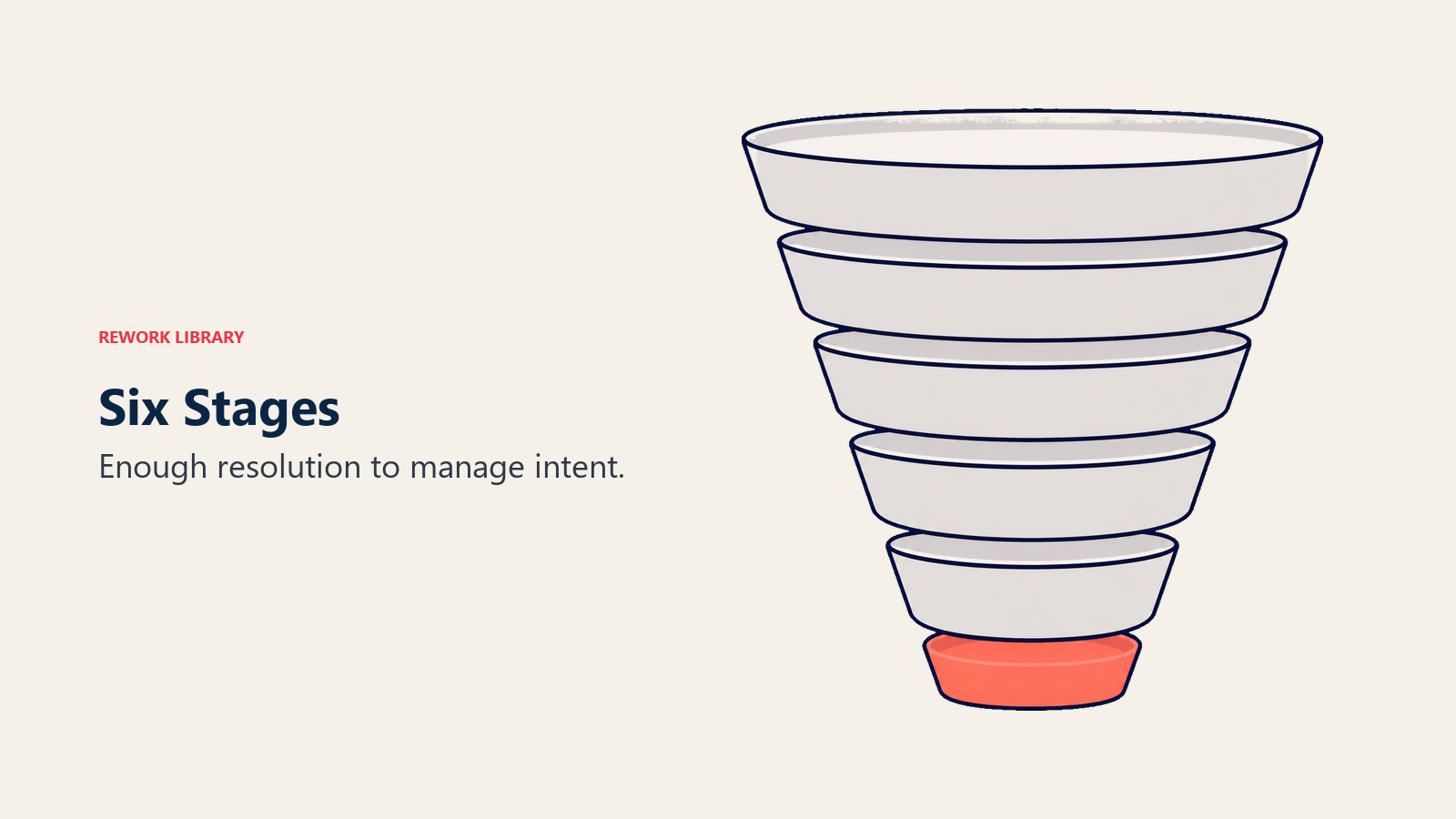
| Tahap | Pola Pikir Pembeli | Tujuan Anda | Contoh Tindakan Pembeli |
|---|---|---|---|
| Awareness | "Saya memiliki masalah, atau seseorang baru saja menunjukkan masalah yang tidak saya ketahui" | Masuk dalam radar mereka | Membaca artikel blog, melihat iklan LinkedIn, mendengar sebutan dalam podcast |
| Interest | "Masalah ini nyata bagi saya, saya ingin tahu lebih banyak" | Edukasi dan bangun kredibilitas | Mengunduh ebook, berlangganan newsletter, mengikuti brand Anda |
| Consideration | "Saya sedang aktif mencari solusi" | Tunjukkan kesesuaian dan bedakan diri | Membandingkan vendor, menonton demo, membaca case study |
| Intent / Evaluation | "Saya rasa ini mungkin solusi yang tepat, saya sedang mengujinya" | Hilangkan risiko dan gesekan | Mendaftar uji coba, meminta proof of concept, mengajukan pertanyaan mendetail |
| Purchase | "Saya siap membeli" | Tutup dengan kejelasan | Menandatangani kontrak, menyelesaikan checkout |
| Loyalty | "Saya sudah membeli, sekarang saya memutuskan apakah akan tetap, berkembang, atau mereferensikan" | Dorong retensi dan ekspansi | Memperbarui langganan, upsell, mereferensikan kolega, memberikan ulasan |
Awareness
Pembeli di puncak funnel belum mengenal Anda, atau mengenal tetapi tidak melihat alasan untuk peduli. Konten di sini harus mengedukasi tentang masalah itu sendiri, bukan mempromosikan produk Anda. Artikel SEO, konten media sosial, kampanye brand berbayar, dan word-of-mouth semuanya memberi makan tahap ini.
Tahap awareness adalah tempat funnel Anda paling lebar. Sebagian besar orang yang menemukan Anda di sini tidak akan pernah bergerak lebih jauh, dan itu tidak apa-apa. Tujuan Anda adalah menjangkau cukup banyak orang yang tepat sehingga persentase yang bermakna bergerak ke bawah.
Interest
Begitu pembeli menyadari bahwa masalah tersebut nyata dan relevan bagi mereka, mereka mulai menarik informasi ke arah diri sendiri. Mereka akan membaca konten perbandingan, mengikuti pemimpin pemikiran, bergabung dengan komunitas. Di sinilah lead magnet (template, checklist, kursus singkat) memberi Anda email mereka dan izin untuk terus berkomunikasi.
Urutan nurture yang dibangun untuk tahap ini harus menjawab pertanyaan "mengapa saya harus peduli dengan kategori solusi ini?" bukan "mengapa saya harus membeli dari Anda secara khusus?"
Consideration
Di sinilah pembeli mulai berbelanja vendor. Mereka sedang membangun daftar pendek. Tugas Anda adalah masuk ke daftar pendek tersebut dan kemudian menunjukkan kesesuaian dengan jelas. Case study, demo produk, dan kalkulator ROI bekerja dengan baik di sini karena menghubungkan solusi Anda dengan konteks spesifik pembeli.
Sebagian besar kesepakatan kompetitif dimenangkan atau kalah pada tahap consideration. Jika diferensiasi Anda tidak jelas, pembeli akan memilih vendor dengan harga terendah atau brand yang paling dikenal.
Intent dan Evaluation
Pembeli secara mental telah memilih kategori solusi dan sekarang sedang menguji daftar pendek mereka. Dalam B2B, ini sering berarti uji coba gratis, pilot, proof of concept terstruktur, atau panggilan mendalam dengan solutions engineer.
Tahap ini adalah tempat tekanan sales quota sering menimbulkan masalah. Sales rep yang terburu-buru membawa pembeli melalui evaluasi demi memenuhi target mereka akan mendapatkan pelanggan yang churn lebih awal atau tidak pernah benar-benar mengadopsi produk.
Purchase
Pembeli siap untuk berkomitmen. Namun purchase jarang terjadi dalam satu momen, melainkan merupakan sebuah proses: negosiasi, tinjauan keamanan, legal, pengadaan, dan persetujuan akhir. Dalam B2B enterprise, tahap ini bisa memakan waktu berminggu-minggu. Mutual Action Plan (MAP) menyelaraskan kedua pihak tentang siapa yang bertanggung jawab atas apa dan mencegah kesepakatan mati di proses pengadaan.
Loyalty
Sebagian besar model funnel berhenti pada purchase, dan itu adalah sebuah kesalahan. Dalam bisnis SaaS dan berbasis langganan, purchase adalah awal dari hubungan pendapatan, bukan akhir. Pelanggan yang loyal memperbarui langganan, berkembang ke fitur atau kursi baru, dan mereferensikan rekan. Net Revenue Retention sepenuhnya bergantung pada seberapa baik Anda mengelola tahap ini.
Sales Funnel vs Sales Pipeline
Ini adalah perbedaan terpenting yang harus dipahami dengan benar. Kedua istilah ini digunakan secara bergantian di sebagian besar kantor, tetapi mereka menggambarkan hal yang pada dasarnya berbeda.
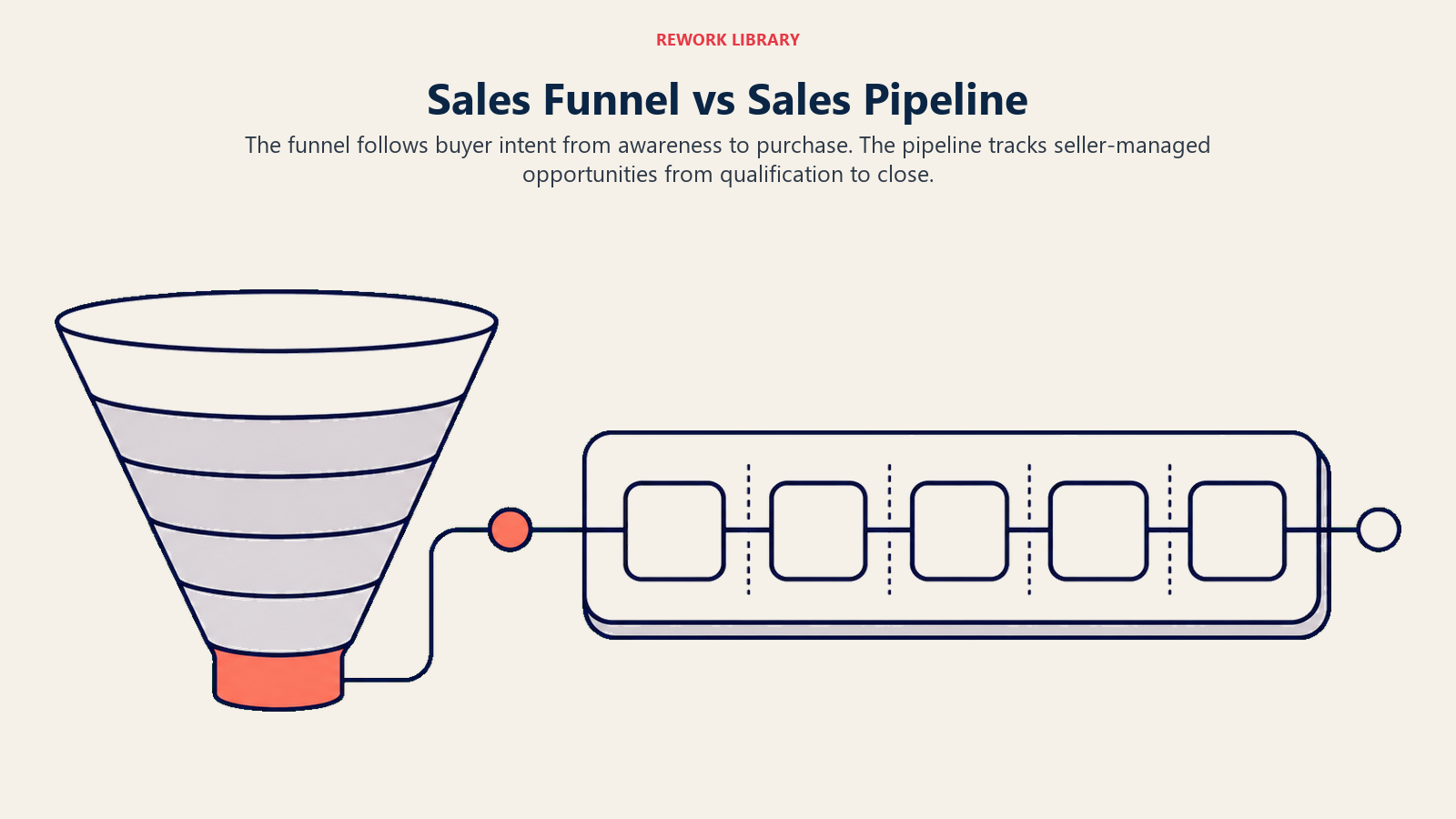
Funnel adalah perjalanan pembeli. Pipeline adalah tahap kesepakatan penjual. Funnel memberi tahu Anda apa yang dipikirkan pembeli. Pipeline memberi tahu Anda apa yang dilakukan penjual.
| Dimensi | Sales Funnel | Sales Pipeline |
|---|---|---|
| Perspektif | Berpusat pada pembeli | Berpusat pada penjual |
| Melacak | Pola pikir dan niat pembeli | Kemajuan kesepakatan melalui tahap yang didefinisikan penjual |
| Dikelola oleh | Marketing dan Sales bersama | Tim Sales |
| Satuan ukur | Lead dan tingkat konversi | Kesepakatan dan pendapatan |
| Tahap umum | Awareness, Interest, Consideration, Intent, Purchase, Loyalty | Qualified, Demo, Proposal, Negotiation, Closed-Won |
| Pertanyaan utama | "Di mana pembeli dalam proses pengambilan keputusan mereka?" | "Di mana kesepakatan ini dalam proses kami?" |
| Tujuan optimasi | Tingkatkan tingkat konversi antar tahap | Kurangi panjang siklus, tingkatkan win rate |
Sebuah lead bisa berada di tahap "Interest" dalam funnel tetapi belum muncul di pipeline Anda sama sekali, karena belum ada tenaga penjual yang terlibat. Sebaliknya, sebuah kesepakatan di pipeline Anda pada tahap "Proposal Sent" bisa memiliki pembeli yang masih berada di "Consideration" secara mental, artinya mereka belum sedekat yang ditunjukkan tahap pipeline.
Ketidaksesuaian ini adalah penyebab utama kesalahan forecast. Sales rep melihat sebuah kesepakatan di "Proposal" dan mengasumsikan komitmen, tetapi pembeli masih membandingkan vendor. Memahami forecast categories dan analisis tingkat konversi membantu Anda menjembatani kesenjangan tersebut.
Untuk gambaran lebih mendalam tentang cara kerja sisi pipeline, baca Apa Itu Sales Pipeline.
Kesalahan Umum
Memperlakukan lead tahap awareness seperti lead tahap purchase. Mengirimkan lembar harga atau email "siap berbicara?" kepada seseorang yang baru saja mengunduh artikel blog akan mendorong mereka menjauh. Pesan yang sesuai tahap bukan sekadar pelengkap.
Tidak ada strategi loyalty. Perusahaan yang mengoptimalkan keras untuk purchase dan kemudian tidak bersuara setelah penandatanganan kontrak kehilangan pendapatan ekspansi dan referensi. Tahap loyalty adalah tempat LTV dibangun atau dihancurkan.
Menggunakan tahap pipeline sebagai pengganti funnel. Label tahap CRM Anda mencerminkan aktivitas penjual, bukan niat pembeli. Sebuah kesepakatan yang ditandai "Demo Scheduled" belum tentu berada di tahap "Consideration" dalam funnel. Keduanya perlu dilacak secara terpisah dan direkonsiliasi secara berkala.
Melewatkan tahap intent/evaluation. Dalam B2B, pembeli membutuhkan cara untuk mengurangi risiko sebelum berkomitmen. Jika Anda tidak menawarkan jalur evaluasi terstruktur (uji coba, pilot, POC), Anda memaksa pembeli untuk mengambil lompatan keyakinan yang banyak dari mereka tidak akan ambil.
Tidak mengukur drop-off per tahap. Jika Anda tidak tahu di mana orang meninggalkan funnel, Anda tidak bisa memperbaikinya. Ini terhubung langsung dengan metrik konversi lead ke opportunity dan angka pipeline velocity Anda.
Cara Membangun dan Mengoptimalkan Sales Funnel
Langkah 1: Petakan perjalanan nyata pembeli Anda
Bicaralah dengan pelanggan terbaru dan minta mereka menjelaskan proses pengambilan keputusan mereka sebelum membeli. Anda ingin mengetahui: kapan mereka pertama kali menyadari bahwa mereka memiliki masalah, apa yang membuat mereka mulai mencari, bagaimana mereka membandingkan pilihan, apa yang hampir membuat mereka pergi, dan apa yang menutup kesepakatan. Inilah funnel Anda, dalam kata-kata mereka.
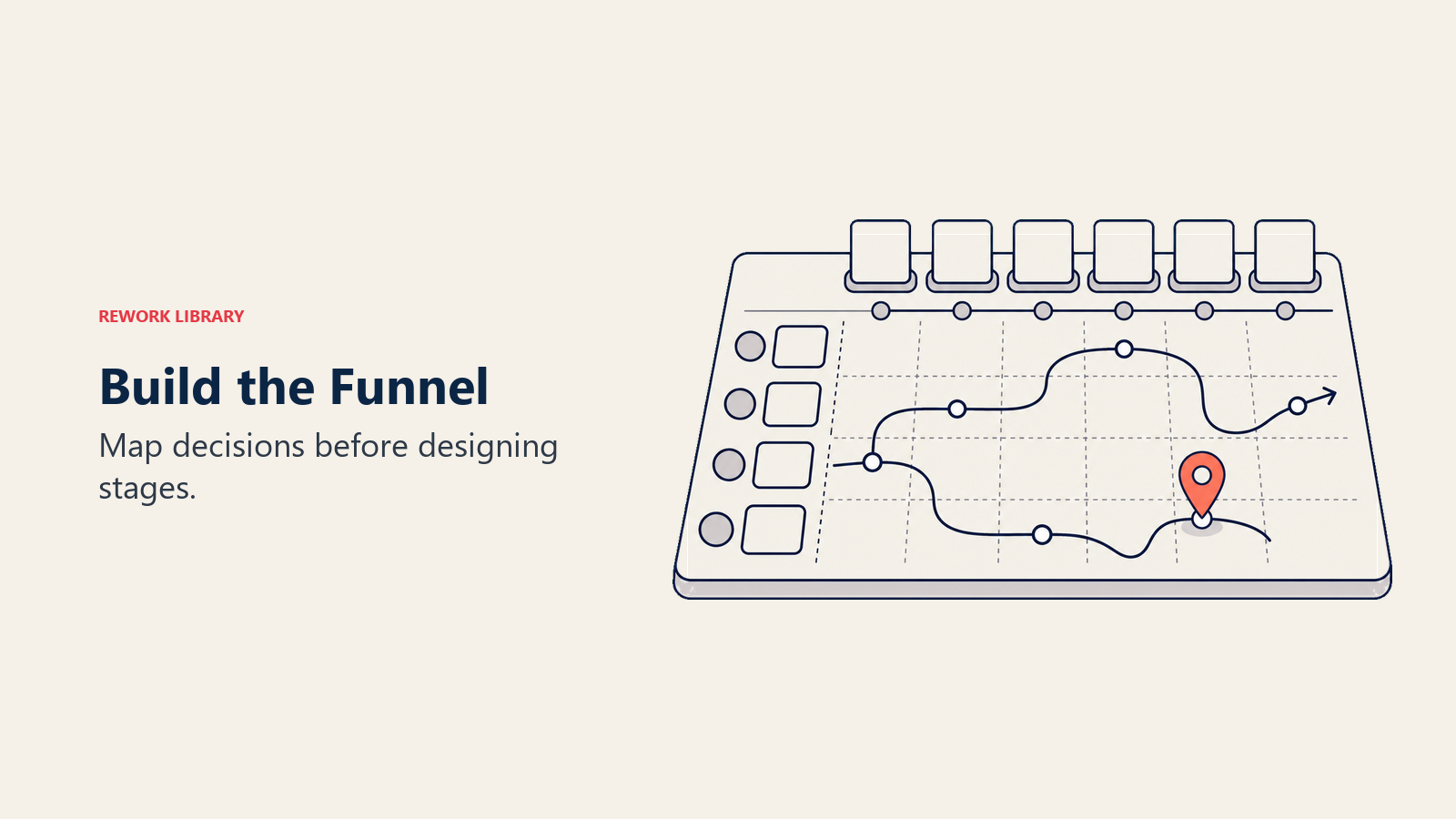
Langkah 2: Selaraskan konten dengan setiap tahap
Untuk setiap tahap, identifikasi pertanyaan yang diajukan pembeli dan keberatan yang mereka ajukan. Kemudian petakan konten yang ada (atau buat konten baru) untuk menjawab pertanyaan-pertanyaan tersebut. Konten tahap awareness menjawab "apa masalah ini?" Konten tahap consideration menjawab "mengapa Anda dibandingkan alternatif?"
Langkah 3: Tentukan event konversi
Putuskan tindakan apa yang menandakan bahwa pembeli telah berpindah dari satu tahap ke tahap berikutnya. Contoh umum: unduhan konten menandakan Awareness-ke-Interest; permintaan demo menandakan Interest-ke-Consideration; pendaftaran uji coba menandakan Consideration-ke-Evaluation. Ini menjadi metrik funnel Anda.
Langkah 4: Lacak tingkat konversi antar tahap
Ukur berapa persen lead yang berpindah dari setiap tahap ke tahap berikutnya. Di sinilah Anda menemukan kebocoran. Penurunan 50% dari Interest ke Consideration biasanya berarti konten nurture Anda tidak membangun kepercayaan yang cukup. Penurunan 30% dari Evaluation ke Purchase biasanya berarti proses harga atau legal Anda yang membunuh kesepakatan.
Langkah 5: Jalankan pengujian spesifik per tahap
Jangan mencoba memperbaiki seluruh funnel sekaligus. Pilih tahap dengan tingkat konversi terburuk dan jalankan eksperimen yang terfokus. Ubah urutan email untuk lead tahap interest. Tambahkan case study ke alur demo tahap consideration. Tambahkan template MAP ke tahap evaluation. Ukur satu hal dalam satu waktu.
Langkah 6: Bangun loyalty loop
Tentukan seperti apa kesuksesan bagi pelanggan pada 30, 60, dan 90 hari setelah pembelian. Buat touchpoint onboarding dan kesuksesan. Lacak sinyal ekspansi (undangan pengguna baru, peningkatan penggunaan, adopsi fitur). Permudah pelanggan yang puas untuk mereferensikan orang lain. Perhitungan biaya akuisisi pelanggan hanya berhasil ketika retensi dan ekspansi mengimbangi biaya akuisisi.
Contoh Sales Funnel
Berikut adalah bagaimana enam tahap terjadi untuk perusahaan B2B SaaS yang menjual platform operasi penjualan kepada Director of Revenue Operations di perusahaan berukuran 200 orang.
| Tahap | Yang Terjadi | Konten / Tindakan yang Digunakan |
|---|---|---|
| Awareness | Director tersebut membaca artikel blog tentang "mengapa forecast penjualan salah 80% dari waktu" melalui pencarian Google organik | Artikel SEO, tidak ada sebutan produk |
| Interest | Ia mengunduh "Pipeline Health Checklist" gratis dan berlangganan newsletter | Lead magnet, seri email nurture dimulai |
| Consideration | Ia mencari tools manajemen pipeline, menemukan artikel perbandingan, menonton video demo 10 menit | Konten perbandingan, video demo, ulasan G2 |
| Evaluation | Ia memulai uji coba gratis 14 hari bersama timnya, meminta panggilan dengan solutions engineer | Uji coba gratis, panggilan solutions engineer, kalkulator ROI |
| Purchase | Timnya memilih platform, pengadaan meninjau kontrak, legal menyetujui, ia menandatangani | Proposal, MAP, tinjauan legal, tanda tangan elektronik |
| Loyalty | 6 bulan kemudian, ia berkembang dari 8 kursi menjadi 25, mereferensikan platform kepada rekan di perusahaan mitra | QBR, proposal ekspansi, program referral |
Seluruh perjalanan dari kontak pertama hingga kesepakatan ditutup membutuhkan waktu 47 hari. Referensi dari tahap loyalty membawa prospek baru yang masuk ke funnel sudah di tahap Consideration, sehingga mempersingkat siklus penjualan berikutnya menjadi 18 hari. Itulah nilai yang terus bertumbuh dari mendapatkan funnel secara keseluruhan dengan benar.
Praktik Terbaik
Sesuaikan pesan dengan pola pikir. Perubahan paling berdampak yang dapat dilakukan sebagian besar tim adalah berhenti mengirimkan pesan yang sama kepada semua orang dan mulai bertanya "di mana orang ini dalam perjalanan mereka?" sebelum memilih apa yang akan dikatakan.
Buat pelaporan funnel terpisah dari pelaporan pipeline. Laporan pipeline CRM Anda memberi tahu tentang tahap kesepakatan. Buat laporan funnel terpisah yang melacak lead berdasarkan tahap perilaku mereka (konsumsi konten, sinyal keterlibatan, aktivitas produk). Tinjau keduanya dalam panggilan forecast Anda.
Kecepatan paling penting di puncak. Waktu respons terhadap pertanyaan tahap interest adalah salah satu prediktor konversi terkuat. Studi secara konsisten menunjukkan bahwa merespons dalam lima menit dibandingkan 30 menit menghasilkan tingkat kontak yang sangat berbeda. Ini terutama berlaku untuk inbound lead.
Jangan abaikan jalur re-entry. Pembeli yang meninggalkan funnel pada tahap Consideration atau Evaluation sering kembali, kadang berbulan-bulan kemudian ketika anggaran tersedia atau solusi mereka saat ini gagal. Urutan nurture siklus panjang dengan sentuhan ringan untuk mereka yang tidak membeli sering kali merupakan investasi marketing dengan ROI tertinggi yang belum Anda jalankan.
Gunakan funnel untuk mendiagnosis akurasi forecast. Ketika sebuah kesepakatan menunjukkan tahap pipeline yang tinggi tetapi sinyal funnel pembeli (keterlibatan, responsivitas, aktivitas evaluasi) lemah, kesepakatan itu adalah risiko forecast. Menyelaraskan tampilan funnel dan pipeline adalah fondasi dari prediktabilitas pendapatan.
Pertanyaan yang Sering Diajukan
Apa saja 6 tahap sales funnel?
Keenam tahap tersebut adalah: Awareness (pembeli menemukan masalah), Interest (pembeli ingin belajar lebih), Consideration (pembeli mengevaluasi solusi), Intent atau Evaluation (pembeli menguji pilihan dan menguji daftar pendek mereka), Purchase (pembeli berkomitmen), dan Loyalty (pembeli memperbarui, berkembang, atau mereferensikan). Beberapa model meringkas ini menjadi top, middle, dan bottom of funnel, tetapi versi enam tahap memberi Anda kendali yang lebih tepat atas pesan dan optimasi konversi.
Apa perbedaan antara sales funnel dan sales pipeline?
Sales funnel melacak perjalanan dan pola pikir pembeli di seluruh tahap proses pengambilan keputusan mereka. Sales pipeline melacak tahap kesepakatan penjual dan alur kerja CRM internal. Funnel berpusat pada pembeli; pipeline berpusat pada penjual. Seorang prospek bisa berada di tahap Interest dalam funnel sebelum mereka pernah muncul di pipeline Anda sebagai opportunity yang telah memenuhi syarat.
Apa tahap sales funnel yang paling penting?
Tergantung di mana drop-off terbesar Anda berada. Bagi sebagian besar perusahaan, transisi Awareness-ke-Interest kehilangan volume terbanyak. Tetapi transisi Consideration-ke-Evaluation kehilangan nilai pendapatan terbanyak karena pembeli di sana sudah dekat dengan keputusan. Jalankan analisis konversi per tahap untuk menemukan bottleneck Anda yang sebenarnya daripada menerapkan jawaban generik.
Bagaimana cara mengukur tingkat konversi sales funnel?
Tentukan event konversi untuk setiap transisi tahap (misalnya, unduhan konten, permintaan demo, pendaftaran uji coba, pembelian). Lacak berapa banyak lead yang masuk ke setiap tahap dan berapa banyak yang maju ke tahap berikutnya. Tingkat konversi Anda untuk setiap tahap adalah: (lead yang maju / lead yang masuk) x 100. Tinjau setiap bulan dan kaitkan dengan perubahan dalam pesan atau proses.
Mengapa sebagian besar lead tidak pernah berkonversi?
Penelitian secara konsisten menunjukkan bahwa sekitar 79% lead tidak pernah berkonversi menjadi penjualan. Alasan utamanya: lead tersebut tidak pernah benar-benar sedang mencari (penargetan yang salah), pesan tidak sesuai dengan tahap mereka (berbicara tentang purchase kepada seseorang yang masih dalam Awareness), tindak lanjut terlalu lambat atau terlalu agresif, atau tahap evaluation menciptakan terlalu banyak gesekan tanpa cukup dukungan. Nurture yang sesuai tahap dan respons cepat terhadap sinyal keterlibatan adalah dua perbaikan dengan leverage tertinggi.
Tahap-tahap sales funnel bukan sekadar teori. Mereka adalah peta bagaimana keputusan pembelian nyata terjadi. Tim yang memahami dan mengoperasikan setiap tahap secara sengaja menutup lebih banyak kesepakatan, menghabiskan lebih sedikit untuk akuisisi, dan membangun basis pelanggan yang tumbuh dengan sendirinya. Mulailah dengan tempat Anda kehilangan paling banyak orang, perbaiki transisi tersebut, dan terus kerjakan sisanya.
Bacaan Terkait

On this page
- Apa Itu Tahap-Tahap Sales Funnel?
- Tahap-Tahap Sales Funnel
- Awareness
- Interest
- Consideration
- Intent dan Evaluation
- Purchase
- Loyalty
- Sales Funnel vs Sales Pipeline
- Kesalahan Umum
- Cara Membangun dan Mengoptimalkan Sales Funnel
- Langkah 1: Petakan perjalanan nyata pembeli Anda
- Langkah 2: Selaraskan konten dengan setiap tahap
- Langkah 3: Tentukan event konversi
- Langkah 4: Lacak tingkat konversi antar tahap
- Langkah 5: Jalankan pengujian spesifik per tahap
- Langkah 6: Bangun loyalty loop
- Contoh Sales Funnel
- Praktik Terbaik
- Bacaan Terkait