Bahasa Indonesia
Analisis Kompetitif: Cara Menganalisis Pesaing Anda (Template)
Turn this article into takeaways for your work.


Each assistant summarizes the article only for you and suggests best practices for your work.
Analisis kompetitif adalah proses terstruktur untuk mempelajari pesaing Anda sehingga Anda dapat membuat keputusan yang lebih cerdas tentang penetapan harga, pemosisian, produk, dan pesan. Ini memberi tahu Anda di mana pasar penuh sesak, di mana tidak, dan langkah mana yang layak diambil sebelum orang lain mengambilnya terlebih dahulu.
Sebagian besar tim melakukan ini terlalu sembarangan. Mereka sekilas melihat situs web pesaing, melakukan pencarian Google cepat, dan melanjutkan. Itu adalah pemantauan pesaing, bukan analisis pesaing. Perbedaannya penting karena pemantauan menggambarkan apa yang dilakukan pesaing hari ini; analisis menjelaskan apa artinya bagi strategi Anda besok.
Apa itu analisis kompetitif?
Analisis kompetitif adalah evaluasi sistematis terhadap perusahaan-perusahaan yang bersaing untuk pelanggan yang sama dengan yang Anda inginkan. Anda mempelajari produk, penetapan harga, pesan, saluran, kekuatan, dan kelemahan mereka, kemudian menggunakan bukti tersebut untuk mempertajam pemosisian kompetitif Anda sendiri.
Ini berada dalam disiplin manajemen strategis yang lebih luas sebagai pelengkap berorientasi eksternal dari alat internal seperti analisis SWOT. Di mana SWOT membantu Anda mengaudit diri sendiri, analisis kompetitif menjaga lensa pada pasar di luar dinding Anda.
Tujuannya bukan untuk meniru pesaing. Tujuannya adalah memahami medan pertempuran cukup baik untuk memilih posisi yang dapat Anda menangkan. Itu biasanya berarti menemukan celah yang mereka tinggalkan terbuka, pelanggan yang tidak mereka layani dengan baik, dan klaim nilai yang tidak dapat mereka buat secara kredibel.
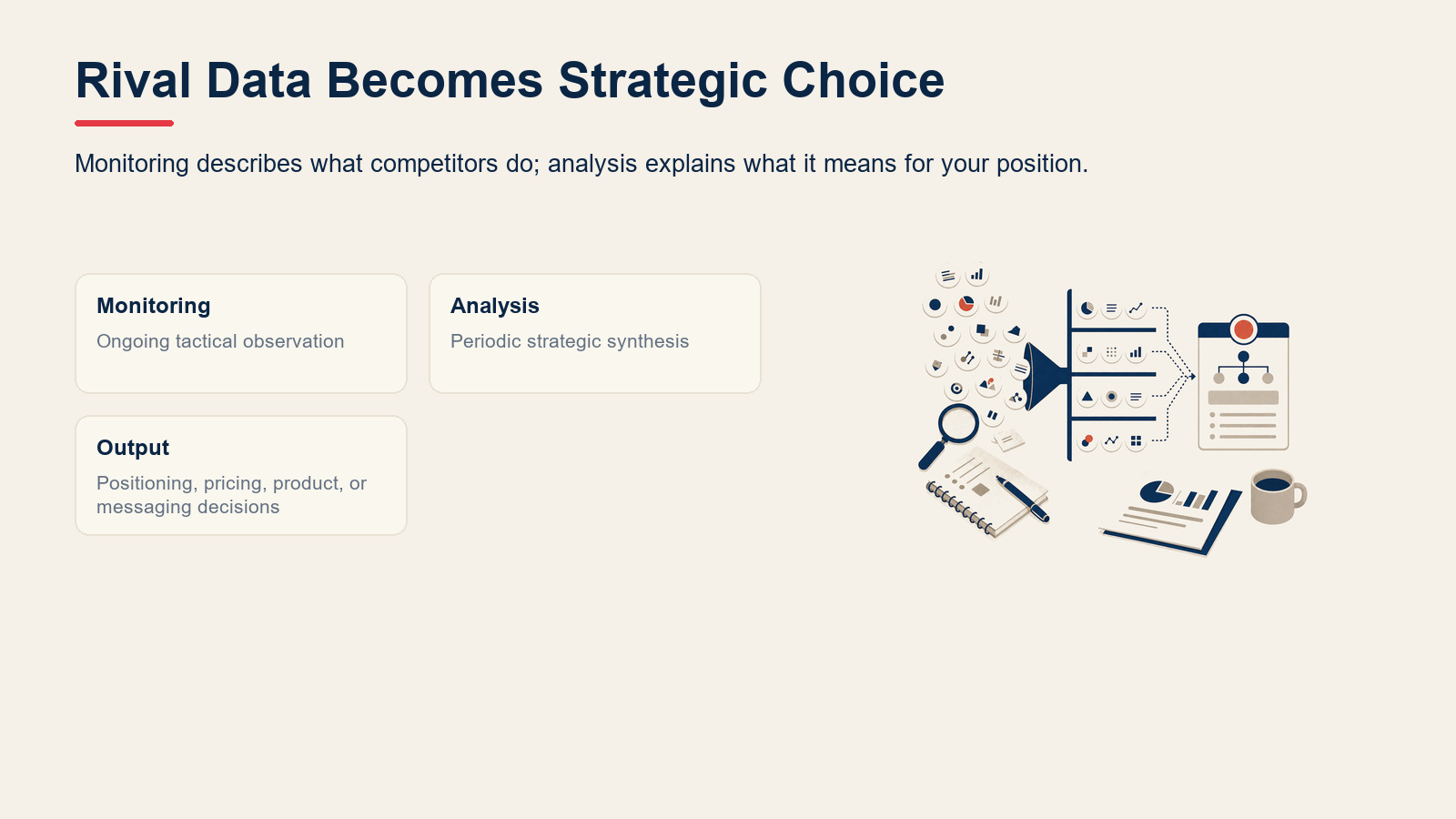
Analisis kompetitif vs pemantauan pesaing: Pemantauan bersifat berkelanjutan dan taktis. Anda mengamati apa yang diumumkan pesaing, menyiapkan Google Alerts, melacak aktivitas media sosial mereka. Analisis bersifat periodik dan strategis. Anda mengumpulkan semua data mentah tersebut, menyusunnya, dan menarik kesimpulan yang mengubah apa yang Anda lakukan.
Fakta Penting: Analisis Kompetitif
- 90% perusahaan Fortune 500 menggunakan beberapa bentuk competitive intelligence untuk memandu keputusan strategis, menurut Society of Competitive Intelligence Professionals (SCIP).
- Perusahaan yang melakukan analisis kompetitif formal setidaknya setiap kuartal melaporkan win rate 20% lebih tinggi dari yang mengandalkan pemantauan informal, menurut laporan Crayon State of Competitive Intelligence (2023).
- Rata-rata kesepakatan penjualan B2B melibatkan perbandingan pesaing oleh pembeli setidaknya 70% dari waktu (Gartner, 2022), artinya tim Anda perlu mengetahui kelemahan pesaing sebelum pembeli mengetahuinya.
Apa yang perlu dianalisis: dimensi utama
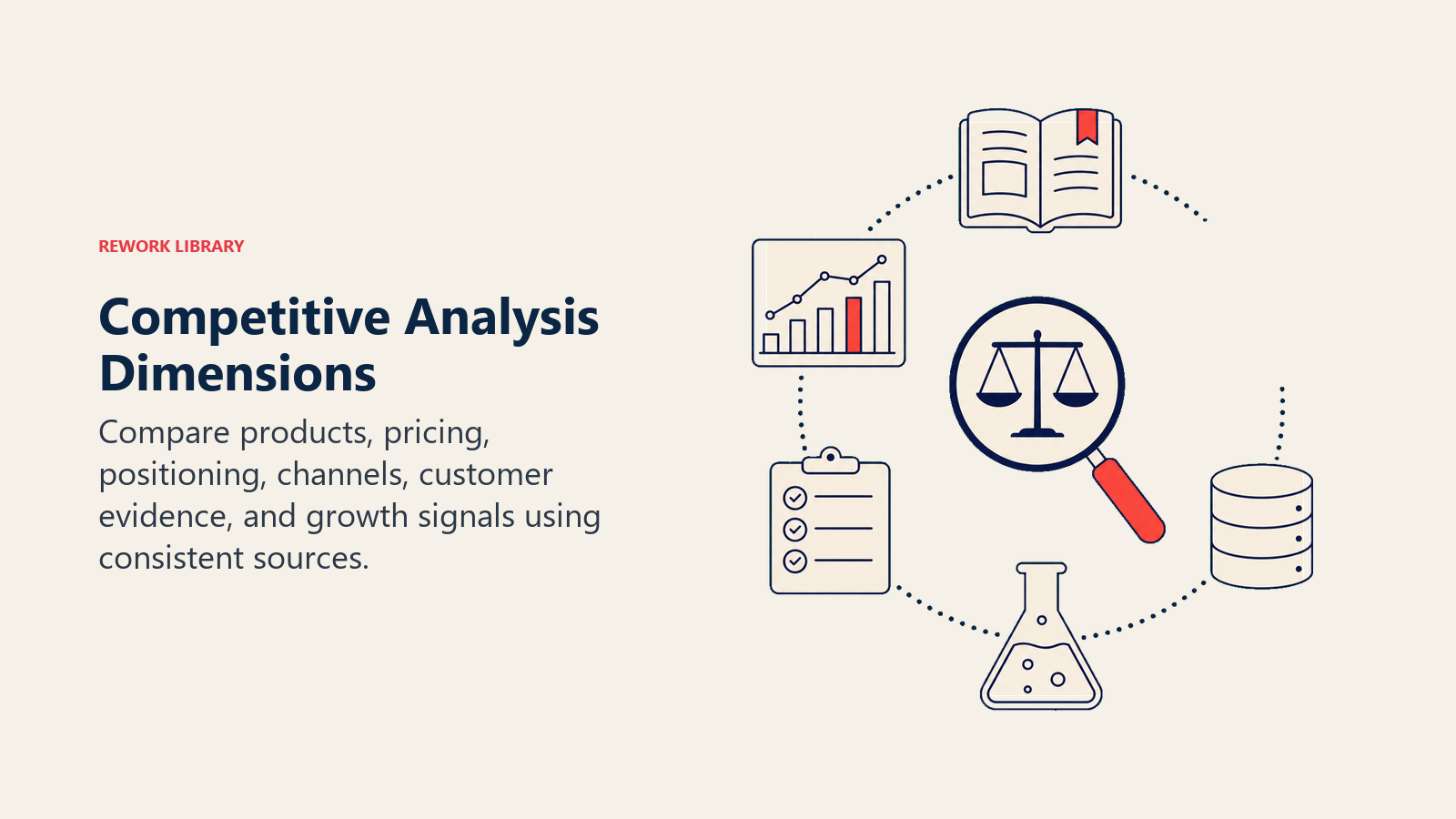
Analisis kompetitif yang menyeluruh mencakup enam dimensi. Masing-masing menjawab pertanyaan strategis yang berbeda.
| Dimensi | Pertanyaan yang perlu diajukan | Di mana menemukannya |
|---|---|---|
| Produk dan fitur | Apa yang mereka jual? Kemampuan apa yang mereka unggulkan? Apa yang kurang? | Halaman produk, ulasan G2/Capterra, catatan rilis, demo |
| Penetapan harga dan paket | Apa tingkatan harga mereka? Apakah mereka mempublikasikan harga? Bagaimana mereka membundel? | Halaman harga, percakapan penjualan, situs ulasan |
| Pemosisian dan pesan | Apa klaim nilai inti mereka? Siapa yang mereka katakan mereka layani? Nada seperti apa yang mereka gunakan? | Judul halaman utama, studi kasus, teks iklan |
| Pemasaran dan saluran | Di mana mereka muncul? SEO, berbayar, konten, acara, kemitraan? | SEMrush/Ahrefs, Meta Ad Library, LinkedIn, blog mereka |
| Kekuatan dan kelemahan | Apa yang disukai pelanggan? Apa yang dikeluhkan pelanggan? | G2, Trustpilot, Glassdoor, ulasan app store |
| Pangsa pasar dan pertumbuhan | Seberapa besar mereka relatif terhadap Anda? Apakah mereka tumbuh atau menyusut? | Crunchbase, keuangan publik, tren lalu lintas SimilarWeb |
Ini terhubung langsung ke kerangka seperti Porter's Five Forces, yang memberi Anda peta struktural kekuatan kompetitif yang bekerja sebelum Anda memperbesar ke pesaing individual.
Cara melakukan analisis kompetitif
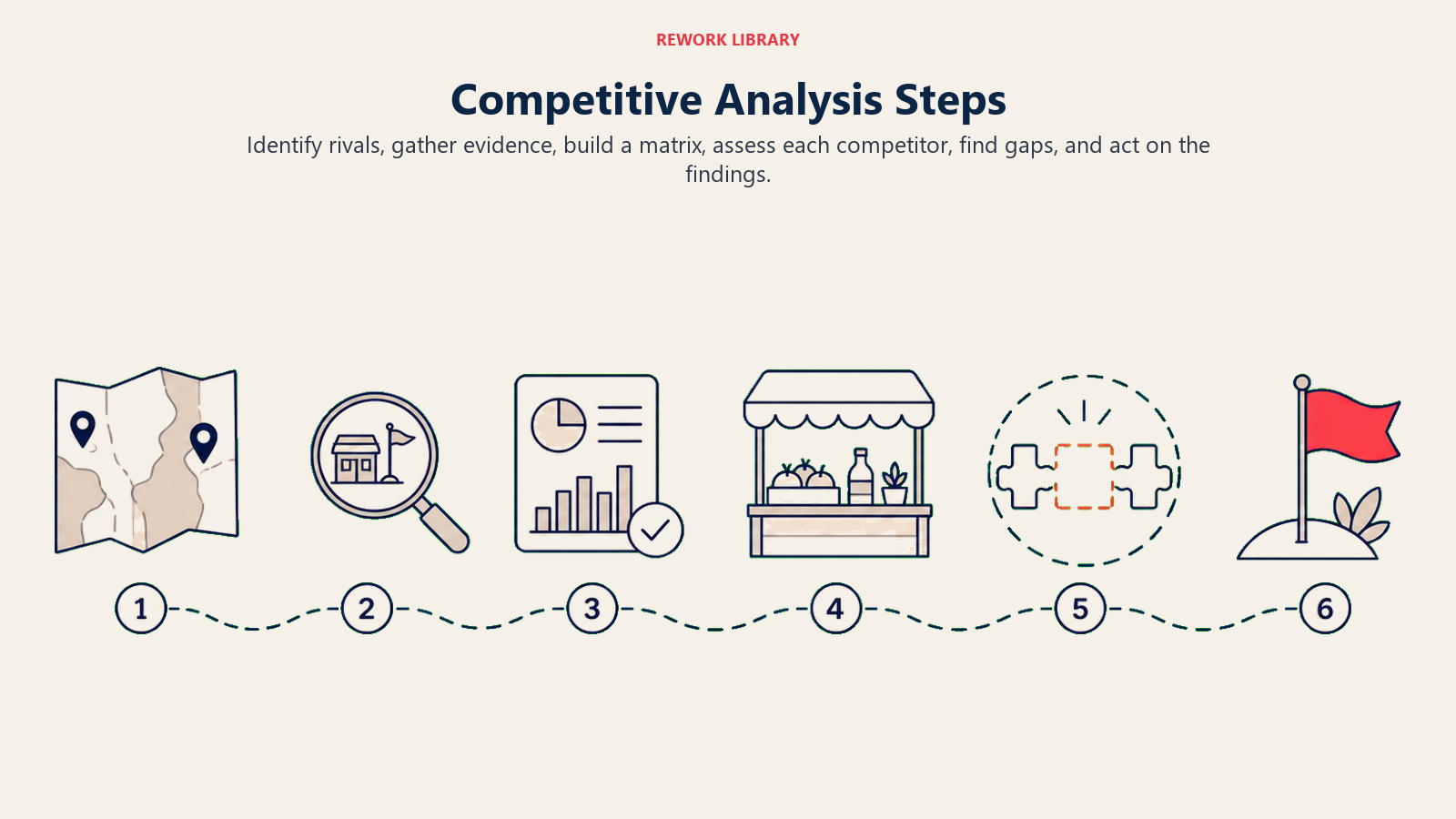
Langkah 1: Identifikasi pesaing Anda
Bagi mereka ke dalam tiga tingkatan. Pesaing langsung menjual hal yang sama kepada pelanggan yang sama. Pesaing tidak langsung memecahkan masalah yang sama dengan solusi yang berbeda. Pesaing substitusi menangani pekerjaan yang sama dengan cara yang sepenuhnya berbeda.
Sebagian besar tim hanya berfokus pada pesaing langsung dan melewatkan ancaman tidak langsung yang akhirnya menggerogoti pasar mereka. Alat manajemen proyek bukan hanya bersaing dengan alat manajemen proyek lain; ia bersaing dengan spreadsheet, untaian email, dan tidak menggunakan apa pun sama sekali.
Targetkan 5 hingga 10 perusahaan di ketiga tingkatan. Lampaui pencarian Google: tanyakan tim penjualan Anda siapa yang muncul dalam kesepakatan, baca halaman "alternatif untuk" di situs ulasan, dan lihat perusahaan mana yang dievaluasi pelanggan terbaik Anda sebelum memilih Anda.
Langkah 2: Kumpulkan data secara sistematis
Tetapkan folder riset untuk setiap pesaing. Untuk masing-masing, kumpulkan minimal: teks halaman utama mereka, halaman harga, tiga hingga lima ulasan pelanggan (positif maupun negatif), satu atau dua studi kasus yang dipublikasikan, dan sampel blog atau output konten mereka.
Gunakan alat secara selektif. SimilarWeb memberikan lalu lintas dan bauran saluran. SEMrush atau Ahrefs menunjukkan kata kunci mana yang mereka rangking dan mana yang mereka belanjakan. Meta Ad Library mengungkap creative dan klaim apa yang mereka jalankan dalam iklan berbayar. LinkedIn menunjukkan pertumbuhan jumlah karyawan per departemen, yang memberi sinyal di mana mereka berinvestasi.
Jangan abaikan sumber kualitatif. Ulasan satu bintang di G2 sering kali lebih berguna daripada situs web pesaing yang dipoles karena memberi tahu Anda apa yang benar-benar dialami pelanggan.
Langkah 3: Bangun matriks pesaing
Matriks pesaing menempatkan semua pesaing dalam satu kisi sehingga Anda dapat membandingkan mereka sekilas. Kolom adalah pesaing (termasuk Anda sendiri). Baris adalah dimensi yang paling penting bagi pembeli Anda.
Tujuannya bukan kelengkapan; tujuannya adalah kejelasan. Batasi hingga 10 hingga 15 baris agar matriks tetap dapat dibaca. Lihat bagian template di bawah untuk versi yang siap digunakan.
Langkah 4: Jalankan mini-SWOT per pesaing
Untuk setiap pesaing utama, habiskan 15 menit mengisi empat kotak: apa yang mereka lakukan dengan baik (kekuatan), di mana mereka lemah (kelemahan), tren pasar yang mereka siap manfaatkan (peluang), dan tekanan yang dapat menyakiti mereka (ancaman).
Kerangka SWOT bekerja sama baiknya saat diarahkan ke luar seperti halnya ke dalam. Output memberi tahu Anda pesaing mana yang kemungkinan tumbuh lebih cepat, mana yang rentan, dan di mana Anda dapat bersaing secara realistis.
Langkah 5: Temukan kesenjangan
Kesenjangan adalah tempat tinggalnya peluang strategis nyata. Cari:
- Segmen yang kurang dilayani. Tipe pelanggan mana yang paling jarang ditargetkan pesaing? Di sanalah sensitivitas harga sering paling rendah dan loyalitas paling tinggi setelah seseorang melayani mereka dengan baik.
- Kekosongan fitur. Apa yang pengulas berulang kali ingin ada? Itu sinyal peta jalan produk Anda.
- Ruang putih pesan. Klaim nilai mana yang tidak dibuat siapa pun? Terkadang ini karena klaim tersebut tidak beresonansi; terkadang karena tidak ada yang mencoba. Perbedaannya layak diuji.
- Kesenjangan saluran. Jika semua orang di bidang Anda menjalankan paid search tetapi tidak ada yang menerbitkan konten perbandingan, itu adalah peluang SEO dan segmentasi pasar.
Analisis kesenjangan ini langsung masuk ke strategi keunggulan kompetitif Anda: Anda memusatkan sumber daya pada dimensi di mana pesaing paling lemah dan Anda dapat benar-benar menang.
Langkah 6: Bertindak berdasarkan temuan
Analisis kompetitif yang tersimpan di drive bersama bukan analisis kompetitif; itu adalah dokumen. Output harus mengubah setidaknya satu dari hal-hal ini: pernyataan pemosisian Anda, peta jalan produk, penetapan harga, pesan, atau battlecard penjualan.
Tetapkan frekuensi pembaruan. Sebagian besar tim mendapat manfaat dari analisis kompetitif penuh setiap kuartal dan pemantauan ringan (berita, pembaruan ulasan, pengumuman fitur) setiap bulan. Gunakan benchmarking untuk melacak apakah posisi relatif Anda meningkat dari waktu ke waktu.
Template analisis kompetitif
Salin tabel ini ke spreadsheet atau dokumen dan isi untuk setiap pesaing.
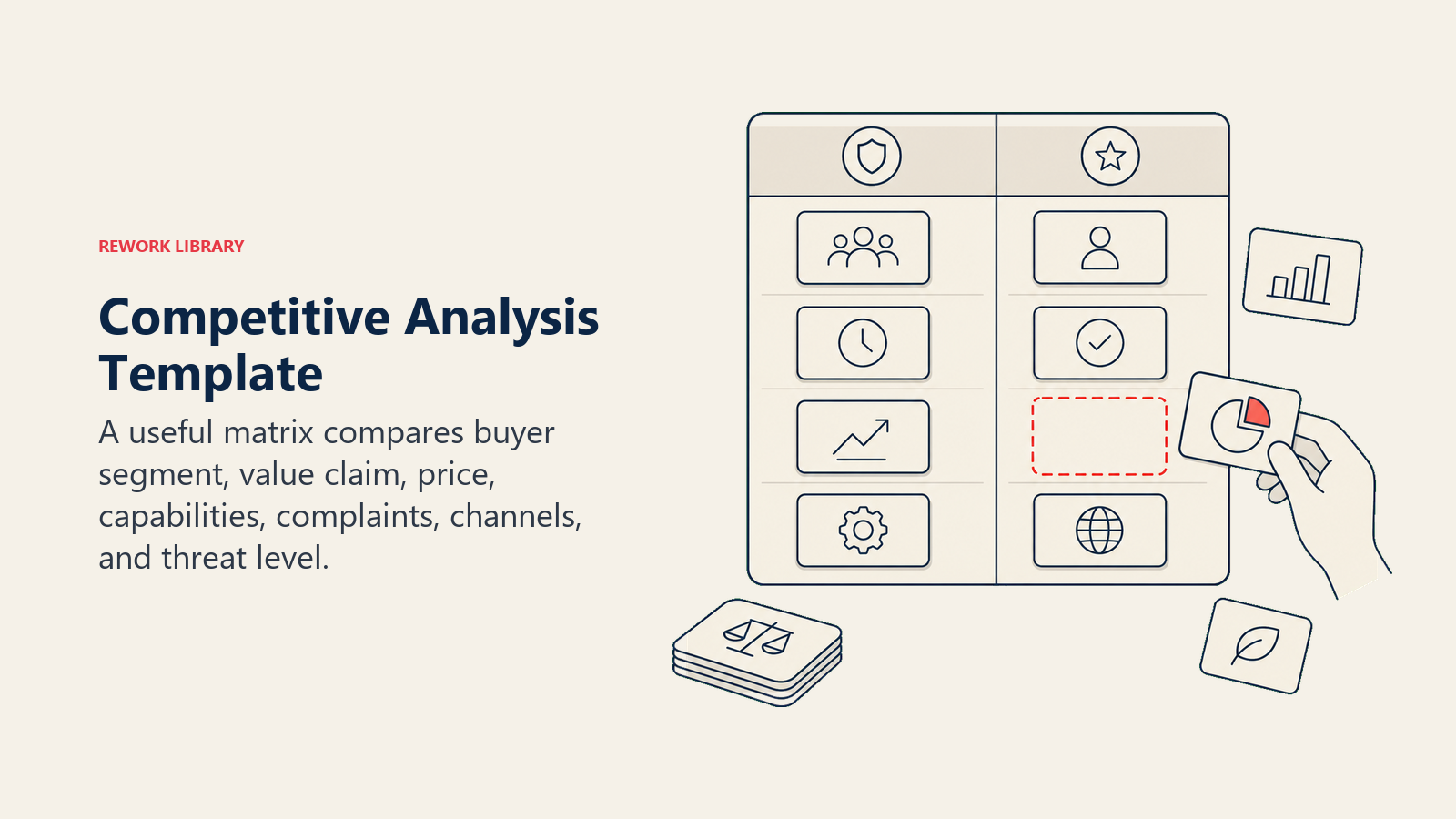
| Kriteria | Perusahaan Anda | Pesaing A | Pesaing B | Pesaing C |
|---|---|---|---|---|
| Segmen pelanggan utama | B2B menengah | Enterprise | UKM | Freelancer |
| Klaim nilai inti | Operasi all-in-one | Integrasi mendalam | Kemudahan penggunaan | Harga rendah |
| Harga (tingkatan masuk) | $49/bulan | $150/bulan | $29/bulan | Gratis / $15/bulan |
| Fitur utama | Workflow, CRM, pelaporan | Ekosistem API, SSO | Kanban, template | Tugas dasar |
| Fitur yang kurang | Panggilan video native | UX mobile | Pelaporan | Kolaborasi |
| Rating G2 (per tanggal) | 4,6 | 4,4 | 4,7 | 4,1 |
| Keluhan pelanggan utama | Waktu onboarding | Terlalu mahal | Integrasi terbatas | Tidak ada dukungan |
| Kekuatan konten/SEO | Sedang | Tinggi | Sedang | Rendah |
| Saluran akuisisi utama | Outbound dan konten | Penjualan enterprise | Product-led growth | Viralitas |
| Sinyal pendanaan/ukuran | Seri B | IPO | Bootstrap | Pra-seed |
| Tingkat ancaman keseluruhan | N/A | Tinggi | Sedang | Rendah |
Perbarui template ini setelah setiap siklus analisis kuartalan. Tandai apa pun yang berubah sejak versi terakhir agar tim Anda dapat melihat pergeseran kompetitif sekilas.
Kesalahan umum dalam analisis kompetitif
Menganalisis diri sendiri keluar dari gambar. Beberapa tim menghabiskan begitu banyak waktu memetakan pesaing sehingga mereka kehilangan pandangan tentang kekuatan mereka sendiri. Analisis harus mempertajam arah Anda, bukan melumpuhkannya. Fokus pada dua atau tiga implikasi yang paling penting dan bertindak berdasarkan itu.
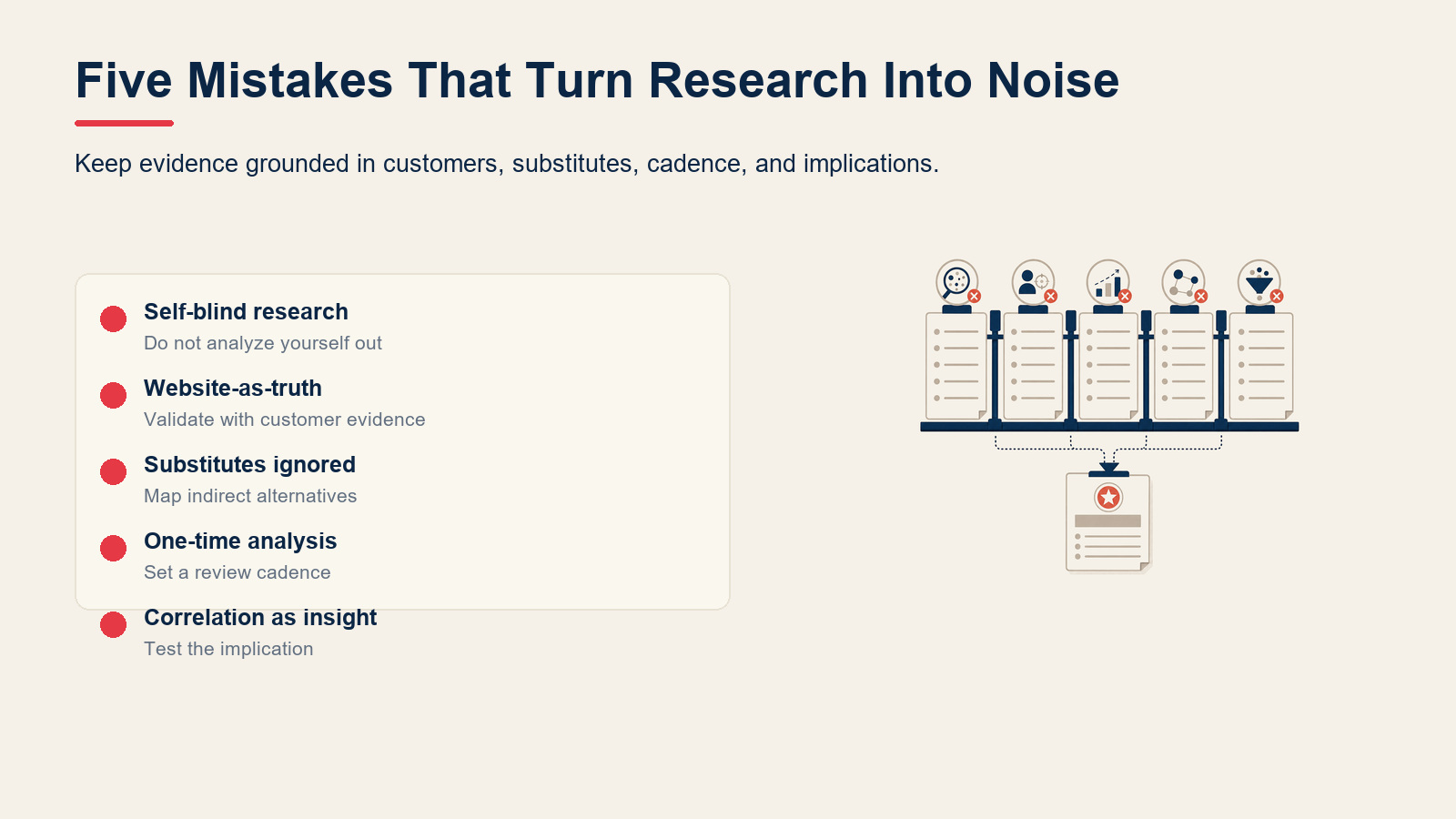
Memperlakukan situs web pesaing sebagai kebenaran. Salinan pemasaran bersifat aspirasional. Apa yang diklaim pesaing dan apa yang benar-benar dialami pelanggan sering kali sangat berbeda. Ulasan, rekaman panggilan penjualan, dan wawancara menang/kalah adalah sumber yang jauh lebih andal.
Mengabaikan pesaing tidak langsung dan substitusi. Perusahaan yang paling sering mengganggu Anda awalnya tidak akan terlihat seperti pesaing. Perangkat lunak akuntansi kehilangan tanah ke plugin spreadsheet. Perusahaan taksi tidak menganggap serius Uber karena Uber tidak terlihat seperti perusahaan taksi. Petakan lanskap ancaman penuh.
Menjalankan analisis sekali dan melupakannya. Pasar bergerak. Pesaing berpindah haluan, menggalang modal, meluncurkan fitur, atau diakuisisi. Analisis kompetitif yang dilakukan 18 bulan lalu dan tidak pernah ditinjau kembali lebih buruk dari tidak ada analisis, karena menciptakan kepercayaan diri palsu.
Mengacaukan korelasi dengan wawasan. "Mereka memiliki lebih banyak pengikut LinkedIn" adalah data. "Mereka memenangkan kesepakatan enterprise karena kesadaran merek yang didorong LinkedIn, dan kami tidak berinvestasi di sana" adalah wawasan. Dorong setiap pengamatan satu langkah lebih jauh ke "lalu apa."
Menghubungkan temuan Anda ke kerangka terstruktur seperti Strategi Generik Porter atau strategi go-to-market mencegah Anda berhenti pada pengamatan dan melewatkan implikasi strategis.
Pertanyaan yang sering diajukan
Seberapa sering Anda harus melakukan analisis kompetitif?
Sebagian besar bisnis mendapat manfaat dari analisis penuh setiap kuartal dan pemantauan berkelanjutan setiap bulan. Jika Anda berada dalam kategori yang bergerak cepat (SaaS, fintech, alat AI), kuartalan mungkin tidak cukup selama periode perubahan pasar yang cepat. Tetapkan pengingat kalender dan perlakukan seperti tinjauan bisnis rutin.
Apa perbedaan antara analisis kompetitif dan analisis pasar?
Analisis pasar lebih luas: ini melihat ukuran pasar total, tingkat pertumbuhan, perilaku pembeli, dan tren makro. Analisis kompetitif lebih sempit: ini memperbesar ke perusahaan tertentu dan posisi relatif mereka. Anda biasanya melakukan analisis pasar saat memasuki ruang baru dan analisis kompetitif secara berkelanjutan untuk tetap terkalibrasi.
Berapa banyak pesaing yang harus Anda analisis?
Tiga hingga lima pesaing langsung secara mendalam, ditambah pemindaian lebih ringan dari lima hingga sepuluh pesaing tidak langsung atau yang berdekatan. Lebih dari itu, imbal hasil menurun dengan cepat. Tujuannya adalah wawasan yang dapat ditindaklanjuti, bukan katalog yang komprehensif.
Alat apa yang sebenarnya digunakan tim competitive intelligence?
Tumpukan yang praktis: Crunchbase atau PitchBook untuk pendanaan dan data perusahaan, SimilarWeb untuk lalu lintas dan saluran, G2 atau Capterra untuk umpan balik pelanggan nyata, Meta Ad Library untuk creative berbayar, dan Ahrefs atau SEMrush untuk SEO. Halaman perusahaan LinkedIn mengungkap sinyal perekrutan. Sebagian besar ini memiliki tingkatan gratis yang mencakup analisis skala kecil.
Apa yang harus Anda lakukan dengan temuan analisis kompetitif?
Ubah menjadi tiga output: (1) pembaruan pemosisian jika pesan Anda saat ini terlalu banyak tumpang tindih dengan pesaing; (2) input peta jalan produk yang menandai kesenjangan fitur yang dikeluhkan pelanggan; (3) battlecard penjualan yang membantu perwakilan menangani pertanyaan "apa bedanya Anda dari X?" dengan bukti, bukan poin pembicaraan. Perusahaan yang menang dalam competitive intelligence bukan yang memiliki anggaran riset terbesar. Mereka adalah yang mengambil apa yang mereka pelajari dan benar-benar mengubah sesuatu. Jalankan analisis, temukan dua atau tiga implikasi yang paling penting, dan bertindak sebelum siklus kuartalan berikutnya tiba.

Co-Founder & COO
On this page
- Apa itu analisis kompetitif?
- Apa yang perlu dianalisis: dimensi utama
- Cara melakukan analisis kompetitif
- Langkah 1: Identifikasi pesaing Anda
- Langkah 2: Kumpulkan data secara sistematis
- Langkah 3: Bangun matriks pesaing
- Langkah 4: Jalankan mini-SWOT per pesaing
- Langkah 5: Temukan kesenjangan
- Langkah 6: Bertindak berdasarkan temuan
- Template analisis kompetitif
- Kesalahan umum dalam analisis kompetitif