Bahasa Indonesia
Benchmarking: Jenis, Proses, dan Contoh (Cara Membandingkan Kinerja)
Turn this article into takeaways for your work.


Each assistant summarizes the article only for you and suggests best practices for your work.
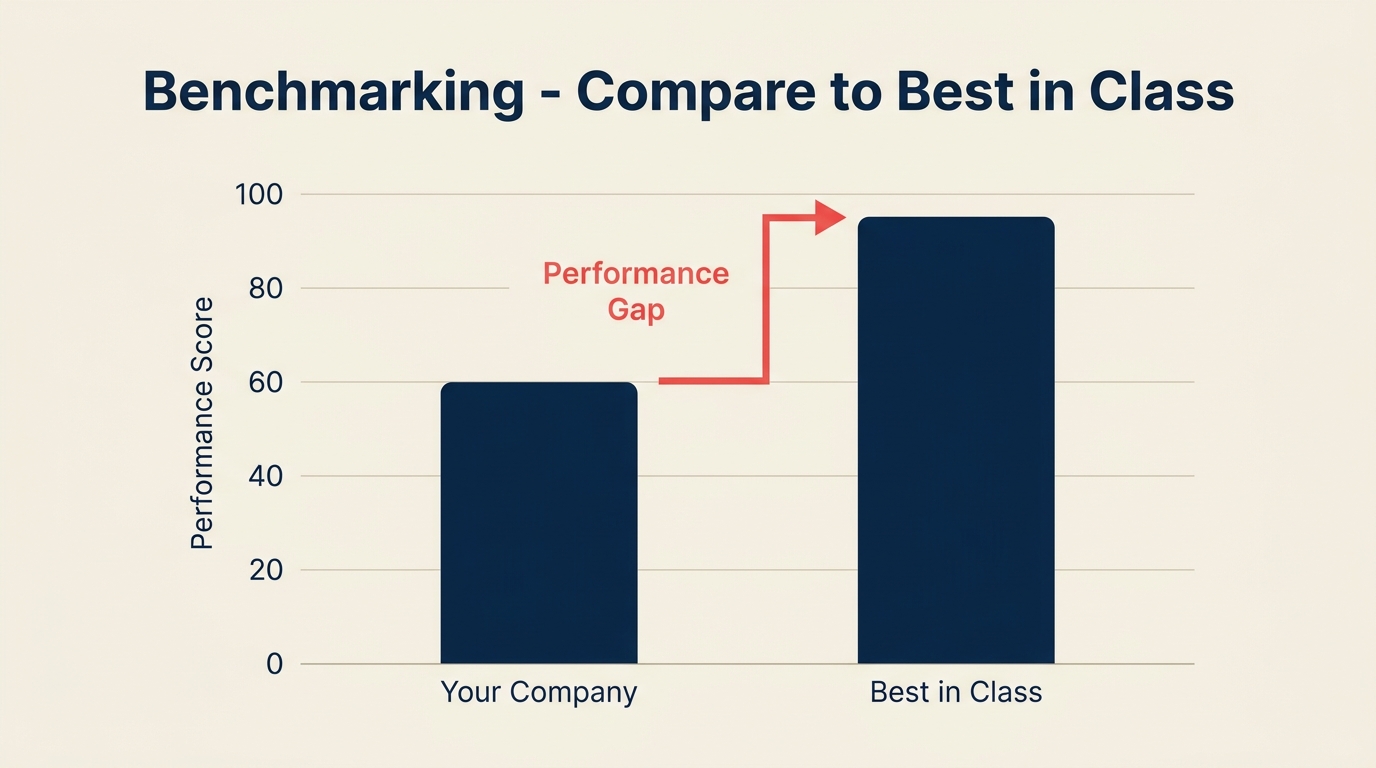
Benchmarking adalah praktik membandingkan kinerja, proses, atau metrik Anda terhadap titik referensi sehingga Anda dapat melihat dengan tepat di mana posisi Anda dan apa yang diperlukan untuk berkembang. Dilakukan dengan baik, ini mengubah pertanyaan samar seperti "apakah kita sudah cukup baik?" menjadi pertanyaan yang spesifik dan dapat dijawab: "kita tertinggal 18% dari pemimpin industri dalam hal waktu penyelesaian pelanggan, dan inilah yang mereka lakukan secara berbeda."
Ini adalah salah satu alat yang paling banyak digunakan dalam manajemen strategis karena bekerja di setiap level, mulai dari tim layanan pelanggan yang melacak waktu penanganan rata-rata hingga dewan yang mengevaluasi return on equity terhadap rekan-rekan di sektor yang sama.
Apa itu benchmarking?
Benchmarking adalah proses terstruktur untuk mengukur kinerja, proses, atau produk Anda sendiri terhadap titik referensi yang dipilih, kemudian menggunakan perbandingan tersebut untuk menetapkan target perbaikan. Titik referensi dapat berupa divisi internal, pesaing langsung, perusahaan di industri berbeda yang dikenal memiliki operasi terbaik di kelasnya, atau standar industri yang dipublikasikan.
Kata ini berasal dari praktik survei yang memotong takik (sebuah "bench mark") ke dalam batu sebagai titik referensi tetap untuk pengukuran ketinggian. Makna bisnisnya identik: Anda membutuhkan referensi eksternal yang tetap sebelum angka-angka Anda sendiri bermakna.
Yang membedakan benchmarking dari perbandingan biasa adalah kedisiplinan di baliknya. Anda tidak sekadar melihat sekilas materi pemasaran pesaing. Anda mengumpulkan data yang terstandarisasi, menganalisis kesenjangan kinerja, dan menerjemahkan temuan ke dalam tindakan konkret. Kedisiplinan itulah yang menjadikan benchmarking sebagai masukan strategis, bukan sekadar latihan keingintahuan.
Benchmarking terhubung langsung ke keunggulan kompetitif: begitu Anda mengetahui di mana kesenjangan itu berada dan mengapa kesenjangan itu ada, Anda dapat memutuskan apakah akan menutupnya, melampauinya, atau beralih ke dimensi kompetitif yang berbeda sepenuhnya.
Fakta penting
Fakta Penting: Benchmarking
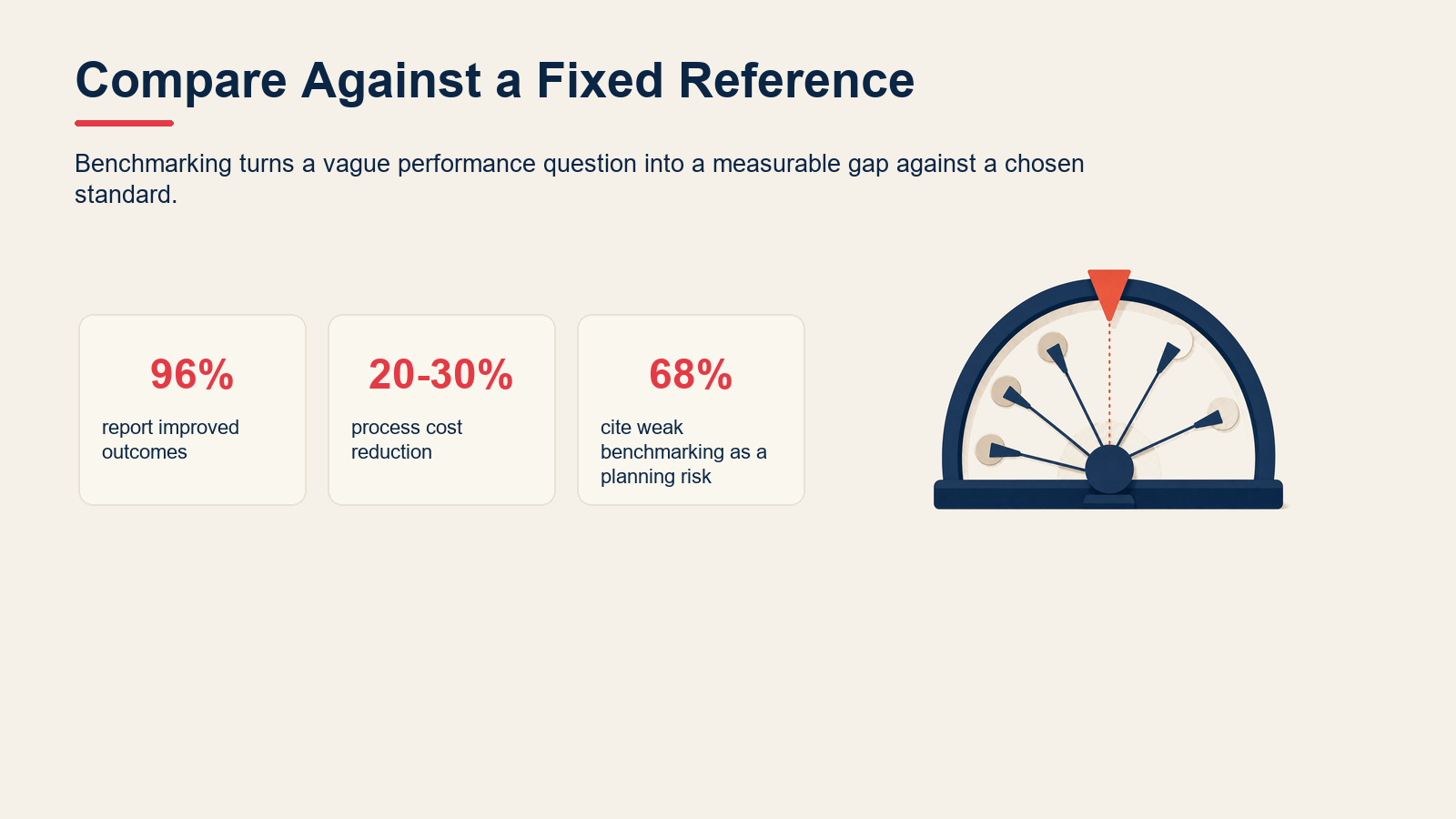
- 96% organisasi yang menggunakan benchmarking formal melaporkan peningkatan hasil kinerja, menurut sebuah studi oleh American Productivity and Quality Center (APQC, 2023).
- Perusahaan di kuartil teratas program benchmarking operasional mengurangi biaya proses sebesar 20-30% selama tiga tahun, menurut McKinsey (2022).
- 68% eksekutif mengatakan benchmarking yang tidak memadai adalah alasan utama rencana strategis meleset dari target, menurut survei Gartner (2023).
Jenis-jenis benchmarking
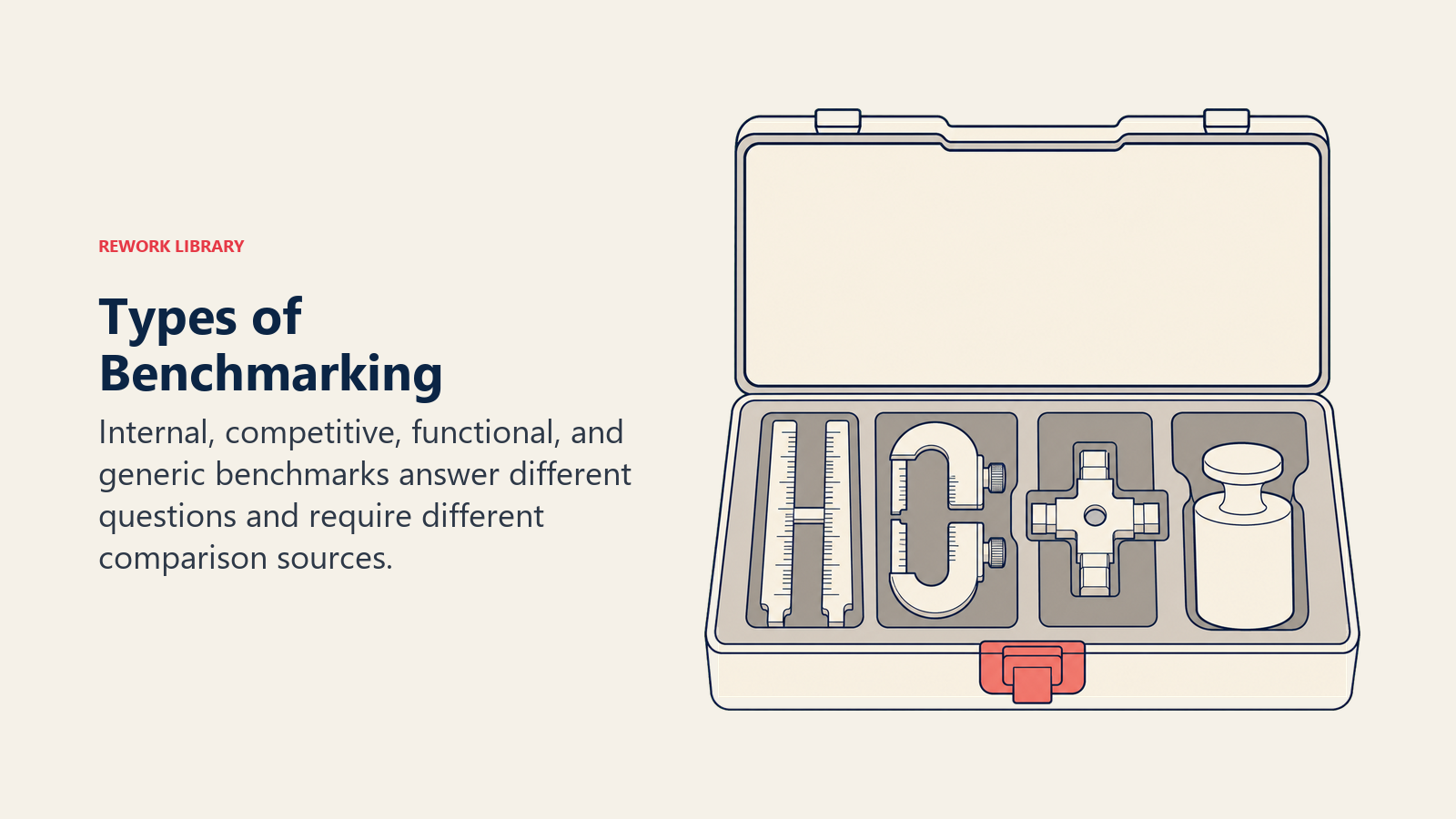
Tidak setiap latihan benchmarking menggunakan titik referensi yang sama. Jenis yang Anda pilih harus sesuai dengan pertanyaan yang ingin Anda jawab.
| Jenis | Definisi | Paling baik digunakan ketika |
|---|---|---|
| Benchmarking internal | Membandingkan kinerja di antara departemen, tim, atau unit bisnis dalam organisasi Anda sendiri | Anda memiliki beberapa lokasi atau unit yang melakukan pekerjaan yang sama dan ingin menyebarkan praktik terbaik dengan cepat |
| Benchmarking kompetitif | Membandingkan dengan pesaing langsung di pasar Anda | Anda perlu mengetahui posisi Anda relatif terhadap pesaing terdekat pada metrik yang dipedulikan pelanggan |
| Benchmarking fungsional | Membandingkan fungsi tertentu (seperti pengadaan atau SDM) dengan organisasi di industri berbeda yang dikenal unggul dalam fungsi tersebut | Fungsi internal Anda berkinerja buruk dan pesaing langsung pun tidak terlihat lebih baik |
| Benchmarking generik | Mengadopsi proses kelas dunia dari industri mana pun, terlepas dari sektor | Anda ingin peningkatan terobosan daripada peningkatan bertahap; berguna untuk inisiatif yang berfokus pada inovasi |
| Benchmarking proses | Membandingkan proses operasional tertentu langkah demi langkah, bukan hanya hasilnya | Anda tahu kesenjangan output ada tetapi perlu memahami alur kerja yang mendasarinya |
| Benchmarking strategis | Membandingkan strategi jangka panjang, pemosisian pasar, dan model bisnis | Anda sedang melakukan tinjauan strategi atau mengevaluasi perubahan besar; berpasangan dengan baik dengan Porter's Five Forces dan analisis value chain |
| Benchmarking kinerja | Membandingkan output numerik (pendapatan per karyawan, tingkat cacat, NPS) menggunakan metrik terstandarisasi | Anda ingin membaca kuantitatif cepat tentang bagaimana angka-angka Anda dibandingkan dengan norma industri |
Sebagian besar organisasi menggunakan kombinasi. Sebuah jaringan ritel mungkin menjalankan benchmarking internal setiap bulan pada konversi tingkat toko, benchmarking kompetitif setiap kuartal pada penetapan harga, dan benchmarking fungsional setiap tahun pada kinerja rantai pasokan.
Proses benchmarking
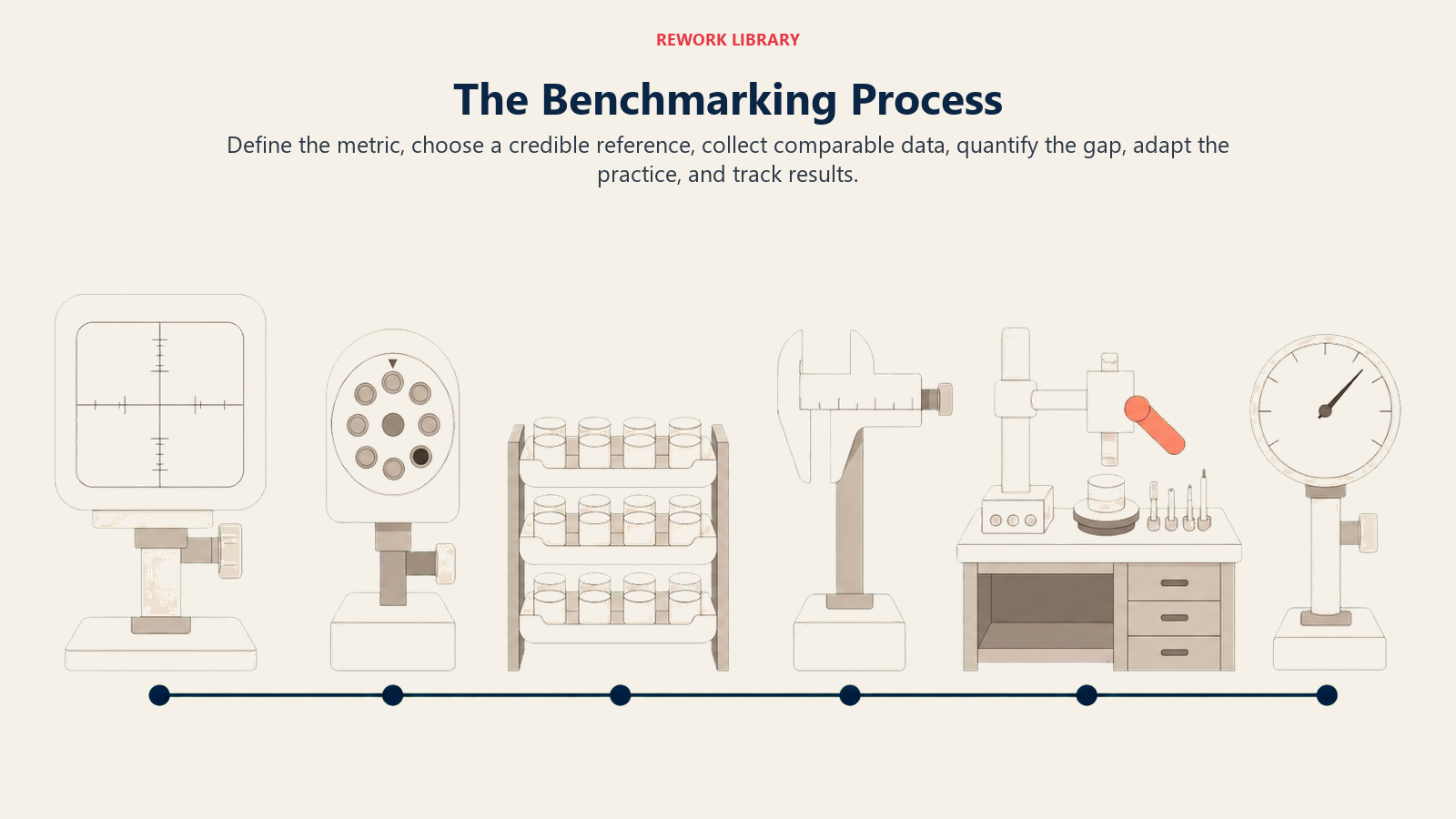
Benchmarking mengikuti urutan yang konsisten terlepas dari jenisnya. Melewati langkah-langkah, terutama langkah perencanaan dan validasi data, adalah alasan paling umum mengapa proyek benchmarking menghasilkan data yang buruk atau tidak ada tindakan.
Langkah 1: Tentukan apa yang akan di-benchmark
Pilih proses, fungsi, atau metrik yang spesifik. "Tingkatkan operasi" terlalu luas. "Kurangi waktu siklus pemenuhan pesanan dari penerimaan pesanan hingga pengiriman" cukup spesifik untuk di-benchmark. Tuliskan dengan tepat apa yang Anda ukur, apa baseline saat ini, dan mengapa metrik ini penting bagi bisnis.
Langkah 2: Pilih mitra benchmark Anda
Putuskan titik referensi mana yang tepat untuk pertanyaan Anda: unit internal, pesaing yang disebutkan namanya, basis data industri (APQC, Gartner, asosiasi perdagangan), atau organisasi terbaik di kelasnya dari sektor lain. Dokumentasikan mengapa Anda memilih masing-masing. Semakin jelas Anda mendefinisikan sumber benchmark, semakin mudah mempertahankan temuan Anda kepada para pengambil keputusan.
Langkah 3: Kumpulkan dan standarisasi data
Kumpulkan data dari operasi Anda sendiri maupun sumber benchmark Anda. Langkah ini membutuhkan kedisiplinan: definisi itu penting. Jika pesaing Anda menghitung keluhan pelanggan secara berbeda dari cara Anda, perbandingan langsung tidak bermakna. Standarisasi definisi sebelum Anda membandingkan angka. Riset primer (kunjungan lokasi, wawancara, survei) lebih dapat diandalkan daripada data sekunder untuk benchmarking tingkat proses. Analisis pemosisian kompetitif dapat melengkapi langkah ini dengan data tingkat pasar.
Langkah 4: Analisis kesenjangan
Hitung kesenjangan antara kinerja Anda saat ini dan benchmark. Tetapi jangan berhenti pada angkanya. Tujuannya adalah memahami mengapa kesenjangan itu ada. Apakah ini perbedaan teknologi? Langkah proses yang dilakukan mitra benchmark tetapi tidak Anda lakukan? Keunggulan biaya struktural? Semakin dalam Anda menggali di sini, semakin dapat ditindaklanjuti target Anda nantinya. Analisis ini langsung masuk ke proses perencanaan strategis.
Langkah 5: Tetapkan target dan kembangkan rencana aksi
Terjemahkan analisis kesenjangan ke dalam target perbaikan spesifik dengan tenggat waktu. Jika benchmark menunjukkan pesaing terdekat Anda menyelesaikan tiket pelanggan dalam 4,2 jam dan Anda rata-rata 7,8 jam, target pertama yang wajar mungkin 6 jam dalam 90 hari, dengan peta jalan menuju 4,5 jam dalam setahun. Hubungkan setiap target ke pemilik yang disebutkan namanya dan tindakan spesifik.
Langkah 6: Implementasikan, pantau, dan tinjau kembali
Jalankan rencana, lacak kemajuan terhadap target Anda, dan jadwalkan siklus benchmarking tindak lanjut. Kesenjangan kinerja menutup, kesenjangan baru terbuka, dan benchmark itu sendiri bergeser seiring pesaing berkembang. Benchmarking adalah disiplin yang berulang, bukan proyek satu kali. Gunakan pemikiran KPI vs metrik untuk melacak indikator mana yang menandakan kemajuan nyata versus pergerakan permukaan.
Contoh benchmarking
Sebuah perusahaan perangkat lunak B2B berukuran menengah ingin mengurangi churn pelanggan. Tingkat churn tahunannya saat ini adalah 14%. Melalui kombinasi laporan industri dan percakapan dengan sesama pelaku industri, perusahaan menemukan bahwa perusahaan SaaS berkinerja terbaik dalam segmennya memiliki churn tahunan 6-8%. Itulah benchmark-nya.
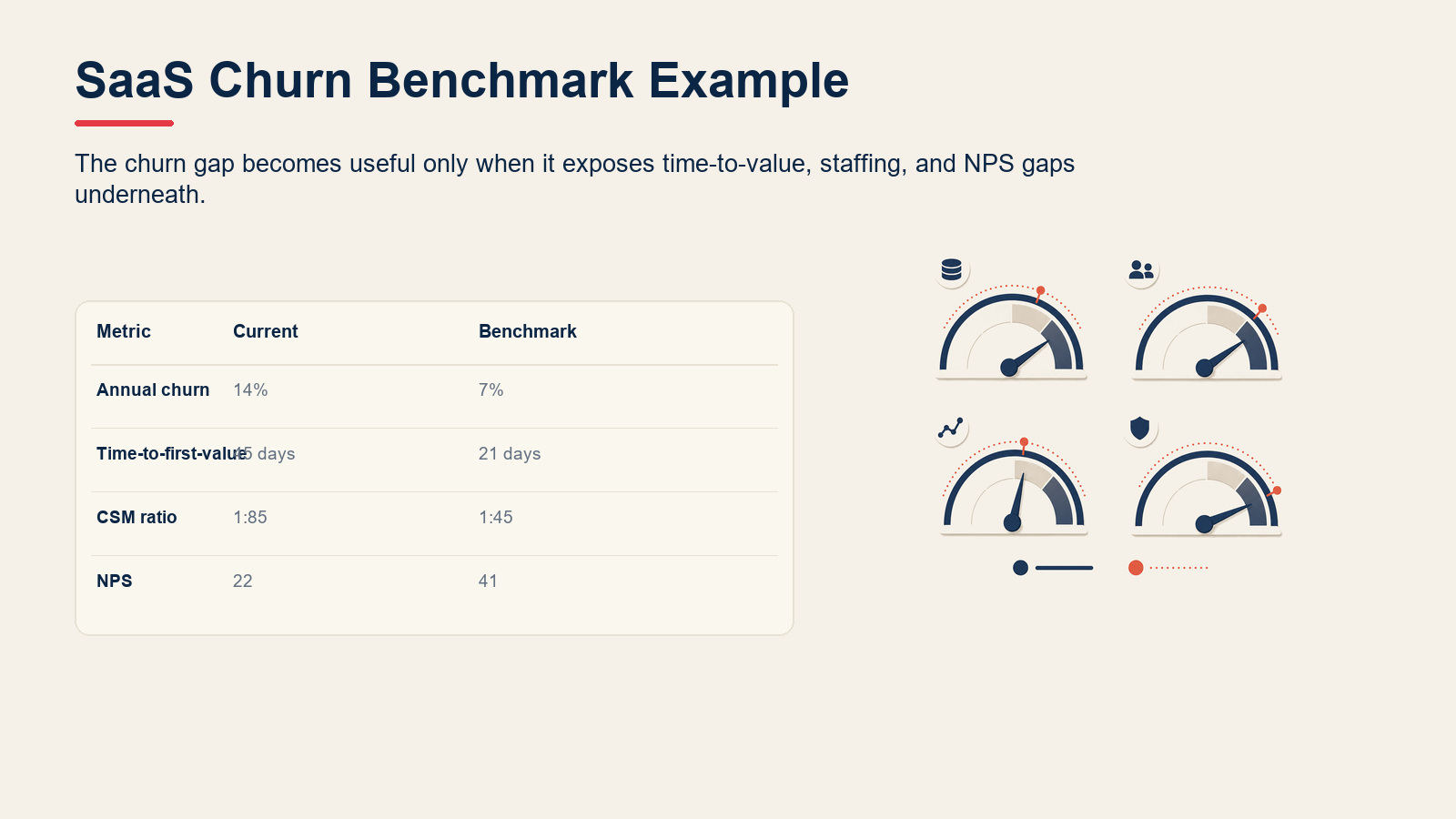
Tabel perbandingan:
| Metrik | Perusahaan Anda | Benchmark industri | Kesenjangan |
|---|---|---|---|
| Tingkat churn tahunan | 14% | 7% | 7 poin persentase |
| Time-to-first-value (hari) | 45 hari | 21 hari | 24 hari |
| Rasio customer success (CSM : akun) | 1 : 85 | 1 : 45 | 40 akun per CSM |
| Net Promoter Score | 22 | 41 | 19 poin |
Kesenjangan churn adalah gejalanya. Benchmarking proses mengungkapkan akar masalahnya: time-to-first-value lebih dari dua kali lebih lama dari benchmark, dan tim customer success terlalu kewalahan. Rencana aksi menargetkan perancangan ulang onboarding dan peningkatan bertahap jumlah staf CS, bukan kampanye pengurangan churn.
Itulah kekuatan benchmarking dibanding perkiraan: Anda menutup kesenjangan yang tepat, bukan yang paling terlihat.
Manfaat dan keterbatasan
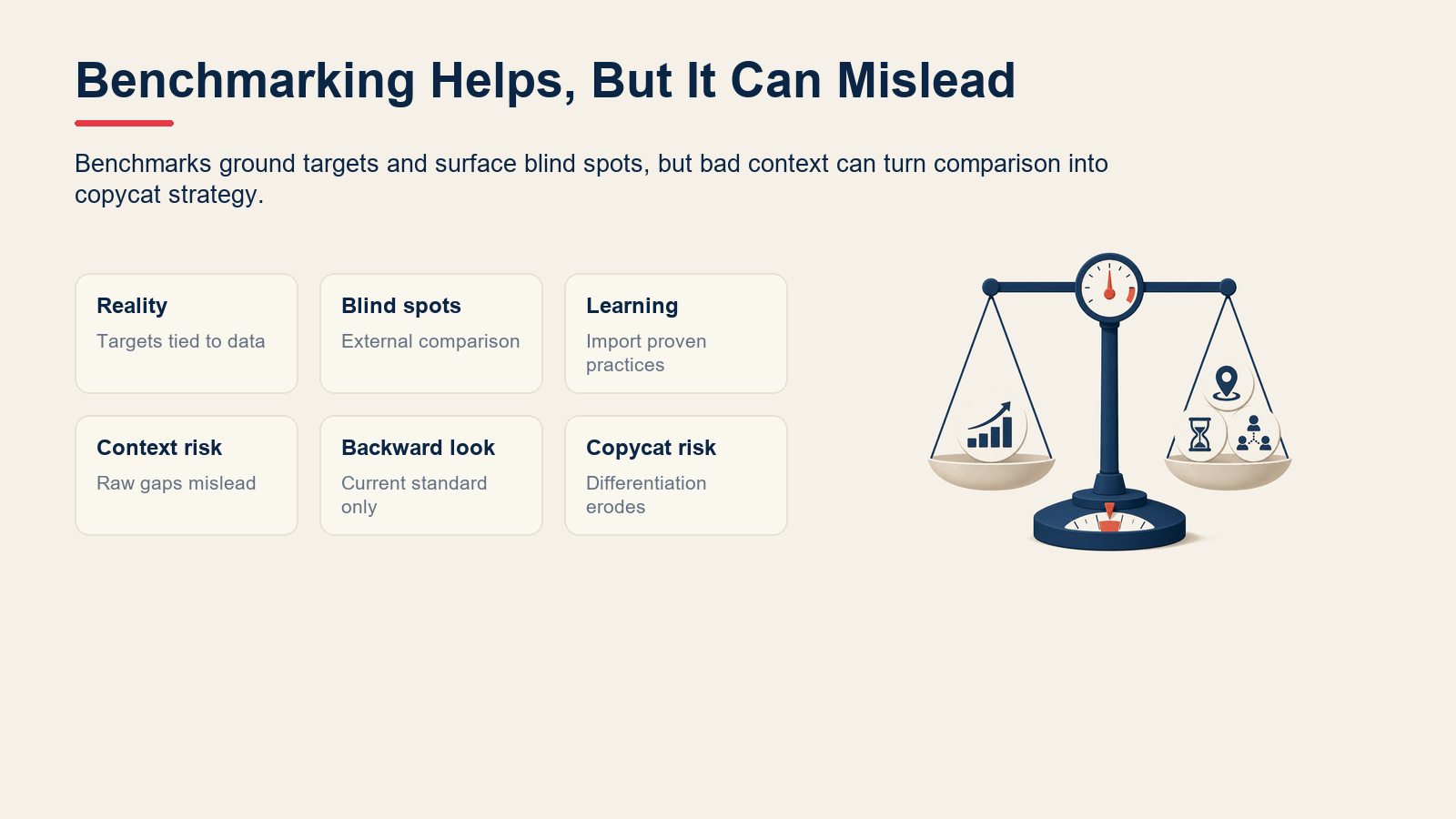
Benchmarking berguna ketika menginformasikan sebuah keputusan, tetapi dapat menyesatkan tim yang menyalin target tanpa memahami konteksnya.
Apa yang dilakukan benchmarking dengan baik
- Mendasarkan target pada kenyataan. Target perbaikan yang terkait dengan data benchmark lebih kredibel daripada target yang ditetapkan dengan membulatkan angka tahun lalu ke atas.
- Mengungkap titik buta. Anda tidak dapat melihat inefisiensi Anda sendiri dengan jelas. Perbandingan eksternal memaksa objektivitas.
- Mempercepat pembelajaran. Benchmarking fungsional dan generik memungkinkan Anda mengimpor praktik yang telah terbukti dari luar industri Anda tanpa harus memulai dari awal.
- Membangun keselarasan. Benchmark bersama memberikan kepemimpinan, keuangan, dan operasi titik referensi bersama untuk penetapan prioritas.
- Mendukung keputusan strategis. Pendekatan balanced scorecard secara eksplisit memasukkan target pelanggan dan operasional yang di-benchmark bersama metrik keuangan.
Di mana benchmarking kurang memadai
- Kualitas data sulit dikendalikan. Data pesaing jarang bersifat publik dan sering kali tidak dapat diandalkan. Rata-rata industri menyembunyikan variasi yang lebar dalam kelompok "benchmark".
- Perbandingan membutuhkan konteks. Biaya per unit pesaing yang lebih rendah mungkin mencerminkan keunggulan struktural (seperti volume atau geografi) yang tidak dapat Anda replikasi. Angka kesenjangan mentah tanpa konteks mengarah pada target yang buruk.
- Secara default bersifat retrospektif. Benchmark mencerminkan posisi para pemain terbaik saat ini, bukan ke mana pasar akan menuju. Terlalu berfokus pada benchmark saat ini dapat menyebabkan Anda mengoptimalkan untuk standar yang semakin menyusut.
- Dapat menghasilkan strategi jiplakan. Jika setiap pesaing melakukan benchmark terhadap pemimpin yang sama, diferensiasi runtuh. Benchmarking harus menginformasikan strategi, bukan menggantikannya.
Praktik terbaik
Jadilah spesifik sebelum memulai. Definisikan metrik dan sumber benchmark secara tertulis sebelum Anda mengumpulkan satu titik data pun. Cakupan yang samar menghasilkan output yang tidak dapat ditindaklanjuti.
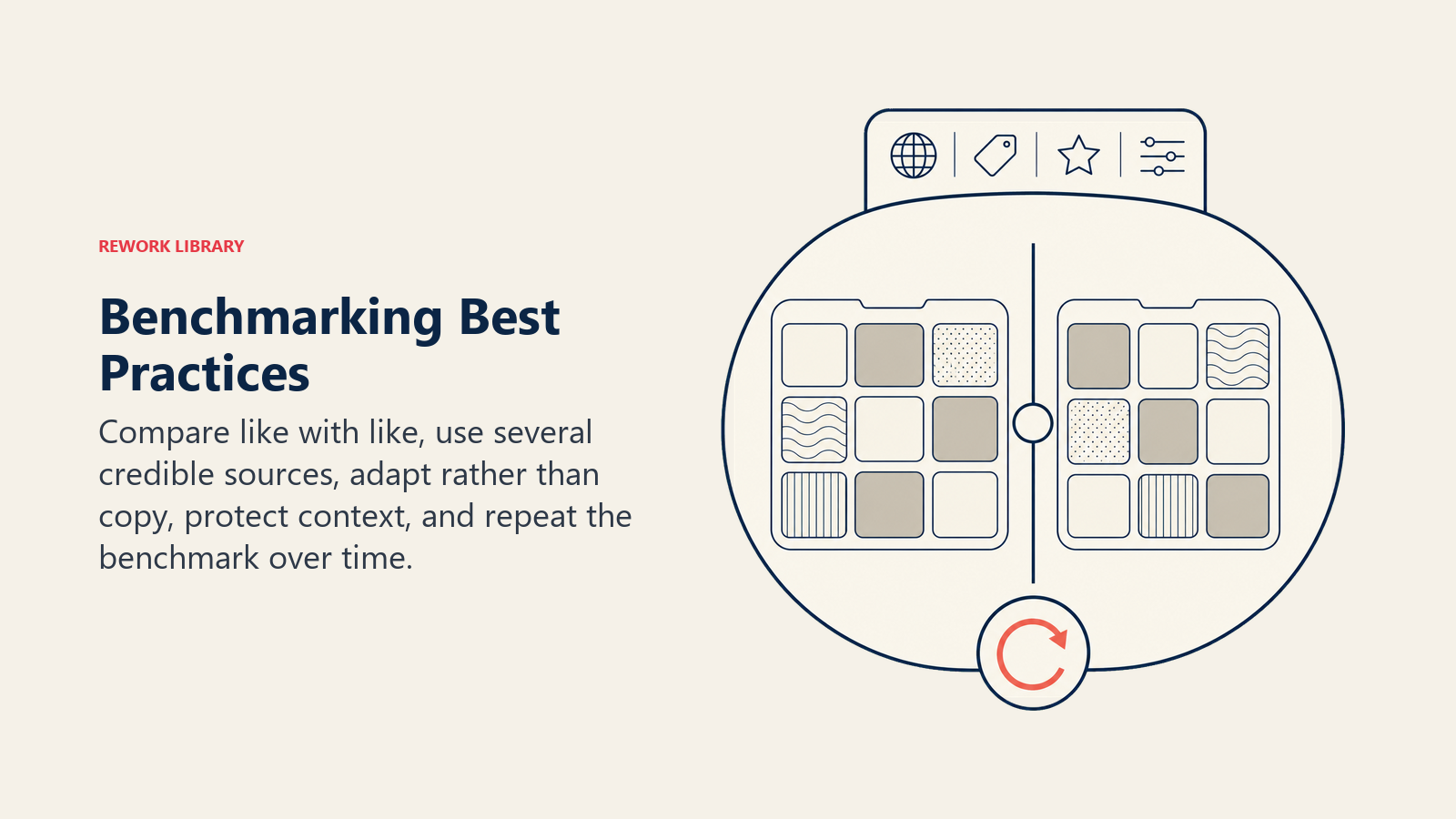
Pisahkan apa dari mengapa. Mengetahui NPS pesaing 15 poin lebih tinggi memberi tahu Anda di mana kesenjangan berada. Memahami bahwa mereka telah berinvestasi dalam panggilan proaktif pada hari ke-30 dan hari ke-90 memberi tahu Anda mengapa. Cerita proses di balik angka adalah tempat tinggalnya wawasan.
Utamakan riset primer daripada sekunder. Laporan industri memberi Anda rata-rata. Percakapan langsung dengan mitra benchmark memberi Anda detail proses. Keduanya penting, tetapi menjawab pertanyaan yang berbeda.
Lakukan benchmark pada frekuensi yang tepat. Untuk metrik operasional (waktu penyelesaian tiket, tingkat konversi), bulanan atau kuartalan sudah tepat. Untuk benchmark strategis (pangsa pasar, struktur biaya), tahunan biasanya sudah cukup. Benchmarking terlalu sering menciptakan gangguan; terlalu jarang melewatkan pergeseran.
Jangan hanya benchmark terhadap pemimpin saat ini. Gunakan balanced scorecard dan kerangka manajemen strategis untuk juga memindai industri yang berdekatan untuk praktik yang dapat memberikan lompatan daripada sekadar mengejar ketertinggalan.
Tutup lingkarannya. Setiap siklus benchmarking harus berakhir dengan keputusan yang terdokumentasi: kami akan menutup kesenjangan ini, kami menerima kesenjangan ini untuk saat ini, atau kami menurunkan prioritas metrik ini. Tanpa keputusan, benchmarking menjadi latihan pelaporan daripada alat strategis.

Co-Founder & COO
On this page
- Apa itu benchmarking?
- Fakta penting
- Jenis-jenis benchmarking
- Proses benchmarking
- Langkah 1: Tentukan apa yang akan di-benchmark
- Langkah 2: Pilih mitra benchmark Anda
- Langkah 3: Kumpulkan dan standarisasi data
- Langkah 4: Analisis kesenjangan
- Langkah 5: Tetapkan target dan kembangkan rencana aksi
- Langkah 6: Implementasikan, pantau, dan tinjau kembali
- Contoh benchmarking
- Manfaat dan keterbatasan
- Apa yang dilakukan benchmarking dengan baik
- Di mana benchmarking kurang memadai
- Praktik terbaik