Bahasa Indonesia
Strategi Diversifikasi: Jenis dan Contoh
Turn this article into takeaways for your work.


Each assistant summarizes the article only for you and suggests best practices for your work.
Strategi diversifikasi adalah cara perusahaan tumbuh dengan memasuki pasar baru, lini produk baru, atau industri baru di luar bisnis saat ini. Ini adalah kuadran paling ambisius dalam strategi korporat, dan juga yang paling curam kurva belajarnya.
Apa Itu Strategi Diversifikasi?
Strategi diversifikasi adalah pendekatan pertumbuhan korporat di mana sebuah perusahaan berkembang ke produk, layanan, atau pasar baru yang berbeda dari operasi yang sudah ada. Berbeda dari pertumbuhan organik dalam bisnis inti, diversifikasi membawa organisasi ke wilayah di mana ia memiliki keahlian, hubungan pelanggan, atau infrastruktur operasional yang kurang mapan.
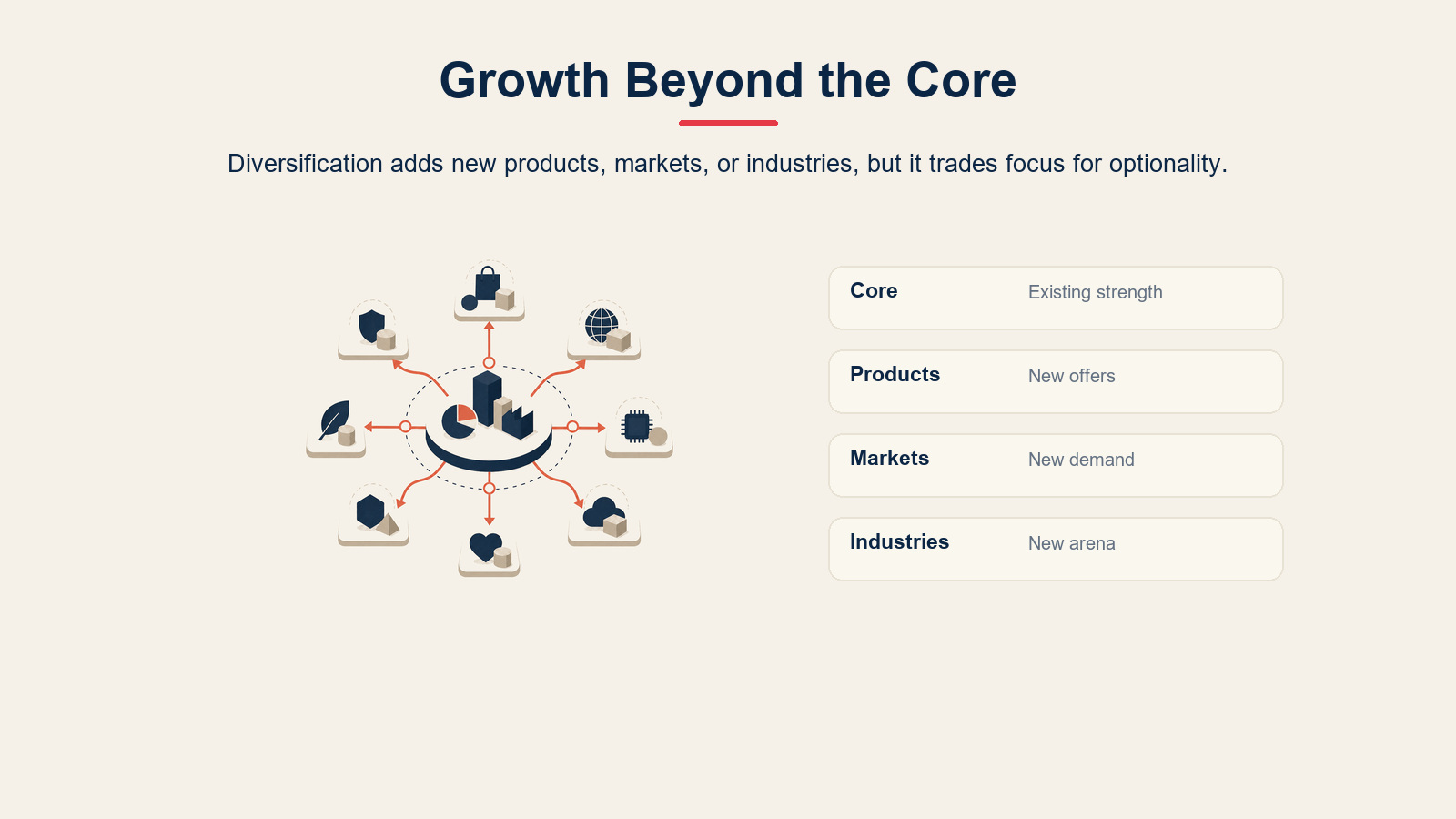
Ide utamanya adalah menyebarkan risiko dan menemukan sumber pendapatan baru. Namun pertukaran yang harus diterima adalah fokus. Setiap dolar dan jam yang dihabiskan untuk bisnis baru adalah dolar dan jam yang tidak digunakan untuk memperkuat apa yang sudah Anda lakukan dengan baik.
Fakta Penting
- Menurut riset BCG, perusahaan yang mendiversifikasi ke bisnis dengan sinergi strategis nyata mengungguli konglomerat murni sebesar 3 hingga 5 poin persentase dalam total imbal hasil pemegang saham secara tahunan selama periode lima tahun. (BCG, "The Synergy Trap," 2023)
- Analisis McKinsey terhadap perusahaan S&P 500 menemukan bahwa sekitar 70% langkah diversifikasi berkinerja di bawah biaya modal dalam tiga tahun pertama, dengan faktor kegagalan utama adalah sinergi yang terlalu dilebih-lebihkan. (McKinsey, "When Diversification Destroys Value," 2022)
- Harvard Business Review menemukan bahwa perusahaan yang memasuki pasar yang berdekatan (diversifikasi terkait) 1,6 kali lebih mungkin menghasilkan imbal hasil positif dibandingkan yang memasuki pasar yang tidak terkait. (HBR, "The Adjacency Advantage," 2021)
Diversifikasi berada di ujung paling jauh dari spektrum pertumbuhan. Memahami posisinya dalam perangkat strategis Anda berarti menempatkannya dengan benar dalam Ansoff Matrix dan menguji kekuatannya terhadap kompetensi inti Anda.
Jenis-Jenis Diversifikasi
Tidak semua diversifikasi terlihat sama. Jenis yang Anda pilih menunjukkan logika apa yang mendorong langkah tersebut: kemampuan bersama, akses pasar, penyeimbangan portofolio keuangan, atau kontrol rantai pasokan.
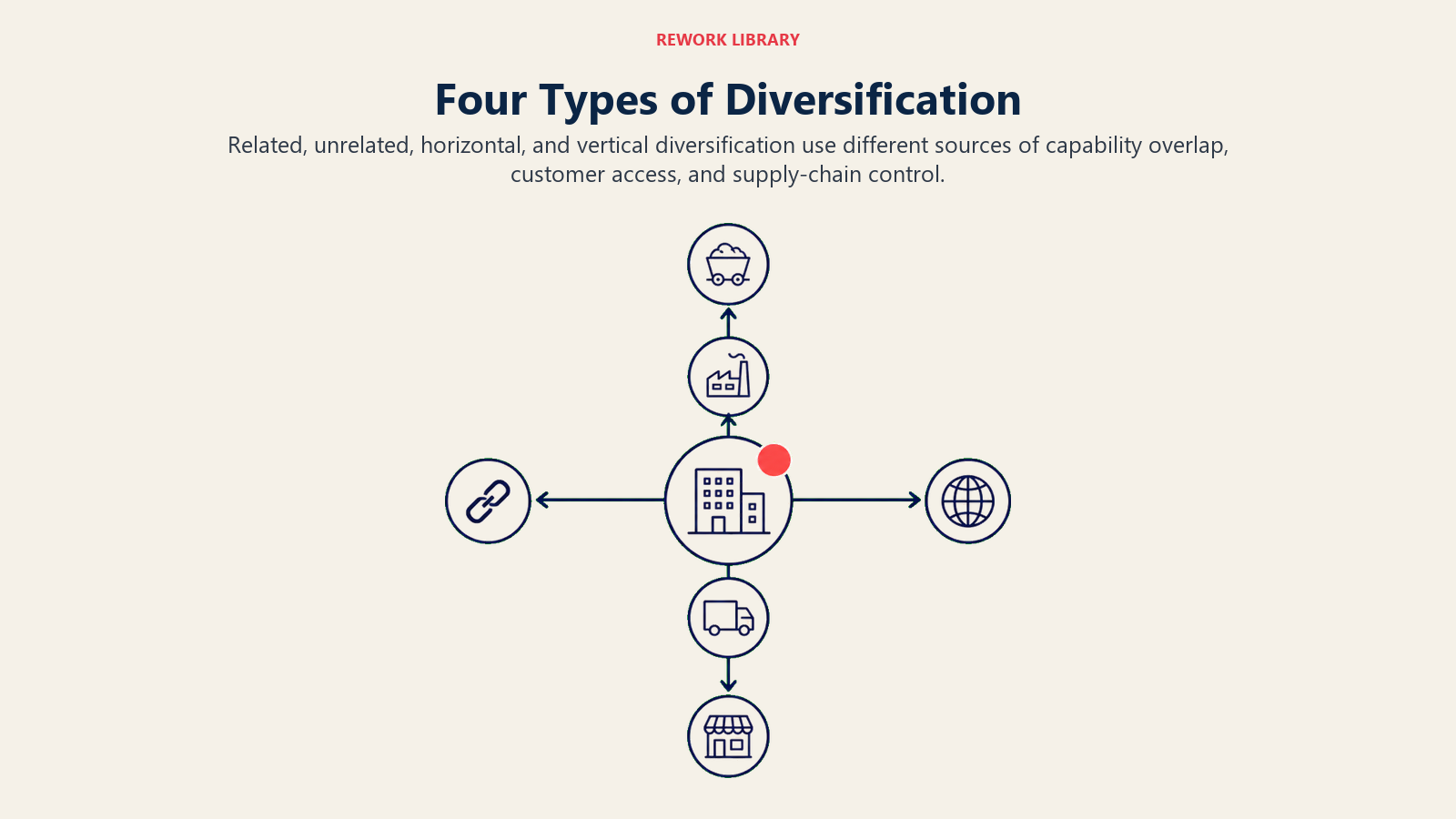
| Jenis | Definisi | Logika Utama | Contoh |
|---|---|---|---|
| Terkait (Konsentrik) | Memasuki pasar atau produk baru yang berbagi teknologi, produksi, atau basis pelanggan dengan bisnis yang ada | Memanfaatkan kemampuan yang sudah ada | Apple beralih dari Mac ke iPhone |
| Tidak Terkait (Konglomerat) | Memasuki bisnis tanpa tumpang tindih operasional dengan aktivitas saat ini | Penyebaran risiko keuangan | Berkshire Hathaway yang memiliki kereta api BNSF dan asuransi Geico |
| Horizontal | Menambahkan produk atau layanan baru untuk segmen pelanggan yang sama, sering diakuisisi dari atau bersaing dengan perusahaan lain | Memperdalam pangsa dompet pelanggan | Amazon meluncurkan Amazon Basics untuk menjual versi generik dari kategori teratas di marketplace-nya |
| Vertikal (sebagai diversifikasi) | Berkembang ke peran pemasok atau distributor yang merepresentasikan kemampuan bisnis yang benar-benar baru | Kontrol rantai pasokan + pendapatan baru | Tesla membangun pabrik baterai gigafactory dan showroom ritel sendiri |
Diversifikasi terkait umumnya lebih rendah risikonya karena Anda menerapkan kekuatan yang sudah diketahui pada konteks baru. Diversifikasi tidak terkait adalah taruhan yang lebih besar: Anda mengandalkan disiplin alokasi modal, kualitas manajemen, dan teori portofolio daripada keunggulan operasional. Lihat integrasi vertikal dan integrasi horizontal untuk pembahasan yang lebih mendalam tentang vektor ekspansi spesifik tersebut.
Diversifikasi dalam Ansoff Matrix
Ansoff Matrix memetakan pilihan pertumbuhan pada dua sumbu: produk (yang sudah ada vs baru) dan pasar (yang sudah ada vs baru). Diversifikasi berada di kuadran keempat: produk baru di pasar baru. Ini adalah sel dengan risiko tertinggi dan potensi imbal hasil tertinggi dalam kisi tersebut.
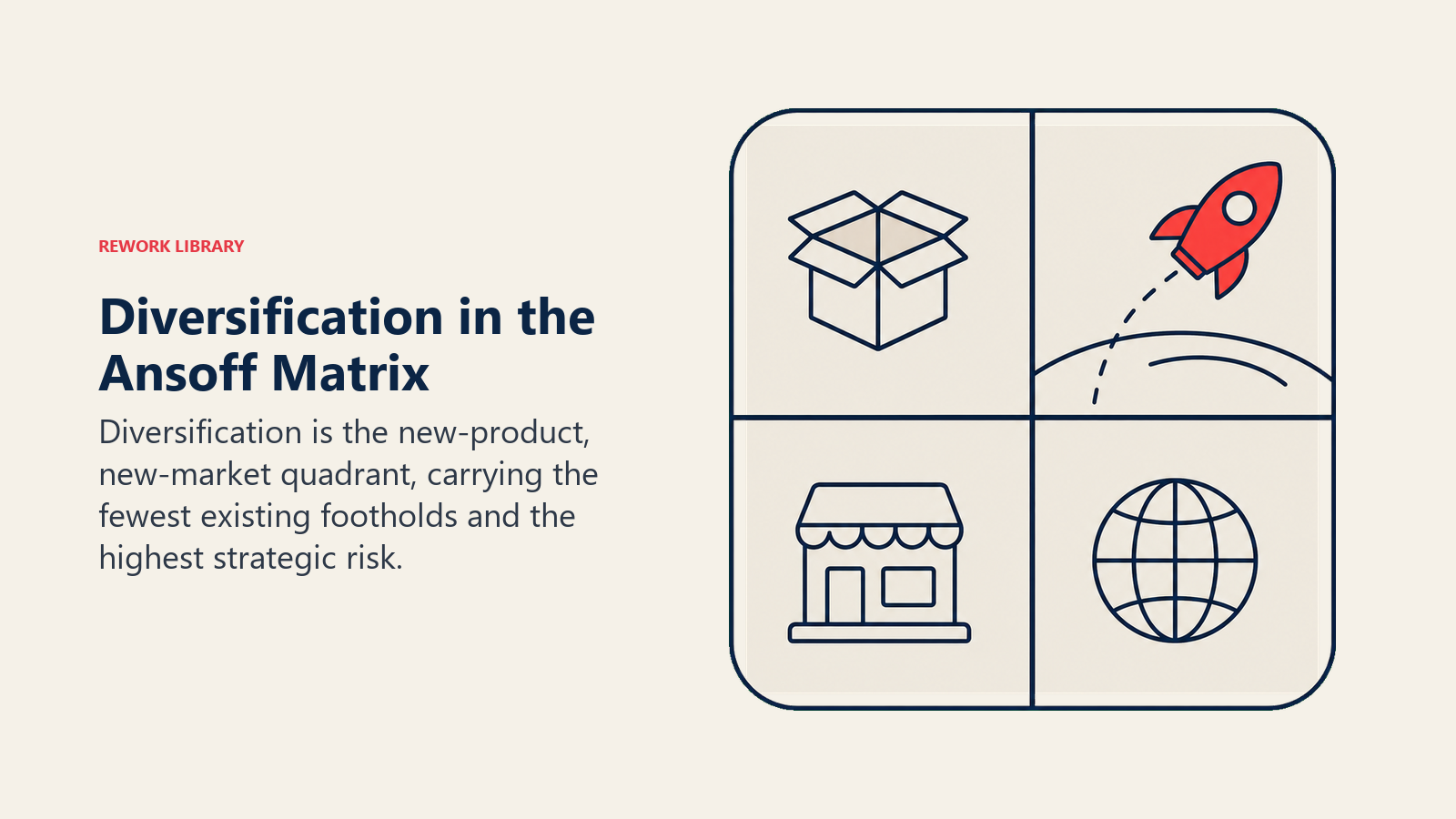
Tiga kuadran lainnya semuanya membiarkan Anda membangun di atas sesuatu yang sudah Anda ketahui: basis pelanggan yang sudah ada, produk yang sudah ada, atau pasar yang sudah ada. Diversifikasi menghilangkan semua pijakan itu sekaligus. Anda pada dasarnya bertanya: bisakah kita membangun bisnis baru dari nol sambil menjalankan yang sudah kita miliki?
Itulah mengapa kerangka Ansoff memperlakukan diversifikasi sebagai tuas pertumbuhan "pilihan terakhir," yang tepat ketika tiga kuadran lainnya (penetrasi pasar, pengembangan pasar, pengembangan produk) telah habis dieksploitasi atau ketika peluang eksternal terlalu menarik untuk diabaikan.
Perbedaan antara diversifikasi terkait dan tidak terkait juga memetakan ke BCG Matrix. Langkah diversifikasi terkait mungkin secara sengaja menyemai "Question Mark" baru yang diharapkan berkembang menjadi "Star" dalam tiga hingga lima tahun. Diversifikasi tidak terkait lebih seperti menambahkan aset portofolio yang berdiri sendiri yang Anda kelola untuk arus kas daripada sinergi operasional.
Manfaat Diversifikasi
Jika dilakukan dengan baik, diversifikasi memberikan tiga hal bagi bisnis yang tidak bisa direplikasi oleh pertumbuhan organik dalam satu pasar.
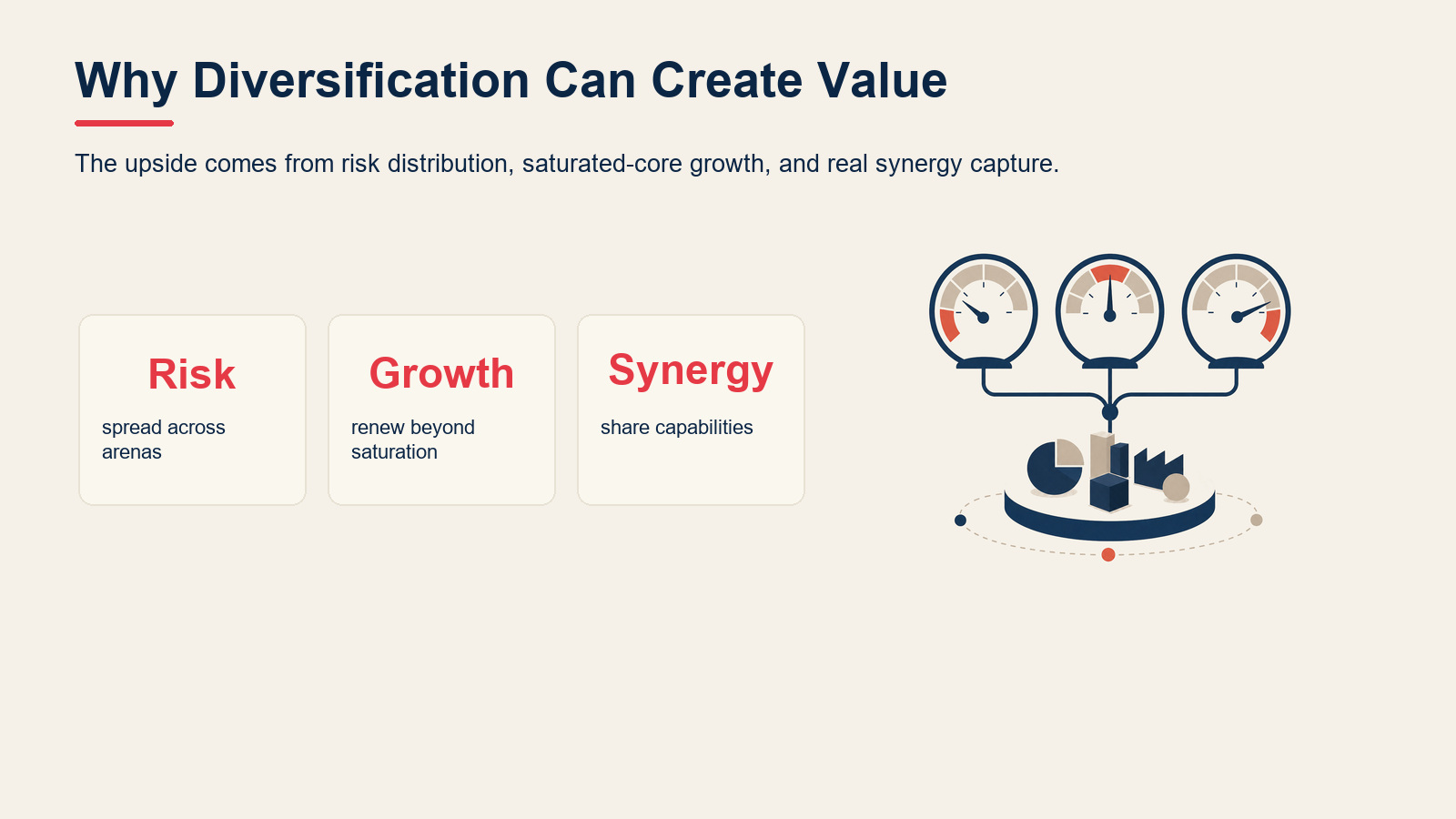
Distribusi risiko. Jika pasar inti Anda menyusut, bisnis yang terdiversifikasi memiliki aliran pendapatan yang tidak terekspos pada siklus yang sama. Maskapai penerbangan mempelajari ini dengan cara yang menyakitkan di tahun 2020; perusahaan dengan cabang perjalanan dan logistik yang terdiversifikasi bertahan jauh lebih baik dari gangguan tersebut dibandingkan maskapai yang murni.
Pertumbuhan ketika pasar inti jenuh. Bisnis yang matang di industri dengan pertumbuhan lambat menghadapi pilihan: menerima pertumbuhan pendapatan digit tunggal yang rendah selamanya, atau menemukan arena baru. Akuisisi Disney atas Pixar, Marvel, dan Lucasfilm adalah langkah diversifikasi yang menemukan kembali profil pertumbuhan perusahaan ketika bisnis taman hiburan dan animasi inti mengalami stagnasi.
Penangkapan sinergi. Diversifikasi terkait dapat menciptakan sinergi biaya dan pendapatan yang nyata. Investasi Amazon dalam AWS dimulai sebagai infrastruktur internal namun menjadi bisnis terpisah yang kini mensubsidi margin ritel perusahaan yang sangat tipis. Itu adalah sinergi yang tidak bisa direncanakan sebelumnya; ia muncul dari taruhan diversifikasi.
Risiko dan Kapan Diversifikasi Gagal
Risikonya sama nyatanya. Memahaminya adalah perbedaan antara strategi diversifikasi dan apa yang disebut investor sebagai "diworsifikasi."
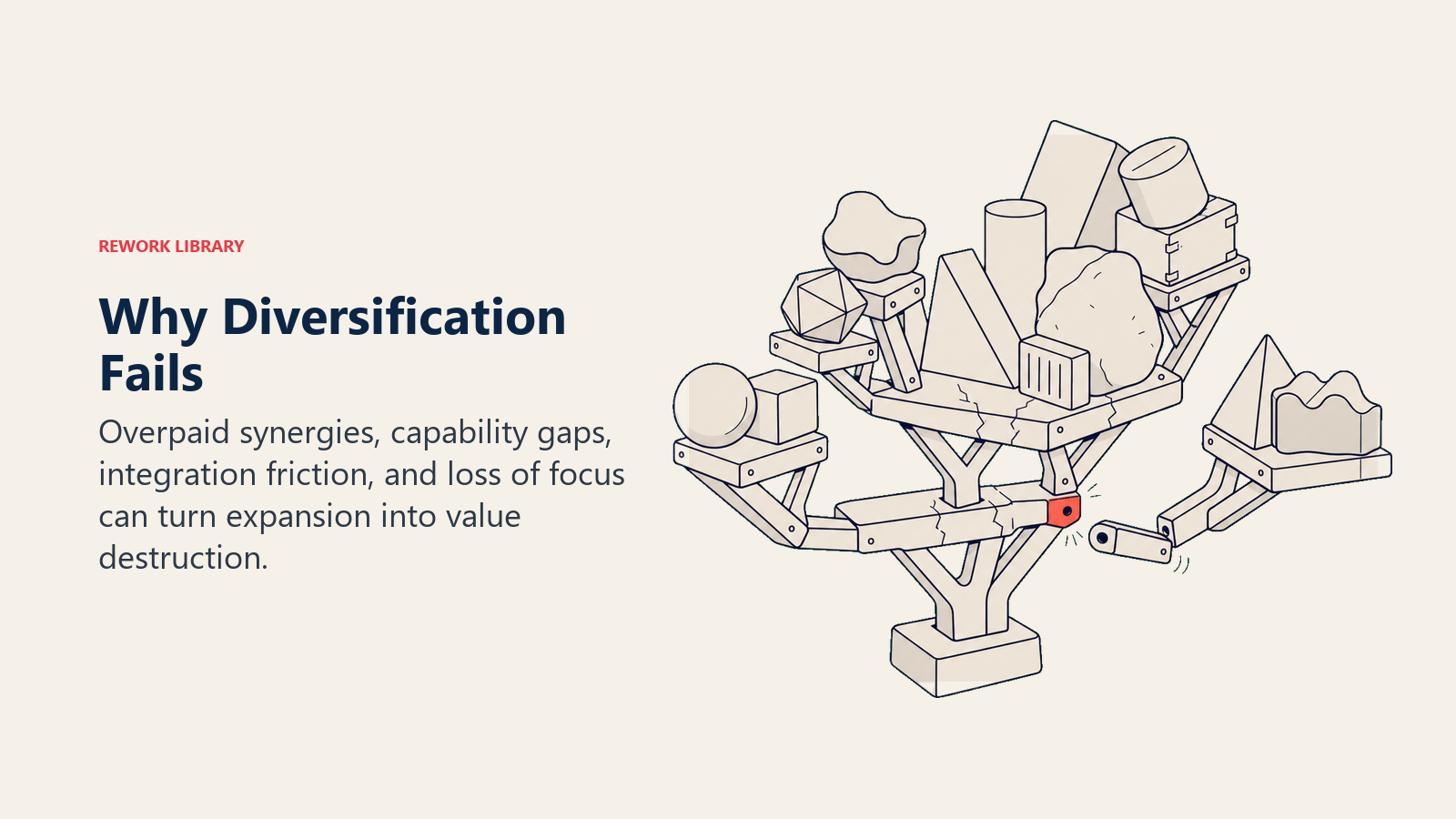
Diworsifikasi. Istilah ini, yang diciptakan oleh Peter Lynch, menggambarkan penghancuran nilai pemegang saham yang terjadi ketika perusahaan membeli bisnis yang tidak terkait dengan harga premium dan kemudian gagal mengintegrasikannya secara efektif. Pengakuisisi membayar untuk sinergi yang tidak pernah terwujud, perhatian manajemen terpecah, dan bisnis inti asli pun menderita.
Kehilangan fokus. Perusahaan yang bergerak di terlalu banyak industri bisa kehilangan identitasnya, daya tariknya untuk menarik talenta, dan efisiensi operasionalnya. General Electric menghabiskan sebagian besar tahun 2010-an untuk membongkar puluhan tahun diversifikasi tidak terkait di bawah Jack Welch karena struktur konglomerat menghancurkan lebih banyak nilai daripada yang diciptakannya setelah kepergiannya.
Kesenjangan kemampuan. Memasuki industri baru berarti bersaing melawan pemain lama yang memiliki pengetahuan domain bertahun-tahun, hubungan pemasok, dan ekuitas merek yang tidak Anda miliki. Keunggulan kompetitif dalam satu industri jarang berpindah secara otomatis ke industri lain.
Kegagalan integrasi. Akuisisi yang mendorong diversifikasi gagal dengan tingkat tinggi karena ketidaksesuaian budaya, inkompatibilitas sistem, dan kepergian talenta selama integrasi. Riset secara konsisten menunjukkan bahwa pengakuisisi membayar terlalu mahal dan hasilnya di bawah ekspektasi.
Cara Membangun Strategi Diversifikasi
Keputusan diversifikasi layak mendapat ketelitian lebih dari sebagian besar langkah strategis lainnya. Berikut adalah proses yang mengurangi kemungkinan kesalahan yang mahal.
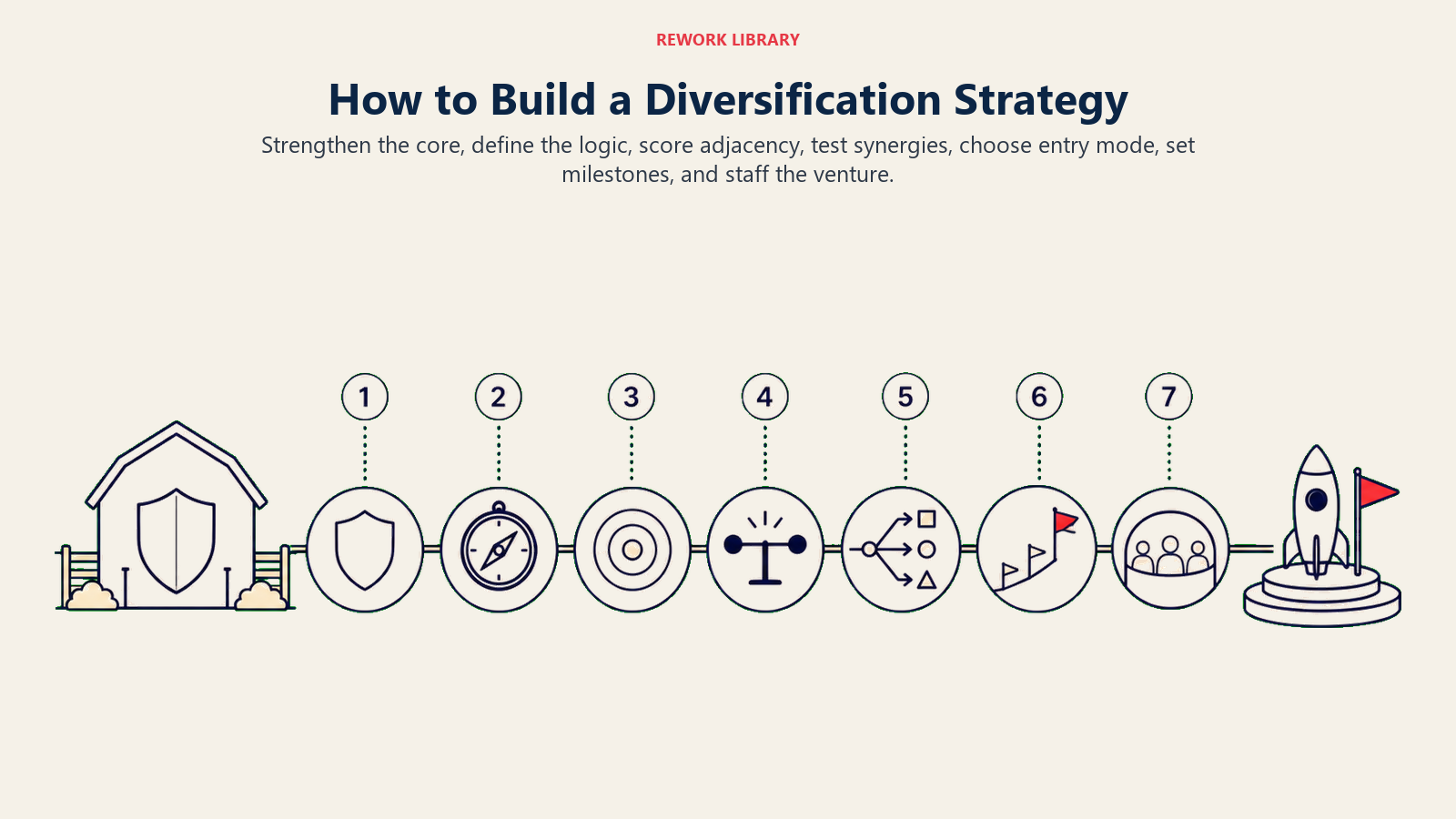
Audit posisi kompetitif Anda saat ini. Sebelum berkembang, konfirmasi bahwa bisnis inti Anda benar-benar kuat. Diversifikasi dari posisi lemah hampir selalu destruktif. Gunakan kompetensi inti dan keunggulan kompetitif sebagai dasar.
Tentukan logika strategisnya. Apakah langkah ini tentang pengurangan risiko, pertumbuhan pendapatan, sinergi, atau hal lain? Bersikaplah jujur. "Kami melihat akuisisi yang menarik" bukan alasan strategis. Petakan logika secara eksplisit sebelum berkomitmen dengan modal.
Nilai kedekatan. Untuk diversifikasi terkait, petakan tumpang tindih dalam pelanggan, teknologi, distribusi, dan talenta. Semakin tinggi tumpang tindihnya, semakin kredibel kasus sinergisnya. Untuk diversifikasi tidak terkait, evaluasi kualitas mandiri bisnis yang akan dimasuki.
Uji tekanan asumsi sinergi. Sebagian besar kegagalan diversifikasi berakar pada estimasi sinergi yang terlalu optimis dan tidak pernah ditantang. Bangun kasusnya seolah Anda adalah anggota dewan yang skeptis, bukan pendukung kesepakatan.
Evaluasi build vs buy vs partner. Akuisisi adalah jalur tercepat namun membawa risiko integrasi dan harga premium. Masuk organik (membangun dari nol) lebih lambat namun menghindari pembayaran berlebihan. Kemitraan dan usaha patungan memungkinkan Anda menguji kedekatan sebelum berkomitmen penuh dengan sumber daya.
Tentukan metrik keberhasilan dan cakrawala waktu. Tetapkan KPI yang terukur untuk bisnis baru pada 12, 24, dan 48 bulan. Putuskan terlebih dahulu seperti apa "kegagalan" itu agar Anda tidak merasionalisasi sunk cost dua tahun kemudian.
Staf secara terpisah. Bisnis baru di dalam organisasi yang sudah ada sering kekurangan talenta karena bisnis inti selalu memiliki kebutuhan yang lebih mendesak. Jika Anda serius dengan diversifikasi, berikan kepemimpinan yang berdedikasi dan kemandirian operasional.
Contoh Strategi Diversifikasi
Perusahaan nyata menggambarkan seperti apa setiap jenis diversifikasi dalam praktiknya dan apa yang membuat perbedaan antara keberhasilan dan kegagalan.
| Perusahaan | Bisnis Asal | Langkah Diversifikasi | Jenis | Hasil |
|---|---|---|---|---|
| Amazon | Toko buku online | Komputasi awan AWS; Amazon Studios; perangkat keras Alexa | Terkait (infrastruktur teknologi) | AWS menjadi segmen paling menguntungkan perusahaan |
| Disney | Animasi dan taman hiburan | Pixar (2006); Marvel (2009); Lucasfilm (2012) | Terkait (IP hiburan) | Mengubah pipeline konten; Disney+ diluncurkan dari basis IP |
| Samsung | Perangkat keras elektronik | Manufaktur semikonduktor; konstruksi (Samsung C&T); asuransi (Samsung Life) | Konglomerat tidak terkait | Divisi semikonduktor menjadi terbesar secara global; struktur konglomerat menciptakan kompleksitas |
| Berkshire Hathaway | Manufaktur tekstil | Asuransi, kereta api, energi, merek konsumen (BNSF, Geico, Dairy Queen) | Konglomerat tidak terkait | Model alokasi modal menghasilkan imbal hasil konsisten melalui diversifikasi portofolio |
| Apple | Komputer pribadi | iPod, iPhone, iPad, Apple Watch, Apple TV+, Apple Pay | Terkait (elektronik konsumen dan perangkat lunak) | Setiap langkah memanfaatkan ekosistem perangkat lunak yang ada dan skala manufaktur |
Pola di seluruh contoh yang berhasil adalah bahwa para diversifikator terbaik memiliki disiplin modal yang kuat, alasan yang jelas mengapa mereka secara khusus bisa bersaing di ruang baru, dan kesabaran kepemimpinan untuk cakrawala imbal hasil multi-tahun.