Bahasa Indonesia
Analisis Kesenjangan: Cara Menemukan dan Menutup Kesenjangan Kinerja (Template)
Turn this article into takeaways for your work.


Each assistant summarizes the article only for you and suggests best practices for your work.
Analisis kesenjangan adalah salah satu alat paling praktis yang dapat dijalankan seorang manajer sebelum mengalokasikan anggaran, tenaga kerja, atau waktu untuk inisiatif baru. Alat ini memaksakan jawaban yang tepat atas pertanyaan yang dihindari oleh sebagian besar tim: seberapa jauh kita dari posisi yang diperlukan, dan apa yang dibutuhkan untuk sampai ke sana?
Apa Itu Analisis Kesenjangan?
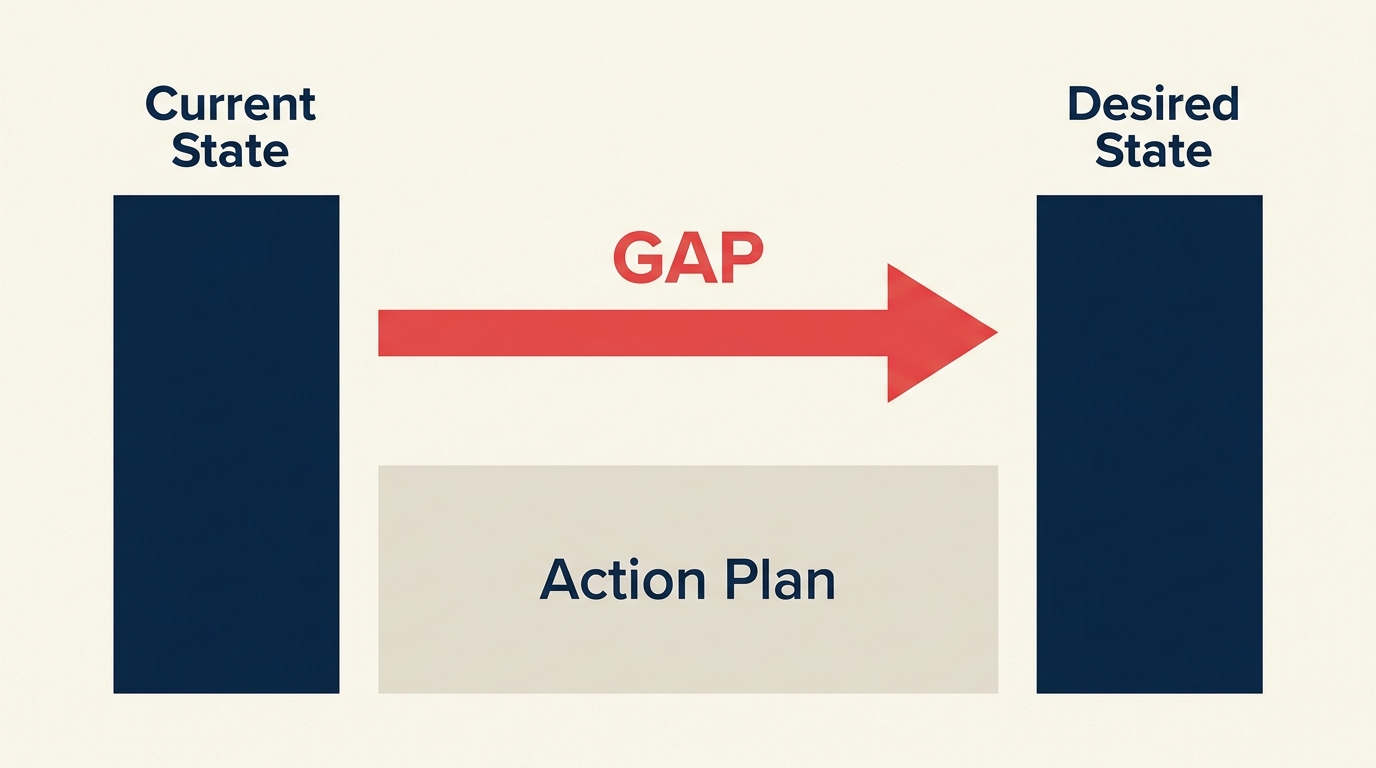
Analisis kesenjangan adalah metode terstruktur untuk membandingkan keadaan organisasi Anda saat ini dengan keadaan masa depan yang diinginkan dan mengidentifikasi tindakan spesifik yang diperlukan untuk menutup perbedaannya. Dalam praktiknya, ini berarti mendokumentasikan apa yang Anda miliki, mendefinisikan apa yang Anda butuhkan, menyebutkan kesenjangan di antara keduanya, dan membangun rencana tindakan konkret untuk menjembataninya.
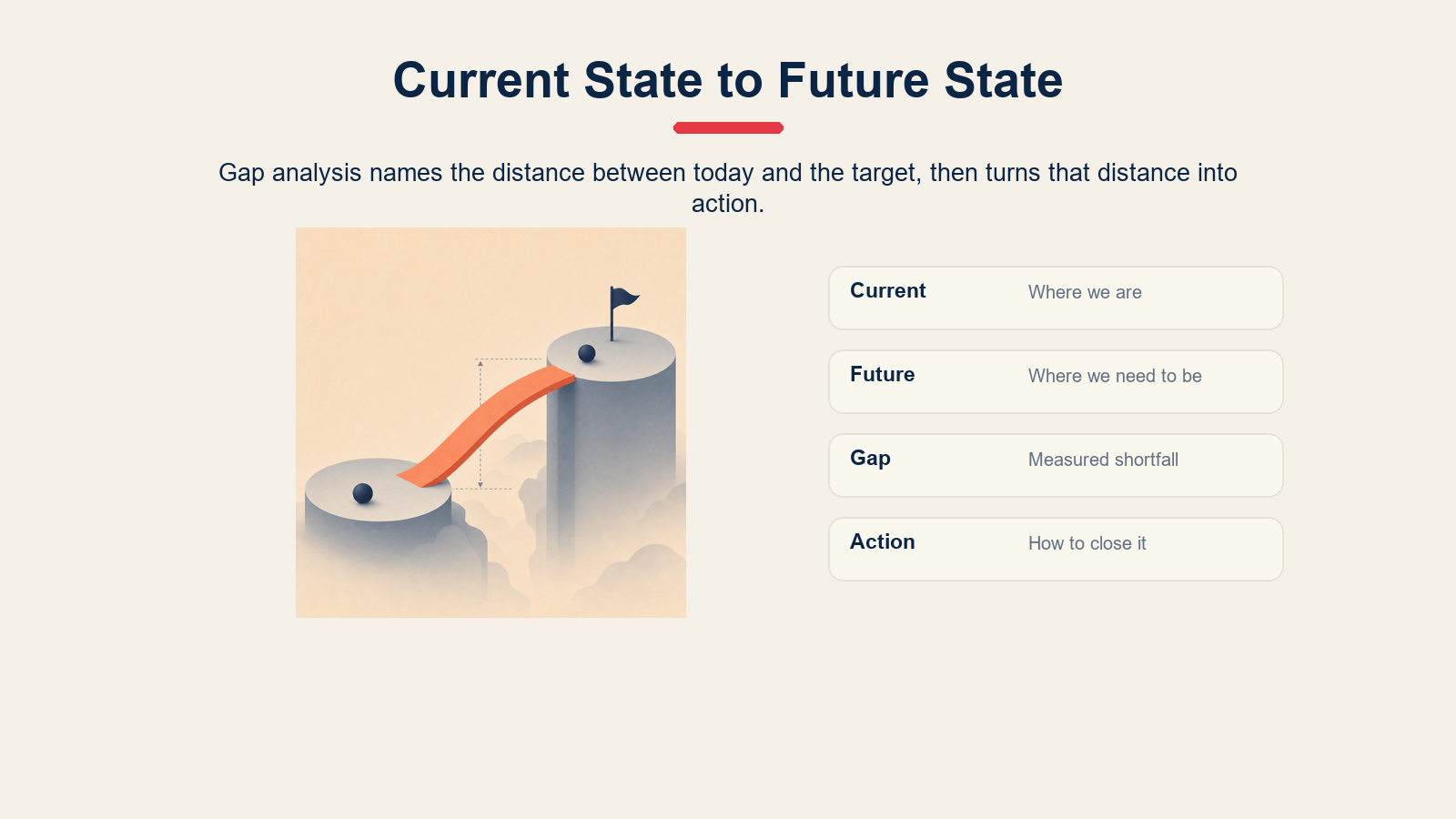
Kata "kesenjangan" bersifat harfiah. Jika tim dukungan Anda menyelesaikan 80 tiket per agen per minggu dan target pertumbuhan Anda memerlukan 120, kesenjangan tersebut adalah 40 tiket. Analisis tidak berhenti pada pengukuran kesenjangan itu; ia bertanya mengapa kesenjangan itu ada dan apa yang diperlukan untuk menghilangkannya.
Fakta Penting
Tolok ukur ini menunjukkan mengapa analisis kesenjangan harus dimulai dengan dasar yang kredibel. Data keadaan saat ini yang buruk mengubah sisa rencana menjadi tebakan.
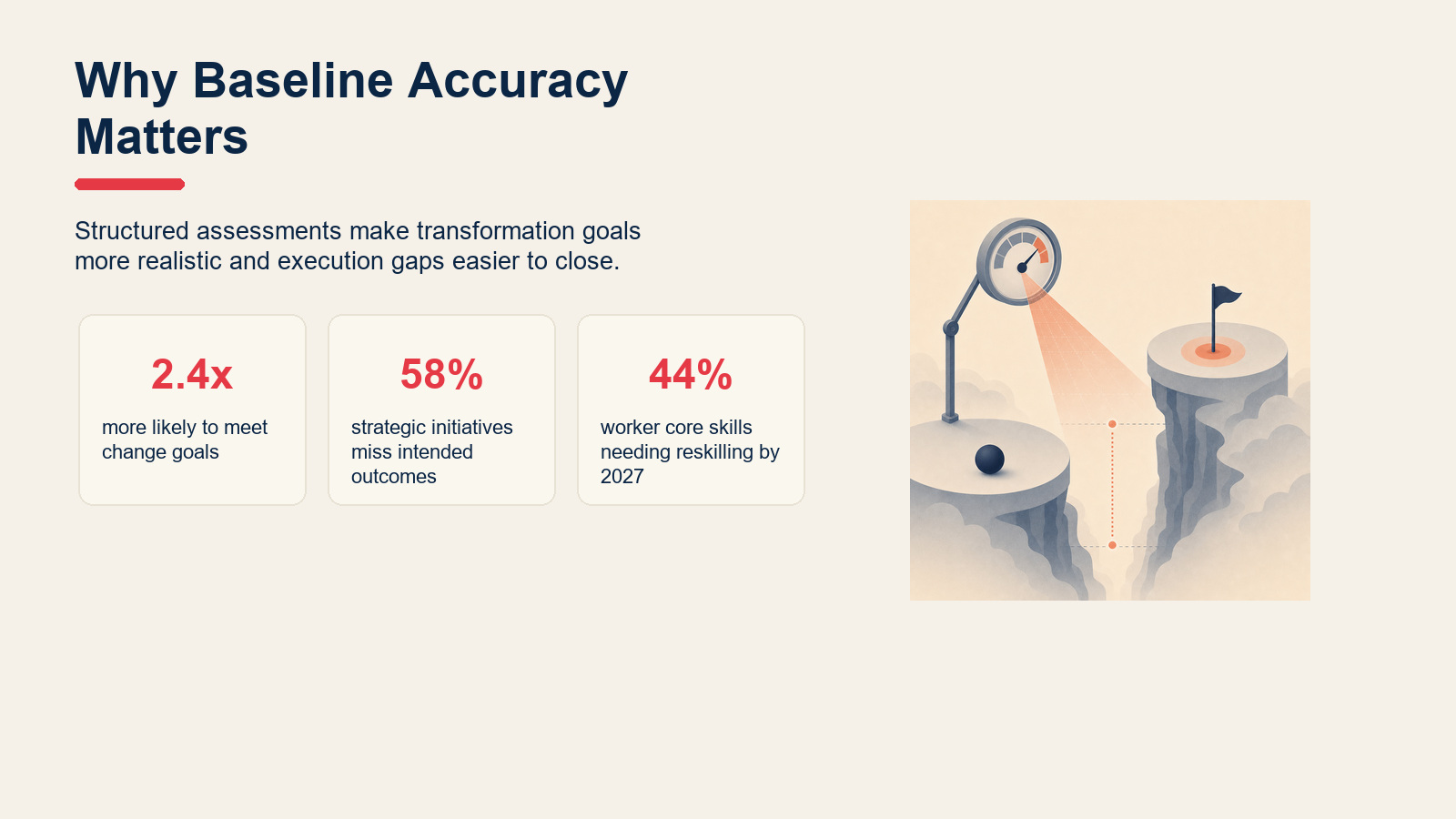
- Menurut McKinsey (2023), organisasi yang menjalankan penilaian kemampuan terstruktur sebelum meluncurkan program transformasi 2,4 kali lebih mungkin memenuhi tujuan perubahan mereka.
- Survei Gartner (2022) menemukan bahwa 58% inisiatif strategis gagal mencapai hasil yang dimaksud, dengan alasan paling umum adalah penilaian dasar yang tidak akurat di awal.
- Laporan Future of Jobs Forum Ekonomi Dunia (2023) memperkirakan bahwa kesenjangan keterampilan akan mengharuskan pelatihan ulang 44% keterampilan inti pekerja pada 2027, menjadikan analisis kesenjangan tenaga kerja sebagai prioritas tingkat dewan.
4 Elemen Analisis Kesenjangan
Setiap analisis kesenjangan, terlepas dari cakupannya, mengandung empat blok pembangun yang sama.
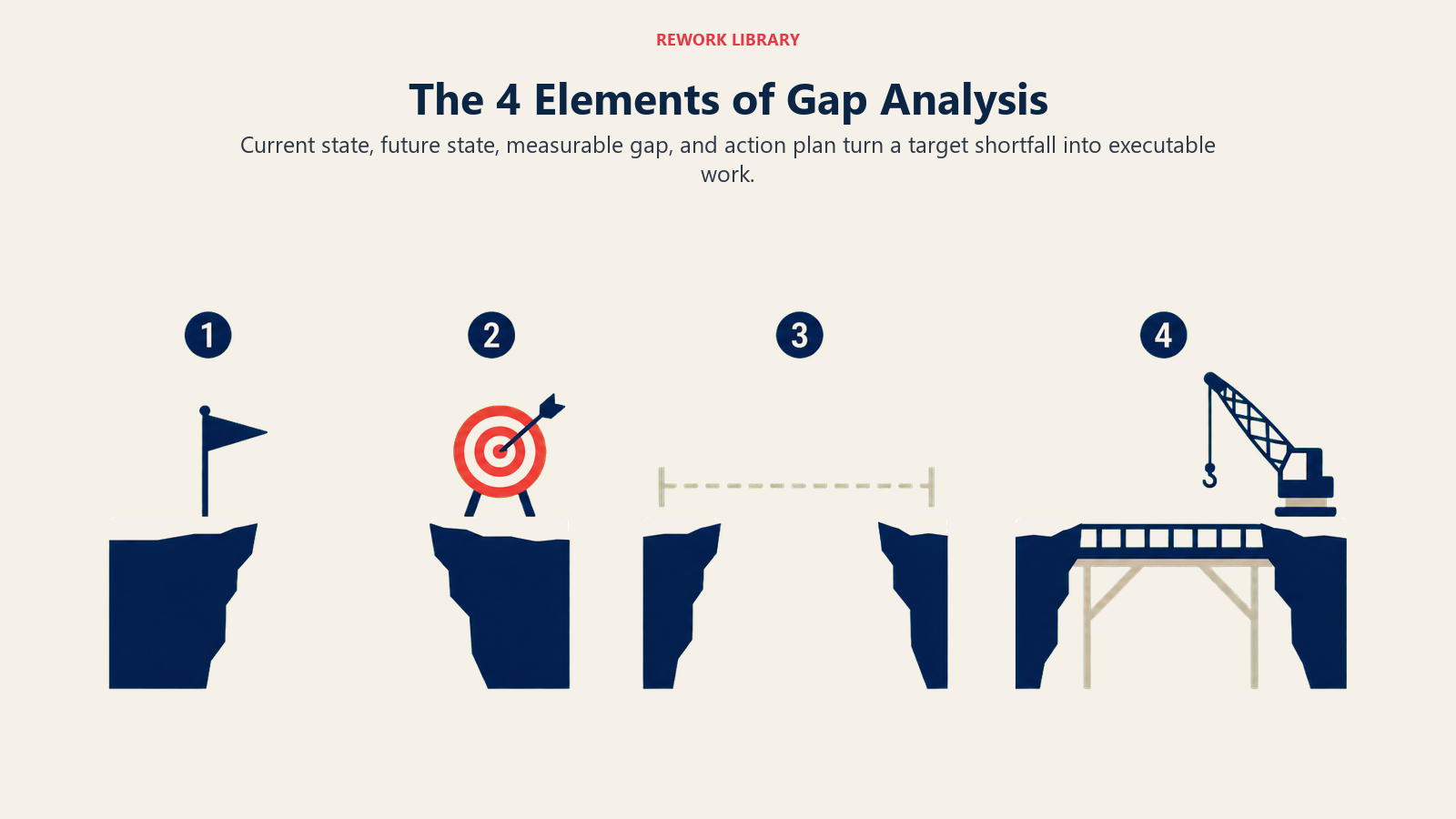
| Elemen | Yang dijawabnya | Contoh |
|---|---|---|
| Keadaan saat ini | Di mana kita sekarang? | Tim dukungan menyelesaikan 80 tiket/agen/minggu |
| Keadaan masa depan (yang diinginkan) | Di mana kita perlu berada, dan kapan? | 120 tiket/agen/minggu dalam 6 bulan |
| Kesenjangan | Apa perbedaan yang terukur? | Kekurangan 40 tiket/agen/minggu |
| Rencana tindakan | Langkah spesifik apa yang menutup kesenjangan? | Rekrut 2 agen, tambahkan otomasi triase, jalankan sprint pelatihan |
Keadaan saat ini memerlukan data yang jujur. Keadaan masa depan memerlukan target yang spesifik dan terikat waktu daripada aspirasi yang samar. Kesenjangan adalah perbedaan aritmetika. Dan rencana tindakan adalah di mana pekerjaan nyata dimulai: memprioritaskan inisiatif, menetapkan kepemilikan, dan menetapkan jadwal.
Tanpa rencana tindakan, Anda telah menjalankan diagnosis, bukan analisis. Inti dari semuanya adalah menghasilkan jalur maju yang kredibel.
Jenis-Jenis Analisis Kesenjangan
Tidak setiap kesenjangan berjenis sama. Tabel di bawah mencakup lima jenis paling umum yang dijalankan tim, beserta pertanyaan yang dijawab masing-masing.
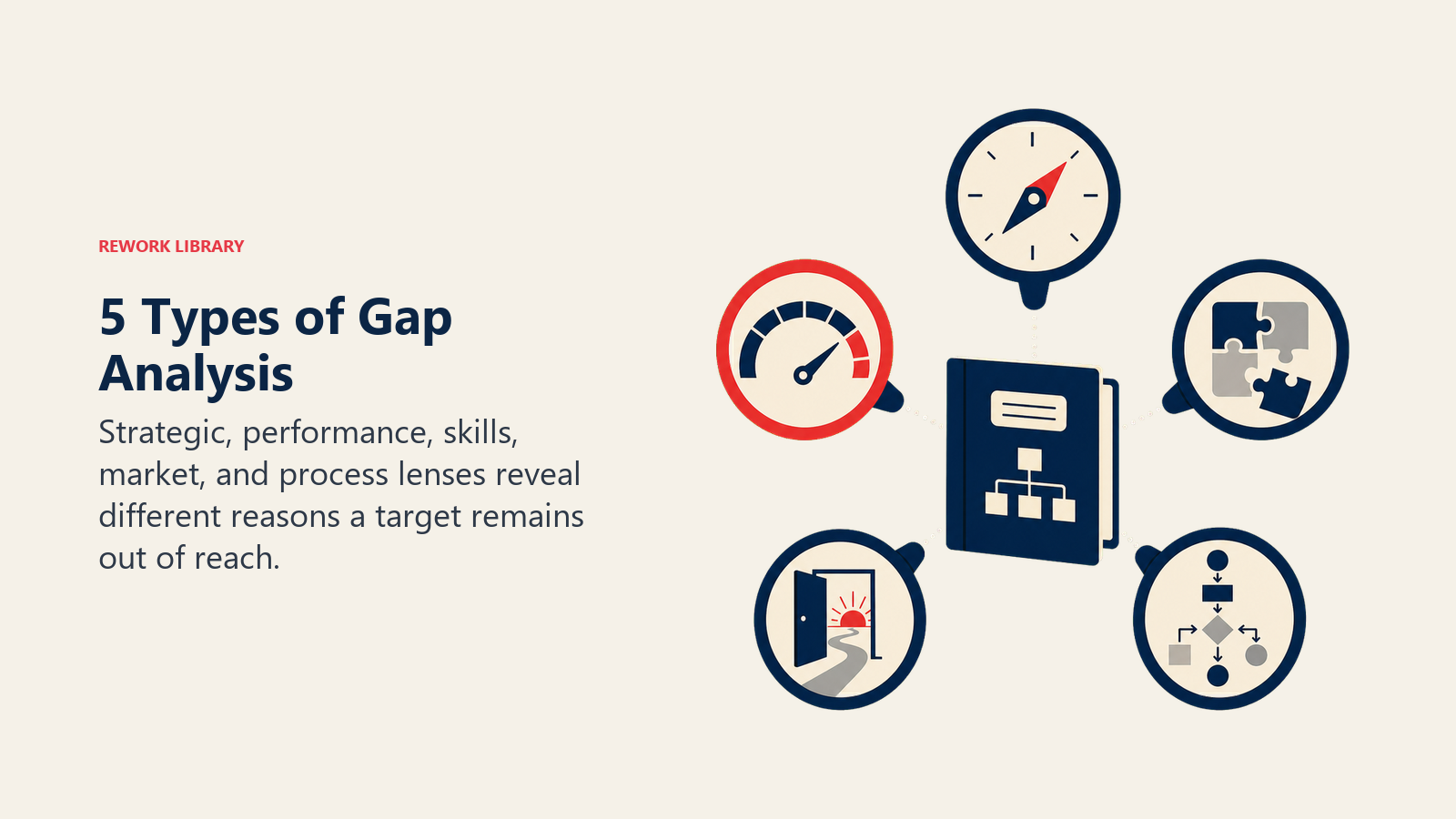
| Jenis | Pertanyaan inti | Kasus penggunaan tipikal |
|---|---|---|
| Kesenjangan strategis | Apakah kemampuan kita selaras dengan arah jangka panjang kita? | Perencanaan strategis tingkat dewan, kesiapan M&A |
| Kesenjangan kinerja / KPI | Apakah metrik kita saat ini memenuhi target? | Tinjauan bisnis kuartalan, pemeriksaan OKR |
| Kesenjangan keterampilan | Apakah tim kita memiliki kemampuan yang dibutuhkan pekerjaan? | Perencanaan tenaga kerja, keputusan investasi L&D |
| Kesenjangan pasar | Apakah ada kebutuhan pelanggan yang tidak kami layani? | Peta jalan produk, keputusan masuk pasar |
| Kesenjangan proses | Apakah alur kerja kita saat ini menghasilkan output yang kita butuhkan? | Tinjauan operasi, persiapan sertifikasi ISO |
Dalam sebagian besar tinjauan strategis, Anda akan menjalankan lebih dari satu jenis sekaligus. Kesenjangan keterampilan sering menjelaskan kesenjangan kinerja. Kesenjangan pasar sering mendorong kesenjangan strategis. Perlakukan jenisnya sebagai lensa, bukan silo.
Cara Melakukan Analisis Kesenjangan
Proses di bawah ini berlaku untuk jenis dan cakupan apa pun: satu tim, sebuah departemen, atau seluruh organisasi.
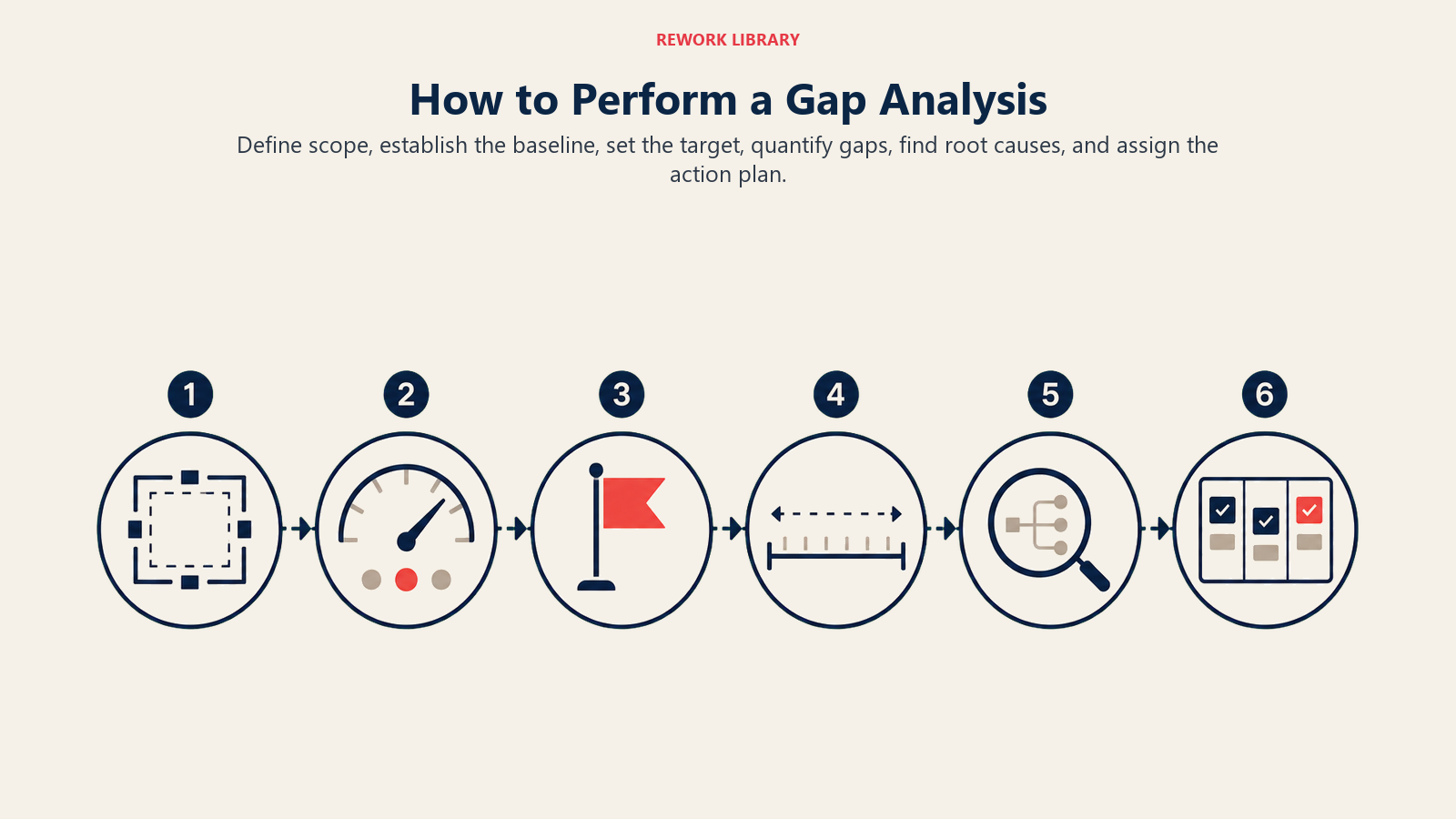
Langkah 1: Tentukan cakupan dan tujuan Anda
Mulai dengan satu pertanyaan: keputusan apa yang perlu didukung oleh analisis ini? Cakupan yang meluas menghancurkan analisis kesenjangan. Tim yang diminta untuk "meningkatkan kinerja" akan menghasilkan dokumen yang mengambang yang tidak ditindaklanjuti siapa pun. Tim yang diminta "apa yang diperlukan untuk memotong waktu onboarding pelanggan dari 14 hari menjadi 7 hari pada Q4?" akan menghasilkan rencana tindakan yang terfokus.
Tulis tujuan dalam satu kalimat sebelum menyentuh data apa pun.
Langkah 2: Tetapkan dasar keadaan saat ini Anda
Kumpulkan data kuantitatif terlebih dahulu: metrik, keuangan, tingkat utilisasi, skor survei, jumlah karyawan berdasarkan keterampilan. Kemudian lapisi dengan konteks kualitatif: umpan balik tim, observasi proses, wawancara pelanggan. Keadaan saat ini hanya kredibel jika didasarkan pada pengukuran aktual, bukan asumsi.
Kesalahan umum: menggunakan data kuartal lalu sebagai "keadaan saat ini" ketika bisnis sudah berubah. Gunakan data terbaru yang Anda percayai.
Langkah 3: Definisikan target keadaan masa depan Anda
Keadaan masa depan adalah tolok ukur Anda. Ini bisa berasal dari beberapa sumber:
- Target internal: OKR, rencana yang disetujui dewan, asumsi anggaran
- Tolok ukur eksternal: standar industri, kinerja pesaing, laporan analis
- Persyaratan regulasi: standar kepatuhan, kriteria sertifikasi
Target harus spesifik dan terikat waktu. "Kepuasan pelanggan yang lebih baik" bukan keadaan masa depan. "NPS 55 pada 31 Desember" adalah. Lihat tujuan strategis untuk cara membingkai target yang ambisius sekaligus terukur.
Langkah 4: Identifikasi dan kuantifikasi kesenjangan
Dengan keadaan saat ini dan masa depan yang terdokumentasi, kesenjangan adalah perbedaannya. Tetapi mengkuantifikasinya berarti lebih dari sekadar pengurangan. Tanyakan:
- Seberapa besar kesenjangan dalam nilai absolut?
- Apakah kesenjangan semakin besar atau mengecil seiring waktu?
- Kesenjangan mana yang dalam kendali kita untuk ditutup, dan mana yang bergantung pada faktor eksternal?
- Kesenjangan mana yang paling kritis untuk tujuan kita?
Peringkatkan kesenjangan berdasarkan dampak dan urgensi. Tidak setiap kesenjangan perlu ditutup untuk mencapai tujuan, dan mencoba menutup semua kesenjangan secara bersamaan biasanya berarti tidak ada yang ditutup dengan benar.
Langkah 5: Analisis akar masalah
Sebelum menulis rencana tindakan, pahami mengapa setiap kesenjangan ada. Kesenjangan keterampilan mungkin ada karena perekrutan yang buruk, pelatihan yang tidak memadai, atau desain peran yang salah. Kesenjangan KPI mungkin ada karena ketidakefisienan proses, keterbatasan alat, atau target yang tidak realistis. Mengobati gejala tanpa mengatasi penyebabnya menghasilkan rencana yang terlihat lengkap di atas kertas tetapi gagal dalam pelaksanaan.
Latihan 5-Mengapa yang sederhana pada setiap kesenjangan prioritas biasanya cukup pada tahap ini.
Langkah 6: Bangun rencana tindakan
Rencana tindakan menerjemahkan temuan kesenjangan menjadi pekerjaan. Untuk setiap kesenjangan prioritas, dokumentasikan:
- Inisiatif spesifik untuk menutupnya
- Pemilik yang bertanggung jawab
- Jadwal dan tonggak kunci
- Sumber daya yang diperlukan (anggaran, tenaga kerja, alat)
- Bagaimana kemajuan akan diukur
Rencana tindakan mengalir langsung ke proses perencanaan strategis Anda. Jika kesenjangan besar, rencana mungkin memerlukan pentahapan: tutup kesenjangan paling kritis terlebih dahulu, kemudian tinjau kembali analisis pada siklus perencanaan berikutnya.
Contoh Analisis Kesenjangan
Berikut contoh konkret dari operasi dukungan pelanggan SaaS. Rencana strategis perusahaan mengharuskan peningkatan dari 500 menjadi 2.000 pelanggan dalam 18 bulan. Tim dukungan menjalankan analisis kesenjangan kinerja untuk memahami apakah operasi saat ini dapat menangani volume 4x.
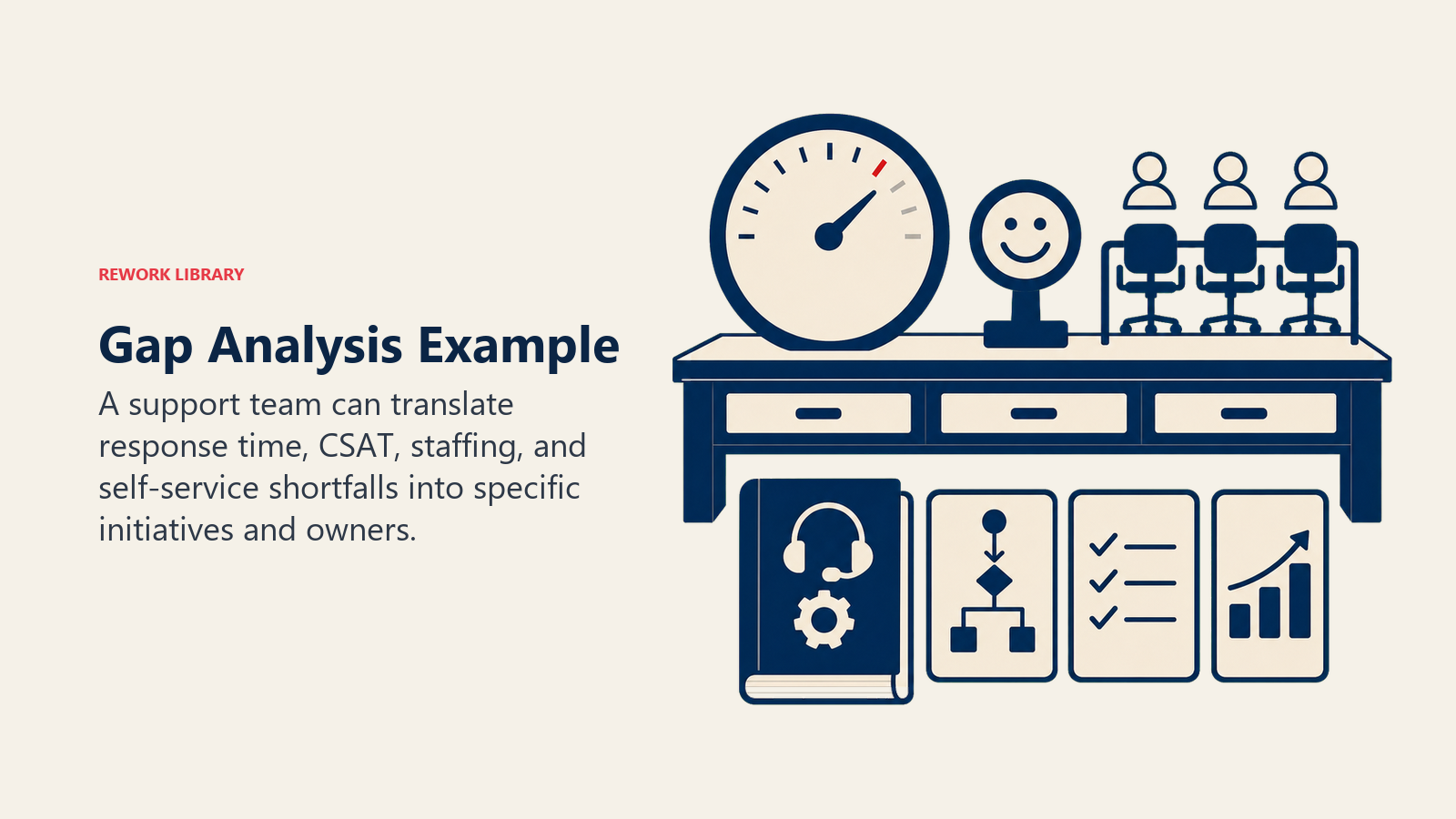
| Metrik | Keadaan saat ini | Target (18 bulan) | Kesenjangan |
|---|---|---|---|
| Tiket diselesaikan per agen per minggu | 80 | 120 | 40 per agen |
| Waktu respons pertama | 6 jam | 2 jam | 4 jam |
| Skor CSAT | 72% | 85% | 13 poin persentase |
| Agen (FTE) | 8 | 18 | 10 rekrutmen diperlukan |
| Tingkat defleksi swalayan | 12% | 35% | 23 poin persentase |
Analisis akar masalah mengungkapkan tiga pendorong: tidak ada otomasi triase, basis pengetahuan yang sudah usang (pelanggan tidak dapat membantu diri sendiri), dan onboarding agen baru yang tidak konsisten. Rencana tindakan mencakup empat inisiatif: deploy chatbot triase (Q3), bangun ulang pusat bantuan (Q3), buat program onboarding agen terstruktur 30 hari (Q4), dan rekrut 5 agen di Q3 dan 5 lagi di Q4.
Jenis analisis kesenjangan yang konkret dan berbasis metrik semacam ini jauh lebih dapat ditindaklanjuti daripada "kami perlu meningkatkan dukungan" yang generik. Setiap inisiatif memiliki hasil yang terukur yang terhubung langsung dengan kesenjangan dalam tabel.
Template dan Alat Analisis Kesenjangan
Sebagian besar tim memulai dengan spreadsheet sederhana: dua kolom untuk keadaan saat ini dan masa depan, kolom ketiga untuk kesenjangan, dan kolom keempat untuk item tindakan. Itu sudah cukup untuk analisis yang terfokus.
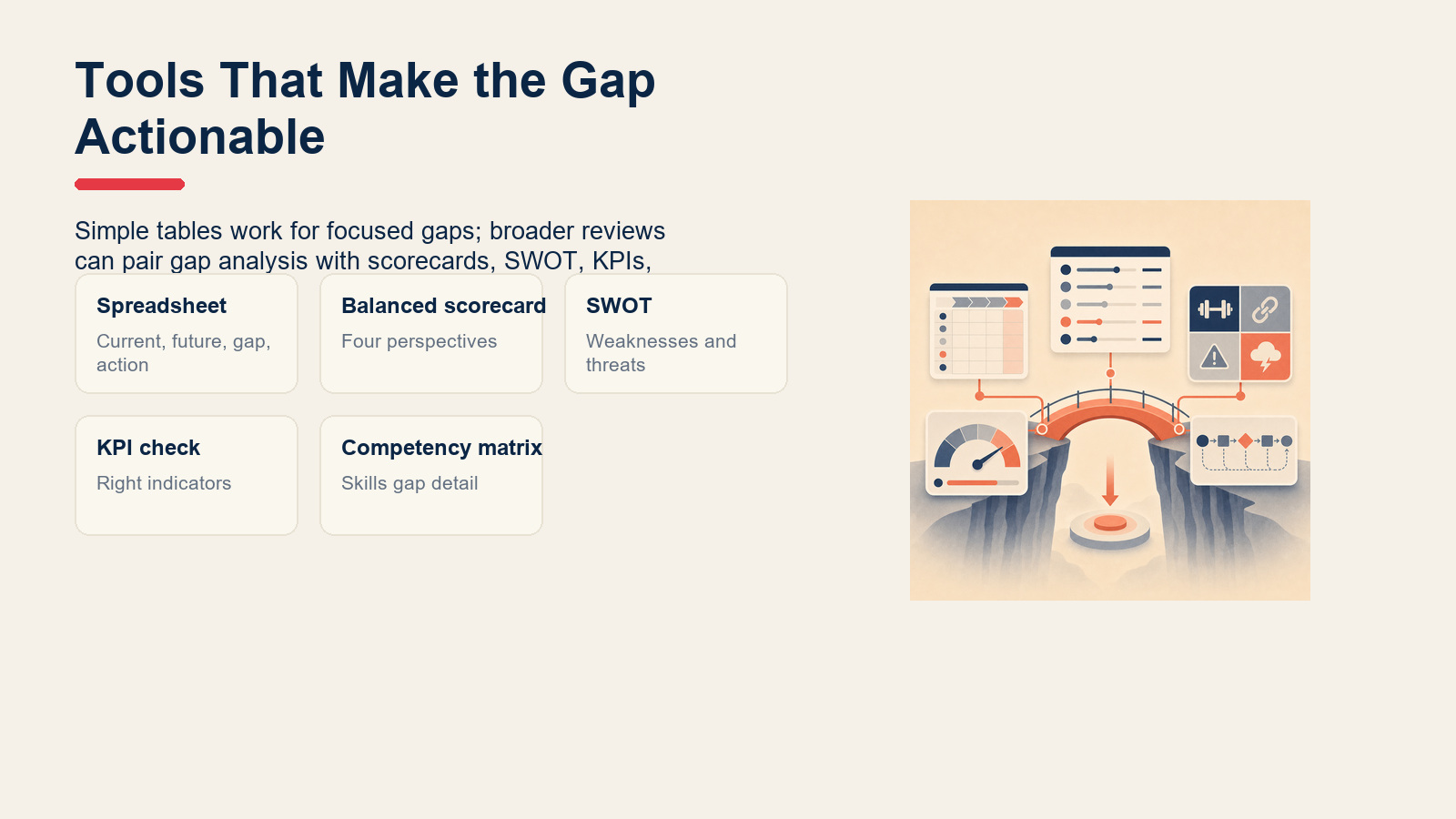
Untuk tinjauan strategis yang lebih kompleks, analisis kesenjangan secara alami dipasangkan dengan kerangka lain:
- Balanced scorecard: Gunakan empat perspektif (keuangan, pelanggan, proses internal, pembelajaran) sebagai dimensi analisis kesenjangan Anda. Setiap perspektif mendapat perbandingan keadaan saat ini/masa depan sendiri.
- SWOT analysis: Kelemahan dan ancaman sering menunjuk langsung ke kesenjangan. Menjalankan SWOT sebelum analisis kesenjangan membantu menetapkan cakupan kesenjangan mana yang paling penting.
- KPI vs. metrik: Sebelum membangun keadaan masa depan Anda, konfirmasikan bahwa Anda melacak indikator yang tepat. Banyak analisis kesenjangan gagal karena keadaan saat ini diukur dalam unit yang salah.
Untuk kesenjangan keterampilan secara khusus, matriks kompetensi bekerja baik berdampingan dengan tabel kesenjangan. Untuk kesenjangan proses, peta aliran nilai keadaan saat ini dan masa depan sering mengungkapkan kesenjangan lebih cepat daripada spreadsheet.
Kesalahan Umum
Melewatkan dasar. Tim sering melompat ke keadaan masa depan tanpa menetapkan keadaan saat ini dengan jelas. Tanpa dasar yang kredibel, kesenjangan adalah dugaan dan rencana tindakan dibangun di atas pasir.
Target yang tidak dimiliki siapa pun. Keadaan masa depan yang berasal dari tolok ukur pesaing yang tidak disetujui siapa pun secara internal akan dipertanyakan begitu rencana tindakan mulai mengeluarkan uang. Target memerlukan sponsor internal.
Terlalu banyak kesenjangan sekaligus. Mencantumkan 20 kesenjangan terdengar menyeluruh. Biasanya berarti 20 hal yang tidak diperbaiki. Prioritaskan pada 3-5 kesenjangan yang paling langsung menentukan apakah tujuan tercapai.
Tidak menindaklanjuti akar masalah. Menutup kesenjangan dalam spreadsheet dengan menambahkan tenaga kerja ketika masalah nyatanya adalah ketidakefisienan proses hanya menambah biaya tanpa mengubah hasil.
Mentalitas sekali jalan. Analisis kesenjangan bukan proyek, ini adalah praktik. Organisasi yang paling efektif menjalankannya di awal setiap siklus perencanaan dan meninjau kembali pada setiap tonggak besar. Anggap bersamaan dengan penggunaan reguler Anda dari perencanaan strategis dan pelacakan KPI sebagai diagnostik berulang, bukan perbaikan satu kali.
Bacaan Terkait
- Proses perencanaan strategis: tempat analisis kesenjangan dalam siklus perencanaan yang lebih luas
- Balanced scorecard: kerangka untuk mengubah temuan kesenjangan menjadi sistem kinerja terstruktur
- Benchmarking: cara mendapatkan titik referensi eksternal yang menetapkan target keadaan masa depan yang realistis
- SWOT analysis: input paling umum untuk analisis kesenjangan strategis
- Tujuan strategis: cara menulis target keadaan masa depan yang spesifik dan terukur
- KPI vs. metrik: memilih indikator yang tepat untuk dasar keadaan saat ini dan masa depan Anda

Co-Founder & COO
On this page
- Apa Itu Analisis Kesenjangan?
- Fakta Penting
- 4 Elemen Analisis Kesenjangan
- Jenis-Jenis Analisis Kesenjangan
- Cara Melakukan Analisis Kesenjangan
- Langkah 1: Tentukan cakupan dan tujuan Anda
- Langkah 2: Tetapkan dasar keadaan saat ini Anda
- Langkah 3: Definisikan target keadaan masa depan Anda
- Langkah 4: Identifikasi dan kuantifikasi kesenjangan
- Langkah 5: Analisis akar masalah
- Langkah 6: Bangun rencana tindakan
- Contoh Analisis Kesenjangan
- Template dan Alat Analisis Kesenjangan
- Kesalahan Umum
- Bacaan Terkait