Bahasa Indonesia
Pernyataan Misi vs Visi: Perbedaan dan Contoh
Turn this article into takeaways for your work.


Each assistant summarizes the article only for you and suggests best practices for your work.
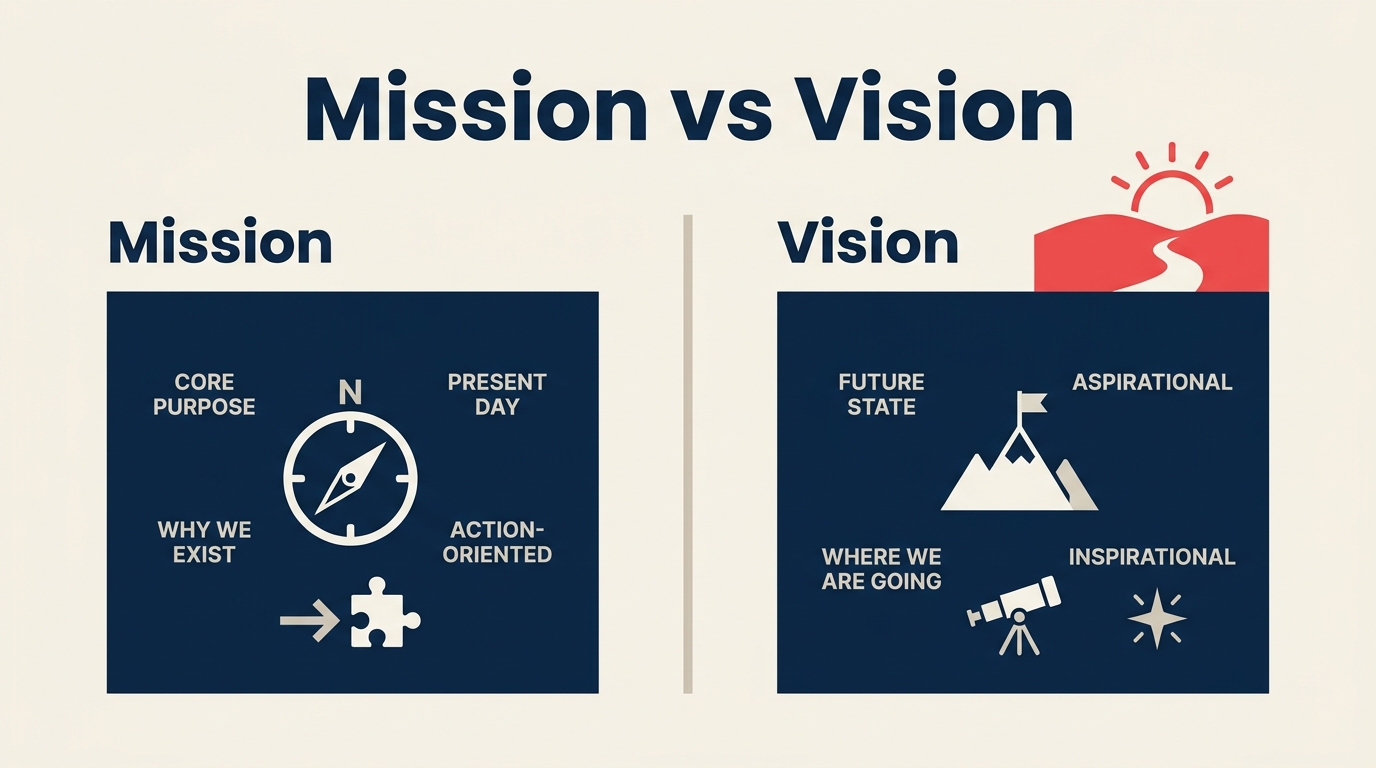
Perbedaan pernyataan misi vs visi membingungkan sebagian besar tim kepemimpinan karena kedua dokumen tersebut terlihat serupa di permukaan. Tetapi keduanya menjawab pertanyaan yang sepenuhnya berbeda, melayani audiens yang berbeda, dan mencampuradukkannya menghasilkan strategi yang tidak mengarah ke mana-mana. Artikel ini mengurai perbedaannya, menampilkan contoh nyata, dan memberikan proses langkah demi langkah untuk menulis keduanya dengan baik.
Apa itu pernyataan misi?
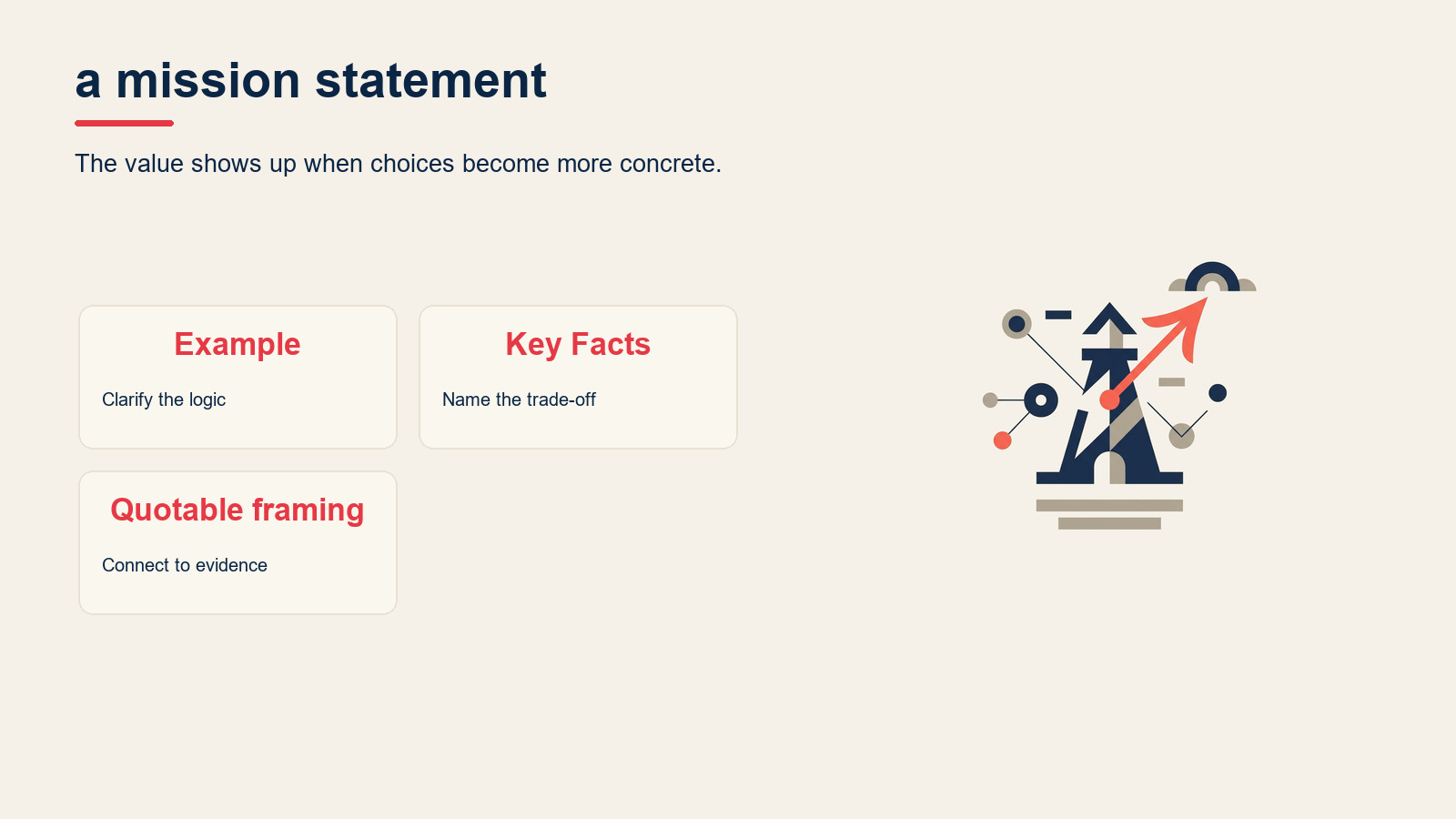
Pernyataan misi mendefinisikan mengapa organisasi Anda ada dan apa yang dilakukannya saat ini. Ini adalah deklarasi tujuan dalam bentuk sekarang yang menjangkarkan keputusan sehari-hari, pilihan rekrutmen, dan prioritas produk.
Pernyataan misi yang kuat menjawab tiga pertanyaan dalam bahasa yang lugas:
- Apa yang kita lakukan?
- Siapa yang kita layani?
- Bagaimana cara kita melakukannya?
Contoh: Misi Patagonia telah lama dirumuskan di sekitar membangun produk terbaik sambil tidak menyebabkan kerusakan lingkungan yang tidak perlu dan menggunakan bisnis untuk menginspirasi solusi terhadap krisis lingkungan. Pernyataan tersebut berakar pada masa sekarang, menyebut audiens nyata, dan menetapkan standar perilaku yang dapat digunakan karyawan untuk menguji keputusan setiap hari.
Pernyataan misi bukan slogan. Pernyataan ini tidak dimaksudkan untuk menginspirasi dengan mengorbankan kejelasan. Jika tidak dapat memandu keputusan nyata, berarti terlalu abstrak.
Fakta Utama
- Jim Collins dan Jerry Porras mempelajari 18 perusahaan visioner selama 60 tahun dalam buku mereka tahun 1994 Built to Last dan menemukan bahwa perusahaan dengan tujuan yang jelas dan abadi secara konsisten mengungguli perusahaan pembanding selama periode yang sama. Riset mereka menetapkan standar framework yang memisahkan ideologi inti yang tak lekang waktu (misi) dari masa depan yang dibayangkan (visi).
- Analisis Gallup tahun 2022 menemukan bahwa karyawan yang sangat setuju bahwa misi perusahaan membuat mereka merasa pekerjaan mereka penting, 3,7x lebih mungkin untuk terlibat. Sumber: Gallup State of the Global Workplace, 2022.
- Framing yang patut dikutip: Pernyataan misi adalah kompas yang memberi tahu Anda di mana utara. Pernyataan visi adalah tujuan yang ingin Anda capai.
Apa itu pernyataan visi?
Pernyataan visi menggambarkan kondisi masa depan yang sedang diupayakan organisasi Anda. Bersifat aspirasional dan berorientasi ke depan, melukiskan gambaran dunia yang ingin Anda ciptakan selama satu dekade ke depan atau lebih.
Di mana pernyataan misi membumi orang pada masa sekarang, pernyataan visi menarik mereka ke depan. Pernyataan ini harus cukup ambisius untuk menginspirasi tetapi cukup spesifik untuk terasa nyata.
Contoh: Visi awal Microsoft terkenal digambarkan sebagai menempatkan komputer di setiap meja dan di setiap rumah. Pernyataan itu, dari tahun-tahun paling awal perusahaan, begitu jauh melampaui zamannya sehingga hampir terdengar mustahil. Tetapi pernyataan itu memberi seluruh organisasi satu north star yang membentuk setiap keputusan produk, kemitraan, dan akuisisi selama beberapa dekade.
Pernyataan visi tidak harus mencantumkan tahun atau metrik tertentu. Tetapi harus cukup jelas sehingga, bertahun-tahun kemudian, seseorang bisa melihat ke belakang dan mengatakan apakah Anda sampai ke sana.
Pernyataan misi vs visi: perbedaan utama
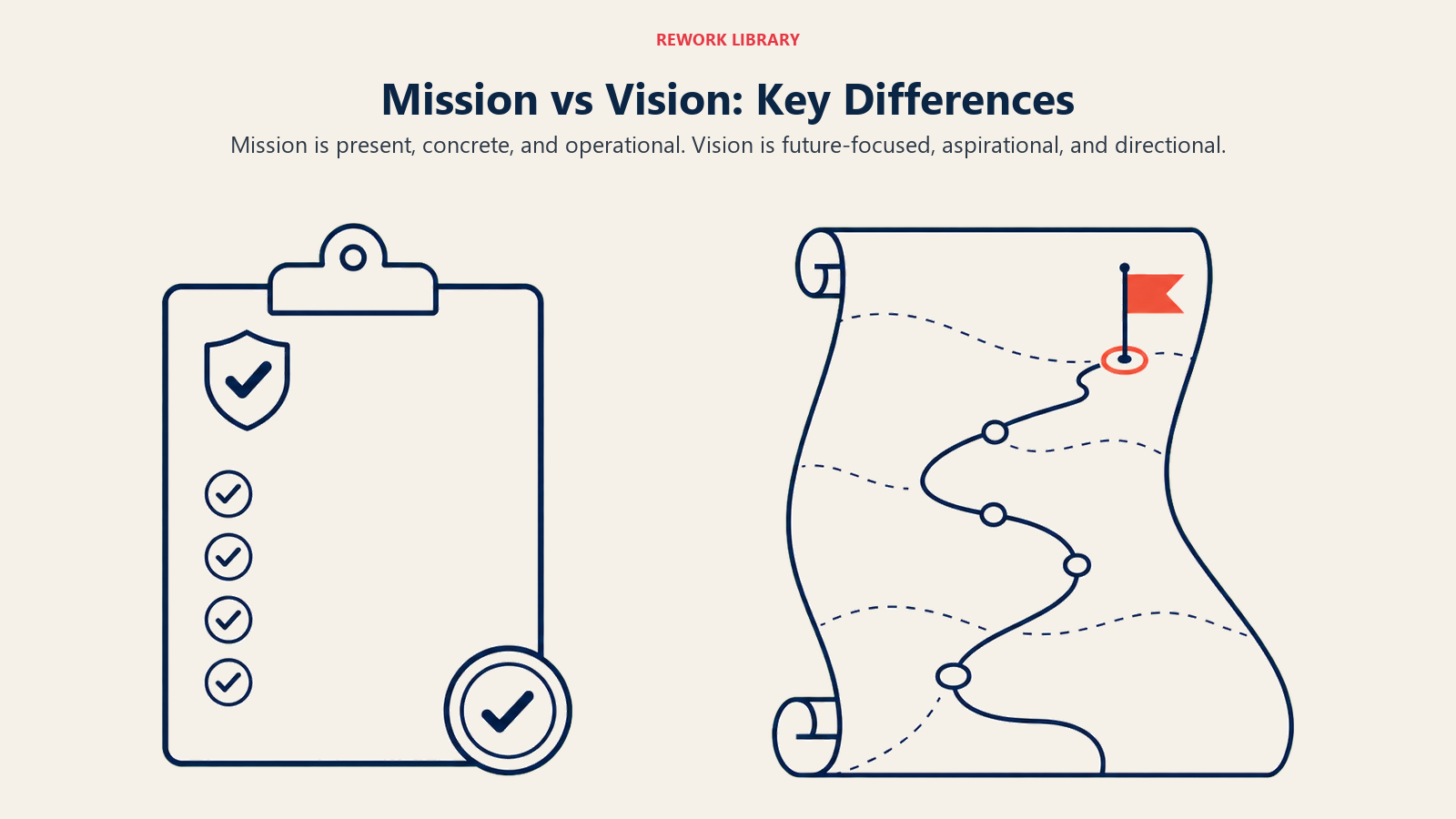
Berikut perbandingan kedua dokumen tersebut di seluruh dimensi yang paling penting saat Anda membangun strategic planning process.
| Dimensi | Pernyataan misi | Pernyataan visi |
|---|---|---|
| Cakrawala waktu | Masa sekarang | Masa depan (3-10+ tahun ke depan) |
| Pertanyaan inti | Mengapa kita ada? Apa yang kita lakukan sekarang? | Ke mana kita akan pergi? |
| Audiens utama | Karyawan, pelanggan, keputusan sehari-hari | Kepemimpinan, investor, perencanaan jangka panjang |
| Nada | Membumi, faktual, perilaku | Aspirasional, menginspirasi, terarah |
| Frekuensi perubahan | Jarang (hanya jika tujuan inti bergeser) | Sesekali (saat cakrawala tercapai atau dunia berubah) |
| Peran dalam strategic objectives | Membatasi tujuan apa yang sesuai | Memotivasi tingkat ambisi tujuan |
Pengujian paling sederhana: jika pernyataan membicarakan apa yang Anda lakukan hari ini, itu adalah pernyataan misi. Jika membicarakan kondisi masa depan yang ingin Anda capai, itu adalah pernyataan visi.
Beberapa organisasi juga menulis pernyataan nilai bersama keduanya. Nilai mendeskripsikan cara Anda beroperasi: perilaku dan prinsip yang memandu keputusan. Nilai bukan misi maupun visi; keduanya berada di antara keduanya, membentuk budaya.
Contoh misi dan visi
Perusahaan nyata memberi Anda gambaran paling jelas tentang apa yang berhasil. Deskripsi ini merupakan parafrase dari pernyataan tujuan organisasi yang terdokumentasi secara publik. Kata-kata merek yang tepat berubah seiring waktu; niat strategis di balik masing-masing bersifat stabil.
| Perusahaan | Misi (tujuan saat ini) | Visi (masa depan yang aspirasional) |
|---|---|---|
| Tesla | Mempercepat transisi dunia ke energi berkelanjutan | Dunia yang sepenuhnya ditenagai energi terbarukan |
| Menghubungkan para profesional dunia untuk membuat mereka lebih produktif dan sukses | Menciptakan peluang ekonomi bagi setiap anggota angkatan kerja global | |
| Spotify | Membuka potensi kreativitas manusia dengan memberi seniman cara untuk sukses dan penggemar kesempatan untuk menikmati dan terinspirasi | Menjadi platform audio terbesar di dunia |
| IKEA | Menawarkan berbagai produk perabot rumah yang dirancang baik dan fungsional dengan harga serendah mungkin sehingga sebanyak mungkin orang mampu membelinya | Menciptakan kehidupan sehari-hari yang lebih baik bagi banyak orang |
| Google (Alphabet) | Mengorganisir informasi dunia dan membuatnya dapat diakses serta berguna secara universal | Menyediakan akses ke informasi dunia dalam satu klik |
Perhatikan sebuah pola: pernyataan misi lebih operasional dan menggambarkan tindakan yang dilakukan perusahaan sekarang. Pernyataan visi lebih besar, lebih abstrak, dan menggambarkan kondisi dunia yang belum ada.
Contoh-contoh ini juga secara alami memberi masukan ke alat seperti strategy map dan OKR framework, yang menerjemahkan tujuan yang aspirasional menjadi target kuartalan yang terukur.
Cara menulis pernyataan misi
Pernyataan misi membutuhkan lebih banyak disiplin daripada kreativitas. Tujuannya adalah kejelasan, bukan puisi.
Langkah 1: Mulai dengan aktivitas bisnis inti
Tuliskan satu kalimat yang menggambarkan hal utama yang Anda lakukan. Jadilah harfiah. Hindari kata sifat seperti "inovatif" atau "kelas dunia." Cukup deskripsikan tindakannya: "Kami membuat perangkat lunak yang membantu rumah sakit menjadwalkan shift perawat."
Langkah 2: Sebutkan audiens utama Anda
Siapa yang mendapat manfaat dari apa yang Anda lakukan? Jadilah spesifik. "Pekerja kesehatan" lebih baik dari "orang-orang." "Pemilik usaha kecil di Asia Tenggara" lebih baik dari "bisnis di mana saja."
Langkah 3: Nyatakan pendekatan khas Anda
Mengapa Anda melakukannya dengan cara yang Anda lakukan? Di sinilah diferensiasi masuk, tetapi tetap faktual. "Dengan menggabungkan data real-time dengan alat drag-and-drop yang sederhana" lebih berguna daripada "melalui solusi teknologi inovatif."
Langkah 4: Gabungkan dan edit tanpa ampun
Gabungkan ketiga bagian menjadi satu hingga tiga kalimat. Kemudian potong setiap kata yang tidak menambahkan makna. Bacakan dengan keras. Jika terdengar seperti salinan marketing, potong lebih banyak lagi.
Langkah 5: Uji terhadap keputusan nyata
Tanyakan: dapatkah seorang karyawan menggunakan ini untuk memutuskan apakah fitur produk atau kemitraan tertentu tepat untuk kita? Jika ya, pernyataan ini berhasil. Jika pernyataan tersebut cocok dengan setiap kemungkinan keputusan, berarti terlalu samar.
Cara menulis pernyataan visi
Pernyataan visi memerlukan lebih banyak imajinasi daripada misi, tetapi tetap membutuhkan bentuk yang cukup agar dapat ditindaklanjuti. North star metric organisasi Anda sering kali berasal langsung dari pernyataan ini.

Langkah 1: Tentukan kondisi masa depan dalam istilah yang konkret
Gambarkan dunia sebagaimana Anda ingin tampaknya setelah organisasi Anda melakukan pekerjaan terbaiknya. Jadilah spesifik tentang apa yang berubah, bukan hanya betapa hebatnya hal-hal akan menjadi. "Dunia di mana setiap pemilik usaha kecil memiliki akses ke alat keuangan yang sama dengan perusahaan Fortune 500" bersifat konkret. "Masa depan yang lebih baik untuk semua" tidak.
Langkah 2: Tetapkan cakrawala waktu
Anda tidak harus mencantumkan tanggal dalam pernyataan itu sendiri, tetapi Anda harus memilikinya dalam pikiran. Visi 5 tahun terlihat sangat berbeda dari visi 25 tahun. Mengetahui cakrawala Anda mencegah Anda menulis sesuatu yang terlalu pengecut atau terlalu abstrak.
Langkah 3: Buat aspirasional tetapi dapat dicapai
Jika tim Anda membacanya dan berpikir "itu mungkin jika kita bekerja keras," berarti sudah terkalibrasi dengan baik. Jika mereka berpikir "itu tidak akan pernah terjadi," pernyataan itu akan mendemotivasi, bukan menginspirasi. Pernyataan visi terbaik berada tepat di luar batas kenyamanan.
Langkah 4: Periksa keselarasan dengan misi Anda
Visi Anda harus menjadi tujuan yang dituju misi Anda. Jika kedua pernyataan terasa tidak terkait, salah satunya tidak tepat. Tinjau kembali core competencies yang benar-benar dimiliki organisasi Anda dan pastikan visinya memanfaatkan kekuatan tersebut.
Langkah 5: Sosialisasikan sebelum finalisasi
Pernyataan visi yang ditulis dalam offsite kepemimpinan dan tidak pernah diuji dengan karyawan sering kali mati dengan diam. Bagikan draf dengan kelompok lintas fungsi. Tanyakan: apakah ini beresonansi? Apakah terasa benar untuk siapa kita? Apakah ini membuat Anda ingin bekerja lebih keras?
Kesalahan umum yang perlu dihindari
Memperlakukan keduanya sebagai dokumen yang sama. Banyak organisasi menulis satu paragraf "misi/visi" generik yang mencampurkan tujuan saat ini dan aspirasi masa depan menjadi sesuatu yang tidak dapat digunakan. Pisahkan keduanya. Masing-masing melayani fungsi yang berbeda.
Menggunakan kata-kata kosong alih-alih hal yang spesifik. Frasa seperti "solusi kelas dunia" dan "dampak transformasional" tidak mengatakan apa-apa. Gantikan dengan hal nyata yang Anda lakukan dan perubahan nyata yang ingin Anda lihat.
Menulis untuk siaran pers, bukan untuk tim. Kedua pernyataan adalah alat internal terlebih dahulu. Jika hanya masuk akal dalam brosur, pernyataan tersebut tidak akan mendorong keputusan atau menginspirasi karyawan.
Menetapkan dan melupakan. Pernyataan misi jarang harus berubah, tetapi harus ditinjau ulang jika bisnis berubah secara fundamental. Pernyataan visi harus diperbarui ketika Anda telah mencapai yang lama atau ketika cakrawala bergeser. Perlakukanlah keduanya sebagai dokumen yang hidup, bukan plakat di dinding.
Membuat visi terlalu kecil. Visi yang dapat dicapai tim Anda dalam 18 bulan adalah tujuan, bukan visi. Mendorong lebih jauh. Pikirkan dalam beberapa dekade.
Melewatkan jembatan strategi. Misi dan visi tanpa strategi penghubung hanyalah kata-kata. Tautkan keduanya secara eksplisit ke strategic objectives dan siklus perencanaan tahunan.
Pertanyaan yang sering diajukan
Apa perbedaan antara pernyataan misi dan pernyataan visi?
Pernyataan misi menggambarkan tujuan organisasi Anda saat ini: apa yang Anda lakukan, siapa yang Anda layani, dan bagaimana Anda beroperasi hari ini. Pernyataan visi menggambarkan kondisi masa depan yang sedang diupayakan organisasi Anda. Misi bersifat sekarang; visi bersifat masa depan. Keduanya diperlukan dan tidak ada yang menggantikan yang lain.
Mana yang lebih dulu, misi atau visi?
Dalam praktiknya, sebagian besar framework strategi merekomendasikan mendefinisikan visi terlebih dahulu, karena visi menetapkan tujuan. Kemudian Anda menulis misi yang menjangkarkan aktivitas Anda saat ini dalam pelayanan masa depan tersebut. Pada kenyataannya, sebagian besar organisasi menyusun keduanya secara bersamaan dan menyempurnakannya bersama-sama sampai selaras.
Dapatkah sebuah perusahaan memiliki pernyataan misi dan visi sekaligus?
Ya, dan sebagian besar organisasi yang sukses memiliki keduanya. Misi menjaga tim fokus pada pekerjaan hari ini. Visi menjaga kepemimpinan merencanakan hari esok. Perusahaan yang hanya memiliki satu cenderung melayang secara strategis (tanpa visi) atau kekurangan kejelasan operasional (tanpa misi).
Berapa panjang pernyataan misi atau visi yang ideal?
Sebagian besar praktisi merekomendasikan satu hingga tiga kalimat untuk pernyataan misi dan satu kalimat (atau dua yang pendek) untuk pernyataan visi. Keringkasan memaksa kejelasan. Jika Anda tidak dapat mengatakannya dengan jelas dalam beberapa kalimat, Anda mungkin belum memutuskan dengan jelas apa yang Anda maksud.
Seberapa sering kita harus memperbaruinya?
Pernyataan misi hanya boleh diperbarui ketika tujuan inti organisasi berubah secara fundamental, yang jarang terjadi. Pernyataan visi dapat diperbarui setiap 5-10 tahun seiring Anda mencapai cakrawala lama atau dunia bergeser di sekitar Anda. Keduanya tidak boleh berubah sebagai respons terhadap tekanan pasar jangka pendek.
Pernyataan misi dan visi yang jelas bukan latihan komunikasi. Keduanya adalah alat strategi. Ketika keduanya tajam dan selaras dengan baik, setiap tujuan, keputusan anggaran, dan pilihan rekrutmen menjadi lebih mudah dievaluasi. Mulailah dengan masa depan yang ingin Anda bangun, tentukan pekerjaan saat ini yang membawa Anda ke sana, dan gunakan kedua dokumen tersebut sebagai kompas yang hidup seiring organisasi Anda berkembang.

Co-Founder & COO
On this page
- Apa itu pernyataan misi?
- Apa itu pernyataan visi?
- Pernyataan misi vs visi: perbedaan utama
- Contoh misi dan visi
- Cara menulis pernyataan misi
- Langkah 1: Mulai dengan aktivitas bisnis inti
- Langkah 2: Sebutkan audiens utama Anda
- Langkah 3: Nyatakan pendekatan khas Anda
- Langkah 4: Gabungkan dan edit tanpa ampun
- Langkah 5: Uji terhadap keputusan nyata
- Cara menulis pernyataan visi
- Langkah 1: Tentukan kondisi masa depan dalam istilah yang konkret
- Langkah 2: Tetapkan cakrawala waktu
- Langkah 3: Buat aspirasional tetapi dapat dicapai
- Langkah 4: Periksa keselarasan dengan misi Anda
- Langkah 5: Sosialisasikan sebelum finalisasi
- Kesalahan umum yang perlu dihindari