Bahasa Indonesia
Handoff Siklus Hidup AE ke CSM: Cara Marketing dan Sales Mempersiapkan Customer Success untuk Berhasil
Turn this article into takeaways for your work.


Each assistant summarizes the article only for you and suggests best practices for your work.
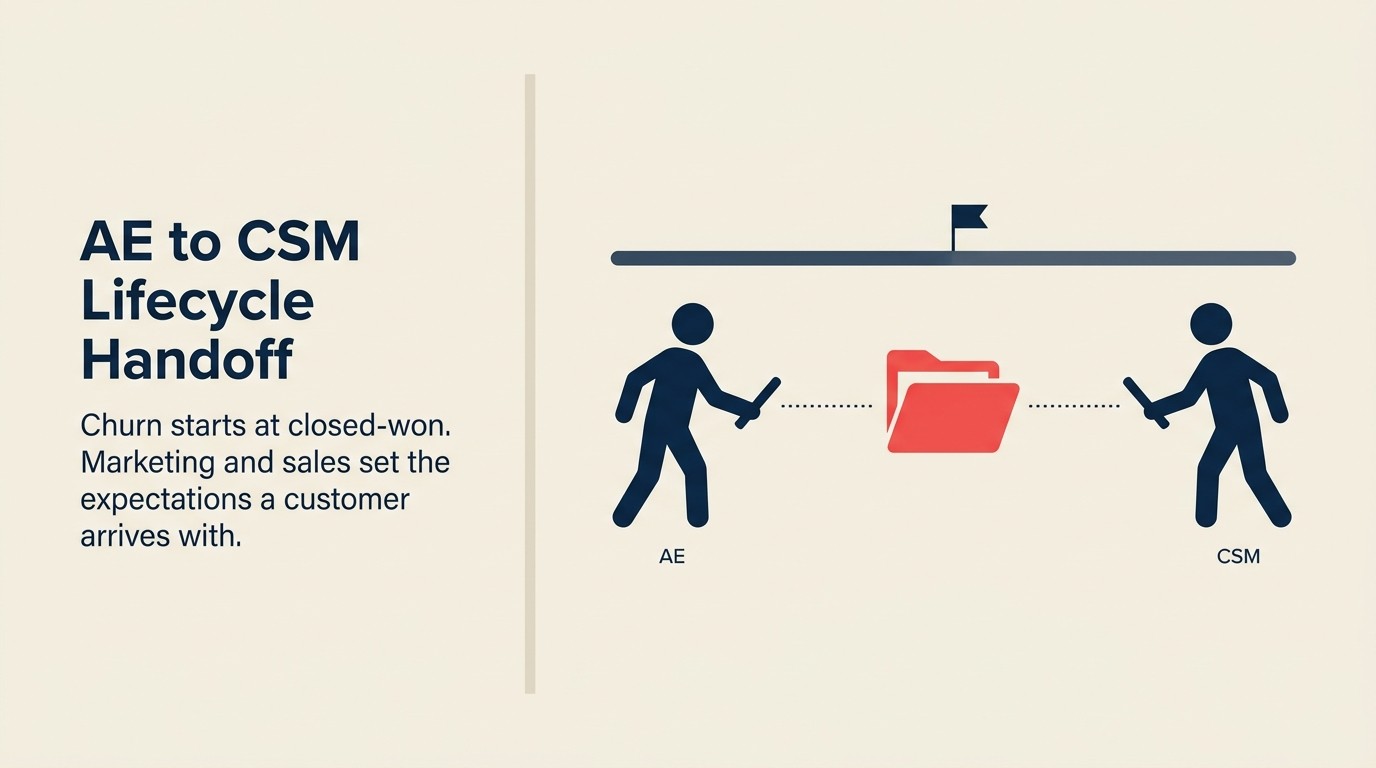
Percakapan yang paling banyak menyebabkan churn di SaaS mid-market tidak terjadi dalam produk. Percakapan itu terjadi dalam panggilan kickoff CSM pertama, tiga minggu setelah penutupan, ketika pelanggan baru berkata: "Bukan itu yang kami diberitahu selama proses penjualan."
Yang mengikutinya selalu menyakitkan. CSM membela janji yang tidak mereka buat. AE tidak lagi ada di ruangan. Pelanggan bingung tentang apa yang sebenarnya mereka beli. Dan di suatu tempat upstream, ekspektasi ditetapkan oleh positioning marketing, diperkuat oleh sales, dan sekarang diwarisi oleh customer success.
Artikel ini membahas tentang upstream tersebut. Bukan eksekusi CSM setelah penutupan (itu milik percakapan yang berbeda). Ini tentang pekerjaan bersama yang dilakukan marketing dan sales selama siklus penjualan untuk mempersiapkan handoff dengan bersih. Kedua tim bertanggung jawab atas kondisi awal yang diwarisi CSM. Sebagian besar tim tidak bertindak seperti itu.
70% churn dapat dikaitkan dengan faktor-faktor yang ada sebelum pelanggan mencapai customer success, termasuk ekspektasi yang tidak selaras yang ditetapkan selama siklus penjualan, menurut riset Gainsight. Implikasinya langsung: memperbaiki churn sebagian besar adalah masalah marketing dan sales, bukan masalah CSM. CSM berada di hilir dari keputusan yang dibuat berminggu-minggu atau berbulan-bulan sebelumnya.
Framework Paket Handoff Bersama
Paket handoff adalah artefak yang menutup kesenjangan antara apa yang dihasilkan siklus penjualan dan apa yang dibutuhkan CSM untuk memulai dari posisi yang terinformasi. Tapi paket handoff bukan ringkasan deal. Ini adalah dokumen konteks yang dibangun bersama oleh marketing dan sales selama proses penutupan.
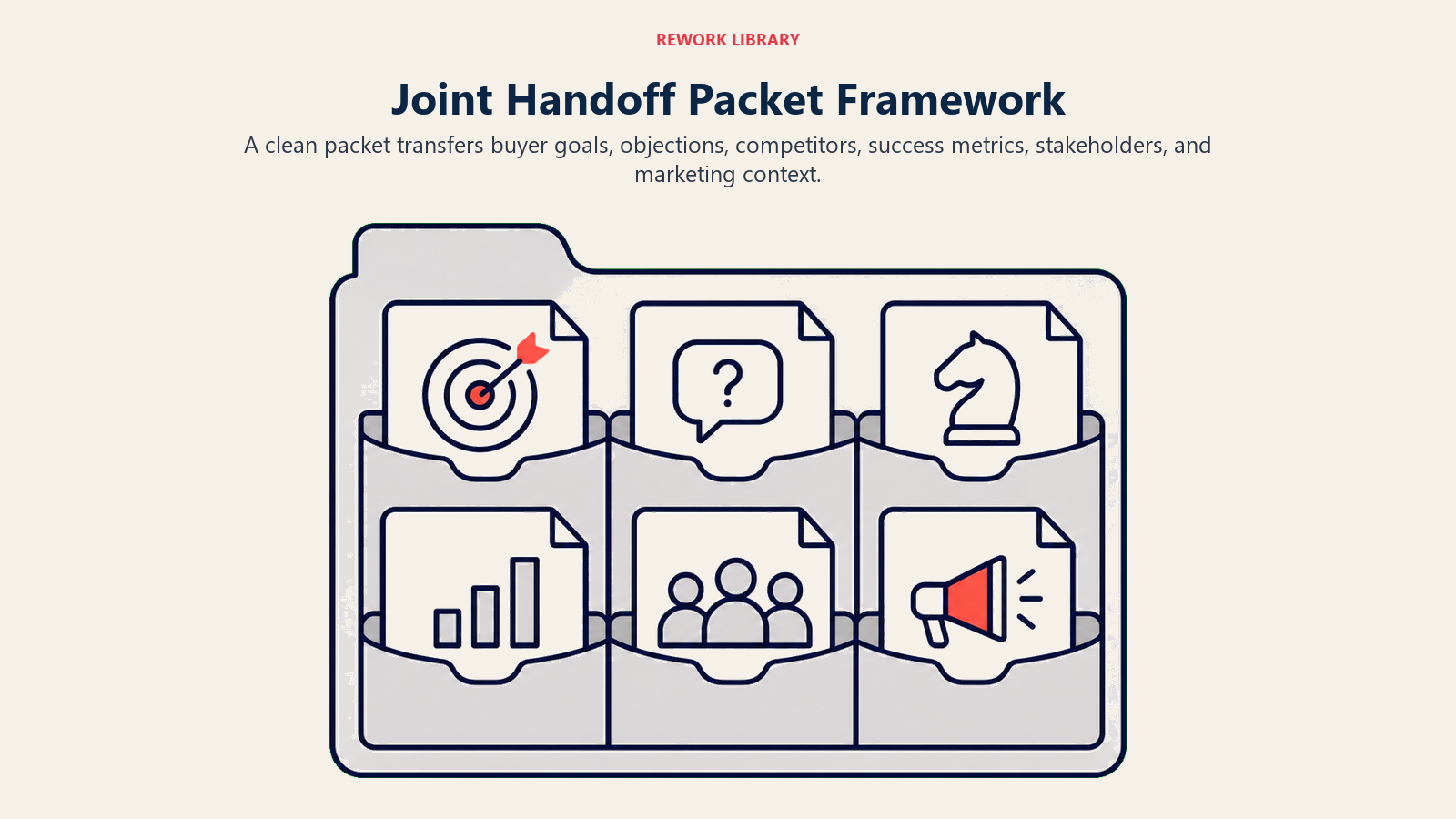
Paket Handoff Bersama memiliki enam komponen yang diperlukan:
- Tujuan yang dinyatakan pembeli (verbatim): Bukan kemampuan produk. Bahasa persis yang digunakan pembeli dalam discovery tentang apa yang ingin mereka capai.
- Objeksi yang diatasi dan caranya: Objeksi terberat dalam siklus, dan respons spesifik yang menyelesaikannya. CSM akan menghadapi versi dari objeksi yang sama selama onboarding.
- Alternatif kompetitif yang dievaluasi: Vendor mana yang serius dipertimbangkan pembeli, dan apa yang membuat mereka menjadi alternatif yang kredibel. Pembeli yang hampir memilih kompetitor lebih mungkin untuk mengevaluasi ulang saat perpanjangan jika ekspektasi tidak terpenuhi.
- Metrik keberhasilan yang disebutkan pembeli: Hasil spesifik yang terukur yang dikatakan pembeli mereka beli. Ini adalah fondasi agenda QBR pertama CSM.
- Peta stakeholder: Champion, economic buyer, pengguna harian, dan skeptis. CSM yang hanya menghubungi champion dan menemukan di bulan ketiga bahwa economic buyer tidak pernah di-onboard memiliki risiko retensi yang dimulai dari handoff.
- Sumber marketing dan keterlibatan konten: Kampanye, webinar, atau konten mana yang dikonsumsi pembeli selama evaluasi. Data ini ada di MAP dan perlu diarahkan ke paket handoff saat penutupan.
Bagian "bersama" sangat penting: marketing mengisi field sumber dan keterlibatan konten; sales mengisi field discovery dan konteks kompetitif. Tidak ada tim yang bisa menyelesaikan paket sendirian.
Fakta Kunci: Kualitas Handoff dan Hasil Pelanggan
- 70% churn dapat dikaitkan dengan faktor-faktor yang ada sebelum pelanggan bahkan mencapai customer success, termasuk ekspektasi yang tidak selaras yang ditetapkan selama siklus penjualan (riset Gainsight tentang akar penyebab churn).
- Pelanggan baru dengan handoff konteks terstruktur 2,6x lebih mungkin mencapai time-to-first-value dalam 30 hari dibandingkan pelanggan yang menerima walkthrough produk standar (Totango).
- CSM yang menerima paket handoff terstruktur melaporkan 40% lebih sedikit waktu yang dihabiskan untuk penyelarasan ekspektasi dalam 30 hari pertama, dibandingkan dengan yang hanya mengandalkan catatan CRM (riset TSIA Service Excellence).
Mengapa Ini Adalah Percakapan Keselarasan, Bukan Hanya Masalah Sales-CS
Framing konvensional memperlakukan handoff AE-ke-CSM sebagai masalah proses antara sales dan customer success. Template handoff yang lebih baik, field wajib tahap close, panggilan kickoff bersama: semua ini berguna, tapi mereka melewatkan di mana masalah sebenarnya dimulai.
Marketing mengendalikan kesan pertama. Konten yang dibaca pembeli sebelum mereka pernah berbicara dengan tenaga penjual (website Anda, case study, iklan berbayar, webinar) menetapkan narasi yang mereka bawa. Jika narasi itu melebih-lebihkan kesederhanaan, meremehkan kompleksitas, atau menekankan kemampuan yang secara teoritis mungkin tapi jarang praktis, pembeli memasuki siklus penjualan sudah membawa serangkaian ekspektasi yang akan dibangun oleh tim penjualan. Riset perjalanan pembelian B2B Gartner mendokumentasikan bagaimana konten pra-penjualan membentuk ekspektasi pembeli jauh sebelum percakapan penjualan dimulai.
Sales baik memperkuat narasi itu atau mengoreksinya. Dalam organisasi yang selaras dengan baik, sales memiliki cukup konteks tentang pesan marketing untuk menangkap pernyataan berlebihan lebih awal dan kalibrasi ulang. Proses konten sales enablement adalah mekanisme untuk membuat sales tetap terkini tentang apa yang dijanjikan marketing. Dalam praktiknya, sales seringkali tidak tahu konten apa yang dikonsumsi prospek, sehingga mereka tidak bisa mengetahui ekspektasi mana yang perlu dikelola. Mereka mengkonfirmasi apa yang sudah dipercaya pembeli.
Pada saat deal ditutup, ekspektasi pelanggan adalah kombinasi dari positioning asli marketing dan enam minggu percakapan penjualan. CSM mewarisi narasi terakumulasi itu, dan seringkali tidak memiliki ide tentang apa yang dikandungnya.
Itu bukan masalah sales atau masalah marketing. Ini adalah kesenjangan struktural antara output kedua tim, dan memerlukan kedua tim untuk menutupnya.
Tiga Mode Kegagalan Upstream
Kemampuan yang Dijual Berlebihan
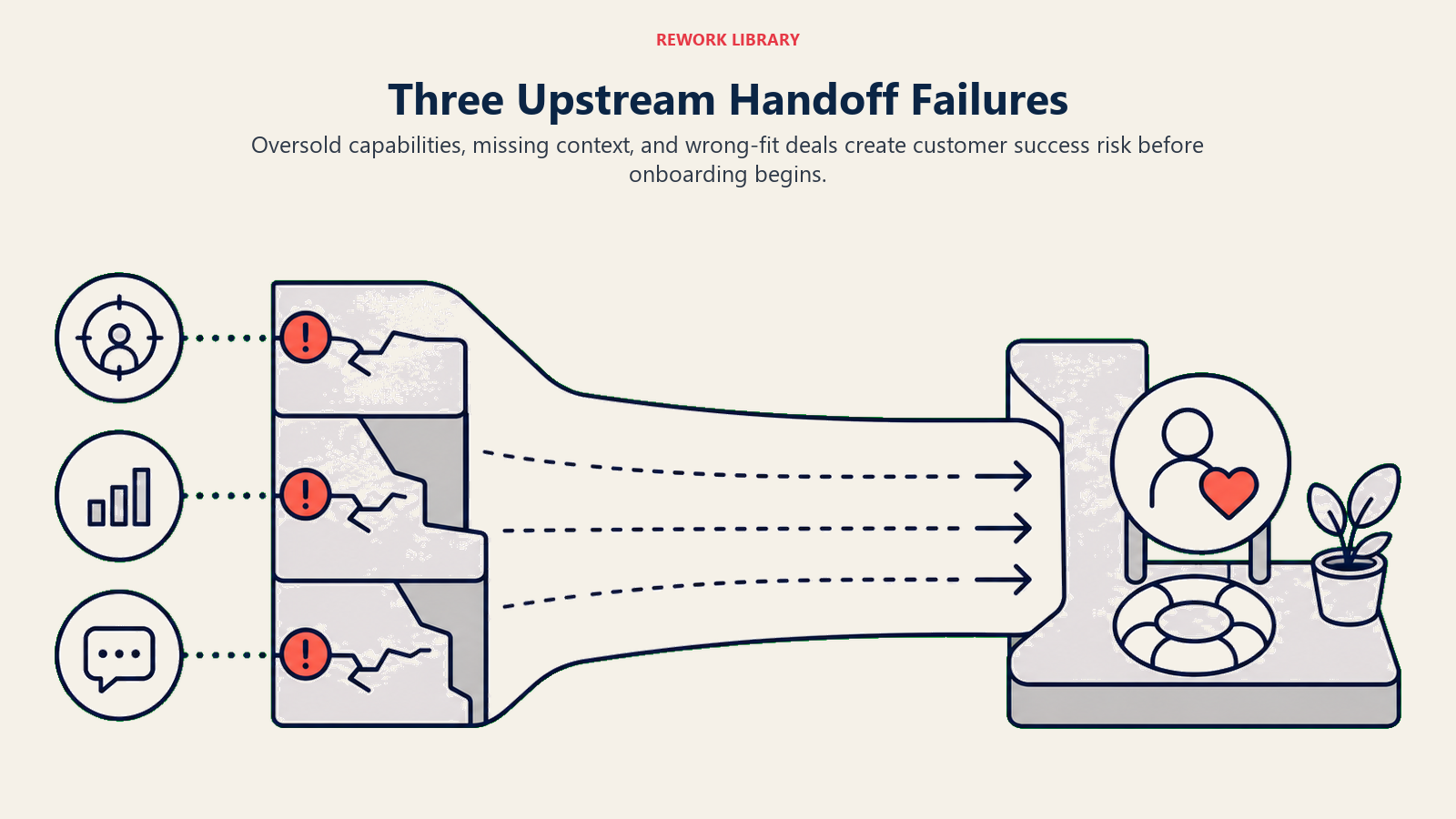
Ini terjadi ketika marketing mengimplikasikan use case dan sales mengkonfirmasinya tanpa memverifikasi kelayakan. Use case mungkin secara teknis memungkinkan: produk bisa melakukannya, dengan konfigurasi yang signifikan, infrastruktur data tertentu, atau mitra implementasi. Tapi pembeli meninggalkan siklus penjualan dengan percaya itu termasuk dan mudah.
Contoh klasiknya: case study marketing menampilkan pelanggan yang mencapai hasil X. Case study menghilangkan bahwa pelanggan memiliki 18 bulan normalisasi data sebelum implementasi. Prospek baru membaca case study, bertanya dalam panggilan penjualan apakah mereka bisa mencapai hasil yang sama, dan AE mengatakan ya. CSM mewarisi ekspektasi yang akan membutuhkan 18 bulan untuk benar-benar dipenuhi. Wawancara win/loss memunculkan kesenjangan pesan ini sebelum berkompound. Pembeli yang hampir churn di tahun pertama seringkali cukup spesifik tentang klaim mana yang tidak bertahan.
Peran marketing dalam memperbaiki ini: audit case study dan landing page untuk klaim yang secara teknis benar tapi secara kontekstual menyesatkan. Tambahkan peringatan yang membuat keberhasilan dapat direplikasi, bukan hanya secara teoritis memungkinkan.
Peran sales: sebelum mengkonfirmasi kemampuan apa pun yang bergantung pada prasyarat sisi pelanggan, ajukan pertanyaan kualifikasi. "Untuk pelanggan yang mencapai hasil ini, inilah yang biasanya mereka miliki sebelum kita mulai. Mari periksa apakah Anda memiliki kondisi tersebut sekarang."
Konteks yang Hilang
Deal ditutup. AE mengirim email selamat kepada pelanggan, pesan Slack kepada CSM, dan berpindah ke peluang berikutnya. Konteks yang paling penting (mengapa pembeli ini benar-benar mulai mencari, objeksi apa yang hampir membunuh deal, siapa economic buyer vs. champion, metrik keberhasilan apa yang disebutkan pembeli) tinggal sepenuhnya di memori AE dan beberapa catatan CRM yang tidak lengkap.
Panggilan pertama CSM sebagian merupakan pertemuan pertama. Mereka membangun kembali konteks yang dikumpulkan AE selama enam minggu. Pelanggan, yang sekarang sudah menceritakan kisah mereka kepada tiga orang berbeda dari perusahaan Anda, sudah mengalami gesekan dari hubungan vendor yang tidak terputus.
Transfer konteks bukan opsional. Ini adalah persyaratan struktural dari handoff apa pun.
ICP yang Salah Dijual
Terkadang deal ditutup di luar ICP. Prospek mendorong keras, AE sedang ketinggalan kuota, ukuran deal menarik, dan semua orang meyakinkan diri sendiri bahwa itu sudah cukup dekat. Atau gerakan outbound menciptakan urgensi dengan akun yang terlihat benar di atas kertas tapi tidak siap secara operasional untuk produk tersebut.
CSM mewarisi pelanggan yang akan kesulitan mengadopsi karena kesesuaiannya tidak ada sejak awal. Churn pada 12 bulan bukan kegagalan customer success. Ini adalah hasil yang dapat diprediksi dari pengecualian ICP yang dibuat enam bulan sebelumnya tanpa menandainya.
Ini adalah masalah disiplin bersama. Sales membuat keputusan ICP. Marketing mendefinisikan ICP. Ketika definisi ICP jelas dan disepakati (lihat Framework ICP Bersama) pengecualian terlihat. Ketika ICP tinggal di kepala seseorang, setiap deal terlihat seperti pengecualian yang layak dibuat. Analisis Gartner tentang pengalaman pembelian dengan usaha rendah menunjukkan bahwa disiplin ICP yang buruk adalah salah satu pendorong utama penyesalan pasca-penjualan dan churn.
Seperti Apa Paket Handoff yang Bersih
Paket handoff bukan ringkasan deal. Ini adalah dokumen konteks, yang secara khusus disusun untuk memberikan CSM apa yang mereka butuhkan untuk memulai hubungan dari posisi yang terinformasi daripada dari awal.
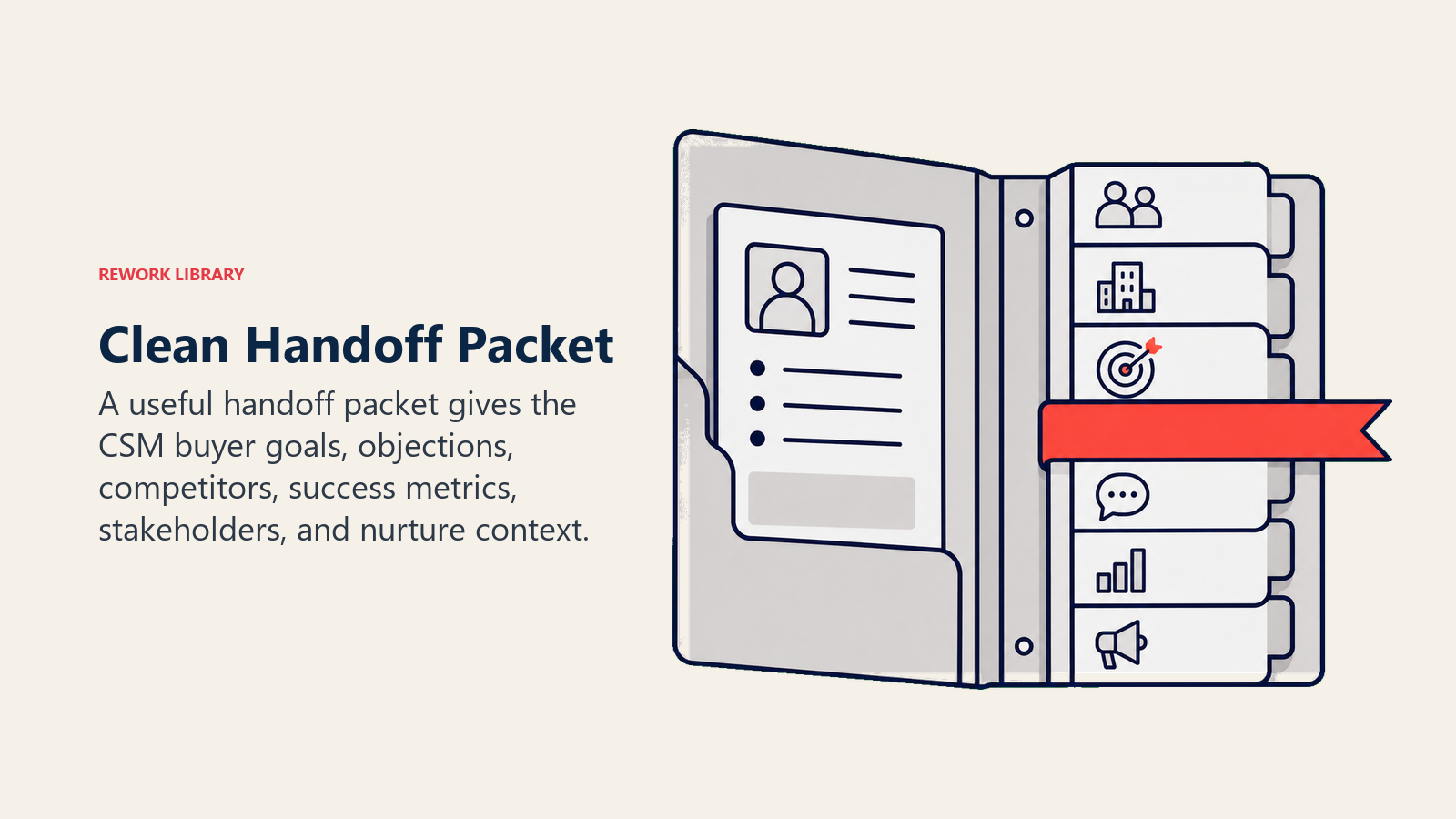
Field yang diperlukan dalam paket handoff yang lengkap:
Tujuan yang dinyatakan pembeli (verbatim dari discovery): Bukan apa yang bisa dilakukan produk. Apa yang dikatakan pembeli spesifik ini ingin mereka capai? "Kami perlu mengurangi siklus pelaporan manual yang dijalankan tim marketing ops kami setiap Selasa dari 4 jam menjadi kurang dari 30 menit." Itulah jenis bahasa yang membuat panggilan pertama CSM terasa seperti kelanjutan, bukan pengenalan. Tujuan ini seharusnya sudah ada dalam catatan CRM jika kualifikasi peluang dilakukan dengan benar: pekerjaan discovery yang memunculkan tujuan pembeli tidak perlu dilakukan ulang saat handoff.
Objeksi utama yang diatasi dan caranya: Apa objeksi terberat dalam siklus? Bagaimana cara mengatasinya? CSM kemungkinan akan menghadapi versi dari objeksi yang sama selama onboarding ("Anda berjanji ini akan mudah diatur") dan perlu tahu apa yang dikatakan AE untuk mengatasinya, sehingga responnya konsisten.
Alternatif kompetitif yang dievaluasi: Vendor lain mana yang serius dipertimbangkan pembeli? Ini penting karena pembeli yang hampir memilih kompetitor lebih mungkin untuk mengevaluasi ulang saat perpanjangan jika ekspektasi tidak terpenuhi. CSM yang tahu "mereka hampir memilih [kompetitor] karena integrasi native mereka" dapat secara proaktif menangani kesenjangan integrasi tersebut selama onboarding daripada menemukannya sebagai sinyal churn pada bulan kesembilan. Pekerjaan penyelarasan stakeholder yang dilakukan selama siklus penjualan akan memunculkan preferensi kompetitor ini, dan konteks itu milik paket handoff.
Metrik keberhasilan yang disebutkan pembeli selama siklus penjualan: Hasil spesifik yang terukur yang dikatakan pembeli mereka beli. Ini menjadi fondasi agenda QBR pertama CSM dan baseline untuk pengukuran time-to-first-value.
Peta stakeholder: Champion (yang mengadvokasi secara internal), economic buyer (yang mengendalikan anggaran), pengguna harian (yang sebenarnya akan tinggal dalam produk), dan skeptis (yang menolak atau mengajukan kekhawatiran). CSM yang hanya menghubungi champion dan menemukan di bulan ketiga bahwa economic buyer tidak pernah di-onboard memiliki risiko retensi yang dimulai dari handoff.
Sumber marketing dan konteks nurture: Konten mana yang dikonsumsi pembeli ini selama evaluasi? Dari kampanye mana mereka masuk? Case study atau webinar mana yang mereka referensikan? CSM yang tahu bahwa pelanggan baru datang melalui program event bersama dan menghadiri roundtable eksekutif dapat mereferensikan konteks bersama dengan cara yang terasa disengaja daripada generik.
Peran Marketing dalam Handoff
Kontribusi marketing terhadap kualitas handoff bukan hanya tentang menyediakan data sumber. Ini adalah disiplin aktif.
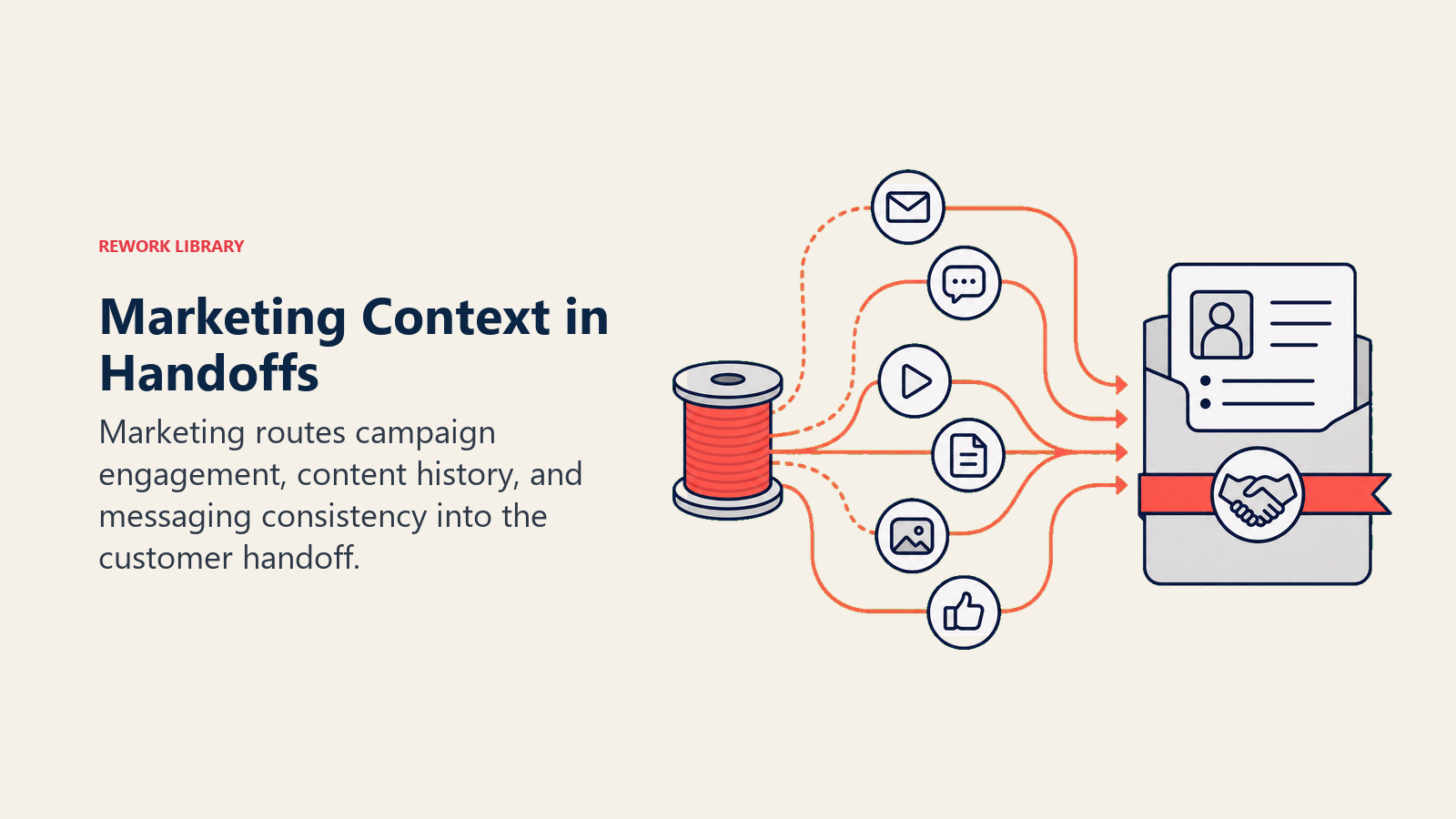
Meneruskan konteks kampanye dan keterlibatan konten ke paket handoff: Platform otomasi marketing menyimpan data yang seringkali tidak bisa dilihat AE: halaman landing mana yang dikunjungi prospek, email mana yang mereka buka dan klik, konten mana yang mereka unduh, berapa kali mereka kembali ke halaman harga. Data ini milik paket handoff, bukan terkunci dalam sistem yang tidak diakses CSM.
Koneksi teknis (MAP ke CRM di tingkat kontak, bukan hanya tingkat akun) adalah tanggung jawab RevOps, tapi marketing harus mengampionasinya. Jika data keterlibatan marketing tetap ada di HubSpot atau Marketo sementara CSM beroperasi dari Salesforce, konteks tidak pernah berpindah.
Memastikan konten onboarding sesuai dengan materi penjualan: Jika AE menggunakan framework ROI tertentu dalam siklus penjualan dan deck onboarding CSM mereferensikan metrik dan bahasa yang sepenuhnya berbeda, pelanggan mengalami ketidaksesuaian yang mengikis kepercayaan. Marketing memiliki kedua bagian konten dan perlu mengaudit konsistensinya, bukan hanya kualitasnya.
Menandai pergeseran pesan: Ketika sales rep secara konsisten menggunakan bahasa nilai yang tidak sesuai dengan positioning marketing saat ini (baik karena pesan diperbarui dan enablement tidak, atau karena rep mengembangkan narasi lapangan mereka sendiri) marketing perlu menangkap ini. Feedback loop konten Sales Enablement vs. Kebutuhan Lapangan adalah mekanismenya. Tapi koneksi ke kualitas handoff langsung: pergeseran pesan dalam siklus penjualan menciptakan kesenjangan ekspektasi yang diwarisi CSM.
Rapat Handoff Bersama
Rapat handoff bukan ulasan kontrak. Ini adalah transfer konteks.
Siapa yang hadir: AE, CSM, dan untuk deal kompleks, champion dari sisi pelanggan. Menyertakan champion membuat handoff terasa seperti transisi hubungan profesional daripada serah terima vendor. Ini juga berarti AE memperkenalkan CSM dalam konteks yang hangat, daripada CSM tiba sebagai orang asing bagi pelanggan yang mengira AE adalah kontak mereka yang sedang berlangsung.
Durasi dan format: 30 menit untuk deal standar. Agendanya tetap: AE berbagi konteks paket handoff (10 menit), CSM mengajukan pertanyaan klarifikasi (10 menit), langkah berikutnya dan metrik keberhasilan dikonfirmasi (10 menit).
Untuk deal kompleks (banyak stakeholder, multi-produk, kustomisasi signifikan yang disepakati selama siklus penjualan) paket handoff async diikuti oleh sinkronisasi 15 menit lebih efisien daripada mencoba mencakup segalanya dalam satu rapat. Paket melakukan pekerjaan dokumentasi; sinkronisasi menyelesaikan pertanyaan saja.
Apa yang ditransfer: Konteks, bukan hanya syarat kontrak. CSM yang keluar hanya mengetahui ukuran deal, tanggal mulai kontrak, dan alamat email kontak utama belum di-handoff dengan benar. Mereka membutuhkan tujuan pembeli, objeksi yang sudah diatasi, konteks kompetitif, dan peta stakeholder.
Disiplin ICP sebagai Gerbang Kualitas Handoff
Ketika deal ditutup di luar ICP, pengecualian tersebut tidak boleh diam-diam masuk ke customer success. Harus memicu tanda.
Field "heads-up CSM" dalam CRM, sederhana dan terlihat, ditandai saat penutupan, memberikan CSM konteks yang mereka butuhkan untuk menetapkan ekspektasi onboarding yang tepat dan mengalokasikan waktu tambahan untuk penyelarasan ekspektasi dalam 30 hari pertama. Ini juga menciptakan akuntabilitas: jika pengecualian ICP ditandai secara konsisten, kepemimpinan dapat melihat polanya dan mengevaluasi apakah definisi ICP perlu diperbarui atau apakah pengecualian menciptakan risiko retensi.
Model Funnel yang Disepakati dan Proses Handoff MQL ke SQL mendefinisikan kesesuaian ICP sebagai gerbang kualifikasi saat masuk. Disiplin ICP saat penutupan adalah gerbang yang sesuai saat keluar. Keduanya penting.
Mengukur Kualitas Handoff
Metrik-metrik ini memberi tahu Anda apakah pekerjaan upstream diterjemahkan menjadi handoff yang bersih:
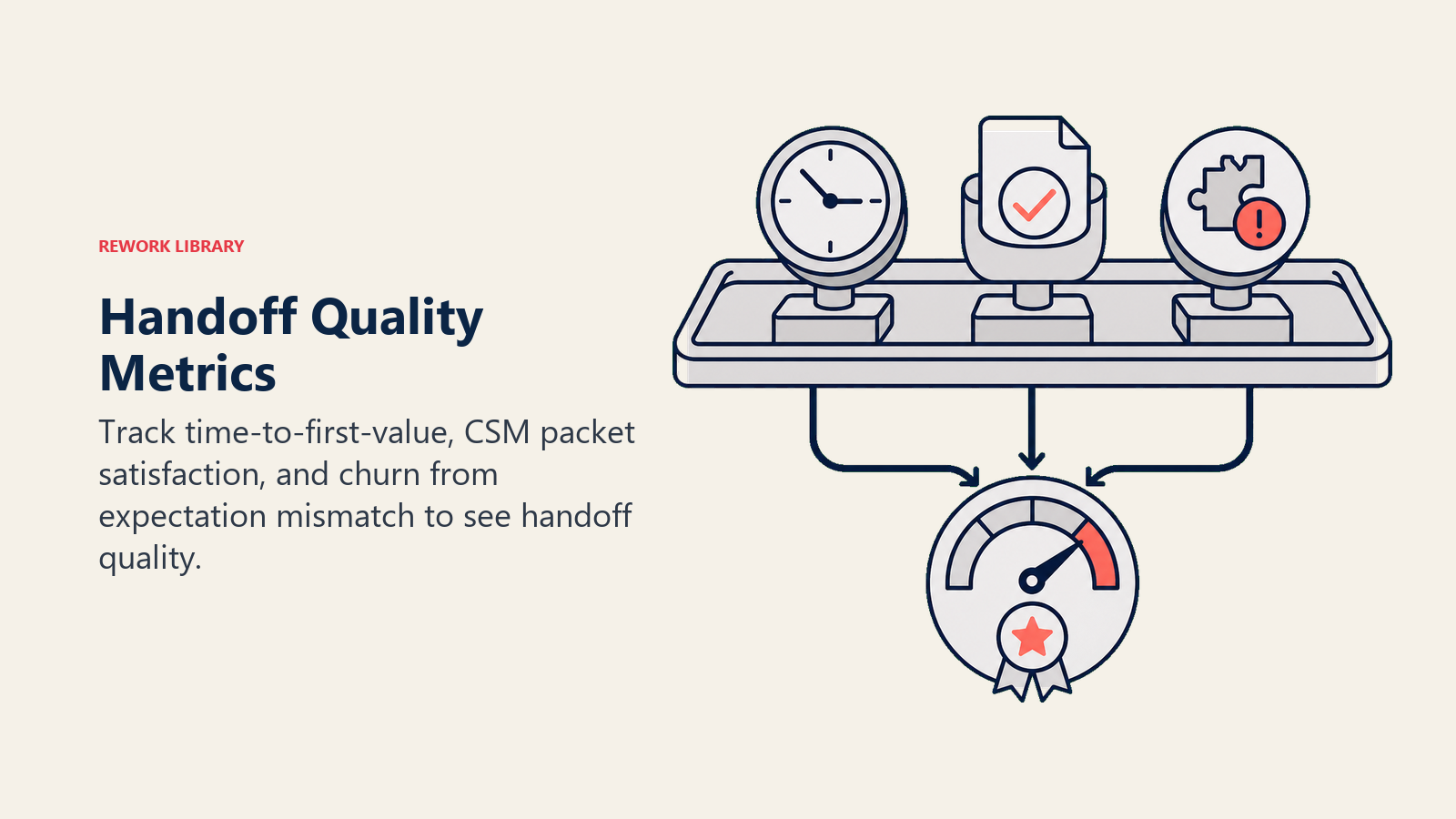
Time-to-first-value (indikator lagging): Berapa lama waktu yang dibutuhkan pelanggan baru untuk mencapai hasil pertama yang terukur yang disebutkan pembeli selama siklus penjualan? Ketika kualitas handoff tinggi (konteks ditransfer, ekspektasi dikalibrasi, stakeholder dipetakan) time-to-first-value meningkat karena CSM memulai dari tempat yang tepat, bukan dari discovery. Lacak ini melalui CRM sebagai sumber kebenaran tunggal sehingga metrik terlihat oleh marketing dan sales, bukan hanya customer success.
Skor kepuasan CSM 30 hari tentang kualitas paket handoff: Survei internal sederhana: apakah paket handoff memberi Anda apa yang Anda butuhkan untuk memulai hubungan secara efektif? Nilai 1–5. Di bawah rata-rata 3,5 berarti paket melewatkan field kritis atau tidak diisi secara konsisten.
Churn yang dikaitkan dengan ketidaksesuaian ekspektasi: Pada setiap peristiwa churn, klasifikasikan akar penyebabnya: ketidaksesuaian ekspektasi (apa yang dipercaya pelanggan mereka beli vs. apa yang mereka dapatkan), kesesuaian produk (produk benar-benar tidak menyelesaikan masalah mereka), atau penyebab ekonomi (pemotongan anggaran, pengurangan perusahaan, akuisisi). Ketidaksesuaian ekspektasi adalah kategori yang dapat langsung dikurangi oleh marketing dan sales. Jika secara konsisten di atas 20% dari churn, keselarasan upstream rusak.
Analisis Rework: Berdasarkan pola analisis churn di seluruh tim SaaS mid-market, akar penyebab paling umum dari churn tahun pertama bukan kegagalan produk. Ini adalah ketidaksesuaian ekspektasi yang ditetapkan sebelum deal ditutup. Deal di mana CSM menerima paket handoff terstruktur (tujuan pembeli verbatim, objeksi yang diatasi, peta stakeholder) melihat time-to-first-value 30 hari meningkat sekitar 2–3 minggu dibandingkan deal di mana CSM diberikan rekaman CRM dan email selamat. Perbaikan struktural yang paling sering diabaikan tim: perlakukan paket handoff sebagai gerbang tahap close, bukan nice-to-have. Ketika status Closed Won dalam CRM memerlukan paket handoff yang lengkap, tingkat penyelesaian meningkat dari 30–40% menjadi 85%+ dalam satu kuartal implementasi.
Pola Kegagalan Umum dan Perbaikannya
AE yang menghilang pasca-penutupan: Deal ditutup pada Jumat. AE merayakannya akhir pekan dan beralih ke peluang berikutnya pada Senin pagi. CSM menghubungi pelanggan tanpa konteks. Pelanggan mengharapkan AE terlibat dalam onboarding dan terkejut dengan transisi tersebut.
Perbaikan: tetapkan jendela handoff yang hangat yang ditentukan (biasanya 30 hari) di mana AE tersedia untuk panggilan kickoff bersama dan satu atau dua pertanyaan tindak lanjut. Bukan manajemen akun yang berkelanjutan. Hanya transisi yang bersih dengan kehadiran, bukan pengabaian.
Tidak ada paket terstruktur, hanya catatan CRM: AE mengisi catatan deal secara tidak konsisten. Beberapa menulis ringkasan terperinci; yang lain menulis "cocok dengan baik, champion kuat, ditutup." CSM harus menebak apa yang penting.
Perbaikan: bangun paket handoff sebagai field wajib tahap close dalam CRM. Gerbang kemajuan deal ke status Closed Won di belakang penyelesaian paket handoff, atau setidaknya buat terlihat oleh kepemimpinan CSM sehingga mereka bisa memintanya sebelum panggilan kickoff.
Konteks marketing tidak pernah sampai ke CSM: Pembeli mengonsumsi empat konten selama evaluasi, menghadiri webinar, dan mengunjungi halaman harga enam kali. Semua data keterlibatan itu ada di HubSpot. CSM menggunakan Salesforce. Tidak ada yang membangun koneksinya.
Perbaikan: konfigurasikan sinkronisasi tingkat kontak MAP-ke-CRM, dan sertakan field "Ringkasan Keterlibatan Marketing" dalam template paket handoff yang diisi tim RevOps atau marketing ops saat penutupan dari data MAP. Tidak memerlukan integrasi real-time untuk memulai. Tarikan mingguan atau bahkan ekspor yang dikueri secara manual berfungsi sampai integrasi dibangun.
Kesimpulan
Handoff AE-ke-CSM adalah saat di mana keselarasan, atau ketiadaannya, menjadi terlihat oleh pelanggan untuk pertama kalinya. Sampai titik itu, ketidakselarasan adalah masalah internal. Pada handoff, itu menjadi masalah pelanggan.
Marketing dan sales sama-sama memiliki kondisi yang diwarisi CSM. Marketing memiliki kesan pertama dan ekspektasi yang ditetapkan. Sales memiliki janji yang dibuat dalam siklus penjualan dan konteks yang perlu ditransfer. Ketika kedua tim memperlakukan paket handoff sebagai output bersama (bukan tugas sales atau renungan marketing) CSM berjalan ke panggilan pertama mereka dengan terinformasi, pelanggan merasakan perawatan yang berkelanjutan bukan transisi vendor, dan fondasi untuk retensi ditetapkan dalam percakapan pertama bukan diperbaiki selama enam bulan pertama.
Pertanyaan yang Sering Diajukan tentang Handoff Siklus Hidup AE ke CSM
Apa yang harus disertakan dalam paket handoff AE-ke-CSM?
Paket handoff yang lengkap memiliki enam field: (1) tujuan yang dinyatakan pembeli dengan kata-kata mereka sendiri dari discovery, bukan parafrase; (2) objeksi utama yang diatasi selama siklus penjualan dan cara mengatasinya; (3) alternatif kompetitif yang serius dievaluasi pembeli; (4) metrik keberhasilan spesifik yang disebutkan pembeli sebagai alasan mereka membeli; (5) peta stakeholder yang mengidentifikasi champion, economic buyer, pengguna harian, dan skeptis apa pun; dan (6) data sumber marketing dan keterlibatan konten yang menunjukkan kampanye, webinar, atau konten mana yang dikonsumsi pembeli selama evaluasi. Field terakhir ini adalah kontribusi marketing. Ia ada di MAP dan memerlukan koneksi yang disengaja ke paket handoff saat penutupan.
Apa perbedaan antara handoff bersama dan handoff berurutan?
Handoff berurutan adalah yang dilakukan sebagian besar perusahaan: AE menutup deal, mengisi catatan CRM, dan mengirim email pengenalan kepada CSM. CSM kemudian melakukan panggilan kickoff yang pada dasarnya adalah pertemuan pertama. Handoff bersama adalah transfer konteks terstruktur di mana AE, CSM, dan idealnya champion pelanggan semuanya hadir. AE memperkenalkan CSM dalam konteks yang hangat, berbagi paket handoff secara langsung, dan CSM mengajukan pertanyaan klarifikasi sebelum AE mundur. Format bersama mengubah pengalaman pelanggan: mereka merasakan perawatan yang berkelanjutan daripada serah terima vendor, dan CSM memulai dengan konteks hubungan daripada dari awal.
Kapan marketing harus tetap dalam loop setelah deal ditutup?
Marketing memiliki tiga tanggung jawab pasca-penutupan yang secara langsung memengaruhi retensi: (1) mengarahkan data keterlibatan kampanye dan konten dari MAP ke dalam paket handoff sehingga CSM tahu materi marketing mana yang membentuk ekspektasi pembeli; (2) memastikan konten onboarding konsisten dengan materi penjualan yang dilihat pembeli (jika framework ROI berubah antara deck penjualan dan deck onboarding, pelanggan memperhatikan); dan (3) menandai pergeseran pesan ketika sales rep menggunakan bahasa nilai yang tidak sesuai dengan positioning marketing saat ini. Ketiganya adalah aktivitas retensi upstream, bukan tanggung jawab customer success.
Bagaimana cara mengukur kualitas handoff?
Tiga metrik melacak apakah handoff berfungsi: (1) time-to-first-value, yaitu berapa lama waktu yang dibutuhkan pelanggan baru untuk mencapai hasil yang mereka sebutkan selama siklus penjualan. Ketika kualitas handoff tinggi, ini meningkat karena CSM mulai dari konteks, bukan dari discovery. (2) Skor kepuasan CSM 30 hari tentang kualitas paket handoff: survei internal 1-5 yang sederhana. Di bawah rata-rata 3,5 berarti field kritis hilang atau tidak diisi secara konsisten. (3) Churn yang diklasifikasikan sebagai ketidaksesuaian ekspektasi: pada setiap peristiwa churn, kategorikan akar penyebab. Jika ketidaksesuaian ekspektasi secara konsisten melebihi 20% dari churn, keselarasan upstream rusak.
Apa yang terjadi ketika deal ditutup di luar ICP?
Pengecualian ICP tidak boleh diam-diam masuk ke customer success. Field "heads-up CSM" dalam CRM saat penutupan memberikan CSM konteks yang mereka butuhkan untuk menetapkan ekspektasi onboarding yang tepat dan mengalokasikan waktu tambahan untuk penyelarasan ekspektasi dalam 30 hari pertama. Ini juga menciptakan akuntabilitas: ketika pengecualian ditandai secara konsisten, kepemimpinan dapat melihat polanya dan mengevaluasi apakah definisi ICP perlu diperbarui atau apakah pengecualian menciptakan risiko retensi yang terukur. Deal yang ditutup di luar ICP churn pada sekitar 2,5x tingkat deal yang cocok dengan ICP dalam tahun pertama, menurut data benchmarking SaaS OpenView Partners.
Berapa lama AE harus tetap terlibat setelah deal ditutup?
Jendela handoff yang hangat selama 30 hari yang ditentukan adalah standarnya. Selama periode ini, AE tersedia untuk panggilan kickoff bersama dan satu atau dua pertanyaan tindak lanjut, bukan manajemen akun yang berkelanjutan. Tujuannya memastikan pelanggan mengalami transisi hubungan yang mulus daripada pengabaian yang tiba-tiba. Setelah 30 hari, CSM adalah pemilik hubungan utama. Mode kegagalan yang paling umum bukan AE yang tinggal terlalu lama. Ini adalah AE yang menghilang sepenuhnya minggu deal ditutup, meninggalkan CSM untuk membangun kembali hubungan dengan pelanggan yang mengharapkan kesinambungan.
Pelajari Lebih Lanjut

Principal Solution Architect
On this page
- Framework Paket Handoff Bersama
- Mengapa Ini Adalah Percakapan Keselarasan, Bukan Hanya Masalah Sales-CS
- Tiga Mode Kegagalan Upstream
- Kemampuan yang Dijual Berlebihan
- Konteks yang Hilang
- ICP yang Salah Dijual
- Seperti Apa Paket Handoff yang Bersih
- Peran Marketing dalam Handoff
- Rapat Handoff Bersama
- Disiplin ICP sebagai Gerbang Kualitas Handoff
- Mengukur Kualitas Handoff
- Pola Kegagalan Umum dan Perbaikannya
- Kesimpulan
- Pelajari Lebih Lanjut