Bahasa Indonesia
Menjalankan Event dan Webinar Bersama: Bagaimana Marketing dan Sales Berbagi Panggung, dan Kredit Pipeline
Turn this article into takeaways for your work.


Each assistant summarizes the article only for you and suggests best practices for your work.
Ini adalah cerita yang pernah dialami setiap VP Marketing dan VP Sales: webinar dengan 300 pendaftar, 90 peserta, dan rencana tindak lanjut yang tidak pernah terjadi. Marketing merayakan angka pendaftaran. Sales tidak tahu event itu berlangsung. Tidak ada Pipeline yang bergerak. Kedua tim sepakat bahwa acara itu "mungkin menghasilkan beberapa awareness" dan melanjutkan.
Webinar hantu ini bukan masalah kualitas konten atau promosi. Ini adalah masalah kepemilikan. Ketika marketing menjalankan event dan sales seharusnya menindaklanjuti, tetapi tidak ada mekanisme untuk handoff tersebut, Pipeline mati di celah antara kedua tim.
Event dan webinar sebenarnya adalah salah satu gerakan top-of-funnel dengan konversi tertinggi yang tersedia untuk perusahaan mid-market, ketika kedua tim memiliki kepentingan dalam hasilnya. Mekanisme event lead generation mendeskripsikan cara menangkap dan mengkualifikasi sinyal niat itu setelah peserta berada di ruangan. Artikel ini mencakup model kepemilikan bersama yang membuat program berjalan.
Model Co-Ownership Event Pre-During-Post
Perusahaan dengan kepemilikan event marketing-sales bersama yang formal melaporkan Pipeline yang dikaitkan dengan event 28% lebih tinggi daripada perusahaan di mana marketing menjalankan event secara mandiri, menurut riset Event B2B Forrester. Perbedaannya bukan konten atau platform. Ini apakah kedua tim memiliki peran yang jelas sebelum, selama, dan sesudah.
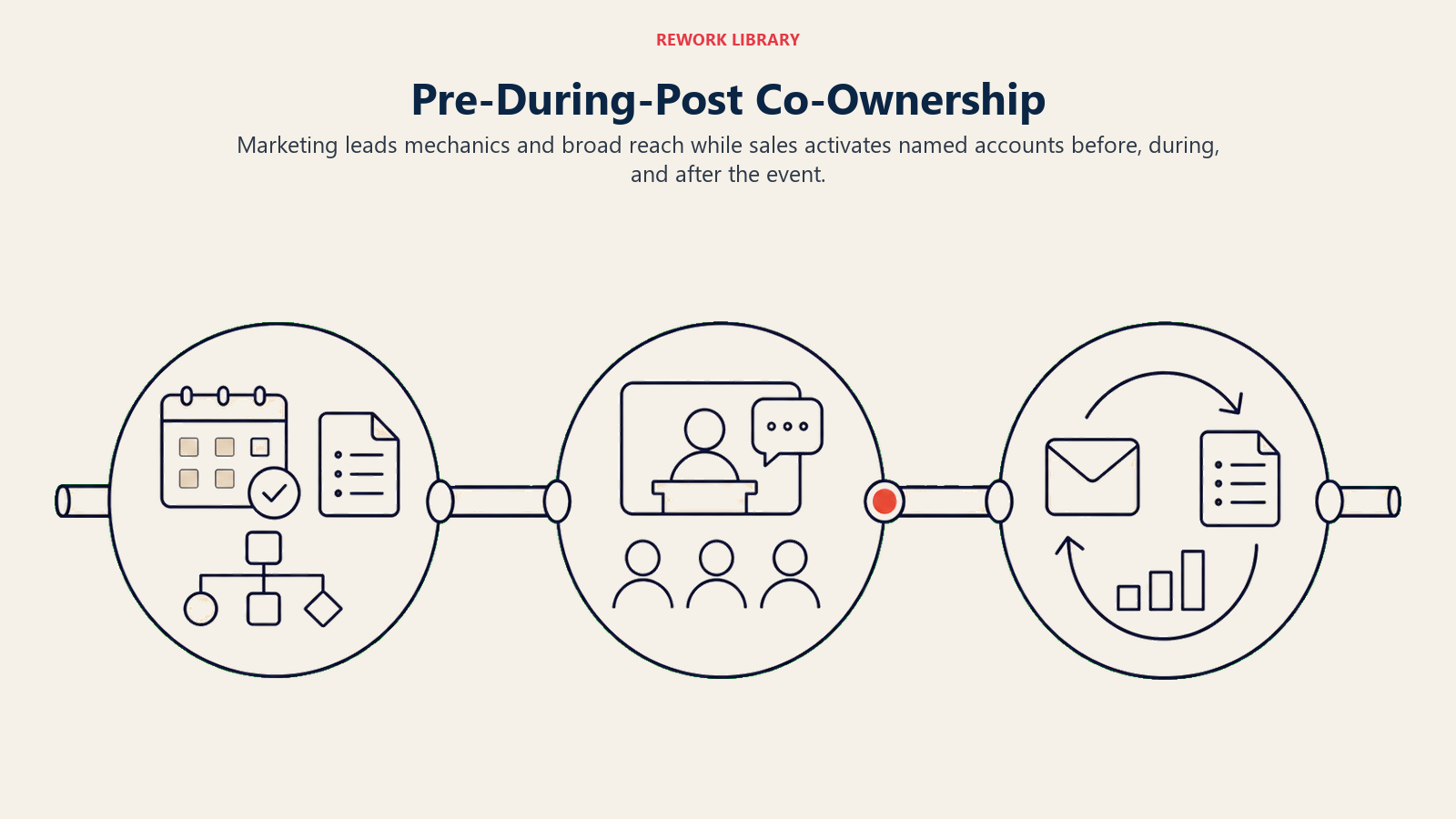 Alasan paling umum event gagal menghasilkan Pipeline bukan kualitas konten atau volume kehadiran. Melainkan kepemilikan yang hilang setelah event berakhir. Model Co-Ownership Event Pre-During-Post menetapkan tanggung jawab yang jelas dan tidak tumpang tindih kepada marketing dan sales di ketiga fase:
Pre-event (marketing memimpin, sales mengaktifkan): Marketing memiliki logistik, platform, promosi, dan daftar undangan yang luas. Sales memiliki outreach pribadi ke 20–25 named account yang sedang mereka kejar secara aktif, bukan email batch, melainkan pesan pribadi. Pemilihan topik dan brief konten berasal dari sales, bukan marketing.
Selama event (marketing menjadi tuan rumah, sales terlibat): Marketing menjalankan platform dan agenda. Sales bergabung dalam live chat, bukan untuk melakukan pitch, tetapi untuk menjawab pertanyaan dan tampil sebagai manusia yang berpengetahuan secara real-time. Saluran Slack bersama antara AE dan marketing selama event memungkinkan perutean intelijen langsung.
Pasca-event (bersama, jendela 48 jam): Marketing memicu urutan nurture otomatis. Sales mengirimkan tindak lanjut pribadi ke named account dalam 48 jam, merujuk sesuatu yang spesifik dari sesi tersebut, bukan "terima kasih telah hadir" yang umum. Debrief bersama terjadi dalam 72 jam selagi event masih segar.
Model ini bekerja karena spesifik. Ketika kepemilikan didefinisikan per fase, celah Pipeline antara event dan tindak lanjut menutup.
Fakta Utama: Kinerja Event dan Webinar
- Webinar B2B memiliki rata-rata conversion rate peserta-ke-Lead sebesar 20–40% ketika dikombinasikan dengan urutan tindak lanjut terstruktur dalam 48 jam (ON24 Webinar Benchmarks Report).
- Event di mana AE secara pribadi mengundang named account melihat show rate 15–25% lebih tinggi daripada undangan batch marketing saja untuk akun yang sama (Demand Gen Report).
- Perusahaan dengan kepemilikan event marketing-sales bersama yang formal melaporkan Pipeline yang dikaitkan dengan event 28% lebih tinggi daripada perusahaan di mana marketing menjalankan event secara mandiri (riset Event B2B Forrester).
Mengapa Event adalah Mikrokosmos Alignment
Setiap mode kegagalan alignment muncul dalam satu kampanye event. Marketing dan sales berdebat tentang siapa yang mendapat kredit untuk pendaftaran. Rencana tindak lanjut tidak disepakati sebelum event berjalan. Data peserta duduk di platform marketing automation selama dua minggu sebelum masuk ke CRM. AE yang seharusnya menindaklanjuti tiga named account tidak tahu event itu terjadi.
Ketika Anda mengamati cara tim Anda menjalankan event, Anda mendapatkan tampilan terkompresi tentang seberapa selaras mereka sebenarnya, jauh lebih cepat daripada menonton data Pipeline satu kuartal.
Dan ketika berhasil, hasilnya jauh di atas rata-rata. Event menciptakan sinyal niat yang terkonsentrasi: prospek yang menghadiri webinar 45 menit tentang kategori produk Anda menandakan evaluasi aktif dengan cara yang tidak pernah dilakukan kunjungan blog. Kombinasi kesan merek yang hangat (dari promosi marketing) dan pengalaman bersama yang langsung (dari event itu sendiri) adalah sesuatu yang paling mendekati pertemuan pra-kualifikasi yang dapat dihasilkan marketing.
Tiga Model Event dan Siapa yang Memiliki Apa
Tidak semua event bekerja dengan cara yang sama. Kepemilikan harus sesuai dengan modelnya.
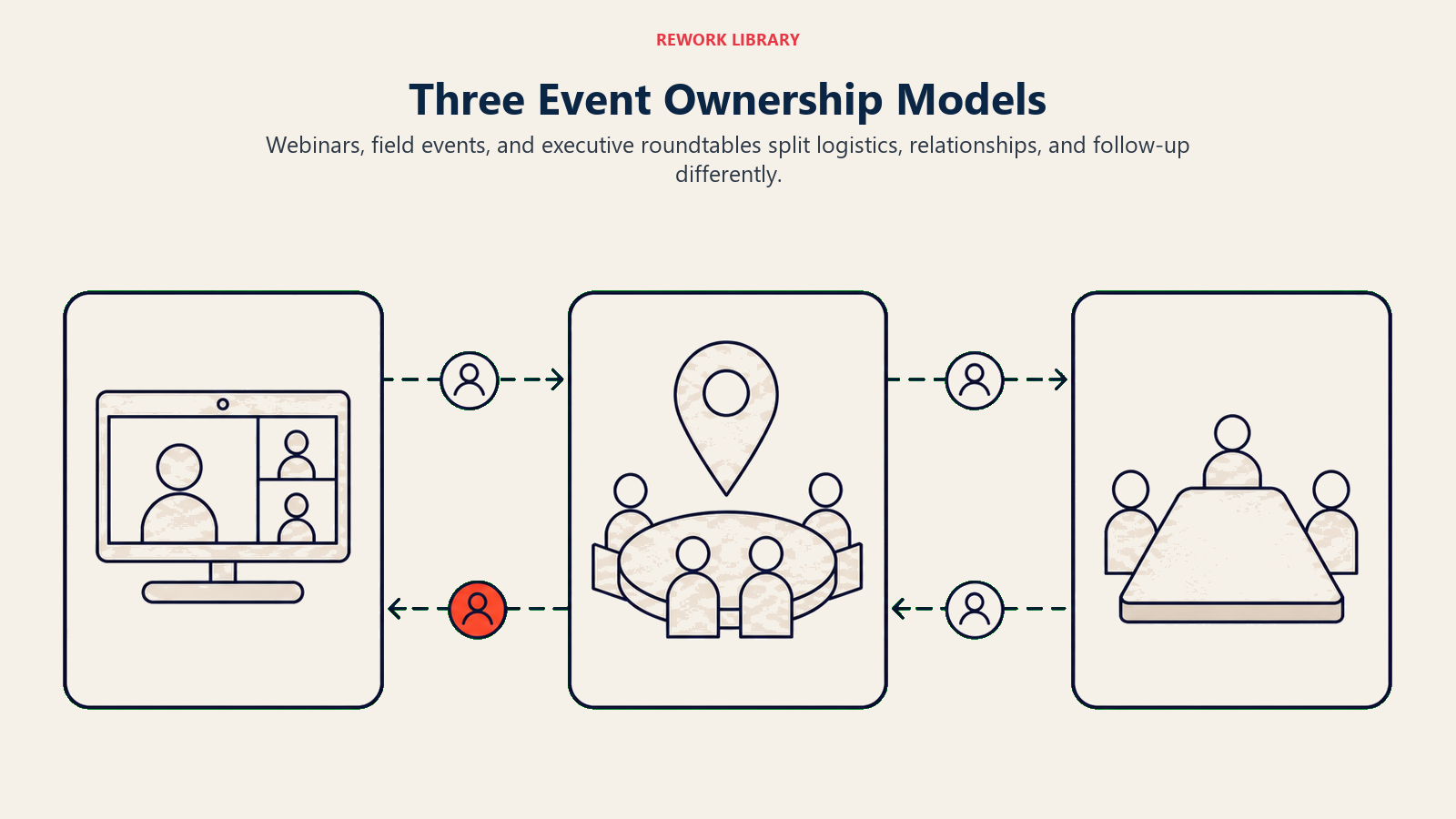
Webinar (Virtual, Volume Tinggi)
Marketing memimpin logistik: setup platform, halaman pendaftaran, promosi, urutan email, nurture pasca-event. Sales menominasikan topik, pembicara, dan target account yang ingin mereka undang secara pribadi.
Perbedaan ini penting: marketing menangani mekanisme dan jangkauan luas. Sales menangani aktivasi spesifik hubungan, secara pribadi menghubungi 20 named account yang sedang mereka kerjakan untuk memberi tahu mereka tentang event.
Aturan praktis: marketing mengirimkan undangan batch ke seluruh daftar. Sales mengirimkan email pribadi atau pesan LinkedIn ke 25 akun teratas yang sedang mereka kejar secara aktif. Dua gerakan outreach tersebut tidak dapat dipertukarkan. Yang pribadi mengonversi dengan tingkat 2–4x dari yang batch.
Event Lapangan (Tatap Muka, Volume Rendah)
Sales memimpin daftar tamu. Event ini lebih kecil (makan malam, executive roundtable, panel pelanggan, 20–50 orang) dan kualitas siapa yang ada di ruangan lebih penting daripada volume. AE menominasikan setiap undangan; ini bukan siaran marketing.
Marketing menangani produksi: pemilihan venue, katering, materi cetak, koordinasi pembicara, dan anggaran. Marketing juga menjalankan urutan tindak lanjut pasca-event untuk peserta yang tidak dalam deal aktif.
Inversi ini disengaja. Event lapangan adalah investasi hubungan. Ketika sales mengontrol daftar tamu, mereka membawa orang-orang yang kehadirannya benar-benar memajukan deal mereka. Ketika marketing mengontrol daftar tamu di event lapangan, cenderung mengoptimalkan kehadiran yang sesuai ICP daripada timing tahap deal.
Event Mitra Bersama
Kedua tim berbagi kepemilikan dengan tim marketing dan sales organisasi mitra teknologi atau saluran. Audiens berasal dari jaringan dua perusahaan; manfaat Pipeline bersifat timbal balik.
Untuk event mitra bersama, tetapkan aturan atribusi sebelum event berlangsung. CRM mana yang mendapat deal jika peserta bersama ditutup? Bagaimana cara menghindari penghitungan ganda Pipeline? Jawabannya harus didokumentasikan dan disepakati sebelum Anda mengirimkan undangan pertama, atau Anda akan melakukan negosiasi tersebut setelah event yang sukses ketika angkanya penting.
Pre-Event: Checklist Perencanaan Bersama
Perencanaan dimulai 4–6 minggu sebelum webinar, 8–10 minggu sebelum event lapangan. Jalankan checklist ini bersama, bukan sebagai proyek marketing dengan tinjauan sales di akhir.
Daftar target ICP: Marketing menarik data niat dan akun yang cocok dengan ICP dari CRM. Sales meninjau daftar dan menambahkan atau menghapus berdasarkan realitas tahap deal. Beberapa akun sangat cocok dengan ICP tetapi hubungannya terlalu dini atau terlalu sensitif untuk undangan sekarang. Beberapa akun tidak cocok sempurna dengan ICP tetapi AE telah memupuk champion yang kuat yang akan mendapat manfaat dari kehadiran. Gunakan shared ICP framework sebagai filter bersama sehingga kedua tim menarik dari definisi yang sama.
Pemilihan pembicara: Pilihan pembicara paling berdampak untuk webinar bukan VP of Product atau CMO Anda. Ini adalah pelanggan atau pakar pihak ketiga yang diakui. Pembicara pelanggan meningkatkan tingkat pendaftaran rata-rata 30–50% dan secara dramatis meningkatkan show rate karena jaringan pelanggan itu sendiri hadir. Jika Anda bisa mendapatkan prospek yang sedang dalam evaluasi aktif untuk berbicara, deal hampir selalu ditutup lebih cepat.
Brief konten: Sales menentukan keberatan spesifik yang menyebabkan mereka kalah dalam deal, positioning kompetitif yang ingin mereka atasi, dan kasus penggunaan yang paling relevan untuk Pipeline mereka saat ini. Marketing menyusun skrip konten berdasarkan input tersebut. Ini adalah tindakan penyelarasan pre-event terpenting, dan yang paling sering dilewati.
Pembagian pendaftaran dan outreach: Definisikan secara tertulis siapa yang mengundang siapa. Segmentasikan total daftar undangan menjadi: 1) daftar batch marketing (semua orang di CRM yang cocok dengan ICP), 2) daftar pribadi AE (named account dalam deal aktif atau target account prioritas tinggi), dan 3) daftar mitra atau co-marketing jika berlaku. Pembagian harus disepakati sebelum undangan apa pun dikirimkan.
Selama Event: Taktik Aktivasi Sales
Event itu sendiri bukan pengalaman pasif bagi sales.
Outreach pribadi AE ke named account 48 jam sebelum event, bukan email pengingat marketing. Pesan teks, pesan LinkedIn, atau email pribadi dari AE: "Saya ingin memastikan Anda melihat ini. Kami menghadirkan [pembicara tamu] yang membahas [topik yang Anda dan saya diskusikan]. Hanya 45 menit dan saya pikir Anda akan merasa ini berguna." Touchpoint tunggal ini, untuk named account yang sedang aktif dikejar AE, secara konsisten menghasilkan show rate tertinggi dari taktik undangan apa pun.
Pemantauan live chat selama event: AE bergabung dalam chat selama webinar. Bukan untuk melakukan pitch. Untuk menjawab pertanyaan khusus deal, menambahkan nuansa pada pernyataan presenter, dan tampil sebagai manusia yang berpengetahuan. Prospek yang mendapatkan pertanyaan teknis spesifik dijawab oleh AE mereka secara real-time selama webinar sering memesan pertemuan tindak lanjut pada hari yang sama.
Saluran Slack real-time antara AE dan marketing selama event: Jika marketing menjadi tuan rumah dan AE menonton, mereka memerlukan saluran komunikasi yang cepat. AE mungkin memperhatikan bahwa peserta yang sedang mereka kerjakan baru saja mengajukan pertanyaan dalam chat yang menandakan keberatan spesifik. Mereka dapat menandainya ke tim presenter secara real-time. Event menjadi umpan intelijen langsung.
Pasca-Event: Jendela Tindak Lanjut 48 Jam
Di sinilah sebagian besar Pipeline event dimenangkan atau hilang. Sinyal niat memudar cepat setelah event. Prospek yang hadir pada hari Selasa dan tidak mendapat tindak lanjut hingga Senin berikutnya setengah lebih tidak mungkin dikonversi daripada yang mendengar dari seseorang dalam 48 jam.
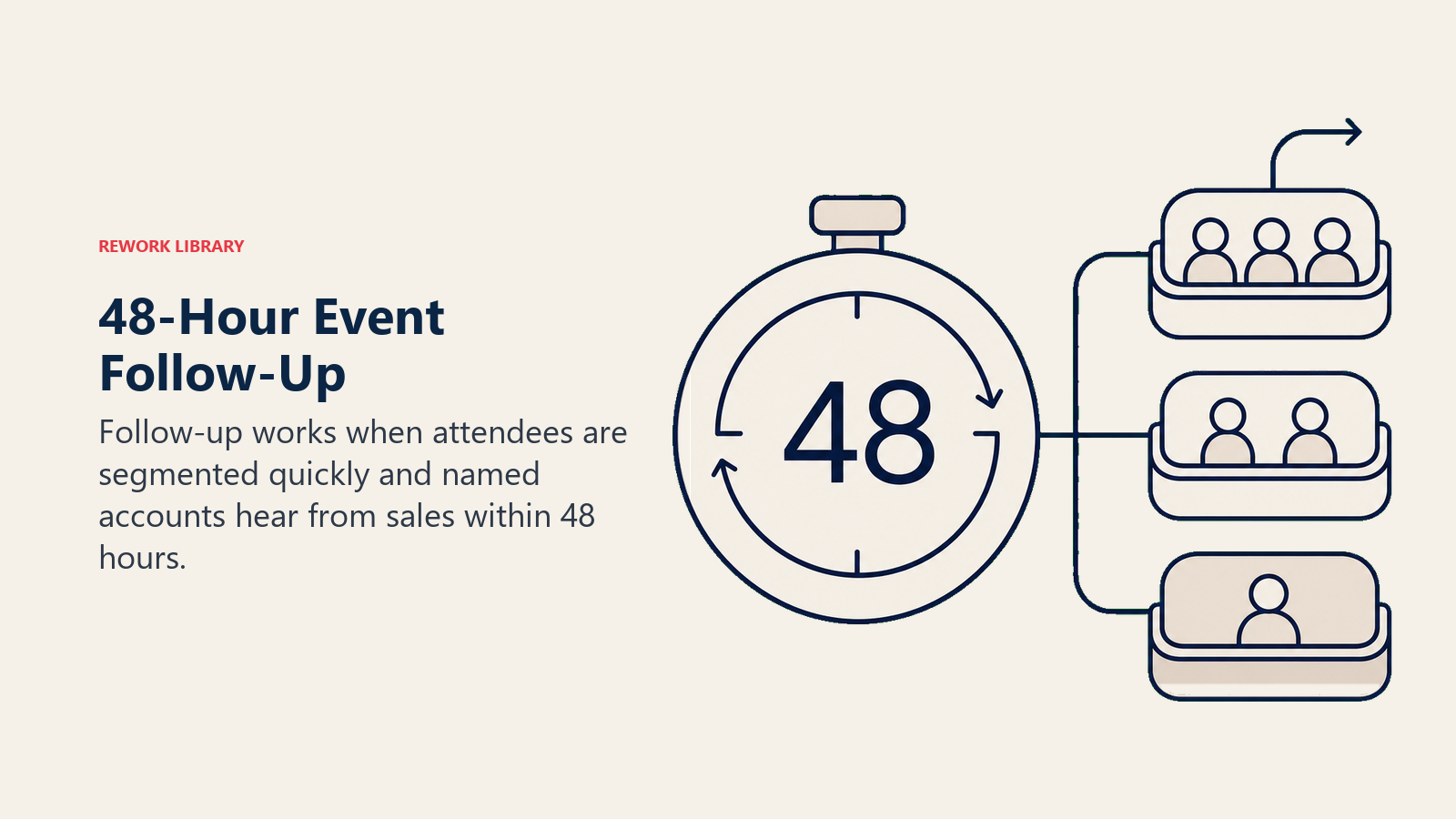 Segmentasikan peserta menjadi tiga kelompok sebelum urutan tindak lanjut berjalan:
Peserta penuh (hadir >75% dari sesi): Niat tertinggi. Outreach pribadi AE untuk named account, urutan nurture high-touch marketing untuk yang lainnya.
Keluar lebih awal (hadir <25% dari sesi): Niat lebih rendah, tetapi mereka mendaftar karena suatu alasan. Arahkan ke urutan nurture standar. Pendaftar yang keluar dalam 10 menit pertama tidak sama dengan yang bertahan selama 45 menit Q&A.
Tidak hadir (mendaftar tetapi tidak hadir): Undang ulang ke rekaman atau event berikutnya. Jangan perlakukan mereka sebagai Lead panas. Mereka mengungkapkan minat saat pendaftaran tetapi tidak muncul.
Catatan tindak lanjut pribadi AE untuk akun Tier 1 harus merujuk event secara spesifik: pertanyaan yang muncul dalam Q&A, sesuatu yang dikatakan pembicara tamu yang terhubung dengan percakapan yang sedang berlangsung antara AE dan prospek. Email "terima kasih telah hadir" yang umum dari AE diabaikan dengan tingkat yang sama seperti marketing automation.
Debrief bersama dalam 72 jam: Pertanyaan apa yang muncul yang tidak dijawab konten? Keberatan apa yang muncul dalam chat? Peserta mana yang tampak paling terlibat? Percakapan ini (30 menit, marketing dan sales bersama) menangkap intelijen yang akan membuat event berikutnya lebih baik dan memunculkan peserta terpanas untuk prioritas sales segera. Riset event B2B Forrester mengidentifikasi tindak lanjut pasca-event sebagai pendorong terbesar pendapatan yang dikaitkan dengan event. Umpankan tema keberatan ini langsung ke program win/loss sehingga sinyal event terakumulasi bersama data wawancara pasca-deal.
Atribusi dan Kredit Pipeline
Percakapan atribusi adalah tempat program event sering rusak. Marketing ingin mengklaim Pipeline. Sales mengatakan hubungan itu milik mereka sebelum event. Keduanya benar, dan pertarungan itu tidak produktif.
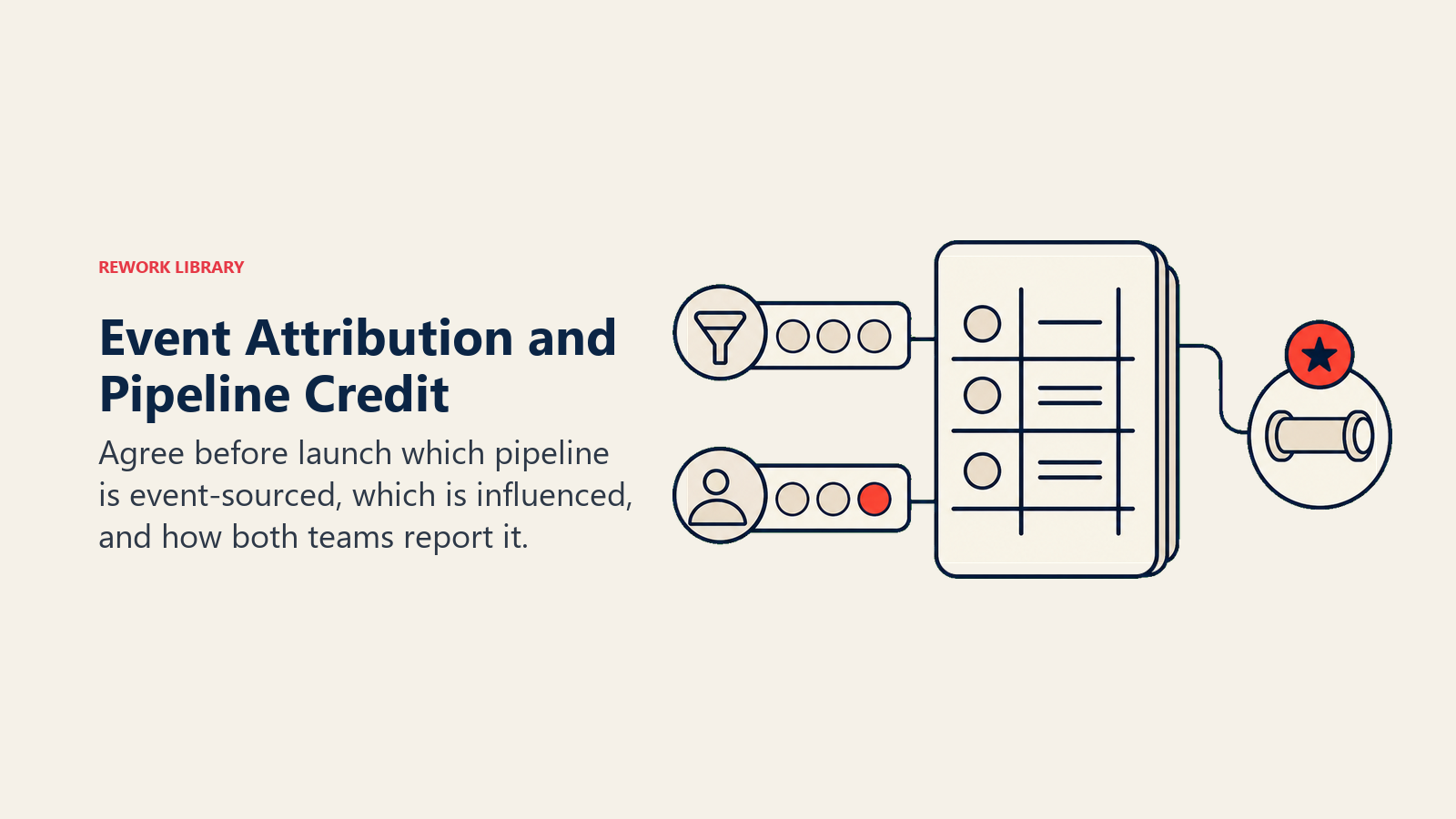 Solusinya adalah menyepakati model atribusi sebelum event berjalan, bukan setelah Pipeline muncul dan negosiasi menjadi politis.
Untuk Pipeline yang dihasilkan event (net baru): Event adalah sumbernya. Kredit penuh untuk program bersama. Kedua tim melaporkannya dalam metrik mereka.
Untuk Pipeline yang dipengaruhi event (peluang yang ada): Event adalah touchpoint. Catat di CRM sebagai pengaruh event. Peluang tetap dimiliki AE, tetapi event mendapat kredit dalam laporan Pipeline yang dipengaruhi marketing.
Metrik yang dipercaya kedua tim: Pipeline-per-event-dollar, diukur 30 hari dan 90 hari pasca-event. Bukan cost-per-registrant, bukan cost-per-attendee. Pipeline, karena itulah angka yang memberi kedua tim anggaran untuk event berikutnya.
Hubungkan atribusi Pipeline event ke framework Attribution Models Both Teams Trust dan Marketing-Sourced vs. Influenced Pipeline yang digunakan tim Anda untuk semua pelaporan Pipeline.
Dashboard Pengukuran
Ini adalah angka yang layak dilacak untuk setiap event:
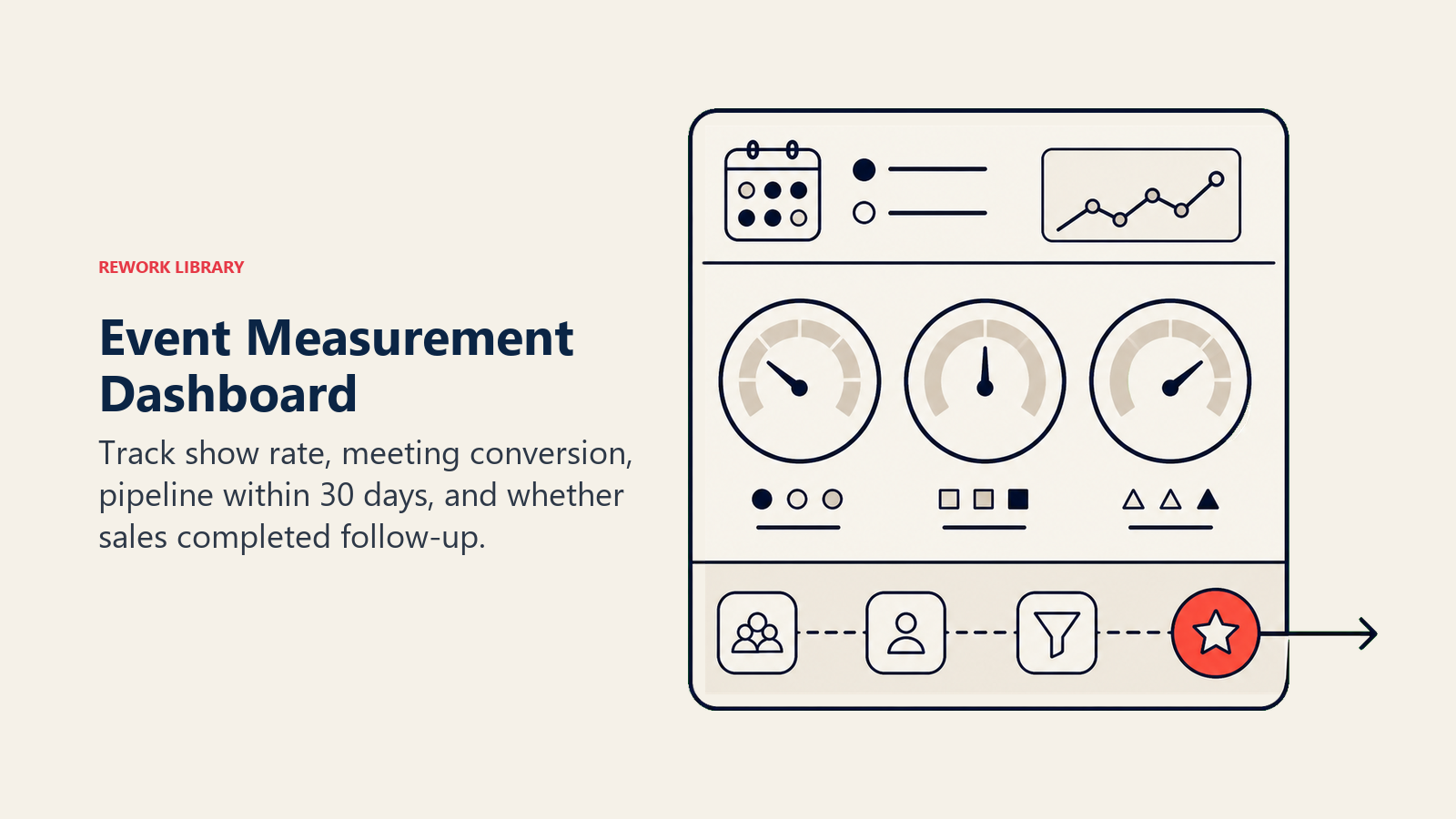 Show rate (target: >35% pendaftar): Di bawah 35% menunjukkan daftar undangan tidak cukup hangat atau topik tidak beresonansi dengan audiens yang terdaftar. Perbaikan tercepat adalah outreach pribadi AE ke named account 48 jam sebelumnya. Pengenalan hangat dari pelanggan yang sudah ada juga hadir dengan tingkat yang jauh lebih tinggi daripada undangan batch dingin.
Konversi peserta-ke-pertemuan (target: >10% untuk webinar): Berapa persentase peserta yang memesan pertemuan dalam 30 hari? Di bawah 10% untuk webinar biasanya menunjukkan masalah tindak lanjut, bukan masalah konten. Periksa apakah outreach pribadi AE berjalan dalam 48 jam.
Pipeline yang dikaitkan dalam 30 hari: Baik yang bersumber (Pipeline baru yang dihasilkan) maupun yang dipengaruhi (peluang yang ada yang disentuh). Ini adalah angka ROI utama. Jika di bawah 2x biaya event Anda, Anda menargetkan audiens yang salah atau tindak lanjut tidak terjadi.
Penggunaan konten dari aset event dalam deal berikutnya: Apakah rekaman event, deck slide, atau konten pembicara tamu digunakan oleh AE dalam deal setelah event? Penggunaan ulang konten yang tinggi menandakan event menghasilkan materi sales yang benar-benar berguna. Penggunaan ulang yang rendah menandakan konten diproduksi untuk audiens event tetapi tidak masuk ke percakapan deal.
Analisis Rework: Di seluruh tim mid-market B2B, prediktor terkuat dari Pipeline yang dikaitkan dengan event adalah apakah AE mengirimkan outreach yang dipersonalisasi ke named account dalam 48 jam setelah event, bukan volume pendaftaran, bukan show rate, bukan kualitas pembicara. Tim yang mengimplementasikan aturan tindak lanjut pribadi 48 jam secara konsisten melihat conversion rate peserta-ke-pertemuan sebesar 12–18% dibandingkan 3–5% untuk tim yang hanya mengandalkan marketing automation. Matematikanya penting: webinar 90 peserta dengan cakupan tindak lanjut pribadi 15% (13–14 named account yang dihubungi AE dalam 48 jam) menghasilkan Pipeline yang lebih berkualitas daripada webinar 300 peserta tanpa aktivasi AE yang terstruktur. Audiens lebih kecil, tindak lanjut lebih baik, Pipeline lebih banyak.
Menskalakan Program
Untuk tim marketing dua orang, satu webinar per bulan dapat dicapai tanpa kelelahan, tetapi hanya jika proses produksi disiplin.
Manfaatkan ulang secara agresif: Rekaman webinar menjadi ringkasan posting blog. Segmen pembicara tamu menjadi video format pendek yang berdiri sendiri. Bagian Q&A menjadi aset FAQ untuk perpustakaan sales enablement. Satu jam konten event langsung harus menghasilkan empat hingga enam aset turunan tanpa memerlukan empat hingga enam jam produksi tambahan.
Buat template mekanisme: Halaman pendaftaran, urutan email, nurture pasca-event, pencatatan CRM: ini harus template-dan-launch, bukan dibangun dari awal setiap kali. Konten berubah; infrastruktur harus tetap sama.
Bergantian antara format webinar dan event lapangan setiap kuartal: Webinar menjangkau audiens luas secara efisien. Event lapangan memperdalam hubungan dengan akun bernilai tertinggi. Menjalankan masing-masing satu per kuartal memberi Anda keluasan dan kedalaman tanpa menduplikasi upaya.
Kesimpulan
Event yang dimiliki bersama adalah tes alignment yang hidup. Proses perencanaan mengungkapkan apakah kedua tim sepakat tentang target account. Eksekusi mengungkapkan apakah AE benar-benar menindaklanjuti atau meninggalkan marketing untuk mengejar Lead sendirian. Debrief mengungkapkan apakah kedua tim belajar dari hasil atau hanya merayakan angka pendaftaran.
Angka Pipeline itu penting. Tetapi alignment yang Anda bangun dengan menjalankan event bersama, di mana kedua tim memiliki kepentingan dalam hasil, berbagi data, dan duduk dalam debrief bersama, lebih penting dari waktu ke waktu. Ini adalah proses membangun kebiasaan sekaligus proses membangun Pipeline.
Pertanyaan yang Sering Diajukan tentang Menjalankan Event dan Webinar Bersama
Bagaimana marketing dan sales harus membagi kredit atribusi untuk Pipeline yang dihasilkan event?
Sepakati model atribusi sebelum event berjalan, bukan setelah Pipeline muncul. Untuk Pipeline yang dihasilkan event (deal baru yang masuk ke funnel melalui event): beri kredit ke program bersama, dan kedua tim melaporkannya dalam metrik mereka. Untuk Pipeline yang dipengaruhi event (peluang yang ada di mana event adalah touchpoint): catat sebagai pengaruh event di CRM. Peluang tetap dimiliki AE; marketing mendapat kredit dalam laporan Pipeline yang dipengaruhinya. Metrik yang memotong argumen atribusi: Pipeline-per-event-dollar, diukur pada 30 dan 90 hari pasca-event. Itulah angka yang memberi kedua tim anggaran untuk event berikutnya.
Apa jadwal persiapan pre-event yang optimal?
Mulai 4–6 minggu sebelum webinar dan 8–10 minggu sebelum event lapangan. Perencanaan harus bersama dari sesi pertama, bukan proyek marketing dengan tinjauan sales di akhir. Tonggak penting: minggu 1, sepakati daftar target ICP dan segmentasikan menjadi daftar batch marketing, daftar pribadi AE, dan daftar mitra; minggu 2–3, kunci lineup pembicara dan brief konten (sales menentukan keberatan dan skenario kompetitif yang ingin mereka atasi); minggu 4 dan seterusnya, promosi berjalan dan AE mulai outreach pribadi ke named account. Brief konten adalah langkah yang paling sering dilewati, dan yang paling langsung menentukan apakah event menghasilkan konten yang berguna bagi sales atau konten brand awareness yang tidak masuk ke percakapan deal.
Mengapa undangan pribadi AE mengungguli undangan batch marketing?
Undangan pribadi AE (email langsung atau pesan LinkedIn dari sales reps ke named account yang sedang aktif mereka kerjakan) mengonversi dengan tingkat 2–4x dari undangan batch marketing untuk akun yang sama tersebut. Mekanismenya sederhana: pesan pribadi membawa konteks hubungan ("Saya memikirkan Anda secara khusus karena percakapan yang kita miliki tentang X") sementara undangan batch terbaca sebagai mass marketing. Taktik ini hanya berlaku untuk 20–25 named account yang sedang aktif dikejar AE, tidak dapat diskalakan ke ratusan kontak. Tetapi untuk akun-akun tersebut, outreach pribadi tidak dapat dipertukarkan dengan undangan batch.
Apa aturan tindak lanjut 48 jam untuk event?
Sinyal niat dari kehadiran event turun secara signifikan dalam 72 jam. Prospek yang menghadiri webinar tetapi tidak menerima tindak lanjut yang dipersonalisasi hingga minggu berikutnya mengonversi dengan sekitar setengah tingkat dari mereka yang mendengar dari seseorang dalam 48 jam. Aturannya: AE mengirimkan catatan tindak lanjut pribadi ke semua named account yang hadir dalam 48 jam setelah event berakhir. Catatan tersebut harus merujuk sesuatu yang spesifik, pertanyaan dari Q&A, poin pembicara yang terhubung dengan percakapan sebelumnya, bukan "terima kasih telah hadir" yang umum. Marketing mengirimkan urutan tindak lanjut otomatis ke semua peserta; tindak lanjut AE bersifat tambahan dan ditargetkan.
Bagaimana cara menangani segmentasi peserta event untuk tindak lanjut?
Segmentasikan peserta menjadi tiga kelompok sebelum urutan tindak lanjut apa pun berjalan. Peserta penuh (hadir lebih dari 75% sesi) memiliki niat tertinggi dan harus menerima outreach pribadi AE untuk named account dan nurture high-touch untuk yang lainnya. Peserta yang keluar lebih awal (hadir kurang dari 25%) memiliki niat lebih rendah tetapi mengungkapkan minat awal, arahkan ke nurture standar, bukan high-touch. Peserta yang tidak hadir (mendaftar tetapi tidak hadir) harus diundang ulang ke rekaman atau event berikutnya, tidak diperlakukan sebagai Lead panas. Memperlakukan semua pendaftar secara identik membuang kapasitas tindak lanjut AE pada sinyal niat rendah dan melewatkan peserta dengan niat tertinggi dengan outreach yang tidak terdiferensiasi.
Berapa target show rate yang realistis untuk webinar B2B?
Show rate industri rata-rata 35–45% dari peserta yang terdaftar. Tetapi show rate adalah indikator tertinggal dari kualitas undangan, bukan hanya kualitas konten. Event di mana AE secara pribadi mengundang named account melihat show rate 15–25% lebih tinggi daripada undangan batch marketing saja untuk akun yang sama. Jika show rate Anda secara konsisten di bawah 35%, perbaikan tercepat bukan konten yang lebih baik, melainkan meningkatkan proporsi undangan yang menerima outreach pribadi dari seseorang yang mereka kenal. Show rate di bawah 20% biasanya menandakan ketidakcocokan topik-audiens: audiens yang terdaftar sebenarnya bukan target pembeli untuk konten tersebut.
Pelajari Lebih Lanjut

Principal Solution Architect
On this page
- Model Co-Ownership Event Pre-During-Post
- Mengapa Event adalah Mikrokosmos Alignment
- Tiga Model Event dan Siapa yang Memiliki Apa
- Webinar (Virtual, Volume Tinggi)
- Event Lapangan (Tatap Muka, Volume Rendah)
- Event Mitra Bersama
- Pre-Event: Checklist Perencanaan Bersama
- Selama Event: Taktik Aktivasi Sales
- Pasca-Event: Jendela Tindak Lanjut 48 Jam
- Atribusi dan Kredit Pipeline
- Dashboard Pengukuran
- Menskalakan Program
- Kesimpulan
- Pelajari Lebih Lanjut