Bahasa Indonesia
Win-Loss Feedback ke Marketing: Cara Intelijen Sales Mempertajam Setiap Kampanye
Turn this article into takeaways for your work.


Each assistant summarizes the article only for you and suggests best practices for your work.
Marketing menulis untuk pembeli yang belum pernah ditemuinya. Mereka membangun persona dari survei, memodelkan asumsi dari data firmografis, dan menyusun pesan di sekitar apa yang mereka pikir diperhatikan pembeli.
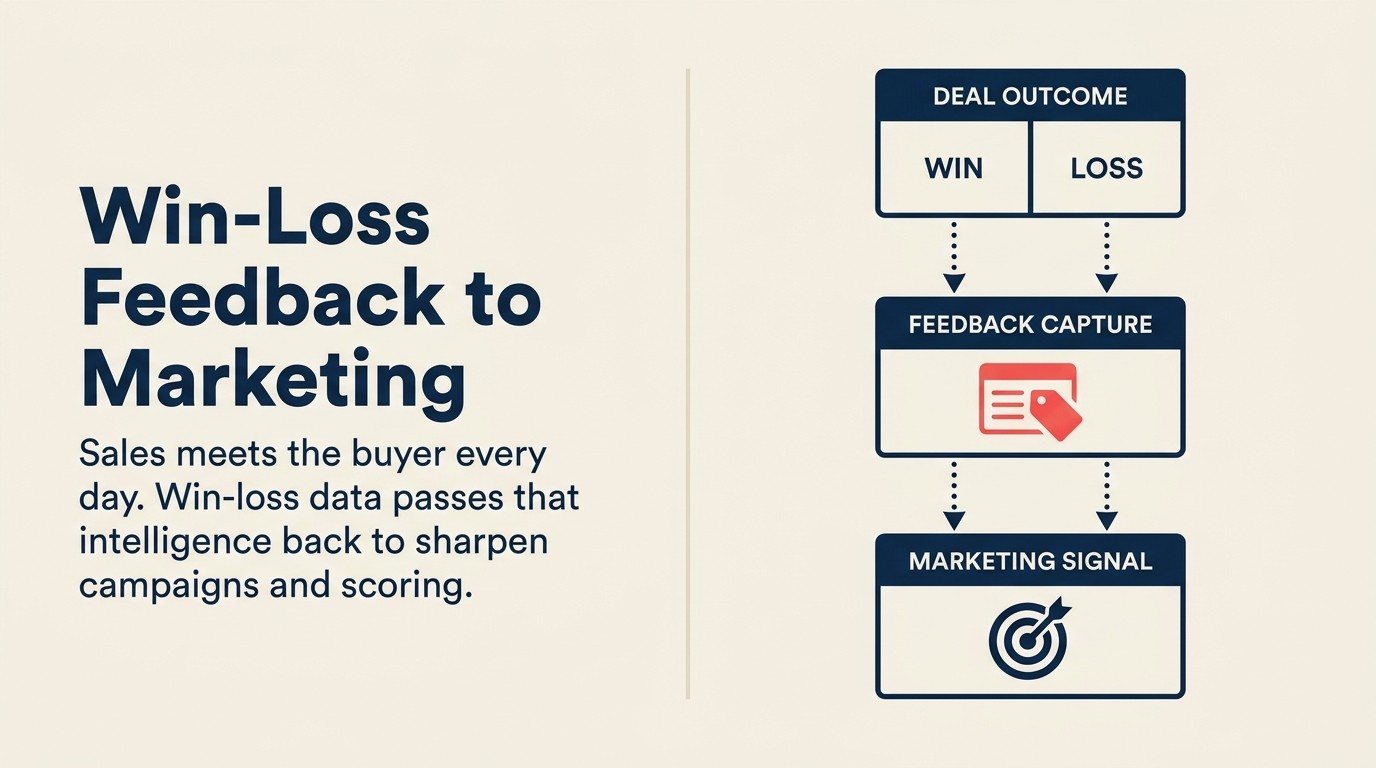
Sales bertemu pembeli itu setiap Selasa. Dan Rabu mereka bertemu yang lainnya. Pada Jumat mereka sudah melakukan 15 percakapan dengan manusia nyata yang entah membeli atau tidak. Dalam percakapan tersebut, rep sales mempelajari dengan tepat apa yang beresonansi, apa yang menimbulkan keberatan, dan kompetitor mana yang muncul sebagai alternatif.
Intelijen itu jarang sampai kembali ke marketing. Tim sales yang berbagi data win-loss terstruktur dengan marketing melaporkan pengurangan 23% dalam panjang siklus penjualan karena pembeli tiba lebih teredukasi tentang topik yang tepat, menurut riset Aberdeen Group. Tapi hanya ketika feedback bersifat sistematis, bukan sesekali. Bukan karena rep menyembunyikannya. Karena tidak ada sistem untuk meneruskannya. Win-loss feedback menutup kesenjangan itu, bukan melalui program riset formal, tapi melalui kebiasaan terstruktur yang masuk dalam workflow penutupan normal. Riset Forrester tentang analisis win/loss menunjukkan bahwa sebagian besar perusahaan B2B melacak win rate tapi jarang mengungkap alasan nyata di balik win dan loss. Glosarium marketing-sales alignment mendefinisikan ICP, MQL, SQL, dan istilah lain yang membuat percakapan ini tepat sasaran.
Apa itu Win-Loss Feedback dalam Konteks Ini
Ini bukan program riset win-loss formal. Itu gerakan yang berbeda: mewawancarai pembeli pasca-keputusan, biasanya dijalankan oleh product marketing atau perusahaan pihak ketiga.
Ini adalah sesuatu yang lebih kecil dan lebih berkelanjutan: intelijen terstruktur yang mengalir dari sales ke marketing sebagai bagian dari proses penutupan normal. Ketika rep menutup deal, menang atau kalah, mereka mengisi tiga field wajib. Hanya itu. Output-nya menyuplai roadmap konten marketing, model scoring, dan keputusan kampanye pada cadence bulanan.
Ada tiga jenis feedback, dan masing-masing memberitahu marketing sesuatu yang berbeda.
Wawasan deal yang menang memberi tahu marketing pesan mana yang beresonansi, channel mana yang menarik pembeli yang benar-benar membeli, dan profil firmografis mana yang cocok dengan definisi ICP bersama Anda saat penutupan, bukan hanya saat lead score.
Wawasan deal yang kalah memberi tahu marketing di mana kompetitor menang, keberatan mana yang muncul sebelum sales bahkan berkesempatan merespons, dan segmen mana yang terus Anda kalah (dan mungkin tidak seharusnya ditarget sama sekali).
Wawasan no-decision (yang sering diremehkan) memberi tahu marketing pembeli mana yang benar-benar berada di tahap awal dan membutuhkan track nurture yang berbeda, versus pembeli yang mengadakan rapat tapi tidak akan pernah membeli. Inilah lead yang menggelembungkan pipeline dan menekan tingkat konversi Anda.
Fakta Penting: Intelijen Sales dan Efektivitas Marketing
- Perusahaan yang secara sistematis menangkap win-loss feedback meningkatkan win rate mereka sebesar 15-30% dalam 12 bulan implementasi, menurut riset Win-Loss Analysis Gartner.
- 65% sales rep melaporkan bahwa konten yang diproduksi marketing tidak mencerminkan keberatan yang sebenarnya mereka hadapi dalam deal, menurut Forrester's 2024 B2B Sales Enablement Survey.
- 42% deal yang hilang ke kompetitor hilang karena kesenjangan pesan, bukan kesenjangan produk. Marketing bisa menangani keberatan tersebut sebelum sales bahkan masuk ke percakapan, menurut analisis win-loss SiriusDecisions.
Mengapa Sales Tidak Memberi Feedback Tanpa Sistem
Tanyakan kepada marketing leader mana pun apakah mereka ingin feedback sales tentang apa yang berhasil di lapangan. Jawabannya selalu ya. Tanyakan kepada RevOps lead mana pun apakah mereka mendapatkannya secara konsisten. Jawabannya hampir tidak pernah ya.
Kegagalan ini bukan tentang kemauan. Ini tentang struktur insentif dan gesekan.
Rep yang baru saja menutup deal, menang atau kalah, sudah beralih secara mental. Perhatian mereka ada di deal berikutnya. Menulis paragraf tentang mengapa yang terakhir berjalan seperti yang terjadi menguntungkan marketing. Tidak membantu rep mencapai kuota bulan ini. Tanpa sistem yang membuat feedback bergesekan rendah dan ekspektasi eksplisit, itu tidak akan terjadi.
Feedback free-text juga adalah musuh. Jika CRM memiliki field teks berlabel "catatan deal", marketing akan menerima campuran "pelanggan yang baik", "masalah harga", dan entri kosong. Itu tidak dapat ditindaklanjuti pada skala besar. Dan apa pun yang membutuhkan lebih dari tiga menit terasa seperti administrasi, yang berarti bersaing dengan penjualan aktual.
Solusinya adalah struktur. Tiga field, wajib di setiap opportunity yang ditutup. Pilihan dropdown jika memungkinkan. Satu field free-text opsional jika rep ingin menambahkan konteks. Maksimal dua menit.
Kerangka Sintesis Intelijen Win-Loss
Data deal mentah bukan intelijen. Intelijen adalah yang terjadi ketika Anda menjalankan data deal melalui proses sintesis yang konsisten. Kerangka Sintesis Intelijen Win-Loss mengubah data close CRM menjadi keputusan marketing bulanan melalui empat tahap.
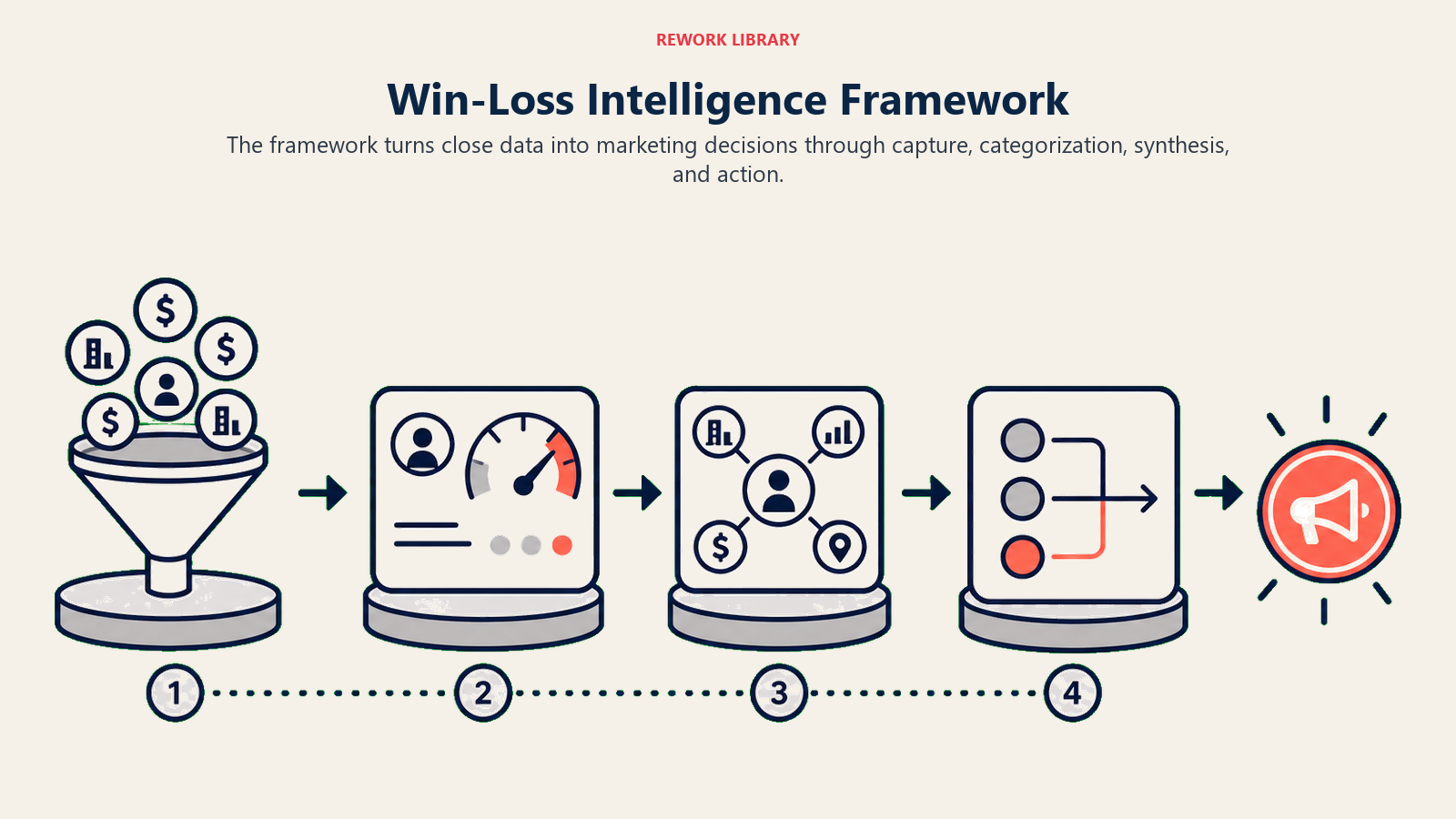
Tahap 1: Tangkap (saat penutupan). Tiga field CRM wajib diisi oleh rep dalam 48 jam setelah penutupan: alasan win/loss utama, kompetitor yang terlibat, dan satu field free-text. Field wajib, bukan opsional. Ini adalah gerbang entri data.
Tahap 2: Agregasi (mingguan). RevOps atau demand gen menarik ringkasan penutupan mingguan: total penutupan, win rate, alasan win teratas, alasan loss teratas, kompetitor teratas. Tidak ada interpretasi pada tahap ini. Hanya visibilitas pola di cukup banyak deal untuk melihat sinyal versus noise.
Tahap 3: Sintesis (bulanan). Rapat win-loss review bulanan memetakan pola win dan loss ke kesenjangan marketing spesifik: kampanye mana, aset mana, segmen mana, positioning kompetitor mana. Di sinilah data mentah menjadi item roadmap konten atau keputusan penghentian kampanye.
Tahap 4: Bertindak dan mengukur (bergulir 60 hari). Setiap wawasan dari tahap sintesis dipetakan ke tindakan marketing dengan jendela pengukuran 60 hari. Apakah konten positioning kompetitif mengurangi loss di segmen di mana kompetitor menang? Apakah menghentikan kampanye yang berkinerja buruk meningkatkan win rate keseluruhan? Jendela pengukuran 60 hari menutup loop dari intelijen ke hasil.
Analisis Rework: Titik kegagalan paling umum dalam program win-loss adalah Tahap 3: rapat sintesis tidak pernah terjadi atau tidak menghasilkan tindakan yang dikomitmenkan. Berdasarkan pola di berbagai tim B2B, perbedaan antara program yang meningkatkan win rate dan yang tidak terletak pada satu hal: apakah rapat bulanan menghasilkan output tertulis dengan pemilik yang disebutkan. Data yang didiskusikan tapi tidak ditindaklanjuti terakumulasi tanpa mempengaruhi apa pun. Output tertulis adalah yang mengubah rapat menjadi proses.
Feedback Loop Minimum yang Layak
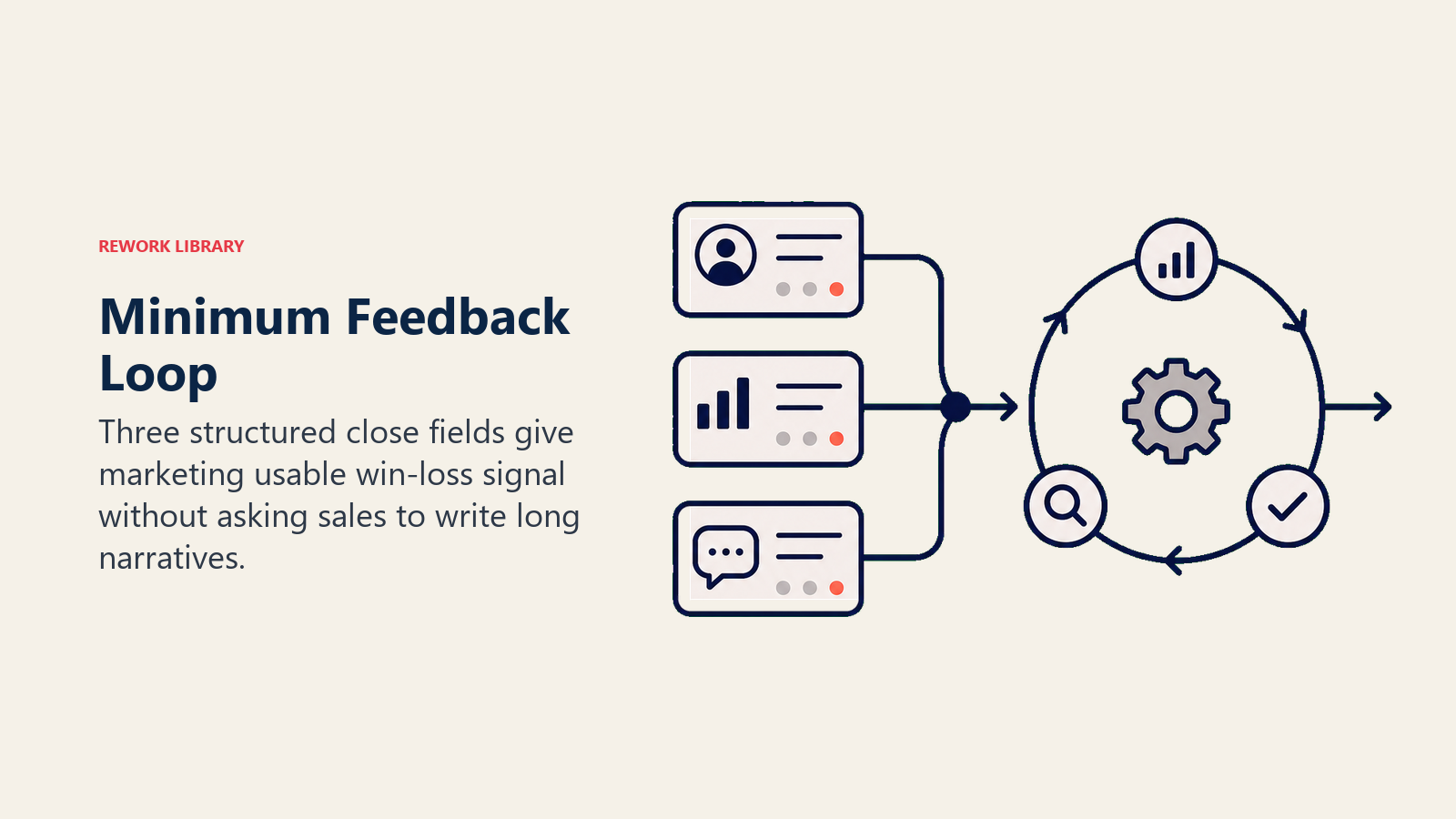
Tiga field di setiap opportunity yang ditutup, menang atau kalah, menangkap sebagian besar yang dibutuhkan marketing.
| Field | Format | Opsi |
|---|---|---|
| Alasan utama menang / kalah | Dropdown wajib | Keunggulan harga, Kesesuaian produk, Kalah dari kompetitor, Champion pergi, Tidak ada keputusan/timing, Onboarding buruk, Pesan beresonansi, Lainnya |
| Kompetitor yang terlibat | Dropdown opsional + "Tidak ada" | [Daftar 6-8 kompetitor teratas Anda] + Tidak ada + Tidak diketahui |
| Satu hal yang bisa dilakukan marketing secara berbeda | Free text opsional | Tidak ada minimum karakter, tidak ada maksimum karakter |
Hanya itu. Jika catatan deal Anda memiliki tiga field ini yang terisi, marketing memiliki bahan baku untuk diproses. Field ketiga sengaja opsional karena field opsional mendapatkan respons yang lebih jujur. Ketika rep mengisinya, mereka serius.
Ketiga field ini membutuhkan 90 detik bagi rep yang mengenal deal-nya. Jadikan wajib untuk penutupan deal di CRM Anda. Bukan pengingat, bukan dorongan. Field wajib yang mencegah pergerakan tahap hingga terisi. Setelah menjadi gerbang proses, kepatuhan meningkat. Kebencian berkurang ketika rep memahami untuk apa data itu digunakan.
Apa yang Dilakukan Marketing dengan Data Win
Data win mengkonfirmasi apa yang berhasil. Dan konfirmasi itu sangat diremehkan nilainya. Sebagian besar tim marketing tidak memilikinya.
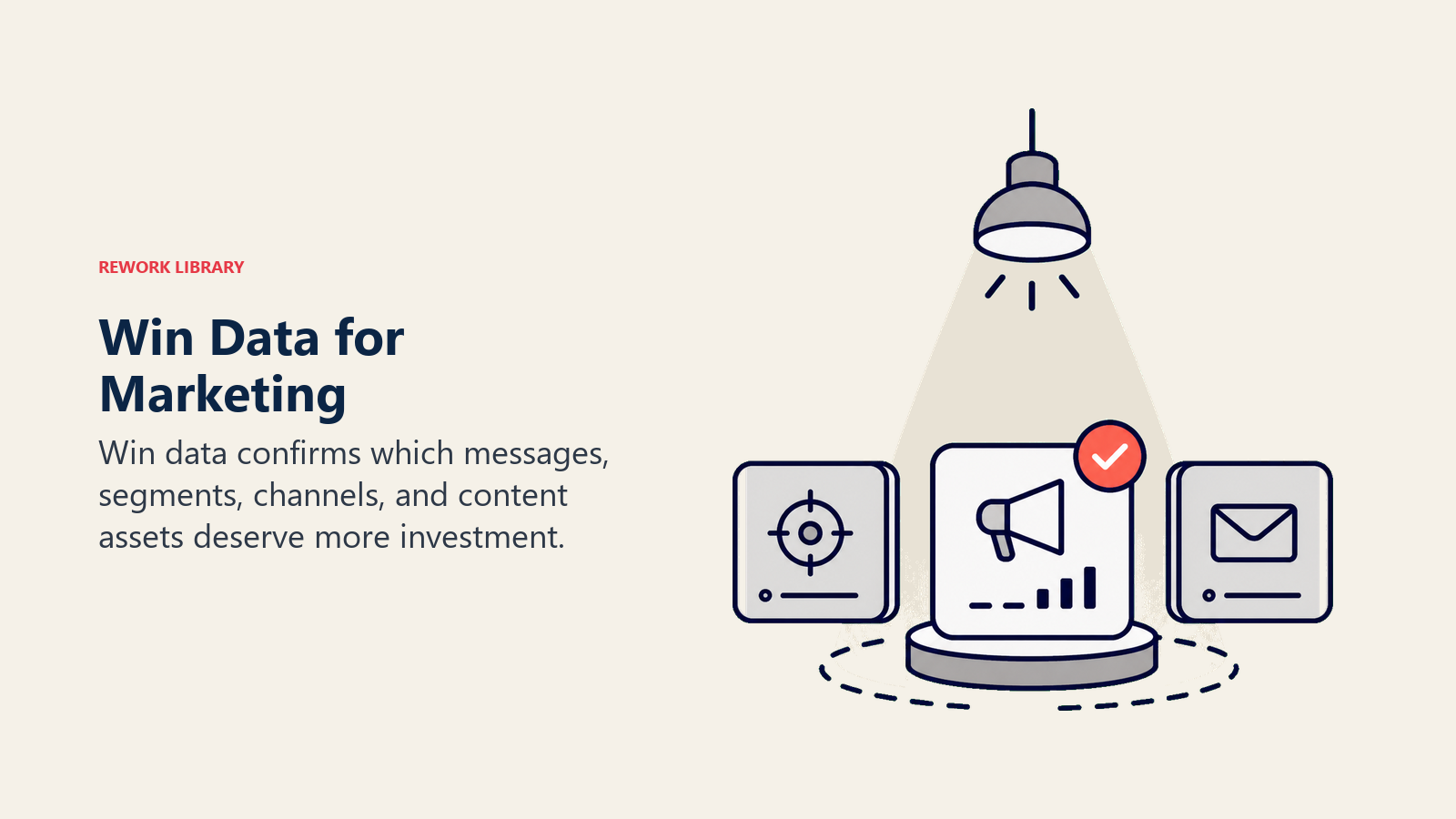
Validasi pesan. Klaim nilai mana yang muncul dalam percakapan yang ditutup? Jika rep menandai "Kesesuaian produk" sebagai alasan menang untuk deal yang dimulai dari kampanye tertentu, pesan kampanye tersebut beresonansi. Gandakan investasi padanya. Bangun lebih banyak konten dalam vein itu.
Konfirmasi channel. Data win memungkinkan Anda melampaui tingkat konversi ke close rate berdasarkan channel. Kampanye organic search dengan tingkat MQL-ke-SQL 12% mungkin mengungguli kampanye berbayar dengan 20% MQL-ke-SQL, jika lead organik ditutup pada 25% dan lead berbayar pada 8%. Tanpa data win, Anda akan menskalakan kampanye berbayar. Pipeline yang bersumber dari marketing vs. yang dipengaruhi menunjukkan cara mengatribusikan kontribusi channel secara akurat.
Penyempurnaan ICP. Profil firmografis mana yang muncul dalam deal yang menang? Jika marketing Anda menarget perusahaan dengan 200-500 karyawan tapi data closed-won Anda secara konsisten menunjukkan 50-150 karyawan, ICP Anda salah. Panduan analisis win/loss Gartner mencatat bahwa program win/loss yang ketat memungkinkan segmentasi yang lebih baik dan pilihan strategi produk, dengan pendekatan komprehensif menunjukkan peningkatan pendapatan 15-30%. Sesuaikan dan perbarui model lead scoring dan segmen penargetan Anda agar cocok dengan apa yang benar-benar ditutup.
ROI konten. Jika rep mereferensikan aset tertentu dalam percakapan deal yang menang (panduan perbandingan, kalkulator ROI, studi kasus dari industri tertentu), konten tersebut layak mendapat investasi lebih dan penempatan lebih menonjol dalam buyer journey. Tanpa data win, marketing mengukur unduhan. Dengannya, marketing mengukur pengaruh deal.
Apa yang Dilakukan Marketing dengan Data Loss
Data loss lebih sulit diproses secara emosional dan lebih berharga secara strategis.
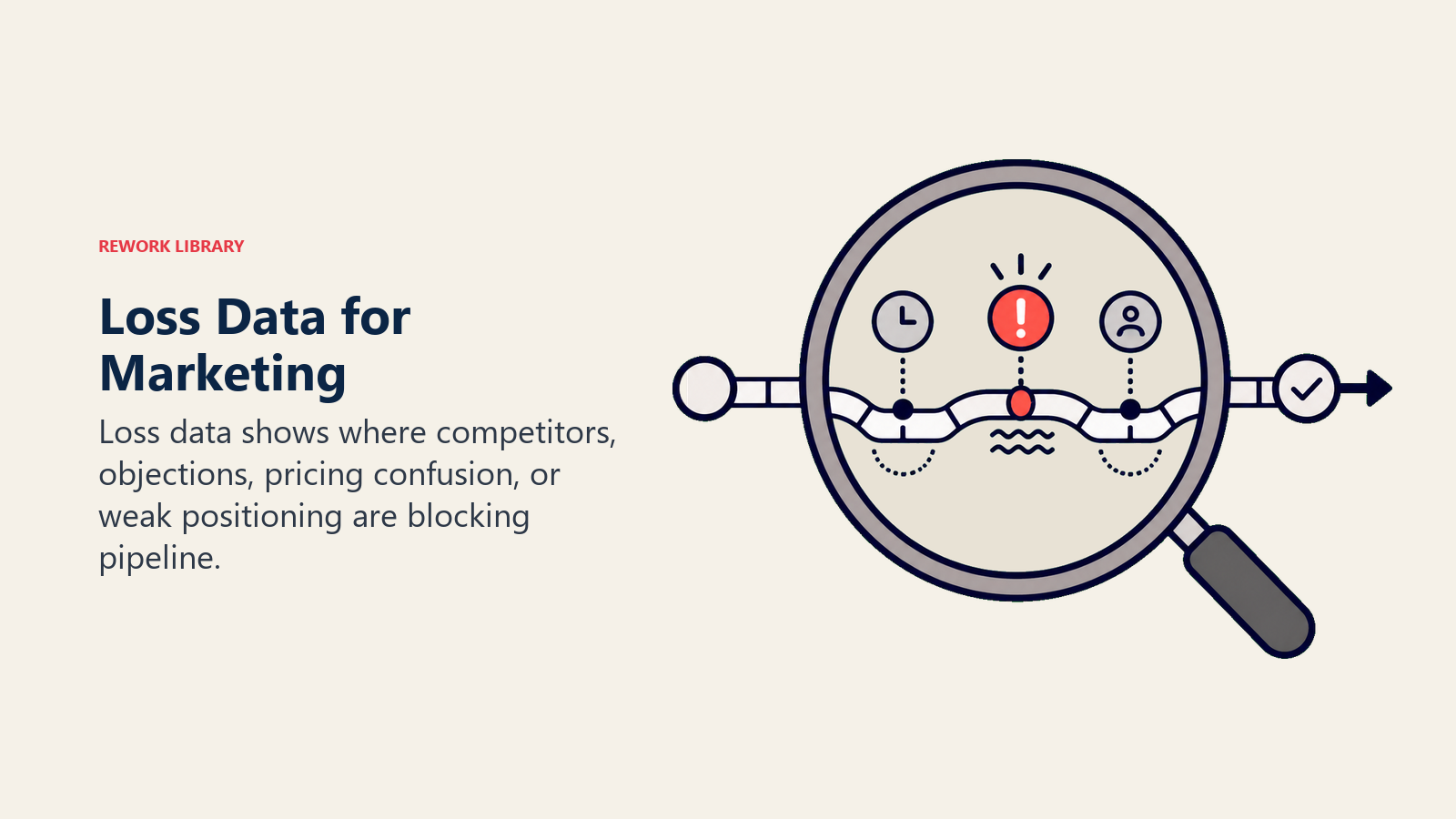
Intelijen kompetitif. Ketika Anda melihat kompetitor muncul dalam 40% deal yang hilang, itu adalah sinyal. Kompetitor mana? Di segmen mana? Pada ukuran deal berapa? Jika deal mid-market secara konsisten pergi ke kompetitor tertentu, marketing perlu memproduksi konten yang menangani perbandingan head-to-head sebelum sales bahkan melakukan kontak. Pembeli yang meneliti sendiri sedang menemukan konten kompetitor tersebut sebelum berbicara dengan rep Anda.
Pemetaan keberatan. Ketika "harga" muncul sebagai alasan loss secara konsisten, insting pertama adalah menandainya sebagai masalah produk/harga. Kadang memang begitu. Tapi lebih sering ini adalah masalah komunikasi nilai: pembeli tidak memahami mengapa harga Anda dibenarkan. Itu adalah kesenjangan marketing: konten yang menjelaskan ROI, total cost of ownership, atau payback period, ditempatkan sebelum percakapan harga terjadi. Kerangka kerja analisis deal yang hilang memunculkan pola loss mana yang struktural versus sekali saja.
Penyempitan ICP. Beberapa segmen kehilangan lebih banyak daripada yang dimenangkan. Jika Anda secara konsisten kalah di industri atau ukuran perusahaan tertentu, pertanyaan jujurnya adalah apakah Anda seharusnya menarget mereka sama sekali. Marketing seharusnya bisa mengidentifikasi, dari 90 hari data loss, dua atau tiga segmen di mana win rate Anda di bawah 15% dan mengusulkan penghentian pengeluaran pada segmen tersebut.
Sinyal positioning. Ketika alasan loss terkonsentrasi di sekitar keberatan tertentu seperti "produk Anda tidak melakukan X" dan X adalah sesuatu yang ditawarkan kompetitor, itu adalah kesenjangan produk. Marketing harus menandainya, bukan memilikinya, dan meneruskannya ke product leadership. Tapi marketing juga bisa membangun konten yang mengontekstualisasikan mengapa X kurang penting dari yang dipikirkan pembeli, atau memposisikan roadmap Anda secara jujur, sementara produk mengejar ketinggalan.
Rapat Win-Loss Review Bulanan
Feedback yang tidak ditinjau tidak mengubah apa pun. Win-loss review bulanan adalah mekanisme konversi tindakan.
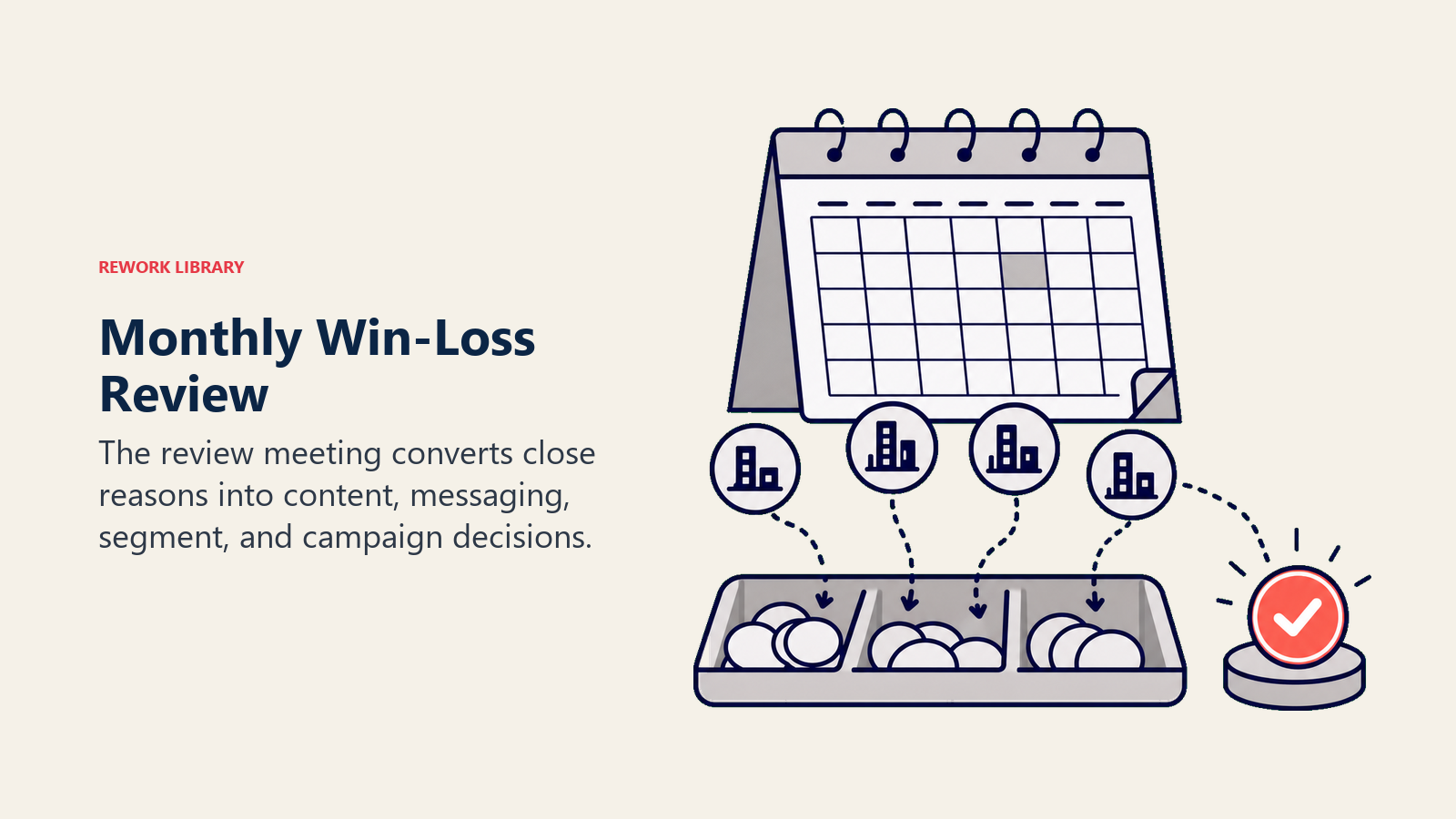
Siapa yang hadir: Demand gen lead, content lead, satu atau dua sales rep (rotasi roster dari bulan ke bulan untuk mendapatkan perspektif berbeda), dan RevOps jika tersedia untuk menarik data.
Format: 30 menit, terstruktur. Tidak lebih. Jika melebihi waktu, itu menjadi rapat yang dihindari orang.
Agenda:
- Menit 0-10: Tinjauan data. RevOps atau demand gen menyajikan ringkasan win-loss bulan ini: total penutupan, win rate, alasan win teratas, alasan loss teratas, kompetitor teratas.
- Menit 10-20: Diskusi pola. Satu pola win dan satu pola loss diperiksa mendalam. Apa yang disarankan data? Apakah cocok dengan apa yang dilihat rep di lapangan?
- Menit 20-30: Tindakan. Tiga hingga lima tindakan marketing keluar dari rapat: konten yang perlu dibangun, segmen kampanye yang perlu dihentikan, halaman kompetitor yang perlu diperbarui, bobot scoring yang perlu disesuaikan.
Output: Dokumen bersama dengan keputusan dan pemilik untuk setiap tindakan. Tanpa output tertulis, wawasan menguap di antara rapat dan sprint berikutnya.
Cara Memasukkan Wawasan ke Roadmap Konten
Alasan loss memetakan ke kesenjangan konten. Berikut cara terjemahan ini bekerja.
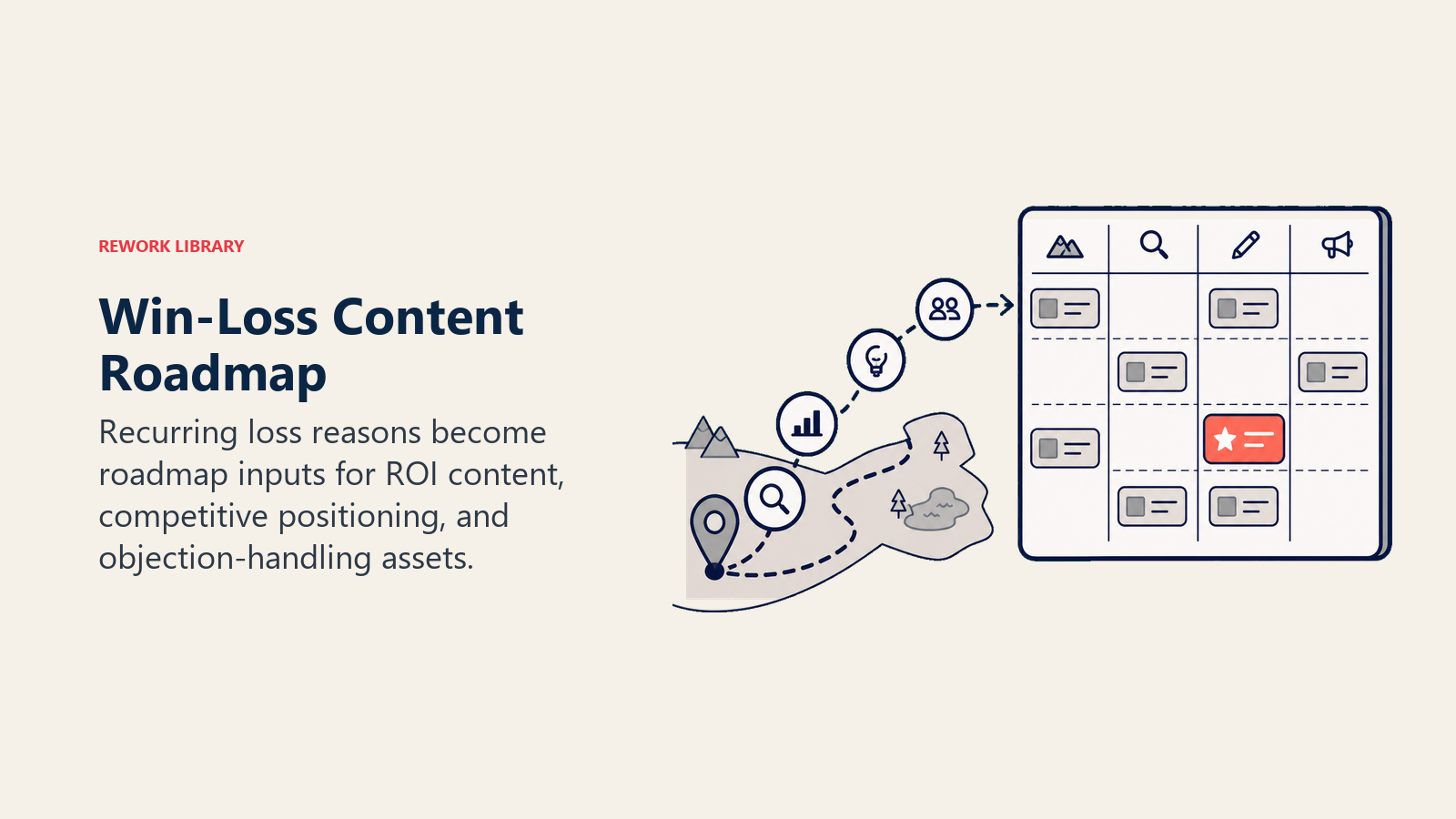
Jika "kebingungan harga" adalah alasan loss yang berulang, kesenjangan konten adalah komunikasi ROI dan nilai. Tambahkan halaman penjelasan harga yang detail, kalkulator ROI, atau artikel "mengapa kami mengenakan harga seperti ini."
Jika kompetitor muncul dalam 30% deal yang hilang, kesenjangan adalah positioning kompetitif. Bangun halaman perbandingan, posting blog yang menangani klaim marketing kompetitor tersebut secara langsung, dan one-pager sales enablement yang bisa digunakan rep dalam percakapan.
Jika "terlalu awal / belum siap" sering muncul dalam alasan loss, kesenjangan adalah konten nurture. Pembeli memasuki pipeline sebelum siap, dan marketing membutuhkan konten tahap menengah yang mendidik tanpa mendorong untuk demo.
Rapat review bulanan harus memetakan setidaknya dua alasan loss ke item konten spesifik untuk rencana konten 60 hari berikutnya. Dari waktu ke waktu, ini membangun roadmap konten yang berakar pada apa yang benar-benar dikatakan pembeli alih-alih apa yang diasumsikan marketing. Untuk tampilan tingkat lapangan yang saling melengkapi, proses voice of customer dari win-loss menangkap bahasa pembeli langsung dari wawancara.
Perusahaan B2B yang mengimplementasikan program win-loss terstruktur mengalami pertumbuhan pendapatan 50% lebih tinggi dibandingkan yang mengandalkan feedback informal, berdasarkan data benchmarking APQC di 500 perusahaan. Perbedaan antara sintesis sistematis dan anekdot informal sebesar itu.
Apa yang Ditambahkan Closed-Loop Reporting di Atasnya
Win-loss feedback bersifat kualitatif. Ini menceritakan kisahnya. Closed-loop reporting bersifat kuantitatif. Ini menceritakan polanya. Riset HBR tentang analitik sales-marketing membuat poin yang sama: data dan intelijen lapangan perlu bekerja bersama, dan tidak ada yang menggantikan yang lain.
Bersama mereka lebih kuat daripada salah satunya saja. Win-loss feedback mungkin memunculkan hipotesis: "Kami terus kehilangan deal mid-market ke Kompetitor X karena pembeli tidak memahami keunggulan implementasi kami." Data closed-loop dapat menguji hipotesis tersebut pada skala besar: apakah deal mid-market yang menyertakan studi kasus implementasi kami ditutup pada tingkat lebih tinggi daripada yang tidak?
Tanpa lapisan kuantitatif, Anda bertindak berdasarkan anekdot. Tanpa lapisan kualitatif, Anda mengoptimalkan angka tanpa memahami mengapa mereka bergerak.
Bangun win-loss feedback terlebih dahulu. Lebih cepat, teknologi lebih rendah, dan menghasilkan item tindakan segera. Bangun closed-loop reporting di atasnya seiring sistem matang. Dan munculkan pola dalam cadence joint pipeline review sehingga kedua tim melihat tren win-loss bersama.
Kesalahan Umum
Hanya free-text. Jika satu-satunya mekanisme feedback adalah field teks terbuka, Anda akan mendapatkan data yang tidak konsisten dan tidak bisa dicari. Anda tidak bisa menganalisis pola di 200 alasan loss ketika masing-masing adalah kalimat yang unik. Dropdown terlebih dahulu, free text sebagai suplemen.
Mengumpulkan feedback tapi tidak menindaklanjutinya. Tim marketing yang mengimplementasikan feedback loop lalu tidak pernah mereferensikannya dalam keputusan roadmap konten mereka menghancurkan kepercayaan rep terhadap proses. Jika rep mengisi field dan tidak ada yang pernah berubah, mereka berhenti mengisi field. Rapat review bulanan dengan output yang dipublikasikan adalah yang membuktikan data digunakan.
Memperlakukan setiap loss sebagai kesenjangan produk. Reaksi refleks terhadap data loss adalah meneruskannya ke tim produk: "Sales bilang kami terus kalah karena kami tidak memiliki fitur X." Kadang itu benar. Tapi 42% loss kompetitif, menurut SiriusDecisions, adalah loss pesan. Pembeli tidak memahami nilai yang sudah ada. Sebelum mengeskalasinya ke produk, marketing harus bertanya apakah nilai dikomunikasikan dengan cukup jelas, pada tahap yang tepat, dalam format yang tepat. Kerangka kerja konten sales enablement vs. kebutuhan lapangan adalah tempat yang tepat untuk mengaudit kesenjangan tersebut.
Pertanyaan yang Sering Diajukan tentang Win-Loss Feedback ke Marketing
Apa itu win-loss feedback ke marketing?
Win-loss feedback ke marketing adalah proses terstruktur untuk menyampaikan intelijen hasil deal dari sales rep ke tim marketing sebagai bagian dari workflow penutupan normal. Ini bukan program riset pihak ketiga formal. Ini tiga field CRM wajib (alasan win/loss utama, kompetitor yang terlibat, dan catatan free-text opsional) yang diisi rep saat penutupan deal, diagregasi bulanan menjadi keputusan marketing.
Siapa yang harus melakukan wawancara win-loss atau mengumpulkan data win-loss?
Untuk pendekatan berbasis CRM ringan yang dijelaskan di sini, rep yang memiliki deal menangkap data saat penutupan. Untuk program wawancara win-loss formal, product marketing biasanya menjalankannya, sering dengan perusahaan pihak ketiga untuk memastikan pembeli berbicara dengan jujur. Pendekatan berbasis CRM lebih cepat dan lebih skalabel untuk sebagian besar tim; program wawancara formal menambah kedalaman tapi membutuhkan sumber daya yang didedikasikan.
Haruskah win-loss feedback ditangkap secara kuartalan atau terus-menerus?
Terus-menerus, di tingkat deal, dengan sintesis bulanan. Menangkap feedback hanya pada interval kuartalan menimbulkan lag: kesenjangan pesan kompetitif yang muncul di Januari tidak sampai ke tim konten sampai April, tiga bulan setelah bisa ditangani. Penangkapan terus-menerus, dengan rapat sintesis bulanan untuk mengagregasi pola, memberikan siklus feedback tercepat tanpa membanjiri tim marketing dengan titik data individual.
Apa cara terbaik untuk menutup loop setelah mengumpulkan data win-loss?
Rapat win-loss review bulanan adalah mekanismenya. Harus menghasilkan output tertulis dengan tiga hingga lima tindakan marketing yang disebutkan, masing-masing dengan pemilik dan jendela pengukuran 60 hari. Mempublikasikan output ke marketing dan sales mengkonfirmasi bahwa data digunakan, yang mempertahankan kepatuhan rep dengan tiga field CRM wajib. Tanpa tindakan yang terlihat pada data, rep berhenti mengisi field.
Bagaimana cara menangani data win-loss yang menunjuk ke kesenjangan produk daripada kesenjangan marketing?
Sampaikan ke tim produk, tapi jangan berhenti di situ. Sebelum merutekan pola loss ke produk, marketing harus terlebih dahulu bertanya apakah kemampuan produk ada tapi kurang dijelaskan. Riset dari SiriusDecisions menunjukkan 42% loss kompetitif adalah loss pesan, bukan kesenjangan produk: kemampuannya ada tapi pembeli tidak tahu. Bangun konten yang menjelaskan nilai sebelum menandainya sebagai permintaan produk.
Berapa banyak deal yang Anda butuhkan sebelum data win-loss bermakna secara statistik?
Pada 20 atau lebih deal yang ditutup per bulan, pola dalam alasan win dan loss mulai menjadi sinyal yang andal daripada noise. Di bawah volume tersebut, perlakukan cerita deal individual sebagai hipotesis arah, bukan kesimpulan statistik. Win-loss review bulanan harus membingkai pola volume rendah sebagai "sinyal awal yang layak dilacak" daripada sebagai tren yang dikonfirmasi yang membutuhkan tindakan segera.
Apa perbedaan antara win-loss feedback dan closed-loop reporting?
Win-loss feedback bersifat kualitatif: menceritakan kisah di balik mengapa deal berjalan seperti yang terjadi. Closed-loop reporting bersifat kuantitatif: menceritakan pola statistik di semua deal berdasarkan sumber, segmen, dan kampanye. Win-loss feedback mungkin memunculkan hipotesis bahwa pembeli dari channel tertentu tidak memahami keunggulan implementasi Anda. Closed-loop reporting memungkinkan Anda menguji apakah deal dari channel tersebut ditutup pada tingkat lebih rendah dari rata-rata. Keduanya diperlukan; tidak ada yang menggantikan yang lain.
Pelajari Lebih Lanjut

Principal Solution Architect
On this page
- Apa itu Win-Loss Feedback dalam Konteks Ini
- Mengapa Sales Tidak Memberi Feedback Tanpa Sistem
- Kerangka Sintesis Intelijen Win-Loss
- Feedback Loop Minimum yang Layak
- Apa yang Dilakukan Marketing dengan Data Win
- Apa yang Dilakukan Marketing dengan Data Loss
- Rapat Win-Loss Review Bulanan
- Cara Memasukkan Wawasan ke Roadmap Konten
- Apa yang Ditambahkan Closed-Loop Reporting di Atasnya
- Kesalahan Umum
- Pelajari Lebih Lanjut