Bahasa Indonesia
Apa itu Marketing-Sales Alignment: Model Operasional Tim Revenue
Turn this article into takeaways for your work.


Each assistant summarizes the article only for you and suggests best practices for your work.
Setiap kuartal, rapat yang sama terjadi di ruang-ruang konferensi di seluruh negeri. Marketing menyajikan angkanya: lead naik. Sales menyajikan close rate-nya: konversi stabil. Revenue flat. Kedua pihak benar tentang angka mereka sendiri. Keduanya bingung tentang angka pihak lain.
Di suatu tempat di tengah-tengah, pipeline senilai jutaan dolar diam-diam bocor.
Kesenjangan itu, antara penyerahan marketing dan tindak lanjut sales, adalah yang sesungguhnya merugikan akibat misalignment. Tidak ada tim yang malas. Keduanya bekerja keras, mengoptimalkan metrik mereka sendiri, beroperasi berdasarkan definisi "qualified" versi masing-masing. Masalahnya bukan upaya. Masalahnya adalah mereka memainkan permainan yang berbeda dengan aturan berbeda di lapangan yang sama.
Marketing-sales alignment adalah pekerjaan membuat kedua tim memainkan permainan yang sama.
Apa Sebenarnya Marketing-Sales Alignment
Alignment bukan inisiatif budaya. Bukan offsite tim. Bukan "membuat semua orang saling menyukai satu sama lain."
Marketing-sales alignment adalah model operasional bersama yang dibangun di atas kesepakatan eksplisit tentang siapa pelanggannya, kapan lead sudah siap, bagaimana handoff terjadi, siapa menindaklanjuti apa dan kapan, serta bagaimana data mengalir kembali untuk menginformasikan kampanye berikutnya.
Hapus buzzword-nya dan Anda tersisa dengan empat blok bangunan konkret:
1. ICP dan definisi lead bersama Kedua tim telah sepakat, secara tertulis, tentang jenis perusahaan dan kontak yang ingin mereka jangkau, termasuk perilaku atau atribut spesifik apa yang membuat lead "marketing qualified lead (MQL)." Bukan perasaan intuitif. Bukan tebakan. Kriteria tertulis yang disetujui oleh kedua tim. Kerangka ICP bersama (ideal customer profile) menjelaskan persis bagaimana membangun dan memelihara dokumen tersebut.
2. Tahapan funnel dan kriteria handoff yang disepakati Ada proses terdokumentasi tentang kapan dan bagaimana lead berpindah dari kepemilikan marketing ke kepemilikan sales. Marketing tahu persis apa yang harus diserahkan. Sales tahu persis apa yang diharapkan. Titik handoff bukan zona abu-abu.
3. SLA bersama yang memiliki dampak nyata Service-level agreement (SLA) berarti marketing berkomitmen pada volume lead, ambang kualitas, dan kondisi handoff. Sales berkomitmen pada timing tindak lanjut, dokumentasi penolakan, dan feedback loop. Kedua pihak bisa dimintai pertanggungjawaban karena komitmen terdokumentasi, bukan hanya tersirat. Template SLA marketing-sales dapat mempercepat proses dokumentasi tersebut secara signifikan.
4. Feedback loop tertutup menggantikan pelaporan satu arah Sales tidak hanya menerima lead. Sales mengirimkan kembali data hasil: lead mana yang dikonversi, mana yang ditolak, dan mengapa. Data tersebut mengalir ke keputusan marketing tentang penargetan, pesan, dan bauran channel. Loop benar-benar tertutup.
Keempat kesepakatan ini adalah model operasionalnya. Semua hal lain (alat, struktur organisasi, cadence) mendukung kesepakatan-kesepakatan itu. Tapi tanpa kesepakatan, tidak ada jumlah akses CRM bersama atau channel Slack smarketing yang akan menggerakkan jarum.
Fakta Penting: Biaya dan Peluang Alignment
- Perusahaan dengan marketing-sales alignment yang kuat mencapai pertumbuhan pendapatan tahunan 20%, dibandingkan penurunan 4% di perusahaan dengan alignment yang buruk, menurut riset Aberdeen Group.
- Perusahaan yang aligned melihat win rate 38% lebih tinggi dan pertumbuhan profit 27% lebih cepat selama periode tiga tahun, menurut riset Marketo dan TechTarget.
- SiriusDecisions menemukan bahwa organisasi B2B dengan tim yang aligned menghasilkan 208% lebih banyak marketing revenue.
Apa yang Bukan Alignment
Perlu ditegaskan, karena banyak inisiatif alignment gagal karena mengacaukan tujuan dengan perjalanan.
Alignment bukan "marketing mendukung sales." Model subordinasi, di mana marketing ada untuk mengisi funnel dan sales memutuskan apa yang layak dikejar, menghasilkan tepat dinamika yang menyebabkan misalignment. Sales bisa menolak lead tanpa akuntabilitas. Marketing disalahkan atas shortfall revenue yang tidak pernah mereka lihat. Kedua pihak kalah.
Alignment bukan mereorganisasi agar satu tim melapor ke tim lain. Menempatkan CMO di bawah CRO mengubah bagan organisasi. Itu tidak mengubah masalah mendasar, yaitu bahwa dua fungsi tersebut membutuhkan definisi bersama dan feedback loop. Anda bisa memiliki alignment sempurna dengan jalur pelaporan terpisah, dan disfungsi total dengan yang digabungkan.
Alignment bukan berbagi CRM. Akses ke sistem data yang sama adalah syarat dasar. Alignment adalah apa yang Anda sepakati untuk dilakukan dengan data tersebut, dan akuntabilitas apa yang Anda bangun di sekitar kesepakatan itu. CRM yang penuh MQL yang tidak pernah disentuh sales adalah masalah alignment, bukan kesenjangan teknologi.
Biaya Revenue dari Misalignment
Dasar finansial untuk alignment dimulai dari kesenjangan revenue yang tercipta oleh handoff yang lambat, definisi yang buruk, dan feedback yang terputus.
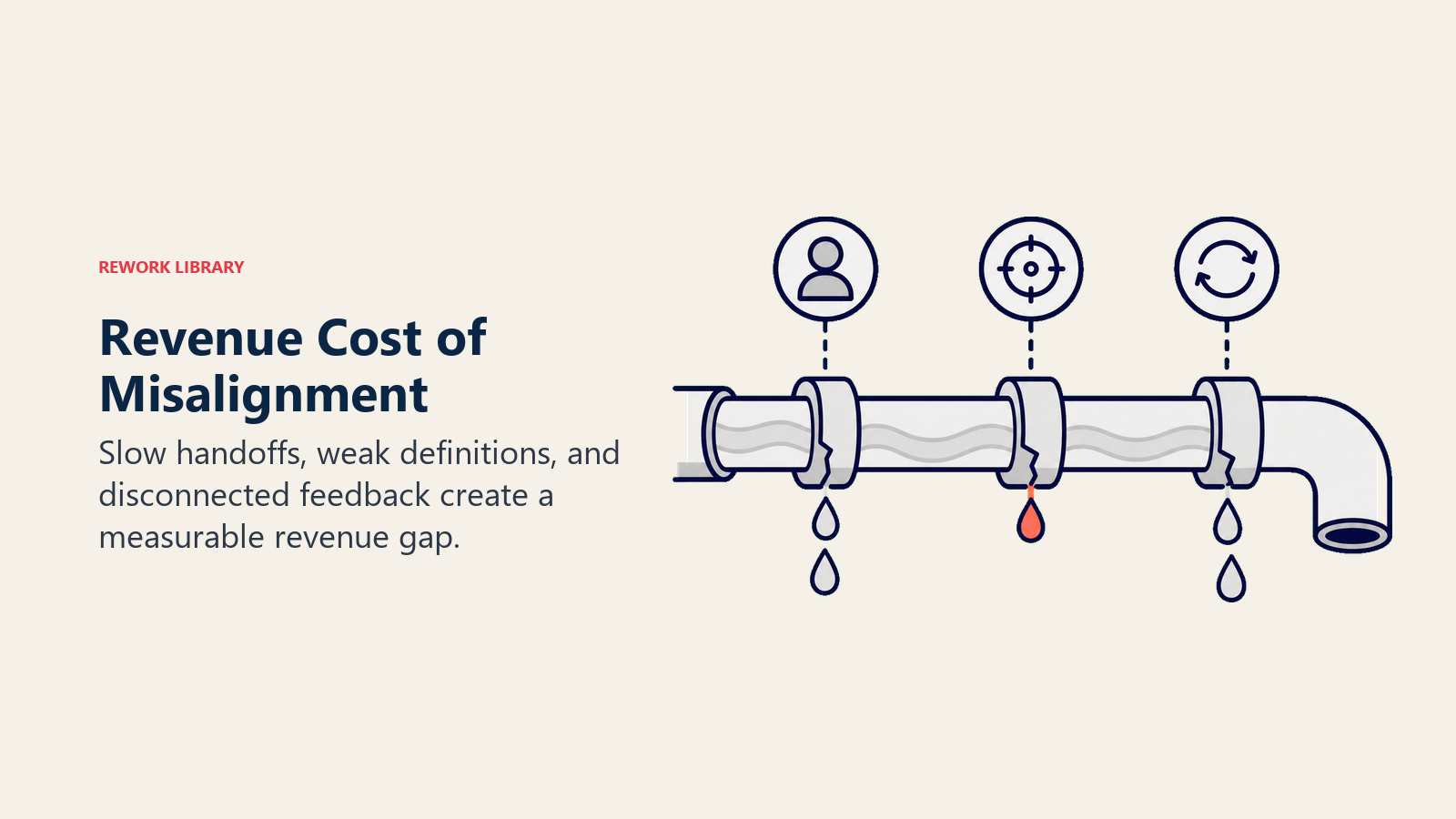 Tiga angka yang dirasakan langsung oleh CMO maupun CRO:
Pemborosan pipeline: Ketika marketing dan sales memiliki definisi "qualified" yang berbeda, lead masuk ke antrean sales yang langsung dikenali sales sebagai salah. Rep menghabiskan waktu mendiskualifikasi lead yang seharusnya tidak pernah diserahkan. Waktu itu tidak kembali. Dan lead yang benar-benar layak dikejar dihubungi satu jam kemudian, atau tidak sama sekali. Analisis Harvard Business Review terhadap 2,24 juta lead menemukan bahwa merespons dalam 5 menit versus 30 menit membuat perbedaan 21x dalam tingkat kualifikasi.
Inflasi CAC: Tanpa feedback loop tertutup, marketing terus menginvestasikan anggaran ke channel dan pesan yang diketahui sales tidak menghasilkan konversi. Biaya per pelanggan yang diperoleh naik karena kampanye dioptimalkan untuk sinyal yang salah. Marketing disalahkan karena lead yang mahal. Tapi akar masalahnya adalah tidak ada yang memberi tahu mereka apa yang sebenarnya berhasil di hilir.
Hambatan panjang siklus: Ketika handoff berjalan buruk, ketika prospek mendengar satu cerita dari marketing dan mendapatkan cerita yang berbeda dari sales, atau ketika ada jeda antara pengisian formulir dan kontak pertama, deal melambat. Prospek kehilangan momentum. Kompetitor yang bergerak lebih cepat menang. Setiap hari tambahan panjang siklus mengalikan dampaknya di seluruh pipeline.
Biaya-biaya ini terukur. Mereka muncul dalam data win rate, dalam tren CAC, dalam rata-rata hari untuk menutup. Tetapi biaya hanyalah separuh gambaran. Apa yang sebenarnya dibuka oleh perbaikan model operasional?
Analisis Rework: Berdasarkan benchmark SiriusDecisions dan Aberdeen Group, perusahaan yang beralih dari smarketing informal ke model operasional empat pilar terdokumentasi (ICP bersama + SLA + kriteria handoff + feedback loop tertutup) melihat win rate meningkat 15-38% dalam 12 bulan. Leverage tertinggi ada di transisi Tahap 2-ke-3: memformalkan apa yang sudah disepakati secara informal membuka keuntungan performa tanpa restrukturisasi organisasi besar. Kerangka kami menyarankan kesepakatan ICP adalah langkah pertama dengan ROI tertinggi: ini membuka semua perbaikan hilir.
Empat Pilar Alignment
Keempat pilar menerjemahkan alignment dari tujuan hubungan menjadi model operasional yang dapat ditinjau dan ditingkatkan.
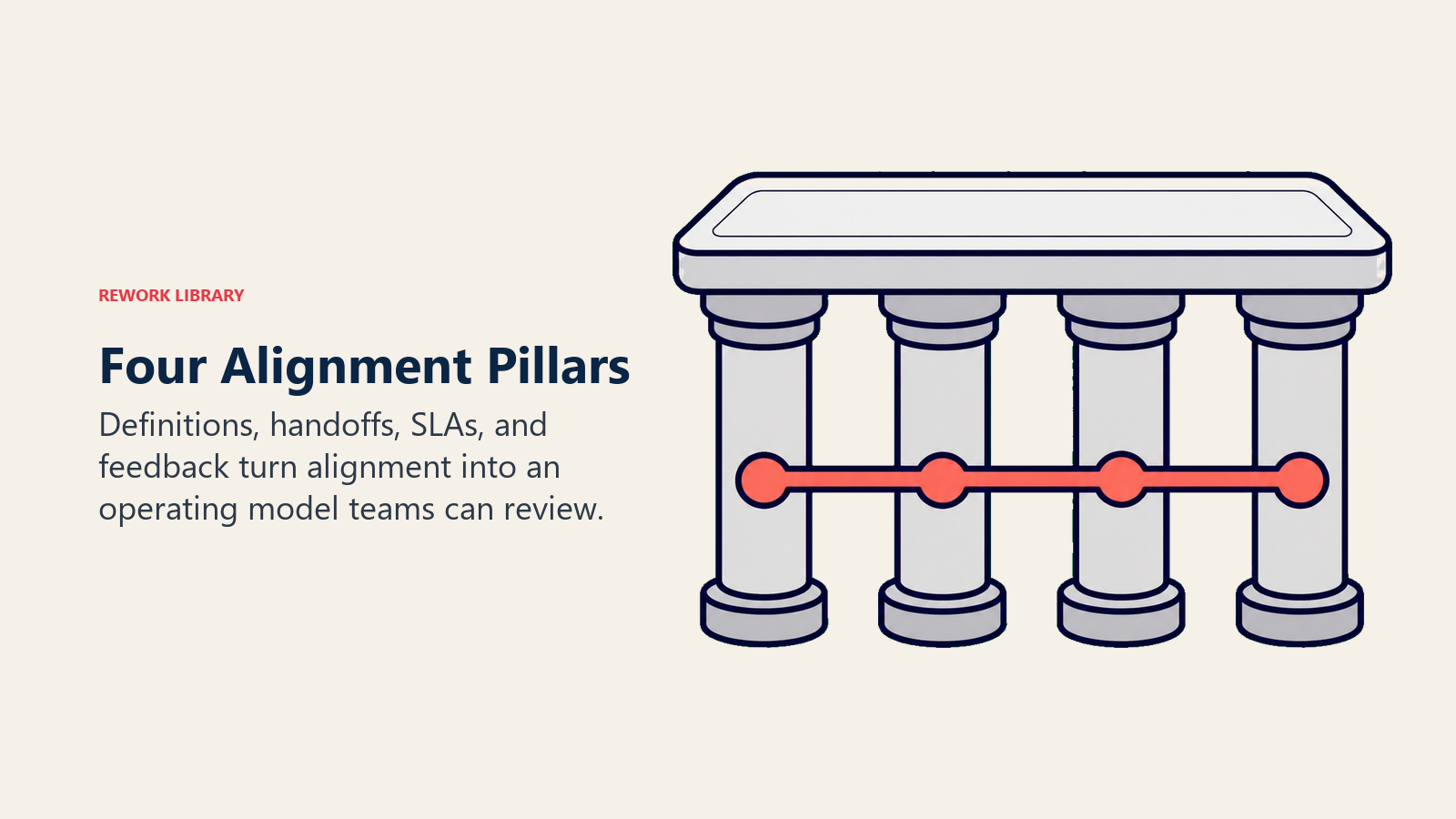 Berikut model operasional yang dipetakan ke empat pilar:
Pilar 1: Definisi Fondasi. Kedua tim sepakat tentang: ICP (firmografis dan perilaku), tahapan lead (MQL, SQL (sales qualified lead), SAL, opportunity), dan kriteria apa yang memindahkan lead dari satu tahap ke tahap berikutnya. Tanpa definisi bersama, setiap pilar lain dibangun di atas pasir.
Pilar 2: Handoff Mekanismenya. Kapan marketing menyerahkan lead ke sales? Melalui sistem apa? Dengan konteks apa yang dilampirkan? Apa yang terjadi jika sales tidak menindaklanjuti? Seperti apa penolakan itu, dan data apa yang dibutuhkan? Proses handoff adalah titik di mana alignment bertahan atau gagal. Artikel tentang proses handoff MQL ke SQL membahas mendalam setiap mekanisme ini.
Pilar 3: Feedback Loop-nya. Bagaimana data hasil sales kembali ke marketing? Pada cadence apa? Dalam format apa? Siapa yang bertanggung jawab untuk memunculkan pola: "vertikal ini mengonversi 3x lebih baik" atau "lead dari channel ini tidak pernah melewati discovery"? Feedback adalah tempat alignment mengalami efek compounding dari waktu ke waktu.
Pilar 4: Operasi Mesinnya. Cadence rapat bersama (pipeline sync mingguan, tinjauan SLA bulanan, revisit ICP kuartalan). Dashboard yang dilihat kedua tim bersama. Proses eskalasi ketika SLA tidak terpenuhi. Fungsi RevOps (revenue operations) atau ops yang memelihara sistem. Operasi adalah yang membuat tiga pilar lainnya bertahan.
Sebagian besar tim tahu mereka membutuhkan alignment yang lebih baik. Lebih sedikit yang tahu pilar mana dari keempat pilar ini yang sebenarnya rusak. Di situlah pekerjaan diagnostik dimulai.
Apa yang Tidak Dicakup Alignment (Batasan Cakupan)
Koleksi ini secara khusus berfokus pada titik temu antara marketing dan sales: definisi bersama, mekanisme handoff, SLA, dan operasi feedback loop tertutup yang menghubungkan dua fungsi tersebut.
Tidak mencakup:
- Taktik pembuatan lead tingkat channel (paid search, SEO, strategi konten, event marketing): hal-hal tersebut ada di koleksi marketing yang berdedikasi
- Metodologi forecasting dan kebersihan pipeline: itu adalah topik manajemen pipeline
- Taktik negosiasi dan mekanisme deal: hal itu ada di kerangka deal-closing
- Eksekusi customer success pasca-close: itu adalah wilayah pasca-penjualan
Cakupan ini disengaja. Artikel alignment yang mencoba mencakup segalanya akhirnya tidak mencakup apa pun yang berguna. Glosarium marketing-sales alignment mendefinisikan kosakata bersama yang digunakan di seluruh koleksi ini.
SMB vs Enterprise: Satu Penyesuaian yang Mengubah Segalanya
Kerangka ini dapat diskalakan, tetapi tim yang lebih kecil dan tim enterprise membutuhkan tingkat formalitas yang berbeda agar kerangka ini bertahan.
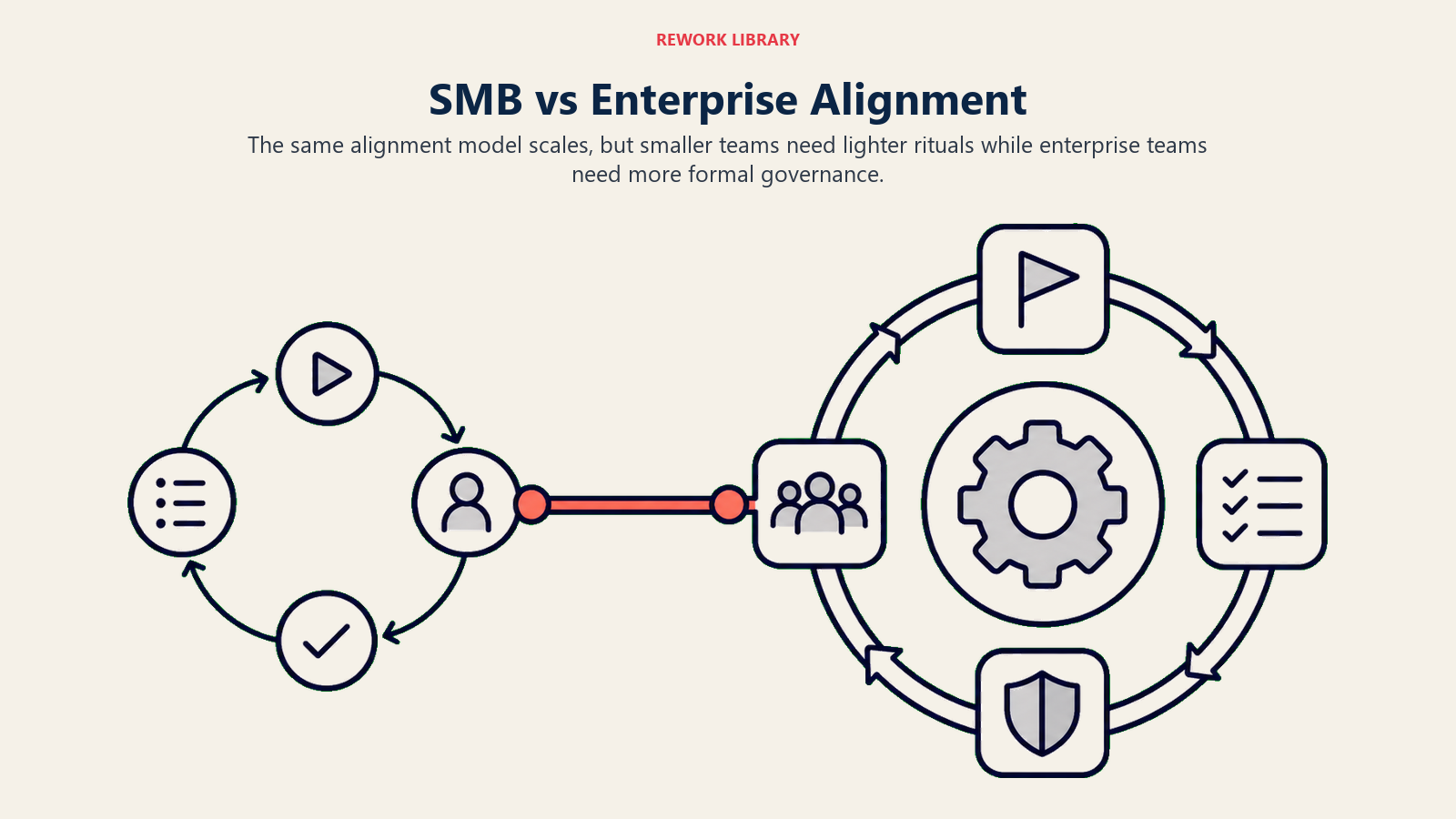 Kerangka empat pilar ini dapat diskalakan. Tapi titik awalnya terlihat berbeda tergantung ukuran tim.
Untuk SMB (tim revenue 1-5 orang): Satu orang mungkin mengenakan topi marketing dan sales. Misalignment tetap terjadi, hanya secara internal. Founder yang menghasilkan lead melalui konten juga melakukan discovery call, dan handoff dari "tertarik" ke "qualified" hidup sepenuhnya di kepala mereka sendiri. Solusinya tetap dokumentasi: tuliskan apa yang membuat lead layak dihubungi.
Untuk mid-market (tim revenue 10-30 orang): Di sinilah empat pilar memiliki leverage terbesar. Tim cukup terspesialisasi sehingga handoff nyata, tapi cukup kecil sehingga menempatkan semua orang dalam satu ruangan untuk percakapan definisi masih layak dilakukan. Sebagian besar koleksi ini ditulis untuk tahap ini.
Untuk enterprise (tim revenue 100+ orang): Alignment menjadi fungsi RevOps. Kesepakatan perlu dikodekan dalam sistem, bukan hanya norma tim. Karyawan baru harus di-onboard ke model bersama. Cadence smarketing perlu dijadwalkan, bukan ad hoc. Penjelasan smarketing dan RevOps alignment membahas bagaimana model berkembang di setiap tahap.
Tampilan Tim yang Aligned dengan Baik pada 6 Bulan
Tampilan enam bulan memberi para pemimpin bukti praktis bahwa alignment telah menjadi ritme kerja, bukan sekadar proyek peluncuran.
 Berikut sinyal kematangan. Enam bulan setelah kesepakatan diberlakukan, tim revenue yang aligned dengan baik terlihat seperti ini:
- Marketing dan sales menjawab pertanyaan ICP dengan cara yang sama, tanpa diminta, tanpa melihat dokumen
- Tingkat penolakan MQL telah turun, bukan karena sales menerima lead yang lebih buruk, tapi karena definisinya diperjelas dan marketing berhenti mengirim yang salah
- Waktu respons lead di bawah dua jam untuk inbound yang qualified
- Data win-loss dari sales menyuplai keputusan penargetan kuartal berikutnya dari marketing
- Rapat pipeline mingguan memiliki kedua tim dalam ruangan, keduanya bertanggung jawab, tidak ada tim yang mempresentasikan ke tim lain
- Karyawan sales baru mendapatkan sesi marketing dalam dua minggu pertama mereka, bukan sebagai formalitas, tapi karena proses onboarding memang mensyaratkannya
Tidak ada dari ini yang merupakan pencapaian budaya. Semuanya adalah hasil operasional. Mereka merupakan hasil dari kesepakatan yang dibuat, didokumentasikan, dan dipelihara.
Cara Menggunakan Koleksi Ini sebagai Daftar Bacaan Bersama
Artikel-artikel dalam koleksi ini dirancang untuk dibaca bersama oleh CMO dan CRO, atau siapa pun yang memimpin marketing dan sales di perusahaan Anda. Setiap artikel mencakup satu mekanisme spesifik dalam model operasional alignment.
Urutan bacaan yang disarankan:
- Mulai di sini (model dasar)
- Biaya Misalignment: kuantifikasi apa yang Anda kehilangan
- 8 Tanda Peringatan Misalignment: diagnosis posisi Anda
- Model Kematangan Alignment: identifikasi tahap Anda dan target berikutnya
Dari sana, koleksi bercabang berdasarkan pilar (definisi, handoff, feedback, operasi) sehingga Anda bisa mendalami area yang paling bermasalah.
Tujuannya bukan membaca semuanya. Tujuannya adalah menemukan kesepakatan spesifik yang hilang, memperbaikinya, dan pindah ke berikutnya. Alignment dibangun secara bertahap. Tim yang mencoba menerapkan keempat pilar sekaligus biasanya berakhir tanpa satu pun yang berhasil.
Mulailah dengan definisi bersama. Selebihnya akan mengikuti.
Pertanyaan yang Sering Diajukan tentang Apa itu Marketing-Sales Alignment
Apa itu marketing-sales alignment?
Marketing-sales alignment adalah model operasional bersama di mana kedua tim sepakat tentang siapa pelanggan ideal, kapan lead siap untuk diserahkan, bagaimana handoff terjadi, dan bagaimana data hasil mengalir kembali ke marketing. Ini bukan inisiatif budaya atau perbaikan kepribadian: ini adalah sekumpulan kesepakatan terdokumentasi dengan akuntabilitas di kedua pihak.
Mengapa marketing-sales alignment penting untuk revenue?
Perusahaan dengan alignment kuat rata-rata mencapai pertumbuhan pendapatan tahunan 20%, versus penurunan tahunan 4% di perusahaan dengan alignment yang buruk, menurut Aberdeen Group. Kesenjangan ini didorong oleh empat kegagalan yang saling memperparah dalam tim yang tidak aligned: tindak lanjut lead yang terlambat, lead yang ditolak tanpa feedback, pesan yang bertentangan, dan anggaran marketing yang ditujukan ke segmen yang tidak dikonversi.
Siapa yang memiliki marketing-sales alignment?
Alignment dimiliki bersama oleh CMO dan CRO, atau siapa pun yang memimpin marketing dan sales di perusahaan Anda. Tidak ada fungsi yang bisa memaksakan alignment secara sepihak. Dalam organisasi yang berkembang, fungsi RevOps atau operator netral sering menjaga proses akuntabel ketika dua kepala fungsi tidak sepakat.
Apa perbedaan antara smarketing dan RevOps?
Smarketing adalah model alignment budaya dan operasional yang bekerja melalui tujuan bersama, rapat bersama, dan kosakata bersama: tidak memerlukan perubahan struktural. RevOps adalah fungsi operasional formal yang mengkodekan alignment ke dalam sistem data, desain proses, dan tata kelola teknologi. Smarketing tepat untuk perusahaan tahap awal; RevOps adalah infrastruktur yang tepat di Series B ke atas.
Apa itu marketing-sales SLA?
Marketing-sales SLA (Service Level Agreement) adalah sekumpulan komitmen terdokumentasi dari kedua fungsi: marketing berkomitmen pada volume lead, ambang kualitas, dan kondisi handoff; sales berkomitmen pada timing tindak lanjut, dokumentasi penolakan, dan frekuensi feedback. SLA menciptakan akuntabilitas bersama: kedua tim dapat dipegang pada standar yang spesifik dan terukur, bukan ekspektasi yang samar.
Seperti apa handoff marketing-sales yang baik?
Handoff yang dirancang dengan baik menentukan dengan tepat kapan kepemilikan berpindah (berdasarkan tahap lead atau ambang scoring), konteks apa yang dilampirkan pada setiap lead, siapa yang diberi notifikasi dan bagaimana, berapa waktu tindak lanjut yang diharapkan, dan seperti apa penolakan itu (termasuk data apa yang dibutuhkan ketika lead dikembalikan). Titik handoff bukan zona abu-abu; ini adalah proses terdokumentasi dengan SLA.
Berapa lama waktu yang dibutuhkan untuk mencapai alignment yang bermakna?
Sebagian besar tim revenue mid-market dapat berpindah dari Tahap 1 (sepenuhnya terpisah) ke Tahap 3 (terintegrasi, dengan SLA formal) dalam satu hingga dua kuartal jika kedua kepala fungsi memprioritaskannya. Langkah yang paling memakan waktu adalah sesi ICP awal, yang membutuhkan pengumpulan data deal yang menang dan churn serta membuat kedua tim sepakat pada kriteria tertulis. Setelah itu, SLA dan cadence rapat biasanya membutuhkan empat hingga enam minggu untuk diterapkan dan distabilkan.
Pelajari Lebih Lanjut

Principal Solution Architect
On this page
- Apa Sebenarnya Marketing-Sales Alignment
- Apa yang Bukan Alignment
- Biaya Revenue dari Misalignment
- Empat Pilar Alignment
- Apa yang Tidak Dicakup Alignment (Batasan Cakupan)
- SMB vs Enterprise: Satu Penyesuaian yang Mengubah Segalanya
- Tampilan Tim yang Aligned dengan Baik pada 6 Bulan
- Cara Menggunakan Koleksi Ini sebagai Daftar Bacaan Bersama
- Pelajari Lebih Lanjut