Bahasa Indonesia
Lead Scoring Model Decay: Mengapa Model Scoring Anda Menjadi Usang dan Cara Memperbaikinya
Turn this article into takeaways for your work.


Each assistant summarizes the article only for you and suggests best practices for your work.
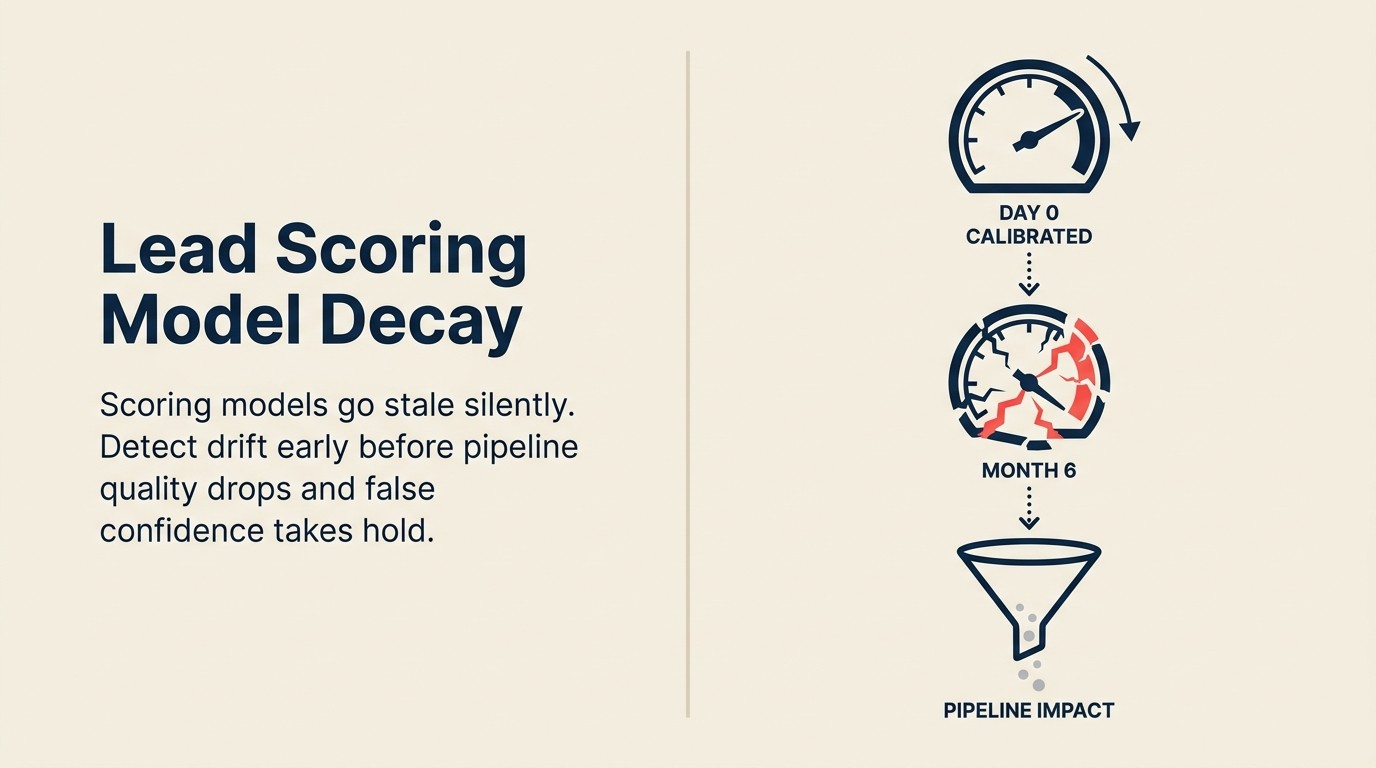
Ada pola di hampir setiap organisasi marketing B2B yang telah menjalankan lead scoring lebih dari 18 bulan. Model ini diluncurkan dengan baik. Sales mempercayai skor tersebut. Konversi MQL-to-opportunity terlihat solid. Kemudian, secara diam-diam, segalanya mulai menurun.
Tingkat penolakan perlahan meningkat. Sales mulai meragukan kualitas MQL. Angka pipeline-from-marketing melemah. Tidak ada yang bisa menunjuk satu perubahan yang menyebabkannya. Hal itu saja... terjadi.
Yang terjadi adalah model decay.
Hanya 44% perusahaan B2B yang meninjau atau mengkalibrasi ulang model lead scoring mereka lebih dari sekali per tahun (Forrester Research), artinya sebagian besar tim revenue bertindak berdasarkan logika scoring yang tidak lagi mencerminkan pembeli mereka.
Kehadiran webinar sebagai sinyal behavioral scoring dapat kehilangan hingga 60% kekuatan prediktifnya dalam 12 bulan seiring pergeseran pola kehadiran, dan sebagian besar tim tidak mendeteksi decay hingga tingkat penolakan sudah naik (riset Bizible/Marketo).
Tim revenue B2B yang menggunakan data closed-loop untuk mengkalibrasi ulang bobot scoring melaporkan akurasi 36% lebih tinggi dalam memprediksi konversi SQL dibandingkan tim yang mengandalkan konfigurasi scoring default MAP (MarketingProfs).
Ini bukan bug, bukan kebersihan data yang buruk (meskipun itu bisa mempercepatnya), dan bukan masalah kampanye. Model scoring itu sendiri menyimpang dari keselarasan dengan cara pembeli Anda sebenarnya berperilaku hari ini. Bobot yang ditetapkan untuk perilaku, atribut firmografi, dan sinyal intent dibangun berdasarkan data dari 18 bulan yang lalu. Saat itu, Anda memiliki produk yang berbeda, ICP yang berbeda, dan campuran konten yang berbeda. Pembeli Anda tidak sama. Model Anda tidak mendapat memo.
Bagian terburuknya adalah model yang sudah terdegradasi memberi Anda kepercayaan diri palsu. Model yang tidak pernah ada setidaknya membuat Anda jujur. Model yang dulunya berfungsi, tetapi tidak lagi, menghasilkan aliran steady lead "berkualitas" yang diam-diam berhenti dikerjakan oleh sales. Dan dashboard masih terlihat baik-baik saja.
Mengapa Model Scoring Mengalami Decay
Decay bukan satu hal. Ini adalah akumulasi beberapa pergeseran kecil, tidak satu pun yang merusak model sendiri, tetapi semuanya menurunkannya bersama-sama seiring waktu.
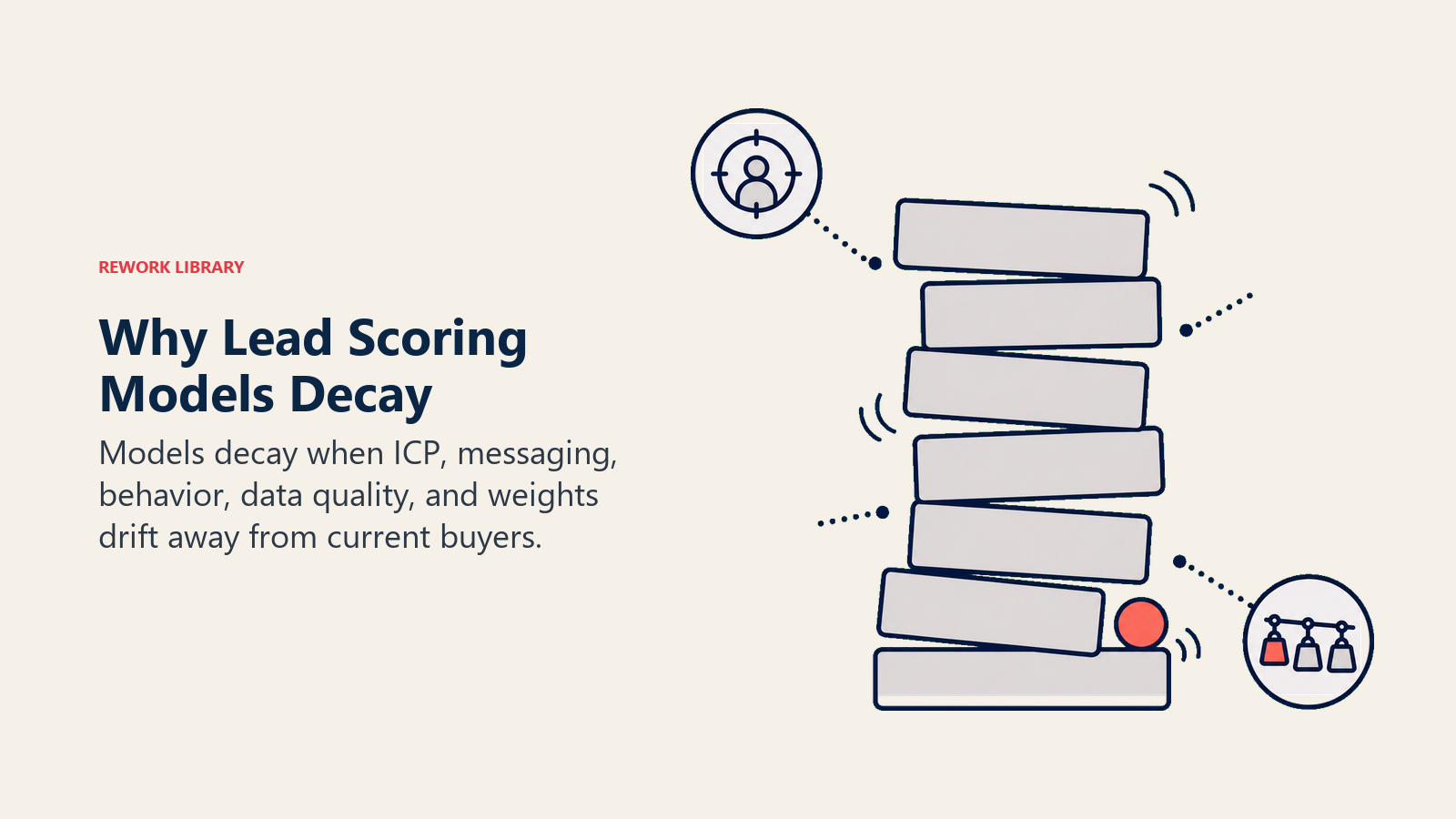
Pergeseran pasar dan ICP. Pernyataan ICP Anda dari 18 bulan yang lalu mungkin tidak lagi menggambarkan pembeli terbaik Anda. Jika Anda telah bergerak ke pasar atas, menambahkan vertikal baru, atau mengalihkan fokus dari SMB ke mid-market, atribut firmografi yang dulunya memprediksi kecocokan (ukuran perusahaan, industri, tech stack) mungkin memerlukan bobot yang berbeda. Model tidak tahu strategi Anda berubah. Shared ICP framework saat ini yang disepakati oleh kedua tim adalah titik referensi untuk setiap kalibrasi ulang bobot.
Perubahan produk dan pesan. Fitur baru menciptakan use case baru. Use case baru menarik persona baru. Jika produk Anda menambahkan lapisan manajemen proyek tahun lalu, Anda sekarang menarik pemimpin ops yang tidak ada dalam model ICP asli Anda. Pola perilaku mereka terlihat berbeda dari demand-gen manager yang dibangun model tersebut.
Drift sinyal perilaku. Saluran dan format yang mendorong sinyal intent 18 bulan yang lalu mungkin tidak lagi memiliki makna yang sama. Kehadiran webinar dulunya merupakan sinyal mid-funnel yang kuat. Sekarang, dengan kelelahan virtual event, seseorang yang duduk melalui webinar mungkin kurang terlibat daripada seseorang yang membaca tiga posting blog tertentu. Jika model scoring Anda masih memberi bobot kehadiran webinar sebesar 15 poin, ini melebih-lebihkan intent untuk banyak lead. Analisis Forrester tentang kegagalan model scoring mengidentifikasi signal drift sebagai penyebab paling umum tetapi paling jarang didiagnosis dari penurunan akurasi model.
Degradasi kualitas data. Catatan menjadi usang. Field berhenti diisi. Integrasi rusak. Skor yang bergantung pada umpan data tech stack berhenti diperbarui ketika layanan enrichment tersebut kedaluwarsa. Anda sekarang memberi skor pada field yang kosong.
Inersia bobot scoring. Tidak ada yang mengkalibrasi ulang karena tidak ada yang terlihat rusak. Model terus berjalan. Laporan terus menghasilkan angka. Diperlukan intervensi yang disengaja untuk menyadari bahwa angka tersebut kurang bermakna dari sebelumnya.
Fakta Kunci: Keandalan Model Lead Scoring
- Hanya 44% perusahaan B2B yang meninjau atau mengkalibrasi ulang model lead scoring mereka lebih dari sekali per tahun, menurut Forrester Research, artinya sebagian besar beroperasi dengan logika yang sudah usang.
- Perusahaan yang menerapkan audit scoring kuartalan melihat peningkatan 20-30% dalam tingkat MQL-to-pipeline dibandingkan tim yang meninjau tahunan, per data survei Demand Gen Report.
- Tim revenue yang menggunakan data closed-loop untuk mengkalibrasi ulang bobot scoring melaporkan akurasi 36% lebih tinggi dalam memprediksi konversi SQL dibandingkan tim yang mengandalkan konfigurasi scoring default MAP (MarketingProfs).
Perbedaan Signal Decay dan Model Decay
Ini adalah masalah yang terkait tetapi berbeda, dan keduanya memerlukan perbaikan yang berbeda.
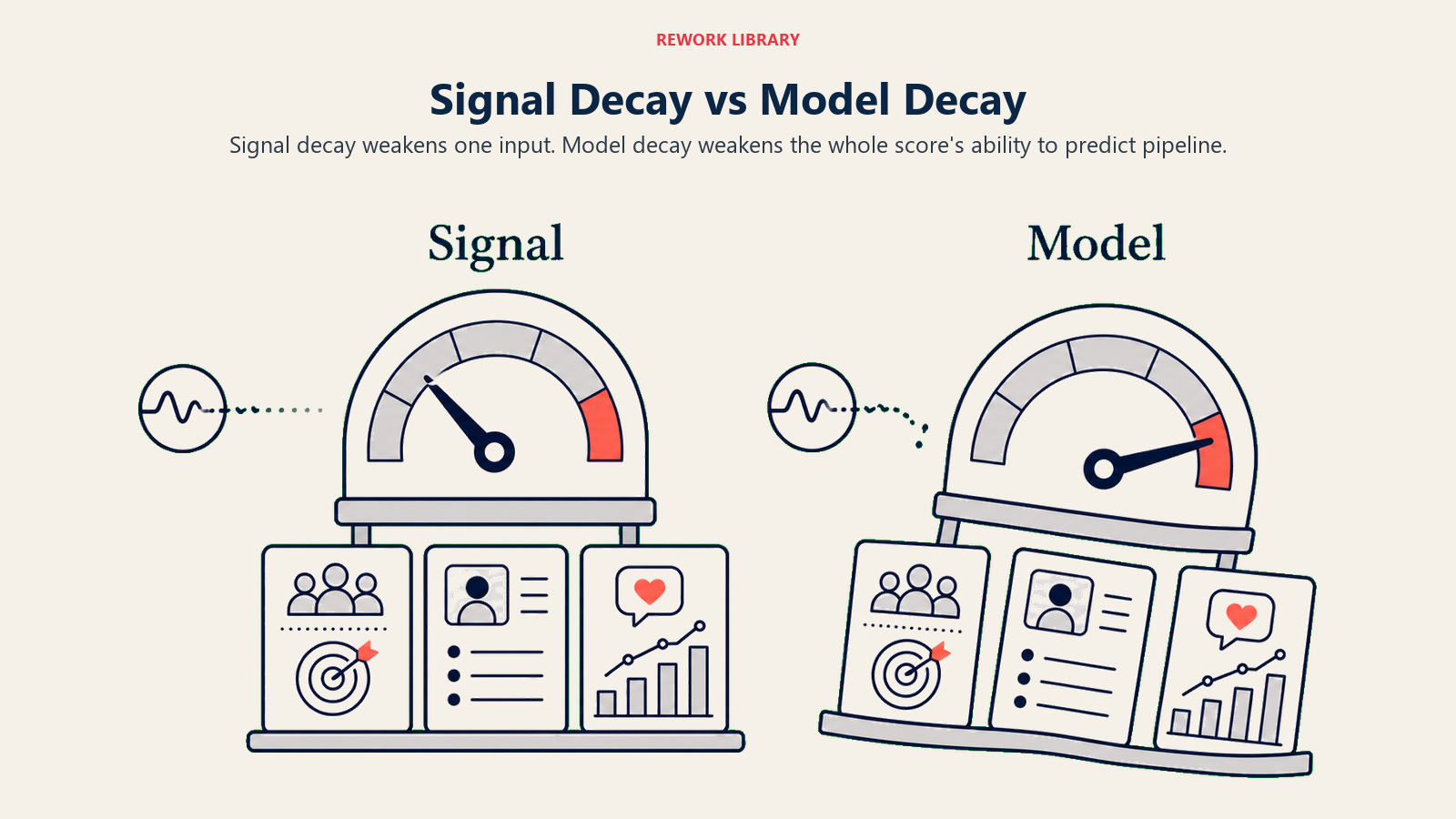
Signal decay adalah ketika titik data tertentu kehilangan kekuatan prediktif. Sinyal masih aktif (kehadiran webinar masih dilacak, unduhan konten masih diberi skor) tetapi korelasi antara sinyal tersebut dan tingkat penutupan akhir telah melemah. Anda akan menemukan ini dengan menjalankan analisis korelasi antara atribut scoring individual dan hasil closed-won. Jika kehadiran webinar dulunya berkorelasi dengan penutupan pada r=0,4 dan sekarang berkorelasi pada r=0,1, sinyal tersebut telah terdegradasi.
Model decay adalah ketika kemampuan keseluruhan model untuk memprediksi Pipeline dan tingkat penutupan telah terdegradasi, bahkan jika tidak ada satu sinyal pun yang gagal secara dramatis. Skor agregat model berhenti menjadi prediktif. Skor 80 dulunya berarti tingkat penutupan 40%; sekarang berarti 22%. Seluruh sistem telah menyimpang, bukan hanya satu atribut.
Signal decay dapat diperbaiki dengan menghapus atau mengubah bobot atribut individual. Model decay sering memerlukan pembangunan ulang yang lebih lengkap: kembali ke data closed-won dan menjalankan ulang analisis korelasi dari awal. Tetapi Anda dapat menangkap keduanya dengan rutinitas pemantauan kuartalan yang sama.
Cara Mendeteksi Decay Lebih Awal
Jangan tunggu seseorang mengeluh. Bangun deteksi ke dalam ritme pelaporan Anda.
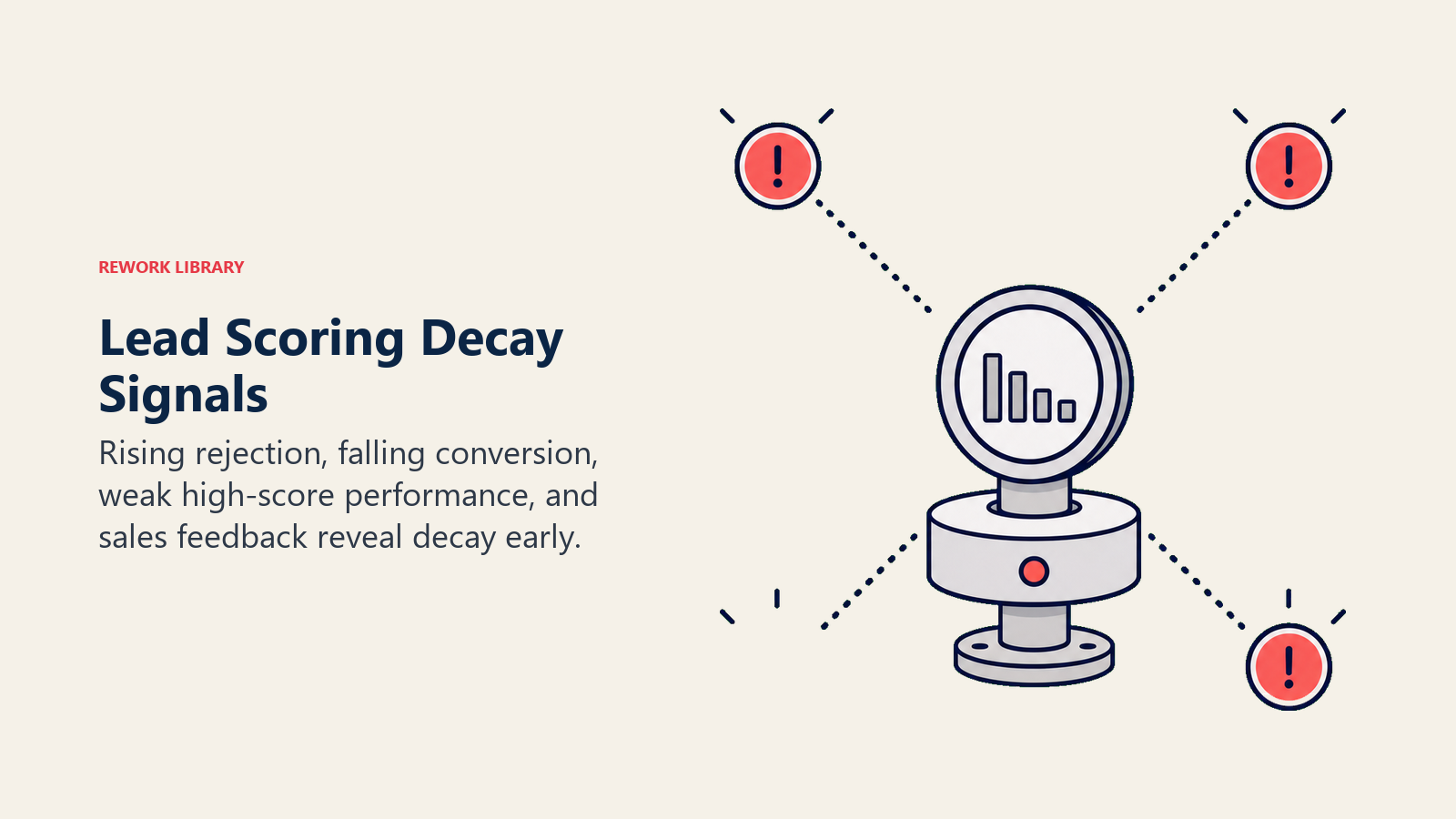
Tren tingkat penolakan. Lacak persentase MQL yang ditolak sales setiap bulan. Tingkat penolakan di atas 25-30% adalah tanda kuning. Di atas 40% adalah tanda merah. Jika tingkat penolakan naik kuartal demi kuartal, itu adalah sinyal awal paling jelas bahwa apa yang disebut marketing sebagai "berkualitas" tidak lagi cocok dengan apa yang diakui sales sebagai siap dijual. Ini adalah model decay yang muncul dalam perilaku manusia.
Penurunan tingkat konversi MQL-to-opportunity. Tarik tingkat konversi MQL-to-opportunity bergulir 90 hari. Jika turun tanpa penurunan volume lead yang sesuai atau perubahan campuran sumber lead, model sedang terdegradasi. Lead terlihat berkualitas berdasarkan skor tetapi tidak dikonversi pada tingkat yang biasanya. Periksa silang terhadap ambang skor MQL-to-SQL Anda: ambang yang dikalibrasi pada data yang lebih lama dapat secara diam-diam menggelembungkan konversi di bagian atas sementara kualitas Pipeline nyata terkikis.
Lead dengan skor tinggi yang tidak dikonversi. Segmentasikan MQL Anda ke dalam bucket skor (80-100, 60-79, 40-59) dan lacak tingkat konversi berdasarkan bucket. Jika bucket 80-100 Anda dulunya dikonversi pada 35% dan sekarang dikonversi pada 18%, model telah kehilangan kekuatan diskriminatifnya di ujung atas. Baik bobotnya salah, atau ambang ditetapkan terlalu rendah relatif terhadap ICP saat ini.
Feedback loop sales yang menandai kualitas. Dengarkan apa yang dikatakan sales dalam weekly lead quality call, khususnya sumber MQL dan atribut mana yang secara konsisten mereka tolak. Jika mereka mengatakan "semua lead webinar tidak berguna" atau "lead layanan keuangan tidak pernah dikonversi," itu adalah signal decay yang tersembunyi dalam anekdot.
| Indikator Decay | Tanda Kuning | Tanda Merah |
|---|---|---|
| Tingkat penolakan MQL | 25-30% | 40%+ |
| Penurunan konversi MQL-to-opportunity | Penurunan 15% vs. kuartal sebelumnya | Penurunan 30%+ |
| Tingkat konversi skor tinggi (80+) | Di bawah ekspektasi model | Di bawah konversi bucket skor menengah |
| Feedback tim sales | Keluhan sporadis | Penolakan sistematis sinyal tertentu |
| Korelasi skor-ke-penutupan | Melemah tetapi positif | Tidak ada korelasi yang bermakna |
90-Day Decay Audit: Checklist Kuartalan
90-Day Decay Audit adalah proses kuartalan terstruktur untuk mendeteksi dan memperbaiki model lead scoring drift sebelum menjadi krisis Pipeline. Audit memiliki empat langkah: (1) pemeriksaan korelasi: untuk setiap dimensi scoring, hitung perbedaan win-rate antara lead yang memicu sinyal versus yang tidak; (2) pemangkasan sinyal: hapus atau ubah bobot sinyal di mana perbedaan win-rate di bawah 5 poin persentase; (3) penambahan sinyal: uji sinyal perilaku baru dengan data historis yang cukup; (4) sinkronisasi ICP: konfirmasi bahwa bobot firmografi masih mencerminkan definisi ICP bersama saat ini. Kuartalan adalah ritme yang tepat untuk sebagian besar tim: cukup sering untuk menangkap drift sebelum menjadi krisis, tidak terlalu sering sehingga menjadi beban pada bandwidth marketing ops.
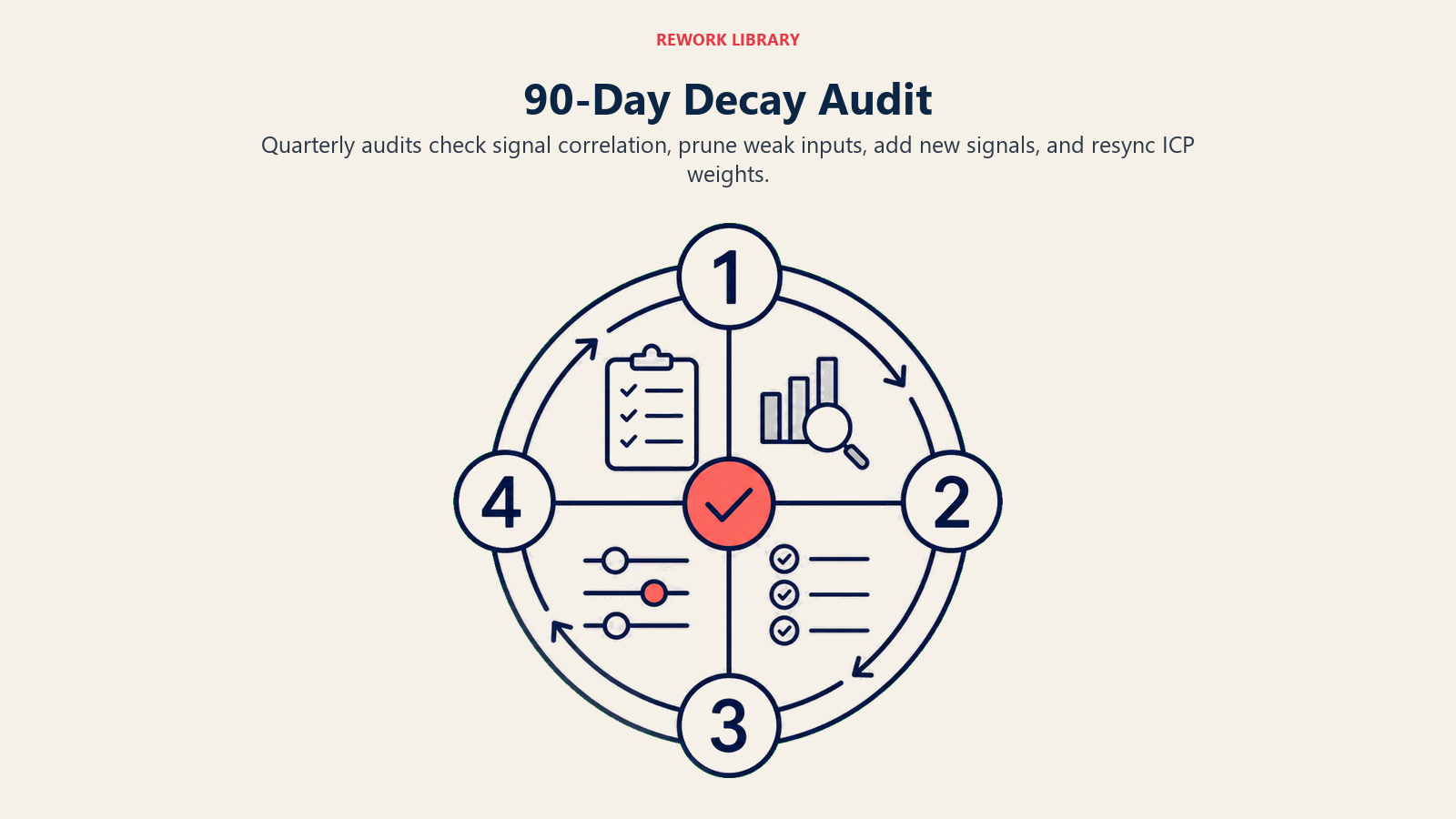
Periksa korelasi setiap dimensi scoring terhadap data closed-won terbaru.
Ekspor kesepakatan closed-won dari kuartal terakhir. Untuk setiap dimensi scoring (industri, ukuran perusahaan, jabatan, kunjungan halaman, unduhan konten, keterlibatan email, permintaan demo, mulai trial) hitung win rate untuk lead yang memicu sinyal tersebut versus yang tidak. Jika perbedaan win rate kurang dari 5 poin persentase, sinyal tersebut tidak melakukan pekerjaan yang bermakna.
Hapus atau ubah bobot sinyal yang tidak lagi memprediksi.
Jika "unduhan whitepaper" memiliki win rate yang pada dasarnya sama dengan tanpa unduhan, itu menambahkan kebisingan, bukan sinyal. Hapus atau turunkan menjadi 1-2 poin. Secara berlawanan dengan intuisi, model yang lebih sederhana dengan lebih sedikit atribut sering mengungguli model yang kompleks, karena atribut bersinyal tinggi tidak diencerkan oleh kebisingan bersinyal rendah.
Tambahkan sinyal baru yang muncul.
Jenis konten baru, tindakan produk baru, sumber data intent baru: sinyal perilaku apa pun yang mulai Anda lacak dalam 6-12 bulan terakhir mungkin sekarang memiliki cukup data historis untuk dievaluasi nilai prediktifnya. Jalankan analisis korelasi yang sama dan tambahkan ke model jika melampaui ambang.
Tinjau bobot firmografi terhadap definisi ICP saat ini.
Jika kepemimpinan sales memperbarui ICP dalam setahun terakhir (vertikal target baru, rentang headcount baru, tier pendapatan baru) skor firmografi Anda harus mencerminkan itu. Jika tidak, Anda menghasilkan skor fit tinggi untuk perusahaan yang tidak akan pernah diprioritaskan sales. Kerangka kualifikasi lead yang digunakan tim Anda untuk entri tahap opportunity adalah pemeriksaan silang yang berguna: jika kriteria di sana telah berubah tetapi bobot scoring Anda belum, keduanya tidak sinkron.
Periksa kesehatan pipeline data.
Audit field yang memberi makan model scoring Anda. Apakah field tersebut diisi pada tingkat yang sama seperti enam bulan yang lalu? Jika field yang dulunya 80% terisi sekarang 40% terisi, sinyal yang bergantung padanya secara efektif berkurang setengahnya. Perbaiki pipeline data sebelum mengkalibrasi ulang bobot.
Aturan Time-Decay untuk Sinyal Perilaku
Sinyal perilaku memiliki masa pakai alami. Lead yang mengunjungi halaman harga Anda 14 bulan yang lalu dan tidak pernah kembali sejak tidak sama dengan lead yang mengunjunginya kemarin. Model Anda harus mencerminkan itu.
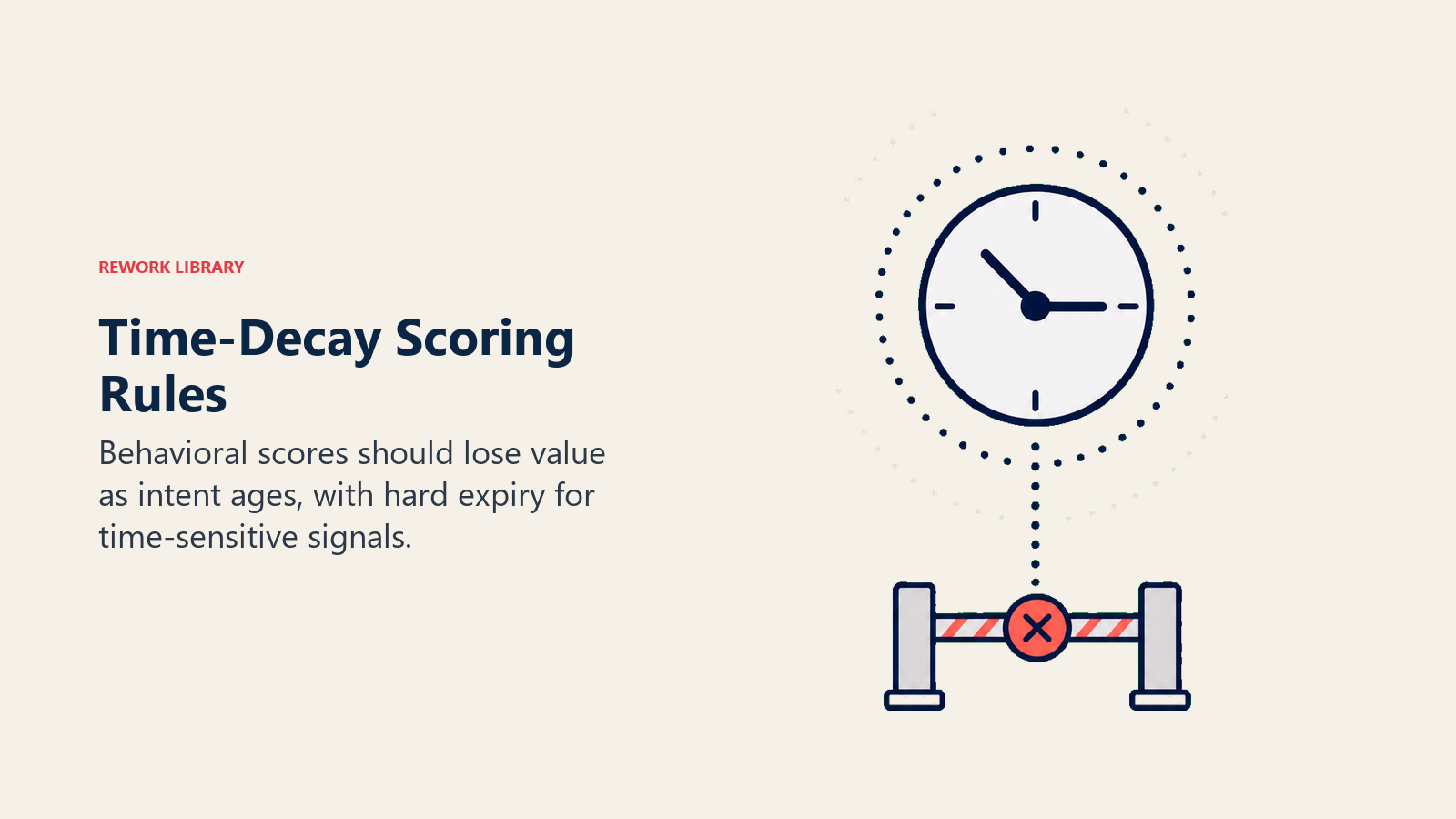
Logika half-life untuk skor keterlibatan.
Implementasi praktis: skor perilaku berkurang 50% setiap 90 hari. Jika lead mendapat 20 poin untuk kunjungan halaman harga, setelah 90 hari sinyal tersebut bernilai 10 poin, setelah 180 hari bernilai 5, dan setelah setahun pada dasarnya nol. Ini menjaga keterlibatan terbaru dengan bobot yang tepat tanpa memerlukan reset manual.
Sebagian besar MAP yang matang (Marketo, HubSpot, Pardot) mendukung time-decay scoring secara native. Di Marketo, Anda dapat menetapkan aturan decay skor pada jadwal. Di HubSpot, Anda dapat menggunakan workflow untuk mengurangi poin dari skor perilaku secara bergulir. Jika MAP Anda tidak mendukungnya secara native, pekerjaan batch bulanan yang mengurangi skor perilaku sebesar persentase tetap adalah pengganti yang dapat digunakan.
Kedaluwarsa keras untuk sinyal yang sensitif waktu.
Beberapa sinyal harus kedaluwarsa sepenuhnya, bukan berkurang secara bertahap. Tanggal mulai trial, kehadiran acara, kunjungan halaman harga selama jendela kampanye tertentu: ini memiliki ambang kebaruan yang jelas. Setelah 30 atau 60 hari, sinyal ini tidak lagi menunjukkan intent saat ini. Bangun reset keras ke dalam MAP Anda sehingga mulai trial dari 9 bulan yang lalu tidak terus menggelembungkan skor lead tanpa batas.
Contoh jadwal time-decay:
| Jenis Sinyal | Half-Life | Kedaluwarsa Keras |
|---|---|---|
| Permintaan demo | T/A: rutekan segera | 7 hari jika tidak ditindaklanjuti |
| Kunjungan halaman harga | 30 hari | 60 hari |
| Halaman fitur produk | 45 hari | 90 hari |
| Kehadiran webinar | 30 hari | 60 hari |
| Unduhan konten | 60 hari | 120 hari |
| Buka/klik email | 30 hari | 45 hari |
| Sinyal trial / product-led | 14 hari | 30 hari |
Menjaga Model Tetap Ramping
Godaan ketika sesuatu tidak berfungsi adalah menambahkan lebih banyak sinyal. Jika 10 atribut tidak memberi skor yang akurat, pasti 20 akan.
Tetapi kebalikannya biasanya benar. Lebih banyak atribut berarti lebih banyak kebisingan, beban pemeliharaan yang lebih besar, dan lebih banyak cara bagi model untuk menghasilkan skor tinggi untuk lead yang sebenarnya belum siap. Model scoring terbaik cenderung memiliki 5-8 atribut bersinyal tinggi, bukan 25 atribut bersinyal sedang.
Uji model yang ramping: dapatkah Anda menjelaskan model scoring Anda kepada sales rep dalam dua menit? Jika ya, itu mungkin ukuran yang tepat. Jika menjelaskannya memerlukan papan tulis dan setengah jam, itu terlalu kompleks dan tidak ada yang akan mempercayainya, terutama sales. Tinjauan Wikipedia tentang metodologi lead scoring menjelaskan bagaimana model yang paling tahan lama tetap berfokus pada kumpulan kecil sinyal eksplisit dan implisit daripada mengumpulkan setiap titik data yang tersedia.
Tata Kelola: Siapa yang Memiliki Kalibrasi Ulang
Pemeliharaan model gagal ketika kepemilikan tidak jelas. Marketing ops biasanya memelihara MAP dan logika scoring. Tetapi keputusan tentang apa yang diberi bobot dan bagaimana memberi bobotnya memerlukan masukan dari kepemimpinan sales, khususnya siapa pun yang dapat memvalidasi seperti apa closed-won sebenarnya.
Struktur tata kelola yang direkomendasikan:
- Marketing ops memiliki proses audit kuartalan dan implementasi teknis dari perubahan.
- Kepemimpinan marketing menyetujui perubahan bobot firmografi terkait ICP.
- Kepemimpinan sales memvalidasi perubahan pada sinyal perilaku melalui pilot 30 hari sebelum peluncuran penuh.
- Kedua tim meninjau hasil setiap audit bersama-sama, bukan dalam rapat terpisah tetapi di ruangan yang sama (atau panggilan video yang sama).
Dokumentasikan setiap perubahan bobot dengan stempel waktu, alasannya, dan data yang mendukungnya. Ini menciptakan audit trail. Ketika seseorang menantang model 8 bulan dari sekarang, Anda dapat menunjukkan apa yang berubah dan mengapa.
Catatan Alat dan Implementasi
Marketo: Mendukung time-decay scoring melalui Smart Campaign pada jadwal berulang. Gunakan aksi "Change Score" dengan nilai negatif. Siapkan batch mingguan yang mengurangi persentase skor perilaku. Tampilan riwayat field Score memungkinkan Anda mengaudit kapan dan mengapa skor berubah.
HubSpot: Decay skor manual kurang native. Gunakan workflow dengan pemicu berbasis kriteria untuk mengurangi nilai skor ketika field tanggal keterlibatan melebihi ambang. Fitur predictive lead scoring HubSpot (tier Enterprise) menggabungkan beberapa logika auto-decay, tetapi model manual tetap lebih transparan.
Pardot/Marketing Cloud Account Engagement: Aturan decay skor tersedia tetapi terbatas. Otomasi scoring bawaan Pardot berguna untuk menambahkan poin; mengurangkannya pada jadwal memerlukan logika workflow kustom yang lebih banyak.
Jika MAP Anda tidak mendukung decay native: Jalankan ekspor bulanan semua lead dengan skor perilaku, terapkan pengurangan tetap (misalnya, 20% untuk skor yang lebih tua dari 60 hari), dan impor nilai yang diperbarui. Ini manual, tetapi berhasil. Bangun proses ke dalam kalender ops bulanan Anda sehingga tidak terlewat.
Analisis Rework: Berdasarkan kerangka 90-Day Decay Audit dan tolak ukur industri, tim yang menjalankan audit scoring kuartalan menggunakan data closed-loop mempertahankan tingkat konversi MQL-to-opportunity yang 20-30% lebih tinggi daripada tim yang meninjau tahunan. Temuan paling umum selama audit adalah bahwa 2-3 sinyal perilaku (biasanya kehadiran webinar dan unduhan konten tahap awal) tidak lagi membawa bobot prediktif yang bermakna. Menghapusnya menyederhanakan model tanpa mengurangi akurasi. Platform lead management Rework menampilkan tren tingkat penolakan dan korelasi skor-ke-penutupan dalam satu dashboard, memudahkan identifikasi sinyal decay sebelum menjadi masalah Pipeline. Lihat rework.com/pricing untuk detail paket saat ini.
Model yang Tidak Dipercaya Siapa pun
Keadaan akhir dari decay yang tidak dikelola bukan model yang rusak. Ini adalah model yang masih berjalan, masih menghasilkan skor, dan masih mengkonversi MQL. Tetapi sales secara diam-diam berhenti mempercayainya. Rep mulai melakukan kualifikasi mereka sendiri. Mereka mengabaikan skor dan menilai lead berdasarkan kriteria yang berbeda. Laporan marketing terlihat baik. Kesehatan Pipeline terdegradasi.
Pada saat percakapan muncul, biasanya dalam quarterly business review di mana seseorang bertanya mengapa generasi Pipeline turun, model telah tidak dapat diandalkan selama berbulan-bulan. Dan memperbaikinya kemudian membutuhkan enam bulan pengumpulan data dan revalidasi untuk mendapatkan kembali kredibilitas.
Audit kuartalan mencegah ini. Lima belas menit sebulan untuk tingkat penolakan, satu sesi dua jam per kuartal untuk analisis korelasi dan tinjauan bobot. Itulah yang memisahkan model scoring yang menggabungkan nilainya dari yang secara diam-diam menjadi infrastruktur yang semua orang bekerja di sekitarnya. Riset Forrester tentang pengukuran lead scoring memperjelas bahwa tim tanpa metrik dasar yang telah ditetapkan sebelumnya tidak dapat secara objektif mengevaluasi apakah model mereka berfungsi, sehingga decay tidak terlihat hingga menjadi krisis.
Hubungkan ini ke ritme closed-loop reporting dan joint lead scoring framework Anda, dan Anda memiliki sistem yang membaik dari waktu ke waktu alih-alih memburuk.
Pertanyaan yang Sering Diajukan tentang Lead Scoring Model Decay
Apa itu lead scoring model decay?
Lead scoring model decay adalah degradasi bertahap kemampuan model scoring untuk memprediksi kesiapan penjualan. Ini terjadi ketika bobot, sinyal, dan ambang dalam model tidak lagi mencerminkan cara pembeli saat ini berperilaku: karena pasar telah bergeser, ICP telah berubah, pesan produk telah berkembang, atau sinyal perilaku yang dulunya memprediksi konversi tidak lagi demikian. Model yang terdegradasi masih menghasilkan skor, tetapi skor tersebut telah kehilangan korelasinya dengan Pipeline dan tingkat penutupan.
Bagaimana cara mendeteksi lead scoring model decay lebih awal?
Perhatikan empat indikator: (1) tren tingkat penolakan MQL: di atas 25-30% adalah tanda kuning, di atas 40% adalah merah; (2) penurunan tingkat konversi MQL-to-opportunity: tingkat yang turun tanpa perubahan volume menunjukkan model terdegradasi; (3) lead dengan skor tinggi yang tidak dikonversi: jika bucket skor 80+ Anda dikonversi pada tingkat yang sama dengan bucket 60-79, model telah kehilangan kekuatan diskriminatif; (4) feedback sales sistematis: jika rep secara konsisten menolak jenis sinyal yang sama (lead webinar, sumber kampanye tertentu), itu adalah decay yang muncul sebagai anekdot.
Seberapa sering model lead scoring harus dikalibrasi ulang?
Audit kuartalan adalah standar untuk sebagian besar tim. Bulanan adalah overhead yang tidak perlu kecuali Anda memiliki volume lead tinggi dan sumber daya marketing ops yang berdedikasi. Tahunan terlalu jarang: pada saat tinjauan tahunan tiba, model mungkin telah secara diam-diam menyesatkan selama 6-9 bulan. Bangun 90-Day Decay Audit ke dalam kalender marketing ops Anda sebagai komitmen berulang, bukan perbaikan satu kali.
Apa perbedaan antara signal decay dan model decay?
Signal decay adalah ketika satu titik data tertentu kehilangan kekuatan prediktif: misalnya, kehadiran webinar tidak lagi berkorelasi secara bermakna dengan tingkat penutupan. Model decay adalah ketika kemampuan keseluruhan model untuk meranking lead berdasarkan probabilitas konversi telah terdegradasi, bahkan jika tidak ada satu sinyal pun yang gagal secara dramatis. Signal decay diperbaiki dengan mengubah bobot atau menghapus atribut individual. Model decay sering memerlukan pembangunan ulang yang lebih lengkap: kembali ke data closed-won dan menjalankan ulang analisis korelasi dari awal.
Bagaimana cara kerja aturan time-decay dalam lead scoring?
Aturan time-decay mengurangi nilai poin sinyal perilaku seiring bertambahnya usia. Default praktis: skor perilaku berkurang 50% setiap 90 hari. Kunjungan halaman harga senilai 20 poin pada saat kejadian bernilai 10 poin setelah 90 hari, 5 poin setelah 180 hari, dan pada dasarnya nol setelah setahun. Ini menjaga keterlibatan terbaru dengan bobot yang tepat tanpa memerlukan reset manual. Sebagian besar platform marketing automation yang matang (Marketo, HubSpot, Pardot) mendukung time-decay scoring secara native atau melalui otomasi workflow.
Sinyal apa yang harus saya hapus selama audit scoring?
Hapus atau ubah bobot sinyal apa pun di mana perbedaan win-rate antara lead yang memicu sinyal dan yang tidak kurang dari 5 poin persentase. Jika "unduhan whitepaper" memiliki win rate 12% di antara lead yang memicunya dan 10% di antara yang tidak, itu menambahkan kebisingan, bukan sinyal. Temuan yang berlawanan dengan intuisi dalam sebagian besar audit scoring adalah bahwa model yang lebih sederhana dengan 5-8 atribut bersinyal tinggi mengungguli model kompleks dengan 20+ atribut bersinyal sedang.
Pelajari Lebih Lanjut

Principal Solution Architect
On this page
- Mengapa Model Scoring Mengalami Decay
- Perbedaan Signal Decay dan Model Decay
- Cara Mendeteksi Decay Lebih Awal
- 90-Day Decay Audit: Checklist Kuartalan
- Aturan Time-Decay untuk Sinyal Perilaku
- Menjaga Model Tetap Ramping
- Tata Kelola: Siapa yang Memiliki Kalibrasi Ulang
- Catatan Alat dan Implementasi
- Model yang Tidak Dipercaya Siapa pun
- Pelajari Lebih Lanjut