Bahasa Indonesia
Voice of Customer dari Win/Loss: Bagaimana Tim yang Selaras Mengubah Hasil Deal Menjadi Intelijen GTM
Turn this article into takeaways for your work.


Each assistant summarizes the article only for you and suggests best practices for your work.
Berikut adalah pertanyaan yang tidak dapat dijawab oleh sebagian besar tim revenue: Mengapa Anda memenangkan lima deal terakhir Anda? Bukan versi catatan CRM ("champion yang kuat, harga kompetitif, cocok dengan baik"). Jawaban sebenarnya, dalam kata-kata pembeli, tentang apa yang membalik keputusan.
Sebagian besar perusahaan melacak win rate sebagai metrik headline dan membiarkan alasannya dalam pengetahuan suku. Tim sales memiliki teori. Marketing memiliki teori yang berbeda. Produk memiliki teori yang sama sekali berbeda. Dan tidak ada yang merekonsiliasikannya dengan apa yang sebenarnya dikatakan pembeli, karena tidak ada yang bertanya.
Analisis win/loss adalah riset pasar termurah yang tersedia untuk tim revenue mana pun. Ini menggunakan percakapan yang sudah berhak Anda lakukan, dengan orang-orang yang sudah Anda investasikan untuk dijangkau, tentang keputusan yang secara langsung membentuk strategi GTM Anda. Fakta bahwa sebagian besar perusahaan tidak menjalankannya secara sistematis bukan masalah sumber daya. Ini adalah masalah prioritas dan koordinasi. Sebelum menyelami mekanisme program, sangat membantu untuk memahami apa yang sebenarnya dibutuhkan deal closing sehingga Anda dapat memetakan temuan wawancara langsung ke momen di mana deal dimenangkan atau kalah.
Framework Win-Loss-to-Content Pipeline
Sebagian besar program win/loss terhenti pada sintesis: wawasan dikumpulkan tetapi tidak mengubah apa pun. Win-Loss-to-Content Pipeline adalah proses empat tahap yang menghubungkan temuan wawancara langsung ke aset dan play yang memengaruhi deal berikutnya.
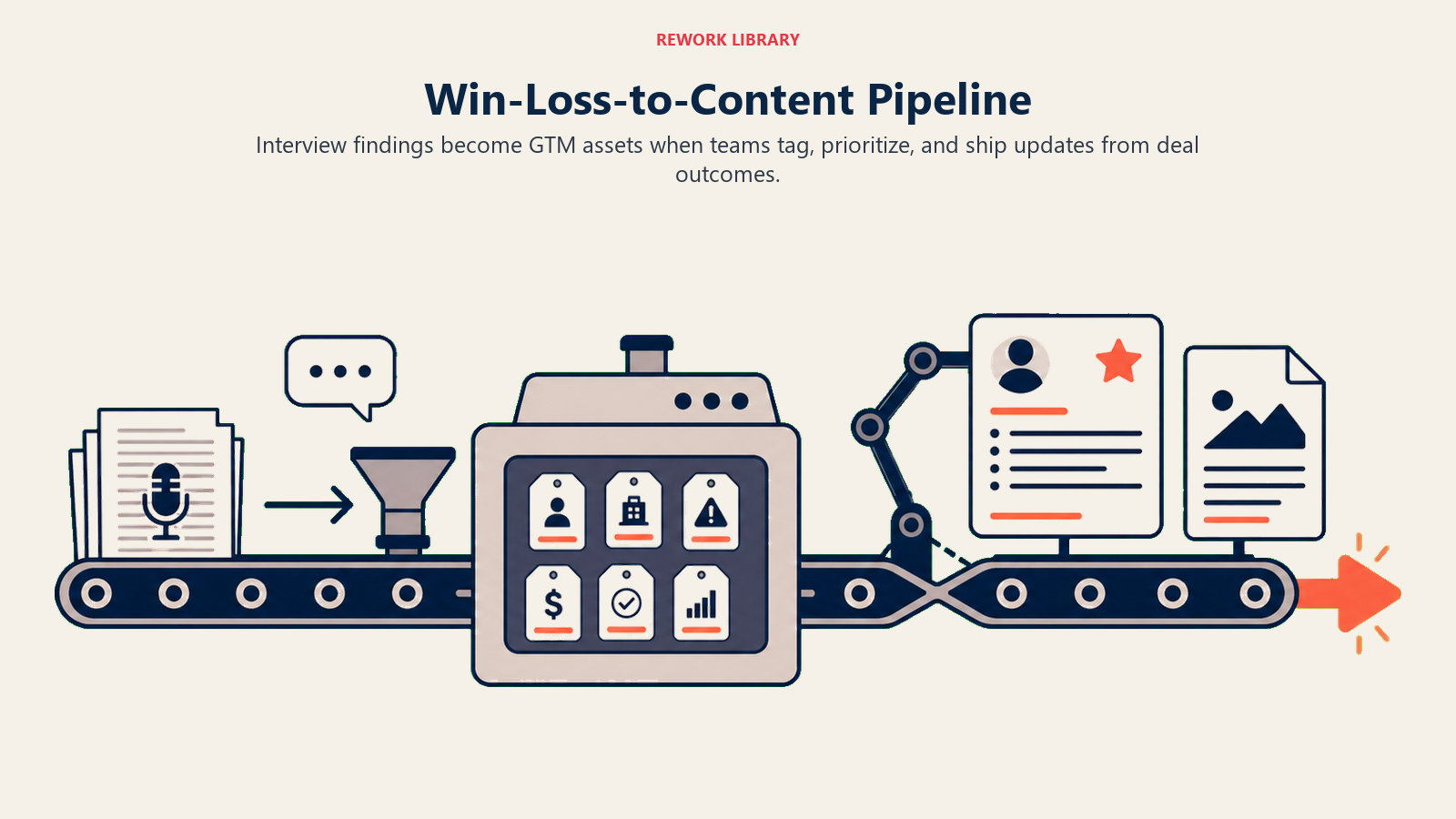
Tahap 1: Wawancara. Sales menjalankan akses; marketing atau RevOps menjalankan wawancara. Pisahkan hubungan dari analisis.
Tahap 2: Tag dan sintesis. Setiap transkrip wawancara diberi tag berdasarkan tema: faktor keputusan, penyebutan kompetitor, kesenjangan fitur, miss pesan. Setelah 10 wawancara, pola menjadi terlihat.
Tahap 3: Rutekan berdasarkan jenis output. Keberatan kompetitif yang muncul dalam 3+ kerugian memicu pembaruan battle card (SLA 5 hari). Kesenjangan fitur yang muncul dalam 5+ kerugian memicu sinyal produk ke tinjauan roadmap kuartalan. Miss pesan memicu pembaruan positioning untuk marketing.
Tahap 4: Tutup loop. Setiap tindakan dilacak kembali ke data wawancara yang memicunya. Ini menciptakan akuntabilitas: tim tidak dapat mengabaikan temuan jika temuan dan tindakannya keduanya terlihat dalam sistem yang sama.
Tanpa Tahap 4, win/loss menjadi latihan pelaporan. Dengannya, ini menjadi flywheel kompetitif.
Fakta Kunci: Analisis Win/Loss dan Intelijen Pembeli
- Perusahaan yang bertindak berdasarkan feedback win/loss melaporkan win rate 54% lebih tinggi dibandingkan mereka yang hanya mengandalkan data CRM internal untuk analisis deal (Aberdeen Group).
- Pembeli jauh lebih terbuka dalam wawancara pasca-keputusan daripada selama siklus penjualan: 72% pembeli mengatakan mereka menyembunyikan kekhawatiran utama dari vendor selama evaluasi (Riset pembelian B2B Gartner).
- Data win/loss yang langsung mengumpan ke pelatihan sales berkorelasi dengan peningkatan akurasi kualifikasi deal 15–20% di antara rep yang menerima feedback terstruktur dalam satu kuartal dari penutupan deal (Riset sales enablement Forrester).
Apa Sebenarnya Analisis Win/Loss
Win/loss bukan sama dengan NPS. Ini bukan survei kepuasan. Dan ini bukan field CRM yang diisi AE tepat sebelum beralih ke deal berikutnya. Sumber daya analisis win/loss Gartner mendokumentasikan bagaimana program terstruktur mengungkap pendorong keputusan yang secara konsisten tidak tertangkap oleh data CRM internal.
Win/loss adalah program wawancara pasca-keputusan yang terstruktur. Anda berbicara dengan pembeli (champion, economic buyer, dan idealnya orang yang menentang Anda) dalam beberapa minggu setelah deal ditutup dengan cara apa pun. Tujuannya adalah memahami apa yang sebenarnya mendorong keputusan, dalam bahasa mereka, bukan bahasa Anda.
Outputnya berbeda dari riset pelanggan standar:
Intelijen kompetitif sebagai produk sampingan. Pembeli yang mengevaluasi alternatif akan memberi tahu Anda, secara spesifik, bagaimana mereka membandingkan Anda dengan setiap pilihan. Anda mempelajari pesan kompetitor mana yang bekerja melawan Anda dan mengapa. Anda juga mempelajari kelemahan kompetitor mana yang diperhatikan pembeli tetapi tidak pernah diangkat tim sales Anda.
Validasi atau invalidasi positioning. Apakah klaim nilai dalam materi marketing Anda adalah yang benar-benar disebutkan pembeli sebagai alasan mereka memilih Anda? Atau apakah mereka memilih Anda karena alasan yang tidak ditekankan marketing Anda? Kedua jawaban itu berharga. Jika pembeli menang karena alasan yang tidak Anda bicarakan, itu adalah peluang pesan. Jika mereka membeli meskipun pesan Anda, bukan karena itu, itu adalah masalah.
Kalibrasi sales play. Di mana dalam siklus deal terhenti? Pertanyaan apa yang muncul dalam pertemuan ketiga yang tidak ditangani secara memadai? Wawancara win/loss mengungkap momen spesifik dalam proses penjualan yang memerlukan perhatian, jauh lebih tepat daripada tingkat konversi tahap Pipeline. Referensi silang temuan ini dengan pola stakeholder alignment untuk mengidentifikasi apakah stall terjadi karena orang yang tepat tidak dilibatkan cukup awal.
Mengapa Ini Adalah Program Bersama
Win/loss gagal ketika satu tim memilikinya sendirian.
Sales memiliki hubungan, yang berarti sales memiliki akses wawancara. AE memiliki rapport dengan pembeli yang membuat panggilan pasca-keputusan 20 menit menjadi mungkin. Tanpa dukungan sales, Anda tidak bisa mendapatkan pembeli di telepon. Outreach dingin dari marketing ke pembeli yang baru saja melalui evaluasi akan diabaikan atau diresapi.
Tetapi sales tidak boleh mensintesis data win/loss mereka sendiri. Mereka terlalu dekat dengan deal. Ketika sales melakukan dan menginterpretasikan wawancara win/loss mereka sendiri, wawasan mengkonfirmasi keyakinan sales yang ada ("kami kalah karena harganya terlalu tinggi") daripada mengungkapkan apa yang sebenarnya terjadi ("kami kalah karena pembeli tidak dapat membangun business case internal dengan materi yang kami berikan mereka").
Marketing memiliki sintesis dan output pesan. Marketing membawa keterpisahan untuk melihat pola di seluruh deal: di seluruh tahap, kompetitor, buyer persona, dan segmen industri. Mereka dapat mengidentifikasi ketika klaim positioning secara konsisten gagal tanpa bersikap defensif tentang itu, dengan cara yang sering tidak dapat dilakukan rep yang telah menggunakan klaim itu selama dua tahun.
Produk mendengar sinyal roadmap. Ketika lima kerugian berturut-turut melibatkan fitur yang sama yang hilang, itu adalah sinyal produk, bukan masalah pelatihan sales. Wawancara win/loss menangkap ini lebih awal dari tiket support atau feedback customer success, karena mereka menangkap momen keputusan sebelum pembeli menjadi pelanggan (atau tidak).
Tidak ada tim yang sendirian menutup loop ini. Itu harus dirancang sebagai infrastruktur bersama sejak awal.
Menyiapkan Program Wawancara
Siapa yang Diwawancarai
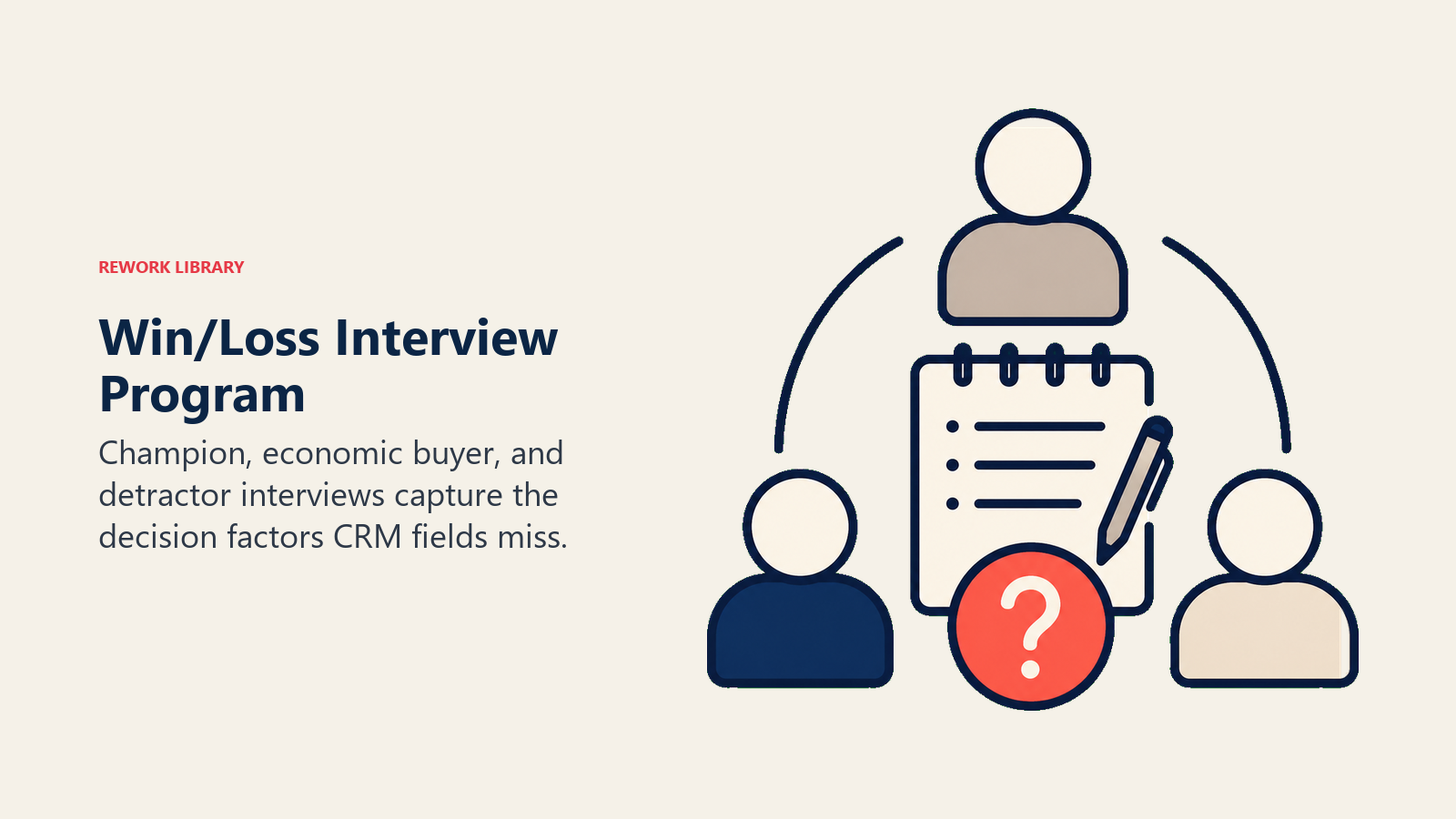
Champion: Orang yang mengadvokasi Anda secara internal. Bahkan dalam kerugian, mereka akan memberi tahu Anda di mana proses internal rusak, keberatan apa yang muncul yang tidak dapat mereka atasi, dan apa yang hampir membalik itu demi keuntungan Anda. Memahami cara mengembangkan champion selama siklus penjualan membuat wawancara pasca-deal jauh lebih mudah diakses: champion yang secara aktif dibudidayakan jauh lebih mungkin menerima panggilan Anda.
Economic buyer: Orang yang mengendalikan anggaran dan membuat keputusan akhir. Dalam banyak deal SMB dan mid-market, ini adalah orang yang sama. Dalam deal yang lebih kompleks, mereka berbeda. Rasional keputusan economic buyer berbeda dari champion: mereka mempertimbangkan business case, risiko, dan stabilitas vendor lebih dari kecocokan fitur.
Pihak yang menentang: Orang yang menentang Anda, atau yang paling keras mendorong untuk alternatif yang menang. Ini adalah wawancara yang paling sulit didapat dan sering kali paling berharga. Mereka akan memberi tahu Anda dengan tepat di mana value proposition Anda gagal mendarat.
Anda tidak memerlukan ketiganya untuk setiap deal. Untuk deal SMB sederhana, pengambil keputusan biasanya satu orang. Untuk deal enterprise yang kompleks, targetkan minimal dua wawancara: champion dan economic buyer.
Timing: Jendela 2–4 Minggu
Dua minggu pasca-keputusan adalah yang ideal. Cukup awal sehingga evaluasi masih segar. Cukup terlambat sehingga muatan emosional keputusan sudah mereda. Pembeli yang baru saja membuat keputusan pembelian sering kali belum siap untuk berbicara terbuka tentang alternatif dalam beberapa hari pertama.
Setelah empat minggu, ingatan tentang faktor keputusan spesifik terdegradasi secara bermakna. Pembeli mengingat hasilnya tetapi melupakan detail apa yang mendorongnya.
Jangan tunggu sampai QBR Anda untuk menjalankan wawancara win/loss dari kuartal terakhir. Anda akan mendapatkan pendapat, bukan ingatan.
Format: Panggilan Percakapan 20 Menit
Panggilan percakapan 20 menit melalui telepon atau video lebih baik daripada survei 40 pertanyaan. Survei menghasilkan skala rating. Wawancara menghasilkan kutipan, dan kutipan adalah apa yang Anda butuhkan untuk memperbarui pesan, membangun battle card, dan menggeser narasi sales.
Tawarkan insentif kecil untuk deal yang dimenangkan (kartu hadiah, sumbangan amal atas nama mereka). Untuk deal yang kalah, insentif terbaik adalah framing: "Kami ingin memahami cara meningkatkan diri. Feedback Anda langsung membentuk produk kami dan cara kami bekerja dengan perusahaan seperti milik Anda." Sebagian besar pembeli bersedia untuk percakapan ini jika diminta secara profesional.
Rekam panggilan dengan izin. Transkrip jauh lebih berguna daripada catatan.
Framework Pertanyaan
Pertanyaan-pertanyaan ini berhasil di seluruh deal yang dimenangkan, deal yang kalah, dan kerugian kompetitif. Urutannya penting: mulai luas dan bergerak menuju yang spesifik.
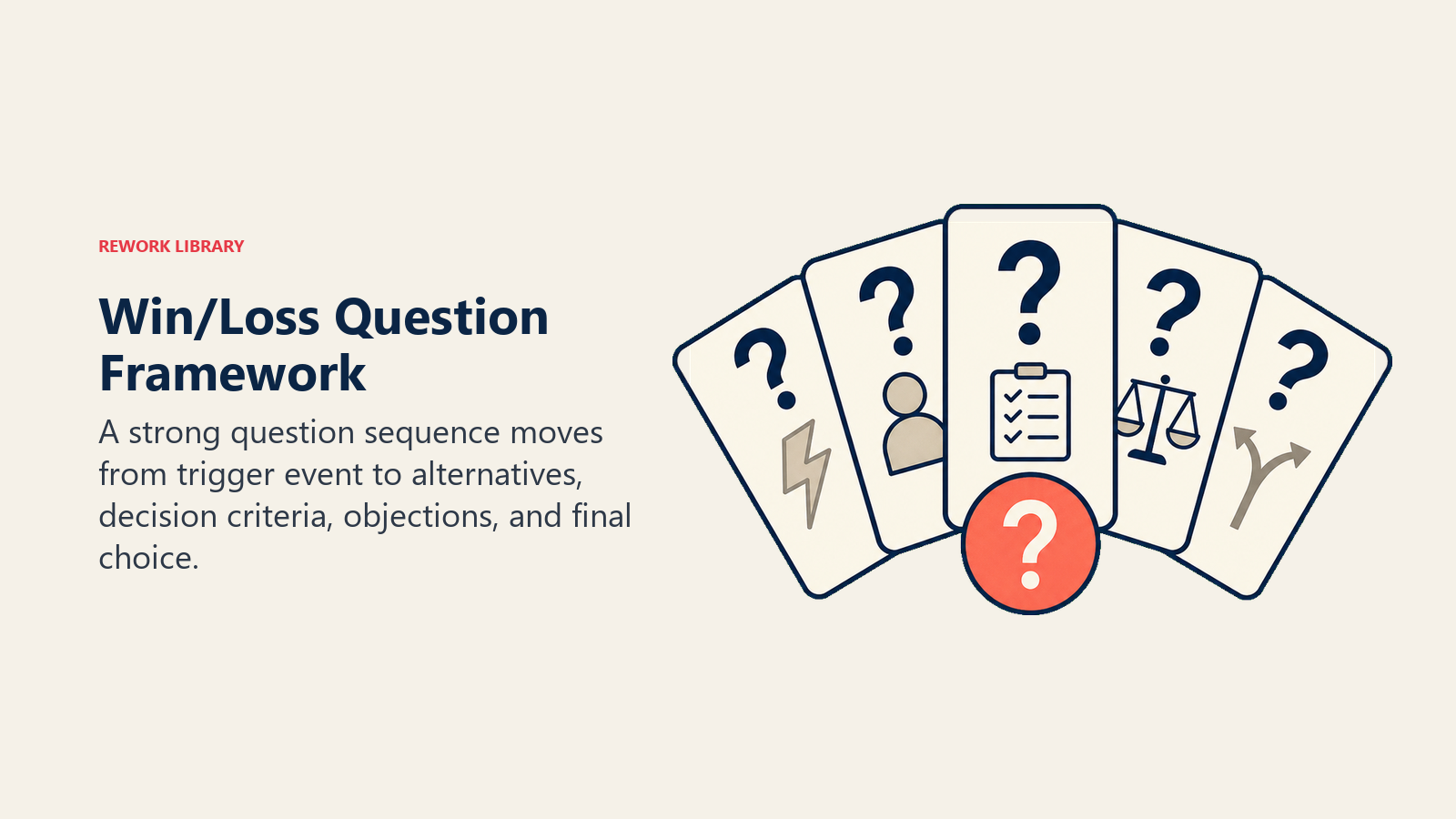
Mengapa Anda mulai mencari? Ini mengungkap peristiwa pemicu (rasa sakit, arahan dewan, tekanan kompetitif) yang memulai evaluasi. Ini sering berbeda dari apa yang diasumsikan konten marketing sebagai awal perjalanan.
Siapa lagi yang Anda evaluasi, dan mengapa? Ini memberi tahu Anda bagaimana pembeli membingkai lanskap kompetitif. Alternatif mana yang sebenarnya ada di pilihan akhir, dan apa yang membuat mereka menjadi opsi yang kredibel? Anda mungkin menemukan bahwa kompetitor yang paling banyak Anda habiskan waktu dalam battle card tidak ada dalam pertimbangan mereka sama sekali.
Apa yang hampir membuat Anda memilih opsi lain? Ini adalah pertanyaan paling berharga untuk deal yang kalah. Untuk deal yang dimenangkan, ini mengungkap keberatan yang Anda atasi yang harus menjadi sales play. Jawaban atas pertanyaan ini mengubah pesan dan pelatihan sales lebih dari yang lainnya.
Apa yang membalik keputusan akhir? Untuk deal yang dimenangkan, ini adalah emas murni: dalam kata-kata pembeli, alasan sebenarnya mereka memilih Anda. Bandingkan ini dengan pesan marketing Anda. Jika pembeli menang karena alasan yang tidak Anda tekankan, itu adalah pembaruan positioning Anda berikutnya.
Apa yang akan Anda katakan kepada kolega yang mempertimbangkan kami? Ini menghasilkan bahasa yang paling alami dan teruji di lapangan tentang produk Anda: jenis yang termasuk dalam case study, salinan marketing, dan deck sales tetapi tidak diciptakan tim marketing mana pun dalam ruang rapat.
Ajukan pertanyaan lanjutan dengan bebas. Framework adalah panduan, bukan skrip.
Mensintesis Temuan Menjadi Output yang Dapat Ditindaklanjuti
Wawancara adalah bahan baku. Sintesis adalah di mana nilai bertambah.
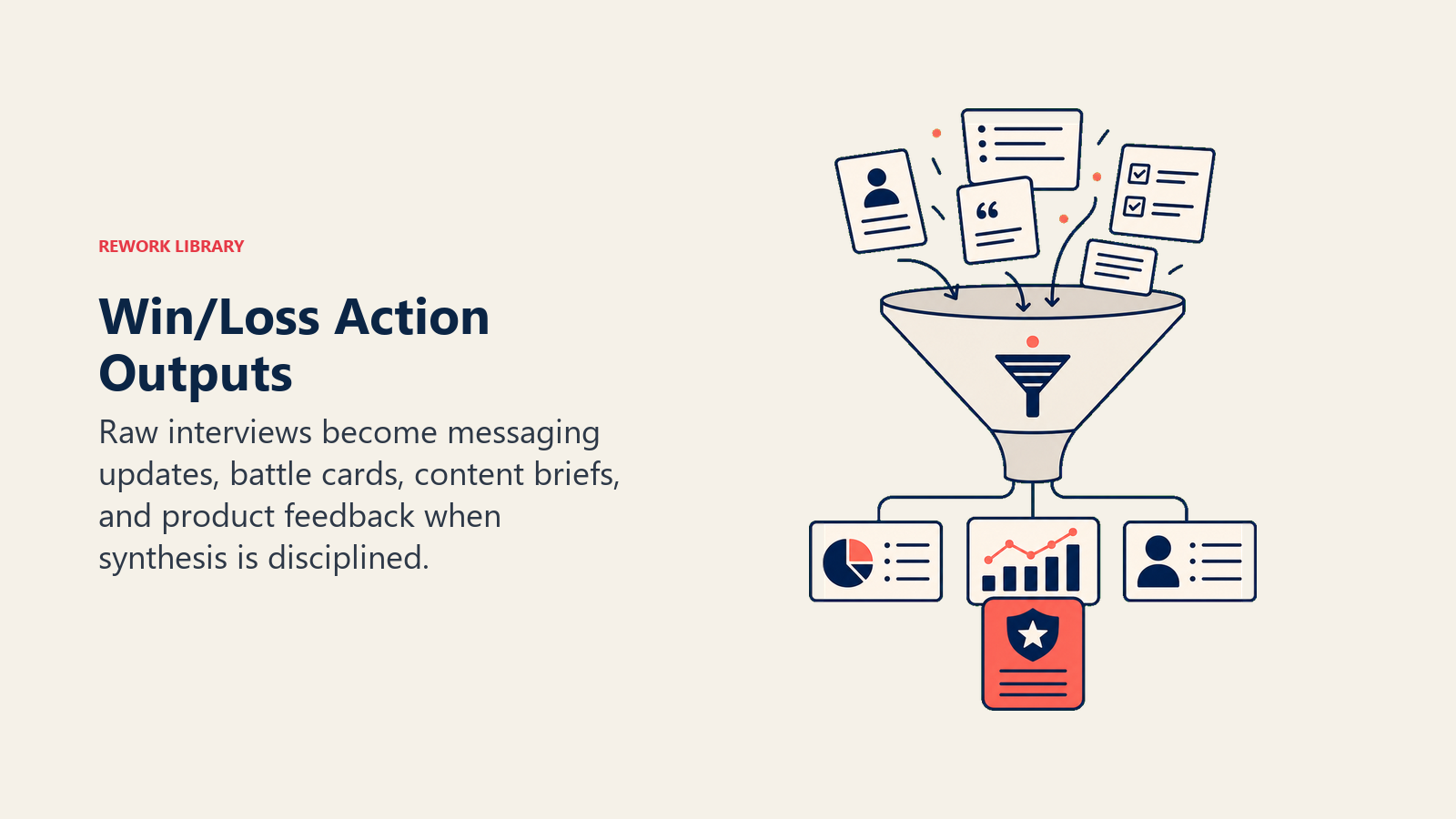
Pembaruan pesan: Lacak klaim nilai mana yang muncul berulang kali dalam wawancara deal yang dimenangkan versus klaim mana yang tidak pernah muncul dalam bahasa pembeli. Setelah 10 wawancara, pola menjadi jelas. Jika tidak ada yang menyebut "otomasi workflow berbasis AI" sebagai alasan mereka membeli tetapi semua orang menyebut "kami bisa membuat tim kami aktif dan berjalan tanpa konsultan," itu adalah pergeseran pesan yang layak dibuat.
Penyegaran battle card: Ketika keberatan kompetitif yang sama muncul dalam tiga atau lebih kerugian ("kami memilih [kompetitor] karena dukungan onboarding mereka termasuk dalam harga dasar") itu bukan anekdot. Itu masalah positioning yang membutuhkan respons dari lapangan. Picu pembaruan battle card untuk keberatan apa pun yang muncul dalam wawancara kerugian 3+. Jalankan pembaruan itu melalui proses konten sales enablement pada jalur produksi 5 hari.
Penyesuaian sales play: Jika wawancara secara konsisten menunjukkan deal terhenti di tahap business case, masalahnya bukan keterampilan closing. Ini bahwa rep bergerak ke economic buyer tanpa materi yang tepat. Itu masalah konten dan masalah proses, bukan masalah manajemen kinerja.
Sinyal produk: Lacak kesenjangan fitur yang muncul di beberapa kerugian. Lima kerugian yang menyebut integrasi yang hilang yang sama bukan kebetulan. Log ini secara sistematis dan bawa ke tinjauan produk kuartalan sebagai sinyal, bukan anekdot.
Rapat Tinjauan Win/Loss Kuartalan
Rapat ini adalah tempat wawasan wawancara individual menjadi intelijen tim. Ini membutuhkan struktur atau akan menjadi sesi saling menyalahkan.
Siapa yang hadir: VP Marketing, VP Sales, satu lead Produk. Tiga orang yang dapat membuat keputusan, bukan sepuluh orang yang akan mempertahankan fungsi mereka.
Format: Pilih tiga kemenangan dan tiga kerugian terbaru. Untuk masing-masing, bagikan tiga hingga lima kutipan verbatim pembeli dari wawancara. Satu tindakan per tim per pertemuan, bukan daftar hal yang perlu dipertimbangkan. Komitmen nyata untuk mengubah sesuatu. Koordinasikan rapat ini dengan cadence joint pipeline review untuk menghindari fragmentasi kalender.
Aturan yang mencegah saling menyalahkan: Kutipan adalah pusat percakapan, bukan interpretasi. "Pembeli mengatakan X" adalah fakta. "Sales tidak menjelaskan value prop kami dengan benar" adalah interpretasi. Mulai dengan kutipan dan kerjakan dari sana.
Scaling Tanpa Tim CI Khusus
Sebagian besar tim revenue SMB dan mid-market tidak memiliki fungsi competitive intelligence. Win/loss harus berjalan sebagai proses yang ringan dan berkelanjutan.
Untuk tim di bawah 20 rep: Jalankan wawancara pada 20% deal yang ditutup, kira-kira satu per rep per kuartal. Volume itu cukup untuk mengungkap pola tanpa membebani jadwal siapa pun. Pengayaan data lead dapat mengisi konteks firmografis sebelum wawancara sehingga Anda menghabiskan waktu panggilan pada faktor keputusan, bukan mengumpulkan kembali data akun dasar.
Tanggung jawab wawancara bergilir: AE dapat menjalankan wawancara untuk deal yang dimenangkan sendiri (ini membangun hubungan dan kesadaran diri). Untuk deal yang kalah, marketing atau RevOps menjalankan wawancara. Pembeli akan sering lebih terbuka tentang mengapa mereka memilih kompetitor ketika berbicara dengan seseorang yang bukan salesperson yang mereka tolak.
Transkripsi dan tagging yang dibantu AI: Sebagian besar alat rapat modern (Fathom, Fireflies, Gong) mentranskripsi panggilan secara otomatis. Jalankan pass tagging sederhana pada transkrip dan tag setiap kutipan yang relevan dengan tema: "faktor keputusan," "penyebutan kompetitor," "kesenjangan fitur," "miss pesan." Seiring waktu, database yang diberi tag menjadi intelijen yang dapat dicari daripada folder rekaman yang tidak pernah ditinjau siapa pun.
Analisis Rework: Berdasarkan pola di seluruh tim B2B mid-market, alasan paling umum mengapa program win/loss gagal mempengaruhi strategi GTM bukan kualitas data, ini adalah routing. Temuan wawancara ditulis dan dikirim melalui email ke kepemimpinan marketing, di mana mereka duduk tanpa pemilik yang jelas atau tenggat tindakan. Solusinya bersifat struktural: setiap output wawancara harus diberi tag dengan tindakan berikutnya yang eksplisit (pembaruan battle card, perubahan pesan, sinyal produk, penyesuaian pelatihan sales) dan ditugaskan ke pemilik yang bernama dalam 48 jam setelah wawancara. Tim yang mengimplementasikan disiplin routing ini dalam kuartal pertama program win/loss melihat turnaround yang jauh lebih cepat pada battle card kompetitif dan lebih sedikit kerugian berulang terhadap keberatan yang sama dalam dua kuartal.
Menghubungkan ke Feedback Loop
Temuan win/loss tidak meningkatkan apa pun jika tetap di dalam program. Titik koneksi penting.
Rutekan intelijen kompetitif langsung ke proses konten sales enablement. Pembaruan battle card adalah output turnaround tercepat dari temuan win/loss dan harus ada pada jalur produksi 5 hari.
Umpankan tema pemicu-keputusan ke dalam agenda Panggilan Kualitas Lead Mingguan untuk mengkalibrasi ulang sinyal pembeli mana yang memenuhi syarat sebagai niat tinggi.
Tema win/loss harus menginformasikan tinjauan metrik Closed-Loop Reporting secara kuartalan, khususnya bagian kinerja pesan dan validasi positioning.
Kesimpulan
Win/loss adalah riset pasar termurah yang tersedia untuk tim revenue mana pun. Pembeli akan memberi tahu Anda, dalam istilah spesifik, apa yang mendorong keputusan mereka, jika Anda bertanya dengan benar, pada waktu yang tepat, dengan pertanyaan yang tepat.
Sebagian besar tim membiarkan wawasan ini tidak terkumpul karena programnya terasa kompleks untuk disiapkan, atau karena temuan terasa mengancam satu tim atau yang lain. Tetapi ketika berjalan sebagai program bersama (sales menyediakan akses, marketing mensintesis, produk mendengar sinyal, dan ketiganya bertindak berdasarkan temuan dalam kuartal yang sama) win/loss menjadi flywheel kompetitif.
Setiap wawancara yang tidak Anda lakukan adalah pelajaran yang tidak Anda pelajari. Kompetitor Anda menebak pembaruan positioning mereka berikutnya. Anda tidak harus.
Pertanyaan yang Sering Diajukan tentang Voice of Customer dari Win/Loss
Siapa yang harus melakukan wawancara win/loss: sales atau marketing?
Sales TIDAK BOLEH melakukan wawancara win/loss untuk deal mereka sendiri yang kalah. Mereka terlalu dekat dengan hasilnya untuk mensintesis secara objektif. Temuan akan mengkonfirmasi keyakinan sales yang ada daripada mengungkapkan apa yang sebenarnya terjadi. Model terbaik: AE menjalankan wawancara untuk deal mereka sendiri yang dimenangkan (ini membangun hubungan dan kesadaran diri), sementara marketing, RevOps, atau pihak ketiga menjalankan wawancara untuk kerugian. Pembeli secara konsisten lebih terbuka tentang mengapa mereka memilih kompetitor ketika berbicara dengan seseorang yang bukan salesperson yang mereka tolak.
Seberapa sering Anda harus menjalankan wawancara win/loss?
Jalankan wawancara win/loss pada setidaknya 20% deal yang ditutup, baik yang dimenangkan maupun yang kalah. Untuk tim yang menutup 20 deal per bulan, itu adalah empat wawancara per bulan, kira-kira satu per minggu. Volume ini cukup untuk mengungkap pola dalam satu kuartal tanpa membebani jadwal siapa pun. Untuk tim yang lebih kecil (di bawah 10 rep), targetkan minimal satu wawancara per rep per kuartal. Frekuensinya lebih sedikit penting daripada konsistensinya: program yang menjalankan empat wawancara per bulan selama enam bulan membangun intelijen yang lebih dapat ditindaklanjuti daripada batch satu kali dari 40 wawancara yang dijalankan sekali.
Apa jendela optimal untuk melakukan wawancara win/loss?
Dua hingga empat minggu setelah keputusan deal adalah jendela yang optimal. Lebih awal dari dua minggu, muatan emosional keputusan masih tinggi dan pembeli kurang terbuka. Lebih dari empat minggu, ingatan tentang faktor keputusan spesifik terdegradasi. Pembeli mengingat hasilnya tetapi melupakan detail yang mendorongnya. Jangan kelompokkan wawancara win/loss ke dalam tinjauan kuartalan: pada saat Anda sampai ke kerugian kuartal terakhir, data wawancara sudah jauh lebih kurang andal daripada yang ada dalam jendela dua hingga empat minggu.
Pertanyaan apa yang menghasilkan intelijen win/loss yang paling dapat ditindaklanjuti?
Lima pertanyaan dengan hasil tertinggi, secara berurutan: (1) "Mengapa Anda mulai mencari?" mengungkap peristiwa pemicu, yang sering berbeda dari apa yang diasumsikan konten marketing. (2) "Siapa lagi yang Anda evaluasi, dan mengapa?" mengungkap lanskap kompetitif aktual dalam framing pembeli. (3) "Apa yang hampir membuat Anda memilih opsi lain?": pertanyaan paling berharga tunggal untuk kemenangan dan kerugian. (4) "Apa yang membalik keputusan akhir?": dalam kata-kata pembeli, bukan kata-kata Anda. (5) "Apa yang akan Anda katakan kepada kolega yang mempertimbangkan kami?" menghasilkan bahasa yang paling alami dan teruji di lapangan untuk salinan marketing dan sales. Pertanyaan lanjutan lebih penting daripada framework: selidiki jawaban apa pun yang mereferensikan momen, percakapan, atau konten tertentu.
Bagaimana cara menutup loop dengan produk setelah program win/loss mengungkap kesenjangan fitur?
Lacak kesenjangan fitur secara sistematis di seluruh wawancara dengan memberi tag transkrip dengan label "kesenjangan fitur" dan kemampuan spesifik yang disebutkan. Ketika kesenjangan fitur yang sama muncul dalam tiga atau lebih kerugian dalam satu kuartal, log itu sebagai sinyal produk terstruktur, bukan anekdot, tetapi pola dengan volume deal yang terlampir ("integrasi yang hilang dengan [alat] disebutkan dalam 4 dari 7 kerugian kuartal ini kepada [kompetitor]"). Bawa ini ke tinjauan produk kuartalan dengan data deal, bukan hanya kutipan pelanggan. Tim produk merespons sinyal yang terhubung dengan risiko churn atau pendapatan yang hilang, bukan cerita deal individual. Data win/loss, ketika terstruktur dengan cara ini, adalah salah satu sumber sinyal produk paling kredibel yang tersedia untuk tim GTM mana pun.
Mengapa 72% pembeli menyembunyikan kekhawatiran selama siklus penjualan?
Riset pembelian B2B Gartner menemukan bahwa 72% pembeli mengatakan mereka menyembunyikan kekhawatiran utama dari vendor selama evaluasi. Alasannya praktis: mengangkat kekhawatiran di tengah siklus dapat memperpanjang proses, menciptakan dinamika vendor yang canggung, atau menandakan ketidakpastian pembeli yang tidak ingin mereka tunjukkan. Inilah mengapa wawancara pasca-keputusan sangat penting: keputusan telah dibuat, taruhan keterbukaannya rendah, dan pembeli sering bersedia berbagi kekhawatiran yang tidak pernah mereka angkat selama evaluasi. Wawancara win/loss adalah satu-satunya mekanisme yang secara andal menangkap intelijen yang disembunyikan ini.
Bagaimana cara mencegah tinjauan win/loss kuartalan menjadi sesi saling menyalahkan?
Tiga aturan struktural: (1) Kutipan adalah pusat percakapan, bukan interpretasi. Mulai dengan "pembeli mengatakan X" sebelum beralih ke "sales tidak menjelaskan Y" atau "klaim marketing tentang Z salah." (2) Batasi peserta pada tiga pengambil keputusan: VP Marketing, VP Sales, satu lead Produk. Kelompok besar mengoptimalkan untuk keamanan politik, bukan untuk tindakan. (3) Setiap rapat berakhir dengan satu tindakan per tim, bukan daftar hal yang perlu dipertimbangkan. Komitmen nyata untuk mengubah sesuatu yang spesifik dalam 30 hari ke depan. Tanpa tindakan yang disebutkan dan pemilik yang disebutkan, rapat menghasilkan konsensus tanpa menghasilkan perubahan.
Pelajari Lebih Lanjut

Principal Solution Architect
On this page
- Framework Win-Loss-to-Content Pipeline
- Apa Sebenarnya Analisis Win/Loss
- Mengapa Ini Adalah Program Bersama
- Menyiapkan Program Wawancara
- Siapa yang Diwawancarai
- Timing: Jendela 2–4 Minggu
- Format: Panggilan Percakapan 20 Menit
- Framework Pertanyaan
- Mensintesis Temuan Menjadi Output yang Dapat Ditindaklanjuti
- Rapat Tinjauan Win/Loss Kuartalan
- Scaling Tanpa Tim CI Khusus
- Menghubungkan ke Feedback Loop
- Kesimpulan
- Pelajari Lebih Lanjut