Bahasa Indonesia
Kapan Anda Tidak Perlu Lead Scoring: Argumen SMB untuk Kualifikasi yang Lebih Sederhana
Turn this article into takeaways for your work.


Each assistant summarizes the article only for you and suggests best practices for your work.
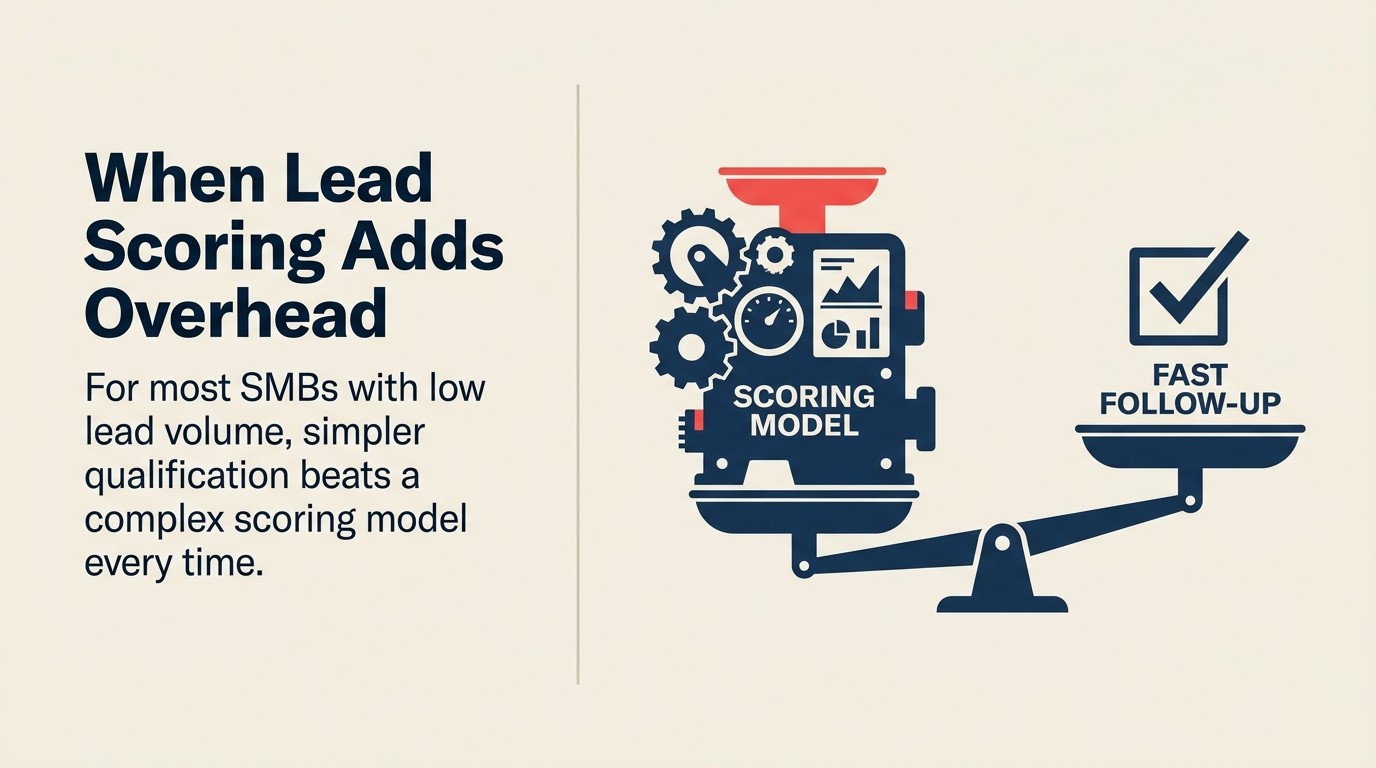
Mari kita terus terang tentang sesuatu yang tidak ingin Anda percaya oleh industri marketing automation: sebagian besar tim revenue kecil dan menengah tidak membutuhkan lead scoring.
Mereka butuh kecepatan tindak lanjut. Mereka butuh ICP (ideal customer profile) yang jelas. Mereka butuh satu rep yang menelepon balik dalam lima menit, bukan dua hari. Lead scoring adalah sistem triase yang dibangun untuk volume. Dan jika Anda tidak menghadapi masalah volume, Anda tidak memecahkan masalah yang tepat.
Ini bukan posisi kontroversial. Ini posisi praktis.
Apa yang Sebenarnya Dipecahkan oleh Lead Scoring
Lead scoring dirancang untuk memecahkan masalah spesifik: terlalu banyak lead bagi tim sales untuk dikerjakan secara manual. Forrester telah mendokumentasikan secara ekstensif bagaimana model MQL bertahan meski tingkat keberhasilan rendah (kurang dari 1% lead individual benar-benar membeli) karena sudah menjadi kebiasaan organisasi daripada alat konversi yang terbukti.
Jika tim sales Anda menerima 2.000 MQL per bulan, mereka tidak bisa menghubungi setiap satu. Mereka membutuhkan sistem yang meranking lead agar rep menghabiskan waktu mereka pada yang paling mungkin dikonversi. Scoring melakukan ini: menciptakan lapisan prioritisasi yang mencegah rep membuang upaya pada lead berprobabilitas rendah sementara yang berprobabilitas tinggi menunggu di antrean.
Itulah masalah yang dirancangnya. Jika itu bukan masalah Anda, jika tim Anda bisa secara manual melihat setiap lead inbound yang masuk minggu ini, maka Anda menerapkan sistem triase pada level volume yang tidak membutuhkan triase.
Pada volume yang lebih rendah, triase itu sendiri adalah hambatannya. Setiap jam yang dihabiskan tim marketing ops Anda mengonfigurasi bobot skor, mengaudit akurasi model, dan berdebat tentang ambang batas dengan sales adalah jam yang tidak dihabiskan untuk hal-hal yang benar-benar menggerakkan jarum pada skala Anda: kecepatan respons, kualitas outreach, dan definisi ICP.
Fakta Penting: Kualifikasi Lead di Skala SMB
- Merespons lead dalam 5 menit membuat Anda 21x lebih mungkin mengkualifikasinya daripada menunggu 30 menit, menurut studi bersama MIT dan InsideSales.com terhadap 15.000+ lead di berbagai industri.
- Hanya 27% lead yang dikirim ke sales pernah dihubungi sama sekali, artinya kesenjangan kualifikasi di sebagian besar SMB adalah masalah eksekusi tindak lanjut, bukan masalah scoring (riset InsideSales.com).
- Untuk perusahaan dengan di bawah 500 MQL/bulan, triase manual oleh rep sales berpengalaman biasanya menghasilkan tingkat konversi lebih tinggi daripada scoring otomatis, menurut analisis Demand Gen Report terhadap data pipeline SMB.
Pertanyaan Ambang Volume
Berikut panduan kasar tentang kapan scoring mulai terbayar:
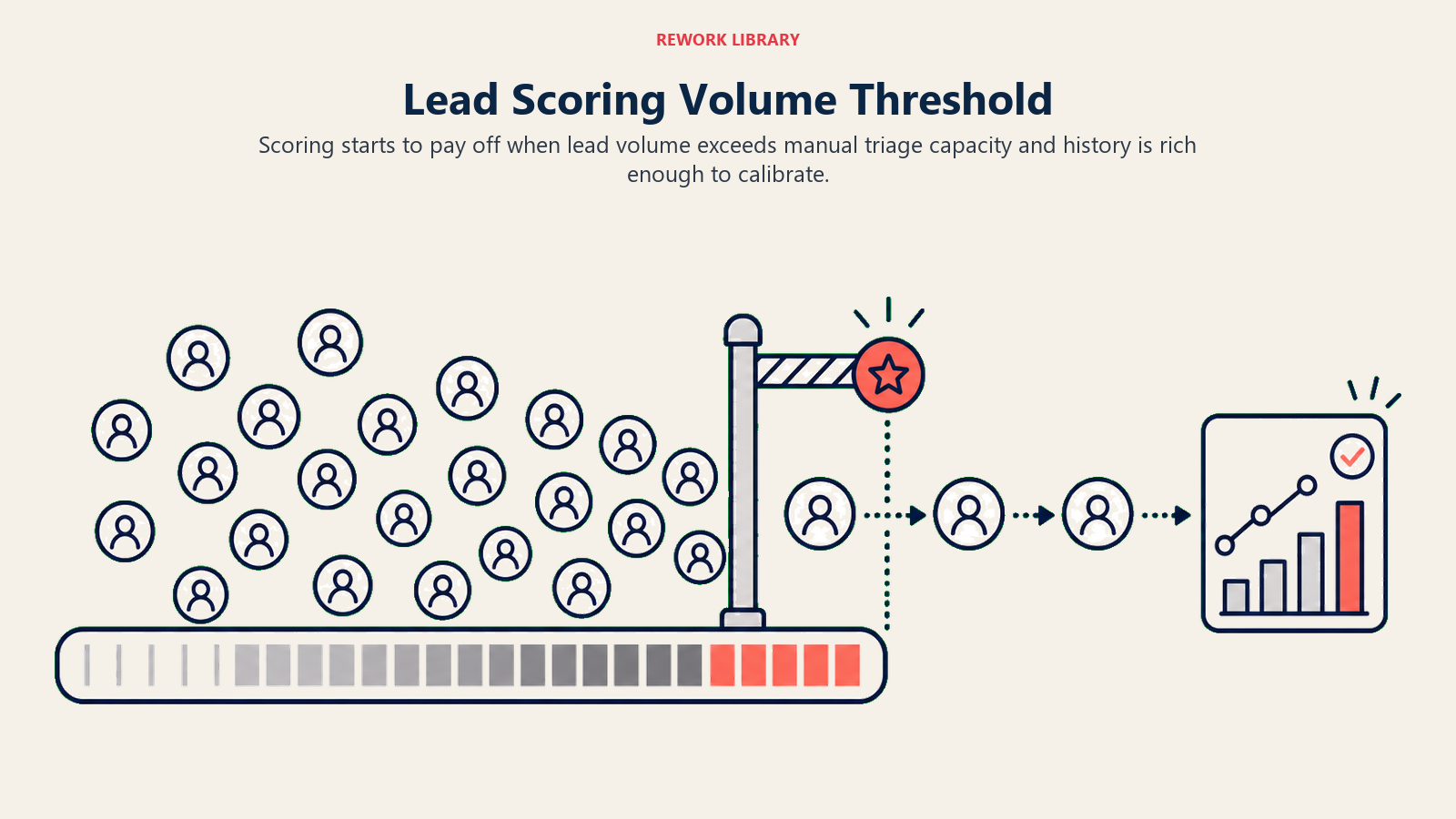
Di bawah 200 MQL/bulan: Triase manual hampir selalu lebih cepat dan lebih akurat. Satu SDR atau sales leader berpengalaman bisa meninjau setiap lead inbound dan membuat penilaian dalam 2-3 menit masing-masing. Itu 10-15 jam pekerjaan kualifikasi per bulan, sangat terjangkau, dan penilaian manusia akan lebih baik daripada model yang dilatih pada data terbatas. Bangun ICP checklist yang sederhana. Rutekan permintaan demo ke sales segera. Kerjakan selebihnya berdasarkan penilaian rep.
200-500 MQL/bulan (zona abu-abu): Di sinilah scoring sederhana dan ringan mulai masuk akal. Bukan implementasi MAP penuh, tapi sistem tier dasar. Kelompok A-B-C berdasarkan kesesuaian. Tanda intent ya/tidak. Anda tidak membutuhkan 15 atribut scoring dan integrasi MAP. Anda butuh cara untuk memberi tahu rep lead mana yang harus dihubungi pertama.
Di atas 500 MQL/bulan: Scoring membenarkan kompleksitasnya. Anda memiliki volume yang cukup sehingga rep tidak bisa memprioritaskan secara manual. Anda memiliki data historis yang cukup untuk membangun model yang benar-benar prediktif, bukan berdasarkan tebakan. Dan Anda memiliki cukup lead sehingga peningkatan 10% dalam akurasi kualifikasi menghasilkan pipeline yang bermakna.
| Volume MQL Bulanan | Pendekatan yang Direkomendasikan |
|---|---|
| < 100 | ICP checklist + routing demo langsung. Tidak butuh scoring. |
| 100-200 | Tier kesesuaian A/B/C sederhana. Tanda intent (permintaan demo = ya). Fitur native CRM saja. |
| 200-500 | Scoring ringan dengan 3-5 atribut. Tanpa implementasi MAP penuh. |
| 500-1.000 | Scoring MAP dasar dengan tinjauan kuartalan. Sinyal perilaku + kesesuaian firmografis. |
| 1.000+ | Model scoring penuh dengan time-decay, ambang segmen, dan tata kelola formal. |
Model scoring membutuhkan waktu implementasi, pemeliharaan berkelanjutan, kalibrasi terhadap data historis, dan dukungan bersama dari marketing dan sales agar berfungsi dengan benar. Pada volume lead yang lebih rendah, overhead membangun dan memelihara sistem tersebut hampir selalu melebihi nilai yang diberikannya.
Itu tidak berarti tim Anda tidak canggih. Itu berarti Anda belum mencapai skala di mana scoring terbayar. Dan mengenali ambang batas itu dengan jujur adalah yang mencegah tim menghabiskan empat bulan membangun infrastruktur untuk masalah yang tidak mereka miliki.
Apa yang Dilakukan Sebagai Ganti Scoring
Jika Anda berada di bawah ambang volume, berikut pendekatan yang benar-benar berhasil.
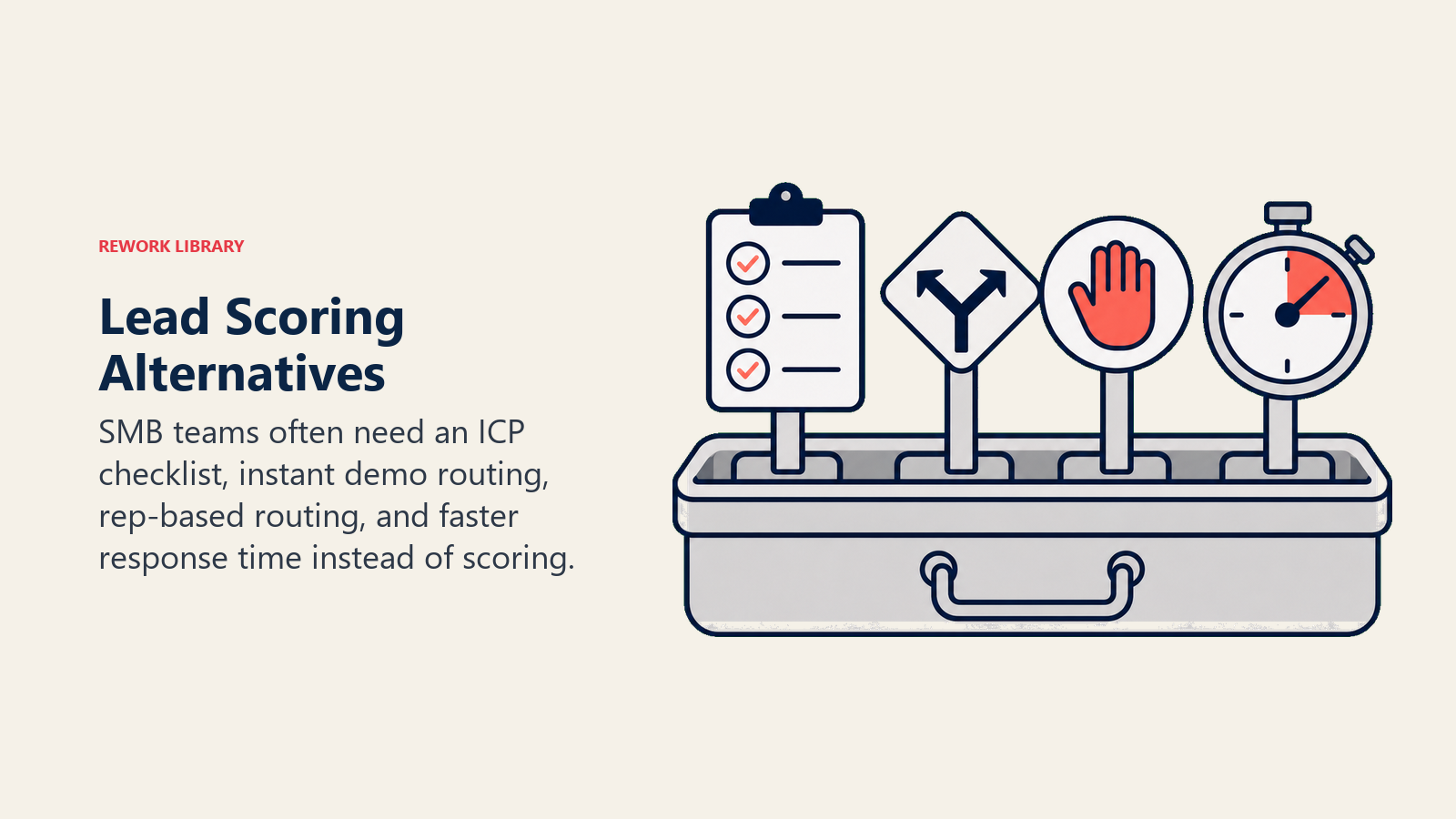
Triase ICP checklist (5 pertanyaan pass/fail untuk setiap inbound).
Bangun checklist sederhana yang bisa diterapkan rep mana pun dalam 2 menit. Lima pertanyaan, jawaban ya/tidak, lulus membutuhkan 4 dari 5:
- Apakah perusahaan cocok dengan ukuran target kami (headcount atau pendapatan)?
- Apakah industri yang kami jual kepadanya?
- Apakah peran kontak yang akan menggunakan atau membeli produk kami?
- Apakah ada sinyal kebutuhan atau urgensi aktif (menyebutkan masalah spesifik, meminta demo, dalam evaluasi)?
- Apakah perusahaan berada di geografi yang bisa kami dukung?
Ini lebih cepat diimplementasikan daripada model scoring, lebih mudah dipelihara, dan sama efektifnya pada volume di bawah 200 lead/bulan. Latih rep dengan checklist dalam 30 menit. Mulai menggunakannya hari ini.
Permintaan demo = SQL langsung, tidak perlu scoring.
Jika seseorang mengisi formulir permintaan demo, mereka adalah SQL (sales qualified lead). Jangan scoring mereka. Jangan nurture mereka. Rutekan ke rep dalam lima menit. Sinyal intent-nya eksplisit: mereka meminta pertemuan. Langkah kualifikasi apa pun antara tindakan tersebut dan tindak lanjut rep adalah gesekan yang Anda tambahkan secara tidak perlu. Siapkan aturan routing lead yang mengirimkan permintaan demo ke rep yang tepat secara otomatis. Kesalahan routing pada tahap ini sangat merugikan.
Ini adalah hal paling berharga yang bisa dilakukan tim dengan di bawah 500 MQL/bulan: pisahkan hand-raiser dari browser dan berikan hand-raiser respons segera, setiap saat.
Routing firmografis berdasarkan rep.
Alih-alih scoring, rutekan lead ke rep yang paling cocok berdasarkan ukuran perusahaan, industri, atau wilayah. Rep yang mengkhususkan diri pada perusahaan retail akan mengkualifikasi dan mengonversi lead retail lebih baik daripada model scoring yang akan memprioritaskannya. Ini menggantikan logika scoring dengan keahlian rep, yang lebih akurat pada volume rendah.
Kecepatan respons sebagai leverage kualitas.
Pada volume rendah, faktor yang menentukan tingkat konversi lebih dari langkah kualifikasi apa pun adalah seberapa cepat rep menindaklanjuti. SLA respons lima menit memiliki dampak lebih besar terhadap konversi daripada meningkatkan model scoring Anda sebesar 20% ketika Anda menangani kurang dari 200 lead per bulan. Sebelum membangun infrastruktur scoring, jawab pertanyaan ini dengan jujur: berapa waktu rata-rata ke kontak pertama untuk lead inbound Anda saat ini? Jika lebih dari satu jam, perbaiki itu terlebih dahulu.
Kasus di Mana Scoring Secara Aktif Merugikan SMB
Scoring tidak hanya memberikan nilai rendah pada skala kecil. Kadang hal itu secara aktif memperburuk keadaan.
Kepercayaan diri palsu pada lead yang skor tinggi namun kualitas rendah. Lead yang mengunjungi halaman harga Anda tiga kali dan mengunduh whitepaper akan mendapat skor tinggi dalam sebagian besar model dasar. Tapi jika kontak tersebut adalah kompetitor yang melakukan riset, mahasiswa mengerjakan proyek sekolah, atau seseorang yang mengevaluasi alat untuk perusahaan yang tidak ada dalam ICP Anda, skornya tidak berarti. Pada volume rendah, rep yang meninjau lead secara manual akan langsung menangkap ini. Skor menciptakan lapisan otomatisasi yang menghilangkan pemeriksaan waras tersebut.
Lead yang bagus habis masa berlakunya sementara tim berdebat tentang ambang batas. Tim SMB sering menghabiskan berbulan-bulan mendiskusikan ambang MQL apa yang harus dimiliki sebelum meluncurkan model scoring. Sementara itu, lead inbound yang akan menjadi pelanggan bagus sedang duduk dalam nurture. Biaya peluang dari timeline implementasi adalah nyata.
Biaya implementasi MAP melebihi nilai pipeline. Implementasi platform marketing automation penuh bisa menelan biaya $15.000-$50.000 dalam biaya implementasi ditambah $15.000-$50.000 per tahun dalam lisensi, tergantung platform dan tingkat kustomisasi. Untuk tim yang menghasilkan 100 MQL/bulan dengan rata-rata deal size $20.000, Anda butuh peningkatan konversi yang signifikan sekadar untuk balik modal di tahun pertama. Perhitungannya sering tidak masuk akal.
Jalur Tengah: Scoring Sederhana Tanpa Infrastruktur
Jika tim Anda berada di zona abu-abu (200-500 MQL/bulan) dan beberapa tingkat prioritisasi akan membantu, Anda tidak membutuhkan implementasi scoring penuh. Anda butuh sistem yang ringan.
Scoring berbasis spreadsheet untuk tim awal. Google Sheet dengan kolom untuk kesesuaian firmografis (tier A/B/C berdasarkan kecocokan ICP) dan tanda intent (permintaan demo, halaman harga, chat langsung) adalah sistem kualifikasi yang berfungsi. Rep meninjau sheet setiap pagi, menghubungi lead A+intent terlebih dahulu, lead A kedua, dan selebihnya ketika ada waktu. Ini bukan sistem yang memalukan. Ini sistem yang tepat untuk skalanya.
Scoring native CRM. Sebagian besar CRM menyertakan scoring dasar tanpa memerlukan MAP terpisah. Contact scoring HubSpot, fitur lead scoring Rework, dan Einstein scoring bawaan Salesforce semuanya menyediakan fungsionalitas scoring tanpa memerlukan implementasi MAP penuh. Dua atau tiga field (tier kesesuaian perusahaan, sinyal intent, recency aktivitas) sudah cukup pada 200-400 lead per bulan.
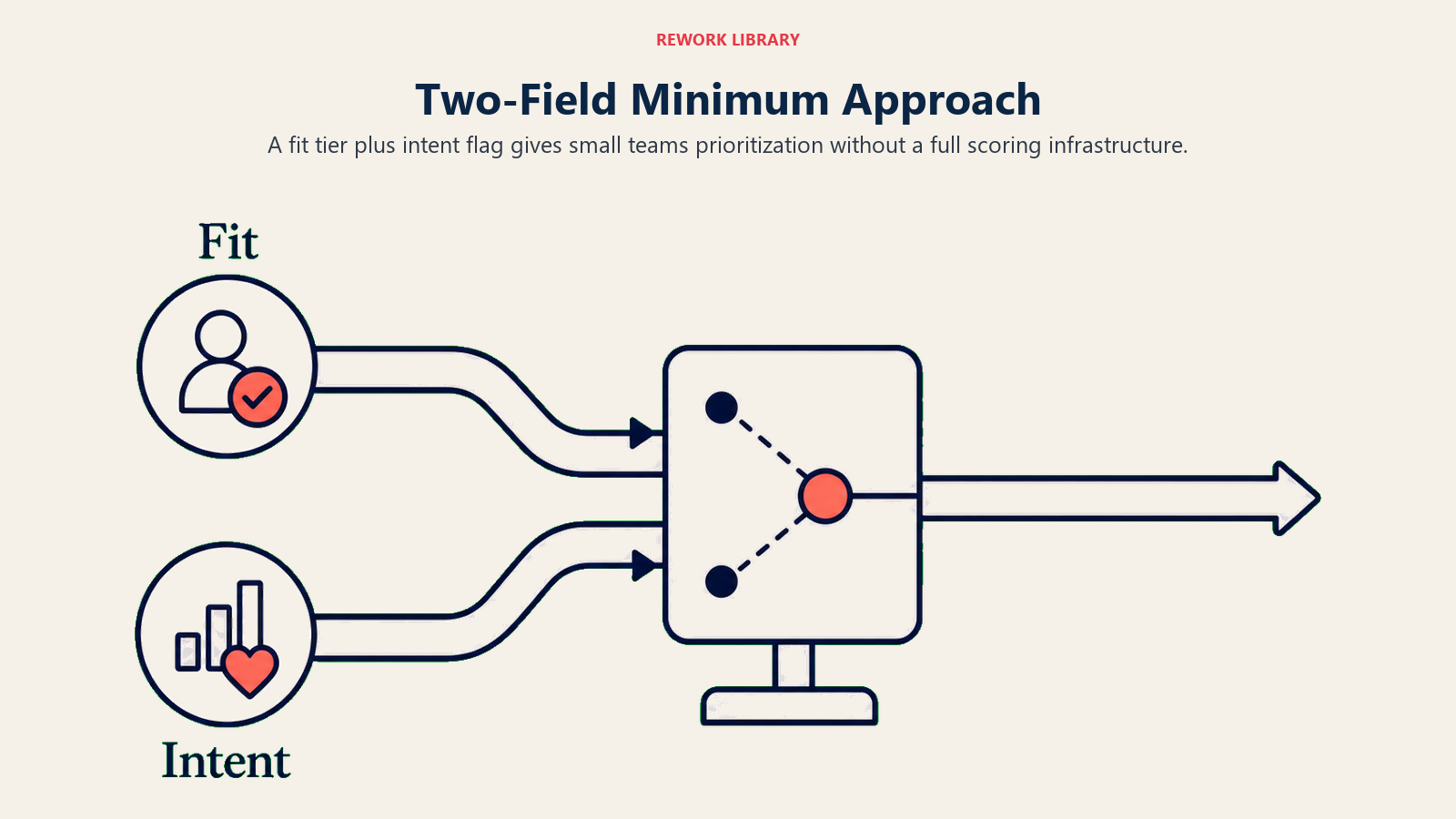
Pendekatan Dua Field Minimum. Jika Anda hanya melakukan satu hal untuk menambahkan struktur kualifikasi sebelum siap untuk model scoring penuh, lakukan ini: tambahkan tier kesesuaian (A/B/C berdasarkan kecocokan ICP) dan tanda intent (ya/tidak berdasarkan apakah lead melakukan tindakan high-intent). Rutekan lead A+ya ke tindak lanjut sales segera. Rutekan selebihnya ke urutan nurture terjadwal. Ini membutuhkan sehari untuk diimplementasikan dan langsung bekerja.
Pendekatan Dua Field Minimum adalah sistem kualifikasi yang berfungsi paling sederhana untuk tim dengan di bawah 500 MQL per bulan. Field 1: Tier Kesesuaian. Nilai perusahaan terhadap ICP Anda sebagai A (kecocokan kuat), B (kecocokan sebagian), atau C (kecocokan lemah) berdasarkan industri, ukuran perusahaan, dan peran pembeli. Field 2: Tanda Intent. Boolean ya/tidak yang disetel ke "ya" ketika lead melakukan tindakan high-intent: permintaan demo, kunjungan halaman harga, pertanyaan chat langsung. Rutekan lead A+ya ke tindak lanjut sales segera. Rutekan A+tidak dan B+ya ke nurture terjadwal. Rutekan selebihnya ke urutan prioritas rendah. Dua field, satu hari untuk diimplementasikan, tanpa MAP yang diperlukan.
Kapan Memperkenalkan Scoring: Titik Pemicu Pertumbuhan
Ada tiga momen ketika menambahkan model scoring bergeser dari terlalu dini menjadi diperlukan.
Merekrut SDR kedua. Dengan satu SDR, prioritisasi lead sederhana: satu rep memprioritaskan antrean mereka sendiri berdasarkan penilaian mereka. Ketika Anda merekrut yang kedua, keputusan routing berlipat ganda. Siapa yang mendapat lead mana? Bagaimana Anda memastikan lead yang lebih baik tidak terkonsentrasi pada satu rep? Scoring sederhana menyediakan lapisan prioritisasi yang memungkinkan routing yang adil.
Meluncurkan segmen ICP kedua. Jika Anda terutama menjual ke perusahaan SaaS mid-market dan berekspansi ke retail, atribut yang memprediksi kesesuaian dan intent berbeda di setiap segmen. Kualifikasi manual berdasarkan penilaian rep berhasil dengan baik untuk satu segmen. Untuk dua segmen, model tier kesesuaian ringan mencegah rep menerapkan kriteria yang salah ke segmen yang salah.
Menjalankan beberapa kampanye secara bersamaan. Ketika Anda memiliki satu kampanye yang menghasilkan lead, sumbernya memberi tahu Anda banyak tentang intent dan kesesuaian. Ketika Anda memiliki lima kampanye yang berjalan bersamaan (event, webinar, content syndication, paid search, outreach langsung), lead terlihat sangat berbeda satu sama lain. Scoring membantu membedakan perbedaan kualitas berbasis sumber.
Inilah saat-saat untuk berinvestasi dalam infrastruktur scoring. Tidak sebelumnya.
Membuat Keputusan: Diagnostik Lima Pertanyaan
Sebelum Anda mulai membangun model lead scoring, atau sebelum Anda terus berdebat apakah Anda membutuhkannya, jawab lima pertanyaan ini.
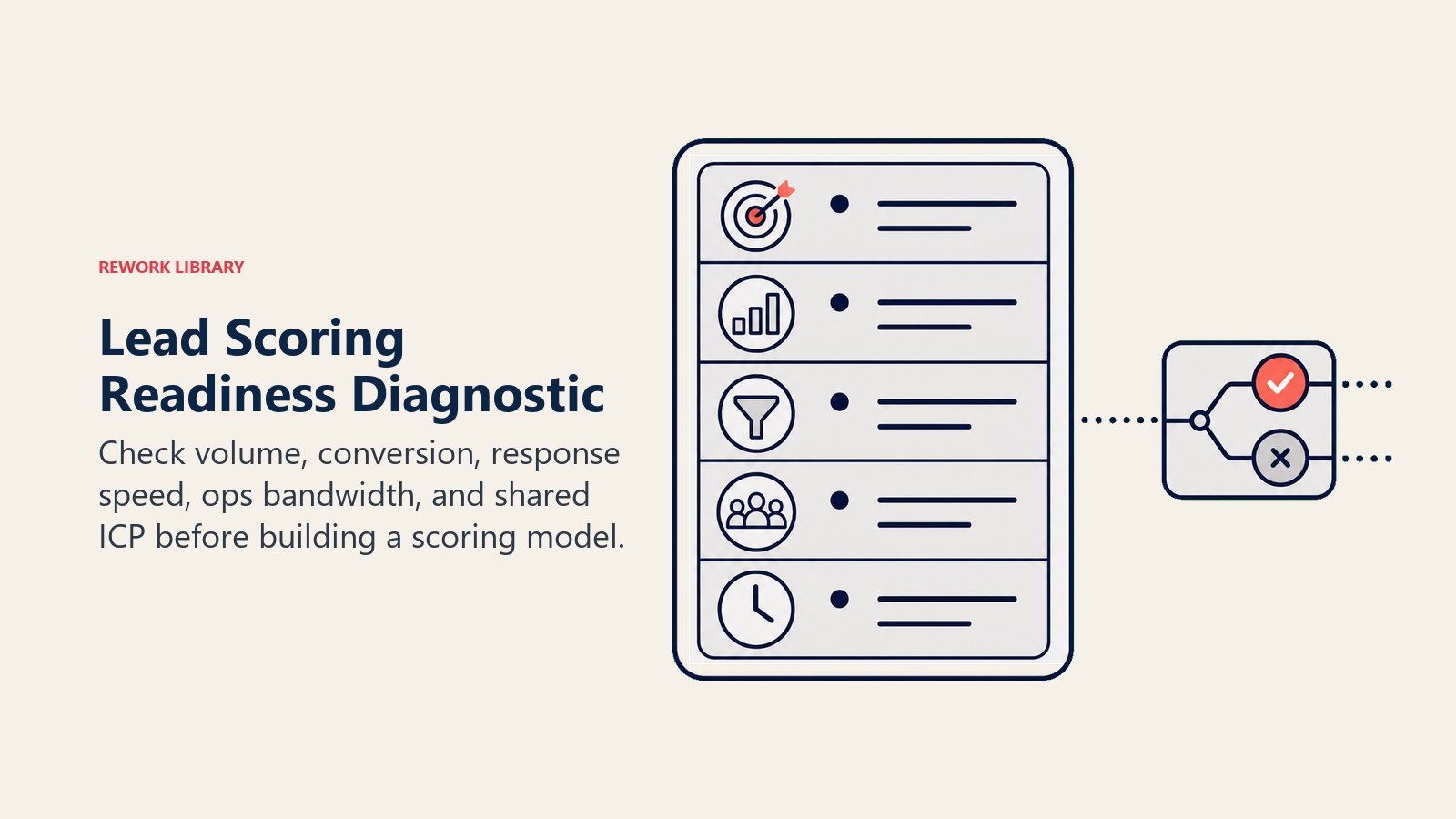
1. Berapa banyak MQL yang dihasilkan tim Anda per bulan? Jika jawabannya di bawah 200, Anda berada di bawah ambang volume di mana scoring membenarkan kompleksitasnya. Bangun ICP checklist sebagai gantinya.
2. Berapa tingkat konversi MQL ke opportunity Anda saat ini? Jika di atas 20%, kualifikasi Anda sudah berjalan dengan cukup baik. Model scoring tidak mungkin memperbaikinya secara dramatis. Jika di bawah 10%, tanyakan mengapa sebelum berasumsi scoring adalah solusinya. Mungkin masalah ICP, masalah kecepatan tindak lanjut, atau masalah pelatihan rep.
3. Berapa lama waktu yang dibutuhkan tim Anda untuk merespons permintaan demo? Jika jawabannya lebih dari satu jam, kecepatan adalah hambatan Anda, bukan kecanggihan kualifikasi. Perbaiki waktu respons sebelum berinvestasi dalam infrastruktur scoring.
4. Apakah tim Anda memiliki bandwidth marketing ops untuk memelihara model scoring setiap kuartal? Model scoring yang tidak dipelihara akan menjadi misinformasi dalam 18 bulan. Jika Anda tidak memiliki seseorang yang akan memiliki audit kuartalan, sistem manual sederhana lebih aman.
5. Apakah marketing dan sales memiliki definisi ICP tertulis bersama? Lead scoring dibangun di atas kriteria ICP. Jika marketing dan sales tidak sepakat tentang seperti apa pelanggan yang baik, model scoring akan mencerminkan ketidaksepakatan tersebut pada skala besar. Perbaiki fondasi alignment terlebih dahulu.
Jika Anda menjawab "tidak" atau "tidak yakin" untuk pertanyaan 4 dan 5, dan volume Anda di bawah 300 MQL/bulan, Anda tidak siap untuk model scoring. Dan itu tempat yang baik untuk berada.
Analisis Rework: Berdasarkan ambang volume di atas dan Pendekatan Dua Field Minimum, tim dengan di bawah 200 MQL per bulan yang beralih dari model scoring penuh ke sistem tier kesesuaian plus tanda intent biasanya melihat dua peningkatan: tindak lanjut lead yang lebih cepat (karena rep berhenti menunggu skor diperbarui) dan tingkat konversi yang lebih tinggi (karena routing A+intent memprioritaskan lead yang tepat tanpa memerlukan kalibrasi model). CRM Rework menyertakan fitur contact scoring native yang mendukung Pendekatan Dua Field Minimum (tier kesesuaian dan tanda intent) tanpa memerlukan implementasi MAP terpisah. Dirancang untuk tim pada kisaran 100-500 MQL/bulan yang membutuhkan prioritisasi tanpa overhead infrastruktur scoring penuh. Lihat rework.com/pricing untuk detail paket saat ini.
Transisi Nantinya Tanpa Gangguan
Ketika tim Anda memang mencapai volume di mana scoring masuk akal, transisi dari kualifikasi manual ke kualifikasi berbasis model berjalan lebih baik ketika Anda tidak memulai dari nol.
Tim yang bertransisi dengan mulus telah mempertahankan tier kesesuaian dan tanda intent di CRM mereka sejak awal. Mereka memiliki data closed-won 12-18 bulan dengan field tersebut yang terisi. Mereka telah mengadakan percakapan sales-marketing reguler tentang kualitas lead. Semua itu menjadi data pelatihan dan fondasi tata kelola untuk model scoring yang sesungguhnya.
Tim yang kesulitan adalah yang melewatkan sistem sederhana sama sekali, tidak memiliki data historis dengan field kualifikasi, dan mencoba membangun model scoring dalam vakum data. Anda tidak bisa melatih model pada catatan dengan field yang kosong.
Jadi gunakan sistem sederhana. Dokumentasikan ICP Anda. Lacak tier kesesuaian dan sinyal intent di CRM Anda. Catat mengapa lead berhasil dan tidak berhasil dikonversi. Ketika Anda mencapai ambang volume, Anda akan memiliki semua yang dibutuhkan untuk membangun model scoring yang benar-benar berhasil, alih-alih memulai dari awal dan menebak-nebak.
Kerangka joint lead scoring menunggu Anda ketika siap. Tidak perlu terburu-buru.
Pertanyaan yang Sering Diajukan tentang Kapan Anda Tidak Perlu Lead Scoring
Berapa banyak lead per bulan yang Anda butuhkan sebelum lead scoring masuk akal?
Sebagian besar tim melihat scoring terbayar di atas 500 MQL per bulan. Di bawah 200, triase manual oleh rep berpengalaman lebih cepat dan lebih akurat daripada model scoring yang dilatih pada data terbatas. Kisaran 200-500 adalah zona abu-abu di mana scoring ringan (tier kesesuaian plus tanda intent, menggunakan fitur native CRM) masuk akal tanpa memerlukan implementasi platform marketing automation penuh. Di bawah 100 MQL per bulan, ICP checklist dan routing demo langsung hampir selalu merupakan sistem yang tepat.
Apa alternatif terbaik untuk lead scoring bagi SMB?
Empat alternatif paling efektif adalah: (1) triase ICP checklist: pass/fail 5 pertanyaan yang diterapkan rep dalam kurang dari 2 menit; (2) permintaan-demo-sebagai-SQL-langsung: rutekan siapa pun yang mengisi formulir demo langsung ke sales tanpa langkah scoring; (3) routing firmografis berdasarkan rep: cocokkan lead ke rep berdasarkan industri atau ukuran perusahaan sehingga keahlian rep menggantikan logika model; (4) Pendekatan Dua Field Minimum: tier kesesuaian (A/B/C) plus tanda intent (ya/tidak) yang tersimpan di CRM Anda, memberi rep lapisan prioritisasi tanpa overhead MAP penuh.
Mengapa kecepatan respons lebih penting daripada scoring untuk SMB?
Pada volume lead rendah, variabel konversi utama adalah seberapa cepat rep menindaklanjuti, bukan seberapa akurat lead tersebut diberi skor. Riset dari MIT dan InsideSales.com menunjukkan bahwa merespons dalam 5 menit membuat Anda 21x lebih mungkin mengkualifikasi lead daripada merespons setelah 30 menit. Untuk tim yang menghasilkan 100 lead per bulan, meningkatkan kecepatan respons dari 4 jam menjadi 15 menit akan menghasilkan pipeline lebih banyak daripada meningkatkan akurasi scoring sebesar 20%. Perbaiki kecepatan minimum sebelum membangun infrastruktur scoring.
Berapa biaya mengimplementasikan sistem lead scoring penuh terlalu dini?
Implementasi platform marketing automation penuh biasanya menelan biaya $15.000-$50.000 dalam biaya implementasi ditambah $15.000-$50.000 per tahun dalam lisensi. Untuk tim yang menghasilkan 100 MQL per bulan dengan rata-rata deal size $20.000, Anda membutuhkan peningkatan konversi yang substansial sekadar untuk balik modal di tahun pertama. Di luar biaya langsung, timeline implementasi enam hingga dua belas bulan berarti lead menumpuk dalam antrean manual sementara sistem scoring sedang dibangun dan dikonfigurasi.
Apa itu Pendekatan Dua Field Minimum?
Pendekatan Dua Field Minimum adalah sistem kualifikasi yang berfungsi paling sederhana untuk tim dengan di bawah 500 MQL per bulan. Menggunakan dua field CRM: Tier Kesesuaian (A/B/C berdasarkan kecocokan ICP) dan Tanda Intent (ya/tidak berdasarkan apakah lead melakukan tindakan high-intent seperti permintaan demo atau kunjungan halaman harga). Rutekan lead A+ya ke tindak lanjut sales segera. Rutekan A+tidak dan B+ya ke urutan nurture terjadwal. Rutekan selebihnya ke outreach prioritas rendah atau batch. Membutuhkan satu hari untuk diimplementasikan dan langsung bekerja.
Bagaimana saya tahu kapan harus bertransisi dari kualifikasi manual ke model scoring?
Tiga titik pemicu menandakan kesiapan: merekrut SDR kedua (keputusan routing berlipat ganda, scoring menyediakan lapisan prioritisasi yang adil), meluncurkan segmen ICP kedua (scoring mencegah rep menerapkan kriteria kualifikasi yang salah ke audiens yang salah), dan menjalankan beberapa kampanye secara bersamaan (ketika sumber lead sangat bervariasi, scoring membantu membedakan perbedaan kualitas berbasis sumber). Sebelum pemicu tersebut, kualifikasi manual hampir selalu lebih akurat dan lebih murah.
Pelajari Lebih Lanjut

Principal Solution Architect
On this page
- Apa yang Sebenarnya Dipecahkan oleh Lead Scoring
- Pertanyaan Ambang Volume
- Apa yang Dilakukan Sebagai Ganti Scoring
- Kasus di Mana Scoring Secara Aktif Merugikan SMB
- Jalur Tengah: Scoring Sederhana Tanpa Infrastruktur
- Kapan Memperkenalkan Scoring: Titik Pemicu Pertumbuhan
- Membuat Keputusan: Diagnostik Lima Pertanyaan
- Transisi Nantinya Tanpa Gangguan
- Pelajari Lebih Lanjut