Bahasa Indonesia
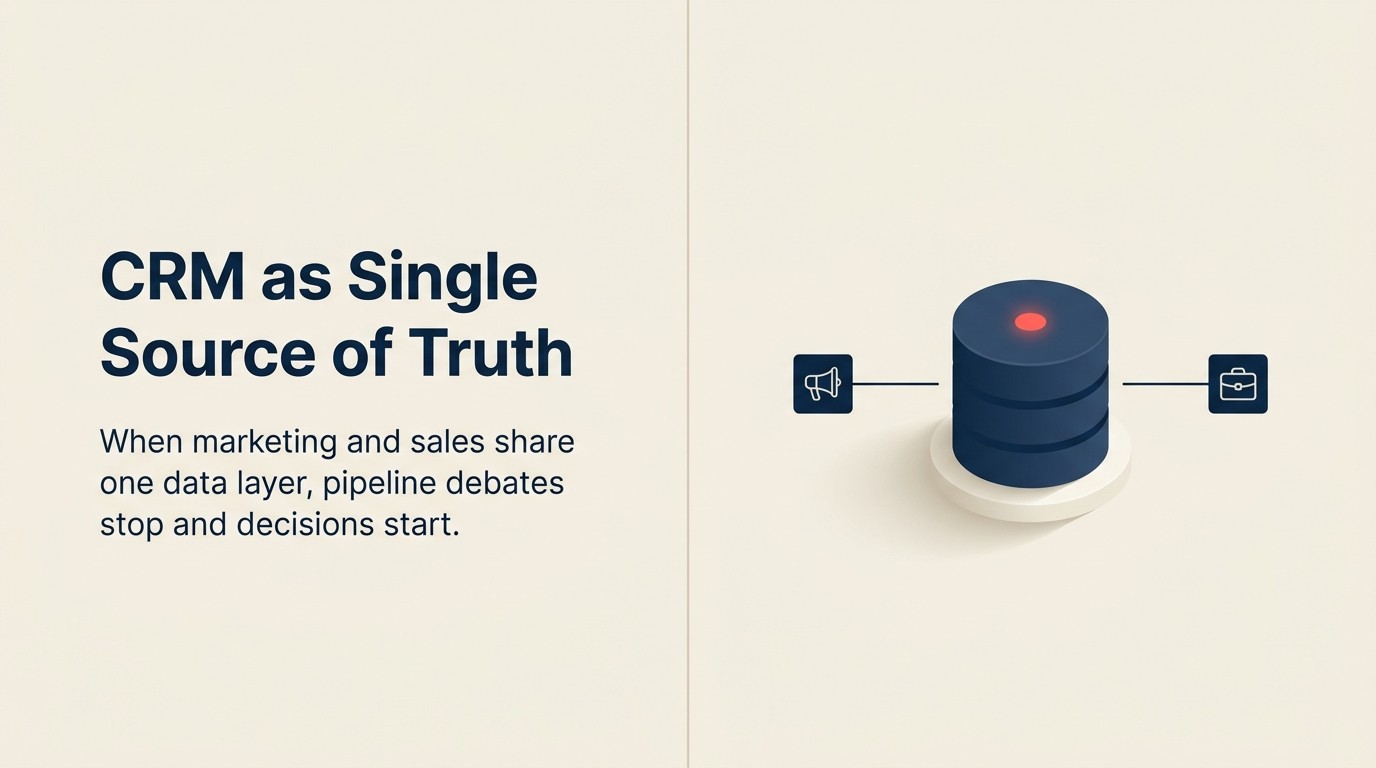
CRM sebagai Single Source of Truth: Membuat Marketing dan Sales Bekerja dari Data yang Sama
Turn this article into takeaways for your work.


Each assistant summarizes the article only for you and suggests best practices for your work.
Dua tim. Dua spreadsheet. Dua versi Pipeline.
Setiap pemimpin pendapatan pernah berada dalam pertemuan itu. Marketing menunjukkan 847 MQL untuk kuartal ini. Sales mengatakan mereka menerima 200 Lead yang layak untuk dikerjakan. Keduanya benar. Mereka hanya mengukur hal yang berbeda, dari sistem yang berbeda, dengan definisi yang berbeda.
Ini bukan masalah komunikasi. Ini adalah masalah infrastruktur data. Dan solusinya bukan pertemuan alignment lain atau saluran Slack bersama. Ini membuat CRM menjadi tempat di mana kebenaran pendapatan berada untuk kedua tim. Memahami apa itu lead management membantu membingkai mengapa lapisan data penting: tanpa satu sistem, status Lead adalah tebak-tebakan siapa pun.
Mengapa Alat Lebih Penting dari Disiplin
Respons paling umum terhadap masalah dua spreadsheet adalah "kita membutuhkan CRM yang lebih baik." Tetapi pemilihan alat jarang menyelesaikan masalah disiplin data. Perusahaan yang menjalankan Salesforce dengan penyelesaian field yang ceroboh akan memiliki data lebih buruk daripada perusahaan yang menjalankan CRM yang lebih murah dengan kebiasaan kebersihan yang ketat. Riset Gartner menempatkan rata-rata biaya tahunan kualitas data yang buruk pada $12,9 juta, sebagian besar di antaranya tidak pernah diukur perusahaan karena mereka tidak memiliki visibilitas ke mana celahnya.
Pertanyaan nyata bukan CRM mana yang Anda gunakan. Apakah kedua tim memperlakukannya sebagai tempat di mana deal berada. Ketika marketing melacak Lead di platform marketing automation dan sales melacak peluang di CRM tanpa sinkronisasi yang andal di antara keduanya, Anda tidak memiliki satu sistem catatan. Anda memiliki dua yang bersaing, dan setiap percakapan alignment menjadi perdebatan tentang angka siapa yang benar.
CRM yang biasa-biasa saja yang digunakan secara konsisten oleh kedua tim lebih berharga daripada yang canggih yang hanya digunakan sales. Alat menciptakan kemungkinan alignment. Disiplin menciptakan alignment itu sendiri.
Fakta Utama: Data CRM dan Kinerja Pendapatan
- Perusahaan dengan data CRM yang bersih dan bersama melihat pertumbuhan pendapatan hingga 29% ketika marketing dan sales bekerja dari sistem yang sama, menurut laporan State of Sales Salesforce.
- 61% tenaga sales mengatakan mereka kesulitan menemukan data kontak yang akurat di CRM mereka, per laporan Sales Enablement HubSpot. Data yang buruk membuang waktu berjualan setiap hari.
- Organisasi dengan alignment marketing-sales yang kuat mencapai tingkat retensi pelanggan 36% lebih tinggi dan win rate 38% lebih tinggi, menurut riset MarketingProfs dan Aberdeen Group.
Apa Arti "Single Source of Truth" dalam Praktik
Single source of truth terdengar jelas sampai Anda mencoba mendefinisikannya. Ini artinya dalam konteks pendapatan:
Definisi status Lead berada di CRM, bukan dalam deck. Ketika marketing mendefinisikan MQL sebagai "skor di atas 60" dan sales mendefinisikan MQL sebagai "seseorang yang meminta Demo," definisi-definisi tersebut perlu dikodekan sebagai nilai picklist di CRM, bukan sebagai slide dalam presentasi QBR terakhir. Ketika definisi berada dalam dokumen yang tidak terhubung ke sistem, mereka menyimpang.
Data atribusi milik CRM, bukan tersilo di MAP. Jika satu-satunya tempat Anda dapat melihat touchpoint marketing adalah di HubSpot atau Marketo, sales tidak memiliki akses ke data tersebut saat mengerjakan deal. Atribusi yang hanya dapat dilihat marketing tidak membantu tim mana pun untuk membuat keputusan yang lebih baik bersama.
Definisi tahap Pipeline cocok antara tampilan marketing dan tampilan sales. Ketika marketing menyebut sesuatu "dalam Pipeline" di MQL dan sales menyebut sesuatu "dalam Pipeline" di SQL, rasio cakupan berarti hal yang berbeda bagi setiap tim. Ketidakcocokan itu adalah benih dari hampir setiap argumen "marketing tidak menghasilkan Pipeline yang cukup."
Alasan penolakan dicatat di CRM, bukan di DM Slack. Ketika sales reps memutuskan Lead tidak layak untuk dikejar, sinyal itu perlu ditangkap dalam field terstruktur, bukan pesan yang menghilang. Tanpa data alasan penolakan, marketing terbang buta tentang apa yang sebenarnya salah dengan Lead yang mereka kirimkan. Feedback loop penolakan MQL sepenuhnya bergantung pada data ini ada di CRM.
Framework Catatan Pelanggan 5 Lapisan
Framework Bernama: Catatan Pelanggan 5 Lapisan Tim pendapatan yang berbagi CRM sebagai single source of truth membangun stack data lima lapisan. Setiap lapisan bergantung pada integritas yang di bawahnya. Sebagian besar kegagalan alignment dapat ditelusuri ke lapisan 1 atau lapisan 2 yang rusak (masalah definisi kontak atau masalah status funnel), bukan pada kecanggihan lapisan di atasnya. Identifikasi lapisan mana yang rusak sebelum mencoba memperbaiki gejalanya.
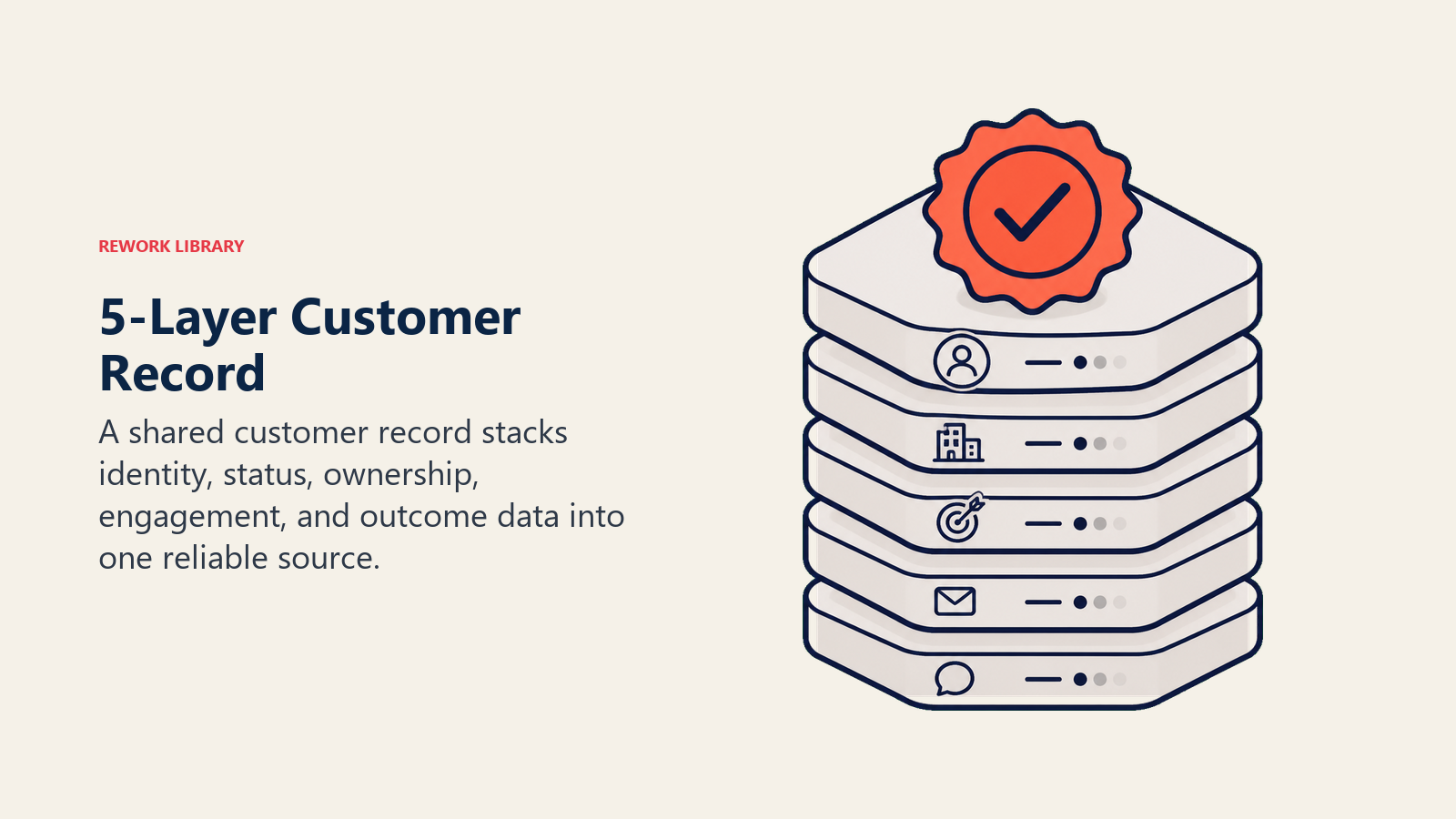
Pikirkan data CRM bersama sebagai lima lapisan, masing-masing dibangun di atas yang di bawahnya. Jika lapisan yang lebih rendah rusak, semua yang di atasnya tidak dapat diandalkan.
| Lapisan | Apa yang dikandungnya | Siapa yang harus sepakat |
|---|---|---|
| Lapisan 1: Data kontak dan akun | Siapa yang ada dalam sistem: perusahaan, title, email, field pengayaan | Kedua tim sepakat pada field yang mendefinisikan ICP dan penyelesaian yang diperlukan |
| Lapisan 2: Status Lead dan peluang | Di mana kontak berada dalam funnel: MQL, SQL, SAL, tahap peluang | Kedua tim sepakat pada definisi dan kriteria transisi |
| Lapisan 3: Data aktivitas | Apa yang terjadi, kapan, dan oleh siapa: panggilan yang dicatat, email yang dikirim, pertemuan yang dipesan | Kedua tim berkomitmen untuk mencatat (tidak opsional) |
| Lapisan 4: Data atribusi | Touchpoint marketing mana yang memengaruhi perjalanan kontak ini | Marketing memiliki penangkapan touchpoint; RevOps memiliki definisi model |
| Lapisan 5: Data hasil | Menang, kalah, didaur ulang, didiskualifikasi (dan mengapa) | Kedua tim sepakat pada kategori hasil dan field akar penyebab |
Lapisan 1 dan Lapisan 2 adalah tempat sebagian besar masalah alignment dimulai. Jika Anda tidak dapat menyepakati seperti apa kontak yang baik atau apa arti MQL, lapisan lainnya tidak penting.
Lapisan 5 adalah tempat sebagian besar masalah alignment menjadi terlihat. Data hasil (terutama alasan penolakan dan alasan closed-lost) adalah Feedback loop yang memberi tahu marketing apakah Lead yang mereka kirimkan benar-benar berhasil. Tanpanya, marketing tidak dapat berkembang, dan sales tidak dapat berhenti mengeluh.
Kerusakan Umum dan Solusinya
Ini adalah empat pola kegagalan CRM yang paling sering muncul di tim pendapatan yang tidak selaras, dan apa yang harus dilakukan tentang masing-masing.
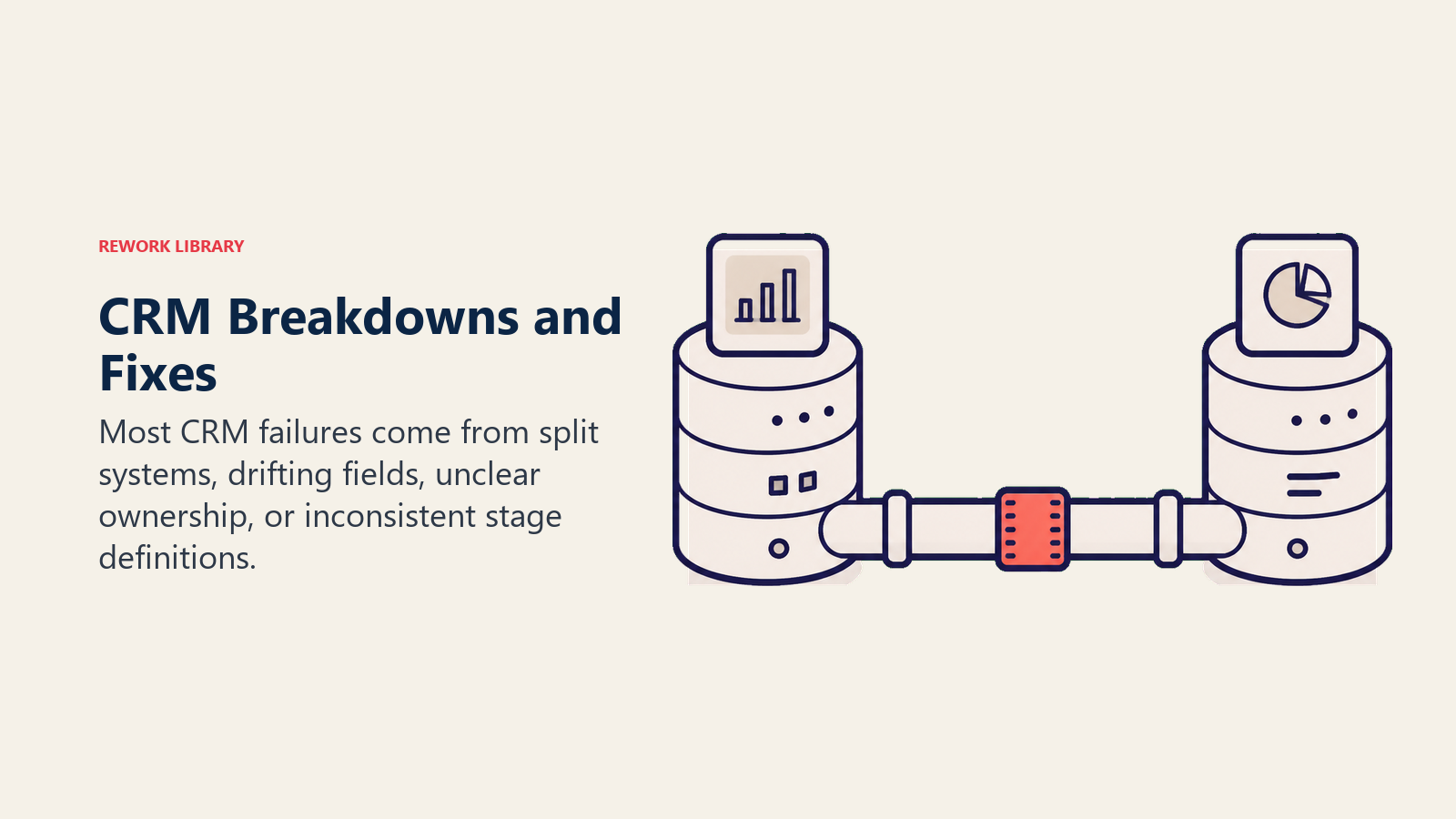
Kerusakan: Marketing melacak di MAP, sales melacak di CRM, tidak pernah disinkronkan. Gejalanya adalah hitungan MQL marketing dan hitungan Lead yang diterima sales selalu berbeda. Perbaikannya adalah sinkronisasi dua arah antara platform marketing automation dan CRM, dengan audit pemetaan field untuk mengkonfirmasi data apa yang bergerak di kedua arah. Ini bukan pengaturan satu kali. Ini memerlukan tinjauan kuartalan saat kedua platform berkembang.
Kerusakan: Field status teks bebas. Ketika sales reps dapat mengetik apa saja ke dalam field "status Lead," Anda akhirnya mendapatkan "Tidak sekarang," "waktu yang buruk," "tidak," "coba Q3," dan "mungkin tindak lanjuti nanti," tidak satu pun yang dapat Anda laporkan. Ganti field teks bebas dengan picklist dropdown yang memiliki definisi yang disepakati. Setiap nilai dalam picklist harus berarti hal yang sama bagi setiap sales reps.
Kerusakan: Catatan duplikat mengembungkan metrik kedua tim. Marketing melihat 1.000 kontak unik. Sales melihat 600 perusahaan. Perbedaannya sering kali adalah duplikat: orang atau perusahaan yang sama yang ada sebagai beberapa catatan. Aturan deduplikasi menangkap duplikat baru saat masuk; audit penggabungan berkala membersihkan yang historis. Tunjuk pengelola data (sering di RevOps) yang memiliki ini sebagai tugas berkelanjutan, bukan proyek pembersihan satu kali.
Kerusakan: Pencatatan aktivitas bersifat opsional. Ketika mencatat panggilan, email, dan pertemuan diperlakukan sebagai preferensi pribadi, data Pipeline menjadi tidak dapat diandalkan. Anda tidak dapat mengetahui apakah deal terhenti karena tidak ada outreach atau karena outreach tidak dicatat. Tingkat penyelesaian CRM perlu menjadi metrik tim, terlihat dalam Dashboard manajer dan dibahas dalam tinjauan Pipeline, bukan pertanyaan disiplin pribadi.
Audit Kesehatan CRM: Apa yang Harus Diperiksa Pertama
Sebelum Anda dapat memperbaiki CRM Anda sebagai sumber data bersama, Anda perlu mengetahui apa yang sebenarnya rusak. Lima metrik ini memberi tahu Anda di mana masalah nyata berada:
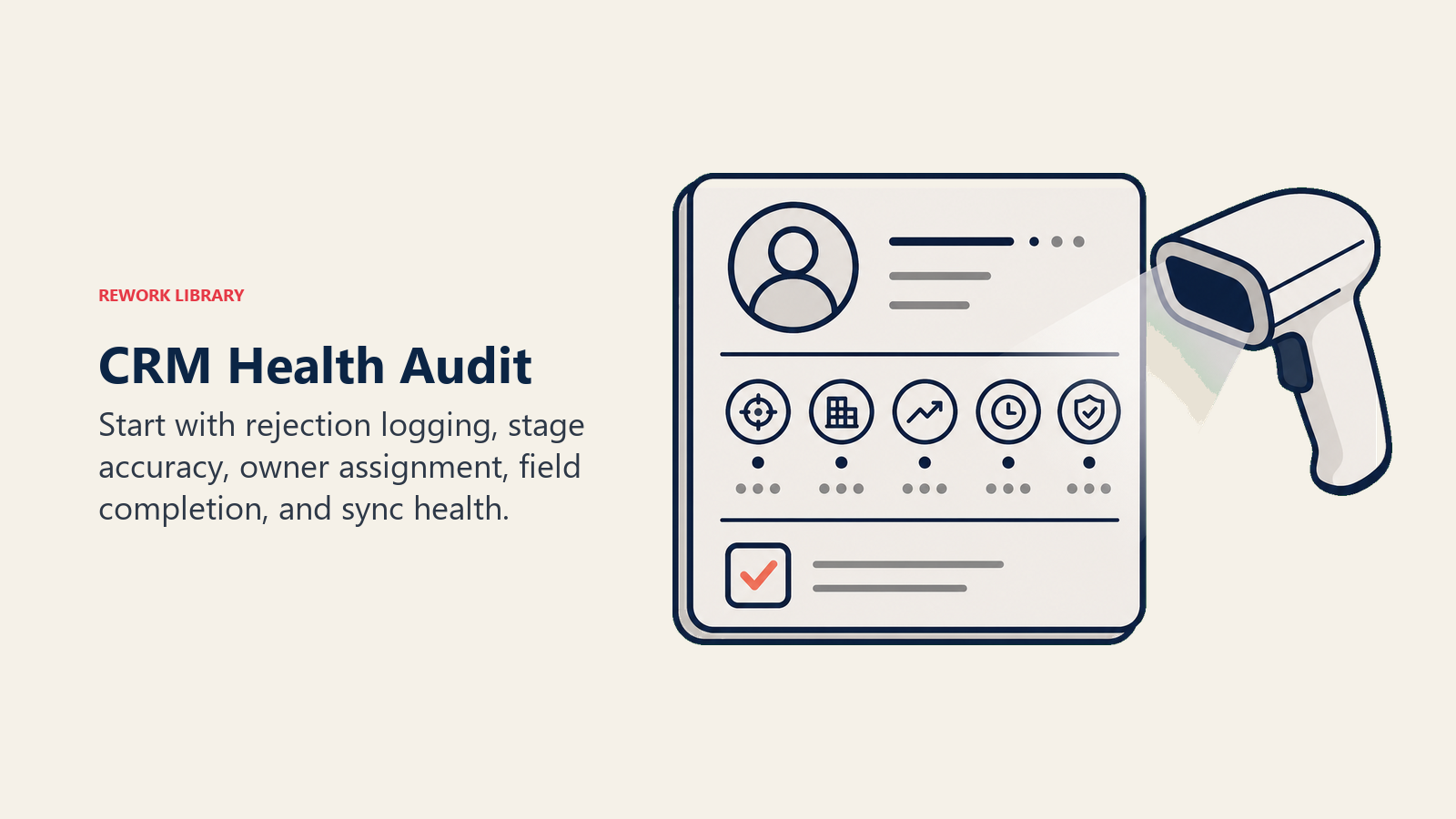
MQL rejection rate dengan alasan yang dicatat. Berapa persentase MQL yang ditolak sales yang memiliki alasan penolakan di CRM? Jika di bawah 60%, marketing tidak memiliki Feedback sistematis tentang kualitas Lead. Target: 90%+.
Penyelesaian peran kontak peluang. Berapa persentase peluang terbuka yang memiliki setidaknya satu peran kontak yang diisi (economic buyer, champion, evaluator)? Tanpa peran kontak, Anda tidak dapat mengetahui apakah marketing menjangkau orang yang tepat di target account. Target: 80%+.
Data atribusi closed-won. Berapa persentase deal closed-won yang memiliki setidaknya satu touchpoint marketing yang dicatat? Jika di bawah 50%, Anda memiliki masalah pelacakan atribusi atau masalah sinkronisasi antara MAP dan CRM. Target: 75%+.
Tingkat duplikat. Berapa persentase catatan kontak Anda yang merupakan duplikat? Sebagian besar CRM memiliki laporan deduplikasi bawaan, atau Anda dapat menariknya melalui alat RevOps. Di atas 5% mulai mendistorsi pelaporan secara signifikan.
Tingkat penyelesaian field ICP. Untuk field yang mendefinisikan ideal customer profile Anda (ukuran perusahaan, industri, title pekerjaan, geografi), berapa persentase kontak yang memilikinya diisi? Jika di bawah 70%, segmentasi dan scoring Anda berjalan pada data yang tidak lengkap.
Jalankan audit ini secara kuartalan. Bagikan hasilnya dalam tinjauan marketing-sales ops bersama. Tujuannya bukan menetapkan kesalahan. Ini untuk memprioritaskan apa yang harus diperbaiki selanjutnya. Riset kualitas data CRM Gartner mengidentifikasi pola yang sama: sebagian besar organisasi sudah tahu data mereka memiliki masalah tetapi kekurangan rencana remediasi yang diprioritaskan.
Menjadikan CRM sebagai Default, Bukan Renungan
Bagian tersulit dari menjadikan CRM sebagai sistem catatan bukan pengaturan teknis. Ini mengubah perilaku sehingga kedua tim default ke CRM alih-alih melewatinya.
Tiga praktik yang mempercepat pergeseran ini:
Ikat pelaporan komisi ke data CRM. Ketika sales reps tahu bahwa attainment mereka dihitung dari apa yang ada di CRM, bukan dari apa yang mereka ceritakan ke manajer mereka, pencatatan menjadi prioritas. Perilaku mengikuti insentif. Jika sales reps dapat mendapat kredit untuk deal yang tidak dicatat dengan benar, CRM akan selalu tidak lengkap.
Jalankan tinjauan Pipeline dari tampilan CRM, bukan spreadsheet yang diekspor. Ketika VP of Sales membuka Dashboard CRM dalam tinjauan Pipeline alih-alih berbagi file Excel, pesannya jelas: CRM adalah tempat keputusan dibuat. Ketika manajer mengekspor ke spreadsheet untuk analisis mereka sendiri dan tidak pernah merujuk sistem langsung, pesan sebaliknya yang dikirimkan.
Dashboard marketing harus menarik dari CRM, bukan hanya dari MAP. Jika pelaporan internal marketing hanya menampilkan metrik MAP (sesi, buka, volume MQL dari platform marketing), mereka tidak melihat gambaran Pipeline yang sama seperti sales. Marketing ops harus membangun setidaknya satu Dashboard yang menarik langsung dari CRM sehingga pimpinan marketing bekerja dari dataset yang sama.
Tata Kelola: Siapa yang Memiliki Aturan Data CRM
Tanpa kepemilikan, aturan CRM menyimpang. Seseorang memperbarui nilai picklist tanpa memberi tahu siapa pun. Field baru ditambahkan tanpa definisi. Sinkronisasi rusak dan tidak ada yang menyadarinya selama tiga bulan.
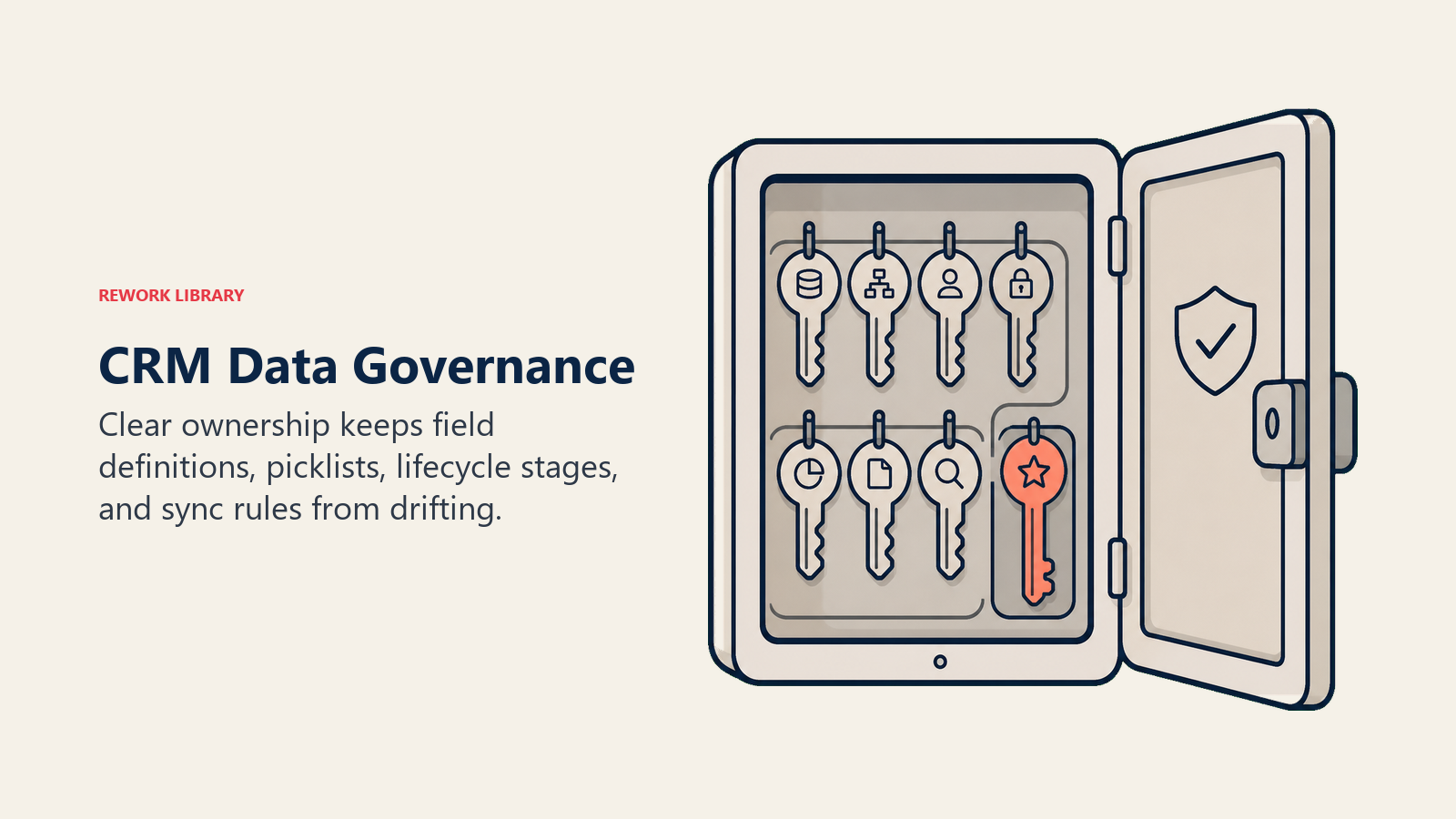
Kepemilikan yang jelas mencegah ini:
RevOps memiliki definisi field dan nilai picklist. Ketika ada pertanyaan tentang apa arti nilai status, RevOps adalah otoritasnya. Mereka memiliki kamus data dan mereka menyetujui perubahan.
Manajemen sales memiliki ekspektasi pencatatan aktivitas. Jika ekspektasinya adalah bahwa setiap panggilan pelanggan dicatat dalam 24 jam, manajer sales yang menegakkan itu, bukan RevOps. Ini adalah pertanyaan disiplin kepemimpinan dan manajemen, bukan pertanyaan sistem.
Marketing ops memiliki konfigurasi sinkronisasi MAP-ke-CRM. Mereka tahu kampanye mana yang menghasilkan touchpoint mana dan bagaimana pemetaan ke field CRM. Ketika jenis kampanye baru diluncurkan, marketing ops bertanggung jawab untuk memastikan data atribusi mengalir dengan benar.
Tinjauan tata kelola bersama, kuartalan. Bukan ketika sesuatu rusak. Setiap kuartal. Tinjau metrik audit kesehatan, tandai area yang memburuk, dan sepakati apa yang diperbaiki sebelum tinjauan berikutnya. Pertemuan ini berlangsung lima belas menit jika segalanya sehat; itu menjadi pertemuan terpenting kuartal ini jika tidak.
Analisis Rework: Tim yang menggunakan CRM bersama dengan standar kebersihan yang ditegakkan (alasan penolakan terstruktur, sinkronisasi MAP dua arah, dan field ICP yang terdefinisi) menyelesaikan sengketa atribusi dalam hitungan jam daripada hari. Dalam tinjauan Pipeline yang dijalankan dari tampilan CRM terpadu, pimpinan marketing dan sales dapat melihat angka yang sama sebelum pertemuan dimulai, menghilangkan perdebatan "spreadsheet siapa yang benar" sepenuhnya. Pergeseran perilaku dari "CRM sebagai alat sales" ke "CRM sebagai catatan pendapatan bersama" adalah kurang proyek teknis daripada proyek tata kelola: itu membutuhkan seseorang untuk memiliki aturan dan otoritas untuk menegakkannya.
Kutipan yang Dapat Dibagikan
"Perusahaan dengan data CRM yang bersih dan bersama mencapai pertumbuhan pendapatan hingga 29% ketika marketing dan sales bekerja dari sistem yang sama. Lapisan data adalah lapisan alignment." (Salesforce State of Sales)
"61% tenaga sales mengatakan mereka kesulitan menemukan data kontak yang akurat di CRM mereka. Setiap menit yang dihabiskan sales reps untuk memvalidasi informasi kontak adalah menit yang tidak dihabiskan untuk berjualan." (HubSpot Sales Enablement Report)
"Organisasi dengan alignment marketing-sales yang kuat mencapai win rate 38% lebih tinggi. Prediktor paling andal dari alignment itu adalah apakah kedua tim dapat masuk ke CRM yang sama dan melihat Pipeline yang sama." (Aberdeen Group / MarketingProfs)
Hasil Alignment dari Data CRM yang Bersih
Ketika kedua tim benar-benar bekerja dari data yang sama, beberapa hal terjadi yang sebelumnya tidak mungkin.
Percakapan atribusi berhenti menjadi perdebatan. Alih-alih marketing berkata "angka kami menunjukkan pengaruh 70%" dan sales berkata "itukan bukan yang saya lihat," kedua tim dapat menunjuk ke Dashboard yang sama dan mendiskusikan apa yang data katakan kepada mereka. Percakapan bergeser dari "angka siapa yang benar" ke "apa yang harus kita lakukan tentang ini."
Kepercayaan perkiraan meningkat. Ketika data Pipeline lengkap (tahap secara akurat mencerminkan perkembangan deal, aktivitas dicatat, kontak ditautkan ke peluang), perkiraan menjadi lebih andal bagi semua orang. Estimasi kontribusi Pipeline marketing juga semakin kredibel ketika didasarkan pada data konversi historis dari CRM, bukan dari MAP.
Onboarding sales reps baru menjadi lebih cepat. Ketika CRM adalah catatan sebenarnya dari apa yang terjadi dengan setiap akun (bukan hanya sistem pelacakan untuk deal saat ini), sales reps baru dapat memahami sejarah wilayah mereka dalam beberapa jam daripada berminggu-minggu. Pengetahuan institusional itu berada dalam sistem, bukan di kepala orang.
Tinjauan alignment menjadi lebih produktif. Ketika kedua tim membawa data dari tempat yang sama ke tinjauan Pipeline bersama, pertemuan berhenti menjadi negosiasi dan menjadi sesi pemecahan masalah.
CRM tidak akan pernah sempurna. Catatan akan memiliki celah, sinkronisasi akan sesekali rusak, dan orang terkadang akan melewatkan pencatatan panggilan. Tetapi tujuannya bukan kesempurnaan. Ini membuat CRM menjadi tempat yang tak terbantahkan di mana kebenaran pendapatan berada, sehingga ketika marketing dan sales tidak setuju, mereka tidak setuju tentang hal yang benar: strategi dan prioritas, bukan spreadsheet siapa yang benar. Ikhtisar Wikipedia tentang customer relationship management menangkap ini dengan baik: sistem CRM hanya bekerja ketika mengompilasi data dari setiap saluran komunikasi ke satu tempat. Nilainya adalah tampilan terpadu, bukan perangkat lunaknya sendiri.
Pelajari Lebih Lanjut

Principal Solution Architect
On this page
- Mengapa Alat Lebih Penting dari Disiplin
- Apa Arti "Single Source of Truth" dalam Praktik
- Framework Catatan Pelanggan 5 Lapisan
- Kerusakan Umum dan Solusinya
- Audit Kesehatan CRM: Apa yang Harus Diperiksa Pertama
- Menjadikan CRM sebagai Default, Bukan Renungan
- Tata Kelola: Siapa yang Memiliki Aturan Data CRM
- Kutipan yang Dapat Dibagikan
- Hasil Alignment dari Data CRM yang Bersih
- Pelajari Lebih Lanjut