Planning poker: cómo estiman el esfuerzo los equipos ágiles
Turn this article into takeaways for your work.


Each assistant summarizes the article only for you and suggests best practices for your work.
El planning poker es la técnica de estimación que convierte una sesión de refinamiento de backlog potencialmente tensa en un ejercicio de equipo estructurado y sorprendentemente ameno. Suena simple, pero la mecánica está ingeniosamente diseñada para sacar a la luz los desacuerdos que realmente importan.
¿Qué es el planning poker?
El planning poker (también llamado Scrum poker) es una técnica de estimación gamificada y basada en el consenso que usan los equipos ágiles para dimensionar historias de usuario y elementos del backlog. Cada participante tiene un juego de cartas numeradas. Todos eligen una carta en privado, y luego todas las cartas se revelan simultáneamente. Si las estimaciones difieren significativamente, el equipo discute la brecha antes de volver a votar hasta llegar a un consenso.
El método fue introducido por James Grenning en 2002 y luego popularizado por Mike Cohn en su libro Agile Estimating and Planning (2005). El enfoque de Cohn, junto con la adopción generalizada de Scrum, convirtió al planning poker en la herramienta de estimación de facto en los equipos de metodología ágil de todo el mundo.
La idea clave detrás del planning poker es que la estimación funciona mejor como una conversación, no como un cálculo. Cuando todos ponen un número sobre la mesa a la vez, se obtiene un juicio individual sin filtrar. Los desacuerdos que siguen no son fricción: son la señal.
Datos clave
- Los equipos que usan técnicas de estimación estructuradas como el planning poker reportan una confianza 29% mayor en sus compromisos de sprint en comparación con el dimensionamiento no estructurado (State of Agile Report, 17.ª edición, 2024).
- El 81% de los profesionales ágiles usa story points como su unidad de estimación principal, y el planning poker es el método más común para asignarlos (State of Agile Report, 17.ª edición, 2024).
- Mike Cohn, quien popularizó el planning poker, observa que el valor principal de la técnica es "la discusión que provoca, no el número que produce" (Mountain Goat Software, agileestimating.com).
Por qué funciona el planning poker
La eficacia del planning poker no es accidental. El diseño aborda tres modos de fallo específicos que afectan la estimación tradicional de arriba hacia abajo.
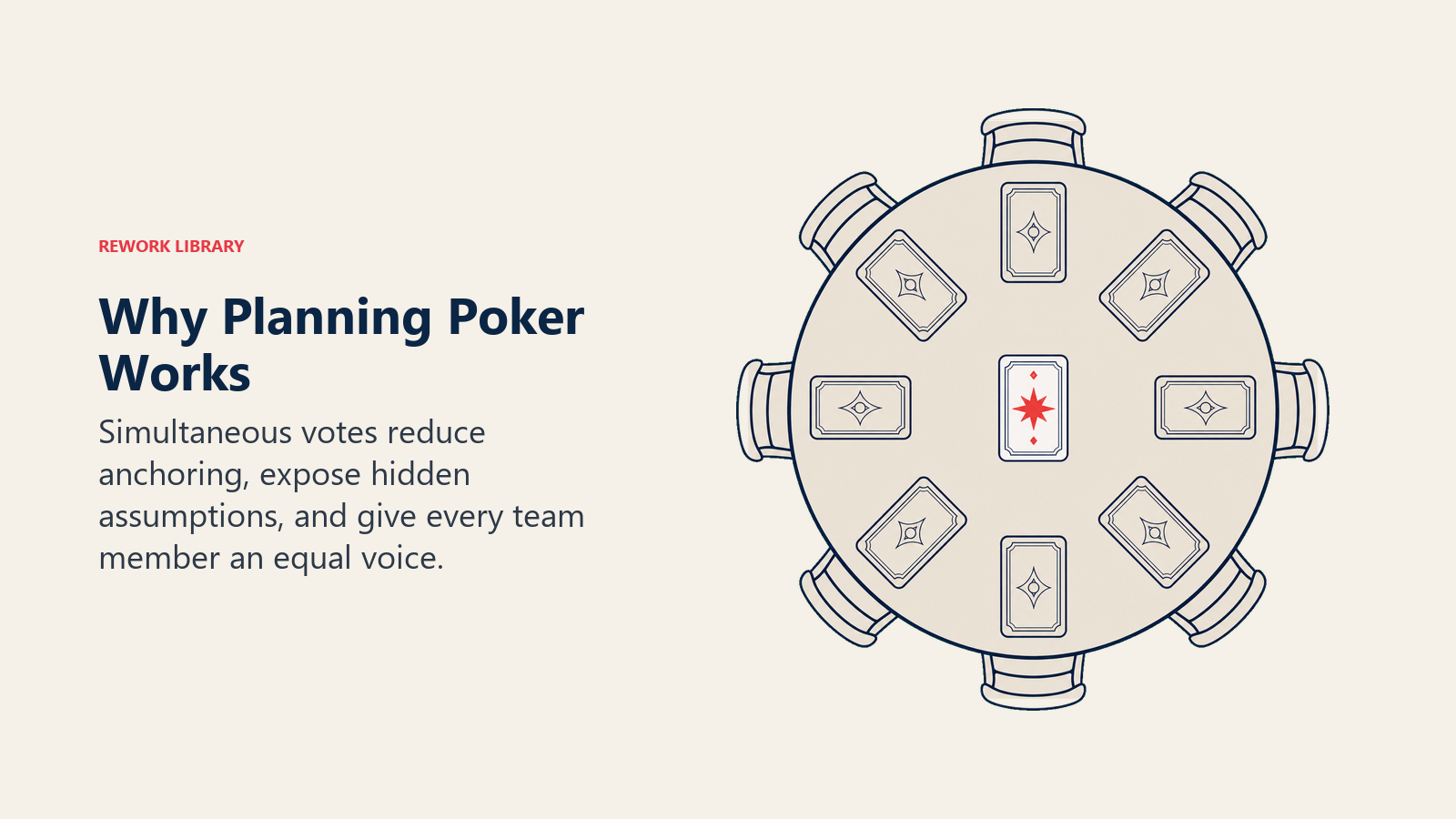
Reduce el sesgo de anclaje. Cuando un desarrollador senior dice "esto parece una tarea de dos días" antes de que nadie más haya hablado, arrastra a todo el equipo hacia ese número sin importar la experiencia individual. La revelación simultánea de cartas rompe por completo esa dinámica. Todos se comprometen con su estimación antes de ver la de los demás, lo que da al grupo datos genuinamente independientes.
Saca a la luz suposiciones ocultas. El momento interesante en cualquier ronda de planning poker no es cuando todos coinciden, es cuando las estimaciones se dispersan entre varios valores. Un desarrollador que elige 3 mientras otro elige 13 casi con certeza tienen modelos mentales diferentes de lo que requiere la historia. Ese desacuerdo revela un requisito faltante, un criterio de aceptación poco claro o una dependencia que a nadie se le ocurrió mencionar. Usted quiere encontrar estas brechas en la reunión de estimación, no a mitad del sprint.
Involucra a todo el equipo. En muchos enfoques de estimación, un tech lead estima y todos los demás asienten. El planning poker da a cada voz el mismo peso. La desarrolladora junior que elige una carta alta porque recuerda una historia similar que resultó ser mucho más difícil de lo esperado tiene la oportunidad de explicar su razonamiento. Ese conocimiento institucional a menudo no sale a la luz de ninguna otra manera.
El planning poker también crea una propiedad psicológica. Cuando un equipo estima en conjunto, es más probable que se responsabilicen mutuamente del compromiso compartido, porque lo hicieron juntos.
Errores comunes y limitaciones
El planning poker es efectivo, pero es fácil ejecutarlo mal.
Apresurar los desacuerdos. Cuando dos personas están muy alejadas, la tentación es dividir la diferencia y seguir adelante. No lo haga. La brecha le está diciendo algo. Tómese de tres a cinco minutos para entender cada perspectiva antes de volver a votar.
Dejar que las voces senior dominen. Incluso con la revelación simultánea, un tech lead que explica de inmediato su estimación con carta baja antes de que otros hayan hablado aún puede anclar la discusión. Los facilitadores deberían pedir que hable primero quien tenga la carta más alta.
Usarlo para todo. El planning poker está diseñado para historias de usuario en el nivel de granularidad correcto. Usarlo para dimensionar épicas o iniciativas de varios trimestres produce números que no son significativos. Los elementos demasiado grandes deben dividirse antes de la estimación.
Tratar la estimación como una promesa. El número producido es una estimación de tamaño relativo, no un plazo. Los equipos que confunden los story points con horas crean una presión que corrompe futuras estimaciones.
Ejecutarlo sin historias listas. Si una historia carece de criterios de aceptación claros, el planning poker se convierte en un debate sobre interpretación en lugar de esfuerzo. Los elementos deben cumplir una Definition of Ready antes de entrar en la estimación.
Cómo jugar planning poker (paso a paso)
Lea la historia, estime en privado, revelen juntos, discutan los valores atípicos y vuelvan a votar hasta que las estimaciones converjan.
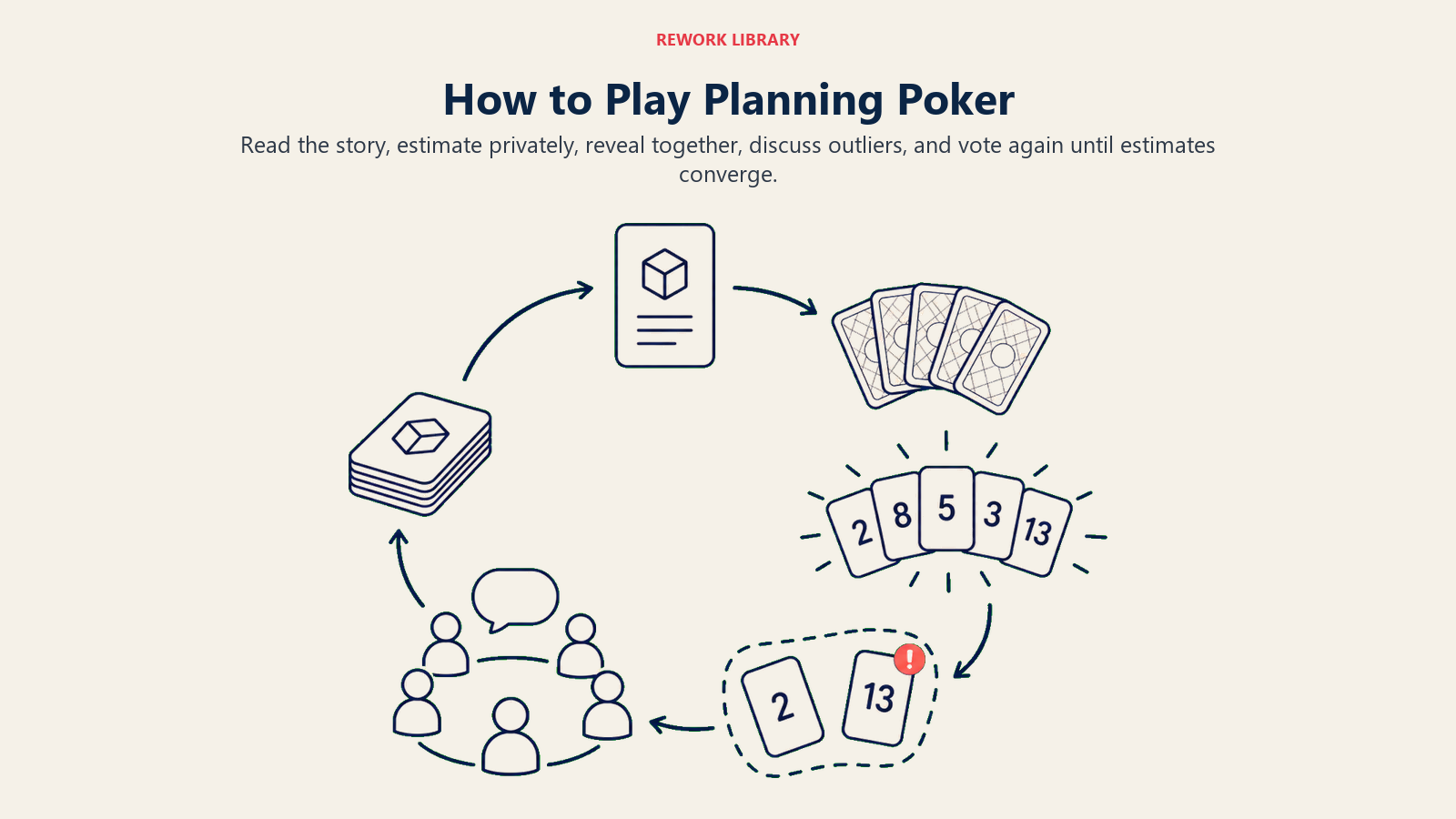
Paso 1: prepare el mazo
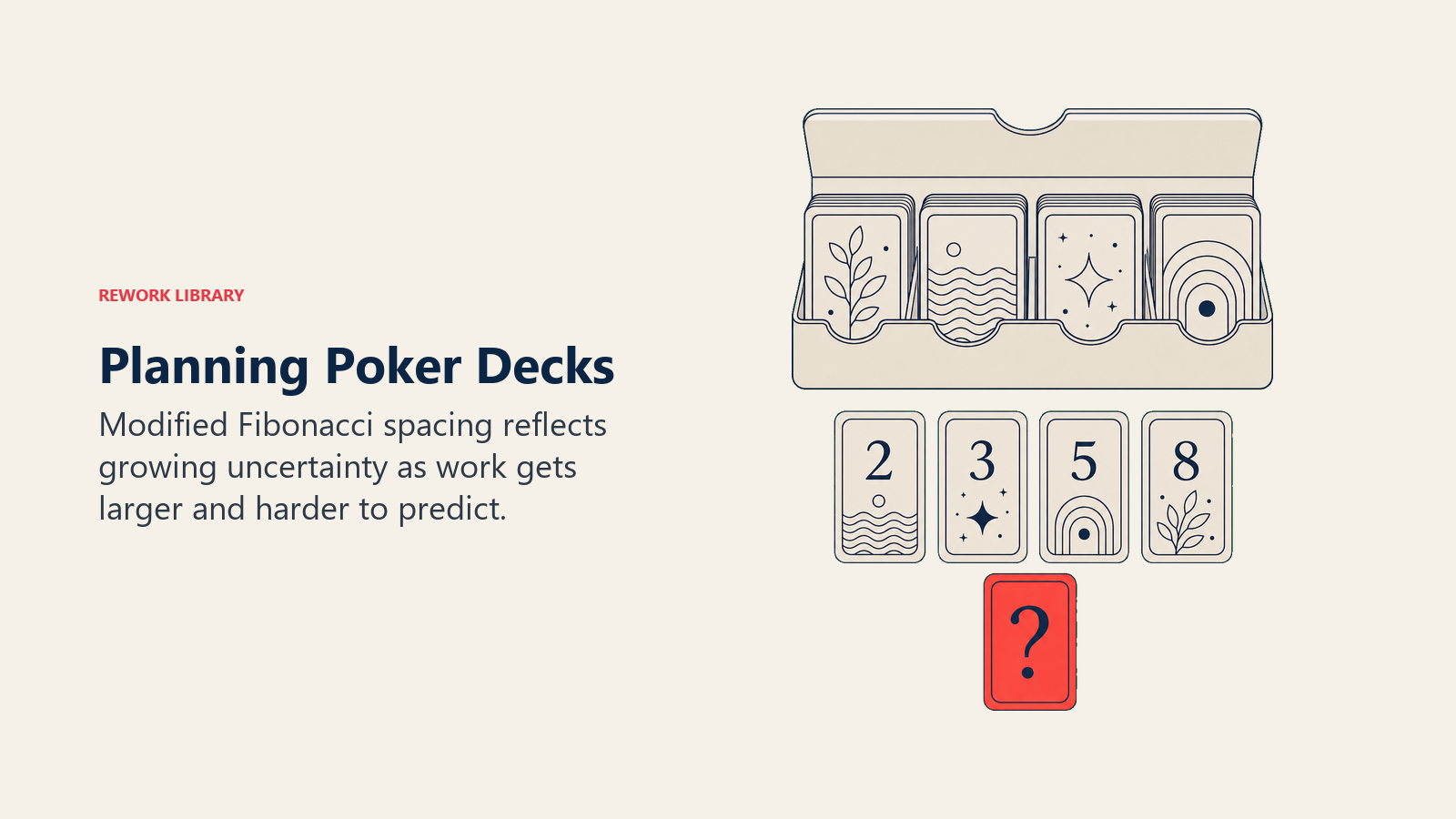
Cada participante recibe un juego de cartas de estimación. El mazo estándar usa una secuencia de Fibonacci modificada: 0, 1, 2, 3, 5, 8, 13, 20, 34, 55, 89, y cartas especiales para "?" (demasiado incierto para estimar) y una taza de café (necesita un descanso). El espaciado no lineal refleja la verdad de que el trabajo más grande conlleva proporcionalmente más incertidumbre. La mayoría de los equipos también añaden 0.5 y 1 en el extremo bajo para elementos muy pequeños.
Los mazos físicos funcionan bien. Herramientas en línea como Pointing Poker, PlanITpoker, y funciones integradas en Jira y Azure DevOps dan soporte a los equipos remotos.
Paso 2: lea la historia en voz alta
El Product Owner (o quien sea dueño del backlog) lee la historia de usuario y los criterios de aceptación al grupo. Los participantes hacen preguntas aclaratorias. Este no es el momento de estimar, es el momento de asegurarse de que todos entienden la misma historia. Una ventana de aclaración de dos a tres minutos es habitual.
Paso 3: estime en privado
Cada participante selecciona una carta de su mano que represente su estimación de tamaño para la historia. Las cartas permanecen boca abajo. Nadie anuncia su número ni reacciona a los demás durante esta fase. El objetivo es un juicio independiente genuino.
Paso 4: revelen simultáneamente
A la cuenta de tres (o con un clic de botón en una herramienta en línea), todos voltean su carta al mismo tiempo. Esto evita que la última persona en revelar sea influenciada por lo que otros han mostrado.
Paso 5: discutan los valores atípicos
Si todas las cartas muestran el mismo número (o números adyacentes), el equipo registra la estimación de consenso y sigue adelante. Si hay una dispersión significativa, el facilitador pide a los titulares de la carta más alta y la más baja que expliquen su razonamiento. Aquí es donde ocurre el verdadero valor. Deje que la discusión dure de tres a cinco minutos y luego vuelvan a votar.
Paso 6: vuelvan a votar hasta el consenso
Después de la discusión, todos vuelven a estimar. Repita los pasos 3 a 5 hasta que el grupo converja. En la mayoría de los casos, la convergencia ocurre en una o dos rondas. Si una historia requiere más de tres rondas sin converger, puede que necesite dividirse o posponerse para más investigación.
Ejemplo de planning poker
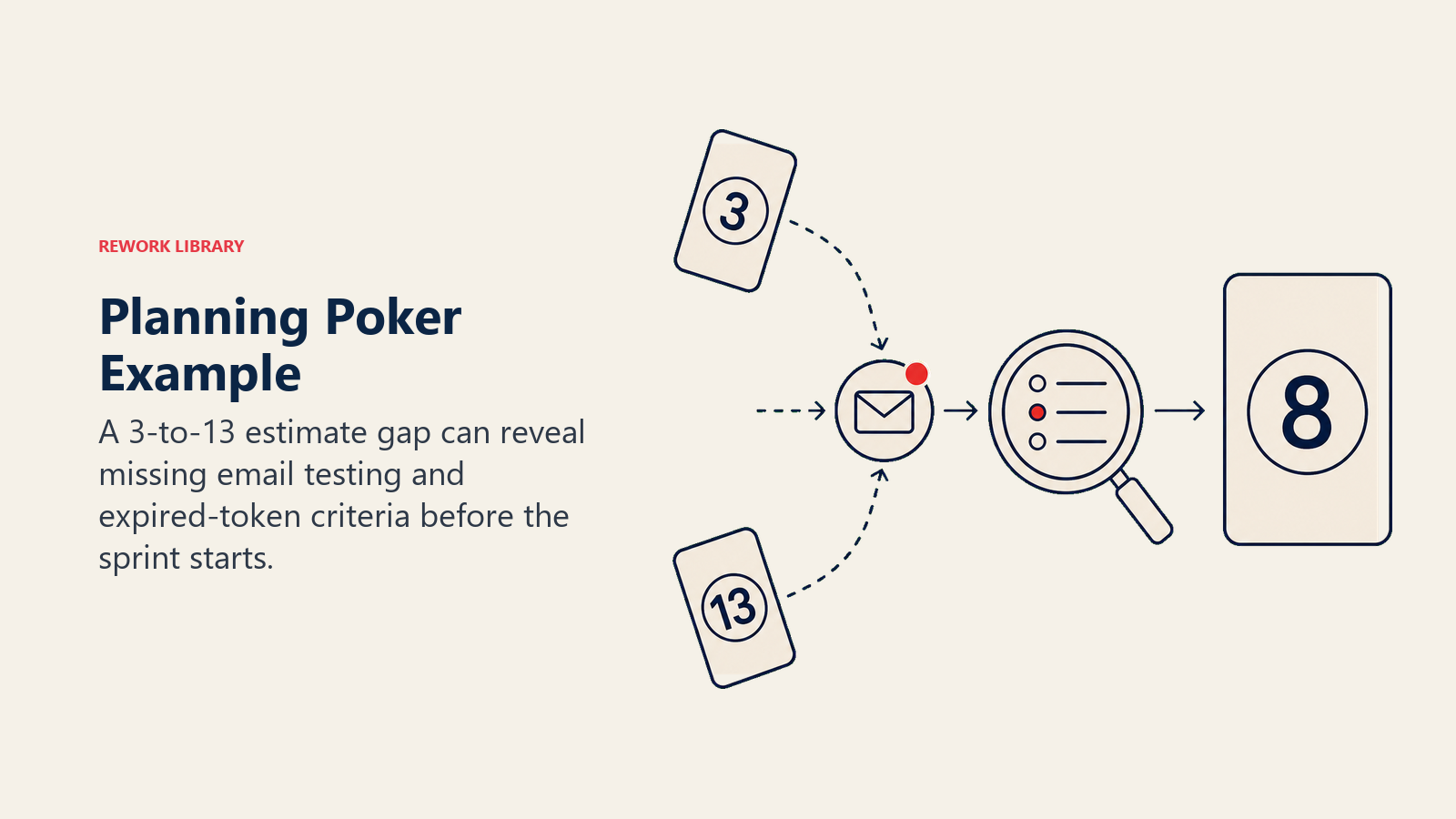
Aquí hay una ronda típica para una historia: "Como usuario, quiero restablecer mi contraseña por correo electrónico para poder recuperar el acceso a mi cuenta."
| Estimador | Primer voto | Razonamiento |
|---|---|---|
| Dev A | 5 | Flujo de autenticación estándar, ya usó una librería similar antes |
| Dev B | 13 | Olvidó las pruebas de entregabilidad de correo electrónico y los casos límite para enlaces vencidos |
| QA | 8 | Considera las pruebas de regresión en los flujos de inicio de sesión |
| Product Owner | ? | No estima la complejidad, hace una pregunta aclaratoria sobre las reglas de expiración del token |
Discusión: Dev B señala que la última funcionalidad basada en correo electrónico del equipo tuvo problemas inesperados de entregabilidad en staging que añadieron dos días. Dev A reconoce que no había considerado esa carga adicional de pruebas. El equipo acuerda que la historia necesita un criterio de aceptación que cubra explícitamente el comportamiento del token vencido antes de volver a votar.
Nuevo voto: Dev A: 8, Dev B: 8, QA: 8. Consenso en 8 story points.
La estimación final es 60% mayor que el primer voto de Dev A. Esa brecha no fue un error, fue el sistema funcionando.
Herramientas y mazos de planning poker
Las cartas físicas funcionan bien para equipos colocalizados. Los mazos impresos son económicos y añaden un ritual táctil a la reunión. Una búsqueda rápida de "planning poker cards" arroja muchas opciones, incluidas plantillas imprimibles gratuitas.
Las herramientas en línea son la opción predeterminada para equipos distribuidos:
- Pointing Poker (pointingpoker.com): simple, gratuito, sin necesidad de registro
- PlanITpoker (planitpoker.com): incluye historial y gestión de sesiones
- Jira: planning poker nativo a través del tablero de Sprint Planning (requiere una aplicación de terceros)
- Azure DevOps: se integra mediante extensiones como Estimate
Los valores de carta que más usan los equipos:
| Tipo de mazo | Valores |
|---|---|
| Fibonacci modificado (estándar) | 0, 1, 2, 3, 5, 8, 13, 20, 40, 100 |
| Fibonacci puro | 1, 2, 3, 5, 8, 13, 21, 34, 55, 89 |
| Híbrido de tallas de camiseta y números | XS=1, S=2, M=3, L=5, XL=8 |
| Potencias de 2 | 1, 2, 4, 8, 16, 32 |
La mayoría de los equipos se quedan con Fibonacci modificado. Las brechas entre números grandes (13 vs. 20 vs. 40) reflejan una incertidumbre genuina a mayor escala, que es la postura honesta a adoptar.
Mejores prácticas
Prepare su backlog antes de la sesión. Las historias que carecen de criterios de aceptación desperdician el tiempo de todo el equipo. Realice un breve refinamiento previo para que los elementos cumplan una Definition of Ready antes de que comience la estimación.
Ponga un límite de tiempo a cada historia. Un límite de discusión de dos a tres minutos por historia mantiene la sesión en movimiento. Si una historia sigue consumiendo tiempo, divídala.
Rote al facilitador. Mantener a la misma persona dirigiendo cada sesión crea una dinámica de poder que puede suprimir sutilmente las estimaciones discrepantes. Rotar mantiene a todos igualmente involucrados.
No ancle antes de la revelación. Evite frases como "esto parece pequeño" o "pasé tres días en algo similar" antes de que se muestren las cartas. Estas colorean la estimación antes de que la revelación tenga la oportunidad de producir datos independientes.
No use los story points como horas. Todo el sentido del dimensionamiento relativo es desacoplar el esfuerzo del tiempo de calendario. Una vez que los story points se convierten en un sustituto de las horas, pierde la señal de velocidad que están diseñados para producir.
No se salte la explicación de la carta más alta. La persona con la carta más alta generalmente tiene información que el resto del equipo no tiene. Su explicación suele ser los tres minutos más valiosos de la sesión.
La permanencia del planning poker en la metodología ágil se reduce a una cosa: convierte la estimación en una conversación de equipo en lugar de una predicción individual. El número que se obtiene al final es útil para hacer seguimiento de los compromisos de planificación de sprint y la velocidad del burndown chart. Pero el verdadero resultado es la comprensión compartida de lo que realmente implica una historia, y esa comprensión es lo que hace que el sprint funcione.
Lecturas relacionadas

On this page
- ¿Qué es el planning poker?
- Por qué funciona el planning poker
- Errores comunes y limitaciones
- Cómo jugar planning poker (paso a paso)
- Paso 1: prepare el mazo
- Paso 2: lea la historia en voz alta
- Paso 3: estime en privado
- Paso 4: revelen simultáneamente
- Paso 5: discutan los valores atípicos
- Paso 6: vuelvan a votar hasta el consenso
- Ejemplo de planning poker
- Herramientas y mazos de planning poker
- Mejores prácticas
- Lecturas relacionadas