Scrum vs Kanban: Diferencias Clave y Cuándo Usar Cada Uno
Turn this article into takeaways for your work.


Each assistant summarizes the article only for you and suggests best practices for your work.
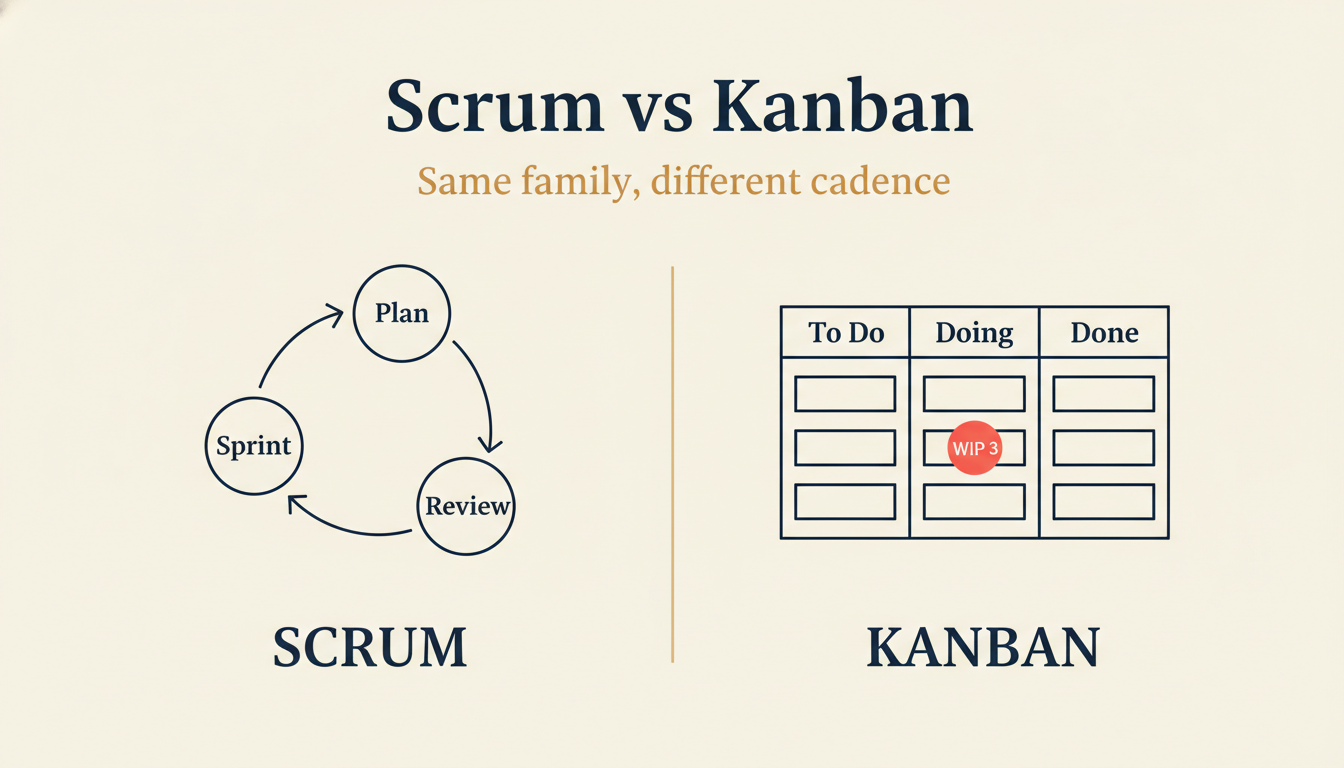
Ambos son ágiles. Ambos usan un tablero. Sin embargo, los equipos que confunden Scrum con Kanban terminan con la rigidez de los Sprints donde necesitaban flujo continuo, o con la flexibilidad de Kanban donde necesitaban planificación estructurada. La distinción principal es la cadencia: uno está acotado en el tiempo, el otro fluye como un río.
¿Cuál es la diferencia entre Scrum y Kanban?
Scrum está acotado en el tiempo: el trabajo se desarrolla en Sprints fijos (generalmente de una a cuatro semanas), con roles definidos y una cadencia de planificación obligatoria. Kanban es flujo continuo: el trabajo avanza por un tablero sin reinicios forzados, limitado no por el tiempo sino por los límites de Trabajo en Progreso (WIP) en cada columna.
Ambos marcos surgieron del pensamiento ágil y lean. Pero sus objetivos divergen. Scrum fue diseñado para trabajo de producto impredecible y con mucho descubrimiento, donde los equipos necesitan ciclos de retroalimentación estructurados. Kanban, que tiene sus raíces en el Sistema de Producción Toyota (TPS) de la década de 1940, fue diseñado para la optimización del flujo donde el objetivo es un rendimiento constante y los mínimos cuellos de botella, no la velocidad del Sprint.
Datos clave
- La Guía de Scrum fue codificada por primera vez por Jeff Sutherland y Ken Schwaber en 1995 y revisada más recientemente en 2020. La revisión de 2020 simplificó el marco y reemplazó «Equipo de Desarrollo» por «Desarrolladores».
- Kanban para el trabajo del conocimiento fue codificado formalmente por David J. Anderson en su libro de 2010 «Kanban: Successful Evolutionary Change for Your Technology Business» (Blue Hole Press), aunque sus orígenes en manufactura se remontan al Sistema de Producción Toyota de Taiichi Ohno en la década de 1940.
- Según el 17.o Informe Anual del Estado del Agile (2023), el 87% de los encuestados usa Scrum o un híbrido de Scrum como método principal, mientras que el 56% usa Kanban y el 9% usa Scrumban. Muchos equipos reportaron usar más de un enfoque.
De un vistazo: las 10 mayores diferencias
Esta es la forma más rápida de ver cómo divergen los dos marcos:
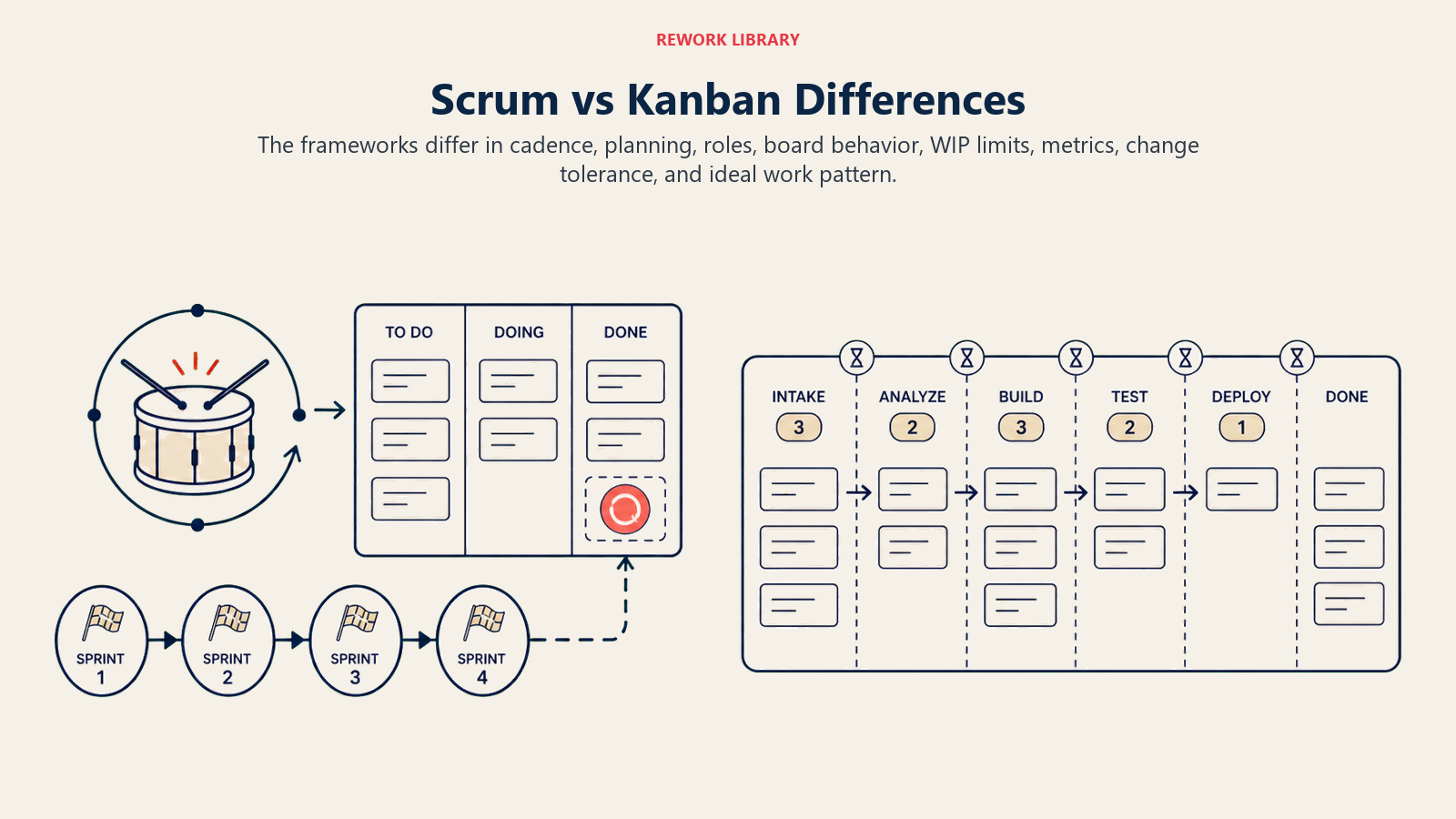
| Aspecto | Scrum | Kanban |
|---|---|---|
| Cadencia | Sprints fijos (1-4 semanas) | Flujo continuo, sin reinicios |
| Planificación | Sesión de planificación del Sprint antes de cada Sprint | Justo a tiempo, reuniones de reabastecimiento (opcionales) |
| Roles | Product Owner, Scrum Master, Desarrolladores | No hay roles requeridos |
| Tablero | Se reinicia en cada Sprint; columnas por estado del Sprint | Tablero persistente; las columnas representan etapas del flujo de trabajo |
| Límites WIP | Implícitos (el Sprint Backlog es el límite) | Límites WIP explícitos por columna, la restricción central |
| Métricas | Velocidad (puntos de historia por Sprint) | Tiempo de ciclo, rendimiento, diagrama de flujo acumulado |
| Duración de la iteración | Fija; acordada antes de que comience el Sprint | Ninguna; los elementos de trabajo fluyen individualmente |
| Tolerancia al cambio | Baja durante el Sprint; los cambios esperan al próximo Sprint | Alta; nuevos elementos se incorporan al Backlog en cualquier momento |
| Mejor para | Desarrollo de producto, I+D, equipos de funcionalidades | Operaciones, soporte, mantenimiento, equipos en estado estable |
| Lo más difícil | Mantener la disciplina del Sprint sin manipular la velocidad | Mantener honestos los límites WIP cuando las partes interesadas presionan |
Cadencia y planificación
El Sprint de Scrum no es negociable. El equipo acuerda un objetivo, extrae un conjunto de elementos del Backlog y no cambia ese alcance a mitad del Sprint. Esto crea un mecanismo de forzado: cada una a cuatro semanas, el equipo entrega algo, lo revisa con las partes interesadas y ajusta la dirección. Es un ritmo alrededor del cual se puede planificar.
Kanban no tiene Sprint. El trabajo llega, se prioriza y fluye por el tablero a medida que la capacidad se libera. La planificación es ligera: una reunión de reabastecimiento para reponer la parte superior de la cola. No hay compromiso con «qué terminaremos esta semana». El compromiso ocurre a nivel de elemento individual, rastreado por el tiempo de ciclo (¿cuánto tiempo tarda un elemento desde el inicio hasta el listo?).
En la práctica, los equipos de Scrum a menudo luchan con el «teatro del Sprint», donde la ceremonia ocurre pero el objetivo del Sprint es ficticio. Los equipos de Kanban suelen luchar con lo opuesto: todo está en progreso, los límites WIP se ignoran y el tablero se convierte en un depósito. Ambos problemas son problemas de disciplina, no problemas del marco.
Roles y ceremonias
Scrum tiene tres roles y cinco eventos:
Roles: Product Owner (dueño del Backlog, define la prioridad), Scrum Master (orienta el proceso, elimina bloqueantes), Desarrolladores (construyen el producto). Los tres son necesarios para que Scrum funcione según su diseño.
Eventos: Planificación del Sprint, Daily Scrum (el standup de 15 minutos), Revisión del Sprint, Retrospectiva del Sprint y el propio Sprint. Estos no son opcionales, aunque los equipos rutinariamente intentan omitir la Retrospectiva.
Kanban no requiere ningún rol. No hay Kanban Master ni equivalente al Product Owner en la especificación. Los equipos suelen tener un gestor de flujo o gestor de entrega de servicios en la práctica, pero esa es una decisión organizacional, no un requisito del marco. Las cadencias opcionales incluyen reuniones de reabastecimiento (llenar la cola), planificación de entrega, revisiones de entrega de servicio y retrospectivas. Ninguna es obligatoria.
Por eso Kanban es más fácil de introducir en un equipo existente. No se le pide a las personas que cambien sus títulos de trabajo. Solo se hace visible el flujo de trabajo y se añaden límites WIP.
Métricas: velocidad vs. tiempo de ciclo
Scrum mide la velocidad: ¿cuántos puntos de historia (o unidades similares) completa el equipo por Sprint? La velocidad es útil para la planificación del Sprint y la previsión aproximada de capacidad. No es útil para predecir cuándo se entregará un elemento específico.
Kanban mide el tiempo de ciclo (¿cuánto tiempo tarda un elemento desde «iniciado» hasta «listo»?) y el rendimiento (¿cuántos elementos completa el equipo por unidad de tiempo?). Estos son más predictivos para los entregables individuales: si el tiempo de ciclo promedio es de 3 días con baja varianza, se le puede decir a una parte interesada «es probable que este elemento esté listo el jueves» con confianza real.
El diagrama de flujo acumulado es el gráfico característico de Kanban: muestra el volumen de trabajo en cada etapa a lo largo del tiempo, haciendo visibles los cuellos de botella como bandas que se ensanchan. El gráfico de Burndown de Scrum muestra el trabajo restante en un Sprint. Ambos son útiles; miden cosas diferentes.
Cuándo usar Scrum vs Kanban: un árbol de decisiones
La respuesta honesta es: elija según cómo llega realmente su trabajo, no según qué marco suena más prestigioso.
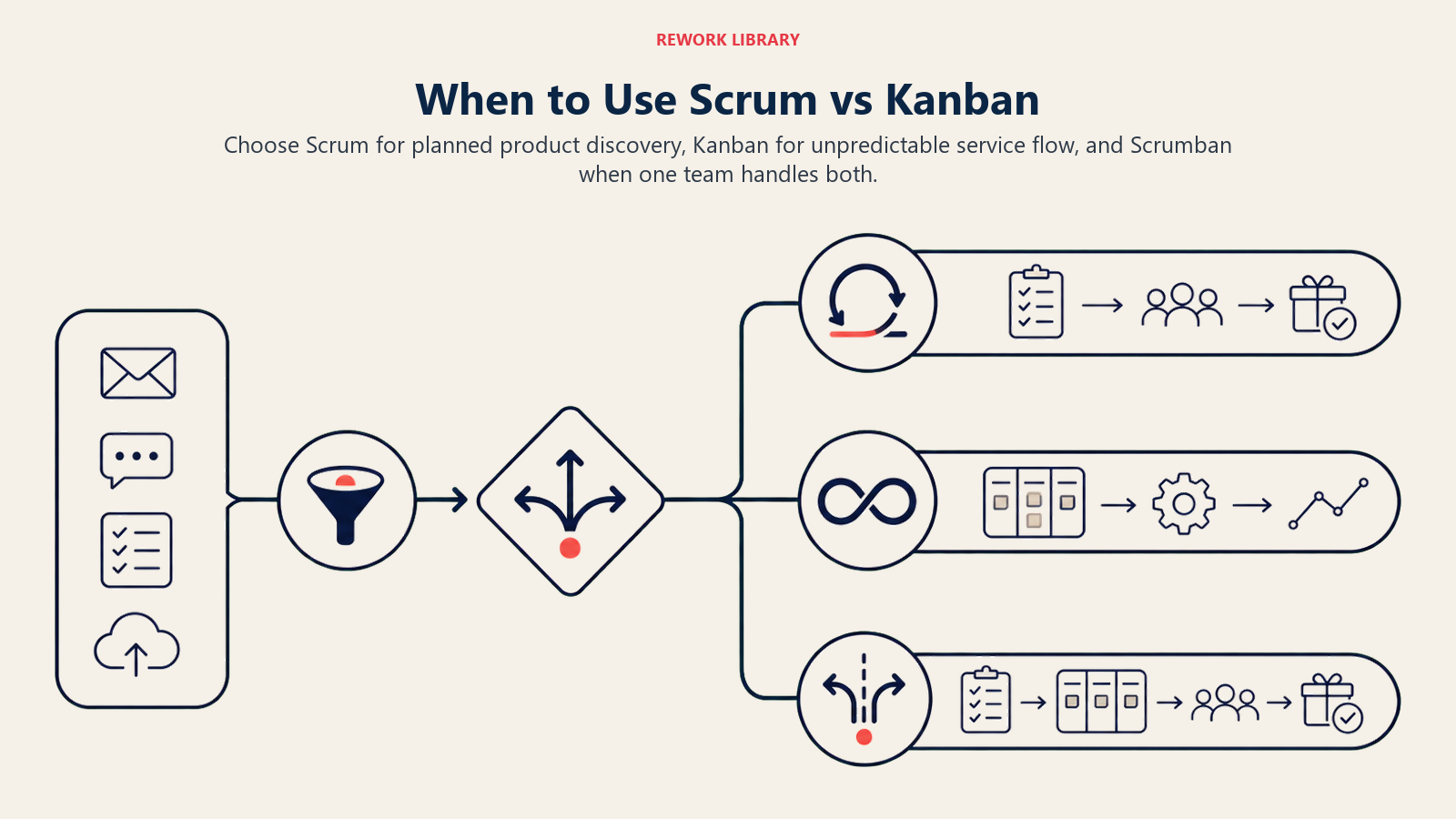
Use Scrum cuando:
- Su trabajo tiene objetivos de producto descubribles que se benefician de ciclos de descubrimiento estructurados.
- El equipo puede comprometerse con un alcance de Sprint sin que todo sea una «emergencia».
- Los ciclos de aprendizaje importan: entrega algo, aprende de ello y corrige el rumbo antes de construir más.
- Las partes interesadas se benefician de puntos de revisión regulares y predecibles.
- Está construyendo un producto con un Roadmap, no procesando una cola de tickets.
Use Kanban cuando:
- El trabajo llega de forma impredecible: tickets de soporte, solicitudes de operaciones, trabajo de mantenimiento.
- La optimización del rendimiento importa más que la velocidad del Sprint.
- El equipo no puede comprometerse con un alcance fijo porque las interrupciones son parte del trabajo.
- Quiere un punto de entrada de baja ceremonia en la gestión estructurada del flujo de trabajo.
- Está mejorando un proceso existente en lugar de descubrir un nuevo producto.
Use Scrumban cuando:
- Ha superado la rigidez de Scrum pero aún quiere algo de ritmo de planificación.
- Tiene una mezcla de trabajo de producto planificado y trabajo de soporte no planificado en el mismo equipo.
- Sus Sprints son principalmente solo renombrar los mismos tickets, y las retros no producen cambios.
Un criterio útil: si la estructura de desglose del trabajo de su equipo puede definirse con razonable confianza dos semanas antes, Scrum encaja. Si no puede, Kanban encaja mejor. Y si su diagrama de Gantt es mayormente ficción porque el alcance sigue cambiando, revise para qué sirve realmente un diagrama de Gantt antes de comprometerse con cualquiera de los dos.
Mitos y malentendidos comunes
Los equipos a menudo adoptan el marco equivocado porque responden a un mito en lugar de a su situación real:
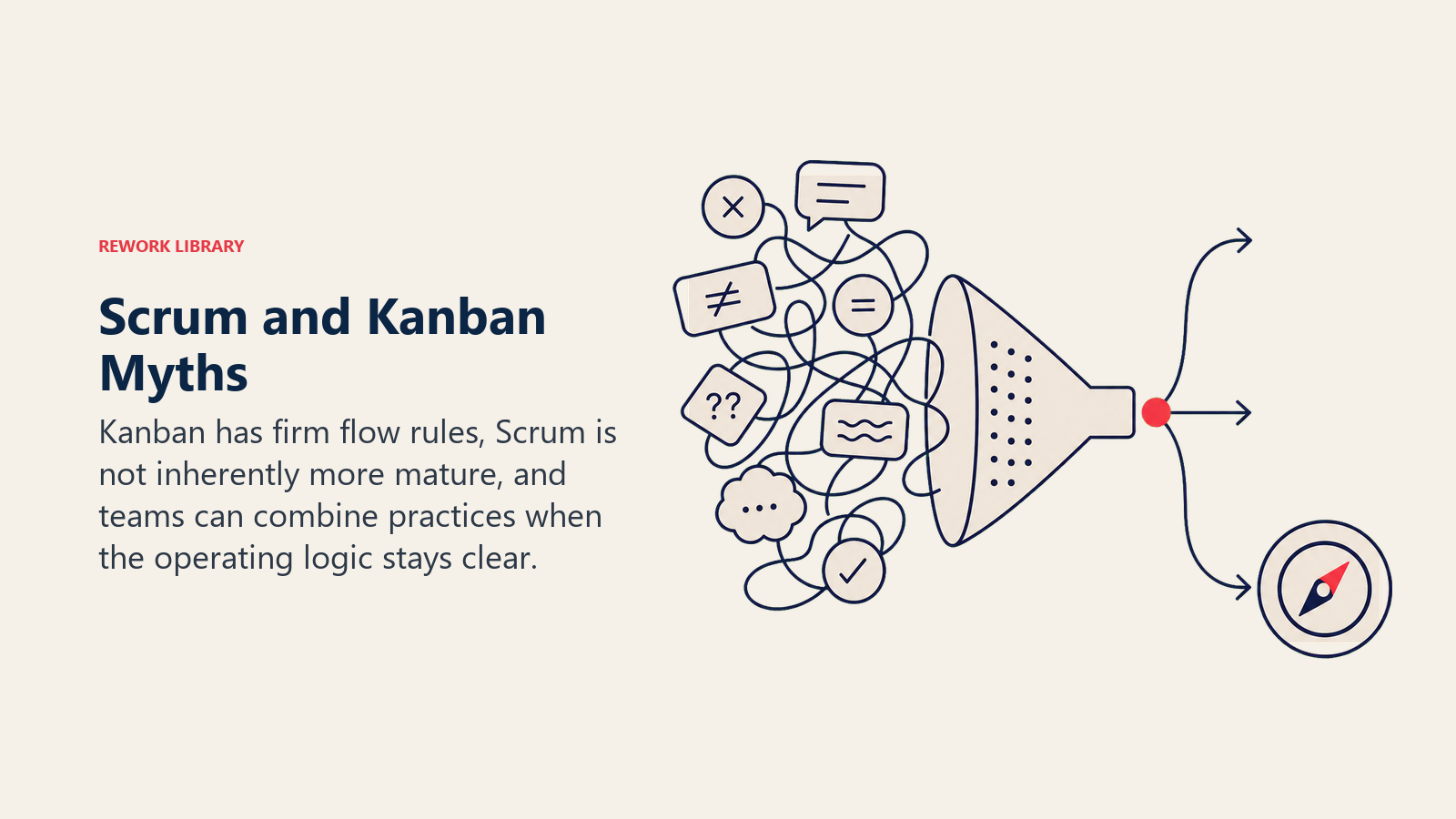
- «Kanban no tiene reglas.» Tiene menos ceremonias, pero las reglas son reales. Los límites WIP no son sugerencias. Violarlos señala un problema sistémico que necesita resolverse, no un límite WIP que necesita eliminarse.
- «Scrum es más maduro o profesional.» La madurez es irrelevante. Netflix opera con gestión de flujo inspirada en Kanban. Los equipos de productos de software en Amazon usan enfoques basados en Sprints. La herramienta correcta depende del trabajo, no del prestigio.
- «No se pueden mezclar.» Scrumban existe precisamente porque los equipos encontraron valor en combinar elementos de ambos. Los marcos no son una religión.
- «Los tableros Kanban son tableros Scrum.» Un tablero es solo una herramienta de visualización. El tablero Scrum se reinicia en cada Sprint y muestra el estado del Sprint. El tablero Kanban es persistente, muestra las etapas del flujo de trabajo y aplica límites WIP. Los mismos muebles, habitaciones diferentes.
- «Los Daily Standups son Kanban.» El Daily Scrum es una ceremonia de Scrum. Kanban no requiere un standup diario, aunque muchos equipos Kanban adoptan uno. No confunda la ceremonia con el marco.
- «Scrum funciona para hardware.» Puede funcionar, pero el método de la ruta crítica y los diagramas PERT suelen adaptarse mejor al desarrollo de hardware porque el hardware tiene dependencias secuenciales reales que los reinicios del Sprint no cambian.
Scrumban: combinando ambos
Corey Ladas describió Scrumban en un artículo de 2008 como una forma de hacer la transición de equipos de Scrum a Kanban. En la práctica, evolucionó hacia su propio híbrido: los equipos conservan alguna cadencia de planificación similar al Sprint (un «disparador» que se activa cuando el Backlog cae por debajo de un umbral) mientras usan los límites WIP de Kanban y las métricas de flujo en el tablero mismo.
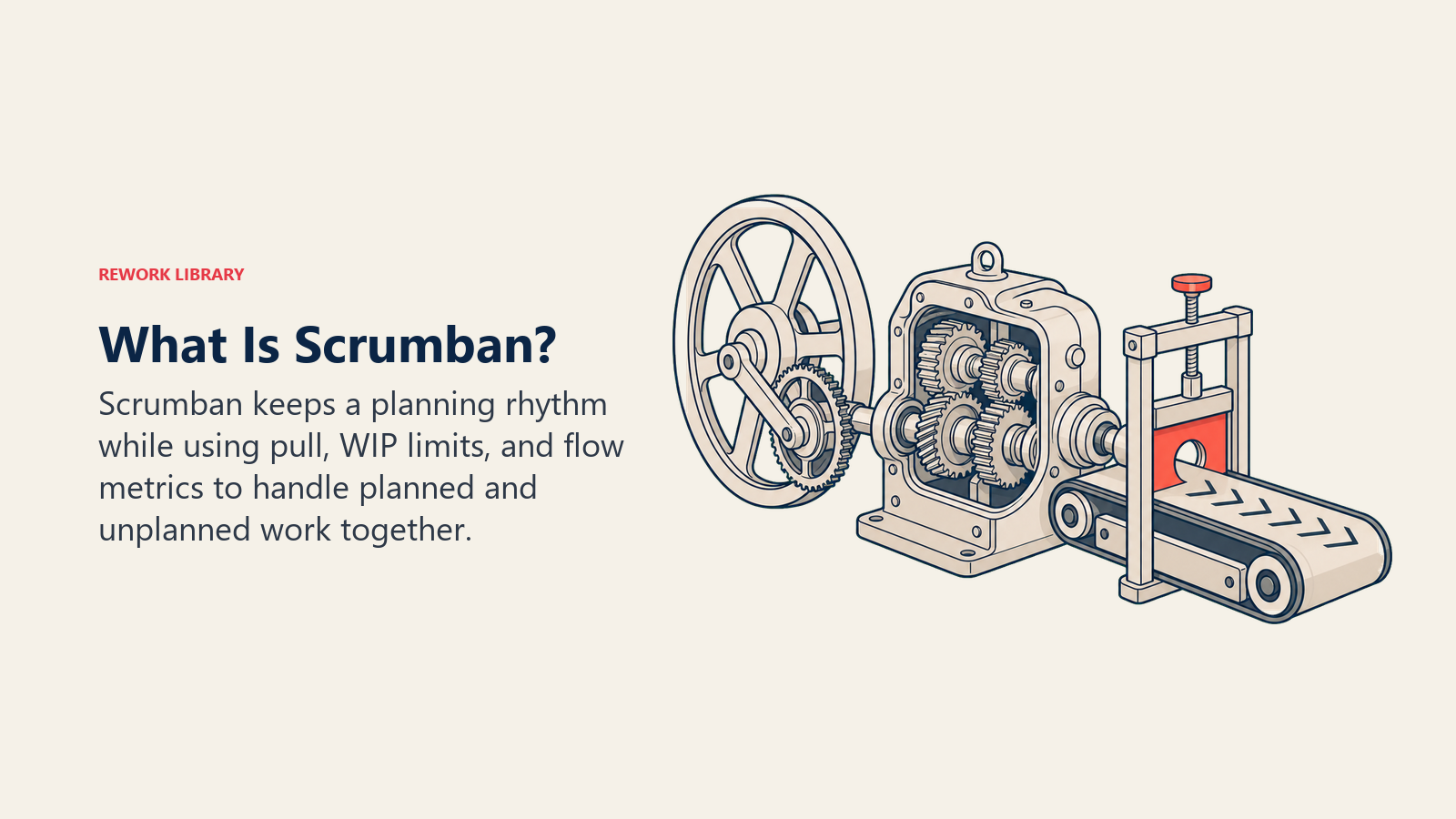
Es especialmente útil para equipos que son mitad producto, mitad soporte. El trabajo de producto se beneficia de los objetivos del Sprint y los ciclos de revisión. El trabajo de soporte no puede esperar al límite de un Sprint. Scrumban permite procesar los elementos urgentes sin desbaratar los compromisos del Sprint.
El riesgo: Scrumban también puede ser una excusa para evitar la disciplina de cualquiera de los dos marcos. Si lo llama Scrumban pero sus límites WIP siempre son 10 y sus objetivos del Sprint siempre son «lo que llegó esta semana», no tiene ni Scrum ni Kanban. Tiene una pizarra con una etiqueta.
Preguntas frecuentes sobre Scrum vs Kanban
¿Kanban es una metodología o una herramienta?
Es una metodología. El «tablero Kanban» es un artefacto del método Kanban, pero Kanban en sí es un conjunto de prácticas para gestionar y mejorar el flujo: visualizar el trabajo, limitar el WIP, gestionar el flujo, hacer explícitas las políticas del proceso, implementar ciclos de retroalimentación y mejorar de forma colaborativa. El tablero es la pieza más visible, pero los límites WIP y las métricas de flujo son lo que lo convierte en un método en lugar de un hábito de usar notas adhesivas.
¿Puede un equipo cambiar de Scrum a Kanban a mitad de un proyecto?
Sí, pero hágalo deliberadamente. La transición más común ocurre durante una retrospectiva del equipo cuando el equipo acuerda que los ciclos de Sprint no están añadiendo valor. Los pasos prácticos: deje de planificar Sprints, haga explícitos los límites WIP en su tablero existente, comience a rastrear el tiempo de ciclo en lugar de la velocidad y ejecute una revisión de flujo en lugar de una revisión del Sprint. No haga Scrum y Kanban simultáneamente durante la transición. Elija una fecha y cambie.
¿Necesita un Scrum Master en Kanban?
No. Kanban no tiene roles requeridos. Algunas organizaciones utilizan un «gestor de flujo» o «gestor de entrega de servicios» para dirigir las reuniones de reabastecimiento y proteger los límites WIP, pero esto no es obligatorio por el método Kanban. Los equipos que adoptan Kanban desde Scrum a menudo mantienen a sus Scrum Masters en un rol de orientación, y eso está bien. Solo tenga claro que el rol ahora es opcional en lugar de requerido.
¿Con cuál es más fácil empezar, Scrum o Kanban?
Kanban es más fácil de comenzar para la mayoría de los equipos porque no requiere reorganizar roles ni comprometerse con un nuevo calendario de ceremonias. Puede introducir Kanban simplemente haciendo visible su flujo de trabajo existente en un tablero y acordando límites WIP. Scrum requiere claridad de roles (¿quién es el Product Owner?) y compromiso con las ceremonias (haremos la planificación del Sprint cada dos semanas) antes de que funcione según su diseño. Dicho esto, la cadencia estructurada de Scrum suele ser una ventaja para los equipos que necesitan mecanismos de forzado para entregar con regularidad. Si su equipo tiene un historial de «lanzaremos cuando esté listo» indefinidamente, la presión del Sprint de Scrum puede ser exactamente lo que necesita.
La mayoría de los equipos termina debatiendo cuál marco es «mejor» cuando debería preguntarse cuál se adapta a cómo llega realmente su trabajo. Scrum le ofrece un ciclo de retroalimentación estructurado cada una a cuatro semanas. Kanban le ofrece claridad y previsibilidad del flujo a nivel de elemento individual. Ambos superan trabajar con una hoja de cálculo compartida y sin una metodología definida. Comience con el que se adapte a su patrón de trabajo, mídalo con honestidad e itere desde allí.
Para los equipos que construyen planes de proyecto estructurados junto con su trabajo ágil, una matriz RACI puede aclarar la responsabilidad de las decisiones en los equipos de Sprint. Y si su experiencia con la metodología Waterfall lo inclina hacia la planificación secuencial, la estructura de Sprint de Scrum suele ser el mejor puente en lugar de saltar directamente al flujo continuo de Kanban.

Senior Operations & Growth Strategist