Gestión de Portafolio de Proyectos (PPM): Proceso y Mejores Prácticas
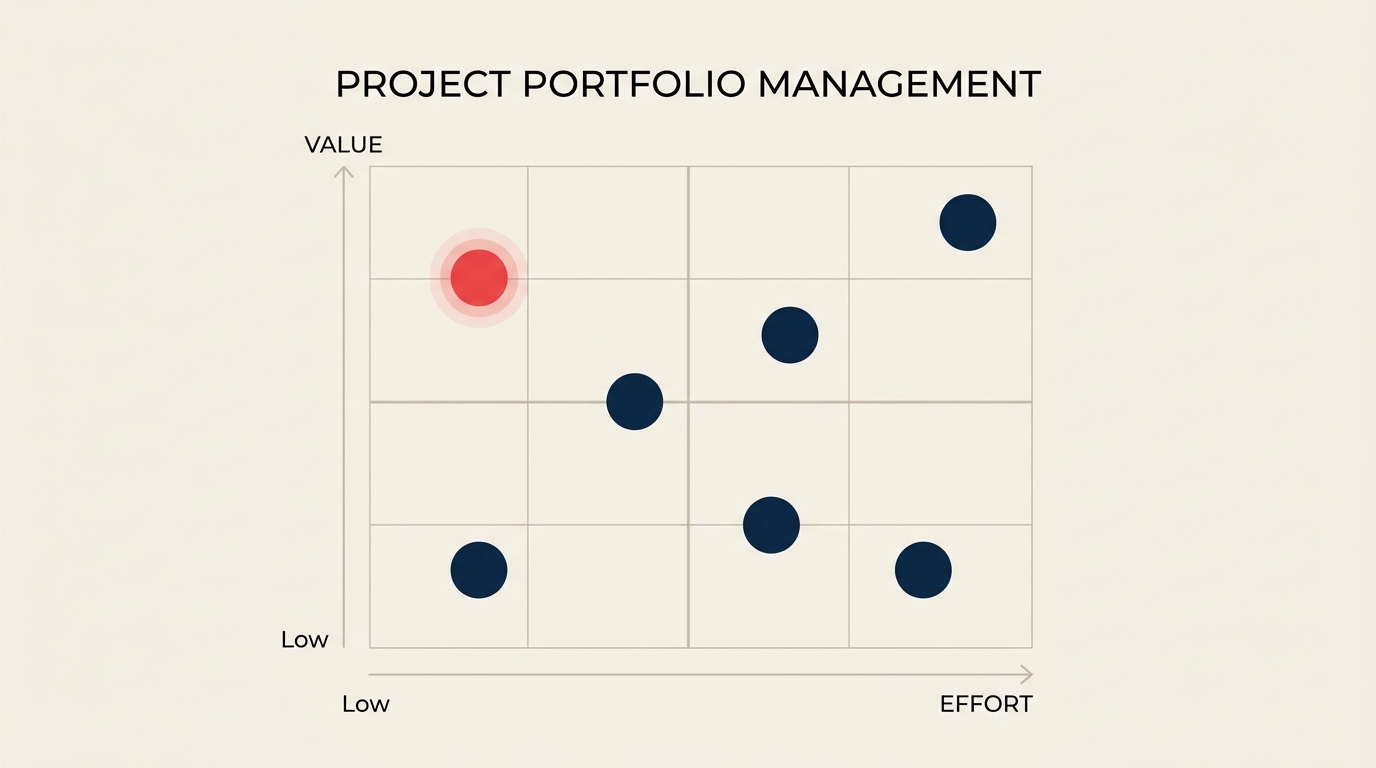 La gestión de portafolio de proyectos (PPM) es como las organizaciones deciden qué proyectos financiar, cuáles pausar y cuáles eliminar antes de que agoten el presupuesto. Si su empresa ejecuta más de un puñado de proyectos a la vez, la verdadera ventaja competitiva no está en la velocidad de ejecución de un proyecto individual. Está en elegir la combinación correcta desde el principio.
Turn this article into takeaways for your work.


Each assistant summarizes the article only for you and suggests best practices for your work.
¿Qué es la gestión de portafolio de proyectos (PPM)?
La gestión de portafolio de proyectos (PPM) es el proceso centralizado de seleccionar, priorizar y gobernar un conjunto de proyectos y programas para que la combinación general entregue el mayor valor estratégico dado los recursos, el presupuesto y la tolerancia al riesgo disponibles.
Mientras que la gestión de proyectos individual pregunta "¿estamos ejecutando bien este proyecto?", PPM pregunta "¿estamos ejecutando los proyectos correctos?" Trata el portafolio de proyectos de la misma manera en que un gestor de fondos trata un portafolio de inversiones: el objetivo no es maximizar el retorno en una sola posición, sino equilibrar todo el conjunto para que la organización pueda alcanzar sus metas mientras absorbe las pérdidas inevitables.
PPM se ubica en la intersección entre la estrategia y la ejecución. La oficina de gestión de proyectos (PMO) típicamente es dueña o da soporte a PPM, aunque en algunas organizaciones una función dedicada de Gestión de Portafolio reporta directamente al C-suite.
Datos Clave
- El informe Pulse of the Profession 2020 de PMI encontró que las organizaciones desperdician en promedio $135 millones por cada $1,000 millones invertidos en proyectos, gran parte vinculado a una selección de proyectos desalineada más que a una mala ejecución.
- Gartner (2023) encontró que solo el 56% de las iniciativas estratégicas cumple plenamente sus objetivos de negocio, citando la desalineación del portafolio como una causa principal.
- Según la Guía PMBOK de PMI (7ª edición), la gestión de portafolio es una disciplina distinta de la gestión de programas y proyectos, con su propio marco de gobernanza y dominios de desempeño.
Gestión de proyectos vs. gestión de portafolio
Estos conceptos suelen confundirse, así que seamos directos sobre la diferencia.
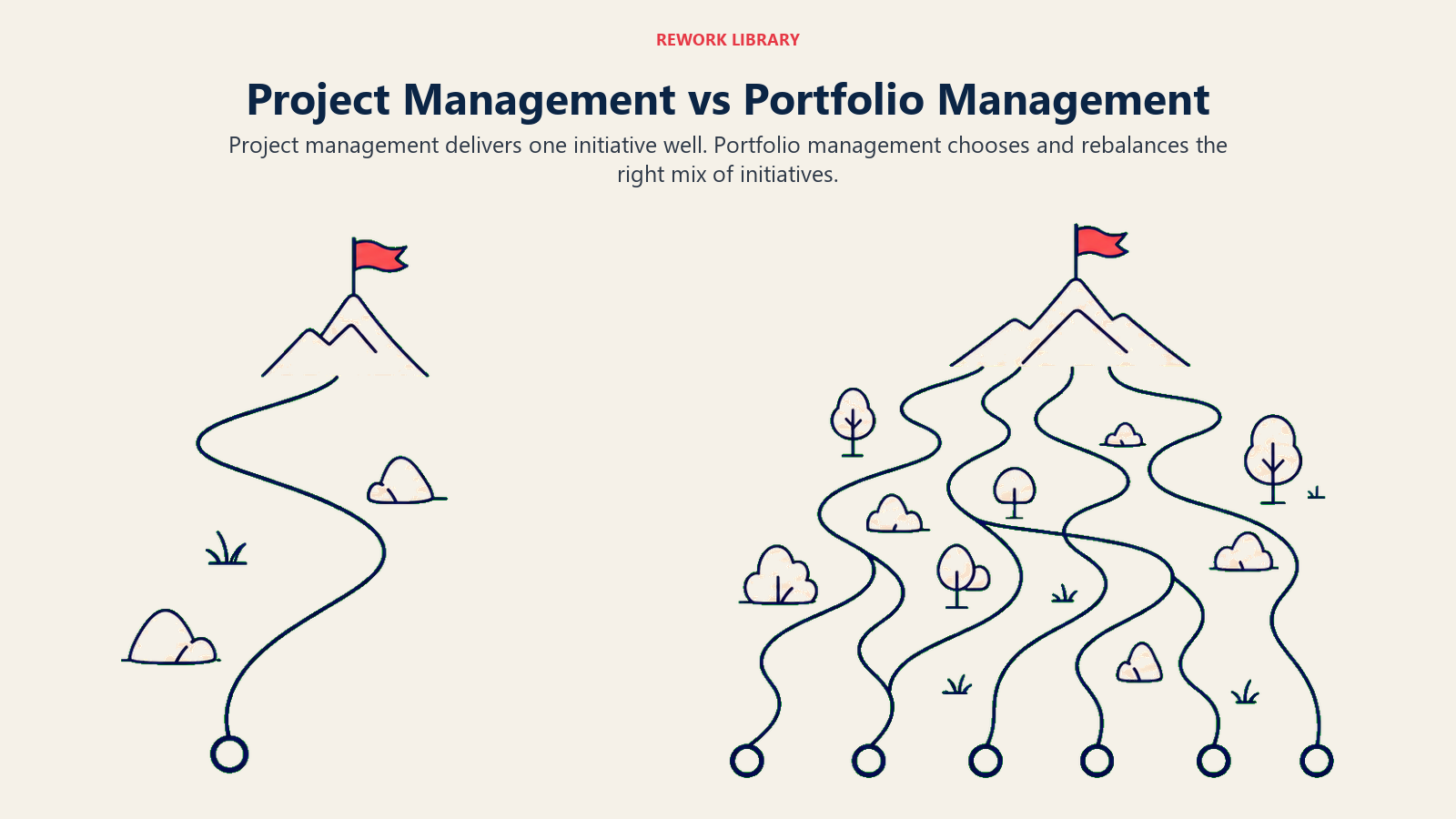
| Dimensión | Gestión de proyectos | Gestión de portafolio |
|---|---|---|
| Alcance | Un proyecto | Todos los proyectos de la organización |
| Horizonte temporal | Del inicio al cierre del proyecto | Continuo, rotativo |
| Pregunta principal | ¿Estamos cumpliendo con el alcance, el cronograma y el costo? | ¿Estamos invirtiendo en lo correcto? |
| Métrica de éxito | Entrega a tiempo y dentro del presupuesto | Retorno estratégico, optimización de recursos |
| Quién lo posee | Gerente de proyecto | PMO, comité de portafolio o C-suite |
| Respuesta al cambio | Gestionar el cambio dentro de las restricciones del proyecto | Reequilibrar el portafolio cuando cambia la estrategia |
| Visión de riesgo | Riesgos a nivel de proyecto | Riesgo de concentración en todo el portafolio |
Gestión de programas vs. gestión de proyectos se ubica en un punto intermedio: un programa agrupa proyectos relacionados para materializar beneficios que ningún proyecto individual entrega por sí solo. PPM se ubica por encima de programas y proyectos, tratándolos a todos como opciones de inversión.
El proceso de gestión de portafolio de proyectos
PPM no es un ejercicio de una sola vez. Funciona en ciclos, típicamente trimestrales o sincronizados con el calendario de planificación anual. Así es como funciona cada paso en la práctica.
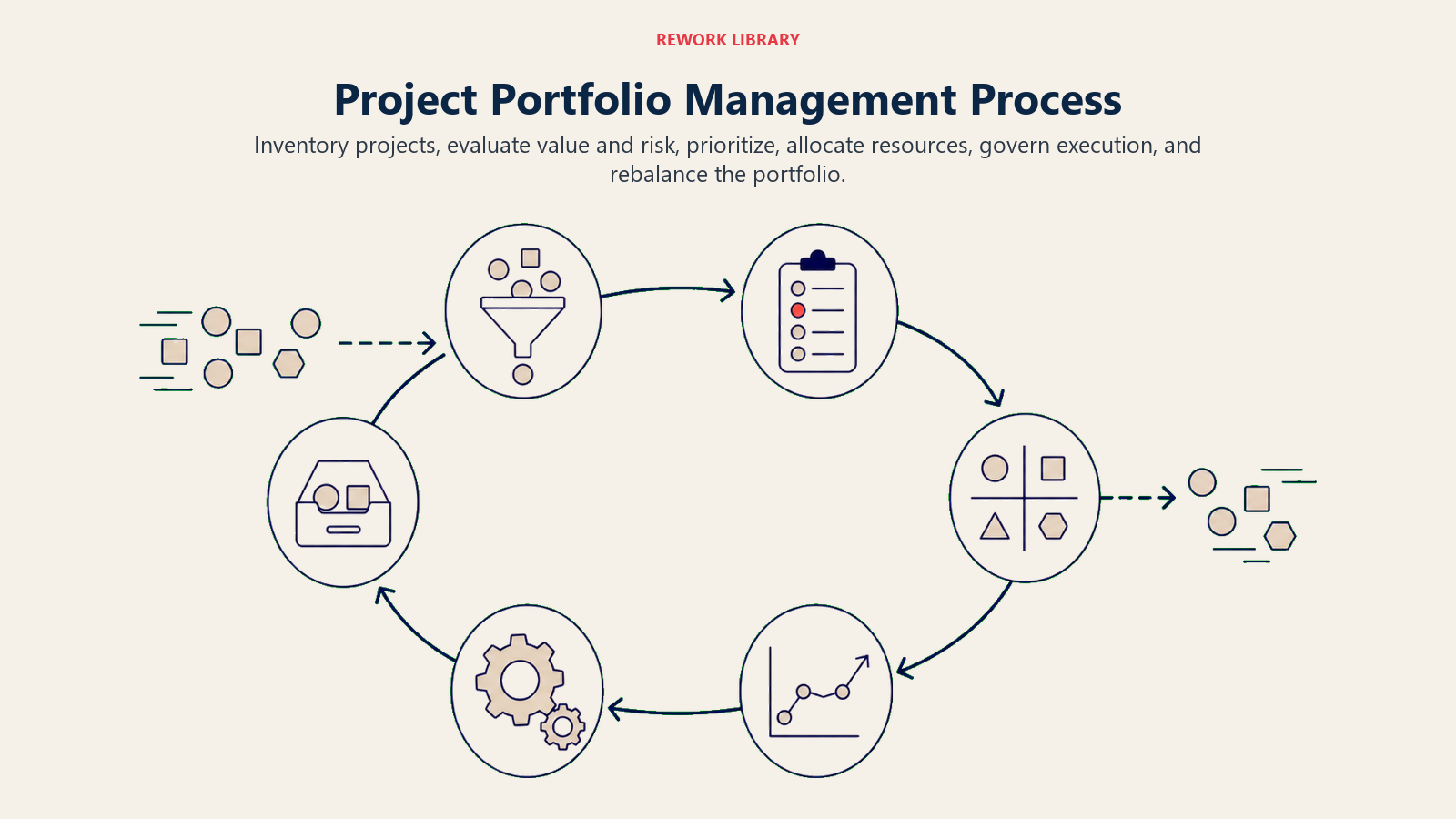
Paso 1: Construir el inventario de proyectos
No se puede gestionar lo que no se puede ver. El primer paso es crear un registro completo de cada proyecto activo, propuesto y pausado en toda la organización. Suena obvio, pero a la mayoría de las empresas les sorprende descubrir cuántos proyectos "en las sombras" no oficiales se están ejecutando sin aprobación de presupuesto.
Extraiga información de todas las fuentes: sistemas de la PMO, solicitudes de finanzas, hojas de ruta de TI, planes departamentales. Capture el patrocinador, el costo estimado, el objetivo estratégico que apoya, el estado actual y la demanda de recursos. Este inventario se convierte en la línea base de su portafolio.
Paso 2: Puntuar y priorizar cada proyecto
Una vez que tiene la lista completa, cada proyecto necesita una puntuación que refleje su valor para la organización. Un modelo de puntuación ponderada funciona mejor aquí (vea la siguiente sección para más detalle). Las dimensiones de puntuación típicas incluyen alineación estratégica, retorno financiero esperado, nivel de riesgo, urgencia y dependencias.
La puntuación no reemplaza el criterio, pero crea una base defendible y repetible para las conversaciones de priorización. Sin un modelo de puntuación, las decisiones de portafolio terminan favoreciendo a quien grite más fuerte en la reunión de presupuesto.
Paso 3: Evaluar la capacidad de recursos
Un proyecto con puntuación alta no vale nada si nadie tiene la capacidad para ejecutarlo. En este paso se compara la demanda contra la oferta: ¿cuántas personas calificadas, dólares de presupuesto y licencias de herramientas requiere el portafolio, frente a lo que realmente está disponible?
Aquí es donde los datos de planificación de capacidad y asignación de recursos se vuelven insumos críticos. Si sus ingenieros ya están al 110% de utilización, agregar tres proyectos más de "alta prioridad" no acelera la estrategia. Garantiza que los tres proyectos se entregarán tarde.
Paso 4: Seleccionar y autorizar el portafolio
Con las puntuaciones y los datos de capacidad en mano, el comité de portafolio (o el grupo de patrocinadores ejecutivos) selecciona qué proyectos avanzan. Este paso involucra tres decisiones: cuáles financiar por completo, cuáles escalonar o retrasar, y cuáles detener.
Detener un proyecto que ya está en marcha es difícil emocionalmente, pero es una de las acciones de mayor valor de PPM. El costo hundido es irrelevante. La única pregunta es si la inversión futura en un proyecto retorna más valor que la siguiente mejor alternativa en el portafolio.
Cada proyecto seleccionado debe tener un acta de constitución del proyecto firmada y un responsable claro antes de entrar en ejecución activa.
Paso 5: Monitorear los proyectos activos
PPM no termina en la selección. El equipo de portafolio da seguimiento a los proyectos activos según los beneficios prometidos, no solo el cronograma y el presupuesto. Un proyecto puede estar a tiempo y dentro del presupuesto pero entregando algo que ya no se alinea con la estrategia actual.
Los puntos de control de monitoreo estándar incluyen: informes de estado mensuales de los gerentes de proyecto, revisiones trimestrales del portafolio y revisiones activadas por eventos cuando se materializa un riesgo importante. Un registro de riesgos a nivel de portafolio captura los riesgos compartidos que atraviesan múltiples proyectos (como la dependencia de un proveedor clave o un cambio regulatorio).
Paso 6: Reequilibrar a medida que evoluciona la estrategia
Los mercados cambian. Las prioridades cambian. Un proyecto que puntuó alto hace seis meses puede ya no justificar su consumo de recursos. Una buena PPM incorpora ciclos explícitos de reequilibrio donde el portafolio se vuelve a puntuar contra la estrategia actual y se ajusta en consecuencia.
Este es el paso que la mayoría de las organizaciones se salta. Seleccionan proyectos anualmente pero nunca revisitan la decisión a mitad de año. Para cuando llega el siguiente ciclo de planificación, el portafolio se ha desviado y la mitad de los proyectos están entregando contra una estrategia obsoleta.
Modelos de priorización y puntuación de proyectos
Dos herramientas dominan la priorización de PPM en la práctica.
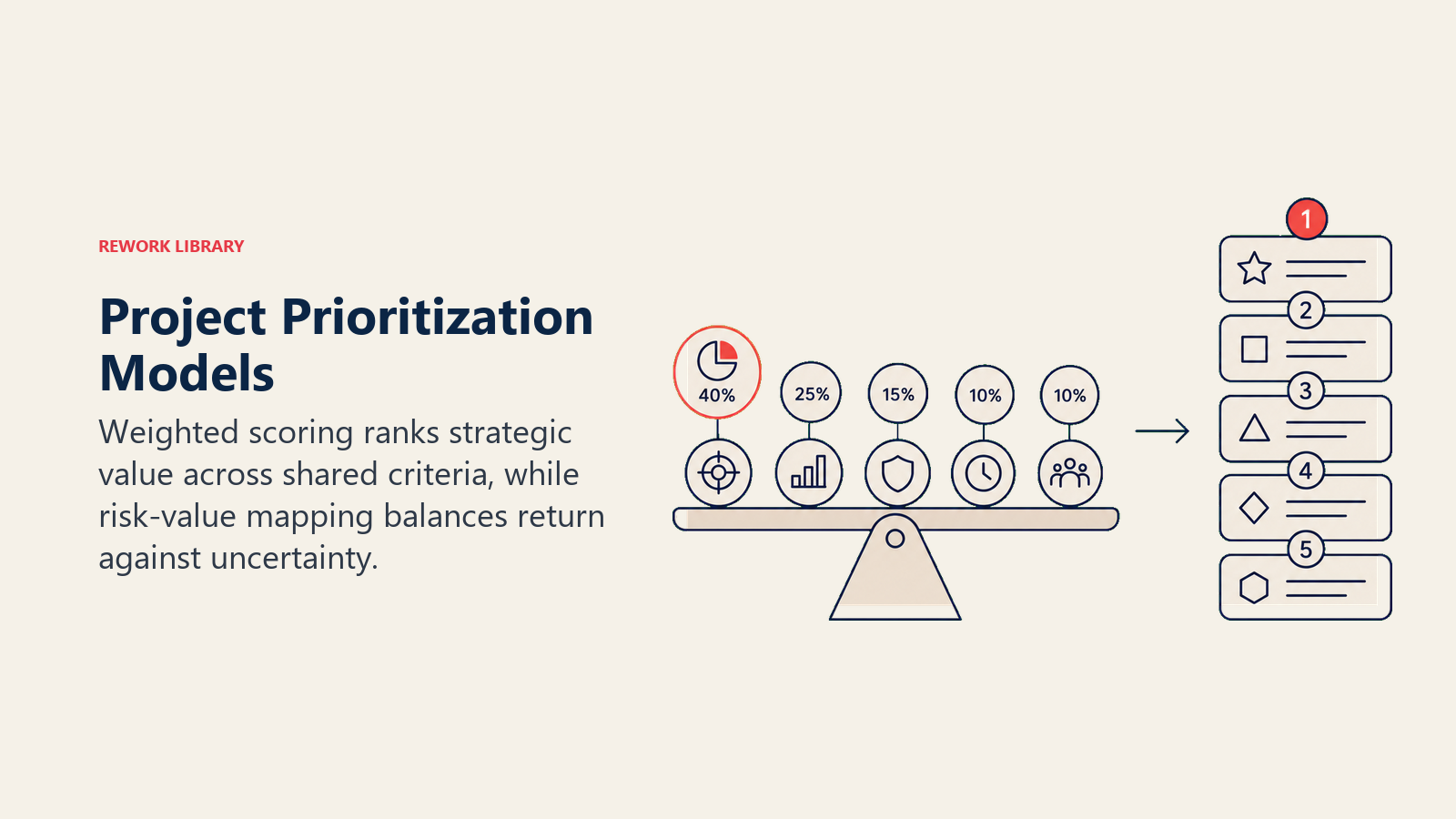
Modelo de puntuación ponderada
Asigne pesos a cada dimensión estratégica que importe para la organización, luego puntúe cada proyecto contra esas dimensiones. El resultado es un único número que puede ordenar de mayor a menor.
Aquí hay un ejemplo simple con cinco dimensiones:
| Dimensión de puntuación | Peso | Puntuación Proyecto A | Puntuación Proyecto B |
|---|---|---|---|
| Alineación estratégica (1-10) | 30% | 9 | 6 |
| VPN esperado (1-10) | 25% | 7 | 8 |
| Viabilidad de recursos (1-10) | 20% | 8 | 5 |
| Nivel de riesgo, invertido (1-10) | 15% | 6 | 7 |
| Tiempo hasta el valor (1-10) | 10% | 7 | 9 |
| Total ponderado | 100% | 7.55 | 6.65 |
El Proyecto A se adelanta a pesar de un VPN esperado más bajo porque se alinea mejor con la estrategia y es más viable de dotar de recursos. Este es el tipo de matiz que una clasificación puramente financiera pasaría por alto.
Costo del retraso
El costo del retraso (CD, por sus siglas en inglés) cuantifica lo que la organización pierde por cada semana o mes que se posterga un proyecto. Hace concreta la decisión de "secuencia": si dos proyectos compiten por el mismo equipo, ¿cuál debería ir primero?
| Proyecto | Costo mensual del retraso | Duración (meses) | Ratio CD / Duración |
|---|---|---|---|
| Relanzamiento del portal de clientes | $120,000 | 3 | $40,000 |
| Herramienta de reportes internos | $15,000 | 2 | $7,500 |
El portal de clientes tiene un ratio de costo del retraso más de cinco veces mayor. Debería secuenciarse primero incluso si la herramienta de reportes es más pequeña y rápida. Esto no es intuitivo sin los números.
Ejemplos de gestión de portafolio de proyectos
Empresa de tecnología: Un negocio SaaS mantiene un portafolio de 40 proyectos activos divididos en tres categorías: desarrollo de producto (60% del presupuesto), infraestructura (25%) y mejoras de procesos internos (15%). Cada trimestre, el CTO y el CPO revisan el portafolio de producto contra los datos de usuarios activos mensuales. Los proyectos donde las métricas de adopción de usuarios están estancadas obtienen una ventana de seis semanas para mostrar mejoras antes de que los recursos se reasignen a iniciativas de mejor desempeño.
Firma de servicios financieros: Un banco de tamaño mediano ejecuta ciclos anuales de PPM alineados con su calendario regulatorio. Cada octubre, los jefes de departamento presentan propuestas de proyectos. Un comité de portafolio puntúa cada una contra cinco pilares estratégicos (experiencia del cliente, cumplimiento normativo, reducción de costos, crecimiento de ingresos, capacidades digitales). Solo los proyectos que puntúan por encima de un umbral pasan a la revisión de capacidad. El resultado: 60 propuestas, 22 aprobadas, 8 aprobadas condicionalmente pendientes de disponibilidad de recursos en el primer trimestre.
Empresa manufacturera: Después de una fusión, el equipo de operaciones hereda dos proyectos de implementación de ERP superpuestos de las dos empresas fusionadas. El proceso de PPM saca a la luz la duplicación en la primera revisión del portafolio. Un proyecto se detiene y sus entregables parcialmente completados se integran en la implementación sobreviviente, ahorrando un estimado de seis meses de esfuerzo redundante.
Beneficios y desafíos de PPM
Beneficios
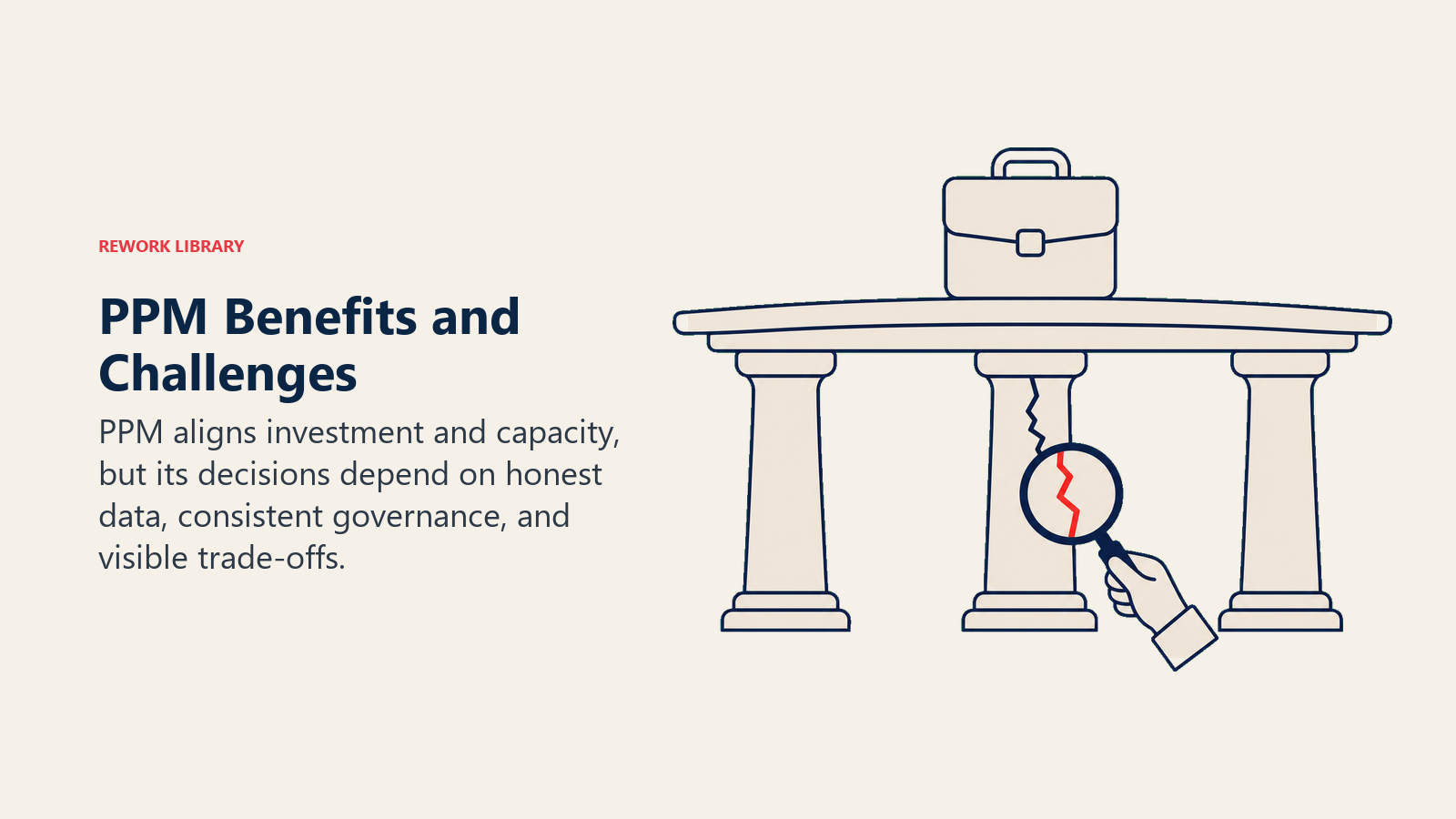
- Conecta el trabajo diario de proyectos con la estrategia corporativa, de modo que la ejecución no es solo actividad sin rumbo.
- Previene la sobrecarga de recursos al hacer visibles los trade-offs antes de que se asuman compromisos.
- Reduce el número de proyectos zombis que se arrastran más allá de su vida útil.
- Crea un lenguaje compartido entre finanzas, operaciones y TI al competir por presupuesto.
- Mejora la precisión de los pronósticos porque la vista de portafolio saca a la luz dependencias y riesgos compartidos con anticipación.
Desafíos
- Requiere datos honestos. Los modelos de puntuación solo funcionan si los patrocinadores de proyectos no inflan las estimaciones para ganar aprobación. Las presiones políticas sobre la puntuación son reales.
- Los procesos de PPM pueden ralentizar a equipos ágiles si la gobernanza añade burocracia sin valor. Mantenga el proceso proporcional al tamaño del proyecto.
- La vista del ciclo de vida del proyecto y la vista de portafolio usan cadencias diferentes. Los gerentes de proyecto piensan en sprints o fases; los gerentes de portafolio piensan en trimestres. Cerrar esa brecha requiere un esfuerzo deliberado.
- Resistencia organizacional. Detener un proyecto es una admisión pública de que la decisión original fue equivocada. Los líderes que aprobaron proyectos deficientes rara vez defienden el proceso de PPM que los expone.
Mejores prácticas para PPM
Separe la selección de portafolio de la entrega de proyectos. Las personas que ejecutan los proyectos no deberían ser las mismas que los aprueban. El sesgo de patrocinio produce portafolios llenos de las iniciativas favoritas de cada departamento en lugar del trabajo de mayor valor para la organización.
Puntúe todo, incluso los proyectos pequeños. El instinto es reservar el rigor de PPM para las grandes iniciativas. Pero los proyectos pequeños consumen recursos reales y atención real. Un portafolio lleno de 50 "victorias rápidas" sin verificar puede bloquear que un único proyecto transformador reciba el enfoque que necesita.
Publique el portafolio públicamente dentro de la organización. Cuando cada equipo puede ver qué proyectos están activos y por qué fueron seleccionados, los canales políticos paralelos para colar nuevos proyectos en la cola se reducen. La transparencia es una mejor herramienta de gobernanza que cualquier formulario de aprobación.
Incorpore criterios explícitos de cancelación en la autorización del proyecto. Defina desde el inicio qué condiciones harían que el comité de portafolio detenga el proyecto. Los criterios de salida predefinidos hacen que las detenciones a mitad de camino se sientan como una toma de decisiones responsable en lugar de un fracaso.
Trate el modelo de puntuación como un documento vivo. La estrategia cambia. Los pesos en su modelo de puntuación deben reflejar las prioridades actuales, no lo que importaba hace tres años cuando se construyó el modelo por primera vez.
Conecte PPM con la planificación financiera. Los portafolios más efectivos se revisan en el mismo ritmo que los ciclos de presupuesto anual y pronóstico de mitad de año. Un PPM que funciona en un calendario separado de finanzas siempre perderá el argumento de recursos.
Preguntas frecuentes
¿Cuál es la diferencia entre la gestión de portafolio de proyectos y la gestión de programas?
La gestión de programas coordina un grupo de proyectos relacionados que en conjunto entregan un beneficio que ningún proyecto individual logra por sí solo. La gestión de portafolio de proyectos gobierna todos los proyectos y programas de toda la organización, optimizando la combinación para el valor estratégico y la eficiencia de recursos. Un programa se ubica dentro del portafolio.
¿Quién es responsable de PPM?
Típicamente una oficina de gestión de portafolio, un gerente de portafolio dedicado, o un comité directivo de líderes senior. En organizaciones con una PMO, PPM suele ser una de las responsabilidades centrales de la PMO. Para organizaciones más pequeñas, un patrocinador de nivel C puede presidir una revisión trimestral de portafolio sin una estructura formal de PMO.
¿Con qué frecuencia debería revisarse un portafolio?
Trimestralmente es el estándar para la mayoría de las organizaciones. Las empresas de alta velocidad (startups, tecnología de crecimiento rápido) suelen revisar mensualmente. Las industrias fuertemente reguladas pueden usar un ciclo semestral vinculado a las ventanas de planificación regulatoria. La cadencia de revisión debería coincidir con la rapidez con que cambian las prioridades estratégicas de la organización.
¿Qué herramientas usan las empresas para PPM?
Las plataformas dedicadas de PPM incluyen Planview, SAP Portfolio and Project Management y Microsoft Project Online. Muchas organizaciones medianas ejecutan revisiones de portafolio efectivas usando una combinación de un modelo de puntuación en hoja de cálculo y un dashboard de estado de proyectos en su herramienta de gestión de proyectos existente. La herramienta importa menos que tener un proceso consistente y datos honestos.
¿Puede PPM funcionar para organizaciones ágiles?
Sí. El PPM ágil, a veces llamado "Lean Portfolio Management" dentro del Scaled Agile Framework (SAFe), aplica la misma lógica de selección y priorización pero usa ciclos de financiamiento más cortos (a menudo con límites trimestrales de "PI") y presupuestos de flujo de valor en lugar de aprobaciones proyecto por proyecto. La lógica central del trade-off sigue siendo la misma: elegir el trabajo de mayor valor que el equipo realmente puede realizar.
PPM no hará que cada proyecto tenga éxito. Pero mejora dramáticamente las probabilidades de que los proyectos que ejecuta valieran la pena desde el principio. Empiece con un inventario completo, construya un modelo de puntuación que refleje la estrategia actual, y revise el portafolio con una cadencia regular. Esos tres hábitos por sí solos separarán a su organización de la mayoría que financia proyectos por inercia en lugar de por intención.
Lecturas relacionadas

On this page
- ¿Qué es la gestión de portafolio de proyectos (PPM)?
- Gestión de proyectos vs. gestión de portafolio
- El proceso de gestión de portafolio de proyectos
- Paso 1: Construir el inventario de proyectos
- Paso 2: Puntuar y priorizar cada proyecto
- Paso 3: Evaluar la capacidad de recursos
- Paso 4: Seleccionar y autorizar el portafolio
- Paso 5: Monitorear los proyectos activos
- Paso 6: Reequilibrar a medida que evoluciona la estrategia
- Modelos de priorización y puntuación de proyectos
- Modelo de puntuación ponderada
- Costo del retraso
- Ejemplos de gestión de portafolio de proyectos
- Beneficios y desafíos de PPM
- Mejores prácticas para PPM
- Lecturas relacionadas