Estilo de Liderazgo de Teresa Torres: Descubrimiento Continuo, Árboles de Oportunidades y Trabajo de Producto Orientado a Resultados
Turn this article into takeaways for your work.


Each assistant summarizes the article only for you and suggests best practices for your work.
La mayoría de los equipos de producto hacen descubrimiento en lotes. Ejecutan un sprint de investigación, sintetizan hallazgos, entregan un reporte y avanzan. Teresa Torres pasó años entrenando equipos de producto y descubrió que este modelo casi nunca funciona, no porque la investigación sea mala, sino porque la brecha entre descubrimiento y decisión es demasiado amplia.
Su marco de descubrimiento continuo colapsa esa brecha.
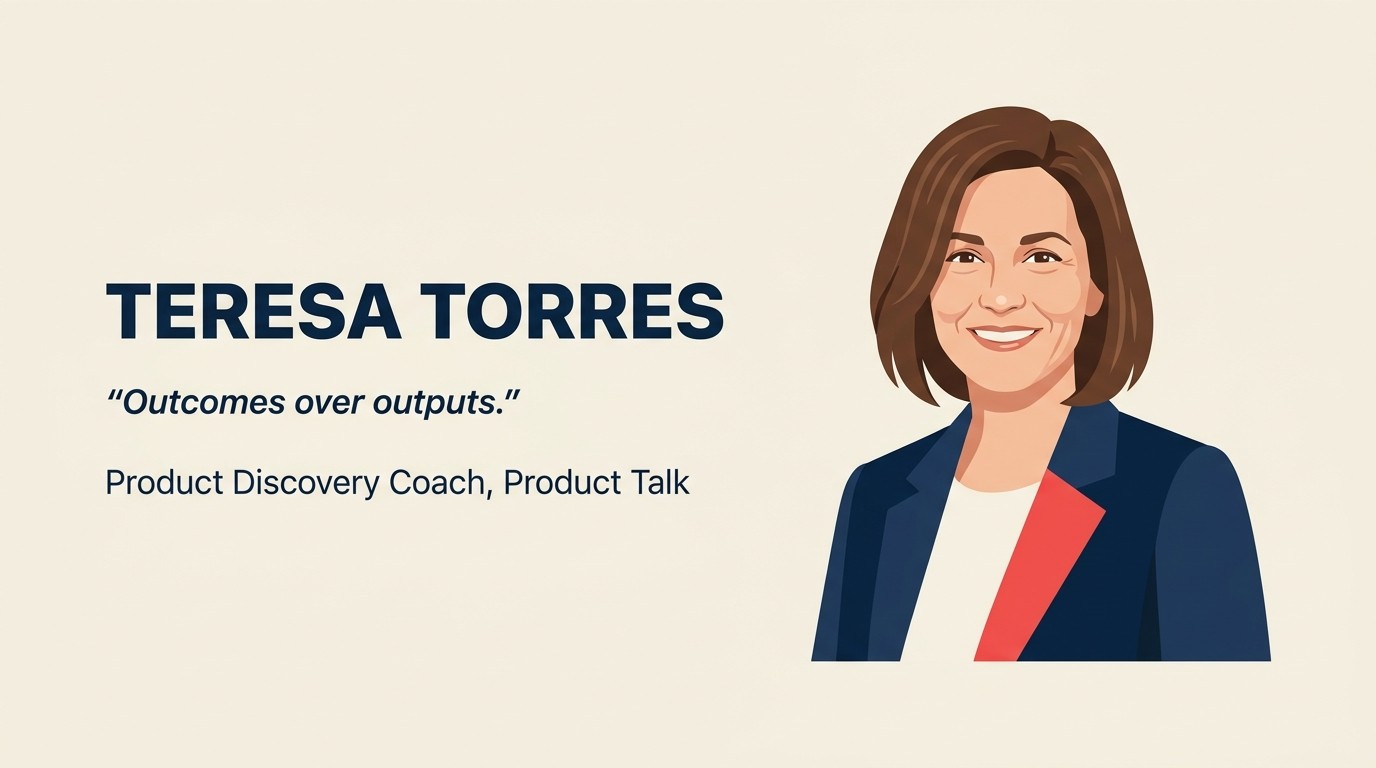
Datos Clave: Teresa Torres es una coach de descubrimiento de producto y autora de "Continuous Discovery Habits" (Product Talk Press, 2021), creadora de la metodología Opportunity Solution Tree. A través de Product Talk, ha enseñado descubrimiento continuo a 500+ equipos de producto, incluyendo equipos en Spotify, Atlassian y Ancestry. Es una orador frecuente en congresos como Mind the Product y ProductCon.
La Doctrina de Descubrimiento Continuo de Torres
El Opportunity Solution Tree es un artefacto visual de descubrimiento que conecta un resultado de producto deseado con oportunidades de clientes, soluciones candidatas y los supuestos en los que se basa cada solución. La doctrina de Torres empareja este árbol con una cadencia de entrevistas semanales con clientes no negociable, ejecutada por el trío de producto (PM, designer, ingeniero). Juntos, convierten el descubrimiento de un proyecto de investigación periódico en un hábito continuo que actualiza los supuestos antes de que los compromisos de entrega se consoliden.
El árbol de soluciones de oportunidades no es una novedad metodológica. Es una respuesta estructural a un modo de fallo específico: equipos de producto que lanzan cosas sin poder articular el problema del cliente que están resolviendo. Torres pasó una década construyendo Product Talk como una plataforma de coaching y escritura, trabajando directamente con equipos de PM en empresas B2B SaaS donde product-market fit estaba establecido pero el proceso de producto aún era inmaduro.
Si tus PMs están más cerca de ser project managers que problem solvers, el trabajo de Torres es el camino práctico más claro entre donde estás y donde Marty Cagan dice que deberías estar. Ella es la persona que operacionaliza lo que Cagan describe.
Desglose del Estilo de Liderazgo
| Estilo | Peso | Cómo se manifestó |
|---|---|---|
| Coach de Pensamiento de Sistemas | 60% | La contribución principal de Torres es arquitectónica. El árbol de soluciones de oportunidades es un sistema visual que obliga a los equipos de producto a desacelerase y mapear la relación entre un resultado deseado, las oportunidades del cliente que lo sirven, las soluciones que abordan esas oportunidades, y los supuestos que necesitan prueba antes de comprometerse. Eso es un rediseño de flujo de trabajo, no un método de investigación. Torres pasó años trabajando con equipos reales, no hipotéticos, para entender por qué persiste la brecha entre descubrimiento y decisión, y construyó el marco para cerrar esa brecha específica en lugar de describir un estado ideal. |
| Investigadora Practicante | 40% | Torres viene de antecedentes en product operations y UX, no de investigación académica. Su autoridad no proviene de un PhD o de una empresa famosa. Proviene de entrenar cientos de equipos de producto a través de la plataforma Product Talk, ejecutar cohortes de coaching y publicar trabajo en producttalk.org que PMs han estado leyendo y aplicando durante más de una década. Esa credibilidad basada en práctica significa que sus marcos llevan las marcas de los modos de fallo del mundo real, ha visto qué se rompe, dónde se quedan atrapados los equipos, y dónde la teoría no sobrevive el contacto con un ciclo de planificación anual. |
La división explica la posición de Torres en el canon de producto. Cagan proporciona la arquitectura organizacional. Torres proporciona la práctica semanal. Sus cohortes de coaching y la estructura de "Continuous Discovery Habits" están diseñadas para equipos que han aceptado el diagnóstico de Cagan y necesitan el sistema comportamental específico para hacer algo al respecto. Ella es la capa de implementación para equipos de producto empoderados.
Rasgos Clave de Liderazgo
| Rasgo | Calificación | Qué significa en la práctica |
|---|---|---|
| Compromiso riguroso con resultado sobre output | Excepcional | Torres no usa "resultado sobre output" como un eslogan. Lo usa como una restricción estructural en cómo se organiza el descubrimiento. Cada rama del árbol de soluciones de oportunidades comienza con un resultado deseado, un cambio específico y medible en el comportamiento del cliente que indicaría que el producto funciona. Si el equipo no puede articular claramente el resultado deseado, el árbol no se ramifica. Eso suena simple. En la práctica, obliga a los equipos de producto a confrontar cuán raramente comienzan desde un resultado claro versus comenzar desde una solución que les fue entregada. |
| Paciencia con el desorden del trabajo de producto del mundo real | Muy Alta | El trabajo de coaching de Torres es notable por no asumir condiciones limpias. Sus marcos reconocen que la mayoría de los equipos de producto operan bajo restricciones de planificación anual, con capacidad de investigación insuficiente, y con ejecutivos que quieren compromisos de solución antes de que el descubrimiento esté completo. La investigación de Adam Grant sobre psicología organizacional proporciona una base de evidencia complementaria para por qué persiste ese desorden, específicamente su trabajo en cómo los equipos incurren en comportamiento de confirmación bajo presión de planificación. "Continuous Discovery Habits" no describe el trabajo de producto en una empresa tech de nivel 1. Describe el trabajo de producto en el tipo de empresa SaaS mid-stage donde un PM cubre tres áreas de producto y la investigación es un rol a tiempo parcial. Ese arraigo la hace más aplicable que los marcos diseñados para las condiciones de Google. |
| Habilidad para hacer la teoría abstracta de producto concreta | Alta | La contribución de Torres al pensamiento de producto se trata en gran medida de traducción. La idea de que los equipos de producto deberían hablar regularmente con clientes no es nueva. Pero "hablar con clientes" como consejo produce resultados ampliamente variables. La especificación de Torres, al menos una entrevista de cliente por semana, conducida por el trío de producto (PM más designer más ingeniero), como un hábito no negociable, convierte un principio en una práctica. Esa especificidad está subestimada. La mayoría de los principios de producto fallan no porque sean incorrectos sino porque no son lo suficientemente concretos para cambiar el comportamiento. |
| Credibilidad practicante ganada entrenando cientos de equipos | Alta | Torres ha entrenado tríos de producto y equipos de liderazgo de producto en cientos de empresas B2B SaaS a través de las cohortes de coaching y cursos online de Product Talk. Esa amplitud de experiencia de coaching directo, no solo escribir sobre marcos sino observar equipos aplicarlos en entornos reales, es de donde provienen sus insights más útiles. Sabe dónde el árbol de soluciones de oportunidades se rompe en empresas con ciclos de planificación trimestral. Sabe qué sucede cuando el trío de producto intenta ejecutar entrevistas semanales sin cobertura ejecutiva. Sus marcos están calibrados a esas condiciones. |
Las 3 Decisiones Que Definieron a Teresa Torres como Líder
1. Elegir Construir Product Talk como una Plataforma Enfocada en Práctica
Torres construyó Product Talk, producttalk.org, como una plataforma de coaching y escritura en lugar de una firma de consultoría o un producto SaaS. Esa distinción importa más de lo que podría parecer.
Una firma de consultoría escala agregando consultores y vendiendo compromisos. Un producto SaaS escala construyendo software. Una plataforma enfocada en práctica escala construyendo una audiencia de practicantes que confían en tu pensamiento, y luego ofreciendo experiencias de aprendizaje estructurado a esa audiencia.
El modelo de Product Talk se construyó durante una década a través de posts de blog, cohortes de coaching y cursos online. La audiencia creció gradualmente, a través de publicación consistente de pensamiento específico y útil en lugar de a través de marketing. Para cuando "Continuous Discovery Habits" fue publicado en 2021, Torres tenía 10,000+ PMs y líderes de producto que habían leído regularmente su escritura durante años.
Lo que el modelo de plataforma permite es profundidad con una audiencia específica. Los lectores de Torres son PMs en ejercicio intentando mejorar su práctica, no ejecutivos buscando un marco estratégico. Esa audiencia moldeó lo que construyó: no una marca de liderazgo de pensamiento, sino una comunidad de practicantes. Las cohortes de coaching están estructuradas alrededor de la práctica real del equipo, no de certificación. Los posts de blog son sobre problemas específicos, cómo ejecutar una entrevista de cliente cuando tu empresa no lo apoya, cómo construir un árbol de soluciones de oportunidades cuando no tienes un resultado claro con el que comenzar.
Lo que el modelo restringe es escala. Torres no puede entrenar diez mil empresas a la vez. La plataforma llega a más personas a través de escritura y cursos, pero el coaching profundo está limitado por tiempo. Ese es un tradeoff deliberado: profundidad sobre alcance.
2. Desarrollar el Árbol de Soluciones de Oportunidades
El árbol de soluciones de oportunidades es el artefacto central en el marco de Torres. Es una estructura de árbol visual que organiza el descubrimiento de producto desde el resultado deseado a través del espacio de oportunidades, hacia el espacio de soluciones, y luego en las pruebas de supuestos.
La estructura es: resultado deseado en la cima, luego un conjunto de ramificación de oportunidades de clientes (necesidades, puntos de dolor, deseos que si se abordan contribuirían al resultado), luego soluciones propuestas que abordan oportunidades específicas, luego los supuestos en los que se basa cada solución, y finalmente los experimentos que prueban los supuestos más críticos. El marco Jobs-to-be-Done es el precursor teórico aquí, el encuadre de oportunidades de Torres se extrae directamente de la idea de que los clientes contratan productos para hacer un trabajo, y su estructura de árbol hace ese trabajo explícito en cada rama.
Eso suena como muchos pasos. Pero en realidad está resolviendo un modo de fallo único: equipos saltando a soluciones antes de mapear el espacio del problema. La mayoría de los equipos de producto comienzan con una solución, ya sea porque vino de una solicitud del cliente, un compromiso de ventas, o una idea ejecutiva, y trabajan hacia atrás para justificarla. El árbol de soluciones de oportunidades hace ese atajo visible requiriendo que el equipo coloque su solución propuesta en una rama del árbol que se conecte de vuelta a una oportunidad específica del cliente y un resultado deseado.
Si la solución no se conecta a una oportunidad, no pertenece al árbol. Esa es la restricción estructural. En la práctica, a menudo revela que los equipos están construyendo soluciones a problemas que nadie ha diagnosticado.
Torres fue deliberada en hacer el marco visual. Encontró en coaching que los equipos podrían estar de acuerdo con la lógica del descubrimiento orientado a resultados en abstracto y luego inmediatamente revertir al pensamiento solución-primero en la siguiente reunión de planificación. Un artefacto físico o digital que el equipo pudiera señalar, un árbol en un pizarrón o un tablero Miro, creó una estructura de responsabilidad compartida que el acuerdo verbal solo no proporcionó. La práctica anti-goals de Shreyas Doshi refuerza la misma lógica estructural desde un ángulo diferente: ambas herramientas existen para forzar decisiones explícitas que el optimismo de planificación normalmente oculta.
3. Escribir "Continuous Discovery Habits" como Manual de Practicante
Torres publicó "Continuous Discovery Habits" en 2021 a través de Product Talk Press. La elección de auto-publicar a través de su propia plataforma en lugar de a través de una editorial empresarial tradicional fue en sí misma una señal sobre para quién era el libro: PMs en ejercicio, no ejecutivos empresariales buscando un marco de liderazgo.
El libro está estructurado alrededor de un hábito único no negociable: el trío de producto debe entrevistar al menos a un cliente por semana, cada semana, sin excepción. El argumento de Torres es que el descubrimiento falla cuando se trata como un proyecto, una fase de investigación con un principio y un fin. El descubrimiento continuo trata el contacto con clientes como infraestructura, como sprints o stand-ups. Es la práctica viable mínima en la que todo lo demás depende.
Alrededor de ese hábito central, el libro construye la metodología completa del árbol de soluciones de oportunidades: cómo definir un resultado deseado, cómo entrevistar para oportunidades en lugar de soluciones, cómo construir y mantener el árbol, cómo generar soluciones colaborativamente, y cómo identificar y probar los supuestos que ponen más en riesgo la solución.
El encuadre específico alrededor de "hábitos" en lugar de "proceso" o "metodología" fue deliberado. Torres estaba extrayendo investigación de ciencia del comportamiento (cita el trabajo de James Clear) para argumentar que la forma de instalar descubrimiento continuo no es a través de un lanzamiento de proceso. Es a través de formación de hábito a nivel individual y de equipo. Ese encuadre influyó en cómo fue estructurado el libro, cada capítulo describe un hábito específico, no un paso de proceso.
El resultado es un libro que se lee diferente de la mayoría de la escritura de gestión de producto. Se trata menos de describir el estado ideal y más de qué haces el lunes.
Qué Haría Teresa Torres en Tu Rol
Si eres un CEO, el mensaje más importante de Torres para ti se trata de qué requiere "orientado al cliente" estructuralmente. La mayoría de las empresas creen que están orientadas al cliente porque hacen encuestas NPS o ejecutan juntas consultivas trimestrales. El argumento de Torres es que esos mecanismos ponen demasiada distancia entre el equipo que construye el producto y los clientes para los que construye. Las juntas consultivas te dicen qué quieren los clientes en una configuración preparada. Las entrevistas semanales por el trío de producto te dicen con qué están realmente luchando los clientes en su trabajo. La primera produce validación para planes existentes. La segunda produce descubrimientos que cambian planes. Si quieres el segundo, necesitas construir las condiciones estructurales para ello.
Si eres un COO, la pregunta operacional que Torres plantea se trata de cómo conecta el trabajo de descubrimiento de tu equipo de producto con tus compromisos de entrega. La mayoría de las empresas planean entrega 6-12 meses adelante, lo que significa que los supuestos construidos en esa planificación fueron formados meses antes de la entrega. El modelo de descubrimiento continuo de Torres construye mecanismos semanales para actualizar esos supuestos. Eso crea una tensión con ciclos de planificación anual. La resolución operacional no es abandonar la planificación, es construir un mecanismo más ligero para seguimiento de supuestos entre ciclos de planificación, para que el plan de entrega pueda actualizarse cuando el descubrimiento revela que un supuesto central es incorrecto.
Si eres un líder de producto, la práctica de Torres más importante de instalar es la cadencia de entrevistas semanales con clientes para tus tríos de producto. No sprints de investigación. No eventos de prueba de usuario. Entrevistas semanales, conducidas por PM más designer más ingeniero juntos, como un elemento recurrente de calendario que no se cancela cuando la planificación de sprint se extiende. Torres es específica sobre la presencia del ingeniero porque encontró que los ingenieros que participan en entrevistas de clientes toman mejores decisiones de implementación sin necesidad de un documento de requerimientos que especifique cada detalle. La entrevista en sí misma es la capa de comunicación.
Si estás en ventas o marketing, el árbol de soluciones de oportunidades de Torres te da una herramienta de diagnóstico para entender por qué la retroalimentación del cliente no se traduce en cambios de producto. Cuando un equipo de ventas trae solicitudes de clientes al equipo de producto y esas solicitudes se sientan en el backlog, a menudo es porque la solicitud está encuadrada como una solución (necesitamos la característica X) en lugar de una oportunidad (los clientes luchan por hacer Y). El marco de Torres puede ayudarte a traducir la entrada del cliente de ventas al lenguaje de oportunidad que el equipo de producto puede usar. Eso no es un arreglo político. Es un cambio de vocabulario que cambia qué sucede con la entrada.
Cómo Rework Operacionaliza la Doctrina de Torres
Los hábitos de descubrimiento continuo de Torres fallan en el calendario, no en el marco. La entrevista de cliente semanal se desliza cuando la planificación de sprint se extiende, el árbol de oportunidades se vuelve anticuado cuando nadie posee las actualizaciones, y las pruebas de supuestos nunca se vinculan de vuelta al backlog de entrega. Rework cierra esas brechas tratando el descubrimiento como trabajo rastreado, no un ritual. Los tríos de producto programan la entrevista semanal como una tarea de Rework recurrente con PM, designer e ingeniero asignados; notas de entrevista y citas de clientes se adjuntan directamente al registro de oportunidad. Cada rama del árbol de soluciones de oportunidades mapea a un elemento de trabajo de Rework, así que supuestos, experimentos y soluciones resultantes comparten un linaje único desde resultado hasta envío. Ese linaje es lo que los ejecutivos realmente necesitan: una vista semanal de qué supuestos se movieron, qué oportunidades crecieron, y qué compromisos de entrega deberían actualizarse como resultado. Comienza en $12/usuario/mes, ver precios de Rework.
Citas Notables y Lecciones Más Allá de la Junta Directiva
"Como mínimo, puntos de contacto semanales con clientes por el equipo que construye el producto." Esa es la definición de descubrimiento continuo de Torres, y la especificidad es el punto. No mensual. No trimestral. No por el equipo de investigación en nombre del equipo de producto. Semanal, por el trío. Esa cadencia es lo que hace la diferencia entre descubrimiento como un proyecto y descubrimiento como una práctica.
Su argumento contra las juntas consultivas como sustituto del contacto directo vale la pena considerar. La investigación de HBR sobre desarrollo de producto centrado en el cliente llega a una conclusión compatible desde el lado académico: los rituales de descubrimiento estructurados que mantienen a los equipos cerca de la lucha de clientes consistentemente superan la entrada de asesoría periódica. Las juntas consultivas producen entrada curada y de consenso de clientes que han sido seleccionados por su disposición a participar. Son útiles para ciertos tipos de entrada estratégica. Pero no son sustituto del contacto directo y no mediado con clientes que están intentando resolver problemas en tiempo real. El cliente de junta consultiva describe lo que quiere. El cliente en una entrevista semanal te muestra con qué están luchando.
El encuadre de Torres de "supuestos" como la variable menos examinada en decisiones de producto es su contribución más intelectualmente precisa. Cada apuesta de producto es una pila de supuestos, sobre qué quiere el cliente, sobre si la solución funcionará, sobre si el equipo puede construirla, sobre si será adoptada. La mayoría de los equipos no enumeran esos supuestos explícitamente, lo que significa que no pueden probar los más críticos. La rama de prueba de supuestos del árbol de soluciones de oportunidades existe específicamente para exponer el supuesto que, si es incorrecto, invalidaría todo lo demás.
Dónde Este Estilo Se Rompe
El descubrimiento continuo requiere equipos de producto con suficiente autonomía para actuar sobre lo que aprenden. En empresas donde los recursos de ingeniería se dictan por ciclos de planificación anual o donde las decisiones de producto requieren aprobación ejecutiva a nivel de característica, la cadencia semanal de Torres crea frustración en lugar de impulso. El hábito de entrevistas semanales no resuelve el problema si lo que descubres no puede cambiar lo que construyes.
El árbol de soluciones de oportunidades es también una herramienta para pensadores de producto experimentados. Los equipos temprano en su madurez de producto, PMs que aún están aprendiendo cómo ejecutar una entrevista de cliente, ingenieros que nunca han estado en una conversación de cliente, a menudo necesitan más andamiaje que lo que el marco proporciona por sí solo.
Y el trabajo de Torres está más probado en SaaS B2B mid-stage. Software empresarial con ciclos de adquisición complejos, productos de hardware, y aplicaciones consumer con millones de usuarios presentan desafíos de descubrimiento que su marco aborda a alto nivel pero no operacionaliza tan específicamente. Linus Torvalds representa el contraste más nítido en cultura de ingeniería: donde Torres argumenta por participación continua de ingeniero en descubrimiento de clientes, Torvalds construyó la contribución de ingeniería más influyente de los últimos 30 años manteniéndose a los ingenieros tan lejos de la presión de requerimientos externos como fuera posible.
Para lectura relacionada sobre descubrimiento de producto y equipos empoderados, ver Estilo de Liderazgo de Marty Cagan, Estilo de Liderazgo de Shreyas Doshi, y Construyendo Equipos de Producto Orientados a Resultados.

On this page
- La Doctrina de Descubrimiento Continuo de Torres
- Desglose del Estilo de Liderazgo
- Rasgos Clave de Liderazgo
- Las 3 Decisiones Que Definieron a Teresa Torres como Líder
- 1. Elegir Construir Product Talk como una Plataforma Enfocada en Práctica
- 2. Desarrollar el Árbol de Soluciones de Oportunidades
- 3. Escribir "Continuous Discovery Habits" como Manual de Practicante
- Qué Haría Teresa Torres en Tu Rol
- Cómo Rework Operacionaliza la Doctrina de Torres
- Citas Notables y Lecciones Más Allá de la Junta Directiva
- Dónde Este Estilo Se Rompe