Estilo de Liderazgo de Whitney Wolfe Herd: Convicción de Primer Movedor, Misión de Marca y el IPO de Bumble a los 31
Turn this article into takeaways for your work.


Each assistant summarizes the article only for you and suggests best practices for your work.
Datos Clave — Whitney Wolfe Herd de un Vistazo
- Nacimiento: 1989 (Salt Lake City, Utah)
- Tinder: Co-fundadora y VP de Marketing; se fue en 2014 después de presentar una demanda por acoso sexual y discriminación, supuestamente resuelta por aproximadamente $1 millón más acciones
- Bumble: Fundada en diciembre de 2014 con Andrey Andreev; regla distintiva — en parejas heterosexuales, las mujeres deben enviar el primer mensaje
- Extensiones de marca: Bumble BFF (amistad, 2016) y Bumble Bizz (redes profesionales, 2017)
- IPO: Bumble salió a bolsa en Nasdaq el 11 de febrero de 2021 a $43/acción; la valoración alcanzó alrededor de $13 mil millones al debut, convirtiendo a Wolfe Herd, a los 31, en la CEO mujer más joven en llevar una empresa estadounidense a bolsa
- Transición: Se retiró como CEO en enero de 2024; Lidiane Jones asumió el cargo; Wolfe Herd regresó como CEO en 2025 en medio de la caída de acciones y presión competitiva de Hinge
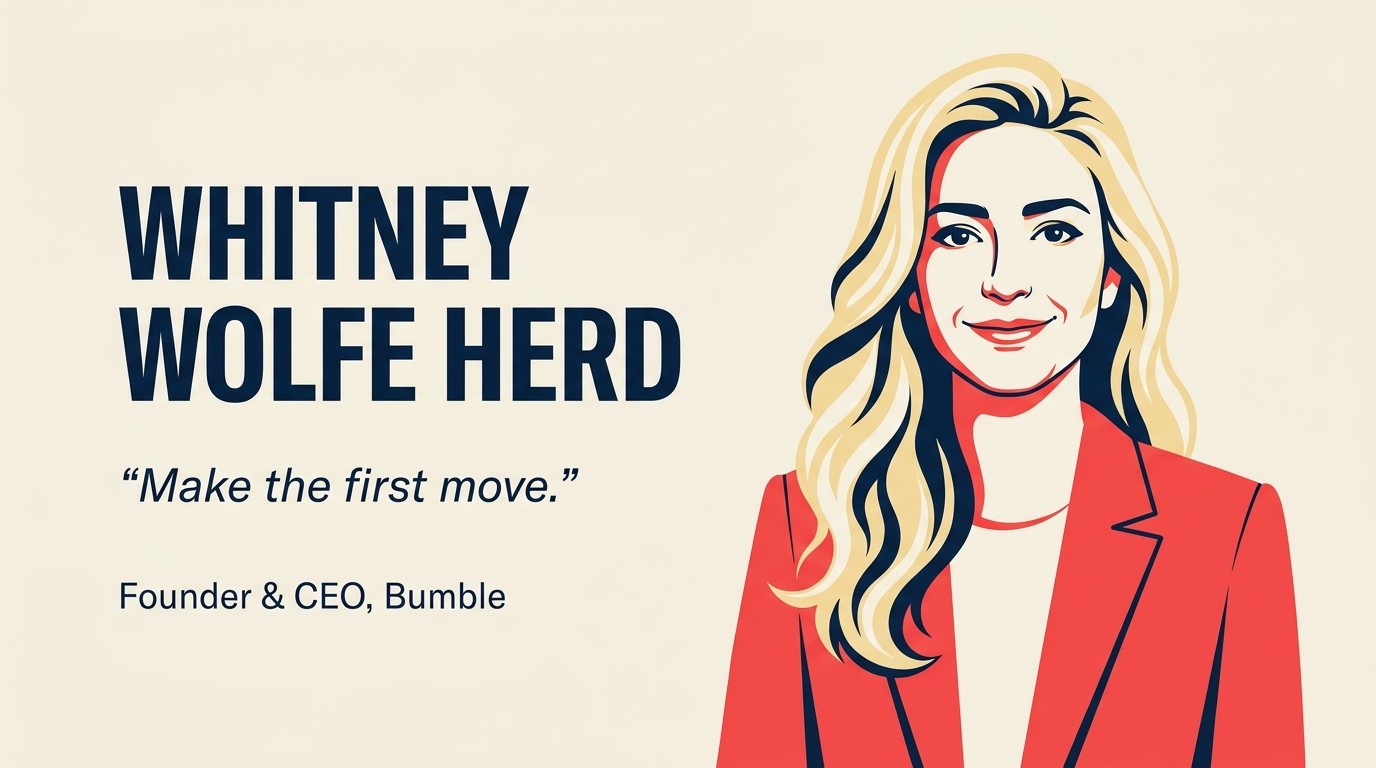
Whitney Wolfe Herd co-fundó Tinder, se fue después de una demanda por acoso sexual contra un co-fundador, y luego construyó una aplicación competidora con un único cambio de regla que se convirtió en toda la tesis de producto: las mujeres envían mensajes primero. Bumble se lanzó en 2014. Para febrero de 2021, la llevó a bolsa con una valoración de $8 mil millones — a los 31 años, convirtiéndose en la CEO mujer más joven en llevar una empresa a bolsa en la historia de Estados Unidos.
Se retiró en 2024. Luego regresó como CEO en marzo de 2025.
No es un arco de carrera limpio. Es un estudio de caso sobre qué sucede cuando un fundador convierte la convicción personal en diferenciación de producto, utiliza una misión de marca para construir lealtad comunitaria y sobrevive al tipo de escrutinio público que terminaría con la mayoría de las carreras antes de que comenzaran. La acción cayó 85% desde el pico del IPO. El mercado de aplicaciones de citas se hizo más difícil. Y ella regresó de todas formas.
Para operadores que construyen empresas de consumo impulsadas por misión, hay algo en esa secuencia que vale la pena examinar cuidadosamente.
La Doctrina Enfocada en Mujeres de Wolfe Herd
La Doctrina Enfocada en Mujeres es un modelo de liderazgo en el que una única restricción de producto no negociable — arraigada en la convicción personal del fundador sobre quién es el producto — funciona simultáneamente como identidad de marca, mecanismo de seguridad, filtro de comunidad y motor de marketing. En lugar de optimizar por la base de usuarios direccionable más amplia, la doctrina sostiene que las restricciones estrechas codificadas por misión producen diferenciación duradera que los competidores de amplio alcance no pueden copiar sin abandonar su propio posicionamiento. Aplicada en Bumble, la regla de "las mujeres envían primero" hizo más trabajo estratégico que cualquier cantidad de expansión de características podría.
Desglose del Estilo de Liderazgo
| Estilo | Peso | Cómo se manifestó |
|---|---|---|
| Constructora de Marca Impulsada por Misión | 60% | Wolfe Herd construyó toda la arquitectura de marca de Bumble alrededor del empoderamiento y seguridad femeninos. "Las mujeres envían primero" no era una característica — era una declaración pública de valores que atraía a una comunidad específica de usuarios y rechazaba a usuarios que no compartían esos valores. Esa auto-selección es lo que las marcas impulsadas por misión hacen cuando funcionan: atraen a las personas correctas y filtran implícitamente a las incorrectas. Cada decisión de producto, asociación y campaña de marketing en Bumble se somete a presión contra esa misión. |
| Operadora de Resiliencia de Fundador | 40% | Sobrevivir a una demanda pública de acoso a los 24 años, lanzar una aplicación competidora, llevarla a bolsa a los 31, retirarse bajo presión, y regresar al asiento de CEO — esa secuencia requiere un tipo específico de durabilidad emocional. Wolfe Herd no desapareció entre la salida de Tinder y la fundación de Bumble. Convirtió la experiencia en una idea de producto. Y después de retirarse en 2024, no pasó a trabajo de inversión o asesoría. Regresó porque la empresa aún necesitaba lo que ella trae únicamente. |
La división 60/40 refleja algo importante: una misión sin resiliencia operacional produce una empresa que es excelente en marketing pero frágil bajo presión competitiva. Wolfe Herd tiene ambas. La misión de marca crea la comunidad. La resiliencia operacional mantiene la empresa viva cuando el mercado se vuelve difícil.
Rasgos de Liderazgo Clave
| Rasgo | Calificación | Qué significa en la práctica |
|---|---|---|
| Claridad del Producto-como-Valores | Excepcional | En la mayoría de las aplicaciones de consumo, las decisiones de producto se impulsan por métricas de engagement. En Bumble, la mecánica de "las mujeres envían primero" no podría cambiar sin cambiar la promesa de marca. Esa restricción es una característica, no un error — fuerza las decisiones de producto a través de un filtro de valores que crea consistencia. Cuando Bumble agregó BFF y modos de networking, mantuvo la misma mecánica porque la mecánica no es solo una regla de producto. Es la identidad de la marca. |
| Propiedad de Narrativa Pública | Muy Alta | Wolfe Herd ha sido inusualmente cándida sobre su experiencia personal como co-fundadora de Tinder, el acoso que enfrentó y el razonamiento detrás de la tesis fundacional de Bumble. No escondió la historia de fondo. La convirtió en la historia. Esa transparencia construyó credibilidad con una base de usuarios que se preocupa por la autenticidad del fundador de maneras que, digamos, los clientes de software empresarial no lo hacen. En aplicaciones de consumo, la narrativa pública del fundador es un activo de producto. |
| Pensamiento de Comunidad sobre Transacción | Alta | El crecimiento temprano de Bumble fue impulsado por programas de embajadores de campus, asociaciones con hermandades y eventos de construcción de comunidad — no por adquisición pagada a escala. Wolfe Herd comprendía que las aplicaciones de citas viven o mueren por la densidad de red en comunidades específicas. Construyó la capa de confianza antes de construir la red. Esa secuenciación es más difícil y lenta que comprar usuarios a través de marketing de desempeño. También es más duradera. |
| Resiliencia bajo Presión Reputacional | Alta | La demanda de Tinder fue pública y dañina. El colapso de acciones post-IPO fue público y sostenido. La sucesión y retorno de CEO fue inusual y muy observada. La mayoría de los fundadores en cualquiera de esas situaciones se habrían retirado del rol enfocado en lo público. Wolfe Herd se movió hacia la visibilidad, no lejos de ella. Ese es un temperamento específico que o tienes o no — pero comprenderlo ayuda a explicar por qué la marca Bumble se mantuvo coherente a través de múltiples crisis empresariales. |
Las 3 Decisiones que Definieron a Whitney Wolfe Herd como Líderes
1. Diseñar "Las Mujeres Envían Primero" como Mecánica Central, Identidad de Marca y Señal de Seguridad Simultáneamente
Cuando Wolfe Herd se fue de Tinder en 2014 y fundó Bumble con Andrey Andreev, el camino obvio era construir una versión mejor de lo que ya conocía. Una interfaz más limpia, mejor algoritmo de emparejamiento, quizás menos actores malos.
En su lugar, hizo un único cambio estructural al producto: en parejas heterosexuales, solo las mujeres podían iniciar contacto. Los hombres no podían enviar el primer mensaje. Esa regla hizo cuatro cosas a la vez que la mayoría de las decisiones de producto solo hacen una. Melanie Perkins hizo un movimiento similar en Canva — una única restricción fundacional (el diseño debe ser accesible para no diseñadores) que simultáneamente produjo identidad de marca, enfoque de producto y un mercado que los titulares no estaban defendiendo.
Primero, fue una señal de seguridad. Las mujeres que habían experimentado acoso en otras aplicaciones de citas entendieron inmediatamente que la mecánica reducía una categoría importante de contacto no deseado. Segundo, fue un diferenciador de marca. Ninguna otra aplicación de citas convencional tenía esta regla, lo que significaba que Bumble podía ocupar una posición específica en el mercado sin gastar miles de millones en publicidad de marca. Tercero, fue un filtro de comunidad. Los usuarios incómodos con las mujeres teniendo ese control se auto-seleccionaron temprano. Eso mantuvo la composición de la comunidad más alineada con los valores de marca. Cuarto, fue una historia de prensa. "La aplicación de citas feminista" se escribió a sí misma, y Bumble obtuvo cobertura que los competidores tenían que comprar.
Una mecánica de producto. Cuatro resultados estratégicos. Ese es el tipo de decisión de producto que solo se toma cuando el fundador está trabajando desde una idea personal, no desde un grupo focal.
2. Llevar Bumble a Bolsa a $8B en Febrero de 2021 — La Ejecución Detrás del Titular
La narrativa alrededor del IPO de Bumble fue principalmente sobre Wolfe Herd siendo la CEO mujer más joven en llevar una empresa a bolsa en la historia estadounidense. Ese es un hito significativo. Pero la historia de liderazgo más interesante es lo que tenía que ser cierto operacionalmente para hacer viable ese IPO.
Bumble se lanzó en 2014. Para 2020, operaba tres productos: Bumble (citas), Bumble BFF (emparejamiento de amistad) y Bumble Bizz (redes profesionales). Se había expandido globalmente, particularmente en Reino Unido y Australia. También poseía Badoo y Fruitz a través de la empresa matriz Magnet Media. La complejidad del portafolio significó que el IPO no era solo una historia de aplicación de citas. Era un caso sobre si la marca podía sostenerse en múltiples casos de uso.
La decisión de Wolfe Herd de llevar la empresa a bolsa en febrero de 2021, en el pico de la manía SPAC y listados directos, capturó una ventana de valoración que quizás no habría existido seis meses antes o después. El IPO de Snap de Evan Spiegel en 2017 enfrentó el mismo cálculo de timing — salga a bolsa mientras la narrativa de marca es más limpia, antes de que el mercado reajuste las múltiples de crecimiento. La valoración de $8 mil millones reflejó el apetito de inversores por aplicaciones de consumo de crecimiento más que el flujo de caja libre subyacente de Bumble. Eso no es una crítica. Leer bien el timing del mercado es una habilidad de liderazgo real.
La lección más difícil del IPO es lo que vino después: la acción se rechazó bruscamente conforme subieron las tasas de interés y las múltiples de crecimiento se comprimieron. Gestionar una empresa pública que cotiza a una fracción de su precio de IPO mientras se mantiene la moral del equipo y el enfoque de producto requiere un tipo diferente de liderazgo que el sprint hacia IPO. El hecho de que Wolfe Herd se retirara en 2024 bajo esa presión, y luego regresara en marzo de 2025, sugiere que comprendía tanto los límites de su ancho de banda como la brecha específica que su regreso llenaría.
3. Retirarse y Regresar como CEO — Lo Que la Salida y Re-entrada Señalan Sobre la Identidad del Fundador
La mayoría de las salidas de fundadores son permanentes. El fundador se va, un CEO profesional entra, la empresa se escala o declina. El fundador ocasionalmente se une a la junta. Ese es el modelo estándar. Airbnb de Brian Chesky es el contraejemplo más claro — un fundador que nunca se fue y utilizó la crisis del COVID para apretarse en la identidad de la empresa en lugar de dejar pasar.
La salida de 2024 y retorno de 2025 de Wolfe Herd rompe ese modelo. Se retiró durante un período de bajo desempeño de acciones, presión competitiva de Hinge del Grupo Match, y fatiga más amplia de aplicaciones de citas en toda la industria. Un CEO sucesor entró. Luego ella regresó.
La re-entrada importa porque señala lo que las empresas de consumo impulsadas por misión realmente necesitan de sus fundadores. La marca de Bumble es inseparable de la historia personal de Wolfe Herd e identidad pública. Cuando se fue, la empresa perdió la voz más creíble para su tesis de marca. Un CEO profesional puede ejecutar en el playbook operacional. Reemplazar la relación auténtica del fundador con la comunidad principal de la marca es un problema más difícil.
Su regreso en 2025 no es una declaración de que la sucesión falló. Es un reconocimiento de que el posicionamiento competitivo de Bumble depende de la presencia del fundador de maneras que la mayoría de las empresas de software empresarial no lo hacen. Las marcas de consumo construidas alrededor de la identidad del fundador son una categoría específica. Las implicaciones de gobierno — acciones de doble clase, cláusulas de re-entrada de fundador, planificación de sucesión — son genuinamente complejas, y la experiencia de Bumble será un caso de referencia para pensar sobre ellas.
Qué Haría Whitney Wolfe Herd en Tu Rol
Si eres CEO construyendo una marca de consumo, la decisión de "las mujeres envían primero" es el modelo a estudiar. Es una restricción de producto que produce identidad de marca, arquitectura de seguridad, filtrado de comunidad y cobertura de prensa al mismo tiempo. ¿Cuál es la restricción estructural en tu producto que, en lugar de flexibilizarla, deberías reforzar? El instinto de agregar características generalmente es incorrecto. El instinto de eliminar restricciones a veces es el error que diluye lo que te hace distintivo.
Si eres COO o líder de operaciones, el timing del IPO de Bumble es tu estudio de caso para leer ventanas de mercado. Wolfe Herd y su equipo tuvieron que construir la infraestructura de reportes financieros, estructura de gobierno y narrativa de crecimiento para una oferta pública de $8 mil millones mientras ejecutaban una aplicación de consumo global. El trabajo operacional detrás de un IPO exitoso rara vez se discute porque la narrativa se enfoca en el fundador. Pero las decisiones de infraestructura tomadas en los 18 meses antes del IPO de Bumble determinaron si la valoración era alcanzable. ¿Cuál es la próxima ventana de mercado significativa para tu negocio y qué infraestructura operacional necesitas para estar listo?
Si eres líder de producto, las extensiones BFF y Bizz de Bumble son el caso de advertencia. Cuando Bumble intentó extender la marca a amistad y redes profesionales, la mecánica central se sostuvo pero el caso de uso no se tradujo con la misma convicción. La misma marca que construyó lealtad intensa en citas tenía resonancia más suave en contextos profesionales. Esa es una falla de extensión de producto que viene de extrapolar el patrimonio de marca demasiado lejos. ¿Cuál es el límite claro de dónde la promesa central de tu marca realmente se sostiene y dónde comienza a estirarse?
Si eres líder de ventas o marketing, el modelo de embajador de campus de Wolfe Herd para el crecimiento temprano de Bumble es el playbook de adquisición que probablemente estás subutilizando. En lugar de marketing de desempeño, ella construyó densidad de comunidad en redes específicas — hermandades, campus, ciudades específicas — y dejó que los efectos de red hicieran el escalado. Ese enfoque es más lento y menos medible a corto plazo. También es mucho más barato por usuario leal. ¿Dónde están las comunidades específicas donde tu producto tendría densidad intensa si la sembraras deliberadamente en lugar de transmitir ampliamente?
Cómo Rework Apoya a Fundadores Impulsados por Misión
El playbook de Wolfe Herd funciona porque cada decisión operacional en el Bumble temprano fue sometida a presión contra una única restricción de producto clara. Eso es más difícil de lo que parece — la mayoría de los equipos en etapa temprana pierden claridad de misión en el momento en que pipelines, tickets de soporte y alcance comunitario se dispersan a través de cinco herramientas desconectadas. La plataforma unificada de Rework mantiene la misión visible a través de CRM, work ops y colaboración de equipo, para que las decisiones de producto, pipelines de asociación y programas de crecimiento comunitario todos referencien la misma fuente de verdad. Para fundadores ejecutando programas de embajadores de campus o siembra de comunidad curada (el playbook de adquisición de Bumble), el CRM ligero de Rework y Sales Ops (desde $12/usuario/mes) rastrea densidad de relación en redes específicas, mientras que Work Ops (desde $6/usuario/mes) mantiene el bucle de revisión de seguridad de marca consistente conforme el equipo se escala. Las empresas impulsadas por misión rara vez fallan en marketing. Fallan cuando la deriva operacional diluye la restricción fundacional. Ver rework.com/pricing.
Citas Notables y Lecciones Más Allá de la Sala de Juntas
Wolfe Herd ha dicho: "Sé qué se siente estar en el extremo receptor de algo que no te trató con respeto. Y quería construir lo opuesto a eso." Eso no es una abstracción. Es un fundador trabajando desde el conocimiento directo del problema que su producto está resolviendo. Esa es la base posible más fuerte para una tesis de producto: no investigación de mercado o análisis competitivo, sino experiencia personal del punto de dolor.
Sobre empresas impulsadas por misión: ha sido consistente en que la misión de marca de Bumble no es lenguaje de marketing. Es una restricción de producto que filtra decisiones. "Si no ayuda a las mujeres a sentirse más seguras o más empoderadas, no lo hacemos." Ese es el tipo de filtro de decisión que hace que las reuniones de producto sean más rápidas y la consistencia de marca más fuerte, porque elimina una categoría completa de opciones antes de que lleguen a la etapa de discusión.
La percepción más incómoda en la historia de Bumble es lo que el desempeño de acciones revela sobre empresas impulsadas por misión bajo presión financiera. El arco post-expulsión de Travis Kalanick en Uber muestra la otra versión de esa historia — un fundador cuya narrativa pública se volvió tan tóxica que forzó una salida genuina, mientras que la salida de Wolfe Herd fue voluntaria y reversible. Una caída del 85% desde el pico del IPO mientras la misión de marca se sostiene intacta te dice que la lealtad de comunidad y el precio de acción son cosas diferentes. Los usuarios de Bumble no se fueron. Las acciones de Bumble sí. Entender esa divergencia, y saber cuál importa más para tu modelo de negocio específico, es una de las llamadas de juicio más difíciles en liderazgo de empresas de consumo.
Dónde Este Estilo Falla
El modelo de misión de marca de Wolfe Herd crea lealtad de comunidad feroz pero puede restringir la expansión de producto. Cuando Bumble intentó extenderse más allá de citas a modos BFF y redes profesionales, la mecánica central "las mujeres primero" fue más difícil de aplicar con la misma fuerza, y el crecimiento en esas categorías se estancó. Las empresas impulsadas por misión también enfrentan una barra más alta de consistencia interna, una falla de gobierno o decisión de producto que contradice la promesa de marca cuesta más reputacionalmente que lo haría en una empresa sin misión. La combinación de caída de acciones, demandas de seguridad de aplicaciones e incertidumbre de sucesión muestran qué tan rápidamente el patrimonio de marca de misión se somete a prueba de estrés cuando los resultados comerciales decepcionan.
Aprende Más

On this page
- La Doctrina Enfocada en Mujeres de Wolfe Herd
- Desglose del Estilo de Liderazgo
- Rasgos de Liderazgo Clave
- Las 3 Decisiones que Definieron a Whitney Wolfe Herd como Líderes
- 1. Diseñar "Las Mujeres Envían Primero" como Mecánica Central, Identidad de Marca y Señal de Seguridad Simultáneamente
- 2. Llevar Bumble a Bolsa a $8B en Febrero de 2021 — La Ejecución Detrás del Titular
- 3. Retirarse y Regresar como CEO — Lo Que la Salida y Re-entrada Señalan Sobre la Identidad del Fundador
- Qué Haría Whitney Wolfe Herd en Tu Rol
- Cómo Rework Apoya a Fundadores Impulsados por Misión
- Citas Notables y Lecciones Más Allá de la Sala de Juntas
- Dónde Este Estilo Falla
- Aprende Más