Estilo de Liderazgo de Tim Cook: Cómo la Maestría Operacional Multiplicó por 4 los Ingresos de Apple Sin Inventar Nada Nuevo
Turn this article into takeaways for your work.


Each assistant summarizes the article only for you and suggests best practices for your work.
El estilo de liderazgo de Tim Cook es de operaciones primero: multiplicó por 4 los ingresos de Apple sin inventar una nueva categoría de producto, dominando la cadena de suministro, incorporando ingresos recurrentes por servicios sobre el hardware existente y manteniendo una cadencia operativa semanal disciplinada. Es lo opuesto al modelo de fundador visionario, y es el más transferible para la mayoría de los líderes.
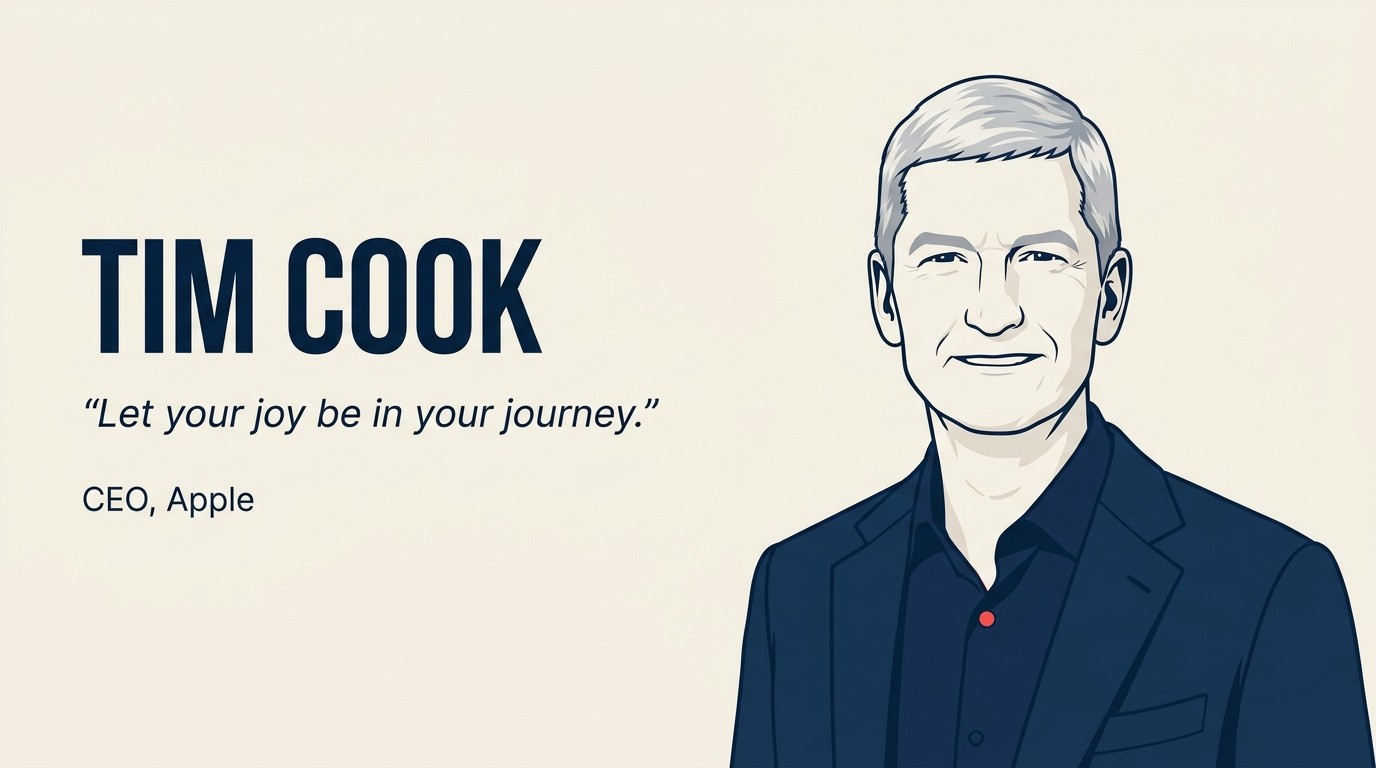
Datos Clave: Tim Cook (nacido noviembre 1, 1960, Mobile, Alabama) se convirtió en CEO de Apple en agosto de 2011, sucediendo a Steve Jobs. Bajo su liderazgo, Apple creció de ~$108B en ingresos anuales a $383B (FY2023), y se convirtió en la primera empresa en alcanzar capitalización de mercado de $1T (agosto 2018), $2T (agosto 2020), y $3T (enero 2022). Cook tiene un grado en ingeniería industrial de Auburn University y un MBA de la Fuqua School of Business de Duke. Antes de Apple, pasó 12 años en IBM y sirvió en breves períodos en Intelligent Electronics y Compaq. Se unió a Apple en marzo de 1998 como SVP de Operaciones Mundiales, sirvió como COO desde 2005-2011, y ha supervisado los lanzamientos de Apple Watch (2015), AirPods (2016), Apple Silicon (M1, 2020), la economía de Servicios (ahora $85B+ anuales), y Vision Pro (2024).
Cuando Tim Cook se convirtió en CEO permanente de Apple en agosto de 2011, los ingresos anuales de Apple eran alrededor de $108 mil millones. Para el año fiscal 2023, fueron $383 mil millones. No lanzó una nueva categoría de producto hasta Vision Pro a principios de 2024. Sin momento iPod. Sin momento iPhone. Lo que hizo en su lugar fue ejecutar los negocios existentes de Apple con un nivel de precisión operacional que se compuso silenciosamente hacia la empresa más valiosa de la Tierra.
Eso es lo que vale la pena entender sobre Cook. No es un visionario de productos. Nunca lo ha sido. Pero convirtió la cadena de suministro de Apple en un foso inexpugnable, convirtió servicios de un negocio secundario en un motor de ingresos anuales de $85 mil millones, y mantuvo márgenes brutos por encima del 40% a través de múltiples depresiones macroeconómicas. Si diriges una empresa entre 50 y 500 personas e intentas crecer predeciblemente sin necesitar un momento de genio fundador, el modelo de Cook tiene más que enseñarte que el modelo de Jobs.
La Doctrina de Operaciones Primero (El Modelo de Maestría de Cadena de Suministro de Cook)
La Doctrina de Operaciones Primero sostiene que la ventaja competitiva sostenible a escala viene no de la invención de productos sino de la profundidad operacional, relaciones concentradas de proveedores, disciplina de inventario de sub-semana, y layering de ingresos recurrentes en la parte superior del hardware existente. Bajo esta doctrina, el trabajo central del CEO es ejecutar una cadencia semanal cerrada que componga margen y confiabilidad, para que la organización de producto pueda hacer apuestas grandes desde una fundación de certeza financiera en lugar de presión existencial. Es lo opuesto al modelo de fundador visionario: trata la ejecución en sí misma como la estrategia.
Desglose del Estilo de Liderazgo
| Estilo | Peso | Cómo se manifestó |
|---|---|---|
| Operador | 65% | Reconstruyó las relaciones manufactureras de Apple desde cero. Ejecutó cadencias semanales en cada línea de producto. Aplicó disciplina de costo sistemático que bajó días de inventario de meses a menos de una semana. Hizo que los trenes funcionaran, precisa, a escala, globalmente. |
| Guardián | 35% | Protegió la filosofía de diseño y producto de la era de Jobs en lugar de reorientarla. Eligió decisiones institucionales cuidadosamente (posicionamiento de privacidad, estándares de proveedores, auditorías de derechos humanos) con una lente de largo plazo sobre la confianza de marca de Apple. |
La división 65/35 importa por lo que te dice sobre cómo Cook ve su rol. No intentó superar a Steve Jobs en innovación, lo que habría sido un juego perdedor. Protegió la prima de producto que Jobs creó y construyó la máquina operacional que extrajo máximo valor de ella. Para la mayoría de líderes en la mayoría de empresas, esa división es en realidad más relevante que el modelo visionario.
Rasgos Clave de Liderazgo
| Rasgo | Calificación | Qué significa en la práctica |
|---|---|---|
| Disciplina de cadena de suministro | Excepcional | Cook fue pionero en fabricación just-in-time para electrónica de consumidor mientras estaba en Apple bajo Jobs, comenzando en 1998. Consolidó cientos de proveedores en una red cerrada, negoció acuerdos de exclusividad de componentes que bloquearon competidores, y construyó un sistema de fabricación basado en China que redujo los días de inventario de Apple de más de un mes a menos de una semana. Cuando una inundación golpeó proveedores de componentes clave en 2011, Apple tenía contingencias que los competidores no tenían. |
| Gestión de stakeholders | Muy Alta | Las relaciones de Cook abarcan sindicatos laborales, reguladores gubernamentales, gobiernos extranjeros e inversores institucionales simultáneamente. Ha mantenido Apple fuera de problemas reguladores serios en EE.UU. más tiempo que la mayoría de pares tecnológicos. Navegó relaciones con China cuidadosamente, equilibrando dependencia manufacturera contra riesgo político, incluso mientras otras empresas tecnológicas estaban congeladas. No gana cada pelea, pero no crea innecesarias. |
| Ejecución bajo escrutinio | Muy Alta | El enfrentamiento de encriptación del FBI, escrutinio de fabricación china, investigaciones antimonopolio de App Store, y cuestiones continuas sobre sequedad de innovación, Cook ha manejado cada una de estas públicamente sin explotar relaciones o crear crisis secundarias. Es calmado ante cámara, preciso con palabras, y no improvisa. Esa es una habilidad aprendida, no un rasgo de personalidad. |
| Innovación incremental | Alta | Cook impulsó Apple Silicon, comenzando con el chip M1 a finales de 2020 como un cambio arquitectónico que dio a Apple una ventaja de rendimiento de 2-3 años sobre competidores basados en Intel. Pero el playbook es refinamiento, no reinvención. El Apple Watch se convirtió en el reloj más vendido del mundo siendo ligeramente mejor cada generación, no siendo un producto de ruptura en el primer año. |
Las 3 Decisiones Que Definieron a Tim Cook como Líder
1. Renegociar la Red de Proveedores Completa de Apple (1998-2001)
Cook se unió a Apple en marzo de 1998 como Senior VP de Operaciones Mundiales. En ese tiempo, Apple tenía 2 meses de inventario sentado en almacenes y un modelo de fabricación que dependía de fabricantes por contrato que también trabajaban para competidores. Jobs quería los costos reducidos y la cadena de suministro asegurada. Cook entregó ambos. El arco completo de su ascenso desde jefe de operaciones a CEO está documentado en su biografía de Wikipedia, que rastrean su carrera desde Compaq a través de IBM a Apple.
Redujo significativamente el conteo de proveedores de Apple, negoció acuerdos de componentes exclusivos que bloquearon rivales de acceder a las mismas partes, y movió la fabricación a Asia de una manera que redujo a la mitad los tenencias de inventario. Para 2001, Apple había reducido los días de inventario de alrededor de 30 a menos de una semana. Para contexto, Dell fue celebrado por eficiencia de cadena de suministro en ese tiempo. Cook lo estaba igualando en una empresa de hardware que hizo menos productos y demandó mucho mayores tolerancias de calidad.
La implicación estratégica fue más profunda que ahorros de costos. Al bloquear el suministro de componentes con fabricantes clave, TSMC para chips, Foxconn para ensamble, Corning para vidrio, Apple creó una situación donde incluso competidores bien financiados no podían rápidamente replicar las especificaciones de su producto. Cuando el iPhone original lanzó en 2007, rivales lucharon por surtir la misma calidad de vidrio de pantalla táctil a ninguna parte cerca del costo o volumen de Apple. Eso no fue suerte. Fue el resultado del trabajo de cadena de suministro de Cook años antes.
Qué te dice esto como líder: El instinto de Cook fue eliminar opcionalidad en el lado de suministro para comprar certeza en el lado de salida. Hizo apuestas concentradas en socios específicos y construyó relaciones lo suficientemente profundas que esos socios priorizaron órdenes de Apple. Si diriges una empresa con complejidad de cadena de suministro, la pregunta no es cuántos proveedores tienes. Es si tus mejores proveedores te llamarían primero cuando la capacidad se vuelve cerrada. Cook construyó eso. La mayoría de sus competidores no se dieron cuenta de que eso era lo que les faltaba hasta que fue demasiado tarde.
2. El Enfrentamiento de Encriptación del FBI vs. Apple (2016)
En febrero de 2016, el FBI obtuvo una orden judicial demandando que Apple creara una puerta trasera de software para desbloquear el iPhone 5C usado por el tirador de San Bernardino. Cook se negó públicamente en una carta abierta a los clientes de Apple. Llamó la solicitud el equivalente de crear una "llave maestra" a cada iPhone, argumentó que establecería un precedente legal que peligraría a usuarios mundialmente, y dijo que Apple lucharía la orden en corte.
El FBI eventualmente desbloqueó el teléfono usando una herramienta de terceros y abandonó el caso. Pero lo que importa aquí no es el resultado legal. Es la decisión que Cook hizo, y cómo la hizo.
Eligió una posición pública en una posición que tenía riesgo comercial real. Apple vendió una participación significativa de sus iPhones en mercados donde gobiernos no aprecian empresas tecnológicas negándose a acceso de cumplimiento de la ley. Lo sabía. Fue público de todas formas, encuadrándolo como un problema de derechos del usuario en lugar de una disputa legal. Ese posicionamiento fue deliberado. Construyó credibilidad con clientes empresariales conscientes de privacidad, consumidores en Alemania y la UE, y el equipo de ingeniería de Apple, quienes cuidaban profundamente de la integridad de lo que construyeron.
Hay una segunda capa en esa decisión que vale la pena notar. Cook comunicó la negativa directamente a clientes, no a través de un comunicado de prensa o una presentación legal. Escribió una carta abierta, la firmó él mismo, y la publicó en la página de inicio de Apple. Esa directividad señaló que el problema se trataba de valores, no de gestión de responsabilidad. Ese es un llamado difícil de hacer cuando abogados están en la sala. La mayoría de abogados aconsejarían en contra. Cook lo hizo de todas formas.
Para ti: El enfoque de Cook fue elegir la pelea de precedente antes de que se volviera inevitable. La mayoría de líderes esperan hasta que estén acorralados. Se adelantó a esto, y comunicó la posición en su propia voz. Si estás en una industria donde la presión reguladora está construyendo (y la mayoría lo está), los líderes que definen el marco temprano, y lo hacen directamente, tienen más credibilidad que aquellos que reaccionan a través de voceros.
3. Lanzar Apple Services como el Motor de Crecimiento Post-iPhone Peak
Los ingresos de iPhone alcanzaron pico en el año fiscal 2018 en alrededor de $166 mil millones. Cook había visto la meseta viniendo. Tan atrás como 2016, los ingresos de servicios de Apple estaban creciendo más rápido que cualquier otro segmento, pero era tratado internamente y públicamente como un negocio secundario. Cambió eso.
Para 2019, Apple había reestructurado cómo reportaba finanzas para dar a Services su propio segmento. Para 2022, Services estaba generando $78 mil millones anuales. El análisis de Harvard Business Review de los inicios de Cook y los desafíos estratégicos de Apple captura por qué analistas dudaron inicialmente de este giro, y por qué estaban equivocados. Para 2023, sobre $85 mil millones. El segmento incluye App Store, Apple Music, iCloud, Apple TV+, Apple Pay, Apple Care, e ingresos de licencia de Google por colocación de búsqueda predeterminada (estimado en $15-20 mil millones anuales solo).
Este fue un reframe estratégico, no una invención de producto. Cook tomó software de alto margen y negocios de suscripción que ya existían dentro de Apple y los reposicionó como la historia de crecimiento que los inversores deberían valorar. No necesitaba construir nuevos productos. Necesitaba contar la historia correcta sobre los productos que tenía, y luego ejecutar en escalarlos.
La mecánica del giro de servicios es instructiva. Cook no adquirió nuevos negocios para construir ingresos de Services. Tomó productos que Apple ya tenía, App Store lanzó en 2008, iCloud lanzó en 2011, Apple Care había existido desde 2002, y construyó una narrativa financiera alrededor de ellos. Los negocios ya estaban allí. Lo que cambió fue la estrategia de poseer la historia de crecimiento que representaban.
También usó el segmento de Services para reposicionar la valoración de Apple. Las empresas de hardware se intercambian en múltiplos precio-a-ganancias más bajos que las empresas de software. Al demostrar que una porción significativa de los ingresos de Apple venían de negocios de suscripción recurrentes de alto margen, Cook dio a analistas e inversores una lente diferente para aplicar. La capitalización de acciones de Apple se expandió significativamente durante el período 2018-2023, en parte por ese reposicionamiento. Es un modelo que vale la pena comparar a cómo Andy Jassy posicionó AWS como un negocio de plataforma, ambos líderes refatilzaron qué eran realmente sus empresas antes de que el mercado se pusiera al día.
La lección para ti: en cualquier empresa con un producto central fuerte, hay capas de servicio y suscripción sentadas debajo que generan ingresos recurrentes con márgenes más altos que el centro. La mayoría de fundadores y CEOs subestiman estos porque son menos emocionantes que productos nuevos. Cook mostró qué sucede cuando haces de ellos la historia de crecimiento primario y luego construyes la disciplina financiera para escalarlos deliberadamente.
Qué Haría Tim Cook en Tu Rol
Si eres un CEO dirigiendo una empresa de 50-500 personas, el movimiento más transferible de Cook es construir cadencia operacional antes de que la necesites. No inventó los sistemas que hicieron la escala de Apple manejable, los instaló temprano y se apegó a ellos consistentemente. Cuál es tu versión de una revisión operacional semanal que crea responsabilidad sin burocracia? Si no tienes una, estás ejecutando en intuición de fundador en una etapa que necesita proceso. Cook instalaría la cadencia primero y confiaría en que el trabajo creativo suceda dentro de esa estructura. El objetivo no es más reuniones. Es una reunión por función que la gente realmente se prepara para, con métricas que realmente reflejen la realidad.
Si eres un COO o líder de operaciones, la lección de cadena de suministro se trata de profundidad sobre amplitud. Cook no solo manejó relaciones de proveedores. Fue profundo en un pequeño número de ellas, construyó exclusividad donde pudo, e hizo que Apple fuera un cliente preferente que valiera priorizar. Mira tus proveedores críticos y pregunta honestamente: ¿priorizan tus órdenes cuando la capacidad es cerrada? Si no, tu ventaja operacional es teórica. Cook arreglería la profundidad de esas relaciones antes de expandir el número de ellas. Ser el mejor cliente de un proveedor es una posición estratégica, no solo un resultado de costo.
Si eres un líder de producto, la transición de chip M de Cook vale la pena estudiar de cerca. Esperó hasta que la tecnología estuviera lista, luego envió un producto que fue claramente mejor en cada dimensión que a los competidores les importa. Sin pruebas beta en público. Sin lanzamiento suave. Usó tiempo de preparación interno (años de desarrollo de chip en secreto) para enviar algo que parecía repentino desde afuera pero no lo fue. La lección es que preparación tranquila y larga seguida por un lanzamiento limpio vence un proceso de desarrollo visible con uno desordenado. Tus clientes no necesitan saber qué estás construyendo hasta que estés listo para enviarlo bien.
Si eres un líder de ventas o marketing, la historia de Apple Services es tu playbook. Cook identificó los ingresos recurrentes sentados dentro de la base de clientes existente de Apple e hizo eso la historia de crecimiento. En tu empresa, eso probablemente se parece a rutas de upsell, acuerdos de servicio, o cuotas de plataforma que no has construido completamente porque el producto central siempre se siente más urgente. No lo es. Los clientes que ya tienes son el camino más rápido hacia crecimiento de ingresos predecible. Cook te diría mapear cada punto de contacto post-compra y preguntarte cuál de ellos estás regalando gratis cuando deberías estar cobrando por ellos, o construyendo un producto alrededor de ellos.
El Modelo de Cook Aplicado a un SMB Moderno: Dónde Fit Rework
La doctrina de Cook fue construida en herramientas operacionales de era de mainframe escaladas al tamaño de Apple. Para SMBs intentando ejecutar el mismo playbook, disciplina de cadena de suministro, cadencia operacional semanal, relaciones concentradas de proveedores, servicios superpuestos en la parte superior de una oferta central, el problema de herramientas es diferente. No necesitas SAP. Necesitas un sistema único donde ventas, operaciones y customer success comparten un ritmo semanal sin 4 plataformas separadas peleando una con otra. Ahí es donde Rework encaja. Rework unifica CRM, gestión de leads, y trabajo entre equipos en una pila para que una empresa de 50-500 personas pueda ejecutar una cadencia de estilo Cook sobre pipeline, entrega, y renovaciones sin la carga de integración que mata ritmo operacional a esta escala. Obtienes la profundidad de relación concentrada que Cook predicó, en proveedores y clientes alike, visible en un sistema, un tablero, una reunión. El objetivo no es copiar la escala de Apple. Es tomar prestada la disciplina de Cook a un tamaño donde realmente es alcanzable.
Citas Notables y Lecciones Más Allá de la Junta Directiva
Antes de llegar a las citas, vale la pena considerar un número que a menudo es subestimado en discusiones sobre la tenencia de Cook. La capitalización de mercado de Apple cuando Jobs murió en octubre de 2011 fue alrededor de $350 mil millones. Para principios de 2023 brevemente cruzó $3 billones. Eso es un aumento de 9x sobre aproximadamente 12 años, en una empresa que ya era una de las más valiosas de la Tierra cuando Cook asumió. La mayoría de líderes heredan organizaciones más pequeñas y más fáciles y fallan en mantener la trayectoria. Cook la extendió dramáticamente, y lo hizo sin una sola nueva categoría de producto durante más de una década.
El estilo de comunicación pública de Cook es medido al punto donde citas directas llevan peso inusual cuando dice algo directo. Su enfoque a la gestión refleja lo que Peter Drucker llamó comportamiento ejecutivo efectivo, enfocándose en contribución en lugar de esfuerzo, y en resultados en lugar de actividad. En liderazgo diferente de Jobs, ha dicho: "No voy a ser testigo o permitir el deshacimiento lento de todo lo que Steve e yo y tantos otros hemos construido en Apple." Esa cita, de 2016, te dice algo sobre cómo sostiene el rol. Es un guardián por intención, no por defecto.
También ha hablado claramente sobre la tensión entre privacidad e intereses comerciales: "Privacidad es un derecho humano fundamental y una responsabilidad moral." Cook dijo esto en el Congreso de Protección de Datos de la UE mientras Apple estaba bajo presión tanto de cumplimiento de la ley estadounidense como de reguladores de la UE. No triangló entre ellos. Eligió el marco que coincidía con la posición de marca de largo plazo de Apple y lo sostuvo consistentemente.
La lección que no encaja limpiamente en ningún marco: Cook es un muy buen oyente. Múltiples ejecutivos de Apple que han trabajado directamente con él describen un patrón donde hace más preguntas que respuestas en reuniones, luego vuelve con una síntesis que explica cosas que la gente no se dio cuenta que había absorbido. Esa es una habilidad que se compone a lo largo del tiempo. Si eres la voz más fuerte en cada sala en la que estás, probablemente no estés reuniendo la señal que necesitas.
Cook también es inusualmente consistente entre lo que dice públicamente y lo que hace organizacionalmente. Su postura de privacidad, articulada como una posición comercial mientras estaba bajo presión de tanto cumplimiento de la ley estadounidense como reguladores de la UE, ganó a Apple reconocimiento como la primera gran empresa tech en tratar privacidad como diferenciador competitivo, según cobertura de Harvard Business Review de su liderazgo desde ese período. Eso es más raro de lo que suena. Se ha pronunciado públicamente sobre el clima desde 2012 y Apple se volvió neutra en carbono para sus operaciones corporativas en 2020. Ha defendido públicamente la privacidad desde 2015 y Apple ha repetidamente tomado posiciones concretas (a menudo costosas) para respaldar esa postura. Esto no es marketing. Es carácter organizacional. Cuando estudias lo que Cook construyó en Apple, ves una empresa que realmente hace lo que su CEO dice que hace. Ese alineamiento entre valores expresados y comportamiento operacional es en sí mismo una ventaja competitiva. Hace reclutamiento, confianza de cliente, y relaciones reguladores substancialmente más fáciles a lo largo del tiempo.
Dónde Este Estilo Se Rompe
La disciplina operacional de Cook es genuinamente excepcional, pero crea un modo de fallo organizacional específico. Cuando todo se ejecuta a través de proceso y revisión, apuestas grandes se suavizan en mejoras incrementales. El Vision Pro es el ejemplo más claro: un producto en el que muchos ejecutivos de Apple creyeron durante años que tomó una década enviarse, lanzó en $3,499, y vendió muchas menos unidades de lo esperado en su primer año. La pregunta no es si Vision Pro fue un buen producto. Es si una organización que puede multiplicar por 4 ingresos a través de ejecución también puede hacer el tipo de movimientos de alta convicción, apuesta-el-franquicia que crearon Apple en primer lugar.
Cook ejecuta Apple con un nivel de construcción de coalición y disciplina de proceso que habría frustrado enormemente a Jobs. Eso es mayormente una característica. Pero si diriges una empresa donde los próximos 3 años requieren un salto genuino en lugar de un paso optimizado, el modelo de Cook no te llevará allí. Necesitarás un engranaje diferente.
La dependencia de China es la otra exposición de largo plazo. Apple manufactura la gran mayoría de sus iPhones en China, una concentración que crea riesgo geopolítico que es genuinamente difícil de deshacer. Cook ha estado gestionándolo durante años, empujando gradualmente producción hacia India y Vietnam mientras mantiene las relaciones de China que hacen el volumen actual posible. Pero el ritmo de diversificación ha sido lento relativo al riesgo. Si las relaciones comerciales US-China se deterioran bruscamente, la cadena de suministro de Apple enfrenta una disrupción que la excelencia operacional no puede prevenir. Esa es la factura que eventualmente puede vencerse por las elecciones que Cook hizo en el período 1998-2005. La mayoría de las decisiones fueron correctas en el tiempo. La pregunta es si pueden deshacerse lo suficientemente rápido cuando el contexto cambia.
Preguntas Frecuentes sobre el Liderazgo de Tim Cook
¿Quién es Tim Cook?
Tim Cook (n. 1960, Mobile, Alabama) es el CEO de Apple. Sucedió a Steve Jobs en agosto de 2011 después de servir como COO desde 2005. Antes de Apple, pasó 12 años en IBM y un breve período en Compaq. Tiene un grado en ingeniería industrial de Auburn y un MBA de Duke. Se unió a Apple en 1998 para ejecutar operaciones mundiales y reconstruyó su cadena de suministro desde cero.
¿Cómo creció Cook Apple a $3T?
Cook creció los ingresos anuales de Apple de ~$108B en 2011 a $383B en FY2023, aproximadamente 4x, sin lanzar una categoría de producto mayor hasta Vision Pro en 2024. El crecimiento vino de tres fuentes: maestría de cadena de suministro que protegió márgenes por encima del 40%, un giro agresivo a Services (ahora $85B+ anuales, recurrentes y alto margen), y Apple Silicon dando a Apple una ventaja de rendimiento de varios años en su propio hardware. La capitalización de mercado de Apple cruzó $1T en 2018, $2T en 2020, y $3T en enero de 2022.
¿Cómo es Cook diferente de Jobs?
Jobs era un visionario de producto que definió nuevas categorías. Cook es un operador que escala y protege lo que ya existe. Jobs favoreció lanzamientos dramáticos de producto; Cook ejecuta cadencias operacionales semanales cerradas. Jobs era famosamente confrontacional en reuniones; Cook es un oyente que sintetiza. En las propias palabras de Cook, ha estado comprometido a no permitir "el deshacimiento lento" de lo que Jobs construyó, es un guardián por diseño. El resultado combinado es que Apple mantuvo la prima de producto de la era Jobs mientras ganaba disciplina operacional y financiera que Jobs nunca tuvo.
¿Cuál es el negocio de Services de Apple bajo Cook?
Apple Services es el segmento que agrupa App Store, Apple Music, iCloud, Apple TV+, Apple Pay, Apple Care, e ingresos de licencia (incluyendo un estimado $15-20B anuales de Google por colocación de búsqueda predeterminada). Creció de un negocio secundario en 2011 a $78B en FY2022 y sobre $85B en FY2023. Cook no inventó estos productos, la mayoría existía antes de que se volviera CEO, pero reestructuró reporting financiero en 2019 para hacer Services un segmento stand-alone e hizo de esto la narrativa de crecimiento primario de Apple. Este reposicionamiento expandió la capitalización de acciones de Apple significativamente.
¿Qué es Apple Silicon?
Apple Silicon es la propia línea de chips basados en ARM de Apple para computadoras Mac, lanzada con el M1 en noviembre de 2020. Reemplazó procesadores Intel e hizo a Apple control total sobre rendimiento, eficiencia de poder, e integración con macOS. La transición tomó años de desarrollo en secreto y envió como un cambio limpio en lugar de uno por etapas. El M1 y sucesores (M2, M3, M4) han dado a Apple una ventaja de rendimiento-por-vatio de 2-3 años sobre laptops basadas en Intel y dejaron a Apple diseñar productos, como MacBook Airs sin ventilador con rendimiento de escritorio, que competidores estructuralmente no pueden igualar.
¿Qué pueden aprender los líderes de operaciones de Tim Cook?
Cuatro cosas. Primero, ve profundo con pocos proveedores en lugar de ancho con muchos, ser el mejor cliente de un proveedor es una posición estratégica. Segundo, instala una cadencia operacional semanal temprano, antes de que la necesites, para que el trabajo creativo suceda dentro de estructura en lugar de caos. Tercero, ingresos recurrentes sentados dentro de productos existentes es usualmente el camino de crecimiento más rápido, no los subestimes solo porque son menos emocionantes que productos nuevos. Cuarto, la comunicación pública debería coincidir con realidad organizacional; los valores expresados solo se componen cuando están respaldados por comportamiento operacional consistente.
Aprender Más
Si este perfil moldeó cómo estás pensando sobre liderazgo operacional, estos artículos van más profundo en las ideas subyacentes:

On this page
- La Doctrina de Operaciones Primero (El Modelo de Maestría de Cadena de Suministro de Cook)
- Desglose del Estilo de Liderazgo
- Rasgos Clave de Liderazgo
- Las 3 Decisiones Que Definieron a Tim Cook como Líder
- 1. Renegociar la Red de Proveedores Completa de Apple (1998-2001)
- 2. El Enfrentamiento de Encriptación del FBI vs. Apple (2016)
- 3. Lanzar Apple Services como el Motor de Crecimiento Post-iPhone Peak
- Qué Haría Tim Cook en Tu Rol
- El Modelo de Cook Aplicado a un SMB Moderno: Dónde Fit Rework
- Citas Notables y Lecciones Más Allá de la Junta Directiva
- Dónde Este Estilo Se Rompe
- Aprender Más