Estilo de Liderazgo de Ginni Rometty: Transformación Bajo Presión y Los Límites de Reinventar Lentamente
Turn this article into takeaways for your work.


Each assistant summarizes the article only for you and suggests best practices for your work.
Datos Clave de Un Vistazo
- Nacida: 1957, Chicago, Illinois
- Primera CEO mujer de IBM: Enero 2012 – Abril 2020 (8 años de tenencia, empresa de 100 años)
- Educación: Universidad de Northwestern, BS en ciencias de la computación e ingeniería eléctrica (1979)
- Apuestas definitorias: Comercialización de Watson AI (2013); Adquisición de Red Hat ($34 mil millones, 2019 — la más grande de IBM)
- Doctrina de contratación de firma: Empleos de "collar nuevo" — habilidades sobre grados de cuatro años
- Iniciativa educativa: P-TECH (Pathways in Technology Early College High School), lanzado con NYC DOE en 2011, ahora en 28 países
- Memoria: Good Power: Leading Positive Change in Our Lives, Work, and World (2023)
- Sucedida por: Arvind Krishna, Abril 2020
La Doctrina de Collar Nuevo
La Doctrina de Collar Nuevo es el marco de contratación de Rometty que evalúa a los candidatos en habilidades demostrables, aprendizajes y credenciales de universidad comunitaria en lugar de grados de cuatro años. Popularizado durante su tenencia en IBM y operacionalizado a través del modelo de escuela P-TECH, argumenta que la economía de IA y nube necesita un nivel medio de trabajadores técnicos — analistas de ciberseguridad, operadores en la nube, entrenadores de IA — que la tubería tradicional de universidad a corporativo no produce. Al final de su tenencia, el 15% de las contrataciones de IBM en EE.UU. no poseían un grado de cuatro años.
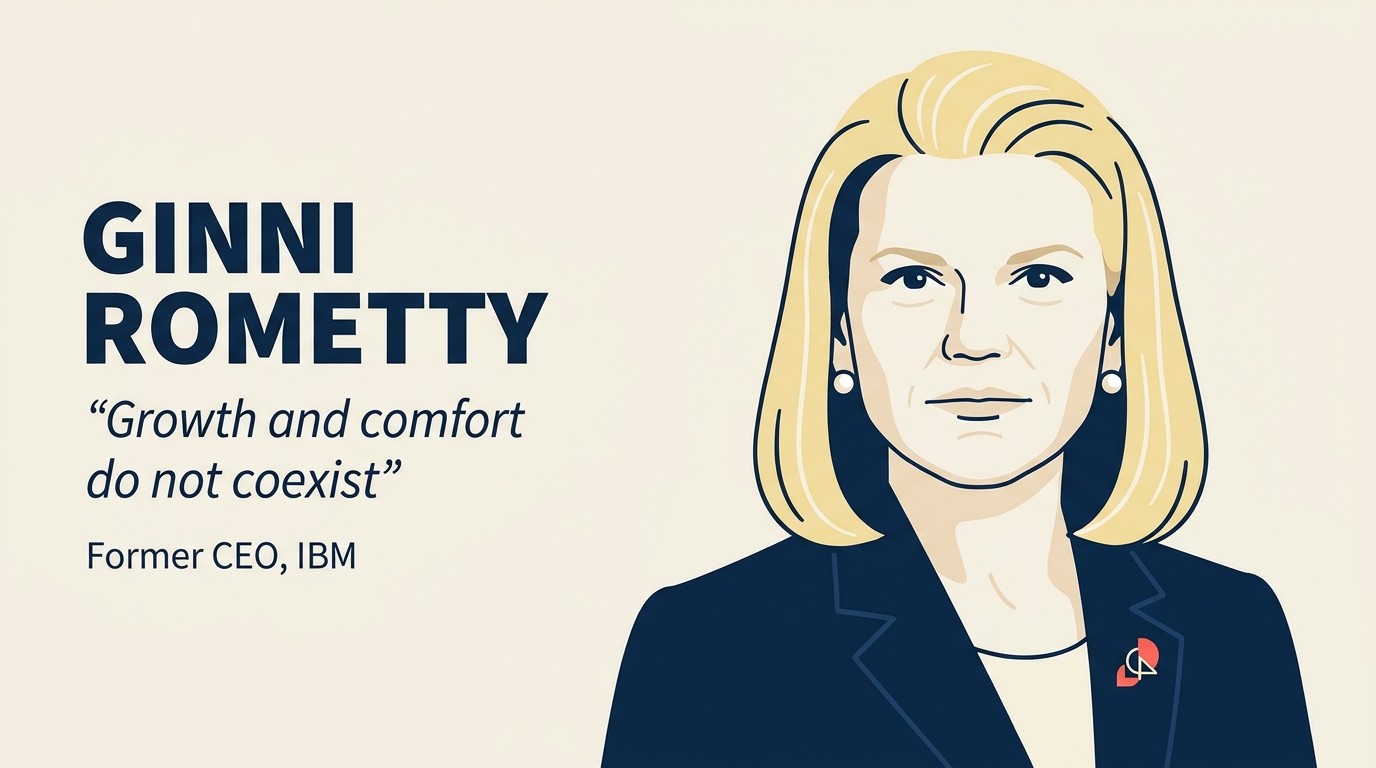
Virginia "Ginni" Rometty se unió a IBM como ingeniera de sistemas en Detroit en 1981, directamente de la Universidad de Northwestern con un grado en ciencias de la computación e ingeniería eléctrica. Ascendió a través de servicios globales y ventas, eventualmente dirigiendo las ventas globales, marketing y estrategia de IBM antes de ser nombrada CEO en enero 2012, la primera mujer en liderar la empresa en su historia de 100 años. Su trasfondo completo está documentado en su entrada de Wikipedia.
Heredó un modelo de negocio del que el mercado ya estaba alejándose. Los ingresos de hardware y servicios heredados de IBM estaban en declive. Apostó por Watson AI y nube antes de que la mayoría de los competidores hubieran tomado la decisión. La comparación con Satya Nadella es inevitable: ambos heredaron gigantes de software heredado e hicieron apuestas fundamentales de IA y nube aproximadamente en el mismo momento, pero la velocidad de transformación de Microsoft superó significativamente a la de IBM. La marca Watson se lanzó comercialmente en 2013. Pero los ingresos de IBM cayeron de $104.5 mil millones en 2012 a $79.6 mil millones en 2017, un período de 22 trimestres consecutivos de declive año tras año.
En octubre 2018, anunció la adquisición de Red Hat por $34 mil millones, la más grande de IBM, para acelerar la nube híbrida. Entregó el rol de CEO a Arvind Krishna en abril 2020.
La lectura honesta de su tenencia es una líder que identificó correctamente el destino y no podía llegar lo suficientemente rápido. Eso no es algo pequeño de entender, porque describe la situación en la que se encuentran muchos ejecutivos.
Desglose del Estilo de Liderazgo
| Estilo | Peso | Cómo se manifestó |
|---|---|---|
| Líder de Transformación Deliberada | 65% | Rometty operó con convicción de horizonte largo. Articuló el marco de "Imperativos Estratégicos" (nube, análisis, móvil, social, seguridad) en 2013 y no lo abandonó cuando los ingresos siguieron cayendo. Para 2017, esos imperativos habían crecido del 22% al 46% de los ingresos de IBM. Hizo apuestas fundamentales (Watson, Red Hat) que no estaban diseñadas para mostrar resultados en un solo ciclo de ganancias. Eso requiere un tipo específico de nervio ejecutivo que la mayoría de los directorios no habría sostenido. |
| Ancla de Relación con Clientes | 35% | Rometty construyó su carrera en las organizaciones de servicios y ventas de IBM, y se mostró en cómo gestionó los clientes empresariales más grandes de IBM. Creía que la infraestructura de relación de cien años de IBM, la confianza que los CIOs empresariales y los líderes de tecnología de Fortune 500 depositaban en IBM, era un activo competitivo genuino, incluso cuando los competidores nativos de nube estaban construyendo más rápido. Su compromiso personal con los clientes de cuentas principales siguió siendo una prioridad durante toda su tenencia. |
La división 65/35 captura la tensión central en su liderazgo. El instinto del líder de transformación requería interrumpir las mismas relaciones con clientes que el instinto de ancla estaba protegiendo. Los clientes de IBM no se estaban moviendo a la nube tan rápido como el mercado, lo que significaba que Rometty estaba gestionando dos horizontes temporales diferentes simultáneamente: el pivot a largo plazo y las económicas de relación con clientes a corto plazo.
Rasgos Clave de Liderazgo
| Rasgo | Calificación | Qué significa en la práctica |
|---|---|---|
| Apuestas estratégicas de horizonte largo | Muy Alta | La plataforma comercial de Watson, lanzada en 2013, fue una apuesta genuina temprana en IA antes de que la mayoría de las empresas de tecnología se hubieran comprometido públicamente. La adquisición de Red Hat en 2018 fue diseñada alrededor de una tesis de nube híbrida que solo se convirtió en la opinión de consenso de la industria varios años después. Rometty hizo ambas decisiones antes de que el mercado le diera crédito, lo que es valiente o costoso dependiendo de cuándo estés midiendo. En el caso de IBM fue probablemente ambos. |
| Centricidad del cliente construida durante 30 años | Alta | Pasó su carrera en IBM entendiendo cómo compran tecnología las grandes empresas: lentamente, con enorme cautela institucional, a través de relaciones construidas durante años. Ese entendimiento dio a los mensajes de transformación de IBM credibilidad con los clientes existentes incluso cuando la cartera de productos aún estaba alcanzando la visión. La limitación es que esta infraestructura de relación creó fricción institucional: el ritmo de transformación de IBM estaba parcialmente limitado por el ritmo al que sus clientes más grandes estaban dispuestos a moverse. |
| Tolerancia para el dolor sostenido a corto plazo | Alta | Veintidós trimestres de declive de ingresos es un tiempo largo para sostener una convicción estratégica contra presión de analistas, caída de precios de acciones y escrutinio de directorios. Rometty lo sostuvo. Eso es un rasgo real. La pregunta que el fracaso fuerza es si la tolerancia sostenida para el dolor es una virtud o una señal retrasada de que la estrategia necesita adaptarse más rápido. Ambas pueden ser verdaderas. |
| Resiliencia personal en un rol de CEO impugnado | Fuerte | Mantuvo el puesto de CEO durante ocho años con una caída de acciones, escepticismo de analista persistente y una tesis de transformación que tenía razón direccionalmente pero era lenta en ejecución. Su experiencia como heredera-operadora que tenía que justificar cada trimestre a un mercado escéptico hace eco de la tenencia temprana de Apple de Tim Cook, aunque Cook heredó un motor de crecimiento en lugar de uno en declive. Y el linaje de CEO heredada en el que se sienta — CEOs que moldearon la cultura a través de tenencias largas en negocios heredados — corre directamente a través de Jack Welch, cuya transformación de GE estableció el criterio contra el que la tenencia de Rometty inevitablemente fue medida. En Good Power, su memoria de 2023, es reflexiva sobre lo que haría diferente. Ese tipo de retrospección honesta, no defensiva, no revisionista, es su propia calidad de liderazgo. |
Las 3 Decisiones que Definieron a Rometty
1. Comercializando Watson Como la Marca de IA de IBM (2013)
El sistema Watson de IBM había vencido a campeones humanos en Jeopardy! en febrero 2011, bajo Sam Palmisano. Cuando Rometty tomó el control, hizo que comercializar Watson fuera su movimiento central. Creó la división Watson, construyó una plataforma comercial, y puso la marca de Watson en el centro del marketing de IBM durante los próximos años.
La apuesta fue direccionalmente correcta. La IA se convertiría en una de las categorías de tecnología empresarial más importantes de la próxima década, e IBM tenía un líder genuino temprano en los sistemas de procesamiento de lenguaje natural y razonamiento que subyacían a Watson.
Pero la ejecución fue cara y desigual. Watson Health, creado en 2015, adquirió Merge Healthcare, Explorys y Phytel, luego firmó una asociación de alto perfil con Memorial Sloan-Kettering y un contrato de $62 millones con MD Anderson. Ambas asociaciones médicas fallaron públicamente. MD Anderson canceló el contrato en 2017 después de reportar sobrecostos y expectativas no cumplidas. Watson Health fue eventualmente cerrado por Arvind Krishna.
La historia de Watson muestra una líder que entendió la dirección estratégica y sobreestimó la velocidad a la que los sistemas de IA podían hacerse listos para producción en entornos clínicos y empresariales complejos. El compromiso de marca fue tan grande que cuando las implementaciones individuales fallaron, el daño reputacional se amplificó. La disposición de Rometty de hacer una apuesta pública grande en IA fue la decisión correcta. La ejecución de Watson Health específicamente fue una lección de escritura de $1 mil millón+ en la brecha entre capacidad de IA en demostraciones controladas y confiabilidad de IA en despliegues empresariales del mundo real.
Para los líderes de hoy: cuando estés haciendo una apuesta estratégica grande en una tecnología emergente, el compromiso de marca público y la realidad del producto necesitan mantenerse calibrados el uno al otro. Adelantarse a la confiabilidad real de tu producto puede costarte la credibilidad que necesitas para sostener la apuesta a largo plazo.
2. No Adquiriendo Activos de Nube al Ritmo de Competidores (2013-2017)
Esta es la decisión que es más difícil de evaluar justamente, porque está definida por lo que Rometty no hizo en lugar de lo que hizo.
AWS creció 47% en 2016. Azure estaba escalando rápidamente. Google Cloud estaba invirtiendo agresivamente. Los ingresos en la nube de IBM, aunque crecían, no estaban creciendo a un ritmo que cerrara la brecha con los hiperscaladores. Los analistas e inversores presionaron para que Rometty adquiriera activos nativos de nube, invirtiera más agresivamente en infraestructura, o hiciera las concesiones de precio necesarias para competir con precios de AWS.
Ella eligió un posicionamiento diferente: IBM competiría en nube híbrida e IA empresarial, no en infraestructura cruda. La lógica era que los clientes empresariales de IBM no querían poner todo en una nube pública, y que la infraestructura de seguridad y cumplimiento de IBM le daba una posición defensible en industrias reguladas.
Esa lógica no estaba mal. Simplemente no estaba bien lo suficiente, rápido lo suficiente. AWS y Azure construyeron sus propias capacidades de cumplimiento y seguridad empresarial. La oportunidad de nube híbrida que IBM estaba posicionándose para materializó, pero Microsoft Azure capturó la mayoría con una combinación de relaciones empresariales (desde Office365 y Active Directory) e inversión en infraestructura que IBM no podía igualar.
La lección de liderazgo es incómoda: la estrategia correcta, ejecutada a un ritmo por debajo de la velocidad del mercado, todavía puede fallar. La transformación deliberada es un enfoque legítimo. Pero la deliberateness tiene que ser calibrada contra la velocidad a la que el contexto competitivo se está moviendo, no solo contra la capacidad interna para cambio.
3. Adquiriendo Red Hat por $34 Mil Millones (Octubre 2018)
La adquisición de Red Hat fue anunciada en octubre 28, 2018, y en ese momento fue la adquisición más grande de IBM en 107 años de historia corporativa. Red Hat era la empresa de software de código abierto empresarial líder, mejor conocida por Red Hat Enterprise Linux, OpenShift (su plataforma Kubernetes), y Ansible (automatización).
La lógica estratégica era clara: código abierto y nube híbrida basada en contenedores estaban convirtiéndose en el estándar empresarial, y Red Hat le daba a IBM una posición creíble en esa pila. OpenShift en particular estaba convirtiéndose en la distribución preferida de Kubernetes para empresas que necesitaban soporte y garantías de cumplimiento.
Se cerró en julio 2019 por $34 mil millones. Arvind Krishna, el ejecutivo de IBM que había supervisado la adquisición, sucedió a Rometty como CEO nueve meses después. Krishna ejecutó la estrategia post-separación de IBM alrededor de la apuesta de Red Hat que Rometty hizo, separando los servicios de infraestructura gestionada heredados de IBM como Kyndryl en 2021.
La adquisición de Red Hat es la reivindicación más clara de Rometty. Fue el activo estratégico más valioso de IBM en el período post-2020, y la tesis de nube híbrida que encarna es ahora central para la identidad de IBM. Pero llegó al final de su tenencia en lugar del comienzo. La pregunta que permanece sin respuesta es si un movimiento equivalente a Red Hat anterior, o varios más pequeños, habría prevenido el declive de ingresos y cambiado la trayectoria de su tenencia.
Para los ejecutivos: una apuesta transformadora hecha en el año siete de una transformación es mejor que no hacerla, pero el valor que crea se acumula al sucesor. Si estás ejecutando una transformación de múltiples años y aún no has hecho el movimiento definitorio, pregúntate honestamente si estás esperando el momento correcto o evitando la disrupción organizacional que el movimiento requiere.
Qué Haría Rometty en Tu Rol
Si eres CEO ejecutando una transformación heredada, el marco de Imperativos Estratégicos tiene aplicabilidad directa. Rometty agrupó las apuestas de crecimiento de IBM en una sola categoría, las rastreó como un porcentaje de ingresos, y comunicó la tendencia a los inversores consistentemente. Esto dio a los stakeholders una forma de rastrear el progreso de transformación incluso mientras los ingresos totales declinaban. Si estás ejecutando una transformación donde los ingresos heredados están declinando y los nuevos negocios están creciendo, separar esas dos señales en tu reportaje y comunicación te deja contar una historia más honesta y más legible.
Si eres COO construyendo una organización de servicios, la centricidad del cliente de Rometty tiene una lección real sobre activos de relación. Las relaciones de cliente empresarial de IBM fueron fosos competitivos genuinos. Pero los fosos solo te protegen si la cosa que estás defendiendo sigue siendo valiosa. A medida que tu industria o categoría de producto cambia, pregunta cuáles de tus relaciones de cliente son activos y cuáles se han convertido en restricciones. Los clientes empresariales que se quedan más tiempo con un vendedor en una categoría en transición a veces son los que mantienen al vendedor de no moverse lo suficientemente rápido.
Si estás liderando un equipo de producto lanzando en una categoría de tecnología emergente, la historia de Watson Health tiene una lección difícil. La brecha entre "esta tecnología funciona en un entorno controlado" y "esta tecnología es lo suficientemente confiable para producción empresarial" es mayor de lo que parece. Cuando Rometty comprometió la marca de IBM a la promesa de IA clínica de Watson Health, el producto no estaba listo para el compromiso. El resultado fueron fallos públicos en instituciones de alto perfil que retrasaron la credibilidad de toda la categoría, no solo la de IBM. Envía prueba de valor antes de enviar el compromiso de marca.
Si eres líder de ventas o ingresos gestionando cuentas empresariales a través de una transición de producto, la tenencia de Rometty ilustra la tensión entre proteger ingresos existentes y construir nuevos. Las estructuras de compensación de ventas y gestión de cuentas de IBM fueron calibradas para proteger ingresos de servicios heredados más tiempo de lo que el mercado justificaba. Si tus estructuras de comp y priorización de cuentas aún están optimizadas para el producto del que te estás alejando, trabajarán contra tu transformación sin importar lo que el CEO diga en el all-hands.
Aplicando el Playbook de Rometty con Rework
La transformación empresarial heredada es donde las lecciones de Rometty impactan más fuerte, y es la etapa exacta donde las operaciones de equipo tranquilamente deciden si un pivot tiene éxito. Si estás ejecutando una empresa de medio mercado aún con ingresos de servicios heredados mientras estableces un movimiento de nube o IA, las dos organizaciones tienen que coexistir sin que las estructuras de compensación, revisiones de pipeline, y reglas de propiedad de cuenta cannibalicen el nuevo negocio. CRM y Sales Ops de Rework (desde $12/usuario/mes) te deja ejecutar pipelines separados, estructuras de cuota y líneas de reportaje para ingresos heredado versus transformación sin bifurcar tu pila de ventas en dos. En el lado de contratación, la Doctrina de Collar Nuevo solo funciona si puedes rastrear candidatos no tradicionales a través de aprendizajes, evaluaciones de habilidades y movilidad interna en lugar de solo filtros de grado — Work Ops de Rework (desde $6/usuario/mes) maneja el seguimiento de proyecto, caminos de aprendizaje y estructura de equipo que hacen la contratación basada en habilidades operacionalmente real en lugar de solo un comunicado de prensa. El arrepentimiento de Rometty fue moverse demasiado lentamente; las buenas herramientas de equipo son uno de los pocos lugares donde una empresa en transición puede comprimir el tiempo del ciclo sin romper las relaciones con clientes que pasó su carrera protegiendo.
Citas Notables y Lecciones Más Allá de la Sala de Juntas
En "Good Power," Rometty reflexiona sobre el poder como algo que usas en servicio de otros en lugar de para tu propio avance. "El buen poder se trata de construir," escribe, "no sobre tener". Ese marco merece examen. Dirigió IBM durante ocho años a través de un período cuando la definición externa de éxito (crecimiento de ingresos, precio de acciones) estaba apuntando en la dirección equivocada. Su definición interna de qué estaba construyendo, una IBM reposicionada con IA y nube híbrida en su centro, la sostuvo a través de esa presión.
También ha hablado honestamente sobre el ritmo de transformación de IBM. "Teníamos que movernos más rápido. Sé eso ahora. Pero no siempre sabes qué tan rápido necesitas moverte hasta que puedas ver dónde aterrizó el mercado". Ese tipo de honestidad retrospectiva, no defensiva, no tratando de reformular el fracaso como éxito, es genuinamente rara en memorias de CEO.
Sobre ética de IA, fue temprana en abogar por lo que IBM llamó "IA responsable": explicabilidad, auditoría de sesgo y supervisión humana. Como una de las pocas mujeres en liderar una empresa de tecnología de Fortune 50, su posición junto con Sheryl Sandberg en esa generación de ejecutivas de tecnología femeninas moldeó cómo la industria pensaba sobre el liderazgo femenino a escala. Esto posicionó a IBM en la conversación de gobernanza de IA antes de que se hiciera mainstream. Su trabajo de ética de IA de Cornell University post-IBM refleja una convicción genuina sobre la gobernanza de sistemas que pasó sus años de CEO intentando construir.
Dónde Este Estilo Falla
El enfoque de transformación deliberada de Rometty fue apropiado para una empresa con la complejidad institucional de IBM. Pero la computación en nube no era una oportunidad de movimiento lento. AWS y Azure estaban comprimiendo la ventana disponible para ponerse al día cada trimestre, y el ritmo de Rometty fue calibrado a la capacidad interna de cambio de IBM en lugar de a la velocidad del mercado.
Los 22 trimestres consecutivos de declive de ingresos tuvieron un costo humano real. La moral dentro de IBM sufrió. La reputación de IBM como líder de innovación, construida durante décadas, erosionó durante su tenencia de formas que la adquisición de Red Hat no podía reparar completamente. Los fallos públicos de Watson Health específicamente dañaron la credibilidad de IBM en el mercado de IA que estaba tratando de liderar.
La ruptura más profunda en su estilo: los líderes de transformación que toleran dolor sostenido a corto plazo necesitan loops de retroalimentación interna más rápidos de los que Rometty construyó. Cuando los fallos de IA clínica de Watson Health se estaban haciendo evidentes en 2016, la corrección de curso tomó demasiado tiempo. Los líderes que apuestan en horizontes largos todavía necesitan señales de ciclo corto para saber si la ejecución está en la pista.
Aprende Más
- Estilo de Liderazgo de Satya Nadella: Cómo la Mentalidad de Crecimiento y la Empatía Transformaron Microsoft
- Estilo de Liderazgo de Indra Nooyi: Cómo la CEO de PepsiCo Construyó una Estrategia Impulsada por Propósito a Escala de Fortune 50
- Estilo de Liderazgo de Christine Lagarde: Credibilidad Institucional y Liderando a Través de Crisis Sistémica
- Estilo de Liderazgo de Jacinda Ardern: Gobernanza Empática y Lo Que la "Amabilidad" Realmente Cuesta
- Estilo de Liderazgo de Julie Sweet: Escala, Reinvención, y Liderando 750,000 Personas A Través de la Era de la IA

On this page
- La Doctrina de Collar Nuevo
- Desglose del Estilo de Liderazgo
- Rasgos Clave de Liderazgo
- Las 3 Decisiones que Definieron a Rometty
- 1. Comercializando Watson Como la Marca de IA de IBM (2013)
- 2. No Adquiriendo Activos de Nube al Ritmo de Competidores (2013-2017)
- 3. Adquiriendo Red Hat por $34 Mil Millones (Octubre 2018)
- Qué Haría Rometty en Tu Rol
- Aplicando el Playbook de Rometty con Rework
- Citas Notables y Lecciones Más Allá de la Sala de Juntas
- Dónde Este Estilo Falla
- Aprende Más