Estilo de Liderazgo de Drew Houston: Recorrido de Fundador de 17 Años, Pivote Empresarial y Permanencia como CEO a Través de las Guerras de Almacenamiento Gratuito
Turn this article into takeaways for your work.


Each assistant summarizes the article only for you and suggests best practices for your work.
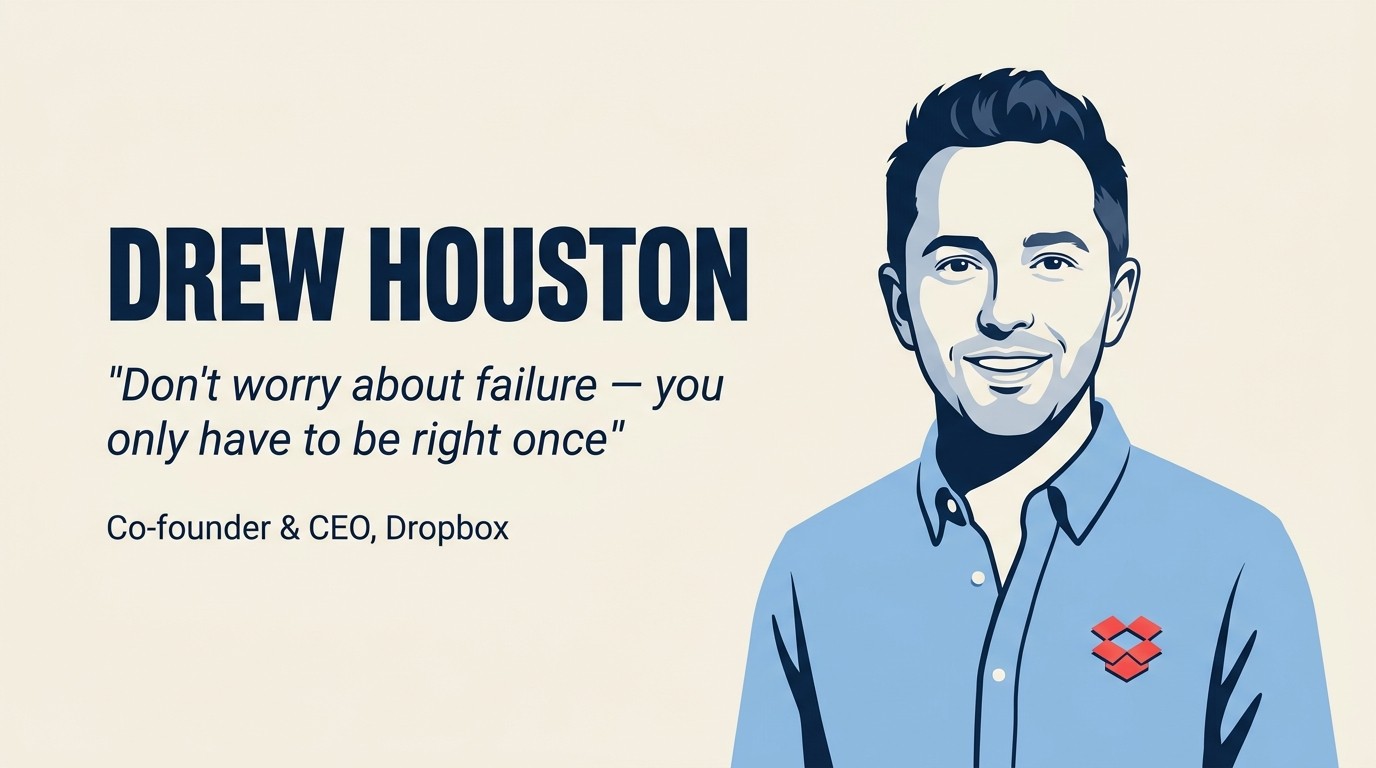
Datos Clave: Drew Houston (nacido en 1983) es un graduado de MIT en EECS que co-fundó Dropbox con Arash Ferdowsi en 2007 después de pasar por Y Combinator. Dropbox salió a Bolsa en marzo de 2018 y alcanzó más de 700 millones de usuarios registrados entre consumidores y empresas. Houston se mantuvo como CEO durante la onda de comoditización del almacenamiento de Google Drive, Microsoft OneDrive y Apple iCloud, e impulsó el pivote de visión "Work In Progress" que reposicionó Dropbox de pura sincronización de archivos a una suite de colaboración que abarca Paper, HelloSign y la capa de IA Dash de 2024.
La Doctrina del Embudo Freemium (Modelo de Pivote Liderado por Producto de Houston)
La Doctrina del Embudo Freemium es el patrón operativo de construir un nivel gratuito viral de consumidor para establecer distribución, luego convertir esa base de usuarios instalada en un producto empresarial pagado cuando el mercado de consumidor se comoditiza. El Modelo de Pivote Liderado por Producto de Houston específicamente significa usar el gráfico de usuarios gratuitos como colateral de distribución — no ingresos — y mover el punto de monetización hacia arriba en la pila hacia colaboración entre equipos, controles administrativos e integración de Workflow una vez que el producto original se convierte en requisito. El movimiento clave es rechazar defender el fondo commoditizado del embudo y reasignar la base de usuarios como cuña para expansión empresarial.
Cuando Steve Jobs llamó a Drew Houston a su oficina y ofreció comprar Dropbox, Houston dijo que no. Jobs supuestamente le dijo que Dropbox era "una característica, no un producto". Luego Google Drive se lanzó en 2012 y regaló 15GB gratis. Microsoft OneDrive ya estaba incluido en Windows. Por cualquier análisis razonable, Dropbox debería haber desaparecido.
En cambio Houston llevó Dropbox a Bolsa en marzo de 2018 con una valuación de primer día de $9 mil millones — y se mantuvo en el puesto de CEO durante 17+ años. Eso no es accidente del timing. Es lo que sucede cuando un fundador con educación de ingeniería del MIT decide ir profundo en empresas en lugar de competir en precios de almacenamiento comoditizado.
Houston nunca intentó superar en características a los hiperescaladores. Apostó en Workflow, colaboración de equipo y el usuario empresarial desatendido que necesitaba más que una carpeta de archivos en la nube. Ese pivote es la verdadera historia de liderazgo de Dropbox, y para operadores enfrentando competidores bien capitalizados, tiene cosas que vale la pena entender cuidadosamente.
Desglose del Estilo de Liderazgo
| Estilo | Peso | Cómo se manifestó |
|---|---|---|
| Fundador con Disciplina de Producto | 55% | Houston construyó Dropbox en un único insight del usuario: sincronizar archivos entre dispositivos estaba roto, y nadie lo había arreglado de una forma que realmente funcionara para personas normales. Mantuvo ese enfoque de producto a través de múltiples rondas de presión competitiva de jugadores con muchos más recursos. Cuando el caso de uso central fue comoditizado por Google y Microsoft, no abandonó el instinto del producto — lo movió hacia arriba en la pila hacia Workflows de equipo y gestión del conocimiento. El pivote de Dash de 2024 continúa ese patrón: Houston sigue preguntándose "qué necesita realmente el trabajador del conocimiento de sus archivos" en lugar de "cómo competimos en precios de almacenamiento". |
| Estratega de Mercado Contrario | 45% | Rechazar la oferta de adquisición de Steve Jobs en 2009 fue una apuesta contraria de que Dropbox podría ser un producto independiente. Pivotar a empresas en 2016 cuando el mercado de consumidor estaba siendo regalado gratis fue una lectura contraria de dónde realmente estaba el valor. Lanzar Dash en 2024 como una capa de búsqueda de conocimiento impulsada por IA fue una apuesta contraria de que el valor de Dropbox no es el almacenamiento — es el índice de todo lo que la gente ha almacenado. Houston ha elegido consistentemente el camino menos obvio cuando el camino obvio conducía a competencia directa con empresas que podían superarlo en gasto. |
La división 55/45 refleja que la base de Houston es disciplina de producto — le importa resolver un problema específico del usuario bien. Pero el contraria estratégico es lo que mantuvo esa disciplina de producto viva cuando el mercado se movió en su contra. Ambos rasgos fueron requeridos. Solo disciplina de producto sin contraria estratégico habría producido una empresa que construyó excelente almacenamiento de consumidor y perdió ante gratis. Solo contraria estratégico sin disciplina de producto habría producido una empresa que pivotó oportunísticamente y nunca construyó una posición defendible en ningún lado.
Rasgos de Liderazgo Clave
| Rasgo | Calificación | Qué significa en la práctica |
|---|---|---|
| Resistencia de fundador de largo plazo | Excepcional | Houston ha sido CEO desde que co-fundó Dropbox con Arash Ferdowsi en 2007. Eso son 17+ años en el puesto a través de Y Combinator, crecimiento hiperagresivo, el shock de Google Drive, el pivote empresarial, un IPO y la era de IA. CEOs fundadores en esta tenencia son raros. Los que lo hacen funcionar tienen que reconstruir su modelo de liderazgo al menos dos veces — una cuando la empresa escala más allá de 500 personas y de nuevo cuando el mercado se desplaza fundamentalmente. Houston ha hecho ambas transiciones sin perder el puesto. |
| Absorción de amenaza competitiva | Muy Alta | Google regalando 15GB de almacenamiento gratis en 2012 era una amenaza existencial. Microsoft incluyendo OneDrive en Windows era una amenaza existencial. Apple expandiendo almacenamiento iCloud era una amenaza existencial. Houston absorbió las tres sin cerrar, hacerse privado o abandonar fundamentalmente el producto. La absorción no fue pasiva — requirió tomar decisiones rápidas sobre qué segmentos de usuario aún valía la pena luchar y cuáles habían sido permanentemente comoditizados. |
| Decisividad de pivote empresarial | Alta | El pivote de Dropbox de almacenamiento de nube consumidor a colaboración de equipo no fue una deriva gradual. Fue una decisión deliberada tomada alrededor de 2016 cuando quedó claro que competir con Google y Microsoft en precios de almacenamiento de consumidor era una guerra que Dropbox no podía ganar a escala. Houston movió el roadmap del producto, el movimiento de ventas y la estructura de precios hacia usuarios empresariales que necesitaban integración de Workflow y características de colaboración de nivel de equipo que el nivel gratuito de Google Drive no proporcionaba. Esa decisividad sobre dónde dejar de competir es tan importante como decidir dónde competir. |
| Convicción de simplicidad del producto | Alta | El insight original de Dropbox — sincronizar archivos simplemente debería funcionar — era una convicción sobre simplicidad. Houston ha llevado esa convicción a través de todos los pivotes de Dropbox. El producto empresarial es más simple de implementar que la mayoría de alternativas gestionadas por IT. Dash está diseñado para hacer que encontrar cosas sea más simple, no para agregar una capa de IA encima de una interfaz compleja. La simplicidad no es una estética de diseño. Es la apuesta del producto de que siempre hay un segmento de usuarios que pagará por lo que funciona claramente sobre lo que hace más. |
Las 3 Decisiones que Definieron a Drew Houston como Líder
1. Rechazar la Oferta de Adquisición de Steve Jobs
Los detalles de la conversación con Jobs han sido relatados en múltiples lugares. En 2009, Dropbox era temprano y estaba creciendo. Jobs ofreció adquirirlo. Houston rechazó. Jobs supuestamente dijo que Dropbox era una característica, no un producto — implicando que Apple u otro jugador de plataforma eventualmente absorbería la funcionalidad y haría que Dropbox independiente fuera irrelevante.
Esa predicción no estaba completamente equivocada. Google, Apple y Microsoft eventualmente construyeron productos competidores. Pero la apuesta de Houston era que "una característica" podría ser un negocio si estaba construida lo suficientemente bien y distribuida ampliamente antes de que las plataformas se movieran. Tenía una ventana estrecha para establecer Dropbox como la solución de sincronización predeterminada entre plataformas (no solo la de Apple), y tomar la adquisición habría cerrado esa ventana.
El insight estratégico en el rechazo no era "podemos vencer a Apple". Era "podemos ser la solución multiplataforma que la adquisición de nosotros por Apple destruiría". La fortaleza temprana de Dropbox era precisamente que funcionaba en cada sistema operativo, cada dispositivo, cada plataforma. Esa neutralidad multiplataforma solo era valiosa como empresa independiente. Dentro de Apple, se habría convertido simplemente en otra característica de iCloud. Brian Chesky enfrentó el mismo cálculo de independencia en Airbnb — permanecer independiente a través de COVID, en lugar de tomar una compra angustiada, preservó el patrimonio de marca que un propietario de plataforma habría absorbido.
La lección de liderazgo: entender el valor único que tu independencia crea es tan importante como entender el valor del negocio en sí. ¿Qué puedes hacer como empresa independiente que tu adquirente más probable no podría hacer contigo dentro de su ecosistema?
2. Sobrevivir a Google Drive y OneDrive Pivotando a Colaboración de Equipo Empresarial
Abril de 2012: Google Drive se lanza con 15GB de almacenamiento gratis, integración de Google Docs y todo el peso de la distribución de Google detrás. Microsoft OneDrive ya estaba dentro de Windows. El crecimiento de consumidor de Dropbox se desaceleró. El nivel gratuito se volvió más difícil de justificar para usuarios que obtenían la misma función incluida con productos que ya poseían.
La respuesta de Houston fue ir donde Google y Microsoft no estaban construyendo cuidadosamente. El mercado de almacenamiento de consumidor gratis estaba perdido. Pero el mercado empresarial, específicamente, el problema de equipos colaborando en archivos entre organizaciones, proyectos y socios externos, no había sido resuelto bien por Google Workspace o Microsoft 365. La fricción de gestionar carpetas compartidas, historial de versiones y permisos de colaborador externo seguía siendo lo suficientemente alta que las empresas estaban dispuestas a pagar por algo que lo manejara mejor.
Dropbox Business se lanzó y evolucionó a través de múltiples iteraciones entre 2013 y 2018. El IPO en marzo de 2018 validó la tesis empresarial: la empresa fue a Bolsa a $9 mil millones a pesar de tener un producto de consumidor que había sido en gran medida comoditizado. Lo que el mercado estaba valorando era la base de suscripción empresarial, no el nivel gratuito de consumidor.
La decisión de pivotar no era obvia. Las métricas de consumidor aún eran grandes. El reconocimiento de marca era alto. Abandonar el mercado de consumidor para enfocarse en empresas significaba ceder algo que Dropbox había construido durante años. Mark Zuckerberg hizo una llamada comparable en Facebook cuando el gráfico social de escritorio se estaba comoditizando — moverse hacia arriba en la pila hacia infraestructura móvil y empresarial en lugar de defender la categoría siendo regalada. Pero Houston hizo la llamada claramente: competir en precios de almacenamiento comoditizado contra empresas con recursos infinitos y distribución incluida no era una lucha que valiera la pena tener. Ir profundo en Workflow empresarial sí lo era.
3. Llevar Dropbox a Bolsa en Marzo de 2018 a Pesar de Ser Llamado un Mercado Comoditizado
Para 2018, la narrativa de medios de tecnología convencional sobre Dropbox era escéptica. La empresa competía en un mercado donde los jugadores principales regalaban el producto principal gratis. No tenía una historia de IA. No estaba creciendo a tasas de tres dígitos que justificaran múltiplos de IPO de tecnología en ese momento. Múltiples analistas sugirieron que la ventana del IPO se estaba cerrando o ya había cerrado para Dropbox.
Houston fue a Bolsa de todas formas. La empresa se cotizó a $21 por acción, abrió a $29 y cerró su primer día a una valuación de $9 mil millones. El IPO de Snap de Evan Spiegel en 2017 ejecutó el mismo ejercicio de construcción de narrativa — llevar la empresa a Bolsa antes de que los escépticos escriban la historia dominante, y usa el IPO mismo para establecer el marco. El IPO funcionó porque Houston tenía una narrativa coherente: Dropbox era una empresa de colaboración empresarial con suscriptores pagando que la usaban para Workflows críticos para el trabajo, no una empresa de almacenamiento de consumidor compitiendo con Google Drive. Ese encuadre se mantuvo a través de la gira de carretera.
La historia posterior al IPO es más complicada. El stock de Dropbox ha comerciado en el rango de $17-30 durante la mayoría de su vida pública, bien por debajo del entusiasmo del IPO y muy por debajo de las valuaciones de empresas de software empresarial de crecimiento más rápido. El crecimiento de ingresos se desaceleró a menos del 10% año tras año para 2023. El producto Paper (edición de documentos colaborativa) nunca encontró la tracción que Dropbox esperaba.
Pero el IPO en sí fue la llamada correcta. Bloqueó la valuación empresarial antes de que el mercado re-calificara a los valores de crecimiento. Proporcionó el capital para desarrollo de producto posterior. Y le dio a Houston la disciplina del mercado público, reportes trimestrales, cobertura de analistas y presión de accionistas que forzó decisiones de priorización de recursos que podría haber diferido como empresa privada.
Qué Haría Drew Houston en Tu Rol
Si eres CEO enfrentando un competidor bien capitalizado, la conversación con Jobs es tu referencia más útil. La respuesta de Houston a "eres una característica, no un producto" no fue probar que Jobs estaba equivocado construyendo más características. Fue encontrar el eje donde Dropbox tenía independencia estructural que una adquisición destruiría, neutralidad multiplataforma, y construir alrededor de eso. ¿Cuál es lo que tu adquirente o competidor más probable no puede hacer contigo dentro de su ecosistema? Eso es tu verdadero posicionamiento de producto.
Si eres COO o líder de operaciones, el pivote empresarial es tu caso de planificación operativa. Houston no solo cambió el posicionamiento del producto, tuvo que reconstruir el movimiento de ventas, la estructura de precios, la infraestructura de soporte y el modelo de éxito del cliente para un comprador empresarial que se comporta completamente diferente de un consumidor freemium. Si tu empresa está haciendo un cambio similar de segmento de mercado, el período de transición operativa es donde fallan la mayoría de los pivotes. ¿Cuál es la fecha exacta cuando dejas de invertir en el movimiento antiguo y comienzas completamente recurso en el nuevo?
Si eres líder de producto, el lanzamiento de Dash en 2024 es la expresión más actual del instinto del producto de Houston. Dropbox ha acumulado años de metadatos de archivos, patrones de uso y gráficos de conocimiento organizacional para sus clientes empresariales. Dash usa esa capa de datos para construir un producto de búsqueda y gestión del conocimiento impulsado por IA. Eso es un producto construido a partir de activos existentes, no una apuesta en campo virgen. ¿Qué sabe tu empresa sobre tus usuarios, de años de uso del producto, que un entrante nuevo no podría replicar? Ese conocimiento institucional es tu base de producto de IA.
Si eres líder de ventas o marketing, el pivote empresarial de Dropbox tiene una lección directa sobre segmentación de clientes. Cuando Google Drive comoditizó el nivel de consumidor, Dropbox no perdió sus clientes empresariales a la misma tasa. El caso de uso empresarial implicaba dependencias de Workflow, controles administrativos y patrones de colaboración que el nivel gratuito de Google Drive no manejaba bien. Ese segmento se mantuvo y pagó. ¿Cuál es el segmento de tu base de clientes actual que tiene las dependencias de Workflow más profundas? ¿Y estás fijando precios para esa dependencia o dejando dinero sobre la mesa tratando a todos los clientes igual?
La Perspectiva de Rework: Crecimiento Liderado por Producto Enfrenta Defensa de Comoditización
El Playbook de Houston de Dropbox se mapea casi perfectamente en el debate moderno de crecimiento liderado por producto: envía un nivel gratuito viral, deja que el uso se componga y convierte a empresas una vez que el eje de consumidor es regalado por hiperescaladores. La parte difícil no es el embudo — es lo que sucede cuando la parte superior del embudo deja de ser defendible. La respuesta de Dropbox fue dejar de vender almacenamiento y comenzar a vender coordinación entre equipos: carpetas compartidas se convirtieron en espacios de equipo, historial de versiones se convirtió en historial de Workflow y el motor de sincronización se convirtió en el sustrato para Paper y Dash.
Ese problema de coordinación entre equipos es donde Rework se sienta. Rework se diferencia unificando CRM, gestión de leads, chat y ejecución de proyectos en un único espacio de trabajo — para que cuando tu propia característica central se comoditice, no estés reconciliando cinco herramientas desconectadas para mantener la capa empresarial unida. Ver precios de Rework — Operaciones de CRM/Ventas desde $12/usuario/mes, Operaciones de Trabajo desde $6/usuario/mes.
Citas Notables y Lecciones Más Allá de la Sala de Juntas
Houston estudió en MIT y ha enmarcado su filosofía de liderazgo en términos de ingeniería: entiende el sistema, encuentra la restricción, arregla la restricción. Patrick Collison en Stripe usa el mismo marco de pensamiento de sistemas — ambos fundadores piensan en cuál es la restricción durable en su categoría realmente, y luego construyen alrededor de quitarla en lugar de optimizar alrededor de ella. Cuando la restricción era distribución de consumidor, Dropbox usaba programas de referencia viral. Cuando la restricción era movimiento de ventas empresariales, Dropbox construyó un equipo de ventas directas. Cuando la restricción se convirtió en descubribilidad de IA de archivos, lanzó Dash.
Ha dicho en entrevistas: "Lo más importante para nosotros fue descubrir quiénes realmente somos. No intentar ser Google o Apple. Intentar hacer la cosa específica que hacemos mejor que nadie." Eso es una articulación clara de la lógica de posicionamiento competitivo detrás de todos los pivotes principales de Dropbox: dejar de competir donde perderás, ir profundo en la cosa específica donde puedes ser la mejor opción.
La historia más difícil en el registro público de Dropbox es lo que el rendimiento del stock revela sobre dimensionamiento de mercado. La tesis empresarial de Houston es sólida. Los usuarios empresariales que confían en Dropbox realmente confían en él. Pero el mercado total direccionable para los problemas específicos de Workflow que Dropbox resuelve es más pequeño que la categoría general de "almacenamiento en la nube" sugerida en el IPO. El crecimiento de ingresos se desacelera a dígitos simples con una valuación de $9 mil millones implica que el mercado ha fijado el precio en expansión limitada desde aquí. Dash es la apuesta de Houston de que la capa de gestión del conocimiento de IA abre una categoría más grande. Si esa apuesta paga es aún abierto.
Dónde Este Estilo Falla
El modelo de fundador como CEO de Houston durante 17+ años ha producido durabilidad pero también escala organizacional limitada. Dropbox nunca creció dentro de una empresa multiproducto a la escala que su valuación de IPO sugirió. La misma disciplina que la mantuvo viva contra Google y Microsoft también limitó sus ambiciones. Paper falló y otros productos adyacentes no alcanzaron velocidad de escape. Para operadores construyendo en mercados de ganador se lo lleva todo, el juego "ve profundo en el usuario empresarial desatendido" de Houston solo funciona si el segmento objetivo es lo suficientemente grande para mantener el negocio independientemente. La desaceleración del crecimiento de Dropbox es la respuesta empírica de cuán grande era realmente ese segmento.
Preguntas Frecuentes sobre el Liderazgo de Drew Houston
¿Quién es Drew Houston?
Drew Houston (nacido en 1983) es el co-fundador y CEO de Dropbox, un graduado de MIT en EECS que construyó la empresa con Arash Ferdowsi en 2007 después de pasar por Y Combinator. Ha mantenido el puesto de CEO a través del IPO de Dropbox en marzo de 2018 y el pivote de IA Dash de 2024, haciendo crecer la plataforma a más de 700 millones de usuarios registrados.
¿Cómo creció Dropbox tan rápido en los primeros años?
Dropbox creció a través de un embudo freemium clásico: un producto gratuito genuino de consumidor emparejado con un programa de referencia de doble cara que dio almacenamiento bonus tanto al invitador como al invitado. Ese ciclo viral llevó a la empresa de Y Combinator a decenas de millones de usuarios sin un presupuesto de marketing tradicional, y construyó la base instalada que más tarde se convirtió en la cuña de distribución para Dropbox Business.
¿Cómo sobrevivió Dropbox a la comoditización del almacenamiento?
Dropbox sobrevivió rechazando defender el nivel de almacenamiento de consumidor una vez que Google Drive se lanzó en abril de 2012 con 15GB gratis y Microsoft incluyó OneDrive en Windows. Houston redirigió el roadmap hacia colaboración de equipo empresarial, controles administrativos e integración de Workflow — la capa que los niveles gratuitos de hiperescalador no manejaban bien — y construyó el pivote de visión "Work In Progress" en una suite de colaboración pagada que abarca Paper, HelloSign y finalmente Dash.
¿Por qué Dropbox salió a Bolsa vs vender a Apple?
Houston ya había rechazado la oferta de adquisición de Steve Jobs alrededor de 2009 porque la neutralidad multiplataforma de Dropbox — funcionando en cada SO y dispositivo — solo era valiosa como empresa independiente. Para 2018 la base de suscripción empresarial era lo suficientemente fuerte para valorar una empresa pública independiente, y Houston llevó Dropbox a Bolsa en marzo de 2018 para bloquear esa narrativa empresarial y financiar la próxima onda de expansión de producto en lugar de plegarse al propietario de una plataforma.
¿Cuál es la filosofía de liderazgo de Houston?
Houston piensa como un ingeniero del MIT: entiende el sistema, encuentra la restricción real y arreglala en lugar de optimizar alrededor de ella. Lo ha enmarcado como descubrir "quiénes realmente somos" en lugar de intentar ser Google o Apple — manteniendo disciplina de producto en el problema específico que Dropbox resuelve mientras hace llamadas estratégicas contrarias sobre dónde dejar de competir. La mezcla es aproximadamente 55% fundador con disciplina de producto, 45% estratega de mercado contrario.
¿Qué pueden aprender los fundadores de SaaS de Drew Houston?
Tres lecciones. Primero, un embudo freemium es colateral de distribución, no un modelo de negocio — planifica para el día que tu nivel gratuito es comoditizado por un hiperescalador. Segundo, mueve el punto de monetización hacia arriba en la pila antes de que te obliguen: Workflow de equipo, controles administrativos y coordinación entre equipos todos duran más que paridad de una sola característica. Tercero, la continuidad del fundador importa en momentos de pivote — el mismo operador que construyó la cuña original es usualmente el que puede reposicionar creíblemente la empresa cuando el mercado se desplaza.

On this page
- La Doctrina del Embudo Freemium (Modelo de Pivote Liderado por Producto de Houston)
- Desglose del Estilo de Liderazgo
- Rasgos de Liderazgo Clave
- Las 3 Decisiones que Definieron a Drew Houston como Líder
- 1. Rechazar la Oferta de Adquisición de Steve Jobs
- 2. Sobrevivir a Google Drive y OneDrive Pivotando a Colaboración de Equipo Empresarial
- 3. Llevar Dropbox a Bolsa en Marzo de 2018 a Pesar de Ser Llamado un Mercado Comoditizado
- Qué Haría Drew Houston en Tu Rol
- La Perspectiva de Rework: Crecimiento Liderado por Producto Enfrenta Defensa de Comoditización
- Citas Notables y Lecciones Más Allá de la Sala de Juntas
- Dónde Este Estilo Falla