Estilo de Liderazgo de Nelson Mandela: Reconciliación como Estrategia y el Largo Juego de la Autoridad Moral
Turn this article into takeaways for your work.


Each assistant summarizes the article only for you and suggests best practices for your work.
Datos Clave
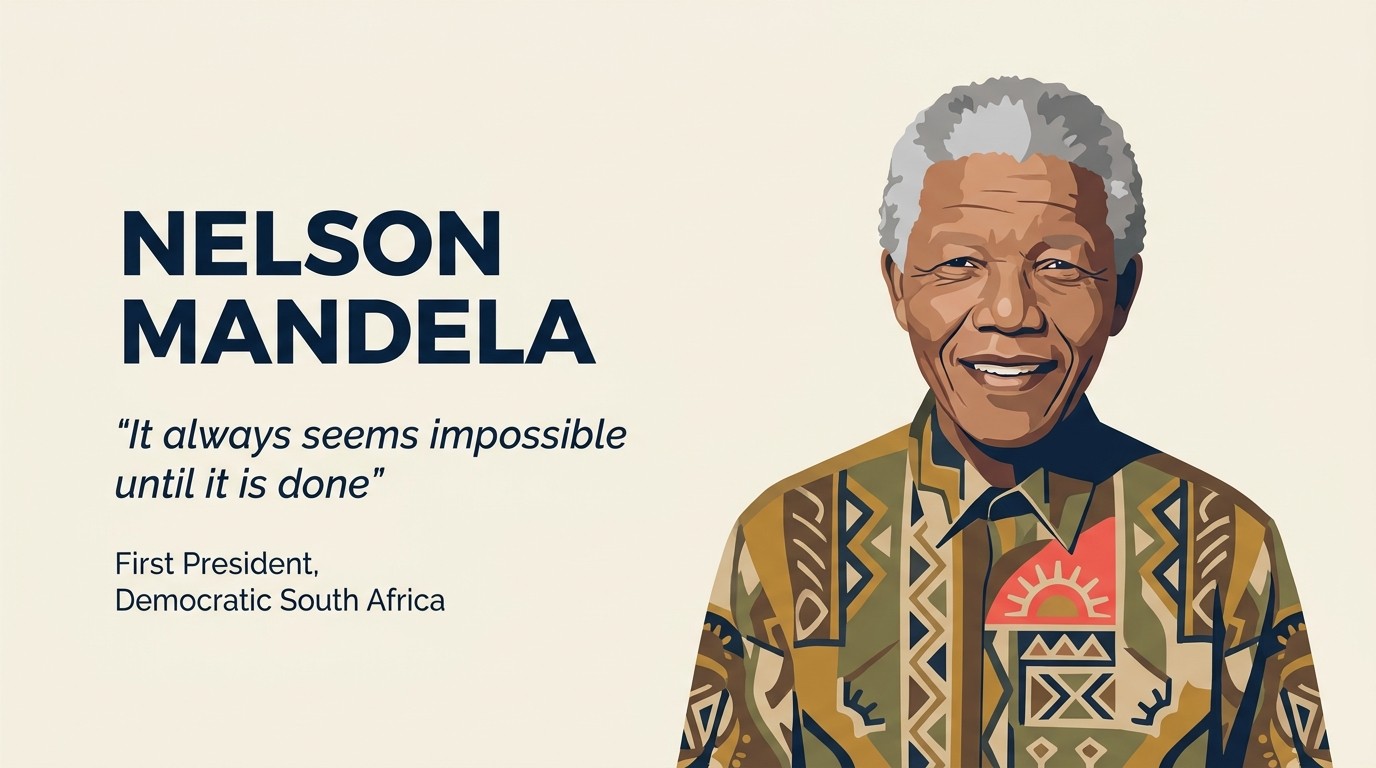
- Nació: 18 de julio de 1918, Mvezo, Sudáfrica — Murió: 5 de diciembre de 2013, Johannesburgo (edad 95)
- Encarcelado por 27 años (1962–1990) — 18 en la Isla Robben, 9 en Pollsmoor, meses finales en Victor Verster
- Co-fundó la Liga de la Juventud del ANC (1944) y posteriormente Umkhonto we Sizwe, el brazo armado del ANC (1961)
- Primer presidente negro de Sudáfrica, 1994–1999, elegido en la primera elección completamente democrática del país
- Arquitecto del fin del apartheid a través de las negociaciones CODESA con F.W. de Klerk
- Premio Nobel de la Paz en 1993, compartido con de Klerk
- "Long Walk to Freedom" — autobiografía publicada en 1995, comenzada en secreto en la Isla Robben
- Arquitecto de la Comisión de la Verdad y Reconciliación (1995), presidida por el Arzobispo Desmond Tutu
- Se retiró voluntariamente después de un mandato en 1999 para establecer la norma democrática
La Doctrina de la Reconciliación (El Modelo Mandela de Largo Plazo)
La Doctrina de la Reconciliación
La Doctrina de la Reconciliación es la disciplina de liderazgo de rehusar el poder retributivo incluso cuando lo has ganado, e inmediatamente usar la autoridad moral para convertir adversarios anteriores en partes interesadas duraderas del sistema que estás intentando construir. Trata el perdón no como un sentimiento sino como una estrategia — el cálculo de que una institución funcional compartida supera a una depurada en un horizonte de 20 años, incluso cuando una purga es personalmente e históricamente justificada. La versión de Mandela requería décadas de restricción visible bajo presión, porque la doctrina solamente funciona cuando el líder que la practica no puede ser plausiblemente acusado de debilidad.
Nelson Mandela fue condenado a cadena perpetua en junio de 1964 a los 45 años por sabotaje y conspiración para derrocar el gobierno. Fue llevado a la Isla Robben, donde pasaría los siguientes 18 años extrayendo piedra caliza en un pequeño patio y durmiendo en una celda de 8 por 7 pies. Pasó los siguientes 9 años en la Prisión Pollsmoor en Ciudad del Cabo, y los últimos 14 meses de su encarcelamiento en Victor Verster, una instalación de seguridad mínima donde comenzó las negociaciones que terminarían el apartheid.
Salió el 11 de febrero de 1990 a los 71 años. Las cámaras capturaron su puño levantado, Winnie a su lado, y un rostro que no mostraba amargura visible hacia el gobierno que lo había encarcelado por 27 años. Ya sea que esa compostura fue genuina o representada — y casi ciertamente fue ambas — fue el acto de liderazgo más cuidadosamente considerado de su vida. Toda la transición que siguió dependía de eso.
Compartió el Premio Nobel de la Paz con F.W. de Klerk en 1993. Se convirtió en el primer presidente democráticamente elegido de Sudáfrica en mayo de 1994. Sirvió un término de cinco años, por su propia elección, y se retiró en junio de 1999. Tenía 80 años y era la persona más poderosa y más amada del país.
La reducción voluntaria de ese poder, a los 80, después de 27 años en prisión, con el capital político para haberse quedado indefinidamente, es genuinamente más rara que cualquier cosa en un resume profesional. Y fue un acto estratégico, no solo virtualmente. Abraham Lincoln hizo una opción comparable de mantener la posición moral larga bajo presión máxima — su negativa a suavizar la posición de la Unión sobre la esclavitud incluso cuando la elección de 1864 parecía ineludible es el paralelo estadounidense más cercano al tipo de paciencia principiada que Mandela practicó durante décadas.
Desglose del Estilo de Liderazgo
| Estilo | Peso | Cómo se manifestó |
|---|---|---|
| Líder de Autoridad Moral | 55% | El poder político completo de Mandela después de 1990 descansaba en lo que había soportado y cómo había respondido a eso. No había escapado de prisión, no había sido liberado por razones de compasión, no había hecho un trato que comprometiera sus principios. Había cumplido la sentencia completa, mantenido su posición, y salido intacto. Esa autoridad moral fue el activo central de cada negociación, cada posicionamiento político, y cada comunicación pública que hizo durante los siguientes 23 años. La gastó cuidadosamente. |
| Reconciliador Estratégico | 45% | La reconciliación no fue el instinto natural de Mandela — había co-fundado el brazo armado del ANC en 1961 y pasó años comprometido con la lucha armada contra el apartheid. La reconciliación fue su conclusión estratégica: que la transición de Sudáfrica requería suficiente apoyo de la minoría blanca para prevenir fuga de capital, colapso institucional y conflicto civil. Eligió la reconciliación porque la alternativa — la purga o la subordinación permanente de la minoría blanca — habría producido un país que ni el ANC ni sus partidarios podrían gobernar. |
La división 55/45 refleja la secuencia. La autoridad moral hizo que la reconciliación fuera creíble. Si Mandela hubiera salido de prisión amargado o transaccional, sus llamados a la reconciliación habrían sido leídos como debilidad o estrategia por sudafricanos negros y como manipulación por los blancos. La autoridad moral ganada durante 27 años de encarcelamiento dio a su posición de reconciliación el único peso que podría haber tenido.
Rasgos de Liderazgo Clave
| Rasgo | Calificación | Qué significa en la práctica |
|---|---|---|
| Pensamiento a largo plazo que trascendía la ofensa personal | Excepcional | Mandela pasó 27 años en prisión por oponerse al apartheid. Tenía más justificación personal para el pensamiento punitivo que casi cualquier otro líder en la historia moderna. Su elección de enmarcar la transición como reconciliación en lugar de retribución no fue debilidad moral — fue un cálculo preciso de que la política punitiva destruiría el país que intentaba construir. Ese cálculo requería mantener el resultado a largo plazo (un Sudáfrica democrática, funcional y estable) como más importante que el deseo personalmente e históricamente legítimo de justicia. Muy pocos líderes en cualquier nivel pueden sostener ese intercambio. |
| Negociación desde una posición de superioridad moral ganada | Muy Alta | La posición negociadora de Mandela con de Klerk no se basaba en paridad militar — la capacidad armada del ANC era limitada y las fuerzas de seguridad sudafricanas estaban intactas. Su posición se basaba en la ilegitimidad global del apartheid y su posición personal como una figura que había sido encarcelada en lugar de comprometida. Podía entrar en esas negociaciones como la única parte que no necesitaba defender su conducta. Esa es una forma específica de uso que solo puede ser creada por cómo te comportas durante un período muy largo. |
| Construcción de instituciones sobre legado personal | Alta | La decisión de un único mandato de Mandela fue explícitamente diseñada para establecer una norma constitucional. Entendía que el gobierno post-apartheid del ANC enfrentaría tentaciones enormes hacia la acumulación de poder partidista, y que la única manera de establecer el precedente de que los líderes democráticos se van cuando su mandato termina era que él — la persona con el mayor capital político y la mayor justificación para quedarse — se fuera primero. Estaba construyendo la institución que quería que existiera, no el legado que llevaría su nombre. |
| Mantener contradicciones simultáneamente | Alta | Mandela era una realeza Xhosa y un activista del ANC influenciado por el marxismo. Era un abogado que organizó una campaña de sabotaje armado. Era un negociador de paz que nunca había renunciado a la violencia como herramienta política en principio. Era un reconciliador que había sido radicalizado por la respuesta del estado sudafricano a la resistencia no violenta. No resolvió estas contradicciones eligiendo una — las mantuvo y usó cada una donde era necesaria. Esa es una forma de flexibilidad cognitiva y política que es sumamente difícil de mantener sin traicionar tus principios o perder tu credibilidad. |
Las 3 Decisiones Que Definieron a Mandela como Líder
1. Rehusando Ofertas de Liberación Condicional del Gobierno Botha en los Años 80
En 1985, el Presidente sudafricano P.W. Botha le ofreció a Mandela liberación condicional: podía salir de la prisión si renunciaba a la lucha armada y aceptaba los bantustanes como marco político legítimo. No era una oferta trivial. Mandela había estado en prisión durante 21 años. Tenía 67 años. Su salud había sido afectada por la extracción de piedra caliza y las condiciones húmedas en la Isla Robben. Y su esposa Winnie enfrentaba una presión personal y política significativa en su ausencia.
Rehusó. Dictó su respuesta, que su hija Zindzi leyó públicamente en un mitin masivo en Soweto: "No soy un hombre violento... Fue solamente entonces, cuando todas las otras formas de resistencia ya no nos estaban disponibles, que recurrimos a la lucha armada." Rechazó la liberación condicional como una concesión que habría reducido su posición política a cambio de su libertad personal.
Esa negativa es más difícil de lo que parece desde una distancia de 40 años. Mandela no estaba esperando un trato mejor en una negociación que controlaba. Estaba haciendo un compromiso indefinido de permanecer encarcelado en la apuesta de que el estado del apartheid eventualmente no tendría más opción que liberarlo en términos que preservaran su posición. Tenía razón, pero no podría haber sabido que tenía razón en 1985. Operaba en una teoría política sobre la insostenibilidad a largo plazo del apartheid en lugar de sobre pruebas visibles de que los términos de liberación mejorarían.
La lección de liderazgo es sobre la relación entre costo personal e influencia negociadora. Cada concesión que Mandela no hizo, cada liberación condicional que rechazó, cada declaración desavuyendo la lucha armada que no dio, se sumó a la autoridad moral que hizo que su liberación incondicional en 1990 fuera políticamente necesaria para el gobierno del apartheid en lugar de meramente conveniente. Su disposición a permanecer encarcelado fue el mecanismo por el cual la posición del estado del apartheid se convirtió en insostenible. No puedes fabricar ese tipo de influencia. Solo puedes preservarlo rehusando comercializarlo por alivio inmediato.
2. Aceptando a F.W. de Klerk y Negociando la Transición en Lugar de Exigir Rendición Incondicional
Cuando de Klerk liberó a Mandela el 11 de febrero de 1990, y levantó la prohibición sobre el ANC, la situación política podría haber ido en varias direcciones. El ANC tenía apoyo internacional, movimiento interno en crecimiento, y presión económica por sanciones pesando sobre el estado del apartheid. Una posición maximalista (exigir rendición incondicional antes de cualquier negociación) fue políticamente disponible e históricamente justificable.
Mandela no la tomó. Se involucró con de Klerk como socio negociador y compartió el Premio Nobel de la Paz de 1993 con él, a pesar de objeciones específicas y legítimas de que de Klerk había supervisado violencia estatal continua contra miembros del ANC durante el período de transición. Winston Churchill proporciona un contraste instructivo — una voz moral que no podía hacer la transición del liderazgo en tiempos de guerra a asociación en tiempos de paz, mientras que Mandela manejó exactamente ese cambio. Lee Kuan Yew construyó Singapur de una ciudad-estado del tercer mundo a una economía del primer mundo usando una mezcla comparable de pensamiento institucional a largo plazo y disposición a subordinar ideología personal a resultados pragmáticos.
Su razonamiento fue característicamente estratégico. La minoría blanca controlaba la economía, las fuerzas de seguridad, e infraestructura institucional del país. Una transición que los dejara sintiéndose forzados hacia afuera en lugar de que participaran en un acuerdo negociado produciría fuga de capital, sabotaje institucional, e intervención militar potencial que dejaría a cualquier gobierno del ANC sin estado funcional para gobernar. Mandela los necesitaba. Necesitaba su cooperación, su pericia profesional, y su inversión continua en el futuro económico del país.
El Premio Nobel compartido fue el símbolo más visible de una postura negociadora que consistentemente priorizó la durabilidad de la transición sobre su completitud simbólica. Aceptó que de Klerk obtuviera crédito que no había ganado completamente para hacer de la transición un proyecto conjunto que la minoría blanca pudiera reivindicar. Esa es una forma específica de generosidad estratégica (dar crédito para crear la inversión que el crédito implica) que es sumamente difícil de practicar cuando la justificación personal e histórica para ocultarlo es tan fuerte.
3. Retirándose Después de un Único Mandato Presidencial en 1999
Mandela fue elegido el primer presidente democrático de Sudáfrica en mayo de 1994 a los 75 años. Sirvió un único mandato de cinco años. En 1999, a los 80, eligió no buscar reelección.
Esto no fue constitucionalmente requerido en el momento en que hizo pública la decisión. La constitución sudafricana permitía dos mandatos, y Mandela podría haber presentado su candidatura nuevamente. Eligió no hacerlo.
Su razonamiento declarado fue sobre la institución, no sobre sí mismo. Había observado a otras naciones africanas recién independientes desarrollar gobierno de culto de la personalidad en el cual el líder fundador se quedaba hasta muerte o golpe de estado, previniendo el desarrollo de capacidad institucional independiente. También había observado al ANC — el movimiento al cual había dado su vida adulta — comenzar a desarrollar patrones de patronazgo que su propia presencia parcialmente contenía. Quedarse habría mantenido esos patrones manejables durante otros cinco años mientras los empeoraba a largo plazo, porque la capacidad institucional para gobernar sin él nunca se desarrollaría.
Así que se fue. Entregó el poder a Thabo Mbeki, regresó a su casa en Qunu en el Cabo Oriental, y pasó los últimos 14 años de su vida como un símbolo global en lugar de un jefe de estado en funciones.
La decisión es significativa porque requería que Mandela creyera que la institución de la transición democrática era más importante que su propio juicio sobre lo que Sudáfrica necesitaba. Podría haber estado en lo correcto de que Mbeki era el sucesor equivocado. El negacionismo del SIDA de Mbeki solo costó cientos de miles de vidas sudafricanas. Pero la norma de que los líderes poderosos se van cuando su mandato termina fue más importante que cualquier único mandato presidencial, incluyendo el suyo. Hizo el cálculo y aceptó el costo.
Qué Haría Mandela en Tu Rol
Si eres CEO, su playbook te dice que identifiques qué estás construyendo que necesita sobrevivirte, y luego tomes decisiones que protejan la durabilidad de esa institución sobre decisiones que maximicen tu impacto personal en ella. La elección de único mandato de Mandela redujo su contribución personal al gobierno de Sudáfrica por cinco años a cambio de establecer la norma constitucional que hizo de la transición democrática la expectativa predeterminada. ¿Qué decisiones estás tomando que son óptimas para tu mandato pero estructuralmente dañinas para la organización que eventualmente dejarás?
Si eres COO, su playbook te dice que la autoridad moral es un activo operacional. Cuando Mandela entró en negociaciones con de Klerk, su influencia no era militar ni económica, era la ilegitimidad global del gobierno contra el cual estaba negociando y la naturaleza incuestionable de su propia conducta durante 27 años. En términos organizacionales: el COO que ha consistentemente tomado decisiones en favor del todo en lugar de su propio avance puede hacer peticiones y emitir directivas que una contraparida menos confiable no podría. La autoridad moral no es suave. Es la forma más dura de influencia operacional de construir y la más durable.
Si eres líder de producto, su playbook te dice que secuencies tus decisiones de producto para mantener coalición. Mandela mantuvo a de Klerk involucrado, mantuvo a la minoría blanca invertida en el resultado de la transición, y mantuvo a observadores internacionales comprometidos enmarcando cada paso como progreso compartido en lugar de victoria del ANC. En términos de producto: los partes interesadas que sienten que tuvieron agencia en un cambio de producto importante lo defenderán cuando esté bajo presión. Los que sienten que se les hizo lo socavarán. Construye las decisiones de producto que crean la inversión que necesitas para ejecutarlas.
Si trabajas en ventas o marketing, el modelo de generosidad estratégica se aplica directamente. Mandela le dio a de Klerk crédito que no había ganado completamente para hacer de la participación de la minoría blanca en la transición un asunto de orgullo en lugar de necesidad. En ventas: cuando estás cerrando un trato que requirió concesiones significativas, encuentra el marco que hace que las concesiones se vean como la perspicacia estratégica del comprador en lugar de tu debilidad negociadora. Dale crédito por la estructura del trato que sirve a ambas partes. Defenderán el trato cuando sus escépticos internos lo cuestionen.
Cómo Rework Apoya la Reconstrucción Post-Conflicto y el Liderazgo de Horizonte Largo
El desafío de Mandela después de 1994 no fue adquisición — fue reintegración. La parte difícil del liderazgo rara vez es el momento decisivo; es reconstruir después de una fractura para que las personas que estaban en lados opuestos puedan trabajar en el mismo roadmap sin relitigar la última guerra en cada standup. La mayoría de los equipos ejecutivos cargan una versión de esta cicatriz: la fusión que nunca se integró verdaderamente, la reorganización que dejó dos culturas, el fundador que se fue cuya facción aún resiente al sucesor. La fricción es real y se compone silenciosamente en entregas perdidas, trabajo duplicado, y veto silencioso.
Rework fue construido para ese tipo de trabajo durable y transfuncional en lugar de para proyectos pesados en personal. Pipelines compartidos, propiedad transparente en tratos y tareas, y chat que permanece vinculado al trabajo mismo reducen la superficie del "él dijo, ella dijo" donde viven antiguas quejas. Cuando ventas, operaciones, y marketing pueden ver el mismo registro de lo que fue prometido y lo que se entregó, la reconciliación deja de ser un deck de cultura y se convierte en un predeterminado operacional. Ese es el largo juego — instituciones que sobreviven la reputación del fundador, porque el trabajo ha sido hecho lo suficientemente legible para confiar.
Citas Notables y Lecciones Más Allá de la Sala de Juntas
"He luchado contra la dominación blanca, y he luchado contra la dominación negra. He apreciado el ideal de una sociedad democrática y libre en la cual todas las personas viven juntas en armonía y con oportunidades iguales. Es un ideal por el cual espero vivir y lograr. Pero si es necesario, es un ideal por el cual estoy preparado para morir." Juicio de Rivonia, 20 de abril de 1964. Dijo estas palabras al final de su testimonio, sabiendo que la acusación buscaba la pena de muerte. La declaración fue construida de modo que no pudiera ser usada en su contra, simultáneamente reconoció su conducta y la basó en principios democráticos que sus acusadores tendrían dificultad en oponerse públicamente. Había trabajado en ella durante semanas con su equipo legal. Convicción y cálculo, operando simultáneamente.
En "Long Walk to Freedom", su autobiografía de 1994, escribió: "Aprendí que el valor no era la ausencia de miedo, sino el triunfo sobre él. El hombre valiente no es quien no siente miedo, sino quien conquista ese miedo." Lo escribió sobre su propia experiencia de miedo durante los años más difíciles del encarcelamiento. Pero tiene validez para cualquiera navegando una decisión organizacional difícil: el objetivo no es no sentir el costo de la decisión. Es tomar la decisión de todas formas.
Usó la Copa Mundial de Rugby de 1995, ganada por Sudáfrica en casa, como instrumento de unidad nacional de una manera que desde entonces ha sido estudiada en programas de liderazgo mundialmente. Usó la camiseta Springbok, el símbolo de identidad deportiva sudafricana blanca, cuando presentó el trofeo al capitán Francois Pienaar. Fue un gesto calculado: lo suficientemente costoso para importar a la minoría blanca, lo suficientemente pequeño para costarle a Mandela casi nada con su propia base. Esa es precisión en liderazgo simbólico, entendiendo exactamente qué va a costar un gesto y exactamente qué va a producir.
Dónde Este Estilo Se Rompe
El enfoque de reconciliación de Mandela fue correcto sobre lo que la transición requería e incompleto sobre lo que el gobierno requería después. No paró, y posiblemente no podría haber parado, las prácticas de cadre deployment del ANC, que durante las siguientes dos décadas reemplazaron sistemáticamente funcionarios civiles competentes con miembros del partido leales, eventualmente produciendo el colapso de gobierno bajo Zuma que revirtió muchas de las ganancias de la transición.
La autoridad moral no se transfiere a sucesores. La disciplina y la restricción que Mandela personalmente modeló, el único mandato, la coalición-construcción con de Klerk, el gasto cuidadoso de capital político, requirieron un tipo de carácter individual que no podía ser institucionalizado. Mbeki tenía el marco intelectual sin la autoridad moral. Zuma no tenía ninguno. Liderar a través de símbolos funciona en momentos fundacionales y falla como modelo de gobierno cuando el símbolo se ha ido.
Y el único mandato voluntario, aunque institucionalmente correcto, requería un nivel de subordinación del ego al propósito institucional que casi ningún líder puede practicar consistentemente. El modelo asume que las personas que siguen pueden ser confiadas para mantener la institución que has construido. Mandela hizo esa apuesta en el ANC y perdió. Eso no es un fracaso de su liderazgo, es el límite irreducible de lo que cualquier líder individual puede lograr a través del diseño institucional cuando el futuro de la institución depende de sucesores que no pueden controlar.
Preguntas Frecuentes Sobre el Liderazgo de Nelson Mandela
¿Quién fue Nelson Mandela?
Nelson Mandela (1918–2013) fue un activista anti-apartheid sudafricano, abogado, y prisionero político quien se convirtió en el primer presidente democráticamente elegido y negro de Sudáfrica, sirviendo de 1994 a 1999. Co-fundó la Liga de la Juventud del ANC en 1944, fue encarcelado por 27 años, y compartió el Premio Nobel de la Paz de 1993 con F.W. de Klerk por desmantelar pacíficamente el apartheid.
¿Cómo terminó Mandela el apartheid?
Mandela terminó el apartheid a través de transición negociada en lugar de victoria militar. Después de su liberación en 1990, él y F.W. de Klerk encabezaron las conversaciones CODESA que desmantelaron leyes del apartheid, legalizaron el ANC, y produjeron la primera elección multirracial de Sudáfrica en abril de 1994. Su disposición a negociar en lugar de exigir rendición incondicional mantuvo a la minoría blanca invertida en la transición y previno fuga de capital y colapso institucional.
¿Qué significaba reconciliación para Mandela?
Para Mandela, la reconciliación fue un cálculo estratégico, no perdón sentimental. Concluyó que una Sudáfrica post-apartheid solo podía funcionar si la minoría blanca — que controlaba la economía, fuerzas de seguridad, y clase profesional — participaba en el nuevo estado en lugar de huir o sabotearlo. La reconciliación significaba comercializar justicia retributiva por propiedad compartida de una democracia funcional, en la apuesta de que el resultado a largo plazo justificaba el costo moral.
¿Qué es la Comisión de la Verdad y Reconciliación?
La Comisión de la Verdad y Reconciliación (TRC) fue establecida en 1995 bajo la presidencia de Mandela y presidida por el Arzobispo Desmond Tutu. Ofreció amnistía condicional a perpetradores de violencia de la era del apartheid — de fuerzas estatales y movimientos de liberación — a cambio de divulgación pública completa de sus actos. El objetivo fue documentar la verdad en el registro en lugar de procesar, para que el país pudiera reconstruirse sin un encubrimiento o un ciclo de juicio estilo Nuremberg.
¿Por qué fue Mandela encarcelado por 27 años?
Mandela fue arrestado en 1962 y condenado en el Juicio de Rivonia de 1964 en cargos de sabotaje y conspiración para derrocar el estado del apartheid, después de co-fundar Umkhonto we Sizwe, el brazo armado del ANC. Fue condenado a cadena perpetua y pasó 18 años en la Isla Robben, 9 en la Prisión Pollsmoor, y sus últimos meses en Victor Verster. Rechazó múltiples ofertas de liberación condicional — incluyendo una de P.W. Botha en 1985 — porque las condiciones habría reducido su posición política.
¿Qué pueden aprender los líderes modernos de Mandela?
Los líderes modernos pueden aprender cuatro cosas: la autoridad moral es un activo operacional construido por décadas de comportamiento consistente; la generosidad estratégica hacia adversarios crea coaliciones duraderas que la fuerza no puede; el límite voluntario en tu propio poder es frecuentemente la decisión institucional más importante que harás; y los resultados de horizonte largo a veces requieren aceptar intercambios personalmente insatisfactorios — renunciar a retribución o crédito — para que la institución que estás construyendo pueda sobrevivirte.
Aprende Más

On this page
- Datos Clave
- La Doctrina de la Reconciliación (El Modelo Mandela de Largo Plazo)
- La Doctrina de la Reconciliación
- Desglose del Estilo de Liderazgo
- Rasgos de Liderazgo Clave
- Las 3 Decisiones Que Definieron a Mandela como Líder
- 1. Rehusando Ofertas de Liberación Condicional del Gobierno Botha en los Años 80
- 2. Aceptando a F.W. de Klerk y Negociando la Transición en Lugar de Exigir Rendición Incondicional
- 3. Retirándose Después de un Único Mandato Presidencial en 1999
- Qué Haría Mandela en Tu Rol
- Cómo Rework Apoya la Reconstrucción Post-Conflicto y el Liderazgo de Horizonte Largo
- Citas Notables y Lecciones Más Allá de la Sala de Juntas
- Dónde Este Estilo Se Rompe
- Aprende Más