Estilo de Liderazgo de Ruth Porat: La Operadora Detrás del Telón
Turn this article into takeaways for your work.


Each assistant summarizes the article only for you and suggests best practices for your work.
Datos Clave — Ruth Porat de un Vistazo
- Nacida: 1957 (Sale, Cheshire, Reino Unido; criada en Palo Alto, California)
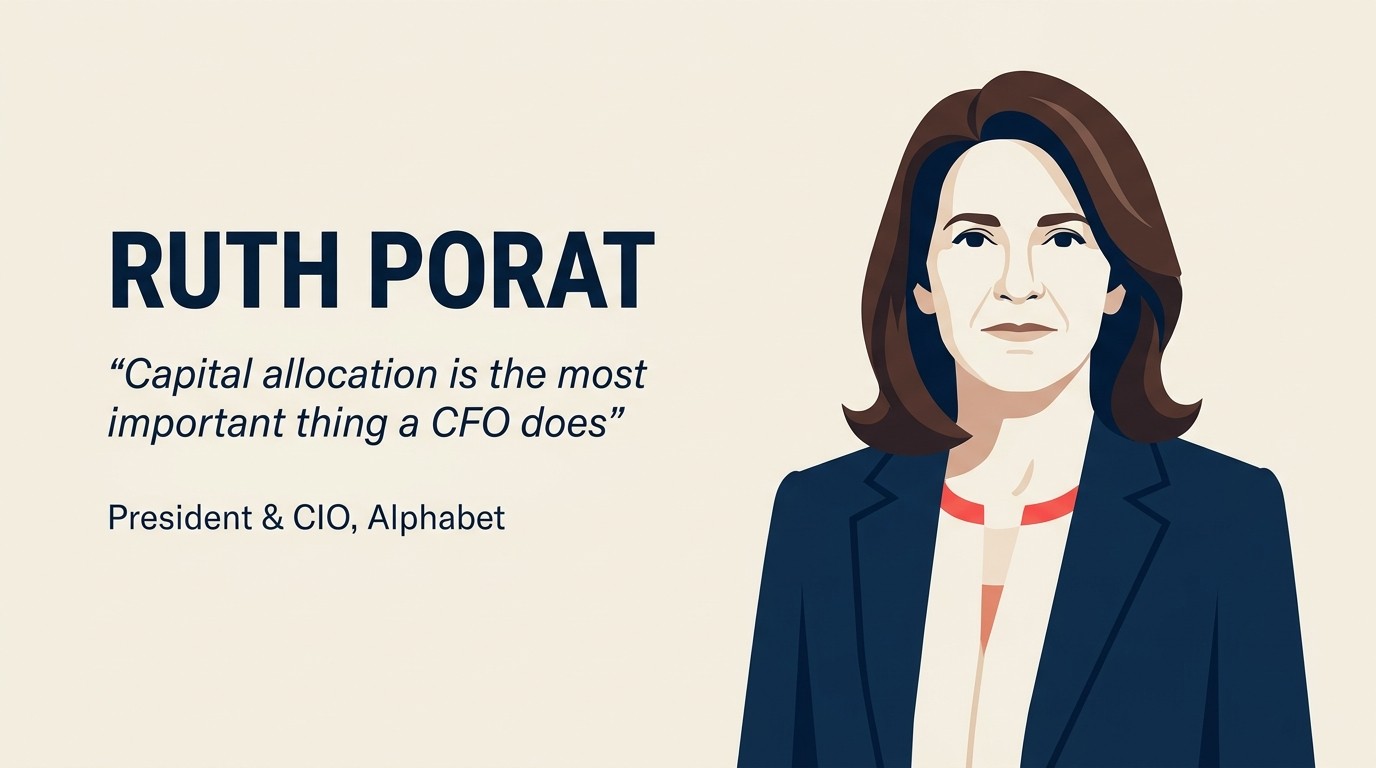
- Cargo: Presidenta y Chief Investment Officer, Alphabet (desde 2023); CFO de Google/Alphabet 2015-2023
- Cargo anterior: CFO de Morgan Stanley (2010-2015) — lideró la recapitalización de la empresa tras la crisis
- Trayectoria previa: 27 años en Morgan Stanley, incluido el cargo de Vicepresidenta de Banca de Inversión; antes de eso, analista en Smith Barney
- Educación: B.A. Universidad de Stanford, M.Sc. London School of Economics, MBA Wharton
- Movimiento distintivo: Diseñó la reestructuración de Alphabet en 2015 como holding y la presentación de reportes del segmento Other Bets
- Filosofía de capital: La "regla del 30%" — los gastos operativos no deben crecer más de ~30% de la tasa de crecimiento de ingresos en segmentos maduros
- Contexto personal: Sobreviviente de cáncer en tres ocasiones (cáncer de mama, 2001-2013); habló abiertamente sobre su tratamiento durante su mandato como CFO
- Paquete de contratación: ~$70 millones en efectivo y acciones al unirse a Google en 2015
- También ocupa: Miembro del Consejo de Asesores del Presidente en Ciencia y Tecnología (PCAST)
La Doctrina de Disciplina de Capital de Porat (El Modelo de Operadora Detrás del Telón)
La Doctrina de Disciplina de Capital de Porat es una filosofía operativa de CFO que convierte portfolios opacos y con subsidios cruzados en P&L transparentes por segmento, para que la asignación de capital se convierta en una decisión deliberada y no en un proceso por defecto. El Modelo de Operadora Detrás del Telón combina esa arquitectura financiera con baja visibilidad pública: la CFO construye credibilidad institucional a través de la calidad de los estados financieros y de las decisiones internas, no de un perfil externo. Aplicado a Alphabet, produjo reportes por segmento, disciplina de gastos vinculada al crecimiento de ingresos y un puente creíble entre la ambición fundadora y los mercados de capitales.
A principios de 2015, Google valía aproximadamente $360 mil millones y tenía un problema con su CFO. No era un escándalo — era estructural. La empresa nunca había operado con verdadera disciplina financiera a nivel corporativo. "Other Bets" — Waymo, Verily, Wing, Nest — estaba gastando miles de millones sin rendir cuentas a nadie con responsabilidad real sobre su P&L. Los inversores no podían entender cuánto costaban realmente estas apuestas, y la dirección no parecía especialmente preocupada por ello.
Larry Page y Sergey Brin contrataron a Ruth Porat de Morgan Stanley, donde había ejercido como CFO durante la crisis financiera de 2008, por un paquete de compensación reportado de $70 millones. Ese número reflejaba algo específico: no estaban contratando a una administradora financiera. Estaban comprando disciplina de Wall Street para una empresa que había crecido hasta $60 mil millones en ingresos anuales sin necesitarla verdaderamente.
Lo que ocurrió durante los siguientes ocho años en Alphabet es uno de los casos de estudio más claros sobre lo que un CFO puede cambiar cuando el CEO le otorga autoridad genuina. Porat no fundó Alphabet. No construyó Search, YouTube ni Android. Pero hizo que la maquinaria financiera que rodeaba a esos productos fuera legible, responsable y creíble para las instituciones que necesitaban entenderla. Eso es un tipo de liderazgo diferente — más silencioso, menos glamoroso y, en ciertos momentos organizacionales, más importante que la historia fundacional.
Análisis del Estilo de Liderazgo
| Estilo | Peso | Cómo se manifestó |
|---|---|---|
| Operadora Disciplinada | 70% | La contribución central de Porat tanto en Morgan Stanley como en Alphabet fue imponer estructura en organizaciones que habían crecido más rápido que sus controles financieros. En Alphabet, esto significó separar los reportes del holding de los resultados del negocio principal de Google, crear visibilidad individual de P&L para cada entidad de Other Bets, y exigir a los líderes de segmento la rendición de cuentas sobre la eficiencia de capital de formas que no habían experimentado antes. Estableció objetivos de disciplina de gastos que generaron fricción inmediata con equipos acostumbrados al acceso irrestricto a recursos. |
| Puente Institucional | 30% | Porat operó como capa de traducción entre los fundadores orientados a la ingeniería y los mercados de capitales que los financiaban. Hablaba ambos idiomas con suficiente fluidez como para hacer que los inversores confiaran en cifras que antes les generaban escepticismo, y para hacer que los fundadores entendieran por qué las cifras importaban. Esa función de puente — entre la cultura de Silicon Valley y las expectativas de Wall Street — es poco frecuente y fue específicamente la razón por la que Page y Brin la contrataron de la banca y no desde dentro de la tecnología. |
Rasgos Clave de Liderazgo
| Rasgo | Valoración | Qué significa en la práctica |
|---|---|---|
| Arquitectura Financiera | Excepcional | La contribución más importante de Porat en Alphabet no fue la reducción de costos — fue la transparencia estructural. Antes de su llegada, "Other Bets" era una categoría conceptual. Tras la reestructuración de Alphabet en 2015 que ella ayudó a diseñar, cada proyecto moonshot tenía su propio reporte financiero, responsabilidad de liderazgo y revisión de asignación de capital. Esa arquitectura hizo posible que los inversores pudieran evaluar realmente lo que poseían, y que la dirección pudiera cancelar o ralentizar iniciativas que no avanzaban. No se puede gestionar lo que no se puede ver. |
| Estabilidad en Crisis | Excepcional | La experiencia de Morgan Stanley en 2008 es la prueba definitiva del liderazgo de Porat en situaciones de crisis. La empresa estaba bajo estrés agudo — sus acciones cayeron un 60% en las últimas semanas de 2008 y había serias dudas sobre su solvencia. Porat gestionó la inyección de capital TARP, negoció una inversión de $9 mil millones de Mitsubishi UFJ Financial Group y supervisó los procesos de pruebas de estrés que estabilizaron la empresa. Esto incluía comunicarse simultáneamente con reguladores, inversores y empleados en un período en que la pérdida de confianza de cualquiera de esas audiencias podría haber acelerado la crisis. |
| Credibilidad Institucional | Muy Alta | La autoridad de Porat en Alphabet derivaba en parte de sus credenciales, pero más aún de su historial de aciertos bajo presión. Tras 2008, su criterio fue probado en condiciones que rompieron a sus pares. Ese historial significaba que cuando ella afirmó que la trayectoria de gastos de Alphabet era insostenible en 2022-2023, el consejo y los inversores escucharon de un modo en que quizás no habrían escuchado a una CFO sin ese bagaje. La credibilidad se multiplica, y lo hace especialmente en situaciones de crisis. |
| Influencia Discreta | Alta | Porat ha concedido relativamente pocas entrevistas a los medios en relación con su nivel de seniority y su trayectoria. Su perfil de liderazgo se construye casi íntegramente a través de decisiones internas, relaciones institucionales y los estados financieros que firma. Ese es un modelo operativo deliberado — construye confianza mediante la competencia y la consistencia, no mediante la visibilidad. Funciona en ciertos tipos de cultura organizacional y falla en otros, especialmente en empresas donde la presencia ejecutiva se evalúa en parte a través del perfil externo. |
Las 3 Decisiones que Definieron a Porat como Líder
1. Quedarse en Morgan Stanley Durante la Crisis de 2008 en Lugar de Irse al Capital Privado
Para 2008, Porat llevaba más de 20 años en Morgan Stanley. Tenía credenciales sólidas, una red de contactos extensa y habría tenido opciones para salir antes de que la crisis golpeara. Muchos ejecutivos senior de finanzas hicieron exactamente eso: se mudaron a fondos de PE o a roles de CFO corporativo antes de que las condiciones se deterioraran.
Porat se quedó. Cuando Lehman Brothers colapsó en septiembre de 2008 y las acciones de Morgan Stanley entraron en caída libre, ella era la CFO. Eso significó gestionar la crisis de capital más aguda en la historia moderna de la empresa desde adentro, no observarla desde un asiento en el consejo de una empresa del portfolio.
Su decisión de quedarse refleja algo sobre cómo piensa el liderazgo: no se demuestra lo que uno es capaz de hacer marchándose cuando las cosas se ponen difíciles. La experiencia de 2008 construyó su credibilidad institucional de un modo que dos años más de trabajo normal como CFO nunca habrían logrado. Y la posicionó como alguien que había sido puesta a prueba en el nivel más alto de estrés financiero — que es exactamente por qué Alphabet pagó $70 millones para contratarla en 2015.
Para los operadores de hoy: las decisiones de carrera que más se multiplican con el tiempo suelen parecerse a la permanencia arriesgada, no a la salida segura. Si uno abandona cada organización antes de que llegue el problema más difícil, está construyendo un currículum en lugar de un historial.
2. Unirse a Alphabet en 2015 — Aceptar el Rol de CFO en una Empresa que Nunca Había Tenido Uno de Verdad
El cargo de CFO de Morgan Stanley se encuentra entre los más prestigiosos de la banca. Pasar de él a un cargo de CFO en una empresa de tecnología en 2015 no era una decisión obvia. Los CFOs de tecnología generalmente eran vistos como inferiores a los CFOs de banca de inversión en términos de prestigio institucional, y Google nunca había operado con disciplina financiera al estilo de Wall Street — lo que significaba que quien aceptara el cargo estaría heredando tanto caos como oportunidad.
Porat lo aceptó de todos modos, por un paquete que incluía aproximadamente $70 millones en acciones, efectivo y beneficios. El tamaño de la oferta era en sí mismo una señal: Page y Brin entendían que lo que pedían era genuinamente difícil y valía la pena pagar por ello.
Su primera acción visible fue señalar la disciplina de gastos. En la llamada de resultados del tercer trimestre de 2015 — su primera como CFO — delineó planes para frenar el crecimiento de contrataciones y concentrar la asignación de capital en áreas de mayor retorno. Las acciones subieron aproximadamente un 15% tras esa llamada. La reestructuración de Alphabet en 2015 que ella ayudó a diseñar es ahora un caso de referencia sobre cómo las estructuras de holding pueden imponer rendición de cuentas en portfolios tecnológicos diversificados. Los inversores habían estado esperando que alguien en Google dijera lo que ella dijo.
Ese momento estableció su autoridad antes de que hubiera hecho mucho. La lección: a veces el movimiento de liderazgo más poderoso es simplemente estar dispuesto a decir lo que nadie en la sala ha estado diciendo. No es necesario ser nuevo en la organización para hacerlo. Solo hay que estar dispuesto a tomar esa posición.
3. Diseñar la Estructura de Reportes de Other Bets que Separó el Gasto en Moonshots de las Finanzas del Google Central
Antes de que Porat llegara, los reportes financieros de Alphabet hacían casi imposible que los inversores externos supieran cuánto costaban realmente las apuestas moonshot. El negocio principal de publicidad de Google era tan rentable que efectivamente subsidiaba todo lo demás, y la categoría "todo lo demás" era grande y crecía.
Porat lideró el diseño de una estructura de reportes que separaba el negocio central de Google (Search, YouTube, Cloud, Android, hardware) de Other Bets (Waymo, Verily, Wing, DeepMind antes de su integración, etc.). A partir del reporte de resultados del cuarto trimestre de 2015, Alphabet divulgó los ingresos y resultados operativos de cada segmento por separado.
El efecto inmediato fue visibilidad que sorprendió a algunos inversores: las pérdidas en Other Bets eran mayores y más sostenidas de lo que muchos habían asumido. El efecto a largo plazo fue la rendición de cuentas: los líderes de segmento ahora debían explicar su trayectoria financiera al CFO y al consejo, en lugar de operar bajo un subsidio cruzado implícito proveniente de Search.
Algunos críticos argumentaron que esto mató la experimentación al imponer expectativas financieras prematuras sobre los moonshots que necesitaban años para desarrollarse. Es una crítica válida y es la tensión central en la contribución de Porat a Alphabet. La disciplina financiera es más valiosa en negocios establecidos con economías unitarias predecibles. Aplicada demasiado pronto a moonshots genuinamente en etapa de investigación, puede producir decisiones prematuras de pivote o cierre basadas en métricas que aún no capturan el progreso real que se está logrando.
Lo Que Porat Haría en Su Cargo
Si usted es CEO, el movimiento más aplicable del modelo Porat es la transparencia estructural antes de que le sea impuesta. Porat no esperó a un inversor activista ni a una revuelta del consejo para implementar reportes por segmento en Alphabet. Construyó la arquitectura de forma proactiva, lo que significa que la dirección podía utilizarla como herramienta en lugar de ser sometida a ella como una demanda externa. Pregúntese qué partes de su negocio está reportando actualmente como un número único que debería reportar como varios. La respuesta generalmente revela un subsidio sobre el que no ha tomado una decisión explícita.
Si usted es COO, el modelo de Porat para imponer disciplina de gastos vale la pena estudiarlo por su secuenciación. No llegó y de inmediato redujo personal. Primero hizo visible el panorama financiero, y luego vinculó la asignación de recursos a los retornos. Esa secuencia importa: los equipos aceptan la disciplina más fácilmente cuando pueden ver la lógica, no solo el resultado. Los recortes presupuestarios arbitrarios generan resentimiento. Los recortes presupuestarios que siguen a una visibilidad clara del desempeño generan rendición de cuentas. La diferencia está en la arquitectura que se construye antes de tomar las decisiones.
Si usted es líder de producto, la estructura de Other Bets tiene una analogía con la gestión de producto: separe sus inversiones en innovación de sus inversiones en el negocio principal tanto en los reportes como en la asignación de recursos. Cuando el gasto en innovación está enterrado en un presupuesto consolidado, se recorta en tiempos difíciles porque es la partida con menos responsabilidad a corto plazo. Cuando se reporta por separado con sus propias métricas de éxito, tiene una audiencia y un relato. Esa distinción es lo que mantiene vivas las apuestas a largo plazo dentro de empresas rentables.
Si usted es líder de ventas o marketing, el modelo de comunicación con inversores de Porat es directamente transferible a la comunicación con clientes. Su enfoque para las llamadas de resultados era específico, honesto sobre los desafíos y prospectivo de maneras verificables. No sobreprometía. Cuando los costos de Alphabet crecían más rápido que los ingresos, lo decía y explicaba por qué. Ese enfoque — comunicar con la precisión y honestidad que uno querría de una contraparte en una negociación de alto riesgo — genera relaciones con los clientes más duraderas que las presentaciones optimistas que luego requieren corrección.
Aplicando la Doctrina Porat en una Empresa de Hipercrecimiento — y Dónde Encaja Rework
La mayoría de las empresas de hipercrecimiento no fracasan por una mala estrategia — fracasan por una asignación de capital opaca. Los ingresos crecen un 80% al año, el personal crece un 120%, y para cuando alguien pregunta qué segmentos son realmente rentables, la respuesta tarda seis semanas de trabajo analítico porque los datos viven en tres CRMs, dos hojas de cálculo y en la cabeza del líder de sales ops. La doctrina de Porat dice que no se espera a la crisis: se construye la visibilidad primero y luego se deja que los números impulsen las decisiones. Para los operadores que gestionan negocios con ingresos de $10M-$500M, eso significa P&Ls por segmento antes de necesitarlos, crecimiento de gastos vinculado explícitamente al crecimiento de ingresos en líneas maduras, y una separación disciplinada entre el gasto en el negocio principal y las apuestas exploratorias.
Esa disciplina depende de la visibilidad financiera que la mayoría de las empresas en etapa de crecimiento no tienen por defecto. La plataforma de CRM y Work Ops de Rework — CRM/Sales Ops desde $12/usuario/mes, Work Ops desde $6/usuario/mes — proporciona a los líderes de ingresos datos de Pipeline y costos por segmento en un solo lugar, para que las cifras necesarias para las revisiones de rendición de cuentas al estilo Porat realmente existan. El principio es el mismo con $50M de ARR que con una capitalización bursátil de $300 mil millones: no se puede asignar bien el capital a un negocio que no se puede ver claramente.
Citas Notables y Lecciones Más Allá de la Sala de Juntas
"El trabajo de un CFO es hacer que la historia financiera de la empresa sea legible para las personas que no trabajan dentro de ella todos los días." Porat ha dicho variaciones de esto en diversos contextos. Es una filosofía de CFO que la mayoría de los CFOs en realidad no operativizan: la mayoría de la comunicación financiera está optimizada para el cumplimiento normativo más que para la claridad. El enfoque de Porat trataba los reportes financieros como una herramienta de comunicación más que como una obligación regulatoria. Esa orientación produjo cartas a accionistas y llamadas de resultados que realmente le decían algo a quienes las leían.
"No creo que el liderazgo tenga que ver con tener la plataforma más grande o el perfil más público. Tiene que ver con tener la conversación correcta en el momento adecuado con las personas adecuadas." Esto refleja el modelo operativo de Porat a lo largo de toda su carrera. Construyó influencia a través de la credibilidad interna y las relaciones institucionales, no a través de artículos en Forbes o conferencias magistrales. Ese modelo funciona en organizaciones que valoran la ejecución por encima de la visibilidad, y falla en organizaciones donde el liderazgo se mide en parte por la presencia externa.
Su rol en Alphabet también la sitúa en una órbita específica que vale la pena entender. La transición de Sundar Pichai a CEO de Google y Alphabet dependió en parte de la credibilidad financiera que Porat había construido — Pichai heredó una organización en la que Wall Street ahora confiaba gracias a la arquitectura de reportes que ella había establecido. El linaje de disciplina se remonta más atrás: la cultura financiera de Andy Grove en Intel estableció el estándar para las empresas tecnológicas que tratan el rigor operacional como una ventaja competitiva, no como una restricción. Y en el mundo industrial tradicional, la mentalidad de operador CFO de Jack Welch en GE estableció que la disciplina financiera y la ambición de crecimiento no tienen que ser mutuamente excluyentes — una tensión que Porat navegó a lo largo de todo su mandato en Alphabet.
La transición de Porat en 2023 del cargo de CFO a SVP y Chief Investment Officer en Alphabet se gestionó sin dramatismo: se anunció un nuevo CFO (Anat Ashkenazi), la transición se manejó durante un período definido y Porat pasó a un nuevo cargo sin la típica lucha de poder de la era fundadora que suele marcar muchas transiciones de CFO. Esa entrega ordenada es en sí misma una forma de liderazgo: construir la propia sucesión en lugar de proteger la propia posición.
Dónde Falla Este Estilo
El modelo de Porat — imponer disciplina financiera, construir transparencia estructural, dejar que los números impulsen la rendición de cuentas — requiere una condición previa crítica: el CEO debe otorgar verdadera autoridad al CFO. Tanto en Morgan Stanley como en Alphabet, esa condición se cumplió. En empresas donde el fundador controla el consejo y ve la disciplina financiera como una amenaza para la visión, un CFO al estilo Porat queda marginado rápidamente.
La crítica sobre Other Bets también es real: el rigor financiero aplicado a experimentos en etapas tempranas puede matar los experimentos que más necesitaban tiempo. Waymo ha sido costoso y lento, pero sigue siendo el programa de vehículos autónomos más creíble del mundo. Si eso es gracias a la disciplina de Porat o a pesar de ella es genuinamente poco claro. El punto más amplio es que la arquitectura financiera correcta para un moonshot es diferente de la arquitectura correcta para un negocio maduro, y confundirlas es un riesgo en cualquier empresa que intente operar ambos simultáneamente.
Y el modelo de influencia discreta de Porat funciona dentro de instituciones que valoran ese estilo. No funciona en organizaciones caóticas, culturas dirigidas por el fundador donde el CEO marca el tono a través de la visibilidad, o empresas donde el CFO necesita ser la cara pública durante una recuperación. Conozca en qué entorno se encuentra antes de decidir si su modelo vale la pena imitar.
Preguntas Frecuentes sobre el Liderazgo de Ruth Porat
¿Quién es Ruth Porat?
Ruth Porat (nacida en 1957) es Presidenta y Chief Investment Officer de Alphabet, un cargo que asumió en 2023 tras ejercer como CFO de Google y Alphabet de 2015 a 2023. Antes de Google, pasó 27 años en Morgan Stanley, incluidos cinco años como CFO (2010-2015) durante el período de recapitalización tras la crisis. Es ampliamente considerada una de las CFOs más influyentes de las últimas dos décadas.
¿Cómo cambió Porat la cultura de Google/Alphabet?
Impuso disciplina financiera en una empresa que nunca había operado con ella a nivel corporativo. Su reestructuración de Alphabet en 2015 separó el negocio principal de Google de las "Other Bets" (Waymo, Verily, Wing), otorgó a cada segmento su propio P&L, y vinculó la asignación de recursos al desempeño por segmento. También introdujo disciplina explícita de gastos — frenando el crecimiento de contrataciones y exigiendo justificación de retornos para los proyectos de capital — lo que inicialmente generó fricción con equipos acostumbrados a presupuestos sin restricciones.
¿Cuál es el enfoque de Porat hacia la disciplina de capital?
La regla central — a menudo llamada la "regla del 30%" en los comentarios sobre Alphabet — establece que el crecimiento de los gastos operativos en segmentos maduros debe ser una fracción disciplinada de la tasa de crecimiento de ingresos, típicamente sin superar aproximadamente el 30% de la tasa de la línea superior. De manera más amplia, su enfoque consiste en hacer de la asignación de capital una decisión visible y deliberada en lugar de un proceso por defecto. Eso requiere reportes por segmento, responsabilidad individual de P&L y disposición para decir que no a inversiones que no pueden explicar su cálculo de retorno.
¿Cuál fue el rol de Porat en Morgan Stanley?
Fue CFO de 2010 a 2015, pero su trabajo más definitorio llegó antes, en 2008-2009, cuando era una ejecutiva senior de finanzas durante la fase aguda de la crisis financiera. Ayudó a gestionar la inyección de capital TARP, negoció la inversión de $9 mil millones de Mitsubishi UFJ Financial Group que estabilizó la empresa, y supervisó las comunicaciones sobre las pruebas de estrés con los reguladores. Esa experiencia en crisis construyó la credibilidad institucional que luego justificó su paquete de contratación de $70 millones en Google.
¿Por qué se considera a Porat la 'operadora detrás del telón' de Google?
A diferencia de la mayoría de los ejecutivos de su nivel, Porat ha mantenido deliberadamente un perfil público bajo — pocas entrevistas a los medios, ningún libro, presencia limitada en circuitos de conferencias. Su influencia en Alphabet provino de decisiones internas, relaciones con el consejo y los estados financieros que firmó, no de la visibilidad externa. Construyó confianza a través de la competencia y la consistencia más que a través de su marca personal, por lo que el encuadre de "operadora detrás del telón" captura mejor su modelo que los arquetipos convencionales de liderazgo al estilo CEO.
¿Qué pueden aprender los líderes financieros de Ruth Porat?
Tres cosas. Primero, construir transparencia estructural antes de que le sea impuesta — reportes por segmento, P&Ls visibles y ratios de gastos sobre ingresos crean rendición de cuentas que los recortes de costos arbitrarios no pueden lograr. Segundo, quedarse durante los períodos difíciles; su experiencia en Morgan Stanley en 2008 se multiplicó en la credibilidad que luego definió su mandato en Alphabet. Tercero, la comunicación financiera es una herramienta de liderazgo, no un ejercicio de cumplimiento. Las llamadas de resultados y las cartas a accionistas que son específicas y honestas sobre los desafíos generan relaciones con los inversores más duraderas que las presentaciones optimistas que luego requieren corrección.
Siga Leyendo
- Estilo de Liderazgo de Larry Fink: El Capital como Influencia
- Estilo de Liderazgo de Warren Buffett: La Ventaja del Temperamento
- Estilo de Liderazgo de Michael Bloomberg: La Mentalidad Terminal
- Estilo de Liderazgo de Steve Jobs: Cómo el Perfeccionismo y la Visión Construyeron la Empresa Más Valiosa del Mundo

On this page
- La Doctrina de Disciplina de Capital de Porat (El Modelo de Operadora Detrás del Telón)
- Análisis del Estilo de Liderazgo
- Rasgos Clave de Liderazgo
- Las 3 Decisiones que Definieron a Porat como Líder
- 1. Quedarse en Morgan Stanley Durante la Crisis de 2008 en Lugar de Irse al Capital Privado
- 2. Unirse a Alphabet en 2015 — Aceptar el Rol de CFO en una Empresa que Nunca Había Tenido Uno de Verdad
- 3. Diseñar la Estructura de Reportes de Other Bets que Separó el Gasto en Moonshots de las Finanzas del Google Central
- Lo Que Porat Haría en Su Cargo
- Aplicando la Doctrina Porat en una Empresa de Hipercrecimiento — y Dónde Encaja Rework
- Citas Notables y Lecciones Más Allá de la Sala de Juntas
- Dónde Falla Este Estilo
- Siga Leyendo