MoSCoW-Methode: Anforderungen richtig priorisieren
Turn this article into takeaways for your work.


Each assistant summarizes the article only for you and suggests best practices for your work.
Die MoSCoW-Methode ist eines der praktischsten Priorisierungs-Frameworks für Projektteams, und es dauert etwa dreißig Minuten, sie zu erlernen, aber eine lebenslange Disziplin, sie gut anzuwenden. Die meisten Teams scheitern nicht, weil sie das falsche Werkzeug wählen. Sie scheitern, weil sie allem zustimmen und am Ende nichts Nützliches rechtzeitig ausliefern.
Was ist die MoSCoW-Methode?
Die MoSCoW-Methode ist eine strukturierte Priorisierungstechnik im Projektmanagement, der Produktentwicklung und der Geschäftsanalyse. Sie sortiert Anforderungen, Features oder Aufgaben in vier Kategorien nach ihrer Wichtigkeit und Dringlichkeit. Jeder Buchstabe des Akronyms entspricht einer Kategorie:
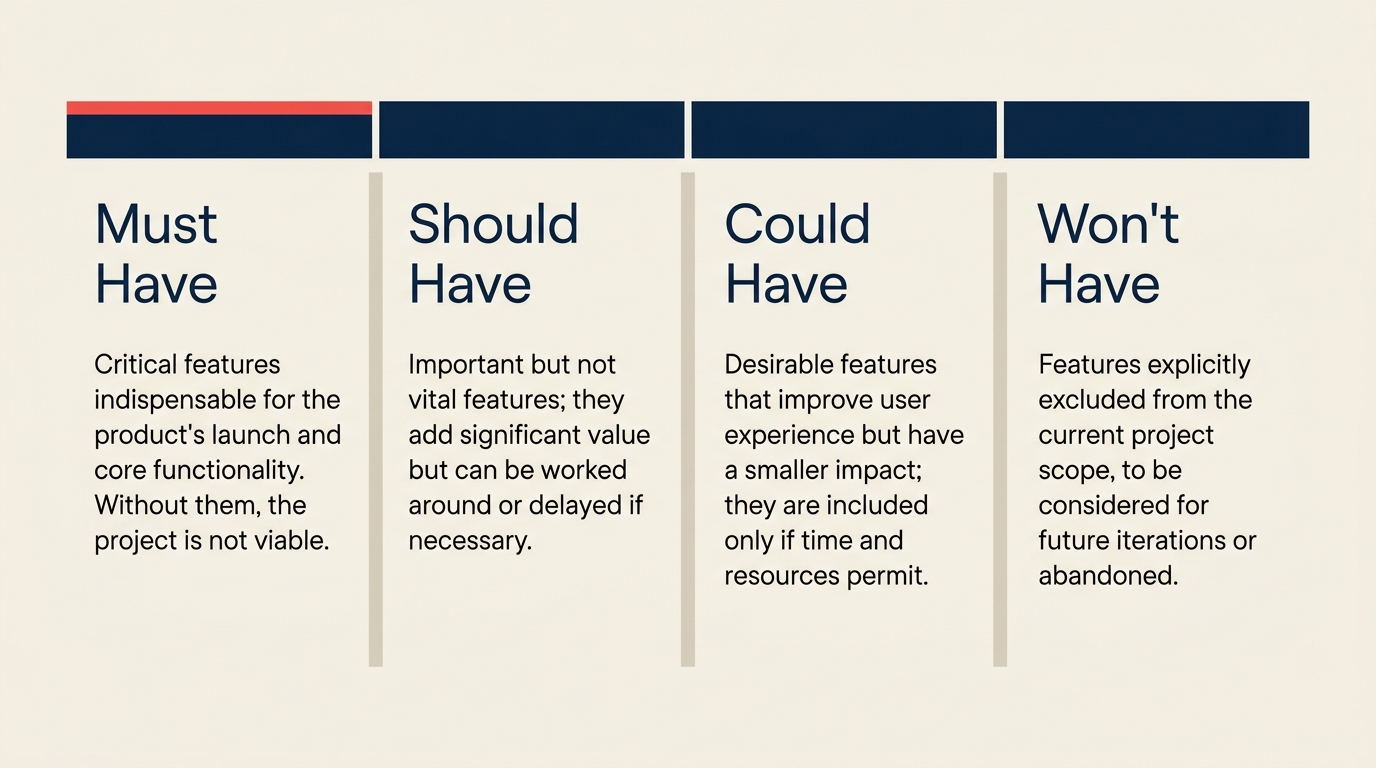
- Must have (Muss): Nicht verhandelbare Anforderungen. Das Projekt scheitert ohne diese.
- Should have (Sollte): Wichtig, aber nicht kritisch. Diese fügen erheblichen Wert hinzu und sollten wenn irgend möglich enthalten sein.
- Could have (Könnte): Wünschenswerte Features. Diese aufnehmen, wenn Zeit und Budget es erlauben, ohne die Must-haves zu gefährden.
- Won't have (this time) (Wird nicht, diesmal): Ausdrücklich außerhalb des Umfangs dieser Auslieferung. Der Zusatz „diesmal" ist bedeutsam, da diese Elemente in einer zukünftigen Iteration auftauchen können.
Das Framework wurde von Dai Clegg bei Oracle UK im Jahr 1994 entwickelt und später in der Dynamic Systems Development Method (DSDM) formalisiert. Die Kleinbuchstaben in MoSCoW (die „o"s und das „W") sind Füllzeichen, um das Akronym aussprechbar zu machen. Die vier bedeutsamen Buchstaben sind M, S, C und W.
Wichtige Fakten
- Der Standish Group CHAOS Report ergab, dass 45 % der Features in Softwareprodukten nie genutzt werden und weitere 19 % selten, was bedeutet, dass fast zwei Drittel von dem, was Teams bauen, minimalen Wert liefert (Standish Group CHAOS Report, 2020).
- Projekte, die strukturierte Anforderungspriorisierung einsetzen, werden doppelt so häufig pünktlich und im Budget abgeschlossen wie solche ohne formale Priorisierung (PMI Pulse of the Profession, 2021).
- Teams, die außerhalb des Umfangs liegende Elemente am Projektbeginn klar definieren, reduzieren nachträgliche Umfangsänderungen um bis zu 30 % (DSDM-Konsortium-Praktikerstudie, 2019).
Die vier MoSCoW-Kategorien
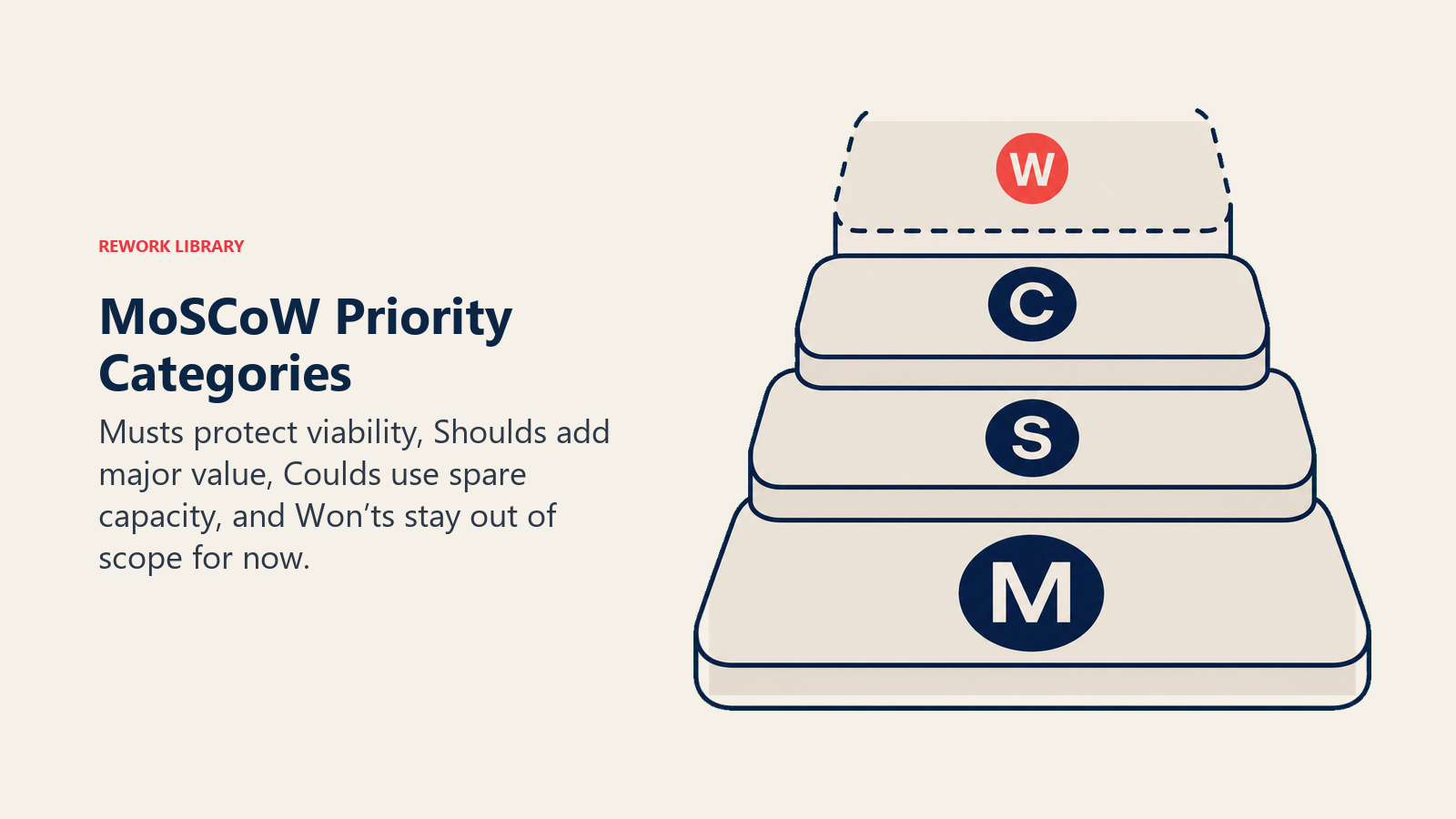
Jeder MoSCoW-Bucket beantwortet eine andere Auslieferungsfrage: was geliefert werden muss, was geliefert werden sollte, was warten kann und was vorerst ausdrücklich nicht zum Umfang gehört.
| Kategorie | Bedeutung | Beispiel (mobile Banking-App) | Typischer Anteil am Aufwand |
|---|---|---|---|
| Must have | Ohne das kann das Produkt nicht launchen oder funktionieren | Nutzeranmeldung, Kontostandsansicht, sicheres Session-Timeout | 60 Prozent |
| Should have | Hoher Mehrwert; fehlt es, entsteht Schmerz, aber kein Versagen | Push-Benachrichtigungen für Transaktionen, Überweisungsfluss | 20 Prozent |
| Could have | Wünschenswerte Erweiterung; sicher zu streichen, wenn der Zeitplan eng ist | Individuelle App-Themes, Ausgaben-Kategorien-Charts | 15 Prozent |
| Won't have (this time) | Ausdrücklich auf ein späteres Release verschoben | Kryptowährungs-Wallet, KI-gestützte Finanzberatung | 5 Prozent (nur Planung) |
Die 60/20/15/5-Aufteilung ist eine grobe Orientierung, keine Regel. Die entscheidende Einschränkung lautet: Must-haves dürfen nie die bestätigte Auslieferungskapazität des Teams überschreiten. Wenn sie es tun, ist die Kategorisierung falsch, nicht die Kapazität.
MoSCoW vs. andere Priorisierungsmethoden
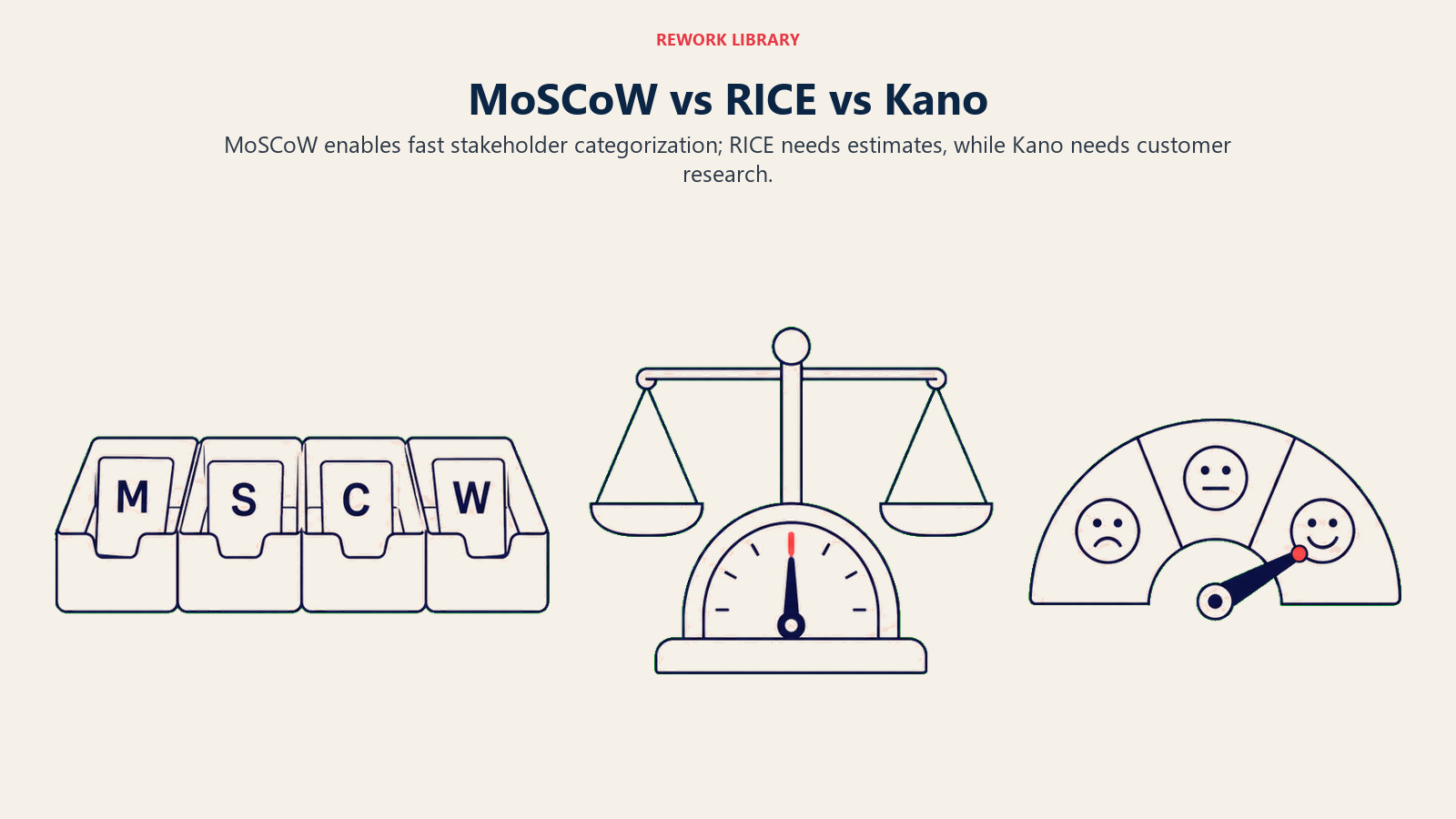
MoSCoW ermöglicht eine schnelle Kategorisierung durch Stakeholder; RICE benötigt Schätzungen, Kano dagegen Kundenforschung.
| Methode | Kernlogik | Beste Eignung | Schwäche vs. MoSCoW |
|---|---|---|---|
| MoSCoW | Kategorische Buckets (Must/Should/Could/Won't) | Anforderungsfreigabe, Release-Scoping, Stakeholder-Abstimmung | Kann „Must-have-Inflation" erzeugen, wenn nicht gesteuert |
| RICE | Punktzahl = (Reichweite x Wirkung x Konfidenz) / Aufwand | Produkt-Backlogs, wo Daten verfügbar sind | Erfordert Schätzungen, die Teams früh oft nicht haben |
| Kano-Modell | Bildet Features auf Kundenzufriedenheitskurven ab | UX-Forschung, Feature-Entdeckung | Komplex durchzuführen; benötigt Nutzerforschungsdaten |
| Eisenhower-Matrix | Dringend vs. wichtig 2x2 | Persönliches Aufgabenmanagement, Betriebsentscheidungen | Zu grob für Anforderungen mit mehreren Stakeholdern |
MoSCoW ist typischerweise das am schnellsten anzuwendende Framework in einem Stakeholder-Workshop, weil es umgangssprachliche Kategorien statt Punktzahlen oder Kurven verwendet. Das macht es besonders nützlich, wenn Sie die Zustimmung nicht-technischer Stakeholder vor der Sprint-Planung oder dem Auslieferungs-Kickoff benötigen.
Vorteile der MoSCoW-Priorisierung
Sie schafft eine gemeinsame Sprache. Wenn ein Produktmanager sagt „das ist ein Should", weiß jeder im Team, was das bedeutet. Niemand verschwendet Zeit mit der Frage, ob ein Feature „wichtig" ist (alles ist wichtig für denjenigen, der darum bat).
Sie erzwingt explizite Kompromisse. Die Won't-have-Kategorie ist der mächtigste Teil des Frameworks. Niederzuschreiben, was Sie nicht bauen werden, ist schwieriger als es klingt, und es verhindert, dass der Umfang nach dem Kick-off stillschweigend ausufert.
Sie stimmt Stakeholder ab, bevor die Arbeit beginnt. Einen MoSCoW-Workshop mit der vollständigen RACI-Matrix der Stakeholder durchzuführen, bringt Meinungsverschiedenheiten über Prioritäten frühzeitig ans Licht, wenn ihre Lösung noch günstig ist. Spät auftretende Prioritätskonflikte sind teuer.
Es passt natürlich zur agilen Auslieferung. Das Framework ergänzt Agile Methodik gut, weil es jede Iteration statt des gesamten Projekts eingrenzt. Teams führen MoSCoW zu Beginn jedes Release-Zyklus erneut durch, statt Anforderungen einmalig festzuschreiben.
Es schützt die Must-haves. Indem die höchstpriorisierten Elemente ihren eigenen geschützten Bucket erhalten, macht das Framework es politisch einfacher, Nein zu Ergänzungen zu sagen. „Das würde etwas aus dem Must-have-Bucket verdrängen" ist ein schwieriger zu entkräftender Einwand als „wir haben einfach keine Zeit".
Häufige Fehler
1. Zu viele Must-haves. Das ist der häufigste Fehlermodus. Wenn alles kritisch ist, ist nichts kritisch. Eine gesunde Must-have-Liste sollte in die bestätigte Auslieferungskapazität passen, mit einem Puffer für Unerwartetes. Wenn Ihre Must-haves 90 % der Kapazität beanspruchen, haben Sie keinen Puffer für technische Probleme, und Ihre Should-haves sind irrelevant geworden.
2. Keine Won't-have-Liste. Teams, die diesen Bucket überspringen, lassen den Umfang vage. Stakeholder füllen diese Vagheit mit Annahmen. Definieren Sie die Won't-have-Liste schriftlich und teilen Sie sie mit allen, die die Must-haves unterzeichnet haben.
3. Kategorien als dauerhaft behandeln. MoSCoW ist eine zeitpunktbezogene Beurteilung für ein bestimmtes Auslieferungsfenster. Ein Could-have in Release eins kann ein Must-have in Release zwei werden. Überprüfen Sie die Kategorisierung zu Beginn jeder Iteration.
4. MoSCoW ohne eine Zeitbeschränkung verwenden. Das Framework funktioniert nur, wenn gegen eine feste Zeitlinie oder ein Budget priorisiert wird. Ohne eine Einschränkung bleibt alles ein Must-have, weil kein Zwang besteht, eine Wahl zu treffen.
5. Den Workshop ohne die richtigen Stakeholder durchführen. Eine Kategorisierung, die ein einzelner Analytiker oder Projektmanager ohne Stakeholder-Eingabe erstellt, erzeugt eine Liste, die niemand besitzt. Die Sitzung braucht die Menschen, die mit den Kompromissen leben werden.
6. Should-haves mit Could-haves verwechseln. Ein Should-have ist etwas, das das Unternehmen aktiv vermisst, wenn es fehlt. Ein Could-have ist eine nette Erweiterung. Der Unterschied ist entscheidend, wenn Sie unter Druck entscheiden, was zu streichen ist.
So wenden Sie die MoSCoW-Methode an
Um MoSCoW gut einzusetzen, behandeln Sie die Priorisierung als moderierte Abfolge und nicht als schnelles Etikettieren.
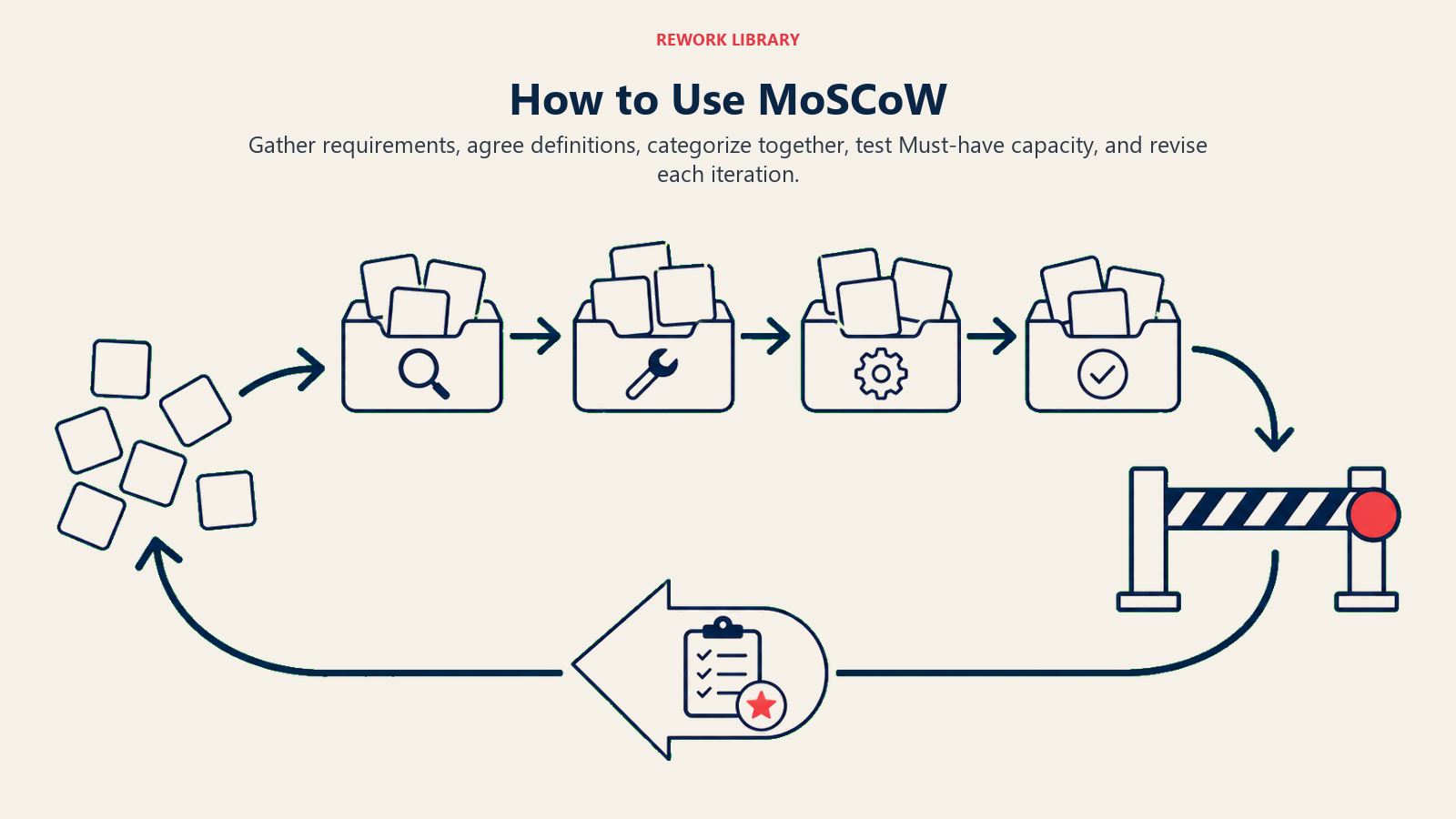
Schritt 1: Anforderungen sammeln
Sammeln Sie alle Anforderungen, Features, User Stories oder Aufgaben, die Kandidaten für die Auslieferung sind. In dieser Phase nichts herausfiltern. Sie möchten eine vollständige Liste, bevor Sie mit dem Sortieren beginnen. Verwenden Sie die Projektumfangsbeschreibung als Grenzdokument, um zu bestätigen, was im Gesamtprojekt enthalten und ausgeschlossen ist.
Eine Stakeholder-Analysematrix hilft, zu identifizieren, wessen Input Sie während des Priorisierungsworkshops benötigen. Verschiedene Stakeholder verantworten verschiedene Anforderungen, und ihre relative Autorität beeinflusst, wie Konflikte gelöst werden.
Schritt 2: Kategoriendefinitionen abstimmen
Bevor das Team mit der Kategorisierung beginnt, nehmen Sie sich fünf Minuten, um zu bestätigen, was jeder Bucket in diesem spezifischen Kontext bedeutet. Bei manchen Projekten bedeutet „Must have" gesetzlich vorgeschrieben. Bei anderen bedeutet es technisch notwendig für ein funktionierendes MVP. Die Definition vorab zu klären verhindert, dass die Sitzung bei jedem zweiten Punkt ins Stocken gerät.
Schritt 3: Gemeinsam kategorisieren
Mit allen sichtbaren Anforderungen (auf einem Whiteboard, Haftnotizen oder einer gemeinsamen Tabellenkalkulation) weist das Team jedem Element einen Bucket zu. Gehen Sie die Liste systematisch durch. Stellen Sie bei jeder Anforderung folgende Fragen:
- Wäre das Produkt ohne das unbrauchbar oder nicht konform? Wenn ja, ist es ein Must.
- Würden wir es mit erheblichem Bedauern ausliefern, wenn es fehlt? Wenn ja, ist es ein Should.
- Würden wir es hinzufügen, wenn wir freie Kapazität hätten? Could.
- Ist es für diese Auslieferung außerhalb des Umfangs? Won't (diesmal).
Meinungsverschiedenheiten in dieser Phase sind gesund. Sie bringen fehlausgerichtete Erwartungen frühzeitig ans Licht. Lösen Sie sie jetzt, nicht beim täglichen Scrum-Stand-up drei Wochen später.
Schritt 4: Das Must-have-Budget überprüfen
Sobald die erste Kategorisierung abgeschlossen ist, addieren Sie den geschätzten Aufwand für alle Must-have-Elemente. Vergleichen Sie das mit Ihrer bestätigten Auslieferungskapazität (verfügbare Stunden oder Story Points abzüglich eines 20-prozentigen Notfallpuffers). Wenn Must-haves die Kapazität überschreiten, muss etwas verschoben werden. Stufen Sie die schwächsten Must-haves auf Should-haves herunter, bis die Zahlen passen.
Dieser Schritt ist der Moment, in dem sich MoSCoW auszahlt. Ohne ihn entdecken Teams die Überbelastung am Zwei-Drittel-Punkt des Projekts, wenn es zu spät ist für eine elegante Anpassung.
Schritt 5: Bei jeder Iteration überprüfen und anpassen
Zu Beginn jedes Sprints oder Release-Zyklus überarbeiten Sie die Liste. Abgeschlossene Elemente kommen heraus. Neue Erkenntnisse, sich ändernde Geschäftsanforderungen oder technische Einschränkungen können Elemente zwischen Kategorien verschieben. Die Won't-have-Liste der vorherigen Iteration ist die beste Quelle für Kandidaten zur Beförderung in Could-have oder Should-have der nächsten.
Diese Überprüfungsschleife hält MoSCoW an der Realität ausgerichtet statt am ursprünglichen Plan. Ein Projektauftrag setzt die strategische Grenze; MoSCoW hält die taktische Ausführung innerhalb dieser Grenze.
MoSCoW-Beispiel
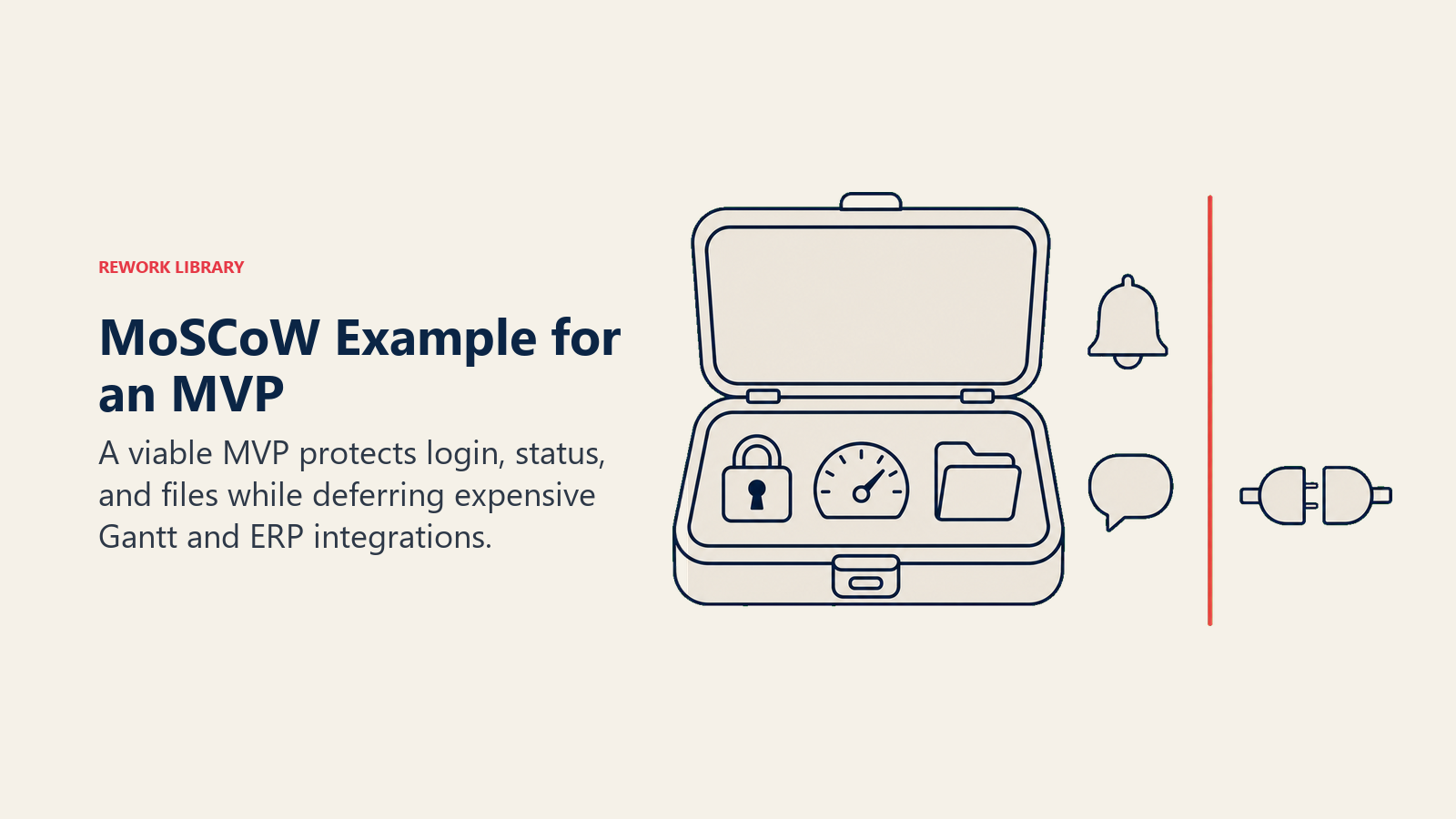
Die folgende Tabelle zeigt eine Feature-Liste für das MVP eines kundenseitigen Projektportals, sortiert nach MoSCoW-Kategorie.
| Feature | Kategorie | Begründung |
|---|---|---|
| Nutzerauthentifizierung und Anmeldung | Must have | Portal ist ohne das nicht zugänglich |
| Projektstatusübersicht | Must have | Kernzweck des Portals |
| Datei-Upload und -Download | Must have | Primärer Anwendungsfall der Stakeholder |
| E-Mail-Benachrichtigungen für Updates | Should have | Hohe Nachfrage; fehlt es, entsteht häufiges manuelles Nachfassen |
| Kommentar-Threads zu Projektelementen | Should have | Reduziert E-Mail-Hin-und-Her erheblich |
| Individuelles Branding pro Kunde | Could have | Wünschenswert, aber kein Hindernis für den Launch |
| Für Mobilgeräte optimiertes Layout | Could have | Desktop-Nutzer sind 85 % der Zielgruppe beim Launch |
| Gantt-Chart-Ansicht | Won't have (diesmal) | Hoher Aufwand; geringe anfängliche Akzeptanz erwartet |
| API-Integration mit Kunden-ERP-Systemen | Won't have (diesmal) | Außerhalb des Umfangs der Pilotphase |
Die Must-haves definieren ein funktionierendes Produkt. Die Won't-haves definieren die Verhandlungsgrenze mit Stakeholdern, die am ersten Tag alles wollen.
Best Practices
Führen Sie MoSCoW als Workshop durch, nicht als Einzelübung. Die Diskussion während der Kategorisierung ist der Moment, in dem Abstimmung entsteht. Eine Tabellenkalkulation, die eine Person ausfüllt und per E-Mail herumschickt, erzeugt nicht dasselbe gemeinsame Eigentum.
Schreiben Sie Must-haves als Akzeptanzkriterien, nicht als Feature-Namen. „Sicherer Login" ist vage. „Ein Nutzer kann sich mit E-Mail und Passwort anmelden, die Sitzung läuft nach 30 Minuten Inaktivität ab, und fehlgeschlagene Anmeldeversuche werden ratenbegrenzt" ist prüfbar. Klare Kriterien erleichtern es zu bestätigen, wann ein Must-have tatsächlich erledigt ist.
Halten Sie die Won't-have-Liste während des gesamten Projekts sichtbar. Drucken Sie sie aus, pinnen Sie sie an, setzen Sie sie in den Scrum vs. Kanban-Board-Header oder posten Sie sie im Team-Kanal. Elemente außerhalb des Umfangs neigen dazu, stillschweigend in den Umfang zurückzukehren, wenn niemand hinschaut.
Nutzen Sie MoSCoW zusammen mit Ihrem Schätzprozess, nicht statt ihm. Priorisierung ohne Kapazitätsschätzungen ist Wunschdenken. Führen Sie die Überprüfung in Schritt 4 jedes Mal durch, wenn Sie die Liste aktualisieren.
Seien Sie ehrlich darüber, was „Won't have this time" bedeutet. Es ist keine höfliche Ablehnung. Es ist eine geplante Verschiebung. Wenn Sie wissen, dass ein Element nie gebaut wird, sagen Sie das klar, statt es auf unbestimmte Zeit in Won't-have zu parken. Teams und Stakeholder verdienen Klarheit.
Priorisierung ist keine technische Fähigkeit. Sie ist eine Entscheidungsdisziplin, und MoSCoW gibt dieser Disziplin eine Struktur, die die meisten Teams tatsächlich anwenden können, ohne eine Zertifizierung oder eine Punktzahl-Tabellenkalkulation. Beginnen Sie mit einer vollständigen Anforderungsliste, führen Sie den Workshop mit den richtigen Personen durch, schützen Sie die Must-haves vor Überbelastung und schreiben Sie auf, was Sie nicht bauen werden. Den Rest ergibt sich.
Weiterführende Artikel

Senior Operations & Growth Strategist
On this page
- Was ist die MoSCoW-Methode?
- Die vier MoSCoW-Kategorien
- MoSCoW vs. andere Priorisierungsmethoden
- Vorteile der MoSCoW-Priorisierung
- Häufige Fehler
- So wenden Sie die MoSCoW-Methode an
- Schritt 1: Anforderungen sammeln
- Schritt 2: Kategoriendefinitionen abstimmen
- Schritt 3: Gemeinsam kategorisieren
- Schritt 4: Das Must-have-Budget überprüfen
- Schritt 5: Bei jeder Iteration überprüfen und anpassen
- MoSCoW-Beispiel
- Best Practices
- Weiterführende Artikel