Project Management Office (PMO): Typen, Rollen und Funktionen
Turn this article into takeaways for your work.


Each assistant summarizes the article only for you and suggests best practices for your work.
Ein Project Management Office (PMO) ist die Funktion innerhalb einer Organisation, die Standards, Methoden und Governance-Regeln dafür festlegt, wie Projekte geplant und durchgeführt werden. Wenn Ihr Unternehmen jemals mit fünf verschiedenen Teams dastand, die Projekte auf fünf verschiedene Arten führten, ist ein PMO die Antwort auf genau dieses Problem.
Und es ist ein Problem, das immer mehr Organisationen ernst nehmen. Laut Wellingtones "State of Project Management"-Umfrage 2024 haben mittlerweile 82 % der Organisationen mindestens ein PMO. Das ist kein Trend zu mehr Bürokratie. Es ist die Erkenntnis, dass konsistente Projektlieferung ein Wettbewerbsvorteil ist, kein Nice-to-have.
Was ist ein Project Management Office (PMO)?
Ein Project Management Office (PMO) ist ein zentrales Team oder eine Abteilung, die Projektmanagement-Praktiken über die gesamte Organisation hinweg definiert, standardisiert und überwacht. Es legt die Frameworks, Vorlagen und Werkzeuge fest, die Projektmanager verwenden, verfolgt Fortschritt und Leistung über das gesamte Portfolio hinweg und übernimmt oft direkte Governance für Projekte mit hoher Priorität oder hohem Risiko.
Das PMO führt die Projekte nicht direkt durch. Das tun die einzelnen Projektmanager. Aber das PMO prägt das Umfeld, in dem diese Projekte laufen. Es entscheidet, was ein Projektauftrag enthalten muss, wie Risikoregister geführt werden sollen und wie Statusberichte formatiert und eskaliert werden.
Wichtige Fakten
- 82 % der Organisationen hatten laut Wellingtones "State of Project Management"-Umfrage 2024 mindestens ein PMO.
- Rund jedes vierte PMO wurde in den zwei Jahren vor der Umfrage eingerichtet, was zeigt, dass sich die Einführung beschleunigt.
- 72 % der Befragten erwarten, dass sich der Umfang und die Verantwortlichkeiten ihres PMO in Zukunft erweitern werden (Wellingtone, 2024).
Typen von PMOs
Nicht jedes PMO arbeitet auf dieselbe Weise. Die drei gängigen Modelle unterscheiden sich darin, wie viel Autorität das PMO über die darunter laufenden Projekte hat. Den falschen Typ zu wählen, ist einer der größten Einrichtungsfehler, die Organisationen machen.
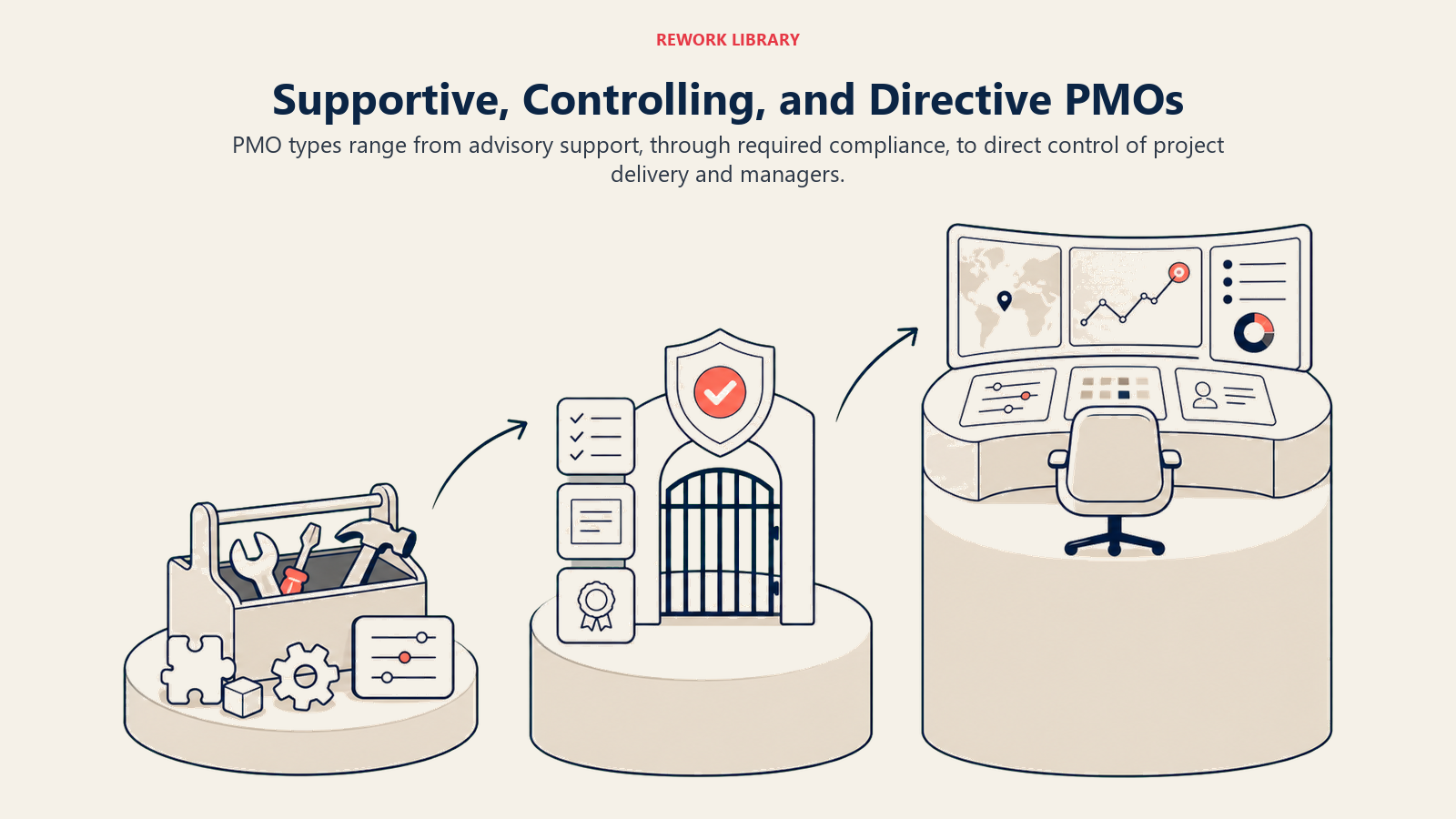
| PMO-Typ | Autoritätsgrad | Hauptrolle | Am besten geeignet für |
|---|---|---|---|
| Unterstützend | Niedrig (beratend) | Bietet Vorlagen, Schulungen und Best-Practice-Beratung auf Anfrage | Erfahrene Teams, dezentrale Organisationen, frühe PMO-Einführung |
| Kontrollierend | Mittel (Compliance) | Legt verpflichtende Standards fest und führt Audits durch; Projektmanager müssen definierte Prozesse einhalten | Mittelgroße Organisationen mit uneinheitlicher PM-Reife |
| Direktiv | Hoch (operative Kontrolle) | Weist Projekten Projektmanager zu und steuert die Lieferung direkt | Große Programme, risikoreiche Portfolios, Organisationen, die Einheitlichkeit brauchen |
Unterstützendes PMO
Ein unterstützendes PMO fungiert als Ressourcenzentrum. Teams wenden sich für Vorlagen, Werkzeuge und Coaching an es. Sie müssen nicht nutzen, was das PMO bereitstellt, aber die meisten tun es, weil es ihnen die Arbeit erleichtert. Dieses Modell funktioniert gut, wenn Projektmanager bereits erfahren sind und die Hauptlücke in der Konsistenz von Dokumentation und Reporting liegt.
Kontrollierendes PMO
Ein kontrollierendes PMO geht einen Schritt weiter: Es legt Mindeststandards fest, die alle Projekte erfüllen müssen. Hat Ihre Organisation entschieden, dass jedes Projekt oberhalb eines bestimmten Budgets eine formelle Stakeholder-Analyse und ein Risikoprüfungs-Gate benötigt, kommt dieses Mandat vom kontrollierenden PMO. Es überwacht die Einhaltung und kann Abweichungen an die Führungsebene melden.
Direktives PMO
Ein direktives PMO verantwortet die Projektmanager selbst. Sie berichten an das PMO, nicht an die Geschäftsbereiche, denen sie dienen. Das schafft hohe Konsistenz, kann aber das Verantwortungsgefühl innerhalb der Geschäftsteams verringern. Am häufigsten findet man es in Beratungsunternehmen, Engineering-Firmen und großen Regierungsprogrammen, in denen einheitliche Lieferung nicht verhandelbar ist.
Enterprise-PMO vs. Abteilungs-PMO
Über diese drei Autoritätstypen hinaus unterscheiden sich PMOs auch im Umfang. Ein Enterprise-PMO (EPMO) operiert auf Organisationsebene, beaufsichtigt das gesamte Portfolio und richtet Projekte an strategischen Zielen aus. Ein Abteilungs-PMO bedient einen einzelnen Geschäftsbereich wie IT, Marketing oder Operations. Manche große Organisationen betreiben beides: ein EPMO für funktionsübergreifende Portfolio-Sichtbarkeit und Abteilungs-PMOs für fachbereichsspezifische Standards.
Was ein PMO tut: zentrale Funktionen
Die tägliche Arbeit eines PMO deckt typischerweise fünf Bereiche ab. Die Gewichtung variiert je nach Typ (ein unterstützendes PMO verbringt mehr Zeit mit Schulungen; ein direktives PMO mehr Zeit mit Lieferaufsicht), aber alle fünf treten in irgendeiner Form bei ausgereiften PMOs auf.
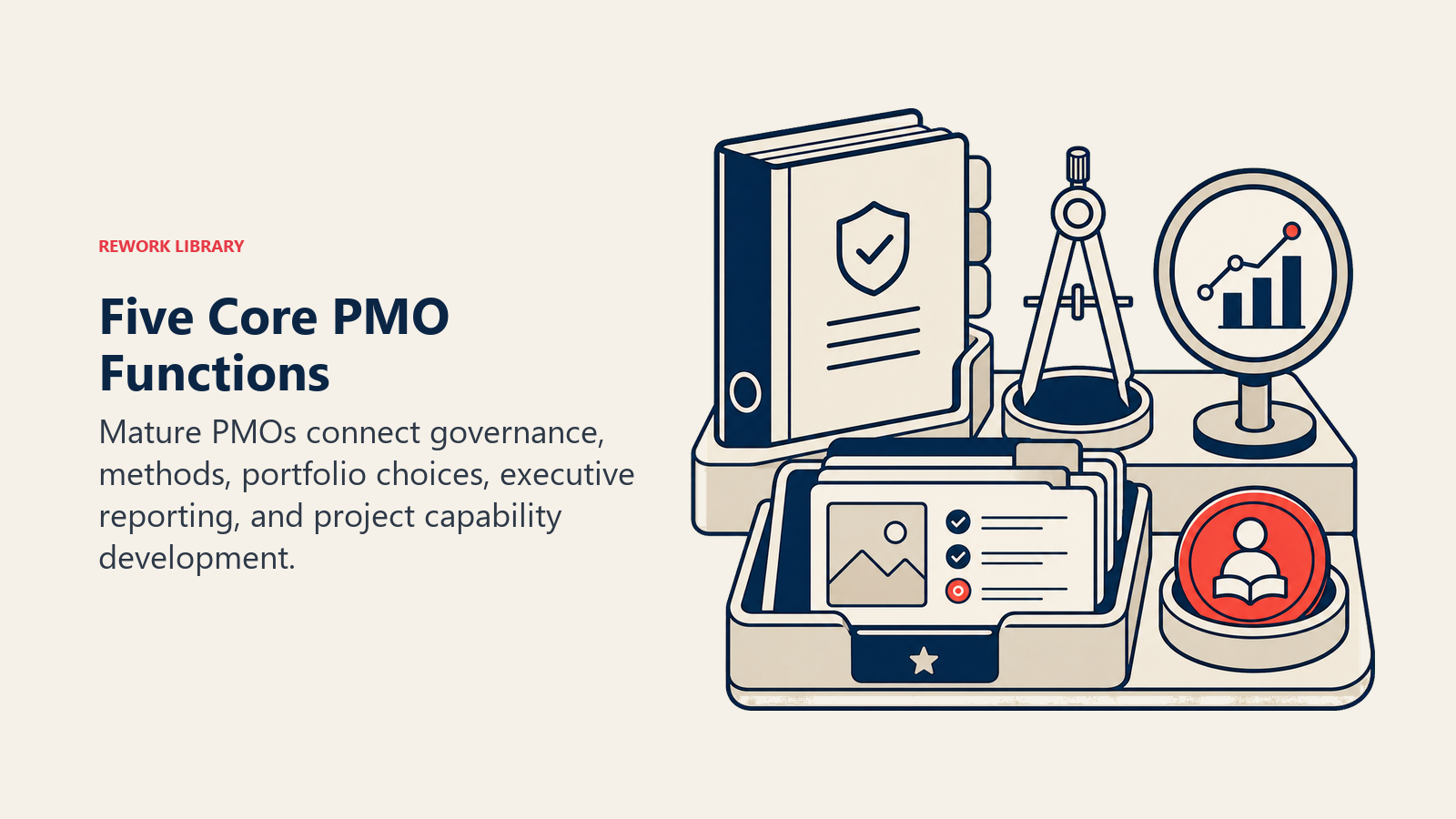
| Funktion | Was sie umfasst |
|---|---|
| Governance und Standards | Festlegen von Prozessrahmen, Vorlagen, Stage Gates und Freigabe-Workflows |
| Methodik und Werkzeuge | Auswahl und Pflege der PM-Methodik (Wasserfall, Agile, Hybrid) und der Werkzeuge |
| Portfoliomanagement | Pflege der Sichtbarkeit über alle aktiven und geplanten Projekte; Unterstützung bei Priorisierungsentscheidungen |
| Reporting und Analyse | Zusammenführen von Projektstatus-, Budget- und Zeitplandaten in Führungsdashboards |
| Kompetenzentwicklung | Schulung von Projektmanagern, Zertifizierung von Mitarbeitern und Verankerung von PM-Kompetenzen in der Organisation |
Governance und Standards
Das ist der Kernauftrag des PMO. Es definiert, wie ein Projekt in jeder Phase des Projektlebenszyklus aussieht. Welche Dokumente werden vor dem Kickoff benötigt? Was löst eine Eskalation aus? Wie werden Umfangsänderungen genehmigt? Ohne klare Antworten auf diese Fragen erfindet jedes Projektteam seine eigenen Regeln, und die Organisation hat am Ende keine konsistenten Daten, um Projekte zu vergleichen oder systemische Probleme zu erkennen.
Portfoliomanagement
Ein PMO auf Portfolioebene verwaltet nicht einzelne Aufgaben. Es verfolgt, welche Projekte laufen, wie sie zueinander stehen und ob die Organisation die Kapazität und das Budget hat, alle davon durchzuführen. Es macht Konflikte zwischen Projekten sichtbar, die um dieselben Ressourcen konkurrieren, und liefert diese Daten an Führungskräfte, die Priorisierungsentscheidungen treffen. Das hängt direkt mit Projektportfoliomanagement zusammen, der strategischen Disziplin, die das PMO in der Praxis ermöglicht.
Reporting und Analyse
Einer der größten Schmerzpunkte in Organisationen ohne PMO ist, dass jeder Projektmanager in einem anderen Format berichtet. Führungskräfte können den Projektzustand über ein Portfolio hinweg nicht vergleichen, wenn jedes Status-Update unterschiedliche Terminologie und Kennzahlen verwendet. Das PMO löst das, indem es standardisiert, was und wie berichtet wird. Laut Wellingtones Umfrage 2024 verbringen 42 % der Organisationen ohne zentralisiertes Reporting einen oder mehrere Tage pro Woche damit, Projektdaten manuell zusammenzutragen. Das ist der Return on Investment des PMO in einer einzigen Zahl.
PMO-Rollen
Ein PMO ist ein Team, keine einzelne Person. Die Struktur variiert je nach Organisationsgröße, aber drei Rollen treten durchgängig auf.
PMO-Direktor
Der PMO-Direktor legt die strategische Ausrichtung der Funktion fest. Er berichtet an die C-Suite oder einen VP of Operations, übersetzt Führungsprioritäten in PMO-Richtlinien und wirbt für Investitionen in Projektmanagement-Fähigkeiten. In kleineren Organisationen übernimmt der PMO-Direktor auch Aufgaben eines Portfoliomanagers.
Portfoliomanager
Der Portfoliomanager pflegt die Live-Übersicht über alle Projekte in der Pipeline. Er verfolgt Budget, Zeitplan und Ressourcenverbrauch über das gesamte Portfolio hinweg und eskaliert Risiken, die Projektgrenzen überschreiten. Diese Rolle erfordert sowohl analytische Präzision als auch die Fähigkeit, politisches Terrain zu navigieren, wenn zwei Geschäftsbereiche um denselben Senior-Ingenieur konkurrieren.
PMO-Analyst
Der PMO-Analyst erledigt die operative Arbeit: Pflege von Vorlagen, Sammeln von Statusdaten, Aktualisieren von Dashboards und Unterstützung von Projektmanagern bei Compliance und Dokumentation. In einem kontrollierenden PMO führt der Analyst oft den Auditzyklus durch und prüft, ob Projektunterlagen den geforderten Standards entsprechen.
Wie man ein PMO einrichtet
Es gibt keinen einzigen richtigen Weg, ein PMO aufzubauen, aber Organisationen, die es gut machen, folgen tendenziell einer ähnlichen Abfolge.
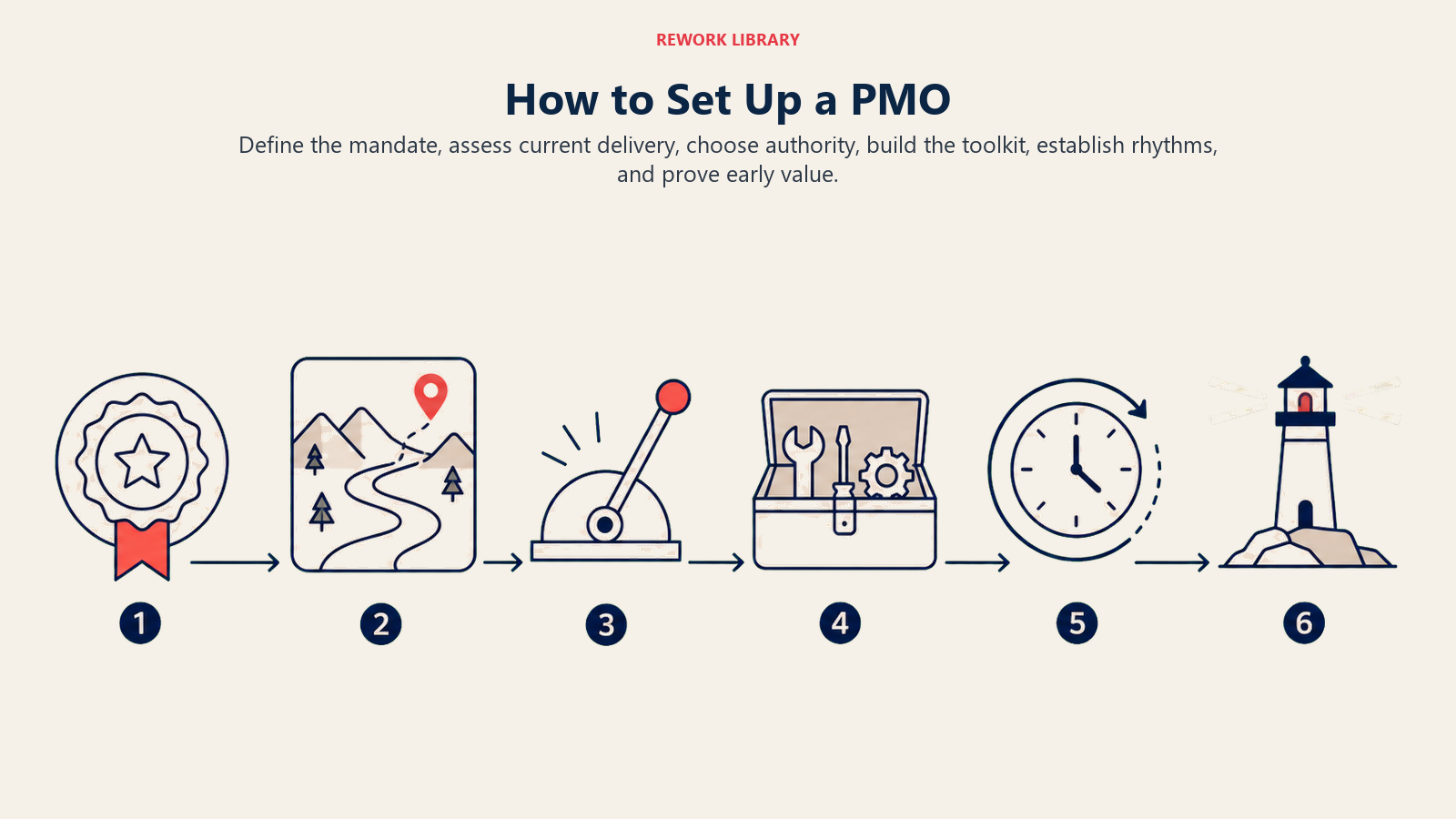
Schritt 1: Mandat und Autoritätsgrad definieren
Bevor Sie jemanden einstellen oder Werkzeuge kaufen, holen Sie sich die Abstimmung der Führungsebene darüber, warum das PMO existiert und wie viel Autorität es haben wird. Ein PMO mit dem Auftrag "Konsistenz der Lieferung verbessern" braucht andere Ressourcen und Beziehungen als eines mit dem Auftrag "alle unternehmensweiten IT-Projekte verantworten". Dokumentieren Sie das Mandat und holen Sie die Freigabe der C-Suite ein.
Schritt 2: Den aktuellen Zustand bewerten
Kartieren Sie die bestehende Projektlandschaft. Wie viele aktive Projekte laufen? Welche Methodiken sind im Einsatz? Wo liegen die häufigsten Fehlerquellen (verpasste Termine, Budgetüberschreitungen, unklare Verantwortlichkeit)? Eine Stakeholder-Analyse von Projektsponsoren und Delivery Leads bringt das politische Terrain ans Licht, das das PMO navigieren muss.
Schritt 3: Den richtigen PMO-Typ für Ihren Kontext wählen
Passen Sie das Autoritätsmodell an die Kultur und Reife Ihrer Organisation an. Mit einem direktiven PMO in einer Organisation zu beginnen, die Teamautonomie schätzt, ist ein Rezept für Widerstand und Scheitern. Die meisten Organisationen, die neu bei PMOs sind, beginnen unterstützend, zeigen ihren Mehrwert und entwickeln sich dann über 12 bis 24 Monate hinweg zu kontrollierend.
Schritt 4: Das grundlegende Werkzeugset aufbauen
Entwickeln Sie das minimal tragfähige Set an Vorlagen, Prozessen und Werkzeugen, das das PMO anbieten oder durchsetzen wird. Dazu gehören typischerweise eine Projektauftrag-Vorlage, ein Leitfaden zur Projektplanung, ein Standardformat für das Risikoregister und eine Vorlage für Statusberichte. Überkonstruieren Sie das bei der Einführung nicht. Beginnen Sie mit dem, was den häufigsten Schmerzpunkt löst.
Schritt 5: Governance-Rhythmen etablieren
Richten Sie die regelmäßigen Zyklen ein: wöchentliches Status-Reporting, monatliche Portfolio-Reviews und vierteljährliche Planungszyklen. Governance funktioniert nur, wenn sie konsistent ist. Weisen Sie jedem Rhythmus Verantwortliche zu und dokumentieren Sie Agenda und Eskalationspfad für jeden Meeting-Typ.
Schritt 6: Frühe Erfolge messen und kommunizieren
PMOs kämpfen in ihrem ersten Jahr oft um interne Glaubwürdigkeit. Verfolgen Sie von Anfang an eine kleine Zahl von Ergebniskennzahlen: Lieferrate, Budgetabweichung, Stakeholder-Zufriedenheit. Berichten Sie diese regelmäßig an die Organisation zurück. Frühe Erfolge, auch kleine, bauen das politische Kapital auf, das das PMO braucht, um sein Mandat zu erweitern.
PMO-Reife und Kennzahlen
PMOs entwickeln sich mit der Zeit weiter. Ein gängiges Reifemodell verläuft von initial (Ad-hoc-Prozesse, geringe Akzeptanz) über definiert (dokumentierte Standards, moderate Akzeptanz), gesteuert (konsistente Anwendung, messbare Ergebnisse) bis hin zu optimiert (kontinuierliche Verbesserung, strategische Ausrichtung).
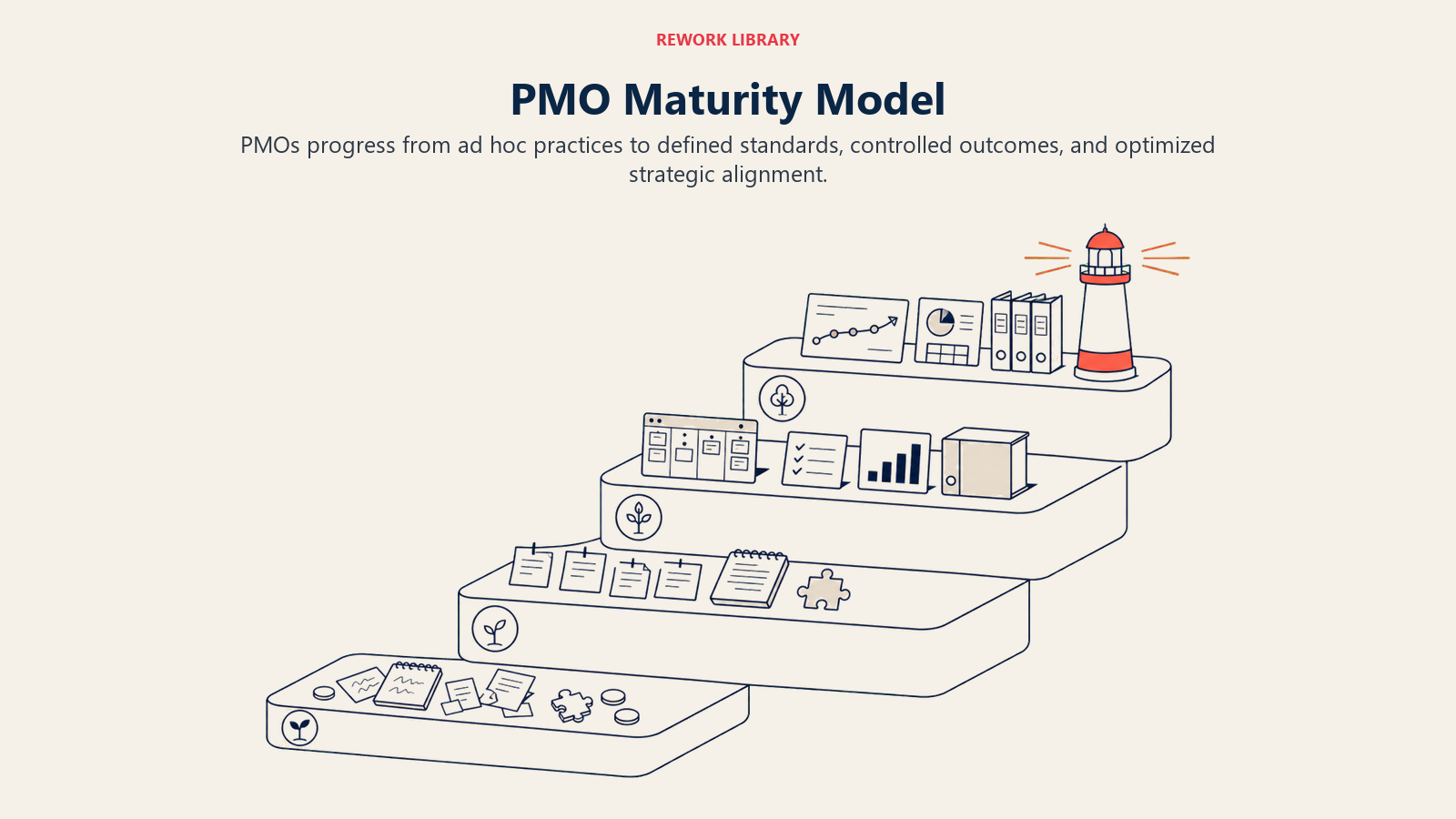
Die relevanten Kennzahlen verschieben sich mit der Reife:
- Frühe Phase: Akzeptanzrate (nutzen Projektmanager die Vorlagen tatsächlich?), termingerechte Lieferrate, Durchlaufzeit der Berichte
- Mittlere Phase: Budgetabweichung über das Portfolio hinweg, Ressourcenauslastung, Häufigkeit der Risikoeskalation
- Fortgeschrittene Phase: Score für strategische Ausrichtung (wie viel Prozent der Projekte sind einer erklärten Organisationspriorität zugeordnet?), Nutzenrealisierung (haben abgeschlossene Projekte den angegebenen Nutzen geliefert?)
Bei einzelnen Projekten verfolgt das PMO oft die Grenzen zwischen Programm- und Projektmanagement und stellt sicher, dass Sammlungen zusammenhängender Projekte als Programme koordiniert werden, statt als unabhängige Silos zu laufen.
Häufige Fehler
Zu breit anfangen. Viele PMOs versuchen, vom ersten Tag an jedes Projekt zu steuern. Das erzeugt Compliance-Aufwand schneller, als das PMO seinen Mehrwert zeigen kann, und Projektmanager wehren sich. Beginnen Sie mit einem definierten Umfang, belegen Sie das Modell und erweitern Sie dann.
Governance mit Bürokratie verwechseln. Ein PMO, das für ein zweiwöchiges Projekt umfangreiche Dokumentation verlangt, erzeugt Kosten ohne Mehrwert. Gute Governance ist verhältnismäßig. Eine schnelle Umfangsprüfung und ein Status-Update mit zwei Feldern können alles sein, was eine kleine Initiative braucht.
Stakeholder-Zustimmung überspringen. PMOs scheitern, wenn Projektmanager sie als zusätzlichen Aufwand statt als Unterstützung wahrnehmen. Beziehen Sie Delivery-Teams in die Gestaltung der Standards ein, die sie befolgen sollen. Menschen halten sich an Prozesse, die sie mitgestaltet haben.
Berichten ohne zu handeln. Ein PMO, das Daten sammelt, aber nie Probleme eskaliert oder Entscheidungen vorantreibt, wird zu einer Reporting-Funktion statt einer Governance-Funktion. Der Wert liegt in dem, was die Daten auslösen, nicht in den Daten selbst.
PMO-Aktivität statt Ergebnisse messen. Das Ziel des PMO ist bessere Projektlieferung, nicht höhere Vorlagenkomplettierungsraten. Verfolgen Sie Lieferkennzahlen, nicht PMO-Nutzungskennzahlen.
Best Practices
Das PMO an der Strategie ausrichten. Das PMO sollte wissen, welche Projekte mit welchen Organisationszielen verknüpft sind. Entstehen Ressourcenkonflikte, ermöglicht diese Ausrichtung dem PMO, bei Priorisierungsentscheidungen zu helfen, statt nur den Konflikt zu melden.
Standards verhältnismäßig halten. Ein gestuftes Governance-Modell funktioniert gut: einfache Projekte erhalten schlanke Standards, komplexe oder budgetintensive Projekte volle Governance. Verhältnismäßigkeit reduziert Compliance-Müdigkeit.
In Beziehungen investieren. Die besten PMOs werden als Partner gesehen, nicht als Kontrolleure. PMO-Mitarbeiter, die sich in Delivery-Teams einbetten, den Kontext jedes Projekts verstehen und Hilfe anbieten, bevor sie Compliance prüfen, verdienen sich das Vertrauen, das Governance nachhaltig macht.
Daten nutzen, um die Portfolio-Geschichte zu erzählen. Führungskräfte können keine guten Priorisierungsentscheidungen treffen, ohne einen klaren Überblick darüber zu haben, was läuft, was es kostet und was riskant ist. Das PMO ist die Funktion, die diesen Überblick aufbaut und pflegt. Machen Sie ihn visuell, aktuell und ehrlich.
Das Autoritätsmodell bewusst weiterentwickeln. Der richtige PMO-Typ für Ihre Organisation heute ist in drei Jahren vielleicht nicht mehr richtig. Überprüfen Sie das Mandat jährlich und passen Sie es an, was das Portfolio braucht und was die Unternehmenskultur tragen kann.
Häufig gestellte Fragen
Was ist der Unterschied zwischen einem PMO und einem Projektmanager?
Ein Projektmanager ist dafür verantwortlich, ein bestimmtes Projekt termingerecht, im Budget und im Umfang zu liefern. Ein PMO ist verantwortlich für das Umfeld, in dem alle Projektmanager arbeiten: die Methoden, Vorlagen, Governance-Strukturen und Reporting-Standards, die über das gesamte Portfolio gelten. Man kann sich das PMO als Festleger der Spielregeln vorstellen, während Projektmanager das Spiel spielen.
Braucht jede Organisation ein PMO?
Nicht zwingend. Kleine Organisationen, die eine Handvoll einfacher Projekte durchführen, empfinden ein PMO möglicherweise als mehr Aufwand als Mehrwert. Ein PMO beginnt sich zu rechnen, sobald mehrere gleichzeitige Projekte um gemeinsame Ressourcen konkurrieren, die Lieferpraktiken zwischen Teams uneinheitlich sind oder ein Bedarf an Reporting auf Portfolioebene für die Führungsebene besteht.
Wie lange dauert es, ein PMO einzurichten?
Ein einfaches unterstützendes PMO mit einem kleinen Werkzeugset kann in 60 bis 90 Tagen funktionsfähig sein. Ein kontrollierendes oder direktives PMO mit vollständigen Governance-Rhythmen, geschulten Mitarbeitern und integrierten Werkzeugen braucht typischerweise sechs bis zwölf Monate, um einen stabilen Betrieb zu erreichen. Der Zeitrahmen hängt stark von der organisatorischen Zustimmung und der Komplexität des Projektportfolios ab.
Was ist ein EPMO?
Ein Enterprise-PMO (EPMO) operiert auf der höchsten Organisationsebene und deckt das gesamte Projekt- und Programmportfolio über alle Geschäftsbereiche hinweg ab. Es berichtet typischerweise an den CEO oder COO, legt unternehmensweite Projektstandards fest und verknüpft Projektinvestitionsentscheidungen direkt mit strategischen Prioritäten. Abteilungs-PMOs existieren innerhalb einer einzelnen Funktion (wie IT oder Marketing) und berichten möglicherweise an das EPMO.
Wie misst man den Erfolg eines PMO?
Die verlässlichsten Indikatoren sind Lieferergebnisse: welcher Prozentsatz der Projekte termingerecht und im Budget abgeschlossen wird, wie sehr sich die Portfolio-Sichtbarkeit verbessert hat und ob die Organisation schnellere, besser informierte Priorisierungsentscheidungen trifft. Vermeiden Sie es, das PMO daran zu messen, wie viele Vorlagen es produziert oder wie viele Audits es durchführt. Das sind Inputs. Lieferergebnisse sind die Kennzahl, die zählt.
Ein PMO funktioniert, wenn es als die Funktion wahrgenommen wird, die Projekte einfacher macht, nicht schwieriger. Die besten verdienen sich diesen Ruf, indem sie klein anfangen, echte Probleme lösen und Vertrauen aufbauen, bevor sie ihre Autorität erweitern. Stimmen die Grundlagen, wird ein PMO zu einem der verlässlichsten Hebel, die eine Organisation hat, um strategische Pläne in gelieferte Ergebnisse zu verwandeln.
Weiterführende Artikel

On this page
- Was ist ein Project Management Office (PMO)?
- Typen von PMOs
- Unterstützendes PMO
- Kontrollierendes PMO
- Direktives PMO
- Enterprise-PMO vs. Abteilungs-PMO
- Was ein PMO tut: zentrale Funktionen
- Governance und Standards
- Portfoliomanagement
- Reporting und Analyse
- PMO-Rollen
- PMO-Direktor
- Portfoliomanager
- PMO-Analyst
- Wie man ein PMO einrichtet
- Schritt 1: Mandat und Autoritätsgrad definieren
- Schritt 2: Den aktuellen Zustand bewerten
- Schritt 3: Den richtigen PMO-Typ für Ihren Kontext wählen
- Schritt 4: Das grundlegende Werkzeugset aufbauen
- Schritt 5: Governance-Rhythmen etablieren
- Schritt 6: Frühe Erfolge messen und kommunizieren
- PMO-Reife und Kennzahlen
- Häufige Fehler
- Best Practices
- Weiterführende Artikel