Anti-Patterns: AI-Kombinationen, die in der Produktion scheitern

Turn this article into takeaways for your work.


Each assistant summarizes the article only for you and suggests best practices for your work.
Zu jedem AI-Pattern, das funktioniert, gibt es ein Anti-Pattern, das von außen fast identisch aussieht, aber in der Produktion scheitert.
Anti-Patterns sind nicht einfach schlechte Ideen. Es sind meist Ideen, die im Boardroom vernünftig klangen und beim Einsatz brachen. Die Demo funktionierte. Die Logik klang richtig. Der Anbieter war überzeugend. Aber drei Monate später brach die Adoption ein, Ausgaben gingen schief, oder das System erforderte mehr Überwachung als der Prozess, den es ersetzen sollte. Die NANDA-Initiative des MIT, gestützt auf 150 Executive-Interviews und Analyse von 300 öffentlichen AI-Einsätzen, stellte fest, dass 95 % der Enterprise-AI-Piloten keine messbare ROI liefern. Das Kernproblem bei den meisten dieser Misserfolge ist nicht die Modellqualität. Es ist eine fehlerhafte Einsatzkonfiguration.
Der Unterschied ist wichtig, weil ein Anti-Pattern nicht nur eine falsche Pattern-Wahl ist. Eine falsche Wahl bedeutet, den Anomaly Agent zu nehmen, wenn man Scoring and Routing brauchte. Ein Anti-Pattern entsteht, wenn man ein vernünftiges Pattern wählt, es aber in einer Konfiguration einsetzt, die sich selbst sabotiert. Das Pattern selbst ist nicht kaputt. Die Kombination, das Timing oder die Datenbedingungen sind es.
Hier sind die sieben häufigsten AI-Anti-Patterns, jedes mit seiner Grundursache, einem spezifischen Diagnosesignal und dem Wiederherstellungsschritt, der funktioniert.
Anti-Pattern 1: Der verwaiste Copilot
Was es aussieht wie: Einen Workflow Copilot einsetzen. Das Panel erscheint neben der App, die Vendor-Demo zeigte AI-Vorschläge in Echtzeit, und die Launch-Ankündigung ging auf Slack raus.
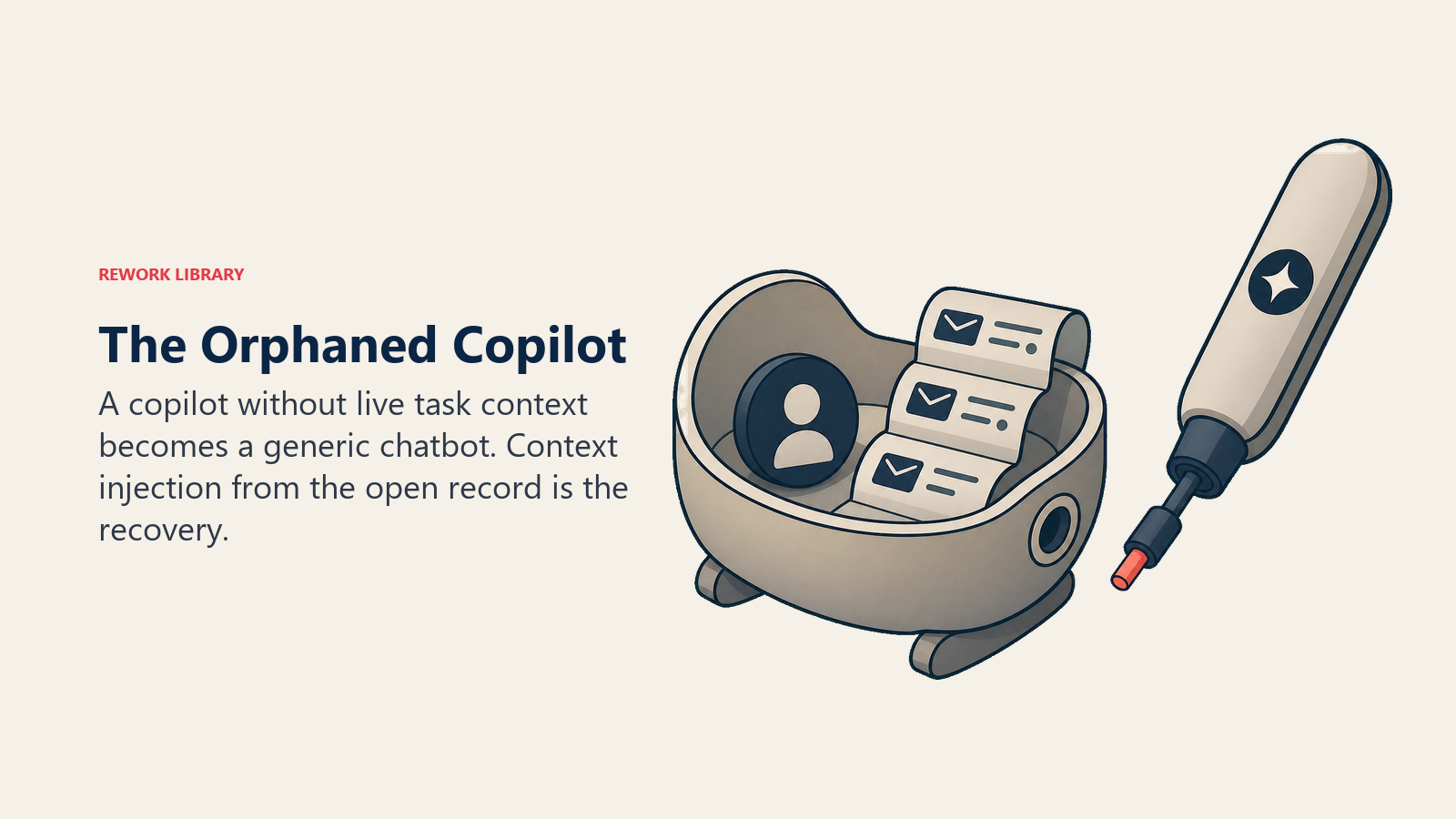
Was tatsächlich passiert: Der Copilot liest den aktuellen Kontext des Nutzers nicht. Vorschläge sind generisch. Sie spiegeln wider, was ein durchschnittlicher Nutzer in Ihrer Branche tun möchte, nicht was dieser Vertriebsmitarbeiter gerade in diesem Deal tut. Die Adoption fällt nach dem ersten Monat unter 20 %. Im zweiten Monat öffnet niemand das Panel mehr, außer Neuen, die noch hoffen, dass es helfen wird.
Grundursache: Die Formel eines Workflow Copilots lautet Ingest (aktueller Kontext des Nutzers) → Analyze (Absicht) → Generate (Vorschlag) → Execute (mit menschlicher Genehmigung). Den Ingest-Schritt überspringen bedeutet, den ersten Link zu brechen. Ein Copilot, der den CRM-Datensatz, den E-Mail-Thread oder das offene Ticket nicht sieht, ist kein Copilot. Er ist ein generischer Chatbot in einer Seitenleiste.
Diagnosesignal: Copilot-Nutzungsrate unter 20 % nach dem ersten Monat. Vertriebsmitarbeiter beschreiben Vorschläge als "nicht relevant" oder "zu generisch." Null Beschwerden, dass Vorschläge auf eine bestimmte Art falsch sind, weil sie überhaupt nicht spezifisch sind.
"Ein Workflow Copilot ohne Live-Kontextzugriff ist ein generischer Chatbot in einer Seitenleiste. Vertriebsmitarbeiter stellen das innerhalb der ersten Woche fest. Die Nutzung fällt bis zum zweiten Monat unter 20 % und erholt sich nie, es sei denn, die Kontexteinspeisung wird behoben. Das Pattern funktioniert. Die Integration nicht." (Rework Copilot Implementation Analysis, 2026)
Wiederherstellungsschritt: Überprüfen, auf welchen Kontext der Copilot tatsächlich Zugriff hat. Die meisten Copilots unterstützen Kontexteinspeisung via API. Das Tool mit den spezifischen Datensätzen verbinden, die der Nutzer geöffnet hat. Wenn der Anbieter keinen Live-Kontext unterstützt, hat man das falsche Tool, nicht das falsche Pattern.
Wichtige Fakten: Verbreitung von AI-Anti-Patterns
- 73 % der gescheiterten AI-Projekte hatten vor Projektbeginn keine vereinbarte Erfolgsdefinition, was es unmöglich macht, eine fehlerhafte Konfiguration von einem falschen Ziel zu unterscheiden. (RAND-Corporation-Analyse von 2.400+ Enterprise-Einsätzen)
- 88 % der AI-Piloten erreichen nie die Produktion, wobei fehlerhafte Konfigurationen und fehlende Voraussetzungen die primären Hindernisse sind. (Deloitte Emerging Technology Trends, 2025)
- Nur 23 % der AI-Implementierungsfehler lassen sich auf Modell-Performance oder Datenqualität zurückführen. Die verbleibenden 77 % stammen aus Einsatzkonfiguration, Governance-Lücken und Change Management. (Folio3 AI Enterprise Analysis, 2026)
Anti-Pattern 2: Der unverankerte RAG
Was es aussieht wie: Einen RAG (Retrieval-Augmented Generation) Assistant auf der Unternehmens-Wissensbasis einsetzen. Mitarbeiter können Fragen zu Richtlinien, Produkten und Prozessen stellen.
Was tatsächlich passiert: Dokumente sind 18 Monate veraltet. Einige Richtlinien widersprechen sich, weil ein Update eingespielt wurde, ohne die alte Version zu entfernen. Der Assistant gibt selbstsichere Antworten aus veralteten Informationen. Nutzer entdecken Sachfehler in der ersten Woche.
Grundursache: Ein RAG Assistant ruft aus dem ab, was in der Wissensbasis ist. "Garbage in, selbstsicherer Garbage out" ist hier besonders gefährlich, weil das System autoritativ klingt. Die ACE-Formel für dieses Pattern lautet Ingest (Frage) → Analyze (relevante Dokumente abrufen) → Generate (Antwort mit Zitaten). Die Zitate sind real. Die Dokumente sind falsch.
Diagnosesignal: Nutzer berichten über Sachfehler in der ersten Woche. Support- oder Compliance-Eskalationen referenzieren eine AI-Antwort, die eine veraltete Richtlinie zitierte. Fragen Sie den Assistant nach einer Richtlinie, die in den letzten 12 Monaten geändert wurde, und prüfen Sie, ob die Antwort die Änderung widerspiegelt.
Wiederherstellungsschritt: Ein RAG Assistant ist nur so gut wie sein Dokumentenmanagement. Vor dem Einsatz die Wissensbasis auf Dokumente prüfen, die älter als 12 Monate sind. Einen Dokumentenprüfungsplan erstellen (mindestens vierteljährlich). Dokumente mit Ablaufdaten versehen. Am wichtigsten: veraltete Dokumente als archiviert kennzeichnen, nicht nur gelöscht, damit der Abruf sie nicht mehr auffinden kann.
Anti-Pattern 3: Der unkalibrierte Scorer
Was es aussieht wie: Scoring and Routing mit Modellgewichten aus der Standardkonfiguration des Anbieters einsetzen. Leads fließen ein, werden bewertet und an Vertriebsmitarbeiter weitergeleitet.
Was tatsächlich passiert: Das Modell leitet 60 % der Prioritäts-Leads an einen einzelnen Vertriebsmitarbeiter weiter, weil das Standardmodell Kriterien übergewichtet, die in Ihrem hochvolumigen Segment zufällig häufig vorkommen. Niemand überwacht die Score-Verteilung. Der Schwellenwert für "heiß" vs. "warm" wurde auf Anbieterempfehlung gesetzt und nie überprüft. Sechs Monate später ist ein Vertriebsmitarbeiter überlastet und ein anderer unterbeschäftigt.
Grundursache: Scoring and Routing erfordert Kalibrierung auf Ihre spezifischen Deal-Muster. Die Formel enthält Predict (Score), was bedeutet, dass das Modell Ihre historischen Won/Lost-Ergebnisse benötigt, um daraus zu lernen. Standardgewichte spiegeln die aggregierte Kundenbasis des Anbieters wider, nicht Ihren Markt, Ihr Ideal Customer Profile (ICP) oder die Spezialisierungen Ihrer Vertriebsmitarbeiter. Unkalibriertes Scoring ist nicht falsch. Es ist irrelevant.
Diagnosesignal: Die Routing-Verteilung ist stark ungleichmäßig (ein Vertriebsmitarbeiter erhält dreimal das Prioritätsvolumen seiner Kollegen). Score-Schwellenwerte wurden bei der Implementierung gesetzt und nie überprüft. Niemand im Team kann erklären, was ein Score von 80 in der Praxis im Vergleich zu einem Score von 50 bedeutet.
Wiederherstellungsschritt: Drei Monate Score-Historie abrufen und gegen Closed/Won-Ergebnisse überlagern. Wenn hohe Scores Closed/Won nicht zu höheren Raten vorhersagen als niedrige Scores, funktioniert das Modell für Ihre Daten nicht. Mit Ihren eigenen Ergebnis-Labels neu kalibrieren. Wenn Sie noch keine 12-18 Monate beschrifteter Win/Loss-Daten haben, den Standard des Anbieters verwenden, aber explizite Überprüfungsdaten festlegen.
Anti-Pattern 4: Der grundloser Anomalie-Detektor
Was es aussieht wie: Einen Anomaly Agent einsetzen, um ungewöhnliche Transaktionen, Sicherheitsereignisse oder Prozessabweichungen zu markieren. Schwellenwerte setzen. Auf Alarme warten.
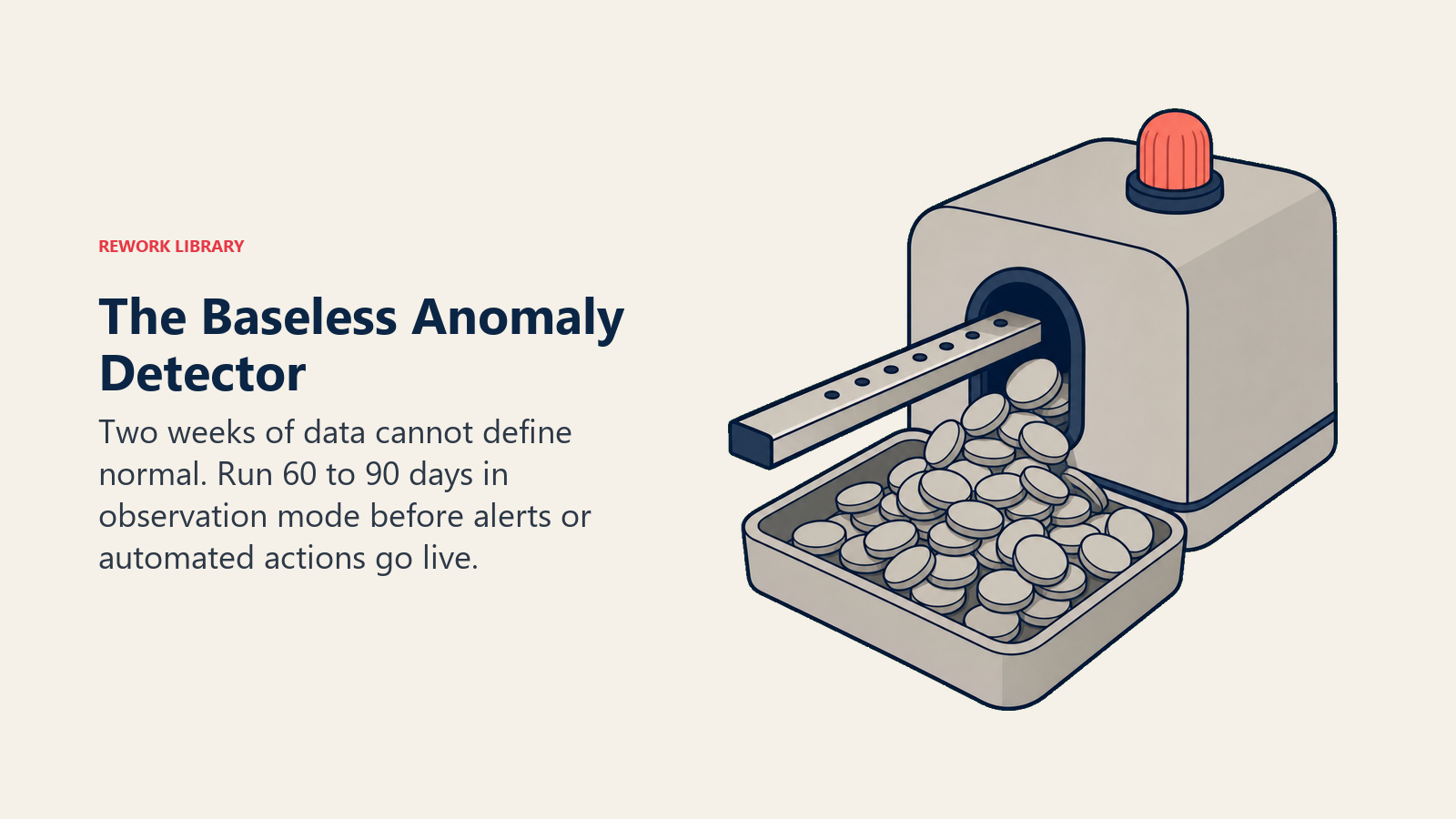
Was tatsächlich passiert: Der Agent erhielt zwei Wochen Daten vor dem Live-Gang. In Woche drei sieht alles anomal aus, weil das Modell kaum eine Ahnung hat, wie "normal" aussieht. Das Team wird mit False Positives überflutet. Nach drei Wochen Alarm-Ermüdung deaktiviert jemand den Agenten vollständig.
Grundursache: Die Formel des Anomaly Agents lautet Ingest (kontinuierlicher Strom) → Analyze (Basislinie) → Predict (Ausreißer markieren) → Execute (Alarm/Blockierung/Eskalation). Der Analyze-Schritt erfordert eine stabile Basislinie. Zwei Wochen sind keine Basislinie. Für die meisten Geschäftsprozesse benötigen Sie mindestens 60 Tage saubere Daten, bevor das Modell genug Signal hat, um Ungewöhnliches von Normalem zu unterscheiden. Saisonale Unternehmen benötigen ein volles Jahr.
Diagnosesignal: False-Positive-Rate über 30 % in den ersten 60 Tagen. Team meldet "Alarm-Ermüdung." Agenten innerhalb des ersten Monats deaktiviert oder ignoriert. Wenn das eingetreten ist, wurde das Modell zu früh eingesetzt.
"Anomalieerkenntnis-Modelle, die mit weniger als 60 Tagen Basisdaten eingesetzt werden, produzieren in den ersten 30 Tagen False-Positive-Raten über 30 %. Alarm-Ermüdung setzt in Woche drei ein. Der Agent wird in den meisten früh-Basisdaten-Einsätzen innerhalb von 30 Tagen deaktiviert. Das Modell war nicht falsch. Es hatte nur nichts, mit dem es vergleichen konnte." (Rework Anomaly Agent Deployment Analysis, 2026)
Wiederherstellungsschritt: Das Modell 60-90 Tage im Beobachtungsmodus betreiben, bevor Execute-Aktionen aktiviert werden. Basisdaten ohne Alarmierung akkumulieren lassen. Die markierten Elemente in diesem Zeitraum manuell überprüfen, um Kalibrierung aufzubauen. Erst auf Live-Alarmierung umstellen, wenn die Präzision auf historischen Daten validiert werden kann.
Anti-Pattern 5: Der Generative-Research-Vertrauensversagen
Was es aussieht wie: Generative Research einsetzen, um Wettbewerbsanalysen, Markt-Briefings oder Executive-Zusammenfassungen zu beschleunigen. Analysten stellen Anfragen, empfangen Berichte, verteilen sie aufwärts.
Was tatsächlich passiert: Eine selbstsicher angegebene Statistik in einem verteilten Briefing existiert in keiner Quelle. Oder sie existiert in einer paraphrasierten Form, die ihre Bedeutung wesentlich verändert hat. Sie landet in einer Board-Präsentation oder einem Kunden-Deliverable. Der Fehler taucht zwei Wochen später auf.
Grundursache: Die Formel von Generative Research lautet Ingest (Multi-Source-Corpus) → Analyze (Synthese) → Generate (Bericht/Briefing). Der Generate-Schritt produziert kohärenten, selbstsicheren Text. Er produziert nicht standardmäßig genauen Text. LLMs können halluzinierte Statistiken generieren, die zum Ton echter Daten passen. Ohne einen menschlichen Überprüfungsschritt zwischen der AI-Ausgabe und jeder externen Verteilung verbreiten Sie nicht verifizierten Claims in großem Maßstab.
Diagnosesignal: Research-Ausgabe wird ohne menschliche Faktenprüfung extern oder an Senior Leadership verteilt. Das Team hat keinen Standard dafür, was vor der Verteilung geprüft wird. Wenn Ihr Prozess "AI schreibt, Person formatiert, Person sendet" ist, haben Sie den Überprüfungsschritt entfernt.
Wiederherstellungsschritt: Einen zweistufigen Workflow aufbauen. Stufe 1: AI generiert einen Entwurf mit Quellenangaben. Stufe 2: Ein Mensch überprüft jede Statistik gegen ihre zitierte Quelle, bevor externe Verteilung stattfindet. Das eliminiert nicht die Zeiteinsparungen. Es fügt 20 Minuten Stichprobenkontrolle hinzu, die den einen Fehler verhindert, dessen Korrektur 20 Stunden kostet.
Anti-Pattern 6: Der verfrühte Autonomous Agent
Was es aussieht wie: Einen Autonomous Agent einsetzen, um einen mehrstufigen Workflow zu bearbeiten: Konten recherchieren, Outreach verfassen, CRM aktualisieren und Follow-ups planen, ohne menschliche Beteiligung bei jedem Schritt.
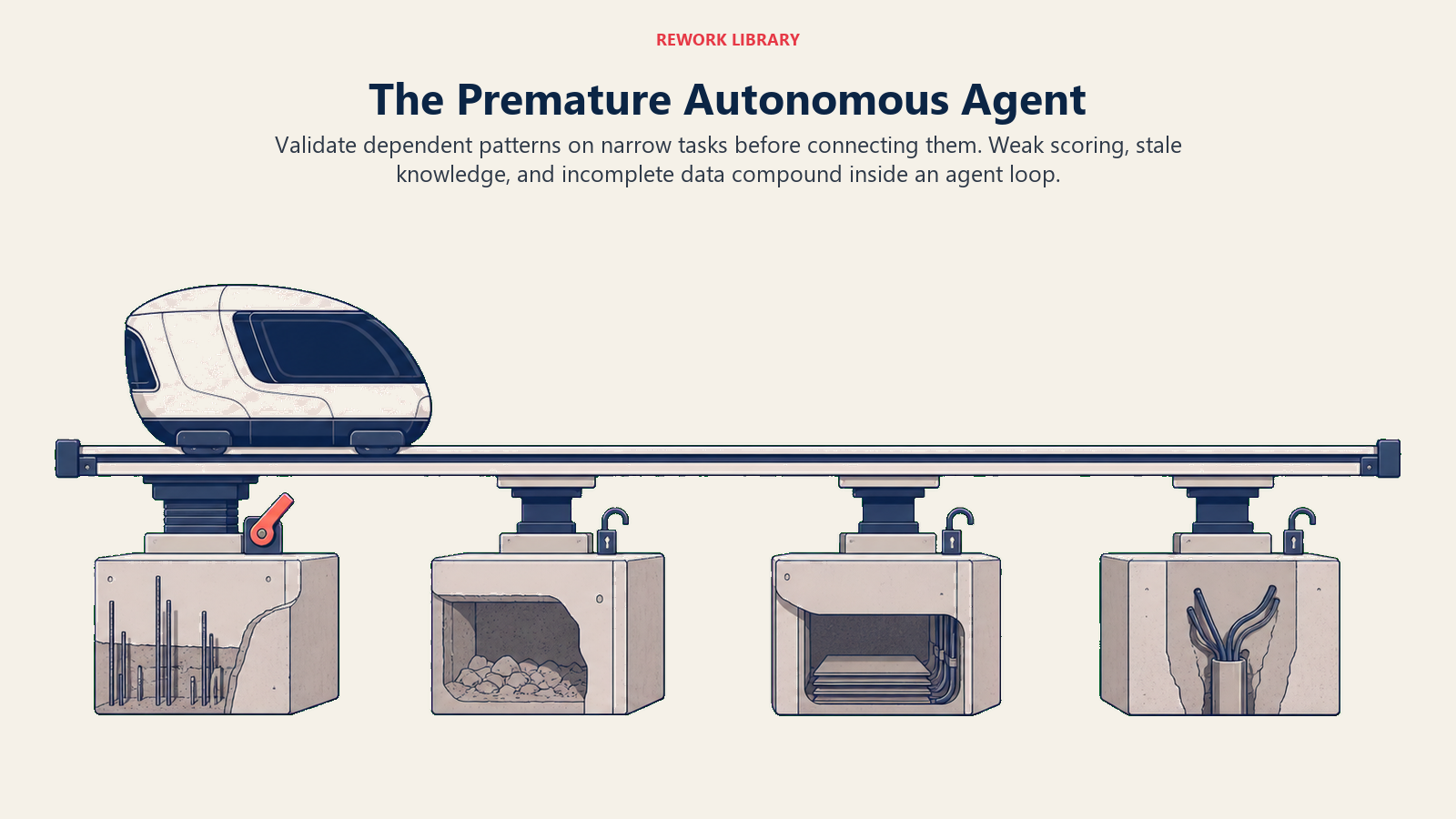
Was tatsächlich passiert: Der Agent ruft Tools auf, die nicht korrekt integriert sind. Er trifft Entscheidungen auf Basis unvollständiger CRM-Daten. Er plant ein Follow-up-Meeting für ein Konto, das der Vertriebsmitarbeiter letzte Woche geschlossen hat. Er erfordert mehr menschliches Eingreifen als der manuelle Prozess, den er ersetzen sollte. Das Vertrauen des Teams in AI sinkt insgesamt, nicht nur bei Agenten.
Grundursache: Autonomous Agents kombinieren alle fünf ACE-Fähigkeiten in einer Schleife. Das bedeutet, dass jeder Versagensmodus jedes einfacheren Patterns sich summieren kann. Wenn Ihr Scoring and Routing nicht kalibriert ist, beginnt der Agent mit falschen Prioritäten. Wenn Ihre RAG-Wissensbasis veraltet ist, spiegeln die Entscheidungen des Agenten veraltetes Wissen wider. Wenn Ihre CRM-Daten unvollständig sind, landen Execute-Aktionen am falschen Ort. Das Anti-Pattern ist nicht, einen Autonomous Agent einzusetzen. Es ist, ihn einzusetzen, bevor die Component-Patterns, auf die er angewiesen ist, zuverlässig funktionieren.
Diagnosesignal: Agenten-Aufgaben-Abschlussrate unter 60 %. Eskalationsrate über 40 %. Vertriebsmitarbeiter berichten, dass die Ausgabe des Agenten erhebliche Korrektur erfordert, bevor sie handeln können. Am aufschlussreichsten: Das Team kann kein einziges einfacheres Pattern benennen, das zuverlässig funktionierte, bevor der Agent eingeführt wurde.
Wiederherstellungsschritt: Die Abhängigkeiten des Agenten kartieren. Ein Autonomous Agent, der Sales Development bearbeitet, benötigt Scoring and Routing (zur Priorisierung), Generative Research (zur Kontorecherche), Meeting Intelligence (zum Verstehen des Kontexts) und Workflow Copilot (für den Rep-Übergabe). Jedes dieser Patterns zuerst einsetzen. Jedes auf über 80 % Genauigkeit bei seiner engen Aufgabe bringen. Dann verbinden.
Anti-Pattern 7: Das Feedback-Vakuum
Was es aussieht wie: Irgendein Pattern einsetzen. Starten. Zum nächsten Projekt weitergehen. Das System läuft.
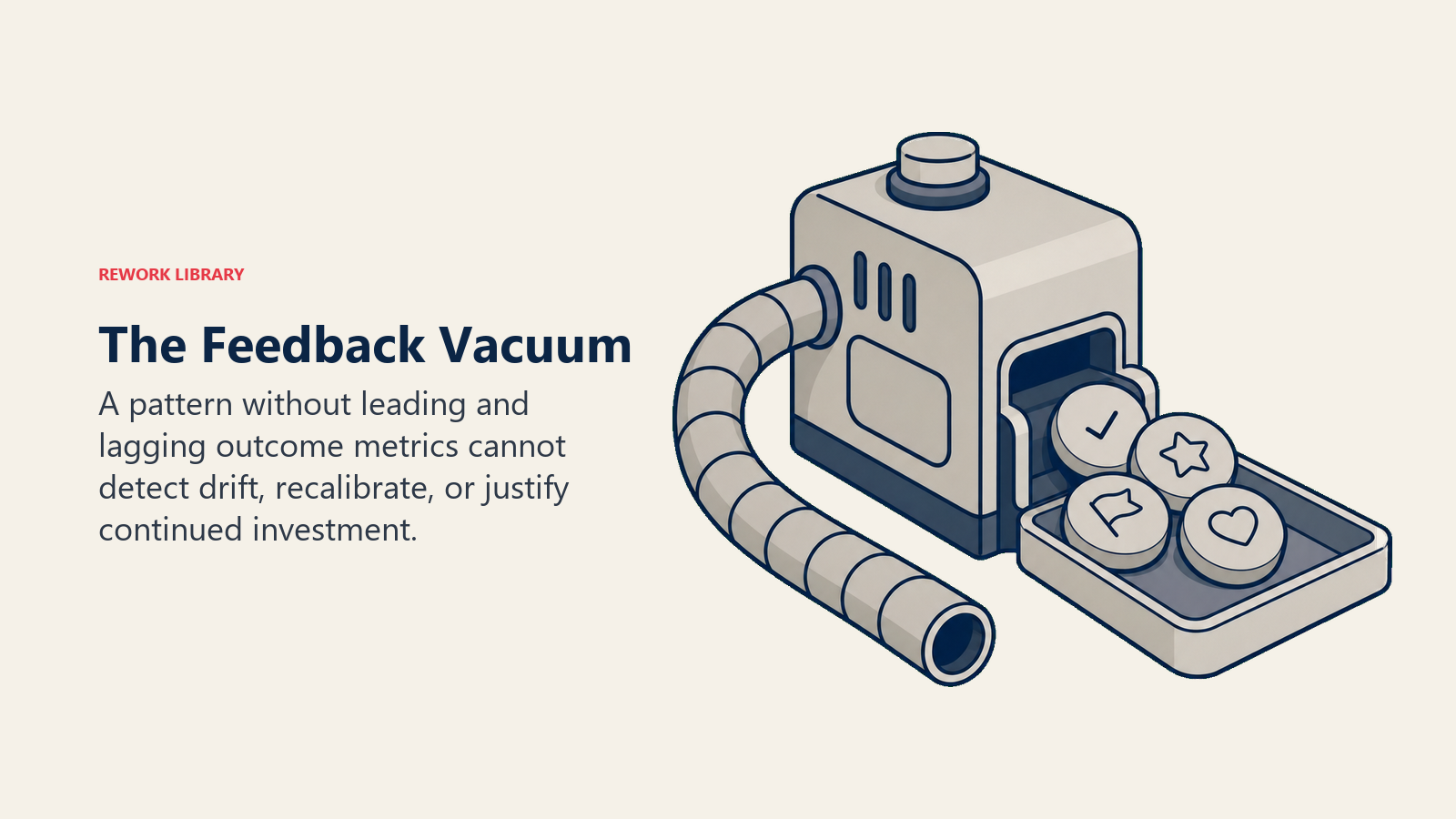
Was tatsächlich passiert: Niemand verfolgt, ob das Pattern tatsächlich funktioniert. Scoring and Routing läuft acht Monate ohne Win/Loss-Überlagerung. Eine Personalization Engine liefert ein Jahr lang Inhalte ohne Konversionstracking. Meeting Intelligence generiert Zusammenfassungen, die Vertriebsmitarbeiter nie lesen. Das Pattern verbraucht Rechenkapazität und Anbieterausgaben. Seine Performance driftet, seine Daten werden veraltet, seine Ausgaben verschlechtern sich. Niemand bemerkt es, bis jemand eine direkte Frage zu ROI stellt und niemand antworten kann.
Grundursache: Das ist das Meta-Anti-Pattern, das alle anderen fortbestehen lässt. Jedes Pattern im ACE Framework hat einen Execute-Schritt, der reale Ergebnisse erzeugt. Diese Ergebnisse werden entweder gemessen oder nicht. Ohne eine Ergebnis-Feedback-Schleife gibt es kein Signal, das Ihnen sagt, wenn ein Pattern degradiert hat, keine Daten zum Rekalibrieren des Modells und keine Möglichkeit, weitere Investitionen zu rechtfertigen. Ein Pattern ohne Messung ist ein teurer Platzhalter.
Diagnosesignal: Das Pattern ist seit sechs Monaten live und niemand kann eine spezifische Metrik nennen, die es bewegt hat. Sie können nicht sagen, ob sich die Score-Verteilung von Monat 1 zu Monat 6 verändert hat. Sie wissen nicht, ob Vertriebsmitarbeiter, die den Copilot verwenden, zu höheren Raten abschließen als Vertriebsmitarbeiter, die das nicht tun. Stellen Sie die direkte Frage: "Welche Zahl stieg durch das Pattern?" Wenn niemand antworten kann, befinden Sie sich in einem Feedback-Vakuum.
Wiederherstellungsschritt: Für jedes eingesetzte Pattern vor dem Start eine nachlaufende und eine vorlaufende Metrik definieren, nicht danach. Für Scoring and Routing: Konversionsrate der weitergeleiteten Leads (nachlaufend), Prozentsatz der Vertriebsmitarbeiterkapazität, die Hochscore-Leads zugewiesen ist (vorlaufend). Für Meeting Intelligence: Prozentsatz der Gesprächszusammenfassungen, die ins CRM übertragen werden (vorlaufend), Win-Rate bei Deals mit AI-zusammengefassten Gesprächen (nachlaufend). Das erfordert kein Data-Science-Team. Es erfordert eine bewusste Entscheidung zu messen.
Wiederherstellungs-Zusammenfassung
Diese Referenztabelle dient als Orientierung, bevor Sie die folgenden Details anwenden.
| Anti-Pattern | Grundursache | Diagnosesignal | Wiederherstellung |
|---|---|---|---|
| Verwaister Copilot | Fehlende Kontexteinspeisung | Nutzung unter 20 % nach Monat 1 | Live-Kontext aus dem aktuellen Datensatz des Nutzers verbinden |
| Unverankerter RAG | Veraltete Wissensbasis | Fehler in Woche 1 entdeckt | Dokumente vor dem Launch prüfen und ablaufen lassen |
| Unkalibrierter Scorer | Standard-Modellgewichte auf Ihren Daten | Ungleichmäßige Routing-Verteilung | Score-Historie gegen Win/Loss-Ergebnisse überlagern |
| Grundloser Anomalie-Detektor | Unzureichende Basisdaten | 30 %+ False Positives in 60 Tagen | 60-90 Tage Beobachtungsmodus vor Live-Alarmen |
| Generative-Research-Vertrauensversagen | Kein menschlicher Überprüfungsschritt | Nicht verifizierte Statistiken in verteilter Ausgabe | Obligatorischer Stichprobenschritt vor externer Verteilung |
| Verfrühter Autonomous Agent | Abhängige Patterns nicht bereit | Abschlussrate unter 60 % | Component-Patterns zuerst bauen und validieren |
| Feedback-Vakuum | Keine Ergebnismessung | Sechs Monate live, keine Metrik bewegt | Eine nachlaufende und eine vorlaufende Metrik pro Pattern vor dem Launch definieren |
Die 7 AI-Anti-Patterns
Die 7 AI-Anti-Patterns ist ein benanntes Diagnoserahmenwerk, das die häufigsten Konfigurationsfehler-Versagensmodi bei Enterprise-AI-Einsätzen abdeckt. Jedes Anti-Pattern hat drei identifizierende Komponenten: eine Grundursache in einer gebrochenen ACE-Fähigkeitskette, ein spezifisches Diagnosesignal, das innerhalb von 30-90 Tagen nach dem Einsatz beobachtbar ist, und einen konkreten Wiederherstellungsschritt, der die Konfiguration behebt statt das Pattern aufzugeben. Das Rahmenwerk existiert, weil AI-Fehler selten zufällig sind. Sie konzentrieren sich in sieben wiederholbaren Konfigurationen, die kluge Teams aus logischen Gründen bauen und dann fälschlicherweise als Modellfehler diagnostizieren.
Rework-Analyse: Das 7-AI-Anti-Patterns-Rahmenwerk entspricht direkt der Erkenntnis der RAND Corporation, dass 77 % der AI-Fehler auf Konfigurations- und Governance-Lücken zurückzuführen sind, nicht auf Modellqualität. In Reworks Implementierungserfahrung ist das Feedback-Vakuum (Anti-Pattern 7) am schädlichsten, weil es verhindert, dass alle anderen Anti-Patterns erkannt und korrigiert werden. Projekte mit dedizierter Ergebnismessung von Tag eins an erreichen eine 2,9-mal höhere Produktionsretentionsrate als Projekte, die Erfolgsmetriken nach dem ersten Unterleitungszeichen definieren. Die Metrik vor dem Launch definieren, nicht nach der ersten Führungsfrage.
Wie Anti-Patterns sich verbreiten
Die meisten davon sind nicht auf ein Team beschränkt. Wenn ein verfrühter Autonomous Agent auffällig scheitert, sinkt das Interesse der gesamten Organisation an AI-Investitionen. Wenn ein Generative-Research-Vertrauensversagen in einer Board-Präsentation auftaucht, beginnen Rechts- und Compliance-Abteilungen, den Zugang zu Tools einzuschränken, die mit einem ordnungsgemäßen Überprüfungsschritt in Ordnung gewesen wären.
Die Ironie ist, dass Anti-Patterns Teams oft zu übermäßiger Vorsicht drängen. Der Misserfolg war nicht "AI funktioniert nicht." Der Misserfolg war eine spezifische Fehlkonfiguration. Aber die gelernte Lektion ist meist "wir sollten vorsichtiger mit AI sein", was manchmal in "es gar nicht zu tun" übersetzt wird. Der Stanford HAI 2025 AI Index Report dokumentiert diese Dynamik direkt: AI-bezogene Produktionsvorfälle steigen stark an, und die Lücke zwischen der Erkennung von Risiken und dem Ergreifen von Korrekturmaßnahmen in Unternehmen bleibt groß.
Das Anti-Pattern klar benennen, wenn es passiert. Dokumentieren, was die Konfiguration war, was der Versagensmodus war und was der Fix war. Das ist nützlicher als eine vage Richtlinie über "verantwortungsvoller Umgang mit AI."
Was vor jedem neuen Einsatz zu prüfen ist
Vor dem Einsetzen eines neuen Patterns:
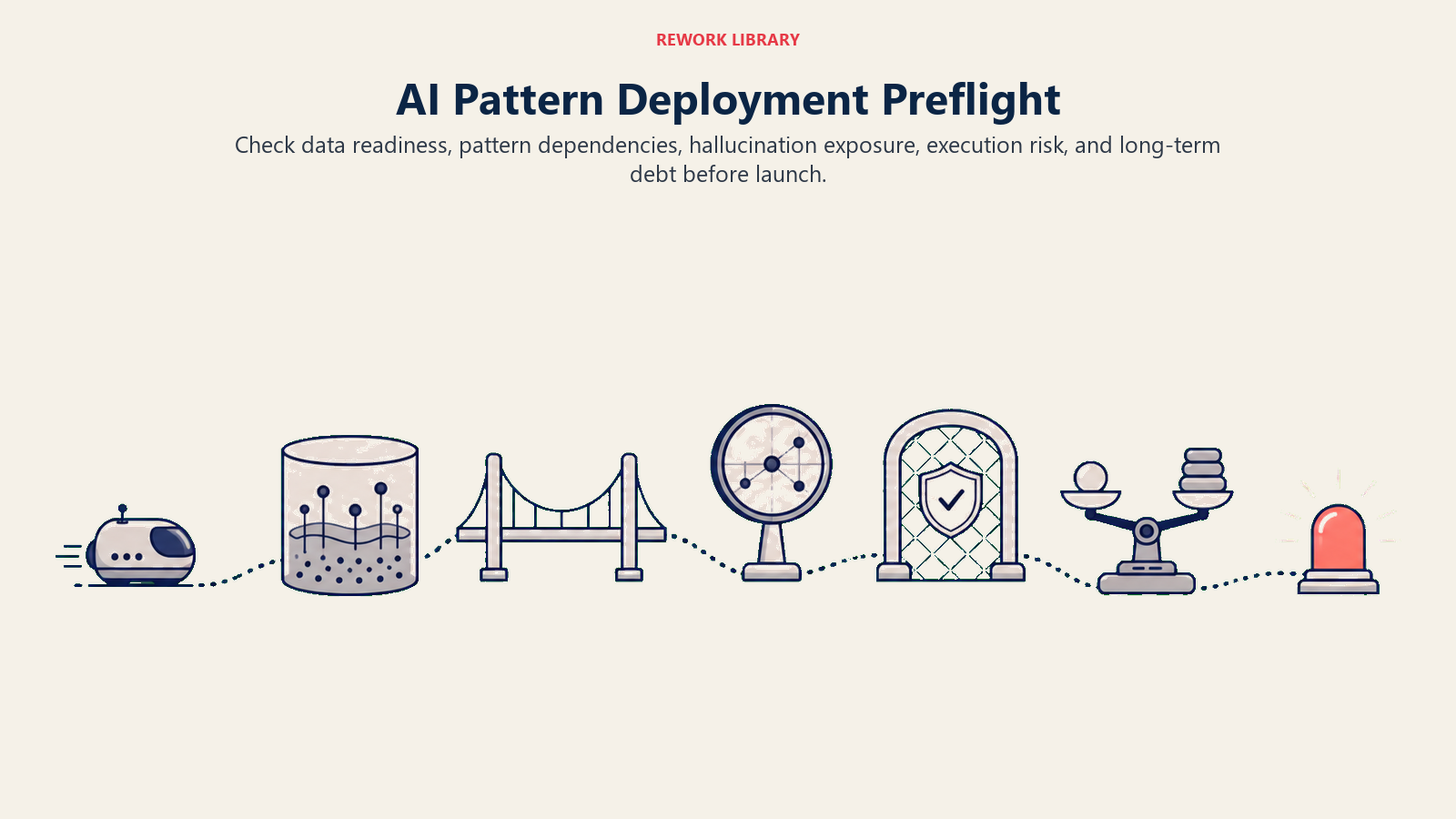
- Datenbereitschaft für dieses spezifische Pattern prüfen. Siehe Datenbereitschaft nach AI-Pattern für die spezifischen Voraussetzungen jedes Patterns.
- Pattern-Abhängigkeiten prüfen. Siehe Pattern-Abhängigkeiten und Voraussetzungen, um zu wissen, welche einfacheren Patterns zuerst funktionieren müssen.
- Halluzinationsrisiko einschätzen. Einige Patterns produzieren Fehler, die leicht erkennbar sind. Andere produzieren selbstsichere falsche Ausgaben, die Entscheidungsträger erreichen, bevor jemand prüft. Siehe Halluzinationsrisiko nach AI-Pattern.
- Den Risikogradienten verstehen. Nicht alle Anti-Patterns verursachen gleichen Schaden. Siehe Der Risikogradient über AI-Patterns, um Ihre Überprüfungs- und Genehmigungsanforderungen nach Pattern-Typ zu kalibrieren.
- Langfristige Tech-Schulden berücksichtigen. Anti-Patterns, die unbehoben bleiben, werden zu Tech-Schulden. Siehe Wenn AI-Patterns zu Tech-Schulden werden.
Anti-Patterns sind kein Beweis, dass AI nicht funktioniert. Sie sind Beweis für die spezifischen Konfigurationen, die kluge Menschen dazu bringen zu denken, ein Einsatz sei bereit, wenn er es nicht ist. Die Konfigurationen sind wiederholbar. Die Korrekturen sind bekannt. Der erste Schritt ist, sie benennen zu können.
Häufig gestellte Fragen
Was ist ein AI-Anti-Pattern?
Ein AI-Anti-Pattern ist eine Einsatzkonfiguration, die von außen vernünftig aussieht, aber sich in der Produktion selbst sabotiert. Es unterscheidet sich von einer falschen Pattern-Wahl. Eine falsche Wahl bedeutet, das falsche Tool für den Job zu wählen. Ein Anti-Pattern bedeutet, das richtige Tool zu wählen und es dann auf eine Weise einzusetzen, die die Kernfähigkeitskette bricht. Das Pattern selbst ist nicht kaputt. Die Konfiguration ist es.
Was ist das häufigste AI-Anti-Pattern?
Das Feedback-Vakuum (Anti-Pattern 7) ist das verbreitetste, weil es alle anderen fortbestehen lässt. Wenn keine Ergebnismetrik vor dem Launch definiert wird, kann niemand erkennen, wenn ein Pattern degradiert hat. Scoring-Modelle driften, Wissensbasen werden veraltet, Copilot-Nutzung sinkt, und das einzige Signal ist ein vages Gefühl, dass "AI nicht funktioniert." Die RAND Corporation stellte fest, dass 73 % der gescheiterten AI-Projekte keine vereinbarte Erfolgsdefinition vor Beginn hatten.
Wie lange dauert es, ein Anti-Pattern in der Produktion zu erkennen?
Die meisten Anti-Patterns produzieren klare Diagnosesignale innerhalb von 30-90 Tagen. Der Verwaiste Copilot zeigt Nutzung unter 20 % im ersten Monat. Der Grundlose Anomalie-Detektor zeigt False-Positive-Raten über 30 % innerhalb von 60 Tagen. Der Unverankerte RAG produziert von Nutzern gemeldete Sachfehler in der ersten Woche. Der Verfrühte Autonomous Agent zeigt Aufgaben-Abschlussraten unter 60 % innerhalb des ersten Produktionsmonats.
Kann man sich von einem AI-Anti-Pattern erholen, oder muss man von vorne beginnen?
Jedes Anti-Pattern im 7-AI-Anti-Patterns-Rahmenwerk hat einen spezifischen Wiederherstellungsschritt, der die Konfiguration behebt, statt einen Neustart zu erfordern. Der Verwaiste Copilot braucht korrekt verkabelte Kontexteinspeisung. Der Unverankerte RAG braucht ein Dokumentenaudit und eine Aktualisierungsfrequenz. Der Grundlose Anomalie-Detektor braucht eine Beobachtungsmodus-Basisperiode. Keines erfordert den Austausch des Patterns oder des Anbieters. Sie erfordern das Beheben der spezifischen Komponente, die beim Einsatz falsch konfiguriert wurde.
Warum machen Unternehmen immer wieder dieselben Anti-Pattern-Fehler?
Anti-Patterns bestehen fort, weil Demos funktionieren. Ein Workflow Copilot ohne Kontexteinspeisung produziert in einer kontrollierten Demo plausible Vorschläge. Ein Anomaly Agent mit 2 Wochen Daten feuert Alarme, die real aussehen. Die Fehlkonfiguration ist unsichtbar, bis das System auf realen Daten in der Produktionsgröße läuft. Folio3 AIs Analyse von Enterprise-Einsätzen zeigt, dass nur 23 % der AI-Fehler auf Modell- oder Datenqualität zurückzuführen sind; der Rest sind Governance-, Konfigurations- und Change-Management-Probleme, die im Piloten unsichtbar waren.
Was ist das Anti-Pattern des verfrühten Autonomous Agent?
Der Verfrühte Autonomous Agent ist der Versagensmodus, einen Autonomous Agent einzusetzen, bevor seine Component-Patterns zuverlässig funktionieren. Ein Autonomous Agent kombiniert alle fünf ACE-Fähigkeiten in einer Schleife, was bedeutet, dass jeder Versagensmodus jedes einfacheren Patterns sich summieren kann. Wenn Scoring unkalibriert ist, beginnt der Agent mit falschen Prioritäten. Wenn die RAG-Wissensbasis veraltet ist, spiegeln die Entscheidungen des Agenten veraltete Informationen wider. Die Wiederherstellung besteht darin, jedes Component-Pattern unabhängig zu bauen und zu validieren, auf jedem engen Task über 80 % Genauigkeit zu erreichen, bevor man sie zu einer Agentenschleife verbindet.
Mehr erfahren

Co-Founder, Rework.com
On this page
- Anti-Pattern 1: Der verwaiste Copilot
- Anti-Pattern 2: Der unverankerte RAG
- Anti-Pattern 3: Der unkalibrierte Scorer
- Anti-Pattern 4: Der grundloser Anomalie-Detektor
- Anti-Pattern 5: Der Generative-Research-Vertrauensversagen
- Anti-Pattern 6: Der verfrühte Autonomous Agent
- Anti-Pattern 7: Das Feedback-Vakuum
- Wiederherstellungs-Zusammenfassung
- Die 7 AI-Anti-Patterns
- Wie Anti-Patterns sich verbreiten
- Was vor jedem neuen Einsatz zu prüfen ist
- Mehr erfahren