Best OnPay Alternatives in 2026: 12 Small Business Payroll Platforms
Turn this article into takeaways for your work.


Each assistant summarizes the article only for you and suggests best practices for your work.
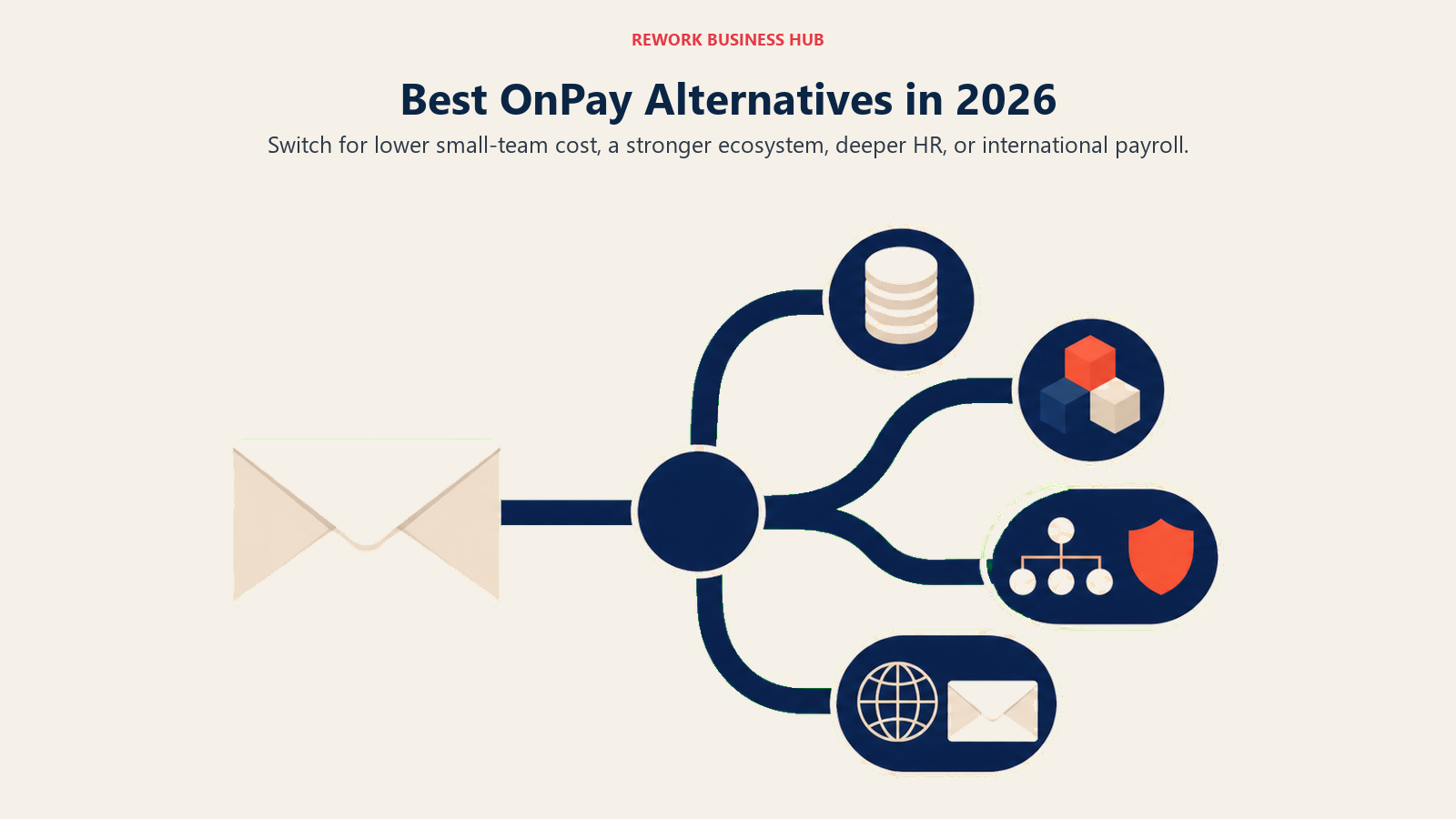
OnPay sells payroll differently from almost everyone else here: one plan, $49/mo base plus $6 per worker per month, with W-2s, 1099s, year-end filings, and every state's filings included at no extra charge. There's no Plus tier, no sales call to unlock multi-state support. So almost nobody leaves OnPay over a missing feature. The complaint is one of four specific situations a single flat plan wasn't built to solve.
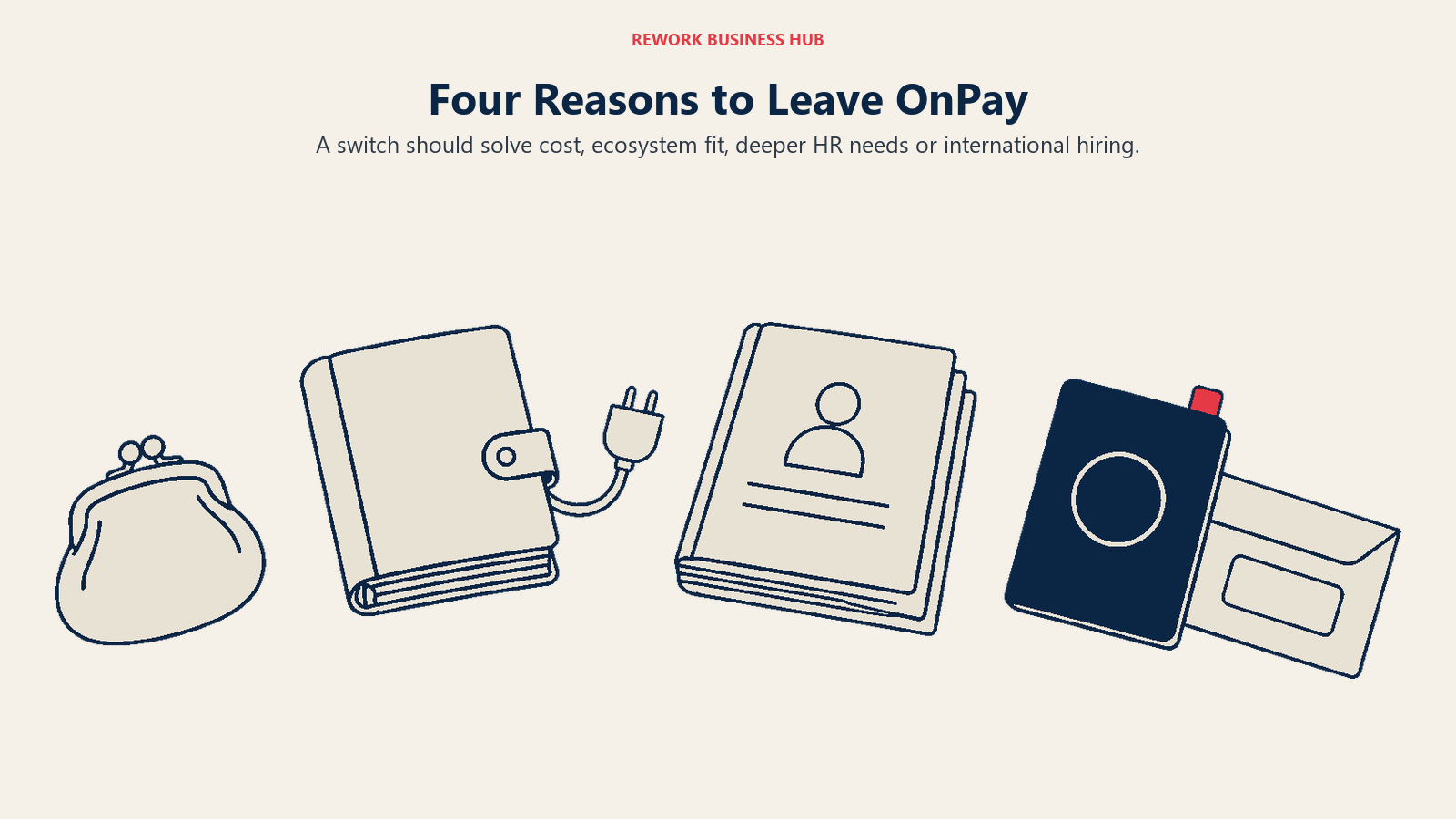
Those four reasons: price at very low headcount, where a couple of rivals genuinely undercut OnPay's $49 + $6 math; an ecosystem pull toward QuickBooks, Square, or Homebase; a need for HR depth the flat plan doesn't carry, like benefits brokerage or IT provisioning; and hiring outside the US, which OnPay simply doesn't do. The 12 platforms below are evaluated against each situation.
Key Facts
- The IRS Failure to Deposit penalty starts at 2% for a deposit 1 to 5 days late and climbs to 15% once the IRS has issued a formal notice and it's still unpaid, per the IRS's own penalty schedule.
- QuickBooks holds an estimated 82.55% share of the small business accounting software market, per 6sense's tracking data, the real force behind "keep payroll in the same login" as a switching reason.
- One-third of companies spend at least 11 hours a week on HR administration (payroll, benefits, hiring, onboarding), and 61% plan to lean on outsourcing to handle it, per Paychex's 2025 Business Leader Priorities survey.
- 45% of small and midsize business hiring managers plan to increase contract or temporary hiring in the first half of 2026, per Robert Half's small business hiring research.
- Cross-border hiring grew 42% in 2024 versus 104% for domestic hiring on one major global employment platform, per Deel's State of Global Hiring report, the exact gap that stops a domestic-only plan like OnPay's cold once a business hires abroad.
Quick Comparison Table
| Tool | Best For | Starting Price | Key Strength | Key Limitation |
|---|---|---|---|---|
| Gusto | HR depth beyond payroll | $49/mo + $6/employee (Simple) | Benefits brokerage, tiered HR stack | Multi-state and time tracking need Plus |
| Patriot Software | Lowest price at low headcount | $37/mo + $5/employee (Full Service) | Cheapest full-service plan here | Thin HR past core payroll |
| QuickBooks Payroll | Same login as your QBO books | $50/mo + $6.50/employee (Workforce Payroll) | Posts straight to your existing ledger | Full price depends on your QBO tier |
| Square Payroll | Hourly teams already on Square POS | $35/mo + $6/person, or $6/person, no base for contractors only | Hours and tips flow from the register | Weak fit for salaried, office-only teams |
| SurePayroll | Nanny and household payroll | $29/mo + $7/employee | Dedicated household-employer plan | QuickBooks sync is a paid add-on |
| Wave Payroll | Leaving QuickBooks for Wave's books | $40/mo + $6/employee, one price nationwide | Pairs with Wave's free accounting suite | Doesn't sync with QuickBooks Online |
| Rippling | Payroll bundled with HR and IT | Quote only | Onboarding also provisions laptops, apps | Costs stack fast once modules are added |
| Paychex Flex | A phone number when payroll breaks | Quote only; ~$39/mo + $5/employee (reported) | Decades of tax-filing history, PEO option | No published pricing anywhere |
| ADP RUN | A familiar national compliance brand | Quote only; ~$79/mo + $4/employee (reported) | Deep compliance network, 300+ integrations | No published pricing on any tier |
| Homebase Payroll | Hourly teams already scheduling in Homebase | $39/mo + $6/active employee (add-on) | Approved timesheets feed payroll directly | Needs a separate scheduling plan first |
| Justworks Payroll | A path into PEO benefits later | $50/mo + $8/employee (non-PEO) | Same login upgrades into a full PEO | Costlier per employee than flat-rate rivals |
| Deel | Contractors or staff outside the US | $49/contractor/mo | Contractor and EOR coverage, 150+ countries | Not a domestic W-2 payroll replacement |
Why People Actually Leave OnPay
Four situations drive nearly every real switch away from OnPay: price at low headcount, an ecosystem pull toward a tool already in daily use, HR depth the flat plan doesn't carry, and hiring outside the US. For the fuller framework behind any payroll switch, see the guide to choosing payroll software; for the wider category, see best payroll software for small business.
1. Price Undercuts OnPay at Low Headcount
OnPay's $49 + $6 math is genuinely competitive at most headcounts, but a handful of rivals still beat it, especially under 10 employees where the base fee carries more weight than the per-worker rate.
| Platform | Monthly Base | Per-Worker Rate | Total at 3 Workers | Total at 10 Workers |
|---|---|---|---|---|
| OnPay (baseline) | $49 | $6 | $67 | $109 |
| Patriot Software (Full Service) | $37 | $5 | $52 | $87 |
| Wave Payroll | $40 | $6 | $58 | $100 |
| Square Payroll (contractor-only) | $0 | $6 | $18 | $60 |
Patriot undercuts OnPay by $15 to $22 a month here, and Square's contractor-only plan, no base fee at all, beats every option if the workforce is entirely 1099.
2. The Business Already Lives Inside Another Login
Nobody wants a third dashboard. If payroll posts to a ledger or a POS the business already opens daily, that convenience regularly beats a slightly better price elsewhere.
| Already Using | Payroll That Shares the Login | Why It Wins on Fit |
|---|---|---|
| QuickBooks Online | QuickBooks Payroll (Workforce Payroll) | Payroll posts straight to the same ledger, no separate reconciliation step |
| Square POS | Square Payroll | Hours, tips, and shift differentials flow from the register into payroll directly |
| Homebase scheduling | Homebase Payroll | Approved timesheets and hours feed payroll without re-entry |
3. OnPay's Flat Plan Doesn't Carry HR Depth
OnPay's single plan covers core payroll well, but it was never built as an HR system of record. Once a business needs benefits brokerage, real PTO policy, or IT provisioning, the flat plan runs out of runway.
| Need | OnPay (flat plan) | Gusto | Rippling |
|---|---|---|---|
| Multi-state payroll | Included, no extra charge | Included, all tiers | Included |
| Employee self-service portal | Included | Included, all tiers | Included |
| Benefits brokerage and admin | Basic, via a partner | Built in from Simple up, most states | Built in, deeper broker network |
| PTO policy management | Basic | Plus tier and above | Included |
| Onboarding workflows and reviews | Not offered | Premium tier | Included |
| IT provisioning (laptops, app access) | Not offered | Not offered | Included, core differentiator |
4. Hiring Outside the US
This one isn't a close call. OnPay is US-domestic only. The moment a business needs to pay a contractor abroad, or employ someone where it has no legal entity, OnPay has nothing to offer.
| Need | OnPay | Deel |
|---|---|---|
| Pay a US W-2 employee | Yes, core product | Not the primary product |
| Pay a contractor outside the US | Not supported | Contractor Management, $49/contractor/mo |
| Employ staff abroad with no local entity | Not supported | EOR, from $599/employee/mo |
| US-based PEO or co-employment | Not supported | US PEO, from $125/employee/mo |
What a Growing Team Actually Pays
The four reasons above explain why a business leaves, but the real comparison against a flat, no-tiers plan is total monthly software cost as headcount grows, not a feature checklist. Every figure below is a platform or administrative fee only, excluding wages, employer payroll taxes, and benefits premiums. Deel isn't included here since its pricing runs per contractor or EOR employee, a different basis (see the international table above).
| Platform | 5 Employees | 10 Employees | 25 Employees | 50 Employees | Basis |
|---|---|---|---|---|---|
| OnPay (baseline) | $79 | $109 | $199 | $349 | Published |
| Patriot Software (Full Service) | $62 | $87 | $162 | $287 | Published, regular rate |
| Wave Payroll | $70 | $100 | $190 | $340 | Published, nationwide |
| Square Payroll | $65 | $95 | $185 | $335 | Published |
| SurePayroll (Small Business) | $64 | $99 | $204 | $379 | Published |
| Homebase Payroll (add-on) | $69 | $99 | $189 | $339 | Published add-on |
| Gusto (Simple) | $79 | $109 | $199 | $349 | Reported |
| QuickBooks Payroll (Workforce) | $82.50 | $115 | $212.50 | $375 | Reported; repriced July 2026 |
| Justworks Payroll (non-PEO) | $90 | $130 | $250 | $450 | Published |
| Paychex Flex (Essentials) | ~$64 | ~$89 | Quote only | Quote only | Quote only, no vendor rate card |
| ADP RUN (Essential, reported) | ~$99 | ~$119 | ~$179 | ~$279 | Quote only; reported |
| Rippling (all-in, reported) | ~$100-175 | ~$200-350 | ~$500-875 | ~$1,000-1,750 | Reported; modules separate |
Gusto Simple lands at the exact same dollar figures as OnPay, $49 base plus $6 per person, so the real decision there is what each plan includes at that price, not which number is smaller. Patriot, Wave, and Square genuinely undercut OnPay through 50 employees, while Justworks and QuickBooks Payroll cost more per head in exchange for a PEO path or a ledger sync. A flat plan's real advantage shows up in what doesn't happen: the OnPay invoice doesn't jump when a business adds a state or hires its first 1099 contractor.
1. Gusto: The HR Depth OnPay's Flat Plan Doesn't Carry
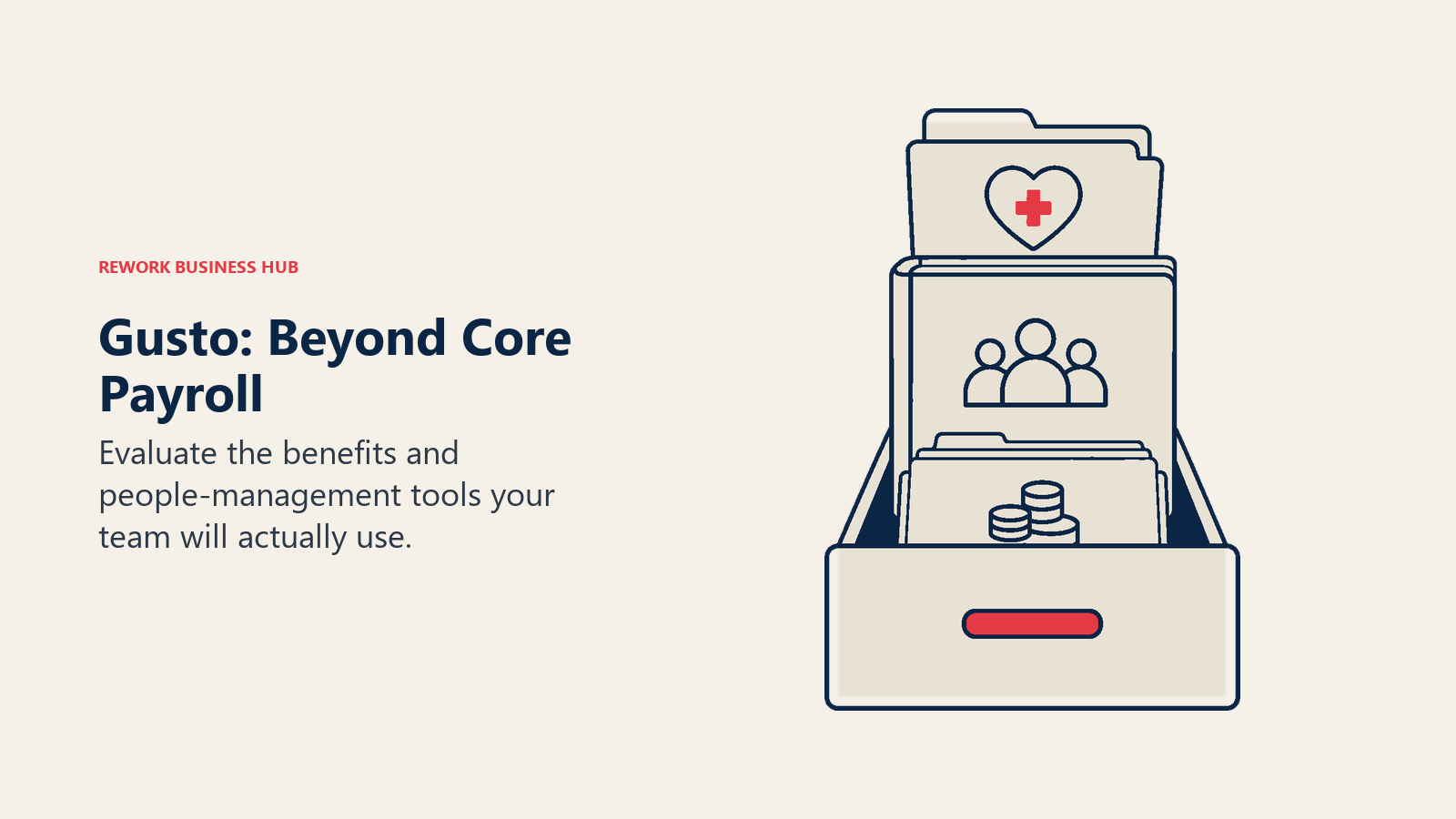
Gusto picks up where OnPay's flat plan stops: benefits brokerage, real PTO policy tools, and an HR stack that grows with the business, on payroll that's just as easy to set up.
Target audience: US companies with 2 to 150 employees that want payroll and early HR in one self-serve product.
| Pros | Cons |
|---|---|
| Benefits brokerage from the entry tier, most states | Multi-state and time tracking need Plus |
| Unlimited payroll runs on every plan | Premium tier, the deepest HR layer, is quote-only |
| Strong employee self-service portal | US-only, no international payroll |
| Published, transparent pricing on Simple and Plus | Support can slip during tax season |
Pricing: Simple: $49/mo + $6/employee/mo. Plus: $80/mo + $12/employee/mo. Premium: quote only (reported at $180/mo + $22/employee/mo, per Gusto's own pricing page, which will not bill Premium without a sales conversation). Contractor Only: $35/mo + $6/contractor/mo. Simple's base rose from $40 to $49 in a March 2026 increase.
Best for: A business whose complaint about OnPay is "I need benefits and PTO, not just payroll." See our Gusto vs. Paychex comparison, or best Gusto alternatives if Gusto is what you're outgrowing instead.
2. Patriot Software: The Cheapest Full-Service Plan Here
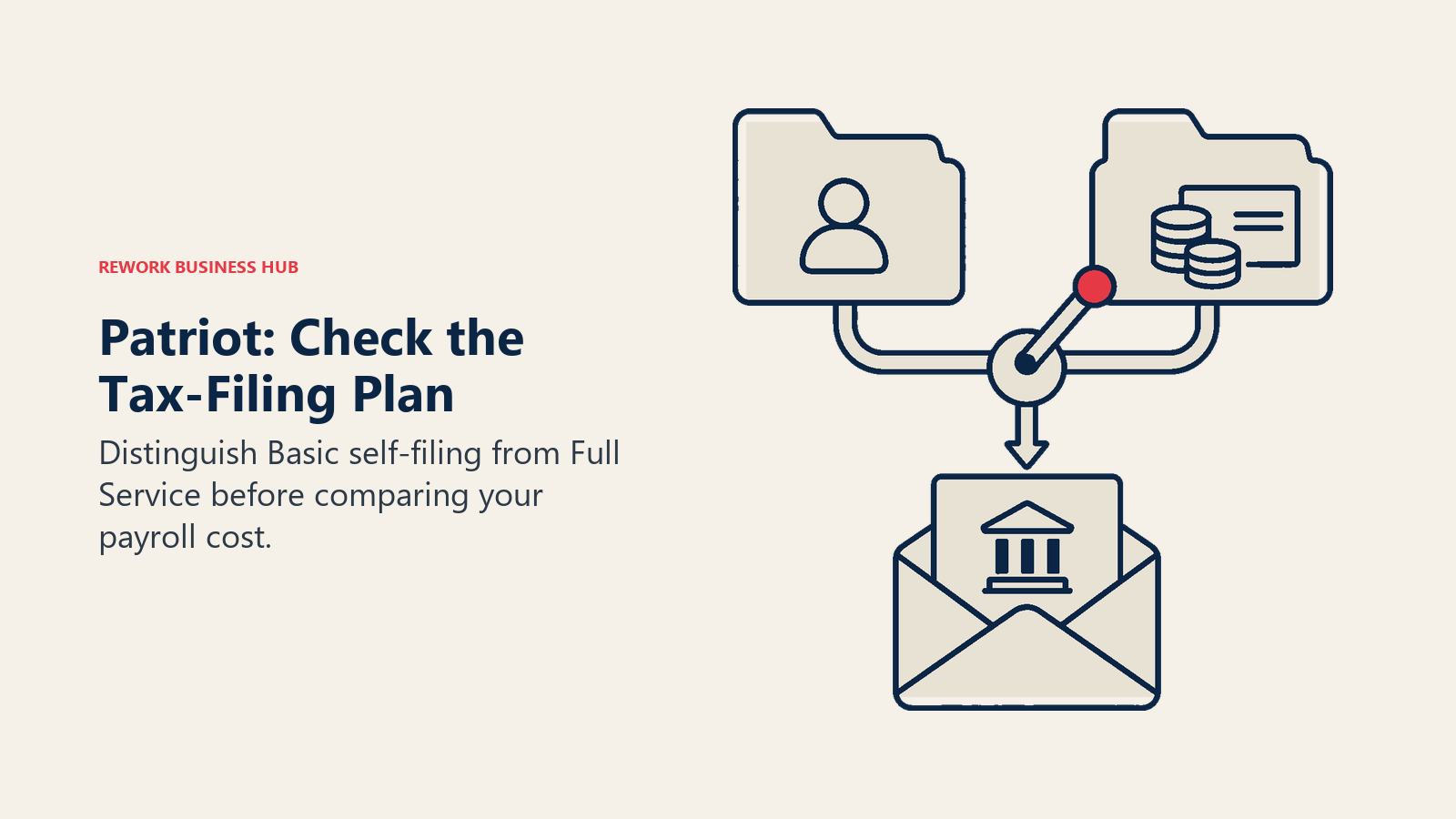
Patriot exists for buyers who find even OnPay's $49 + $6 a bit steep at 3 to 10 employees, without giving up automatic tax filing to get there.
Target audience: Budget-conscious US small businesses with 1 to 25 employees and bookkeepers minimizing per-client software cost.
| Pros | Cons |
|---|---|
| Lowest published starting price on this list | Thin HR features beyond core payroll |
| Full Service tier files federal, state, local taxes | Not built for much past 50 employees |
| Free payroll setup, no implementation fee | Phone support hours are more limited |
| Basic tier goes even lower for self-filers | Fewer integrations than Gusto or QuickBooks |
Pricing: Basic Payroll (self-file taxes): $17/mo + $4/employee/mo. Full Service Payroll (Patriot files for you): $37/mo + $5/employee/mo. A 50%-off-3-months promo applies to both; figures above are the regular, ongoing rate, per Patriot Software's own pricing page.
Best for: A very small business or a bookkeeper's client roster where minimizing the software bill matters more than a polished interface.
3. QuickBooks Payroll: Same Login as Your Books
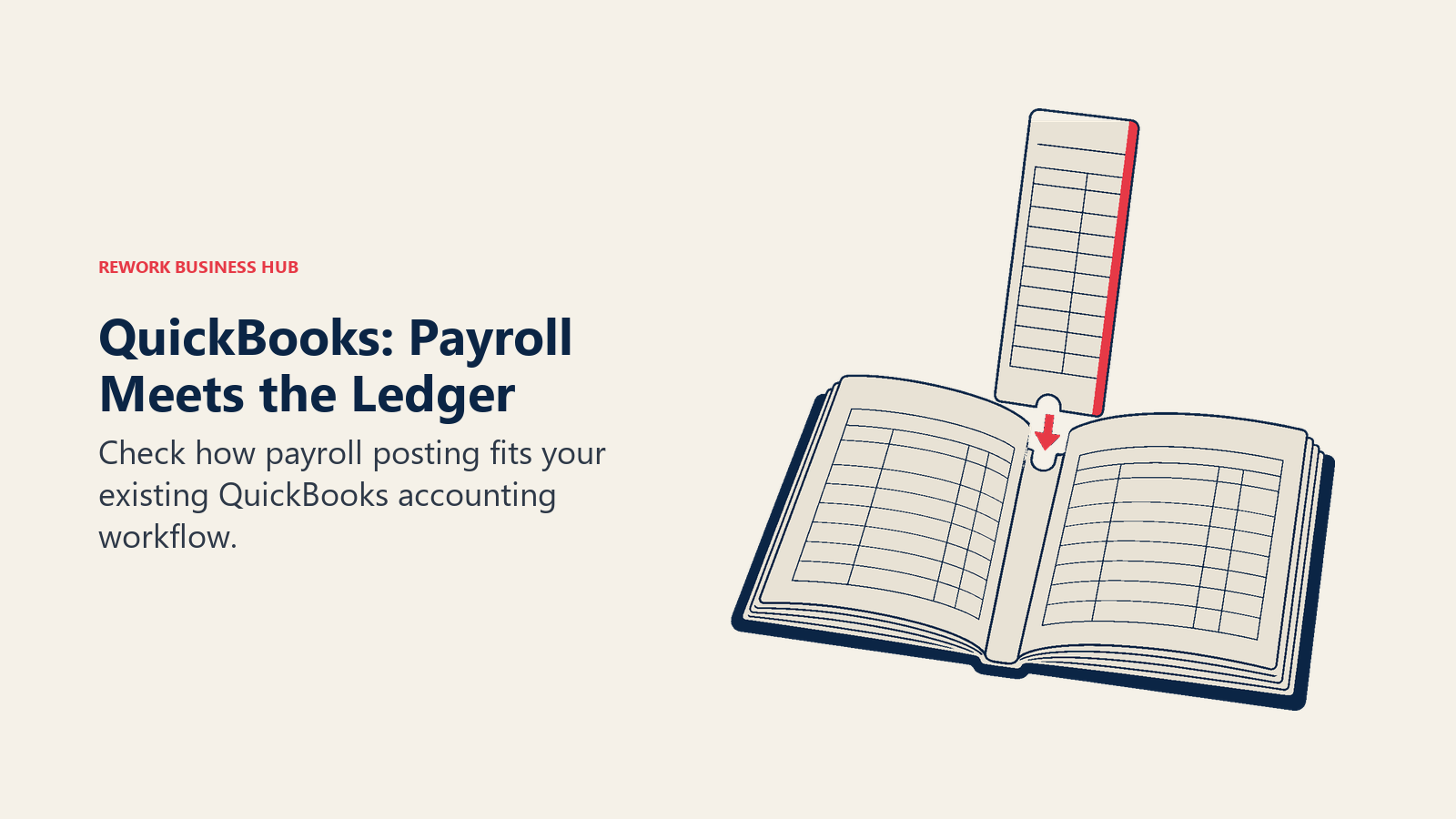
QuickBooks Payroll's whole argument is convenience: payroll that posts directly to the same ledger removes a reconciliation step most small businesses otherwise do by hand. Note the naming: effective July 1, 2026, the entry tier formerly called Core is now Workforce Payroll, alongside Workforce Premium and Workforce Elite.
Target audience: US businesses with 1 to 50 employees already living in QuickBooks Online.
| Pros | Cons |
|---|---|
| Posts straight into your existing QuickBooks books | Full price depends on your separate QBO tier |
| Same-day direct deposit on higher tiers | Not a fit without QuickBooks Online already |
| Tax penalty protection included on Workforce Elite | Thinner HR than a dedicated HRIS |
| Familiar interface for the majority of US bookkeepers | Renamed and repriced mid-2026, worth double-checking your invoice |
Pricing: Workforce Payroll: $50/mo + $6.50/employee/mo. Workforce Premium: $88/mo + $10/employee/mo. Workforce Elite: $134/mo + $12/employee/mo. A promo of 50% off the first three months applies to the base fee only, not the per-employee rate. Figures reported.
Best for: A business where the QuickBooks ecosystem, not price, decides. See best QuickBooks Payroll alternatives if QuickBooks Payroll itself is what you're leaving instead.
4. Square Payroll: Built Around a Register, Not a Spreadsheet
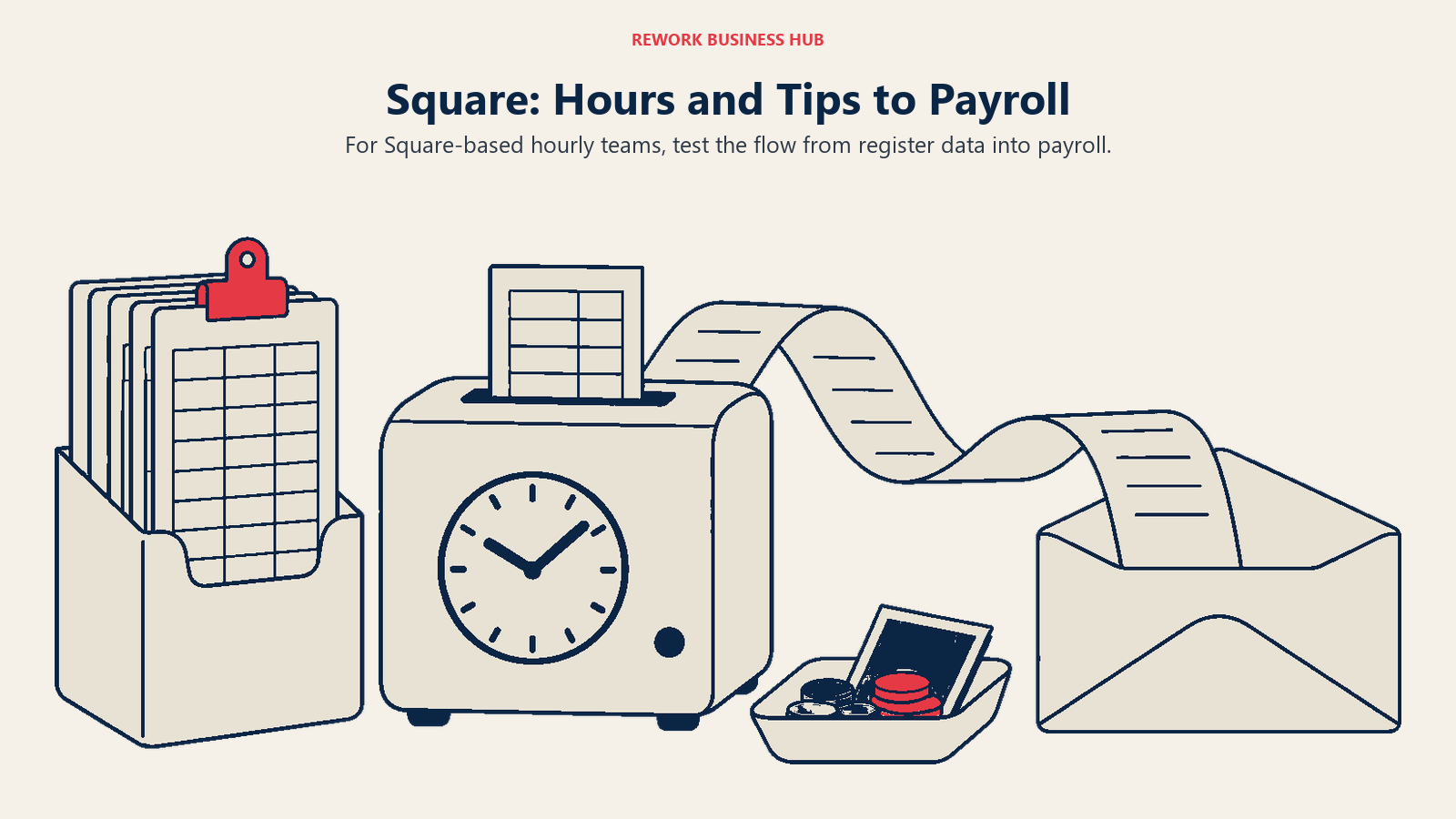
If a team clocks in through Square, Square Payroll removes a step OnPay can't: hours, tips, and shift differentials flow from the register into payroll directly, no manual import.
Target audience: Retail, restaurant, and salon businesses already on Square, particularly 1 to 50 employees.
| Pros | Cons |
|---|---|
| Direct sync with Square POS and timecards | Weaker fit for salaried, office-only teams |
| Contractor-only plan with zero base fee | Multi-state support is less mature than OnPay's |
| Handles tip reporting and shift differentials natively | Best value depends on owning Square hardware |
| Automatic tax filing included on the employee plan | Less HR depth than Gusto or Rippling |
Pricing: Employees and contractors: $35/mo + $6/person paid/mo. Contractor-only: $6/person paid/mo, no base fee at all, per Square's own pricing page.
Best for: A restaurant, retail shop, or salon where payroll and point-of-sale hours should just be the same data.
5. SurePayroll: Built for the Smallest Employers, Including Households
SurePayroll, owned by Paychex since 2011, targets employers smaller than most of OnPay's own base, including households hiring a single nanny, a use case OnPay doesn't cover.
Target audience: US businesses with 1 to 25 employees, plus household employers hiring a nanny or caregiver.
| Pros | Cons |
|---|---|
| Dedicated nanny and household payroll plan | QuickBooks sync is a $4.99/mo add-on, not native |
| Backed by Paychex's compliance infrastructure | Fewer modern HR features than Gusto |
| Unlimited runs and free direct deposit | Multi-state filing adds $9.99/mo |
| New customers get every alternating month free for a year | Less brand recognition than its parent company |
Pricing: Full Service: $29/mo + $7/employee/mo. Multi-state payroll: +$9.99/mo. Nanny and household: $39/mo including one employee. Accounting integration: $4.99/mo. Per SurePayroll's own pricing page.
Best for: A very small employer, or a household hiring its first nanny, where the per-worker rate matters more than polish.
6. Wave Payroll: For Leaving QuickBooks Behind Entirely
Wave is built for the reader who isn't just switching payroll, they're switching accounting too. Wave Payroll only connects to Wave Accounting, so the books move with payroll instead of staying on QuickBooks Online.
Target audience: Solo founders and very small businesses, 1 to 15 employees, wanting one login instead of two.
| Pros | Cons |
|---|---|
| One price in all 50 states since April 2025 | Doesn't sync with QuickBooks Online at all |
| Pairs with Wave's own free accounting suite | Not a fit if keeping the books elsewhere |
| Simple, flat per-person pricing | Less reporting depth than mid-market tools |
| No long-term contract | The old cheaper self-service-state tier no longer exists |
Pricing: $40/mo base + $6 per active employee/mo + $6 per contractor paid/mo, US-only, per Wave's own payroll page. Wave moved to this single nationwide price in April 2025, replacing the old state-by-state split.
Best for: A business that's decided the real fix is leaving QuickBooks Online's ecosystem, not just its payroll product.
7. Rippling: Payroll as One Output of a Single Employee Record
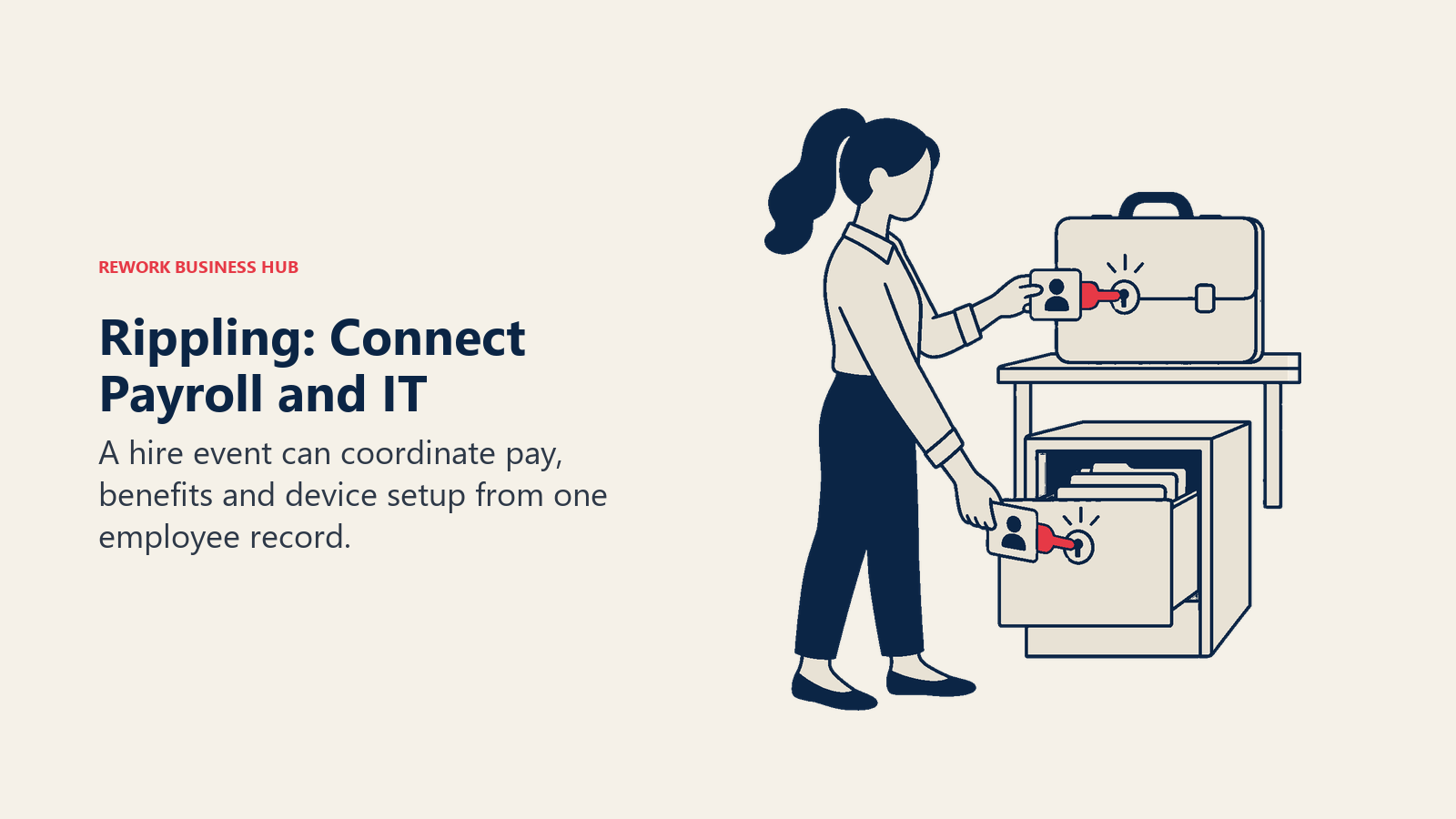
Rippling's bet is that payroll shouldn't be an island. Onboard someone once and it can run payroll, enroll benefits, and provision their laptop from the same hire event, something OnPay's flat plan was never built to do.
Target audience: Tech-forward companies with 30 to 500 employees wanting fewer manual handoffs between HR, IT, and payroll.
| Pros | Cons |
|---|---|
| HR, IT, and payroll on one employee record | Pricing isn't published, requires a sales call |
| Global payroll and EOR options available | Costs stack quickly as more modules get added |
| Strong onboarding and offboarding automation | Steeper learning curve than a payroll-only tool |
| Scales from startup through enterprise headcount | Easy to overbuy modules during the sales process |
Pricing: Quote only. Rippling publishes no price list; payroll and other modules are priced separately on top of the core platform, and most companies land around $20 to $35 per employee per month once payroll and HR are both active (reported).
Best for: A growth-stage team whose real complaint about OnPay is having to stitch payroll to a separate IT process. See best Rippling alternatives if module sprawl is the actual frustration.
8. Paychex Flex: A Phone Number to Call
Paychex has filed payroll taxes since 1971. Flex scales from a two-person shop's first payroll to a much larger account, with a real PEO option if benefits become the priority, backed by a dedicated rep rather than a ticket queue.
Target audience: US businesses with 2 to 1,000+ employees wanting a dedicated payroll specialist over a self-service portal.
| Pros | Cons |
|---|---|
| Decades of payroll tax-filing experience | No published pricing anywhere on Paychex's site |
| Real PEO arm alongside standard payroll | Every tier, including Essentials, requires a quote |
| Dedicated payroll specialists on accounts | UI feels dated next to OnPay or Gusto |
| 24/7 US-based support | Hidden fees are a common complaint in reviews |
Pricing: Quote only. Paychex does not publish pricing on its own site for any tier. Flex Essentials, positioned for under roughly 20 employees, is reported at around $39/mo + $5/employee/mo (reported); Select and Pro require a custom quote.
Best for: A team that wants a human on the phone when payroll breaks, and is fine with a sales call to get there. See best Paychex alternatives if Paychex is what you're leaving, or Gusto vs. Paychex if you're deciding between these two names.
9. ADP RUN: A National Brand, Sold the Traditional Way
ADP RUN is payroll sold the way it's been sold for decades: a national compliance network, sales-led, with brand recognition that matters to a bank or an auditor more than any comparison chart.
Target audience: US businesses with 5 to 150 employees wanting ADP's compliance depth without its enterprise-scale Workforce Now product.
| Pros | Cons |
|---|---|
| Decades of payroll tax-filing accuracy | No published pricing on any tier |
| Marketplace of 300+ HR integrations | UI has aged relative to OnPay or Gusto |
| Strong brand recognition with lenders, auditors | Sales process is known to surface add-on fees |
| ZipRecruiter and HR support bundled at higher tiers | Contract terms are harder to compare than self-serve rivals |
Pricing: Quote only; none of ADP's four RUN packages show a price without a sales call. Third-party 2026 buyer guides report Essential starting around $79/mo + $4/employee/mo, though ADP has not confirmed this figure (reported).
Best for: A business that wants the household-name payroll brand and will negotiate a quote to get it. See Gusto vs. ADP for ADP against a self-serve rival.
10. Homebase Payroll: Scheduling That Feeds Payroll
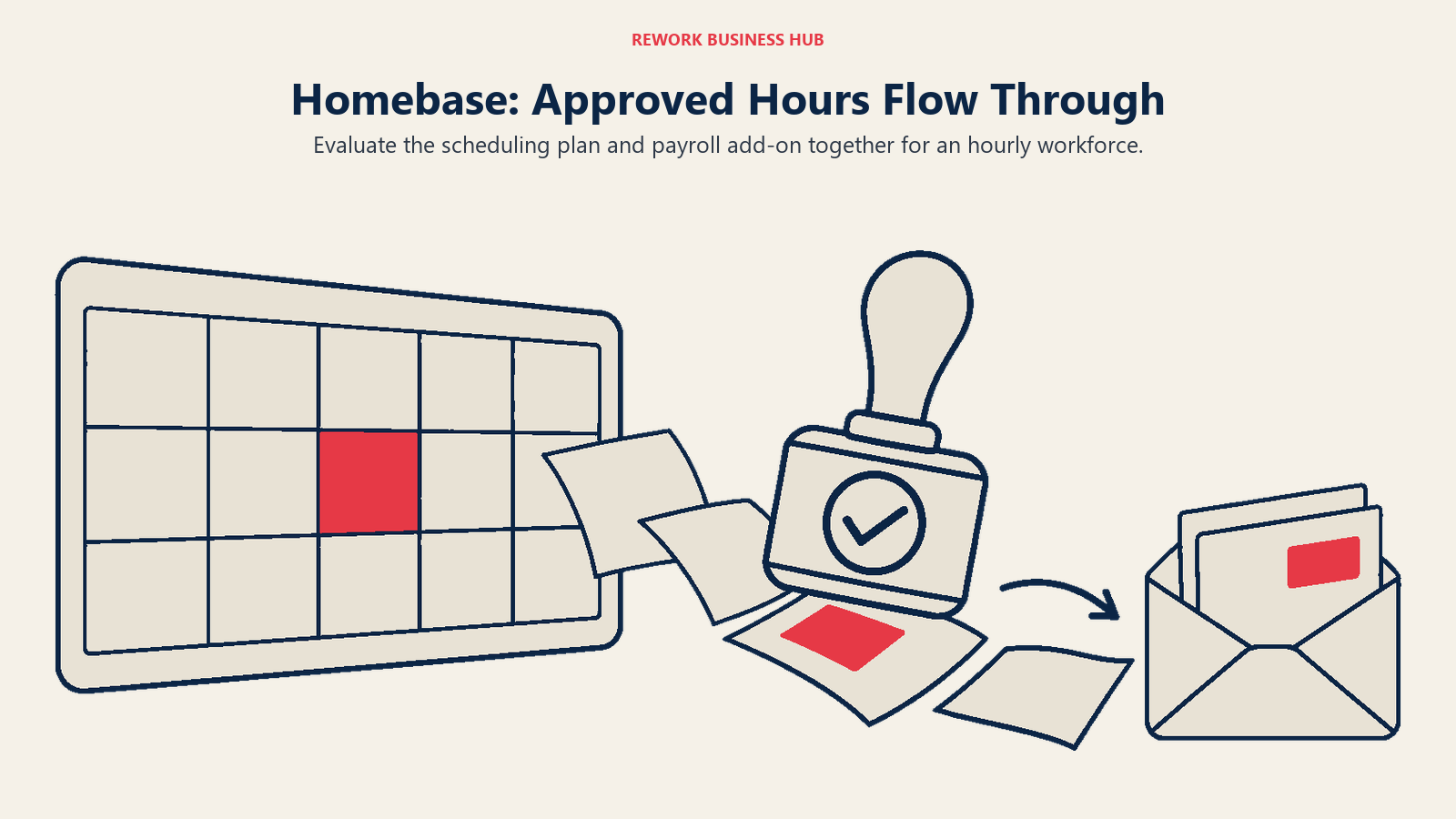
Homebase started as scheduling and time-clock software, and its payroll add-on leans into that: approved timesheets and hours flow directly into payroll, which matters for hourly teams a flat generic plan treats like salaried ones.
Target audience: Restaurant, retail, and service businesses with 1 to 75 mostly hourly employees, already scheduling in Homebase.
| Pros | Cons |
|---|---|
| Approved hours sync into payroll automatically | Payroll is an add-on; a scheduling plan comes first |
| Built specifically for hourly, shift-based teams | Less HR depth than Gusto or Rippling |
| Simple, mobile-first for managers and staff | Not built for salaried, office-only teams |
| Handles overtime and break rules automatically | Total cost depends on which scheduling tier you're already on |
Pricing: Payroll add-on: $39/mo base + $6/active employee/mo, on top of a base scheduling plan (Basic is $0 for up to 10 employees per location; Essentials $30/mo; Plus $70/mo; All-in-One $120/mo). Per Homebase's own pricing page.
Best for: A restaurant or retail business already on Homebase that wants hours and payroll to be the same data. See best Homebase alternatives if scheduling is the friction point.
11. Justworks Payroll: A Path Into PEO Benefits Later
Justworks sells standalone payroll, but the real pitch is the door it opens: the same login can later upgrade into a full PEO plan for large-group benefits rates, a path OnPay's flat plan doesn't offer.
Target audience: US startups with 5 to 100 employees wanting room to add PEO-level benefits within a year or two.
| Pros | Cons |
|---|---|
| Published upgrade path into a full PEO | Costs more per employee than flat-rate rivals |
| Month-to-month billing, no long-term contract | Not available outside the US |
| One of the only PEOs with fully published pricing | Overkill if benefits will never be added |
| Modern interface for small HR teams | Payroll-only still costs more than OnPay per head |
Pricing: Justworks Payroll (non-PEO): $50/mo base + $8/employee/mo. PEO Basic: $79/employee/mo, no base fee. PEO Plus: $124/employee/mo, no base fee. Global/International EOR: $599/employee/mo. Per Justworks' own pricing.
Best for: A startup that wants payroll now but expects real benefits within a year or two. See best PEO services for the wider field, or best Justworks alternatives if Justworks is what you're leaving.
12. Deel: For the Moment a Contractor Lands Outside the US
Deel isn't a domestic replacement for OnPay, and it isn't trying to be. It solves the one thing OnPay doesn't touch: paying and staying compliant with contractors or employees in countries where the business has no legal entity.
Target audience: Any US company with contractors or employees outside the US, from a startup paying a handful of international freelancers to a larger company running global EOR.
| Pros | Cons |
|---|---|
| Contractor management and compliance in 150+ countries | Not built for US-only domestic W-2 payroll |
| EOR coverage without a local entity | EOR pricing is steep at low volume |
| US PEO option alongside global EOR | Primarily an international, not domestic, platform |
| Fast time-to-hire versus setting up entities directly | Pairs best with, doesn't replace, a domestic payroll tool |
Pricing: Contractor Management: $49/contractor/mo. Contractor of Record: $325/contractor/mo. US PEO: from $125/employee/mo. EOR: from $599/employee/mo. Per Deel's own pricing.
Best for: A business whose OnPay frustration is really an international hiring gap: keep OnPay for the US team, add Deel for everyone else. See our Deel vs. Remote comparison for the closest matchup.
Stage Fit Matrix
| Tool | Startup (0-20) | Growth (20-100) | Mid-Market (100-500) | Enterprise (500+) |
|---|---|---|---|---|
| Gusto | Excellent | Strong | Moderate | Not suitable |
| Patriot Software | Excellent | Good | Not suitable | Not suitable |
| QuickBooks Payroll | Excellent | Strong | Moderate | Not suitable |
| Square Payroll | Excellent | Strong | Moderate | Not suitable |
| SurePayroll | Excellent | Good | Not suitable | Not suitable |
| Wave Payroll | Excellent | Moderate | Not suitable | Not suitable |
| Rippling | Light | Strong | Excellent | Good |
| Paychex Flex | Good | Strong | Strong | Good |
| ADP RUN | Good | Strong | Good | Moderate |
| Homebase Payroll | Excellent | Strong | Moderate | Not suitable |
| Justworks Payroll | Strong | Excellent | Moderate | Not suitable |
| Deel | Excellent | Excellent | Strong | Strong |
How to Choose: Decision Framework
| If you need... | Choose |
|---|---|
| The lowest price at very low headcount | Patriot Software |
| A contractor-only plan with zero base fee | Square Payroll (contractor-only) |
| Payroll in the same login as your books | QuickBooks Payroll |
| Payroll tied to a POS and timecards | Square Payroll |
| Scheduling and timesheets that feed straight into payroll | Homebase Payroll |
| Benefits brokerage and real PTO policy tools | Gusto |
| Payroll unified with HR, IT, and finance | Rippling |
| A national brand and phone-based support | ADP RUN or Paychex Flex |
| A path to PEO-level benefits later, without switching platforms | Justworks Payroll |
| Contractors or employees outside the US | Deel |
What OnPay Still Does Best
Most readers here have already decided to shop around. But OnPay earns its flat-plan reputation honestly, worth weighing against whatever pulled you toward this list.
| OnPay Strength | Who It Matters For |
|---|---|
| One flat plan, no tiers to navigate or upsell calls to sit through | Buyers who hate a sales-gated pricing ladder |
| No implementation fee, no per-feature upsell path | Accountants managing several small clients at once |
| Multi-state payroll and 1099 filings included at no extra charge | Remote or multi-state small teams |
| A predictable monthly bill even as the business's needs shift | Owners who never want the invoice to surprise them |
| Unlimited pay runs on the one plan, including off-cycle corrections | Businesses that occasionally need a correction run |
| No long-term contract | Anyone wary of getting locked into a platform |
If none of the four reasons above genuinely apply, staying on OnPay is a defensible, low-drama choice. For the wider field, see best payroll software for small business.
What to Do Next
Match your situation to one of the four reasons above before booking a single demo. If it's price, run OnPay and Patriot's Full Service plan side by side against your real headcount, not the marketing math. If it's ecosystem pull, confirm the sync works the way the vendor claims before migrating a single pay run, QuickBooks Payroll, Square Payroll, and Homebase Payroll each handle it differently. If it's HR depth, start a Gusto or Rippling trial and see whether the benefits and PTO tools actually get used. And if it's international hiring, don't force OnPay to do Deel's job, run them side by side: OnPay for the US team, Deel for everyone else.

Principal Product Marketing Strategist
On this page
- Key Facts
- Quick Comparison Table
- Why People Actually Leave OnPay
- 1. Price Undercuts OnPay at Low Headcount
- 2. The Business Already Lives Inside Another Login
- 3. OnPay's Flat Plan Doesn't Carry HR Depth
- 4. Hiring Outside the US
- What a Growing Team Actually Pays
- 1. Gusto: The HR Depth OnPay's Flat Plan Doesn't Carry
- 2. Patriot Software: The Cheapest Full-Service Plan Here
- 3. QuickBooks Payroll: Same Login as Your Books
- 4. Square Payroll: Built Around a Register, Not a Spreadsheet
- 5. SurePayroll: Built for the Smallest Employers, Including Households
- 6. Wave Payroll: For Leaving QuickBooks Behind Entirely
- 7. Rippling: Payroll as One Output of a Single Employee Record
- 8. Paychex Flex: A Phone Number to Call
- 9. ADP RUN: A National Brand, Sold the Traditional Way
- 10. Homebase Payroll: Scheduling That Feeds Payroll
- 11. Justworks Payroll: A Path Into PEO Benefits Later
- 12. Deel: For the Moment a Contractor Lands Outside the US
- Stage Fit Matrix
- How to Choose: Decision Framework
- What OnPay Still Does Best
- What to Do Next