Best SMS Marketing Software in 2026: 13 Platforms Compared by Fit
Turn this article into takeaways for your work.


Each assistant summarizes the article only for you and suggests best practices for your work.
Updated August 2026
The best SMS marketing software in 2026 is the one that fits your list size, your sales motion, and how much you're willing to spend on compliance before you send a single message, not the one with the flashiest concierge-service pitch. Attentive and Postscript lead for ecommerce brands that want a dedicated SMS team behind the platform, Klaviyo SMS and Omnisend win for teams that already run email through the same vendor, and Twilio wins if you'd rather build your own sending layer than rent someone else's. This guide ranks 13 platforms so you can shortlist fast instead of booking demos with all thirteen. We evaluated each on ecommerce fit, published pricing, compliance overhead, and real customer scale, and verified pricing directly against each vendor's own pricing page in August 2026.
Get the fit right and the channel earns its keep fast: automated, behavior-triggered SMS flows make up just 7.6% of sends but drive 45.2% of total SMS revenue, according to Klaviyo's 2026 SMS marketing benchmarks across more than 183,000 customers. That gap between effort and payoff is the whole argument for picking a platform built around automation instead of one-off blasts.
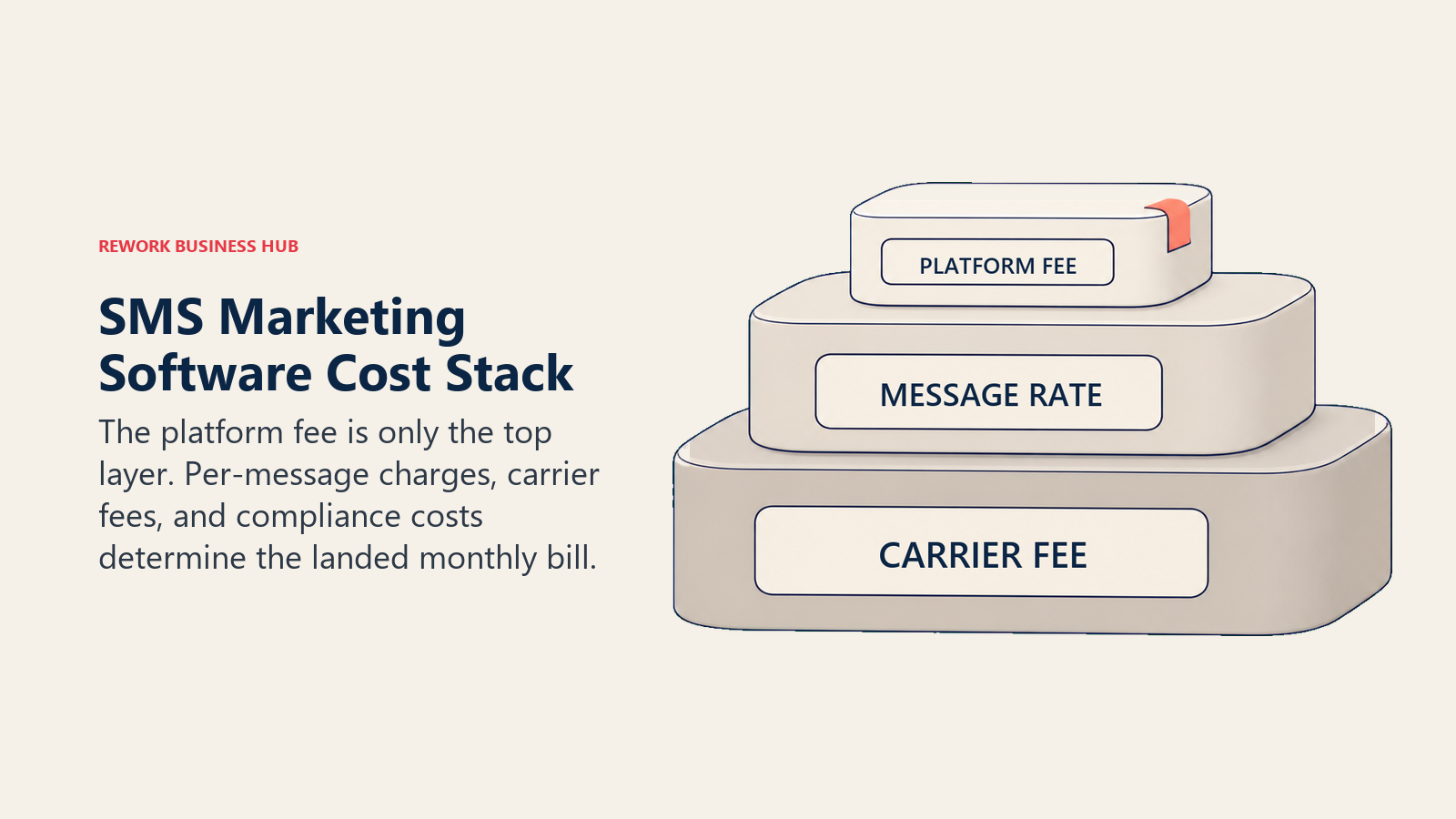
Most buyers get this decision wrong because they price-shop the platform fee and never model the message cost underneath it. SMS marketing software rarely bills like software. It bills like a utility with a subscription bolted on top: a monthly platform fee, a per-message or per-credit rate, a carrier surcharge on top of that, and often a mandatory local number and A2P 10DLC registration before the first message can legally send. Skip that math and the invoice at month three looks nothing like the number on the pricing page.
If you're also managing transactional email and API-based sending alongside SMS, that's a related but separate buying decision. Our SendGrid vs Mailgun comparison and best SendGrid alternatives guide cover the email API layer that often sits behind the same messaging stack as the tools below.
Key Facts
Key Facts: SMS Marketing's Impact
- Americans exchanged nearly 2.2 trillion SMS and MMS text messages in 2024, according to CTIA's 2024 Annual Wireless Industry Survey.
- 89% of US consumers have opted in to receive texts from at least one business, up from 66% in 2021, per EZ Texting's 2026 Consumer Texting Behavior Report (959 US consumers surveyed).
- Automated, behavior-triggered SMS flows account for just 7.6% of sends but generate 45.2% of total SMS revenue, according to Klaviyo's 2026 SMS marketing benchmarks across more than 183,000 customers.
- The average SMS marketing campaign converts at 0.12%, but automated flows convert nearly 6 times higher at 0.77%, per Omnisend's 2026 SMS Marketing Statistics report covering more than 246 million sends.
- Message frequency is the top reason consumers opt out of business texts, cited by 40% of respondents, more than double the next most common reason, according to EZ Texting's 2026 report.
Quick Comparison Table
Use this table to narrow the field before you dig into individual vendor trade-offs. Pricing is verified against each vendor's own pricing page as of August 2026.
| Tool | Best For | Starting Price | Key Strength | Key Limitation |
|---|---|---|---|---|
| Attentive | Enterprise ecommerce brands wanting a managed SMS program | No published pricing; demo required | AI-assisted campaigns plus a dedicated strategist model | No published pricing at all, sales-led only |
| Postscript | Shopify brands wanting transparent, usage-based SMS pricing | $0/mo plus a $49/mo minimum spend | Deep Shopify-native segmentation and flows | Messages bill on top of the minimum, plus carrier fees |
| Klaviyo SMS | Teams already on Klaviyo email wanting one unified profile | SMS from $15/mo (1,250 credits), stacks on Email from $30/mo | Single customer profile spans email and SMS | Email and SMS are separate plans that both bill monthly |
| Omnisend | Ecommerce brands wanting email, SMS, and push together | Standard from $11.20/mo; SMS billed separately from $0.007/msg | Multi-channel automation built for online stores | SMS moved to a volume-based add-on for new signups in 2026 |
| Sendlane | Mid-size ecommerce brands wanting one send engine for email and SMS | $100/mo entry tier; SMS from $0.009/credit plus $10/mo activation | Priced on sends, not stored contacts | SMS needs a paid account plus a separate activation fee |
| Emotive | Brands wanting a concierge, conversational SMS style | Starter $100/mo plus $0.015/SMS | Human-assisted, conversational texting approach | Now owned by Privy; per-message fees stack on every tier |
| Recart | Shopify brands prioritizing SMS-driven cart recovery | Starter $299/mo (12-month commitment) | Checkout and cart-abandonment-first SMS design | Priciest entry point here, and it locks you in for a year |
| SimpleTexting | SMB teams wanting simple mass texting, no ecommerce complexity | $29/mo for 500 credits (~$39/mo realistic with a number) | Unlimited contacts and keywords at every tier | Local number and activation cost extra on top of credits |
| EZ Texting | SMB teams wanting the most established mass-texting brand | Launch $25/mo ($20/mo annual) plus a $5/mo telecom fee | Straightforward credit tiers, deep consumer-behavior research | Telecom fee stacks on top of every tier below Boost |
| Textedly | Budget-conscious small businesses and nonprofits | From $29/mo | Free 50-text trial, unlimited contacts on every plan | Automation and segmentation trail ecommerce-first platforms |
| Community | Brands and creators wanting a one-to-one subscriber relationship | No published pricing; custom quote | One subscriber list spans SMS, WhatsApp, and RCS | No published pricing; requires a sales conversation |
| Twilio | Engineering teams building a custom sending layer | $0.0083 per SMS (US), usage-based | No platform-fee floor, pay only for what you send | No marketing UI; you build campaigns and compliance yourself |
| Braze | Enterprise teams running SMS as one channel in a lifecycle program | No published pricing; scales with Monthly Active Users | Cross-channel orchestration from one customer profile | No published pricing; overkill if SMS is your only channel |
The Hidden Cost Layer: A2P 10DLC, TCPA, and Carrier Fees
This is the single most common budget surprise in this category, and it's why a roundup that only compares platform fees is incomplete. Every US business sending marketing SMS through a long code number has to clear three separate cost layers before the platform fee even matters.
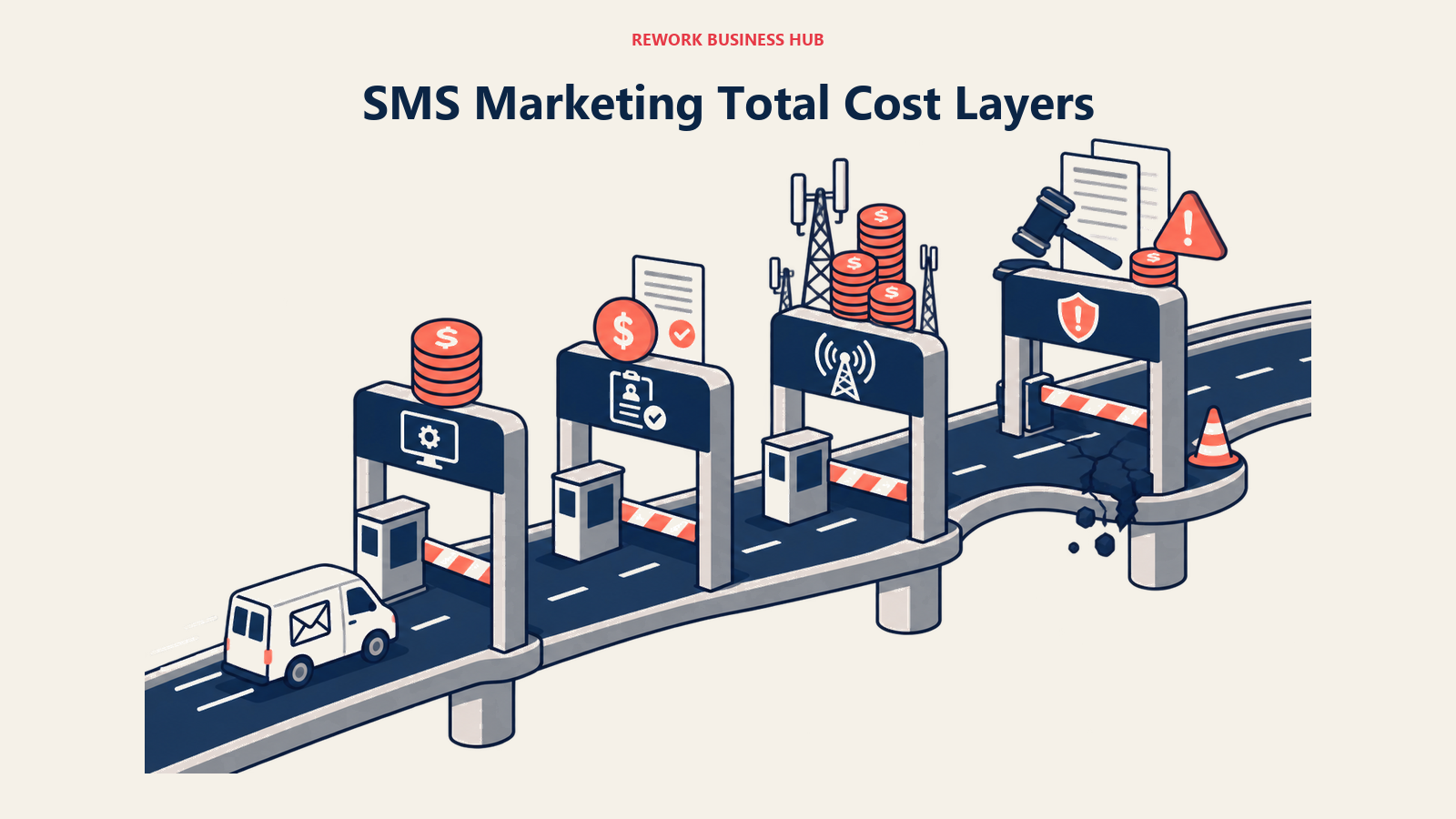
A2P 10DLC registration. Since February 2025, US carriers block unregistered Application-to-Person traffic outright, so this isn't optional paperwork, it's a prerequisite to sending at all. Expect a one-time brand registration fee, a per-campaign vetting fee, and a recurring monthly carrier fee that varies by use case and throughput tier. Most platforms on this list either handle registration for you (bundled or as a pass-through line item) or expect you to register directly if you're building on raw API access like Twilio.
TCPA consent. The Telephone Consumer Protection Act sets statutory damages of $500 to $1,500 per violation, and courts generally count each individual unsolicited text as a separate violation with no aggregate cap. A single campaign sent without proper opt-in records to a few thousand numbers can create seven-figure exposure well before anyone considers actual harm. Every platform on this list supports opt-in capture, but the compliance liability sits with the sender, not the vendor.
Carrier fees on top of platform fees. Even after registration, every message still carries a small per-message carrier surcharge separate from what the platform bills you. That surcharge is usually invisible on the pricing page and only shows up once volume climbs.
| Cost Layer | What It Covers | Who Pays It | Where It Shows Up |
|---|---|---|---|
| Platform subscription | The software itself: automation builder, segmentation, reporting | Every buyer, every platform on this list | The advertised "starting price" |
| Per-message or per-credit rate | The actual cost to send each SMS or MMS | Every buyer, scales with volume | Line item inside the platform bill |
| A2P 10DLC registration | Brand and campaign vetting required by US carriers to send at all | Every buyer sending US marketing SMS via long code | One-time plus a small recurring carrier fee |
| Carrier surcharge | Per-message fee carriers add on top of the platform's own rate | Every buyer, usually not shown on the pricing page | Buried in usage reports, not the sticker price |
| Local number and activation | Dedicated sending number(s) required by most platforms | Buyers on SMB tools like SimpleTexting and EZ Texting | Monthly number fee plus a one-time activation charge |
| Compliance liability | TCPA statutory damages for improper consent or opt-out handling | The sender, not the vendor, regardless of platform | Legal exposure, not a line item, but the real risk |
If your team is building a custom sending layer instead of buying a packaged platform, our best Attentive alternatives and best Postscript alternatives guides both cover which vendors handle 10DLC registration for you versus which ones leave it on your plate.
Stage and Segment Fit Matrix
| Tool | Ecommerce / DTC | SMB / Local | Build-Your-Own / API | Enterprise Lifecycle |
|---|---|---|---|---|
| Attentive | Strong fit | - | - | Possible |
| Postscript | Strong fit | - | - | - |
| Klaviyo SMS | Strong fit | Possible | - | - |
| Omnisend | Strong fit | Possible | - | - |
| Sendlane | Strong fit | Possible | - | - |
| Emotive | Strong fit | Possible | - | - |
| Recart | Strong fit | - | - | - |
| SimpleTexting | Possible | Strong fit | - | - |
| EZ Texting | Possible | Strong fit | - | - |
| Textedly | Possible | Strong fit | - | - |
| Community | Possible | Strong fit | - | Possible |
| Twilio | Possible | Possible | Strong fit | Possible |
| Braze | Possible | - | Possible | Strong fit |
Sizing and Persona Table
| Tool | Ideal Company / List Size | Primary Buyer Persona |
|---|---|---|
| Attentive | Mid-market to enterprise ecommerce, six figures in monthly SMS revenue and up | VP Marketing, Head of Retention, CRM Director |
| Postscript | Shopify brands from early growth through mid-market | Ecommerce Manager, Head of Growth |
| Klaviyo SMS | Any size already using Klaviyo for email | Ecommerce Manager, Lifecycle Marketer |
| Omnisend | 1-200 employees, ecommerce-focused | DTC Founder, Ecommerce Manager |
| Sendlane | Mid-size ecommerce brands, 10-200 employees | Growth Marketer, Ecommerce Director |
| Emotive | DTC brands wanting a managed, conversational program | Retention Marketer, Founder |
| Recart | Shopify brands focused on cart recovery, willing to commit annually | Ecommerce Manager, Growth Lead |
| SimpleTexting | Solo to 200 employees, any industry | Office Manager, Marketing Coordinator |
| EZ Texting | Solo to 200 employees, any industry | Small Business Owner, Marketing Manager |
| Textedly | Solo to 100 employees, budget-conscious | Small Business Owner, Nonprofit Coordinator |
| Community | Creators, media brands, and consumer brands wanting a subscriber list | Brand Marketer, Community Manager |
| Twilio | Engineering-led teams of any size | Developer, Platform Engineer, CTO |
| Braze | 500+ employees, multi-channel lifecycle programs | VP Lifecycle Marketing, CRM/MarTech Director |
1. Attentive: The Enterprise Ecommerce Standard
Attentive built its reputation as the SMS platform enterprise ecommerce brands graduate into once a text program outgrows a self-serve tool. The pitch isn't just software, it's a managed relationship: AI-assisted campaign generation, a dedicated strategist for larger accounts, and a product built around list growth tactics like pop-ups and checkout capture tuned specifically for SMS opt-in, not repurposed from an email signup form.
That AI layer is a genuine 2026 shift for the platform: campaign copy generation, send-time optimization, and "AI Journeys" (automated, multi-step flows) now sit alongside the core send engine rather than as separate bolt-ons. The tradeoff for that depth is opacity on cost. Per the Attentive pricing page, the company does not publish tiers or figures. Pricing is based on message volume, subscriber list size, which channels you use, and which AI tools you turn on, with some AI features billed as a flat monthly fee and others (like AI Journeys) billed pay-per-click. Every plan starts with a demo. Third-party reports put entry contracts for mid-market brands in the low four figures a month (reported), but Attentive has not confirmed that publicly. If the opacity is the sticking point, our best Attentive alternatives guide covers platforms that publish real numbers.
| What you get | What you don't |
|---|---|
| AI-assisted campaign creation and send-time optimization | No published pricing anywhere, demo required to get a number |
| SMS-native list-growth tools (pop-ups, checkout capture) | Contracts typically require an annual commitment |
| Dedicated strategist support at higher tiers | Overkill and likely over-budget for brands under seven figures in revenue |
| AI Journeys for automated, multi-step flows | Pay-per-click billing on some AI features adds an unpredictable cost line |
Pricing: No published pricing; based on volume, list size, channels, and AI tools enabled, quoted only through a demo
Best for: Enterprise and upper-mid-market ecommerce brands with the budget and volume to justify a managed, AI-assisted SMS program
Attentive and Postscript are the two most often shortlisted against each other, and the choice usually comes down to whether you want a sales call or a signup form. Our Attentive vs Postscript comparison models the real cost of both at 50,000, 250,000 and 1,000,000 messages a month.
2. Postscript: Shopify-Native and Usage-Transparent
Postscript's whole design starts from a single assumption: it will only ever run on Shopify. That narrower focus lets it go deeper on segmentation, product-level triggers, and subscriber data than a platform trying to support five different ecommerce stacks at once. Compliance and consent capture are also built specifically around Shopify checkout flows rather than a generic web form.
Where Postscript stands out against Attentive is transparency: it actually publishes a rate card. Per the Postscript pricing page, Starter runs $0/mo but carries a $49 monthly minimum spend, with SMS priced from $0.015 down to $0.009 per message and MMS at $0.045 as volume grows. Growth steps up to a $100/mo minimum (SMS $0.01-$0.008, MMS $0.03), and Professional to $500/mo (SMS $0.007, MMS $0.024, plus API access and white-labeling). Messages bill on top of whichever minimum you're on, and carrier fees (averaging $0.00418 per SMS and $0.00841 per MMS) stack on top of that. There's no perpetual free plan, just $100 of trial credit for the first 30 days. If the volume-based pricing gets expensive at scale, see our best Postscript alternatives guide for 11 platforms at different price points.
| What you get | What you don't |
|---|---|
| Transparent, published per-message pricing at every tier | "Free" Starter tier still requires a $49/mo minimum spend |
| Deep Shopify-native segmentation and product triggers | Messages bill on top of the platform fee, not included in it |
| Scaling per-message rates that drop as volume grows | Carrier fees are a separate line item most buyers miss upfront |
| API access and white-labeling on the Professional tier | Locked to Shopify; no support for other ecommerce platforms |
Pricing: Starter $0/mo plus a $49/mo minimum spend; Growth $100/mo minimum; Professional $500/mo minimum (SMS/MMS rates drop as tier and volume increase, carrier fees extra)
Best for: Shopify-only ecommerce brands that want transparent, usage-based SMS pricing instead of a quote-only enterprise deal
3. Klaviyo SMS: One Profile, Two Channels
Klaviyo's SMS product isn't sold as a standalone tool, and that's the point. It's built to sit on the same customer profile as Klaviyo email, so a welcome flow, an abandoned-cart sequence, or a win-back campaign can trigger across both channels from one set of segments instead of syncing two separate systems. For a brand already running Klaviyo for email marketing, adding SMS is a configuration decision, not a new vendor relationship.
That shared-profile design shows up directly in the numbers: across Klaviyo's full customer base, the top 10% of SMS flows generate more than $5 in revenue per recipient, according to Klaviyo's 2026 SMS marketing benchmarks. Per the Klaviyo pricing page, SMS is billed as its own plan starting at $15/mo for 1,250 credits, stacking on top of the Email plan (from $30/mo for 1,000 active profiles and 10,000 sends). Every account gets 150 free SMS credits per billing cycle regardless of plan. Free-tier accounts get 250 active profiles, 500 email sends, and $5 of mobile messages a month to test the combination. If Klaviyo's stacked pricing is pushing your budget past what a smaller ecommerce brand needs, our best Klaviyo alternatives guide covers 10 options at different price points.
| What you get | What you don't |
|---|---|
| One customer profile drives both email and SMS automation | Email and SMS are separate plans that both bill monthly |
| Deep native Shopify and WooCommerce data feeding both channels | Costs stack fast as both list size and message volume grow |
| 150 free SMS credits included on every billing cycle | No annual discount on self-serve SMS or email plans as of 2026 |
| Same flow builder and reporting across both channels | Weak fit for brands outside ecommerce and DTC |
Pricing: SMS from $15/mo (1,250 credits), stacks on top of Email from $30/mo (1,000 active profiles, 10,000 sends); free tier covers 250 profiles plus $5 of mobile messages monthly
Best for: Ecommerce brands already running Klaviyo for email that want SMS on the same customer profile instead of a second vendor
4. Omnisend: Budget-Friendly Multi-Channel Automation
Omnisend's pitch to a smaller ecommerce brand is consolidation at a lower price point than Klaviyo: email, SMS, and push notifications live in one workflow builder, so a single cart-recovery automation can fire across all three channels instead of managing three separate tools and three separate audiences.
The gap between automated and one-off sending shows up clearly in Omnisend's own data: across more than 246 million SMS sends analyzed, automated flow messages convert at 0.77%, roughly six times the 0.12% average conversion rate of one-off campaigns, and earn $0.74 in revenue per message versus $0.15 for campaign sends, according to Omnisend's 2026 SMS Marketing Statistics report. Across the full multichannel mix, Omnisend also reports $79 in ecommerce revenue for every $1 spent on combined email, SMS, and push. Per the Omnisend pricing page, the Standard plan starts at $11.20/mo for 251-500 contacts (500 emails included), and Pro starts at $41.30/mo at 2,500 contacts with unlimited email sends. SMS is priced separately from $0.007 per message; a May 2026 pricing change moved SMS to a volume-based add-on for new signups rather than bundling included credits. The free plan covers 250 contacts and 500 monthly emails with no SMS credits. If you've outgrown Omnisend's ecommerce-only focus, our best Omnisend alternatives guide covers 12 broader options.
| What you get | What you don't |
|---|---|
| Email, SMS, and push in one workflow builder | SMS now priced as a separate volume-based add-on |
| Lower entry price than Klaviyo at comparable list sizes | Reporting depth trails Klaviyo for advanced attribution |
| Purpose-built automation templates for online stores | Focus narrows fast for brands outside ecommerce |
| Usable free tier for testing before committing to SMS | Unlimited-send tiers still bound by a fair-use policy |
Pricing: Free (250 contacts, 500 emails/mo, no SMS); Standard from $11.20/mo (251-500 contacts); Pro from $41.30/mo (2,500 contacts, unlimited email); SMS billed separately from $0.007/msg
Best for: Ecommerce brands wanting email, SMS, and push combined in one workflow builder at a lower entry price than Klaviyo
5. Sendlane: Priced on Sends, Not Stored Contacts
Sendlane's pitch is a pricing philosophy borrowed from Brevo's playbook on the email side: bill for how many messages actually go out, not how many contacts sit dormant in your database. For an ecommerce brand carrying a large, mostly-inactive list, that structure can be meaningfully cheaper than a per-contact model once the list grows past what it actively emails or texts.
Per the Sendlane pricing page, the entry tier runs around $100/mo (example pricing shown for a representative send volume; unlimited contacts are included regardless of tier). SMS is a separate module priced from $0.009 per credit, inclusive of carrier fees, plus a one-time $10/mo activation charge that covers both the dedicated number and the module itself. A 60-day free trial is available but caps out at 100 contacts and 500 sends, and SMS specifically requires upgrading to a paid account before it activates at all.
| What you get | What you don't |
|---|---|
| Unlimited contacts regardless of tier, billed on sends instead | SMS requires a paid account; no SMS on the free trial |
| Carrier fees bundled into the per-credit SMS rate | Entry pricing shown is example-based, not a fixed universal number |
| One send engine and one contact record for email and SMS | Smaller ecosystem and integration library than Klaviyo or Omnisend |
| $10/mo activation covers both the number and the module | 60-day trial caps at 100 contacts, thin for a real pilot |
Pricing: Entry tier around $100/mo (example volume shown, unlimited contacts); SMS from $0.009/credit plus a $10/mo activation fee
Best for: Mid-size ecommerce brands with a large, mostly-dormant contact list who want one bill for email and SMS sends instead of two
6. Emotive: The Conversational, Concierge Approach
Emotive's original pitch was that SMS should read like a text from a real person, not a broadcast blast, and its platform was built around two-way conversations, quiz-style opt-in flows, and a managed-service layer where Emotive's own team helps write and run campaigns rather than leaving a brand alone with a template library. The company was acquired by Privy in 2025, and Emotive continues to sell SMS under its own name and pricing page as part of that combined business, rather than operating as a fully independent standalone company.
Per the Emotive pricing page, Starter runs $100/mo plus $0.015 per SMS and $0.025 per MMS. Pro steps up to $200/mo with lower per-message rates ($0.01/$0.02), and Advanced to $300/mo ($0.008/$0.016). Enterprise is custom-priced. There's no free tier stated, so budgeting for Emotive means modeling the platform fee and the per-message rate together from day one rather than testing on a free plan first.
| What you get | What you don't |
|---|---|
| Conversational, two-way SMS style rather than one-way blasts | No free tier; every dollar of testing is a real spend |
| Quiz-style and interactive opt-in flows built in | Now part of Privy following the 2025 acquisition |
| Managed-service support option for campaign strategy | Per-message fees stack on every tier, including Enterprise |
| Clear three-tier structure below Enterprise | Smaller ecosystem than Postscript or Attentive |
Pricing: Starter $100/mo plus $0.015/SMS and $0.025/MMS; Pro $200/mo ($0.01/$0.02); Advanced $300/mo ($0.008/$0.016); Enterprise custom
Best for: DTC brands wanting a conversational, concierge-style SMS program instead of a pure self-serve broadcast tool
7. Recart: Cart Recovery First, Everything Else Second
Recart's design starts from one job: recover abandoned Shopify checkouts by SMS, then expand outward into broader campaigns once that flow is working. That narrow starting point means the onboarding and templates are unusually well-tuned for the specific moment a shopper leaves items in a cart, compared to platforms that treat cart recovery as one flow among many.
That focus comes at the highest entry price on this list. Per the Recart pricing page, Starter runs $299/mo on a 12-month commitment and includes 23,000 SMS messages at an effective $0.010 rate plus 8,795 MMS at $0.028. Pro steps up to $499/mo (41,583 SMS at $0.0085), and Scale to $999/mo (100,000 SMS at $0.007, with a managed-service layer). Enterprise is custom, with SMS rates dropping as low as $0.0045. Carrier fees are extra on top of those rates (roughly $0.0045 per SMS and $0.011 per MMS in the US). There's no free tier or trial credit stated, and the 12-month commitment is a real constraint for a brand still validating whether SMS earns its keep.
| What you get | What you don't |
|---|---|
| Purpose-built cart-recovery flows and onboarding | Highest starting price on this list at $299/mo |
| Bundled message volume included in every tier's price | 12-month commitment required from the Starter tier up |
| Managed-service layer available on the Scale tier | No free tier or trial to test before committing |
| Per-message rates that drop meaningfully at higher tiers | Carrier fees still add on top of the bundled rate |
Pricing: Starter $299/mo, 12-month commitment (23,000 SMS included); Pro $499/mo (41,583 SMS); Scale $999/mo (100,000 SMS); Enterprise custom
Best for: Shopify brands whose primary SMS use case is cart recovery and who are ready to commit for a year
8. SimpleTexting: Straightforward Mass Texting
SimpleTexting skips the ecommerce-specific automation entirely and focuses on what a small business, school, or local government office actually needs: send a mass text to an opted-in list, run a keyword campaign, and text back and forth with individual customers from a shared inbox. Unlimited contacts and keywords are included at every tier, which removes the contact-based pricing anxiety that shows up on ecommerce-first platforms.
Per the SimpleTexting pricing page, the entry plan runs $29/mo for 500 credits, but that figure alone understates the real cost: a dedicated local number adds $10/mo (plus a $4 one-time activation fee), so a realistic working setup lands closer to $39/mo. Annual billing brings the total to $398.40/year, roughly 20% off the monthly rate. Extra credits beyond the plan allotment cost 5.5 cents each, and every plan includes 3 user seats. Carrier fees apply on top at roughly $0.0025 per message in the US. A 15% nonprofit discount is available, and there's a free trial with no card required.
| What you get | What you don't |
|---|---|
| Unlimited contacts and keywords at every tier | The $29/mo sticker price doesn't include a phone number |
| 3 user seats included, no per-seat pricing | Realistic entry cost is closer to $39/mo once you add a number |
| Simple keyword and shared-inbox texting, no learning curve | No ecommerce-specific automation or revenue attribution |
| 15% nonprofit discount and a 30-day money-back guarantee | Extra credits cost more per message than the base plan rate |
Pricing: $29/mo for 500 credits, plus $10/mo per local number ($4 one-time activation); realistic entry around $39/mo; annual billing $398.40/year (20% off)
Best for: SMB teams, schools, and local offices wanting simple mass texting without ecommerce complexity
If the per-credit model plus the per-number fee is what pushed you to look around, our best SimpleTexting alternatives roundup compares 13 platforms on the same landed-cost basis.
9. EZ Texting: The Established Mass-Texting Brand
EZ Texting has been in the SMS marketing space long enough to have built one of the category's more credible research arms: its own consumer behavior surveys, republished every year, are cited across the industry (including in this article's Key Facts). That same research-first posture shows up in the product: straightforward credit-based tiers, unlimited contacts, and a shared inbox built for a small team rather than an enterprise CRM.
The company's own data underscores why response speed matters for anyone considering this category at all: 89% of US consumers have now opted in to receive texts from at least one business, up from 66% in 2021, and 87% see a new text within 15 minutes of it arriving, according to EZ Texting's 2026 Consumer Texting Behavior Report (959 US consumers surveyed). That same report found message frequency is the top opt-out trigger, cited by 40% of respondents, well ahead of irrelevant content at 18%. Per the EZ Texting pricing page, Launch runs $25/mo ($20/mo billed annually) for 500 credits, unlimited contacts, and 1 user, plus a $5/mo telecom fee on top. Boost is $75/mo ($60 annual, telecom fee waived) and Scale is $125/mo ($100 annual). Enterprise runs $3,000/mo for 200,000 credits. Extra users cost $10/mo each, and SMS uses 1 credit while MMS uses 3.
| What you get | What you don't |
|---|---|
| Unlimited contacts on every tier, credit-based sends | $5/mo telecom fee stacks on top of the Launch tier |
| Original consumer-behavior research the whole industry cites | No stated free tier |
| Telecom fee waived once you reach the Boost tier | Enterprise jump to $3,000/mo is steep from Scale's $125/mo |
| Simple credit math: SMS = 1 credit, MMS = 3 credits | Automation depth is basic compared to ecommerce-first tools |
Pricing: Launch $25/mo ($20/mo annual) plus $5/mo telecom fee; Boost $75/mo ($60 annual, no telecom fee); Scale $125/mo ($100 annual); Enterprise $3,000/mo (200,000 credits)
Best for: SMB teams wanting the most established mass-texting brand, backed by its own published consumer research
10. Textedly: The Budget Entry Point
Textedly's whole design is removing friction for the smallest buyer in this category: a nonprofit sending event reminders, a single-location retailer running a monthly promo, a church group coordinating a schedule. Every plan gets the same feature set (no automation locked behind a premium tier), and the pricing scales purely on message volume through a slider rather than a set of named packages.
Per the Textedly pricing page, plans start from $29/mo and scale on a slider from 50 messages a month up to 360,000, with every feature available regardless of plan tier. Contacts are unlimited on every plan. Additional teammates cost $10/mo each, and annual billing gives roughly 20% more texts for the same spend as monthly. A free account with 50 free texts and one custom keyword is available to test the platform before paying anything.
| What you get | What you don't |
|---|---|
| Same full feature set at every plan tier, no gated automation | Automation and segmentation are thinner than ecommerce-first tools |
| Free account with 50 texts to test before paying | No dedicated ecommerce integrations for cart recovery or revenue data |
| Simple slider-based pricing tied purely to volume | Reporting is basic compared to Klaviyo or Omnisend |
| Unlimited contacts and keywords on every plan | Extra teammates add $10/mo each rather than a bundled seat count |
Pricing: From $29/mo, scaling on a message-volume slider from 50 to 360,000 messages/mo; annual billing gives about 20% more texts for the same price
Best for: Budget-conscious small businesses and nonprofits that want one simple, full-featured plan without ecommerce-specific tooling
11. Community: The Subscriber-List Model
Community takes a different framing than every other tool on this list: instead of a "marketing platform" sending broadcast campaigns to a segment, it sells the idea of a single subscriber list a brand, artist, or creator texts directly, one-to-one in tone even at scale. The channel mix backs that up: SMS and MMS, WhatsApp, Apple Messages for Business, and RCS all run through the same subscriber list rather than separate integrations.
That positioning is closer to the conversational messaging tools covered in our best ManyChat alternatives guide than to a pure ecommerce SMS platform, though Community's SMS-first list model is the core product rather than a chatbot layer. Per the Community pricing page, the company does not publish figures. Plans are named Small Business, Mid Market, and Enterprise, and pricing "scales with your needs" through a custom quote. There's no free tier or trial credit stated.
| What you get | What you don't |
|---|---|
| One subscriber list spans SMS, WhatsApp, Apple Messages, and RCS | No published pricing at any tier |
| Positioning built around one-to-one tone, not broadcast blasts | No stated free tier or trial |
| Multi-channel reach without stitching together separate tools | Sales-led process required just to see a number |
| Named tiers signal it scales from small business to enterprise | Less ecommerce-specific automation than Klaviyo or Omnisend |
Pricing: No published pricing; Small Business, Mid Market, and Enterprise tiers, custom quote only
Best for: Brands and creators wanting a single, multi-channel subscriber list with a conversational, one-to-one tone
12. Twilio: Build Your Own Sending Layer
Twilio is the odd entry on this list because it isn't a marketing platform at all. It's the programmable API infrastructure that a meaningful share of the platforms above (and the wider SMS industry) actually send through underneath their own UI. A team with engineering resources can build a fully custom SMS sending layer directly on Twilio's API instead of renting a vendor's automation builder, trading a monthly platform fee for engineering time.
Per Twilio's SMS pricing page, outbound and inbound SMS both cost $0.0083 per message in the US, the same rate across long code, toll-free, and short code numbers. MMS costs more to send ($0.022) than to receive ($0.0165 on long code and short code, $0.02 on toll-free). Numbers cost extra: a local number runs $1.15/mo, a toll-free number $2.15/mo, and a short code $1,000 per quarter for a random number or $1,500 per quarter for a vanity one. A2P 10DLC registration fees also apply and aren't listed as a fixed figure on that pricing page, since they vary by campaign type and throughput. Notably, Twilio also owns SendGrid, so a team building custom SMS on Twilio often ends up evaluating SendGrid for transactional email in parallel. Our SendGrid vs Mailgun comparison and best SendGrid alternatives guide both cover that adjacent decision, and our best Zapier alternatives guide is useful if you'd rather connect Twilio to existing tools through no-code automation than write the integration code yourself.
| What you get | What you don't |
|---|---|
| Usage-based pricing with no platform-fee floor | No marketing UI at all: no segments, no drag-and-drop flows |
| Full control over sending logic, timing, and data | You build and maintain opt-in capture and compliance yourself |
| Same per-message rate across long code, toll-free, short code | A2P 10DLC fees aren't published as a fixed number on the pricing page |
| Scales to any volume without a vendor-imposed ceiling | Requires real engineering time to reach parity with a packaged tool |
Pricing: $0.0083 per SMS sent or received (US); MMS $0.022 send / $0.0165-$0.02 receive; local numbers from $1.15/mo, short codes from $1,000/quarter; A2P 10DLC fees apply separately
Best for: Engineering-led teams who want to build a fully custom SMS sending layer instead of adopting a packaged marketing platform
Twilio is not the only option once you have decided to build. Our Twilio vs Sinch comparison works through per-message rates, number rental and carrier fees at 100,000 to 10,000,000 messages a month, and the best Bird (MessageBird) alternatives roundup covers the wider CPaaS field including Telnyx, Plivo, Bandwidth and Vonage.
13. Braze: Enterprise Cross-Channel Orchestration
Braze rounds out this list as the enterprise engagement platform, useful for seeing the full shape of the market: for a large brand, SMS is rarely a standalone channel, it's one lever inside a broader lifecycle program that also spans push, email, in-app messages, and web. Braze's product is built around orchestrating all of those from a single customer profile and a single campaign canvas, rather than treating SMS as its own silo with its own segments.
Per the Braze pricing page, the company offers four editions (Braze Go, Braze Select, Braze Pro, and Braze Enterprise) with pricing scaling on Monthly Active Users, plus an "Action Credits" model that spans usage across channels and AI products. No public price cards or figures are listed; every path routes to a "Get pricing" conversation or a free trial. That opacity is the tradeoff for orchestration depth: a team evaluating Braze purely to add SMS to an existing email program is likely better served by a channel-specific tool, while a team building a genuinely cross-channel lifecycle program gets capability here that none of the SMS-only platforms on this list offer. If SMS-specific depth matters more than cross-channel orchestration for your program, our best Braze alternatives guide covers platforms built specifically around texting rather than a broader engagement suite, and if the underlying need is really unifying customer data across marketing and sales rather than just messaging, our best CRM software roundup covers that adjacent decision.
| What you get | What you don't |
|---|---|
| Cross-channel orchestration (SMS, push, email, in-app) from one profile | No published pricing anywhere; MAU-based quote only |
| Single campaign canvas spans every channel instead of per-channel silos | Overkill and likely over-budget if SMS is your only real need |
| Action Credits model covers usage across channels and AI features | Free trial exists, but real pricing only comes after a sales conversation |
| Built for large-scale, multi-team lifecycle marketing programs | Steeper implementation lift than a single-channel SMS tool |
Pricing: No published pricing; four editions (Go, Select, Pro, Enterprise) scaling on Monthly Active Users plus an Action Credits usage model, quoted through sales
Best for: Enterprise teams running SMS as one channel inside a broader, cross-channel lifecycle marketing program
Braze's closest peer is Iterable, and neither publishes a price, which makes that evaluation unusually hard to budget for. Our Braze vs Iterable comparison covers what actually drives each quote. If the email side of your stack is the part under review, the best Mailgun alternatives roundup compares the transactional email APIs on cost at volume and log retention.
SMS Marketing Buying Mistakes to Avoid
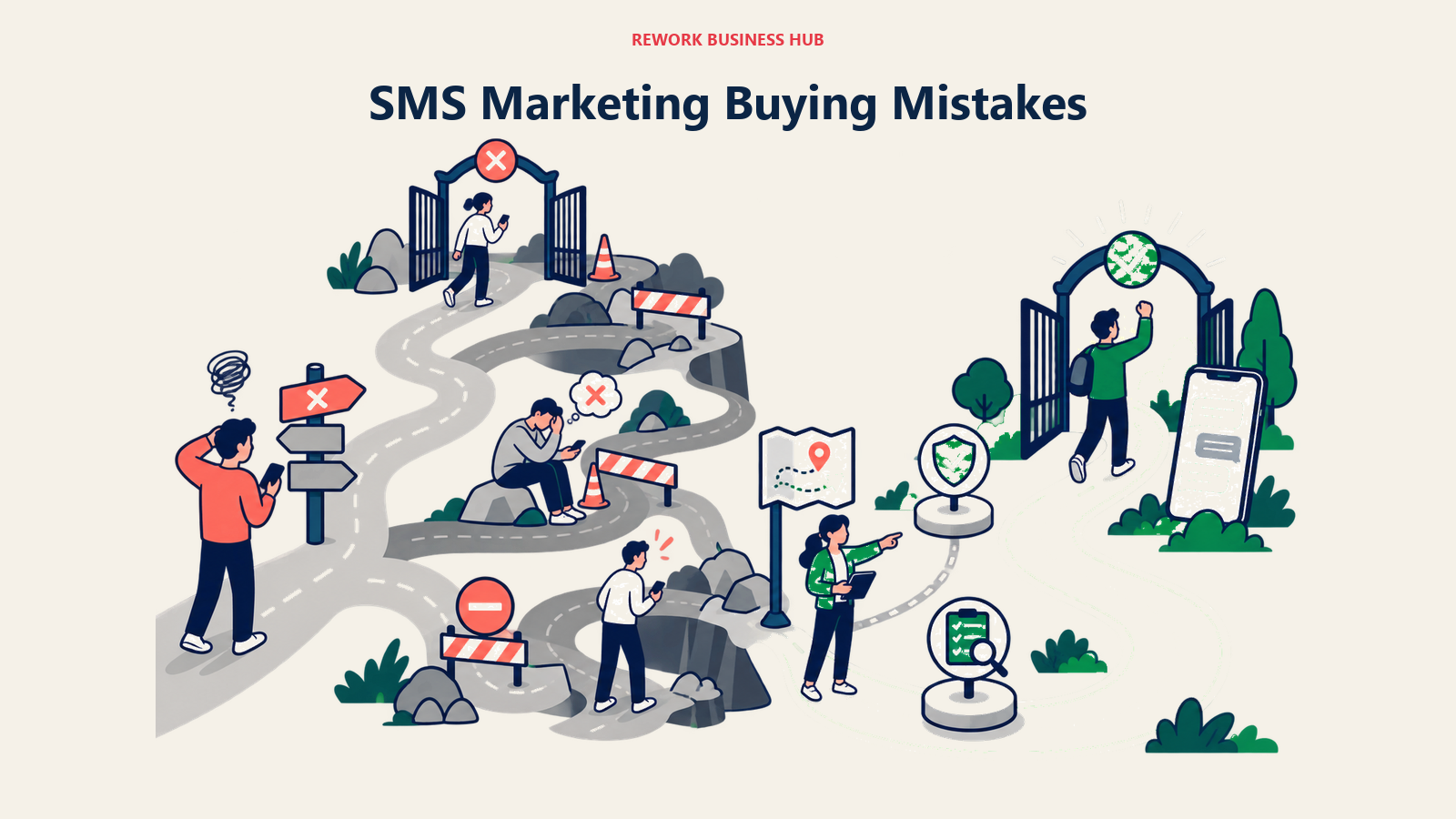
Most SMS programs that stall out trace back to a buying mistake made before the first message ever sent, not a weak platform. Here are the most common ones and what to do instead.
| Mistake | What It Looks Like | What to Do Instead |
|---|---|---|
| Comparing the platform fee, not the total cost | Picking Postscript's "$0/mo" tier without budgeting the $49 minimum plus per-message rates | Model platform fee, per-message rate, and carrier fees together before you commit |
| Skipping A2P 10DLC registration | Assuming a marketing platform "handles compliance" without confirming what that includes | Ask every vendor directly what registration they handle for you and what you're responsible for |
| Buying an ecommerce tool for a non-ecommerce use case | Picking Attentive or Recart for a service business that just needs appointment reminders | Match the tool to your actual use case: SimpleTexting or EZ Texting for non-ecommerce SMB texting |
| Over-messaging a new list | Sending daily promotions the moment a list clears 10DLC registration | Cap frequency early; 40% of consumers cite message frequency as their top opt-out reason |
| Ignoring the minimum-spend clause | Treating Postscript's Starter tier as genuinely free | Read every "free" or "$0" tier for a hidden monthly minimum before you sign |
| Locking into a 12-month contract before validating fit | Committing to Recart's annual plan before running a real pilot | Test on a monthly platform or a trial first, then commit once you know SMS earns its keep |
| Splitting SMS and email data across two vendors | Running SMS in one tool and email in a disconnected ESP | Prioritize platforms like Klaviyo SMS or Omnisend that share one customer profile across channels |
| Choosing on brand recognition alone | Assuming SMS "gets read anyway" so the platform doesn't matter | Match the platform to your segmentation and automation needs, not just its market share |
How to Choose: Decision Framework
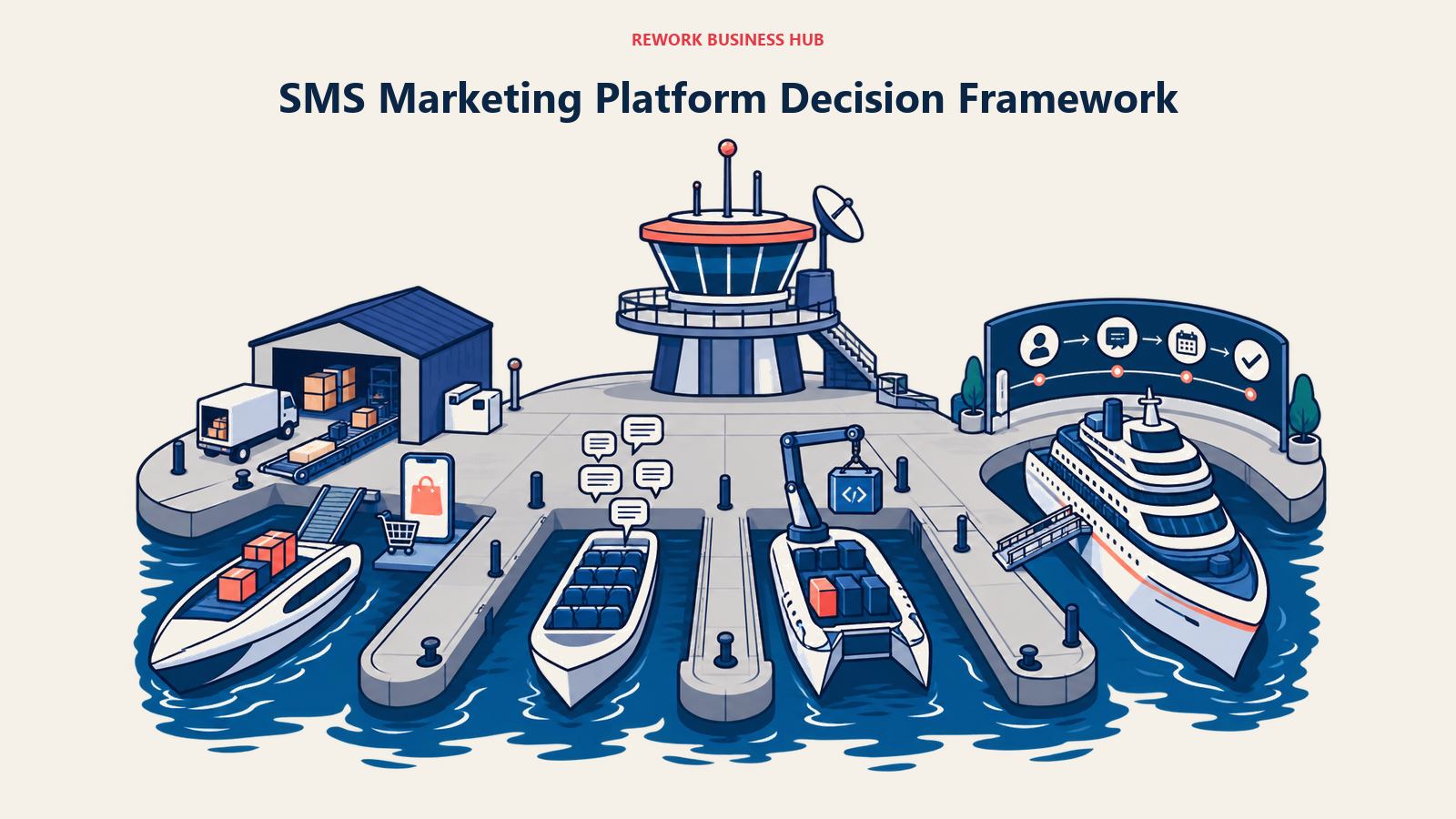
Use this table as your final filter. Match your situation to the platform built for it.
| If you need... | Pick... | Why |
|---|---|---|
| An enterprise-grade, managed SMS program for a large ecommerce brand | Attentive | AI-assisted campaigns and dedicated strategist support, built for scale |
| Transparent, usage-based SMS pricing on Shopify | Postscript | Publishes real per-message rates instead of a quote-only enterprise deal |
| SMS on the same customer profile as your existing email program | Klaviyo SMS | One profile drives both channels if you already run Klaviyo email |
| Email, SMS, and push together at a lower entry price | Omnisend | Multi-channel automation built for smaller ecommerce budgets |
| One bill for both email and SMS sends, priced on volume not contacts | Sendlane | Charges for sends, not stored contacts, which suits a large dormant list |
| A conversational, concierge-style SMS relationship with customers | Emotive | Two-way, human-assisted texting instead of one-way blasts |
| SMS-driven cart recovery as the primary use case | Recart | Purpose-built cart-abandonment flows, at a price that reflects the focus |
| Simple SMB mass texting without ecommerce complexity | SimpleTexting or EZ Texting | Unlimited contacts, credit-based pricing, no automation you don't need |
| The lowest-cost entry point for a small nonprofit or local business | Textedly | Same full feature set at every tier, starting under $30/mo |
| A single subscriber list spanning SMS, WhatsApp, and RCS | Community | Multi-channel reach under one list, built around a conversational tone |
| Full control to build a custom sending layer | Twilio | Usage-based API pricing with no vendor UI or platform-fee floor |
| SMS as one channel inside a broader enterprise lifecycle program | Braze | Cross-channel orchestration from one profile across push, email, and SMS |
What to Do Next
Narrow your list to two platforms before you book a single demo, and price out the full stack, not just the sticker price: platform fee, per-message rate, carrier surcharge, and A2P 10DLC registration together. Then run a real 30-day pilot on a monthly plan (not an annual commitment) with your actual opt-in list before you sign anything longer. The platform that earns its keep is the one whose total monthly cost you can predict in month three, not just the one with the lowest number on the pricing page.
If your SMS program needs to plug into a broader email and API-based sending stack, our SendGrid vs Mailgun comparison covers the transactional email layer that often runs alongside these tools.

Principal Product Marketing Strategist
On this page
- Key Facts
- Quick Comparison Table
- The Hidden Cost Layer: A2P 10DLC, TCPA, and Carrier Fees
- Stage and Segment Fit Matrix
- Sizing and Persona Table
- 1. Attentive: The Enterprise Ecommerce Standard
- 2. Postscript: Shopify-Native and Usage-Transparent
- 3. Klaviyo SMS: One Profile, Two Channels
- 4. Omnisend: Budget-Friendly Multi-Channel Automation
- 5. Sendlane: Priced on Sends, Not Stored Contacts
- 6. Emotive: The Conversational, Concierge Approach
- 7. Recart: Cart Recovery First, Everything Else Second
- 8. SimpleTexting: Straightforward Mass Texting
- 9. EZ Texting: The Established Mass-Texting Brand
- 10. Textedly: The Budget Entry Point
- 11. Community: The Subscriber-List Model
- 12. Twilio: Build Your Own Sending Layer
- 13. Braze: Enterprise Cross-Channel Orchestration
- SMS Marketing Buying Mistakes to Avoid
- How to Choose: Decision Framework
- What to Do Next