More in
B2B SaaS Industry News
Salesforce Just Solved CRM's Oldest Data Problem, At a Cost
Apr 7, 2026
When Your SaaS Vendor Cuts Its R&D Team: What Enterprise Buyers Need to Watch
Mar 19, 2026
The 171% Agentic AI ROI Number: What the Data Actually Says
Mar 2, 2026
Drift Is Being Phased Out: The RevOps Checklist Before Your Conversational Workflows Go Dark
Feb 11, 2026
The $99-Per-Seat Decision: How to Evaluate Microsoft's New AI Bundle
Feb 9, 2026 · Currently reading
The SaaS Growth Model That No Longer Requires More Engineers
Feb 4, 2026
Meeting Notes Just Hit a $1.5B Valuation: What That Signals About the Enterprise AI Context Race
Feb 3, 2026
A $1.2B CRM-Killer at $8M ARR: What Every Sales Leader Needs to Decide Before the Next Board Meeting
Feb 2, 2026
Record AI Funding in Q1 2026: What It Means for Your Sales Stack and Your Competitors
Jan 8, 2026
The Agentic Sales Stack Is Attracting Unicorn Capital: What CEOs Need to Decide About Their Revenue Infrastructure
Jan 7, 2026
The $99-Per-Seat Decision: How to Evaluate Microsoft's New AI Bundle
Turn this article into takeaways for your work.


Each assistant summarizes the article only for you and suggests best practices for your work.
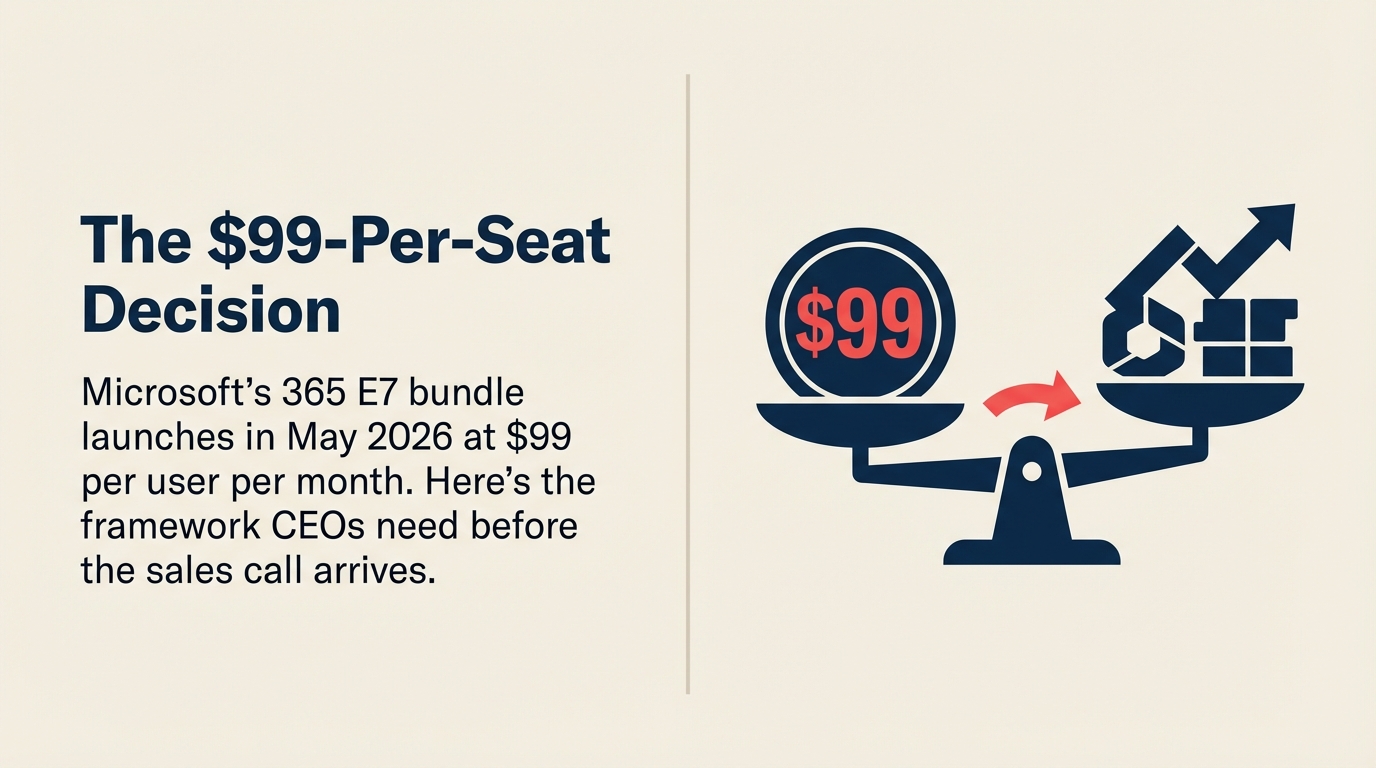
Microsoft is about to knock on your door with a number: $99 per user per month. That's the price of Microsoft 365 E7, a new bundle launching in May 2026 that combines Microsoft's existing enterprise productivity suite with Copilot AI, a new agent management layer called Agent 365, and enterprise security features, all in a single SKU.
CNBC first reported the E7 announcement, and the math is worth working through carefully before the sales conversation arrives. For a 300-person company, E7 costs roughly $356,400 per year. For a 1,000-person organization, you're looking at over $1.1 million annually. These are board-level budget conversations, and they're coming whether you've prepared for them or not.
The bundle's framing is straightforward: consolidate what you're paying for separately into one package at a modest discount. The actual decision is considerably more complicated. The broader question of how to evaluate a SaaS vendor's long-term roadmap, not just today's feature list, is exactly the lens this decision requires.
What's Actually in the Bundle
Before evaluating the value, it helps to understand what E7 contains and what you'd be paying for each component individually.
According to Windows Central's analysis of the announcement, E7 bundles together four distinct products:
- Microsoft 365 E5: Microsoft's current highest enterprise tier, covering Teams, Office apps, advanced compliance, and security tools. Priced separately at approximately $57 per user per month.
- Microsoft 365 Copilot: The AI layer that adds generative assistance across Word, Excel, Outlook, Teams, and other M365 applications. Priced separately at approximately $30 per user per month.
- Agent 365: A new product for managing a company's fleet of AI agents. This is new infrastructure that didn't exist in the M365 ecosystem a year ago. Priced separately at approximately $15 per user per month.
- Microsoft Entra Suite: Identity management and security access tooling, bundled into E7.
Bought separately, E5 plus Copilot alone runs approximately $117 per user per month. E7 at $99 per seat represents roughly an $18 monthly saving per user, about a 15% discount on just those two components. Gartner analysts, as noted in the reporting, put the overall discount versus buying components à la carte at approximately 13.2%.
The Register noted that a version without Microsoft Teams is available at $90.45 per user per month for organizations that have adopted a different collaboration platform.
The Adoption Problem Hidden in the Numbers
Here's the fact that deserves more attention than it typically gets in the bundle conversation: only about 3.3% of existing Microsoft 365 users currently pay for Copilot.
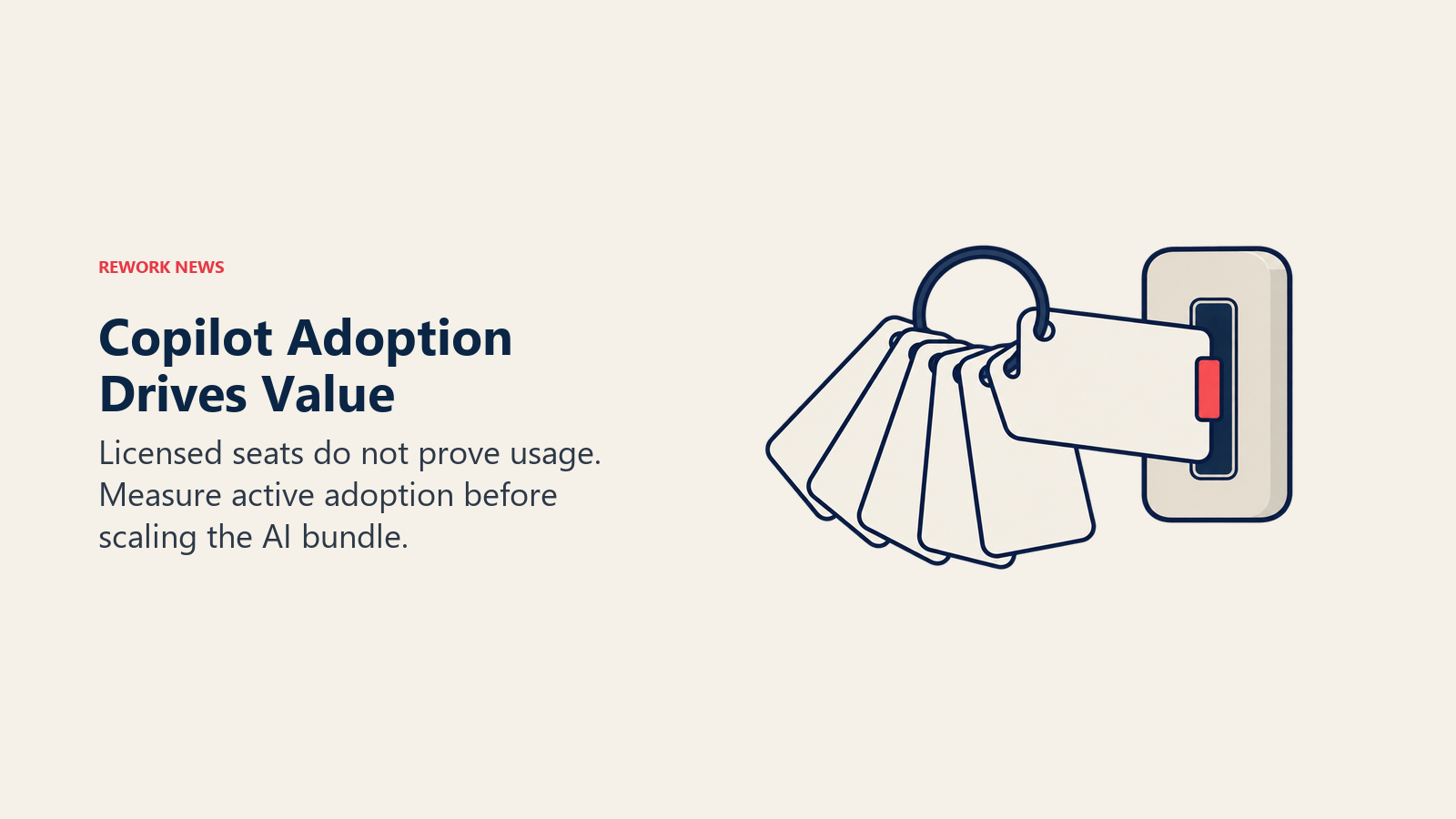
That number matters because the E7 bundle's value proposition assumes your organization will actually use the AI features you're paying for. If your current Copilot adoption is near the industry average (which, given that statistic, it likely is), then bundling Copilot into every seat doesn't automatically increase usage. It increases your spend while your utilization remains flat.
This is the core risk of AI bundle pricing: you're paying for potential, not for outcomes. The discount is real, but it's a discount on components that most organizations aren't fully using. The honest question isn't "is E7 cheaper than buying E5 and Copilot separately?" It's "what percentage of our team will actually use Copilot, and what's the per-active-user cost at that adoption rate?" The news piece on Microsoft's Wave 1 sales agents is also worth reading alongside this. It covers the Copilot features shipping in the same period as E7.
If 15% of your team actively uses Copilot, the effective per-user Copilot cost at an E7 price is much higher than $30. Bundle pricing that assumes full utilization systematically overstates the savings for organizations with realistic adoption curves.
Agent 365: New Infrastructure You Need to Understand Before You Buy It
The component that deserves the most scrutiny for future-proofing is Agent 365. This is a new product for managing AI agents: automated software systems that act on behalf of users across workflows.
Agent management wasn't a procurement category 12 months ago. Now it's being bundled into Microsoft's highest enterprise SKU. That tells you something about the direction Microsoft expects enterprise software to go. It doesn't tell you whether your organization is ready to use it or what use cases it would serve. If you're evaluating whether to consolidate onto a Microsoft-first stack, the CRM comparison landscape is useful context for what you'd be trading away from other platforms.
Before renewing or upgrading to include Agent 365, it's worth asking: do we have AI agents deployed that need managing? If the answer is no, you're paying for infrastructure you won't use until your AI adoption reaches a stage that may be 12 to 24 months away. That's a different calculus than paying for Copilot, where the use case is legible even if adoption is slow.
A Decision Framework Before the Sales Conversation
The E7 bundle is coming to every Microsoft enterprise account. Here's how to approach the evaluation before you're in the room with a sales team:
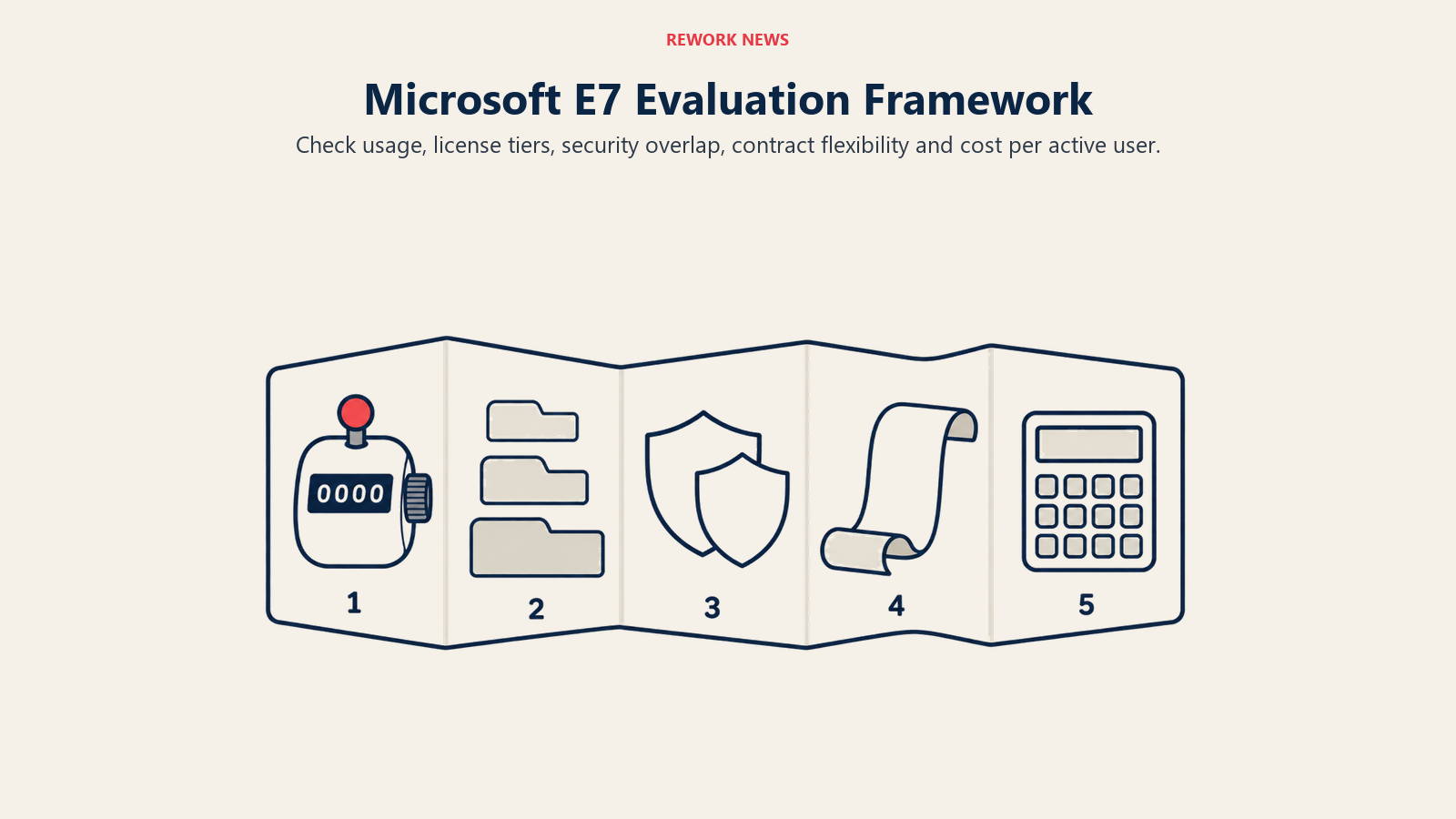
1. Run your actual Copilot adoption numbers. Pull how many of your current Microsoft 365 users actively use Copilot features. Not "have access to" but actually use. If you don't have that data, request it from your Microsoft account team before the renewal meeting. Your real adoption rate determines whether the bundle math works in your favor.
2. Assess your E5 vs. E3 footprint. E7 is positioned above E5. If a significant portion of your organization is on E3 today, upgrading to E7 means you're paying for E5 features that may not be relevant to all users, plus Copilot, plus Agent 365. Consider whether a tiered approach (E7 for power users, E3 or E5 for others) is more cost-effective than blanket E7 deployment.
3. Evaluate your security stack overlap. E7 includes Microsoft Entra Suite and advanced security features. If you've already invested in a separate identity management or security platform, E7 may include substantial overlap. Map what you're already paying for before agreeing to a bundle that includes it again.
4. Ask about contract flexibility. AI adoption curves are still highly variable. A three-year E7 commitment made today locks you into pricing and structure that may not match your AI maturity in year three. Ask specifically about annual opt-out provisions, seat count flexibility, and the process for removing components that prove unused. Get the answers before you sign, not after.
5. Model the actual cost per active AI user. Take your total E7 spend projection and divide it by the number of employees you realistically expect to be active Copilot users within 12 months. That per-active-user number is the real cost of the AI component, and it's almost certainly higher than $30 per user per month at current industry adoption rates.
What to Do Before May
The launch date is May 2026, but Microsoft's enterprise sales cycle means renewal conversations are likely already beginning for customers whose agreements come up in the back half of the year.
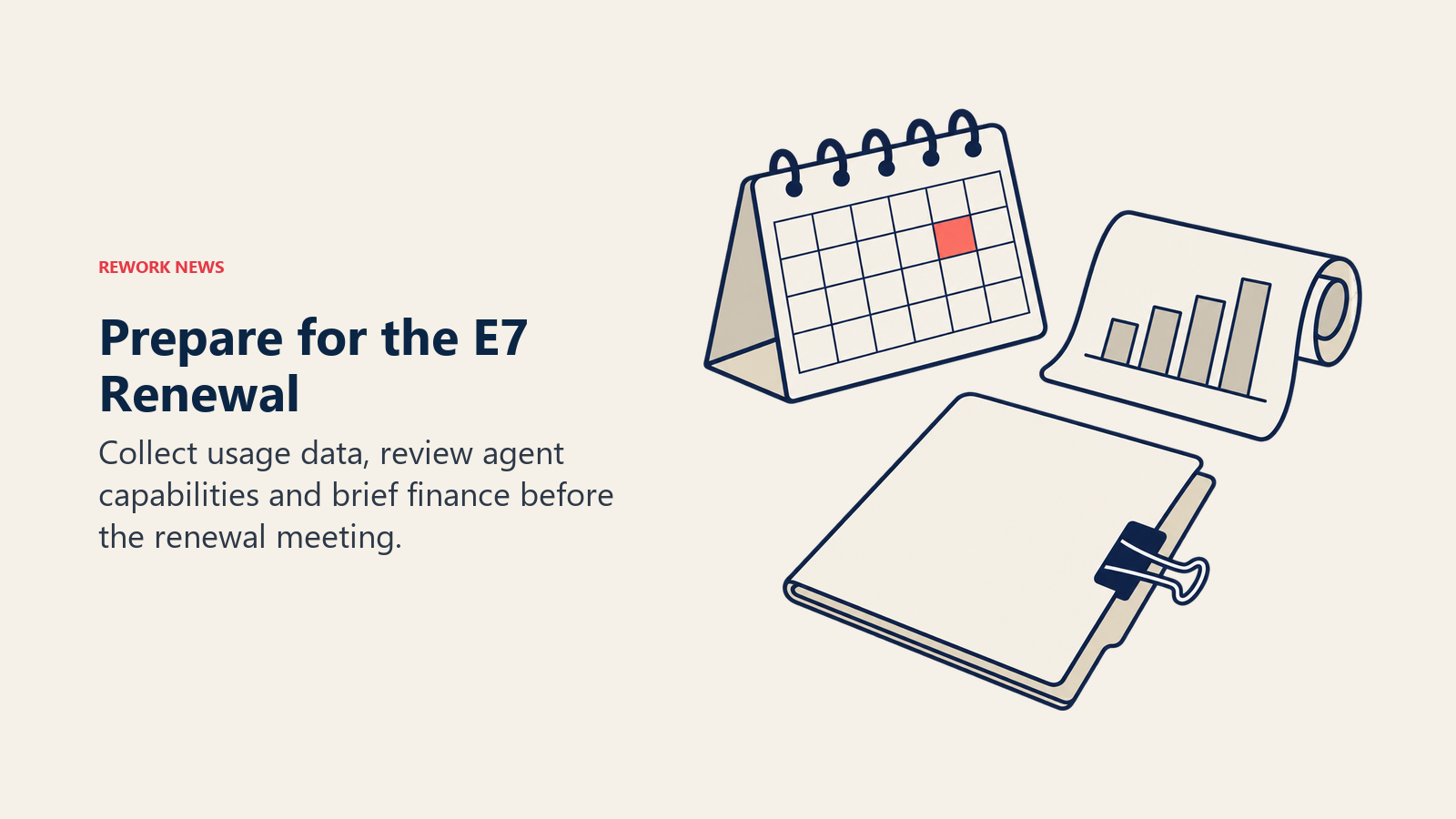
- Find your current M365 contract renewal date and put a preparation block on your calendar at least 90 days before it.
- Pull your current Copilot license utilization (not seat count, but actual active usage data). This is the most important input for any bundle decision.
- Request a capabilities walkthrough for Agent 365 from your Microsoft account team before it's bundled into a renewal conversation. Understanding the product on your terms, before you're in a negotiation, changes the dynamic.
- Brief your CFO now. At $99 per seat across a multi-hundred-person organization, this is a budget conversation that shouldn't arrive at the CFO's desk for the first time during a renewal meeting.
- Run the 13.2% discount math against your actual usage. A 13.2% discount on features you're paying for but not using isn't a savings. It's a smaller overpayment.
The E7 bundle may well be the right decision for your organization. But the right decision, made proactively with full information, looks very different from the same decision made reactively under sales pressure. The time to do the analysis is before the conversation, not during it.
Learn More
- Microsoft's Sales Agents Are Coming in Wave 1: How the Copilot Wave 1 features in the E7 bundle affect your sales team readiness
- Three No-Code Agent Platforms in One Quarter: The broader context for evaluating Microsoft's bundled agent strategy against alternatives
- AI Governance Policy for Departments: Defining what governance you need in place before Microsoft agents run in your environment
- CRM Buyers Checklist: Structured evaluation framework for any major SaaS bundle decision
