More in
AI at Work News
OpenAI Opened ChatGPT Advertising to Small Businesses at Any Budget
Jun 6, 2026
AI Is Everywhere at Work. Only 1 in 10 Say It Transformed the Job
Jun 6, 2026
Vibe Coding's $10.5B Moment: AI Now Starts Most New Software Builds
Jun 6, 2026
AI Agents Now Have More System Access Than Your Employees. Few Are Secured
Jun 5, 2026
Should You Build Your AI or Buy It? Watch What the Giants Bought.
Jun 5, 2026
Uber Caps Employee AI Spending at $1,500 Per Seat After a Budget Blowout
Jun 5, 2026
Trump's AI Executive Order Is Deregulatory. Your Compliance Risk Didn't Move
Jun 4, 2026
AI Pushed 220 Unicorns Below $1B. Pre-ChatGPT Companies Face a Reckoning
Jun 4, 2026
Token Prices Fell 67% This Year. Your AI Bill Is Going Up Anyway
Jun 3, 2026
Small Businesses Using AI Report Higher Revenue and Shorter Workdays
Jun 3, 2026
Microsoft's Sales Agents Are Coming in Wave 1: Are Your Reps Ready?
Turn this article into takeaways for your work.


Each assistant summarizes the article only for you and suggests best practices for your work.
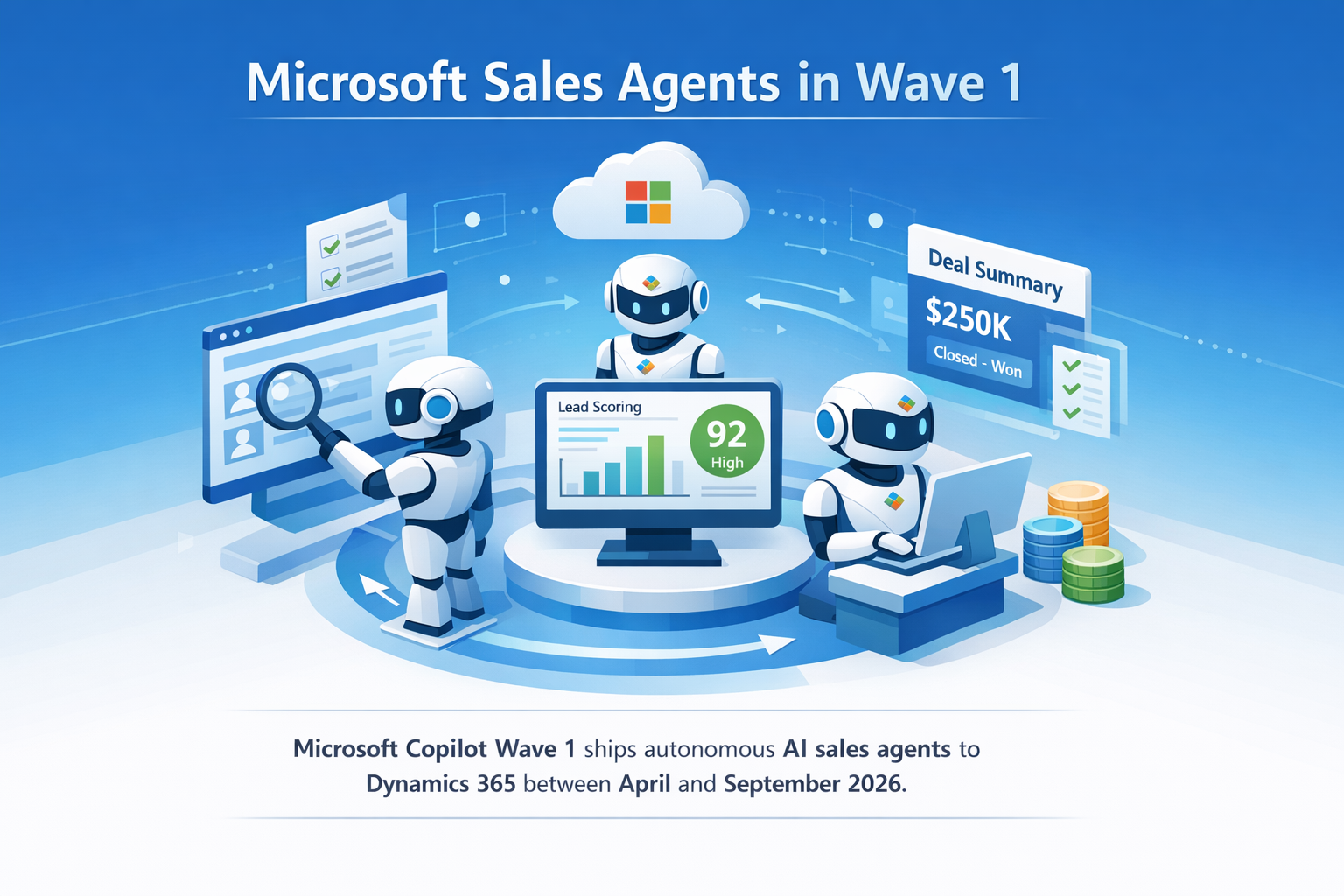
Sales leaders have been told for two years that AI would transform the pipeline. But most of those conversations stayed abstract: a better email draft here, a call transcript summary there. Microsoft's 2026 Release Wave 1 changes the conversation. According to the Microsoft Dynamics 365 blog, capabilities rolling out between April and September 2026 will put autonomous AI agents directly inside Dynamics 365 Sales, agents that research leads, score them, recommend next actions, and produce deal summaries without waiting for a rep to ask.
The phrase Microsoft uses internally says it plainly: AI is no longer assistive. It is operational.
For CROs, this isn't a product update to hand off to RevOps. It's a change management event. And the window to prepare is shorter than it looks.
What Wave 1 Actually Ships for Sales Teams
Two new agents are at the center of the Wave 1 sales story.
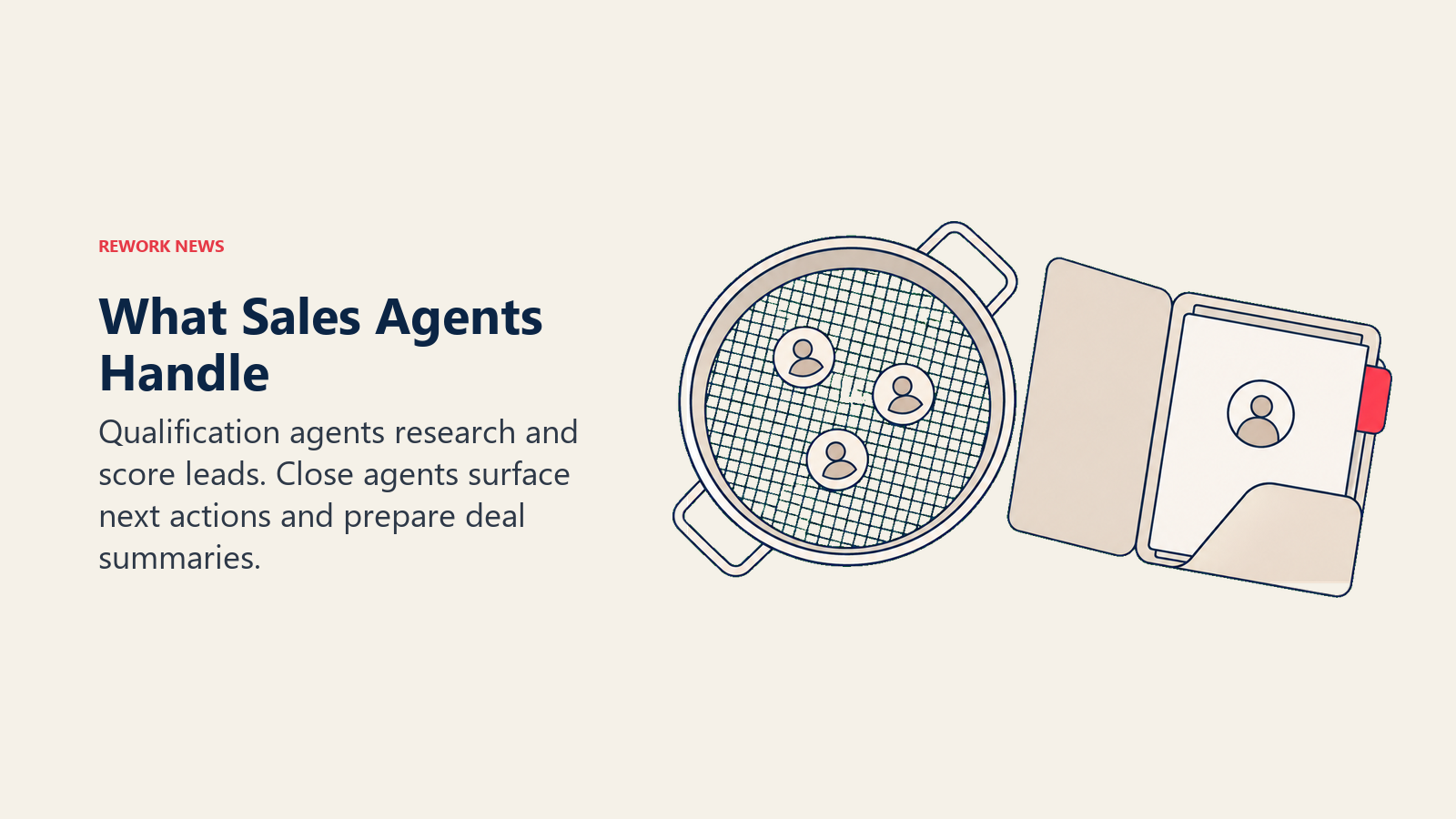
The Sales Qualification Agent handles the top of the funnel. It draws on both CRM data and Microsoft 365 signals (emails, calendar meetings, historical engagement patterns) to research incoming leads, enrich their records, and score them based on intent signals. Leads that look low-intent get flagged for disqualification along with suggested outreach copy. The goal is to get reps spending time on the leads most likely to convert, without requiring them to manually sift through CRM records.
The Sales Close Agent focuses on active deals. It surfaces next-best-action recommendations based on where a deal sits in the pipeline, flags missing steps that historically correlate with deals going dark, and produces deal summaries that give managers and reps a clear view of where each opportunity stands. Think of it as the deal review prep that nobody has time to do consistently, running automatically after every update.
Both agents operate through Sales Chat, a unified interface built on Microsoft 365 Copilot Chat that pulls CRM data, email history, and calendar context into a single conversational experience. Reps won't need to switch between tools to get a lead brief or a deal summary. It's designed to surface in the flow of their existing Microsoft environment.
Microsoft also announced an E7 bundle at $99 per user per month that packages Copilot, the new Agent capabilities, and Entra identity tools together, a pricing move that suggests Microsoft is betting heavy adoption comes from bundling, not selling add-ons. Currently, only around 3.3% of existing Microsoft 365 users pay for the Copilot add-on. The bundle is a direct attempt to change that math.
Why This Is a Change Management Problem, Not a Feature Decision
CROs who've deployed sales tech before know the pattern. A capability ships. IT turns it on. Reps ignore it or use it inconsistently. The business case never materializes. Twelve months later, someone wonders why the investment didn't pay off.
AI agents introduce a new wrinkle: they don't just sit there waiting to be used. They act. The Sales Qualification Agent will start scoring and enriching leads based on whatever data is in your CRM. If that data is incomplete, inconsistent, or outdated, the agent's outputs will be too. Good lead data management practices aren't just hygiene: they're the prerequisite for AI agent output quality. If reps haven't been told how to interpret AI-generated lead scores or act on disqualification suggestions, they'll either ignore them or override them reflexively.
The change management question isn't "will my team use this?" It's "what happens to my pipeline when they don't, and what happens when they do?"
A Readiness Framework for CROs
Before AI agents start operating in your pipeline, five things need to be in order.
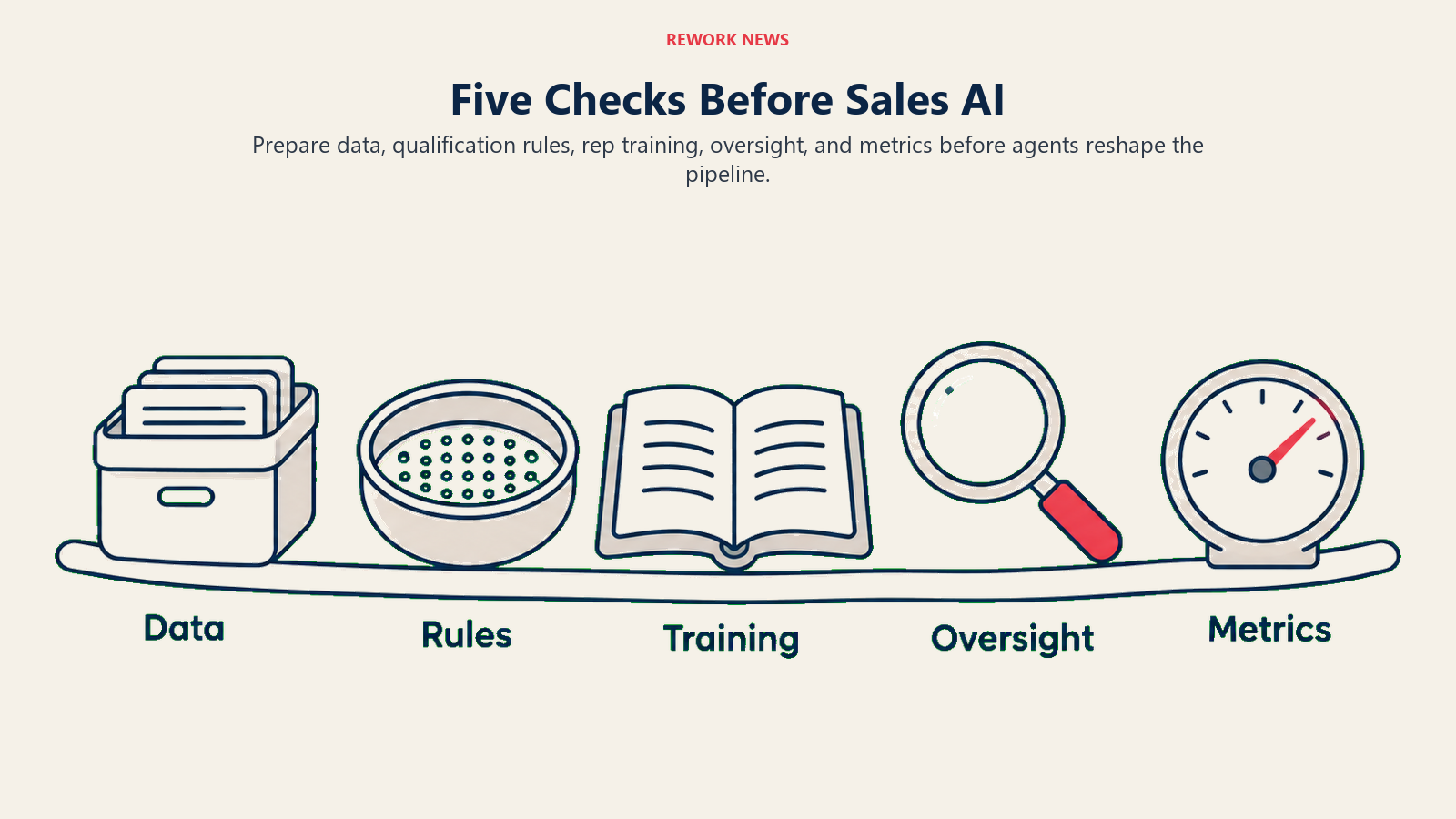
CRM data quality. The Sales Qualification Agent's lead scoring pulls from CRM records and Microsoft 365 signals. If your contact records are missing company size, industry, or engagement history, the agent is scoring off incomplete information. Do a data quality audit now. Identify the fields the agent will rely on and get your team disciplined about filling them.
Lead qualification criteria. For an AI agent to qualify leads accurately, your qualification criteria need to be documented and agreed upon, not living in the heads of your best reps. Pull together your current ICP definition, the signals you use to disqualify, and the rules that distinguish a "good lead" from a "low-intent lead." A solid lead qualification framework makes this exercise faster: if you haven't formalized yours yet, that's the starting point. That documentation becomes the reference point for evaluating whether the agent's behavior aligns with your intent.
Rep training on AI outputs. Your reps will receive AI-generated lead scores, disqualification flags, and deal summaries. Do they know what to do with them? Train them not just on where to find the outputs, but on when to trust them, when to question them, and how to flag cases where the agent seems wrong. The goal isn't blind adoption. It's informed use.
Oversight and audit processes. When an AI agent disqualifies a lead, someone should be able to trace why. Build a review process for the first few months of operation: sample AI decisions weekly, compare against human judgment, and calibrate. This isn't about second-guessing the agent. It's about catching systematic errors before they affect revenue.
Metric recalibration. Your current conversion metrics assume human qualification. Once an AI agent starts filtering the top of the funnel, your volume-to-conversion ratios will shift. Set expectations with your team and your board before Wave 1 ships. The story you want to tell is "we improved lead quality and focused rep time," not "our conversion rate changed and we don't know why." The lead lifecycle stages your team tracks will need to reflect where AI handoffs begin and human judgment picks up.
The Rollout Timeline Matters
Wave 1 covers April through September 2026, and not everything ships on day one. Some capabilities will arrive in early access; others roll out later in the window. If you're on Dynamics 365 Sales, check the Microsoft Learn release plan for your specific tier and region. Some features require the Copilot add-on or the E7 bundle. Get clear on what's in your current contract and what requires additional licensing before you build internal timelines.
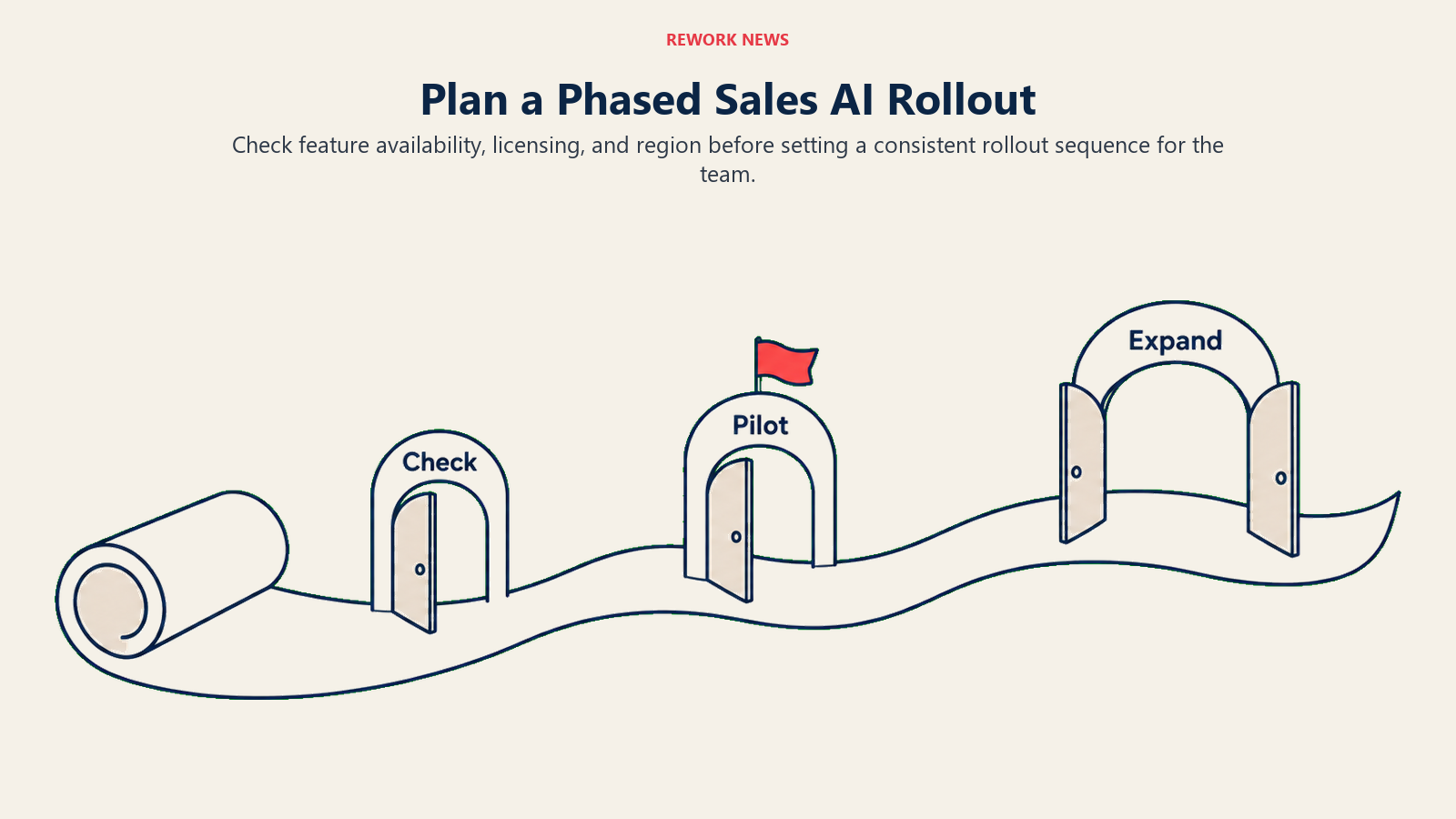
The gradual rollout is actually useful. It means you don't have to be fully ready on April 1. But it also means there's a window where some reps may have access to agent features and others don't, which creates inconsistency unless you're deliberate about the rollout sequence.
What to Do This Week
You don't need to wait for Wave 1 to ship to start preparing. A few actions are worth taking now.
Pull a data quality report for your CRM contacts and leads. Look specifically at completeness on the fields most likely to feed AI scoring: company size, industry, title, engagement history, and opportunity stage. Set a target for completion rate on each field before April.
Convene a short working session with RevOps and your front-line managers to document your current lead qualification criteria. Treat it as an exercise in making implicit knowledge explicit. What does your best rep instinctively know about a good lead? Write it down.
Review your Microsoft 365 licensing to confirm which Wave 1 features are included and which require additional purchase. If the E7 bundle is relevant to your org, get that conversation started with IT and procurement now.
The organizations that get the most from AI agents in their sales process won't be the ones who turned the feature on first. They'll be the ones who did the preparation work (clean data, clear criteria, trained reps, and governance in place) before the agent started acting in their pipeline. For a broader look at how GPT-5.4's accuracy improvements complement this kind of agent deployment, the CRO's GPT-5.4 sales impact analysis covers the reliability threshold question directly.
Wave 1 is on its way. The readiness work starts now.
Learn More
- AI Agents Are Taking Over Revenue Workflows: Governance checklist for RevOps before AI agents go live in your pipeline
- How GPT-5.4 Changes AI-Assisted Sales: The reliability threshold question every CRO should understand
- AI Agents in the Sales Pipeline: How agentic systems are reshaping prospecting and qualification
- CRM Workflow Automation: Building the automation foundation that AI agents depend on
