More in
B2B SaaS Industry News
Salesforce Just Solved CRM's Oldest Data Problem, At a Cost
Apr 7, 2026
When Your SaaS Vendor Cuts Its R&D Team: What Enterprise Buyers Need to Watch
Mar 19, 2026 · Currently reading
The 171% Agentic AI ROI Number: What the Data Actually Says
Mar 2, 2026
Drift Is Being Phased Out: The RevOps Checklist Before Your Conversational Workflows Go Dark
Feb 11, 2026
The $99-Per-Seat Decision: How to Evaluate Microsoft's New AI Bundle
Feb 9, 2026
The SaaS Growth Model That No Longer Requires More Engineers
Feb 4, 2026
Meeting Notes Just Hit a $1.5B Valuation: What That Signals About the Enterprise AI Context Race
Feb 3, 2026
A $1.2B CRM-Killer at $8M ARR: What Every Sales Leader Needs to Decide Before the Next Board Meeting
Feb 2, 2026
Record AI Funding in Q1 2026: What It Means for Your Sales Stack and Your Competitors
Jan 8, 2026
The Agentic Sales Stack Is Attracting Unicorn Capital: What CEOs Need to Decide About Their Revenue Infrastructure
Jan 7, 2026
When Your SaaS Vendor Cuts Its R&D Team: What Enterprise Buyers Need to Watch
Turn this article into takeaways for your work.


Each assistant summarizes the article only for you and suggests best practices for your work.
Enterprise software buying has always carried a form of hidden risk: the vendor you sign a three-year contract with today may look very different by year two. Most buyers accept that abstractly. Atlassian's March 2026 restructuring makes it concrete. The broader SaaS buying dynamics at play here are worth understanding as a baseline before working through the specifics.
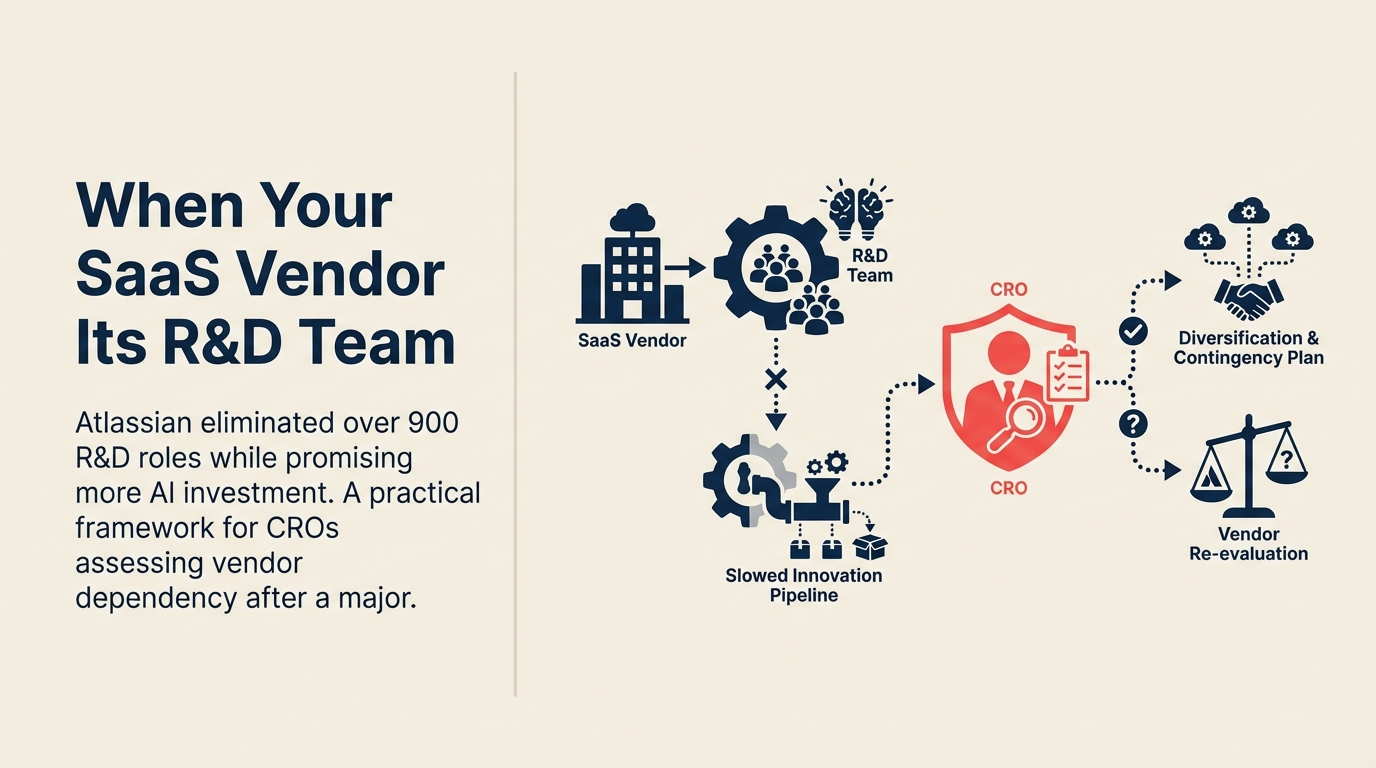
TechCrunch reported that Atlassian cut approximately 1,600 employees (around 10% of its global workforce), with more than 900 of those positions coming from software research and development. The company simultaneously announced plans to increase investment in AI and enterprise sales. For enterprise buyers who rely on Atlassian's collaboration and project management tools, that combination of moves deserves a clear-eyed assessment.
This isn't about whether the restructuring was the right business decision for Atlassian. It may well be. But for CROs and enterprise buyers sitting on significant Atlassian contracts, the question is simpler: what does a leaner R&D organization mean for the products and roadmaps you're depending on?
What the Restructuring Actually Means
Let's start with what's publicly known. According to Atlassian's own announcement, the company plans to redirect resources from headcount toward AI capabilities. CNBC noted the total restructuring cost is projected between $225M and $236M, landing primarily in the company's Q3 fiscal quarter.
Alongside the headcount reduction, Atlassian's CTO stepped down effective March 31, 2026, with his responsibilities distributed across two existing executives. CTO transitions are worth noting even at healthy companies. During a restructuring, they can signal deeper changes in technical direction.
The geographic spread matters here too. Cuts fell roughly 40% in North America, 30% in Australia, and 16% in India. This isn't a regional cost arbitrage move; it's a global reshape of how Atlassian expects to build and maintain software.
Here's the part that should give enterprise buyers pause: five months before this announcement, Atlassian's CEO had publicly stated the company expected to employ more engineers in five years, not fewer. That position reversed in under six months. The speed of that reversal is itself a signal. AI productivity gains are arriving faster than leadership teams are updating their public commitments.
The R&D Cut Question Every Buyer Should Ask
When a vendor's headcount reduction falls disproportionately on R&D (as Atlassian's did), the downstream implications are different from cuts in sales, marketing, or G&A. Engineering teams are the people who build features, fix bugs, and respond to enterprise support escalations. Cutting more than 900 of them doesn't immediately affect the products you use today, but it affects what those products will look like in 18 to 36 months.
The open question is how much of that capacity is genuinely replaced by AI tooling versus simply removed. AI-assisted software development can increase individual engineer output substantially. GitHub Copilot and similar tools have demonstrated measurable productivity gains. But there's a difference between "AI helps each developer write more code" and "we can cut 60% of our R&D team and maintain the same product velocity." Atlassian hasn't publicly quantified that productivity offset. Buyers shouldn't assume it fully closes the gap.
The Enterprise Sales Intensification Signal
There's a second implication worth tracking. Atlassian's CEO specifically cited "enterprise sales investment" alongside AI as a rationale for the restructuring. That phrasing matters.
For existing Atlassian enterprise customers, increased sales investment typically translates into more active account management, more frequent upsell conversations, and more pressure around contract renewals. If your organization is already in a multi-year Atlassian agreement, expect that agreement to be revisited more aggressively (and with better-resourced account teams) at the next renewal window.
This isn't necessarily a negative. But it's worth knowing before that conversation arrives.
A Decision Framework for Enterprise Buyers
When a major SaaS vendor restructures in this pattern (R&D cuts paired with AI investment and enterprise sales expansion), here's what to evaluate:
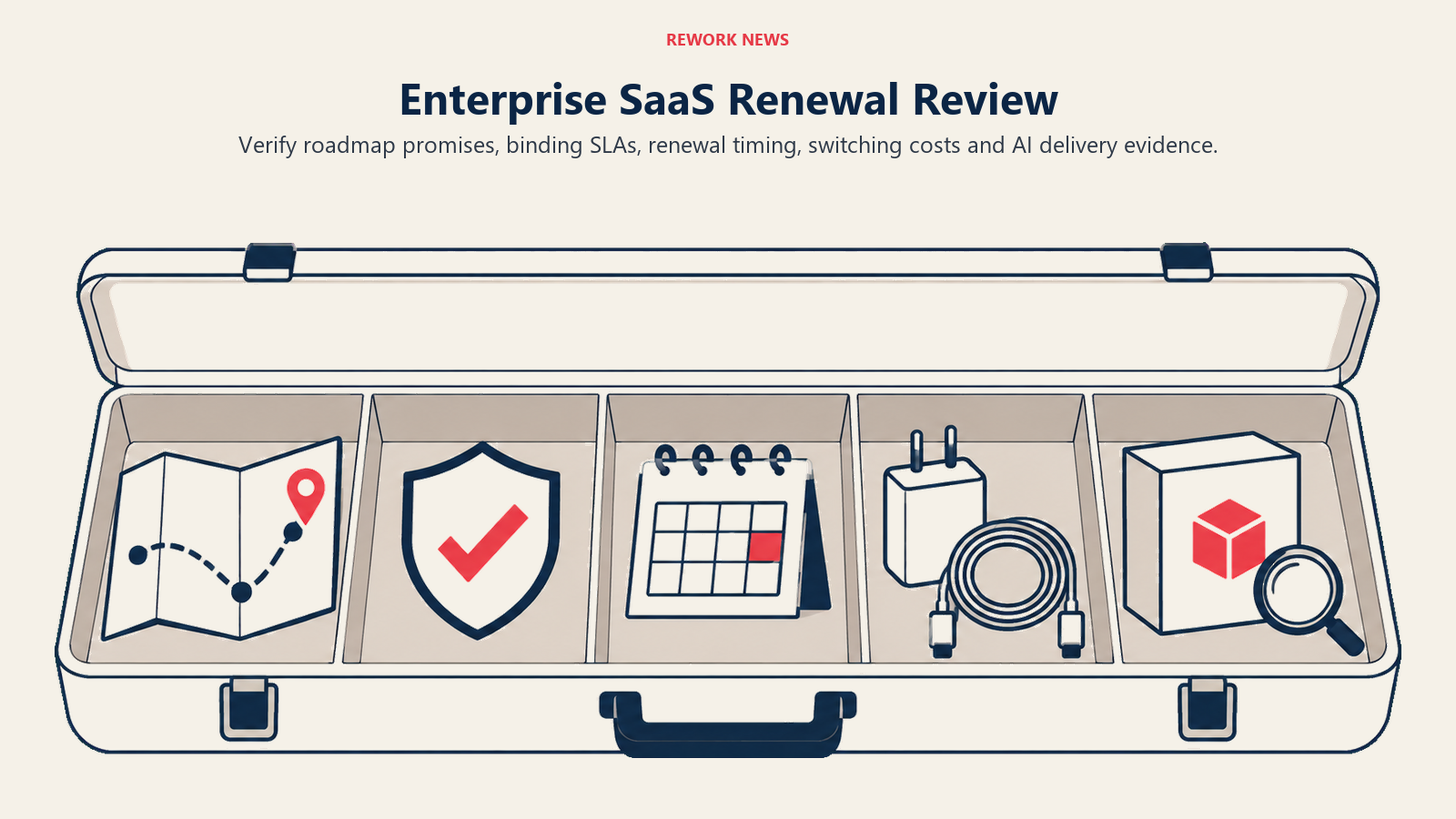
Assess your roadmap dependencies. Make a list of the features your team is counting on that haven't shipped yet. Then ask your Atlassian account team directly whether those are still on the roadmap and on what timeline. Get specific commitments in writing where possible. Vague roadmap promises are harder to hold vendors to after a major organizational shift.
Review your contract's SLA and support commitments. Restructuring frequently affects support queue times and escalation paths before it affects the product itself. If your contract includes specific SLA guarantees around response time or uptime, review whether those are contractually binding or aspirational. If they're aspirational, consider whether the next renewal conversation should change that.
Audit your renewal timeline. Know exactly when your Atlassian licenses come up for renewal. A vendor in active restructuring is more motivated to close renewals quickly than a vendor at full capacity. That creates some leverage, but only if you know the timeline in advance and prepare accordingly. A solid CRM implementation framework helps with assessing renewal readiness if your Atlassian footprint overlaps with your core ops stack.
Map your switching cost honestly. Jira and Confluence have deep integrations in most engineering and cross-functional workflows. Switching costs are real. But understanding those costs (rather than assuming they're prohibitive) gives you better information for the renewal conversation. You don't need to be evaluating alternatives to benefit from knowing what they would cost.
Watch the AI feature delivery timeline. Atlassian is betting that AI investment replaces the capacity it cut. That bet will become visible in product releases over the next 12 to 24 months. If AI features ship at the pace they've committed to, the restructuring rationale holds. If they don't, the R&D reduction will start to show up as product drift. Set a reminder to evaluate this at 12 months.
What to Do This Week
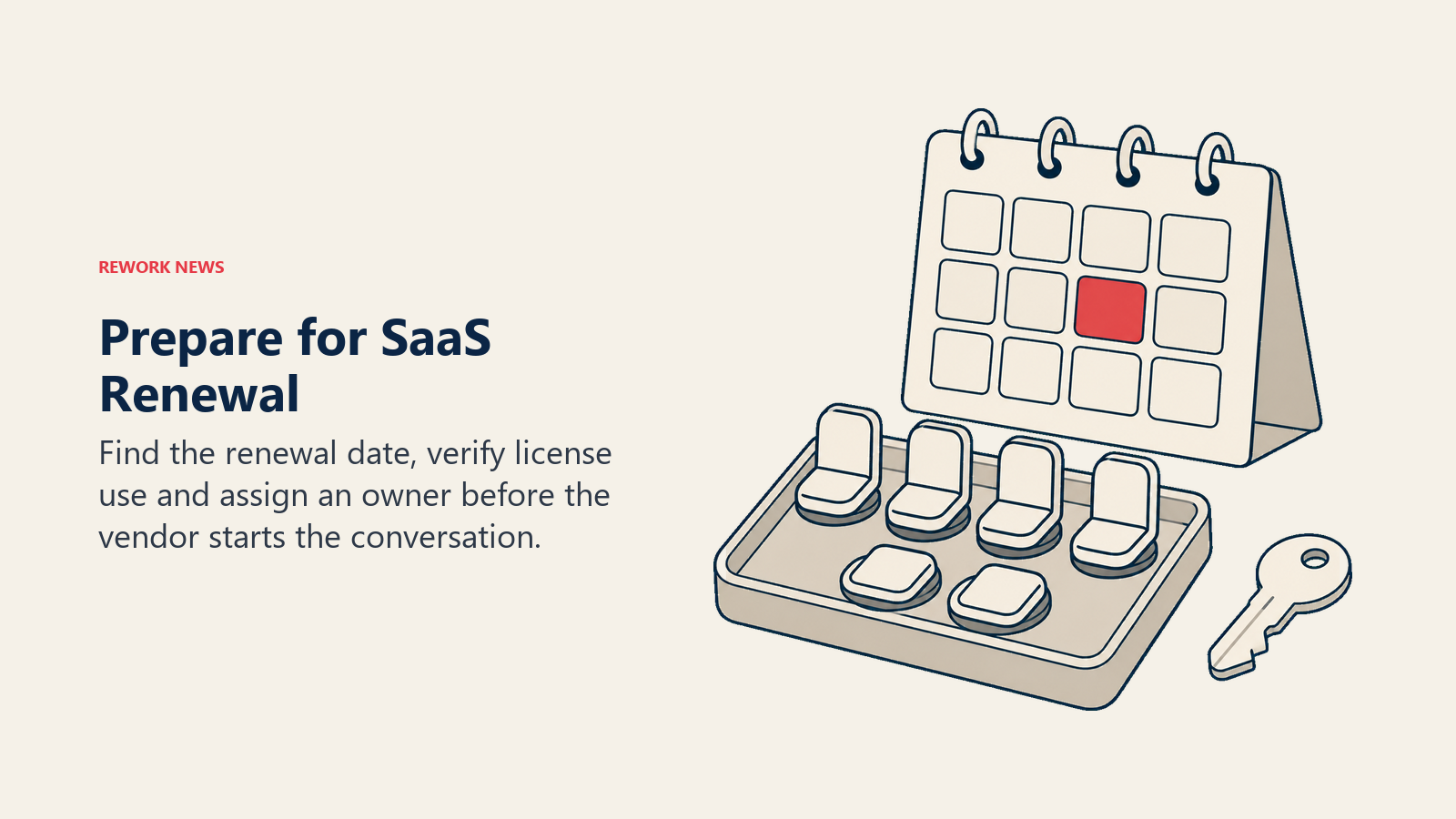
- Pull your Atlassian contract and find the renewal date. If it's within the next 12 months, put it on your Q3 calendar now and block time to prepare before the vendor initiates contact.
- Request an updated roadmap briefing from your Atlassian account team. Ask specifically about any features your teams are depending on and confirm whether the Q1 restructuring affects their delivery timeline.
- Check your license utilization. Organizations often hold Atlassian licenses for seats that aren't actively used. Renewal is the right time to right-size, and you need current utilization data to have that conversation effectively. Pull the data now, before your account team does.
- Identify who on your vendor management team owns the Atlassian relationship. Restructurings create changes in account team assignments. Make sure there's a clear owner on your side tracking this relationship through the transition period.
- Note this pattern across your stack. Atlassian isn't the only SaaS vendor restructuring in Q1 2026. Workday and Salesforce both made similar moves. Run the same evaluation for any other major vendor where R&D cuts were announced alongside AI investment promises.
Vendor instability doesn't always look like a vendor failing. Sometimes it looks like a vendor changing faster than your contracts anticipated. The same pattern played out at the CEO level. See the SaaS growth model analysis for the strategic framing. Atlassian may be building something stronger in the long run. But between now and that future product, enterprise buyers need to manage the transition period with clear eyes.
Learn More
- Atlassian Cut 900 R&D Roles: COO Vendor Risk Assessment: Operations leaders' framework for evaluating platform risk at renewal
- Record AI Funding in Q1 2026: CRO Sales Stack Implications: How the funding wave connects to the vendor restructuring wave
- AI Readiness Assessment Templates: Framework for assessing whether to stay, switch, or extend vendor contracts
- SaaS Companies Restructuring Teams for AI in 2026: What the restructuring pattern signals for enterprise SaaS buyers
