More in
AI at Work News
OpenAI Opened ChatGPT Advertising to Small Businesses at Any Budget
Jun 6, 2026
AI Is Everywhere at Work. Only 1 in 10 Say It Transformed the Job
Jun 6, 2026
Vibe Coding's $10.5B Moment: AI Now Starts Most New Software Builds
Jun 6, 2026
AI Agents Now Have More System Access Than Your Employees. Few Are Secured
Jun 5, 2026
Should You Build Your AI or Buy It? Watch What the Giants Bought.
Jun 5, 2026
Uber Caps Employee AI Spending at $1,500 Per Seat After a Budget Blowout
Jun 5, 2026
Trump's AI Executive Order Is Deregulatory. Your Compliance Risk Didn't Move
Jun 4, 2026
AI Pushed 220 Unicorns Below $1B. Pre-ChatGPT Companies Face a Reckoning
Jun 4, 2026
Token Prices Fell 67% This Year. Your AI Bill Is Going Up Anyway
Jun 3, 2026
Small Businesses Using AI Report Higher Revenue and Shorter Workdays
Jun 3, 2026
Your Meetings Are Now a Programmable Data Source: What CTOs Need to Know About MCP and Meeting-Context APIs
Turn this article into takeaways for your work.


Each assistant summarizes the article only for you and suggests best practices for your work.
There's a category of architectural shift that doesn't look like a platform war from the outside. It looks like a feature announcement from a company you've probably heard of but haven't fully evaluated yet. Then, six months later, it's the thing everyone's retrofitting their agent infrastructure around.
Granola's announcements in late March 2026 may be one of those. According to TechCrunch, the company closed a $125M Series C at a $1.5B valuation and simultaneously launched two APIs that change how meeting intelligence can enter AI workflows: a personal API for individual note and transcript access, and an enterprise API that gives organizations admin-level control over team-wide meeting context.
But the more architecturally significant move came earlier, in February 2026: Granola launched an MCP server. That's the thing CTOs need to think about carefully.
What MCP Actually Does
Model Context Protocol (MCP) is an open standard, initially developed by Anthropic, for letting AI agents query external data sources in a structured, real-time way. The idea is to give foundation models like Claude, GPT-based systems, or Gemini a consistent interface for pulling in live context rather than relying solely on what's in their training data or a static prompt.
Before MCP became widely adopted, connecting an AI agent to a data source required custom integration work for every source-agent pair: a bespoke connector for your CRM, another for your knowledge base, another for your calendar. Anyone who's gone through a CRM implementation in the last three years knows how much of that effort is integration plumbing. MCP is the first real attempt to standardize it. MCP standardizes that interface, so an MCP-compatible agent can query any MCP-compatible data source using the same protocol.
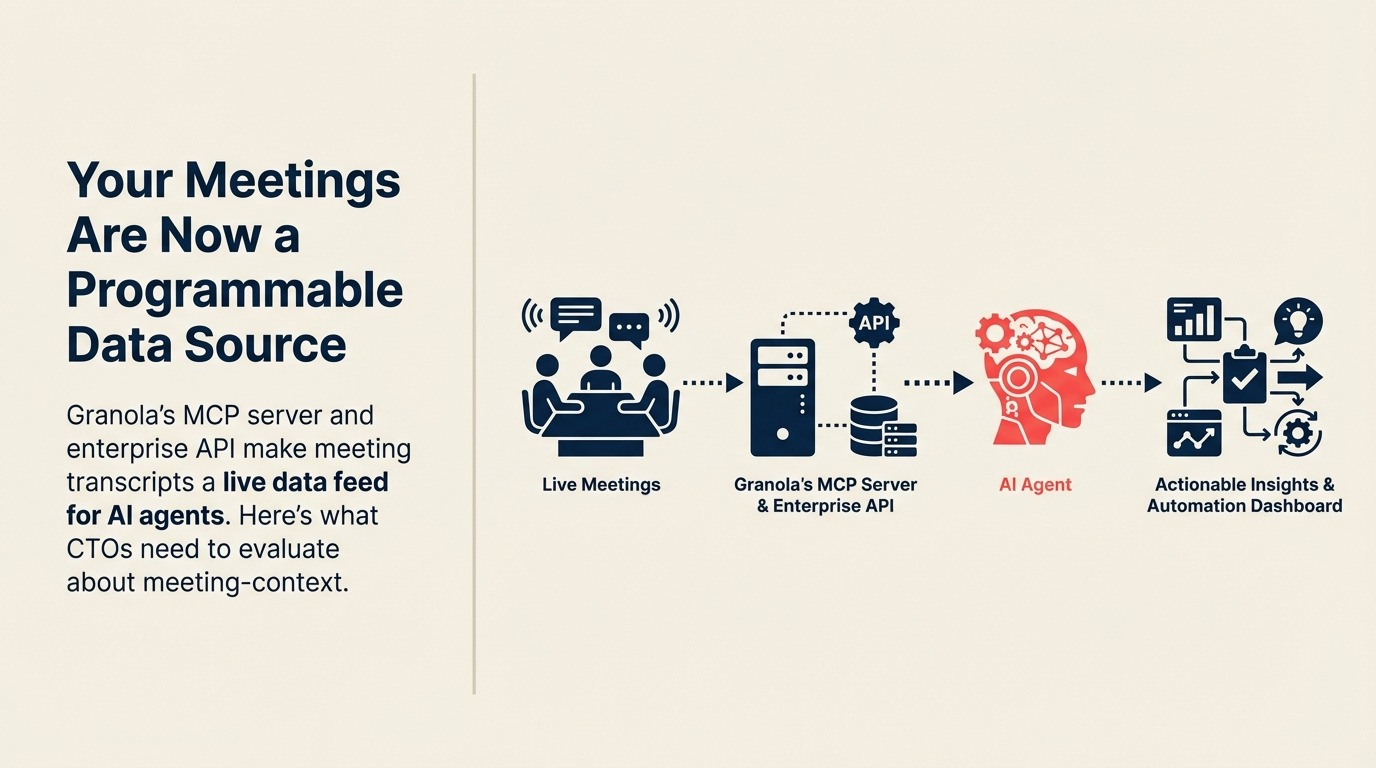
Granola's MCP server makes meeting transcripts, structured notes, and shared context available through that standard interface. What that means practically: an AI agent that's already MCP-enabled (which now includes Claude, GPT-4 class systems, and a growing set of enterprise tools) can query Granola's meeting data the same way it queries a CRM record or a document store.
Meeting context becomes a first-class data source in your agent architecture. Not a post-hoc export. Not a nightly sync. A live, queryable feed.
The Architectural Implication
If you're building or evaluating internal AI agents right now, you're likely thinking about which data sources those agents need access to in order to be useful. The standard list is: CRM data, calendar data, email context, and internal documents. The AI agents in the sales pipeline framing is useful here, as it maps which data sources matter most for which agent types. Those four sources cover most of what makes an agent's output relevant rather than generic.
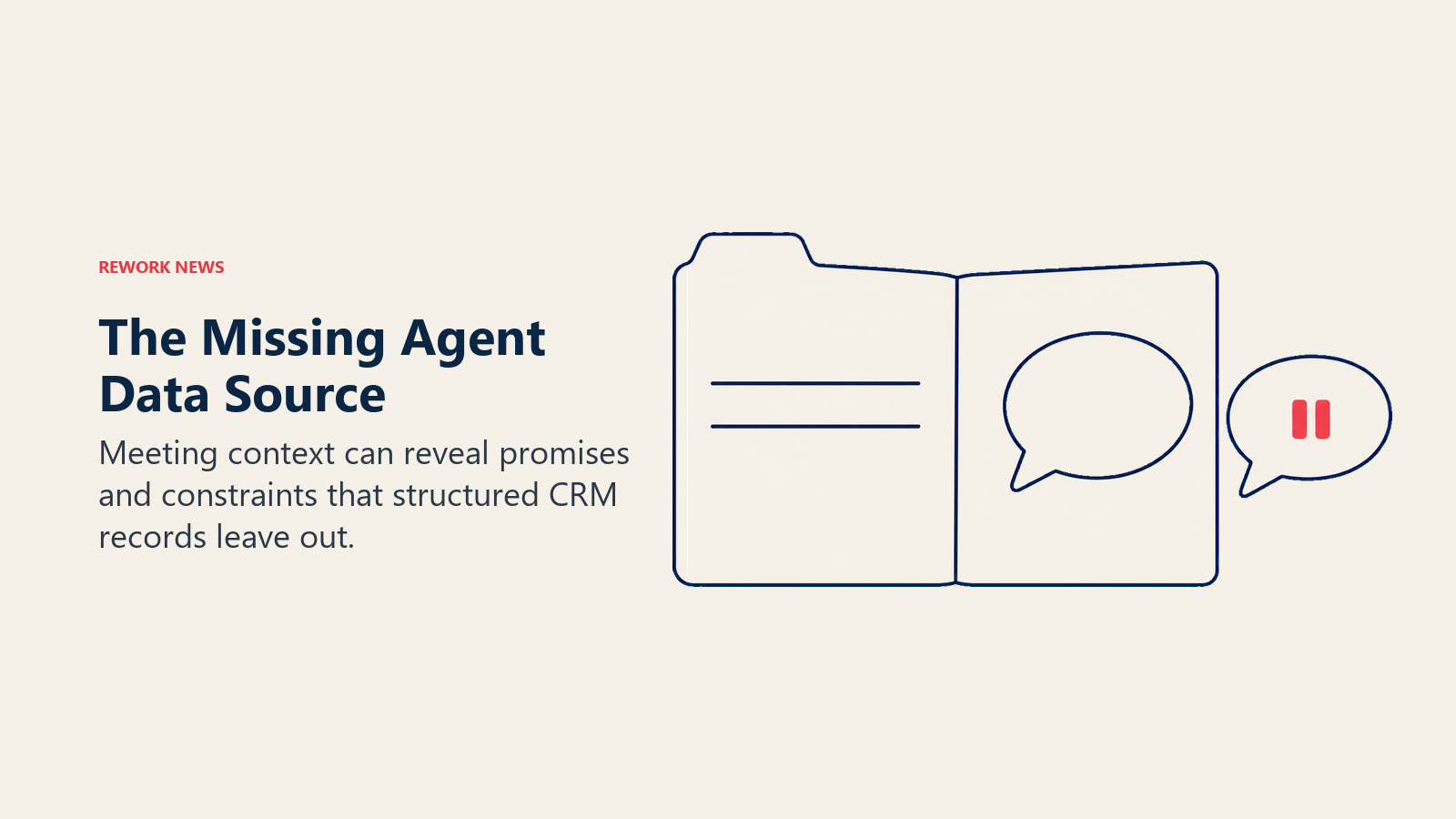
Granola's move adds a fifth source that's been conspicuously absent from most enterprise agent architectures: what people actually said in meetings.
Meeting transcripts are rich with signal that structured data systems don't capture well. The CRM record says a deal is at "proposal stage." The meeting transcript from last week's call says the champion told the buying committee there was a budget freeze until Q3. Those two pieces of information tell very different stories about what to do next. A sales agent with access to both makes better recommendations than one working from structured data alone.
The same logic applies in other contexts. An engineering planning agent that knows what was discussed in the last architecture review can surface relevant prior decisions. A customer success agent that's aware of what was promised in the last QBR can flag delivery risks proactively.
Meeting context as a data source isn't a nice-to-have. It's a material gap in most current agent architectures.
Why the Enterprise API Matters Separately from MCP
MCP handles the protocol layer: how agents access the data. The enterprise API handles the governance layer: who controls which data agents can access and at what level.
Granola's enterprise API gives organization administrators control over team-level meeting context rather than just individual user data. That distinction matters for three reasons.
First, it enables policy-level access control. You can determine which agents have access to meeting context from which teams, rather than managing individual user permissions at scale.
Second, it creates an auditable data path. When an AI agent takes an action based on meeting context, the enterprise API provides a traceable record of what data the agent accessed. That's increasingly important for AI governance compliance, a point developed in detail in the discussion of the governance gap in enterprise AI deployments.
Third, it makes meeting context portable within your internal stack. You don't need to rebuild integrations when an agent framework changes. The enterprise API sits as a stable data layer that any compliant agent can query.
Granola's customer list at Series C announcement includes Vanta, Gusto, Asana, Cursor, Lovable, and Mistral AI. That's not a consumer-grade signal. Those are organizations with meaningful data governance requirements and sophisticated internal tooling.
A 4-Point Evaluation Checklist for CTOs
If you're evaluating whether meeting-context APIs belong in your agent infrastructure, here's a practical framework for the assessment.
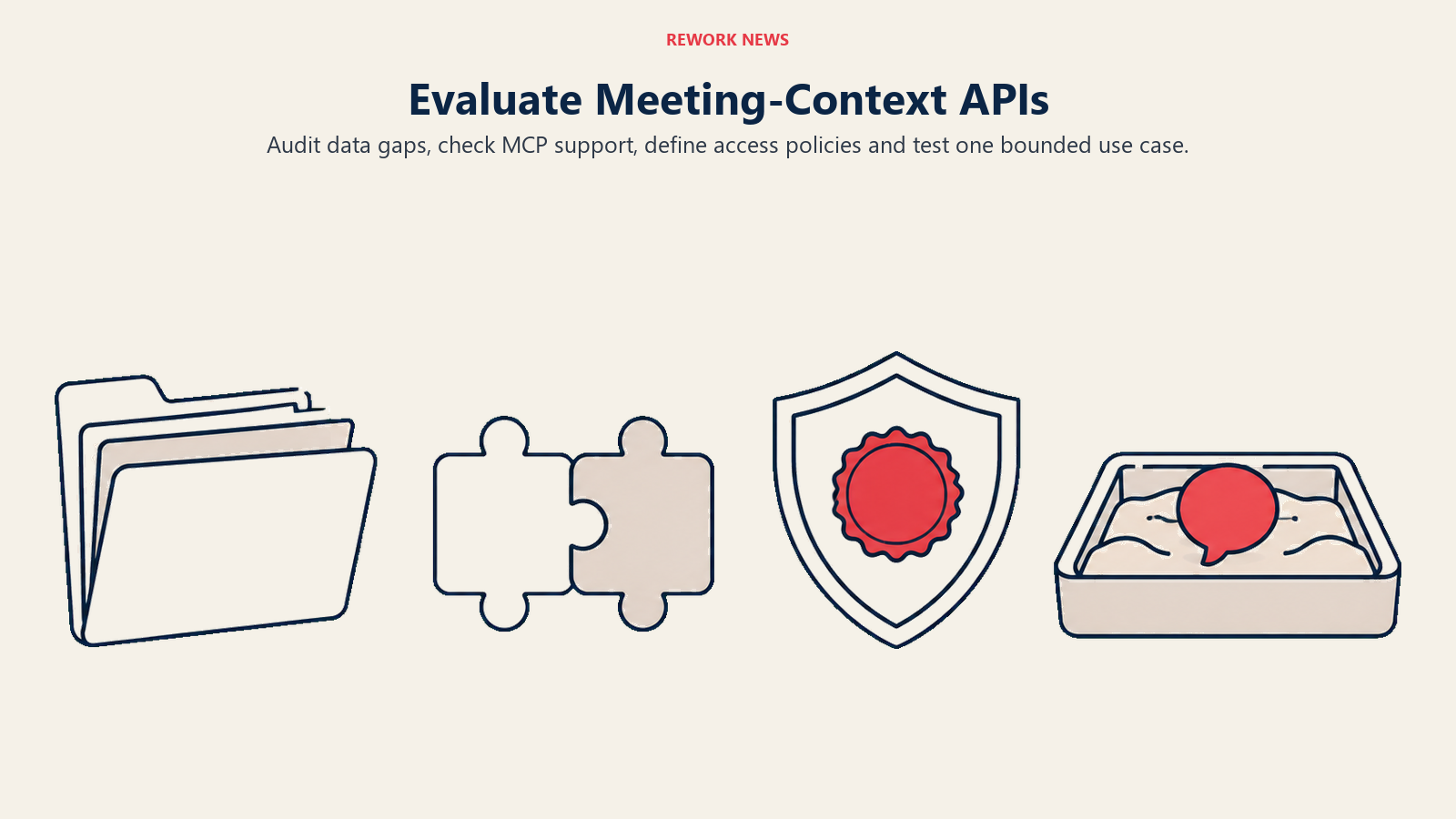
1. Audit your current agent data sources. List every data source your internal AI agents currently have access to. Ask: is meeting context already in this picture? If not, identify which agent use cases are weakest because of its absence. This anchors the evaluation in actual workflow gaps rather than abstract capability.
2. Evaluate MCP compatibility with your agent framework. If you're building on Claude, GPT-4-class, or Gemini-based agents, check whether your current implementation supports MCP. Most enterprise-grade deployments in 2026 do. If yours doesn't yet, the cost of adding MCP support is usually lower than a custom integration, but confirm before building your evaluation around it.
3. Assess the governance requirements. Meeting data is sensitive. Before any enterprise API integration, determine: Which teams' meeting data would be in scope? What's the access control model? What's the data retention policy? How does meeting context integrate with your broader AI data governance framework? The AI meeting notes and summaries space has matured significantly, and understanding the tooling landscape helps set realistic expectations for what an enterprise API integration delivers on top of commodity summarization. Granola's enterprise API provides the controls, but you need to define the policy those controls enforce.
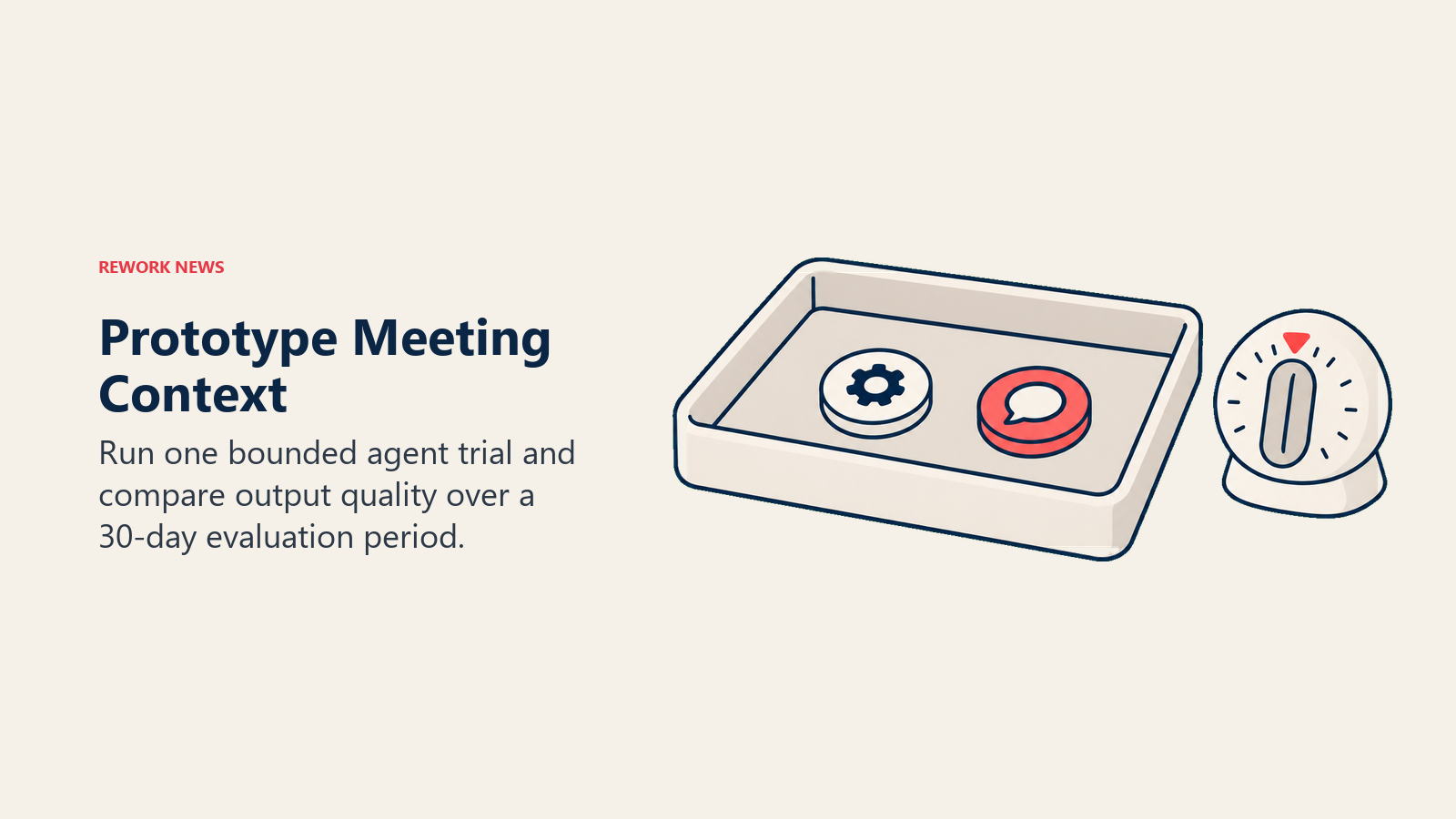
4. Prototype before procuring. The right first step isn't a full enterprise contract. Start with a bounded prototype. Pick one internal agent use case where meeting context would be most valuable (sales deal intelligence and engineering retrospective analysis are common starting points), integrate the API in a sandboxed environment, and measure whether the output quality materially improves. If it does, you have the data to justify a broader deployment.
What to Prototype This Quarter
The architectural window for this decision is relevant to the current moment. MCP is becoming a de facto standard faster than most enterprise tooling standards do, partly because the model providers themselves are investing in it, and partly because it solves a real interoperability problem that builders hit immediately. The broader AI integration with existing systems question is where CTOs are spending most of their evaluation bandwidth right now, and MCP is one answer to a problem that spans the entire stack.
Meeting-context APIs aren't going to disappear as a concept even if the specific vendors change. The question is whether you start treating meeting data as infrastructure now, while early-mover advantage still applies to your internal stack, or whether you retrofit it later when the gap between your agent capabilities and those of peers is more visible.
The prototype to scope this quarter: identify one internal AI agent that's currently working with CRM and calendar data, integrate Granola's API or a comparable meeting-context source, and run a 30-day comparison of output quality with and without meeting context in the prompt. The results will tell you more than any analyst report about whether this belongs in your architecture.
Learn More
- Meeting Notes Hit $1.5B Valuation: What That Signals: CEO-level reading of what Granola's funding means for the enterprise AI context race
- AI Meeting Context vs. Your Notion Workspace: How team leads should think about meeting intelligence alongside their existing tools
- AI Governance Policy for Departments: Defining access policies before meeting data becomes a live agent data source
- The Governance Gap in Enterprise AI: Why auditable data paths matter as agent architectures grow more complex
This article is based on TechCrunch's reporting on Granola's Series C and product launches and confirmation from The Next Web.
