More in
AI at Work News
OpenAI Opened ChatGPT Advertising to Small Businesses at Any Budget
Jun 6, 2026
AI Is Everywhere at Work. Only 1 in 10 Say It Transformed the Job
Jun 6, 2026
Vibe Coding's $10.5B Moment: AI Now Starts Most New Software Builds
Jun 6, 2026
AI Agents Now Have More System Access Than Your Employees. Few Are Secured
Jun 5, 2026
Should You Build Your AI or Buy It? Watch What the Giants Bought.
Jun 5, 2026
Uber Caps Employee AI Spending at $1,500 Per Seat After a Budget Blowout
Jun 5, 2026
Trump's AI Executive Order Is Deregulatory. Your Compliance Risk Didn't Move
Jun 4, 2026
AI Pushed 220 Unicorns Below $1B. Pre-ChatGPT Companies Face a Reckoning
Jun 4, 2026
Token Prices Fell 67% This Year. Your AI Bill Is Going Up Anyway
Jun 3, 2026
Small Businesses Using AI Report Higher Revenue and Shorter Workdays
Jun 3, 2026
PwC's 74/20 Divide: What Separates the CEOs Capturing AI's Economic Gains From the Ones Watching Them

Turn this article into takeaways for your work.


Each assistant summarizes the article only for you and suggests best practices for your work.
Quick Take: PwC's 2026 study reveals a structural split in enterprise AI: 20% of companies capture 74% of the measurable economic value. The gap isn't about technology, it's about strategic orientation. Leaders reorganize around AI; everyone else bolts it onto what they already have.
What the Data Says
- 20% of companies capture 74% of AI's economic value (PwC 2026 AI Performance Study)
- 97% of executives deployed AI agents in the past year, but only 29% report significant ROI (Writer 2026 Enterprise AI Adoption Survey)
- 88% of organizations saw AI affect annual revenue across some or all business areas (NVIDIA State of AI Report 2026)
- 30% of organizations reported revenue increases exceeding 10% from AI, roughly matching PwC's leading 20% (NVIDIA 2026)
- 50% of the U.S. workforce now uses AI at work, yet measurable economic gains remain concentrated in a minority of firms (Gallup 2026)
The uncomfortable truth about enterprise AI is that most organizations aren't capturing much of its value, and the gap is getting wider, not narrower. According to PwC's 2026 AI Performance Study, 74% of the measurable economic value being generated by AI is flowing to just 20% of companies. That's not a small variance between early adopters and laggards. It's a structural split.
For CEOs who've been investing in AI and not seeing returns proportional to that investment, PwC's findings give language to something many have suspected: the issue probably isn't the technology. It's how the organization is structured around it. The same pattern shows up in AI governance research across mid-market companies, most organizations deploy AI tools without restructuring the workflows or accountability layers around them.
Why the 74/20 Split Is a Strategy Problem, Not a Technology Problem
The companies in PwC's leading 20% aren't distinguished by having better AI models or larger technology budgets. What separates them is their orientation. Where the 80% are deploying AI to shave costs and improve throughput in existing workflows, the 20% are using AI to restructure how their organizations capture revenue growth.
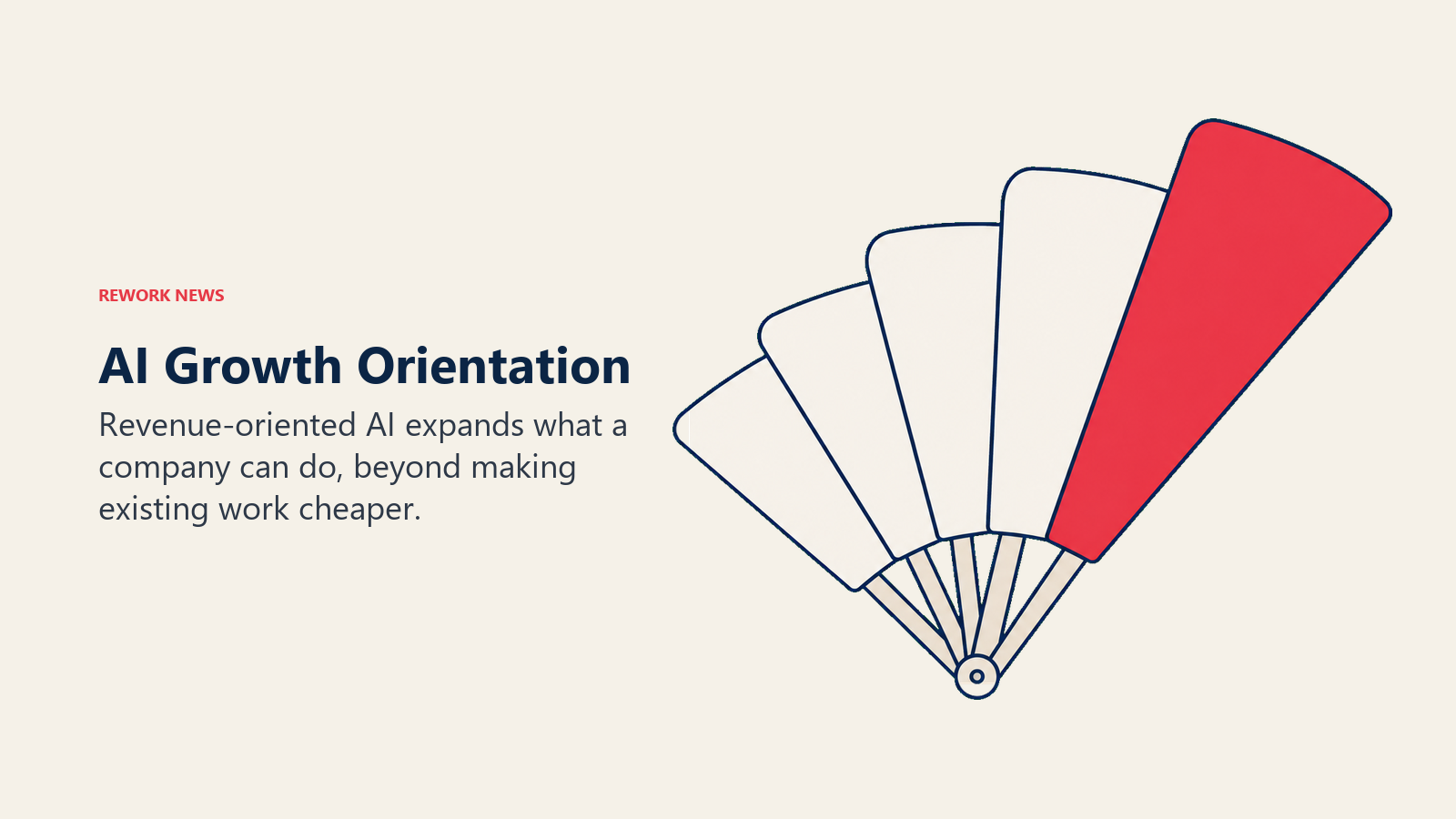
That's a different strategic posture. Cost reduction and productivity gains are real, but they're also finite. There's only so much you can cut. Revenue-oriented AI deployment, redesigning go-to-market processes, expanding capacity to serve customers, enabling new business models, has different economics. The ceiling is much higher, and the competitive moat is harder to replicate. On the sales side specifically, AI agents are already reshaping how revenue pipelines operate, and the organizations in the leading 20% are the ones treating that as a structural redesign, not a feature rollout.
The study also finds that this divide tends to widen over time rather than close. Companies ahead in AI value capture are building advantages that compound: better data, more refined models, organizational muscle memory for running AI-native workflows. The organizations still running pilots and optimizing cost centers are falling further behind on a trajectory that's hard to reverse quickly. For the companies on the wrong side of that line, the repricing is already brutal: 220-plus pre-ChatGPT unicorns have fallen below $1 billion as AI-native rivals undercut them.
The Pattern That Separates Leaders From Everyone Else
If you look past the headline statistic, the PwC data points to one dominant behavioral difference: AI leaders reorganize around AI, while everyone else bolts AI onto what they already have.
Reorganizing around AI means restructuring roles, redesigning performance metrics, and rethinking workflows from scratch rather than automating an existing process. It means asking "what does this function look like when AI is a primary actor?" rather than "how does AI make our current process faster?"
That's a harder question to answer, and it requires more organizational disruption. Which is probably why most companies don't do it. It's easier to buy an AI tool, drop it into an existing workflow, declare an AI initiative, and measure a productivity metric. But that approach leaves most of the value on the table.
The PwC findings are consistent with what other research shows about the gap between deployment and returns. A 2026 survey by Writer found that 97% of executives had deployed AI agents in the past year, but only 29% reported significant ROI. Nearly universal deployment, but majority-poor outcomes. That's not a technology adoption failure. That's an organizational design failure.
Your AI Dashboard Is Probably Measuring the Wrong Things
Most internal AI reporting tracks hours saved, tickets closed, time-to-completion improved. Those are real gains, but they're not the metrics that separate the 20% from the 80%. And if that's what your board sees, you're reporting yourself into the wrong cohort. The Gallup data confirms this disconnect at scale: half of the U.S. workforce now uses AI at work, yet self-reported productivity gains aren't translating into measurable economic value for most organizations.
The leading companies ask different questions. How is AI expanding the number of customers we can serve at quality? How is it enabling sales capacity we couldn't build with headcount alone? Where is AI changing what's possible in a market, not just making the current operations cheaper to run?
NVIDIA's state-of-AI reporting adds useful corroborating context: 88% of organizations they surveyed saw AI affect annual revenue across some or all business areas, and 30% reported revenue increases exceeding 10%. That 30% is operating in the same territory as PwC's leading 20%. They're the companies for whom AI isn't a productivity tool, it's a growth lever.
If your internal AI reporting is predominantly cost-and-efficiency metrics, that's a signal your program may be well-managed but strategically misoriented.
Five Moves That Actually Get You Into the 20%
The moves below are structural, because leadership gaps rarely close through another AI tool rollout alone.
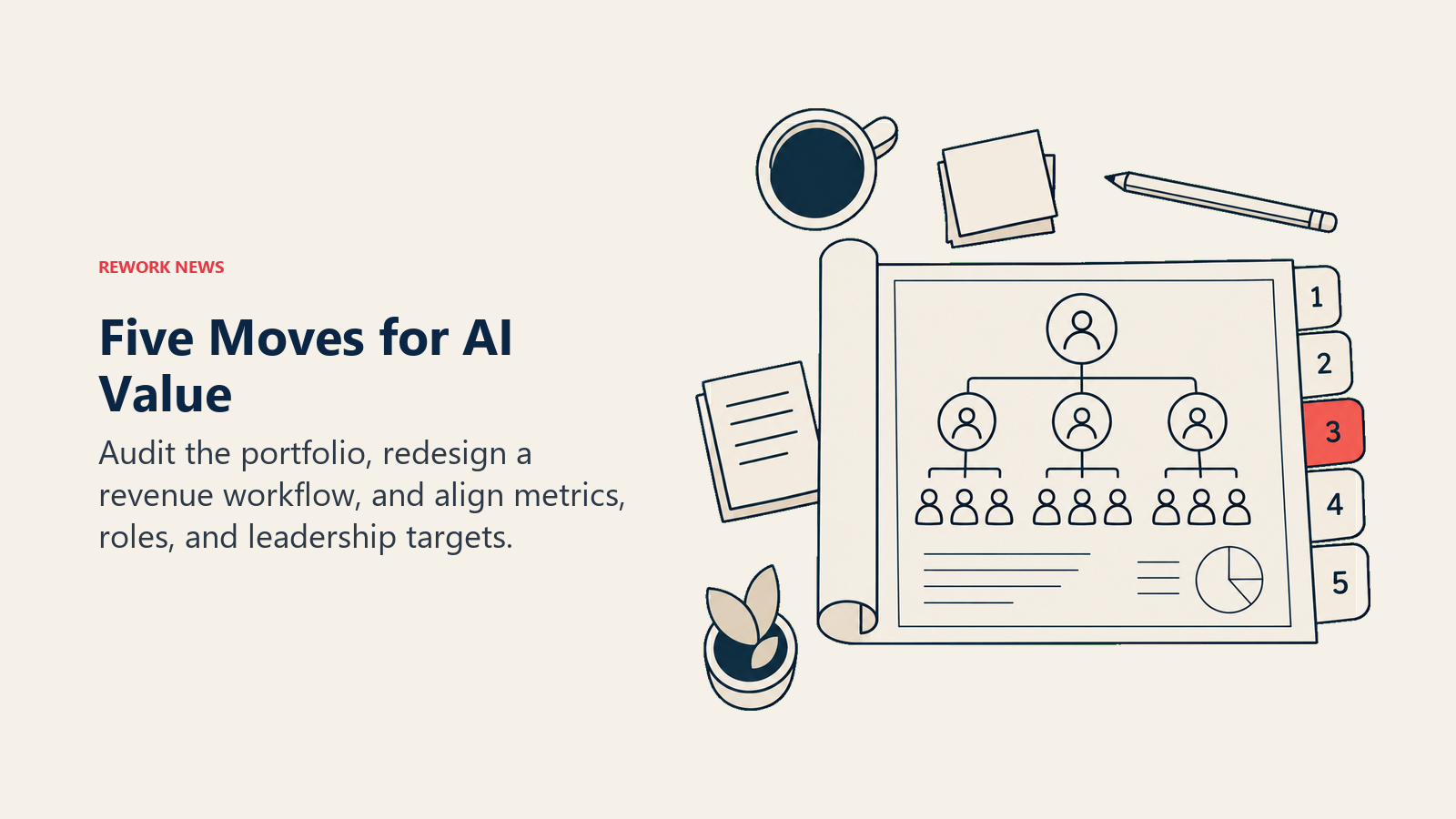
None of this shifts quickly. But the leading organizations share specific structural changes you can start sequencing now.
1. Audit your AI program for growth orientation vs. productivity orientation. Pull up the current portfolio of AI initiatives. For each one, ask: is this fundamentally about reducing the cost or time of existing operations, or is it enabling the organization to do something that wasn't previously possible at scale? The ratio will tell you a lot about where your program sits on the spectrum.
2. Redesign at least one revenue-critical workflow from scratch. Don't optimize an existing sales, marketing, or customer success process with AI. Start from "what would this function look like if AI were doing most of the work?" The answer might be uncomfortable; it often involves fewer people doing very different things, but it's the question that generates the kind of structural redesign PwC's leaders are running.
3. Change what you're measuring. Revenue per AI initiative, customer capacity expansion, new market segments reached; these are better leading indicators of AI value capture than cost savings per workflow. If your board-level AI reporting doesn't include at least one growth metric, fix that before the next QBR.
4. Stop treating AI and organizational design as separate workstreams. The companies capturing the most AI value aren't running parallel tracks, "AI strategy" over here and "org design" over there. They're redesigning their organizations specifically to capture AI's economic potential. That means roles change, performance metrics change, and reporting structures sometimes change. Your Chief AI Officer (or whoever owns AI strategy) needs a seat in conversations about how the company is structured, not just what technology it buys. An executive decision framework for AI workforce strategy can help structure that conversation before it gets to the board.
5. Set an explicit target for the 20%. Most companies don't have a stated goal of being an AI leader in PwC's definition. They have goals like "deploy AI in X functions" or "achieve Y% cost reduction." Those are lagging indicators of laggard behavior. Set a goal that's harder and more directional: we intend to be in the top quintile of AI value capture in our sector by a specific date, and here's how we're measuring that.
What the Gap Means for Companies Still in the 80%
There's a version of this story that becomes a permanent structural disadvantage. If AI value capture compounds the way PwC suggests, with leaders pulling further ahead as their advantages build on each other, then the window for catching up narrows over time. Being in the 80% in 2026 doesn't mean you're finished. But staying in the 80% through 2027 and 2028, while competitors in the 20% are compounding their leads, creates a gap that's genuinely difficult to close. The workforce dimension of this gap is real: how to make the board case for AI workforce investment without hype is a skill most executive teams are still developing.
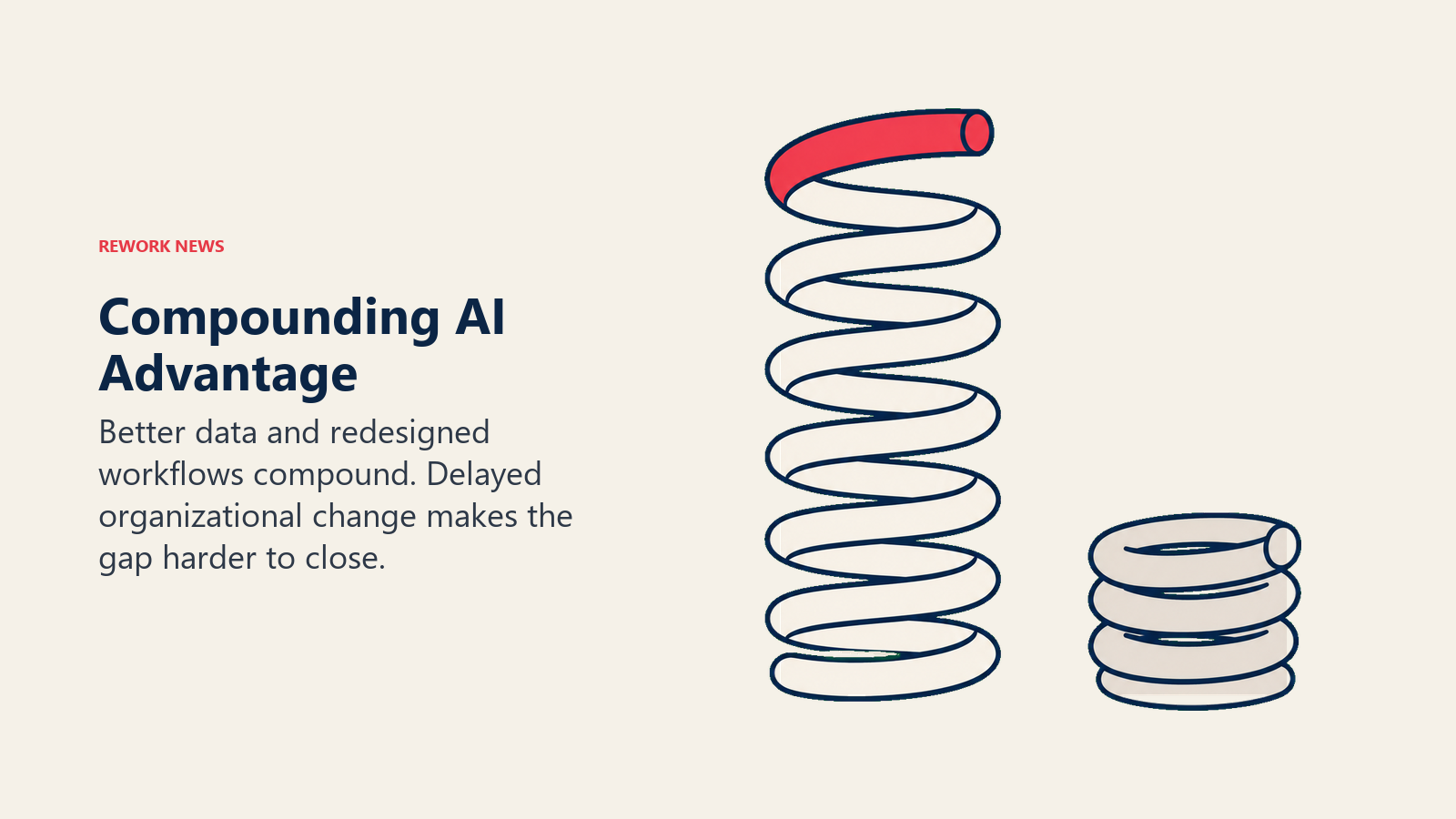
The strategic risk for CEOs isn't that AI doesn't work. It's that AI works extremely well for a minority of companies and captures relatively little value for the majority, and that pattern hardens into structural competitive disadvantage if you don't course-correct deliberately.
For companies currently in the 80%, the right question isn't "are we using AI?" It's "are our AI programs structured to capture the same kind of value the leading 20% are capturing?" In most cases, an honest answer is no. The good news is that's a fixable problem, if the diagnosis happens at the CEO level, not just the technology team level.
The Growth Orientation Test
Two questions that separate the 20% from the 80%: "Is this AI initiative fundamentally about reducing the cost of something we already do?" or "Is this enabling something we couldn't do at scale before?" Companies where most AI initiatives answer the first question are optimizing a position in the 80%. Companies where most answer the second are competing for the 20%.
The AI Capture Test: An AI initiative qualifies as growth-oriented when it enables a business capability that didn't previously exist at scale, not when it makes an existing process cheaper or faster. Apply this test to each item in your AI portfolio. The ratio of growth-oriented to cost-oriented initiatives predicts which cohort you're in.
What to Do This Week
Put these three items on the board agenda before the next QBR:
Request a growth-vs-productivity audit of your AI portfolio. Ask whoever owns AI strategy to categorize each active initiative by whether it's primarily cost/efficiency oriented or revenue/growth oriented. The resulting picture should inform where you double down and where you pivot.
Add a new AI performance metric to your board dashboard. Choose one metric that measures AI's contribution to revenue growth, not cost reduction. It doesn't need to be perfect; it needs to exist and be tracked. That alone shifts organizational attention toward the right question.
Schedule a strategic conversation about organizational redesign. Not about AI features or tools, but about which workflows, roles, and performance metrics need to change structurally for your organization to compete in PwC's leading 20%. This is the conversation most companies haven't had at the CEO and board level. It's overdue.
The 74/20 split is already baked into 2026's competitive landscape. The question is whether your company's AI strategy is oriented to move you into the 20%, or whether it's optimizing a position in the 80%.
Related Reading
- The Q1 2026 Tech Layoff Pattern and What It Means for Your Own Workforce Strategy, How leading companies are restructuring their workforces around AI investment
- 86% of CEOs Are Increasing AI Budgets, But Only 1 in 5 Has the Governance to Back It Up, The governance gap that undercuts AI ROI
- Three No-Code AI Agent Platforms Launched in One Quarter: Here's What CEOs Should Take From It, The agent wave and what it means for strategic positioning
Frequently Asked Questions
What is the 74/20 divide in enterprise AI?
PwC's 2026 AI Performance Study found that 20% of companies capture 74% of the measurable economic value generated by AI. The divide isn't driven by technology access or budget size; it reflects a fundamental difference in how organizations orient their AI programs. Leaders use AI to enable revenue growth and new capabilities; the 80% use it primarily to reduce costs in existing workflows.
Why do most companies fail to capture AI's economic value?
According to PwC's research, the core failure is organizational design, not technology. Companies in the bottom 80% deploy AI onto existing processes rather than restructuring roles, workflows, and performance metrics around AI's actual capabilities. Writer's 2026 survey found that 97% of executives have deployed AI agents, but only 29% report significant ROI, universal deployment, majority-poor outcomes.
How can a CEO tell if their AI program is in the 20% or the 80%?
Audit your AI portfolio by asking one question per initiative: does this enable something the organization couldn't do at scale before, or does it make something existing cheaper or faster? A portfolio dominated by cost-efficiency initiatives indicates a position in the 80%. Revenue-oriented initiatives, expanding customer capacity, enabling new business models, restructuring go-to-market, are the pattern of the 20%.
Does the 74/20 gap close over time as AI matures?
PwC's findings suggest the opposite: the gap tends to widen. Leaders build compounding advantages, better proprietary data, refined models, and organizational muscle memory for AI-native workflows. Organizations still in pilot mode or optimizing cost centers fall further behind on a trajectory that's genuinely difficult to reverse quickly.
What metrics should CEOs track to know if they're moving into the leading 20%?
Replace or supplement cost-efficiency metrics with growth indicators: revenue per AI initiative, customer capacity expansion, new market segments reached through AI-enabled scale. If your board-level AI dashboard reports only hours saved or tickets closed, your reporting is optimizing for the wrong cohort.
Source: PwC 2026 AI Performance Study. Corroborating data from Writer's 2026 Enterprise AI Adoption Survey and NVIDIA's State of AI Report 2026.

Co-Founder, Rework.com
On this page
- Why the 74/20 Split Is a Strategy Problem, Not a Technology Problem
- The Pattern That Separates Leaders From Everyone Else
- Your AI Dashboard Is Probably Measuring the Wrong Things
- Five Moves That Actually Get You Into the 20%
- What the Gap Means for Companies Still in the 80%
- The Growth Orientation Test
- What to Do This Week
- Frequently Asked Questions
- What is the 74/20 divide in enterprise AI?
- Why do most companies fail to capture AI's economic value?
- How can a CEO tell if their AI program is in the 20% or the 80%?
- Does the 74/20 gap close over time as AI matures?
- What metrics should CEOs track to know if they're moving into the leading 20%?