Profil Pelanggan Ideal (ICP): Cara Mentakrifkannya
Turn this article into takeaways for your work.


Each assistant summarizes the article only for you and suggests best practices for your work.
Profil pelanggan ideal anda adalah dokumen tunggal paling penting yang akan pernah ditulis oleh pasukan GTM anda. Dapatkan yang betul dan segala-galanya ke bawah menjadi lebih mudah: prospek mana yang hendak dikejar, tawaran mana yang hendak diprioritaskan, mesej pemasaran mana yang hendak dijalankan. Dapatkan yang salah dan anda sedang menjalankan permainan meneka yang sangat mahal.
Berikut adalah realiti yang tidak selesa: kebanyakan syarikat sebenarnya belum mentakrifkan ICP mereka. Mereka mempunyai gambaran samar tentang siapa yang mereka sasarkan, mungkin senarai logo yang mereka ingin dapatkan, dan beberapa pendapat berasaskan naluri yang diperdebatkan oleh pemasaran dan jualan setiap suku tahun. Itu bukan profil. Itu senarai keinginan.
Panduan ini membawa anda melalui apa itu ICP sebenarnya, bagaimana ia berbeza daripada konsep berkaitan, dan proses konkrit untuk membina satu yang akan digunakan oleh seluruh pasukan anda.
Fakta Utama: ICP dan Ketepatan Sasaran
- Syarikat dengan ICP yang ditakrifkan dengan jelas 68% lebih berkemungkinan mencapai matlamat hasil mereka berbanding yang tiada. (TOPO/Gartner, 2023)
- Pasukan jualan B2B menganggarkan 50% masa prospek mereka terbuang pada prospek yang tidak sesuai, meningkatkan kos pemerolehan pelanggan sebanyak 40-60% berbanding tawaran yang diselaraskan dengan ICP. (Forrester Research, 2022)
- Penyelidikan SiriusDecisions mendapati bahawa pasukan jualan dan pemasaran yang selaras yang berkongsi definisi ICP yang sama menjana 24% lebih banyak hasil dan pertumbuhan keuntungan 27% lebih cepat dalam tempoh 3 tahun.
Apakah Itu Profil Pelanggan Ideal (ICP)?
Profil pelanggan ideal adalah penerangan terperinci tentang jenis syarikat yang mendapat nilai paling banyak daripada produk atau perkhidmatan anda dan, sebagai balasannya, memberikan nilai paling banyak kepada perniagaan anda. Ia adalah gambaran firmografik: industri, saiz syarikat, julat hasil, geografi, timbunan teknologi, dan struktur organisasi.
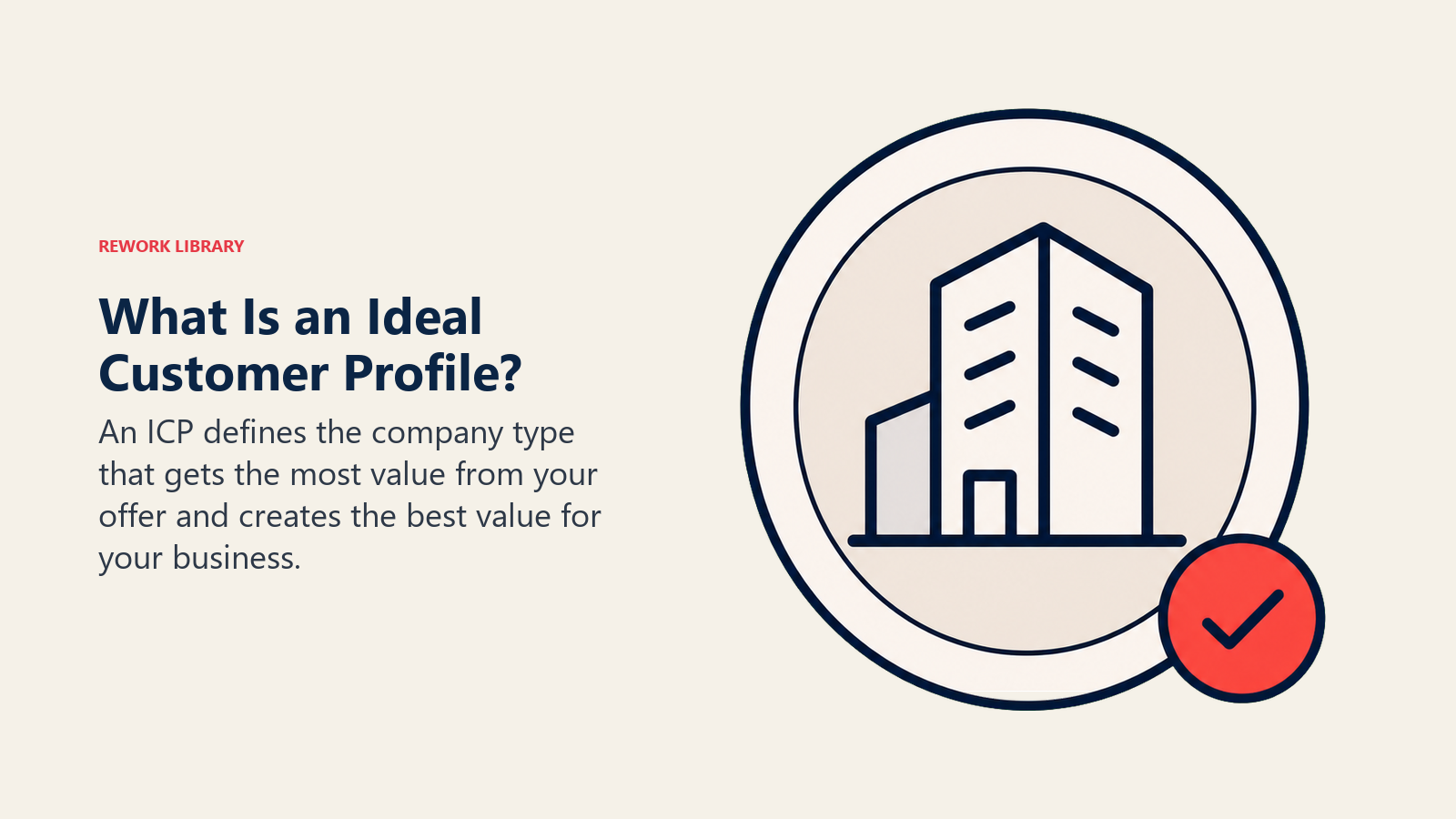
Ayat terakhir itu penting. ICP menghuraikan sebuah syarikat, bukan seseorang. Ia wujud pada peringkat akaun.
ICP vs Persona Pembeli vs Pasaran Sasaran
Ketiga-tiga istilah ini sering tercampur. Berikut adalah perbezaan yang jelas:
| Konsep | Apa yang Dihuraikan | Peringkat | Kes Penggunaan |
|---|---|---|---|
| Profil Pelanggan Ideal (ICP) | Jenis syarikat yang paling sesuai | Akaun / syarikat | Prospek, pemilihan akaun, penilaian prospek |
| Persona Pembeli | Pembuat keputusan atau individu berpengaruh dalam syarikat tersebut | Orang / kenalan | Mesej, kandungan, peribadikan jangkauan |
| Pasaran Sasaran (TAM) | Keseluruhan alam semesta syarikat yang secara teorinya boleh membeli | Pasaran / segmen | Saiz pasaran, penceritaan pelabur, perancangan strategik |
Anggaplah ia sebagai bulatan bersarang. Jumlah pasaran yang boleh dicapai anda adalah cincin luar: setiap syarikat di dunia yang secara teorinya boleh menggunakan produk anda. ICP anda adalah cincin dalaman: hirisan khusus syarikat yang paling sesuai sekarang. Dan persona pembeli anda adalah individu dalam syarikat tersebut yang sebenarnya anda ajak bercakap.
Kebanyakan syarikat membuat salah satu daripada dua kesilapan. Mereka sama ada melangkau ICP sepenuhnya dan hanya menggunakan persona pembeli (yang bermaksud jualan dan pemasaran tidak bersetuju tentang jenis syarikat yang hendak disasarkan). Atau mereka menganggap TAM seolah-olah ia adalah ICP (yang bermaksud mereka menyembur dan berdoa, mengejar semua orang yang secara teorinya boleh membeli).
Mengapa ICP Penting
ICP yang ditakrifkan dengan baik melakukan tiga perkara yang secara langsung menggerakkan hasil.
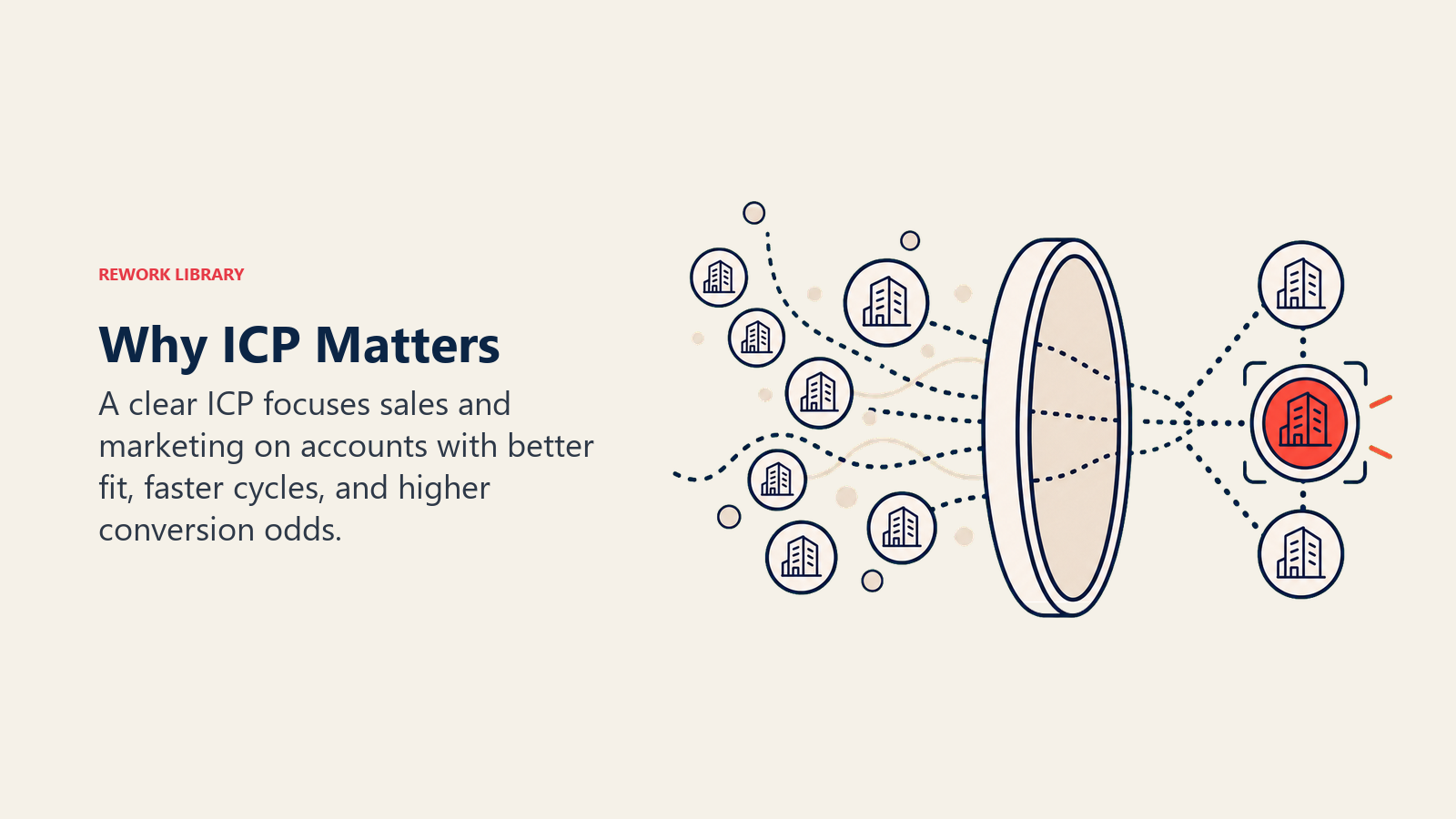
Ia meningkatkan kadar kemenangan. Apabila pasukan anda fokus pada syarikat yang benar-benar memerlukan apa yang anda jual dan mempunyai sumber untuk membelinya, kadar penukaran meningkat. Bukan sihir. Anda hanya membelanjakan usaha di mana ia paling berkemungkinan menghasilkan keputusan. Syarikat yang menilai prospek berdasarkan ICP mereka secara konsisten melaporkan kadar kemenangan yang jauh lebih tinggi pada tawaran yang layak ICP.
Ia memendekkan kitaran jualan. Prospek yang sesuai dengan ICP sudah mempunyai masalah yang anda selesaikan, bajet untuk menanganinya, dan kematangan organisasi untuk bertindak. Mereka tidak memerlukan tiga panggilan penemuan tambahan untuk memahami mengapa mereka harus peduli. Tawaran ditutup lebih cepat apabila kesesuaian itu jelas.
Ia memfokuskan pemasaran. Apabila pemasaran tahu dengan tepat jenis syarikat yang hendak ditarik, setiap keputusan saluran menjadi lebih jelas: penerbitan mana yang hendak diiklankan, kata kunci mana yang hendak dibida, acara mana yang hendak ditaja. Sasaran yang kabur menghasilkan kempen yang mahal dan tersebar luas yang sukar diukur.
Dan berikut adalah sisi sebaliknya: ICP yang jelas memberitahu anda siapa yang TIDAK perlu dikejar. Itu sama-sama bernilai. Setiap wakil jualan yang berhenti mengerjakan akaun yang tidak sesuai mempunyai lebih banyak masa untuk akaun yang sesuai. Setiap ringgit yang tidak dibelanjakan untuk menarik syarikat yang salah boleh digunakan untuk menukar yang betul.
Cara Mentakrifkan ICP Anda
Langkah 1: Analisis Pelanggan Terbaik Anda
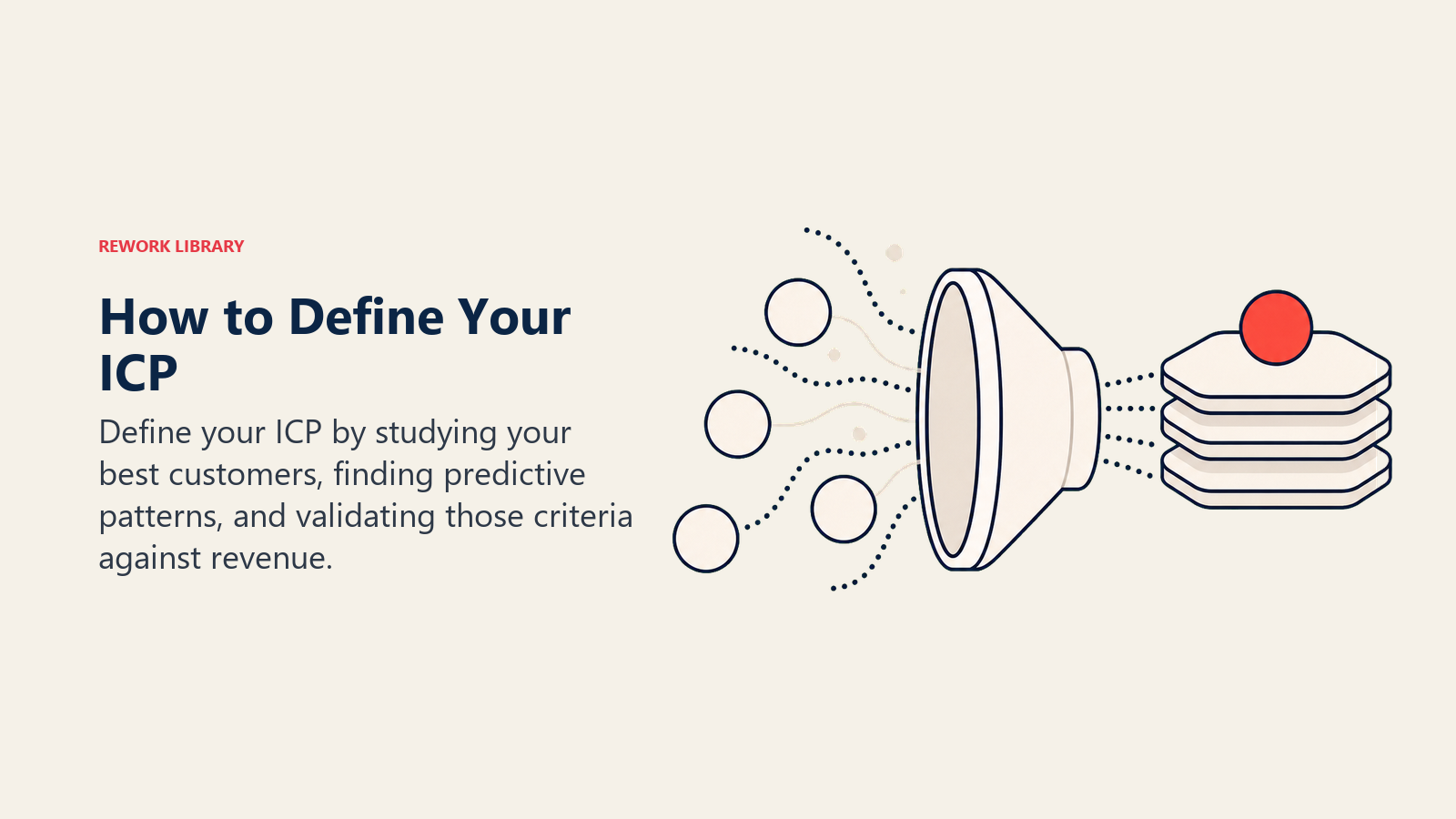
Mulakan dengan data, bukan pendapat. Tarik tawaran yang berjaya ditutup dalam 18-24 bulan terakhir dan susunkan mengikut dua dimensi: hasil (saiz tawaran dan nilai kontrak tahunan) dan kesesuaian (kadar pengekalan, pengembangan, NPS, jumlah tiket sokongan).
Pelanggan terbaik anda adalah mereka yang mempunyai hasil TINGGI DAN kesesuaian TINGGI. Mereka membayar dengan baik, kekal, berkembang, dan bukan mimpi buruk untuk disokong. Mereka adalah jangkar anda.
Untuk setiap akaun tersebut, kumpul:
- Industri dan sub-industri
- Bilangan pekerja pada masa jualan
- Hasil tahunan (jika ada)
- Geografi dan lokasi ibu pejabat
- Timbunan teknologi (terutamanya alat yang bersebelahan dengan produk anda)
- Peristiwa pencetus yang memulakan proses pembelian mereka
- Masa dari sentuhan pertama hingga penutupan
- Kes penggunaan utama yang mereka beli untuk
Ini adalah bahan mentah anda.
Langkah 2: Cari Firmografik yang Sama
Sekarang cari corak. Industri mana yang paling kerap muncul? Adakah terdapat julat saiz syarikat yang mendominasi? Adakah pelanggan terbaik anda semua di Amerika Utara, atau adakah anda mempunyai kelompok yang bermakna di Eropah?
Jangan hanya mencari yang biasa. Cari yang boleh diramal. Jika 60% pelanggan anda berada dalam perkhidmatan kewangan tetapi industri itu hanya ditutup pada 1.2x kadar kemenangan purata, ia adalah deskriptif tetapi tidak begitu bermakna untuk ICP anda. Tetapi jika syarikat perkhidmatan profesional adalah 20% daripada pangkalan anda dan ditutup pada 3x kadar kemenangan purata, corak itu sangat penting.
Perhatikan juga isyarat negatif. Industri dengan churn tinggi, kos sokongan tinggi, atau saiz tawaran yang secara konsisten kecil mungkin termasuk dalam senarai pengecualian anda, bukan senarai sasaran.
Langkah 3: Lapisi Isyarat Teknografik dan Tingkah Laku
Firmografik memberitahu anda siapa mereka. Teknografik memberitahu anda bagaimana mereka beroperasi. Isyarat tingkah laku memberitahu anda bila mereka bersedia.
Isyarat teknografik yang perlu dicari: CRM yang mereka gunakan (Salesforce menandakan kematangan bajet yang berbeza daripada akaun permulaan HubSpot), sama ada mereka mempunyai automasi pemasaran, dan sama ada timbunan data mereka adalah moden (Snowflake dan Looker mencadangkan kematangan data). Syarikat yang melabur dalam perkakas juga melabur dalam penyelesaian yang menyelesaikan masalah operasi sebenar.
Isyarat tingkah laku, yang sering kelihatan melalui platform data niat: penyelidikan kategori aktif, pengambilan pekerja baharu dalam peranan yang menunjukkan masalah yang anda selesaikan, pusingan pembiayaan terkini (modal baharu membuka bajet vendor baharu), dan iklan jawatan yang menandakan inisiatif strategik yang selaras dengan produk anda.
Langkah 4: Peringkatkan ICP Anda
Tidak semua syarikat yang sesuai dengan ICP sama-sama menarik. Bina model bertingkat:
Peringkat 1: Sesuai sempurna. Semua kotak firmografik, teknografik, dan tingkah laku ditandakan. Ini mendapat perhatian jualan maksimum, masa respons terpendek, dan wakil jualan terbaik anda. Hubungkan ini kembali ke sistem penilaian prospek anda supaya akaun Peringkat 1 secara automatik muncul di bahagian atas giliran.
Peringkat 2: Sesuai kuat dengan satu atau dua jurang. Mungkin saiz syarikat sedikit di luar titik manis anda, atau mereka berada dalam industri bersebelahan. Masih berbaloi untuk dikejar, tetapi dengan tahap pelaburan yang berbeza.
Peringkat 3: Mungkin sesuai. Berbaloi untuk ditangkap dan dipupuk melalui program pemupukan prospek anda, tetapi tidak berbaloi untuk membuang masa jualan kanan sekarang.
Di luar tingkatan: semua orang lain. Syarikat-syarikat ini bukan ICP anda dan mengejarnya secara aktif mungkin adalah kesilapan.
Langkah 5: Dokumentasikan dan Agihkan
ICP yang hanya ada dalam kepala seseorang bukan ICP. Ia adalah pendapat peribadi.
Tuliskannya dalam format yang dikongsi dan boleh diakses. Sertakan kriteria, logik peringkatan, kriteria pengecualian, dan contoh pelanggan sebenar yang mewakili setiap peringkat. Pastikan jualan, pemasaran, CS, dan kepimpinan semua mempunyai dokumen yang sama. Semak semula setiap suku tahun. Kemaskini apabila produk, pasaran, atau situasi persaingan anda berubah.
Langkah 6: Sahkan Terhadap Saluran dan Hasil
Selepas 90 hari, jalankan nombor. Adakah akaun Peringkat 1 menukar pada kadar yang lebih tinggi daripada Peringkat 2? Adakah mereka menutup lebih cepat? Adakah mereka churn lebih sedikit? Jika jawapannya ya, ICP anda berfungsi. Jika tidak, kembali ke Langkah 1 dan lihat apa yang anda terlepas.
Takrifan ICP bukan projek sekali. Ia adalah kalibrasi berterusan.
Kriteria ICP: Firmografik, Teknografik, dan Tingkah Laku
Berikut adalah jadual rujukan jenis kriteria yang hendak dinilai semasa membina ICP anda:
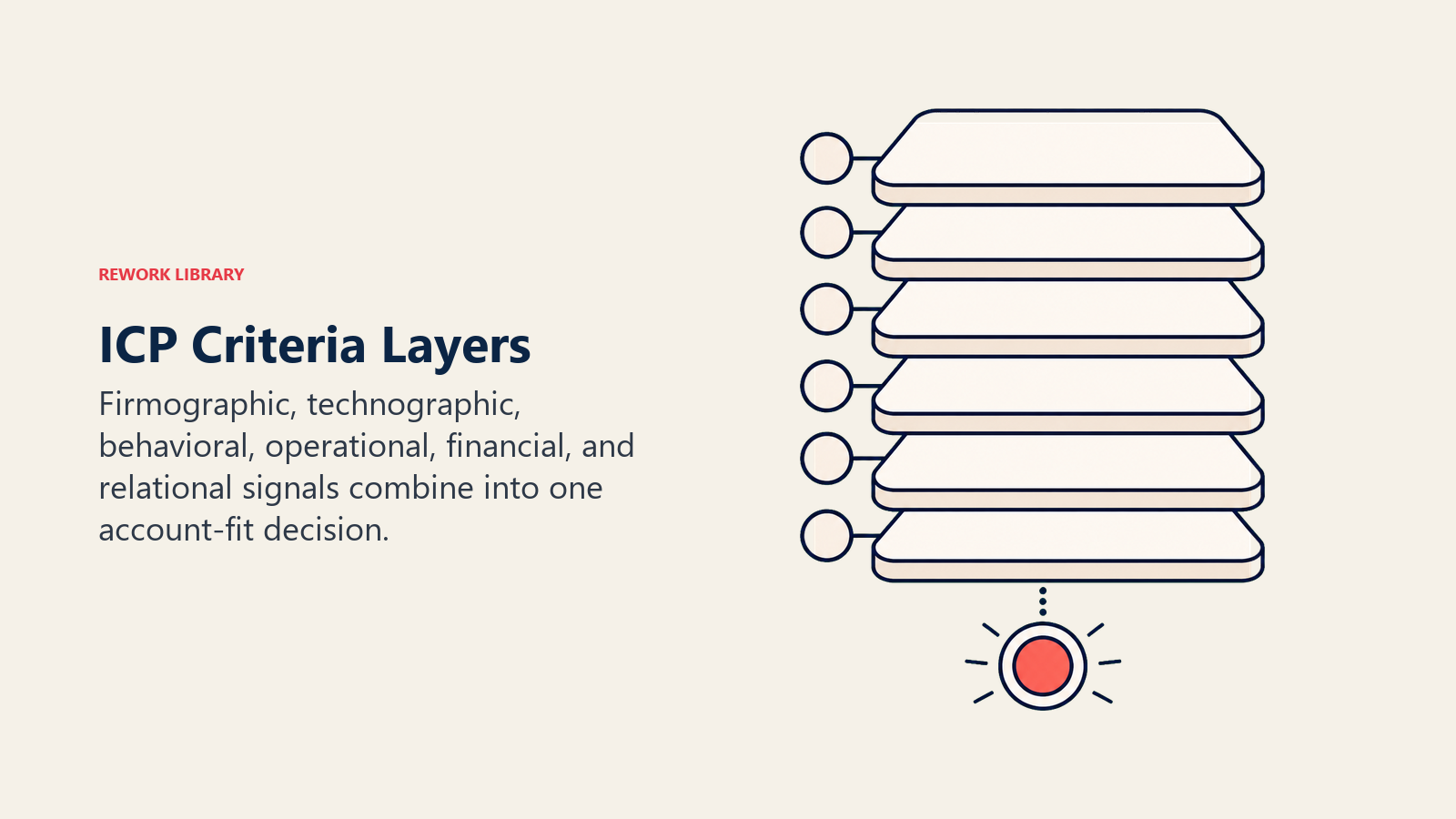
| Jenis Kriteria | Contoh | Mengapa Ia Penting |
|---|---|---|
| Firmografik | Industri, saiz syarikat (pekerja), hasil tahunan, geografi, umur syarikat, struktur pemilikan (awam vs swasta) | Menghuraikan siapa syarikat itu pada peringkat struktur |
| Teknografik | Platform CRM, automasi pemasaran, timbunan data, alat komunikasi, ERP | Menandakan kematangan operasi dan bajet |
| Tingkah Laku | Pembiayaan terkini, pengambilan eksekutif baharu, iklan jawatan, kandungan yang diterbitkan, isyarat niat carian | Menunjukkan kesediaan dan keperluan aktif |
| Operasi | Saiz pasukan jualan, saiz pasukan pemasaran, bilangan lokasi, trajektori pertumbuhan | Menunjukkan sama ada mereka mempunyai kapasiti untuk membeli dan melaksanakan |
| Kewangan | Sejarah saiz tawaran, masa kitaran bajet, proses perolehan | Menapis untuk akaun yang mampu dan boleh bertindak |
| Hubungan | Hubungan vendor lalu, kerumitan membuat keputusan, panjang kontrak tipikal | Menetapkan jangkaan untuk gerakan jualan dan panjang kitaran |
Kesilapan paling biasa adalah membina ICP semata-mata daripada firmografik dan berhenti di situ. Kriteria teknografik dan tingkah laku sering lebih meramalkan masa penukaran, terutamanya dalam pasaran persaingan di mana pelbagai jenis syarikat secara teorinya boleh menggunakan produk anda.
Contoh ICP Mengikut Jenis Perniagaan
Kriteria ICP yang betul berbeza mengikut apa yang anda jual dan kepada siapa anda jual. Berikut adalah tiga arketaip dunia nyata:
| Jenis Perniagaan | Penerangan ICP |
|---|---|
| B2B SaaS (Mid-Market) | Syarikat B2B, 100-500 pekerja, menggunakan Salesforce atau HubSpot, ARR $10M-$100M, AS atau Kanada, kepimpinan hasil peringkat VP tersedia, baru dibiayai Siri B+, sedang aktif mengambil SDR |
| Perkhidmatan Profesional | Syarikat yang disokong ekuiti swasta, 50-250 pekerja, dalam penjagaan kesihatan atau perkhidmatan kewangan, menjalani transformasi operasi, tiada fungsi RevOps yang berdedikasi, berasaskan AS, CFO atau COO sebagai pembeli ekonomi |
| Perisian Perusahaan | Syarikat Global 2000, 5,000+ pekerja, operasi pelbagai wilayah, hubungan vendor ERP sedia ada (SAP, Oracle), proses pembelian yang dipimpin perolehan, hasil $1B+, membuat keputusan bersama antara IT dan unit perniagaan |
Setiap contoh menggabungkan firmografik (saiz, hasil), teknografik (alat sedia ada), konteks tingkah laku (pembiayaan, pengambilan, transformasi), dan peranan pembeli ekonomi. Gabungan itulah yang memisahkan ICP yang berguna daripada takrifan "syarikat B2B mid-market" yang generik.
Kesilapan Biasa
Mentakrifkan ICP berdasarkan aspirasi bukannya data. Banyak syarikat membina ICP mereka berdasarkan logo yang mereka inginkan daripada pelanggan yang sebenarnya berfungsi. Aspirasi perusahaan tidak membantu jika produk anda sebenarnya melayani mid-market terbaik sekarang.
Menjadikan ICP terlalu luas. "Syarikat B2B SaaS" bukan ICP. Begitu juga "syarikat dengan 50-5,000 pekerja." Kekhususan adalah keseluruhan maksudnya. Jika ICP anda sepadan dengan 500,000 syarikat, ia tidak berguna untuk penentuan keutamaan.
Menganggap ICP sebagai kekal. Produk anda berubah, pasaran anda berubah, dan pelanggan yang anda layani terbaik pada tahun pertama mungkin berbeza pada tahun ketiga. Syarikat permulaan yang mentakrifkan ICP pada Siri A dan tidak pernah menyemaknya semula mungkin menyasarkan akaun yang salah pada Siri B.
Mengabaikan kriteria pengecualian. ICP tanpa kriteria "jangan sasarkan" yang eksplisit adalah tidak lengkap. Industri mana yang mempunyai churn tinggi untuk anda? Saiz syarikat mana yang mencipta masalah pelaksanaan? Geografi mana yang tidak disokong? Tuliskan juga.
Menyimpannya dalam silo pemasaran. Jika jualan tidak mengetahui ICP atau tidak mempercayainya, keseluruhan latihan itu tidak berguna. Takrifan ICP adalah projek silang fungsi. Ia memerlukan input jualan, pengesahan CS, dan penjajaran eksekutif agar bertahan.
Amalan Terbaik
Sauhkan pada hasil hasil, bukan hanya penukaran. Akaun yang menukar dengan mudah tetapi churn dalam enam bulan bukan pelanggan ideal anda. Sertakan pengekalan, hasil pengembangan, dan nilai sepanjang hayat bersama kadar kemenangan.
Gunakan ICP anda dalam peringkat kitaran hayat prospek. Apabila prospek memasuki sistem anda, jalankan pemeriksaan kesesuaian ICP lebih awal. Ini menghalang akaun yang tidak sesuai daripada menggunakan kitaran jualan dan menyumbat saluran anda.
Gabungkan skor kesesuaian ICP dengan isyarat niat. Syarikat yang sesuai dengan ICP yang secara aktif menyelidik kategori anda adalah perbualan yang berbeza daripada syarikat yang sepadan dengan kriteria tetapi tidak mempunyai inisiatif aktif. Gunakan kelayakan peluang untuk melapisi masa di atas kesesuaian.
Kongsikan ICP dengan pasukan CS anda. Apabila pelanggan tidak sesuai dengan ICP, CS bergelut untuk memberikan nilai. Pasukan CS yang proaktif menggunakan kriteria ICP untuk menandakan akaun berisiko sebelum mereka churn.
Jalankan semakan ICP suku tahunan. Blok 2 jam dengan jualan, pemasaran, dan CS sekali suku tahun. Semak akaun mana yang menukar terbaik, mana yang churn, dan sama ada kriteria masih mencerminkan realiti.
Apa Seterusnya
ICP yang ditakrifkan adalah asasnya. Hubungkannya ke dalam operasi anda: rangka kerja kelayakan prospek anda sepatutnya membuat gerbang pada kesesuaian ICP sebelum prospek mencapai wakil jualan, sistem penilaian prospek anda sepatutnya memberi berat besar kepada kriteria padanan ICP, dan program pemupukan prospek anda sepatutnya mempunyai trek berasingan untuk akaun yang sesuai dengan ICP berbanding yang lain.
Setelah anda mengetahui syarikat ideal anda, fahami individu di dalamnya. Di situlah kerja persona pembeli anda bermula. ICP memberitahu anda syarikat mana yang hendak disasarkan. Persona memberitahu anda siapa yang hendak dihubungi dan apa yang hendak dikatakan.
Perbezaan prospek vs bakal pelanggan vs peluang jualan juga penting di sini. Syarikat yang sesuai dengan ICP tetapi tiada minat aktif adalah bakal pelanggan. Syarikat yang sedang aktif menilai penyelesaian anda adalah peluang jualan. Cara anda menguruskan setiap satu melalui sistem pengurusan prospek anda menentukan sama ada mereka akan menukar. Mulakan dengan ICP. Selebihnya mengikuti.

Principal CRM Strategist
On this page
- Apakah Itu Profil Pelanggan Ideal (ICP)?
- ICP vs Persona Pembeli vs Pasaran Sasaran
- Mengapa ICP Penting
- Cara Mentakrifkan ICP Anda
- Langkah 1: Analisis Pelanggan Terbaik Anda
- Langkah 2: Cari Firmografik yang Sama
- Langkah 3: Lapisi Isyarat Teknografik dan Tingkah Laku
- Langkah 4: Peringkatkan ICP Anda
- Langkah 5: Dokumentasikan dan Agihkan
- Langkah 6: Sahkan Terhadap Saluran dan Hasil
- Kriteria ICP: Firmografik, Teknografik, dan Tingkah Laku
- Contoh ICP Mengikut Jenis Perniagaan
- Kesilapan Biasa
- Amalan Terbaik
- Apa Seterusnya