Meeting Intelligence: 音声からアクションアイテムへ

Turn this article into takeaways for your work.


Each assistant summarizes the article only for you and suggests best practices for your work.
すべての会議は数時間以内に消えてしまうナレッジを生み出します。
見込み客が予算はあるが最初にVPの承認が必要と言った営業通話。3人の異なるユーザーが同じ摩擦点に言及したカスタマーディスカバリーインタビュー。CFOがQ3のマージンに関する具体的な懸念を指摘したボードミーティング。直属の部下が転職を考えていると言った1対1のミーティング。
通話が終わるころには、言われたことの約40%しかキャプチャされていないかもしれません。メモは部分的で個人の略語で書かれており、再び確認されることはほぼありません。CRMにログすべきだったアクションアイテムは、担当者が続けて次の通話があったため記録されませんでした。マネージャーのチームトレーニング方法を変えるべきだったコーチングのインサイトは48時間記憶の中に残り、その後消えていきました。
Meeting Intelligenceはこのギャップを埋めるパターンです。会話を録音することによってではありません(録音は古いテクノロジーです)。それらの録音を、チームがすでに使用しているシステムに流れ込む構造化された、検索可能な、アクション可能なレコードに変換することによってです。McKinseyの会議に関する調査では、シニアエグゼクティブが時間の半分以上を会議に費やしており、そのほとんどの時間が意図した決定を生み出すことに失敗していると報告していると発見しています。その変換こそが価値が存在する場所であり、ほとんどの導入はそこに遥かに届いていません。
機能の式: Ingest、Analyze、Generate、Execute
Meeting Intelligenceは、キャプチャ、解釈、ドラフト作成、システム更新を連鎖させることで、会話を耐久性のあるワークフロー成果物に変えます。
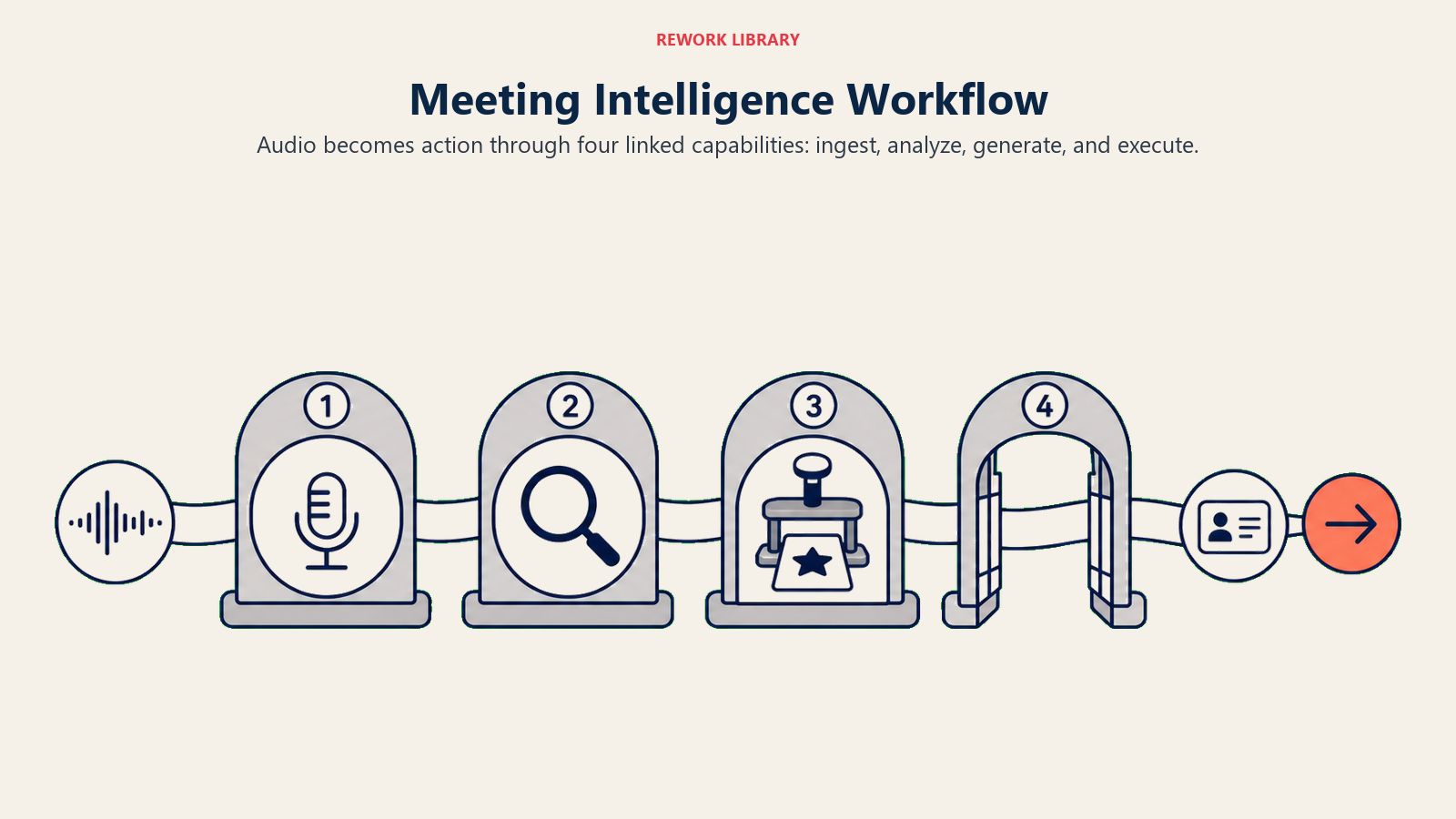
Ingest(音声または動画の録音) は会議を処理可能な形式でキャプチャします。実際には、ボットがビデオ通話(Zoom、Teams、Google Meet)に参加して録音し、音声ストリームが文字起こしモデルに渡されます。または担当者がモバイルアプリを開き、タップ1つで電話を録音します。またはポッドキャストのインタビューがMP3としてアップロードされます。Ingestステップは生の音声を、話者分離(誰が何を言ったかのラベル)とタイムスタンプマーカーを持つ文字起こしテキストドキュメントに変換します。
Analyze(文字起こし、抽出、分類) は会話が理解される場所です。モデルは完全なトランスクリプトを読み、抽出します: 議論されたトピック、質問されたこと、確約されたこと、提起された異議、話者とセグメント別のセンチメント、名前付きエンティティ(会社名、製品名、言及された人物)、構造的なマーカー(意思決定基準が議論されたか? 価格が言及されたか?)。営業通話では、Analyzeはディール段階のシグナルを探しています。コーチングのコンテキストでは行動パターンを測定しています。ディスカバリーインタビューではテーマと機能リクエストを識別しています。
Generate(要約、ノート、フォローアップドラフト) は耐久性のある成果物を作成します。これは人々がミーティングAIを考えるときに思い浮かべるステップです。箇条書きの要約、フォローアップメールのドラフト、商談レコード向けにフォーマットされたCRMノート、マネージャー向けのコーチングスコアカード、ユーザーインタビューからのPRDセクションのドラフト、決定事項とオーナーを含むボードの要約。Generateは分析されたコンテンツを他の人が読んで行動できる成果物に変えます。
Execute(配信、プッシュ、割り当て) はそれらの成果物を正しい場所に移動させます。CRMノートはSalesforceの商談にプッシュされます。フォローアップメールのドラフトは担当者の送信トレイにワンクリック送信として表示されます。コーチングのインサイトはマネージャーの週次レビューダッシュボードに表示されます。ボードの決定事項は共有のアクションログにプッシュされます。Executeは、行動を変えるMeeting Intelligenceの導入と、誰も読まない要約を生み出すだけの導入を区別するものです。
Key Facts: Meeting Intelligenceと営業パフォーマンス
- シニアエグゼクティブは時間の半分以上を会議に費やしており、そのほとんどの時間が意図した決定を生み出すことに失敗していると報告しています(McKinsey Meetings Research、2024年)
- 営業担当者は通話ごとに通話後の管理作業(ノート、フォローアップのドラフト、CRMエントリ)に15〜25分費やします。Meeting Intelligenceはこれを通話ごとに3〜5分に削減し、75〜85%の時間節約をもたらします(Gong Sales Benchmark、2024年)
- CRMに完全なミーティングノートがあるアカウントは、ノートがまばらなアカウントより15〜25%高いクロージング率です。前回の通話履歴を各タッチポイント前にレビューする担当者がより関連性の高いフォローアップを提供するためです(Clari Revenue Intelligence、2025年)
Audio-to-CRM Bridge(音声からCRMへのブリッジ)
Meeting Intelligenceは、チェーンが4つのステップすべてを実行する場合にのみ価値を生み出します: Ingest(音声からトランスクリプトへ)、Analyze(トランスクリプトから構造化されたインサイトへ)、Generate(インサイトからレビュー可能な成果物へ)、Execute(成果物を正しいシステムへ)。トランスクリプトで止まると検索可能な録音が得られますが、それは段階的にしか役立ちません。チェーンを完了すると、担当者のアクションなしに自動CRM更新、コーチングダッシュボード、フォローアップドラフトが正しいシステムにルーティングされて作成されます。Audio-to-CRM Bridgeは、チームの行動を変えるMeeting Intelligenceの導入と、誰も読まない要約を生み出すものを区別する設計原則です。Executeステップに追加されるすべての統合がパターンのROIを乗数的に増やします。
トランスクリプトだけが価値ではない理由
先に進む前に、1つ強調しておくべきことがあります: トランスクリプトは結果ではありません。結果への入力です。
Meeting Intelligenceツールを導入するほとんどのチームはトランスクリプトを祝って、そこで止まります。検索可能な録音があります。見込み客がいつ競合他社Xに言及したかを見つけられます。これは有用です。しかし、パターンの価値の大半が未使用のままです。
Meeting IntelligenceのROIはトランスクリプトのダウンストリームにあります。すべての将来のタッチポイントをよりスマートにするCRMノートにあります。担当者のパフォーマンスを体系的に改善するコーチングのインサイトにあります。ロードマップの優先順位付けに流れ込む製品の発見にあります。同じ議論が後続の3つのミーティングで繰り返されることを防ぐ決定ログにあります。そのどれもトランスクリプトから自動的には起こりません。意図的に設計・統合されたAnalyze-Generate-Executeチェーンが必要です。
詳細な4つの実例
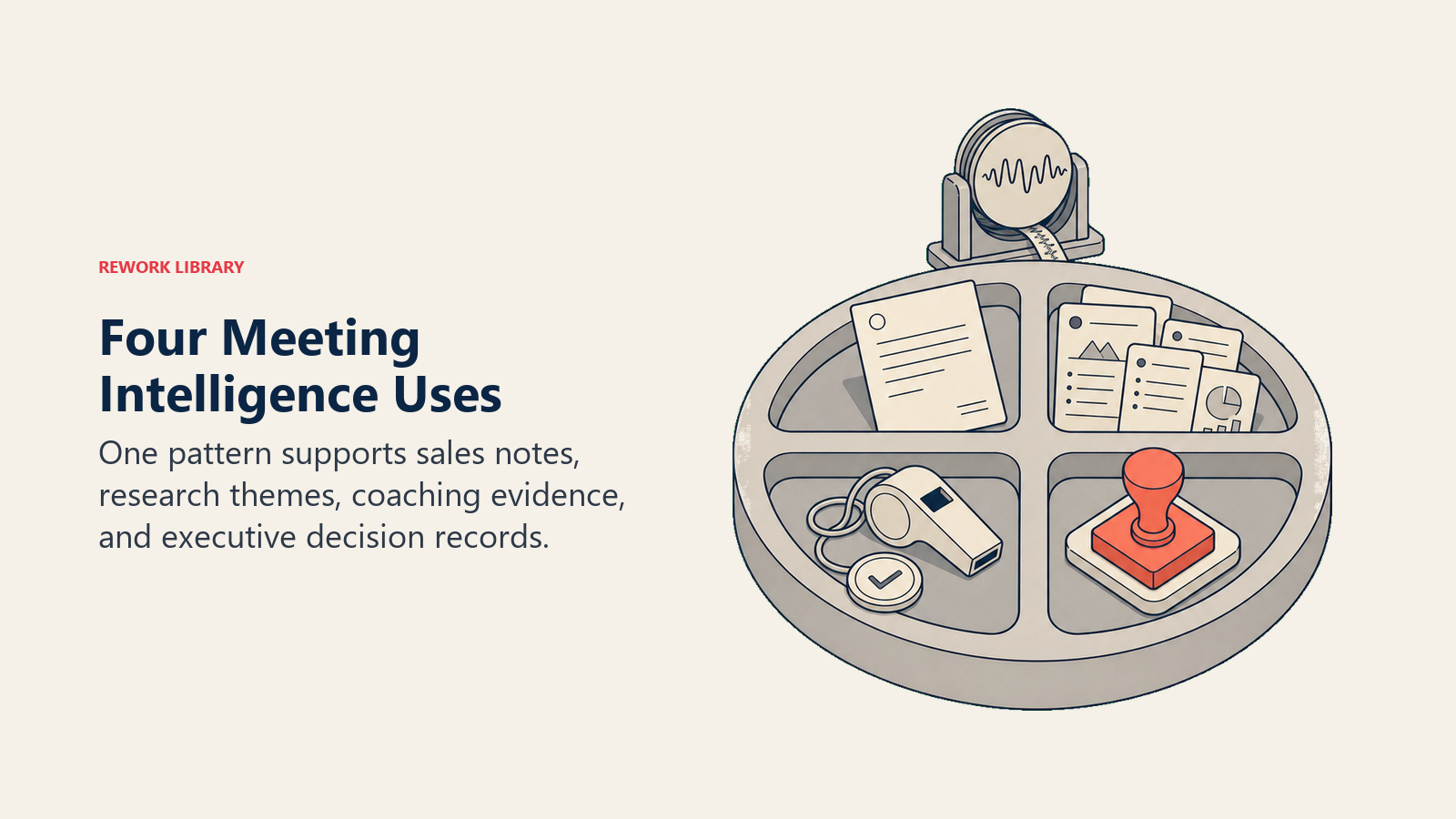
同じMeeting Intelligenceチェーンが、営業、プロダクト、コーチング、エグゼクティブの各ワークフローを支えます。いずれも録音された会話から始まるためです。
1. 営業通話の分析
営業担当者が見込み客との45分のディスカバリーコールを終えます。ミーティングインテリジェンスプラットフォーム(Gong、Chorus by ZoomInfo、またはFireflies)が通話にボットを配置していました。営業固有の実装の詳細については、営業通話の録音とトランスクリプト分析と会話インテリジェンスによる担当者コーチングを参照してください。通話終了から10分以内に、システムは:
Analyzeが抽出したもの: 通話時間、トーク対リッスンの比率(担当者が58%の時間話した)、カバーされた主要トピック(価格は32分目に言及、実装タイムラインは41分目に言及)、提起された異議(「すでに他の2社のベンダーを評価中です」)、質問された内容と回答された内容、話者別のセンチメント、主要な資格基準が議論されたかどうかに基づいたディールスコア。
Generateが生成したもの: 通話の5つの箇条書き要約、次のステップの段落、会話からの具体的内容でパーソナライズされたフォローアップメールのドラフト、会社の標準フィールドにフォーマットされたCRM商談ノート、担当者が意思決定基準や予算承認プロセスについて質問しなかったことを指摘するマネージャーへのコーチングフラグ。
Executeが実行したこと: CRMノートをSalesforceの商談レコードにプッシュし、次のアクティビティに期限日を入力し、担当者のGmailドラフトにフォローアップメールをキューに入れた。
担当者はCRMノートをレビューし(5分ではなく30秒)、1つの編集でフォローアップメールを承認し、次に進みます。これなしでは: ノートが書かれず、CRMは空のまま、マネージャーは可視性を持ちません。
Gong、Fireflies、Chorus、Clariはすべてこのアーキテクチャを実行しています。Gongはエンタープライズセールス向けのカテゴリリーダーで、最も深いCRM統合とコーチング分析を持っています。Firefliesは小さなチームとより広いミーティングタイプ向けです。Chorusはコーチング分析に特化しています。McKinseyのB2B営業における生成AIに関する調査は、B2B意思決定者の中で最も興奮度が高いユースケースの一つとしてミーティングサポートを特定しています。
2. カスタマーディスカバリーインタビュー
製品チームが新機能のリサーチのために2週間で20件のユーザーインタビューを実施します。各インタビューは1時間で半構造化されており、異なるインタビュアーが異なるフォローアップ質問をしています。20時間の会話をPRD向けのテーマに手動で合成するには、2人のプロダクトマネージャーが2日間フルタイムで作業する必要があります。
Meeting Intelligenceを使えば、各インタビューの録音がAnalyzeステップを通過し、抽出します: 言及された機能リクエスト(インタビュー間の頻度カウント付き)、説明された痛みのポイント、現在の回避策の行動、ユーザーが問題に使う用語、既存のソリューションに関するセンチメント。
Generateが生成するもの: 頻度と重要性でランク付けされた20のインタビュー全体のテーマ要約、各テーマに関連する直接引用、PRDの「ユーザーニーズ」セクションのドラフト、次のリサーチラウンドへのフォローアップ質問のリスト。
Executeはプロダクトマネジメントツール(Jira、Linear、Notion)にテーマデータをプッシュし、証拠として関連するトランスクリプトセグメントへのリンクを付けます。プロダクトマネージャーはインサイトから、ユーザーがそれを言った正確な瞬間にクリックできます。
3. スケールでの営業コーチング
営業VPが2つの地域の12人の担当者を管理しています。従来のコーチングは30分の通話録音を手動で聞くことを意味します。担当者あたり1本だけカバーすると週6時間です。実際には週2本程度聞き、記憶からコーチングします。
Meeting Intelligenceを使えば、Analyzeステップがすべての通話に対してコーチングスコアカードを実行します。担当者は最初の10分間にディスカバリーの質問をしたか? トーク対リッスンの比率は? 異議は処理されたか、それとも回避されたか? 資格確認が完了する前に価格が議論されたか? 次のステップは最後に明示的に確認されたか?
Generateが生成するもの: 担当者ごとの週次コーチングレポートとチーム全体のビュー。Clariは資格確認を一貫してスキップする担当者を示します。Gongは不明確な次のステップでクロージングする担当者を示します。VPは同じコーチングが必要な3人の担当者を知り、会話で具体的な通話例を引用できます。
ExecuteはコーチングレポートをVPのダッシュボードに配信し、オプションで担当者に直接送信し、いつ何が議論されたかの記録のためにCRMにコーチングアクションをログします。
4. エグゼクティブとボードミーティングの要約
リーダーシップチームが週次で90分ミーティングします。異なる人々が異なる議題アイテムをリードします。決定事項は口頭で行われ、アクションアイテムは声に出して割り当てられ、その後ミーティングが終わります。Q3の採用決定を誰が所有するのか? CFOは予算修正について何に同意したのか? 製品タイムラインは移動したのか、それとも条件付きで移動したのか?
Meeting IntelligenceはトランスクリプトをAnalyzeして決定シグナル(「Xにします」「Yで進みましょう」)、アクションアイテムのシグナル(「あなたがそれを担当します」「金曜日までにZをフォローアップできますか?」)、未解決の質問(議論されたが解決されなかったアイテム)を探します。Generateは構造化されたミーティングの要約を生成します: 太字の決定事項、オーナーと期限日付きのアクションアイテム、フォローアップが必要とフラグが立てられたオープンアイテム。
Executeはミーティング終了後15分以内に全参加者に要約を配信し、アクションアイテムを関連するプロジェクト管理ツールにプッシュします。
ここでの価値はAIの目新しさではありません。以前は誰も確実に作成しなかったドキュメントが、毎週自動的に存在するようになるということです。
失敗モード: Meeting Intelligenceを壊すもの
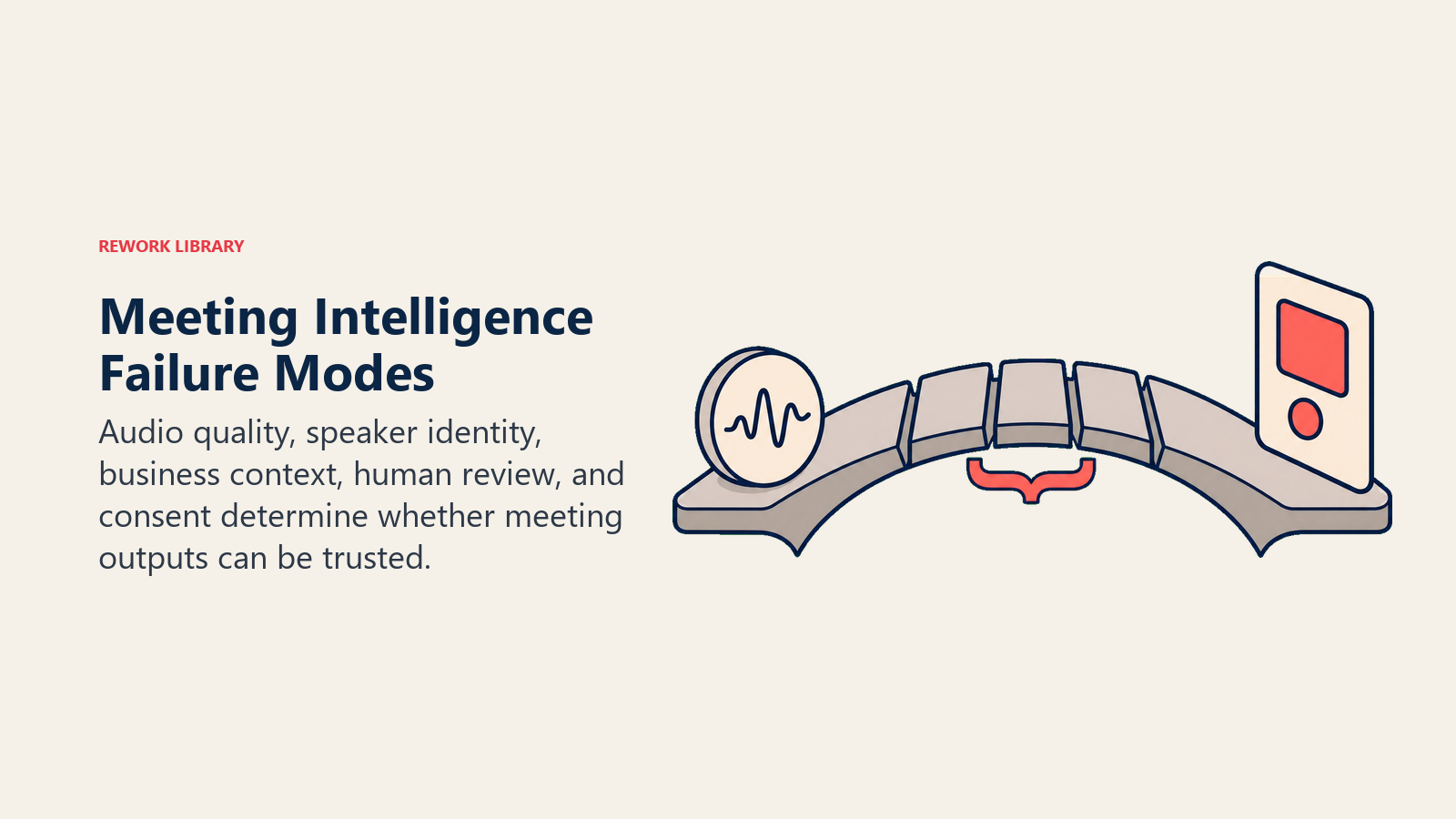
チェーンは予測可能な受け渡しで失敗します:音声キャプチャ、話者の識別、コンテキストのリンク、人間によるレビュー、同意コントロール。
| 失敗モード | 根本原因 | 軽減策 |
|---|---|---|
| 低音質 | 背景ノイズ、スピーカーフォンの音声、VOIPの劣化、トレーニングセットにない強いアクセント | 音質のベースラインを確立する。スピーカーフォンでの電話は通常、ヘッドセット音声の2〜5%と比べて15〜20%のトランスクリプトエラー率を生み出す。品質がコントロールされているプラットフォーム固有の通話録音を使用する。 |
| クロストークと話者の混乱 | 複数の話者が同時に話している; 話者分離はSpeaker A/Bを100%ではなく85〜92%の時間で正しくラベル付けする | CRMノートをプッシュする前に高クロストークの録音に人間によるレビューのフラグを立てる。 |
| 参加者のコンテキストの欠如 | AIはノートを生成する際に、この会社が誰であるか、この人物が誰であるか、ディール履歴を知らない | ツールをCRMに接続する。通話前にシステムにアカウントと商談のコンテキストを事前に読み込ませる(通話後だけでなく)。 |
| CRMノートの過度な自動化 | 人間のレビューなしにプッシュされたドラフトCRMノートにハルシネーションされた具体的内容(数値、行われなかった確約)が含まれる | CRMノートには「すべて承認」ボタンだけでなく担当者の承認を要求する。60秒のレビューUIを組み込む。 |
| コーチング指標の誤用 | マネージャーがトーク対リッスンの比率を指標として扱い、コンテキストなしに担当者に「もっと少なく話すように」と言う | コーチング指標は会話の入力であり、代替品ではない。パターンを識別するために指標を使用し、次に何が起きたかを理解するために通話セグメントを聞く。 |
| プライバシーと同意の失敗 | ボットが録音の同意が得られていない通話に参加する; トランスクリプトが従業員の認識なしにコーチングに使用される | 以下のガバナンスセクションでこれを具体的にカバーする。 |
Meeting Intelligenceが機能するとき、しないとき
うまく機能する場合:
- 音質がコントロールされている。ヘッドセット、静かな部屋、安定したインターネット。トランスクリプトは音質と同じ品質です。
- ミーティングが予測可能な構造に従っている。営業通話、1対1、スタンドアップ、QBRはすべてAnalyzeが関連するセグメントを識別できる十分な構造パターンを持っています。自由形式のアイデア創出セッションはより難しいです。
- フォローアップアクションが定義可能である。ミーティングが明確な次のステップを生み出す場合、Meeting Intelligenceはそれらを抽出できます。ミーティングが主に定義されたアクションのないリレーションシップ構築である場合、パターンが運用化するものが少なくなります。
- ダウンストリームシステムが接続されている。パターンの価値は各統合で乗数的に増えます: CRM、プロジェクト管理、メール、カレンダー。統合なしでは検索可能なトランスクリプトだけです。
vs. RAG Assistant: Meeting Intelligenceは会話からナレッジを作成します(ナレッジベースを構築します)。RAG Assistantは質問に答えるために既存のナレッジベースから検索します。よく組み合わされます: Meeting Intelligenceがミーティングレコードを作成し、RAGベースの営業アシスタントがそれらのレコードから検索して「このアカウントと何を議論したか?」に答えます。
vs. Generative Research: Meeting Intelligenceは自分自身の会話の自分自身の録音を処理します。Generative Researchは外部ソースからの情報を合成します: Web、業界レポート、サードパーティデータ。異なる入力、異なる出力、異なるユースケース。両方ともGenerateを含みますが、ソース資料は異なります。
vs. Workflow Copilot: Meeting Intelligenceはミーティング後に実行されます。何が起きたかを処理します。CopilotはWorkflow中、リアルタイムに、人間が作業している間に支援します。ライブ通話中にプロンプトをささやくリアルタイムの通話コーチは、Meeting IntelligenceよりもWorkflow Copilotに近いです。
ROIシグナル: 影響の測定
| 指標 | 手動のベースライン | Meeting Intelligence使用時 | 典型的な改善 |
|---|---|---|---|
| CRM更新コンプライアンス | 通話の40〜60%が48時間以内にノートを取得 | 自動生成ノートの承認で85〜95% | 30〜50%の改善 |
| 担当者あたりのマネージャーコーチング時間 | 担当者あたり月2〜4時間(手動レビュー) | 担当者あたり月30〜60分(ダッシュボードのレビュー) | 60〜80%の時間削減 |
| 通話後の管理作業への担当者の時間 | 通話あたり15〜25分(ノート、フォローアップドラフト、CRM) | 通話あたり3〜5分(レビューと承認) | 75〜85%の時間削減 |
| 完全なノートがあるアカウントのディールクロージング率 | ベースラインは組織によって異なる | 通常、完全なミーティング履歴があるアカウントで15〜25%高い | これを社内で追跡する。最も強いROI証明点です。 |
| 新担当者のランプタイムへのコーチング影響 | 完全な生産性まで90〜120日 | 構造化されたコーチングフィードバックで60〜80日 | ツールだけでなくコーチングプログラムの品質に依存 |
ディールクロージング率の比較は最も強力なROIシグナルであり、設定が最も難しいものです。完全なミーティングノートを持つ商談にタグ付けし、90日間にわたって結果を追跡する必要があります。ほとんどのチームはこれをしていません。これを実施するチームは一貫して意味のある差を発見します。完全なノートが熱心な見込み客と相関するだけでなく、次のタッチポイント前に過去の通話ノートをレビューする担当者が意味のある異なる発言をするからです。
Meeting Intelligenceデータを使用して行動パターンを識別する構造化されたAIコーチングプログラムを持つ営業組織は、手当たり次第の手動コーチングに依存する組織と比較して、最初の12ヶ月以内に新担当者の受注率が20〜28%向上すると報告しています(Forrester Sales Coaching Benchmark、2025年)。
ガバナンスとプライバシー
Meeting Intelligenceは、人を録音し、トランスクリプトを保存し、要約を共有システムにプッシュすることが多いため、直接的な信頼リスクを伴います。
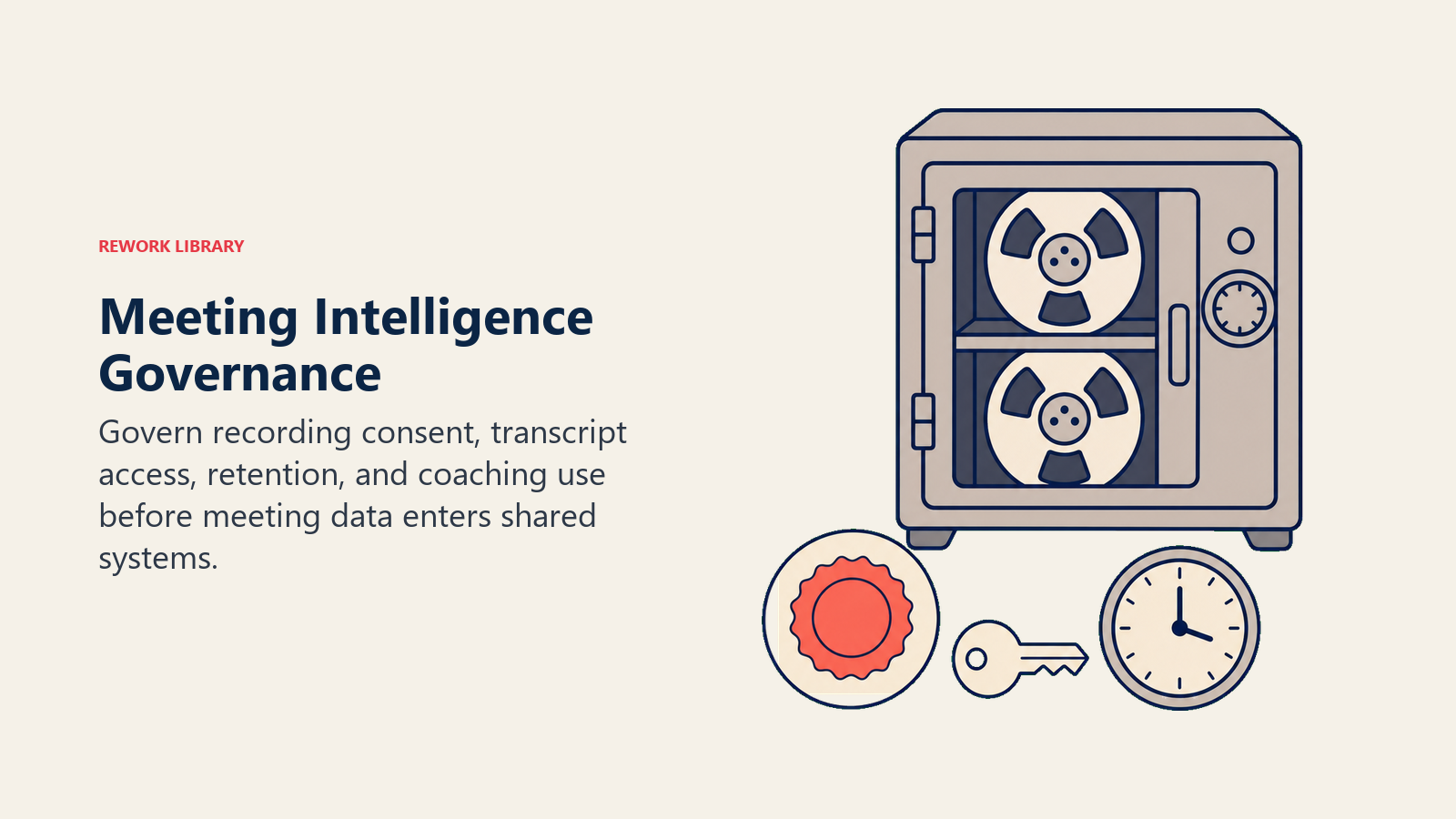
Meeting Intelligenceは最も直接的な法的および信頼の露出を持つAIパターンです。
録音同意の要件。 米国では、録音同意法は州によって異なります。2者同意が必要な州(カリフォルニア、イリノイ、メリーランド、その他いくつかの州)では、録音されるすべての当事者が同意する必要があります。実際には、ミーティングボットまたは録音ツールが明確に告知する必要があることを意味します(「この通話は録音されています」)またはすべての参加者に参加メッセージが表示される必要があります。EUでは、GDPRは録音とデータ処理に対する明示的な同意を要求します。医療の文脈では、録音された会話にPHIが含まれる場合があり、HIPAA準拠の取り扱いが必要です。
苦情が来てからではなく、デプロイ前に同意ワークフローの法的レビューを受けてください。
話者データの取り扱い。 トランスクリプトには個人の発言が含まれており、時には機密性のあるものも含まれます。営業通話のトランスクリプトには、見込み客が予算、仕事の満足度、ベンダーの好みについて言ったことが含まれます。コーチングのトランスクリプトには、担当者がプライベートな1対1で言ったことが含まれます。これらは明示的な同意なしにトレーニングデータには適しません。アクセスコントロールが必要です。会社の誰もがすべての通話トランスクリプトを検索できるべきではありません。
トランスクリプトの保持。 何年分ものトランスクリプトを蓄積する前に保持ポリシーを定義してください。医療: HIPAAコンプライアンスのタイムライン。金融サービス: 規制上の保持要件。ほとんどのビジネスでは: 12〜24ヶ月が合理的なデフォルトです。保持ポリシーを過ぎたトランスクリプトは無期限に保持されるのではなく、自動的に削除されるべきです。
従業員の認識。 通話データを担当者のコーチングに使用している場合、それらの担当者はそれを知るべきです。AI分析された通話からのサプライズコーチングは信頼を破壊します。最初から期待値を設定してください: 「すべての顧客通話を録音します。マネージャーは毎月コーチングダッシュボードをレビューします。何を測定するかはこちらです。」完全なフレームワークについてはAIパターン別ガバナンス要件を参照してください。
ベンダーとツールの全景
| ユースケースの焦点 | 主要ツール |
|---|---|
| エンタープライズ営業通話分析 | Gong、Chorus by ZoomInfo、Clari Copilot |
| 幅広いミーティングタイプ(あらゆる通話) | Fireflies.ai、Otter.ai、Fathom、tl;dv |
| CRMネイティブのMeeting Intelligence | Salesforce Einstein、HubSpot AI |
| コーチング特化型分析 | Gong Coaching、Second Nature(営業シミュレーション)、Salesloft Rhythm |
| 製品ディスカバリー + リサーチ | Dovetail、Grain(クリップ + ハイライト)、EnjoyHQ |
| エンタープライズミーティングの要約 | Microsoft Copilot in Teams、Google Workspace AI |
GongはCRM統合とコーチング分析が最も深い、収益重視のMeeting Intelligenceのカテゴリベンチマークです。Firefliesは低い価格ポイントでより多くのミーティングタイプをカバーします。Fathomは、エンタープライズのオーバーヘッドなしでクリーンな個人のノートを取りたい個人に注目されます。自分自身の録音でカスタムMeeting Intelligenceを構築するチームには、AWS TranscribeとGoogle Speech-to-Textが文字起こしレイヤーを提供します。OpenAIのWhisperは強力なオープンソースオプションです。
Rework分析: 最も一般的なMeeting Intelligenceの失敗は技術的なものではありません。トランスクリプトで止まる導入です。チームは検索可能な録音があることを喜び、CRMノートとコーチングのインサイトを正しいシステムにプッシュするExecute統合を設定しません。その結果、パターンはその潜在的な価値の15%を提供し、担当者は各通話後に手動でノートをログするままです。Meeting Intelligenceの完全な価値は、CRM統合、フォローアップメールのドラフト、コーチングダッシュボードがすべて接続されている場合にのみ解放されます。各統合はトランスクリプトのみと比較してROIを2倍にします。デプロイの最初の30日以内に4つのExecuteの出力すべてを設定することに投資するチームが、ツールが設計した行動変化を見ます。
よくある質問
Meeting Intelligence AIパターンとは何ですか?
Meeting Intelligenceは、通話とミーティングの音声または動画録音を構造化されたアクション可能なレコードに変換するAIパターンです。式は: Ingest(音声/動画からトランスクリプトへ)、Analyze(トピック、確約、センチメント、コーチングシグナルを抽出する)、Generate(要約、CRMノート、フォローアップメールのドラフト、コーチングスコアカード)、Execute(CRM、メール、プロジェクト管理ツールにプッシュ)です。ミーティングで言われたことと、ダウンストリームシステムにキャプチャされるものとのギャップを埋めます。
Audio-to-CRM Bridge(音声からCRMへのブリッジ)とは何ですか?
Audio-to-CRM Bridgeは、Meeting IntelligenceのデプロイはAnalyze、Generate、Executeのチェーンがすべて実行されるときにのみ完全な価値を提供するという設計原則です。トランスクリプトで止まると検索可能な録音が得られます。チェーンを完了すると、自動CRM更新、コーチングダッシュボード、フォローアップドラフトが生成されます。各Execute統合(CRM、メール、コーチングダッシュボード、プロジェクト管理)はROIを乗数的に増やします。インサイトがチームが実際に決定を行うシステムにルーティングされるためです。
Meeting Intelligenceは営業担当者の時間をどれだけ節約しますか?
営業担当者は通話ごとにノート、CRMエントリ、フォローアップドラフトを含む通話後の管理作業に15〜25分費やします。Meeting Intelligenceはこれを通話ごとに3〜5分に削減し、75〜85%の時間削減をもたらします。週15回の通話をする担当者にとって、それは週3〜5時間がアクティブな営業のために回収されます。システムがノートを生成し担当者はレビューして承認するだけでよいため、CRM更新コンプライアンスは通常40〜60%から85〜95%に改善されます。
最も一般的なMeeting Intelligenceの失敗モードは何ですか?
低音質が最も一般的な根本原因です。スピーカーフォンでの電話はヘッドセット音声の2〜5%と比べて15〜20%のトランスクリプトエラー率を生み出します。他の主な失敗には、CRMコンテキストの欠如(AIがアカウント履歴を知らないため、ノートがディール固有の関連性を欠く)、CRMノートの過度な自動化(担当者のレビューなしにプッシュされたハルシネーションされた具体的内容)、コーチング指標の誤用(トーク対リッスンの比率を直接指示として扱う)があります。
Meeting Intelligenceには録音の同意が必要ですか?
はい。録音同意の要件は管轄区域によって異なります。米国では、カリフォルニア、イリノイ、メリーランドを含む2者同意が必要な州では、録音されるすべての当事者が同意する必要があります。EUでは、GDPRは録音とデータ処理に対する明示的な同意を要求します。医療の録音にはHIPAA準拠の取り扱いが必要なPHIが含まれる場合があります。デプロイ前に同意ワークフローの法的レビューを受け、録音ボットがすべての参加者に明確に告知することを確認してください。
Meeting Intelligenceの導入からどのようなROIを期待すべきですか?
担当者の通話後の管理作業時間が75〜85%削減、CRM更新コンプライアンスが30〜50%改善、担当者あたりのマネージャーコーチング時間が60〜80%削減(手動通話レビューからダッシュボードレビューへ)を期待してください。Meeting Intelligenceデータを使用した構造化されたAIコーチングプログラムを持つ営業組織は、12ヶ月以内に新担当者の受注率が20〜28%向上すると報告しています(Forrester、2025年)。最も強いROIシグナルは完全なミーティングノートがあるアカウントのディールクロージング率で、ノートがまばらなアカウントより15〜25%高いです。
参考リンク

Co-Founder, Rework.com