Bahasa Indonesia
Kompensasi yang Diselaraskan pada NRR: Cara Membayar Sales dan CS Agar Mereka Bergerak Searah
Turn this article into takeaways for your work.


Each assistant summarizes the article only for you and suggests best practices for your work.
Inilah cara NRR jatuh melalui celah antara dua rencana kompensasi. AE mencapai kuota, membukukan deal, dan melanjutkan. Komisi mereka dibayar saat tanda tangan kontrak. Apa yang terjadi pada akun itu 11 bulan kemudian, secara teknis, bukan masalah mereka. CSM mewarisi akun, mengelola hubungan, dan dievaluasi berdasarkan NPS atau CSAT, metrik yang mengukur sentimen pelanggan, bukan dampak pendapatan. Ketika renewal tiba, kedua tim merasakan kepemilikan yang samar atasnya, dan tidak ada tim yang memiliki taruhan finansial nyata di dalamnya.
Ini bukan masalah manusia. Ini adalah masalah desain kompensasi. Ketika struktur insentif dibangun di sekitar dua metrik terpisah yang tidak saling menyentuh, Anda mendapatkan dua perilaku terpisah yang menyimpang tepat pada saat seharusnya konvergen. AE memanipulasi kecocokan ICP untuk mencapai kuota lebih cepat. Akun yang cocok secara marginal sekarang menjadi masalah churn CSM nantinya, dinamika yang dibahas mendalam dalam biaya handoff yang rusak. CSM menghindari percakapan ekspansi yang sulit karena terasa seperti berjualan, dan mereka tidak dipekerjakan untuk berjualan. Renewal berada di zona abu-abu sampai 90 hari sebelum tanggal, di mana pada titik itu seseorang panik.
Kompensasi yang diselaraskan pada NRR tidak memperbaiki setiap masalah keselarasan. Tapi ini menghilangkan satu alasan struktural terbesar mengapa Sales dan CS terpisah: sinyal insentif memberi tahu mereka untuk melakukannya.
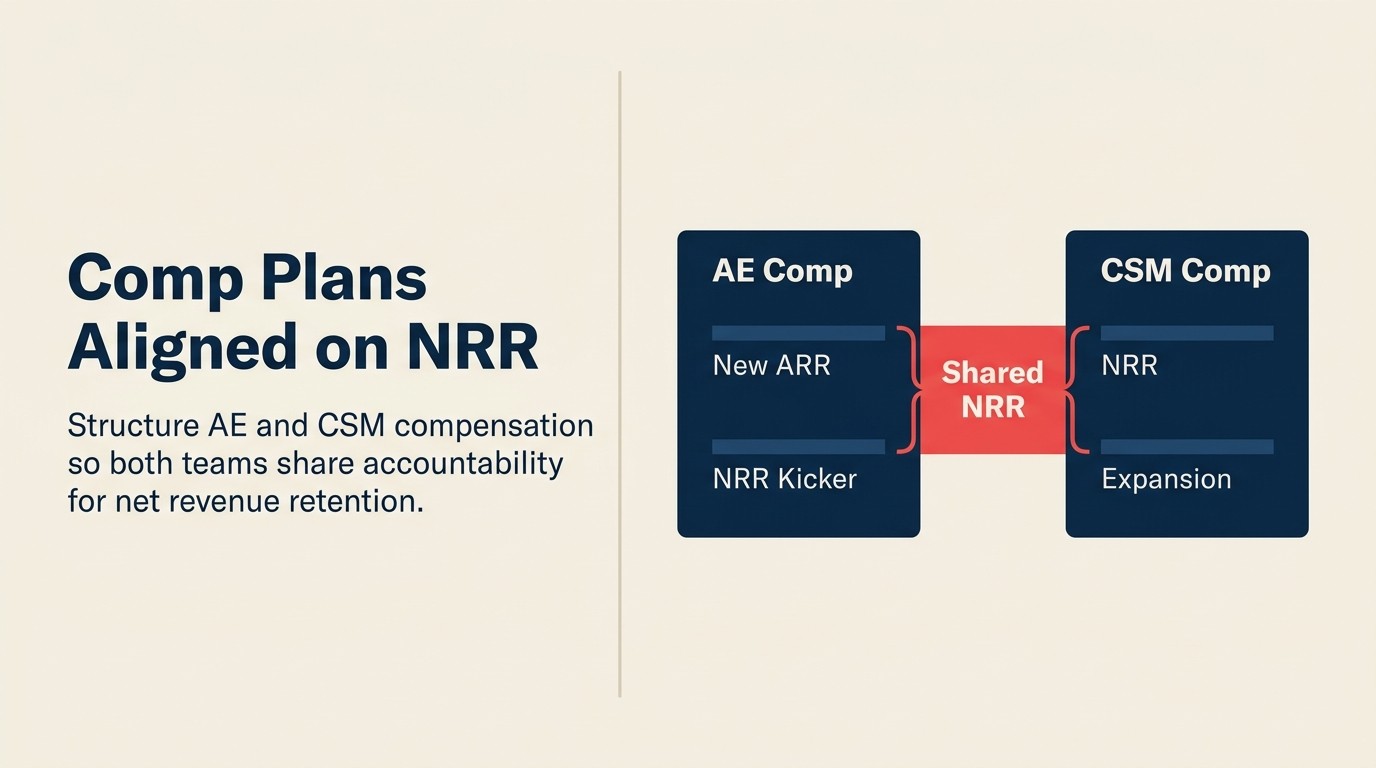
NRR-Aligned Comp Plan adalah arsitektur kompensasi yang mengikat gaji variabel AE dan CSM pada hasil net revenue retention dari buku akun bersama yang mereka miliki secara bersama-sama. Alih-alih membayar AE saat tanda tangan kontrak dan CSM berdasarkan skor sentimen, rencana ini menciptakan taruhan finansial bersama atas apakah pelanggan yang ada bertahan, berkembang, dan tidak menyusut. Itulah tiga pengungkit yang menentukan NRR.
Kutipan: "Perusahaan SaaS di kuartil teratas NRR (120%+) 2,5x lebih mungkin memiliki komponen NRR eksplisit dalam rencana kompensasi AE dan CSM dibandingkan perusahaan di kuartil terbawah, berdasarkan riset benchmarking SaaS dari OpenView Partners, menjadikan keselarasan kompensasi prediktor struktural paling andal untuk kinerja NRR."
Kutipan: "67% CRO melaporkan bahwa rencana kompensasi AE mereka tidak memiliki mekanisme yang terkait dengan hasil retensi pelanggan, berdasarkan Survei Kepemimpinan Revenue Forrester 2024. Kesenjangan itu bukan kelalaian. Begitulah rencana tersebut dirancang. Memperbaikinya membutuhkan penambahan lapisan NRR di celah tersebut, bukan mendesain ulang seluruh arsitektur kompensasi."
Fakta Kunci: Kesenjangan Keselarasan NRR
- Perusahaan di kuartil teratas kinerja NRR (120%+) 2,5x lebih mungkin memiliki komponen NRR eksplisit dalam rencana kompensasi AE dan CSM, berdasarkan riset benchmarking SaaS dari OpenView Partners.
- Rata-rata perusahaan SaaS kehilangan 14% ARR setiap tahun akibat churn dan kontraksi. Penelitian dari Bain & Company menunjukkan bahwa 60-80% churn yang bisa dicegah dapat terdeteksi 90+ hari sebelum tanggal renewal, tapi tidak ditangani karena tidak ada yang memiliki peringatan dini.
- CSM di perusahaan di mana ekspansi secara eksplisit ada dalam rencana kompensasi mereka menghasilkan 31% lebih banyak expansion ARR per akun, berdasarkan laporan benchmark CS dari Gainsight.
Masalah Celah: Apa yang Sebenarnya Dibiayai Kesenjangan Kompensasi
Pembagian kompensasi klasik terlihat bersih di atas kertas. Sales mendapat komisi atas ARR baru yang ditutup. CS mendapat gaji pokok ditambah bonus kinerja yang terkait dengan metrik retensi. Dua rencana kompensasi dirancang secara independen, disetujui oleh business partner yang berbeda, dan ditinjau pada siklus yang berbeda.
Celah di antara keduanya adalah tempat NRR terkikis.
Ketika komisi AE sepenuhnya diperoleh saat tanda tangan kontrak, insentif finansial mereka untuk memastikan kecocokan ICP berakhir pada saat yang sama. Bukan karena mereka tidak peduli. Sebagian besar AE benar-benar ingin pelanggan mereka berhasil. Tapi rencana kompensasi mereka memberi tahu mereka untuk beralih ke peluang berikutnya. Respons rasional terhadap insentif itu adalah mengoptimalkan untuk close rate, bukan lifetime value.
Ketika bonus kinerja CSM terkait dengan NPS, mereka tidak punya taruhan finansial apakah akun tersebut berkembang. Mereka peduli tentang sentimen pelanggan karena itulah yang mendorong bonus mereka. Percakapan ekspansi memerlukan keahlian yang berbeda (mengidentifikasi peluang komersial, memenuhi kualifikasi anggaran, memulai siklus pembelian) dan postur yang berbeda. Tanpa sinyal kompensasi yang menunjuk ke ekspansi, sebagian besar CSM beralih ke perilaku yang lebih aman dan menjaga hubungan: layanan yang baik, gesekan rendah, tidak ada percakapan "seperti sales."
Dan ketika kepemilikan renewal ambigu (dimiliki AE karena secara teknis merupakan transaksi komersial, dimiliki CSM karena mereka memiliki hubungannya, dimiliki AM yang belum ada) renewal berada dalam rencana kompensasi siapa pun sampai waktu habis.
NRR sebagai Metrik Utama yang Tepat
Sebelum masuk ke mekanisme kompensasi, ada baiknya untuk tepat tentang apa yang diukur NRR dan mengapa itu adalah metrik bersama yang tepat di celah ini. Definisi lengkap ada di Glosari Sales-CS Alignment.

Formula NRR pada tingkat shared book:
NRR = (ARR Awal + Expansion ARR − Contraction ARR − Churned ARR) / ARR Awal
Pada tingkat shared book (akun yang dimiliki bersama oleh AE dan CSM), NRR menangkap semua yang penting: apakah pelanggan yang ada tetap, membayar lebih, dan tidak mengecilkan kontrak mereka? NRR shared-book di atas 100% berarti buku tersebut tumbuh dari pelanggan yang ada saja. Di bawah 100% berarti buku tersebut menyusut, terlepas dari berapa banyak logo baru yang ditutup AE di wilayah lain.
NRR adalah metrik bersama yang tepat karena tiga alasan. Pertama, ini menangkap persamaan pendapatan penuh: retensi DAN ekspansi DAN kontraksi. Analisis McKinsey terhadap perusahaan B2B tech menemukan bahwa perusahaan dengan NRR kuartil teratas mempertahankan median rasio enterprise-value-to-revenue 24x dibandingkan 5x untuk rekan kuartil terbawah. GRR hanya menangkap sisi retensi. Ini memberi penghargaan kepada CSM yang mencegah churn tapi mengabaikan potensi ekspansi. Tingkat retensi logo tidak memberi tahu Anda apa pun tentang pendapatan. NPS memberi tahu Anda tentang sentimen tanpa jangkar pendapatan sama sekali. Kedua, NRR dapat dihitung pada tingkat buku, yang memungkinkan untuk menetapkan akuntabilitas NRR ke pasangan AE-CSM tertentu, dan peramalan NRR bersama adalah praktik operasional yang membuat akuntabilitas itu terlihat secara real time. Ketiga, NRR adalah apa yang digunakan investor dan dewan untuk mengevaluasi kesehatan bisnis SaaS. Mengikat kompensasi ke sana menyelaraskan tim revenue ke metrik yang sama yang mendorong valuasi perusahaan.
Kutipan: "Perusahaan SaaS dengan NRR kuartil teratas mempertahankan median rasio enterprise-value-to-revenue 24x dibandingkan 5x untuk rekan kuartil terbawah, berdasarkan analisis B2B tech McKinsey. Kesenjangan valuasi 4,8x itu langsung bersumber dari apakah tim revenue dikompensasi untuk menumbuhkan akun yang ada atau hanya menutup akun baru."
Analisis Rework: NRR-Aligned Comp Plan bekerja paling baik ketika dilapiskan di atas struktur kompensasi yang ada, bukan menggantikannya. Kegagalan implementasi yang paling umum adalah over-engineering: perusahaan membangun ulang seluruh rencana kompensasi AE dan CSM sekaligus, menimbulkan resistensi internal yang signifikan, dan meninggalkan lapisan NRR sebelum sempat mengubah perilaku. Jalur dengan keberhasilan lebih tinggi adalah NRR kicker aditif untuk AE (5-15% upside OTE, tanpa risiko downside di tahun pertama) ditambah lantai GRR untuk CSM sebelum upside ekspansi terbuka. Pendekatan dua lapis itu mengubah sinyal insentif di celah tersebut tanpa mengharuskan Keuangan menyetujui desain ulang kompensasi penuh. Begitu dasar itu bertahan selama dua siklus kompensasi, model modifier menjadi percakapan yang jauh lebih mudah.
Membayar AE atas NRR: Dua Model Struktural
Rencana kompensasi AE tidak menggantikan komisi ARR baru dengan komisi NRR. Mereka menambahkan komponen NRR yang memodifikasi insentif ARR baru inti. Dua pendekatan yang berhasil dalam praktik.
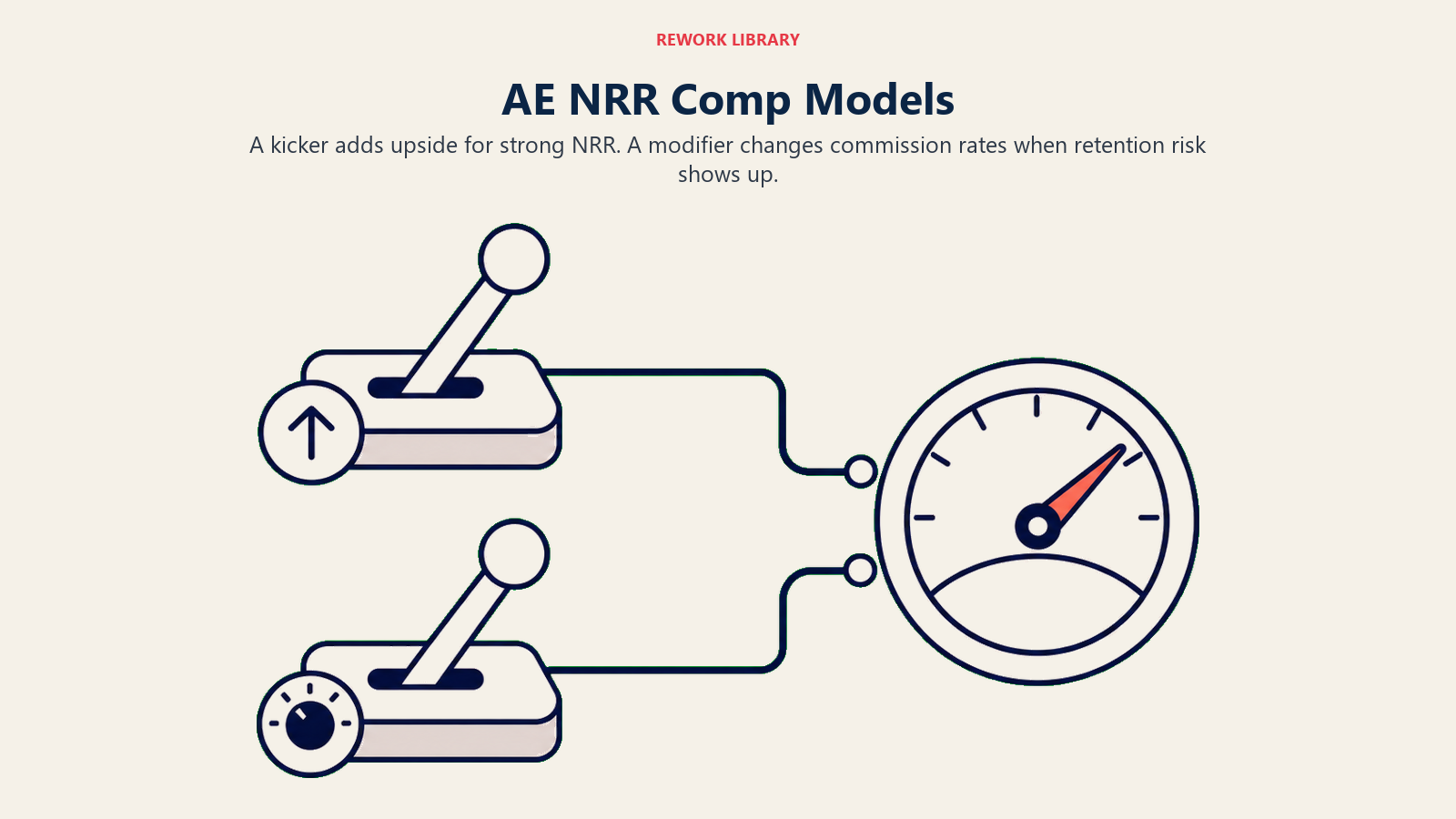
Model 1: NRR Kicker (hanya keuntungan) AE mendapatkan komisi ARR baru standar mereka pada 100% pencapaian kuota. Jika akun yang mereka tutup di periode sebelumnya (biasanya 12 bulan terakhir) mencapai ambang NRR yang ditentukan, mereka mendapatkan kicker tambahan, biasanya 5-15% dari OTE dasar mereka. Riset McKinsey tentang desain insentif penjualan menunjukkan bahwa struktur kicker (upside aditif tanpa risiko downside) adalah cara paling efektif untuk memperkenalkan metrik baru ke rencana kompensasi sales yang sudah mapan. Kicker bersifat aditif, bukan pengganti dari kompensasi yang ada. Model ini lebih mudah mendapatkan buy-in AE karena tidak ada sisi negatifnya.
Model 2: NRR Modifier (keuntungan + kerugian) Tingkat komisi AE atas ARR baru disesuaikan dengan kinerja NRR buku mereka. Jika NRR trailing 12 bulan mereka di atas 105%, mereka mendapatkan komisi pada 1,1x tarif standar. Jika NRR di bawah 90%, mereka mendapatkan pada 0,9x. Model ini memiliki lebih banyak gigi keselarasan karena menciptakan biaya finansial langsung untuk menutup akun yang tidak cocok. Tetapi model ini menghasilkan resistensi AE yang jauh lebih besar dan memerlukan infrastruktur pelacakan yang lebih canggih.
Contoh Rencana Kompensasi AE dengan NRR Modifier:
| Pencapaian ARR Baru | NRR Trailing 12 Bulan | Tingkat Komisi atas ARR Baru |
|---|---|---|
| ≥100% | ≥110% | 12% (multiplier 1,2x) |
| ≥100% | 100-109% | 10% (tarif dasar) |
| ≥100% | 90-99% | 9% (multiplier 0,9x) |
| ≥100% | <90% | 8% (multiplier 0,8x) |
| 80-99% | ≥110% | 11% |
| 80-99% | 100-109% | 9% |
| 80-99% | <100% | 7% |
| <80% | Apa pun | 7% (tarif di bawah kuota berlaku) |
Aturan desain kritis untuk kompensasi NRR AE:
- Gunakan jendela look-back 12 bulan. Pengukuran NRR kuartalan memberi penghargaan pada manipulasi (mendorong renewal ke depan, menunda deal ekspansi untuk memanipulasi kuartal). Look-back tahunan memuluskan kebisingan.
- Kecualikan akun yang tidak lagi disentuh AE. Jika AE menutup deal 3 tahun lalu dan akun itu churn setelah dua handoff CSM dan pivoting produk, mengikat kompensasi saat ini mereka dengan hasil tersebut tidak adil dan akan menghancurkan buy-in.
- Batasi eksposur clawback pada 20% OTE. Downside yang tidak terbatas menciptakan insentif yang menyimpang. AE mulai menolak akun yang menantang untuk melindungi lantai NRR mereka.
Membayar CSM atas Retensi + Ekspansi: Model Revenue Stake
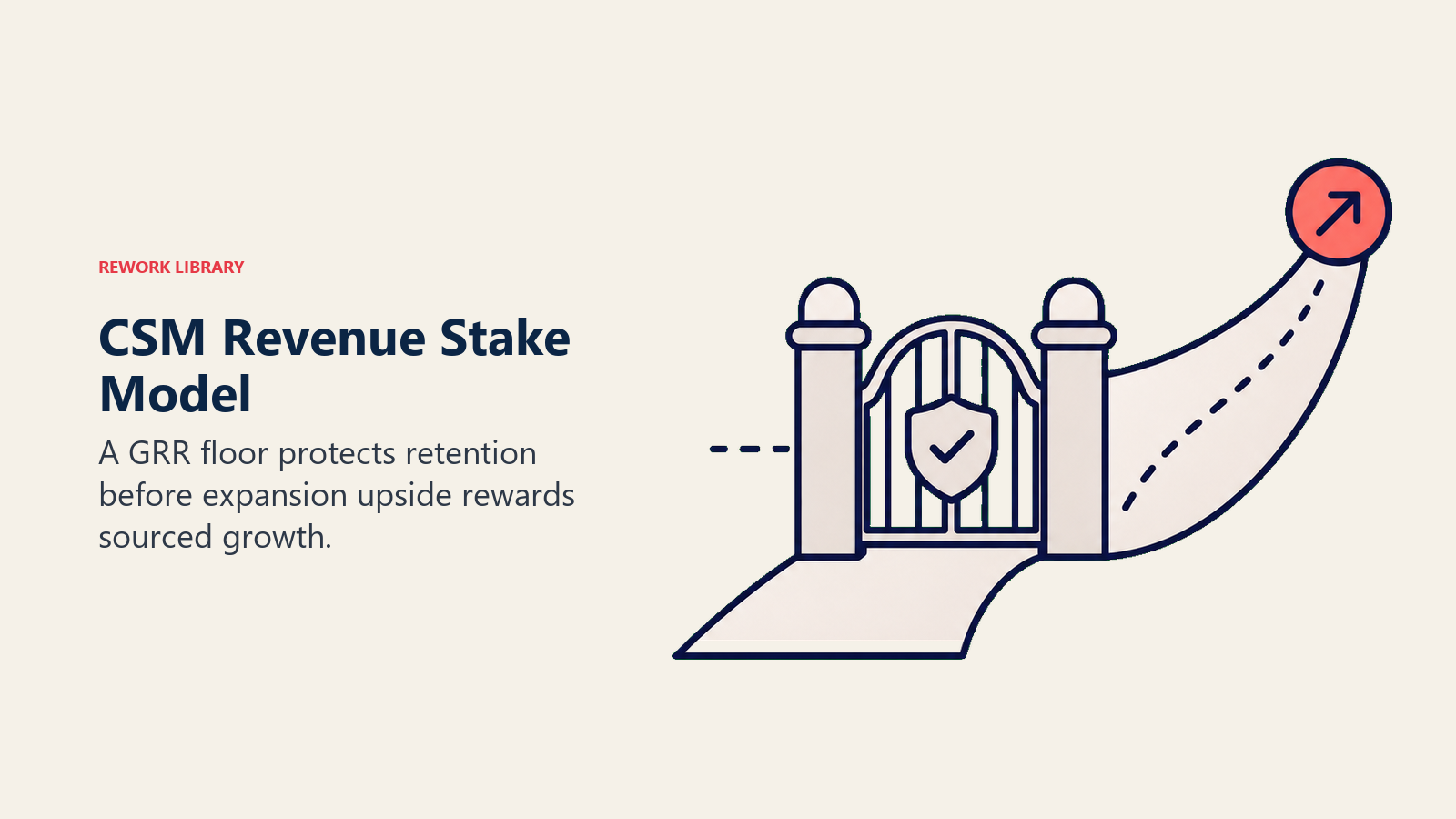
Desain kompensasi CSM memiliki dua komponen di luar gaji pokok: bonus retensi yang terkait dengan GRR (melindungi ARR yang ada) dan komisi ekspansi yang terkait dengan ARR baru yang dihasilkan dari akun yang ada. Ini dapat disusun secara terpisah atau digabungkan menjadi bonus berbasis NRR.
Struktur:
- Pokok: 60-70% dari OTE
- Bonus retensi: 15-20% dari OTE, dipicu dengan mencapai lantai GRR
- Komisi ekspansi: 10-20% dari OTE, terkait dengan expansion ARR yang bersumber dari CSM
Analisis kompensasi CSM oleh Tomasz Tunguz menemukan bahwa komponen kuota ekspansi, ketika ditetapkan pada 10-15% dari OTE, memotivasi perilaku upsell tanpa mengaburkan batas antara peran CS dan Sales.
Aturan pemicu ekspansi itu penting. Komisi ekspansi hanya boleh diaktifkan pada ekspansi yang bersumber atau secara material dipengaruhi oleh CSM: SKU baru yang diperkenalkan ke kontak CSM, ekspansi kursi yang dimulai oleh percakapan business case CSM, upgrade tier setelah QBR CSM. Jika AE menutup upsell yang tidak melibatkan CSM, CSM tidak boleh mendapat kredit ekspansi. Di sinilah aturan atribusi menjadi kritis (dibahas di bagian Tata Kelola di bawah). Artikel kepemilikan ekspansi dan gerak upsell membahas cara menarik garis itu secara operasional.
Contoh Rencana Kompensasi CSM dengan NRR Upside:
| Kinerja GRR | Expansion ARR vs. Target | Total Kompensasi sebagai % OTE |
|---|---|---|
| ≥98% (retensi luar biasa) | ≥120% dari target ekspansi | 125-135% |
| ≥95% (retensi on-target) | 100-119% dari target ekspansi | 105-115% |
| ≥95% (retensi on-target) | 80-99% dari target ekspansi | 95-105% |
| 90-94% (retensi di bawah target) | Apa pun | 85-95% |
| <90% (churn signifikan) | Apa pun | 75-85% |
Aturan desain kritis untuk kompensasi NRR CSM:
- Tetapkan lantai GRR sebelum upside ekspansi berlaku. CSM yang mengalami churn 20% dari buku mereka tapi menutup deal ekspansi besar tidak boleh mencapai OTE mereka. Retensi adalah kewajiban dasar; ekspansi adalah lapisan upside.
- Batasi komisi ekspansi CSM atau buat persyaratan koordinasi AE. Komisi ekspansi tak terbatas tanpa aturan koordinasi AE menciptakan yang terburuk dari kedua dunia: CSM menutup deal ekspansi tanpa ketelitian proses Sales, dan AE merasa terkejut oleh "akun" mereka yang dikerjakan secara komersial tanpa mereka.
- Pisahkan kompensasi CSM SMB dari CSM enterprise. Akun SMB memiliki volume tinggi dan ARR tipis, sehingga komisi ekspansi tidak memotivasi perilaku yang sama. Kompensasi CSM SMB lebih baik disusun di sekitar tingkat retensi logo dan perbaikan health score.
Lapisan Tata Kelola: Yang Dibutuhkan Keuangan untuk Menyetujui Ini
Rencana kompensasi yang diselaraskan pada NRR lebih sering gagal mendapatkan persetujuan final daripada gagal dalam desain. Keuangan dan hukum memiliki kekhawatiran yang sah tentang rencana kompensasi yang mencakup dua fungsi, melibatkan ketentuan clawback, dan memerlukan infrastruktur CRM baru. Tangani ini di awal.
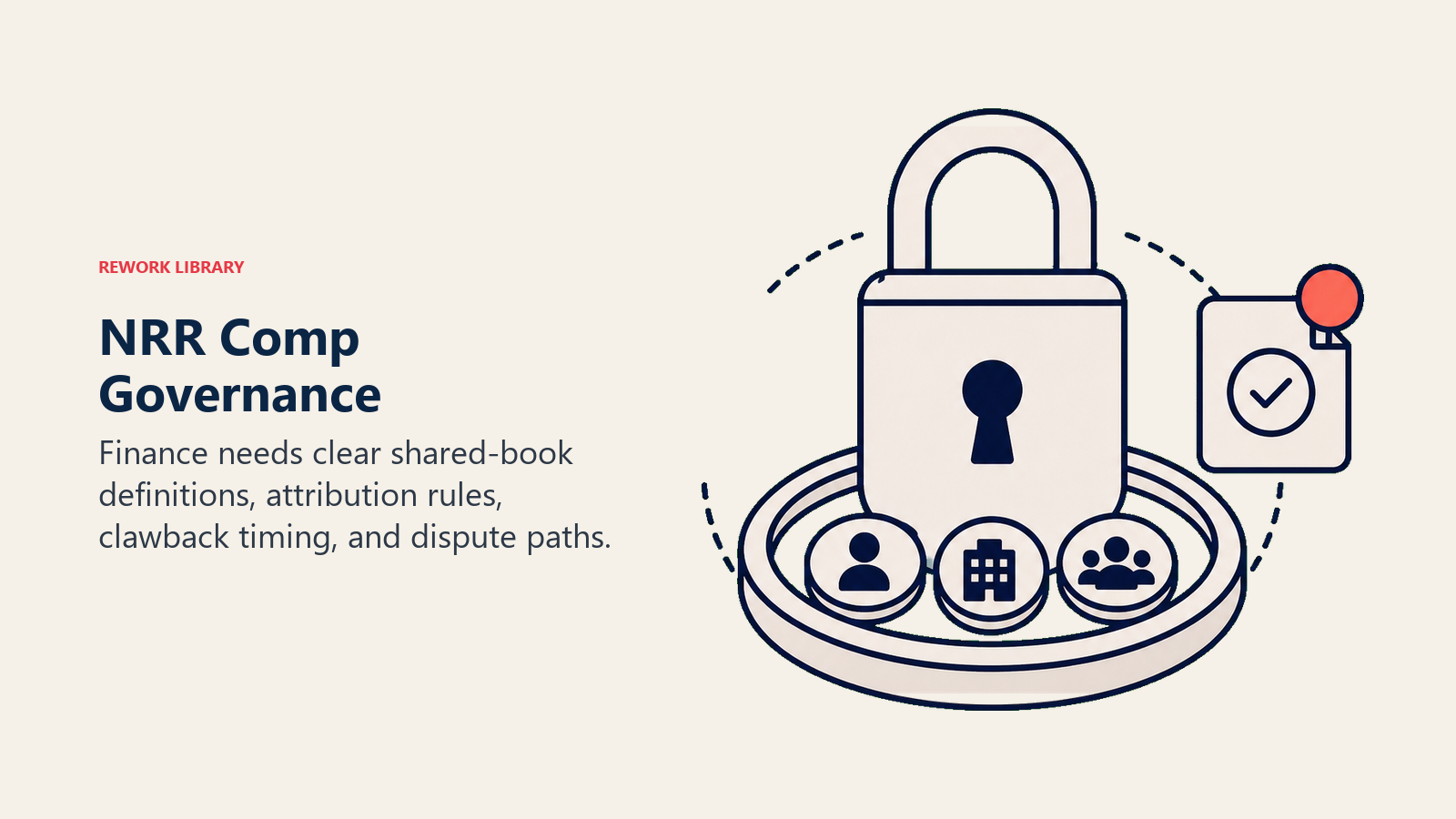
Definisi shared book. Keuangan perlu mengetahui dengan tepat akun mana yang dihitung terhadap perhitungan NRR masing-masing AE dan CSM. Shared book harus didefinisikan dalam CRM berdasarkan catatan kepemilikan akun, ditinjau setiap kuartal, dan diformalkan secara tertulis sebelum surat kompensasi dikirim. "Kita akan menyelesaikannya nanti" tidak dapat diterima oleh tim keuangan yang menandatangani akrual kompensasi variabel. Infrastruktur RevOps untuk mendefinisikan dan memelihara shared book itu dibahas dalam RevOps sebagai perekat keselarasan.
Aturan atribusi untuk ekspansi. Ketika AE dan CSM keduanya berpartisipasi dalam deal ekspansi, bagaimana expansion ARR dibagi untuk tujuan kompensasi? Pendekatan umum: pembagian 50/50 secara default, AE-primer jika mereka menjalankan proses komersial, CSM-primer jika mereka menemukan peluang dan AE hanya menangani kontrak. Tulis aturan atribusi sebelum deal ekspansi apa pun ditutup. Sengketa atribusi yang diselesaikan secara retroaktif menghancurkan kredibilitas.
Waktu dan penegakan clawback. Jika Anda menggunakan model clawback untuk AE, keuangan memerlukan kebijakan yang jelas tentang waktu (kapan clawback berlaku?), mekanisme (bagaimana pemulihannya, yaitu dikompensasikan terhadap komisi masa depan?), dan tinjauan hukum (undang-undang clawback upah yang spesifik untuk negara bagian berbeda-beda). Checklist tata kelola sederhana:
- Kapan periode NRR ditutup untuk perhitungan kompensasi? (Biasanya akhir Q1 untuk perhitungan tahun sebelumnya)
- Siapa yang menjalankan perhitungan NRR: RevOps, Keuangan, atau CRO?
- Apa jendela tinjauan dan sengketa sebelum kompensasi final diterbitkan?
- Bagaimana atribusi yang diperdebatkan dieskalasi?
Kadence penetapan kuota. Target NRR harus ditetapkan setiap tahun, bukan setiap kuartal. Perubahan kuota NRR di tengah tahun menghancurkan integritas metrik. Jika Keuangan dapat merevisi target NRR berdasarkan dinamika Pipeline, target menjadi tidak berarti sebagai alat akuntabilitas. Setelah tata kelola beres, risiko berikutnya bersifat perilaku: anti-pattern yang muncul bahkan setelah rencana kompensasi NRR yang dirancang dengan baik berjalan.
Yang Memisahkan Tim: Anti-Pattern yang Harus Dihindari
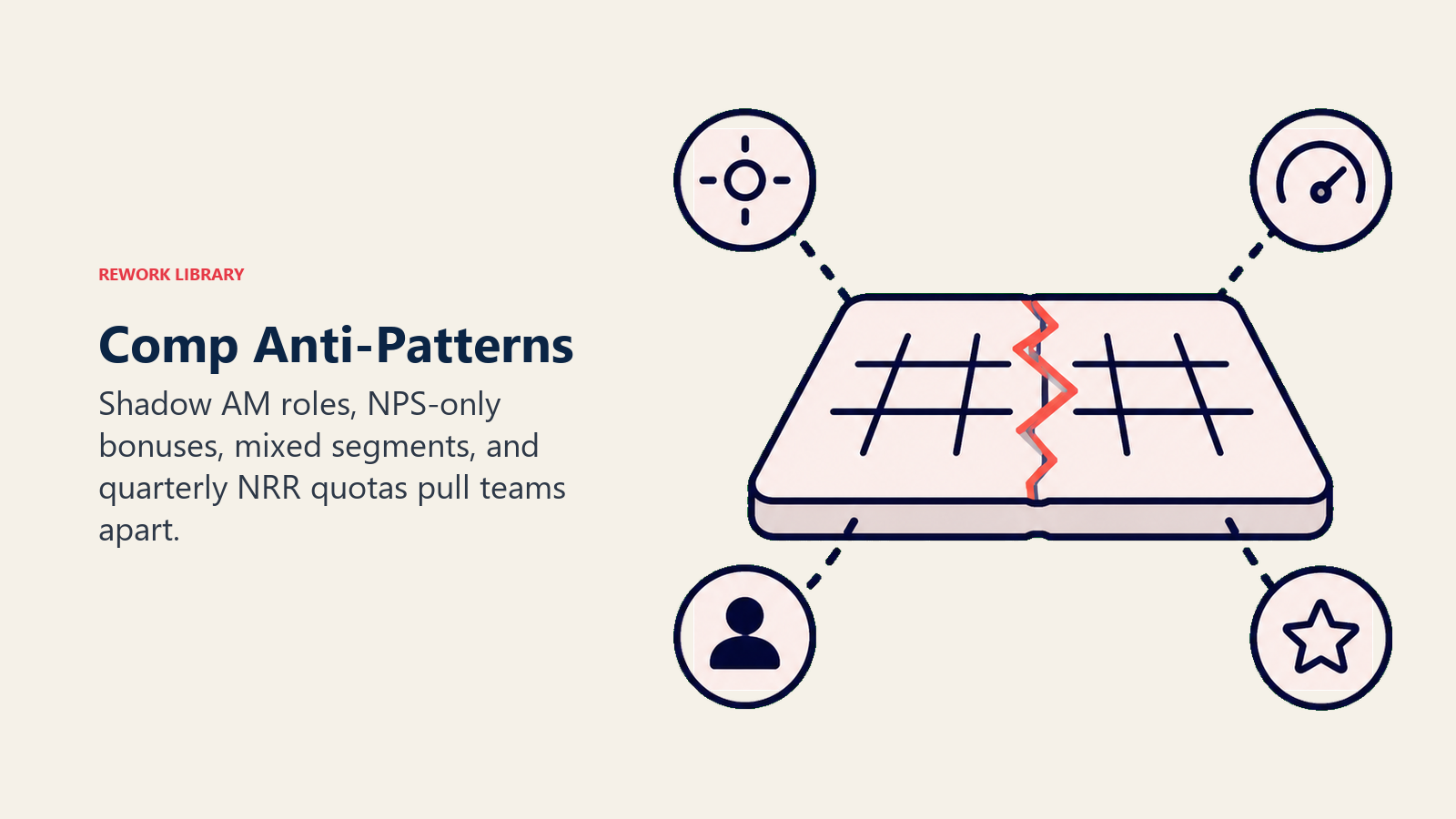
Komisi AE atas ekspansi menciptakan peran AM bayangan. Jika AE mendapatkan komisi atas ekspansi apa pun di akun lama mereka, apakah mereka menyentuh ekspansi itu atau tidak, mereka akan masuk ke hubungan CS untuk menangkap kompensasi. CSM terpinggirkan di akun mereka sendiri. Solusinya: komisi ekspansi AE hanya berlaku untuk ekspansi yang secara aktif dikerjakan AE.
CSM dibayar atas NPS bukan pendapatan. NPS mengukur sentimen. NPS memiliki korelasi hampir nol dengan expansion ARR dan korelasi lemah dengan retensi pada tingkat akun. Pelanggan yang memberi Anda skor 9 di NPS tetap churn jika produk tidak memberikan ROI. NPS bisa menjadi salah satu input untuk tinjauan kinerja; ini tidak boleh mendorong kompensasi variabel untuk peran yang mengelola pendapatan.
Segmen yang beragam dalam satu rencana kompensasi. CSM SMB yang mengelola 80 akun dengan masing-masing ARR $8K memiliki dinamika ekspansi yang sangat berbeda dari CSM enterprise yang mengelola 15 akun dengan masing-masing ARR $200K. Menerapkan struktur kompensasi NRR yang sama pada keduanya menciptakan perilaku yang menyimpang. CSM enterprise kalah dengan matematika SMB, dan CSM SMB tidak bisa mencapai ambang enterprise. Segmentasikan rencana kompensasi, bahkan jika struktur tingkat tingginya serupa.
Kuota NRR kuartalan memberi penghargaan pada manipulasi. CSM yang bonus NRR kuartalannya diatur ulang setiap 90 hari memiliki insentif untuk menarik percakapan ekspansi ke kuartal yang mereka butuhkan angkanya dan untuk mengecilkan sinyal berisiko yang akan merugikan metrik retensi Q2 mereka. Pengukuran NRR tahunan menghilangkan sebagian besar kebisingan ini. Tetapi tidak satu pun mekanisme di atas berarti jika Anda tidak bisa mendapatkan buy-in dari tim yang diukur. Percakapan itu lebih sulit daripada desainnya.
Mendapatkan Buy-In: Percakapan CRO yang Harus Terjadi
Dua keberatan akan muncul di setiap organisasi yang mencoba mengimplementasikan kompensasi yang diselaraskan pada NRR.
Dari AE: "Saya tidak bisa mengendalikan apa yang dilakukan CS setelah saya menutup deal. Mengapa pembayaran saya harus bergantung pada kinerja mereka?"
Analisis HBR 2024 tentang kompensasi sales menyampaikan argumen yang sama: struktur kuota dan komisi yang dirancang pada era pertumbuhan sebelumnya gagal menangkap perilaku retensi dan ekspansi yang benar-benar mendorong nilai perusahaan SaaS pada skala besar.
Respons yang jujur: Anda bisa mempengaruhinya, dan itulah intinya. Akun yang churn pada tahun pertama secara tidak proporsional adalah akun yang dijual dengan use case yang salah, dijual terlalu besar kemampuannya, atau ditutup sebagai cocok yang baik padahal tidak. AE yang melakukan discovery yang tepat dan menjual kepada ICP yang asli tidak menghasilkan buku yang churn tinggi. Sinyal NRR memberi tahu mereka sesuatu tentang cara mereka menjual. Percakapan dengan Keuangan untuk memperkuat hal ini: tunjukkan korelasi antara NRR 12 bulan dan karakteristik spesifik dari proses penjualan awal.
Dari CSM: "Saya tidak ingin diukur seperti wiraniaga. Saya di sini untuk membantu pelanggan, bukan menjual kepada mereka."
Respons yang jujur: Anda sudah diukur seperti wiraniaga. NRR hanya membuatnya eksplisit. CSM yang mengelola akun dengan 0% ekspansi dan 90% retensi logo memberikan hasil pendapatan yang lebih buruk dari yang mengidentifikasi peluang ekspansi nyata dan membantu pelanggan memanfaatkannya. Tujuannya bukan untuk mengubah CS menjadi Sales. Ini untuk menghilangkan perbedaan buatan antara "membantu pelanggan berhasil" dan "menumbuhkan hubungan pendapatan." Kedua hal itu seharusnya sama.
Artikel kepemilikan ekspansi mencakup cara merancang proses eskalasi CS-ke-Sales yang membuat kompensasi ekspansi kredibel bagi CSM yang tidak nyaman menjalankan percakapan komersial secara mandiri.
Kalibrasi Segmen
SMB: Jaga kesederhanaan. Pokok + bonus retensi berdasarkan tingkat churn logo. Expansion ARR dikumpulkan di seluruh tim CSM, bukan individual. NRR modifier pada kompensasi AE terlalu berisik pada tingkat ARR SMB. Variansinya terlalu tinggi untuk menghasilkan sinyal yang bersih. Spektrum keselarasan Sales-CS dari SMB hingga enterprise menjelaskan mengapa arsitektur kompensasi yang sama tidak bisa diterapkan seragam di semua segmen.
Mid-market: NRR kicker individual masuk akal untuk AE dan CSM. Aturan atribusi sangat penting di segmen ini karena kedua fungsi secara aktif menyentuh percakapan ekspansi. Gunakan jendela trailing 12 bulan.
Enterprise: Model NRR modifier penuh untuk AE, ditambah bonus QBR bersama untuk pasangan AE-CSM di mana QBR menghasilkan rencana ekspansi yang terdokumentasi. Komisi ekspansi CSM dengan atribusi akun bernama (tidak ada ambiguitas tentang CSM mana yang menemukan peluang). Argumen CRO atas Sales dan CS lebih dalam tentang mengapa keselarasan enterprise hampir selalu memerlukan lapisan kompensasi bersama.
Keselarasan Kompensasi adalah Forcing Function
Program budaya, offsite keselarasan, dan saluran Slack bersama dapat meningkatkan koordinasi secara marginal. Tapi keselarasan kompensasi adalah forcing function. Ketika AE mengetahui tingkat komisi mereka dimodifikasi oleh seberapa baik akun mereka dipertahankan, mereka mulai mengajukan pertanyaan yang berbeda kepada CS sebelum penutupan: "Berapa timeline implementasi yang tipikal?" "Profil pelanggan mana yang berhasil?" "Apa yang gagal dalam use case ini?"
Ketika CSM mengetahui bahwa bonus retensi mereka adalah uang nyata dan komisi ekspansi mereka adalah upside yang berarti, mereka berhenti memperlakukan percakapan komersial sebagai pekerjaan orang lain. Tujuannya bukan untuk membuat CS terasa seperti Sales. Ini untuk membuat hasil pendapatan terasa seperti tanggung jawab semua orang. Pada tingkat shared book, memang demikian.
Rancang lapisan NRR di celah tersebut. Bukan desain ulang kompensasi total. Hanya struktur akuntabilitas bersama yang memberi tahu kedua tim bahwa mereka sedang memainkan permainan yang sama.
Pertanyaan yang Sering Diajukan tentang Kompensasi yang Diselaraskan pada NRR
Mengapa membayar AE atas NRR jika mereka tidak bisa mengendalikan apa yang dilakukan CS setelah penutupan?
AE dapat mempengaruhi NRR lebih besar daripada yang disiratkan keberatan "saya tidak bisa mengendalikan CS." Akun yang churn pada bulan ke-12 secara tidak proporsional adalah akun yang dijual terlalu besar kemampuannya, ditutup dengan kecocokan ICP yang buruk, atau dijual pada use case yang tidak didukung produk. AE yang menjalankan discovery yang ketat dan menutup deal ICP yang asli menghasilkan buku dengan churn lebih rendah. Sinyal NRR memberi tahu mereka sesuatu tentang cara mereka menjual, bukan tentang apa yang dilakukan CS setelahnya. Prinsip desainnya adalah jendela look-back 12 bulan pada akun yang benar-benar ditutup AE, bukan liabilitas permanen untuk setiap akun dalam Pipeline historis mereka.
Berapa persen OTE yang seharusnya diwakili komponen NRR?
Untuk AE, NRR kicker sebaiknya mewakili 5-15% dari OTE pada implementasi pertama, aditif terhadap komisi ARR baru yang ada. Model modifier (yang menyesuaikan tingkat komisi dasar naik atau turun 10-20% berdasarkan NRR) cocok setelah dua siklus kompensasi di mana kicker telah membentuk pola perilaku. Untuk CSM, bonus retensi sebaiknya 15-20% dari OTE dan komisi ekspansi 10-20% dari OTE, dengan gerbang lantai GRR yang mencegah upside ekspansi dibayarkan pada buku yang sedang aktif churn. Total OTE tidak boleh berubah secara material di tahun pertama keselarasan NRR. Tahun pertama adalah tentang mengubah sinyal insentif, bukan tingkat kompensasi keseluruhan.
Bagaimana meluncurkan kompensasi yang diselaraskan pada NRR tanpa menghancurkan buy-in AE?
Mulailah dengan upside saja. Model NRR kicker (di mana AE mendapatkan tambahan 5-15% dari OTE ketika buku mereka mencapai ambang NRR, tanpa risiko downside) menghasilkan resistensi yang jauh lebih sedikit daripada modifier yang dapat menurunkan tingkat komisi. Perkenalkan kicker di awal tahun fiskal baru dengan jendela pengukuran 12 bulan yang ditentukan. Jalankan satu siklus penuh sebelum memperkenalkan model modifier. Urutannya penting: AE yang sudah mendapatkan kicker jauh lebih terbuka terhadap percakapan modifier daripada AE yang belum pernah melihat metrik NRR dalam surat kompensasi mereka.
Bagaimana menangani keberatan AE selama peluncuran?
Dua keberatan yang paling umum adalah: "Saya tidak bisa mengendalikan kinerja CS" dan "kompensasi saya selalu berbasis ARR baru." Yang pertama ditangani dengan membatasi akuntabilitas NRR pada akun yang ditutup AE dalam 12 bulan sebelumnya, mengecualikan akun yang melalui beberapa transisi CSM, dan membatasi eksposur clawback pada 20% OTE. Yang kedua ditangani dengan menjadikan komponen NRR aditif, bukan pengganti. AE tidak boleh menghadapi pengurangan take-home pay di tahun pertama keselarasan NRR kecuali buku mereka berkinerja jauh di bawah benchmark.
Apakah CSM sebaiknya memiliki kuota ekspansi?
Ya, tetapi perlu disusun dengan hati-hati. Komisi ekspansi hanya boleh diaktifkan pada ekspansi yang bersumber atau secara material dipengaruhi oleh CSM, bukan pada deal yang dipimpin AE di akun yang kebetulan dikelola CSM. Target kuota ekspansi sebaiknya ditetapkan pada 10-15% dari OTE, tidak lebih, untuk memotivasi perilaku upsell tanpa mengaburkan batas peran Sales-CS. Dan lantai GRR harus menjadi gerbang upside ekspansi: CSM yang mengalami churn 20% dari bukunya sambil menutup deal ekspansi besar tidak boleh mencapai OTE-nya. Retensi adalah kewajiban dasar; ekspansi adalah lapisan upside.
Bagaimana jika NRR tidak dapat dihitung pada tingkat buku karena struktur CRM?
Ini adalah penghambat implementasi yang paling umum, dan ini masalah RevOps sebelum menjadi masalah kompensasi. Jika akun tidak ditandai dengan pengenal shared book yang memetakan ke pasangan AE-CSM tertentu, NRR tidak dapat dihitung pada tingkat yang dibutuhkan untuk mendorong kompensasi. Solusinya adalah menambahkan field Territory ID di CRM yang menghubungkan kepemilikan akun ke catatan AE dan CSM, dan menjalankan tinjauan shared book kuartalan yang mengonfirmasi bahwa field tersebut akurat. Jangan luncurkan kompensasi NRR sampai Anda dapat menghitung NRR shared-book di spreadsheet untuk kelompok pilot. Jika Anda tidak bisa melakukan hitungannya di spreadsheet, Anda tidak bisa mengotomatiskannya di CRM.
Bagaimana mengimplementasikan kompensasi yang diselaraskan pada NRR secara bertahap untuk perusahaan yang belum pernah melakukannya?
Fase 1 (bulan 1-3): Definisikan shared book di CRM. Tandai semua akun aktif dengan Territory ID bersama yang memetakan ke pasangan AE-CSM. Jalankan perhitungan NRR secara manual untuk kelompok pilot (4-6 pasangan AE-CSM di mid-market) selama dua kuartal untuk memvalidasi hitungannya. Fase 2 (bulan 4-6): Perkenalkan lantai GRR CSM di siklus kompensasi berikutnya. Bonus retensi hanya aktif ketika GRR mencapai ambang. Belum ada komisi ekspansi. Fase 3 (bulan 7-12): Tambahkan NRR kicker AE untuk kelompok pilot. Bayarkan di akhir tahun setelah jendela look-back 12 bulan pertama selesai. Fase 4 (tahun 2): Perluas ke semua pasangan AE-CSM mid-market dan enterprise. Evaluasi model modifier untuk AE di tahun 3 berdasarkan bukti perubahan perilaku dari tahun 1-2.
Pelajari Lebih Lanjut

Principal Solution Architect
On this page
- Masalah Celah: Apa yang Sebenarnya Dibiayai Kesenjangan Kompensasi
- NRR sebagai Metrik Utama yang Tepat
- Membayar AE atas NRR: Dua Model Struktural
- Membayar CSM atas Retensi + Ekspansi: Model Revenue Stake
- Lapisan Tata Kelola: Yang Dibutuhkan Keuangan untuk Menyetujui Ini
- Yang Memisahkan Tim: Anti-Pattern yang Harus Dihindari
- Mendapatkan Buy-In: Percakapan CRO yang Harus Terjadi
- Kalibrasi Segmen
- Keselarasan Kompensasi adalah Forcing Function
- Pelajari Lebih Lanjut