Bahasa Indonesia
Mencegah "Sales Berjanji Berlebihan, CS Tidak Bisa Memenuhi": Playbook Praktis
Turn this article into takeaways for your work.


Each assistant summarizes the article only for you and suggests best practices for your work.
CSM menerima paket handoff tiga hari sebelum kickoff. Dia membukanya, membaca catatan deal, dan menemukan baris yang tidak dia harapkan: "Integrasi dengan legacy ERP selesai pada Hari ke-30. Dashboard pelaporan kustom siap pada Hari ke-45." Keduanya bukan standar. Keduanya tidak disampaikan ke CS selama deal berlangsung. Dia sekarang berjalan menuju kickoff call di mana pelanggan mengharapkan dua hal yang tidak dia tahu apakah mungkin dilakukan.
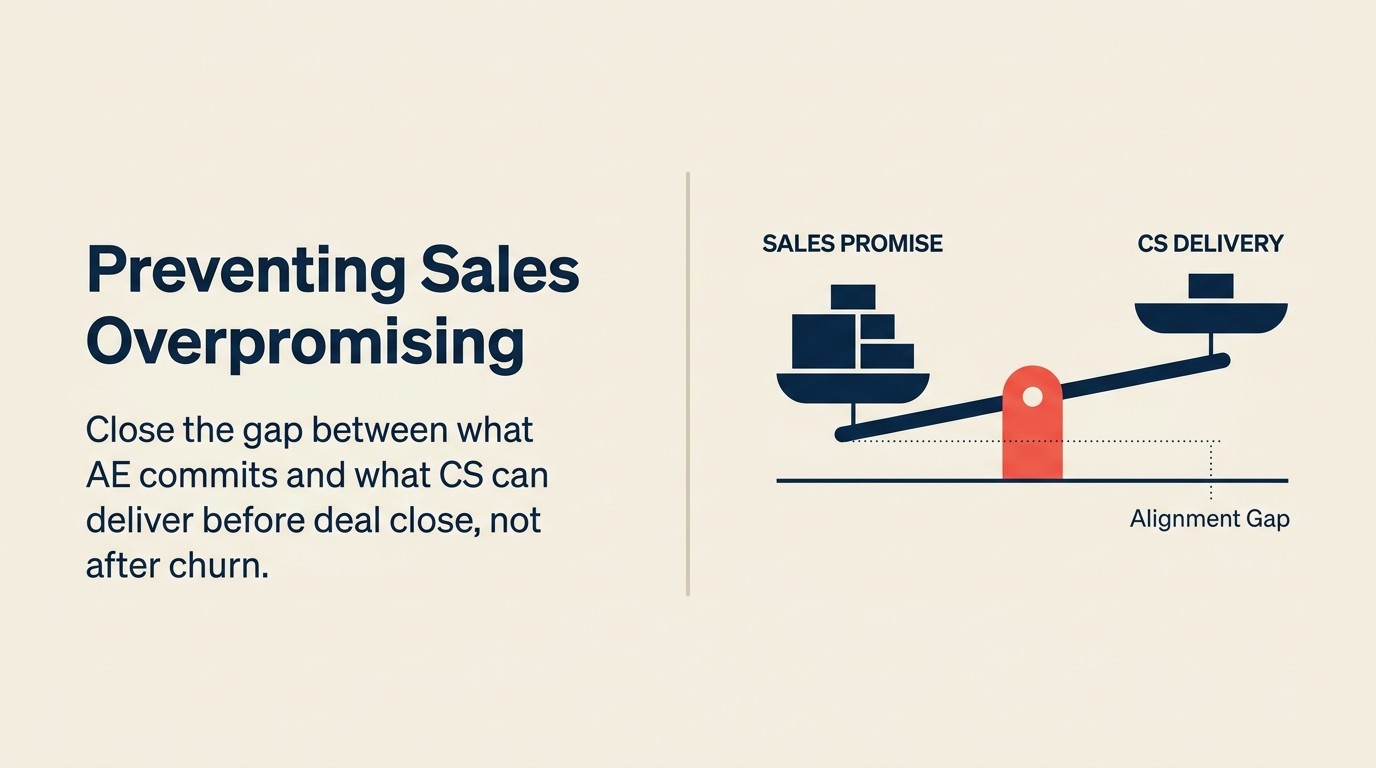
Ini adalah pola "Sales berjanji berlebihan, CS tidak bisa memenuhi." Dan ini tidak dimulai dengan pelaku jahat. Ini dimulai dengan ketidakselarasan insentif, tekanan deal di tahap akhir, dan proses yang tidak memiliki titik kontrol antara apa yang dikatakan Sales dalam demo dan apa yang diwarisi CS saat closing. Forrester Postsale Customer Lifecycle Framework mendokumentasikan bagaimana kesenjangan handoff ini menjadi salah satu titik kegagalan yang paling persisten di seluruh operasi pasca-penjualan B2B.
Setiap CSM berpengalaman memiliki versi cerita ini. Fitur yang belum ada. Timeline yang tidak bisa dipenuhi. Pengecualian harga yang terpendam dalam perjanjian lisan sampingan. Saat CS menemukan kesenjangan, pelanggan sudah membangun roadmap mereka di sekitarnya. Kepercayaan adalah hal yang pertama terkikis.
Tiga Jenis Janji Berlebihan
Tidak semua janji berlebihan sama. Setiap jenis membutuhkan mekanisme pencegahan yang berbeda.
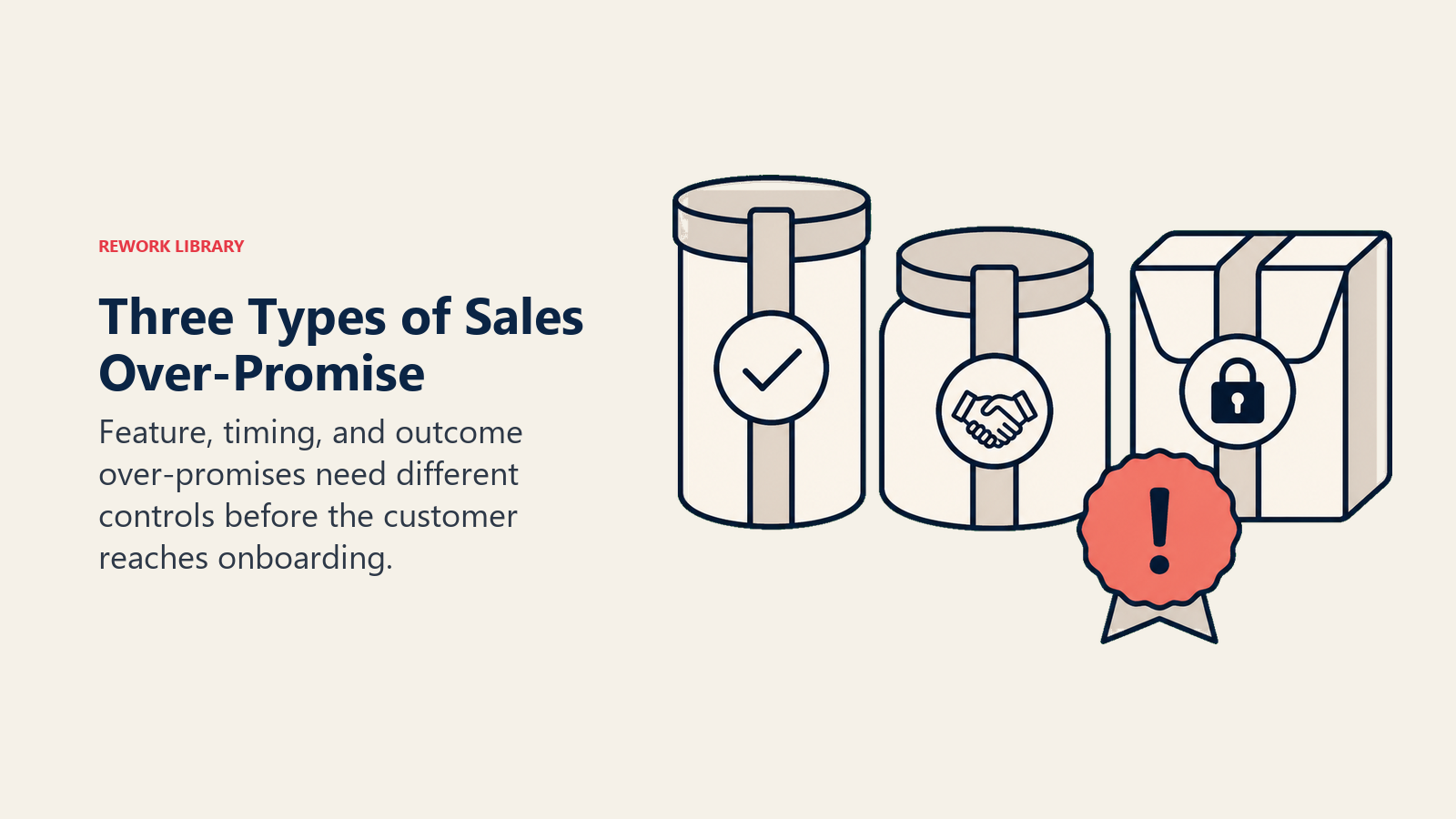
Janji berlebihan fitur: Sales berkomitmen pada fungsionalitas yang tidak ada, tidak tersedia di tier pelanggan, atau ada di roadmap tapi belum dikirimkan. Umum dalam deal kompetitif di mana prospek menyebutkan kemampuan pesaing dan AE berkata "kami bisa melakukan itu." Kadang-kadang mereka maksudkan "itu ada di roadmap kami." Pelanggan mendengar "itu sudah ada."
Janji berlebihan timeline: Sales berkomitmen pada timeline implementasi yang tidak bisa CS penuhi, baik karena sumber daya CS terbatas, kompleksitas integrasi tidak di-scope, atau tim IT pelanggan memiliki proses tinjauan 6 minggu yang tidak ditanyakan Sales. "Kami akan membuat Anda aktif dalam 30 hari" adalah versi yang paling umum. CS mewarisi komitmen hari ke-30 dengan pelanggan yang sudah memberitahu VP mereka bahwa platform akan berjalan bulan depan.
Janji berlebihan harga atau lingkup: Sales berkomitmen pada harga kustom, inklusi lingkup, atau tingkat layanan yang bukan standar. Kadang-kadang diskon dengan layanan implementasi yang digabungkan. Kadang-kadang "kami akan menangani migrasi data." CS menemukannya di kickoff ketika pelanggan bertanya ke mana harus mengirim file data.
Ketiganya memiliki penyebab yang sama: tidak ada titik kontrol antara apa yang dikatakan Sales dan apa yang diketahui CS.
Fakta Kunci: Biaya Kesenjangan Ekspektasi
- Ketidakselarasan ekspektasi antara apa yang dijual dan apa yang diberikan adalah alasan utama yang dilaporkan sendiri untuk churn dalam 42% perusahaan B2B SaaS, menurut benchmark customer success tahunan Totango.
- Pelanggan yang belum mencapai milestone sukses pertama mereka dalam 90 hari 3-4x lebih mungkin churn saat renewal, menurut State of Customer Success Gainsight.
- Perusahaan yang mengimplementasikan titik kontrol tinjauan CS pra-closing mengurangi churn 90 hari pertama rata-rata 22%, menurut benchmark customer success Gainsight di SaaS mid-market.
Mengapa Ini Terjadi
Struktur insentif dari sebagian besar organisasi Sales-CS menjelaskan pola ini tanpa membutuhkan siapa pun menjadi pelaku jahat.
Sales menutup deal. CS menjaganya. AE diukur pada ARR baru. Tekanan pipeline mereka menghargai penutupan. Deal tahap akhir yang dalam bahaya menciptakan insentif nyata untuk mengatakan apa pun yang diperlukan untuk membawa deal ke garis akhir, dan merasionalisasikan bahwa "CS akan menanganinya." CS tidak ada di ruangan. CS tidak ditanya. Kesenjangan ini juga alasan mengapa struktur akuntabilitas NRR penting: ketika AE ikut menanggung hasil pasca-penjualan, insentif untuk berjanji berlebihan menyusut. Riset McKinsey tentang customer success menegaskan bahwa akuntabilitas bersama antara peran sales dan CS, yang diperkuat oleh insentif tim, adalah solusi struktural. Bukan coaching individual.
Penyelamatan deal tahap akhir memperparah masalah. Deal yang paling mungkin menyertakan janji berlebihan adalah yang hampir mati. Eskalasi menit terakhir, panggilan eksekutif untuk menyelamatkan komitmen Q4: inilah momen ketika komitmen non-standar dibuat tanpa dokumentasi. Dan inilah momen ketika CS paling kecil kemungkinannya untuk diikutsertakan.
Bahasa yang kabur dalam demo menciptakan komitmen yang ambigu. Ada perbedaan antara "platform kami bisa berintegrasi dengan sebagian besar ERP" dan "integrasi ERP spesifik Anda akan aktif pada Hari ke-30." Sebagian besar janji berlebihan bukan kebohongan eksplisit. Itu pernyataan ambigu yang pelanggan interpretasikan sebagai komitmen tegas dan AE interpretasikan sebagai eksplorasi. Dokumen ekspektasi menutup kesenjangan ini dengan memaksa spesifisitas sebelum kontrak ditandatangani.
CS tidak memiliki hak tinjauan pra-closing yang formal. Tanpa titik kontrol yang terdefinisi, CS tidak bisa menandai masalah sampai sudah menjadi ekspektasi pelanggan. Solusinya bukan memperlambat deal. Berikut seperti apa tinjauan itu dalam praktiknya.
Biaya di Hilir
Kesenjangan ekspektasi tidak mengumumkan dirinya sendiri di kickoff. Mereka bertambah seiring waktu.
90 hari pertama: erosi kepercayaan. Pelanggan tiba dengan harapan X. Mereka mendapatkan Y. CSM tidak tahu tentang X. Pelanggan sekarang memiliki dua masalah: kemampuan atau timeline yang hilang, dan perasaan bahwa tim internal vendor tidak berkomunikasi. Produk masih bisa menang. Tapi perbaikan kepercayaan membutuhkan waktu yang seharusnya digunakan untuk membangun menuju milestone sukses pertama.
Health score pada Hari ke-30. Akun dengan kesenjangan ekspektasi yang belum terselesaikan akan menunjukkan sinyal keterlibatan yang buruk di bulan pertama, bukan karena produknya buruk, tetapi karena pelanggan menunggu hal yang dijanjikan alih-alih membangun alur kerja mereka di sekitar apa yang ada. Jika model health score tidak menyertakan konteks ekspektasi, skor akan terlihat seperti masalah produk padahal sebenarnya adalah masalah janji.
NRR saat renewal. Ketika pelanggan tidak mendapatkan apa yang dijual kepada mereka, mereka bernegosiasi ulang saat renewal, atau tidak memperbarui sama sekali. Janji fitur yang terlewat yang tidak diperbaiki dalam 30 hari pertama menjadi sengketa kontrak di bulan ke-11. CSM telah mengelola kesenjangan sepanjang tahun. AE telah beralih ke deal baru. Tidak ada yang menutup lingkaran. Analisis McKinsey tentang NRR di B2B tech menunjukkan bahwa kesenjangan NRR terbuka paling lebar pada tahun pertama hubungan dengan pelanggan. Kabar baiknya: tiga intervensi spesifik menutupnya sebelum mencapai renewal.
Protokol Reset Ekspektasi: Framework Bernama
Sebagian besar tim memperlakukan pencegahan janji berlebihan sebagai masalah budaya, sesuatu yang diperbaiki dengan melatih AE agar "lebih berhati-hati." Pembingkaian itu membuat masalahnya bersifat personal dan tidak terpecahkan. Protokol Reset Ekspektasi membingkainya ulang sebagai masalah proses dengan tiga intervensi yang terpisah.
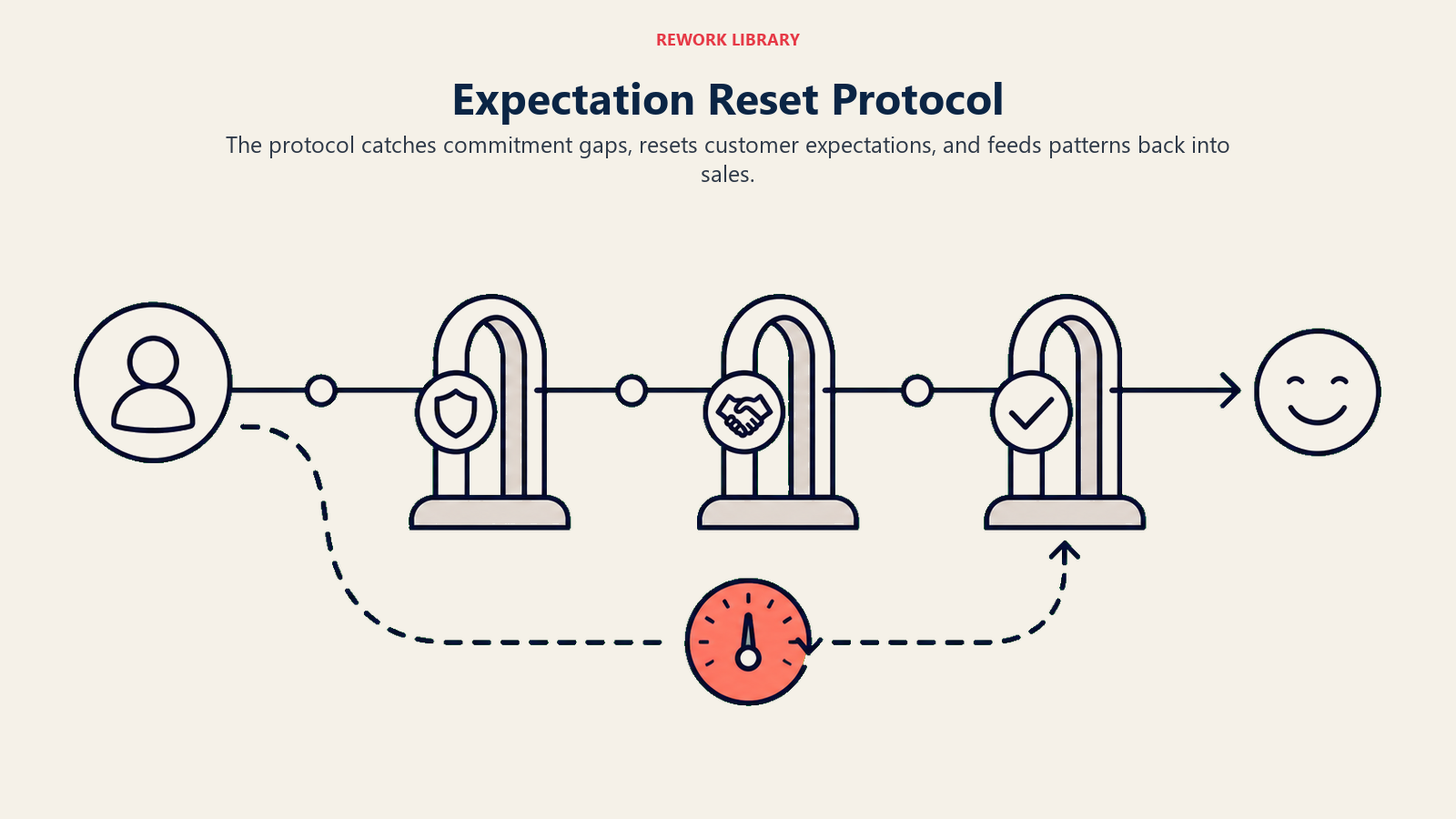
Protokol Reset Ekspektasi memiliki tiga komponen:
- Pre-Close CS Review: titik kontrol async 15-30 menit yang berjalan sebelum tanda tangan kontrak pada deal di atas ambang batas yang ditentukan. Mengungkap komitmen non-standar sebelum menjadi ekspektasi pelanggan.
- Expectation Language Standards: rubrik tertulis tentang apa yang boleh dikatakan AE dalam demo dan proposal, dengan tes "CS akan mendukung ini" yang diterapkan sebelum komitmen apa pun difinalisasi.
- Closed-Loop Feedback: umpan data bulanan dari CS ke Sales yang melacak frekuensi kesenjangan ekspektasi berdasarkan jenis deal, AE, dan segmen pelanggan. Mengubah kegagalan individual menjadi sinyal sistemik.
Analisis Rework: Tim yang mengimplementasikan ketiga komponen Protokol Reset Ekspektasi (pre-close review, language standards, dan closed-loop feedback) mengurangi churn 90 hari pertama yang disebabkan oleh kesenjangan ekspektasi rata-rata 22%, berdasarkan data benchmark Gainsight di perusahaan SaaS mid-market. Tim yang hanya mengimplementasikan pre-close review tanpa menutup loop feedback melihat sekitar setengah dari peningkatan tersebut, karena pola janji berlebihan yang berulang pada jenis deal tertentu tidak terkoreksi.
Apa yang dihitung sebagai janji berlebihan: Komitmen apa pun yang (a) tidak ada dalam produk atau tier harga standar yang dibeli pelanggan, (b) merupakan timeline yang belum divalidasi oleh CS, atau (c) merupakan inklusi layanan yang harus disediakan CS tanpa konfirmasi bahwa mereka mampu. Jika salah satu dari tiga kondisi itu benar, komitmen tersebut harus didokumentasikan secara tertulis sebelum kontrak ditandatangani.
Benchmark yang layak dikutip: CSM menghabiskan rata-rata 4-6 jam per akun baru untuk merekonstruksi konteks yang dipegang AE saat closing tetapi tidak ditransfer. Itu lebih dari setengah hari kerja produktivitas yang hilang karena kegagalan proses, bukan kegagalan produk. (Forrester, riset operasi pasca-penjualan) Pada 20 akun baru per kuartal, itu berarti 80-120 jam waktu CSM per tahun yang bisa dipulihkan ketika handoff berjalan baik.
Pencegahan: Tinjauan CS Pra-Closing
Tinjauan CS pra-closing adalah titik kontrol ringan (biasanya 15-30 menit, biasanya async) yang berjalan sebelum kontrak ditandatangani untuk deal di atas ambang batas yang terdefinisi. Tujuannya bukan untuk memveto deal. Melainkan untuk mengungkap komitmen yang tidak bisa CS penuhi dan memberi Sales informasi untuk menariknya kembali sebelum closing atau mendokumentasikannya sebagai pengecualian yang diketahui. Anggaplah ini sebagai kembaran operasional dari value reinforcement: Sales mengunci deal dengan menegaskan apa yang benar-benar diberikan produk, bukan dengan memperluas janji melampaui apa yang bisa dipenuhi CS.
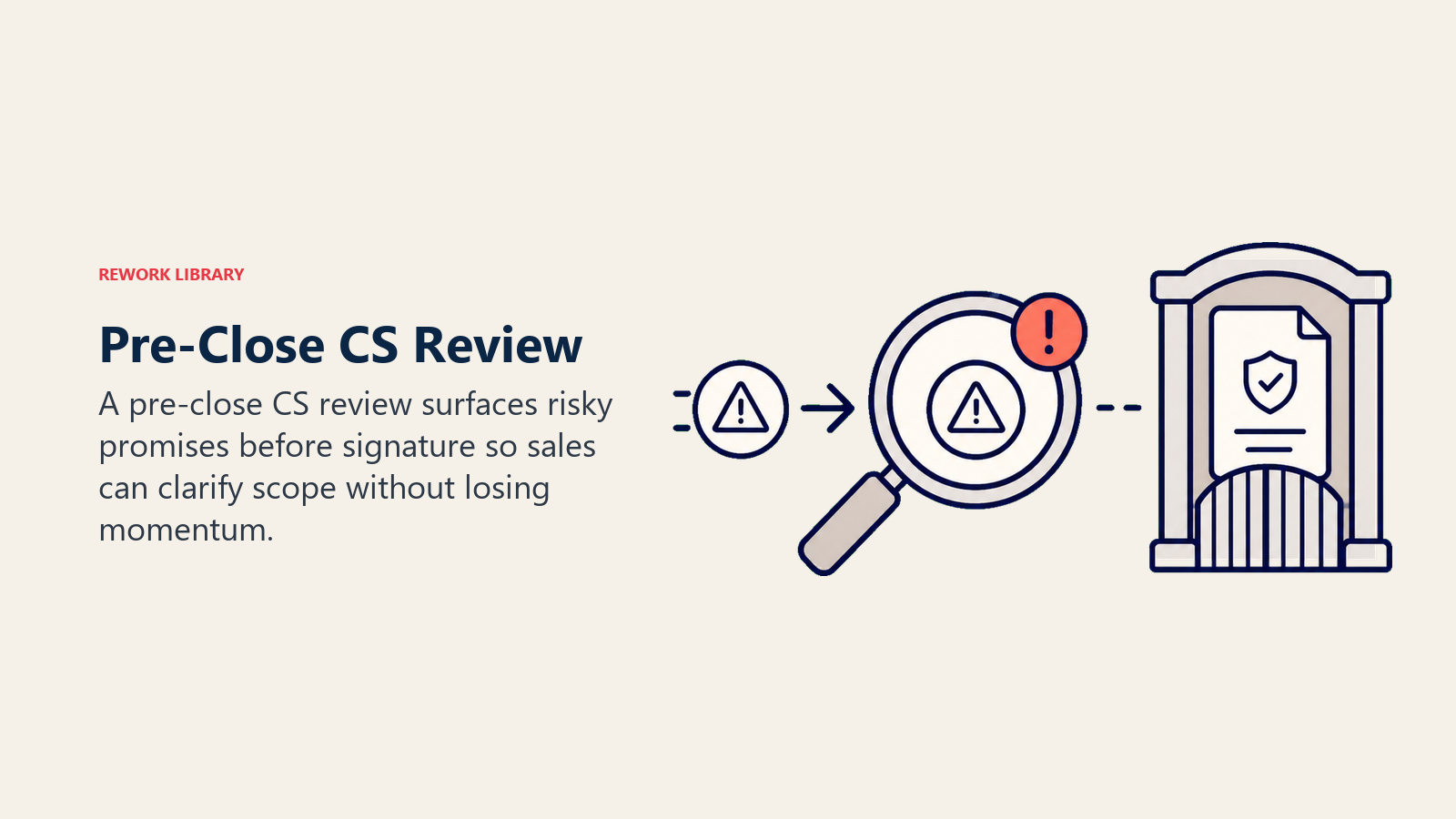
Kapan memicunya. Tetapkan ambang batas berdasarkan ARR dan kompleksitas deal. Default yang wajar: setiap deal di atas $25.000 ARR, setiap deal dengan persyaratan integrasi kustom, setiap deal di mana pesaing secara aktif dipertimbangkan dan AE membuat perbandingan kemampuan. Ambang batas harus tertulis dalam proses sales, tidak diserahkan pada penilaian AE.
Apa yang ditinjau CS sebelum closing. Tinjauan bukan audit penuh. CS mencari tiga hal: (1) komitmen fitur non-standar, yaitu apa pun yang tidak ada dalam tier produk standar yang dibeli pelanggan; (2) komitmen timeline, yaitu tanggal go-live atau milestone spesifik apa pun yang disebutkan dalam proposal atau demo; (3) inklusi lingkup, yaitu layanan, sumber daya, atau konfigurasi apa pun yang CS perlu berikan yang tidak ada dalam paket onboarding standar.
Cara mencegahnya memperlambat deal. Penolakan paling umum dari Sales adalah bahwa gerbang tinjauan CS memperlambat penutupan. Ini adalah masalah desain, bukan biaya inheren. Susun tinjauan sebagai: AE mengisi formulir async 10 bidang ke Slack atau dokumen bersama pada hari mereka berharap closing. CS merespons dalam 4 jam kerja dengan "tidak ada tanda" atau "tanda pada item 3, mari bicara 15 menit." AE mendapat jawabannya sebelum kontrak ditandatangani. Pelanggan tidak pernah tahu tinjauan terjadi.
Pencegahan: Standar Bahasa Ekspektasi
Sebelum proses tinjauan, ada masalah penulisan. Bahasa komitmen yang kabur menciptakan kesenjangan ekspektasi yang tidak dapat ditangkap oleh proses tinjauan apa pun secara andal, karena kedua belah pihak membaca kepastian mereka sendiri ke dalam ambiguitas.
Tes "CS akan mendukung ini". Sebelum komitmen fitur atau timeline apa pun masuk ke dalam proposal atau skrip demo, AE harus bertanya: "Jika CS melihat kalimat ini, bisakah mereka berkomitmen sekarang juga?" Jika jawabannya adalah "saya perlu memeriksa" atau "mereka perlu tahu lebih banyak," kalimatnya harus lebih spesifik, atau dihapus sama sekali.
Bahasa komitmen yang kabur vs. tepat. Perbedaannya bukan panjangnya. Ini adalah spesifisitasnya.
| Kabur | Tepat |
|---|---|
| "Kami terintegrasi dengan sebagian besar ERP" | "Kami mendukung [Nama ERP] melalui REST API; timeline integrasi bergantung pada ketersediaan IT pelanggan" |
| "Anda akan berjalan dan aktif dengan cepat" | "Onboarding standar adalah 30 hari; integrasi spesifik Anda akan membutuhkan panggilan scoping terpisah" |
| "Kami bisa menyesuaikan dashboard" | "Kustomisasi dashboard tersedia di tier Professional; konfigurasi membutuhkan 2 hari kerja waktu CS" |
| "Kami akan membantu dengan migrasi" | "Dukungan migrasi data adalah add-on Professional Services; lingkup standar termasuk dalam kontrak Anda" |
Skrip percakapan "kami tidak bisa melakukan itu". AE membutuhkan respons yang sudah dipraktikkan untuk ketika prospek meminta sesuatu yang tidak ada. "Itu bukan sesuatu yang kami tawarkan saat ini, tapi inilah yang kami miliki yang menangani kebutuhan yang sama" lebih berguna daripada "izinkan saya memeriksa itu," yang sering menjadi komitmen yang tidak terpenuhi yang tersimpan dalam voicemail yang tidak akan pernah didengar CSM.
Ketika Itu Sudah Terjadi: Percakapan Reset
Anda menemukan kesenjangan di kickoff. Pelanggan mengharapkan sesuatu yang tidak bisa Anda berikan. Begini cara menanganinya.
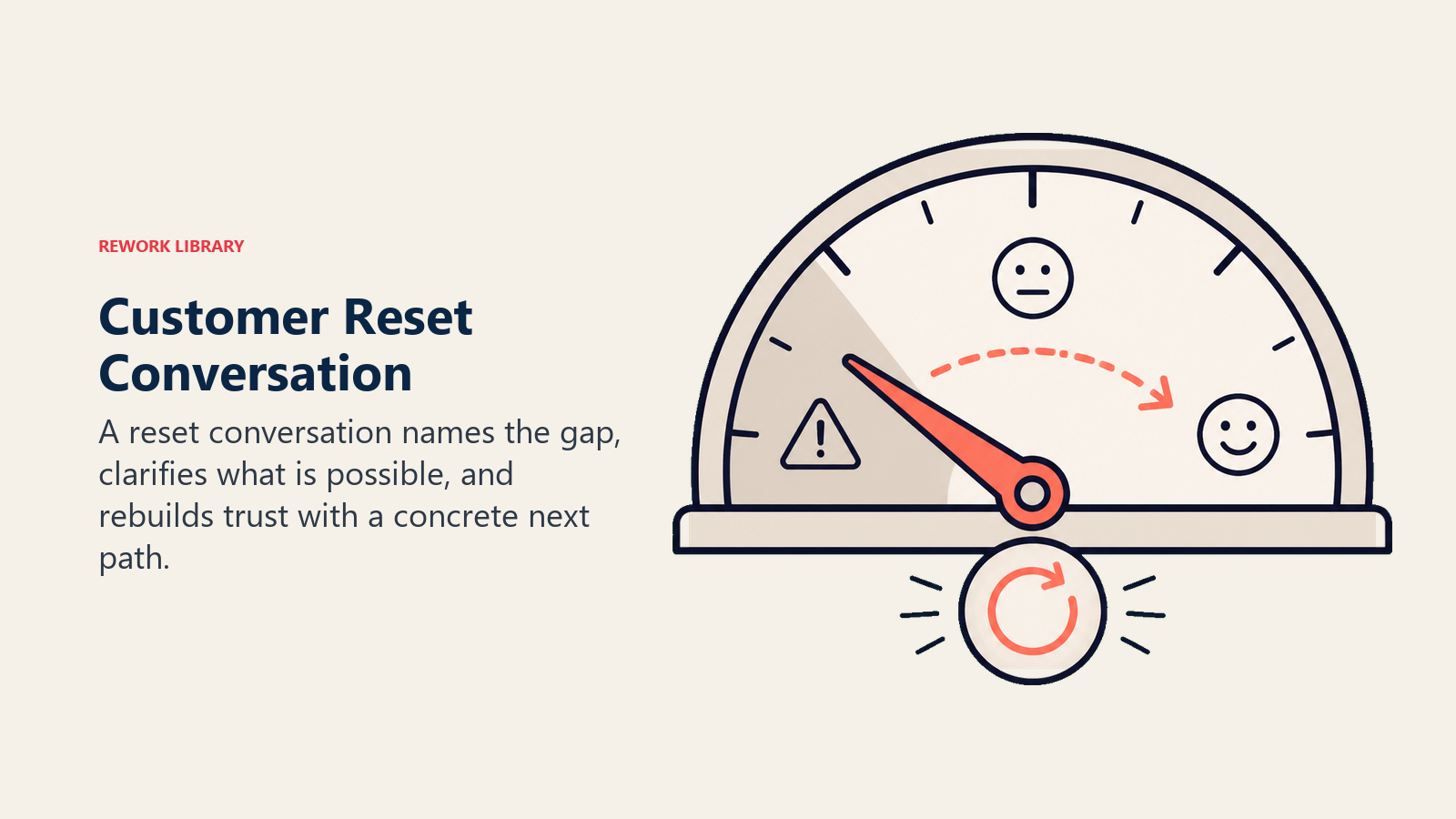
Jangan pura-pura tidak ada. Respons terburuk adalah mengirim pelanggan ke onboarding sambil berharap mereka tidak akan memperhatikan fitur yang hilang sampai terlambat untuk bernegosiasi ulang dengan mudah. Mereka akan memperhatikan. Dan ketika mereka melakukannya, erosi kepercayaan diperparah oleh persepsi bahwa CS mengetahui dan tidak berkata apa-apa.
Skrip bersama. Reset paling baik dilakukan ketika AE dan CSM keduanya hadir dalam percakapan. Proses handoff dari sales ke pasca-penjualan seharusnya sudah memiliki protokol reset untuk skenario persis seperti ini. Jika belum, itulah hal pertama yang harus diperbaiki. Strukturnya:
- AE membuka: "Saya ingin memastikan kita memulai hubungan ini dengan transparansi penuh. Dalam meninjau rencana onboarding dengan tim CS kami, kami mengidentifikasi bahwa [komitmen spesifik] adalah sesuatu yang tidak bisa kami berikan dalam [timeline asli / di tier ini / dalam bentuk ini]. Saya mengambil tanggung jawab atas miskomunikasi itu."
- CSM melanjutkan: "Inilah yang bisa kami berikan, dan inilah cara kami memastikan Anda tetap mencapai [tujuan bisnis yang dinyatakan] dalam timeline Anda."
- Bersama: Sepakati rencana yang dimodifikasi dengan catatan tertulis tentang komitmen yang direvisi.
Berikan pelanggan sesuatu yang nyata sebagai gantinya. Percakapan reset tanpa tawaran pengganti membuat pelanggan dengan masalah dan tanpa solusi. Sebelum panggilan reset, CS dan AE harus memiliki jalur alternatif yang siap: solusi sementara, jalur lebih cepat ke fitur yang berdekatan, atau perpanjangan timeline dengan milestone konkret yang terlampir. Pelanggan tidak membeli fitur tersebut; mereka membeli hasilnya. Percakapan reset adalah tentang cara Anda memberikan hasil secara berbeda.
Perbaikan Sistemik: Tutup Loop dari CS Kembali ke Sales
Mencegah janji berlebihan membutuhkan saluran feedback dari CS kembali ke Sales yang tidak memerlukan siapa pun untuk melakukan eskalasi secara manual.
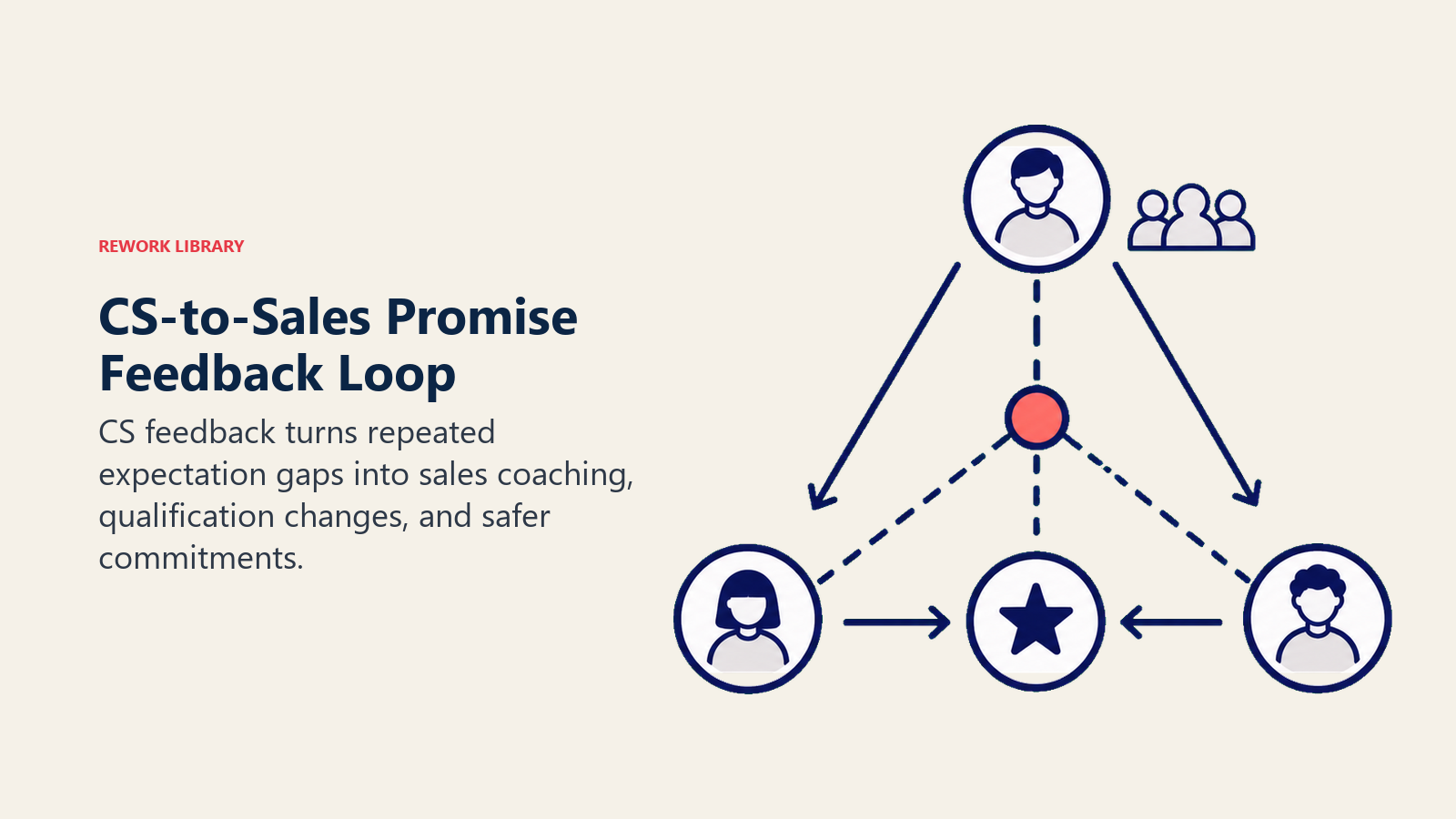
Tandai pola dalam tinjauan pasca-onboarding. Setelah setiap tinjauan 90 hari pertama, CS harus mencatat penilaian sederhana: apakah ekspektasi saat kickoff terpenuhi? Jika tidak, apa kesenjangannya dan dari mana asalnya? Ini tidak perlu menjadi audit formal. Satu bidang dalam catatan pelanggan atau satu baris dalam pembaruan tim CS mingguan sudah cukup. Tapi perlu dilacak.
Yang dilaporkan ke kepemimpinan Sales. Secara bulanan, kepemimpinan CS harus berbagi dengan kepemimpinan Sales: (1) berapa banyak akun dalam kohort saat ini yang memiliki kesenjangan ekspektasi saat kickoff, (2) jenis komitmen mana yang paling sering dilebih-lebihkan, dan (3) apakah AE spesifik atau pola deal berkorelasi dengan frekuensi kesenjangan yang lebih tinggi. Ini bukan tinjauan kinerja. Ini adalah pengenalan pola. Proses transfer konteks deal adalah wadah alami untuk memformalkan loop feedback ini antar tim.
Cara ini memberi makan penyempurnaan ICP. Akun dengan kesenjangan ekspektasi berulang dalam industri atau struktur deal tertentu sering menandakan ketidakcocokan ICP. Produk tidak dibuat untuk apa yang dibutuhkan pelanggan tersebut, dan Sales mengkompensasi dengan membuat komitmen yang tidak bisa dipenuhi CS. Mengumpankan ini kembali ke penyempurnaan ICP mencegah kesalahan yang sama berulang dalam kohort berikutnya.
Daftar Implementasi
Yang perlu ditempatkan kuartal ini untuk memutus pola janji berlebihan:
Pengaturan tinjauan pra-closing:
- Definisikan ambang ARR dan kompleksitas yang memicu tinjauan CS
- Bangun formulir async 10 bidang (AE mengisi; CS merespons dalam 4 jam)
- Identifikasi siapa di CS yang menerima dan mentriage permintaan tinjauan
- Tambahkan tinjauan pra-closing sebagai langkah wajib dalam daftar periksa deal untuk deal yang dipicu
Audit bahasa ekspektasi:
- Ambil 10 deal yang ditutup terakhir dan tinjau bahasa proposal untuk komitmen yang ambigu
- Buat tiga contoh penulisan ulang dari kabur-ke-tepat untuk jenis komitmen paling umum Anda
- Tambahkan tes "CS akan mendukung ini" ke pelatihan demo dan proposal AE
Protokol percakapan reset:
- Tulis skrip percakapan reset standar (pembukaan AE, kelanjutan CSM, penutup bersama)
- Definisikan apa arti "sesuatu yang nyata sebagai gantinya" untuk 3 jenis janji berlebihan teratas Anda
- Briefing kedua pemimpin tim AE dan CS tentang skrip sebelum kohort berikutnya dimulai
Ritme loop feedback:
- Tambahkan bidang "kesenjangan ekspektasi: ya/tidak" ke template tinjauan 90 hari
- Jadwalkan tinjauan ekspektasi CS-ke-Sales 30 menit bulanan
- Tetapkan satu pemilik untuk melacak pola kesenjangan dan menyampaikannya ke kepemimpinan
[faq title="Pertanyaan yang Sering Diajukan tentang Mencegah "Sales Berjanji Berlebihan, CS Tidak Bisa Memenuhi""] Q: Apa yang harus dilakukan CSM ketika mereka menemukan janji berlebihan dalam paket handoff? A: Jangan tunggu kickoff call. Hubungi AE segera untuk memahami konteks penuh: apa yang dikatakan, kapan, dan kepada siapa. Kemudian adakan panggilan 20 menit dengan AE dan manajer CS sebelum kickoff untuk menyepakati rencana reset. Tujuannya adalah tiba di kickoff dengan respons yang sudah disiapkan, bukan berimprovisasi ketika pelanggan mengangkatnya.
Q: Bagaimana seharusnya pemimpin Sales membingkai tinjauan CS pra-closing untuk menghindari penolakan AE? A: Bingkai sebagai perlindungan, bukan pengawasan. Janji berlebihan yang menciptakan peristiwa churn merugikan AE dengan clawback komisi mereka (jika ada), hubungan mereka dengan akun jika mereka tetap terlibat dalam ekspansi, dan reputasi mereka dengan tim CS. Tinjauan pra-closing adalah hal yang mencegah percakapan 15 menit berubah menjadi masalah akun setahun penuh.
Q: Apakah tinjauan CS pra-closing praktis untuk deal SMB dengan siklus yang cepat? A: Untuk deal SMB transaksional (di bawah $10.000 ARR, produk standar, implementasi standar), tinjauan async menambahkan hambatan yang tidak perlu. Simpan tinjauan untuk deal di atas ambang batas atau untuk deal apa pun di mana AE menggunakan bahasa non-standar dalam proposal. Tanda yang ringan dalam formulir handoff, seperti "ada yang non-standar dalam deal ini?", mencakup sebagian besar kasus SMB tanpa proses tinjauan formal.
Q: Apa cara terbaik untuk mendokumentasikan dokumen ekspektasi tanpa menjadi kewajiban hukum? A: Jaga agar tetap internal. Dokumen ekspektasi adalah alat komunikasi antara AE dan CS, bukan amendemen kontrak yang menghadap pelanggan. Tujuannya adalah memastikan CS mengetahui apa yang telah dikomitmen sebelum kickoff, bukan untuk menciptakan catatan kewajiban formal yang dipegang pelanggan kepada perusahaan. Kontrak pelanggan mengatur hubungan hukum; dokumen ekspektasi mengatur handoff internal.
Q: Apa yang dihitung sebagai janji berlebihan dibandingkan komitmen sales yang wajar? A: Janji berlebihan adalah komitmen apa pun yang (a) tidak ada dalam produk atau tier harga standar yang dibeli pelanggan, (b) merupakan timeline yang belum divalidasi oleh CS, atau (c) merupakan inklusi layanan yang harus disediakan CS tanpa konfirmasi bahwa mereka mampu. Bahasa yang bersifat arahan ("kami sedang mengerjakannya") bukan janji berlebihan kecuali pelanggan mendokumentasikannya sebagai komitmen. Ujiannya adalah apakah CSM bisa memenuhinya besok, bukan apakah AE bermaksud itu sebagai komitmen tegas.
Q: Bagaimana seharusnya AE menolak ketika prospek menuntut komitmen yang belum disetujui CS? A: Gunakan pembingkaian "saya butuh 4 jam" alih-alih membuat komitmen di tempat. Skripnya: "Ini sesuatu yang ingin saya pastikan tepat untuk Anda. Izinkan saya mengonfirmasi timeline dengan tim implementasi kami sebelum kita mencantumkan tanggal di kontrak. Saya akan memberi Anda jawaban sebelum akhir hari." Ini menandakan kompetensi, bukan keraguan, dan memberi tinjauan pra-closing cukup waktu untuk berjalan tanpa menunda closing.
Q: Bagaimana menangani kesenjangan ekspektasi yang melibatkan komitmen yang sudah ada dalam kontrak yang ditandatangani? A: Ini skenario tersulit. Jika komitmen non-standar sudah masuk ke dalam kontrak itu sendiri, kepemimpinan CS dan Sales harus memutuskan bersama apakah akan memenuhinya (dengan anggaran pengecualian satu kali), menegosiasikan ulang dengan pelanggan sebagai amendemen kontrak, atau mengeskalasi ke bagian hukum. Skrip percakapan reset tetap berlaku, tetapi AE harus hadir dan mengambil tanggung jawab eksplisit atas miskomunikasi tersebut. Jangan biarkan CSM menanggung biaya hubungan dari komitmen yang tidak mereka buat.
Q: Pada ambang ARR berapa tim sebaiknya memicu tinjauan CS pra-closing yang wajib? A: Default yang wajar adalah $25.000 ARR atau deal apa pun dengan persyaratan integrasi kustom, mana yang lebih dulu. Untuk SMB transaksional di bawah $10.000 ARR dengan produk standar dan implementasi standar, tanda ringan dalam formulir handoff mencakup sebagian besar risiko tanpa memperlambat kecepatan closing. Di atas $50.000 ARR, panggilan sinkron 15 menit (bukan tinjauan async) sepadan dengan waktunya. Kompleksitas deal dan risiko kesenjangan ekspektasi sama-sama meningkat pada level itu.
[/faq]
Pelajari Lebih Lanjut
- Proses Handoff Closed-Won ke Onboarded
- Transfer Konteks Deal: Apa yang Benar-Benar CS Butuhkan dari Sales
- Scorecard Handoff: Apakah Sales Melakukan Handoff dengan Baik?
- Penyempurnaan ICP: Feedback CS ke Sales tentang Deal yang Tidak Cocok
- Glosarium Sales & Customer Success Alignment
- Handoff Siklus Hidup AE ke CSM

Principal Solution Architect
On this page
- Tiga Jenis Janji Berlebihan
- Mengapa Ini Terjadi
- Biaya di Hilir
- Protokol Reset Ekspektasi: Framework Bernama
- Pencegahan: Tinjauan CS Pra-Closing
- Pencegahan: Standar Bahasa Ekspektasi
- Ketika Itu Sudah Terjadi: Percakapan Reset
- Perbaikan Sistemik: Tutup Loop dari CS Kembali ke Sales
- Daftar Implementasi
- Pelajari Lebih Lanjut