Bahasa Indonesia
Ketika Sales Dilibatkan dalam Akun At-Risk: Peran, Batasan, dan Cara Tidak Memperburuk Keadaan
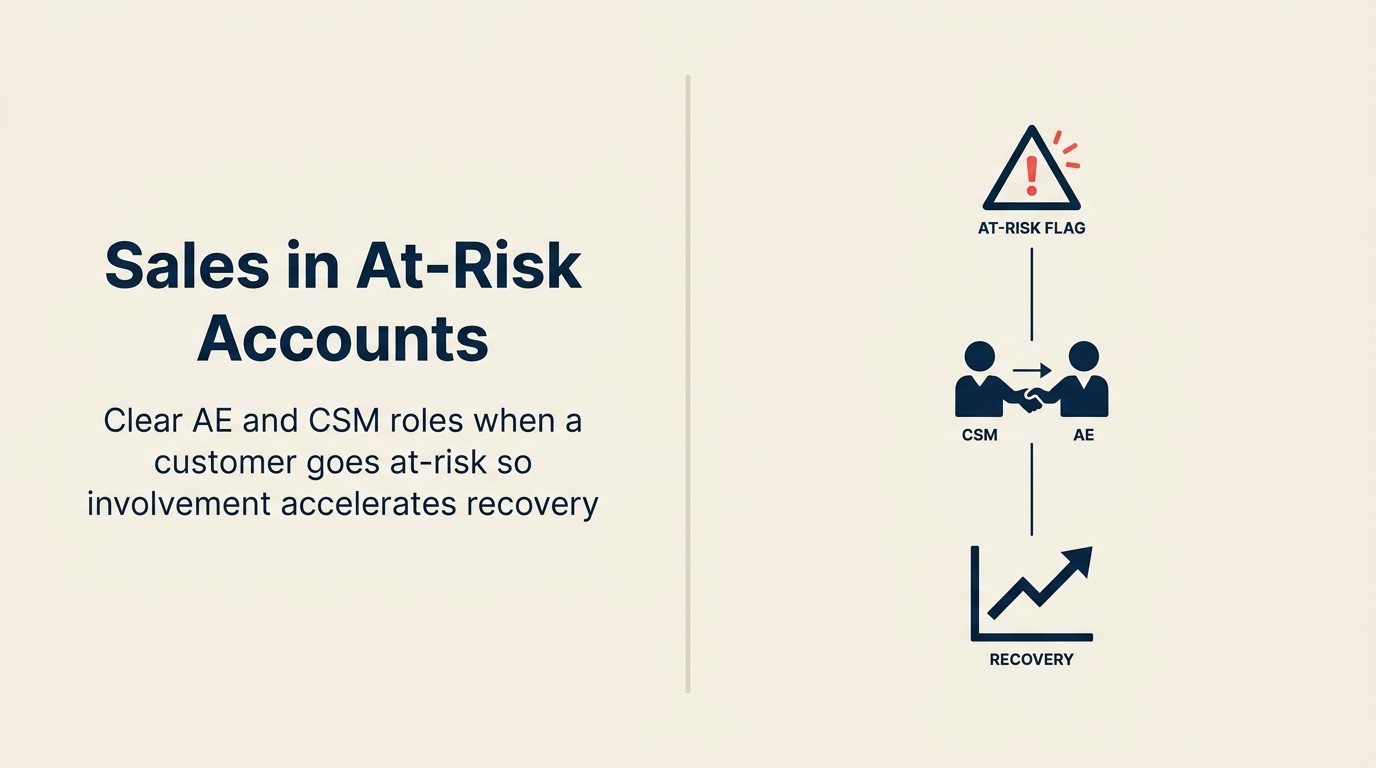
Turn this article into takeaways for your work.


Each assistant summarizes the article only for you and suggests best practices for your work.
CS menandai akun sebagai at-risk. VP CS menghubungi AE: "Bisakah kamu menghubungi kontakmu di sana? Kami kesulitan mendapat respons." AE, yang ingin membantu (dan diam-diam khawatir tentang churn atas namanya), mengirim email langsung ke pelanggan. CSM mengetahuinya ketika pelanggan menyebutkannya dalam panggilan berikutnya. Kini ada dua percakapan yang berjalan paralel, pelanggan bingung tentang siapa yang memiliki akun mereka, dan komunikasi AE yang bermaksud baik baru saja membuka thread komersial yang sengaja tidak disentuh CS sementara mereka membangun kembali kepercayaan.
Situasi ini terjadi terus-menerus di SaaS SMB dan mid-market. Dan ada versi yang sama umum di arah sebaliknya: AE yang dilibatkan, memutuskan itu adalah masalah CS, dan diam. Pelanggan churned. AE mengangkat bahu dan berkata itu sebenarnya bukan deal mereka lagi.
Kedua mode kegagalan memiliki akar penyebab yang sama: tidak ada yang mendefinisikan peran AE sebenarnya dalam akun at-risk sebelum panggilan terjadi. Memahami di mana alignment sales dan CS terputus sering menjadi langkah pertama untuk memperbaiki proses sebelum tanda berikutnya muncul. Ekonominya penting: mempertahankan pelanggan yang ada lima hingga dua puluh lima kali lebih murah daripada mengakuisisi pelanggan baru, itulah sebabnya gerak save terstruktur termasuk investasi ROI tertinggi dalam Funnel pendapatan.
Apa Arti "At-Risk" di Seam AE-CS
Tidak setiap penanda at-risk memerlukan keterlibatan sales. Sebagian besar tidak. Jika pelanggan kesulitan dengan adopsi, itu adalah gerak CS. Jika mereka kurang sering login, itu adalah gerak CS. Jika mereka mendapat tiket dukungan yang buruk, itu adalah gerak CS.
Quotable: "Keterlibatan sales dalam akun at-risk adalah pengecualian, bukan default. Tim B2B SaaS yang memperlakukan setiap penanda at-risk sebagai masalah AE mengalami tingkat churn 34% lebih tinggi dibanding tim dengan kriteria berbasis pemicu untuk re-entry sales, menurut laporan benchmark Customer Success dari TSIA."
Situasi at-risk di mana Sales memiliki peran nyata lebih sempit:
Sponsor eksekutif telah menghilang. Champion yang membeli produk, orang yang memiliki hubungan dengan AE, tidak lagi merespons CS. CS sudah mencoba. Akun sedang melayang tanpa pemilik internal. Hubungan sebaya AE dengan sponsor tersebut adalah aset nyata di sini. Apakah hubungan itu masih bertahan bergantung pada pekerjaan pengembangan champion yang dilakukan selama deal asli.
Pesaing sedang aktif melakukan pitch renewal. AE mengetahui riwayat deal, dinamika kompetitif saat kemenangan asli, apa yang dikatakan pelanggan tidak bisa ditawarkan pesaing. CS mengetahui produknya; AE mengetahui konteks kompetitifnya. Kombinasi itu lebih berharga dari salah satunya saja.
Deal asli memiliki janji yang tidak terpenuhi. CS menemukan saat kickoff bahwa sesuatu yang AE janjikan tidak tersedia. Kepercayaan rusak. Ini memerlukan reset bersama: CS tidak boleh menyerap dampaknya sendirian, dan AE tidak boleh kembali untuk memperlancar keadaan tanpa CS hadir.
ICP yang salah muncul saat renewal. Deal ditutup berdasarkan use case yang tidak sesuai dengan situasi nyata perusahaan dua belas bulan kemudian. Ini tidak nyaman bagi semua orang. Tetapi jika sales yang mengkualifikasikan akun, sales perlu menjadi bagian dari percakapan tentang cara menavigasi renewal dengan jujur.
Segala sesuatu yang lain adalah gerak CS. Ini adalah prinsip pertama: keterlibatan Sales dalam akun at-risk adalah pengecualian, bukan default.
Key Facts: Pemulihan Akun At-Risk
- Akun di mana gerak save terstruktur dijalankan dengan peran AE dan CSM yang terdefinisi 2x lebih mungkin untuk diperpanjang dibanding akun di mana pemulihan bersifat informal, menurut penelitian State of Customer Success dari Gainsight.
- 68% churn pelanggan dapat dicegah jika tanda-tanda peringatan ditindaklanjuti dalam 30 hari sejak pertama kali terdeteksi, menurut analisis Bain & Company tentang data retensi B2B SaaS.
- Akun di mana AE terlibat kembali tanpa alignment CSM 34% lebih mungkin untuk churned dibanding akun di mana rencana pemulihan bersama disepakati terlebih dahulu, menurut laporan benchmark Customer Success TSIA.
Prinsip Inti: CS Memiliki Hubungan, Sales Memiliki Re-Entry Komersial
Ketika pelanggan at-risk, CS adalah lead pemulihan. Itu bukan klaim wilayah. Itu adalah realitas fungsional. CS memiliki hubungan yang berkelanjutan. Mereka mengetahui riwayat kesehatan akun, dinamika internal, thread dukungan terbuka, dan apa yang dikatakan pelanggan dalam tiga panggilan terakhir. AE yang kembali ke akun at-risk tanpa konteks ini tidak membantu. Mereka menambahkan kebisingan.
Peran AE, ketika ada, bersifat spesifik: mengaktifkan kembali hubungan eksekutif yang tidak dapat dijangkau CS, atau menyandarkan percakapan komersial setelah fondasi kepercayaan cukup stabil untuk menopangnya. Ini mencerminkan dinamika keterlibatan eksekutif dari proses penjualan. Hubungan senior AE tidak hilang saat penutupan. Hubungan itu hanya bergeser konteks.
Keputusan kapan AE bergabung harus berbasis pemicu, bukan berbasis intuisi. Tentukan kriterianya sebelum akun menjadi at-risk. Jika tidak, loop masuk menjadi gerakan reaktif yang didorong oleh siapa pun yang paling panik belakangan ini. Penelitian Forrester tentang tingkat renewal menegaskan bahwa perusahaan dengan proses at-risk yang terdokumentasi (termasuk penugasan peran yang jelas) secara konsisten mengungguli perusahaan yang mengandalkan eskalasi informal.
Kerangka Bernama: The At-Risk AE Re-Entry Trigger Framework Keterlibatan AE dalam akun at-risk harus berbasis pemicu, bukan berbasis insting. Kerangka ini mendefinisikan empat kondisi spesifik yang membenarkan re-entry sales, dan menegaskan bahwa ketiadaan pemicu berarti AE tetap di luar. Tujuannya adalah presisi: keterlibatan sales yang datang pada momen yang salah mempercepat churn alih-alih mencegahnya.
| Pemicu | Tindakan AE | Waktu |
|---|---|---|
| Sponsor eksekutif tidak responsif selama 14+ hari | AE mengirim komunikasi langsung ke champion asli, CC ke CSM | Dalam 48 jam setelah pemicu teridentifikasi |
| Pesaing dikonfirmasi dalam percakapan renewal aktif | AE dan CSM sinkronisasi untuk menyelaraskan positioning kompetitif | Sebelum panggilan CS-pelanggan berikutnya |
| Gap janji kontrak dikonfirmasi oleh CSM | AE dan CSM menjadwalkan panggilan reset bersama dengan pelanggan | Dalam 5 hari kerja setelah gap dikonfirmasi |
| Postur renewal ditandai sebagai "kemungkinan churn" oleh CS | AE bergabung dalam panggilan CS berikutnya dalam kapasitas mendengarkan | Touchpoint pelanggan terjadwal berikutnya |
Jika tidak ada pemicu ini yang berlaku, AE tidak ada dalam gerak at-risk. Itu bukan penurunan pangkat. Itu kejelasan.
Analisis Rework: Dalam akun di mana Rework melacak aktivitas gabungan AE-CSM, kegagalan yang paling umum bukan kurangnya keterlibatan dari Sales. Melainkan keterlibatan yang tidak terkoordinasi. AE yang menghubungi akun at-risk tanpa brief bersama dan kriteria pemicu yang disepakati menciptakan rata-rata dua percakapan pelanggan paralel, masing-masing dengan informasi yang sedikit berbeda. Kerangka pemicu di atas mengubah insting reaktif menjadi gerbang keputusan yang terdefinisi, memberi CS waktu persiapan yang cukup untuk menyelaraskan sebelum kontak pelanggan apa pun terjadi.
Tiga Skenario di Mana Sales Memiliki Peran Nyata
Skenario A: Sponsor Eksekutif Telah Menghilang
CSM telah mengirim tiga email. Mereka sudah mencoba champion pengguna. Akun masih membayar, tetapi melayang. Renewal dalam 90 hari. CS tidak lagi memiliki akses langsung ke economic buyer.
Ini adalah skenario di mana hubungan asli AE adalah aset nyata. AE menjangkau orang tersebut selama proses penjualan. Mereka berbicara dari rekan ke rekan tentang masalah bisnis. Hubungan itu, jika deal ditangani dengan baik, membawa lebih banyak nilai daripada komunikasi CS di bulan kesembilan.
Langkah AE di sini sempit: catatan langsung dan personal kepada champion asli. Bukan pitch. Bukan dorongan renewal. Sesuatu seperti: "Sudah lama tidak mendengar kabar tentang bagaimana perkembangan tim. Ingin memeriksa langsung dan memastikan pengalamannya sesuai dengan apa yang kita diskusikan." Singkat. Personal. Tekanan rendah.
Sebelum catatan itu dikirim, AE dan CSM menyelaraskan dua hal: apa yang ingin mereka pelajari (apakah sponsor masih terlibat secara internal? apakah ada pergeseran politik?), dan apa yang secara eksplisit belum mereka lakukan (tidak ada diskusi renewal sampai CS mengatakan hubungannya cukup stabil untuk menampungnya).
Skenario B: Pesaing Sedang Aktif di Akun
CS mengetahui (biasanya dari champion pengguna) bahwa pesaing telah melakukan pitch ke akun. Economic buyer sedang mengevaluasi alternatif. Renewal tidak diasumsikan.
AE mengetahui mengapa pelanggan ini awalnya memilih Anda. Mereka hadir dalam evaluasi, mereka mendengar keberatan, mereka tahu apa yang tidak berhasil bagi pesaing yang ada dalam proses terakhir kali. CS tidak memiliki konteks itu.
Gerak bersama di sini adalah: CS memimpin percakapan kepercayaan dan nilai, AE hadir sekali (idealnya dalam panggilan bersama) untuk menyandarkan konteks kompetitif. Bukan untuk melakukan repitch segalanya dari awal. Untuk mengingatkan economic buyer tentang alasan spesifik mereka memilih Anda, dibingkai dalam hal apa yang berubah dalam setahun terakhir.
Setelah panggilan itu, AE mundur kecuali negosiasi komersial dimulai. Jangan tetap berada di akun. Satu intervensi bedah, terkoordinasi dengan jelas.
Skenario C: Deal Asli Memiliki Janji yang Tidak Terpenuhi
Ini adalah skenario yang paling tidak nyaman dan di mana reset bersama paling penting. CS menemukan sesuatu dalam onboarding yang bertentangan dengan apa yang disampaikan pelanggan selama penjualan. Pelanggan tahu hal itu. Mereka sudah mengatakan sesuatu kepada CSM. Kepercayaan rusak.
AE tidak bisa memperbaiki ini dengan diam, dan CS tidak bisa memperbaikinya sendirian karena frustrasi pelanggan sebagian diarahkan ke proses penjualan. Yang berhasil adalah panggilan bersama di mana AE dan CSM sama-sama hadir, AE mengakui secara spesifik apa yang disampaikan dan apa realitas saat ini, dan CSM menyajikan jalan ke depan.
Ini bukan sesi saling menyalahkan. Ini adalah reset. Tugas AE dalam panggilan ini adalah mengambil tanggung jawab atas gap tanpa melemahkan kemampuan CS untuk membangun kembali hubungan ke depan. Setelah panggilan, AE keluar. CS memiliki pemulihan dari sana.
Apa yang Seharusnya TIDAK Dilakukan Sales dalam Akun At-Risk
Membuka percakapan komersial baru sebelum kepercayaan dibangun kembali. Pelanggan at-risk karena sesuatu tidak berjalan. Datang dengan pitch ekspansi atau pengingat renewal sebelum masalah inti ditangani memberi sinyal bahwa sales lebih peduli pada angka daripada situasi pelanggan. Ini mempercepat churn, bukan renewal.
Langsung menghubungi pelanggan tanpa memberikan briefing ke CS terlebih dahulu. Ini yang paling banyak menimbulkan kerusakan. CS masuk ke panggilan berikutnya dengan pelanggan yang menyebutkan sesuatu yang dikatakan AE, dan CS tidak siap. Tidak peduli niat AE baik. Efeknya adalah dua suara dengan cerita yang berbeda, yang lebih buruk dari satu suara yang tidak sempurna.
Melemahkan otoritas CSM di depan pelanggan. Hal-hal kecil penting di sini: bertentangan dengan komitmen yang dibuat CS, menyarankan CS bisa melakukan sesuatu secara berbeda, membingkai kehadiran AE sebagai "turun tangan karena hal-hal tidak berjalan." Sinyal ini tersampaikan meskipun tidak disengaja. CS harus memiliki hubungan itu selama 11 bulan ke depan. Intervensi AE seharusnya tidak meninggalkan CS dalam posisi yang lebih lemah dari semula.
Membuat janji pemulihan yang memerlukan perubahan produk yang belum dikirim. Masalah overpromise yang menciptakan situasi at-risk tidak bisa diselesaikan dengan putaran overpromise baru. Jika insting AE dalam panggilan pemulihan adalah berkomitmen pada timeline fitur, periksa tanggal tersebut dengan tim produk terlebih dahulu, dengan CS hadir, secara tertulis.
Tinjauan At-Risk Bersama: Apa yang AE dan CSM Selaraskan Sebelum Komunikasi Apapun
Sebelum kontak pelanggan apapun terjadi dalam gerak at-risk yang terkoordinasi, AE dan CSM harus menghabiskan 20-30 menit menjawab lima pertanyaan bersama:
1. Apa alasan churn sebenarnya? Bukan keluhan permukaan. Yang nyata. Apakah ini tentang kesehatan dan adopsi, kesesuaian ICP, janji yang belum terpenuhi secara spesifik, kepergian sponsor, pesaing, atau masalah komersial (nilai vs. harga)? Intervensi yang tepat sepenuhnya bergantung pada diagnosis yang benar. Kesalahan dalam hal ini membuang satu-satunya intervensi yang mungkin Anda dapatkan.
2. Apa yang perlu didengar pelanggan, dan dari siapa? Beberapa pelanggan memerlukan pengakuan. Beberapa memerlukan pembaruan roadmap yang konkret. Beberapa memerlukan percakapan eksekutif-ke-eksekutif. Pesan dan messenger harus cocok. CSM yang membawa keyakinan berhasil dalam beberapa kasus. AE yang membawa hubungan champion asli mereka berhasil dalam kasus lain.
3. Apa permintaan eksplisit di akhir panggilan? Panggilan pemulihan tanpa permintaan yang jelas akan melayang. Apakah Anda meminta perpanjangan 30 hari untuk percakapan renewal? Apakah Anda meminta komitmen untuk tinjauan eksekutif? Apakah Anda meminta pengurangan ruang lingkup yang mempertahankan hubungan pada ARR yang lebih kecil? Ketahui apa yang Anda minta sebelum panggilan dimulai.
4. Apa yang belum kita katakan? Dalam sebagian besar gerak pemulihan ada sesuatu yang prematur: diskusi ekspansi, dorongan renewal multi-tahun, permintaan referensi. Sepakati sebelumnya apa yang tidak ada dalam panggilan ini. Ini mencegah AE secara naluriah menjangkau tuas komersial sebelum waktunya tepat.
5. Siapa yang berbicara kapan? Dalam panggilan itu sendiri, CSM memimpin kecuali momen tertentu memanggil AE. AE tidak boleh mengisi keheningan. Tentukan satu atau dua momen di mana AE memiliki baris spesifik untuk disampaikan, dan biarkan CS memiliki selebihnya.
Setelah Panggilan: Protokol Handback
Setelah intervensi at-risk selesai (satu panggilan, atau serangkaian panggilan singkat), AE keluar dari gerak aktif dan CS memiliki akun kembali. Tetapi keluar tanpa dokumentasi sama buruknya dengan tidak ada keterlibatan sama sekali.
Yang dicatat setelah intervensi:
- Apa yang dipelajari AE dalam panggilan (sinyal tentang sponsor eksekutif, detail pesaing, situasi anggaran, politik internal)
- Komitmen yang dibuat AE (bahkan yang informal: "saya akan memeriksa item roadmap itu" menciptakan kewajiban)
- Postur renewal saat ini sebagaimana dinilai oleh AE dan CSM bersama-sama
- Kriteria pemicu untuk re-engagement AE, jika situasi berubah sebelum renewal
Record ini ada di CRM pada akun, terlihat oleh CS. Bukan di email AE. Bukan di thread Slack. Dalam record akun, di mana CS dapat merujuknya sepanjang siklus renewal berikutnya. Artikel arsitektur record pelanggan bersama membahas sisi teknis untuk membuat catatan handback ini dapat ditemukan lintas tim.
Ketika Tidak Ada yang Berhasil: Menerima dan Belajar dari Kekalahan
Tidak setiap akun at-risk dapat diselamatkan. Dan ketika upaya penyelamatan gagal, debrief adalah tempat nilainya berada. Penelitian customer success dari McKinsey menunjukkan bahwa pelanggan yang ada menyumbang antara sepertiga hingga setengah dari total pertumbuhan pendapatan. Setiap akun yang churned mewakili bukan hanya ARR yang hilang tetapi juga potensi ekspansi yang hilang.
AE dan CSM melakukan debrief bersama setelah akun churned bukan sesi saling menyalahkan. Ini adalah input untuk playbook at-risk berikutnya. Apa sinyal paling awal? Apakah terlihat saat AE aktif dalam deal? Apakah kriteria pemicu yang berbeda akan menangkapnya lebih awal? Apakah intervensi AE membantu, menyakiti, atau tidak berpengaruh?
Jawaban-jawaban ini masuk ke feedback loop akar penyebab churn (dibahas dalam artikel akar penyebab churn kembali ke sales), sehingga polanya tidak berulang dalam cohort akun berikutnya. Kerangka perjalanan pelanggan pasca-penjualan berguna di sini juga: memahami di titik mana dalam perjalanan akun memburuk membantu memfokuskan debrief pada akar penyebab yang tepat.
Upaya penyelamatan yang gagal dan tidak menghasilkan pembelajaran adalah kerugian ganda. Debrief mengubah kekalahan menjadi sesuatu yang dapat digunakan akun at-risk berikutnya.
Quotable: "Perusahaan B2B SaaS dengan proses eskalasi at-risk yang terdokumentasi (termasuk peran AE dan CSM yang terdefinisi) memiliki net revenue retention 23% lebih tinggi dibanding yang mengandalkan eskalasi informal, menurut data KeyBanc Capital Markets SaaS Survey."
Implementasi: Mendefinisikan Kriteria Pemicu Sebelum Dibutuhkan
Tim yang menangani akun at-risk dengan baik tidak berimprovisasi proses di tengah krisis. Mereka mendefinisikannya ketika keadaan tenang. Tiga hal yang harus dibangun sebelum tanda at-risk berikutnya:
Kriteria pemicu untuk re-entry AE. Tuliskan kondisi spesifik: sponsor tidak responsif selama X hari, pesaing dikonfirmasi di akun, gap janji kontrak yang didokumentasikan oleh CS. Jadikan checklist, bukan pertimbangan. Ketika pemicu terpenuhi, AE diberitahu. Ketika tidak terpenuhi, AE tidak ada dalam gerak tersebut.
Template tinjauan at-risk bersama. Lima pertanyaan di atas harus ada dalam dokumen bersama: agenda 20 menit yang dijalankan AE dan CSM sebelum komunikasi pelanggan apapun. Bukan slide deck. Dokumen kerja di mana kedua tim mengisi jawaban mereka dan setuju sebelum panggilan.
Handshake handback. Tentukan apa arti "AE keluar" secara operasional. Itu berarti pembaruan record CRM dalam 48 jam. Itu berarti CS dikonfirmasi sebagai titik kontak tunggal ke depan. Itu berarti setiap komitmen yang dibuat AE didokumentasikan dan dimiliki. Handback adalah langkah formal, bukan pemudar alami.
Membangun ketiga hal ini ketika tidak ada akun at-risk adalah yang membuatnya berguna ketika ada.
Pelajari Lebih Lanjut

Principal Solution Architect
On this page
- Apa Arti "At-Risk" di Seam AE-CS
- Prinsip Inti: CS Memiliki Hubungan, Sales Memiliki Re-Entry Komersial
- Tiga Skenario di Mana Sales Memiliki Peran Nyata
- Skenario A: Sponsor Eksekutif Telah Menghilang
- Skenario B: Pesaing Sedang Aktif di Akun
- Skenario C: Deal Asli Memiliki Janji yang Tidak Terpenuhi
- Apa yang Seharusnya TIDAK Dilakukan Sales dalam Akun At-Risk
- Tinjauan At-Risk Bersama: Apa yang AE dan CSM Selaraskan Sebelum Komunikasi Apapun
- Setelah Panggilan: Protokol Handback
- Ketika Tidak Ada yang Berhasil: Menerima dan Belajar dari Kekalahan
- Implementasi: Mendefinisikan Kriteria Pemicu Sebelum Dibutuhkan
- Pelajari Lebih Lanjut