Bahasa Indonesia
Won Deal Review: Bagaimana Sales dan CS Mendebrief Akun Baru Sebelum Onboarding Dimulai
Turn this article into takeaways for your work.


Each assistant summarizes the article only for you and suggests best practices for your work.
AE menutup deal. CRM diperbarui. Champagne opsional tetapi notifikasi Slack itu nyata. CSM mendapat email perkenalan: "Dengan senang hati saya perkenalkan pelanggan terbaru kami. [Nama], mohon bertemu dengan [nama CSM], yang akan memandu implementasi Anda."
Dan itu saja. Semua yang AE ketahui: mengapa pelanggan ini benar-benar membeli, siapa champion internal dan apa taruhan karir mereka dalam hal ini, keberatan mana yang hampir membunuh deal di minggu ketiga, apa yang dikatakan pelanggan tentang rencana ekspansi jika enam bulan pertama berjalan baik. Semuanya ada sepenuhnya di kepala AE. AE melanjutkan ke deal berikutnya. CSM menjadwalkan kickoff call. Dan CSM memulai dari awal.
Won deal review adalah mekanisme yang mengekstrak intelijen deal AE sebelum memudar. Ini adalah percakapan terstruktur 30-45 menit yang terjadi antara AE dan CSM dalam lima hari kerja setelah penutupan dan sebelum kickoff call. Bukan tinjauan dokumen. Bukan handoff meeting. Ritual spesifik dengan tujuan spesifik: mengubah pengetahuan institusional menjadi record bersama yang secara langsung memprediksi apakah akun ini akan diperbarui. Untuk glosarium istilah yang digunakan di seluruh proses ini (NRR, CSM, ARR, ICP, dan lainnya), lihat glosarium sales-CS alignment. Penelitian onboarding Forrester menegaskan taruhannya: keputusan untuk renewal dibuat dalam 90 hari pertama perjalanan pasca-penjualan, yang berarti intelijen yang dibawa AE ke jendela itu adalah input langsung bagi hasil renewal.
Bagaimana Ini Berbeda dari Handoff Meeting dan Win-Loss Analysis
Perbedaan ini cukup penting untuk dinyatakan secara eksplisit, karena tim yang mencampuradukkan ketiga proses ini melewatkan tujuan masing-masing.
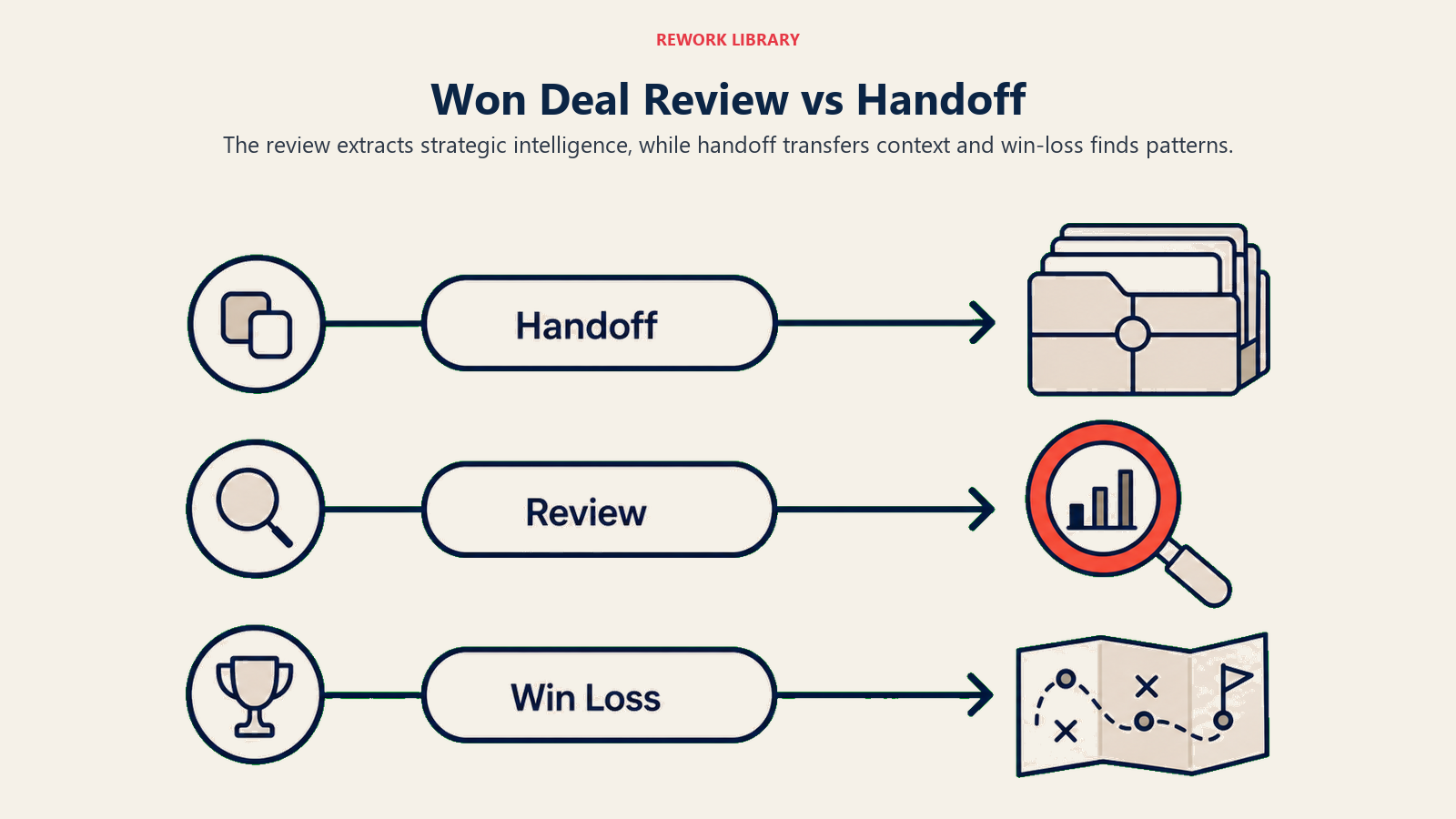
| Proses | Tujuan | Siapa | Kapan | Output |
|---|---|---|---|---|
| Handoff meeting | Transfer konteks operasional | AE + CSM (+ tim implementasi) | Saat atau sebelum kickoff | Daftar stakeholder, use case, ruang lingkup, timeline |
| Won deal review | Ekstrak intelijen strategis | AE + CSM | Dalam 5 hari setelah penutupan, sebelum kickoff | Pemicu deal, janji, dinamika champion, sinyal ekspansi |
| Win-loss analysis | Identifikasi pola di banyak deal | Sales + Marketing | Bulanan/kuartalan | Penyesuaian messaging, refinement ICP, positioning kompetitif |
Handoff meeting adalah transfer proses. AE memberi tahu CSM: ini stakeholder-nya, ini use case yang dikontrak, ini ruang lingkup implementasi, ini tanggal go-live. Ini adalah konteks operasional. CS membutuhkannya untuk menjalankan implementasi.
Won deal review adalah transfer intelijen. AE memberi tahu CSM: inilah mengapa pelanggan ini sebenarnya membeli, inilah yang hampir menghentikan mereka, inilah yang perlu Anda ketahui tentang champion untuk membangun kepercayaan dengan cepat, inilah yang dikatakan pelanggan yang akan membuat mereka berekspansi. Ini adalah konteks strategis. CS membutuhkannya untuk memprediksi dan membentuk apa yang terjadi selama dua belas bulan ke depan.
Win-loss analysis (latihan Marketing dan Sales menganalisis pola di banyak deal) adalah proses yang sama sekali berbeda, dibahas dalam koleksi marketing-sales alignment. Won deal review adalah tentang satu deal, bukan pola di seluruh deal. Ini bukan tentang meningkatkan pitch Sales berikutnya. Ini tentang memberi CS intelijen untuk membuat pelanggan spesifik ini berhasil.
Quotable: "Akun di mana CSM mengetahui janji deal dari pelanggan, bukan dari AE, 3x lebih mungkin untuk churned di tahun pertama. 30 hari pertama hubungan pasca-penjualan dimulai dengan defisit kepercayaan yang tidak disadari CS sedang dibawanya, menurut penelitian customer health Totango."
Analisis Rework: Won deal review, handoff meeting, dan win-loss analysis melayani tujuan yang berbeda dan berjalan pada timeline yang berbeda. Tim yang menggabungkannya menjadi satu pertemuan mendapatkan cakupan proses operasional tetapi kehilangan intelijen strategis yang dirancang untuk diekstrak oleh won deal review. Secara spesifik: jawaban AE atas P4 (janji implisit) dan P7 (pembacaan naluriah tentang akun) hampir tidak pernah muncul dalam handoff meeting karena percakapannya berorientasi pada logistik go-live. Menjalankan won deal review sebagai percakapan terpisah yang lebih awal (sebelum kickoff, bukan bersamaan) adalah yang menjaga intelijen itu sebelum AE beralih fokus ke deal berikutnya.
Key Facts: Intelijen Deal dan Hasil Renewal
- CSM yang menerima debrief deal terstruktur sebelum kickoff menyelesaikan onboarding 31% lebih cepat dibanding yang memulai dari dingin, menurut data benchmark onboarding Gainsight.
- 90 hari pertama memprediksi renewal. Pelanggan yang mencapai nilai awal dalam 90 hari diperpanjang pada tingkat 85%, dibanding 55% bagi yang tidak, menurut penelitian retensi B2B SaaS Bain & Company.
- Hanya 18% perusahaan B2B SaaS yang memiliki proses won deal review yang terdokumentasi antara Sales dan CS, menurut survei benchmark Sales dan Customer Success TSIA.
Siapa yang Hadir dan Kapan
Wajib: AE dan CSM. Untuk akun di atas ambang ARR (annual recurring revenue) tertentu (tentukan angka Anda sendiri, biasanya $50K ARR+), tambahkan CS Manager atau RevOps (revenue operations) ke panggilan. Pendengar CS kedua membantu ketika akun secara strategis penting atau konteksnya kompleks.
Waktu: Dalam lima hari kerja setelah penutupan, sebelum kickoff call. Bukan hari kickoff. Bukan setelah kickoff. Sebelum. Kickoff call adalah tempat CS mulai membangun hubungan pelanggan. Mereka memerlukan intelijen AE sebelum hubungan itu dimulai. Apa yang terjadi saat kickoff itu (bagaimana CS secara formal mengambil alih kepemilikan) didefinisikan dalam agenda joint kickoff call, yang berpasangan secara alami dengan won deal review.
Format: Percakapan langsung 30-45 menit. Bukan dokumen yang dikirim AE untuk dibaca CSM secara asinkron. Format percakapan penting karena intelijen terbaik AE sering merupakan jawaban kontekstual untuk pertanyaan lanjutan: "Anda bilang champion baru dalam perannya; sudah berapa lama mereka menjabat saat deal dimulai?" Nuansa seperti itu tidak tersampaikan melalui ringkasan tertulis.
Jadi siapa yang mengajukan pertanyaan, dan apa saja pertanyaannya? Bagian berikutnya membahasnya.
Kerangka Debrief Tujuh Pertanyaan
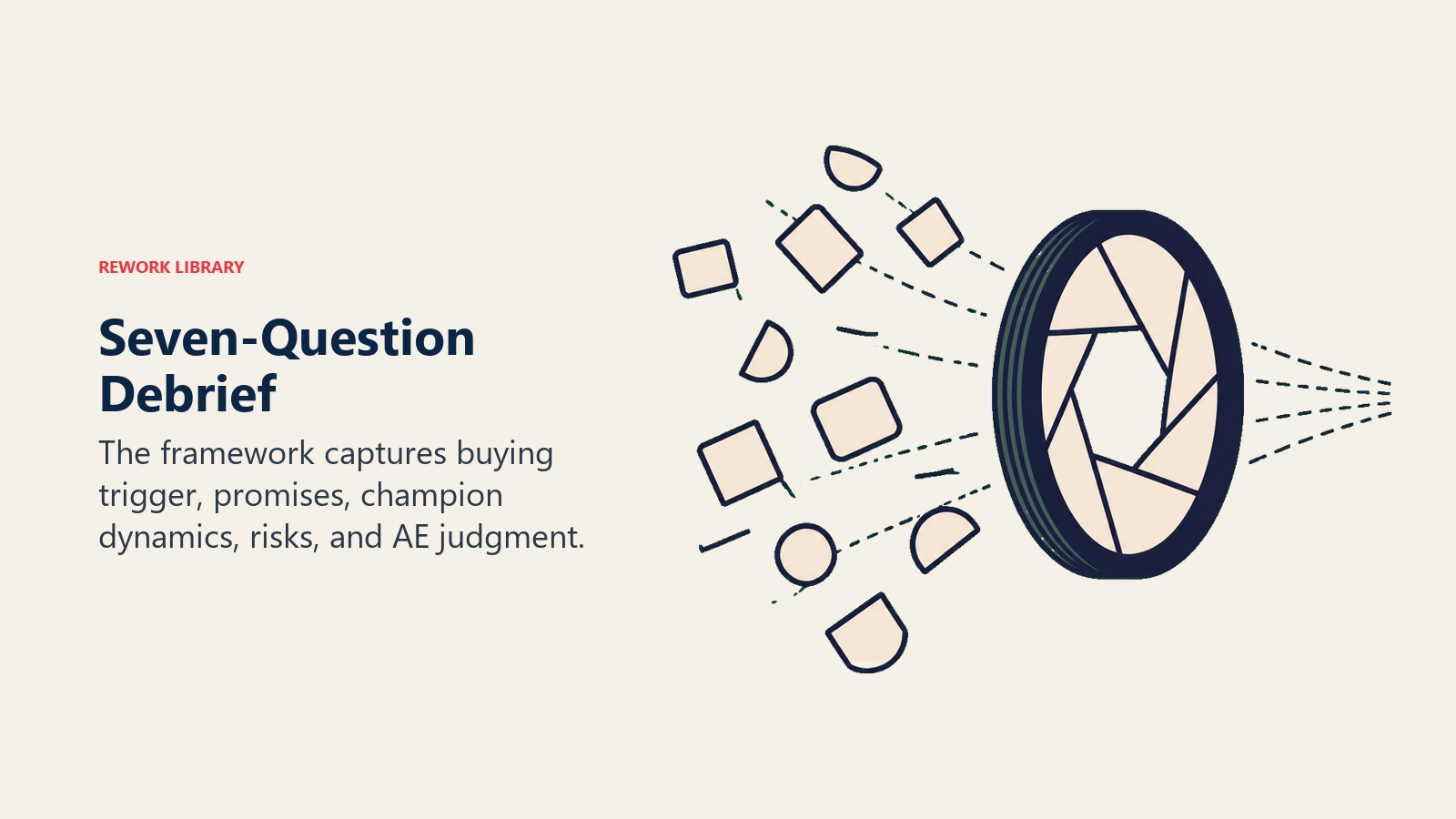
Named Framework: Debrief Won Deal Tujuh Pertanyaan Tujuh pertanyaan ini dirancang untuk mengekstrak intelijen yang memiliki nilai prediktif tertinggi untuk hasil renewal tahun pertama. Pertanyaan 1-3 mencakup konteks pra-penjualan (mengapa mereka membeli, siapa yang menjadi champion, apa yang hampir menghentikannya). Pertanyaan 4-5 mencakup kontrak pengiriman (apa yang dijanjikan, apa yang dikatakan pelanggan akan membuat mereka berhasil). Pertanyaan 6-7 mencakup permukaan risiko (siapa yang mungkin bekerja melawan Anda, dan pembacaan naluriah AE tentang akun). CSM mengajukan semua tujuh pertanyaan. AE menjawab sespesifik mungkin. Jawaban umum seperti "mereka tampak antusias" atau "champion bersifat suportif" bukan tujuannya. Jawaban spesifik, bernama, dan kontekstual adalah yang dicari.
P1: Apa pemicu pembelian sebenarnya?
Bukan alasan yang tercantum dalam field peluang CRM. Yang nyata. "Mereka mengatakan efisiensi workflow, tetapi pemicu sebenarnya adalah COO mereka yang baru saja mempekerjakan RevOps lead baru yang ditugaskan untuk mengkonsolidasikan tech stack mereka sebelum akhir tahun. Itulah yang menciptakan urgensi." Alasan yang dinyatakan adalah yang masuk dalam catatan deal. Pemicu sebenarnya adalah apa yang dipelajari AE selama enam minggu percakapan. CSM memerlukan pemicu nyata untuk memahami apa yang ingin dibuktikan pelanggan secara internal.
P2: Siapa champion, dan apa taruhan pribadi mereka dalam keberhasilan ini?
Bukan hanya nama dan jabatan. Bagaimana tampilan situasi profesional orang ini jika implementasi berjalan baik? Apakah mereka mencoba membuktikan sesuatu kepada tim kepemimpinan mereka? Apakah mereka baru dalam perannya dan membutuhkan kemenangan awal? Apakah mereka mengadvokasi vendor ini secara internal melawan oposisi, yang berarti kredibilitas mereka terikat pada hasilnya? Taruhan pribadi champion adalah prediktor terkuat adopsi awal. CS perlu mengetahuinya. Artikel transisi champion dari AE ke CSM membahas cara melindungi hubungan ini sepanjang handoff tanpa mulai dari nol.
P3: Keberatan apa yang hampir membunuh deal, dan bagaimana diselesaikan?
Setiap deal memiliki momen ketika hampir mati. Apa itu? Bagaimana diselesaikan? "Pengadaan menolak harga tiga minggu sebelum penutupan. Kami sampai di sana dengan berkomitmen pada timeline onboarding yang dipercepat." Sekarang CS tahu bahwa onboarding yang dipercepat bukan hanya preferensi. Ini adalah subteks kontrak yang akan dipegang pelanggan. "CFO ingin menunggu sampai setelah restart tahun fiskal. Kami mendapatkan komitmen dengan menstrukturkan pembayaran untuk dimulai di tahun fiskal baru." Sekarang CS tahu ada sensitivitas waktu pembayaran yang mungkin menciptakan gesekan jika tanggal invoice tidak ditangani dengan hati-hati.
P4: Apa yang kami janjikan, secara eksplisit atau implisit, yang sekarang perlu diberikan CS?
Ini adalah pertanyaan paling kritis dan yang paling sering dilewati dalam handoff meeting. AE membuat komitmen selama deal: beberapa eksplisit (dalam kontrak), beberapa implisit (dalam thread email atau percakapan lisan). CS perlu mengetahui keduanya. "Saya bilang kepada mereka kami bisa membuat integrasi live dalam 30 hari." "Saya bilang tim dukungan kami biasanya merespons tiket dalam 4 jam." "Saya menyebutkan kepala produk kami bersedia melakukan roadmap call dengan mereka di Q2." Ini tidak ada dalam kontrak. Mereka ada dalam ingatan AE. Mereka akan muncul dalam 60 hari pertama hubungan pelanggan sebagai ekspektasi yang tidak diketahui CS harus dipenuhi.
P5: Apa yang dikatakan pelanggan yang akan membuat mereka berekspansi atau memperpanjang tanpa ragu?
Dalam hampir setiap deal, pelanggan mengatakan sesuatu yang berorientasi ke depan: seperti apa keberhasilan bagi mereka, apa yang akan membuat mereka membawa tim kedua, apa yang akan membuat renewal tahunan menjadi keputusan yang sudah jelas. Bahasa ini adalah intelijen paling berharga yang diterima CS dari AE. "Dia bilang jika tim ops bisa menutup siklus pelaporan bulanan mereka dalam separuh waktu, dia akan berekspansi ke tim keuangan tanpa proses pengadaan." Satu kalimat itu mendefinisikan hasil spesifik yang harus didorong CS dalam enam bulan pertama.
P6: Siapa dalam akun yang berisiko? Skeptis, vendor yang digantikan, politik internal yang perlu diwaspadai?
Setiap deal memiliki friction point yang tidak dibawa pelanggan ke dalam ruangan tetapi diamati AE. Kepala departemen yang lebih memilih pesaing. IT lead yang tidak mendukung pengadaan. Vendor sebelumnya yang digantikan yang champion internalnya kini merasa dendam. AE mungkin telah menghabiskan enam minggu menavigasi dinamika ini. CS masuk ke akun tanpa pengetahuan. Satu percakapan sebelum kickoff dapat menghemat CS dari memicu sesuatu yang tidak mereka ketahui ada.
P7: Apa pembacaan naluriah AE tentang akun ini dua belas bulan dari sekarang?
Ini adalah pertanyaan yang secara eksplisit subjektif. AE telah menghabiskan waktu signifikan dengan pelanggan ini. Insting mereka adalah data, meskipun tidak dikuantifikasi. "Saya pikir ini akan menjadi akun yang bagus. Champion termotivasi, use case ketat, dan economic buyer benar-benar peduli pada keberhasilan ini." Atau: "Saya sedikit khawatir. Anggaran disetujui di menit terakhir dan champion baru. Jika champion pindah dalam enam bulan pertama, kita akan mulai dari awal lagi pada hubungan internal." Pembacaan naluriah itu, dicatat dengan jujur, adalah sinyal kesehatan yang harus dilacak CS dari hari pertama.
Kerangka ini hanya berfungsi jika apa yang ditangkap benar-benar masuk ke sistem yang tepat. Itu langkah berikutnya.
Apa yang Dicatat dan Di Mana
Di CRM pada record akun: Jawaban atas P1 (pemicu pembelian), P4 (janji), P6 (flag risiko). Ini adalah fakta operasional yang perlu diketahui oleh anggota tim mana pun yang menyentuh akun ini. Terlihat oleh CS, AE, dan CS Manager.
Di platform CS (input health score): Jawaban atas P2 (taruhan champion), P5 (kriteria keberhasilan), P7 (pembacaan naluriah AE). Ini memberi makan framing health score awal dan menjadi titik referensi untuk check-in 30/60/90 hari.
Dalam record bersama sales-CS (bukan untuk pelanggan): Jawaban atas P3 (keberatan dan resolusi) dan konteks penuh P6. Catatan internal yang seharusnya tidak dibagikan dengan pelanggan tetapi harus bertahan dari pergantian AE dan perubahan tim.
Tidak pernah: Jawaban yang hanya ada di thread email AE atau dalam Slack DM ke CSM. Jika tidak bisa ditemukan oleh CSM baru enam bulan dari sekarang tanpa bertanya kepada AE, itu tidak dicatat dengan benar.
Peran CSM dalam Tinjauan (Bukan Sekadar Menerima)
Ini adalah percakapan, bukan briefing. CSM membawa pertanyaan dan flag mereka sendiri.
Flag implementasi: Apakah ada sesuatu dalam kontrak yang mengejutkan CSM? Timeline yang kompres yang tampak agresif? Item ruang lingkup yang memiliki dependensi yang mungkin tidak ditandai AE? CSM harus mengungkap ini sebelum kickoff, bukan setelahnya.
Pertanyaan kapasitas onboarding: Apakah tim pelanggan siap untuk implementasi? Apakah champion memiliki bandwidth untuk mendorong adopsi secara internal, atau apakah mereka terlalu sibuk? AE mungkin memiliki visibilitas tentang hal ini dari percakapan deal.
Gap konteks: Jika CSM meninjau catatan deal dan ada sesuatu yang tidak jelas (apa yang dimaksud pelanggan dengan "kami memerlukan ini diintegrasikan dengan ERP kami sebelum akhir kuartal"? apa hubungan antara champion dan economic buyer?), ini adalah momen untuk bertanya.
Won deal review adalah pertukaran timbal balik. AE adalah sumber pengetahuan utama. Tetapi pertanyaan CSM adalah yang membuat tinjauan menjadi tajam alih-alih monolog.
Quotable: "CSM yang menerima debrief deal terstruktur sebelum kickoff menyelesaikan onboarding 31% lebih cepat dibanding yang memulai dari dingin. Pelanggan yang mencapai nilai awal dalam 90 hari diperpanjang pada tingkat 85% dibanding 55% bagi yang tidak, menurut onboarding Gainsight dan penelitian retensi B2B Bain & Company."
Ketika Won Deal Review Dilewati
Ini paling sering terjadi di lingkungan SMB high-velocity di mana deal ditutup cepat dan AE memiliki lima atau lebih penutupan dalam sebulan. Polanya dapat diprediksi:
AE menutup, segera pindah ke deal berikutnya. CSM mendapat email perkenalan dan menjadwalkan kickoff. Kickoff terjadi. Dalam 30 hari pertama, pelanggan menyebutkan janji yang dibuat AE tentang timeline integrasi. CSM tidak tahu tentang hal itu. CSM harus bergegas untuk memberikan sesuatu yang tidak mereka persiapkan. Kesan pertama pelanggan tentang pengalaman pasca-penjualan adalah CS tidak tahu apa yang disepakati.
Kepercayaan terkikis dalam 30 hari pertama. Tidak secara dramatis. Pelanggan tidak churned di bulan pertama. Tetapi posisi awal hubungan rusak, dan CS menghabiskan berbulan-bulan membangun kembali sesuatu yang bisa dicegah dengan debrief 30 menit sebelum kickoff.
Efek kumulatifnya signifikan. Pelanggan yang mengembangkan skeptisisme dalam 90 hari pertama lebih sulit untuk diperbarui pada nilai penuh. Mereka bernegosiasi. Mereka mengurangi ruang lingkup. Mereka menunda percakapan renewal. Investasi won deal review 30 menit per penutupan menghasilkan perbedaan NRR yang material di tingkat portofolio. Penelitian Forrester tentang onboarding pelanggan memperkirakan bahwa onboarding yang tidak efektif (yang dimulai dari handoff yang rusak) berkontribusi pada lebih dari $136 miliar churn pelanggan yang sebenarnya dapat dihindari di AS setiap tahun.
Kabar baiknya: mencegah pola ini tidak memerlukan perubahan budaya. Ini memerlukan gerbang proses.
Mengoperasionalkannya: Menjadikan Tinjauan sebagai Pemicu Tetap
Won deal review tidak menjadi kebiasaan melalui niat baik. Ini menjadi kebiasaan melalui gerbang proses.
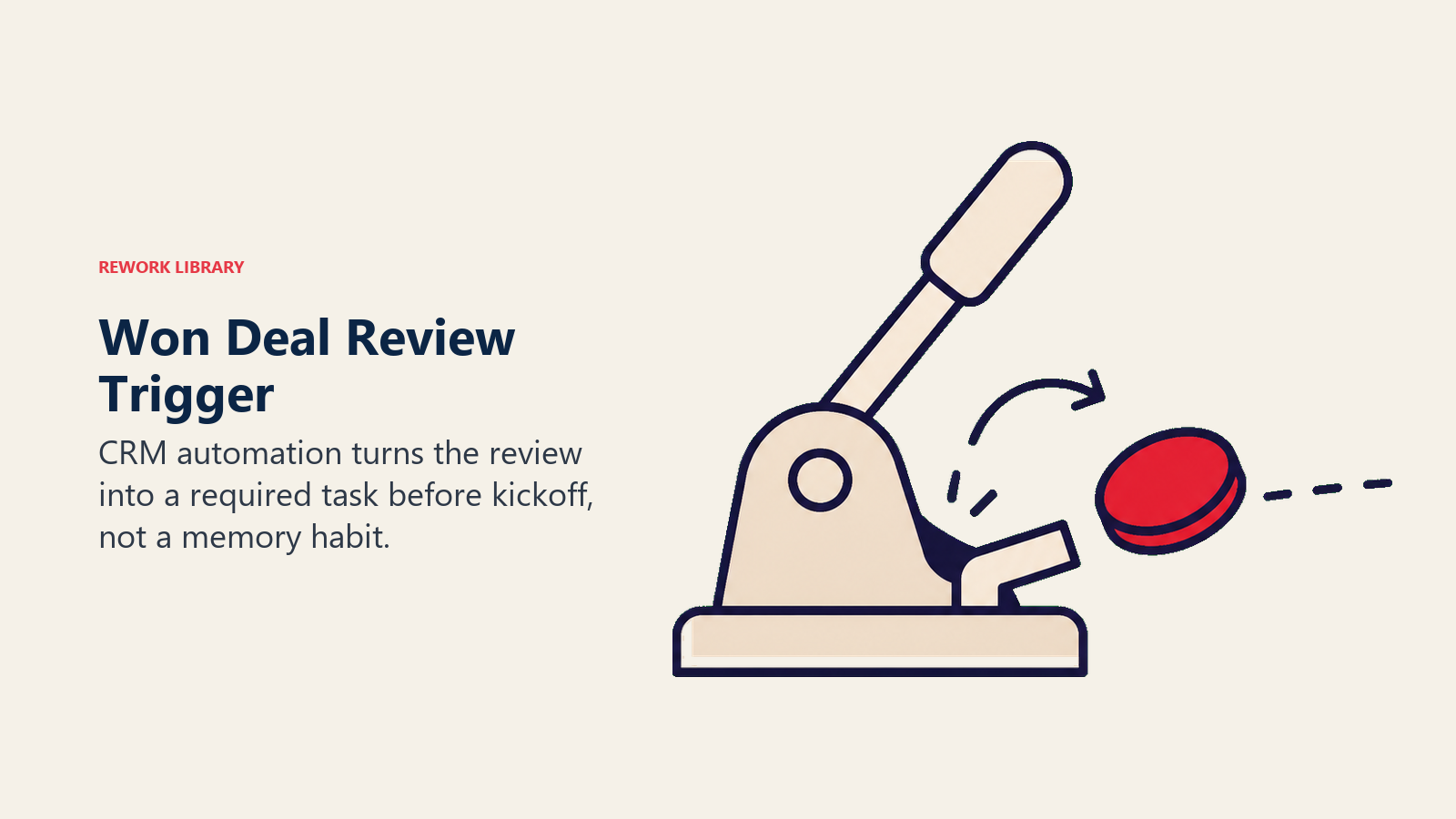
Otomatisasi CRM: Ketika tahap deal berpindah ke "Closed Won," task dibuat secara otomatis: "Won deal review diperlukan sebelum kickoff, jatuh tempo dalam 5 hari kerja." Terlihat oleh AE dan CSM. Dilacak oleh RevOps. Artikel stack yang selaras: CRM, platform CS, revenue intel membahas cara menghubungkan pemicu ini ke tools agar terjadi secara otomatis, bukan mengandalkan ingatan.
Template dalam record deal: Tujuh pertanyaan ada sebagai field terstruktur atau template dokumen tertaut dalam record akun. AE dapat mengisi jawaban secara asinkron jika panggilan langsung tidak terjadi lebih dulu, dengan pemahaman bahwa CS akan menindaklanjuti spesifik dalam panggilan langsung.
Pelacakan RevOps: Pemeriksaan bulanan tentang tingkat penyelesaian. Berapa banyak deal yang ditutup dalam 30 hari terakhir yang memiliki won deal review yang terdokumentasi sebelum kickoff? Ini bukan hukuman. Ini adalah metrik kesehatan proses. Ketika tingkat penyelesaian turun di bawah 80%, RevOps menyelidiki apakah prosesnya terlalu berat gesekan atau apakah kapasitas AE adalah masalahnya. Penelitian customer success 2.0 dari McKinsey menunjukkan bahwa perusahaan dengan fungsi CS yang proaktif dan berbasis data melihat pelanggan yang ada menyumbang antara sepertiga hingga setengah dari total pertumbuhan pendapatan, angka yang hanya bertahan ketika tim CS memiliki konteks deal untuk ditindaklanjuti sejak hari pertama.
Kejelasan kepemilikan: CSM yang memiliki penjadwalan won deal review. Bukan AE. AE berada dalam mode penutupan tepat setelah kemenangan. Mereka akan memprioritaskan deal berikutnya. CS memiliki insentif terkuat untuk melakukan debrief karena mereka adalah orang yang masuk ke kickoff tanpa pengetahuan jika itu tidak terjadi.
Pola yang Diumpankan Ini
Output won deal review tidak hanya menguntungkan akun individual. Mereka mengumpan dua loop yang lebih luas.
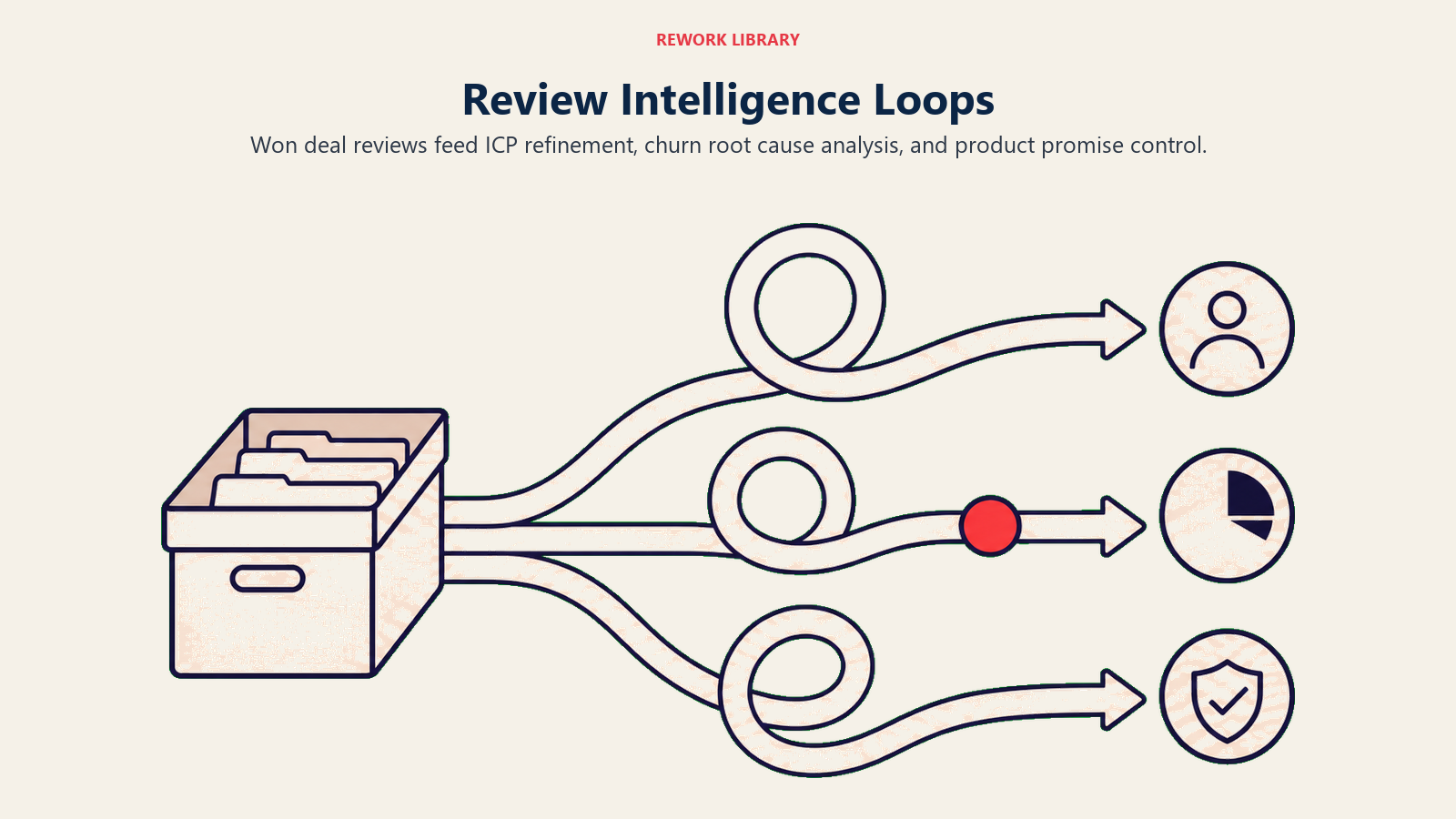
Loop refinement ICP: Ketika jawaban AE atas P7 (pembacaan naluriah) secara konsisten "Saya sedikit khawatir tentang kesesuaian ICP," dan CS mengkonfirmasi pola itu dengan data churn enam bulan kemudian, itu adalah sinyal bahwa sesuatu dalam kriteria kualifikasi perlu diperketat. Loop refinement ICP menghubungkan observasi pola pasca-penjualan CS kembali ke kualifikasi pra-penjualan Sales. Dan ketika pola-pola itu diagregasi di seluruh cohort deal, kerangka ICP bersama adalah tempat Sales, CS, dan Marketing menyelaraskan definisi yang diperbarui.
Sinyal akar penyebab churn: Ketika jawaban AE atas P4 (janji) mengidentifikasi pola (kapabilitas fitur yang sama dilebih-lebihkan, timeline implementasi yang sama dikomitmenkan tanpa input CS), itu adalah perbaikan proses yang mencegah putaran kerusakan kepercayaan tahap awal berikutnya. Artikel akar penyebab churn kembali ke sales mencakup bagaimana CS mengubah pola-pola ini menjadi feedback yang dapat ditindaklanjuti ke Sales. Secara terpisah, data won-deal yang sama yang memberi makan analisis churn dapat dirutekan ke win-loss feedback ke marketing. Won deal review dan win-loss analysis adalah proses yang berbeda, tetapi keduanya berbagi bahan mentah yang sama dari AE.
Won deal review adalah titik awal kedua loop. Ini bukan hanya tentang akun ini. Ini tentang apakah pola dari akun ini, baik atau buruk, sampai ke orang-orang yang dapat mengubah akun berikutnya.
Pertanyaan yang Sering Diajukan tentang Won Deal Review
Apa itu won deal review dan apa bedanya dengan handoff meeting?
Won deal review adalah transfer intelijen terstruktur selama 30-45 menit antara AE dan CSM yang terjadi dalam 5 hari kerja setelah penutupan dan sebelum kickoff call. Tujuannya adalah mengekstrak intelijen strategis yang dimiliki AE: pemicu pembelian, dinamika champion, janji implisit, sinyal ekspansi, risiko deal, sebelum memudar. Handoff meeting adalah transfer proses: stakeholder, ruang lingkup yang dikontrak, timeline implementasi, tanggal go-live. Keduanya diperlukan. Won deal review terjadi lebih dulu karena CS membutuhkan konteks strategis AE sebelum hubungan kickoff dimulai, bukan sesudahnya.
Apa bedanya won deal review dengan win-loss analysis?
Win-loss analysis adalah latihan Sales dan Marketing yang mengidentifikasi pola di banyak deal untuk meningkatkan messaging, positioning, dan penargetan ICP di masa depan. Ini berjalan pada kadense bulanan atau kuartalan dan menghasilkan perubahan sistemik. Won deal review bersifat spesifik akun: ia mengekstrak intelijen tentang satu deal untuk membantu satu CSM melakukan onboarding satu pelanggan dengan sukses. Kedua proses berbagi bahan mentah (pengetahuan deal AE) tetapi melayani audiens yang berbeda dan menghasilkan output yang berbeda. Won deal review bukan tentang meningkatkan pitch Sales berikutnya. Ini tentang memberi CS apa yang dibutuhkan untuk memprediksi apakah akun spesifik ini akan renewal.
Pertanyaan apa saja yang harus dicakup dalam won deal review?
Debrief Won Deal Tujuh Pertanyaan mencakup: P1, pemicu pembelian sebenarnya (bukan field CRM, melainkan alasan yang nyata); P2, taruhan pribadi champion dalam keberhasilan implementasi; P3, keberatan yang hampir membunuh deal dan bagaimana diselesaikan; P4, janji eksplisit dan implisit yang dibuat AE yang sekarang menjadi tanggung jawab CS; P5, apa yang dikatakan pelanggan yang akan membuat mereka berekspansi atau renewal tanpa ragu; P6, risiko internal (skeptis, vendor yang digantikan, dinamika politik yang perlu diwaspadai); P7, pembacaan naluriah subjektif AE tentang kesehatan akun dalam 12 bulan. CSM mengajukan semua tujuh. Jawaban umum tidak dapat diterima.
Siapa yang memiliki penjadwalan won deal review?
CSM yang memiliki penjadwalannya, bukan AE. AE berada dalam mode penutupan tepat setelah kemenangan dan secara alami akan memprioritaskan deal berikutnya. CS memiliki insentif terkuat untuk membuat debrief terjadi karena mereka adalah orang yang masuk ke kickoff tanpa pengetahuan jika itu tidak terjadi. Pemicu penjadwalannya adalah CRM: ketika deal berpindah ke Closed Won, task otomatis dibuat yang mensyaratkan won deal review sebelum kickoff, dengan tenggat 5 hari kerja. RevOps melacak tingkat penyelesaian setiap bulan. Targetnya adalah 80% atau lebih.
Apa yang terjadi jika won deal review dilewati?
CSM memulai kickoff tanpa intelijen deal dari AE. Dalam 30-60 hari pertama, pelanggan menyebutkan janji yang dibuat AE yang tidak diketahui CS. CS harus bergegas memberikan sesuatu yang tidak mereka persiapkan. Kesan pasca-penjualan pertama pelanggan adalah CS tidak tahu apa yang disepakati. Kepercayaan terkikis sejak hari pertama: tidak cukup dramatis untuk langsung churn, tetapi cukup untuk merusak posisi awal hubungan. Forrester memperkirakan bahwa onboarding yang tidak efektif (yang dimulai dari handoff yang rusak) berkontribusi pada lebih dari $136 miliar churn pelanggan yang sebenarnya dapat dihindari di AS setiap tahun.
Apa yang dicatat dari won deal review dan di mana?
Tiga tujuan: record akun CRM (pemicu pembelian, janji, flag risiko), terlihat oleh CS, AE, dan CS Manager; platform CS (taruhan champion, kriteria keberhasilan, pembacaan naluriah AE) sebagai input untuk health score awal; dan record bersama sales-CS internal (riwayat keberatan, konteks risiko penuh), hanya internal, bukan untuk pelanggan. Ujian untuk setiap output: dapatkah CSM baru enam bulan dari sekarang menemukan informasi ini tanpa bertanya kepada AE? Jika tidak, informasi itu tidak dicatat di tempat yang tepat.
Pelajari Lebih Lanjut

Principal Solution Architect
On this page
- Bagaimana Ini Berbeda dari Handoff Meeting dan Win-Loss Analysis
- Siapa yang Hadir dan Kapan
- Kerangka Debrief Tujuh Pertanyaan
- Apa yang Dicatat dan Di Mana
- Peran CSM dalam Tinjauan (Bukan Sekadar Menerima)
- Ketika Won Deal Review Dilewati
- Mengoperasionalkannya: Menjadikan Tinjauan sebagai Pemicu Tetap
- Pola yang Diumpankan Ini
- Pelajari Lebih Lanjut