Client Communication Systems: The Infrastructure Behind Every Touchpoint
Turn this article into takeaways for your work.


Each assistant summarizes the article only for you and suggests best practices for your work.
A great client communication strategy means nothing if you don't have the systems in place to execute it consistently. Strategy tells you what to say and when. Systems are what actually make sure it happens, the tools, channels, and automation that turn a plan into repeatable action instead of something that only happens when you remember.
This guide is about the infrastructure itself: the tools and channels you need in place so every client, whether they're mid-transaction or five years past closing, gets consistent, timely communication without you having to hold it all in your head.
Why Systems Matter More Than Good Intentions
Every agent intends to follow up consistently. Intentions fall apart under a busy week, three showings, two offers, and a closing all landing on the same day. What survives a busy week isn't intention. It's infrastructure.
A real communication system means a new lead gets an instant response even if you're in a showing. It means a past client's transaction anniversary triggers a message automatically instead of depending on you remembering the date. It means when a client texts a question, that message doesn't disappear into a personal phone that three other team members can't see.
Building this once, properly, means you stop relying on willpower to maintain client relationships and start relying on infrastructure that works the same way every time. It's also worth the investment: NAR reports that 82% of agents say clients respond positively when technology is built into how they're served, and consistent communication is one of the clearest ways clients experience that technology.
The Core Communication Channels
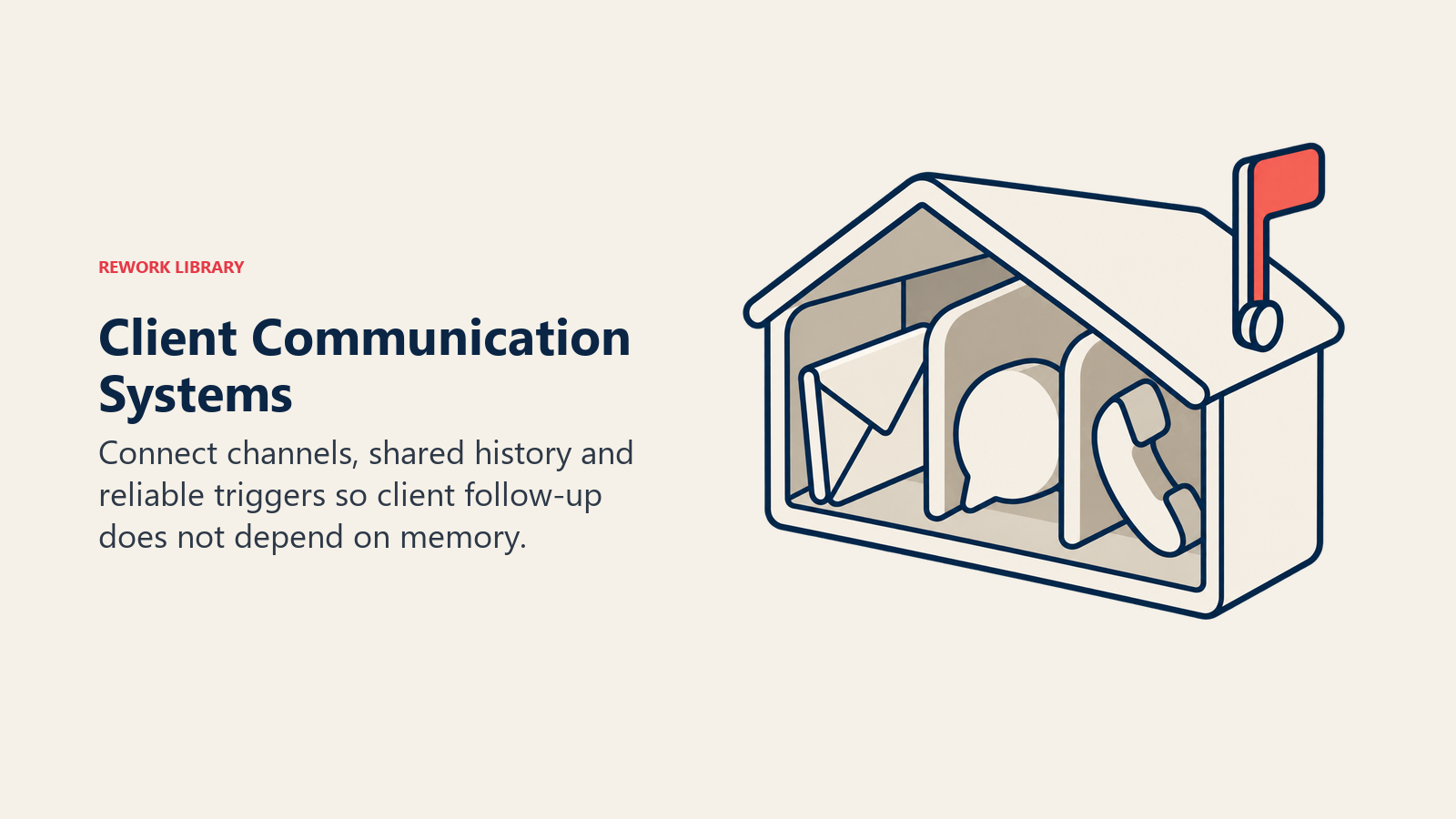
Real estate clients don't stick to one channel. Your system needs to handle all of them without creating chaos.
Email remains the backbone for anything detailed: market updates, transaction documents, longer explanations. It's also the easiest channel to automate through drip campaigns and segmented email marketing campaigns.
Text messaging is where most quick, time-sensitive exchanges happen now. Clients expect fast replies to texts, faster than email. Your system needs a way to send and receive texts that logs into your CRM rather than living only in someone's personal phone.
Phone calls still matter for anything emotionally significant, negotiating an offer, delivering disappointing news, or the first call after a new lead comes in. Some conversations shouldn't happen over text regardless of how convenient it is.
Client portals give buyers and sellers a dedicated place to see transaction status, review documents, and track showings without needing to ask you directly for updates. This reduces the volume of "just checking in" messages you'd otherwise field constantly.
Social media functions less as a direct communication channel and more as an ambient presence tool, staying visible in a client's feed between active conversations through social media lead generation content and updates.
The goal isn't to be everywhere at once. It's to have each channel serving the purpose it's actually good at, and a system that ties them together into one coherent history per client. NAR's 2025 Profile of Home Buyers and Sellers found that 88% of buyers and 91% of sellers still work with an agent rather than going it alone, precisely because the guidance and communication an agent provides is hard to replace with a listing portal alone.
Centralizing Communication History
The biggest failure point in most agents' communication systems is fragmentation. A client's history is scattered: some texts on a personal phone, some emails in a personal inbox, some notes in a notebook that never makes it anywhere else.
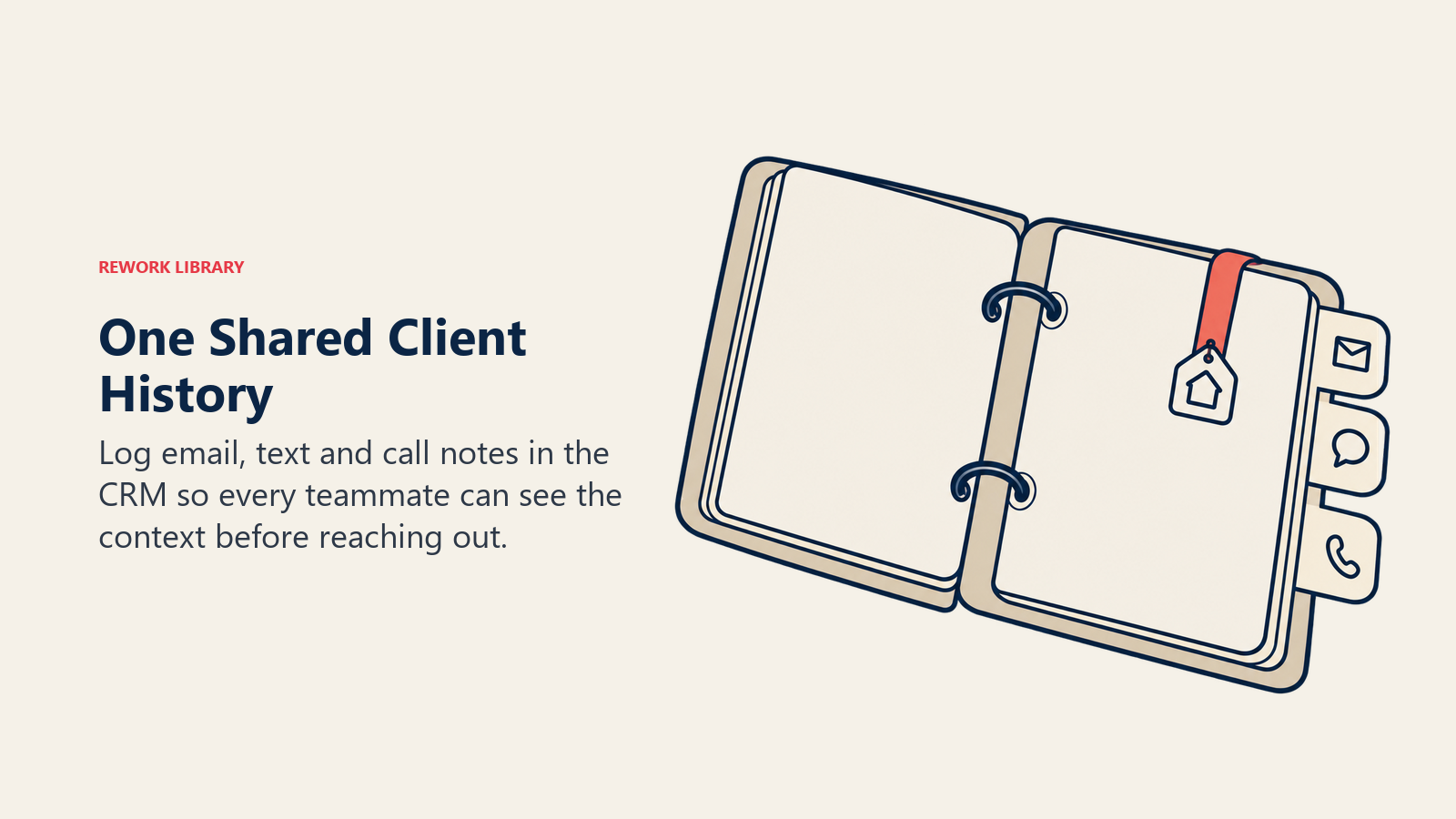
Your CRM should be the single source of truth for every interaction, regardless of channel. When a client calls, the person answering (you or a teammate) should be able to pull up the full history: every email, every text, every call note, in one place. This matters even more on a team, where a client might interact with an ISA, a showing agent, and a transaction coordinator across a single deal.
Set up your system so that:
- Email integration automatically logs sent and received messages against the contact record
- Text messaging routes through a platform that syncs to the CRM rather than a personal number
- Call notes get logged immediately after each conversation, not from memory the next day
- Every team member touching a client can see the full interaction history before reaching out
This isn't about surveillance. It's about making sure a client never has to repeat themselves because whoever they're talking to has no visibility into what's already been discussed.
Automation That Handles the Predictable Moments
Not every touchpoint needs a human typing it fresh each time. Predictable moments deserve automated systems so they happen reliably.
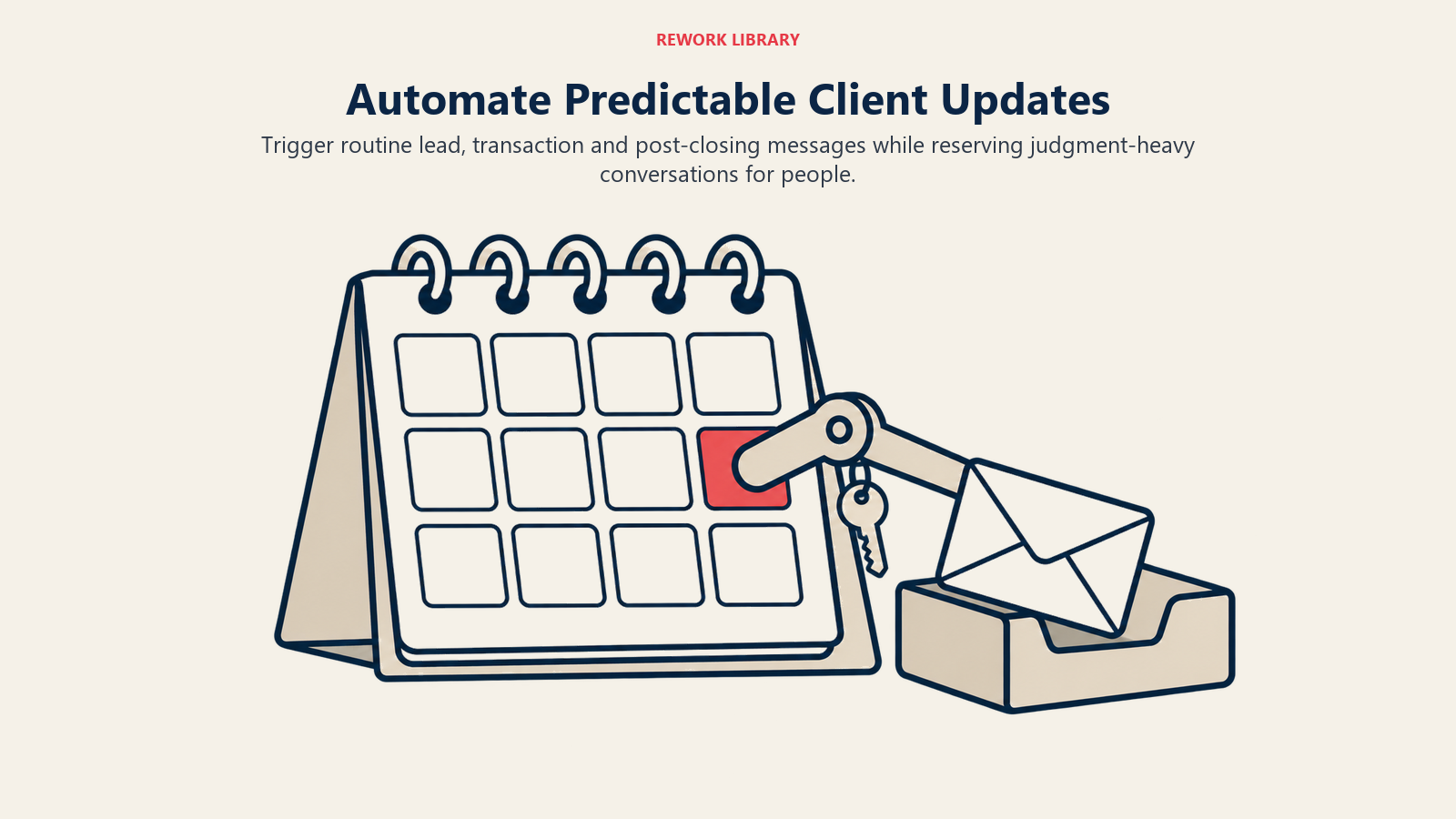
New lead response should be instant and automated as a first layer, an immediate text or email confirming receipt, followed by a personal follow-up as soon as possible. Given how much response speed affects conversion, this automation alone can be the highest-leverage system you build.
Transaction milestone updates can trigger automatically as a deal moves through stages: offer accepted, inspection scheduled, appraisal complete, clear to close. Clients feel informed without you manually drafting the same update for every deal.
Post-closing sequences should fire automatically: a thank-you message on day one, a resource guide in week one, a check-in at 30 days, tying directly into your broader client retention strategy.
Anniversary and milestone reminders for transaction dates and birthdays should surface automatically so personal touches, still delivered by you personally, never get missed simply because a date passed unnoticed. See our guide on client anniversary and birthday programs for the specifics.
Automation shouldn't replace personal contact. It should guarantee the predictable moments happen so your personal attention goes toward the conversations that actually need a human.
Building In Response Time Standards
A system is only as good as the standards built around it. Define, in writing, how fast different types of messages should get a response.
New leads: as close to immediate as possible, ideally within minutes. Active client questions during a transaction: same business day, ideally within a few hours. General check-ins from past clients: within 24 to 48 hours. Put these standards somewhere your whole team can see them, and build alerts into your CRM so nothing sits unanswered past the threshold without someone noticing.
Client Preference Tracking
Not every client wants to communicate the same way. Some prefer text for everything. Others want a phone call for anything important and find texts about serious topics dismissive. Your system should capture this preference early and route communication accordingly.
Ask new clients directly: "What's the best way to reach you, and for what kinds of updates?" Log the answer in your CRM as a field you actually reference, not a note that gets buried. Respecting stated preference is a small thing that meaningfully affects how clients experience your service.
Common Pitfalls in Building Communication Systems
Personal phone numbers as the primary channel. When client texts live only on a personal device, that history disappears if the client works with a different team member later, and it's invisible to anyone else who needs context.
Too much automation without personal check-ins. Automated milestone updates are useful, but if every message a client receives is automated, the relationship starts to feel hollow. Balance automation with genuine personal contact.
No documented response time standards. Without a clear standard, response times drift based on how busy any individual agent happens to be that week, which clients notice and remember.
Ignoring stated channel preferences. Repeatedly calling a client who's said they prefer text, or vice versa, signals that you're not actually listening, even if the message content is fine.
Build these systems once, and every client interaction becomes more consistent, faster, and less dependent on any one person's memory or workload that week. That consistency is what clients actually notice, customer communications management as a discipline exists precisely because scattered, inconsistent communication erodes trust faster than almost anything else in a service relationship.
Related Resources
- Client Communication Strategy - The strategic framework this infrastructure supports
- Client Retention Strategy - See how communication systems power your broader retention program
- Real Estate CRM Setup - Configure the CRM that centralizes your communication history
- Speed to Lead Response - Build the fast-response automation your system depends on
- Client Anniversary & Birthday Programs - Automate the personal-touch moments your system should never miss
Frequently Asked Questions about Client Communication Systems
What's the difference between a communication system and a communication strategy?
Strategy defines what to communicate, when, and to whom. Systems are the actual infrastructure, CRM, email, text platforms, automation, that make sure the strategy gets executed consistently instead of depending on memory or workload.
Should client texts go through a personal phone number?
No. Route text messaging through a platform that syncs to your CRM so the conversation history is visible to your whole team and doesn't disappear if a client later works with a different team member.
How fast should a real estate team respond to different types of messages?
New leads should get a response as close to immediate as possible, ideally within minutes. Active client questions during a transaction warrant a same-day response, while general check-ins from past clients can reasonably wait 24 to 48 hours.
How much of client communication should be automated?
Automate the predictable, high-volume moments, new lead responses, transaction milestone updates, post-closing sequences, and anniversary reminders. Keep personal, judgment-heavy conversations, like negotiating an offer, handled directly by a person.
How do we track how a client prefers to be contacted?
Ask directly during your first substantive conversation and log the answer as a field in your CRM you actually reference before reaching out. Respecting stated channel preference is a small system detail that has an outsized effect on client experience.

Sales Director