Best ChartHop Alternatives in 2026: 13 Tools for Org Charts, HR Data and Headcount Planning
Turn this article into takeaways for your work.


Each assistant summarizes the article only for you and suggests best practices for your work.
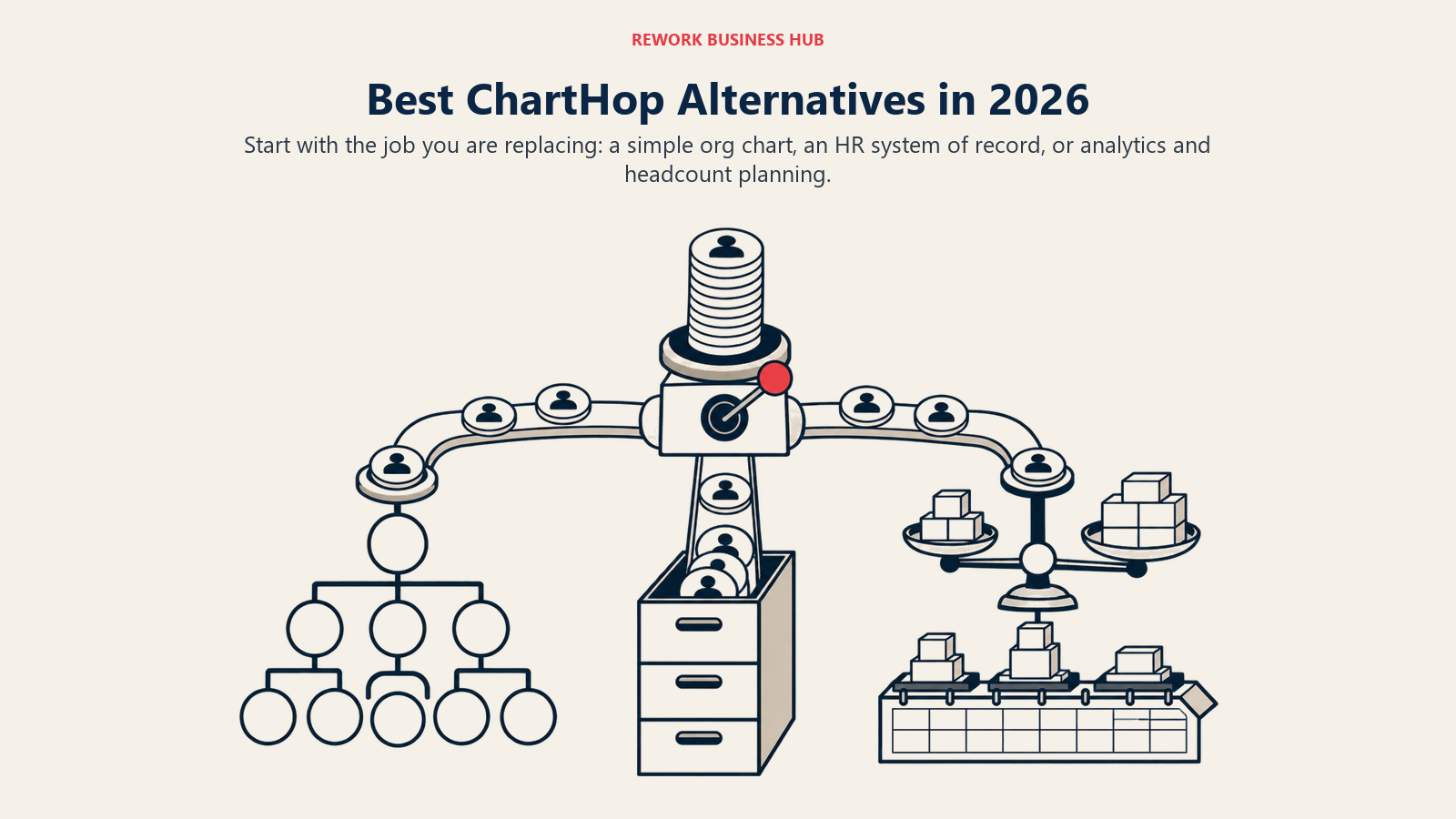
If you only need an org chart and a searchable directory, Organimi and Workleap Pingboard replace ChartHop for a rounding error. If you need a real system of record underneath the chart, BambooHR, HiBob, Rippling, Deel, Personio and Sage People are the honest comparison set. And if what you actually bought ChartHop for was workforce planning, Visier, Workday, Dayforce Strategic Workforce Planning and TeamOhana are playing a different, heavier game. Those are three separate purchases that get confused constantly, and picking from the wrong group is the most expensive mistake in this category.
This guide covers 13 alternatives, selected on published pricing transparency, org-data depth, and fit for companies between roughly 50 and 1,500 employees, with every figure. It exists because ChartHop's pricing structure, not ChartHop's product, is what sends most people looking. For broader platform context, see our roundup of the best HR software for 2026.
Key Facts
- The people analytics technology market reached $12.2 billion at the end of 2025, up from $9.7 billion in 2024, a 26% year-over-year growth rate that RedThread Research describes as a market settling into a slower, more mature phase, well off its 2022 peak of 50%. (RedThread Research)
- Nearly 90% of people analytics vendors changed their pricing model in 2026, compared with 58% in 2024, and the share bundling consulting into the subscription fell from 53% two years ago to under 25%, per RedThread Research's seventh annual study of 47 vendor solutions. (RedThread Research)
- Only 29% of HR professionals whose organizations use people analytics believe their organization's overall data quality is high or very high, while 82% say they use people analytics to assess employee retention and turnover, per SHRM research on people analytics and AI. (SHRM)
- 52% of organizations report measurable business improvements from people analytics, rising to 90% among the top-performing teams, per Insight222's People Analytics Trends research covering 372 organizations that employ more than 20 million people across 180+ countries. (Insight222)
- 66% of C-suite leaders say traditional business functions must change, yet only 7% say they are making progress, per Deloitte's 2026 Global Human Capital Trends. (Deloitte)
Which of the Three Jobs Do You Actually Have?
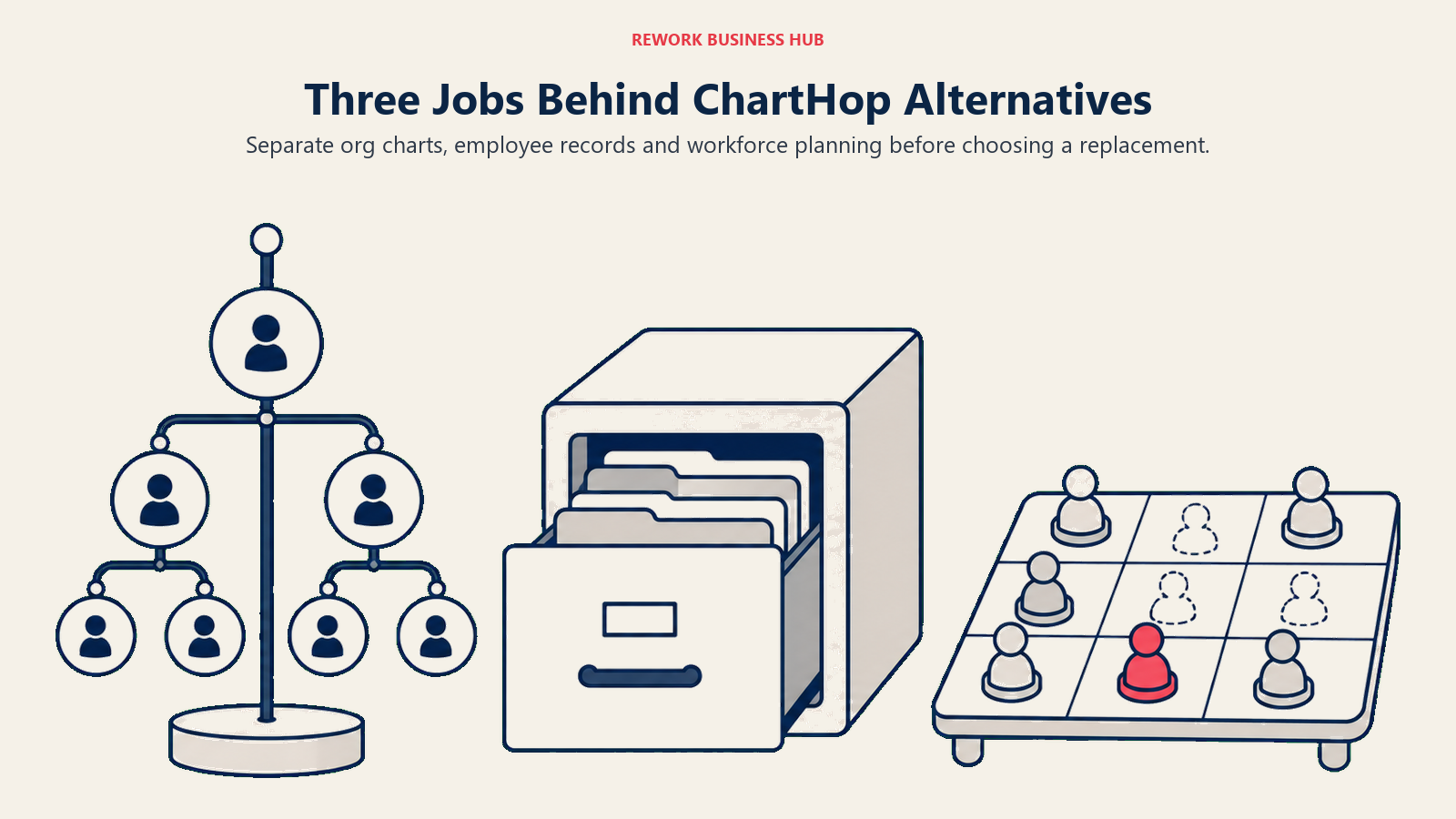
Before any tool list is useful, name the job. Almost every unhappy ChartHop renewal traces back to a company buying for one job and being sold the stack for another.
| The job | What it sounds like internally | What you actually need | Where to look in this list |
|---|---|---|---|
| Org chart and directory | "Nobody knows who reports to whom, and the chart in the deck is four months old" | A chart that syncs from a CSV or your HRIS, plus a searchable people directory | Organimi, Workleap Pingboard, or the chart already built into your HRIS |
| A system of record | "Our employee data lives in three spreadsheets and a payroll portal" | An HRIS: records, time off, documents, onboarding, permissions | BambooHR, HiBob, Rippling, Deel, Personio, Sage People |
| Analytics and workforce planning | "Finance and People disagree about next year's headcount and both have a spreadsheet" | Scenario modeling, approved plan versus actual, cost-of-workforce reporting | Visier, Workday, Dayforce Strategic Workforce Planning, TeamOhana |
ChartHop's pitch is that it does all three. That is genuinely true at the feature level, and it is also exactly why the bill grows: each job is a separately priced module. If you only have one of the three jobs, you are paying a platform price for a point solution. If you have all three, you should be comparing ChartHop against full HRIS platforms, not against cheap chart tools, because that is the price band it lands in.
What ChartHop Actually Costs in 2026
ChartHop publishes its rates, which is more than most of this category does. Core is $5 per employee per month, billed annually. Everything else is a module on top, also billed annually per employee. There is no free plan.
| Component | Published rate (per employee per month, billed annually) |
|---|---|
| Core (people analytics, dashboards, Ask ChartHop, org chart, employee profiles, map view, company calendar) | $5 |
| HRIS module | $4 |
| Headcount Planning module | $4 |
| Compensation module | $4 |
| Performance module | $4 |
| Engagement module | $3 |
| Goals module | $3 |
| ChartHop AI Pro | Pay as you go, no figure published |
| Enterprise | Custom |
Source: ChartHop's pricing page.
One number to throw away before you build a budget: ChartHop is still written up in plenty of third-party comparisons at "$8 PEPM." That figure is stale, and it was live in one of our own articles until this month, which is a fair reminder that a vendor's most-repeated price is often its least-checked one. The real entry rate is $5, and the real question is what you add to it.
The $5 Entry Price Is Real, and It Is Not What Most Buyers Pay
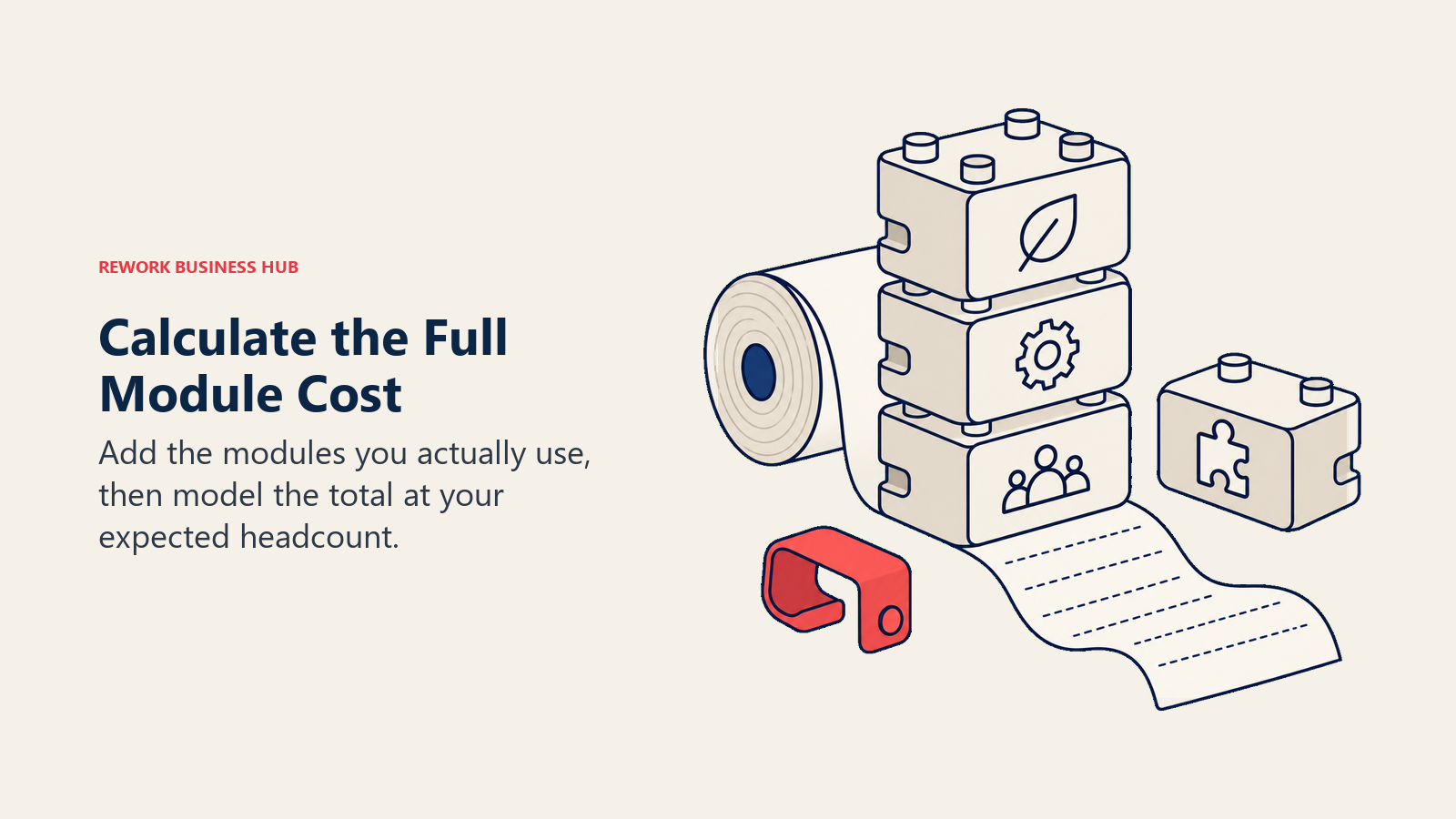
Take the three bundles that actually get bought. The table below is computed from ChartHop's published module rates above, not quoted by ChartHop, and it assumes annual billing with no negotiated discount.
| Bundle (computed from published module rates) | Modules included | Effective rate |
|---|---|---|
| Chart only | Core | $5 per employee/month |
| Chart plus records | Core + HRIS | $9 |
| Plan the year | Core + HRIS + Headcount Planning | $13 |
| People ops core | Core + HRIS + Headcount Planning + Compensation | $17 |
| Everything | Core + all six modules | $27 |
Now put headcount against it. Same caveat: these are computed totals from published rates, not quotes.
| Annual cost (computed) | 100 employees | 300 employees | 800 employees |
|---|---|---|---|
| Core only ($5) | $6,000 | $18,000 | $48,000 |
| Core + HRIS + Headcount Planning ($13) | $15,600 | $46,800 | $124,800 |
| Core + HRIS + Headcount Planning + Compensation ($17) | $20,400 | $61,200 | $163,200 |
| Core + all six modules ($27) | $32,400 | $97,200 | $259,200 |
Here is the comparison that matters. At 300 employees, the people ops bundle costs $61,200 a year. BambooHR Pro, at its published $17 per employee per month, costs exactly $61,200 a year at the same headcount. At 800 employees both land on $163,200. So the buyer who assembles ChartHop into something that resembles a full people platform is paying full-HRIS money, and should be shopping against full HRIS platforms rather than against org chart tools. That is not a knock on ChartHop's product. It is just where the math puts you.
The reverse is also worth saying plainly: if you genuinely only want a chart, $6,000 a year at 100 employees buys you a chart that syncs and an analytics layer you may never open. Organimi's Premium tier is $25 a month charged annually. That is $300 a year, flat, at any size the tier supports. The gap between those two numbers is the entire reason this article exists.
Quick Comparison Table
| Tool | Best For | Starting Price | Key Strength | Key Limitation |
|---|---|---|---|---|
| Organimi | Org charts and directories on a flat fee | Basic $13/month charged annually; Premium $25/month charged annually | Flat account price instead of per employee | Chart and directory only, no HR system underneath |
| Workleap Pingboard | Chart plus directory inside a wider people platform | Workleap Standard from $4,999 USD/year, billed annually | Directory, engagement and onboarding on one contract | No standalone Pingboard per-user price any more |
| BambooHR | US mid-size companies that need a real system of record | Core $10/employee/month; flat rate from $250/month at 25 employees or fewer | Published pricing, clean records, fast onboarding | Payroll, benefits and time are separately priced add-ons |
| HiBob | Culture-forward mid-market HRIS with strong people data | Quote-only, no published figures | Modern UX, flexible org structures, good analytics | No transparency on price before a sales call |
| Rippling | Companies unifying HR, IT and finance data | No published price at all; custom quote only | One employee record driving HR, devices and spend | Publishes nothing, so budgeting requires a sales cycle |
| Deel | Distributed teams that need global HR under the chart | Deel HR Core from $5/employee/month | Global coverage with a self-serve HR entry rate | Deel HR is not free, despite what older reviews say |
| Personio | European mid-market HR and compliance | Quote-only, no published figures | Built around EU employment practice | No self-serve pricing anywhere |
| Sage People | Enterprise HR on the Salesforce platform | Quote-only, pricing page no longer published | Configurable enterprise HR with Salesforce tooling | Implementation-heavy, sales-led |
| Visier | Serious people analytics and benchmarking | Quote-only, no published figures | Deepest dedicated analytics and benchmark data | Analytics only, not a system of record |
| Workday | Large enterprise HCM plus financial planning | Quote-only, no published figures | Single data model across HR and finance planning | Cost and implementation scale are enterprise-only |
| Dayforce Strategic Workforce Planning | Org design and scenario modeling at enterprise scale | Quote-only, no published figures | Absorbed Agentnoon's org design engine | Not sold as a standalone cheap chart tool |
| TeamOhana | Headcount planning as its own discipline | Free tier $0/year plus a $5K one-time implementation fee | Approved plan versus actual headcount, tied to finance | Annual contracts plus implementation fees at every paid tier |
| Lattice | The performance and engagement slice of people data | Performance $10/seat/month, $4,000 minimum annual agreement | Mature performance and engagement data model | No longer sells HRIS or payroll at all |
Capability Coverage by Job
Feature depth is what separates these tools once price stops being the only filter. Read this table against the job you named earlier, not left to right.
| Tool | Org chart and directory | System of record | People analytics | Headcount planning | Compensation |
|---|---|---|---|---|---|
| ChartHop (incumbent, for reference) | Yes (Core) | Yes (module) | Yes (Core) | Yes (module) | Yes (module) |
| Organimi | Yes | No | Basic chart reporting only | No | No |
| Workleap Pingboard | Yes | No | Engagement analytics | No | No |
| BambooHR | Yes | Yes | Standard HR reporting | Basic | Add-on and reporting |
| HiBob | Yes | Yes | Yes | Limited | Yes (module) |
| Rippling | Yes | Yes | Yes | Yes (spend and headcount) | Yes |
| Deel | Yes | Yes | Yes | Yes (Elite level) | Yes (Elite level) |
| Personio | Yes | Yes | Standard HR reporting | Limited | Yes |
| Sage People | Yes | Yes | Yes | Limited | Yes |
| Visier | Chart visualization from source data | No | Yes, deepest in this list | Yes | Analysis, not administration |
| Workday | Yes | Yes | Yes | Yes (Adaptive Planning) | Yes |
| Dayforce Strategic Workforce Planning | Yes, org design focused | Via Dayforce HCM | Yes | Yes, its core purpose | Via Dayforce HCM |
| TeamOhana | Chart of approved and actual roles | No | Headcount and cost analytics | Yes, its core purpose | Budgeted cost per role |
| Lattice | Yes | No, retired in 2026 | Performance and engagement analytics | No | Yes (add-on) |
Team Size and Buyer Persona Fit
| Tool | Best headcount range | Typical buyer | Deployment style |
|---|---|---|---|
| Organimi | 10 to 1,000 | Chief of staff, ops lead, HR generalist | Self-serve, annual billing |
| Workleap Pingboard | 50 to 250 | People ops lead wanting one vendor | Self-serve up to 250, sales above |
| BambooHR | 25 to 500 | US HR director | Self-serve with onboarding support |
| HiBob | 100 to 1,500 | CHRO at a scaling company | Sales-led, implementation included |
| Rippling | 50 to 2,000 | COO or ops leader unifying HR and IT | Sales-led, modular quote |
| Deel | 20 to 2,000, multi-country | Head of people at a distributed company | Self-serve entry, sales for EOR |
| Personio | 50 to 2,000, Europe | European HR director | Sales-led |
| Sage People | 500 to 5,000+ | Enterprise HR systems owner | Sales-led, partner implementation |
| Visier | 1,000 to 50,000+ | People analytics lead, CHRO | Sales-led, data integration project |
| Workday | 1,000 to 100,000+ | Enterprise CHRO and CFO jointly | Sales-led, long implementation |
| Dayforce Strategic Workforce Planning | 1,000 to 50,000+ | Workforce planning lead, org design team | Sales-led |
| TeamOhana | 200 to 5,000 | Finance business partner and people ops together | Sales-led, implementation fee at every tier |
| Lattice | 50 to 2,000 | People ops lead focused on performance | Self-serve entry above the annual minimum |
1. Organimi: The Flat Fee That Makes Per-Employee Pricing Look Silly
Organimi does one job and charges like it. You import from a CSV, a Google Sheet, or a directory sync, and you get an org chart with photo boards, role-based views, and a searchable people directory. Matrix charts and governance charts (boards, committees, dotted lines) sit on the Premium tier. It is the answer for the buyer whose only real complaint is that ChartHop bills per employee for a chart that a spreadsheet almost produces.
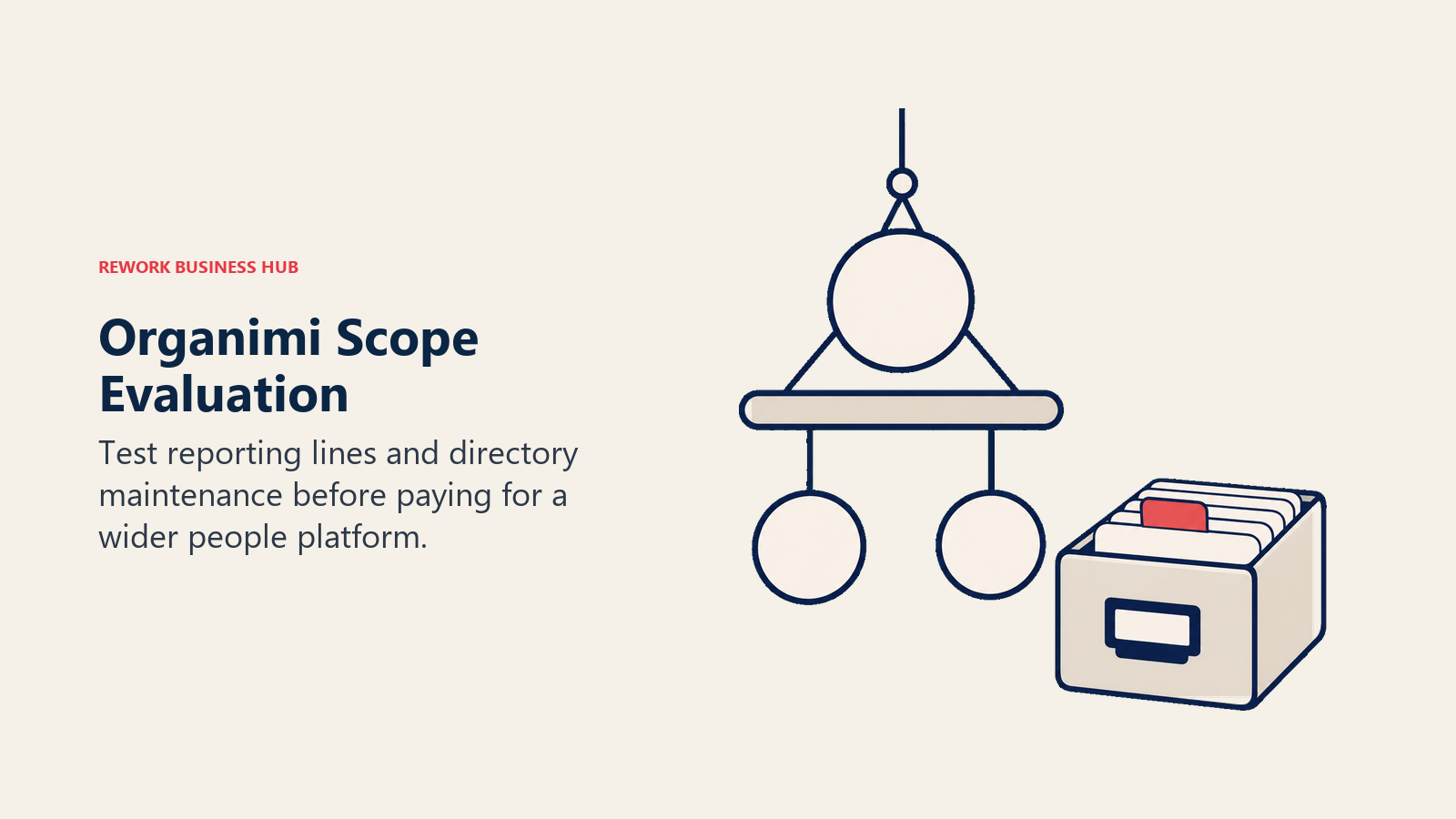
The pricing model is the point. Organimi charges a flat account fee, not a per-employee rate, and its published tiers cap admins and owners rather than employees. At 800 people, ChartHop Core costs $48,000 a year. Organimi Premium is $300 a year. Those two products are not equivalent, and pretending otherwise would be dishonest, but if the chart is genuinely all you need, that difference funds a lot of other things. Note the fine print: Organimi's page prices everything annually and directs organizations with thousands of employees to a quote.
| What you get | What you don't |
|---|---|
| A flat account price instead of a per-employee rate | Any HR system of record underneath the chart |
| Matrix and governance charts on Premium | Headcount planning or scenario modeling |
| Unlimited traditional charts on both paid tiers | Monthly billing (every tier is charged annually) |
| API access on Enterprise | A free plan on the published pricing page |
Pricing: Basic $13 per month charged annually, limited to 3 admins and owners. Premium $25 per month charged annually, unlimited admins and owners, adds matrix and governance charts. Enterprise is a quote and adds API access. Annual billing only. Source: organimi.com/pricing. Best for: Companies whose entire ChartHop use case is the chart and the directory, at any headcount where a flat fee beats a per-employee rate. Not ideal for: Anyone who needs employee records, time off, compensation, or planning data in the same tool.
2. Workleap Pingboard: The Familiar Name That No Longer Prices Like It Used To
Pingboard was for years the default answer to "we want a nicer org chart and directory than our HRIS gives us," sold at a modest per-user rate. That product still exists and still does the job well, with automatic chart syncing, a photo-forward directory, and out-of-office and org announcements. What changed is how you buy it.
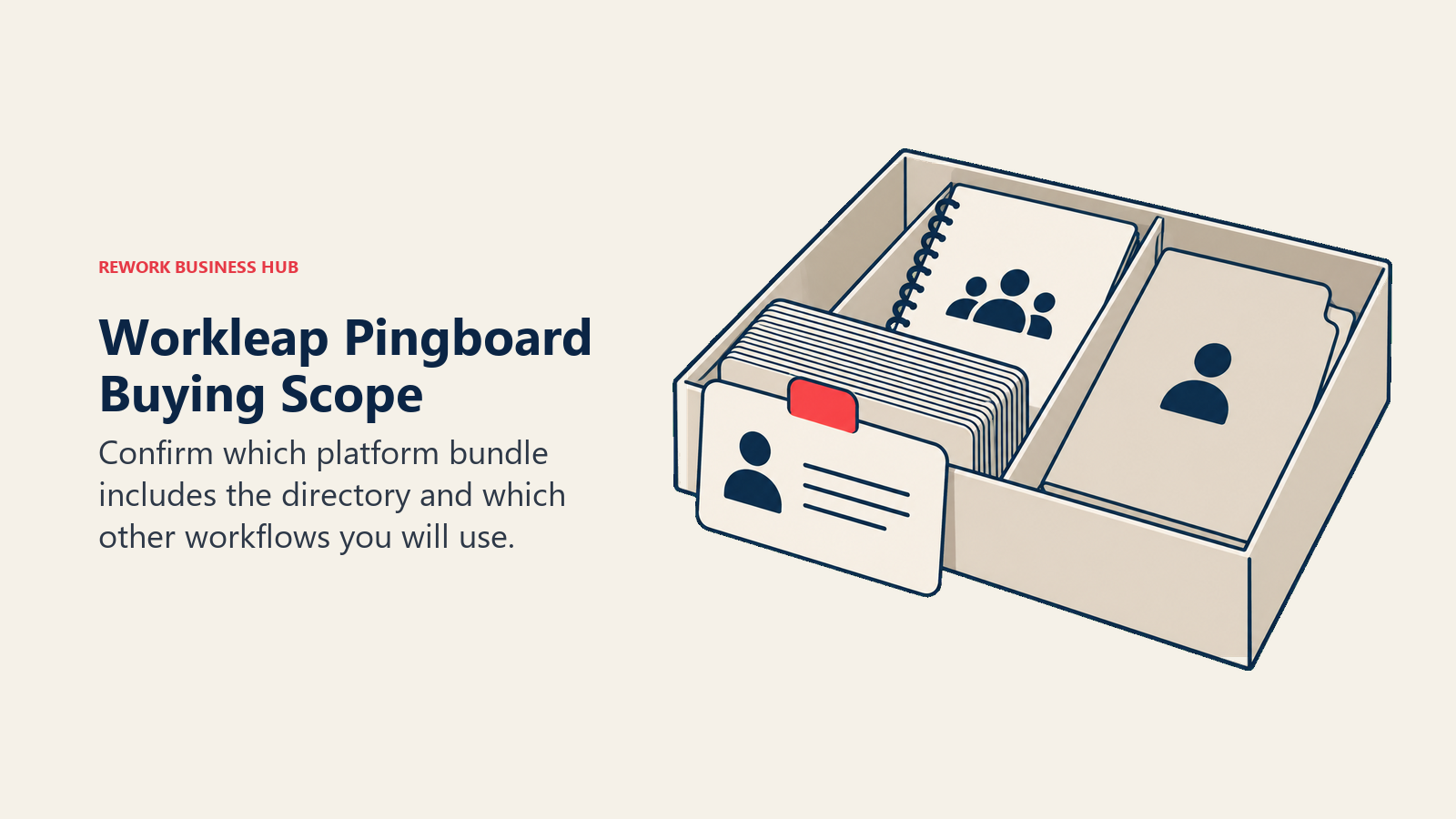
Pingboard is now Workleap Pingboard, folded into the Workleap platform, and pingboard.com/pricing redirects to workleap.com/pricing. There is no standalone Pingboard per-user price on that page any more. Workleap sells annual platform plans instead, with "Org chart and people directory" listed as a feature of Standard and above. If you were budgeting from an old Pingboard quote, throw it out and re-scope: you are now buying a people platform that includes engagement surveys and onboarding, and the chart comes along with it. That is a good deal if you wanted those things and a poor one if you did not.
| What you get | What you don't |
|---|---|
| Org chart and people directory from the Standard tier up | A standalone per-user Pingboard price |
| Engagement, onboarding and performance on the same contract | Monthly billing (Workleap plans are billed annually) |
| A published entry price, unusual in this half of the list | A published rate above 250 employees |
| One vendor instead of a chart tool plus a survey tool | An HRIS to act as the source of truth |
Pricing: No standalone Pingboard per-user price is published. Workleap plans are billed annually: Standard from $4,999 USD per year, Pro from $11,999 USD per year, Enterprise custom for 250+ employees. Source: workleap.com/pricing. Best for: Companies under 250 employees that want the chart and directory alongside engagement and onboarding on a single annual contract. Not ideal for: Buyers who specifically wanted the old cheap standalone Pingboard seat price, or organizations that need only a chart.
3. BambooHR: The System of Record ChartHop Charges a Module For
If your ChartHop bill has the HRIS module on it, BambooHR is the most direct comparison in this list, and the one where the math is least flattering to ChartHop. BambooHR is the US mid-market default for employee records, time off, documents, onboarding, e-signature and reporting, with an org chart included rather than sold as a tier. Its reputation for onboarding speed is deserved, and it publishes its prices, which puts it in a small minority here.
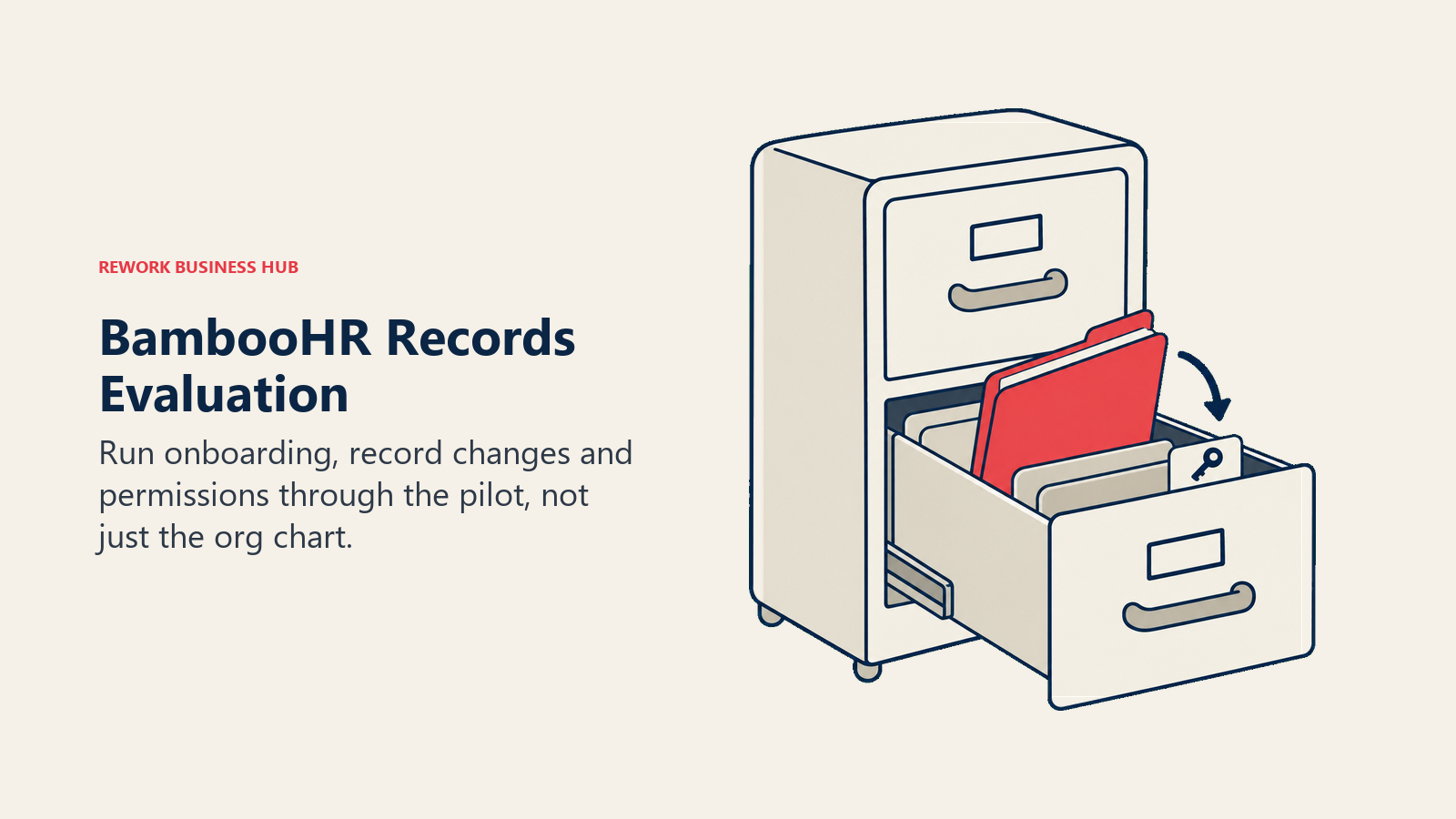
Run the comparison honestly. BambooHR Core is $10 per employee per month and Pro is $17. ChartHop Core plus HRIS plus Headcount Planning plus Compensation is also $17. At 300 employees both are $61,200 a year, and at 800 both are $163,200. The difference is what you get for it: BambooHR gives you the system of record and treats analytics as reporting, while ChartHop gives you the analytics layer and treats records as a module. Neither is wrong. But a company paying ChartHop's full stack price for a thin HRIS should know it is paying BambooHR Pro money. If BambooHR is itself the tool you are shopping away from, see our BambooHR alternatives guide, and if it is down to two finalists, we have a direct Deel versus BambooHR comparison.
| What you get | What you don't |
|---|---|
| Published per-employee pricing on every tier | Payroll, benefits or time included in the base rate |
| A flat monthly rate at 25 employees or fewer | ChartHop's depth of scenario planning |
| Org chart, records, time off and onboarding as standard | Deep workforce analytics or benchmarking |
| A real system of record, not a data layer on top of one | Native global payroll outside the US |
Pricing: Core $10 per employee per month, Pro $17, Elite $25. For companies with 25 employees or fewer, pricing is a monthly flat rate starting at $250 USD per month. Payroll, Benefits Administration, Time and Attendance, and Global Employment are separately priced add-ons, with a 15% discount for combining Payroll and Benefits Administration on US employees. Source: bamboohr.com/pricing. Best for: US companies between 25 and 500 employees that want the system of record first and will accept standard reporting instead of a dedicated analytics layer. Not ideal for: Multi-country employers needing native global payroll, or teams whose core need is scenario-based workforce planning.
4. HiBob: The Modern HRIS With People Data Worth Querying
HiBob (the product is usually called Bob) is the closest thing in this list to "ChartHop's data ambition inside an actual HRIS." Flexible org structures that handle dotted lines, matrix teams and multi-entity groups, a genuinely good org chart, and an analytics module that mid-market People teams actually use rather than export to a spreadsheet. For a company between roughly 100 and 1,500 employees that wants one platform for records, culture and reporting, it is a strong finalist.
The catch is transparency. HiBob's pricing page is a demo request form with no plan names and no figures on it, so any specific per-employee number you see quoted for Bob in a third-party listicle did not come from HiBob. Expect a per-employee-per-month quote scoped to headcount and modules, and expect modules: compensation, performance and surveys are typically priced separately, which is the same structural pattern that pushed you off ChartHop in the first place. Ask for the fully loaded number before comparing. If Bob is your incumbent rather than your candidate, see our HiBob alternatives guide.
| What you get | What you don't |
|---|---|
| Flexible org structures for matrix and multi-entity companies | Any published price to budget against |
| Strong analytics inside the HRIS, not bolted on | A self-serve signup path |
| Modern interface that drives real employee adoption | Escape from modular pricing |
| Good fit for scaling companies past 100 people | A cheap entry point for small teams |
Pricing: Quote-only. HiBob publishes no plan names and no figures; its pricing page is a demo request form. Expect a per-employee-per-month quote with modules priced separately. Best for: Scaling companies of roughly 100 to 1,500 employees that want a modern HRIS whose people data is worth reporting on. Not ideal for: Buyers who need a price before a sales call, or small teams under 50 people.
5. Rippling: One Employee Record Driving HR, IT and Spend
Rippling's argument against ChartHop is structural rather than featural. Instead of layering analytics over an HR system, Rippling makes one employee record the trigger for everything downstream: payroll, benefits, device provisioning, app access, corporate cards and expense policy. When someone changes manager in the chart, approvals, spend limits and app permissions move with them. For a company where the org chart is genuinely the control plane for operations, that is a materially different product from a visualization tool.
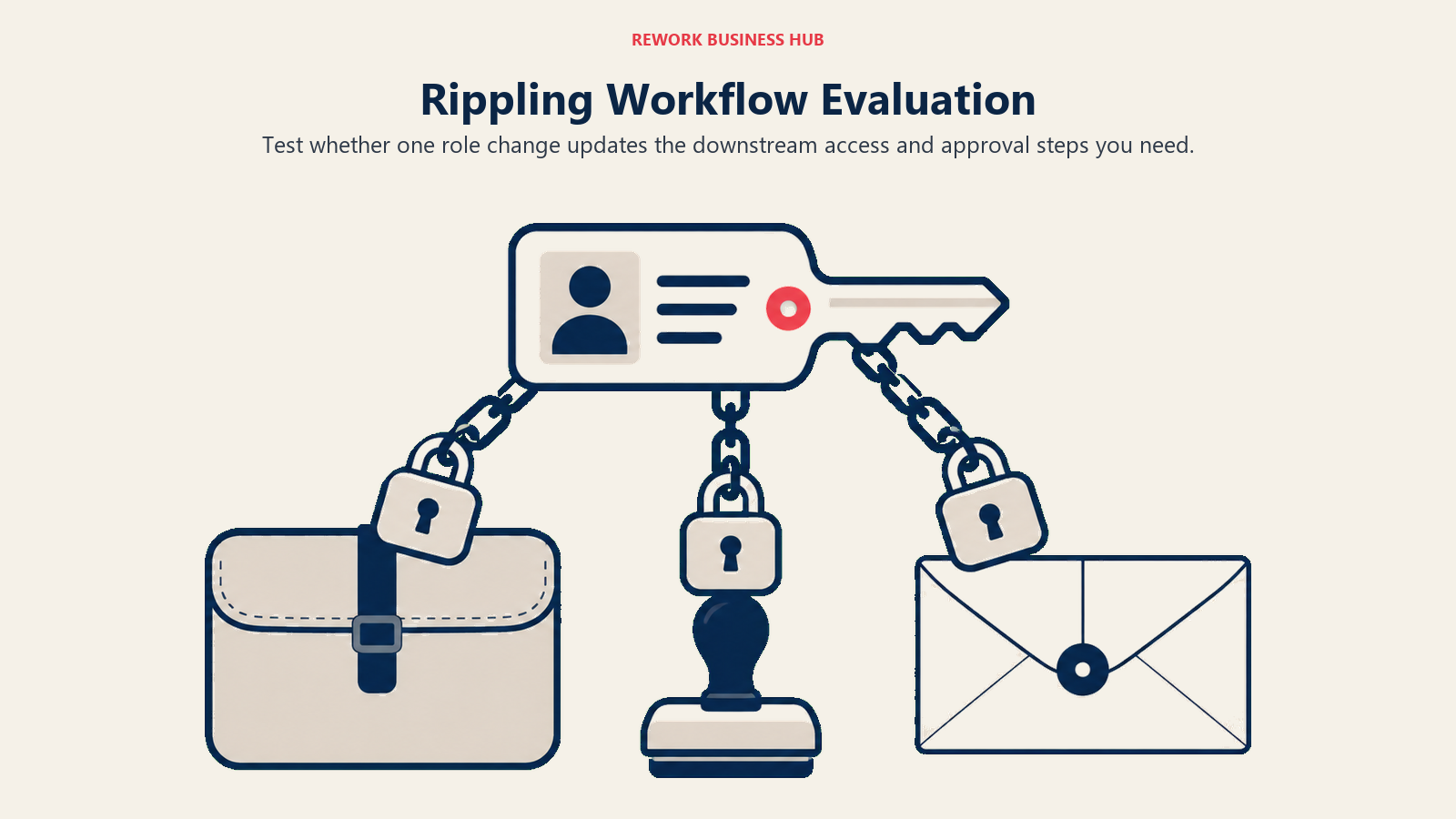
Rippling also publishes nothing. Its pricing page says it will send a custom quote once you tell it which services you need, and its own FAQ notes that most products bill per employee per month with some carrying a monthly base fee. You will see "$8 per user per month" repeated widely for Rippling. That figure is not on Rippling's page, so treat it as folklore rather than a budget input, and get a quote scoped to the exact modules you want. For deeper comparisons, see our Rippling alternatives guide and the head-to-head on BambooHR versus Rippling.
| What you get | What you don't |
|---|---|
| HR, IT and finance driven off one employee record | Any published price whatsoever |
| Org changes that propagate to access and spend | A predictable bill without a sales conversation |
| Deep automation and workflow across departments | A lightweight option for a small team |
| Modular purchasing across a very wide product surface | Simplicity, if you only wanted a chart |
Pricing: No published figures. Rippling's pricing page asks which services you need and returns a custom quote. Its FAQ indicates most products are billed per employee per month, with some carrying a monthly base fee. Best for: Operations-led companies that want the org chart to actually drive access, devices and spend, not just describe them. Not ideal for: Teams that need a budget number today, or buyers whose scope is genuinely just a chart and a directory.
6. Deel: Global HR Under the Chart, and Not Free
Deel earned its reputation on contractor payments and employer of record services, then built an HRIS underneath. For a company whose people data problem is really a multi-country problem (entities in six markets, contractors in four more, and no single view of who works where), Deel solves something ChartHop was never designed to solve, then gives you the chart on top of it.
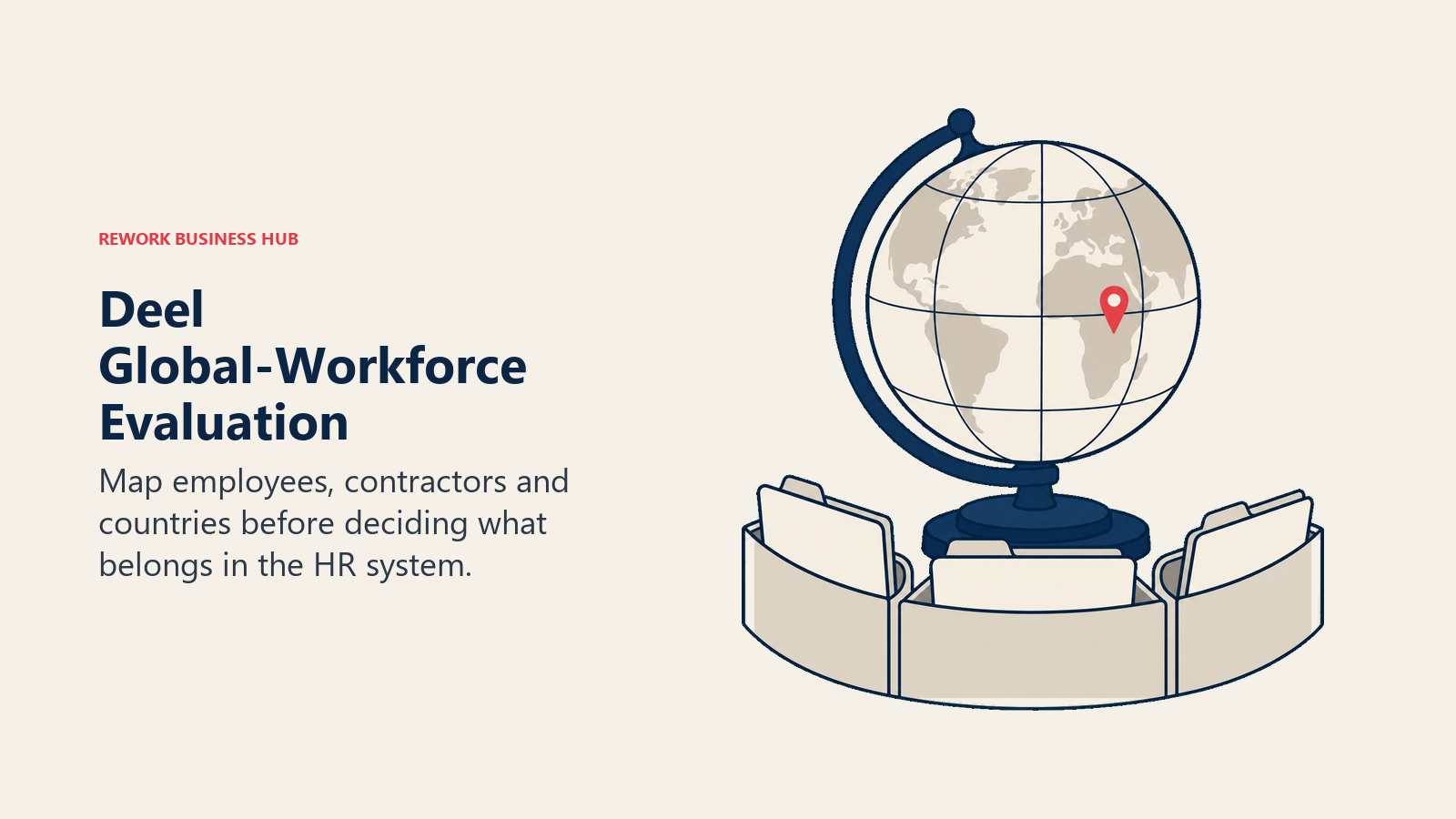
One correction worth making loudly, because it appears in a great many comparison articles: Deel HR is not free. The widely repeated line about Deel HR being free forever up to 200 employees is stale. Deel HR Core starts at $5 per employee per month, which happens to be exactly ChartHop Core's rate, except that it is buying you an HR system rather than a data layer. The rest of Deel's catalog prices separately and steeply, which is normal for global employment. For alternatives, see our Deel alternatives guide.
| What you get | What you don't |
|---|---|
| A self-serve published HR entry rate | A free HR tier (that claim is outdated) |
| Genuine multi-country coverage and compliance | Cheap EOR or contractor-of-record pricing |
| One record spanning employees and contractors | ChartHop's depth of scenario planning |
| Strong fit for distributed and remote-first teams | A reason to buy it if you operate in one country |
Pricing: Deel HR Core starts at $5 per employee per month and covers worker profiles, org chart, time off, job architecture, workflows and people analytics. Two higher levels exist, Advanced (adding performance, goals, learning and surveys) and Elite (adding workforce planning and compensation management), with no published figures for either. Other Deel products price separately: Find Talent (ATS) $14 per worker per month, Contractors $49 per contractor per month, Contractor of Record $325, US PEO $125 per employee per month, and EOR $599 per employee per month. Source: deel.com/hr Best for: Distributed companies that need global employment and compliance underneath the org chart, at a published entry rate. Not ideal for: Single-country teams that will never use the global machinery they are paying to have available.
7. Personio: European Mid-Market HR With the Compliance Built In
Personio is the European counterweight to BambooHR: an all-in-one HR platform for mid-market companies, built around European employment practice rather than adapted to it. Absence policies, working time rules, document handling and approval chains reflect how HR actually runs in Germany, the Netherlands, Spain and the UK, and that saves a genuine amount of configuration work compared with retrofitting a US-first system.
Personio does not publish prices. Its pricing page did not return figures to repeated automated checks in August 2026, and the vendor sells through a sales conversation scoped to headcount and modules. Expect a per-employee-per-month quote with a minimum contract, and expect recruiting, performance and compensation to be scoped as separate modules. That structure will feel familiar if you are leaving ChartHop for exactly that reason, so make sure the fully bundled quote is what you compare, not the entry tier. See our Personio alternatives guide for the wider European field.
| What you get | What you don't |
|---|---|
| European employment practice built in, not configured in | Any published pricing figure |
| Strong absence, contract and document handling | A self-serve signup |
| A real system of record for EU mid-market companies | ChartHop's analytics depth |
| Recruiting and performance available on the same platform | Escape from modular pricing |
Pricing: Quote-only. Personio publishes no figures; expect a per-employee-per-month quote scoped to headcount and selected modules. Best for: European mid-market companies between roughly 50 and 2,000 employees that want HR compliance handled natively. Not ideal for: US-only teams, or any buyer who needs a price before booking a demo.
8. Sage People: Enterprise HR on the Salesforce Platform
Sage People is the option for larger organizations that want a configurable enterprise HR system and are comfortable with a platform-and-partner model. Built on Salesforce, it inherits that platform's configurability, reporting and integration story, which matters if Salesforce is already your operational backbone. Workforce visibility, global HR administration and reporting are its strengths, and it is built for organizations well past the point where BambooHR or Bob would be the right shape.
Sage does not publish a price for it. The old Sage People pricing page no longer exists, and every route ends in a sales conversation with an implementation partner attached. Budget accordingly: an enterprise HR platform of this type carries a per-employee subscription plus a distinct implementation project, and the second number is often the one that surprises people. For the enterprise field more broadly, see our Workday alternatives guide.
| What you get | What you don't |
|---|---|
| Enterprise configurability on the Salesforce platform | A published price, or a pricing page at all |
| Strong global HR administration and reporting | A fast self-serve implementation |
| Good fit where Salesforce is already the backbone | A sensible option under 500 employees |
| Partner ecosystem for complex rollouts | An implementation you can do in a month |
Pricing: Quote-only. Sage no longer publishes a Sage People pricing page. Expect a per-employee subscription plus a separately scoped implementation project through a partner. Best for: Organizations of 500+ employees, especially Salesforce-centric ones, that want configurable enterprise HR. Not ideal for: Mid-market teams wanting fast time to value, or anyone hoping to avoid an implementation fee.
9. Visier: The Analytics Layer, Done Properly
If what you valued in ChartHop was the analytics and you found them thinner than you hoped, Visier is where that road leads. It is a dedicated people analytics platform, not an HR system: it ingests data from your HRIS, payroll, ATS and finance systems, models it, and answers questions about attrition risk, span of control, internal mobility, diversity representation and cost of workforce, with benchmarking against a large aggregated dataset. That benchmarking is the thing ChartHop cannot match, because it requires scale that only a dedicated analytics vendor accumulates.
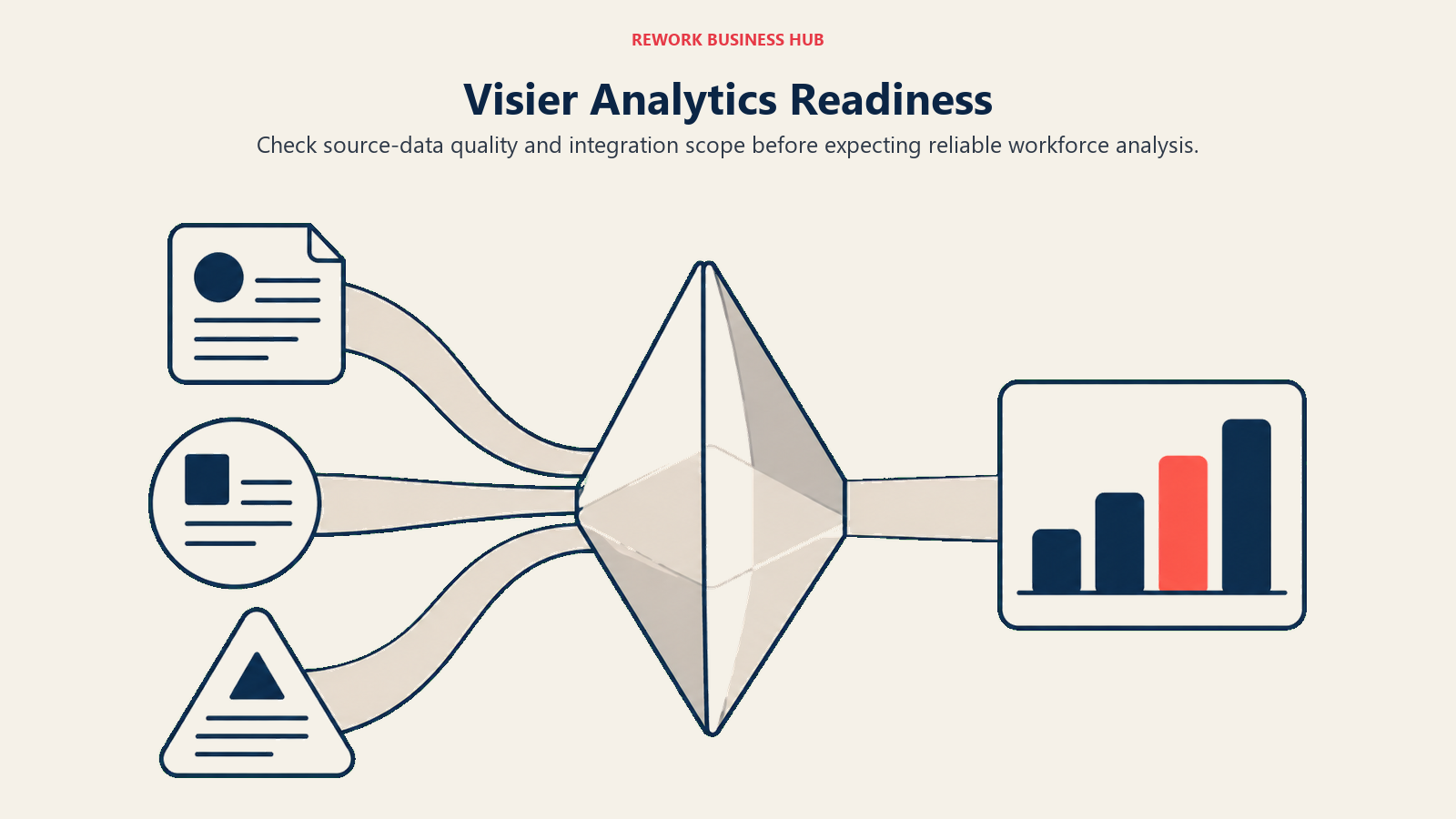
Two honest caveats. Visier is quote-only, with no figures published anywhere on its site, and it is priced for organizations well above the mid-market. And it deliberately does not replace your system of record, so it is an addition to your stack rather than a swap. A company leaving ChartHop for Visier usually ends up buying Visier plus an HRIS, and should price the pair. For a wider survey of this category, see our roundup of workforce planning software for 2026.
| What you get | What you don't |
|---|---|
| The deepest dedicated people analytics in this list | Any published price |
| Cross-industry benchmarking at real scale | A system of record (it reads yours) |
| Predictive models for attrition and mobility | A fit for companies under about 1,000 employees |
| Answers finance will accept as evidence | A fast, cheap implementation |
Pricing: Quote-only. Visier publishes no figures on its site and has no self-serve pricing page. Expect an enterprise subscription scoped to headcount and data sources. Best for: Organizations of 1,000+ employees with a dedicated people analytics function and multiple source systems to unify. Not ideal for: Mid-market companies looking for one tool to replace ChartHop outright, since Visier does not hold your records.
10. Workday: When People Planning and Financial Planning Are the Same Meeting
Workday belongs on this list for one specific buyer: the organization where headcount planning is genuinely a finance exercise, and the argument between People and Finance is really an argument between two systems. Workday HCM holds the workforce data, Workday Adaptive Planning holds the financial model, and running both on one data model removes the reconciliation step that eats most planning cycles. That is a real answer to a real problem, and no chart tool addresses it.
It is also the heaviest option here by a wide margin. Workday publishes no pricing, quotes per employee per module, and carries an implementation that is measured in quarters rather than weeks. Nobody buys Workday to replace an org chart tool. They buy it because they have outgrown the entire category and are consolidating HR and finance planning at the same time. If that is not your situation, the cost and effort are impossible to justify. See our Workday alternatives guide if you are being pushed toward it and want the field.
| What you get | What you don't |
|---|---|
| One data model across HR and financial planning | Any published price |
| Enterprise-grade workforce and cost modeling | A short implementation |
| Depth no mid-market platform reaches | A justifiable cost below about 1,000 employees |
| Scenario planning finance will actually trust | Self-serve anything |
Pricing: Quote-only. Workday publishes no figures. Expect a per-employee-per-module subscription plus a substantial separate implementation cost. Best for: Enterprises consolidating HR and financial planning where headcount and budget are decided in the same process. Not ideal for: Anyone under roughly 1,000 employees, and anyone whose actual complaint was the price of a chart.
11. Dayforce Strategic Workforce Planning: Where Agentnoon Went
If you shortlisted Agentnoon for org design and scenario modeling, stop looking for it as an independent vendor. Dayforce announced its acquisition of Agentnoon on 7 October 2025, agentnoon.com now redirects to Dayforce's Strategic Workforce Planning page, and that product is the successor. Agentnoon launched in 2021 from Canada and had more than 100 enterprise clients across 15+ countries at acquisition, so the underlying org design engine is proven, it just has a different name and a different sales motion now.
What it does well is the thing ChartHop's Headcount Planning module gestures at: drag-and-drop reorganization modeling, cost impact per scenario, span of control and layer analysis, and side-by-side comparison of restructuring options before anyone hears about them. What it does not do is arrive cheap or standalone. Dayforce publishes no price for it, and it is scoped as part of a Dayforce HCM relationship rather than a self-serve chart tool. For the general category view, see our roundup of workforce management software for 2026.
| What you get | What you don't |
|---|---|
| Agentnoon's org design and scenario engine, now supported at scale | Agentnoon as an independent product or price |
| Cost modeling per restructuring scenario | Any published figure |
| Span of control and layer analysis | A standalone, mid-market entry point |
| Integration with a full HCM data model | A fast self-serve trial |
Pricing: Quote-only. Dayforce publishes no price for Strategic Workforce Planning. It is scoped within a Dayforce relationship rather than sold self-serve. Best for: Enterprises doing genuine organizational design work, especially existing or incoming Dayforce customers. Not ideal for: Mid-market teams that wanted Agentnoon's approachable standalone product, which no longer exists as such.
12. TeamOhana: Headcount Planning as Its Own Discipline
TeamOhana is the most focused tool in this list, and the one that reframes the problem best. Its premise is that headcount planning fails not because the chart is out of date but because Finance's approved plan, the recruiting pipeline, and actual hires live in three places that never reconcile. It connects the approved plan to the ATS and the HRIS so that every open role has a status, an owner, and a real cost, and the plan-versus-actual number is live rather than assembled in a spreadsheet the day before a board meeting.
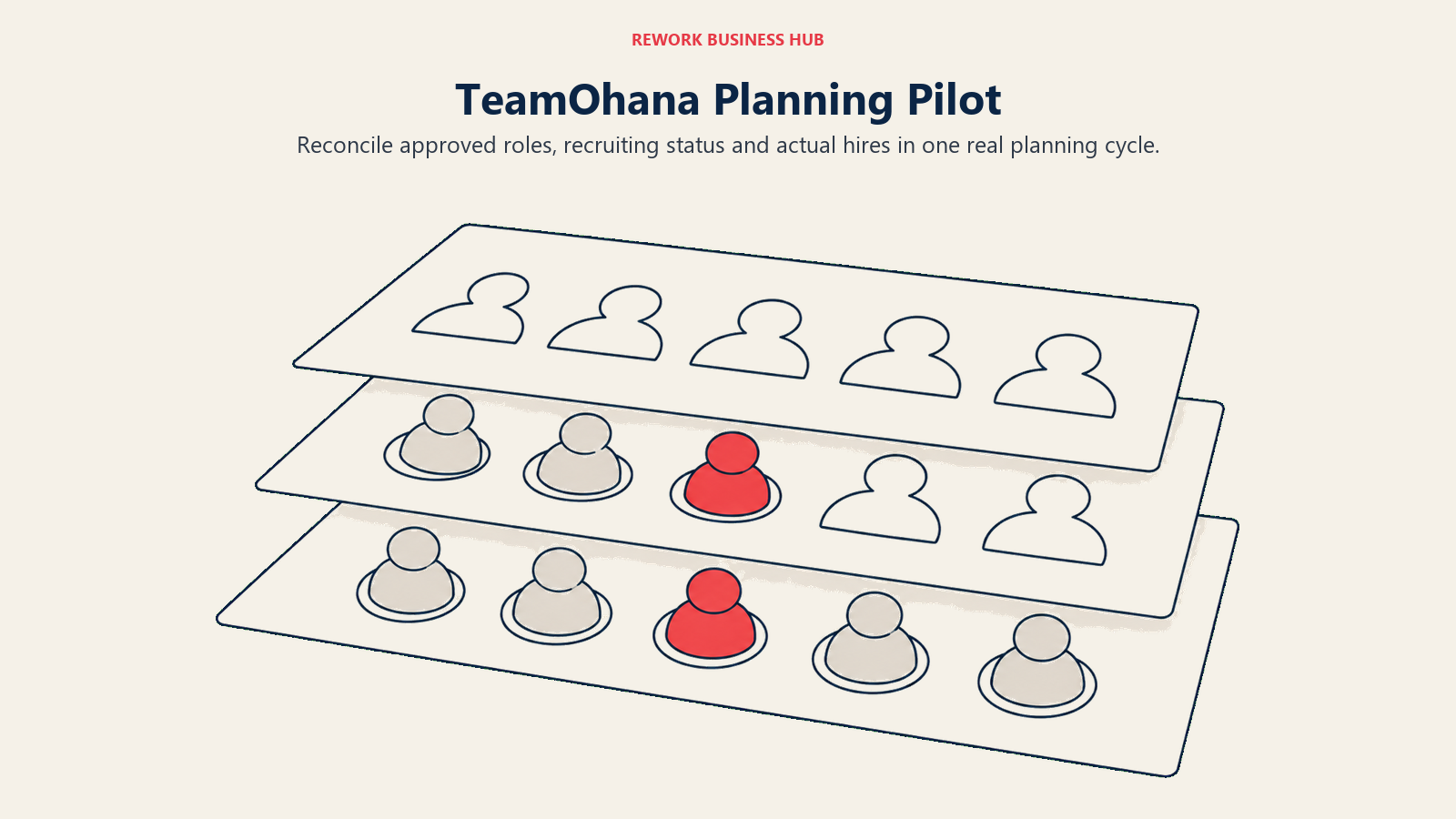
Pricing is unusual for this list in that TeamOhana publishes it, and unusual in structure: annual contracts with a one-time implementation fee at every tier, including the free one. That last detail is easy to miss. A "free" plan that carries a $5,000 implementation fee is a $5,000 first-year decision, so read the tier table as a total, not as a monthly rate.
| What you get | What you don't |
|---|---|
| Published annual pricing, rare in this half of the list | An implementation-free entry, even on the free tier |
| Approved plan versus actual headcount, live | A system of record or an org chart tool |
| Real cost per open role, tied to finance | Monthly billing |
| A single purpose executed properly | Performance, engagement or compensation management |
Pricing: Free tier $0 per year plus a $5,000 one-time implementation fee. Professional from $15,000 per year plus $5,000 implementation. Growth from $45,000 per year plus $15,000 implementation. Enterprise from $95,000 per year, with implementation scoped during evaluation. Source: teamohana.com/pricing. Best for: Companies of roughly 200 to 5,000 employees where Finance and People need one live number for approved versus actual headcount. Not ideal for: Teams that need an HRIS or an org chart tool, or anyone unprepared for an implementation fee at every tier.
13. Lattice: The Performance Data Slice, and What It No Longer Sells
Lattice covers the part of ChartHop's surface that is about performance, goals, engagement and compensation review cycles. It is mature, well-designed, and the reference implementation for continuous performance management in the mid-market. If the module on your ChartHop invoice you actually use is Performance or Engagement, Lattice does that job with more depth.
The important 2026 fact is what Lattice stopped selling. In November 2025 it announced it was exiting HRIS and payroll: payroll access ended on 31 March 2026 and HRIS ended on 31 July 2026. Both of those dates have passed. So Lattice is now firmly a performance and engagement platform that sits on top of someone else's system of record, and there is no point asking Lattice for an HRIS rate, because there is no longer a product to quote. Pricing is per seat per module and carries a $4,000 minimum annual agreement, billed annually in USD only, which makes it a poor fit for very small teams regardless of the per-seat math. For the wider performance field, see our Lattice alternatives guide.
| What you get | What you don't |
|---|---|
| Mature performance, goals and engagement tooling | HRIS or payroll (both retired in 2026) |
| Published per-seat pricing per module | A single all-in price |
| Compensation review cycles as an add-on | Monthly billing or non-USD billing |
| A strong layer on top of an existing HRIS | A sensible fit below the $4,000 annual minimum |
Pricing: Performance $10 per seat per month, Goals and OKRs $8, Engagement $4. Add-ons: Compensation +$6, Grow +$4. A $4,000 minimum annual agreement applies, billed annually, USD only. Source: lattice.com/pricing. Best for: Companies that already have a system of record and want serious performance and engagement tooling on top of it. Not ideal for: Anyone hoping to consolidate HRIS and performance into one vendor here, since Lattice exited HRIS in July 2026.
What ChartHop Still Does Better Than Most of This List
Two things, and they are worth weighing before you switch.
First, ChartHop publishes its numbers. Of the 13 tools above, seven publish nothing at all: HiBob, Rippling, Personio, Sage People, Visier, Workday and Dayforce Strategic Workforce Planning are all quote-only. You can build a ChartHop budget in ten minutes from a public page. You cannot do that for most of the alternatives, and the ones that hide their pricing are not cheaper for hiding it. That transparency has real value during a procurement cycle, and it is the reason a modular price list can be criticized in the first place: you can only object to a structure you can see.
Second, the modular structure is a genuine feature for the buyer who wants exactly two of the six things. Paying $9 per employee per month for Core plus HRIS is a coherent purchase, and cheaper than most full HRIS platforms at the same headcount. The structure only turns against you when the module count climbs and nobody re-runs the total. That is a review discipline problem as much as a vendor problem, and it is worth putting a calendar reminder against your renewal regardless of which tool you pick.
How to Choose: Decision Framework
Start with the constraint you cannot compromise on, then shortlist the two tools built closest to it. Everything else is negotiable.
| If you need... | Best pick |
|---|---|
| Only an org chart and a directory, at the lowest possible cost | Organimi |
| A chart and directory alongside engagement and onboarding | Workleap Pingboard |
| A US system of record with published pricing | BambooHR |
| A modern HRIS whose analytics your People team will actually use | HiBob |
| The org chart to drive access, devices and spend | Rippling |
| Global employment and compliance under the chart | Deel |
| European employment practice built in natively | Personio |
| Configurable enterprise HR on the Salesforce platform | Sage People |
| Deep people analytics with external benchmarking | Visier |
| Workforce planning and financial planning on one data model | Workday |
| Organizational design and restructuring scenario modeling | Dayforce Strategic Workforce Planning |
| One live number for approved versus actual headcount | TeamOhana |
| Performance, goals and engagement depth on an existing HRIS | Lattice |
And one framework for the money question specifically, since that is what brought most readers here:
| Your situation | What to do |
|---|---|
| Paying for Core only | You are paying $5 per employee per month for a chart. Price Organimi and check whether your HRIS chart is good enough. |
| Paying for Core plus one module | This is the structure working as intended. Compare against the single-purpose tool for that module. |
| Paying for Core plus three or more modules | You are in full-HRIS price territory. Compare against BambooHR Pro, HiBob and Rippling, not against chart tools. |
| Paying for the full stack | Price a dedicated HRIS plus a dedicated analytics or planning tool separately. Two focused tools often beat one broad one at this level. |
| Only using the Headcount Planning module | Look at TeamOhana, which does that one job deeply and prices it publicly. |
Frequently Asked Questions about ChartHop Alternatives
How much does ChartHop actually cost in 2026?
ChartHop Core is $5 per employee per month, billed annually, and covers people analytics, dashboards, the org chart, employee profiles, map view and company calendar. Modules add on top per employee per month: HRIS, Headcount Planning, Compensation and Performance at $4 each, Engagement and Goals at $3 each. There is no free plan, and ChartHop AI Pro is pay as you go with no published figure.
Is ChartHop $8 per employee per month?
No. That figure circulates widely in third-party comparisons and is out of date. ChartHop's published Core rate is $5 per employee per month billed annually, with modules priced separately on top.
Why do companies leave ChartHop?
Rarely because of the product. The usual trigger is the module math: a company that adds HRIS, Headcount Planning and Compensation to Core reaches $17 per employee per month, which is $61,200 a year at 300 employees. At that point the honest comparison set is full HRIS platforms rather than org chart tools, and buyers start asking whether they are getting HRIS value for HRIS money.
What is the cheapest ChartHop alternative for just an org chart?
Organimi. Its Basic tier is $13 per month charged annually and Premium is $25 per month charged annually, both flat account fees rather than per-employee rates, with the published limits applying to admins and owners rather than employees. If a chart and a directory are the entire requirement, that is roughly $300 a year against $48,000 a year for ChartHop Core at 800 employees.
Is Pingboard still available as a standalone org chart tool?
Not at a standalone price. Pingboard is now Workleap Pingboard, folded into the Workleap platform, and pingboard.com/pricing redirects to workleap.com/pricing. Workleap plans are billed annually from $4,999 USD per year for Standard and $11,999 USD per year for Pro, with Enterprise custom above 250 employees, and org chart and people directory listed as a Standard feature.
Is Deel HR free up to 200 employees?
No. That claim is stale and still appears in many comparison articles. Deel HR Core starts at $5 per employee per month. Deel's other products price separately, including US PEO at $125 per employee per month and EOR at $599 per employee per month.
Can I use Lattice as my HRIS instead of ChartHop?
No. Lattice announced in November 2025 that it was exiting HRIS and payroll. Payroll access ended on 31 March 2026 and HRIS ended on 31 July 2026, so both are gone. Lattice now sells performance, goals, engagement and compensation tooling that sits on top of a separate system of record, starting at $10 per seat per month for Performance with a $4,000 minimum annual agreement.
What happened to Agentnoon?
Dayforce acquired it, announced on 7 October 2025. The agentnoon.com domain now redirects to Dayforce's Strategic Workforce Planning page, which is the successor product. Dayforce publishes no price for it, so it is a quote-only enterprise purchase rather than the standalone tool Agentnoon used to be.
How much does Rippling cost per user?
Rippling publishes no figures at all. Its pricing page asks which services you need and returns a custom quote, and its FAQ notes that most products bill per employee per month with some carrying a monthly base fee. The "$8 per user per month" number that circulates online does not appear on Rippling's own pricing page, so do not budget from it.
Do I need a separate people analytics tool, or is my HRIS enough?
It depends on how many source systems you have. If HR data lives in one HRIS, that platform's reporting is usually enough. If it is spread across an HRIS, payroll, an ATS and a finance system, a dedicated tool like Visier is what unifies them. Data quality is the limiting factor either way: only 29% of HR professionals whose organizations use people analytics rate their overall data quality as high or very high, per SHRM research.
What to Do Next
Open your ChartHop invoice and count the modules, then multiply the total rate by your headcount and twelve. That single annual figure tells you which comparison set you belong in: under $9 per employee per month, compare against chart tools and single-purpose products; at $13 and above, compare against full HRIS platforms and price a dedicated planning tool separately. Then take your top two candidates and run them against one real workflow, a live reorganization model or a genuine quarter of headcount planning, rather than a demo dataset. And ask every quote-only vendor on your shortlist for the fully loaded number including modules and implementation before you compare anything, because the entry rate is never the price. For the wider category view, start with workforce planning software for 2026.

Principal Product Marketing Strategist
On this page
- Key Facts
- Which of the Three Jobs Do You Actually Have?
- What ChartHop Actually Costs in 2026
- The $5 Entry Price Is Real, and It Is Not What Most Buyers Pay
- Quick Comparison Table
- Capability Coverage by Job
- Team Size and Buyer Persona Fit
- 1. Organimi: The Flat Fee That Makes Per-Employee Pricing Look Silly
- 2. Workleap Pingboard: The Familiar Name That No Longer Prices Like It Used To
- 3. BambooHR: The System of Record ChartHop Charges a Module For
- 4. HiBob: The Modern HRIS With People Data Worth Querying
- 5. Rippling: One Employee Record Driving HR, IT and Spend
- 6. Deel: Global HR Under the Chart, and Not Free
- 7. Personio: European Mid-Market HR With the Compliance Built In
- 8. Sage People: Enterprise HR on the Salesforce Platform
- 9. Visier: The Analytics Layer, Done Properly
- 10. Workday: When People Planning and Financial Planning Are the Same Meeting
- 11. Dayforce Strategic Workforce Planning: Where Agentnoon Went
- 12. TeamOhana: Headcount Planning as Its Own Discipline
- 13. Lattice: The Performance Data Slice, and What It No Longer Sells
- What ChartHop Still Does Better Than Most of This List
- How to Choose: Decision Framework
- What to Do Next