Best Workforce Planning Software in 2026: 13 Tools for Headcount, Skills, and Budget Modelling
Turn this article into takeaways for your work.


Each assistant summarizes the article only for you and suggests best practices for your work.
Agentnoon no longer exists as an independent vendor (Dayforce acquired it, announced October 2025), Pingboard is now folded into Workleap with no standalone per-user price, and ChartHop's real entry rate is $5 per employee per month for Core, not the $8 that circulates on comparison sites.*
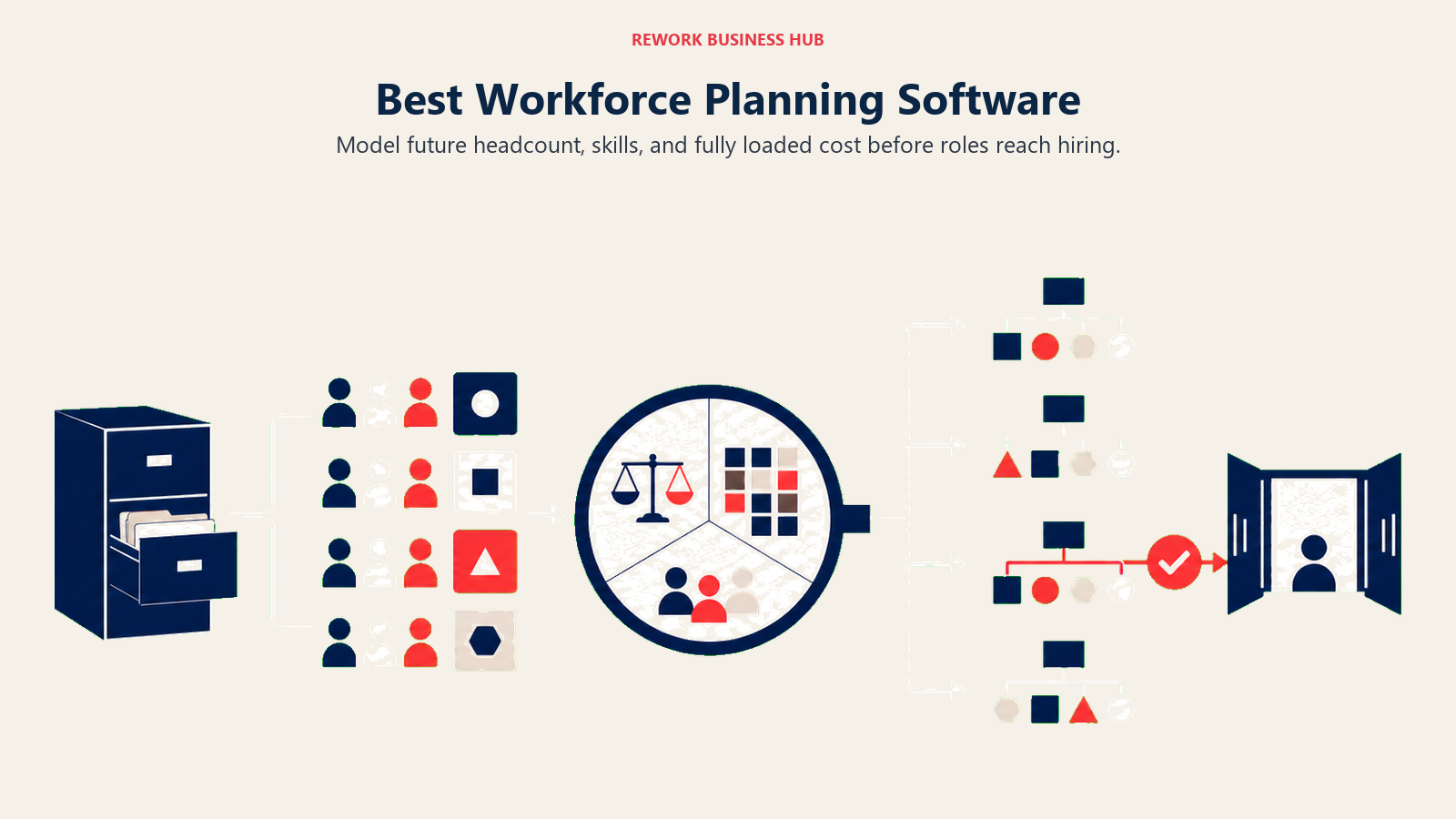
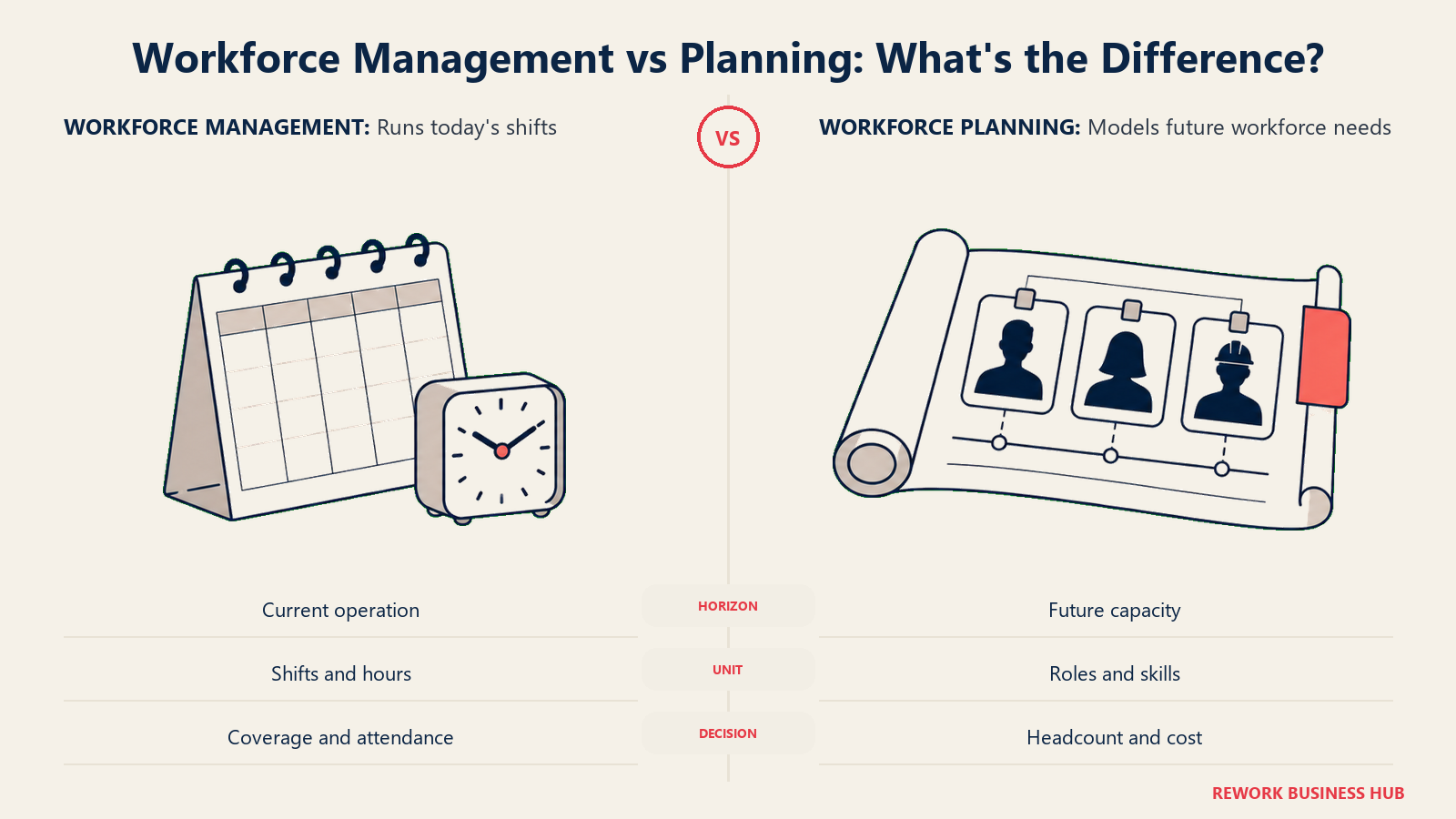
Workforce management software and workforce planning software sound like the same purchase and are not. Workforce management answers "who works Tuesday, did they take their legally required break, and how many hours does payroll owe them." Workforce planning answers "how many people, in which roles, with which skills, will we need eighteen months from now, what will that cost, and can we afford it." One tool runs the current schedule. The other decides whether the roles on that schedule should exist next year.
That distinction decides your shortlist. If you need rosters, clock-ins, and labour compliance, you want the operational category, covered in Best Workforce Management Software and Best Employee Scheduling Software. If you need a headcount model your CFO will sign off on, keep reading. The buyer here is usually a CHRO, a Head of People Ops, or a Finance Business Partner, and the tool usually sits in the gap between the HRIS (which knows who you have) and the FP&A stack (which knows what you can spend). Tools are evaluated on planning depth, data model, finance integration, and pricing transparency.
Key Facts
- Nearly 40% of the skills required on the job are set to change by 2030, and 63% of employers already cite skills gaps as the key barrier they face to business transformation, which is why role counts alone are no longer a sufficient plan. (World Economic Forum, Future of Jobs Report 2025)
- Total US employment is projected to grow just 3.1% between 2024 and 2034, reaching 175.2 million, far slower than the 13.0% growth recorded over the 2014 to 2024 decade. Hiring your way out of a capability gap gets harder from here. (US Bureau of Labor Statistics, Employment Projections 2024 to 2034)
- Employer compensation costs for private industry workers averaged $46.60 per hour worked in March 2026, of which wages were $32.60 (69.9%) and benefits $14.01 (30.1%). A headcount plan built on base salary alone understates the real cost of a role by roughly three-tenths. (US Bureau of Labor Statistics, Employer Costs for Employee Compensation)
- Only 21% of companies reported high or very high maturity in workforce planning in 2024, up from 14% the year before, making it one of the fastest-improving but still least-mature people practices. (Mercer, 2024/2025 Skills Snapshot Survey)
- 66% of managers and executives say most recent hires are not fully prepared for their roles, with lack of experience the most common failing, which is the gap a headcount-only plan cannot see. (Deloitte, 2025 Global Human Capital Trends)
Workforce Management or Workforce Planning? Settle This Before You Shortlist
Search traffic for "workforce planning software" pulls in two completely different buyers, and vendors happily sell to both under the same label. Here is the honest split.
| Question you are trying to answer | Category you need | Typical buyer | Where it lives |
|---|---|---|---|
| Who works Tuesday, and did they take their break? | Workforce management and scheduling | Ops manager, store or site lead | Alongside payroll and time clocks |
| How many hours will we owe in overtime this pay period? | Time and attendance | Payroll, HR ops | Inside the HRIS or payroll suite |
| How many people in which roles will we need in 18 months? | Strategic workforce planning | CHRO, VP People | Between the HRIS and FP&A |
| Is the hire the VP just requested actually in the approved budget? | Headcount planning | Finance Business Partner, People Ops | Wired into the financial plan |
| Which skills will the 2027 operating model require that we do not have? | People analytics and skills modelling | People Analytics Lead, CHRO | On top of HRIS and performance data |
| What does the org look like if we merge two functions? | Org design and scenario modelling | COO, Chief of Staff, CHRO | Standalone, fed by HRIS export |
| How many staff hours will demand require in store 42 next month? | Operational labour forecasting | Retail or hospitality ops director | Alongside the scheduling engine |
The last row is the one that trips people up most. A retail or hospitality operator searching "workforce planning" usually means labour demand forecasting for hourly staff, which is a different product built by different vendors (Quinyx, Legion) with a different unit of analysis: hours per store per day rather than roles per function per quarter. Both are legitimate. Buying one when you needed the other wastes a year.
The Four Shapes of Workforce Planning Software
| Shape | What it models | Unit of analysis | Tools here | Who owns it |
|---|---|---|---|---|
| Headcount planning | Approved and requested roles against budget | One req, one cost | TeamOhana, ChartHop, Deel, Rippling | Finance and People Ops jointly |
| People analytics and skills modelling | Supply, attrition, capability, internal mobility | Person and skill | Visier, ChartHop, HiBob, BambooHR | People Analytics or CHRO |
| Enterprise org design and scenario modelling | Whole operating models under alternative futures | Node, layer, span of control | Workday Adaptive Planning, Anaplan, Pigment, Dayforce, Orgvue | CHRO with COO and CFO |
| Operational labour forecasting | Demand-driven hours for an hourly workforce | Labour hour per site per day | Quinyx, Legion | Ops director |
Most failed evaluations in this category come from mixing these up on one shortlist. An org design tool will not police a req against a budget line, and a headcount planning tool will not tell you what span of control does to your management cost after a reorganisation.
Quick Comparison Table
| Tool | Best For | Starting Price | Key Strength | Key Limitation |
|---|---|---|---|---|
| Visier | People analytics at enterprise scale | Quote-only, no published figures | The deepest workforce analytics and benchmarking model here | You cannot see a price before a sales call |
| ChartHop | Mid-market org, headcount, and comp planning in one place | $5 per employee/month (Core, billed annually) plus $3 to $4 per module | Publishes a real, modular per-employee rate | Modules stack fast, so the headline $5 is rarely your actual bill |
| TeamOhana | Headcount planning wired to the approved budget | Free tier $0/year plus a $5K one-time implementation fee | The only vendor here publishing full annual contract values | Priced in annual contract bands, so it is not an SMB purchase |
| Workday Adaptive Planning | Workforce planning inside enterprise financial planning | Quote-only, no published figures | Workforce and financial plans share one model | Heaviest implementation on this list |
| Anaplan | Complex, multi-driver workforce and cost modelling | Quote-only, no published figures | Modelling flexibility no HR-native tool matches | Needs a modelling owner, not just an admin |
| Pigment | Fast-moving companies wanting a modern planning UI | Quote-only, no published figures | Fastest time to a usable workforce model among the EPM tools | Younger ecosystem than Anaplan or Adaptive |
| Dayforce Strategic Workforce Planning | Org design for Dayforce HCM customers | Quote-only, no published figures | Absorbed Agentnoon's org modelling in 2025 | The standalone Agentnoon product no longer exists |
| Orgvue | Large-scale org design and restructuring programmes | Quote-only, no published figures | Purpose-built for org design and workforce transformation | Consulting-led, and priced accordingly |
| HiBob (Bob) | Mid-market people analytics on top of a modern HRIS | Quote-only, pricing page is a demo request form | Strong analytics on data your HRIS already owns | No self-serve pricing at any tier |
| BambooHR | Small and mid-size teams needing clean people data first | Core $10 per employee/month; flat rate from $250/mo under 25 employees | Publishes real per-employee pricing across all tiers | Reporting, not scenario modelling |
| Deel | Global headcount planning across entities and worker types | Deel HR Core from $5 per employee/month | One record for employees, contractors, and EOR workers | Planning is a layer on HR data, not a modelling engine |
| Rippling | Headcount planning inside a unified workforce platform | No published figures at all, custom quote only | Headcount, spend, and approvals in one system of record | Publishes no price, and the widely quoted $8 figure is not on its site |
| Quinyx | Demand-driven labour forecasting for hourly workforces | Quote-only, no published figures | AI labour forecasting tied to the schedule | Forecasts hours, not strategic role plans |
Read that Starting Price column as a finding rather than a gap. Five vendors publish a real number (ChartHop, TeamOhana, BambooHR, Deel, and Organimi in the also-considered section below). Everyone else makes you talk to sales. For a reader trying to budget a project this quarter, that split is itself the buying signal.
What This Category Publishes, and What It Does Not
| Vendor | Publishes a figure? | What you can actually see | What you must ask for |
|---|---|---|---|
| ChartHop | Yes | Core rate plus every module rate, per employee per month | Enterprise tier, AI Pro |
| TeamOhana | Yes | Four tiers with annual contract values and implementation fees | Enterprise scoping |
| BambooHR | Yes | Three tiers per employee per month, plus a small-team flat rate | Add-on modules |
| Deel | Yes | Per-worker rates for HR, contractors, PEO, and EOR | Volume and multi-product bundles |
| Organimi | Yes | Two published annual tiers | Enterprise |
| Visier, HiBob, Rippling, Quinyx, Legion, Orgvue | No | Nothing | Everything |
| Workday Adaptive Planning, Anaplan, Pigment, Dayforce | No | Nothing | Everything, plus implementation |
| Workleap Pingboard | Platform only | Workleap platform tiers from $4,999 USD/year | Any standalone Pingboard rate, which no longer exists |
Two practical consequences. First, if you need a defensible budget number before you can even open an evaluation, start with the five vendors that publish, get a real quote from two that do not, and use the published rates as your anchor. Second, treat every "starting at" figure you find on a comparison site for the quote-only vendors as unverified. Rippling is the clearest example: the widely repeated $8 per user per month does not appear anywhere on Rippling's pricing page, which asks you to describe the services you need and promises a custom quote in return.
1. Visier: The Deepest People Analytics Model in the Category
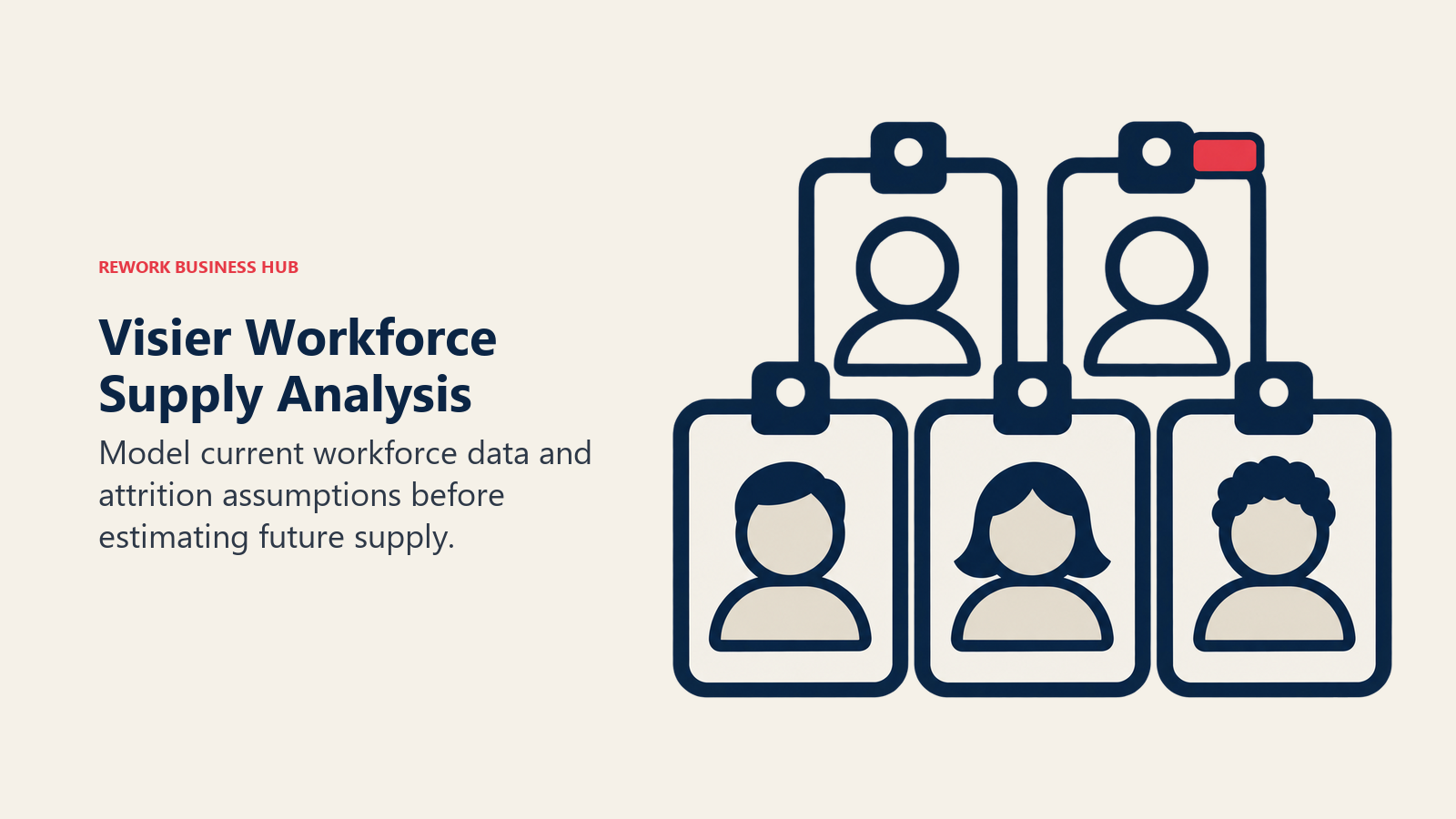
Visier built the reference implementation of enterprise people analytics: a purpose-built workforce data model that ingests HRIS, payroll, ATS, and engagement data, then answers supply, attrition, cost, and diversity questions without a data team writing SQL for each one. Its benchmarking layer, drawn from anonymised customer data, is the part competitors have the hardest time matching, because it needs scale to exist at all. For workforce planning specifically, Visier's strength is the supply side: what your workforce will look like in eighteen months if you change nothing.
| What you get | What you don't |
|---|---|
| A purpose-built workforce data model, not a BI dashboard | Any published price, at any tier |
| Attrition, supply, and cost forecasting out of the box | A finance-owned budget approval workflow |
| Cross-company benchmarking at real scale | A quick, low-touch implementation |
| Analytics that a CHRO can run without a data team | An SMB entry point |
Pricing: Quote-only. Visier's pricing page publishes no tier names, no per-employee rates, and no figures at all. (Visier) Best for: Enterprises with a people analytics function that needs a supply-side workforce forecast, not just a headcount tracker. Not ideal for: Companies under a few hundred employees, or teams whose actual problem is approving reqs against a budget.
2. ChartHop: Org, Headcount, and Compensation Planning at a Published Rate
ChartHop is the mid-market answer to "I want the org chart, the headcount plan, and the comp cycle in one place, and I want to know what it costs before I book a call." Its data layer sits on top of your HRIS and turns the org chart into something you can model against: open reqs, planned reqs, cost by team, and scenario views of what a reorganisation does to headcount and spend. The modular pricing is genuinely useful and genuinely easy to underestimate.
| What you get | What you don't |
|---|---|
| A published per-employee rate for Core and every module | A free plan at any headcount |
| Headcount planning, comp, and org visualisation in one platform | Deep multi-driver financial modelling |
| Scenario views a CHRO and a CFO can read together | A single all-in price, since modules stack |
| A real mid-market fit from roughly 100 to 2,000 employees | Enterprise org design depth |
Pricing: Core $5 per employee per month, billed annually. Add-on modules, each per employee per month: HRIS $4, Headcount Planning $4, Compensation $4, Performance $4, Engagement $3, Goals $3. ChartHop AI Pro is billed pay as you go with no published figure, and Enterprise is custom. No free plan. Note that a Core plus Headcount Planning configuration is $9 per employee per month, not $5, which is where budgets slip. (ChartHop) Best for: Mid-market People Ops teams that want headcount planning, comp, and org data on one published, modular rate. See Best ChartHop Alternatives if the module stacking pushes past your budget. Not ideal for: Enterprises needing multi-driver scenario modelling, or teams who only want an org chart.
3. TeamOhana: Headcount Planning That Finance Actually Trusts
TeamOhana solves one problem narrowly and well: the gap between the headcount plan in the finance model and the reqs actually moving through the ATS. It connects the HRIS, the ATS, and the financial plan so that every open role is either in the approved plan or visibly not, and so that a hiring manager cannot quietly open a req that nobody budgeted. It is the most finance-native tool on this list, and it is the only vendor here that publishes full annual contract values rather than a per-seat rate.
| What you get | What you don't |
|---|---|
| Real-time reconciliation of approved plan against live reqs | A per-employee rate you can multiply out |
| Published annual contract values across all four tiers | An SMB-friendly entry point |
| A workflow both Finance and People Ops can own | People analytics or skills modelling |
| Implementation fees stated up front, not hidden in a quote | Org design or scenario modelling depth |
Pricing: Free tier $0 per year plus a $5,000 one-time implementation fee, up to 150 employees. Professional from $15,000 per year plus $5,000 implementation, for 151 to 500 employees. Growth from $45,000 per year plus $15,000 implementation, for 501 to 1,500 employees. Enterprise from $95,000 per year for 1,501 to 10,000 employees, with implementation scoped during evaluation and custom pricing above 10,000. All plans include unlimited user access, so nothing here is charged per seat. (TeamOhana) Best for: Companies where the recurring fight is between the approved headcount plan and the reqs that keep appearing outside it. Not ideal for: Small teams, or anyone whose planning problem is skills rather than budgeted role counts.
4. Workday Adaptive Planning: Workforce Planning Inside the Financial Plan
Workday Adaptive Planning is where workforce planning stops being an HR exercise and becomes a line in the financial model. Its workforce planning module models headcount, compensation, and related costs inside the same plan as revenue and operating expense, so a hiring scenario immediately shows up as a margin impact rather than a spreadsheet a Finance Business Partner has to re-key. For Workday HCM customers the employee data flows natively, which is most of why it wins those deals.
| What you get | What you don't |
|---|---|
| Workforce and financial plans in a single model | Any published pricing |
| Native employee data flow for Workday HCM customers | A short implementation |
| Driver-based cost modelling finance already trusts | Skills or capability modelling depth |
| Enterprise governance, audit, and approval workflows | A People Ops team owning it alone |
Pricing: Quote-only. Workday publishes no figures for Adaptive Planning, and pricing depends on modules, user counts, and entity complexity. Expect implementation to be a separate and substantial line. (Workday Adaptive Planning) Best for: Finance-led organisations, especially existing Workday HCM customers, that want the headcount plan and the financial plan to be the same object. Not ideal for: People teams wanting to own planning without a finance-owned implementation. See Best Workday Adaptive Planning Alternatives for the lighter options.
5. Anaplan: Multi-Driver Modelling for Genuinely Complex Workforces
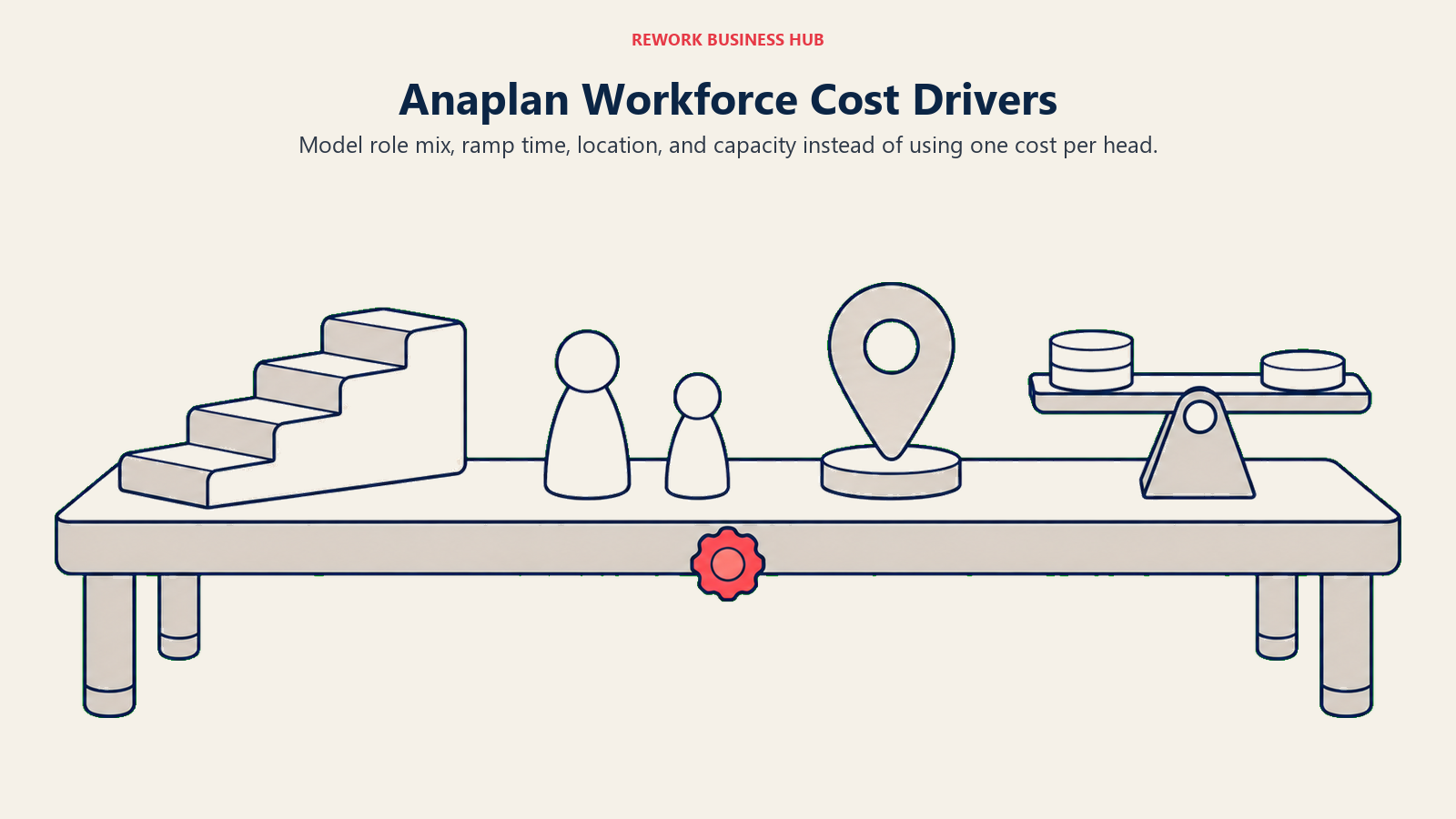
Anaplan is the modelling engine for organisations whose workforce cost depends on more variables than a per-head rate: shift premiums across jurisdictions, capacity by skill, contractor mix, ramp curves by role, and location differentials all in one model. Nothing HR-native comes close to that flexibility. The trade is real: Anaplan expects a modelling owner, not an admin, and a workforce model built by someone who has never built one before tends to become the thing nobody wants to maintain.
| What you get | What you don't |
|---|---|
| Multi-driver modelling that no HR-native tool matches | Any published pricing |
| One connected model across workforce, sales, and supply chain | A tool a People Ops generalist can own solo |
| Real scenario planning with full version control | Out-of-the-box HR analytics |
| Enterprise-grade governance and approvals | A fast, cheap deployment |
Pricing: Quote-only. Anaplan publishes no figures. Pricing is typically driven by workspace size, model complexity, and user counts, and implementation is usually partner-led. (Anaplan) Best for: Large or complex organisations where workforce cost has too many drivers for a per-head model. Not ideal for: Teams without a dedicated modelling owner. See Best Anaplan Alternatives if that is you.
6. Pigment: Modern Planning Without the Enterprise Implementation Tax
Pigment is the newer-generation planning platform that mid-market and scaling companies pick when Anaplan feels like too much machinery and a spreadsheet feels like too little. Its workforce planning use case covers headcount, compensation, and hiring plans, with a UI that a Finance Business Partner and a People Ops lead can genuinely both use. In practice, its advantage is time to a usable model: weeks rather than a multi-quarter programme.
| What you get | What you don't |
|---|---|
| Fastest time to a working workforce model among the EPM tools | Any published pricing |
| A UI Finance and People can share without training sessions | The ecosystem depth of Anaplan or Adaptive |
| Scenario modelling with proper version comparison | HR-native analytics or benchmarking |
| Strong integrations with modern HRIS and finance systems | A self-serve signup |
Pricing: Quote-only. Pigment has no public pricing page at all, and its product pages end in a demo request. Licences are sold in Explorer, Contributor, and Editor types, with the plan itself scoped by sales. (Pigment headcount planning) Best for: Scaling companies that want real planning software without an enterprise implementation programme. See Best Pigment Alternatives for the direct field, or Best FP&A Software for the wider planning category this sits in. Not ideal for: Organisations that need the deepest possible modelling flexibility, or HR teams wanting skills analytics.
7. Dayforce Strategic Workforce Planning: Where Agentnoon Went
If you came looking for Agentnoon, this is the entry you want. Dayforce launched Strategic Workforce Planning on 7 October 2025, stating in the same release that availability was "accelerated by Dayforce's recent acquisition of Agentnoon" (Dayforce newsroom), and agentnoon.com now redirects to Dayforce's Strategic Workforce Planning page. The org modelling, scenario building, and cost-of-org visualisation that made Agentnoon a favourite among Chiefs of Staff now ship as part of Dayforce's platform rather than as a standalone product you can buy on a card. Anyone quoting you an independent Agentnoon price in 2026 is working from a stale page.
| What you get | What you don't |
|---|---|
| Agentnoon's org modelling inside the Dayforce platform | A standalone Agentnoon product or price |
| Scenario modelling tied to live HCM and payroll data | Any published pricing |
| Cost-of-org views across restructures and reorganisations | A quick self-serve trial |
| Strong fit for existing Dayforce HCM customers | An obvious fit if your HCM is something else |
Pricing: Quote-only. Dayforce publishes no figures for Strategic Workforce Planning, and it is typically sold alongside the broader Dayforce platform. (Dayforce Strategic Workforce Planning) Best for: Dayforce HCM customers who want org design and workforce scenario modelling on the platform they already run. Not ideal for: Teams on another HCM hoping to buy the old Agentnoon standalone, which is no longer sold that way.
8. Orgvue: Org Design and Restructuring at Programme Scale
Orgvue is the specialist for organisational design as a discipline: modelling spans and layers, role architecture, cost of the current versus target operating model, and the transition between them. It is the tool that shows up when a company is restructuring a division, integrating an acquisition, or trying to answer whether a management layer earns its cost. It is not a headcount approval workflow and does not pretend to be.
| What you get | What you don't |
|---|---|
| Purpose-built org design and workforce transformation modelling | Any published pricing (its site blocked automated checks in August 2026) |
| Span of control, layer, and role architecture analysis | A req approval or budget policing workflow |
| Current-state to target-state transition modelling | A low-touch, self-serve deployment |
| Strong fit for restructures, integrations, and cost programmes | Ongoing operational people analytics |
Pricing: Quote-only. Orgvue publishes no figures, and deployments are typically consulting-led and scoped to a specific transformation programme. (Orgvue) Best for: Large organisations running a restructure, integration, or cost-of-org programme that needs modelling rather than reporting. Not ideal for: Companies wanting a steady-state planning tool for the annual cycle.
9. HiBob (Bob): People Analytics on a Modern Mid-Market HRIS
HiBob's strength in this category is that the planning layer sits directly on the HRIS that already holds your employee, compensation, and performance data, so there is no export, no reconciliation, and no argument about whose headcount number is correct. For mid-market companies between roughly 100 and 1,500 employees, that single source of truth is worth more than a deeper modelling engine fed by stale data. It is analytics and workforce planning grounded in HR data, not a driver-based financial model.
| What you get | What you don't |
|---|---|
| Workforce analytics on live HRIS data, with no export step | Any published pricing at any tier |
| Strong compensation and headcount reporting for mid-market | Multi-driver financial scenario modelling |
| A modern interface managers will actually open | An SMB self-serve price |
| Good fit for distributed, multi-country mid-market teams | Enterprise org design depth |
Pricing: Quote-only. HiBob's pricing page is a demo request form with no plan names and no figures. (HiBob) Best for: Mid-market companies wanting planning and analytics on the same platform as core HR. See Best HiBob Alternatives for the comparable field. Not ideal for: Finance-led planning where the model, not the HR record, is the centre of gravity.
10. BambooHR: Clean People Data First, Planning Second
Most workforce planning projects fail at the data layer, not the modelling layer, and BambooHR is the honest answer for a company that has not solved the data layer yet. It is an HRIS with solid reporting rather than a planning tool, but if your current headcount lives in three spreadsheets and nobody agrees on the number, a clean system of record beats a scenario model built on bad inputs. It also publishes real prices across every tier, which is rare in this neighbourhood.

| What you get | What you don't |
|---|---|
| Published per-employee pricing at all three tiers | Scenario modelling or driver-based planning |
| A clean, trustworthy system of record for headcount | Finance-grade budget reconciliation |
| Solid standard reporting and a small-team flat rate | Skills taxonomy or capability modelling |
| Fast implementation compared with anything else here | A fit above roughly 1,000 employees |
Pricing: Core $10 per employee per month, Pro $17, Elite $25. For companies with 25 employees or fewer, pricing is a monthly flat rate starting at $250 USD per month. (BambooHR) Best for: Small and mid-size companies that need a reliable headcount record before they buy a planning tool. See Best BambooHR Alternatives and Best HR Software for the wider HRIS field. Not ideal for: Anyone whose data is already clean and who needs modelling, not record-keeping.
11. Deel: Headcount Planning Across Entities and Worker Types
Deel matters to workforce planning for one specific reason: if your plan spans employees, contractors, EOR workers, and PEO workers across several countries, most planning tools only see one of those populations. Deel holds all of them in one record, which makes the total workforce cost picture achievable without stitching four systems together. Planning here means visibility and cost modelling over that combined population rather than a scenario engine.
| What you get | What you don't |
|---|---|
| One record covering employees, contractors, EOR, and PEO | A modelling engine for multi-driver scenarios |
| Published per-worker rates for every product line | A free HR tier, despite what older articles say |
| Real global cost visibility across entities and currencies | Skills or capability modelling |
| Compliance handled alongside the workforce data | Deep org design or span-of-control analysis |
Pricing: Deel HR Core starts at $5 per employee per month. Find Talent (ATS) $14 per worker per month. Contractors $49 per contractor per month, Contractor of Record $325. US PEO $125 per employee per month. EOR $599 per employee per month. Worth stating plainly: Deel HR is not free. The widely repeated claim that it is free forever up to 200 employees is stale and no longer matches the vendor's page. (Deel) Best for: Companies planning headcount across multiple countries and worker types in one view. See Best Deel Alternatives for the global HR field. Not ideal for: Single-country companies that just need a scenario model.
12. Rippling: Headcount Planning Inside One System of Record
Rippling's argument for this list is consolidation: because HR, payroll, spend, devices, and approvals share one employee record, a headcount plan can be enforced at the point of approval rather than reconciled after the fact. Its headcount planning capability sits on top of that record, so an approved req carries its real cost including payroll, benefits, and the equipment the new hire will need. The catch is the same one it has always had, and it is worth being blunt about it.
| What you get | What you don't |
|---|---|
| Headcount, spend, and approvals on one employee record | Any published price whatsoever |
| Real total cost per role, including payroll and equipment | A self-serve signup with a visible rate |
| Approval workflows that enforce the plan, not just report on it | Deep people analytics or benchmarking |
| Strong fit for companies already consolidating on Rippling | Standalone value if you use another HRIS |
Pricing: No published figures. Rippling's pricing page asks you to describe the services you need and promises a custom quote, and its FAQ notes that most products bill per employee per month with some carrying a monthly base fee. The $8 per user per month figure repeated across comparison sites appears nowhere on Rippling's own pages, so treat it as unverified. (Rippling) Best for: Companies already consolidating HR, payroll, and spend on Rippling and wanting headcount enforcement in the same place. See Best Rippling Alternatives for the comparable platforms. Not ideal for: Buyers who need a budget figure before an evaluation, or teams running a different HRIS.
13. Quinyx: Labour Forecasting for an Hourly Workforce
Quinyx belongs on this list as the honest contrast. If you run stores, restaurants, warehouses, or care sites, "workforce planning" almost certainly means forecasting labour demand and translating it into hours and shifts, not modelling role architecture eighteen months out. Quinyx forecasts demand from historical and external signals, converts it into required labour hours, and feeds the schedule directly, which is a completely different job from anything in entries one through twelve.
| What you get | What you don't |
|---|---|
| AI labour demand forecasting tied straight into scheduling | Any published pricing |
| Labour cost optimisation at site level | Strategic role or skills planning |
| Built for retail, hospitality, logistics, and care | A finance-owned budget approval workflow |
| Compliance-aware scheduling on top of the forecast | An office or knowledge-worker fit |
Pricing: Quote-only. Quinyx's pricing page carries no tier names and no figures, only an invitation to say what you are looking for so it can contact you. (Quinyx) Best for: Retail, hospitality, and other hourly operators whose planning question is hours per site, not roles per function. Not ideal for: Knowledge-worker organisations planning role architecture and skills.
Also Considered
Four more names come up constantly in this category, and two of them come up because readers remember a product that no longer exists in the form they remember it.
| Tool | Status in 2026 | Published price | Why it is not in the numbered list |
|---|---|---|---|
| Legion | Active, direct Quinyx competitor | None | Overlaps almost exactly with Quinyx for hourly labour forecasting |
| Organimi | Active, lightweight org charting | Basic $13/month charged annually; Premium $25/month charged annually | Org charting rather than planning or modelling |
| Workleap Pingboard | Folded into the Workleap platform | Workleap Standard from $4,999 USD/year; no standalone Pingboard rate | No longer sold as a standalone per-user product |
| Functionly | Active, org design tool | Not printable; its pricing toggle returned inconsistent figures | We will not print a price we could not reproduce |
Legion is the closest direct alternative to Quinyx, with the same AI labour forecasting pitch aimed at the same hourly workforces. It publishes no pricing figures anywhere, and pricing questions route to sales. If you are evaluating Quinyx, put Legion on the same shortlist and get both quotes on the same employee count and the same site count, because that is the only way the two numbers will be comparable.
Organimi is worth knowing because it publishes a price in a category that mostly does not: Basic $13 per month charged annually, Premium $25 per month charged annually, with Enterprise on request and no free plan on its pricing page. That buys org charting and directory features, not planning, but for a small company that just needs a maintained org chart it is a legitimate stop.
Workleap Pingboard is the one to correct in your notes. Pingboard is now Workleap Pingboard, and pingboard.com/pricing redirects to workleap.com/pricing. There is no standalone per-user Pingboard price any more; the org chart and people directory are a feature of Workleap plans, which are billed annually from $4,999 USD per year for Standard and $11,999 for Pro, with Enterprise custom above 250 employees. Any per-seat Pingboard figure you find is from before the fold-in.
Functionly offers a 22-day free trial and a three-seat minimum. We attempted its pricing page twice in one day and its monthly and annual toggle returned inconsistent figures across the two fetches, so no number appears here. Ask for a written quote and hold them to it.
Prices That Are Stale Almost Everywhere Else
These four claims appear across most comparison content on this category and are now out of date. They are listed here so you can check any other page you read against them.
| The claim you will find elsewhere | The 2026 reality | Source |
|---|---|---|
| "Deel HR is free forever up to 200 employees" | Deel HR Core starts at $5 per employee per month | deel.com/hr |
| "Rippling starts at $8 per user per month" | Rippling publishes no figure at all, custom quote only | rippling.com/pricing |
| "ChartHop is $8 per employee per month" | Core is $5, with modules at $3 to $4 each on top | charthop.com/pricing |
| "Agentnoon starts at ..." | Agentnoon was acquired by Dayforce, announced October 2025, and no independent price exists | agentnoon.com redirect |
The pattern behind all four is the same. The single most famous fact about a vendor is the likeliest to be stale, because everyone already knows it and nobody rechecks it. When you get quotes, ask the vendor to confirm the figure in writing rather than accepting the number you already had in your head.
Sizing and Persona Fit
| Company size | Best-fit picks | Who owns the tool | Why |
|---|---|---|---|
| Under 100 | BambooHR, Organimi | Head of People, Founder | Clean data and an org chart beat a model you cannot staff |
| 100 to 500 | ChartHop, HiBob, Deel | Head of People Ops | Real headcount planning without an enterprise programme |
| 500 to 2,000 | ChartHop, TeamOhana, Pigment, Rippling | People Ops with a Finance Business Partner | Budget reconciliation becomes the bottleneck |
| 2,000 to 10,000 | Visier, Workday Adaptive Planning, Anaplan | People Analytics Lead, FP&A | Supply forecasting and multi-driver cost modelling |
| 10,000-plus | Visier, Anaplan, Orgvue, Dayforce | CHRO with COO and CFO | Org design and scenario modelling at programme scale |
| Any size, hourly workforce | Quinyx, Legion | Ops Director | Labour hours, not role architecture, is the unit |
Stage Fit Matrix
| Tool | Data cleanup stage | First real headcount plan | Annual planning cycle | Restructure or scenario programme |
|---|---|---|---|---|
| Visier | Weak | Moderate | Strong | Strong |
| ChartHop | Moderate | Strong | Strong | Moderate |
| TeamOhana | Weak | Strong | Strong | Weak |
| Workday Adaptive Planning | Weak | Moderate | Strong | Strong |
| Anaplan | Weak | Weak | Strong | Strong |
| Pigment | Weak | Moderate | Strong | Strong |
| Dayforce SWP | Weak | Moderate | Strong | Strong |
| Orgvue | Weak | Weak | Moderate | Strong |
| HiBob | Strong | Moderate | Moderate | Weak |
| BambooHR | Strong | Weak | Weak | Weak |
| Deel | Strong | Moderate | Moderate | Weak |
| Rippling | Strong | Strong | Moderate | Weak |
| Quinyx | Moderate | Weak | Moderate | Weak |
The column that decides most evaluations is the first one. If your headcount number is still contested across three spreadsheets, the strongest scenario engine on this page will produce confident nonsense. Fix the record first.
Where Workforce Planning Sits Between the HRIS and FP&A
| Layer | What it owns | Systems | Failure mode when it is missing |
|---|---|---|---|
| HRIS | Who you have right now | BambooHR, HiBob, Deel, Rippling, Workday HCM | Nobody agrees on current headcount |
| Workforce planning | Who you will need, with which skills, at what cost | Visier, ChartHop, TeamOhana, Orgvue, Dayforce | Hiring happens by request queue instead of by plan |
| FP&A | What the business can afford | Workday Adaptive Planning, Anaplan, Pigment | The people plan and the financial plan diverge silently |
| Workforce management | Who works when, and whether it was compliant | Scheduling and time systems | The plan never survives contact with the shift roster |
Two of these layers are the same product in some stacks and four separate purchases in others. That is not a flaw in the market, it is a genuine choice: a single-vendor stack trades modelling depth for the absence of reconciliation work, and a best-of-breed stack trades reconciliation work for depth. Decide which of those two costs you would rather pay before you shortlist, because every vendor on this page has an answer that assumes you already did.
How to Choose: Decision Framework
| If you need... | Best pick |
|---|---|
| The deepest supply-side workforce analytics at enterprise scale | Visier, or its alternatives |
| Headcount, comp, and org planning on a published mid-market rate | ChartHop |
| Reqs reconciled against an approved budget in real time | TeamOhana |
| Workforce planning inside the same model as the financial plan | Workday Adaptive Planning |
| Multi-driver modelling for a genuinely complex workforce | Anaplan |
| A modern planning platform without an enterprise implementation | Pigment |
| Org modelling on the Dayforce HCM platform (formerly Agentnoon) | Dayforce Strategic Workforce Planning |
| Org design for a restructure or integration programme | Orgvue |
| Analytics on live mid-market HRIS data with no export step | HiBob |
| A clean headcount record before you buy a planning tool | BambooHR |
| Planning across employees, contractors, EOR, and PEO workers | Deel |
| Headcount enforcement inside one consolidated system of record | Rippling |
| Labour hour forecasting for an hourly, site-based workforce | Quinyx |
| A published price for basic org charting | Organimi |
What to Do Next
Answer the category question first, because it eliminates most of this page in one move. If your planning unit is a labour hour at a site, you want Quinyx or Legion and none of the others. If it is a req against a budget, start with TeamOhana and ChartHop. If it is an operating model under alternative futures, you are in Anaplan, Adaptive Planning, Pigment, Orgvue, or Dayforce territory and should budget for an implementation, not just a subscription.
Then do the unglamorous check before any demo: pull your current headcount from your HRIS, your ATS, and your payroll system, and see whether the three numbers match. If they do not, buy the data layer before the modelling layer. And when you do reach quotes, get every figure in writing on the same employee count, because five vendors here publish a rate you can verify and the rest will hand you a number that exists only in your inbox.

Principal Product Marketing Strategist
On this page
- Key Facts
- Workforce Management or Workforce Planning? Settle This Before You Shortlist
- The Four Shapes of Workforce Planning Software
- Quick Comparison Table
- What This Category Publishes, and What It Does Not
- 1. Visier: The Deepest People Analytics Model in the Category
- 2. ChartHop: Org, Headcount, and Compensation Planning at a Published Rate
- 3. TeamOhana: Headcount Planning That Finance Actually Trusts
- 4. Workday Adaptive Planning: Workforce Planning Inside the Financial Plan
- 5. Anaplan: Multi-Driver Modelling for Genuinely Complex Workforces
- 6. Pigment: Modern Planning Without the Enterprise Implementation Tax
- 7. Dayforce Strategic Workforce Planning: Where Agentnoon Went
- 8. Orgvue: Org Design and Restructuring at Programme Scale
- 9. HiBob (Bob): People Analytics on a Modern Mid-Market HRIS
- 10. BambooHR: Clean People Data First, Planning Second
- 11. Deel: Headcount Planning Across Entities and Worker Types
- 12. Rippling: Headcount Planning Inside One System of Record
- 13. Quinyx: Labour Forecasting for an Hourly Workforce
- Also Considered
- Prices That Are Stale Almost Everywhere Else
- Sizing and Persona Fit
- Stage Fit Matrix
- Where Workforce Planning Sits Between the HRIS and FP&A
- How to Choose: Decision Framework
- What to Do Next