Planhat vs Custify vs Velaris: Which Customer Success Platform Fits Your Team in 2026?
Turn this article into takeaways for your work.


Each assistant summarizes the article only for you and suggests best practices for your work.
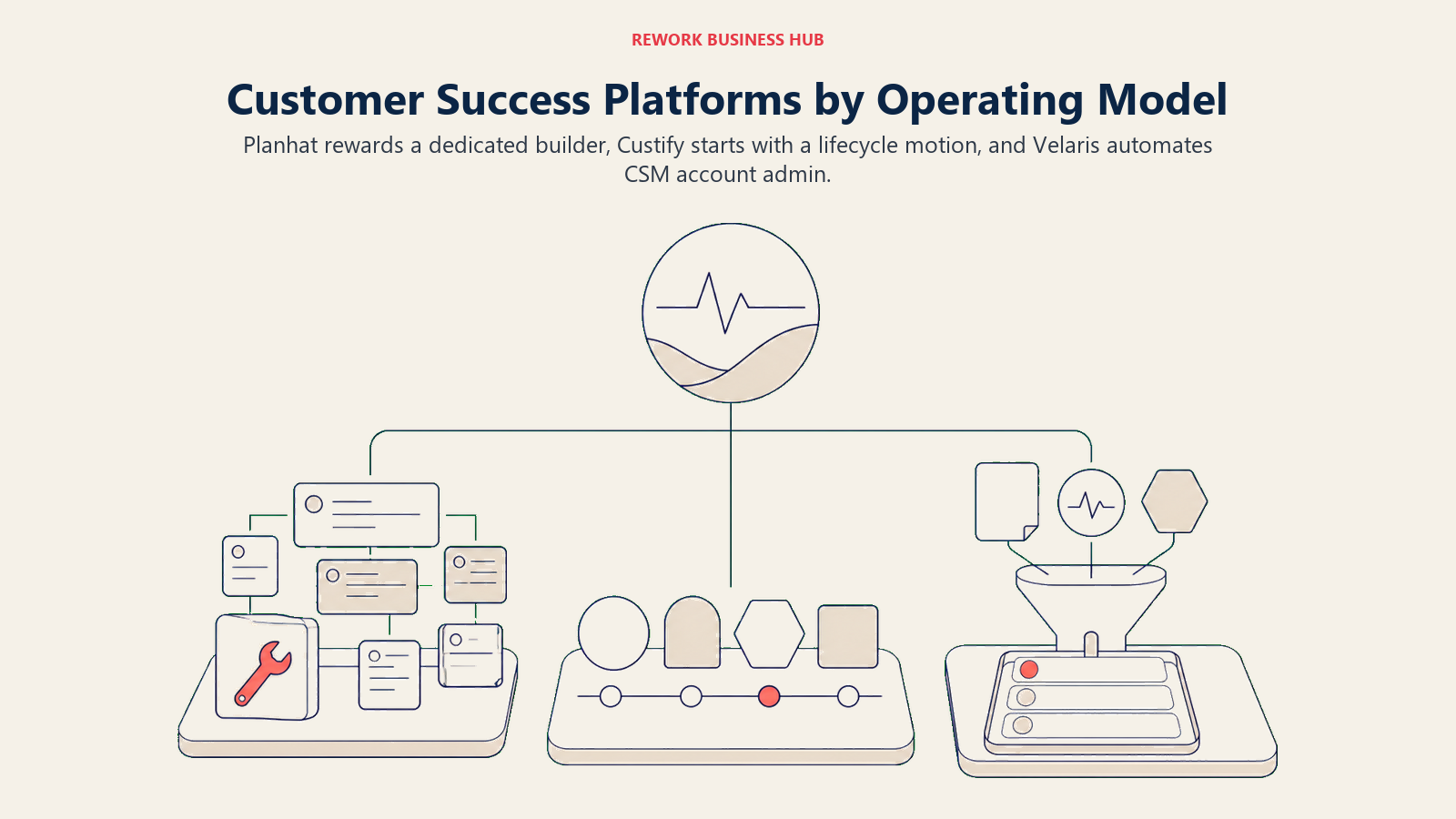
You've already had the Gainsight conversation, or the ChurnZero one, or maybe Vitally's, and it didn't land. Too much implementation for a team your size, too much annual contract for a board that wants proof before it commits, or too much configuration for a CS function that's still one or two people wearing a lot of hats. That's not a failure of judgment. It just means you're the reader this guide is for: a Head of CS, a CS Ops lead, or a COO at a company where the enterprise-tier platforms are too heavy, too expensive, or both, and you've moved down to a shortlist of Planhat, Custify, and Velaris instead.
Here's the problem these three create. Every one of them will tell you, on a demo call, that it gives you health scores, playbooks, and a renewal view your CSMs will actually use. That's the pitch of the whole category, one tier up and one tier down. What actually separates these three is harder to see on a call: how much of your business Planhat expects you to model yourself before it does anything useful, how much Custify hands you already built for a defined CSM motion, and how much of the daily admin work Velaris's AI genuinely takes off a CSM's desk versus how much is still a young product's promise. That's the decision this guide is built to make.
Key Facts
- Median net revenue retention across public B2B SaaS sits at 122%, with the top decile above 155%, based on 913 verified disclosures from 105 companies' SEC filings (Cust's 2026 State of Customer Success). None of the three tools here move that number by themselves. Clean data and a team that acts on it does.
- The average enterprise runs 897 applications and only 29% of them talk to each other, the connectivity gap that decides whether a health score reflects reality or a guess (MuleSoft's 2025 Connectivity Benchmark Report).
- 95% of B2B tech companies now have an established CS function, but only 51% have a dedicated CS Ops team, the exact role a configurable platform like Planhat assumes you already have (Gainsight Customer Success Index 2025, 250-plus companies surveyed with Benchmarkit).
- None of these three publish pricing. Vendr's reported median annual contract is $41,255 for Planhat across 35 tracked purchases, and $16,752 for Custify. Velaris carries no tracked listing on Vendr at all.
- Gartner predicts over 40% of agentic AI projects will be canceled by the end of 2027 (Gartner, June 2025), worth remembering before any vendor's AI-agent pitch, Velaris included.
- Velaris was named the sole Visionary in the 2025 Gartner Magic Quadrant for Customer Success Platforms, published November 3, 2025 (Velaris), real independent recognition for a company that has been selling for about four years.
TL;DR
| Planhat | Custify | Velaris | |
|---|---|---|---|
| Positioning | A customer platform: you define the data model, CS runs on top | A lifecycle-first CS platform for a defined CSM motion | An AI-native CS platform built to remove CSM admin work |
| Founded, HQ | 2015, Stockholm | 2017, Bucharest | 2021, London |
| Sweet spot | 100 to 1,000+ employees, unusual or multi-entity accounts | 30 to 300 employees, B2B SaaS with a defined CSM motion | 20 to 300 employees, a lean CS team drowning in admin |
| Pricing model | Quote only, three connected products plus named add-ons | Quote only, one stated commitment: no setup fees | Quote only, one license covers 5 users |
| Vendr reported median (annual) | $41,255 | $16,752 | Not tracked |
| Setup effort | High, needs a dedicated owner | Low to medium | Low |
| Core strength | Models a business no template fits, revenue and portals included | Fast time to value without an ops hire | AI drafts notes, summaries and follow-ups a CSM would otherwise write |
| Biggest risk | An expensive, capable system nobody finishes building | Thinnest public track record of the three, verify everything directly | Youngest by disclosed funding and reviews, though Gartner-recognized |
What Each Tool Is Actually Built For
Planhat calls itself a customer platform, not a customer success platform, and the distinction is the whole story. Founded in 2015 in Stockholm, it bootstrapped for years before raising a single $50 million Series A led by Sprints Capital, which closed on April 29, 2022, after the company had already grown from 40 to over 100 employees in the year before the round (Planhat's own press release). Tracxn puts current headcount at 248 as of July 31, 2026 (Tracxn, reported). The product reflects that history: a modeling layer where you define objects, relationships, formulas and metrics, then build CS workflow, revenue tracking, projects, and customer portals on top, sold as three connected products, CRM, CSP for customer success, and PSA for professional services, plus four named add-ons on its pricing page: Upgraded AI Platform, Advanced Service, Email Marketing, and Advanced Portals.
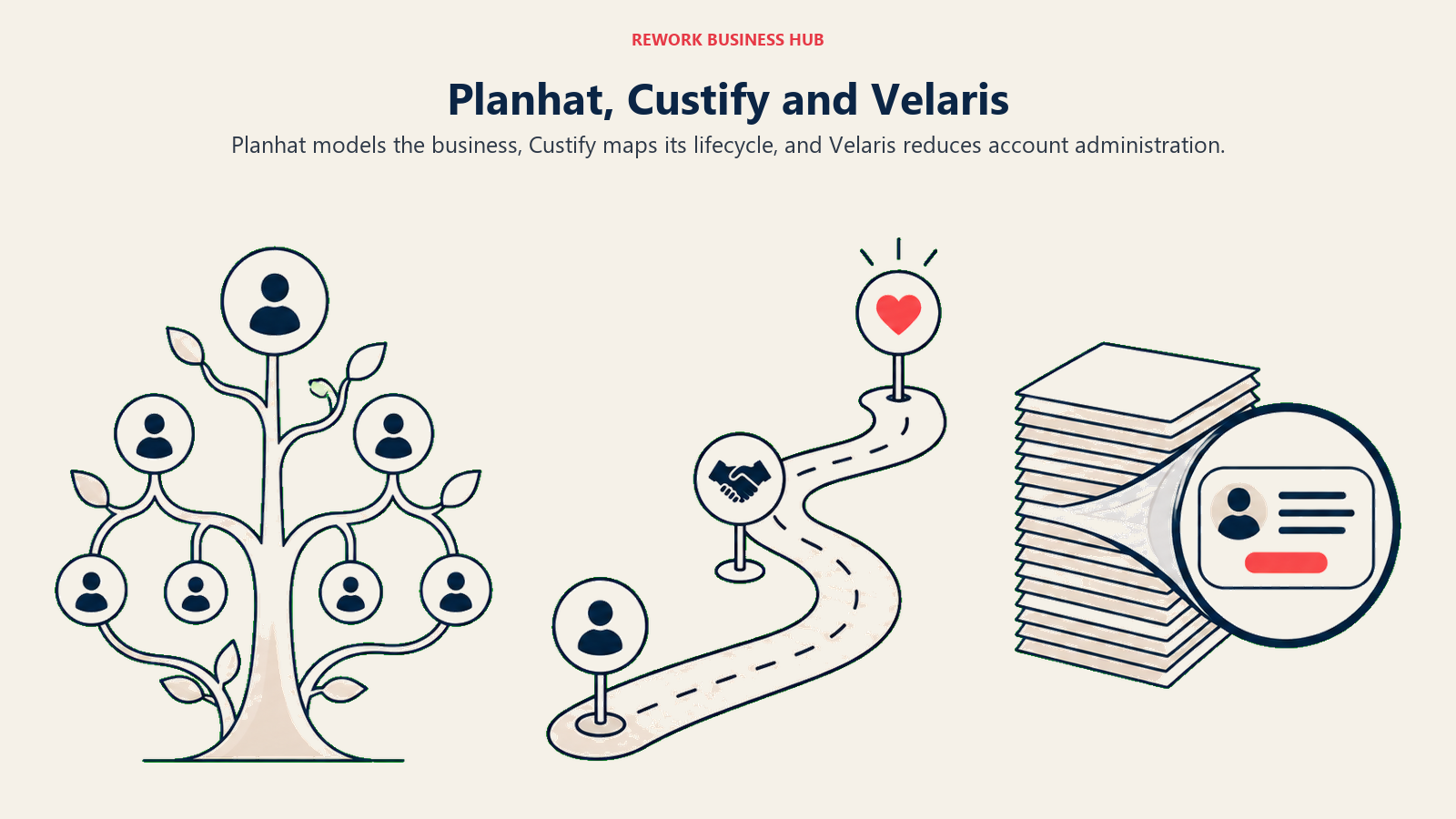
Custify, founded in 2017 and based in Bucharest, Romania, takes the opposite bet: define the stages a customer moves through, attach health signals and playbooks to each stage, and let the platform tell a CSM what needs attention today. Tracxn lists it at approximately 42 employees as of June 30, 2026 (Tracxn, reported), a fraction of Planhat's size, and it has no large disclosed funding round. In June 2026 Custify pushed further into AI with CustifyAI, adding agents for health analysis, market monitoring and meeting prep, and in August 2026 it shipped four new native integrations, Pylon, Maxio, Groove and Granola, pulling support tickets, billing data, revenue signals and AI meeting notes into its Customer 360 profile (press release).
Velaris is the newest of the three by a wide margin. Founded in 2021 in London, it raised a EUR 4.7 million seed round led by Octopus Ventures (with Zaka and Fintech 365 participating) in September 2022, explicitly to launch the platform (The SaaS News). Its whole thesis is that a CSM's time goes to admin, not customers, so the platform should write the meeting notes, summarize the account, and draft the follow-up without being asked. Pricing packages everything into one license covering 5 users with unlimited viewers, organized into four modules: View (accounts, Customer 360, 3 custom objects, AI account summaries), Analyze (health scores, surveys, AI sentiment scoring), Orchestrate (automations, email campaigns), and Execute (playbooks, success plans, task management). By 2026 the product had moved further still, into a custom agent builder, autonomous agents that monitor accounts and manage sales-to-CS handovers, and a first-party MCP server.
| Planhat | Custify | Velaris | |
|---|---|---|---|
| CS team size it suits | Any, but rewards a dedicated CS Ops owner | 2 to 15 CSMs | 3 to 15 CSMs, one license covers 5 |
| Data model | Custom objects, relationships and formulas you define | Predefined lifecycle stages with attached signals | 3 included custom objects, AI does the summarizing |
| Adjacent products | CRM and PSA sold as connected products, not add-ons | None owned, integrates with existing CRM and billing tools | Customer Portal and a support add-on, sold separately |
| G2 reviews (reported) | 953 reviews, 4.5 stars (G2) | 481 reviews, 4.7 stars (G2) | 107 reviews (G2) |
If any of these three still feels wrong for your shape, the full field is in best customer success software for 2026, and the case for staying on or leaving Planhat specifically is covered in best Planhat alternatives.
The Real Project Isn't the Software
No demo will tell you this, so it's worth saying plainly: none of these three platforms work without clean product usage data, support history, and billing data flowing in continuously, attributed to the right account. Skip that work and any of them will cheerfully produce a colored health score that means nothing. The average enterprise runs 897 applications with only 29% integrated with each other, and a CS platform sits downstream of that mess rather than fixing it. It doesn't matter whether the platform is a blank object model or a set of AI agents. Garbage in still produces garbage out, just with better formatting.
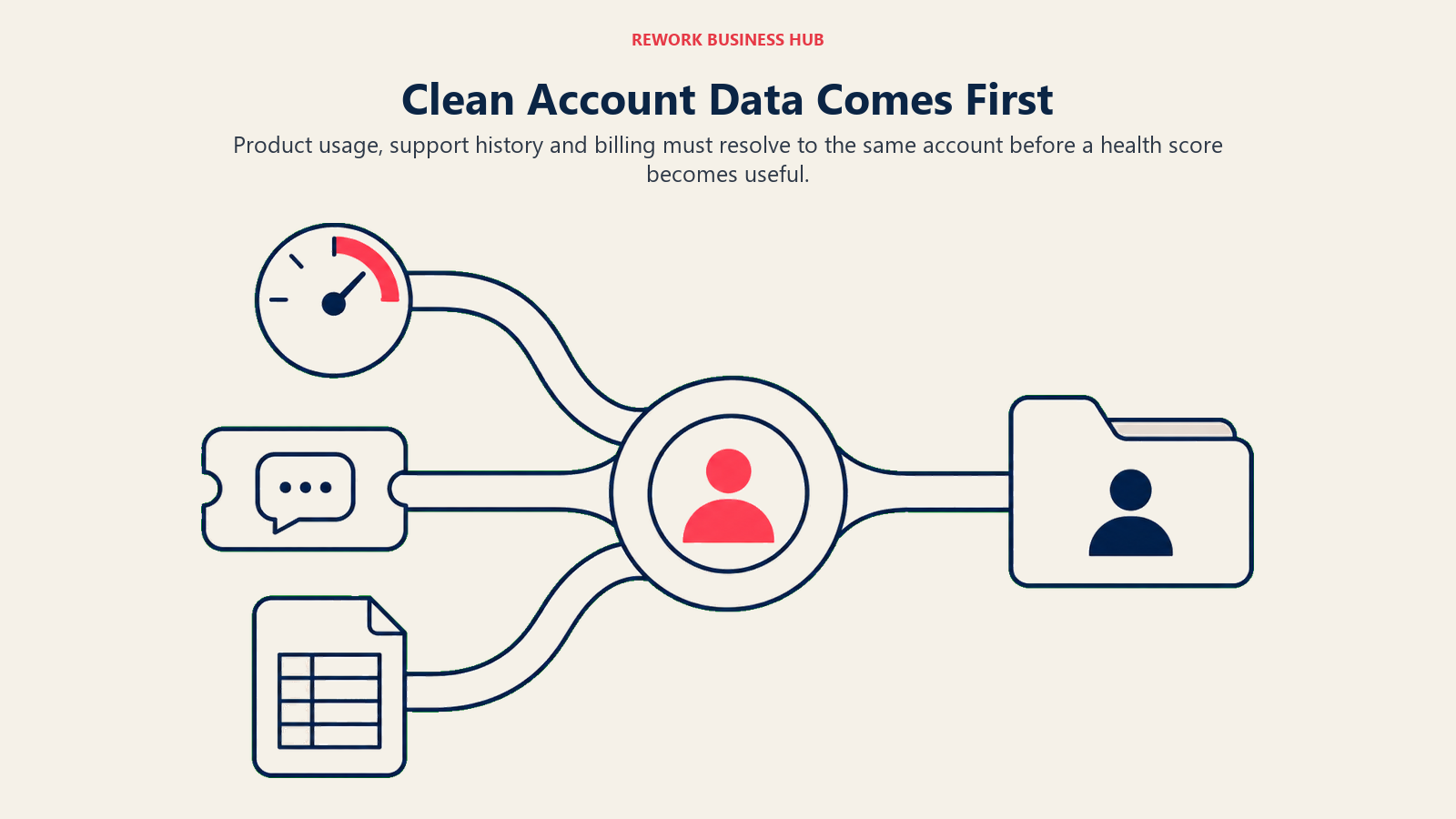
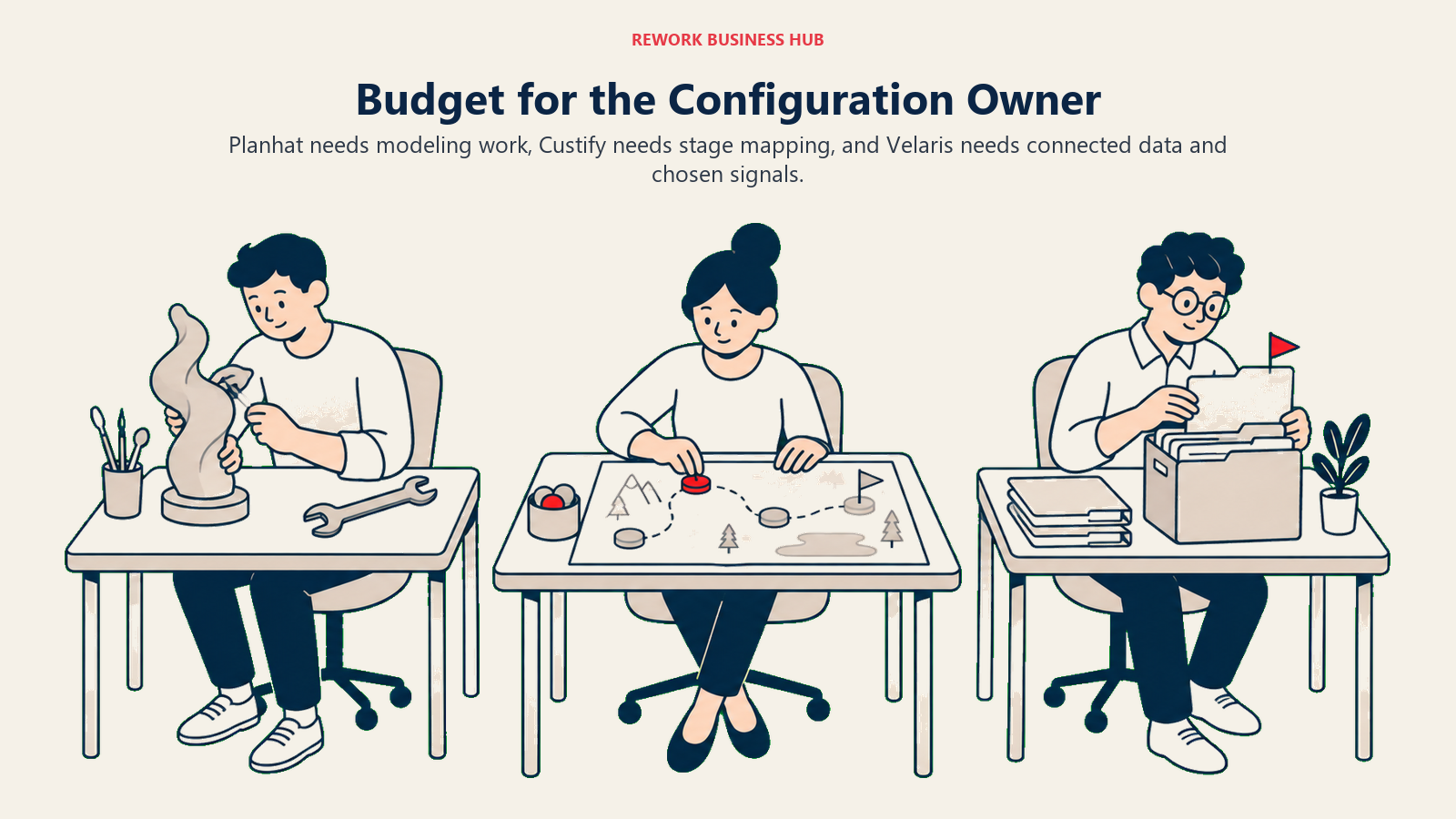
Where the three genuinely differ is whose time that plumbing work takes, and how long it takes it. Planhat's data-first design means an engineer adds a customer ID to your product events, someone in finance automates a billing export that used to be a manual pull, and a support-tool integration scoped for week two slips to week eight, all before your first formula produces a number anyone trusts. That's real enough work that Planhat sells a paid AI Deployment Program, a dedicated services team specifically for deploying its AI capabilities, which is itself a tell about how much the base platform assumes you'll build yourself (Planhat). Custify's lifecycle stages need the same underlying feeds, but the mapping work is narrower: attach signals to stages you already recognize rather than invent an object model from nothing, which is why teams typically reach a working setup in weeks rather than a quarter. Velaris compresses the timeline further on paper, days once data sources are connected, but that's a configuration speed, not a data-readiness speed. The instrumentation work still has to happen; Velaris just front-loads less of it into a services engagement and more of it into whichever CSM sets up the integrations.
| Data input | Planhat | Custify | Velaris |
|---|---|---|---|
| Product usage telemetry | One input among the objects and metrics you define | Feeds lifecycle stage and health signal automatically | Feeds AI account summaries and health scores |
| Support ticket history | Via integrations, mapped into your object model | Native integrations, plus the new Pylon and Groove connectors (August 2026) | Ingested for AI conversation analysis and sentiment scoring |
| Billing and contract data | Modeled as objects and metrics, often through the PSA product | Native integrations, plus the new Maxio connector (August 2026) | Included among the 3 custom objects in the base license |
| Getting data in at all | Configured during implementation, no self-serve shortcut published | Native API, a JavaScript snippet, Segment.com in three clicks, or CSV import | Included in the base View module |
| Who typically owns this work | A named CS Ops owner, often paired with Planhat's paid AI Deployment Program | Whoever configures the lifecycle stages, no setup fee charged either way | The licensed users themselves, no dedicated ops role assumed |
Sort out what your health score should actually measure before you configure any of the three. Customer health monitoring covers that model, and the post-sale tech stack covers how product, billing and support systems should connect before a CS platform sits on top of them.
Decision by Business Goal
| If your goal is... | Pick | Why |
|---|---|---|
| Modeling a business that doesn't fit a standard SaaS subscription (multi-entity, reseller, usage-based, services attached) | Planhat | Its object and formula model is built to represent exactly this, where Custify's stages and Velaris's fixed objects can't |
| Getting a defined CSM motion running in weeks, without an ops hire | Custify | Lifecycle stages and playbooks arrive close to usable, and there's no setup fee to negotiate around |
| Cutting the hours a CSM spends on notes, summaries and account admin | Velaris | AI-native by design, with admin reduction as the core pitch rather than a bolted-on module |
| Running revenue, projects and customer portals in the same system as CS | Planhat | CRM, CSP and PSA are sold as connected products under one contract |
| A comparable third-party price signal before the first sales call | Custify or Planhat | Both show up in Vendr's contract data; Velaris does not |
| Independent analyst validation despite being the youngest option | Velaris | Sole Visionary in the 2025 Gartner Magic Quadrant for Customer Success Platforms |
| Proving the platform to a skeptical CFO on track record alone | Planhat | 953 G2 reviews and roughly eleven years selling is the deepest history of the three |
Team and Role Fit
| Team | Planhat | Custify | Velaris |
|---|---|---|---|
| CSMs (daily users) | Powerful once modeled, but the interface reflects the data model you built | Straightforward, stage-based view designed for a small team | Fast; AI drafts the admin work, a human still sends it |
| CS Ops / admin | Assumed. The platform rewards a dedicated owner and sells services to fill the gap | Not required. Threshold tuning and integration mapping are the extent of the work | Not really required. The base license covers 5 users total |
| Revenue / Finance | Native, since PSA and CRM sit in the same system as CS | Billing data flows in via integrations, including the new Maxio connector | Billing is among the 3 included custom objects |
| Product | Strong if usage is modeled as part of your object structure | Usage feeds health signals; no dedicated analytics suite | Usage feeds AI account summaries and sentiment scores |
| Executives | Dashboards reflect whatever you built; viewer-seat terms aren't published | Portfolio-level health view; viewer-seat terms aren't published | Unlimited viewers included in the base license |
Risk and Governance
Company size and funding history matter more at this tier than the feature checklist does, because a five-person CS team has less room to absorb a vendor's roadmap uncertainty than a two-hundred-person one does.
| Planhat | Custify | Velaris | |
|---|---|---|---|
| Founded | 2015 | 2017 | 2021 |
| Headquarters | Stockholm, Sweden | Bucharest, Romania | London, United Kingdom |
| Years selling as of 2026 | About 11 | About 9 | About 4 |
| Disclosed funding | $50M Series A, led by Sprints Capital, closed April 29, 2022 | No large disclosed round | EUR 4.7M seed, led by Octopus Ventures, announced September 2022 |
| Reported headcount (2026) | 248, as of July 31, 2026 (Tracxn) | Roughly 42, as of June 30, 2026 (Tracxn) | Not disclosed publicly |
| Vendr tracked contracts | 35 total, 14 verified | Listed, purchase count not disclosed | No Vendr listing |
| Independent analyst recognition | No Gartner placement cited | No Gartner placement cited | Sole Visionary, 2025 Gartner Magic Quadrant for Customer Success Platforms |
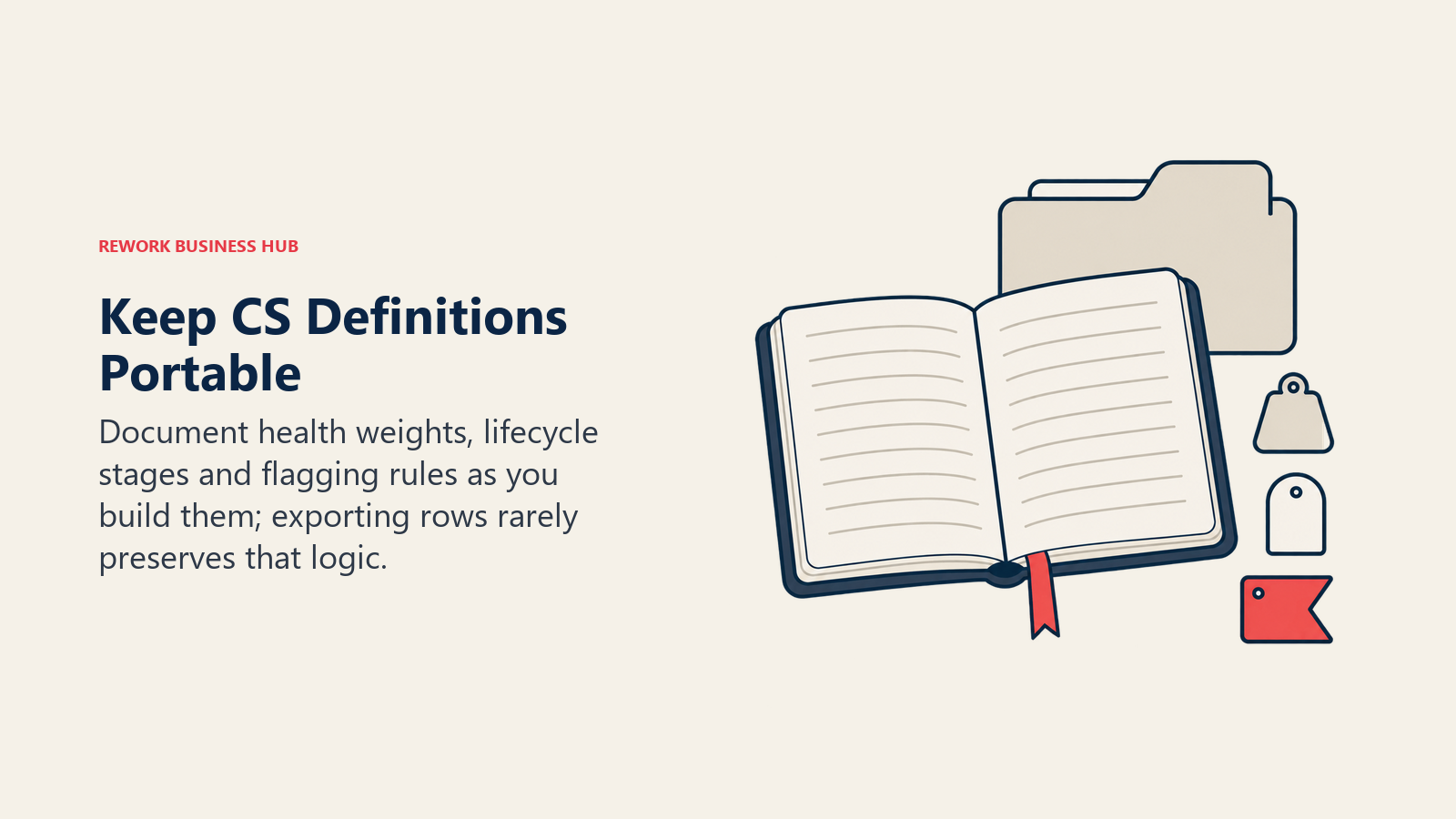
None of the three has been acquired, but the category has real precedent for what happens when a smaller vendor does get absorbed. Strikedeck, Amity, UserIQ, Bolstra and Natero have all stopped selling independently, and Catalyst is now sold as a Totango product line rather than a standalone company. The risk isn't losing your account data, which usually exports cleanly as CSV. It's losing the logic behind it. A Planhat formula, a Custify lifecycle stage definition, or a Velaris AI-flagging rule rarely survives a migration intact, because that logic lives in a configuration screen, not a portable file. Document your health score weights and stage definitions on paper as you build them, in any of the three, so the knowledge doesn't live only inside one platform's schema.
On security, the three are not equally documented in public. Planhat's security page states ISO 27001 and SOC 2 Type II certification, GDPR and CCPA compliance, TLS 1.2/1.3 in transit, AES-256 at rest, and Google Cloud Platform hosting (Planhat). Custify's pricing and trust pages reference SOC 2 compliance and link to a GDPR data processing agreement, but they don't state an ISO 27001 or HIPAA claim the way Planhat's does. For Velaris, ask directly for SOC 2 and GDPR documentation in any security review rather than assuming either is in place.
| Certification or standard | Planhat | Custify | Velaris |
|---|---|---|---|
| SOC 2 | Yes, Type II, per its security page | Referenced on its site | Ask Velaris directly |
| ISO 27001 | Yes, per its security page | Not stated on its site | Ask Velaris directly |
| GDPR | Yes | Yes, via a stated data processing agreement | Ask Velaris directly |
| HIPAA | Not mentioned on its security page | Not mentioned | Ask Velaris directly |
| Encryption and hosting detail published | Yes: TLS 1.2/1.3, AES-256, Google Cloud Platform | Confirm with Custify | Ask Velaris directly |
Pricing at Real Team Sizes
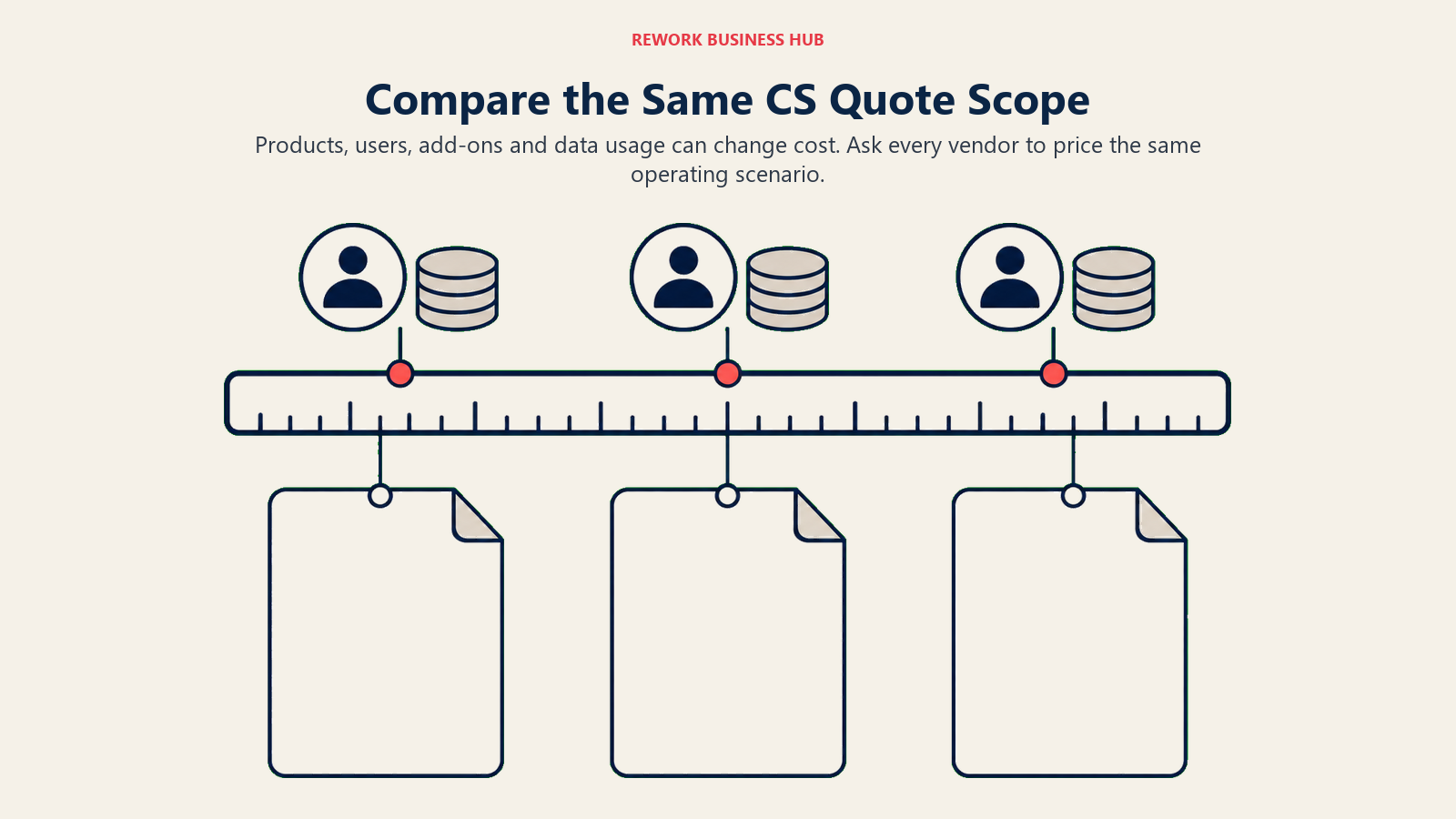
All three are quote only, per each vendor's own pricing page. That much is consistent with the rest of this category.
| Vendor | Publishes a price? | What the page actually gives you |
|---|---|---|
| Planhat | No | Quote-based pricing across three products (CRM, CSP, PSA) plus four named add-ons: Upgraded AI Platform, Advanced Service, Email Marketing, Advanced Portals |
| Custify | No | One stated commitment: no setup fees. No tiers, seats or figures published |
| Velaris | No | One license covering 5 users with unlimited viewers, add-ons available, custom estimate on request |
Where third-party data exists, it tells a clear story about scale. Vendr's reported median annual contract for Planhat is $41,255, across 35 tracked purchases (14 verified), ranging from $19,866 to $118,800. Custify's reported median is $16,752, ranging from $10,904 to $18,439, the tightest and cheapest band of the three. Velaris carries no tracked listing on Vendr at all, which is itself informative: not enough purchase volume has flowed through Vendr's marketplace yet to generate a benchmark, consistent with being the youngest and smallest of the three by disclosed funding.
You asked how this scales with customer account count rather than seats, since that's the lever that actually drives price in this category more than CSM headcount does. Here's the honest answer: it depends which of the three you're pricing, because they don't all use the same axis.
| Planhat | Custify | Velaris | |
|---|---|---|---|
| Stated pricing axis | Products used (CRM, CSP, PSA) plus add-ons; no published seat or account formula | Not stated anywhere on its own pricing page | Explicitly licensed users: one license covers 5, not accounts |
| Does the base price move with account count? | Plausibly, through the CSP product's account-heavy use case, though this isn't published | Unknown, not stated anywhere checked | Not on the base license. A team of 5 CSMs pays the same base price whether it covers 200 or 5,000 accounts |
| Where cost actually climbs as accounts grow | Add-ons and implementation scope, including the paid AI Deployment Program | Unverified. Get this in writing before signing | A 6th-plus user, or a data-volume or AI-usage add-on, more likely than the account count itself |
| Account volume | Planhat | Custify | Velaris |
|---|---|---|---|
| Around 200 accounts, small CS team | Vendr's low band starts near $19,866/year; expect this end if your product and add-on footprint stays minimal | Vendr's low end is $10,904/year; the no-setup-fee policy keeps year-one cost close to the license alone | No third-party data exists. Since the base license is 5 users regardless of account count, ask directly whether 200 accounts changes the quote at all |
| Around 1,000 accounts, CS Ops emerging | Vendr's reported median of $41,255/year is the most defensible planning number at this stage | Vendr's reported range tops out at $18,439/year; confirm that ceiling still holds at this volume | Still governed by user count on paper. Confirm whether a data-volume or usage add-on activates here |
| Around 5,000 accounts, tech-touch or hybrid motion | Expect above Vendr's $118,800 high end, since the CSP product is positioned for account-heavy books via its own services and add-on structure | No reported data exists this high. Ask directly whether Custify was built for this account volume at all | The account band where license-not-account pricing could matter most, if 5 seats can genuinely run 5,000 accounts. Confirm the ceiling on data volume and AI usage before assuming the base price holds |
Every figure above labeled Vendr is reported third-party contract data, not a vendor-confirmed rate card. Treat it as a planning band and replace it with a written quote at your real seat and account numbers before anything reaches legal.
Implementation and Change Management
A demo shows a configured system. It never shows the weeks that configured it, and that gap is where the three diverge most in practice.
| Implementation factor | Planhat | Custify | Velaris |
|---|---|---|---|
| Typical scope | Data model design, objects, formulas, integrations, portals | Lifecycle stage mapping, threshold tuning, integration mapping | Connect data sources, decide which signals the AI should flag |
| Internal owner required | Effectively yes; Planhat sells a paid AI Deployment Program for exactly this gap | Helpful, not required. No setup fee is charged either way | Not really. The 5-seat license is meant to be self-run |
| Typical time to a working setup | A quarter or more, for the full data model | Weeks, per Custify's own lifecycle-first design | Days, once data sources are connected |
| What ships working on day one | Data model, integrations, portal framework | Lifecycle playbooks, health scoring, CSM tasks | AI summarization, note capture, risk flagging |
| What you have to build yourself | Objects, metrics, health formulas, portals, playbooks | Threshold tuning and integration mapping | Deciding which signals you actually want flagged |
| Setup effort | High, needs a dedicated owner | Low to medium | Low |
When Planhat Is the Right Call
Your customer data genuinely doesn't fit a template. Multi-entity accounts, reseller hierarchies, usage-based contracts, or a services component attached to a subscription are exactly what Planhat's object and formula model is built to represent, and no amount of clever workaround makes Custify's lifecycle stages or Velaris's fixed objects do the same job.
You want revenue, projects, portals and CS in one connected system, not three vendor relationships to keep synchronized. Planhat sells CRM, CSP and PSA as one product family rather than bolt-on modules.
You have a named CS Ops owner, or you're budgeting for Planhat's AI Deployment Program to fill that gap. The platform's depth is an asset with a builder behind it and a cost center without one.
You want the deepest track record of the three. 953 G2 reviews and roughly eleven years of selling is real evidence, even without a published price.
When Custify Is the Right Call
You need a working CSM motion in weeks, not a quarter, and nobody is getting hired to configure a platform. Lifecycle stages, health signals and playbooks arrive close to usable rather than as a blank object model.
The no-setup-fee commitment genuinely matters to your year-one budget. In a category where implementation charges routinely add five figures, a vendor stating it plainly is a real cost difference, not a marketing line.
Your accounts move through recognizable, definable stages rather than an unusual structure. Custify's whole design bets on that being true for most B2B SaaS businesses, and for a mid-market company with a normal subscription shape, it usually is.
You want a comparable price signal before the first call. Custify's Vendr-reported median, at $16,752 a year, is the cheapest real data point in this comparison.
When Velaris Is the Right Call
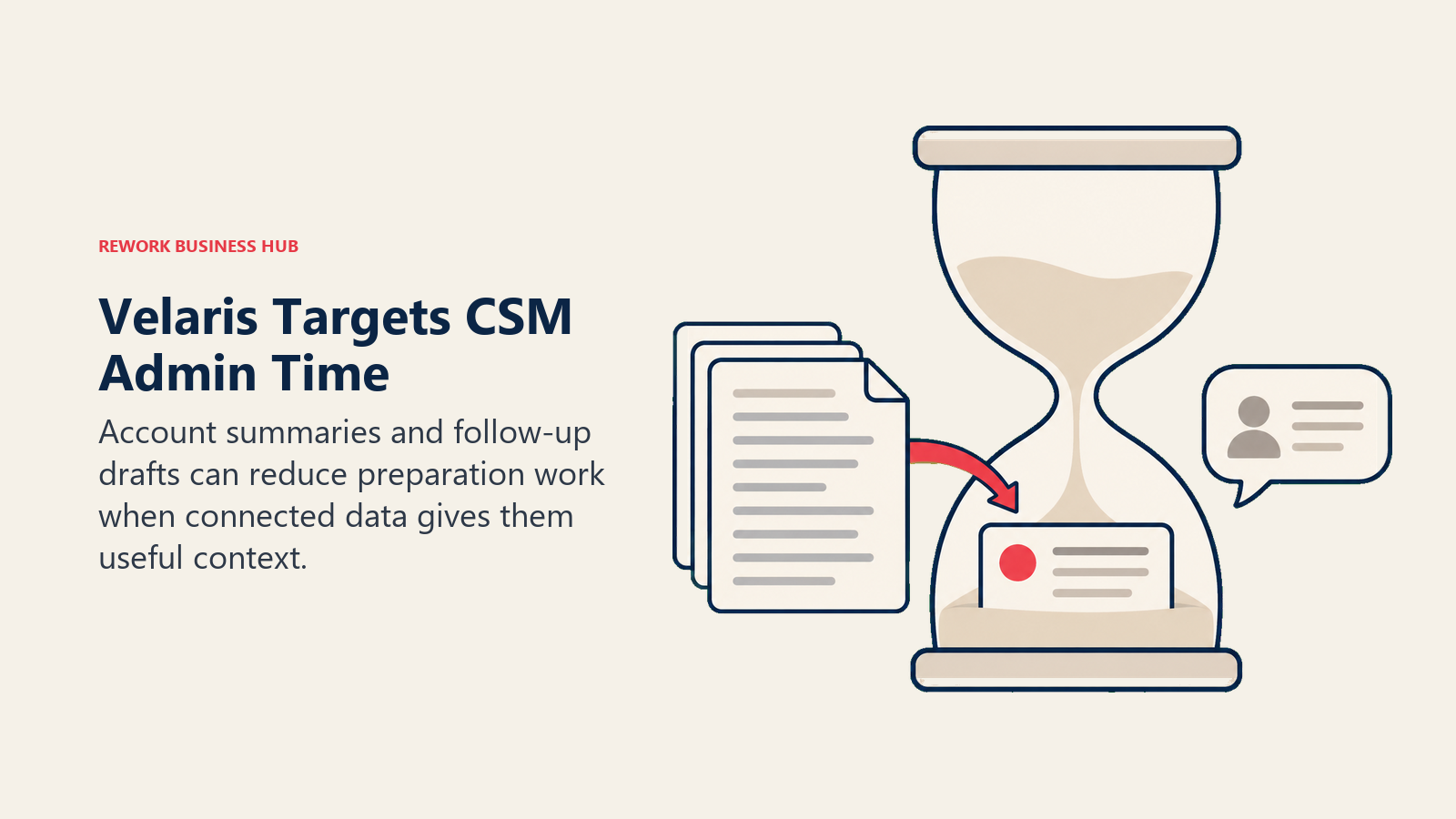
Your binding constraint is CSM hours, not data modeling. If the real problem is time lost to meeting notes, account summaries and follow-up drafting, Velaris is built around removing exactly that work, not around handing you a data model to configure.
A small team needs to cover a large or fast-growing account book. Because the base license prices by user seat rather than account count, a lean CS Ops function running thousands of tech-touch accounts through five seats could see costs behave very differently than they would on an account-priced platform. Confirm this directly before assuming it holds at your volume.
You're willing to accept youth in exchange for a modern, AI-native design, and you've verified that independently rather than taking a demo's word for it. The 2025 Gartner Magic Quadrant recognition is real evidence the product is more than a promising pitch, even at four years old.
You can live with a thinner reference base and no tracked Vendr contracts for now. That's the honest trade for being newest, and it's worth asking Velaris directly for two references at your size and shape before you sign anything.
Decision Framework
| If this is true for you | Pick |
|---|---|
| Your accounts are multi-entity, reseller-based, or priced in a way a template can't represent | Planhat |
| You want revenue, projects, portals and CS in one connected system | Planhat |
| You need a working CSM motion in weeks with no dedicated ops hire | Custify |
| A comparable third-party price signal matters before the first call | Custify or Planhat |
| Your binding constraint is CSM hours, not data modeling | Velaris |
| A small CS team needs to cover a large or fast-growing account book | Velaris, if the 5-seat license fits your headcount |
| You want the deepest reference base and review history | Planhat |
| You want independent analyst validation despite being the youngest option | Velaris |
| You need a documented ISO 27001 posture today, not eventually | Planhat, and confirm directly with Custify or Velaris before assuming either has it |
What to Do Next
Name your real constraint before you take another demo. If it's an unusual data model, count your custom objects; that number tells you more than any feature list. If it's CSM hours, count how many hours a week your team spends writing account notes and assembling a QBR deck, since that's the number Velaris is actually selling against. If nobody has configured anything yet and you just need a working motion, Custify's lifecycle stages are built for exactly that starting point.
Then get all three vendors to quote the same scenario in writing: your real CSM headcount, your real customer account count, and a 12-month projection of both. Ask Planhat what its AI Deployment Program costs on top of the license. Ask Custify what happens to price above whatever headcount triggers a change, since none is published. Ask Velaris directly what a sixth user costs and whether account volume moves the price at all, since its own packaging suggests it might not.
Finally, run a short pilot before signing anything longer than a quarter. Load your ten most obviously at-risk accounts into each tool and see whether the health score independently flags them. A platform that can't rediscover risk you already know about won't find risk you don't, whether that risk logic came from a formula you built in Planhat, a lifecycle stage you configured in Custify, or an AI summary you didn't write yourself in Velaris. Our SaaS vendor evaluation scorecard is a reasonable template for structuring that comparison, and aligning your CRM, CS platform and revenue data is worth reading before any of the three goes live, since a CS platform is only as good as the stack feeding it. If your accounts aren't segmented yet, customer segmentation is the thinking Custify's lifecycle stages and Planhat's object model both assume you've already done.
If the AI-agent angle is what actually drew you to Velaris, best AI agents for customer success widens the comparison to more than these three. And if you read this far and still want the heavier tier this guide started by ruling out, the head-to-head is in Gainsight vs ChurnZero and the three-way is in Vitally vs Gainsight vs ChurnZero.

Principal Product Marketing Strategist
On this page
- Key Facts
- TL;DR
- What Each Tool Is Actually Built For
- The Real Project Isn't the Software
- Decision by Business Goal
- Team and Role Fit
- Risk and Governance
- Pricing at Real Team Sizes
- Implementation and Change Management
- When Planhat Is the Right Call
- When Custify Is the Right Call
- When Velaris Is the Right Call
- Decision Framework
- What to Do Next