Best AI Voice Generators in 2026: 14 Tools Ranked by Use Case
Turn this article into takeaways for your work.


Each assistant summarizes the article only for you and suggests best practices for your work.
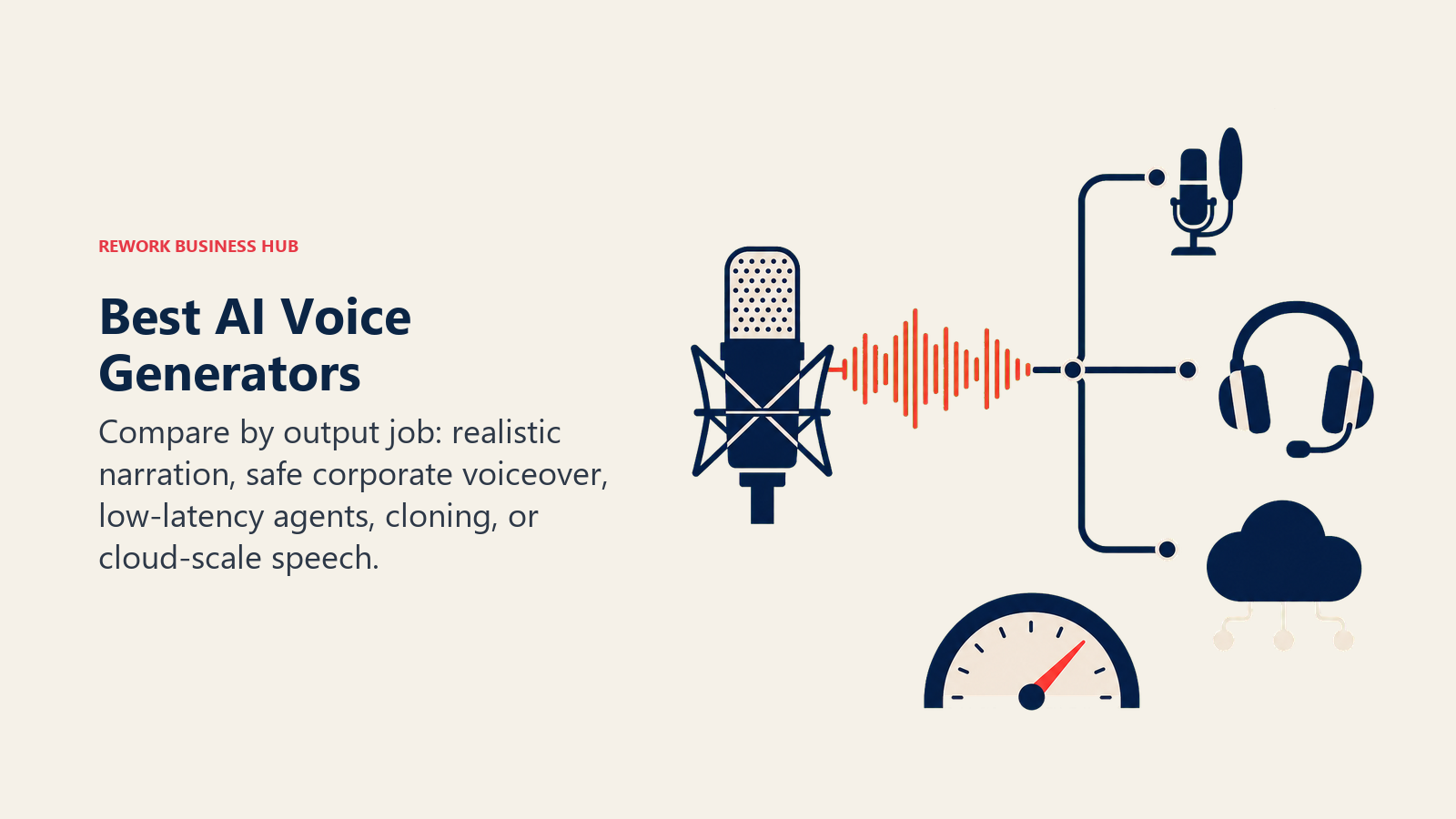
ElevenLabs still leads on realism and voice cloning breadth, Murf and WellSaid Labs lead on brand-safe corporate voiceover, PlayHT and Cartesia lead on low-latency conversational AI agents, and Amazon Polly, Google Cloud, and Azure lead on cost-effective text-to-speech at cloud scale. This guide ranks 14 AI voice generators by the job you're actually hiring one for, not by which demo sounds best on a landing page.
The category has changed shape since last year. Voice cloning got cheaper and faster (some tools now clone a voice from 3 seconds of audio), and at the same time regulators and state legislatures moved to require consent before anyone can legally clone a real person's voice for commercial use. The tools most affected by the new consent rules are flagged below.
What Changed in 2026
- Voice cloning consent rules tightened nationwide. The FTC's Impersonation Rule, finalized in February 2024, already bans using a cloned voice to sell something without the real person's consent, and the agency has an open rulemaking specifically extending that protection to individuals harmed by AI voice clones, not just businesses and government agencies.
- Tennessee's ELVIS Act (2024) set the template, making unauthorized commercial voice cloning a civil and criminal offense. California, New York, Illinois, and several other states have since passed or strengthened similar laws, and most now include a private right of action, meaning a cloned person can sue directly.
- The federal TAKE IT DOWN Act (signed May 2025) created the first nationwide framework for removing non-consensual synthetic media, with platform compliance obligations that took full effect in May 2026.
- Vendors responded with stricter verification. ElevenLabs, Resemble AI, and Murf all now require an explicit consent statement or a verified voice sample before an account can create a professional clone, and Resemble AI added a paid detection and watermarking layer so buyers can prove audio came from its platform.
- Hume shipped Octave 2 in October 2025, cutting per-character cost roughly in half while adding finer emotional controls. Cartesia shipped Sonic 3, adding laughter, sighs, and other non-verbal sounds on top of its 40-millisecond latency. OpenAI's gpt-4o-mini-tts became the default developer pick for instructable voice, where you type a style instruction instead of picking from a fixed voice list.
Key Facts
- The global AI voice generator market is worth an estimated $7.7 billion in 2026 and is projected to reach $21.8 billion by 2030, a 29.5% compound annual growth rate, per Grand View Research.
- 1 in 10 Americans say they've already received a message from an AI-cloned voice, and 77% of the people targeted lost money as a result, per McAfee's 2026 State of the Scamiverse report.
- Just 3 seconds of source audio is enough to produce a voice clone with an 85% match to the original speaker, per the same McAfee 2026 research.
- The global text-to-speech software market is estimated at $5.7 billion in 2026, according to Global Market Insights.
- ElevenLabs reached $500 million in annual recurring revenue and an $11 billion valuation after a $500 million Series D round that closed in early 2026, per the company's own funding announcement.
- Tennessee's ELVIS Act (2024) was the first state law to explicitly ban unauthorized commercial use of a cloned voice, and by 2026 similar consent statutes have spread to California, New York, and Illinois, per Recording Law's state-by-state deepfake law tracker.
Quick Comparison Table
| Tool | Best For | Starting Price | Key Strength | Key Limitation |
|---|---|---|---|---|
| ElevenLabs | Broadest voice cloning and TTS use cases | Free; paid from $6/mo | Most realistic voices, largest voice library | Credits burn fast on longer projects |
| Murf AI | Corporate voiceover and e-learning | Free; paid from $29/mo | Studio editor built for narration, not just audio | Annual voice-generation caps even on paid plans |
| PlayHT | Conversational AI and voice agent APIs | Free; paid from $31.20/mo | Low-latency streaming API for real-time apps | Free tier limited to 12,500 characters/mo |
| WellSaid Labs | Brand-safe enterprise voice avatars | From $49/mo | Fully licensed, indemnified voice actors | No self-serve voice cloning |
| Resemble AI | Real-time cloning with built-in fraud detection | Pay-as-you-go from $0.0005/sec | Audio watermarking and deepfake detection add-on | No flat consumer subscription anymore |
| Speechify | Reading assistant and audiobook narration | Free; paid from $11.58/mo | 5x listening speed, 60+ languages | Studio (creator) tier is a separate product from Premium |
| LOVO AI | Video voiceover paired with a video editor | Free; paid from $24/mo | Voice generation and video editing in one tool | Usage measured in generation hours, not characters |
| Descript | Podcast and video editing with voice correction | Free; paid from $16/mo | Overdub fixes flubs by typing, no re-recording | Full Overdub library requires Creator tier or above |
| Cartesia | Ultra-low-latency real-time voice agents | Free; paid from $5/mo | 40ms latency, cheapest instant voice cloning | Newer platform, thinner voice library |
| Hume AI | Emotionally expressive, controllable TTS | Free; paid from $3/mo | Fine-grained emotion and delivery control | Smaller catalog of stock voices than ElevenLabs |
| OpenAI TTS | Developer-first, instructable voice | $15 per 1M characters (tts-1 API) | Style instructions instead of fixed voice presets | No native voice cloning in the public API |
| Google Cloud TTS | Enterprise multilingual voice at scale | Free tier; $30 per 1M characters (Chirp 3 HD) | Broadest language and locale coverage | No SSML support on the newest HD voices |
| Amazon Polly | Cost-optimized TTS inside AWS workloads | Free tier; $4 per 1M characters (Standard) | Cheapest at scale, deep AWS integration | Weaker emotional range than ElevenLabs or Hume |
| Azure AI Speech | Enterprise Microsoft-ecosystem voice | Free tier; $16 per 1M characters (Neural) | Custom neural voice cloning with governance controls | Custom voice approval process adds lead time |
Voice Generators by Use Case
Match the job first, then compare tools inside that lane. Most buying mistakes happen when a team picks the most-hyped tool instead of the one built for their actual workflow.
| Use Case | What Matters Most | Best Fits |
|---|---|---|
| Marketing and ad voiceover | Range of voices, fast turnaround | ElevenLabs, Murf, LOVO AI |
| Corporate training and e-learning | Consistent brand voice, licensing clarity | Murf, WellSaid Labs |
| Podcast and video post-production | Editing integration, error correction | Descript, LOVO AI |
| Audiobooks and accessibility | Natural pacing, adjustable speed | Speechify, ElevenLabs |
| Conversational AI and voice agents | Latency, streaming API | Cartesia, PlayHT, Hume AI |
| Localization and dubbing | Language coverage, lip-sync timing | ElevenLabs, Resemble AI, Google Cloud TTS |
| Developer-built voice features | API pricing, documentation | OpenAI TTS, Google Cloud TTS, Amazon Polly |
| Regulated or enterprise deployment | Governance, consent workflows, indemnification | WellSaid Labs, Azure AI Speech, Resemble AI |
Ideal User Table
| Tool | Ideal Team | Primary Buyer |
|---|---|---|
| ElevenLabs | Content, product, and dev teams needing one voice platform | Head of Content, Founder, Developer |
| Murf AI | L&D, marketing, and agency teams | L&D Manager, Marketing Manager |
| PlayHT | Voice AI and conversational product teams | Product Engineer, Head of AI |
| WellSaid Labs | Enterprise brand and legal teams | Brand Director, General Counsel |
| Resemble AI | Security, fraud, and voice-product teams | Head of Trust and Safety, Voice Product Lead |
| Speechify | Individuals, students, publishers | Reader, Student, Content Ops Lead |
| LOVO AI | Small video and marketing teams | Video Producer, Social Media Manager |
| Descript | Podcast and video creators | Podcast Producer, Video Editor |
| Cartesia | Real-time voice agent builders | AI Engineer, Voice Agent Founder |
| Hume AI | Teams building emotionally aware voice UX | AI Product Manager, UX Researcher |
| OpenAI TTS | Developers embedding voice in an app | Backend Engineer, Founder |
| Google Cloud TTS | Enterprise teams already on GCP | Cloud Architect, IT Director |
| Amazon Polly | Teams running high-volume TTS on AWS | Cloud Engineer, Ops Lead |
| Azure AI Speech | Enterprise teams on Microsoft stack | IT Director, Compliance Lead |
1. ElevenLabs: The Broadest Voice Cloning and TTS Platform
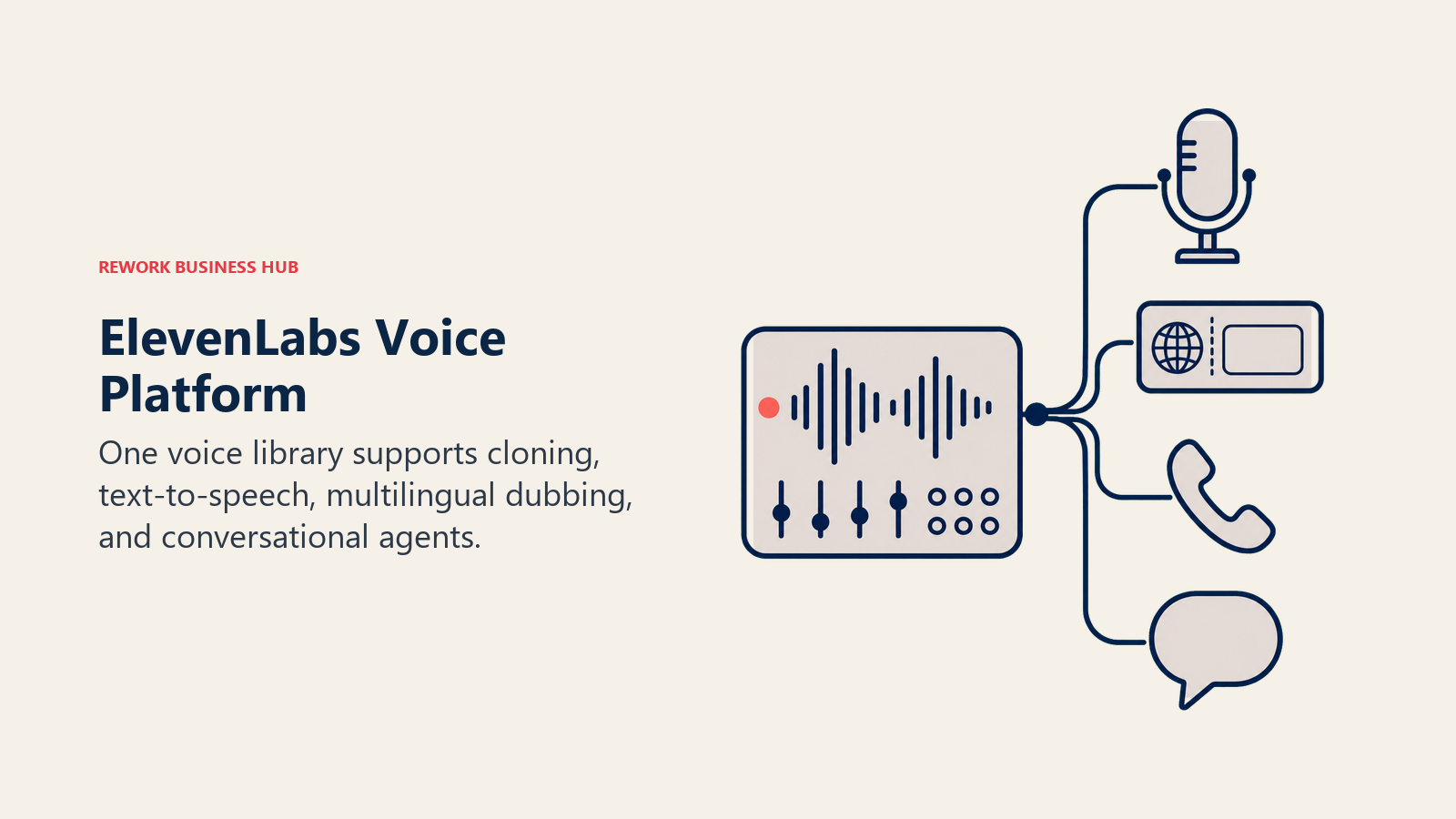
ElevenLabs built its reputation on realism, and in 2026 it's still the default answer to "what's the best AI voice generator" for most buyers. The platform covers text-to-speech, instant and professional voice cloning, dubbing across dozens of languages, and a conversational-AI agent product, all from the same voice library and the same account.
That breadth is also the sales pitch to enterprise: 41% of Fortune 500 companies now use ElevenLabs somewhere in their stack, according to the company, and its $500 million Series D in early 2026 pushed its valuation to $11 billion. The tradeoff for smaller teams is credit consumption. Longer scripts, multilingual projects, and dubbing all eat into monthly character credits fast, and teams that underestimate usage regularly find themselves upgrading a tier sooner than planned.
| What you get | What you don't |
|---|---|
| Widest voice library and most natural output on the market | Credits deplete quickly on long-form or multilingual content |
| Instant and professional voice cloning with consent verification | Professional cloning requires identity and consent checks |
| Dubbing, conversational agents, and TTS in one account | Pro-tier pricing scales past $99/mo quickly for high-volume teams |
| Strong developer API and SDKs | Free tier capped at 10,000 credits, not enough for real testing |
Pricing: Free (10,000 credits); Starter $6/mo (30,000 credits); Creator $22/mo (121,000 credits); Pro $99/mo (600,000 credits); Scale $299/mo. Annual billing drops the effective monthly rate by roughly two months' worth of savings. See elevenlabs.io/pricing.
Best for: Teams that need voice cloning, TTS, and dubbing in one platform and are prepared to size their plan around actual character volume
2. Murf AI: Corporate Voiceover Built for Presentations and Training
Murf's product philosophy is that voiceover work belongs in a proper editing studio, not a text box. The built-in timeline editor lets you sync narration to slides and video, adjust pitch and pace per sentence, and layer in royalty-free music, all without leaving the browser.
That makes Murf the default pick for L&D teams building course narration and marketing teams producing explainer videos who don't have a dedicated audio editor on staff. If you're narrating slide decks specifically, our best AI presentation tools guide covers the slide-building side of that workflow. The honest limit is usage: even the paid Creator tier caps you at roughly 24 hours of generated voice per year, which sounds generous until a team is running weekly training updates or a busy content calendar.
| What you get | What you don't |
|---|---|
| Full timeline editor for syncing voice to video and slides | Annual generation caps even on paid plans |
| 200+ voices across dozens of languages and accents | No self-serve instant voice cloning on lower tiers |
| Commercial usage rights included on paid plans | Business tier still limits seats to one editor |
| Built-in royalty-free music and sound library | Enterprise voice cloning requires a custom quote |
Pricing: Free (10 minutes total, no download); Creator $19/mo billed annually ($29/mo monthly); Business $66/mo billed annually ($99/mo monthly); Enterprise custom. See murf.ai/pricing.
Best for: L&D, marketing, and agency teams producing narrated video and course content without a dedicated audio editor
3. PlayHT: Streaming API for Conversational Voice Agents
PlayHT's bet is that the fastest-growing use case for AI voice isn't pre-recorded narration, it's real-time conversation. The API is built around low-latency streaming, which matters when a voice agent needs to respond to a customer without an awkward pause.
For teams building phone-based support bots, IVR replacements, or in-app voice assistants, PlayHT's API-first design and per-character pricing scale more predictably than a seat-based subscription. If you're evaluating the wider support-automation stack a voice API plugs into, see our best AI tools for customer support roundup. Where PlayHT is thinner is the self-serve studio experience: creators who just want to generate a voiceover for a video will find Murf or LOVO's editing tools more polished.
| What you get | What you don't |
|---|---|
| Low-latency streaming API built for live conversation | Free tier limited to 12,500 characters per month |
| Instant voice cloning and a large stock voice library | Studio/editing tools are thinner than Murf or Descript |
| Predictable per-character API pricing at volume | No native video or slide-sync editor |
| Support for real-time conversational AI integrations | High-fidelity cloning gated behind higher tiers |
Pricing: Free (12,500 characters/mo); Creator $31.20/mo billed annually; Premium/Unlimited $49/mo limited-time (list $99/mo); Enterprise custom.
Best for: Teams building voice agents, IVR, or real-time conversational products that need a reliable streaming API
4. WellSaid Labs: Fully Licensed Voice Avatars for Enterprise Brands
WellSaid Labs takes a different approach than most of this list: every voice avatar is recorded by a real voice actor under a licensing agreement, and the company indemnifies enterprise customers against the kind of consent disputes that have become a legal risk elsewhere in the category. There's no open self-serve voice cloning tool to misuse.
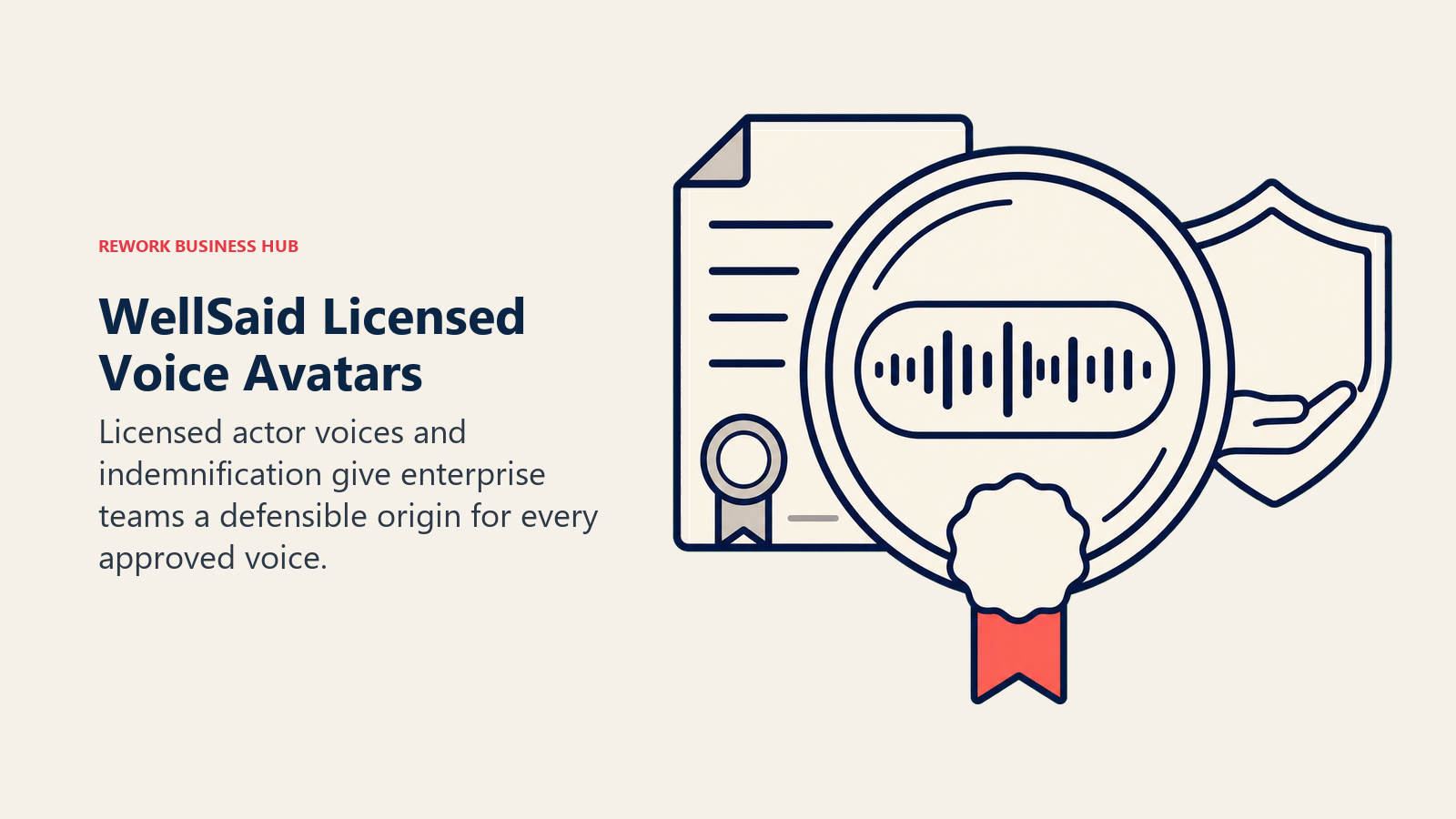
That makes WellSaid the pick for legal, brand, and compliance teams that need a defensible answer to "where did this voice come from" before they'll approve a vendor, the same governance bar covered in our best AI tools for enterprise guide. The cost is flexibility: you're choosing from a curated set of licensed avatars, not cloning a custom voice on demand, and per-seat pricing adds up for larger teams.
| What you get | What you don't |
|---|---|
| Every voice is licensed and legally indemnified | No self-serve voice cloning tool |
| Enterprise governance and usage controls | Per-seat pricing gets expensive for large teams |
| Consistent brand voice across projects | Smaller voice catalog than ElevenLabs or Murf |
| Strong fit for regulated or risk-averse industries | Custom enterprise voices require a services engagement |
Pricing: Maker $49/mo; Creative $99/mo; Team $249/seat/mo; Enterprise custom.
Best for: Enterprise brand, legal, and compliance teams that need licensed, indemnified voices instead of open cloning
5. Resemble AI: Real-Time Cloning With Built-In Deepfake Detection
Resemble AI sells two things most competitors don't bundle together: real-time voice cloning and a detection layer that flags whether a piece of audio came from an AI model in the first place. That second product exists because Resemble's own customers, mostly gaming, media, and fintech companies, kept asking how to prove their synthetic audio wasn't being misused downstream.
The platform moved fully to consumption-based pricing in 2025, retiring its old flat Creator subscription. That's efficient for teams with variable usage but makes budgeting less predictable than a fixed monthly plan, and the audio watermarking and detection features cost extra on top of generation.
| What you get | What you don't |
|---|---|
| Real-time cloning API with low per-second cost | No flat consumer subscription tier anymore |
| Built-in audio watermarking and deepfake detection | Detection and watermarking are billed separately |
| Localization and dubbing across languages | Best suited to teams comfortable with usage-based billing |
| Enterprise-grade security (SOC 2 Type 2) | Enterprise floor pricing runs into the thousands monthly |
Pricing: Flex pay-as-you-go from $0.0005 per synthesis second, plus $20/seat/mo for team access and $2 to $5/mo per active voice clone; Enterprise custom with volume discounts.
Best for: Gaming, media, and fintech teams that need real-time cloning alongside a way to detect and watermark synthetic audio
6. Speechify: Text-to-Speech for Reading, Not Just Recording
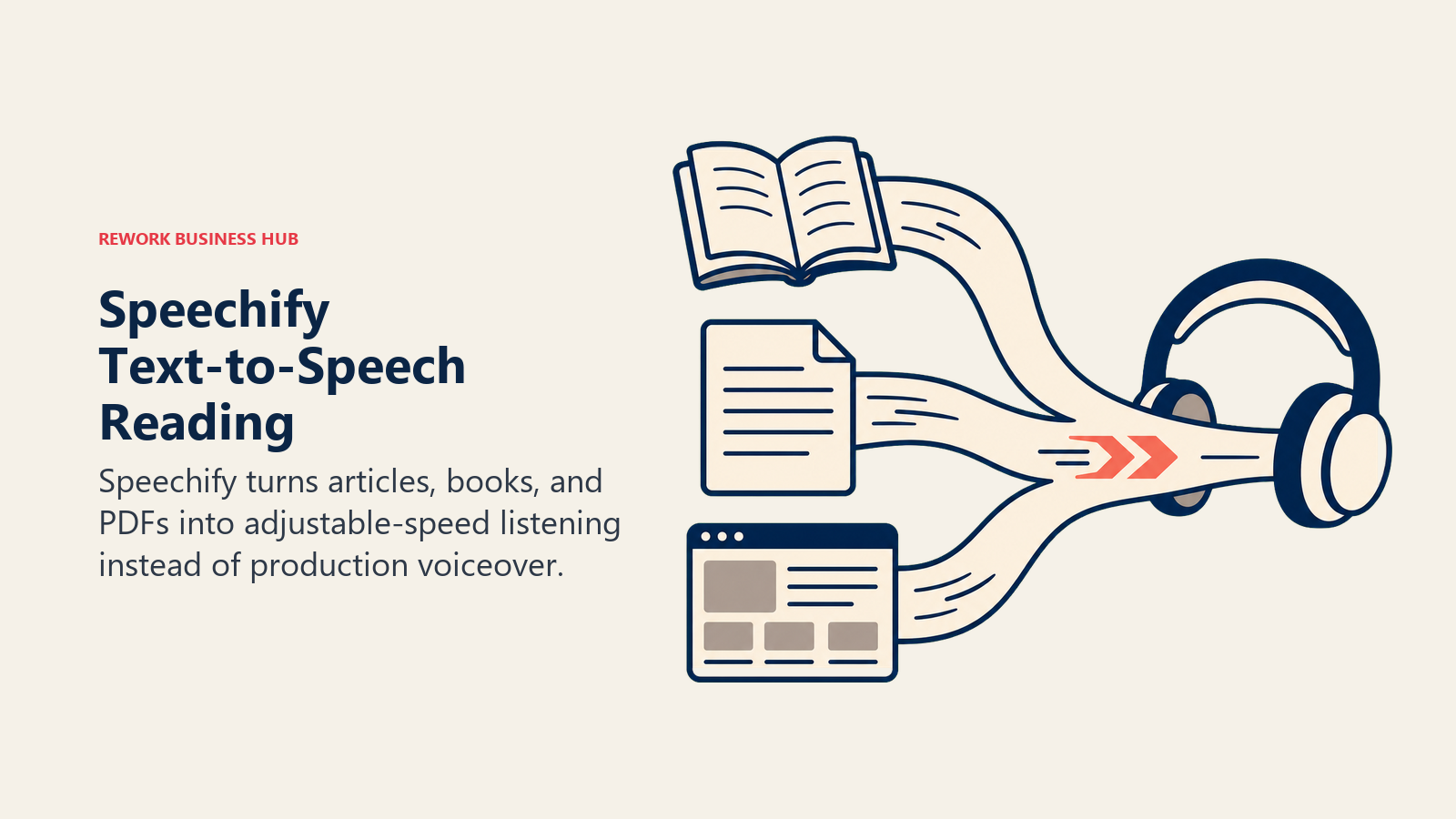
Speechify's core product isn't a studio for producing voiceover, it's a reading assistant. Paste in an article, upload a PDF, or open a book, and Speechify reads it back at up to 5x speed in one of 200+ natural voices. That's a different job than the rest of this list, and Speechify does it well enough to be the default recommendation for students, researchers, and anyone managing a heavy reading backlog.
Speechify Studio, a separate product built for creators and businesses that need to generate and export voiceover files, competes more directly with Murf and LOVO. If text production, not just narration, is the bottleneck on your team, our best AI tools for content writers guide covers the drafting side of that workflow. Keep the two Speechify products straight when comparing pricing, since Premium and Studio solve different problems.
| What you get | What you don't |
|---|---|
| Reads any text, PDF, or web page aloud at adjustable speed | Studio (creator) product is priced and sold separately |
| 200+ voices across 60+ languages | Not built as a production voiceover editor |
| Offline listening and audiobook integration | AI features and full language set gated to Premium |
| Free tier for K-12 students with academic verification | Character/word limits apply even on paid Premium |
Pricing: Premium $139/yr ($11.58/mo billed annually) or $29/mo billed monthly; Studio Starter $19/user/mo; Studio Creator $49/user/mo.
Best for: Students, researchers, and professionals who need text read aloud, not a voiceover production tool
7. LOVO AI: Voice Generation Bundled With a Video Editor
LOVO's pitch is convenience: generate a voiceover and edit the video it goes into without switching tools. The bundled editor supports stock footage, captions, and basic timeline editing alongside the voice engine, which appeals to small marketing and social teams producing short-form video without a dedicated editor, the kind of stack we cover in our best AI tools for social media guide.
Usage is measured in generation hours rather than characters, which is easier to reason about for video work but harder to compare directly against character-priced competitors like ElevenLabs or PlayHT. Teams doing heavy text-only TTS work (documentation, IVR, audiobooks) will find the video-first design adds overhead they don't need.
| What you get | What you don't |
|---|---|
| Voice generation and video editing in one tool | Usage capped in hours, not characters, per month |
| Good for short-form social and marketing video | Less depth than dedicated video editors like Descript |
| Free tier to test before committing | Premium features gated behind Pro and Pro+ tiers |
| 14-day free trial on the Pro plan | Not built for pure text-to-speech or API use cases |
Pricing: Free tier available; Basic $24/mo; Pro $48/mo; Pro+ $149/mo; Enterprise custom. Annual billing on Basic and Pro saves roughly 50%.
Best for: Small marketing and social teams that want voice generation and video editing bundled into one subscription
8. Descript: Overdub Fixes Voiceover by Typing, Not Re-Recording
Descript's Overdub feature solves a specific, painful problem: you finish recording a podcast or video narration, then catch a mispronunciation or a factual error three sentences in. Instead of re-recording the whole take, you type the correction and Descript regenerates it in your own cloned voice, matched to the surrounding audio.
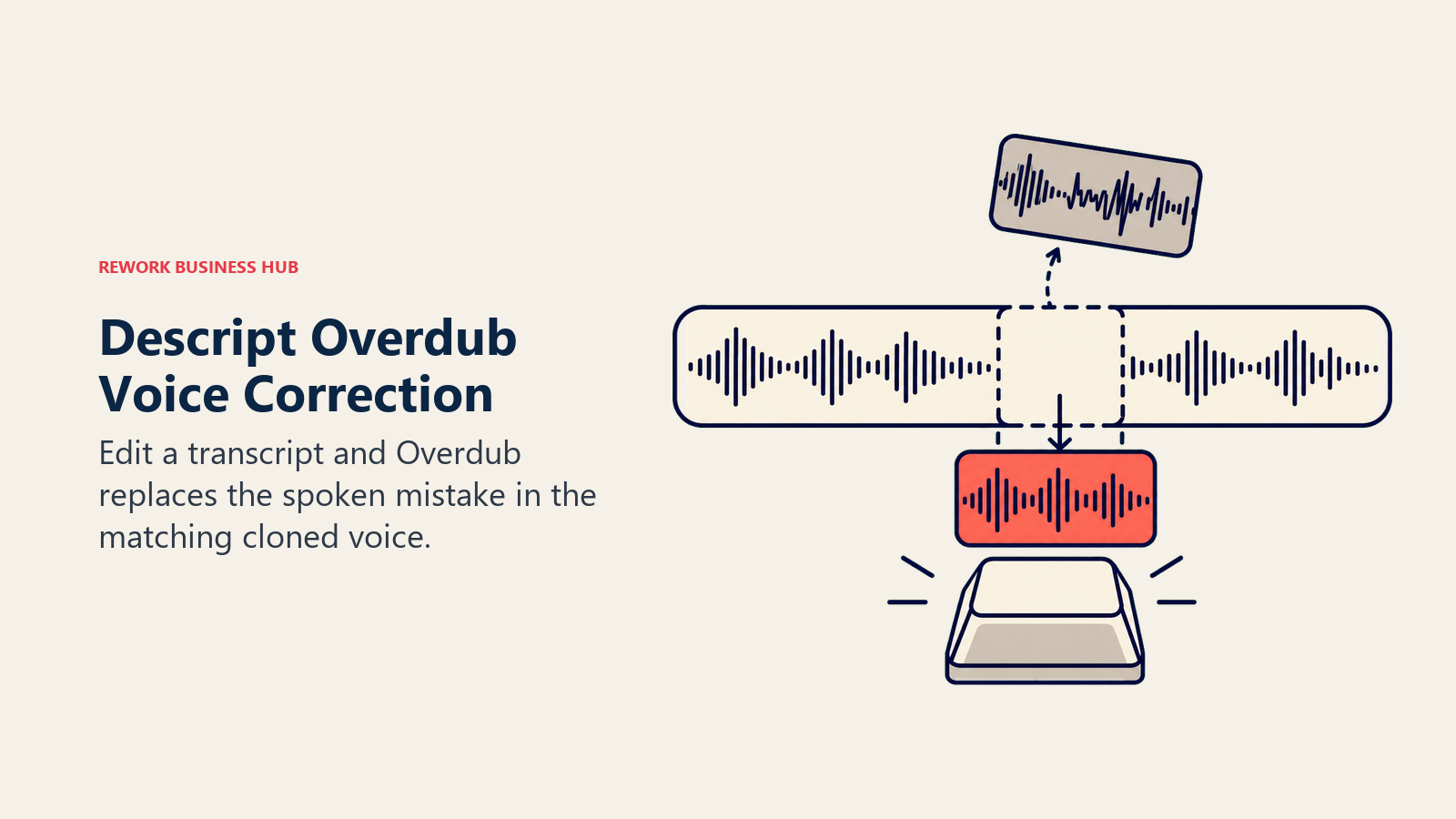
That single feature is why Descript sits on so many podcast and video production stacks already, since the core product is a text-based audio and video editor. Teams weighing it against transcription-first tools should also check our best AI meeting assistants guide, since some of those platforms now bundle similar editing features. As of 2026, Overdub ships on every plan, though Free and Hobbyist tiers cap the cloned voice to a 1,000-word vocabulary; the full, unlimited version requires the Creator tier or above.
| What you get | What you don't |
|---|---|
| Text-based editing for audio and video, not just voice | Full Overdub vocabulary requires Creator tier or higher |
| Overdub fixes mistakes without re-recording | 4K export and Brand Studio gated to higher tiers |
| Studio Sound noise removal and audio cleanup | Not built as a pure TTS API for developers |
| Free and Hobbyist tiers to test the workflow | Media hour limits apply even on paid plans |
Pricing: Free (~60 min/mo); Hobbyist $16/mo billed annually ($24/mo monthly); Creator $24/mo billed annually ($35/mo monthly); Business $50/mo billed annually ($65/mo monthly); Enterprise custom.
Best for: Podcast and video creators who need voice correction built into their editing workflow, not a standalone TTS tool
9. Cartesia: The Fastest Voice Model for Real-Time Agents
Cartesia's entire pitch is latency. Sonic 3 generates speech in roughly 40 milliseconds, fast enough that a voice agent can respond mid-conversation without the awkward beat that gives away it's talking to a machine. The company also added instant voice cloning from a 3-second sample at $5/mo on its Pro tier, which industry trackers have called the cheapest voice cloning available anywhere in the category.
The tradeoff for a team evaluating Cartesia against ElevenLabs or PlayHT is maturity: the voice library is smaller, and most of the product's attention has gone into the real-time agent use case rather than studio-style content production. If a voice model is one piece of a larger conversational AI build, our best AI chatbots guide covers the rest of that stack.
| What you get | What you don't |
|---|---|
| Fastest model in the category at roughly 40ms latency | Smaller stock voice library than ElevenLabs or Murf |
| Cheapest instant voice cloning on the market | Less suited to studio-style video or podcast production |
| Emotion and non-verbal sound controls (laughter, sighs) | Free tier has no commercial use rights or voice cloning |
| 42-language support with consistent latency | Newer platform with a shorter enterprise track record |
Pricing: Free tier available; Pro $5/mo (100,000 credits, instant cloning); Startup $49/mo (5 agents); Scale up to roughly $299/mo; Enterprise custom.
Best for: Teams building real-time voice agents, IVR replacements, or phone-based AI where response latency directly affects the experience
10. Hume AI: Emotionally Expressive, Controllable Voice
Hume's Octave model treats emotional delivery as a first-class control, not an afterthought. You can direct a line to sound genuinely nervous, sarcastic, or warm, and Octave 2 (shipped October 2025) cut per-character cost roughly in half versus the prior model, while Hume has said its pricing runs at roughly half of ElevenLabs' rate for comparable output.
That focus on emotional nuance makes Hume the strongest option for character voices in games, interactive fiction, and any application where flat, neutral delivery would break the experience. It's a narrower catalog of stock voices than ElevenLabs, so teams that need broad, ready-made voice variety may still supplement with another platform.
| What you get | What you don't |
|---|---|
| Fine-grained control over emotional tone and delivery | Smaller stock voice catalog than ElevenLabs or Murf |
| Roughly half the per-character cost of top competitors | Best suited to teams that need expressive, not neutral, voice |
| Combined TTS (Octave) and voice AI (EVI) product line | Newer brand with less enterprise track record |
| Entry pricing starts as low as $3/mo | Higher tiers needed for meaningful production volume |
Pricing: Free tier; Starter $3/mo (30,000 Octave characters); Creator, Pro, Scale, and Business tiers scale up from there; Enterprise custom.
Best for: Games, interactive fiction, and character-driven products that need emotionally expressive, directable voice
11. OpenAI TTS: Instructable Voice for Developers
OpenAI's approach to voice generation skips the usual dropdown of fixed voice presets. With gpt-4o-mini-tts, you pass a plain-language instruction (speak calmly, sound upbeat, use a formal tone) and the model adjusts delivery on the fly, on top of a smaller set of 13 base voices. For developers already building on the OpenAI API, that means one integration handles both the language model and the voice output.
The API has no monthly subscription, only pay-as-you-go pricing, and there's no public voice cloning feature, which rules it out for teams that specifically need a custom or branded voice.
| What you get | What you don't |
|---|---|
| Steerable voice via plain-language instructions | No native voice cloning in the public API |
| Single integration alongside OpenAI's language models | Only 13 base voices to choose from |
| Transparent, predictable pay-as-you-go pricing | No studio or editing interface, API-only |
| gpt-4o-mini-tts priced competitively against tts-1 | Requires developer resources to integrate |
Pricing: tts-1 $15 per 1M characters; tts-1-hd $30 per 1M characters; gpt-4o-mini-tts billed by tokens, roughly $0.015 per minute of generated audio in practice.
Best for: Developers already building on OpenAI's API who want steerable voice without a separate vendor integration
12. Google Cloud Text-to-Speech: Broadest Language Coverage at Enterprise Scale
Google's advantage is reach. Chirp 3 HD voices, built on Google's AudioLM research, cover more languages and locale variants than most competitors, and the free tier is generous for standard voices (up to 4 million characters per month) before Chirp 3 or Neural2 usage kicks in at a metered rate.
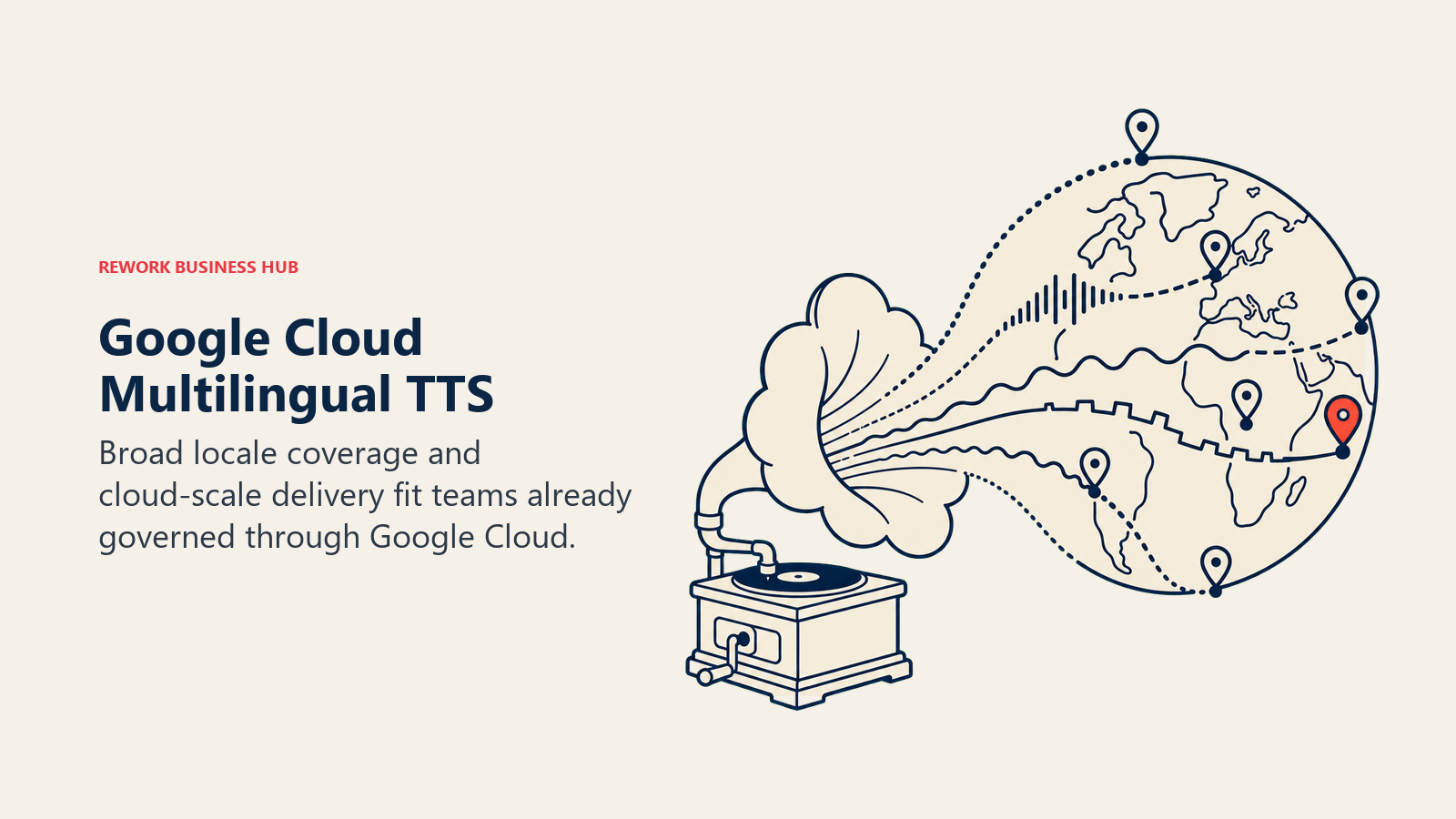
For enterprise teams already running workloads on Google Cloud, TTS slots into existing billing and IAM controls without a new vendor relationship. The newest Chirp 3 HD voices trade off some control, they don't support SSML or manual pitch and rate adjustment, which matters for teams that need precise delivery control.
| What you get | What you don't |
|---|---|
| Broadest language and locale coverage in the category | Chirp 3 HD voices don't support SSML or pitch controls |
| Generous free tier for standard and WaveNet voices | Requires GCP account and IAM setup to get started |
| Low-latency streaming for real-time applications | Less natural-sounding than ElevenLabs for narrative content |
| Fits directly into existing GCP billing and governance | No self-serve voice cloning studio |
Pricing: Free tier (0-4M characters/mo depending on voice type); Chirp 3 HD $30 per 1M characters; Neural2/Studio voices priced separately; Gemini-TTS models not included in the free tier.
Best for: Enterprise teams already on Google Cloud that need multilingual TTS integrated into existing infrastructure
13. Amazon Polly: The Cheapest TTS at Scale
Amazon Polly's entire value proposition is cost at volume. Standard voices run $4 per 1 million characters, the lowest headline rate on this list, and Neural voices (the more natural-sounding tier) run $16 per 1 million characters with a full year of free-tier usage for new accounts.
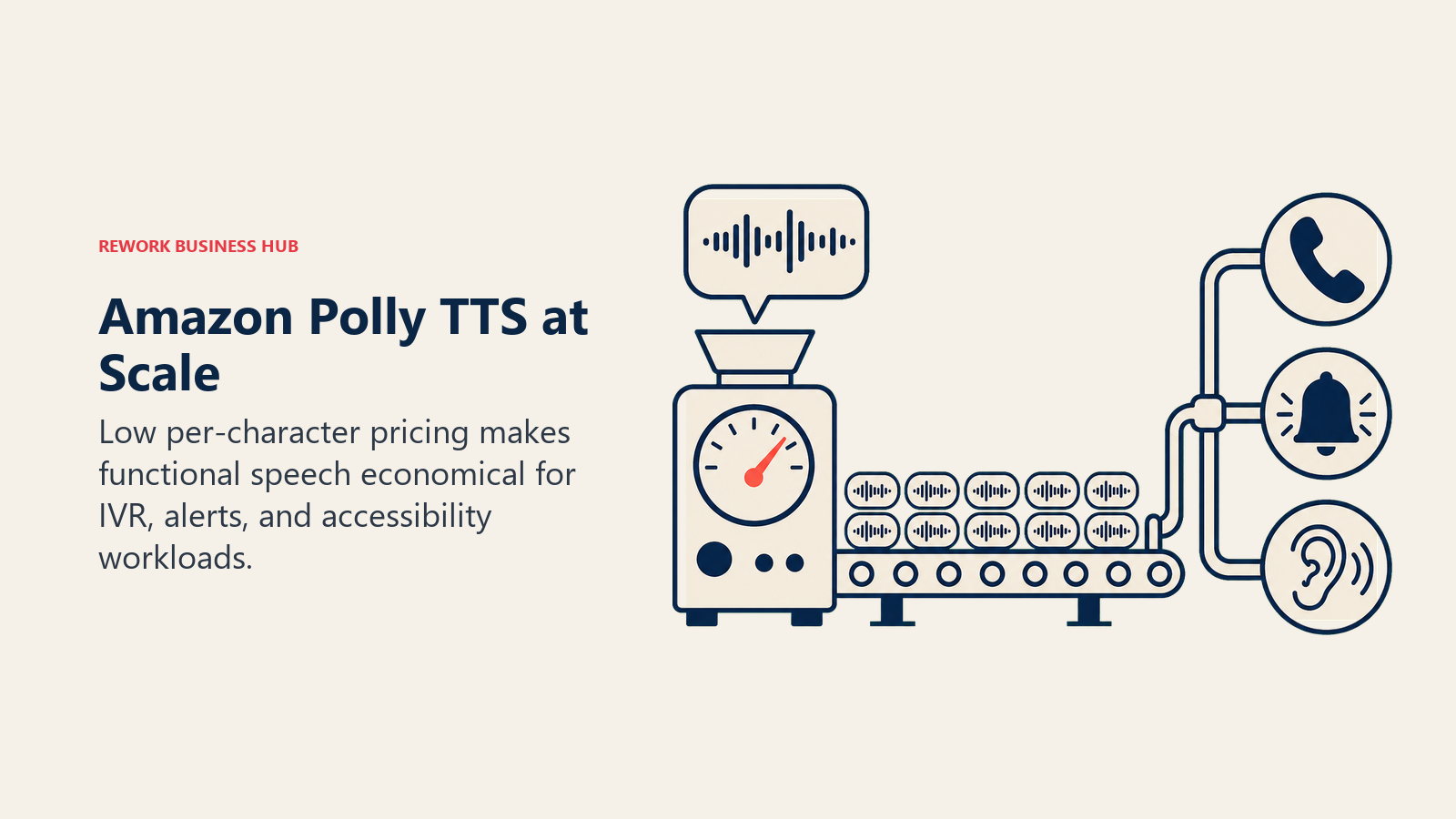
For teams running TTS inside an existing AWS workload (IVR systems, accessibility features, notification systems), Polly avoids adding a new vendor and a new bill. The voices are functional rather than expressive; teams that need emotional range or brand-distinct voice character should look at ElevenLabs, Hume, or Murf instead.
| What you get | What you don't |
|---|---|
| Cheapest per-character pricing in the category | Less emotional range than ElevenLabs, Hume, or Murf |
| Deep native integration with AWS services | No built-in voice cloning studio |
| 12-month free tier for Neural voices (1M chars/mo) | Long-Form voices cost $100 per 1M characters |
| Four voice engines (Standard, Neural, Long-Form, Generative) | UI is developer-facing, not a creator studio |
Pricing: Standard $4 per 1M characters; Neural $16 per 1M characters; Generative $30 per 1M characters; Long-Form $100 per 1M characters. Free tier: 1M Neural characters/mo for the first 12 months.
Best for: Teams already running on AWS that need reliable, low-cost TTS for IVR, notifications, or accessibility features
14. Azure AI Speech: Enterprise Voice With Governance Built In
Microsoft's speech service, rebranded in 2026 as part of Azure AI Foundry, targets the same enterprise buyer as Google Cloud and AWS but leans harder into governance: custom neural voice cloning goes through an approval process specifically designed to satisfy consent and compliance requirements, which matters more than ever given the state-level voice cloning laws that took effect over the past two years.
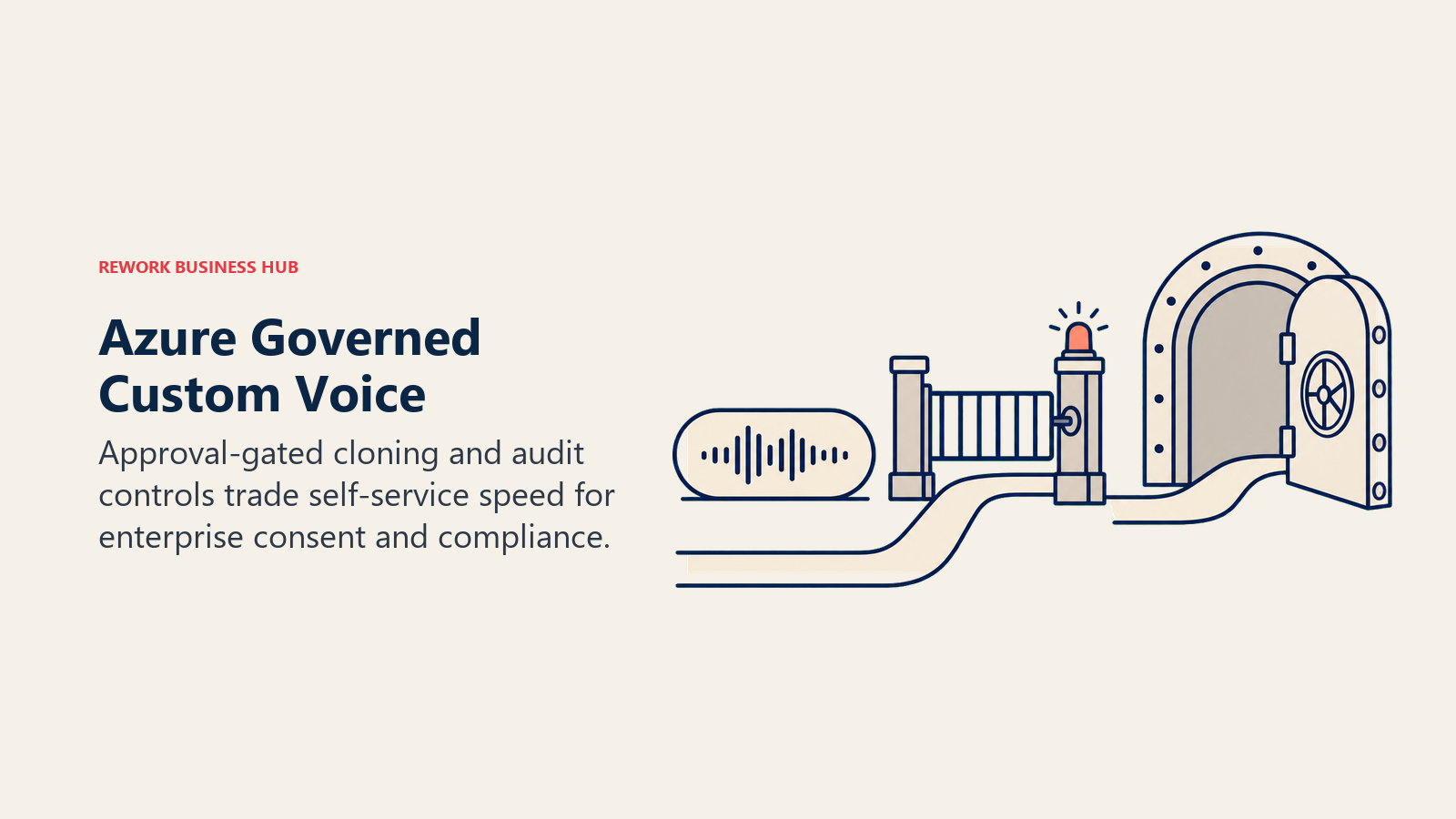
Neural HD pricing dropped from $30 to $22 per 1 million characters in March 2026, narrowing the gap with Google's Chirp 3 HD, and commitment tiers cut the pay-as-you-go rate by roughly half for high-volume customers. The custom voice approval process, while a genuine safeguard, adds lead time that self-serve competitors don't have.
| What you get | What you don't |
|---|---|
| Custom neural voice cloning with a formal approval process | Approval process adds lead time versus self-serve tools |
| Commitment tiers cut pay-as-you-go pricing roughly in half | Requires an Azure account and setup for full functionality |
| Deep integration with Microsoft 365 and Teams workflows | Standard Neural voices are less expressive than ElevenLabs |
| Free tier: 500,000 characters per month | Custom Neural runs $24 to $48 per 1M characters |
Pricing: Free tier (500,000 characters/mo); Neural $16 per 1M characters; Neural HD $22 per 1M characters; Custom Neural $24 to $48 per 1M characters; commitment tiers from $7.50 per 1M characters.
Best for: Enterprise teams on Microsoft's stack that need governed, approval-gated custom voice cloning
Voice Cloning: What "Consent" Actually Requires in 2026
Every vendor on this list that offers custom or cloned voices now asks for some form of consent verification before generating a professional clone, and that's not a courtesy, it's a legal requirement in a growing number of states. If your team is evaluating voice cloning specifically (not just stock TTS voices), three things are worth confirming with any vendor before you sign:
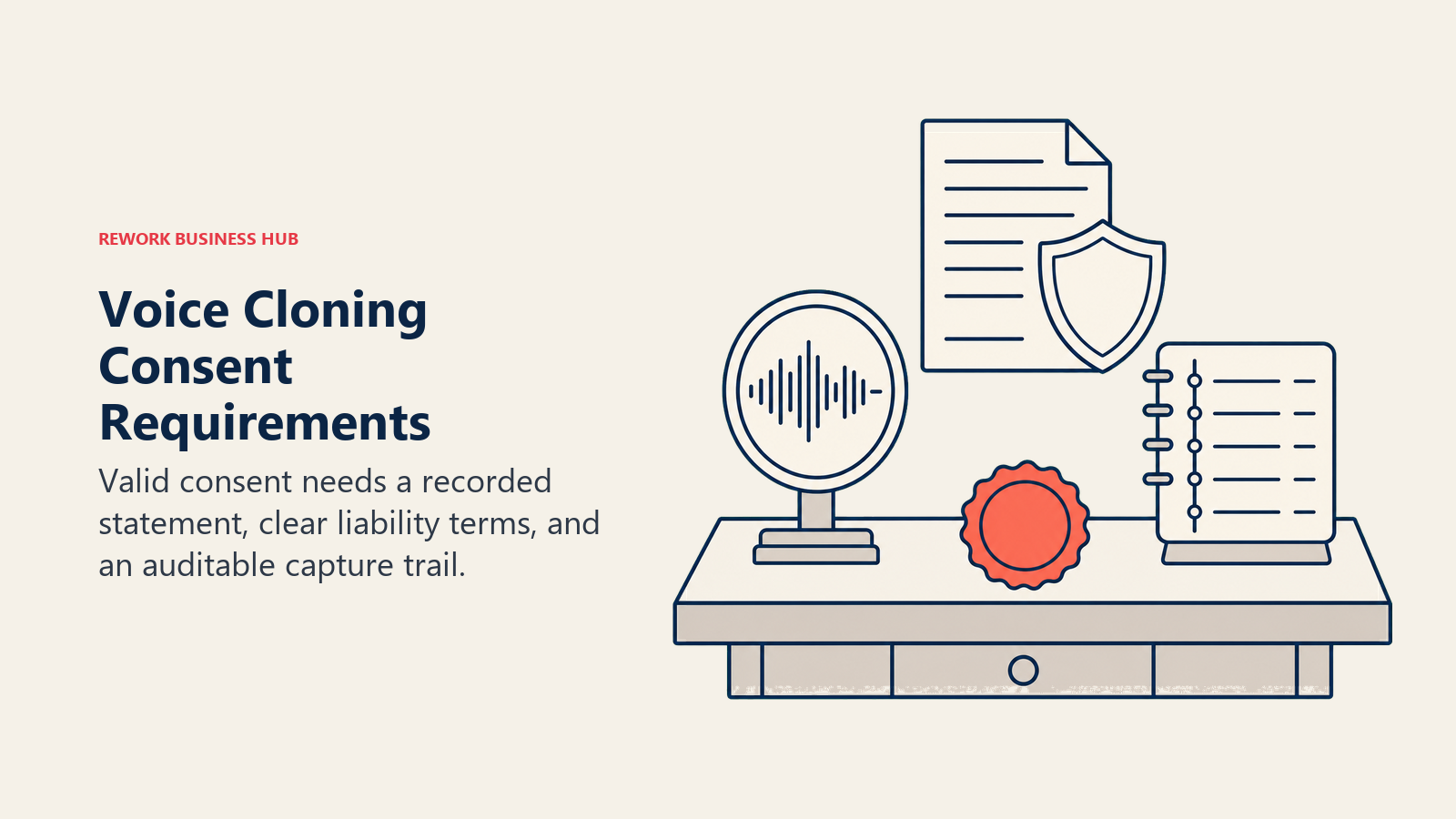
- Does the vendor require a recorded consent statement from the person whose voice is being cloned, not just a checkbox in a terms-of-service agreement.
- Does the vendor's terms include indemnification if a cloned voice is challenged later, or does the liability sit entirely with your company.
- Can you produce an audit trail showing when consent was captured and by whom, which matters under Tennessee's ELVIS Act and the state laws that followed it.
WellSaid Labs and Resemble AI build the strongest answers to all three into their core product. ElevenLabs and Murf have added verification steps to their professional cloning workflows but leave more of the compliance burden on the customer.
Decision Framework
Voice platforms specialize in different jobs, so start with the work you need to do and the governance your team must prove.
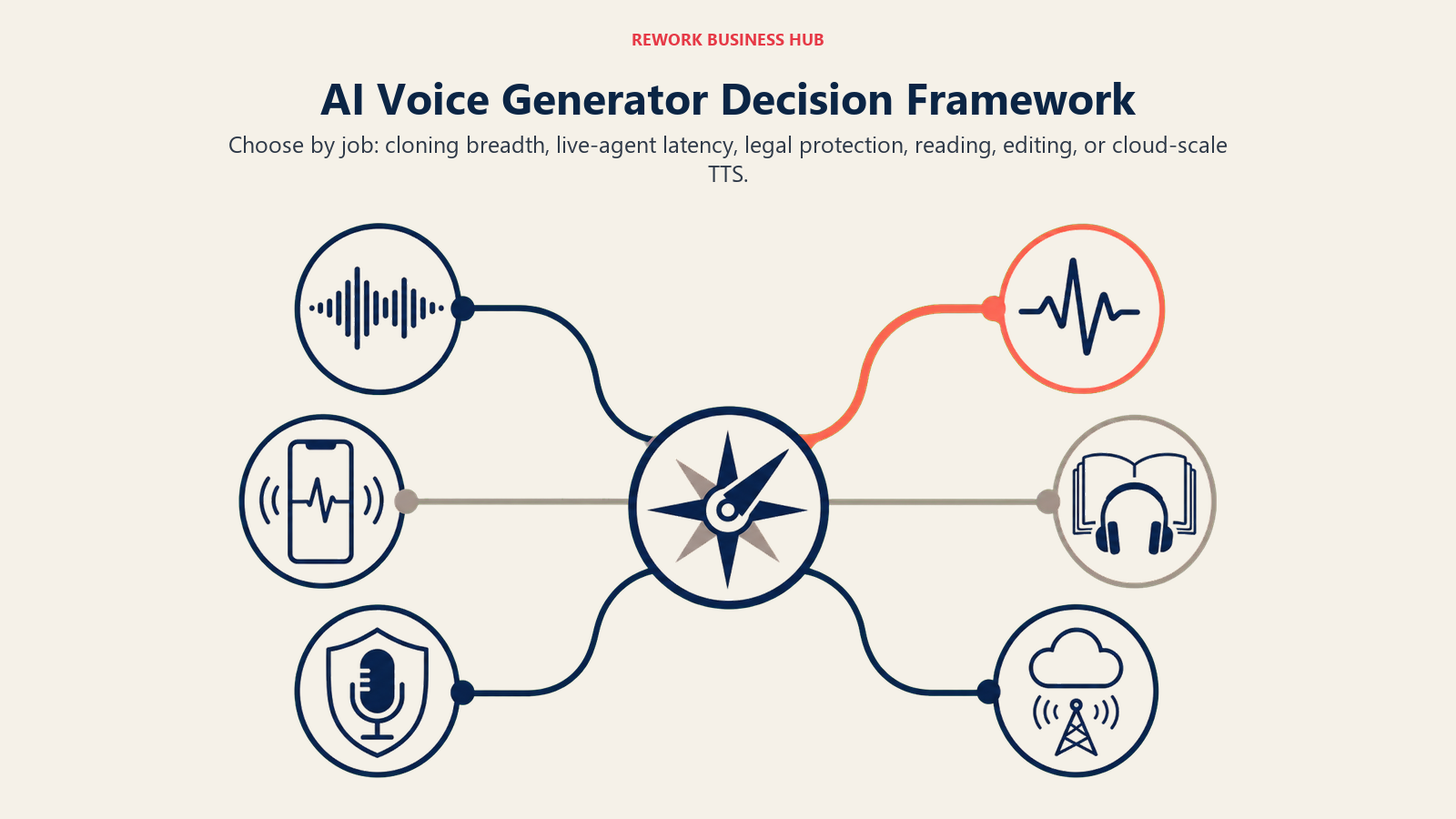
| If you need... | Pick... | Why |
|---|---|---|
| The broadest voice library and cloning breadth | ElevenLabs | Widest range of voices, languages, and use cases in one account |
| Narrated video and training content, no audio editor on staff | Murf AI | Built-in timeline editor syncs voice to slides and video |
| A low-latency API for real-time voice agents | PlayHT or Cartesia | Streaming architecture built for live conversation |
| Legally indemnified, brand-safe enterprise voice | WellSaid Labs | Every voice is licensed; no open cloning to misuse |
| Real-time cloning with fraud detection built in | Resemble AI | Only platform bundling cloning with deepfake detection |
| Text read aloud from articles, PDFs, and books | Speechify | Purpose-built reading assistant, not a production tool |
| Voice generation bundled with video editing | LOVO AI | One subscription covers voice and short-form video |
| Voiceover correction without re-recording | Descript | Overdub fixes mistakes by typing, matched to your voice |
| Emotionally expressive or character voice | Hume AI | Directable tone and delivery, not flat narration |
| Steerable voice inside an existing OpenAI integration | OpenAI TTS | One API for language and voice, instruction-based delivery |
| Multilingual TTS on existing Google Cloud infrastructure | Google Cloud TTS | Broadest language coverage, fits existing GCP billing |
| The cheapest TTS at high volume | Amazon Polly | Lowest per-character cost, deep AWS integration |
| Governed custom voice cloning on Microsoft's stack | Azure AI Speech | Approval-gated cloning built for compliance requirements |
Frequently Asked Questions about AI Voice Generators
What is the best AI voice generator in 2026?
There's no single best tool for every use case. ElevenLabs leads on overall voice quality and cloning breadth, Murf and WellSaid Labs lead on brand-safe corporate voiceover, Cartesia and PlayHT lead on low-latency conversational agents, and Amazon Polly and Google Cloud lead on cost-effective TTS at scale.
Is AI voice cloning legal in 2026?
Cloning your own voice is legal everywhere. Cloning someone else's voice without consent is not, and it's increasingly risky: Tennessee's ELVIS Act made it a civil and criminal offense, several other states (including California, New York, and Illinois) have passed similar laws, and the FTC's Impersonation Rule already bans using a cloned voice to sell something without the real person's consent.
How much does an AI voice generator cost?
Entry pricing ranges from free to roughly $3 to $6 per month for individual creators (Hume AI, ElevenLabs, Cartesia). Business and studio tiers typically run $29 to $99 per month, and enterprise cloud APIs (Amazon Polly, Google Cloud, Azure) charge per million characters, from $4 up to $48 depending on voice quality tier.
Which AI voice generator sounds the most human?
ElevenLabs and Hume AI are generally rated most natural for narrative and expressive content, with Hume's Octave model adding finer emotional control. For flat, functional narration at low cost, Amazon Polly and Google Cloud's standard voices are serviceable but noticeably less expressive.
Can I clone my own voice for free?
Yes, most platforms on this list, including ElevenLabs, PlayHT, and Cartesia, offer some form of instant voice cloning on their free tier, usually with limits on output length, commercial usage rights, or export quality.
What's the difference between text-to-speech and voice cloning?
Text-to-speech (TTS) converts written text into spoken audio using a stock or synthetic voice. Voice cloning creates a synthetic version of a specific person's voice, either your own or someone else's with consent, that can then generate new speech in that voice.
How risky are AI voice scams, and should this affect a vendor decision?
Real risk exists. McAfee's 2026 research found 1 in 10 Americans have already received a message from a cloned voice, and 77% of those targeted lost money. That's a reason to favor vendors with strong consent verification (WellSaid Labs, Resemble AI) if your team handles sensitive cloning use cases, not a reason to avoid the category.
Which AI voice generator is best for developers building an API integration?
OpenAI TTS is the simplest if you're already using OpenAI's language models. PlayHT and Cartesia are built specifically for low-latency, real-time streaming use cases. Amazon Polly, Google Cloud, and Azure fit best if your infrastructure already runs on that cloud provider.
Can AI voice generators handle multiple languages well?
Yes, most of the leading platforms support 30 or more languages. Google Cloud TTS and ElevenLabs offer the broadest coverage, while Azure AI Speech and Amazon Polly cover the major global languages reliably for enterprise workloads.
What to Do Next
Pick your primary use case first (narration, conversational agent, or developer API), shortlist two tools from that lane using the tables above, and run a real script through each one's free tier before committing to a paid plan. Character-based pricing makes it easy to estimate cost once you know your actual monthly volume, and if voice cloning is part of the plan, confirm each vendor's consent verification process before you build a workflow around it.
If you're evaluating adjacent generative media tools, see our best AI music generators and best AI video generators guides for how voice fits into a broader content production stack, and check the best AI tools overview if you're still scoping the wider AI toolkit for your team.

Principal Product Marketing Strategist
On this page
- What Changed in 2026
- Key Facts
- Quick Comparison Table
- Voice Generators by Use Case
- Ideal User Table
- 1. ElevenLabs: The Broadest Voice Cloning and TTS Platform
- 2. Murf AI: Corporate Voiceover Built for Presentations and Training
- 3. PlayHT: Streaming API for Conversational Voice Agents
- 4. WellSaid Labs: Fully Licensed Voice Avatars for Enterprise Brands
- 5. Resemble AI: Real-Time Cloning With Built-In Deepfake Detection
- 6. Speechify: Text-to-Speech for Reading, Not Just Recording
- 7. LOVO AI: Voice Generation Bundled With a Video Editor
- 8. Descript: Overdub Fixes Voiceover by Typing, Not Re-Recording
- 9. Cartesia: The Fastest Voice Model for Real-Time Agents
- 10. Hume AI: Emotionally Expressive, Controllable Voice
- 11. OpenAI TTS: Instructable Voice for Developers
- 12. Google Cloud Text-to-Speech: Broadest Language Coverage at Enterprise Scale
- 13. Amazon Polly: The Cheapest TTS at Scale
- 14. Azure AI Speech: Enterprise Voice With Governance Built In
- Voice Cloning: What "Consent" Actually Requires in 2026
- Decision Framework
- What to Do Next